

Schneider Shorts of 11 April 2025 – US neuroscientist still shell-shocked by Italian postdoc’s fraud, a fantasy wolf de-exticted, an expert investigation in Berlin, and with retractions for past and current MD Anderson researchers, a German-Iranian papermiller, and a Mexican victim of persecution.
Table of Discontent
Science Elites
- Many people’s lives depend on it – Frank LaFerla still too shell-shocked
- Without substance – Charité Berlin rejects false allegations
Retraction Watchdogging
- In these remaining days – Germany’s super-surgeon Reza Akhavan-Sigari loses two more papers
- A request from the corresponding author – Abel Santamaria demands clarity
- Due to the passage of time – three retractions for Jasti Rao
- None of the other co-authors knew – one more for Rao, this time with Al Yung
Science Breakthroughs
- Indistinguishable from magic – Colossal unveils a fantasy dire wolf
- Contrary to long-held beliefs – Florida scientists warn on dangers of marriage
Science Elites
Many people’s lives depend on it
In his book Doctored, the science writer Charles Piller mentioned a certain case, which is based on the investigation by the sleuth Mu Yang.
It is about the neuroscientist Frank LaFerla, Chancellor’s Professor and Dean at the University of California Irvine School of Biological Sciences, and his former postdoc from Italy, Salvatore Oddo, since 2020 back in Italy as associate professor at the University of Messina (the one until recently presided over by rector Salvatore Cuzzocrea!). Together LaFerla and Oddo developed in early 2000s the triple-transgenic Alzheimer’s mouse model, called “LaFerla mouse,” the LaFerla lab was funded with over $60 million by National Institute of Aging.
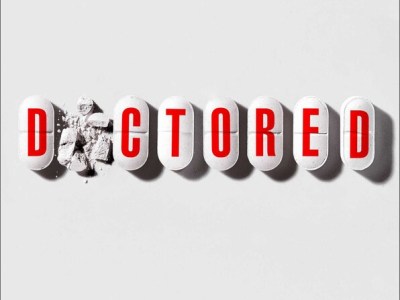
“Doctored” by Charles Piller – book review
“If this book accomplishes anything, it should be to shatter the illusion that Alzheimer’s research is on solid footing and to prompt a long-overdue reckoning in the field. ” – Csaba Szabo

LaFerla has 12 papers on PubPeer, Oddo has 18 papers on PubPeer, two of which were already retracted: Caccamo et al 2018 and Caccamo et al 2016. The two retraction notices from 2020 and 2021 reveal that “an investigation by Arizona State University concluded that” figures “had been manipulated and falsified by” Oddo and Antonella Caccamo (who is currently also at University of Messina and quite likely Oddo’s wife).
Here some more great neuroscience from this couple, not retracted, or even corrected, also from their time in Arizona. Flagged by Mu Yang in 2023:
Ramona Belfiore , Alexis Rodin , Eric Ferreira , Ramon Velazquez , Caterina Branca , Antonella Caccamo , Salvatore Oddo Temporal and regional progression of Alzheimer’s disease‐like pathology in 3xTg‐AD mice Aging Cell (2019) doi: 10.1111/acel.12873


From the University of Texas San Antonio, where Oddo used to be assistant professor:
David X. Medina , Antonella Caccamo , Salvatore Oddo Methylene blue reduces aβ levels and rescues early cognitive deficit by increasing proteasome activity Brain pathology (2011) doi: 10.1111/j.1750-3639.2010.00430.x


And look at these two papers by Oddo and Caccamo, also from UT San Antonio:
- Antonella Caccamo , Smita Majumder , Arlan Richardson , Randy Strong , Salvatore Oddo Molecular interplay between mammalian target of rapamycin (mTOR), amyloid-beta, and Tau: effects on cognitive impairments The Journal of biological chemistry (2010) doi: 10.1074/jbc.m110.100420
- Antonella Caccamo , Monica A. Maldonado , Smita Majumder , David X. Medina , Walter Holbein , Andrea Magrí , Salvatore Oddo Naturally secreted amyloid-beta increases mammalian target of rapamycin (mTOR) activity via a PRAS40-mediated mechanism The Journal of biological chemistry (2011) doi: 10.1074/jbc.m110.180638

Now, here is the important bit about Oddo and Laferla in Piller’s book Doctored:
“In a written statement, he [Oddo, -LS] accepted most findings, blaming “honest errors” that he said left experimental outcomes unaffected. (Such replies are common when images are challenged.)
LaFerla responded with forthright alacrity, describing himself as “embarrassed, confused, and perplexed.” He informed his provost, triggering an internal review. LaFerla also quickly contacted a journal to correct a paper in which a manipulated image did not affect the experimental outcome, and said he would correct others and likely retract an influential paper from the Journal of Neuroscience describing how amyloid-beta, tau, and alpha-synuclein (which helps regulate synapses, the junctions that convey signals between nerve cells) combine to accelerate cognitive decline in mice.
The scientist seemed genuinely chastened. “The most important thing is that we get all of this right because many people’s lives depend on it,” LaFerla said.”
How very exemplary, LaFerla is truly a hero of research integrity almost matching Piller’s central authority in the book, the Nobel prize laureate Thomas Südhof. Well, that exchange between LaFerla and Piller is now a few years old (presumably from 2022-2023). What happened since? Absolutely nothing, because LaFerla’s wealth depends on it.
Thomas Südhof and AI-powered weapons of micro-duplication
Thomas Südhof, victim of racist and sexist persecution, announced to retract a second paper, “even though the quantitative analyses and conclusions are correct”.

Here is the paper LaFerla promised to retract. The evidence was collected cooperatively and posted on PubPeer by Matthew Schrag, in February 2025, i.e. only after the book Doctored was out:
Lani K. Clinton, Mathew Blurton-Jones, Kristoffer Myczek , John Q. Trojanowski , Frank M. LaFerla Synergistic Interactions between Abeta, tau, and alpha-synuclein: acceleration of neuropathology and cognitive decline The Journal of neuroscience (2010) doi: 10.1523/jneurosci.0490-10.2010


Why no action on this paper by Oddo and LaFerla, flagged by Mu Yang on PubPeer in 2023 already?
Lauren M Billings , Salvatore Oddo , Kim N Green , James L McGaugh , Frank M LaFerla Intraneuronal Abeta causes the onset of early Alzheimer’s disease-related cognitive deficits in transgenic mice Neuron (2005) doi: 10.1016/j.neuron.2005.01.040


Again in Cell Press’s Neuron, also this is left standing, despite official records of proven data falsification by Oddo and Caccamo:
Salvatore Oddo , Antonella Caccamo , Jason D Shepherd , M.Paul Murphy , Todd E Golde , Rakez Kayed , Raju Metherate , Mark P Mattson, Yama Akbari , Frank M LaFerla Triple-Transgenic Model of Alzheimer’s Disease with Plaques and Tangles Neuron (2003) doi: 10.1016/s0896-6273(03)00434-3

Rhabdias nicaraguensis: “Figure 1C […] The bands for APP and Tau appear extremely similar down to gel artifacts.”
Or this, also on PubPeer since 2022:
Antonella Caccamo , Salvatore Oddo , Michael C. Sugarman , Yama Akbari , Frank M. LaFerla Age- and region-dependent alterations in Abeta-degrading enzymes: implications for Abeta-induced disorders Neurobiology of Aging (2005) doi: 10.1016/j.neurobiolaging.2004.06.013

Diurnea fagella: “In Figure 5B, the background of the image appears near completely uniform and the gel bands laid on top.”
Or this, again with Oddo:
Salvatore Oddo , Lauren Billings , J.Patrick Kesslak , David H. Cribbs, Frank M. LaFerla Aβ Immunotherapy Leads to Clearance of Early, but Not Late, Hyperphosphorylated Tau Aggregates via the Proteasome Neuron (2004) doi: 10.1016/j.neuron.2004.07.003

Mu Yang also pointed out that “the re-occurring image is said to represent 15 months old animals in the 2003 paper, and 12 months old image in the 2004 paper.“
Also this won’t apparently be corrected:
Grace E. Stutzmann, Ian Smith , Antonella Caccamo , Salvatore Oddo , Frank M. Laferla , Ian Parker Enhanced Ryanodine Receptor Recruitment Contributes to Ca2+Disruptions in Young, Adult, and Aged Alzheimer’s Disease Mice The Journal of neuroscience (2006) doi: 10.1523/jneurosci.0739-06.2006

Dysdera arabisenen: “loading control was used for experiments in 6-week, 6-month, and 1.5-year-old animals.”
One can see Oddo’s hand here:
Ann C. McKee, Isabel Carreras, Lokman Hossain, Hoon Ryu, William L. Klein, Salvatore Oddo, Frank M. LaFerla, Bruce G. Jenkins, Neil W. Kowall, Alpaslan Dedeoglu Ibuprofen reduces Abeta, hyperphosphorylated tau and memory deficits in Alzheimer mice Brain Research (2008) doi: 10.1016/j.brainres.2008.01.095

There are other collaborative studies by LaFerla on PubPeer. One, Clarke et al 2015, is even with Brazil’s biggest cheater, Mario Saad and his friends.
We can expect little decency from Oddo, but what about LaFerla? He must still be so badly “embarrassed, confused, and perplexed” that he can’t find the energy to correct the literature. Poor man.
Without substance
Charité Berlin told you to reject the evidence of your own eyes. Not the first time they do that.
The authors, but not this specific paper, were briefly mentioned in this article:

Cancer at Charité
New season of the popular German TV series, ” Charité”, this time set in the early 21st century! Will Jürgen ever become professor? Will Bernd ever allow science to self-correct? Will Christoph ever catch his mechanical pursuer?
This is the paper, authored by Jan Eucker, head of oncology at the Charité Berlin Campus Benjamin Franklin, Charité staff scientists Chuanbing Zang and Hongyu Liu, Charite’s now retired (or maybe even deceased) “hero in the fight against cancer” Elena Elstner, plus their notorious American collaborator, the UC Los Angeles professor H. Phillip Koeffler:
Chuanbing Zang , Hongyu Liu , Janina Bertz , Kurt Possinger , H. Phillip Koeffler, Elena Elstner , Jan Eucker Induction of endoplasmic reticulum stress response by TZD18, a novel dual ligand for peroxisome proliferator-activated receptor α/γ, in human breast cancer cells Molecular Cancer Therapeutics (2009) doi: 10.1158/1535-7163.mct-09-0347

The issue of two potentially identical western blot bands in two different gels was reported by the pseudonymous sleuth Claire Francis to Charité in August 2024. On 3 April 2025, Rike Zietlow of the Research Integrity Office replied to the sleuth:
“we would like to inform you that the case was closed without further action, as the accusation was found to be without substance. Upon close inspection, there was no evidence that the highlighted bands are identical.”
I am sure Charité runs some very expensive image integrity software and employs highly qualified and well paid top experts. But nevertheless, I asked Maarten van Kampen to have a look also. Which he did, judge for yourself.


Maarten concluded:
“The features above and below the blots are duplicated in every detail. And hence the MCF-7 and MDA-MB-231 bands are not separate scans. At the same time they are also not simple duplications, as most of the blots do largely differ. Except for the two blots indicated”
I shared this new analysis with Zietlow. Who announced that Charite will have another look. Count be skeptical.
Retraction Watchdogging
In these remaining days
Two retractions for one of greatest papermillers in German medicine: the Iranian neurosurgeon Reza Akhavan-Sigari, who once worked for a year at University Tübingen and decided, with full agreement of his past academic employer, to continue using this outdated affiliation for his papermill fabrications, on all possible topic known to science. Read here:
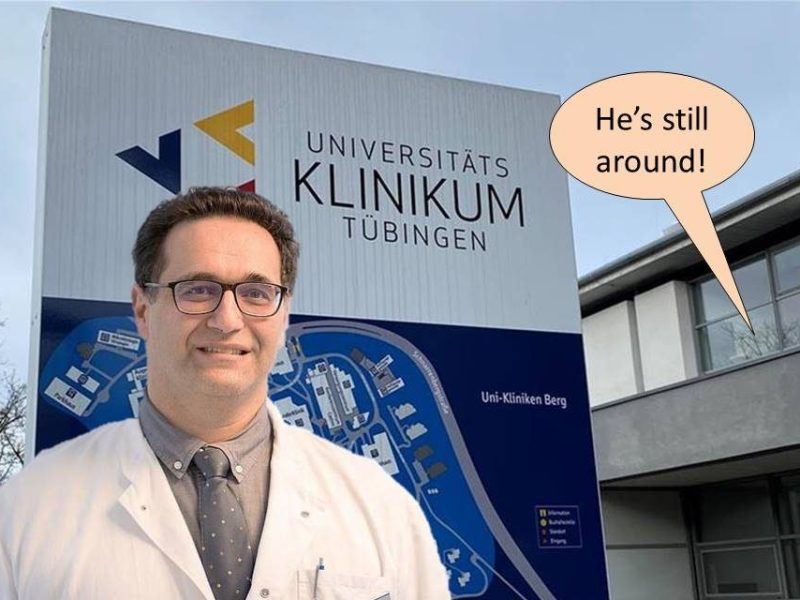
Gardening goats and external papermills in Tübingen
One shooting and one falling star of University Clinic Tübingen. Meet the research ethics champion Julia Skokowa and the eternally affiliated Renaissance Man Reza Akhavan-Sigari,
After I reported that affair, Akhavan-Sigari somehow disappeared from his extremely prestigious job as head of neurosurgery at a big hospital in Bremen, and is now employed, as one of many doctors, in a private radiology practice near Munich. He still calls himself “university professor”, because nobody ever bothers to check. As behoves a proper real and serious university professor, Akhavan-Sigari deleted almost all papers from his Google Scholar profile. What with the retractions, he must have made a deal with University of Tübingen not to use their affiliation for his continuing collaboration with Iranian papermills (the last Tübingen paper was from October 2024), instead this one: “Dr. Schneiderhan GmbH and ISAR Klinikum, Munich, Germany“.
Well, here is the professor’s recent retraction. In Frontiers. It includes authors from India, Romania, Ecuador, Canada, USA and Turkey. One of them is Akhavan-Sigari’s fellow papermiller from Iran, Abolfazl Bahrami, who fraudulently claims to work at LMU Munich in Germany.
Geovanny Genaro Reivan Ortiz , Carmen Iulia Ciongradi , M. V. N. L. Chaitanya , Jayasankar Narayanan , Mohamed Mohany , Salim S. Al-Rejaie , José Luis Arias-Gonzáles , Ioan Sârbu , Marjan Assefi , Shaik Vaseem Akram , Yusuf Döğüş , Abolfazl Bahrami , Reza Akhavan-Sigari Identification of novel candidate targets for suppressing ovarian cancer progression through IL-33/ST2 axis components using the system biology approach Frontiers in Molecular Biosciences (2023) doi: 10.3389/fmolb.2023.1189527

Can I ask the authors how they came to collaborate on this work?”
This is how Bahrami replied on PubPeer:

On 3 April 2025, the paper was retracted:
“The Journal retracts the 2023 article cited above. Following publication, concerns were raised regarding the contributions and affiliations of the authors of the article. Image duplication concerns were also identified with Figure 8. Our investigation, conducted in accordance with Frontiers policies, confirmed a serious breach of our authorship policies and of publication ethics. This retraction was approved by the Chief Executive Editor of Frontiers. The authors received a communication regarding the retraction and had a chance to respond. This communication is recorded by the publisher.”
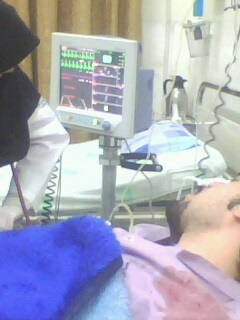
A year ago, in April 2024, Bahrami tried to get me to delete my reporting about him. For this purpose, he send me some photos, where he placed himself in a hospital bed in iran and claimed to be dying of cancer. I show one of them on the right. Bahrami wrote to me:
“I got this disease because of working hard in the laboratory and achieving good scientific content, and in these remaining days, I will not let my articles get into trouble because of a small unintentional error.“
Well, good news he is alive and well. But his papers are not. Here is another retraction for the fake LMU Munich researcher, also in Frontiers, it wasn’t flagged on PubPeer before:
Aliakbar Hasankhani , Abolfazl Bahrami , Shayan Mackie , Sairan Maghsoodi , Heba Saed Kariem Alawamleh , Negin Sheybani , Farhad Safarpoor Dehkordi , Fatemeh Rajabi , Ghazaleh Javanmard , Hosein Khadem , Herman W. Barkema , Marcos De Donato In-depth systems biological evaluation of bovine alveolar macrophages suggests novel insights into molecular mechanisms underlying infection Frontiers in Microbiology (2022) doi: 10.3389/fmicb.2022.1041314
This is the Retraction from 3 April 2025:
“The Journal retracts the 2022 article cited above. Following publication, concerns were raised regarding the contributions and affiliations of the authors, as well as the validity of the qRT-PCR data presented in the article. The authors failed to provide a satisfactory explanation during the investigation, which was conducted in accordance with Frontiers’ policies. Given the concerns, the editors no longer have confidence in the findings presented in the article. This retraction was approved by the Chief Executive Editor of Frontiers. The authors received a communication regarding the retraction and had a chance to respond. This communication is recorded by the publisher.”
The unusual coauthor is Herman Barkema, professor of cattle medicine at University of Calgary in Canada. Now, Barkema previously coauthored two more Frontiers papers with Bahrami and other Iranians, Ghafouri et al 2023 and Hasankhani et al 2021, plus Sadeghi et al 2022 in MDPI. All three were corrected inFebruary 2025 to replace Bahrami’s fake LMU Munich affiliation with “Nuclear Agriculture Research School, Nuclear Science and Technology Research Institute, Karaj, Iran”. Now, the Ghafouri et al 2023 and yet another paper by Bahrami (Esmaeilzadeh et al 2022), also features as coauthor a John P. Kastelic, stated affiliation in both cases: “Faculty of Veterinary Medicine, University of Calgary, Calgary, AB, Canada“. Problem is, Bahrami claimed on PubPeer he meant to add a different “Prof. John Kastelic“, a lawyer who doesn’t seem to exist. Read August 2024 Shorts about that.
Therefore, was Barkema also added as coauthor without his knowledge, just like his Calgary colleague Kastelic?
Update 23.04.2025 Barkema replied to my email with a delay, on 15 April 2025:
“I was surprised by the retraction. I thought that the problems with this group were that Dr. Bahrami had wrongfully claimed that he was affiliated with an institute in Munich, Germany, and that this would end once this very strange error was corrected.
My interactions with this group started with Farzad Ghafouri, a graduate student whom I worked with on some manuscripts. We have had very good collaborations with a lot of video meetings, exchange of research ideas and drafts of proposals and manuscripts. We are currently working on the results of a study on genetics of bovine mastitis that he did in the UK when he was there for half a year. He asked me to look at some manuscripts that he was going to be co-author on. I gave substantial feedback on analyses of the data, content of the whole manuscript and also the English. These manuscript went back and forth a couple of times before they were ready to be published. In my opinion more than sufficient input to warrant co-authorship. This also was done with the manuscript that was retracted, by-the-way.
I am quite unhappy with what turned out to be the incorrect use of the German affiliation by Dr. Bahrami, and I don’t understand why anybody would do such a thing. I had, however, never the idea that we are dealing here with a group of people that violate the principles of publishing scientific research. I will continue working with Farzad Ghafouri, but not with others in that department.”
The neurosurgeon Akhavan-Sigari continues to publish papermill trash. Cancer research and anything with microRNAs a lot, but also dentistry, protein structural biochemistry and whatever else the papermills have on sale. You can read about his past retractions in May 2024 Shorts and here:
Anyone can start a papermill!
“There are no capital requirements or significant technological barriers, anyone can create papers by rewriting already published works, either themselves or with the assistance of ChatGPT or other software. With a Telegram channel or WhatsApp group the papermiller can easily organise the sale of authorship” – Nick Wise

But I promised you two new retractions for Reza. How low does one have to fall to earn a retraction in Elsevier’s trash-bin Heliyon?
Alireza Rahbar , Saied Shakyba , Milad Ghaderi , Kiarash Kazemi , Avid Farhang Fagheh , Parsa Farsinejad , Ayda Khosravi , Parisa Afraz Louyeh , Erwin Mirzaeyian , Mohsen Chamanara, Reza Akhavan-Sigari Ivermectin-functionalized multiwall carbon nanotube enhanced the locomotor activity and neuropathic pain by modulating M1/M2 macrophage and decrease oxidative stress in rat model of spinal cord injury Heliyon (2021) doi: 10.1016/j.heliyon.2021.e07311

Here the Retraction from 7 February 2025 (highlights mine):
“Post-publication, an investigation conducted on behalf of the journal by Elsevier’s Research Integrity & Publishing Ethics team discovered substantial changes in authorship during the submission process of this paper. During revision, the authors Avid Farhang Fagheh, Parisa Afraz Louyeh, Parsa Farsinejad, and Reza Akhavan-Sigari were added to the author list without adequate explanation. Additionally, 2 authors were removed during revision. The editor does not have confidence that all of the stated authors of the article qualify for authorship and has therefore lost confidence in the validity/integrity of the article and made the decision to retract.
The authors disagree with the retraction and dispute the grounds for it.”
The Iranian coauthor Mohsen Chamanara protested against the retraction on PubPeer with a long statement, except:
“These changes were neither arbitrary nor indicative of any ethical or legal misconduct. Rather, they were made with full transparency, with every involved author’s consent, and in strict adherence to internationally accepted guidelines (ICMJE and Elsevier’s policies). The retraction not only tarnishes our work but also unjustly questions the integrity of our entire research team. [….]
Given the circumstances, we respectfully demand that Heliyon reconsider the retraction.“
I am sure if needed, also Chamanara will claim to be dying of cancer due to scientific overworking.
A request from the corresponding author
In October 2024 Shorts, I wrote about the Mexican professor Abel Santamaria of National Institute of Neurology and Neurosurgery (INNN), who has several very problematic papers on PubPeer. Some were corrected, some were retracted, all for image manipulation. In one retraction notice for Cuevas et al 2017 from September 2024, Santamaria was quoted:
“The senior/corresponding author, Dr. Santamaría, was contacted. He explained that he had been the victim of continuous harassment that had resulted in other such situations, and that any similarities in the images were probably due to the western blotting procedure.”
The new retraction makes it all even funnier.
Elvis Cuevas , Susan M. Lantz , J. César Tobón-Velasco , Glenn D. Newport , Qiangen Wu , Ashraf Virmani , Syed F. Ali , Abel Santamaría On the in vivo early toxic properties of Aβ25–35 peptide in the rat hippocampus: Involvement of the Receptor-for-Advanced Glycation-End-Products and changes in gene expression Neurotoxicology and Teratology (2011) doi: 10.1016/j.ntt.2010.12.002
“The editorial team at Neurotoxicology and Teratology received a request from the corresponding author, Dr. Santamaria, to evaluate the published manuscript for potential irregularities in the western blot and immunohistochemistry images presented within. The Editorial team reviewed the images in question and subsequent image analysis software identified multiple sub-image duplications or manipulations in multiple figures. The authors were contacted by the Editor-in-Chief with a request to provide the original films, images, and data for inspection and analysis.
Drs. Santamaria and Ali cooperated with the journal’s investigation but did not have original materials in their possession. Despite multiple attempts using publicly available email addresses, contact could not be made with the other authors to obtain their feedback regarding the concern or this retraction: E. Cuevas, S. Lantz, J.C. Tobón-Velasco, G. Newport, Q. Wu, & A. Virmani.
On the strength of this evidence, and in keeping with COPE standards, the Editor-in-Chief has decided to retract the paper. Drs. Santamaria and Ali agree that retraction is the most appropriate action for this article.”
Retraction 4 April 2025.
Now the harassed Santamaria suddenly asks the journals to investigate his papers? Makes no sense.

Oscar Portillo Moreno – Pinche estúpido Dedica a trabar
The Mexican potty-mouth Oscar Portillo Moreno dopes nanostructured thin films, or so he says. In reality it is not clear if he ever performed any experiments.
I now found out that the Mexican media reported in August 2017 about an INNN fraud investigation which followed the retraction of Santamaria’s papers:
“The director of the National Institute of Neurology and Neurosurgery (INNN), Miguel Ángel Celis, announced a regulation to avoid cases of data manipulation such as those detected by Elsevier, […] which revoked the publication of three articles produced by researchers linked to the unit. It is expected to be implemented this month.”
These were the three Elsevier papers retracted already in 2017:
- Julio César Tobón-Velasco , Genaro Vázquez-Victorio , Marina Macías-Silva , Elvis Cuevas , Syed F. Ali , Perla D. Maldonado , María Eva González-Trujano , Antonio Cuadrado , José Pedraza-Chaverrí , Abel Santamaría S-allyl cysteine protects against 6-hydroxydopamine-induced neurotoxicity in the rat striatum: involvement of Nrf2 transcription factor activation and modulation of signaling kinase cascades Free Radical Biology and Medicine (2012) doi: 10.1016/j.freeradbiomed.2012.06.040 (retracted in March 2017 over “inappropriately manipulated images in Figures 1, 2 and 4”)
- Iván Carmona-Ramírez , Abel Santamaría , Julio C. Tobón-Velasco , Marisol Orozco-Ibarra , Irma G. González-Herrera , José Pedraza-Chaverrí , Perla D. Maldonado Curcumin restores Nrf2 levels and prevents quinolinic acid-induced neurotoxicity The Journal of Nutritional Biochemistry (2013) doi: 10.1016/j.jnutbio.2011.12.010 (retracted in April 2017 over “inappropriately manipulated images in Figure 7B“.)
- Julio C. Tobón-Velasco , Jorge H. Limón-Pacheco , Marisol Orozco-Ibarra , Marina Macías-Silva , Genaro Vázquez-Victorio , Elvis Cuevas , Syed F. Ali , Antonio Cuadrado , José Pedraza-Chaverrí , Abel Santamaría 6-OHDA-induced apoptosis and mitochondrial dysfunction are mediated by early modulation of intracellular signals and interaction of Nrf2 and NF-κB factors Toxicology (2013) doi: 10.1016/j.tox.2012.12.011 (retracted in September 2017 for “inappropriately manipulated images in Figures 2, 3, 4 and 5.“)
We learn from the 2017 news reporting in Reforma that the postgraduate student Julio Tobón Velasco and his supervisor José Pedraza Chaverri was both kicked out. Which is fair, considering this:
José Pedraza-Chaverrí, María Granados-Silvestre , Omar N. Medina-Campos , Perla D. Maldonado , Ivonne M. Olivares-Corichi , María E. Ibarra-Rubio Post-transcriptional control of catalase expression in garlic-treated rats Molecular and Cellular Biochemistry (2001) doi: 10.1023/a:1011050619406

Elisabeth Bik: “Figure 4. Some bands in the Liver 18S panel look more similar to each other than expected.
Part of a set of 60+ papers reported to the journal in October 2015 with a friendly reminder in 2017. In the past five years, the journal did not correct or retract a single paper from this set.”
Other coauthors were also sanctioned, according to the news report. But apparently not Santamaria.
In fact, all 5 of Santamaria’s retractions feature Tobon Velasco (with or without Pedraza-Chaverrí), while all those papers Santamaria succeeded in correcting were not coauthored by the sacked PhD student.
What about this new finding then, with Santamaria as coauthor? Will he ask for it to be investigated?
A Almazán-Moga , P Zarzosa , C Molist , P Velasco , J Pyczek , K Simon-Keller , I Giralt , I Vidal , N Navarro , M F Segura , A Soriano , S Navarro , O M Tirado , J C Ferreres , A Santamaria , R Rota , H Hahn , J Sánchez De Toledo , J Roma, S Gallego Ligand-dependent Hedgehog pathway activation in Rhabdomyosarcoma: the oncogenic role of the ligands British Journal of Cancer (2017) doi: 10.1038/bjc.2017.305

Sholto David: “Figure 6C: Unexpected similarity between blots that should show different proteins/cell types.”
Wait, there is something else. Remember Santamaria’s cooperative coauthor, the US-based neurologist Syed F. Ali? He has his own PubPeer record, and now prepare to meet his close collaborator.


Yes, Ali’s very suitable collaborator is the insane exhibitionist Hari Shanker Sharma, who was just found guilty of massive fraud in Sweden. See below and January 2025 Shorts.
In bed with Hari and Aruna
Hari Shanker & Aruna, a YouTube influencer couple in Sweden. With or without Rudolph the Red-Faced Liar. And with Anca and Dafin, two totally innocent and upright Romanians. Pushing pig brain juice an SS Nazi invented. You won’t find a better story for Christmas!
Due to the passage of time
Four retractions for the research fraudster, bully and slave driver Jasti Rao, who in 2013 was investigated for misconduct and kicked out by the University of Illinois College of Medicine at Peoria (which he then unsuccessfully sued, see also this court file from 2018). You can read about Rao here:
Nasty Jasti Rao, or what’s wrong with US biomedicine
Brain cancer professor Jasti Rao enjoyed the American dream of gigantic salary, political support and lavish research grants, in Texas and in Illinois. Did he ever perform any research, in-between casino gambling and terrorizing his lab employees? 109 fraudulent papers on PubPeer suggest otherwise.

All four retractions are in Springer Nature’s Oncogene. All posted on PubPeer in 2019, it took the publisher merely 6 years to retract them:
Niranjan Yanamandra , Shakuntala Kondraganti , Srinivasa M Srinivasula , Meena Gujrati , William C Olivero , Dzung H Dinh , Jasti S Rao Activation of caspase-9 with irradiation inhibits invasion and angiogenesis in SNB19 human glioma cells Oncogene (2004) doi: 10.1038/sj.onc.1207406


The paper was retracted on 8 April 2025:
“The Editors-in-Chief have retracted this article. In figure 3, non-irradiated SNB-19 appears to overlap with irradiated SNB-19 Casp-9 with frameshift, and figure 6 non-irradiated SNB-19 appears to contain overlap with irradiated SNB-19. The Editors have lost confidence in the data and conclusions of this article.
The publisher has been unable to obtain a current email address for authors Shakuntala Kondraganti, Meena Gujrati and Jasti S Rao. All other authors did not respond to the publisher regarding this retraction.”
The second retraction:
Sanjeeva Mohanam , Shravan K Chintala , Yoshinori Go , Anuradha Bhattacharya , Boyapati Venkaiah , Douglas Boyd , Ziya L Gokaslan , Raymond Sawaya , Jasti S Rao In vitro inhibition of human glioblastoma cell line invasiveness by antisense uPA receptor Oncogene (1997) doi: 10.1038/sj.onc.1200963

Also this was retracted on 8 April 2025:
“The Editors-in-Chief have retracted this article. Figure 4 SNB19V and SNB19S appear to be the same. Figure 7 contains undeclared splicing, and lanes SNB19-AS3 and SNB19V appear to be the same. The authors are unable to produce the original images due to the passage of time, and are unable to submit a replacement figure. The Editors have lost confidence in the data and conclusions of this article.”
Rao and his coauthors Yoshinori Go, Anuradha Bhattacharya, Boyapati Venkaiah, Douglas Boyd and Raymond Sawaya were unreachable.
Retraction Nr 3:
Sajani S Lakka , Mannari Rajan , Christopher Gondi , Niranjan Yanamandra , Nirmala Chandrasekar , Sushma L Jasti , Yoshiaki Adachi , Khawar Siddique , Meena Gujrati , William Olivero , Dzung H Dinh , Gregory Kouraklis , Athanassios P Kyritsis , Jasti S Rao Adenovirus-mediated expression of antisense MMP-9 in glioma cells inhibits tumor growth and invasion Oncogene (2002) doi: 10.1038/sj.onc.1205894
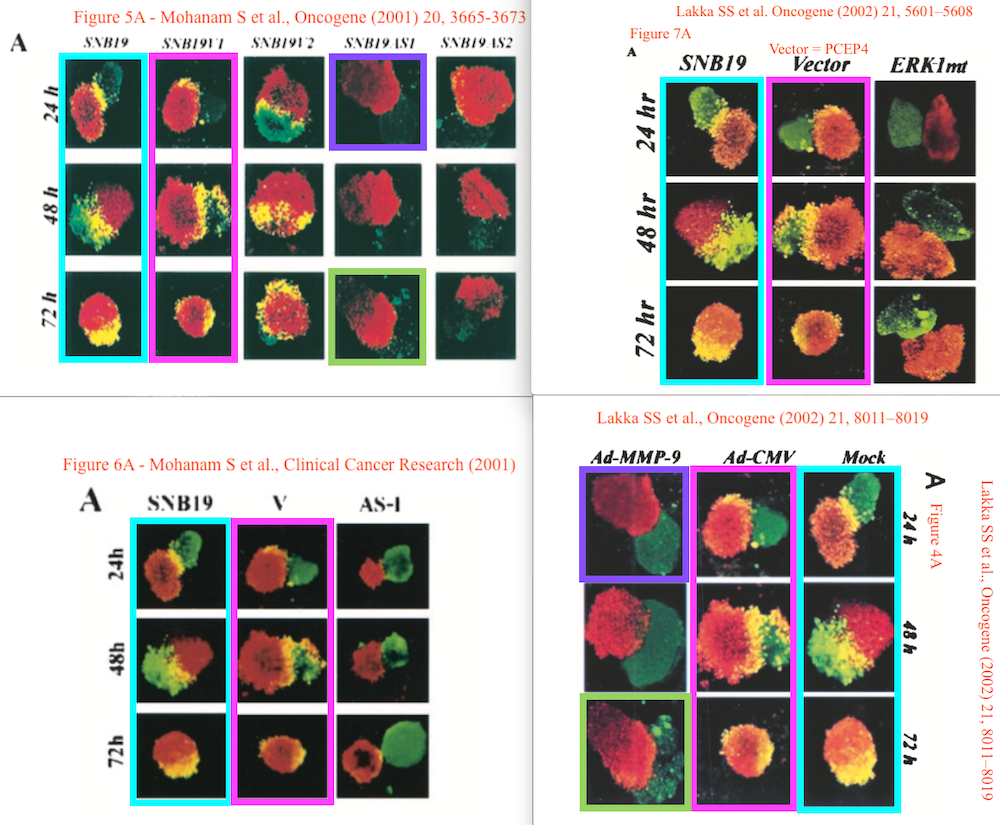

Lotus azoricus: “Figure 3 of this paper looks unexpectedly similar to Figure 6 of another paper by these authors”
The retraction from 9 April 2025 went:
“The Editors-in-Chief have retracted the article. Figure 3 appears to overlap with figure 6 of [1]. Figure 4A, the Mock panels and the Ad-CMV panels overlap with figures in three papers published earlier by some of the same authors [1,2,3]. Two panels in figure 4A representing AD-MMP-9 also appear to overlap in figure 5A of [2], representing different conditions. The Editors have lost confidence in the data and conclusions of this article.”
None of the authors was reachable or replied to the journal.
For the fourth Rao retraction, proceed to the next Short.
None of the other co-authors knew
This retracted paper, like those above from Jasti Rao‘s time at MD Anderson Cancer Center in Houston, Texas, was flagged on PubPeer in 2019:
Dimpy Koul , Ranjani Parthasarathy , Ruijun Shen , Michael A Davies , Samar A Jasser , Shravan K Chintala , Jasti S Rao, Yi Sun , Etty N Benvenisite , Ta-Jen Liu , W K Alfred Yung Suppression of matrix metalloproteinase-2 gene expression and invasion in human glioma cells by MMAC/PTEN Oncogene (2001) doi: 10.1038/sj.onc.1204799

Lotus azoricus: “Figure 2A. Three of the four panels appear to show the same groupings of cells, albeit stretched and zoomed-in differently.”
The retraction from 8 April 2025 went:
“The Editors-in-Chief have retracted this article. Three panels representing different conditions appear to overlap in figure 2A. The authors have been unable to provide a sufficient explanation to this concern. The Editors have lost confidence in the data and conclusions of this article.
The publisher has been unable to obtain current email addresses for authors Ranjani Parthasarathy, Ruijun Shen, Michael A Davies, Samar A Jasser, Yi Sun, Etty N Benvenisite, Ta-Jen Liu and Jasti S Rao. All other authors have not responded to the publisher regarding this retraction.”
Well, at least Wai-Kwan Alfred Yung, endowed chair at MD Anderson, was reachable. We learn that Yung “was appointed to Vice President Biden’s Cancer Moonshot Blue Ribbon Panel in 2016” and is currently “a member of the MDACC Cancer Moonshot Leadership Committee.”

Anil Sood and how much MD Anderson doesn’t care: whistleblowers speak out
“The graduate school at University of Texas MD Anderson does not care and keep sending students to his lab, Sood is a member of faculty there. RIO at MDACC doesn’t care because witnesses either left the country or are too afraid to speak.”
That was also not Yung’s first retraction. In 2014, he retracted a Novartis-funded study after HHS-ORI made fraud findings against the first author and Yung’s postdoc Jun Fu, who “admitted to knowingly and intentionally falsifying Figure 8a“. Yung informed Retraction Watch back then to have sacked Fu and requested the retraction.
Jun Fu , Dimpy Koul , Jun Yao , Shuzhen Wang , Ying Yuan , Howard Colman , Erik. P. Sulman , Frederick. F. Lang , W. K. Alfred Yung Novel HSP90 inhibitor NVP-HSP990 targets cell-cycle regulators to ablate Olig2-positive glioma tumor-initiating cells Cancer Research (2013) doi: 10.1158/0008-5472.can-12-2033
“A University of Texas MD Anderson Cancer Center internal investigation has found that Dr. Jun Fu committed research misconduct as defined by 42 CFR Part 93 and MD Anderson’s Research Misconduct Policy. Specifically, that Dr. Jun Fu falsified the data appearing in Figure 8B by modifying the death dates of mouse specimens to produce a fabricated survivability curve for GSC-11. Dr. Jun Fu has accepted full responsibility for this breach of research integrity. […]
The internal panel further concluded that none of the other co-authors of this article knew, or had reason to suspect that the data presented in the article had been manipulated by Dr. Jun Fu.
All co-authors have agreed to this retraction.”
Retraction November 2014
Now, maybe Fu is indeed a fraudster. Or maybe he was bullied into fraud, and then made a scapegoat?
Because look, Yu is not on the now retracted Oncogene paper by Yung and Rao, but the second author Dimpy Koul, now associate professor at MD Anderson, was the first author there. Here is another paper by Yung and Koul, and whom will they scapegoat here, surely not Yale professor Roel Verhaak:
Shaofang Wu , Shuzhen Wang , Siyuan Zheng , Roel Verhaak , Dimpy Koul, W K Alfred Yung MSK1-Mediated β-Catenin Phosphorylation Confers Resistance to PI3K/mTOR Inhibitors in Glioblastoma Molecular Cancer Therapeutics (2016) doi: 10.1158/1535-7163.mct-15-0857

Certainly, Yung and Kaul have more on PubPeer. Like this:
Dimpy Koul, Ruijun Shen , Sherry Bergh , Xiaoyang Sheng , Shishir Shishodia , Tiffany A. Lafortune , Yiling Lu , John F. De Groot , Gordon B. Mills , W.K. Alfred Yung Inhibition of Akt survival pathway by a small-molecule inhibitor in human glioblastoma Molecular Cancer Therapeutics (2006) doi: 10.1158/1535-7163.mct-05-0453


The collaborator Gordon Mills is Endowed Chair at the Knight Cancer Institute at Oregon Health & Science University, John de Groot is the Division Chief at UC San Francisco. Maybe they can explain what happened to the gel here, because Yung and Koul will probably blame some little student from China:
Dimpy Koul , Ruijun Shen , Sherry Bergh , Yiling Lu , John F. De Groot , Ta Jen Liu , Gordon B. Mills , W.K. Alfred Yung Targeting integrin-linked kinase inhibits Akt signaling pathways and decreases tumor progression of human glioblastoma Molecular Cancer Therapeutics (2005) doi: 10.1158/1535-7163.mct-05-0258


Former MD Anderson project director and assistant professor Ta Jen Liu is now Consultant at China Medical University in Taiwan. This is not a simple duplication, by Liu, Yung and Koul:
Ta-Jen Liu , Dimpy Koul , Tiffany LaFortune , Ningyi Tiao , Rui Jun Shen , Sauveur-Michel Maira , Carlos Garcia-Echevrria , W.K. Alfred Yung NVP-BEZ235, a novel dual phosphatidylinositol 3-kinase/mammalian target of rapamycin inhibitor, elicits multifaceted antitumor activities in human gliomas Molecular Cancer Therapeutics (2009) doi: 10.1158/1535-7163.mct-09-0160

And so is this one, not at all an honest mistake of oversight:
D. Koul , R. Shen , Y.-W. Kim , Y. Kondo , Y. Lu , J. Bankson , S. M. Ronen , D. L. Kirkpatrick , G. Powis , W. K. A. Yung Cellular and in vivo activity of a novel PI3K inhibitor, PX-866, against human glioblastoma Neuro-Oncology (2010) doi: 10.1093/neuonc/nop058

Yes, I do think it is more likely than not that Yung first bullied and blackmailed Fu into fraud, and then sacrifised his Chinese postdoc while playing the hero of research ethics himself. Think of the money Yung makes as MD Anderson professor, clinical oncologist and advisory board member at Roche and other pharma companies. Great rich man of science are above all laws.
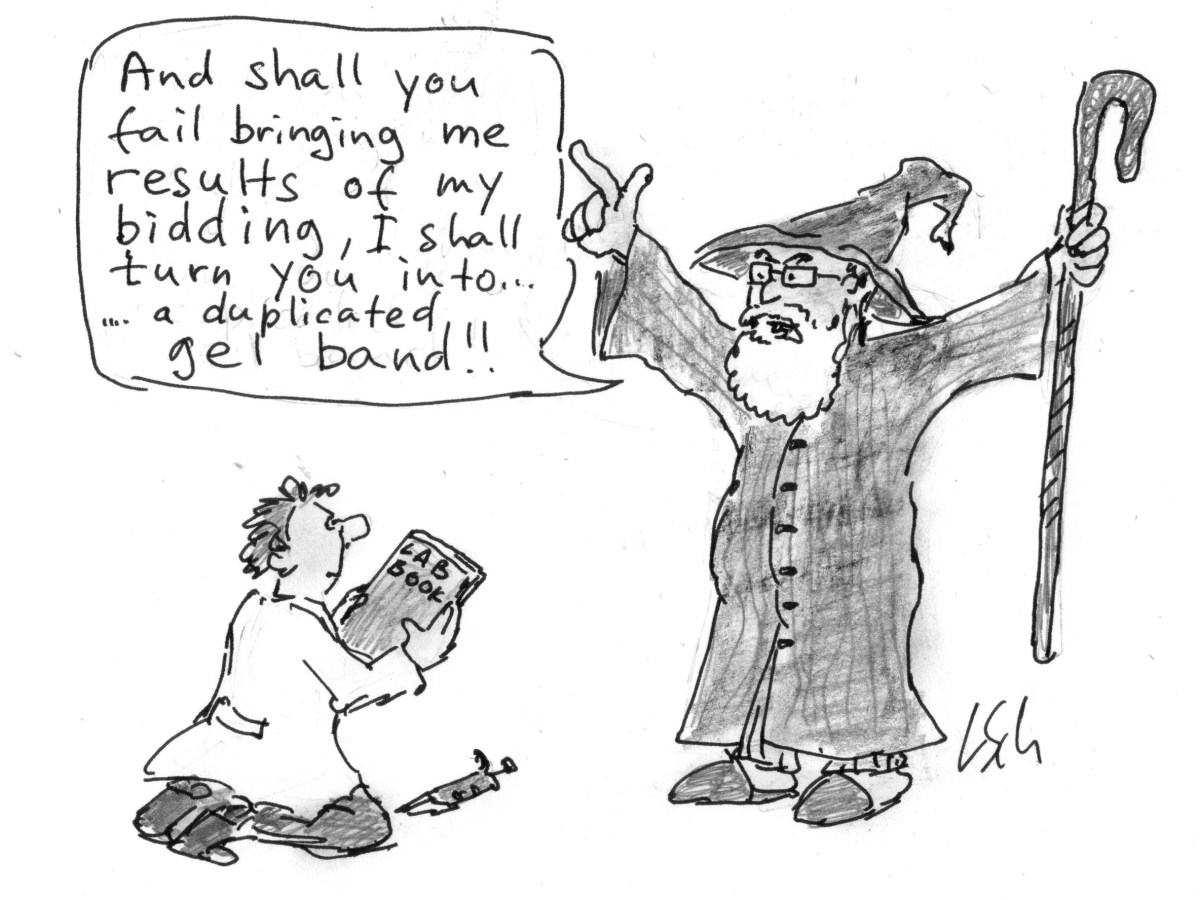
Salk Gandalf Tony Hunter gets AACR prize for magic western blots
Gandalf the Wizard has been awarded €75k in cash and Pezcoller-AACR International Award for Extraordinary Achievement in Cancer Research, for his magical western blots, where gel bands multiply under his spell to summon a bigger impact factor. Well, maybe not that Gandalf, but the bearded gel wizard Tony Hunter, of prestigious Salk Institute for Biological…
Here a fake paper by Yung with his former MD Anderson colleague Zhimin Lu (now back in China as dean of translational medicine at Zhejiang University), plus Lu’s mentor, the Salk Institute’s bigwig Tony Hunter:
Yan Xia , Ji Wang , Ta-Jen Liu , W.K. Alfred Yung , Tony Hunter , Zhimin Lu c-Jun downregulation by HDAC3-dependent transcriptional repression promotes osmotic stress-induced cell apoptosis Molecular Cell (2007) doi: 10.1016/j.molcel.2007.01.005


As it happens, Zhimin Lu has his own PubPeer record of bad science. These people just find each other. Often at MD Anderson.
Science Breakthroughs
Indistinguishable from magic
The US the biotech company Colossal is in all the news once again. They now de-exticted the dire wolf! That happened shortly after Colossal created a wooly mouse (read March 2025 Shorts), as a kind of teaser for their future product, the de-extincted wooly mammoth.
As reminder, Colossal is the business enterprise of the MIT professor George Church, which he runs with the tech bro Ben Lamb. Read here:
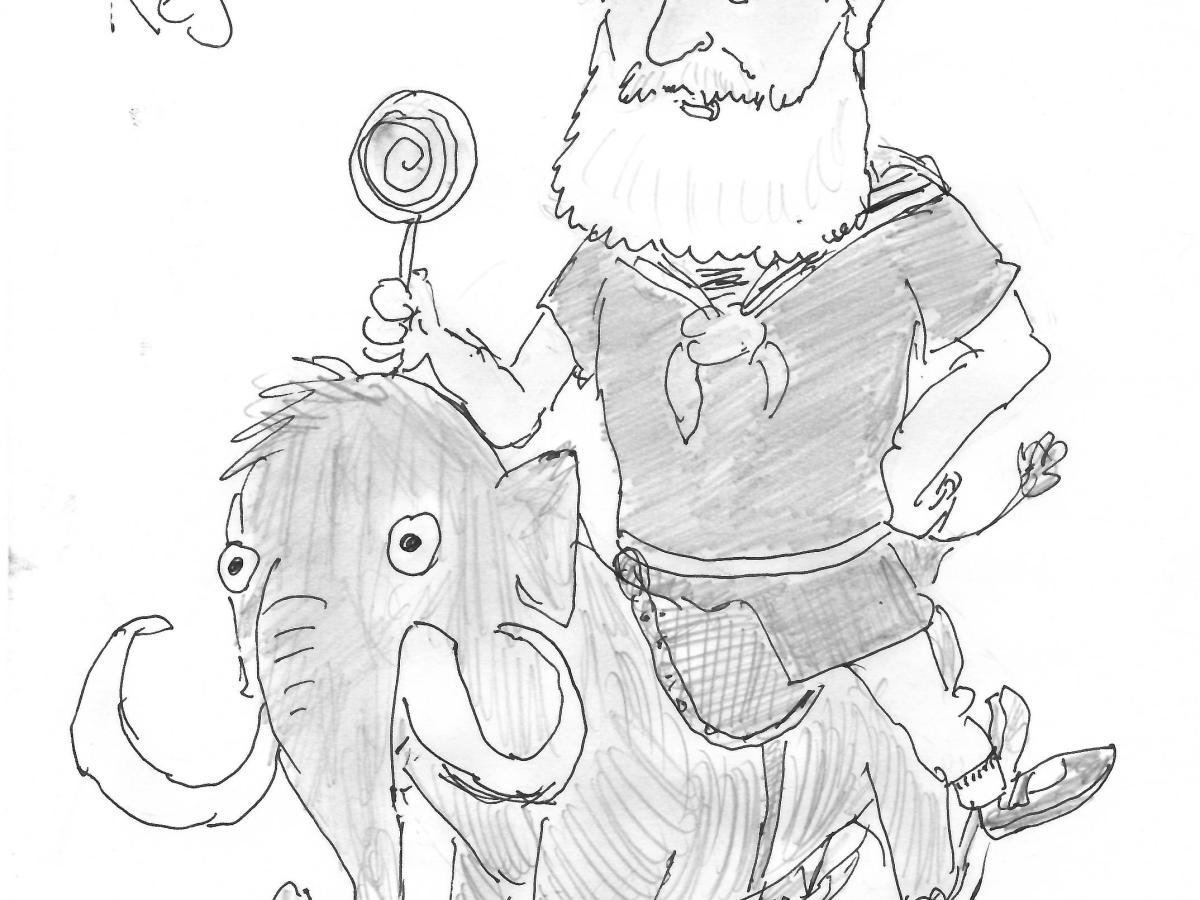
George Church, Colossal W*nker
From mammoths to eugenics to anti-aging scams: god-impersonator George Church knows how to make money with bullshit.
On 7 April 2025, TIME brought the exclusive news:
“The dire wolf once roamed an American range that extended as far south as Venezuela and as far north as Canada, but not a single one has been seen in over 10,000 years, when the species went extinct. Plenty of dire wolf remains have been discovered across the Americas, however, and that presented an opportunity for a company named Colossal Biosciences
Relying on deft genetic engineering and ancient, preserved DNA, Colossal scientists deciphered the dire wolf genome, rewrote the genetic code of the common gray wolf to match it, and, using domestic dogs as surrogate mothers, brought Romulus, Remus, and their sister, 2-month-old Khaleesi, into the world during three separate births last fall and this winter—effectively for the first time de-extincting a line of beasts whose live gene pool long ago vanished. TIME met the males (Khaleesi was not present due to her young age) at a fenced field in a U.S. wildlife facility on March 24, on the condition that their location remain a secret to protect the animals from prying eyes.
The dire wolf isn’t the only animal that Colossal, which was founded in 2021 and currently employs 130 scientists, wants to bring back. Also on their de-extinction wish list is the woolly mammoth, the dodo, and the thylacine, or Tasmanian tiger.”

A separate TIME article describes the genetic technology Colossal used to de-extict the dire wolf:
“Scientists first analyzed the genome of the dire wolves contained in the ancient tooth and skull. Comparing those genomes to that of the gray wolf—the dire wolf’s closest living relative—they identified 20 differences in 14 genes that account for the dire wolf’s distinguishing characteristics, including its greater size, white coat, wider head, larger teeth, more powerful shoulders, more-muscular legs, and characteristic vocalizations, especially howling and whining.
Next, they harvested endothelial progenitor cells (EPCs), which form the lining of bloodvessels, from the bloodstreams of living gray wolves—a less invasive procedure than taking a tissue sample—and edited the 14 genes in their nuclei to express those 20 dire wolf traits.”
The company’s CEO is quoted:
““Our team took DNA from a 13,000 year old tooth and a 72,000 year old skull and made healthy dire wolf puppies,” said Colossal CEO Ben Lamm in a statement that accompanied the announcement of the births. “It was once said, ‘any sufficiently advanced technology is indistinguishable from magic.’ Today, our team gets to unveil some of the magic they are working on.””
Well, the dire wolf was a) not a wolf, but a distant relative of the jackal, separated by over 6 millions year of evolution, and b) most certainly not white, that would be silly from the perspective of national selection in a snow-free environment. But then again, the fantasy dire wolves in the Game of Thrones movies were white, and this is what drove the Colossal inventors. Hence, the extant arctic wolf, which becomes completely white when it grows up. This subspecies of the grey wolf lives in Canadian tundra and is bigger than the usual grey wolf. Arctic wolves can be seen in zoos (even my local small one used to have them), also white wolf-dog hybrids exist, these animals can be easily bought or adopted from shelters, also in USA (took me a few seconds of googling).

Obviously all professional highly-paid science journalists struggle with knowing more animals than shown in an average baby book. White wolves? Must be magic!
I predict that Colossal will next unveil a quoll and declare it to be a de-extincted baby thylacine, because which science journalist knows what a quoll is? In fact, Lamm is already hinting at just that. Next, there might a turkey with a plastic beak strap-on presented as the dodo.
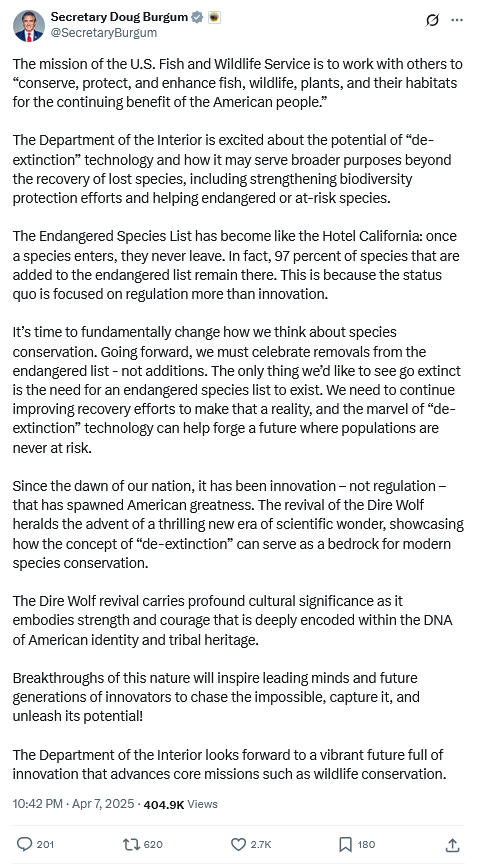
Trump regime is definetely impressed. Here is one capitalist freak whom Trump installed as Secretary of Interior, Doug Burgum, already calling to exterminate all living things on Earth because Colossal could always de-extict any animal species should anyone miss them.
Contrary to long-held beliefs
More silly news from science.
A report by Medical Xpress from 4 April 2025:
“Florida State University College of Medicine and University of Montpellier researchers found that older adults who were divorced or never married had a lower risk of developing dementia over an 18-year period compared to their married peers. Findings suggest that being unmarried may not increase vulnerability to cognitive decline, contrary to long-held beliefs in public health and aging research. […]
More than 24,000 participants without dementia at baseline were enrolled from over 42 Alzheimer’s Disease Research Centers across the United States through the National Alzheimer’s Coordinating Center. […]
Compared to married participants, divorced or never married showed a consistently lower risk of developing dementia over the study period. Dementia diagnoses occurred in 20.1% of the overall sample. Among married participants, 21.9% developed dementia during the study period. Incidence was identical among widowed participants at 21.9% but notably lower for divorced (12.8%) and never-married participants (12.4%).”
This is the paper:
Selin Karakose, Martina Luchetti, Yannick Stephan, Angelina R. Sutin, Antonio Terracciano Marital status and risk of dementia over 18 years: Surprising findings from the National Alzheimer’s Coordinating Center Alzheimer’s & Dementia (2025) doi: 10.1002/alz.70072
“Contrary to long-held beliefs” indeed. Whose beliefs though. In a study published just previously (Terracciano et al 2023), these exact same Florida authors proved that loneliness causes Parkinson’s. In their studies Luchetti et al 2020, Sutin et al 2020 over Sutin et al 2023 through Luchetti et al 2024, this exact same authors team kept repeatedly discovering that dementia is associated with being lonely. Basically, the opposite of being married!
But this finding is both predictable and sad. But turning 180° around to claim that being married causes brain damage, that is some really good clickbait. And fun!
Donate!
If you are interested to support my work, you can leave here a small tip of $5. Or several of small tips, just increase the amount as you like (2x=€10; 5x=€25). Your generous patronage of my journalism will be most appreciated!
€5.00
Donate!
If you are interested to support my work, you can leave here a small tip of $5. Or several of small tips, just increase the amount as you like (2x=€10; 5x=€25). Your generous patronage of my journalism will be most appreciated!
€5.00

 For Better Science
Interesting initiative that was published this week as preprint estimating the replicability of Brazilian biomedical science.
https://www.biorxiv.org/content/10.1101/2025.04.02.645026v2
”Replication rates for these experiments varied between 15 and 45% according to five predefined criteria. In median terms, relative effect sizes were 60% larger in original experiments than in replications, while coefficients of variation were 60% smaller.”
LikeLike
They mention dire wolves having “characteristic vocalizations, especially howling and whining”. How do they know what animals that died out 10,000 years ago sound like? Don’t play poker with one.
LikeLiked by 1 person
Delisting wolves from endangered status based on this phony claim of the dire wolf de-extinction is so wrong. Matches the overall lying Trump administration approach.
LikeLike
Who needs to fund science when you can now rely on magic?
LikeLike
Out now.
Featuring George RR Martin.
https://www.biorxiv.org/content/10.1101/2025.04.09.647074v1
LikeLike
Jasti Rao seems to have 22 retractions already.
LikeLike
Retractions keep arriving for Jasti Rao.
https://link.springer.com/article/10.1038/s41388-025-03401-4 (Expression of antisense uPAR and antisense uPA from a bicistronic adenoviral construct inhibits glioma cell invasion, tumor growth, and angiogenesis)
https://link.springer.com/article/10.1038/s41388-025-03404-1 (A novel function of tissue factor pathway inhibitor-2 (TFPI-2) in human glioma invasion)
https://link.springer.com/article/10.1038/s41388-025-03406-z (Downregulation of uPA inhibits migration and PI3k/Akt signaling in glioblastoma cells)
https://link.springer.com/article/10.1038/s41388-025-03385-1 (Suppression of glioma invasion and growth by adenovirus-mediated delivery of a bicistronic construct containing antisense uPAR and sense p16 gene sequences)
https://link.springer.com/article/10.1038/s41388-025-03405-0 (Blockade of cathepsin B expression in human glioblastoma cells is associated with suppression of angiogenesis)
https://link.springer.com/article/10.1038/s41388-025-03377-1 (Adenovirus-mediated transfer of siRNA against MMP-2 mRNA results in impaired invasion and tumor-induced angiogenesis, induces apoptosis in vitro and inhibits tumor growth in vivo in glioblastoma)
LikeLiked by 1 person
All in Oncogene I see!
LikeLiked by 1 person
I’m confused. Is this George R.R. Martin mentioned above the same person who wrote Game of Thrones, A Song for Lya, and Sandkings?
LikeLike
Yes!
https://eu.usatoday.com/story/entertainment/celebrities/2025/04/08/george-r-r-martin-dire-wolf-peter-jackson/82995360007/
LikeLike
Don’t forget Martin’s 1977 novel, ‘Dying of the Light’. Serialised in ‘Analog’ with illustrations by John Schoenherr. Back when I was only middle-aged.
LikeLike
Jan Eucker, head of oncology at the Charité Berlin Campus Benjamin Franklin.
Fresh problematic data:
PubPeer – The mTOR inhibitor RAD001 sensitizes tumor cells to the cyto…
LikeLiked by 1 person
Pingback: Ist der „Dire Wolf“ wirklich zurück? – Relativ Fiktiv
“national selection” is good… in these days of MAGA-insanity
LikeLike
“Charité will have another look” –
they get help from 13 other universities now:
https://nachrichten.idw-online.de/2025/04/15/berliner-hochschulen-gruenden-gemeinsame-ombudsstelle-fuer-gute-wissenschaftliche-praxis
LikeLike
So, the 14 Berlin universities establish a rotation principle for the central investigation. Basically, Charité will only submit their cases of fake western blots for investigation when Berlin Arts School or Berlin Theatre School are in charge.
LikeLike