

Schneider Shorts of 14 February 2025 – the Matthew Effect in Nobel retractions, Cambridge approves of papermilling, France rewards cheatery, with Karen and her mice, fake miRNA research in Canada, and finally, qualifications you need to get a top job in Switzerland.
Table of Discontent
Science Elites
- Very bright, very hardworking – Sylvain Lesné out of the job, Karen Ashe’s papers criticised
- Strictly Private and Confidential – University of Cambridge defends papermilling of Juan Manuel Gorriz
Scholarly Publishing
- Nail in the coffin – Jorge Hirsch and Maarten van Kampen, now peer-reviewed
Retraction Watchdogging
- Aberrations that cannot be explained – Thomas Südhof puts Matthew Effect in practice
- Severe abuse of scientific publishing system – Burton Yang’s fake miRNA research
- A third party posted image concerns – another retraction for Eliezer Masliah
- Pink ribbon scholarship – retraction and concerns at FASEB J for Carmen Garrido and Eric Solary
- Frontiers would like to thank Aneurus Inconstans – Christoph Thiemermann and mentee Sina Coldewey lose 4 papers
- Without the exceptional approval – Journal of Molecular Liquids retracts Davood Toghraie’s papers
Science Elites
Very bright, very hardworking
Sylvain Lesné, the Alzheimer’s fraudster, resigned from his professorship at the University of Minnesota in USA. Not voluntarily obviously, one can probably speculate he was finally sacked. Read about the case here:
Sylvain Lesné is a failed scientist
From Lesné’s public shame to successful role models of neuroscience like Aguzzi and Tessier-Lavigne.

The resignation was originally reported by the local newspaper Minnesota Reformer on 7 February 2025, citing a spokesman for the University of Minnesota that Lesne’s employment would end by 1 March 2025. Science reported on 10 February 2025:
“The move follows a 2.5-year investigation in which the university found problems with several other papers on which Lesné is an author. The Nature study has already been pulled, but the school has asked that four more of Lesné’s papers be retracted. […] MN spokesperson Jake Ricker said, “The university has identified data integrity concerns impacting several publications and has been in touch with those journals to recommend retraction of the publications, where appropriate.””
Matthew Schrag is credited with having discovered “most of the suspect papers by Lesné and colleagues“. Science journalist Charles Piller also mentions the role of Lesne’s boss, the UMN professor Karen Ashe:
“During an interview in January 2024, when this reporter was researching a book on Alzheimer’s, Ashe said that after Science exposed the problems, Lesné “vehemently denied” having doctored the images. But during a tense conversation with Ashe and UMN research integrity officials, “he wasn’t able to enlighten us on how it happened,” Ashe said. “I had no idea that he would ever do something like this, because he seemed fine—very bright, very hardworking.” She added: “I do really regret that Sylvain did what he did in my lab.””
However, Ashe is not a hero of research integrity. In his own new book “Doctored“, Piller writes about the Lesne case and mentions in that context an investigation by Mu Yang. Specifically, Mu analysed the so-called Morris maze mouse behavioural data in some papers by Ashe which were not coauthored by the fraudster Lesne, and found that “some of Ashe’s Water-maze data looked improbable“, for example in one study “very young and very old mice showed nearly the same test results“.
Mu now posted her concerns on PubPeer, follow the link for details:
Marcus A. Westerman , Deirdre Cooper-Blacketer , Ami Mariash , Linda Kotilinek , Takeshi Kawarabayashi , Linda H. Younkin , George A. Carlson , Steven G. Younkin , Karen H. Ashe The relationship between Abeta and memory in the Tg2576 mouse model of Alzheimer’s disease The Journal of neuroscience (2002) doi: 10.1523/jneurosci.22-05-01858.2002

Mu Yang: “Fig 3: Same-color boxes indicate data that appear similar. Dr. Ashe kindly shared original mean/SEM data (personal communication with Mr. Piller) which are very helpful — actual numbers made comparisons easier.”
Here another recent PubPeer post, for detailed analysis by Mu Yang follow the PubPeer link and to this LinkedIn post:
Martin Ramsden , Linda Kotilinek , Colleen Forster , Jennifer Paulson , Eileen McGowan , Karen SantaCruz , Aaron Guimaraes , Mei Yue , Jada Lewis , George Carlson , Michael Hutton , Karen H. Ashe Age-dependent neurofibrillary tangle formation, neuron loss, and memory impairment in a mouse model of human tauopathy (P301L) The Journal of neuroscience (2005) doi: 10.1523/jneurosci.3279-05.2005


Also in the book Doctored, Mu mentioned that in two other papers by Ashe some mouse results were reused “as if new“. See in this regard Mu’s LinkedIn post, and on PubPeer:
- Elizabeth L Steuer , Lisa J Kemper , Chris J W Hlynialuk , Kailee Leinonen-Wright , Michelle L Montonye , Ian P Lapcinski , Colleen L Forster , Karen H Ashe , Peng Liu Blocking Site-Specific Cleavage of Human Tau Delays Progression of Disease-Related Phenotypes in Genetically Matched Tau-Transgenic Mice Modeling Frontotemporal Dementia The Journal of neuroscience (2022) doi: 10.1523/jneurosci.0543-22.2022
- Julia E Gamache , Lisa Kemper , Elizabeth Steuer , Kailee Leinonen-Wright , Jessica M Choquette , Chris Hlynialuk , Kellie Benzow , Keith A Vossel , Weiming Xia , Michael D Koob , Karen H Ashe Developmental Pathogenicity of 4-Repeat Human Tau Is Lost with the P301L Mutation in Genetically Matched Tau-Transgenic Mice The Journal of neuroscience (2020) doi: 10.1523/jneurosci.1256-19.2019

On PubPeer, the authors confirmed in June 2023 that “The data used in the Gamache 2020 study and the Steuer 2022 study were from the same water maze experiment.” In July 2024, the last author Peng Liu insisted that “reanalysis of published data is permitted under certain conditions“, and pointed to this “Clarification” for the 2022 paper which the authors published on 15 December 2023:
“The data in Figures 5B, C, and D in Steuer et al., 2022 and in Figures 5D, E, and F in Gamache et al., 2020 were acquired concurrently, but the figures reported different data and statistical analyses.”
Since I mentioned Piller’s book Doctored: he also dedicates 3 short paragraphs to yours truly, where Piller writes about me:
“His penchant for hyperbole—at the meeting, he compared some scientists who might have engaged in doctoring images to Nazi doctor Josef Mengele, and journals to cigarette makers—has enraged his targets.”
I never compared science cheaters to Mengele. Never, not even indirectly. I am appalled that Piller decided to discredit me in this way.
Strictly Private and Confidential
In June 2024, Alexander Magazinov alerted the University of Cambridge that their research associate Juan Manuel Gorriz (who claims two doctorates and is professor at University of Granada in Spain) may have engaged in papermilling.
For example, an obviously papermilled fabrication from Iran, with Jiří Jaromír Klemeš and Amir Mosavi consisting of stupid tortured phrases. Did you know that “SARS” really stands for “Serious Intense Respiratory Disorder“?
Nooshin Ayoobi , Danial Sharifrazi , Roohallah Alizadehsani, Afshin Shoeibi , Juan M Gorriz, Hossein Moosaei, Abbas Khosravi, Saeid Nahavandi, Abdoulmohammad Gholamzadeh Chofreh, Feybi Ariani Goni, Jiří Jaromír Klemeš , Amir Mosavi Time series forecasting of new cases and new deaths rate for COVID-19 using deep learning methods Results in Physics (2021) doi: 10.1016/j.rinp.2021.104495

Another review by Gorriz and Iranians cited at least 5 retracted papers:
Afshin Shoeibi , Marjane Khodatars , Mahboobeh Jafari , Navid Ghassemi , Delaram Sadeghi , Parisa Moridian , Ali Khadem , Roohallah Alizadehsani , Sadiq Hussain , Assef Zare , Zahra Alizadeh Sani , Fahime Khozeimeh , Saeid Nahavandi , U. Rajendra Acharya , Juan M. Gorriz Automated detection and forecasting of COVID-19 using deep learning techniques: A review Neurocomputing (2024) doi: 10.1016/j.neucom.2024.127317
Then we have citation stacking:
Yudong Zhang , Lijia Deng , Hengde Zhu , Wei Wang , Zeyu Ren , Qinghua Zhou , Siyuan Lu , Shiting Sun , Ziquan Zhu , Juan Manuel Gorriz, Shuihua Wang Deep learning in food category recognition Information Fusion (2023) doi: 10.1016/j.inffus.2023.101859

Alexander Magazinov: “The bibliography of this review appears to be overblown.
For example, none of the 32 references from Section 3.2 bears any apparent relation to food category recognition. At best, a minority of them are related to food to some (variable) degree.”
Gorriz is hosted in Cambridge’s Department of Psychiatry by Professor John Suckling. This paper by Gorriz (then affiliated only with the University of Granada) was retracted for peer review fraud:
Ziquan Zhu , Siyuan Lu , Shui-Hua Wang , Juan Manuel Górriz , Yu-Dong Zhang BCNet: A Novel Network for Blood Cell Classification Frontiers in Cell and Developmental Biology (2021) doi: 10.3389/fcell.2021.813996
“Following publication, the publisher uncovered evidence that false identities were used in the peer-review process. The assignment of fake reviewers was confirmed by an investigation, conducted in accordance with Frontiers’ policies and the Committee on Publication Ethics (COPE) guidelines. Given the concerns, the editors no longer have confidence in the findings presented in the article. UPDATE (26 July 2024): This notice is to alert readers of this matter, it does not imply involvement of the co-authors. […]
The authors do not agree to this retraction.”
Retraction 5 January 2024
Quite possibly the update was added after the University of Cambridge interfered with Frontiers to defend their Spanish associate’s honour after Magazinov’s complaint. We can assume this because look what this elite English university told Magazinov, in this “Strictly Private and Confidential” letter from 7 February 2025:
The letter was signed by Rhys Morgan, Head of Research Policy, Governance and Integrity at the University of Cambridge:
“As you are aware, the concerns were reviewed by a reviewer independent of the Head of Department, the reviewer has concluded that in the case of the first paper listed above [Zhu et. Al, ‘BCNet: a novel network for blood cell classification’, Frontiers in Cell and Developmental Biology (2021)] the complaint falls outside the scope of the University’s Procedure as Dr Gorriz’s contribution was solely through his affiliation with the University of Granada. As such, the review concluded that this case is more appropriately handed by that institution.
In the remainder of the cases it was the view of the reviewer that the complaints raised do not fall within the definition of research misconduct as set out in the University’s Procedure. It has, however, been recommended that the concerns raised regarding the fourth paper listed above [Shoeibi et. al., ‘Automated detection and forecasting of COVID-19 using deep learning techniques: A review’, Neurocomputing (2024)] should be raised with the authors to decide whether a correction to the literature may be required.
Given the findings of the initial review, the Head of the Department of Psychiatry has decided to dismiss the complaints made.”
The Head of Department of Psychiatry is called Ed Bullmore, who should change his name to Ed Bullshitmore.
Now, Gorriz was employed by the University of Cambridge exactly because that (now retracted) paper was on his application. With fake papers it should be like with fake degrees: yes they were done elsewhere, but you got that job only because of these fakes, no?
Otherwise, papermilling with the Iranian regime is actually research misconduct and potential national security issue. It is nothing to be proud of, otherwise that whitewashing letter wouldn’t be stamped with “Strictly Private and Confidential”.
Scholarly Publishing
Nail in the coffin
Maarten van Kampen (who is a Dutch sleuth but without an academic affiliation) and Jorge Hirsch (who is a US academic and inventor of the h-index, but specialises on sleuthing) published a research paper together.
J.E. Hirsch , M. Van Kampen Analysis of “Revaluation of the lower critical field in superconducting H3S and LaH10 (Nature Comm. 13, 3194, 2022)” by V. S. Minkov et al Physica C Superconductivity (2025) doi: 10.1016/j.physc.2025.1354666
The peer-reveiwed paper is based on the arxiv preprint published last year. It is an independent re-analysis of this superconductor study by the russo-German physicist Mikhail Eremets, who died in November 2024, shortly after he finally and extremely reluctantly released the raw data of Minkov et al 2022, which Hirsch kept asking for since its publication:
V. S. Minkov, S. L. Bud’ko, F. F. Balakirev, V. B. Prakapenka, S. Chariton, R. J. Husband, H. P. Liermann, M. I. Eremets Magnetic field screening in hydrogen-rich high-temperature superconductors Nature Communications (2022) doi: 10.1038/s41467-022-30782-x
Dedicated readers might recall that last year I published on For Better Science a more-or-less lay version of Maarten’s analysis of Minkov et al 2022 :
Superconductive Witch Hunt
“J. Hirsch. […] engaged in unscrupulous practices, including falsifying analyses and selectively presenting data to support unfounded claims. […] Hirsch’s tactics include manipulation of public opinion, personal attacks on our team members, and threats and complaints to our management and funding agencies.” – Mikhail Eremets, the single most highly regarded high pressure experimentalist today.
Maarten contributed several excellent posts to this website, and indeed, on his preprint and the new peer-reviewed paper with Hirsch, Maarten decided to use the For Better Science affiliation:
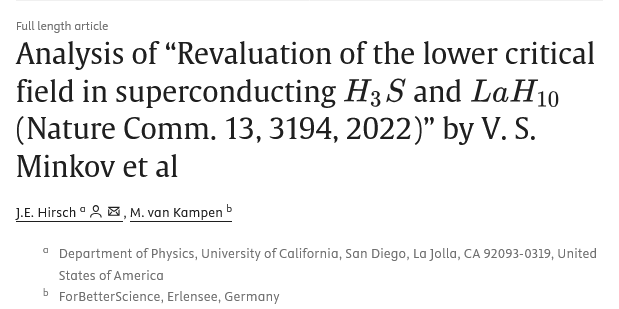
For details of this study, see September 2024 Shorts regarding the preprint. Those are the conclusions with which Hirsch & van Kampen paper ends:
“In this paper we have analyzed the relation between the results published in Ref. [1] and the underlying data reported in [8]. We also evaluated the consistency of the revaluation procedure reported in Ref. [7] that claims to lead to results consistent with those of Ref. [1]. We have found that:
- The data reported in Ref. [1] are incompatible with the underlying measured data of [8] in a variety of ways.
- The revaluation procedure [7] uses arbitrary criteria for choosing the parameters in the fitting procedure, and the large noise of the data precludes any objective determination of where they deviate from linearity.
- As a consequence of (1) and (2), the revaluation analysis presented in Ref. [7] does not support the conclusions drawn by the authors in Ref. [7] nor Ref. [1].
- Questions about the consistency of a variety of statements in Refs. [1], [2], [7] with reality remain open.
- The measured magnetic data [8] underlying the results published in Ref. [1] do not provide evidence that the samples studied are superconducting, contrary to the claims of Ref. [1].”
Naturelly, an expert swiftly arrived to discuss this study: none other but Ranga Dias, the infamous superconductor fraudster who had TWO Nature papers (and some others) retracted and who was sacked by the university of Rochester after being found guilty of massive fraud.
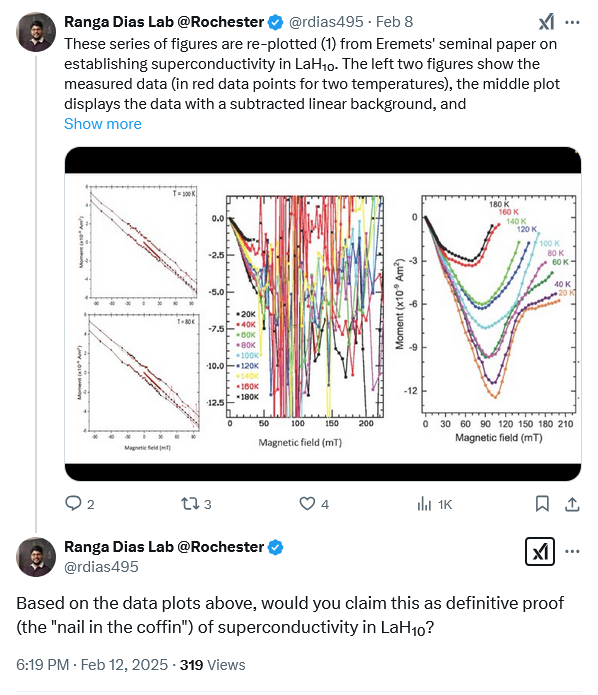
Dias is a pathological liar unable to say anything true. That is why he still claims on social media to have a lab at Rochester. As it happens, it was Hirsch and Maarten van Kampen who exposed Dias’s fraud, caused the retractions, and destroyed his stellar career and his start-up business “Unearthly Materials”:

Superconductive Fraud: The Sequel
“After the huge box-office success of “Nature 2020: Room-temperature superconductivity in CSH” this March our Nature studios released a sequel with the same star-studded cast: “Nature 2023: Near-ambient superconductivity in N-doped LuHx”. – Maarten van Kampen

Retraction Watchdogging
Aberrations that cannot be explained
Half a year ago, the Nobel prize laureate and Stanford professor Thomas Südhof announced to retract this paper:
Lulu Y. Chen, Man Jiang, Bo Zhang, Ozgun Gokce, Thomas C. Südhof Conditional Deletion of All Neurexins Defines Diversity of Essential Synaptic Organizer Functions for Neurexins Neuron (2017) doi: 10.1016/j.neuron.2017.04.011
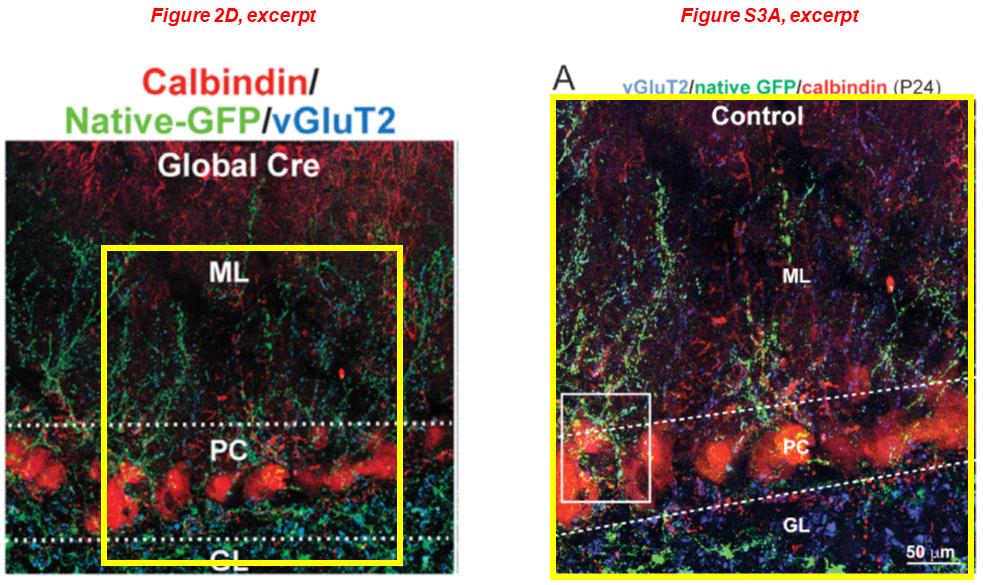
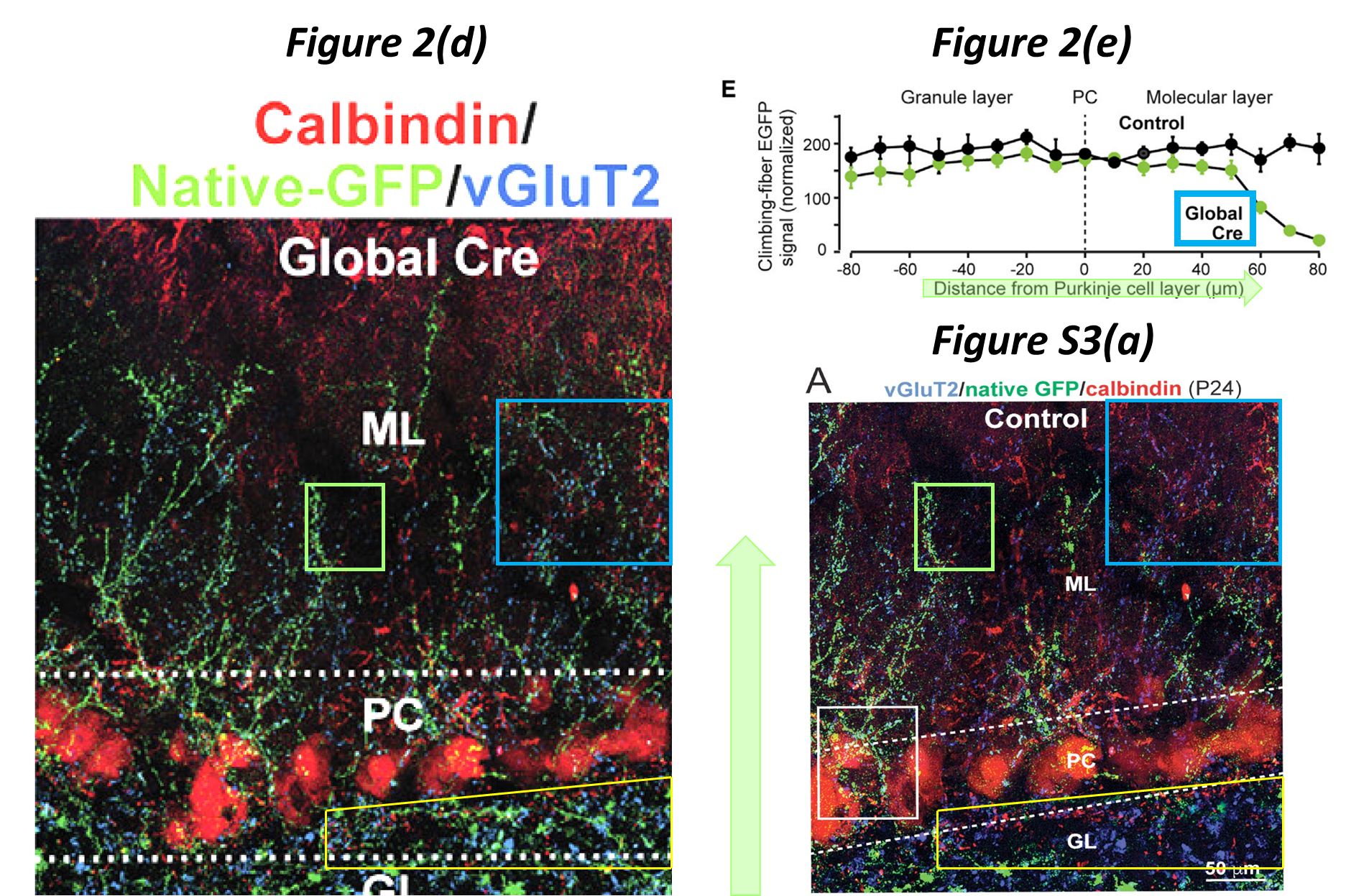
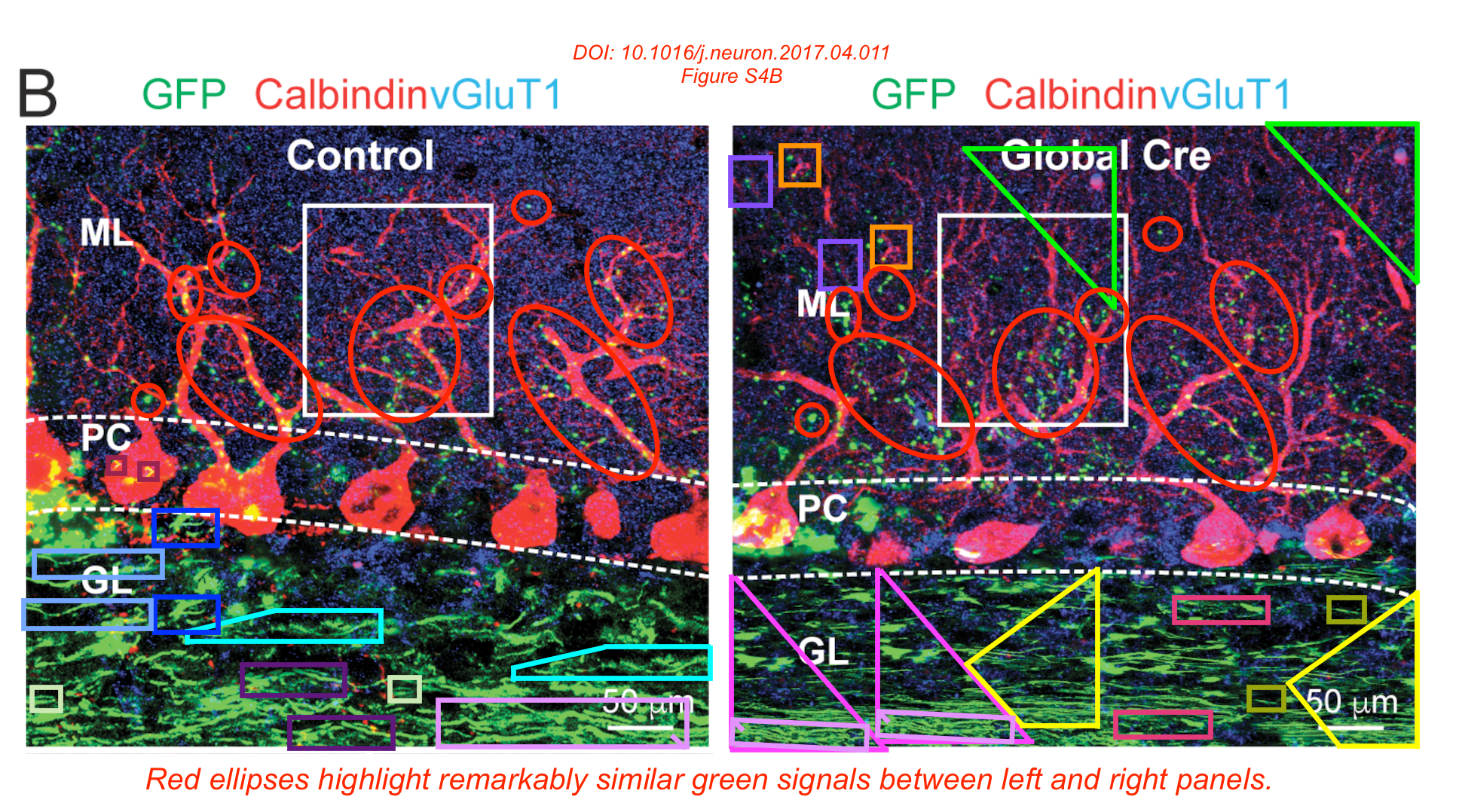
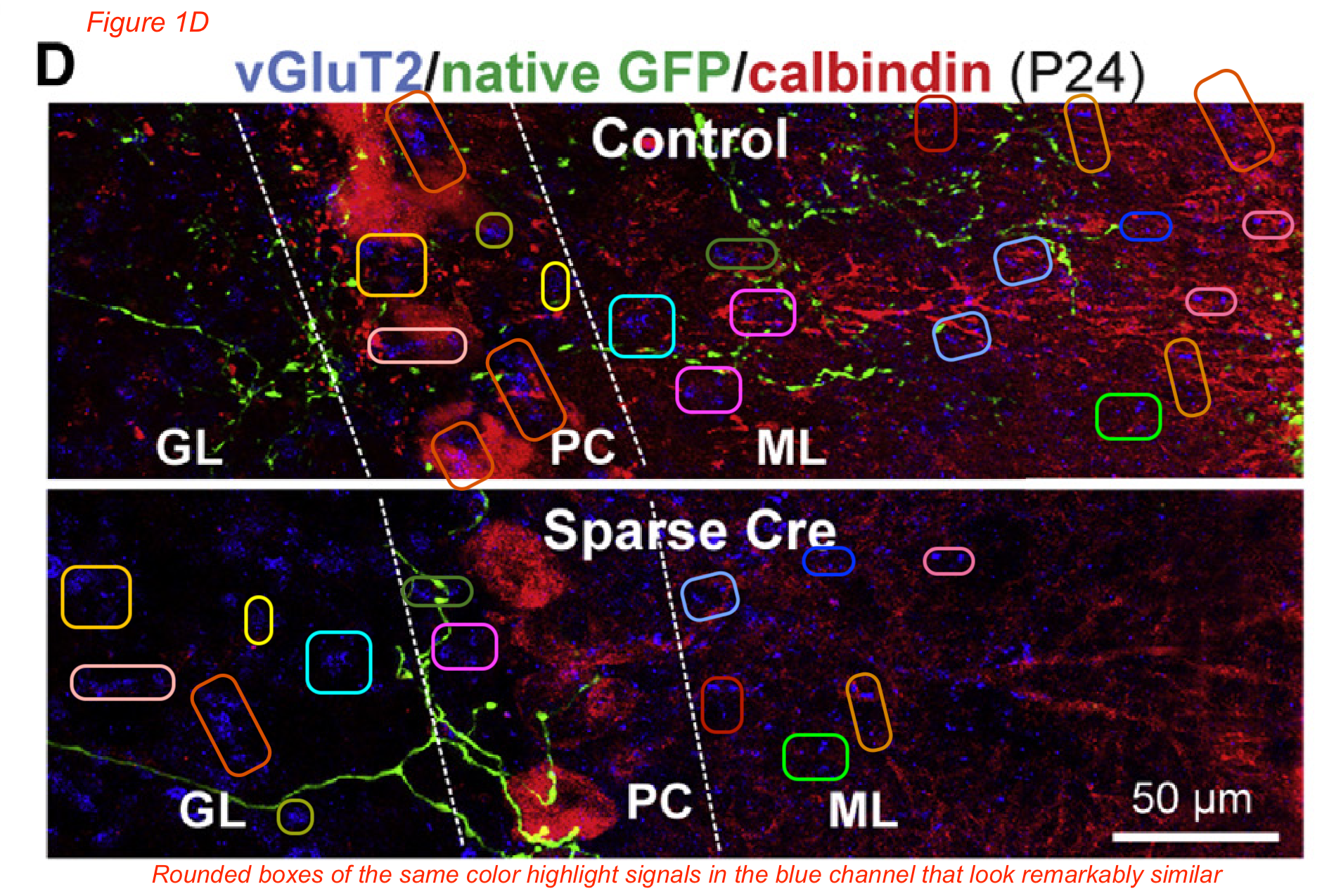
Read in the article below how Aneurus Inconstans, Maarten van Kampen and Elisabeth Bik found data manipulations in that paper, how Südhof and his mentee and first author Lulu Chen kept denying the evidence and insulting their critics (including on Südhof’s own Stanford website), and how the Nobelist eventually agreed to retract in August 2024 while blaming Chen for everything and crediting Matthew Schrag with the discoveries of others:
Thomas Südhof and AI-powered weapons of micro-duplication
Thomas Südhof, victim of racist and sexist persecution, announced to retract a second paper, “even though the quantitative analyses and conclusions are correct”.
The result of the 6 months long retraction negotiations is this retraction notice from 10 February 2025, it addresses only some of the criticised figures, declares all conclusions unaffected, and distributes credit away from the sleuths to much more respectable people (the Matthew Effect, pun intended):
“This article has been retracted at the request of the authors.
We, the authors of this publication, have decided to retract the paper because we found that the images in Figure 1D and Figure S4B contain aberrations that cannot be explained, and the original data for these figures are missing. Raw data for the other components of the paper are available, and their reanalysis confirmed the conclusions of the paper. We would like to thank M. Schrag for bringing these image aberrations to our attention.”:
Elisabeth Bik quipped on PubPeer:
“Of note, the authors’ wording of “we found” and “can not be explained” seem not reflect what was discussed above on this thread. It is also remarkable that only Dr. Schrag is thanked for bringing this to the authors’ attention.”
Actually, Schrag’s publicly recorded contribution to this case was only this bizarre PubPeer comment from April 2024:
“I would be cautious about over-interpreting these artifacts. Cloned patches within images related to microscopy or blot data are often among the more compelling signs of intentional image alteration, however, they can occur for benign reasons. In the current case, the cloned patches are adjacent to annotations, or the corners of images, and not in the focal areas which are essential for the scientific impact of the figure. While I would certainly discourage the use of cloning to remove or alter labels, scale bars, etc in an image, it is unlikely to alter the meaning of the underlying data. Additionally, we have confirmed numerous examples when these types of changes were introduced by journals or publishers (rather than the authors) to bring the figures into the cosmetic palette of the outlet.“
Severe abuse of scientific publishing system
A Canadian scholar loses a paper. Burton Yang is professor of medicine at the University of Toronto, senior scientist at the associated Sunnybrook Health Sciences Centre, Canada Research Chair, and Career Investigator for Heart and Stroke Foundation of Ontario.
The paper was previously criticised by Indigofera tanganyikensis on PubPeer for “poor methods for exosome isolation and lack of reliable proofs that the authors actually are studying exosomes“. Yet no data forgery was reported.
William W. Du , Xiangmin Li , Jian Ma , Ling Fang , Nan Wu , Feiya Li , Preet Dhaliwal , Weining Yang , Albert J. Yee , Burton B. Yang Promotion of tumor progression by exosome transmission of circular RNA circSKA3 Molecular Therapy – Nucleic Acids (2022) doi: 10.1016/j.omtn.2021.11.027
The retraction is dated with 11 March 2025, i.e. the future!
“This article has been retracted at the request of the editor-in-chief. Image analysis performed by the editorial office revealed the following evidence of partial image duplication in the supplemental information:
- between Figures S2B (Medium, Circ-SKA3) and S3B (Exosomes at the bottom well, circSKA3)
- between Figures S2A (Exosomes at the bottom well, Circ-SKA3) and S4A (Medium, Circ-SKA3)
- between Figures S3A (72h, Control) and S4B (72h, Digoxin, Circ-SKA3)
- between Figures S3B (No exosomes at the bottom well, control) and S4A (Digoxin, control)
This reuse of data without appropriate attribution represents a severe abuse of the scientific publishing system. The message with the decision to retract was undeliverable to one author (F.L.), and no other authors explicitly stated whether they agreed or disagreed with the decision to retract.”
Ruler of the Aging Papermill
Smut Clyde congratulates Aging: “This is bespoke tailoring, in contrast to the off-the-rack products cranked out by the average papermill […] no shame befalls the journals that accept these confections.”

That being Cell Press, it is unlikely they retracted the paper without a request from Yang’s institution. Certainly Yang’s earlier retraction in the papermill journal Aging cannot be explained with any editorial ethics initiatives:
Chen Diling , Qi Longkai , Guo Yinrui , Liu Yadi , Tang Xiaocui , Zhu Xiangxiang , Zeng Miao , Li Ran , Shuai Ou , Wang Dongdong , Xie Yizhen , Yuan Xujiang , Burton B. Yang , Wu Qingping improves the gut microbiome structure and function in AD-like mice Aging (2020) doi: 10.18632/aging.102614

This is the retraction from 30 July 30 2023:
“Aging has completed its investigation of this paper. We confirmed that the fecal transplantation data from the model group (the APP/PS1 mice) presented in Figure 2 (panels 2C-2F) were reused in a Brain Research article [1] published two years after this one. In addition, we found Western blot duplication presented in Figure 3, panels 3C (Expression of the proteins AChE, AMP, CHRNA1 and CHRNB1 in the brain tissues of SAMP8 mice after infection of over-expressing circNF1-419 AAV) and 3E (Expression of the proteins AChE, AMP, CHRNA1 and CHRNB1 in the brain tissues of 2-month-old mice after infection of over-expressing circNF1-419 AAV). All fourteen authors were notified and all agree to the retraction, though only twelve signed the retraction letter. Two authors, Burton B. Yang and Wu Qingping, stated that they did not have an opportunity to review the work or the manuscript before its submission. Dr. Yang also stated that he did not make a contribution to the paper, and his affiliation listed in the article does not correspond to his actual affiliation.”
But now that the sleuth Claire Francis flagged many more of Yang’s papers (over 20 on PubPeer), shall we expect many more retractions? Will Yang plead innocent ignorance there also?
For example, this isn’t really tenable:
Wang Sheng , Guizhi Wang , David P. La Pierre , Jianping Wen , Zhaoqun Deng , Chung-Kwun Amy Wong , Daniel Y. Lee , Burton B. Yang Versican mediates mesenchymal-epithelial transition Molecular Biology of the Cell (2006) doi: 10.1091/mbc.e05-10-0951


Or these two papers:
- William Weidong Du , Burton B. Yang , Bing L. Yang , Zhaoqun Deng , Ling Fang , Sze Wan Shan , Zina Jeyapalan , Yaou Zhang , Arun Seth , Albert J. Yee Versican G3 domain modulates breast cancer cell apoptosis: a mechanism for breast cancer cell response to chemotherapy and EGFR therapy PLOS One (2011) doi: 10.1371/journal.pone.0026396
- William Weidong Du , Ling Fang , Weining Yang , Wang Sheng , Yaou Zhang , Arun Seth , Burton B Yang , Albert J Yee The role of versican G3 domain in regulating breast cancer cell motility including effects on osteoblast cell growth and differentiation in vitro– evaluation towards understanding breast cancer cell bone metastasis BMC cancer (2012) doi: 10.1186/1471-2407-12-341


The last panel refers to Yang’s first-ever PubPeer thread, from 2017. It again features his colleague Albert Yee, division head at the same Sunnybrook Health Sciences Centre of the University of Toronto:
William Weidong Du , Burton B. Yang , Tatiana A. Shatseva , Bing L. Yang , Zhaoqun Deng , Sze Wan Shan , Daniel Y. Lee , Arun Seth , Albert J. Yee Versican G3 promotes mouse mammary tumor cell growth, migration, and metastasis by influencing EGF receptor signaling PLOS One (2010) doi: 10.1371/journal.pone.0013828

But then again, Yang works on microRNAs in cancer and other diseases. One cannot do science in this field, which was founded by the mega-cheaters Carlo Croce and George Calin, and is built almost entirely on Chinese papermills, without fabricating data.
More examples, spanning two decades of fake microRNA research:


Did you know that AAAS and Science run a new pay-to-publish-any-trash journal cleverly called Research? Yang already used it appropriately:

William W. Du , Chi Zhou , Hui Yang , Shuoyang Wen , Yu Chen , Eric X. Chen , Xiuwei H. Yang , Feiya Li , Kevin Y. Du , Hui Yuan , Ting Ye , Javeria Qadir , Burton B. Yang Aggravated Ulcerative Colitis via circNlgn-Mediated Suppression of Nuclear Actin Polymerization Research (2024) doi: 10.34133/research.0441
However, we have proof that Yang did some experiments, look, photos of tortured mice in breach of animal protection guidelines in cancer research:
Zina Jeyapalan , Zhaoqun Deng , Tatiana Shatseva , Ling Fang , Chengyan He , Burton B. Yang Expression of CD44 3′-untranslated region regulates endogenous microRNA functions in tumorigenesis and angiogenesis Nucleic Acids Research (2011) doi: 10.1093/nar/gkq1003

No, Dr Yang is not a kind man. But even PNAS wasn’t squeamish:
Daniel Y. Lee , Zhaoqun Deng , Chia-Hui Wang , Burton B. Yang MicroRNA-378 promotes cell survival, tumor growth, and angiogenesis by targeting SuFu and Fus-1 expression Proceedings of the National Academy of Sciences (2007) doi: 10.1073/pnas.0706901104

I wrote to Yang, but he never replied. Hopefully he is busy preparing more retractions. The Vice President of Sunnybrook, Kullervo Hynynen, told me:
“Alleged misconduct processes are confidential and as such, we are unable to comment on outcomes. However, Sunnybrook Research Institute takes research integrity seriously and any findings arising out of inquiries/investigations are thoroughly addressed to ensure scientific integrity is maintained.”
A third party posted image concerns
Elieser Masliah loss another paper. His fraud was exposed by Mu Yang with the help of some colleagues, which led to Masliah’s public shaming and sacking at NIH. Which is unfortunate, Masliah is exactly the right kind of fraudulent quack the Musk-Trump (Mump) regime would have loved to run their new NIH.
Cerebrolysin: Sharmas, Masliah, and EVER Pharma
“Poking around PubMed (Dysdera the spider is always on the hunt for new hornet’s nests) [..], I came across one image in two papers by Eliezer Masliah. […] By a conservative count, I contributed to about 160 out of 300 slides in the final dossier” – Mu Yang

Anyway, here is the newly retracted Masliah paper, the evidence was posted by Mu Yang on PubPeer as Dysdera arabisenen:
Brian Spencer , Sarah Michael , Jay Shen , Kori Kosberg , Edward Rockenstein, Christina Patrick , Anthony Adame , Eliezer Masliah Lentivirus Mediated Delivery of Neurosin Promotes Clearance of Wild-type α-Synuclein and Reduces the Pathology in an α-Synuclein Model of LBD Molecular therapy : the journal of the American Society of Gene Therapy (2013) doi: 10.1038/mt.2012.66


The retraction was published on 6 February 2025:
“This article has been retracted at the request of the editor-in-chief. A third party posted image concerns involving Figures 6A and 6B on Pubpeer: https://pubpeer.com/publications/EA0BC802844FFC8FCE7B5F4AE28994. Image analysis performed by the editorial office revealed the following evidence of image manipulation:
- [1. Duplication of lanes in Figure 1G (α-syn)
- [2. Duplication of lanes in Figure 1I (Actin)
- [3. Apparent copying/pasting of elements within Figure 6A (actin)
- [4. Apparent copying/pasting of elements and splicing within Figure 6B
- [5. Apparent copying/pasting of elements and splicing within Figure 6C (actin)
- [6. Apparent splicing between lanes in Figure S1B.
The authors provided any available original data upon request; however, the initial concerns could not be alleviated. Thus, the editors have lost faith in the findings presented in this study. The original notice of retraction was undeliverable to authors A.A., S.M., and E.R. Authors B.S. and E.M. disagree with this retraction and dispute the grounds for it.”
Edward Rockentein, UC San Diego professor and coauthor of ~90 fraudulent joint papers with Masliah, is indeed unreachable, having died in 2022. Masliah, who used to be professor at UCSD before becoming neuroscience director at National Institute on Aging, gave an eulogy at his funeral.
Pink ribbon scholarship
What a team on this retraction! We have Carmen Garrido, Director of Exceptional Class Research at INSERM in Dijon, France, her French colleague Eric Solary, professor at University of Paris-Saclay and former research director at the Gustave Roussy Institute in Paris (see October 2024 Shorts about both), and Martin Gleave, Distinguished Professor University of British Columbia (UBC), Canada (see another October 2024 Shorts).
Dominique Thuringer , Gaetan Jego , Guillaume Wettstein , Olivier Terrier , Laurent Cronier , Nadhir Yousfi , Sophie Hébrard , André Bouchot , Adonis Hazoumé , Anne‐Laure Joly , Martin Gleave , Manuel Rosa-Calatrava , Eric Solary , Carmen Garrido Extracellular HSP27 mediates angiogenesis through Toll‐like receptor 3 The FASEB Journal (2013) doi: 10.1096/fj.12-226977

Sailesh C Harwani , Nell S Lurain , M Reza Zariffard , Gregory T Spear Differential inhibition of human cytomegalovirus (HCMV) by toll-like receptor ligands mediated by interferon-beta in human foreskin fibroblasts and cervical tissue Virology Journal (2007) doi: 10.1186/1743-422x-4-133

Dominique Thuringer, Gaetan Jego , Kevin Berthenet , Arlette Hammann , Eric Solary, Carmen Garrido Gap junction-mediated transfer of miR-145-5p from microvascular endothelial cells to colon cancer cells inhibits angiogenesis Oncotarget (2016) doi: 10.18632/oncotarget.8583
The retraction arrived on 8 February 2025:
“The retraction has been agreed upon following an investigation into concerns raised by a third party which revealed inappropriate image panel duplications between this (Figure 3A) and another article published previously in a different scientific context. The investigation also revealed that the western blot panels of Figure 4E were later reused in a publication of the same author group, depicting different experimental conditions. Due to the number and the level of errors identified in the published figures, the authors and the editors have lost confidence in the presented data and consider the conclusions substantially compromised.”
You might wonder what punishments does France reserve for scientists who steal data. Well, is there is no mercy for Garrido now, according to national media reporting from January 2025:
“The Dijon researcher Carmen Garrido awarded for her research against breast cancer, with the pink ribbon scholarship. A price of 200,000 euros, which was awarded to her on Thursday, January 17, in the National Assembly. […]
“Yes it is a pride and I am very happy, but also very grateful to the association because this price will allow me to continue research because it is very expensive”, explains the researcher […] “When I was very young, I had a member of my family who died and it marked me a lot. So since very young, I really wanted to do research against cancer.”
What did you expect? Surely these €200k can’t be given to some loser who doesn’t even know how to fake science properly?
This fake paper by Garrido and Solary (plus with Saadi Khochbin, see March 2023 Shorts) in the same journal was solved with an Expression of Concern:
Arnaud Parcellier, Mathilde Brunet , Elise Schmitt , Edwige Col , Céline Didelot , Arlette Hammann , Keiko Nakayama , Keiichi I. Nakayama , Saadi Khochbin, Eric Solary , Carmen Garrido HSP27 favors ubiquitination and proteasomal degradation of p27Kip1 and helps S-phase re-entry in stressed cells The FASEB Journal (2006) doi: 10.1096/fj.05-4184fje


Garrido stated on PubPeer that FASEB editors disagree:
“The answers to the comments for this paper were sent to the editors of the paper that were satisfied with our answers, which included a power point with the magnified figures. They considered the matter closed and that not scientific misconduct was involved. Carmen Garrido“
That was not exactly true. On 15 January 2025, an Expression of Concern was issued:
“This Expression of Concern has been published due to concerns raised by a third party regarding highly similar image sections within Figures 1A, D, E, F, and H, Figures 5A and B, Figure 7C and Figure 10A; a potential duplication between Figure 1A and Figure 10A; and unacknowledged splicings within Figure 2B, and Figures 3A and B. The authors were informed about the concerns, and they were able to provide a satisfactory explanation and partial raw data to the concerns regarding Figures 1A, 2B, 3A, 3B, and 1D. However, without an adequate explanation of the anomaly in the rest of the figures and in the absence of the original raw data, the journal team could not verify the authenticity of these figures and could not exclude that these concerns affect the related conclusions of the article. Therefore, the journal has decided to issue an Expression of Concern to inform and alert the readers.”
In June 2024, Solary, together with Sarab Lizard-Nacol, Frédérique Végran and Romain Boidot, had to retract their ridiculously fake paper Vegran et al 2021, I wrote about that retraction in July 2024 Shorts. Also in July 2024, Boidot commented on PubPeer:
“We have made available, via this link (https://cloud.u-bourgogne.fr/index.php/s/33WNQBCMX4Nb3HJ), the letters we received, together with our replies to them, to show that the accusations made are false. We have also provided new figures showing the same results from the few data we had retained despite the 15-year delay.”
The link is dysfunctional of course.
Frontiers would like to thank Aneurus Inconstans
Christoph Thiemermann, the German-born Porsche lover, mentee the late Nobelist Sir John Vane and heir to his throne at the William Harvey Research Institute of the Queen Mary University London (QMUL), earns four more retractions. Making it eleven, and he still keeps his well-paid job and is totally safe from any unfavourable media reporting because this is how things work in Britain.
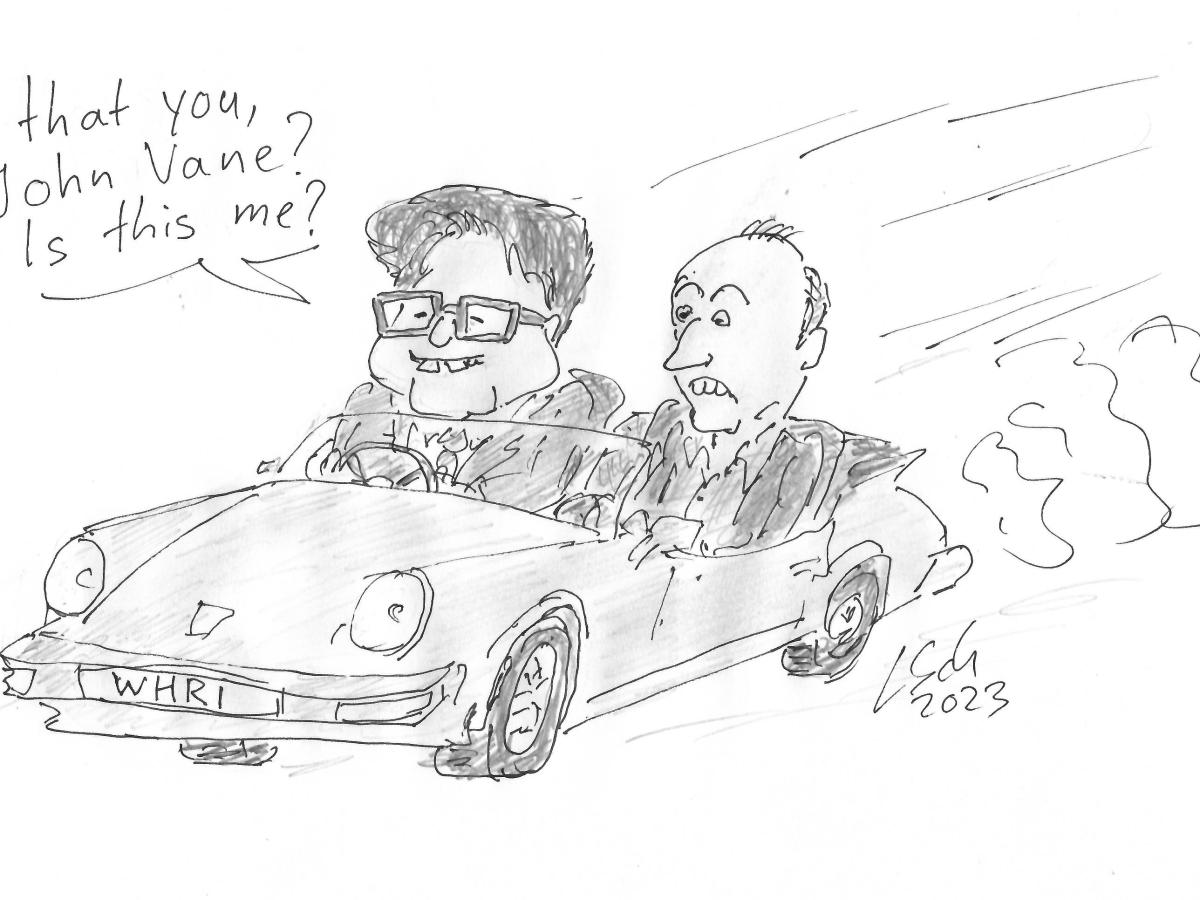
Queen Mary and John Vane’s Cowboys
Welcome to the the William Harvey Research Institute in London. Meet two proteges of its founder, the late Nobelist Sir John Vane: Chris Thiemermann and Mauro Perretti. Then meet their own rotten mentees, especially Salvatore Cuzzocrea and Jesmond Dalli.
All four new retractions in Frontiers. Number 1:
Chiara Verra , Shireen Mohammad , Gustavo Ferreira Alves , Elisa Porchietto , Sina Maren Coldewey , Massimo Collino , Christoph Thiemermann Baricitinib protects mice from sepsis-induced cardiac dysfunction and multiple-organ failure Frontiers in Immunology (2023) doi: 10.3389/fimmu.2023.1223014

The retraction appeared already on 8 November 2024:
“Following publication, concerns were raised regarding the integrity of the images in the published Figure 4. Western Blot images in Figure 4A showed duplication of bands (Total JAK2 female group). The authors failed to provide a satisfactory explanation during the investigation, which was conducted in accordance with Frontiers’ policies. As a result, the data and conclusions of the article have been deemed unreliable and the article has been retracted.”
We are also informed that Sina Maren Coldewey “does not agree to this retraction.” I can understand why. Just when in August 2025 she started her new extremely well-paid job at the University Hospital Zürich in Switzerland, where in January 2025 she was promoted to Director of the Institute for Anesthesiology and Perioperative Medicine. Between her training with Thiemermann and her move to Zürich, Coldewey was professor at the University of Jena in Germany.
Coldewey is coauthor on the other three retractions also, and don’t you think for a seocnd the University of Zürich doesn’t know. That is probably exactly why she got that job in the first place, the university is toxic. And I don’t mean just their cheating diva with a fictional PhD degree, Adriano Aguzzi.
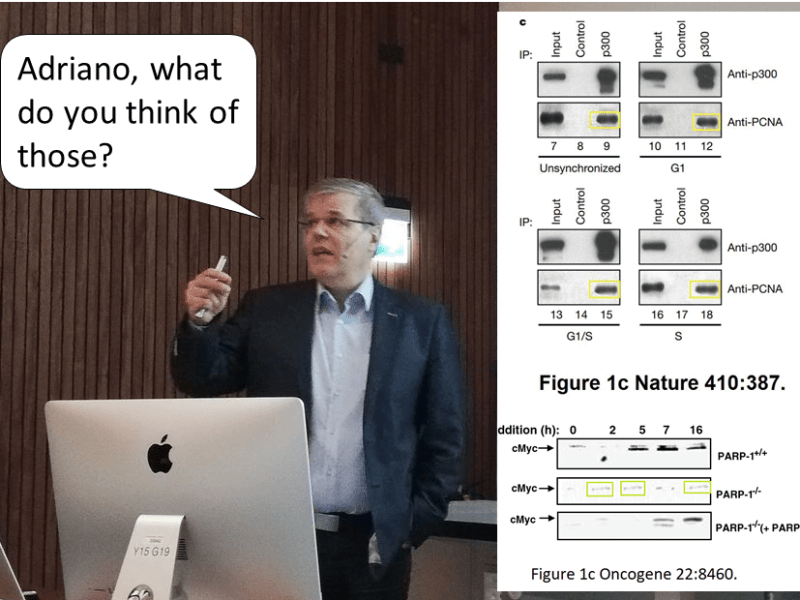
Michael HotTiger of Zurich, patron of biomedical ethics
University of Zurich and its Unispital has so much trouble with their medical professors right now. I wish to help.
Nr 2, again with Coldewey and with Massimo Collino, professor at University of Turin in Italy. Flagged by Claire Francis and retracted in January 2025:
Shireen Mohammad , Sura Al Zoubi , Debora Collotta , Nadine Krieg , Bianka Wissuwa , Gustavo Ferreira Alves , Gareth S. D. Purvis , Giuseppe Danilo Norata , Andrea Baragetti , Alberico Luigi Catapano , Egle Solito , Elisabeth Zechendorf , Tobias Schürholz , Wilmar Correa-Vargas , Klaus Brandenburg , Sina M. Coldewey , Massimo Collino, Muhammad M. Yaqoob , Lukas Martin , Christoph Thiemermann A Synthetic Peptide Designed to Neutralize Lipopolysaccharides Attenuates Metaflammation and Diet-Induced Metabolic Derangements in Mice Frontiers in Immunology (2021) doi: 10.3389/fimmu.2021.701275

The retraction from 28 January 2025 had a similar wording, mentioning “unexpected similarity was detected between western blot images presented in Figure 7” and ending with:
“The authors received a communication regarding the retraction and had a chance to respond. This communication is recorded by the publisher.”
Nr 3, flagged by Claire Francis and Aneurus inconstans, also retracted in January 2025:
Caroline E O’Riordan , Gareth S D Purvis, Debora Collotta, Fausto Chiazza, Bianka Wissuwa , Sura Al Zoubi , Lara Stiehler , Lukas Martin , Sina M Coldewey, Massimo Collino, Christoph Thiemermann Bruton’s Tyrosine Kinase Inhibition Attenuates the Cardiac Dysfunction Caused by Cecal Ligation and Puncture in Mice Frontiers in Immunology (2019) doi: 10.3389/fimmu.2019.02129


The retraction note from 27 January 2025 was again similar, it mentioned “unexpected similarity was detected between western blot images presented in Figure 3“, but ending with:
“Frontiers would like to thank Aneurus Inconstans for contacting the journal regarding the published article.”
Nr 4, also from January 2025:
Caroline E. O’Riordan, Gareth S. D. Purvis, Debora Collotta, Nadine Krieg , Bianka Wissuwa , Madeeha H. Sheikh , Gustavo Ferreira Alves , Shireen Mohammad , Lauren A. Callender , Sina M. Coldewey, Massimo Collino, David R. Greaves , Christoph Thiemermann X-Linked Immunodeficient Mice With No Functional Bruton’s Tyrosine Kinase Are Protected From Sepsis-Induced Multiple Organ Failure Frontiers in Immunology (2020) doi: 10.3389/fimmu.2020.581758


The retraction from 28 January 2025 mentioned “unexpected similarity was detected between western blot images presented in Figure 5” and also thanked “Aneurus Inconstans for contacting the journal regarding the published article“.
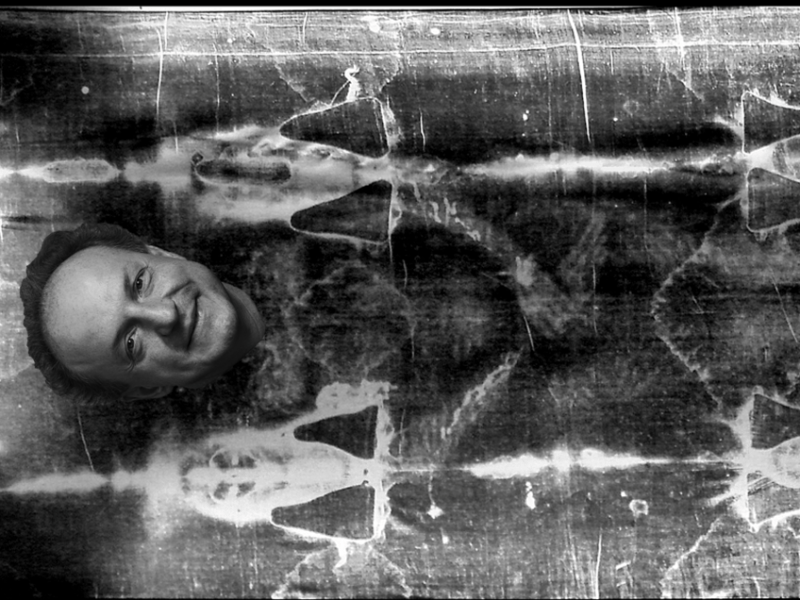
Now, I am sure that when someone in Zürich dares to speak about those retractions to Coldewey that the last thing they will hear before getting fired will be that she had absolutely nothing to do with those fake papers by Thiemermann.
I am here to help put things into perspective. First author:
Sina M Coldewey, Areeg I Khan , Amar Kapoor , Massimo Collino, Mara Rogazzo, Michael Brines , Anthony Cerami , Peter Hall , Michael Sheaff , Julius E Kieswich, Muhammed M Yaqoob, Nimesh S A Patel, Christoph Thiemermann Erythropoietin attenuates acute kidney dysfunction in murine experimental sepsis by activation of the β-common receptor Kidney International (2013) doi: 10.1038/ki.2013.118

Individual actin bands (red and blue boxes) appear more than once also within the same blot, meaning these controls are made up. Moreover, the same blot describes Akt pSer 473 and actin (green boxes).”

But then again, that wasn’t retarcted, so it is OK. Just like this paper by Coldewey:
Sina M Coldewey, Mara Rogazzo , Massimo Collino , Nimesh S A Patel , Christoph Thiemermann Inhibition of IκB kinase reduces the multiple organ dysfunction caused by sepsis in the mouse Disease Models & Mechanisms (2013) doi: 10.1242/dmm.012435


Coldewey and the University of Zurich did not reply to me. Not even to deny that the Swiss university knew about Coldewey’s PubPeer problems and impending retractions before her employment and promotion.
Back to Thiemermann. Already in 2018 he suffered a retraction with none other but David Latchman, the billionaire heir and repeatedly whitewashed Master of Birkbeck College in London (part of UCL)!

David Latchman, uncensored
I publish exclusively two uncensored UCL screening panel reports into the David Latchman and Anastasis Stephanou affair. Now we know which papers were investigated and which requested retractions didn’t happen.
On the retracted paper are Latchman’s minions Tiziano Scarabelli (with his wife Carol) and Anastasis Stephanou, the two naughty boys got the full blame for all the fakeries. Plus Gerry Melino’s buddy Richard Knight!
Seán P. Barry, Samir Ounzain, James McCormick, Tiziano M. Scarabelli, Carol Chen-Scarabelli, Louis I.I. Saravolatz, Giuseppe Faggian, Alessandro Mazzucco, Hisanori Suzuki, Christoph Thiemermann, Richard A. Knight, David S. Latchman, Anastasis Stephanou Enhanced IL-17 signalling following myocardial ischaemia/reperfusion injury International Journal of Cardiology (2013) doi: 10.1016/j.ijcard.2011.08.849

The 2018 retraction went:
“University College of London has undertaken an investigation into allegations received that the above publication contained images that had been deliberately manipulated. The precise details of the allegation are as follows:
•The images in Figure 5B labelled Control, I/R and I/R+IL-17n both used a section of the same image, with additional features (yellow TUNEL labelled nuclei representing dying cells) having been either added or taken away; •In addition, the Control panel in Figure 5B appeared to be a horizontal flip and crop of the Control panel in Figure 4A of “Minocycline inhibits caspase activation and reactivation, increases the ratio of XIAP to smac/DIABLO, and reduces the mitochondrial leakage of cytochrome C and smac/DIABLO” Scarabelli etal, Journal of the American College of Cardiology, 43, 865-874 (2004) https://doi.org/10.1016/j.jacc.2003.09.050 (web archive link) The panel conducting the investigation found that it was clear that the images had been intentionally manipulated as alleged, concluding that research misconduct had occurred. Therefore the editor decided to retract this paper.”
Without the exceptional approval
Several retractions for the Iranian papermill operator Davood Toghraie in Elsevier’s Journal of Molecular Liquids. The papers were not previously flagged on PubPeer, the retractions were therefore part of the spring cleaning Elsevier started at this journal because Mu Yang made fun of it:
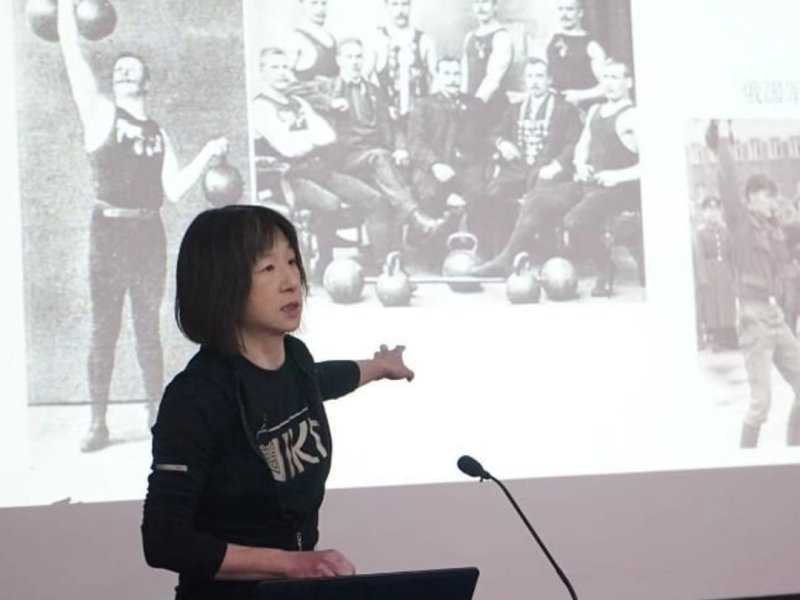
Journal of Molecular Liquids vs One-Man Papermills
Mu Yang catches two crooks, Ayman Atta and S Muthu, who flooded one Elsevier journal (and several others) with ridiculous hand-drawn fraud. Whom to believe, the peer review, or your own eyes?
Here, Toghraie was the only author on the original submission:
Shu-Rong Yan , Davood Toghraie , Mabood Hekmatifar , Mehdi Miansari , Sara Rostami Molecular dynamics simulation of Water-Copper nanofluid flow in a three-dimensional nanochannel with different types of surface roughness geometry Journal of Molecular Liquids (2020) doi: 10.1016/j.molliq.2020.113222
“Post-publication, the editor discovered suspicious changes in authorship between the original submission and the revised version of this paper.
The authors’ names Shu-Rong Yan, Mabood Hekmatifar, Mehdi Miansari and Sara Rostami were all added to the revised paper without explanation and without the exceptional approval by the journal editor, which is contrary to the journal policy on changes to authorship.”
Retraction 11 February 2025.
Also here several authors were added during revision:
Yanfang Zhu , Mohammad Zamani , Guiyang Xu , Davood Toghraie , Mohammad Hashemian , As’ad Alizadeh A comprehensive experimental investigation of dynamic viscosity of MWCNT-WO3/water-ethylene glycol antifreeze hybrid nanofluid Journal of Molecular Liquids (2021) doi: 10.1016/j.molliq.2021.115986
“The authors’ names As’ad Alizadeh, Yanfang Zhu and Guiyang Xu were all added to the revised paper without explanation…”
Retraction 7 February 2025.
And here a retraction for Toghraie and Yu-Ming Chu, who was originally noticed by Alexander Magazinov as the dude who buys tons of citations to his papers. Both gentlemen are mentioned here:
Shake the Stupid Tree and see what falls out
“Does this mean it’s time for an update on the bogus-citation economy? Leonid thought it is, and now you all must suffer for his misdirected priorities. ” – Smut Clyde
Chu was also added during revision:
Muhammad Ibrahim , Tareq Saeed , Maboud Hekmatifar , Roozbeh Sabetvand , Yu-Ming Chu , Davood Toghraie Investigation of dynamical behavior of 3LPT protein – water molecules interactions in atomic structures using molecular dynamics simulation Journal of Molecular Liquids (2021) doi: 10.1016/j.molliq.2021.115615
“Post-publication, the editor discovered suspicious changes in authorship between the original submission and the revised version of this paper.
The authors’ names Muhammad Ibrahim, Tareq Saeed and Yu-Ming Chu were all added to the revised paper without explanation and without the exceptional approval by the journal editor, which is contrary to the journal policy on changes to authorship.”
Retraction 6 February 2025.
Of course also the duo Muhammad Ibrahim and Tareq Saeed are established papermillers. In April 2024, they retracted this paper, in another Elsevier journal undergoing a very slow cleaning process. It was also flagged by Magazinov:
Muhammad Ibrahim , Tareq Saeed , M.A. El-Shorbagy , Taher A. Nofal , Nudrat Aamir Study of pressure drop and heat transfer in cooling of lithium-ion battery with rhombic arrangement with two different outlets and different inlet dimensions Journal of Energy Storage (2022) doi: 10.1016/j.est.2022.104255
Lithium batteries are often used due to their high capacity and good energy density [41–45].
[42] M.A. Ashraf, C. Li, D. Zhang, D. Ross, Retraction notice to “Battery thermal management with conjugate heat transfer in heat sink with Fe 3 O 4 /CNT-water nanofluid using lattice Boltzmann/finite volume method” [CEP 146 (2019) 107708], Chem. Eng. Proc. Process Intensif. 155 (2020), 108020, 2020/09/01/.
Retraction Watch even wrote about that retraction notice which Saeed and his friends decided to reference. Otherwise, the paper contains blocks of references to papermill fabrications by Changhe Li, plus to papers by the above discussed Yu-Ming Chu, plus to the editors of that special issue Masoud Afrand and Nader Karimi, plus to Arash Karimipour, Somchai Wongwises, plus some Yongbing Tang, and of course also to themselves.
Maybe stop accepting submissions, Herr Prof Dr Sauer?
Who needs science if you can have a 75 paper strong special edition by Afrand and Karimi? A guest post by Alexander Magazinov.

In April 2024, as the special issue was slowly cleaned up, that paper was retracted:
“the editor discovered suspicious changes in authorship between the original submission and the revised version of this paper. In summary, the author names M. A. El-Shorbagy, Taher A. Nofal, and Nudrat Aamir were added to the revised paper without explanation and without exceptional approval by the journal editor, which is contrary to the journal policy on changes to authorship.
The authors failed to provide a satisfactory explanation to the above points.
The editor therefore feels that the findings of the manuscript cannot be relied upon and that the article needs to be retracted.”
Donate!
If you are interested to support my work, you can leave here a small tip of $5. Or several of small tips, just increase the amount as you like (2x=€10; 5x=€25). Your generous patronage of my journalism will be most appreciated!
€5.00
Donate!
If you are interested to support my work, you can leave here a small tip of $5. Or several of small tips, just increase the amount as you like (2x=€10; 5x=€25). Your generous patronage of my journalism will be most appreciated!
€5.00

 For Better Science
Science Breakthrough
Cancer cured! First time this year?
KAIST Discovers Molecular Switch that Reverses Cancerous Transformation at the Critical Moment of Transition
https://news.kaist.ac.kr/newsen/html/news/?mode=V&mng_no=43810
‘… an original technology for cancer reversal treatment that does not kill cancer cells but only changes their characteristics to reverse them to a state similar to normal cells.’!
LikeLiked by 1 person
Gareth Purvis earns retractions with Christoph. This is someone I know very well, we were on the same undergraduate course and completed our third year project at the same time in the same lab. We had a lot of fun, although neither of us really seemed apt for research to be fair. We spent more time in the clubs in the evening than we ever did in the lab I’m quite sure.
LikeLike
As I recall, Piller described our delightful bog host as “cantankerous” (!).
The section where Piller goes to UMN and talks with Ashe is extremely memorable. I’ve read that part now 3 times; interesting to hear Ashe’s perspective. Its all relative: to me, even with a greatly reduced lab she has bragging rights, but still she feels greatly injured by what happened (“one arm cut off”). This experience may well shorten her life, based on what I’ve seen to others in high position knocked down by fraud. I think she needs to find “humility” and “patience” within herself if she wants to literally “save her soul” for a long life.
Lesne, on the other hand, will probably be fine with his attractive young wife. https://www.inforum.com/caroline-lesne
Wow, just wow.
LikeLike
I met with Sylvain Lesné at a discussion in a conference. He had an air of flippant energetic genius, eager to establish dominance in conversation while manifestly impatient with ideas he found tedious. The “alpha type” we all love to work with. But, in the end, isn’t there a selection for this archetype? To succeed at all cost? Others merely run a “tighter ship” and evade scrutiny. For the time being.
LikeLike
Yes, there is a selection for that archetype. Being fast with your response and your words, and sounding confident that you are right goes very far with impressing people in science. The last guy I worked for was like this but in light of the fact he got so many facts wrong (I knew the field he was talking about), I think he was speaking largely gibberish (making stuff up as he was talking) to come off as smart. This, too, is selected for in academic science. Academic science, over time, seems to have become more of the province of con artists.
LikeLike
That confirms my pet theory that most science fraudsters actually think they are honest geniuses and it is the experimental reality which is wrong.
LikeLike
Michael Jones made an interesting comment. I also noted that frequently (although not systematically), these “flippant energetic genius” are speaking with a loud voice in conferences, voicing their arguments like a carpenter pounding nails with a heavy hammer, and attract naive young fellows into the clutches of their network (very useful for the Lab members photo on the home page of the alpha guy’s web site). The other side of the coin also exists, fortunately, even if this side is less newsworthy. As an example, I remember Yves Chauvin in a couple of conferences… A different world, really.
LikeLike
Yes, you have to surround yourself with “yes men” and gradually you’ll start believing in their flattering => a “genius” has been uncovered. This is the natural way of each tyrant evolution.
LikeLike
It’s interesting that Dias is still identifying himself as “Dias Lab @ Rochester”. Where in Rochester? Certainly not at the University! I wonder if our lawyers can send him a cease and desist for continuing to portray himself as affiliated with the institution? But then again, it’s on X-shitter, where there are no rules.
LikeLiked by 2 people
“….the complaint falls outside the scope of the University’s Procedure as Dr Gorriz’s contribution was solely through his affiliation with the University of Granada. As such, the review concluded that this case is more appropriately handed by that institution…..”
Dear Rhys Morgan
Don’t you think that if a researcher who has affiliation with Granada as well as with you is found to have committed fraud with Granada’s affiliation, you should expel that researcher from your institution as much as it is reasonable for Granada to be handed by Granada, as you mentioned? Or do your researchers with multiple affiliations have the right to cheat with all other affiliations except your university’s affiliation?
At the very least, your recommendation that Granada should deal with such a researcher would be more valuable if you disassociate your institution from him.
LikeLike
Poor Sylvain Lesné, just one retraction and he was fired. Instead, Christoph “Porsche” Thiemermann, after 11 retractions and 2 EoC, is still there at Queen Mary University of London with a fat salary while also enriching his social security contributions. That’s truly unfair.
LikeLike
The main difference is: Lesne was in all the news worldwide. Porsche Chris was only on FBS.
Totally of no interest for British media.
LikeLike
“For example, this isn’t really tenable:
Wang Sheng , Guizhi Wang , David P. La Pierre , Jianping Wen , Zhaoqun Deng , Chung-Kwun Amy Wong , Daniel Y. Lee , Burton B. Yang Versican mediates mesenchymal-epithelial transition Molecular Biology of the Cell (2006) doi: 10.1091/mbc.e05-10-0951 “
I think it is perfectly tenable, would go as far as to say that it is safe as houses, unless there is a war involving Canada, you never know! War is only politics continued by another means. This year it might be on the cards.
Molecular Biology of the Cell hardly corrects, or retracts, anything.
3 comments on PubPeer (by: Andryala Dentata, Rheum Delavayi)
LikeLike
“Pink ribbon scholarship
What a team on this retraction! We have Carmen Garrido, Director of Exceptional Class Research at INSERM in Dijon, France, her French colleague Eric Solary, professor at University of Paris-Saclay and former research director at the Gustave Roussy Institute in Paris (see October 2024 Shorts about both), and Martin Gleave, Distinguished Professor University of British Columbia (UBC), Canada (see another October 2024 Shorts).”
12 February 2025 correction for Martin Gleave.
https://www.oncotarget.com/article/28692/
This article has been corrected: Oncotarget has investigated concerns regarding duplicate images in this paper. In Figure 3, the tubulin band in panel 3D is a duplicate of the H3 band in panel 3C. Additionally, the Actin band is a duplicate of one shown in Figure 4C of an earlier article that includes two authors in common with the Oncotarget paper [1]. We also found duplication in Supplementary Figure 1 (AR-V7 western blot of three LANCaP cell lines) which overlaps with WB band in Figure 7C of [1]. The corresponding author of both these articles, Dr. Xuesen Dong, has stated: “The reason for these mistakes was that Dr. Haolong Li had been working on two publications (Oncotarget and Cell Death and Disease) at the same time. Each project involved a large amount of western blotting assays; all images for the loading controls look very similar and were easily misplaced. Regardless, these minor mistakes did not affect the conclusion we have drawn.” The authors provided original western blots with date stamps for the corrected figures and stated that Figure 3A Actin (2 h treatment), Figure 3D Tubulin (second panel, 293T cells transfected with plasmid encoding AR(F876L) and Supplementary Figure 1 AR-V7 blot were misplaced during the figure assembly. The corrected Figure 3 and Supplementary Figure 1, obtained using the original data, are shown below. The authors declare that these corrections do not change the results or conclusions of this paper.
REFERENCES
Original article: Oncotarget. 2015; 6:20474–20484. DOI: https://doi.org/10.18632/oncotarget.4105
LikeLike
12 February 2025 correction for Martin Gleave.
https://www.oncotarget.com/article/28693/pdf/
Correction: Downregulation of c-SRC kinase CSK promotescastration resistant prostate cancer and pinpoints a noveldisease subclassChih-Cheng Yang1,2, Ladan Fazli6, Salvatore Loguercio3,7, Irina Zharkikh4, PedroAza-Blanc2, Martin E. Gleave6 and Dieter A. Wolf1,3,51Tumor Initiation & Maintenance Program, Sanford-Burnham Medical Research Institute, La Jolla, CA 92037, USA2Functional Genomics Core, Sanford-Burnham Medical Research Institute, La Jolla, CA 92037, USA3San Diego Center for Systems Biology, La Jolla, CA 92037, USA4Tumor Analysis Core, Sanford-Burnham Medical Research Institute, La Jolla, CA 92037, USA5School of Pharmaceutical Sciences & Center for Stress Signaling Networks, Xiamen University, Xiamen 361102, China6Vancouver Prostate Centre, Vancouver, BC, Canada V6H 3Z67Department of Molecular and Experimental Medicine, The Scripps Research Institute, La Jolla, CA 92037, USAPublished: February 12, 2025
This article has been corrected: Oncotarget has completed its investigation of this paper. Our image forensic analysis found only one issue: a duplicated western blot panel in Figure 1. The corresponding author Dr. Dieter A. Wolf confirmed that in Figure 1E, the SRC panel is an accidental duplicate of the SRC panel in Figure 3D. The authors provided original, unmodified raw data for this experiment and the date stamp confirms its authenticity. The corrected Figure 1, which was produced using the original data, is shown below. The authors declare that this correction does not affect the results or conclusions of the paper.
Original article: Oncotarget. 2015; 6:22060–22071. https://doi.org/10.18632/oncotarget.4279
LikeLike
”Two authors, Burton B. Yang and Wu Qingping, stated that they did not have an opportunity to review the work or the manuscript before its submission. Dr. Yang also stated that he did not make a contribution to the paper…”
This reminds me of: https://www.fertstert.org/article/S0015-0282(23)01920-9/fulltext
https://www.pubpeer.com/publications/C86E576602BB28EAE06786CAC278B3
I don’t know about Dr. Yang and his story, but there is a pandemic of self-proclaimed ‘Poor victims’ who take credit for someone else’s work that they did not contribute to. When they see the paper on their Pubmed profiles with their name on it (considering that they didn’t know about the submission), instead of asking the journal to withdraw their names and issue a correction, they chose to include it on their publication list to prove expertise and productivity, for promotion and grants and for attracting patients if they are clinicians. Then a problem arises and overnight they declare/admit to the public, in writing, that they did not contribute to the paper (but took credit for it). Journals publish this as a proof of innocence and somehow this explanation flies through institutions and funding agencies. If these papers were included in their publication list, then it means they knowingly chose to mislead others instead of contacting the journal and asking for a correction. At least those who photoshopped put ‘some’ efforts to take credit, whereas poor victims put zero efforts and take zero risk but take full credit. For the latter, what is the difference between including a non-existing publication in one’s publication list vs including a publication to which one never contributed ?
A key question that the institutions, funding agencies, medical boards and the public (including patients) should ask: ‘If you didn’t contribute to this paper and you didn’t know that your name was on it, then how did you include it in your publication list when you applied for promotion and funding or when you submitted your progress report ?’ and ‘If you happened to know about it post-publication, why didn’t you contact the journal and ask for a correction ?’
LikeLike
On the subject of the lack of interest shown by the British media….sadly unsuprising as the moral and intellectual effort required for investigative journalism is as rare as hen’s teeth in the UK these days. The exception is the superb ‘Private Eye’. I wonder if Ian Hislop could be nudged to see the significance of faked research. I sense they’d quickly get up to speed and prove a valuable ally.
LikeLike
Nice idea that “Private Eye” might be interested in fake research, but, David Latchman, Birkbeck College, University of London, is on “Private Eye’s” doorstep, but not much as a squeak.
David Latchman — Birkbeck, University of London
Btw, David Latchman’s Pubpeer record.
PubPeer – Search publications and join the conversation.
LikeLike
Pingback: The World of Bullshitmore - 21percent.org
Retraction for Buton Yang, University of Toronto.
31 July 2025 retraction.
https://www.aging-us.com/article/206282/text
Retraction of: Circular RNA NF1-419 enhances autophagy to ameliorate senile dementia by binding Dynamin-1 and Adaptor protein 2 B1 in AD-like mice
Chen Diling1, * , Guo Yinrui1, * , Qi Longkai1 , Tang Xiaocui1 , Liu Yadi1,2 , Yang Xin3 , Hu Guoyan3 , Shuai Ou1 , Yong Tianqiao1 , Wang Dongdong1 , Xie Yizhen1 , Burton B. Yang4 , Wu Qingping1
1 State Key Laboratory of Applied Microbiology Southern China, Guangdong Provincial Key Laboratory of Microbial Culture Collection and Application, Guangdong Open Laboratory of Applied Microbiology, Guangdong Institute of Microbiology, Guangdong Academy of Sciences, Guangzhou 510070, China
2 Research and Development Institute of Chinese Materia Medica, Guangdong Pharmaceutical University, Guangzhou 510006, China
3 Department of Pharmacy, The Fifth Affiliated Hospital of Guangzhou Medical University, Guangzhou 510700, China
4 Sunnybrook Research Institute, Department of Laboratory Medicine and Pathobiology, University of Toronto, Toronto, Canada
This article has been retracted: “Aging” has completed its investigation of this paper. Following communication with the authors we found that two corresponding authors, Dr. Qingping Wu and Dr. Burton Yang, were not involved in the preparation, revision, and proofreading of this paper. The first author, Dr. Chen Diling, confirmed he listed them as corresponding authors without their permission. Additionally, Dr. Diling noted unintentional duplication of two sets of Western blot bands (Erk1/2 and Beclin-1) in Figure 4, and two p53 IHC images in Supplementary Figure 6. These unresolved concerns bring into question the validity of the reported results and the article’s adherence to “Aging”’s authorship policy. Therefore, the Aging Editors have decided to retract this article. All authors were informed of this decision and agreed with it.
LikeLike
” we found that two corresponding authors, Dr. Qingping Wu and Dr. Burton Yang, were not involved in the preparation, revision, and proofreading of this paper. ”
Wow.
LikeLike