
If you publish scientific papers, you surely have been asked by an anonymous reviewer to cite some papers of a certain author. How many of such “suggested” citations to reviewer’s own papers are acceptable?
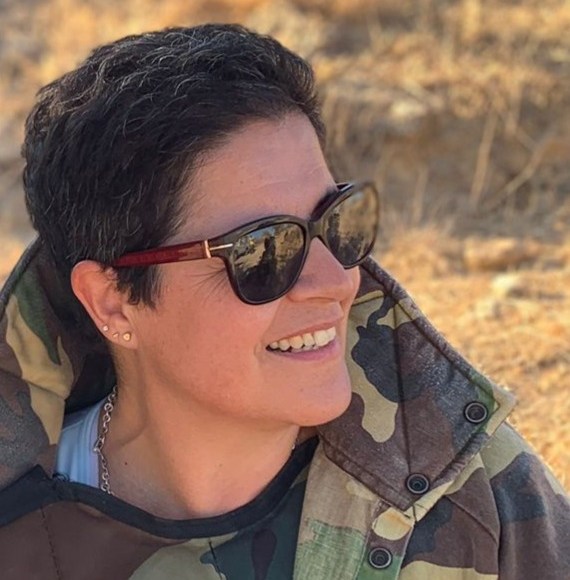
This guest post by Maria de los Ángeles Oviedo-García, economy professor at the University of Sevilla in Spain, will help clarify things. In its focus is the citation extortion gang of Thippa Reddy Gadekallu and his friends, one of many investigations Oviedo-Garcia performed and shared on social media.
Because so much research is published, journals struggle to find enough editors and reviewers. Anyone is welcome, and it is not a problem at all if they are not qualified, or directly connected to authors, or if they re-use the same standard and meaningless text for each peer review report, or in fact if they keep extorting citations. Boxes need to be ticked so the journal can continue to pretend to be “peer-reviewed”.
Normally, nobody from outside can know who the reviewers were and what they demanded, since sausage factories like to keep the shocking process of sausage making hidden from prying eyes. This investigation by Oviedo-Garcia was only possible because some publishers (like PLOS or MDPI) nowadays publish the peer review reports, and often also name the editors and reviewers. But even this relatively small number of cases is enough to raise concerns on how widespread the problem of citation extortion is.
Birds of the same feather flock together
By Maria de los Ángeles Oviedo-García
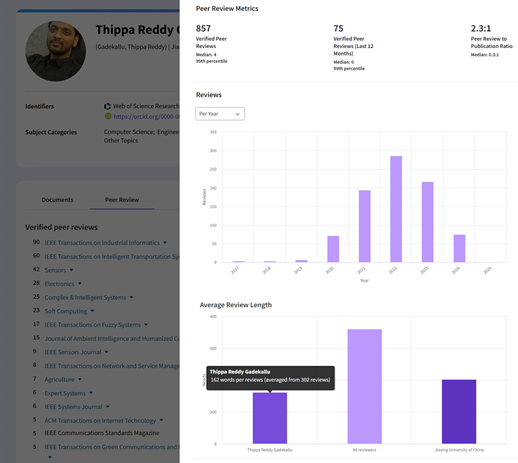
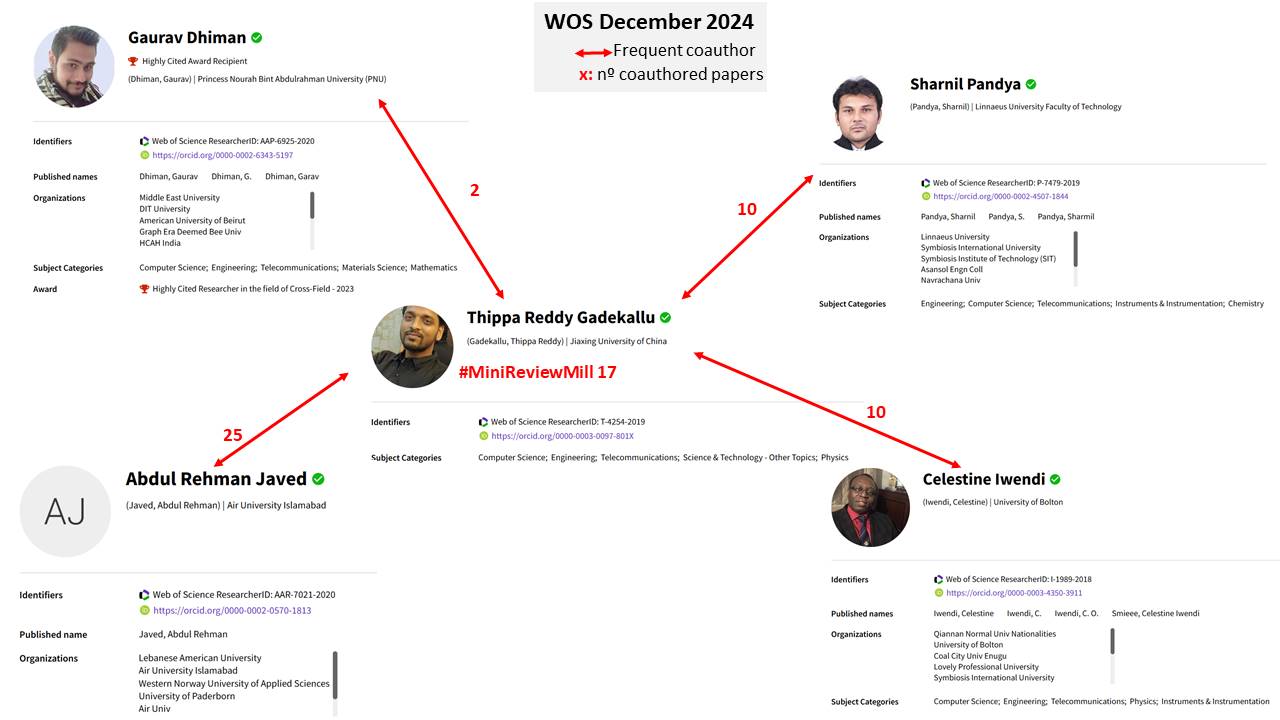
Thippa Reddy Gadekallu has multiple affiliations, such as Lovely Professional University and Vellore Institute of Technology in India, Lebanese American University and Jiaxing University in China (among others). 94.1% of his papers (335 out of 356) were published in the last five years and display a large number of collaborators, with 784 co-authors. He has served as reviewer and editor for different journals within a wide range of publishers. According to his record in Web of Science, from 2020-2024 he performed 857 verified peer reviews (which were rather short with 162 words on average) and he also has 11 verified editor records.

Gadekallu edited 31 articles (29 for PLOS One and 2 for The Peer Journal) where all assigned reviewers generally extensively used coercive citation, for the benefit of the editor himself or of his coauthors, such as:
- Brewer et al 2021, “Predicting road quality using high resolution satellite imagery: A transfer learning approach”
- Zhang et al 2021, “Picture semantic similarity search based on bipartite network of picture-tag type“
- Zaghloul et al 2021, “A new framework based on features modeling and ensemble learning to predict query performance“
- Muraki et al 2022, “Automated detection scheme for acute myocardial infarction using convolutional neural network and long short-term memory”
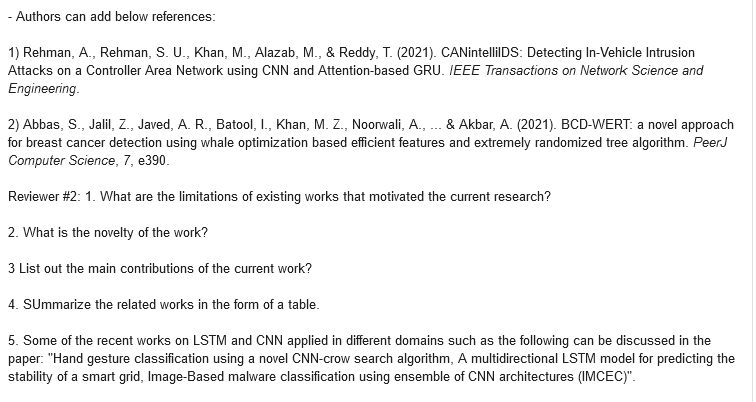
In Muraki et al 2022, two anonymous reviewers required for five articles to be cited, four of them were co-authored by the editor Gadekallu and all five were co-authored by his frequent coauthors. Specifically, the Decision Letter for the original submission included demanded for Gadekallu’s own papers Javed et al 2021, Abbas et al 2021 and Gadekallu et al 2021 to be referenced:
“I recommend major revisions for the paper. The authors have to address all the suggestions/comments from the reviewers carefully.“
Considering Gadekallu’s overall activity as editor for those 31 articles, 79 papers were required to be cited by commonly anonymous reviewers, of these 35 were co-authored by Gadekallu himself while most others featured his frequent co-authors. However, the reviewers were not always anonymous, see Rutvij H Jhaveri in:
- Leenings et al 2021, “PHOTONAI—A Python API for rapid machine learning model development“
- Fraiwan & Hassanin 2021, “Computer-aided identification of degenerative neuromuscular diseases based on gait dynamics and ensemble decision tree classifiers”
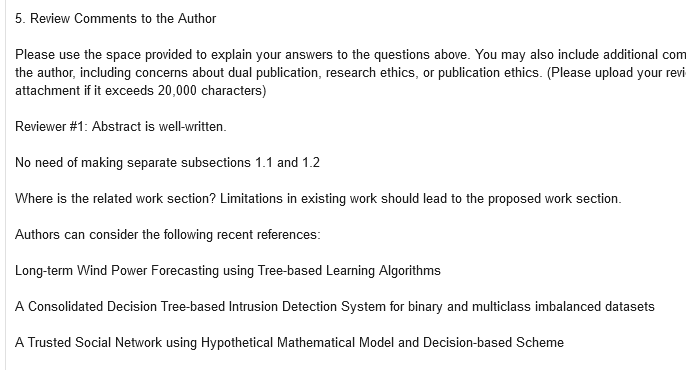
This makes me wonder if, when editing those 31 articles, Gadekallu selected the reviewers among his frequent co-authors, who then took advantage of the opportunity to boost their citation count. Even if that was not the case, Gadekallu’s performance as editor is unethical, for no coercive citation should be allowed (however, clearly, if were not allowed, his own citation count would be lower). Apparently, Gadekallu’s himself and his frequent coauthors personally gained citations by manipulating the peer review process and thus breaching publication ethics.
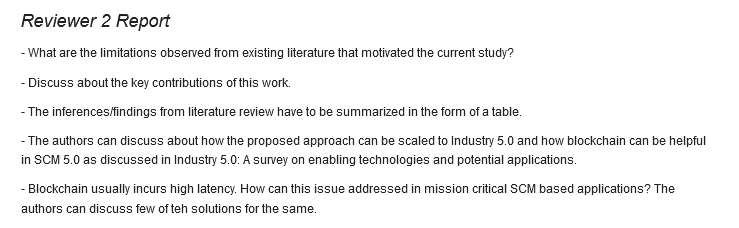
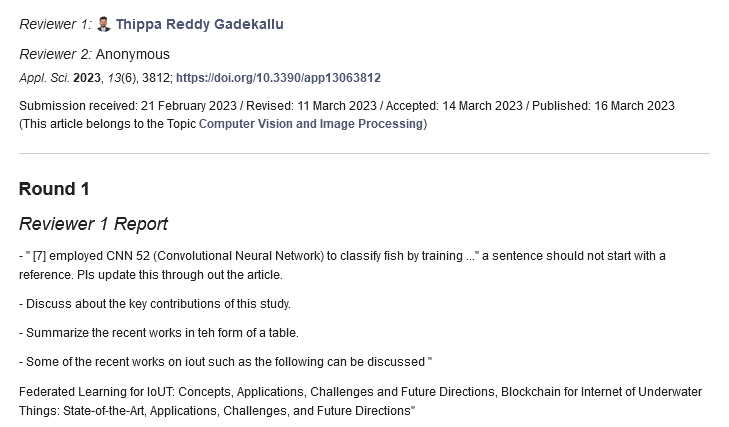
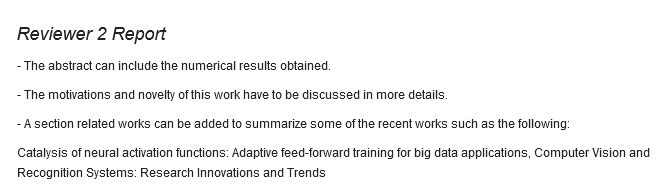
Gadekallu’s work as reviewer is not less impressive. There, he blatantly exploits coercive citation practice in four review reports for MDPI journals (Water and Applied Sciences), where his comments are mostly repetitive and general. Although the wording used to “prompt” authors to cite Gadekallu’s works varies (“Some of the recent state of the art such as the following can be discussed”, “The authors can discuss about […] as discussed in” or “A section related works can be added to summarize some of the recent works such as the following”), the references provided are invariably co-authored by Gadekallu.
- Naifi et al 2023, “Early Forecasting Hydrological and Agricultural Droughts in the Bouregreg Basin Using a Machine Learning Approach“
- Kuswantori et al 2023, “Fish Detection and Classification for Automatic Sorting System with an Optimized YOLO Algorithm“
- Matenga & Mpofu 2023, “Blockchain-Based Cloud Manufacturing SCM System for Collaborative Enterprise Manufacturing: A Case Study of Transport Manufacturing“
- Tong et al 2022, “NGIoU Loss: Generalized Intersection over Union Loss Based on a New Bounding Box Regression“
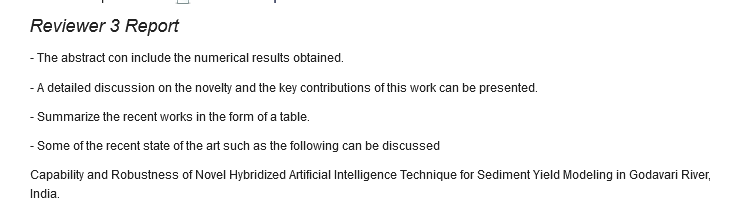
Last but not least, Gadekallu is also fraudster with a long record on PubPeer for tortured phrases, irrelevant citations and irreproducible results.
Now let’s have a look at Gadekallu’s coauthors, who unsurprisingly are themselves review millers also. They copy and paste generic comments in their review reports with and shamelessly make use of coercive citations.
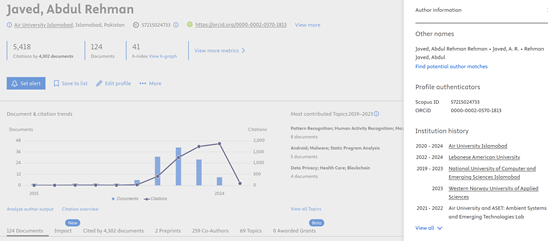
Abdul Rehman Javed coauthored 25 articles with Gadekallu, according to Web of Science). He is affiliated with the Lebanese American University but also with Air University Islamabad in Pakistan. Similarly to Gadekallu, a huge proportion of his papers was published in the last 5 years (92.74%) and commonly writes rather brief review reports (164 words average).

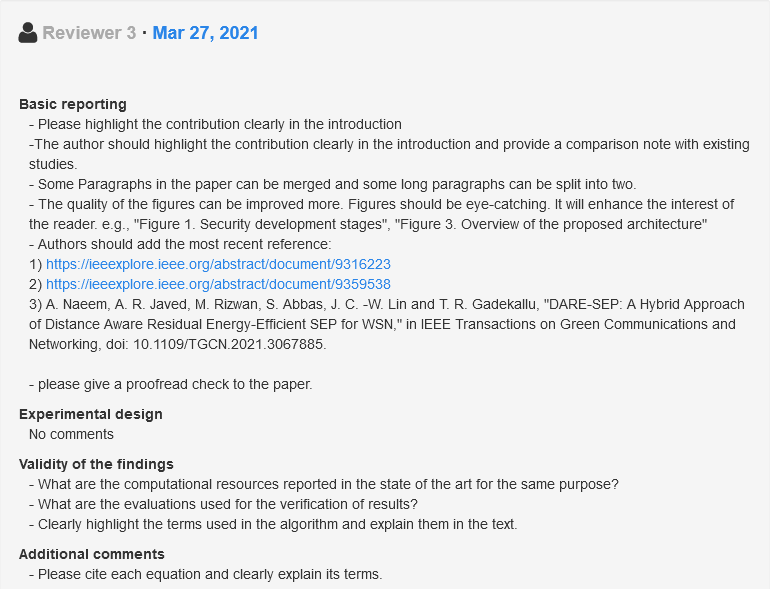
Javed also uses coercive citation when reviewing for Applied Sciences (MDPI), where he writes in a review report “The authors can discuss some of the recent works such as the following “ while providing links to two articles he co-authored together with the papermiller Muhammad Rizwan:
(Note 7.11.2025: there are several people on PubPeer by this name, see also this reader comment).
- Grimm et al 2022, “PHQ-V/GAD-V: Assessments to Identify Signals of Depression and Anxiety from Patient Video Responses“.

Curiously, there are two anonymous reviews for The Peer Journal, with very similar wording and asking Javed’s articles to be cited:
- Mansour et al 2021, “An integrated three-tier trust management framework in mobile edge computing using fuzzy logic“
- Kumar et al 2021, “Secure biometric authentication with de-duplication on distributed cloud storage“

Celestine O. Iwendi, also multi-affiliated with University of Bolton in UK and Coal City University in Nigeria (among others), collaborated on 10 articles with Gadekallu. Iwendi has also a remarkable ability for networking (458 co-authors in Scopus), also his publication output exploded in the last five years (156 out of 171 papers – 91.22%).

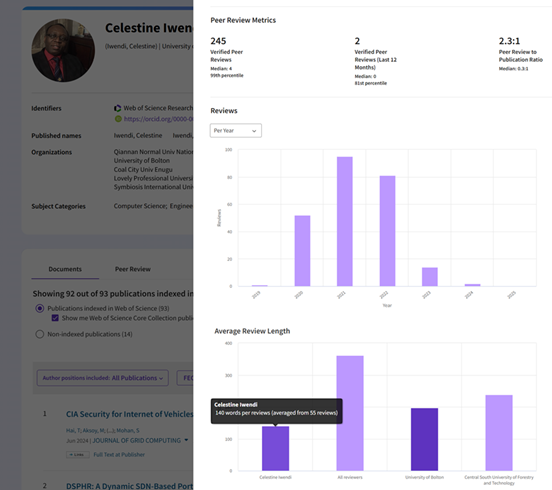
Iwendi served as reviewer for different MDPI journals (Entropy, Sensors, Electronics, International Journal of Molecular Sciences, Information) and Qeios. These 19 manuscripts certainly profited from the copy-paste technique of his review reports. These are virtually identical and rather short (142 words on average), while never forgetting the coercive citations to his own publications (18 Iwendi’s articles were required to be “considered” or “studied and considered to embellish” the manuscript under his review) in on average. Some of these papers in need of referencing were later retracted. See for example these 3 MDPI papers:
- Gopakrishnan et al 2022, “Propositional Inference for IoT Based Dosage Calibration System Using Private Patient-Specific Prescription against Fatal Dosages“
- Kurniawan & Mambo 2022, “Homomorphic Encryption-Based Federated Privacy Preservation for Deep Active Learning“
- Morimoto et al 2023, “Mitochondrial Transfer into Human Oocytes Improved Embryo Quality and Clinical Outcomes in Recurrent Pregnancy Failure Cases“
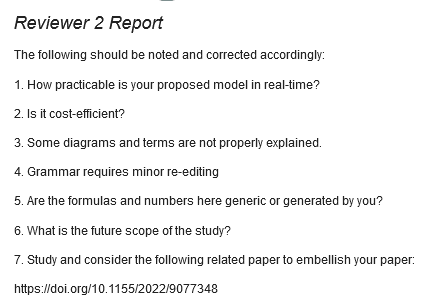
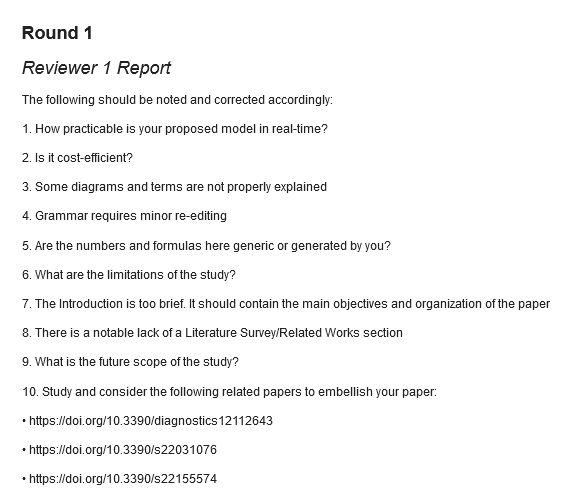

Here are 2 Qeios preprints where Iwendi asked to be cited:
- Abu & Celiktas, 2023, “Pros and Cons of Key Escrow Agreements in Cloud“
- Boddu 2023, “SARS-CoV-2 Virion: A Humane Debacle – An Analytical Approach“
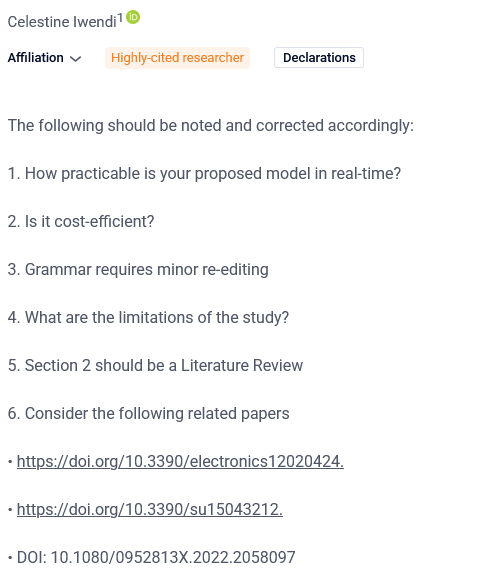

There are two other open peer review reports in MDPI performed by anonymous reviewers which reproduce verbatim Iwendi’s comments:
- Lee & Shon 2022, “Forensic Analysis of IoT File Systems for Linux-Compatible Platforms“
- Rosero-Montalvo et al 2022, “A New Data-Preprocessing-Related Taxonomy of Sensors for IoT Applications“


Sharnil (Nitin) Pandya has also collaborated with Gadekallu (on 10 publications) and, continuing with the similarities, Pandya’s productivity also rose in the last 5 years (79.41% of his published papers), although he was able to gather a more moderate number of coauthors, merely 190. Pandya is also multi-affiliated with (Linnaeus University in Sweden and Deemed University in India (among others). He also writes a somewhat longer review reports (237 words on average).
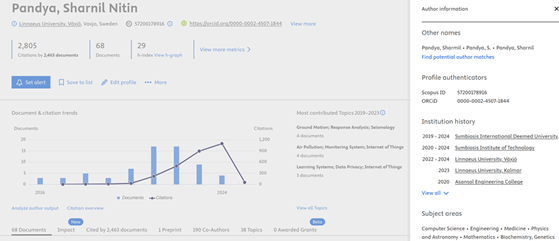
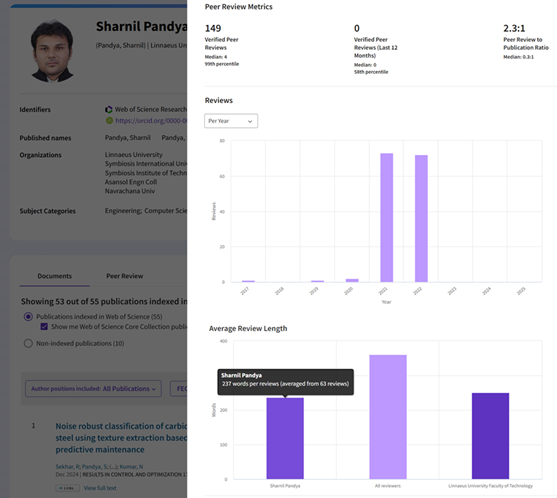
When reviewing for PLOS One, Pandya showed a great ability to repeat the same comments regardless of the assessed manuscript was and to ask for his articles to be referenced (“The authors have included unnecessary references which can be removed and essential references such as […] can be referred.”).
- Gleason et al 2022, “Machine learning predicts translation initiation sites in neurologic diseases with nucleotide repeat expansions”
- Rezvani et al 2022, “Image-based cell profiling enhancement via data cleaning methods”
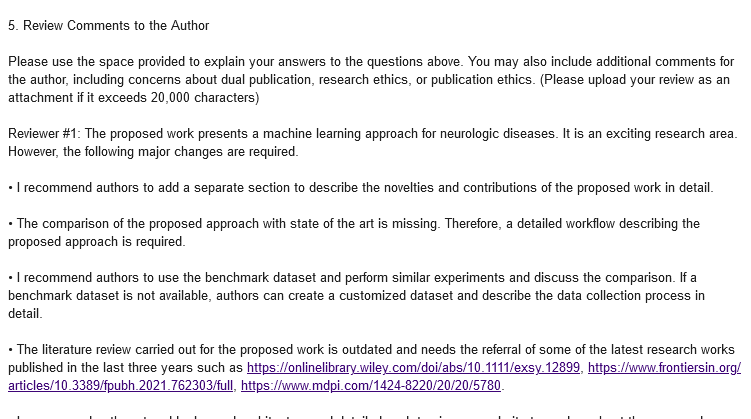

Besides, there are two anonymous review reports with comments suspiciously similar to Pandya’s:
- Kesar et al 2022, “Actionable absolute risk prediction of atherosclerotic cardiovascular disease based on the UK Biobank”
- Rajaraman et al 2022, “Deep learning model calibration for improving performance in class-imbalanced medical image classification tasks”
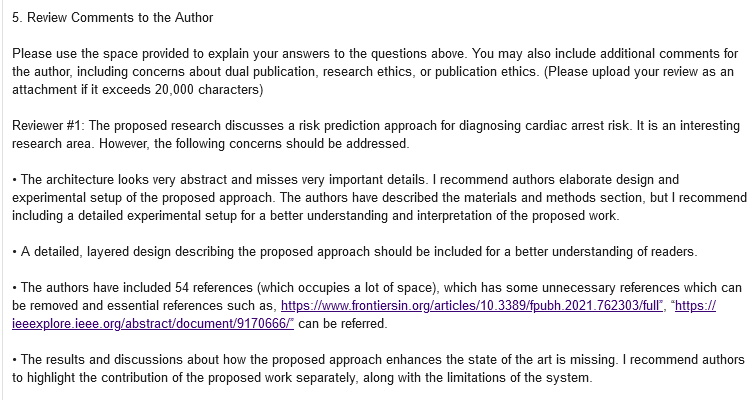
Curiously (maybe not so much), the editor of these 4 manuscripts is Thippa Reddy Gadekallu. Pandya uses two different formulas for coercive citation: “The literature review carried out for the proposed work is outdated and needs the referral of some of the latest research works published in the last three years such as” and “The authors have included unnecessary references which can be removed and essential references such as [links] can be referred”.
Finally, Gaurav (Jay) Dhiman, who occasionally collaborated with Gadekallu (they co-authored just 2 publications). He is affiliated with the already mentioned Lebanese American University and to Lovely Professional University in India, Graphic Era Deemed to be University and Chitkara University, among others. Apparently, Mr. Dhiman also worked tirelessly in the last 5 years – 339 verified reviews and 249 publications (out of a total amount of 301), co-authored with 637 researchers.


In three open peer-reviews for Electronics and Applied Sciences (both MDPI journals), one can see Dhiman’s fondness for coercive citation (“Authors must cite the following papers” or “Update the literature with following works”) and for repeating the same comments to different authors:
- Khan et al 2023, “Architectural Threats to Security and Privacy: A Challenge for Internet of Things (IoT) Applications”
- Wu et al 2023, “A Novel Method for Cross-Modal Collaborative Analysis and Evaluation in the Intelligence Era”
- Liu et al 2022, “Optimizing the Quantum Circuit for Solving Boolean Equations Based on Grover Search Algorithm”
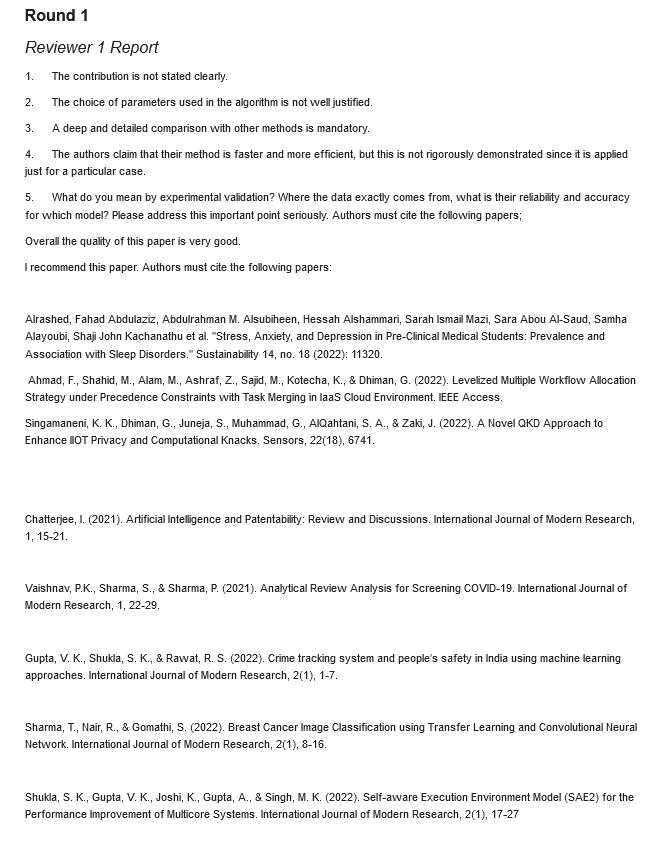

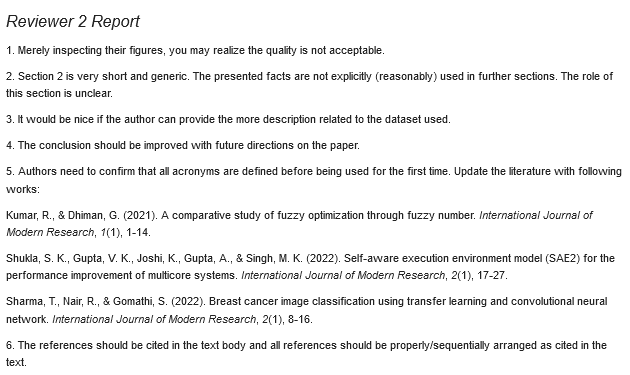
There are two other anonymous reviewers reports suspiciously similar to those by Dhiman above, where the “Authors must cite the following papers”, those papers being mainly Dhiman’s ones. The first review report was in PLOS One and the other in MDPI’s Water:
- Askr et al 2023, “Many-objective African vulture optimization algorithm: A novel approach for many-objective problems”
- Elbeltagi et al 2022, “Estimating the Standardized Precipitation Evapotranspiration Index Using Data-Driven Techniques: A Regional Study of Bangladesh”
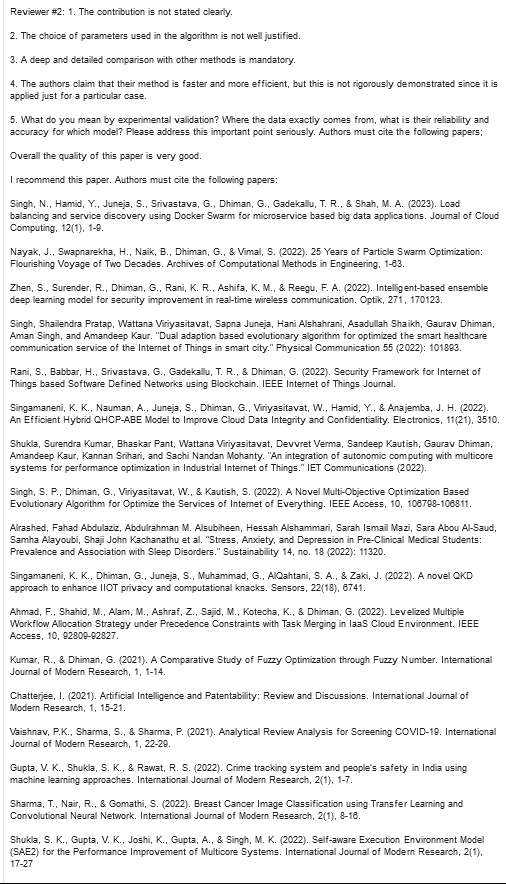
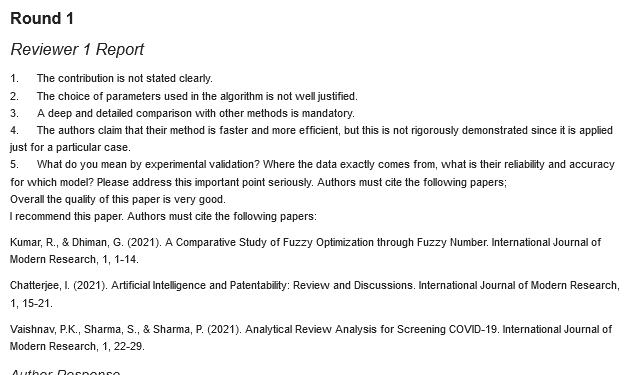
It deserves to be noticed that Dhiman’s coercive citation in his review reports introduces a novelty since, besides asking for his own articles to be cited, he also requires citations to articles published in International Journal of Modern Research whose Editor in Chief is (not surprisingly) the very same Gaurav Dhiman.
Worryingly enough, Web of Science awarded Dhiman as Highly Cited Researcher in 2023. In view of the aforementioned reviews, it is worth asking whether such an award is due to the extensive use of coercive citations in his review reports (361 verified peer reviews in Web of Science).
Birds of the same feather, Gadekallu and his aforementioned co-authors share same features: multi-affiliated, publications boost in the last 5 years, extensively use of copy-paste in their review reports, and personally benefiting from the coercive citations in their review reports – which are frequently brief (excluding references text), with generic (even vague) and contain comments repeated virtually verbatim again and again, which is a clear abuse of the peer review process.
In my opinion, all journals and publishers where Thippa Reddy Gadekallu, Abdul Rehman Javed, Celestine O. Iwendi, Sharnil Nitin Pandya and Gaurav Jay Dhiman served as reviewers should investigate if their identified pattern of misbehaviour has been repeated in other cases. And not only as reviewers but also as editors (either as guest or as regular editors), especially in the case of Gadekallu. These journals and publishers may find it interesting to visit their profiles on PubPeer:
- Thippa Reddy Gadekallu
- Abdul Rehman Javed
- Celestine O. Iwendi
- Sharnil Nitin Pandya
- Gaurav Jay Dhiman
There, the evidence of publication/research ethics breaches (such as tortured phrases, irrelevant citations or irreproducible results) can be found, and then decide if all these identified manipulators of peer review process are really the best possible choice to act as reviewers or editors.
Finally, and interestingly enough, both Gadekallu and Dhiman are affiliated with the Lovely Professional University and Lebanese American University which have been recently reported as two universities out of fourteen with publication metrics too good to be true. Note that Javed is also affiliated with the Lebanese American University.
Links to the archived peer review reports:
Donate!
If you are interested to support my work, you can leave here a small tip of $5. Or several of small tips, just increase the amount as you like (2x=€10; 5x=€25). Your generous patronage of my journalism will be most appreciated!
€5.00

 For Better Science
Very well done!
Special thanks and appreciations to professor Maria de los Ángeles Oviedo-García for her very professional and tireless efforts and scientific sleuthing!
VIVA …
LikeLike
“If you publish scientific papers, you surely have been asked by an anonymous reviewer to cite some papers of a certain author.”
In fact, that has never happened to me; but maybe mathematics is an outlier?
LikeLike
Thanks for posting, it is useful to understand the many different methods that have been invented to game the system. I am surprised MDPI continues to publish reviews.
LikeLike
This is my favourite quote: “The authors have included unnecessary references which can be removed and essential references such as […] can be referred.” 😂
LikeLiked by 1 person
It’s pidiculous, but now MDPI has a non-formal limit of three references per a reviewer he/she can recommend to update the reference list.
LikeLiked by 1 person
Here’s a useful tip: if you review a paper and see that other reviewers are giving brief comments and pimping papers to be included, point this out to the managing editor. If you see the same thing again, stop reviewing for that journal. Only way to stop this B.S.
LikeLiked by 1 person
My small contribution to Gaurav Dhiman’s PubPeer record:
https://pubpeer.com/publications/C498E11100E1A16AF72BBDFFF43EA8
https://pubpeer.com/publications/0526DCEAC396938856228A25C95BA9
https://pubpeer.com/publications/6EE409AEAFA97E4A709ECDA12C9A21
One Mohammad Dehghani decided to sell his ultra-templated nature-inspired (and whatever-else-inspired) excretions, which you can belch out as much as you want, more so with GPT and teamed up with Dhiman on that.
Not sure who started the shitshow, as I am only approaching the older layer of papers, and Dhiman is on them too, but we see what we see.
LikeLiked by 1 person
https://inass.org/wp-content/uploads/2025/02/2025033137.pdf
The journal’s domain is aptly named “inass.org”
LikeLiked by 1 person
Hi, the information in this article is little incorrect. Please see this Muhammad Rizwan is not the one that you are referring as paper-mill. Just names are same but their research are complete different.
“while providing links to two articles he co-authored together with the paper-miller Mohammad Rizwan (see October 2024 Shorts)” this is a different one. And Same goes here [https://forbetterscience.com/2024/10/25/schneider-shorts-25-10-2024-all-those-errors-occurred-inadvertently/#elsevier1].
Please double check and correct your other articles about him.
Thanks!
LikeLike
Thanks! Do you have a suggestion how we can distinguish all these different Muhammad Rizwan characters?
https://pubpeer.com/search?q=authors%3A+%22Muhammad+Rizwan%22
LikeLike
I also got a headache while going through this. Its the problem with Pubpeer. They should put some checks for affiliation matching or research area mismatch criteria.
LikeLike
These people change affiliations all the time…
LikeLiked by 1 person
Hi Leonid,
Your article still has incorrect information “while providing links to two articles he co-authored together with the papermiller Muhammad Rizwan”
The attribution linking Muhammad Rizwan to ‘papermiller’ is incorrect, as they are verified to be separate individuals. It gives reader a wrong perspective. Please update this accordingly.
As a general rule, if there’s uncertainty about an attribution, it shouldn’t be added unless there is solid evidence to support it.”
P.S., i am formulating a full story about Muhammad Rizwan that why i want to keep the facts right!
Regards!
Clara
LikeLike
Huh, which one of them is not a papermiller in your opinion?
LikeLike
Muhammad Rizwan whose research work you have mentioned in the story.
LikeLike