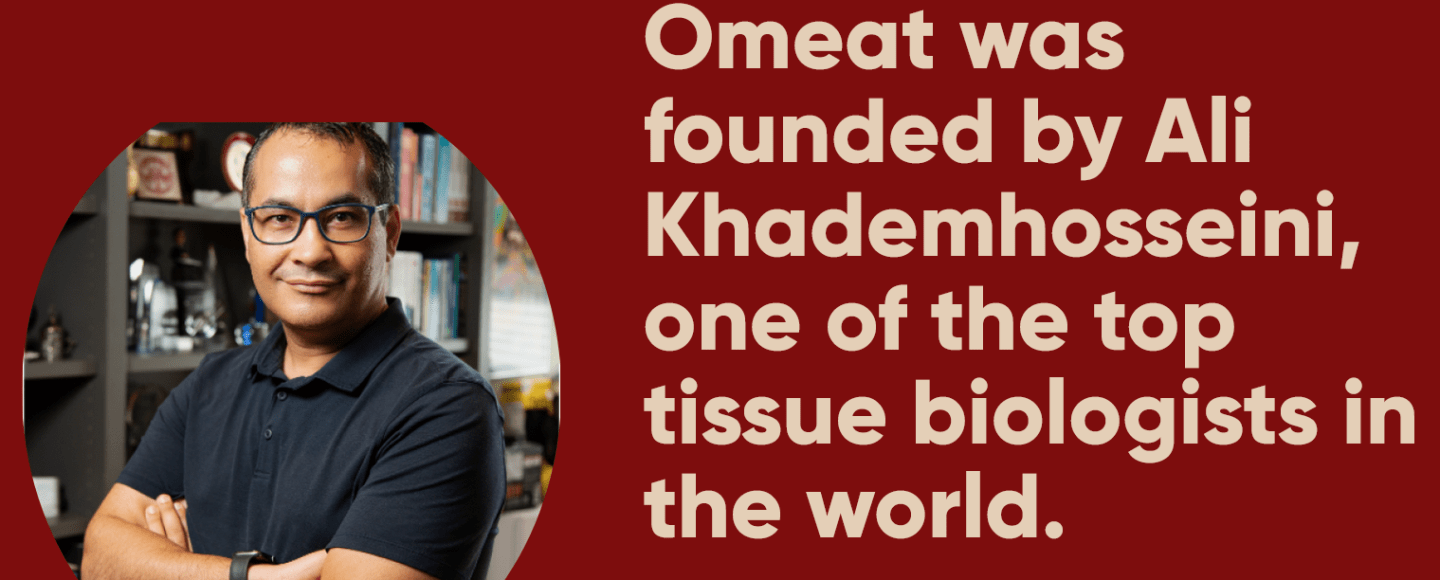

At For Better Science, we take Veganuary seriously. Let’s celebrate a great American scientist whose lab-grown meat business will revolutionise the way we see cows and burgers: Professor Ali Khademhosseini, founder of the California-based company OMEAT.
As seems to be a tradition in the lab-grown meat business, the entrepreneurs hail from regenerative medicine where they spent years announcing to create living human organs ready for transplantation, usually from “stem cells”, often with the use of 3D bioprining and nanopolymers. Dr Khademhosseini is no exception:

The company’s product, “Coming soon to a restaurant & grocery store near you“, is “Omeat ground beef. It looks, cooks, and tastes just like real beef because, well, it is. Only better.” One of Omeat’s partners is Tyson Foods, US biggest meat producer.
Khademhosseini likes to paint himself as a genius saint who not only solved the organ shortage problem but also the climate change and everything else:
“I developed multiple techniques for controlling the behavior of patient-derived cells to engineer artificial tissues and cell-based therapies.
As I continued to delve deeper into this space, I also started to research more about the environmental impacts that conventional beef has on our planet and society at large. As I did my concern grew. […]
Through this process of personal interest and scientific inquiry, my focus shifted from tissue engineering to working on cultivated ground beef. From this, Omeat was born.”
Let’s see then what amazing scientific breakthroughs allowed Khademhosseini to grow beef in his Omeat vats.
Important notes: the investigation into Khademhosseini’s papers was done almost entirely by Elisabeth Bik. The author of this text is a vegan, which is obviously a major COI discrediting everything.
This paper was done in collaboration with the Israeli scientist Shulamit Levenberg, who not only is deep into lab-grown meat business herself, via her own company Aleph Farms (with the help of some russians and the International Space Station!), she also used her degenerative medicine skills to cure diabetes, grow ears and make the lame walk, or so the news celebrate her:
From COVID-19 to Lab-Grown Meat
Enterprising Israeli Scientists show how these things are connected.

The last author and MIT professor Robert Langer is a God-like figure in USA. In 2009 he was celebrated by Nature for “Running one of the biggest academic labs in America“, via his Blackberry no less. Back then, Langer employed “more than 80 people, has authored in excess of 1,000 papers and holds more than 300 patents with almost as many pending.“
Ali Khademhosseini, Kahp Y Suh , Jen M Yang , George Eng , Judy Yeh , Shulamit Levenberg, Robert Langer Layer-by-layer deposition of hyaluronic acid and poly-L-lysine for patterned cell co-cultures Biomaterials (2004) doi: 10.1016/j.biomaterials.2003.10.033


Khademhosseini replied on PubPeer and offered to “repeat these experiments and provide updated data“. He then hinted that his coauthor Kahp Y Suh must have faked that figure and smuggled it into the paper. Also Langer pointed the finger at Suh in his email to me. In this regard it is noteworthy that Suh can’t speak for himself because in 2013 he drowned in the sea during an ISGMA conference in Hawaii under unclear circumstances. It is indeed easy to blame your dead colleague and mentee, but it can backfire, ask Irun Cohen.
How Irun Cohen and Weizmann Institute almost cured diabetes
This is a new episode of the data manipulation affair around Weizmann Institute of Science in Rehovot, Israel (and another guest post by “Smut Clyde”), with the hope that Israeli researchers and their state officials finally step in and investigate what goes on in this institute, supported by external experts from the academic community. There are…
Without pointing at Suh, Khademhosseini and Langer announced to “work with the authors, journal and publisher and others to ensure that the appropriate action is taken“:
Kahp Y. Suh , Hyunsik Yoon , Hong H. Lee , Ali Khademhosseini, Robert Langer Solventless ordering of colloidal particles through application of patterned elastomeric stamps under pressure Applied Physics Letters (2004) doi: 10.1063/1.1795362

Several panels appear to contain repetitive patterns, as shown with boxes of the same color”

Dead man’s curse again?
Kahp Y. Suh , Jiehyun Seong , Ali Khademhosseini, Paul E. Laibinis, Robert Langer A simple soft lithographic route to fabrication of poly(ethylene glycol) microstructures for protein and cell patterning Biomaterials (2004) doi: 10.1016/s0142-9612(03)00543-x


No Suh to blame on this paper though, yet the duplications are of very similar nature:
Ali Khademhosseini, Judy Yeh , George Eng , Jeffrey Karp , Hirokazu Kaji , Jeffrey Borenstein, Omid C. Farokhzad, Robert Langer Cell docking inside microwells within reversibly sealed microfluidic channels for fabricating multiphenotype cell arrays Lab on a Chip (2005) doi: 10.1039/b508096g

Elisabeth Bik: “Concern about Figure 5B […] Boxes of the same color highlight areas in the microchannels that look remarkably similar.”
With no Suh to blame, Khademhosseini and Langer explained that the duplications are perfectly normal because the surface of the microchannels was “sometimes not fully smooth“, thus “the repetitiveness in the image may be due to these defects in the surface that we used.” Bik retorted with: “Your reply does not make any sense.”
This by Langer and Khademhosseini has a very special co-author: Joseph Vacanti, who is the brother of the infamous STAP fraudster Charles Vacanti. In 2015, Joe Vacanti teamed up with the company Harvard Apparatus/Biostage to design a plastic oesophagus for human transplants. That company used to be the key partner of Paolo Macchiarini and provided the deadly plastic trachea.
Macchiarini victim’s family sues trachea makers for wrongful death
Yesim Cetir was a young woman from Turkey, whose vulnerability the scandal surgeon used to test his plastic trachea (twice), a third such operation he performed at the hospital of the Karolinska Institutet in Sweden, and his fifth plastic trachea recipient. Like almost all the at least 17 patients whom Paolo Macchiarini experimented upon with…
Here is their common paper in PNAS, “Contributed by Robert Langer“, the National Academy member:
Ali Khademhosseini, Robert Langer, Jeffrey Borenstein, Joseph P. Vacanti Microscale technologies for tissue engineering and biology Proceedings of the National Academy of Sciences (2006) doi: 10.1073/pnas.0507681102

Elisabeth Bik: “Concerns about Figure 4B. […] Blue and green boxes: Some of the microwells in panel B look remarkably similar to each other”
Khademhosseini and Langer blamed the academy journal:
“It appears that the journal changed the image that we submitted to them to remove the white background in B. Thus they repeated those patterns immediately next to it. Please note that this is what we submitted: https://www.dropbox.com/scl/fi/u9wq5ckwjkwwwotxhngxq/Figure-4.tif?rlkey=dvwpywnwxwp4yqiwie5ihf3g3&st=2wa16erk&dl=0 They changed it in the galleys. Which is here: https://www.dropbox.com/scl/fi/t9mjo0304i5ojp160q9hd/PNAS-proof.pdf?rlkey=a0gn6aj8b2llpxjlxljoh9nif&st=gv9is78d&dl=0“
A very similar situation here:
Junji Fukuda , Ali Khademhosseini, Judy Yeh , George Eng, Jianjun Cheng, Omid C. Farokhzad, Robert Langer Micropatterned cell co-cultures using layer-by-layer deposition of extracellular matrix components Biomaterials (2006) doi: 10.1016/j.biomaterials.2005.09.015


Also here, Khademhosseini and Langer announced on PubPeer:
“The figures have been edited by the journal. Please see here for our submitted figures. https://www.dropbox.com/scl/fi/qvjvivnyxfm8dih999dt5/BIOMAT-S-05-01183.pdf?rlkey=x1bequjb5vt2x3zbas2exyj0m&st=01ehyw6t&dl=0“
Now, that is probably even partially true. Although hard to believe that not only Elsevier, but even the proceedings journal of US National Academy of Science would do something like this behind authors’ backs.
But if someone among the journal staff or maybe the authors themselves did this “corner clone” editing in Photoshop merely to match the journal’s format of labelling, it was probably because the authors never had the original, unmarked figures in the first place. I discuss the practice here:
Thomas Südhof and AI-powered weapons of micro-duplication
Thomas Südhof, victim of racist and sexist persecution, announced to retract a second paper, “even though the quantitative analyses and conclusions are correct”.
In his email to me, Langer (who has more papers on PubPeer, not just with Khademhosseini) announced:
“In all cases we are going to attempt to reproduce the data and to inform the appropriate journals of these issues and make corrections where appropriate.“
By the way, Langer later on acted as handling editor of Khademhoseini’s papers. Here in PNAS for example, “Edited by Robert Langer“:
Yaqian Li , Wei Liu , Fei Liu , Yang Zeng , Simin Zuo , Siyu Feng , Chunxiao Qi , Bingjie Wang , Xiaojun Yan , Ali Khademhosseini , Jing Bai , Yanan Du Primed 3D injectable microniches enabling low-dosage cell therapy for critical limb ischemia Proceedings of the National Academy of Sciences (2014) doi: 10.1073/pnas.1411295111

The right-hand bands in Scheme 1 / 2 days look like the right-hand bands in Scheme 2 / 500 cells/GM, albeit either rotated 180 degrees or in mirror image”
The last author Yanan Du, now professor at Tsinghua University in China, expressed “our gratitude” and explained that the figure is supposed to be like this, but announced “A corrigendum addressing this mislabeling will be submitted to PNAS.“
Also worth noting is that Langer’s main interests were less in running a enormous factory-like lab but in shilling for pharma industry, his Conflicts of Interest statement in 2023 runs at two full pages:
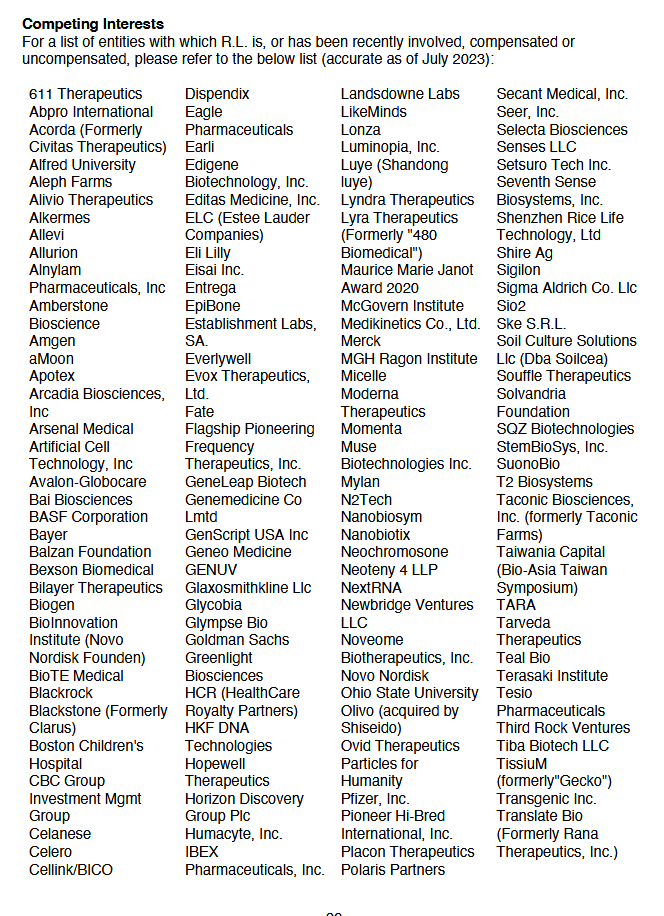

Yes, also for Levenberg’s Aleph Farms and a certain Terasaki Institute in Los Angeles, California of which Khademhosseini is the CEO. The Terasaki Institute is a tax-exempt “non-profit” family business, where very conveniently the research team of Omeat is based.
At his Terasaki Institute, Khademhosseini grows living tissues, whole organs and probably whole postdocs from stem cells on nanofabricated scaffolds, revolutionising science, medicine and everything. which was celebrated in Forbes in 2022:
“The Terasaki Institute for Biomedical Innovation (TIBI) operating three research facilities with its original base working with UCLA (University of California, Los Angeles), is leading the world across multiple domains. The non-profit, founded by the pioneering work of the renowned Dr. Paul Terasaki, continues his legacy for biomedical innovation. As noted on the TIBI legacy page, “The Terasaki Institute will continue the work of Dr. Terasaki to address the barriers to long-term success in the field of organ transplantation. […}]
Ali brings a remarkable history of accomplishment and continuing notable contributions to biomedical innovation to TIBI. Annually for the past five years, he has been selected by Thomson Reuters as one of the World’s Most Influential Minds as a Highly Cited Researcher. Dr. Khademhosseini’s interdisciplinary research has been recognized by over 60 major national and international awards. Prior to joining, Ali was Levi Knight Professor of Bioengineering, Chemical Engineering, and Radiology at the University of California-Los Angeles (UCLA).”
Paul Terasaki’s grandchildren Paul and Susie work there as members of the three head-strong Board of Directors. The Chairman is their dad, Keith Terasaki.
Here are the Terasaki family celebrating their CEO’s grand achievement in 2020:
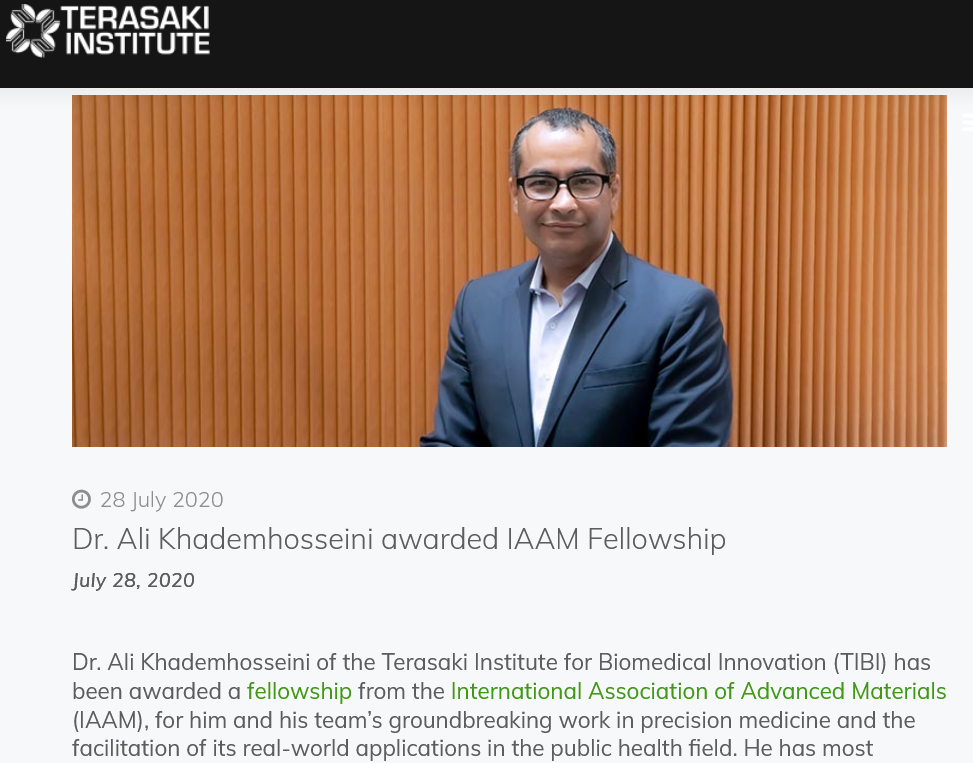
Yes, Khademhosseini bought a fake award from the scamference organiser Ashutosh Tiwari and his fictional IAAM:
“Dr. Ali Khademhosseini […] is distinguished among the brightest and most impactful scientists for his commitment to assure and distribute his knowledge and methods of personalized health to as many people in need as possible. The International Association of Advanced Materials (IAAM) is a prestigious publishing house of the latest and best scientific research and news in the interdisciplinary fields of materials science. As an organization, they are committed to the rigorous discovery and widespread dissemination of cutting-edge work that benefits the world. They also aim to educate as many people as possible; this is their motivation for awarding fellowships to materials scientists like Dr. Khademhosseini…”
I think Khademhosseini and Tiwari are a match made in heaven.
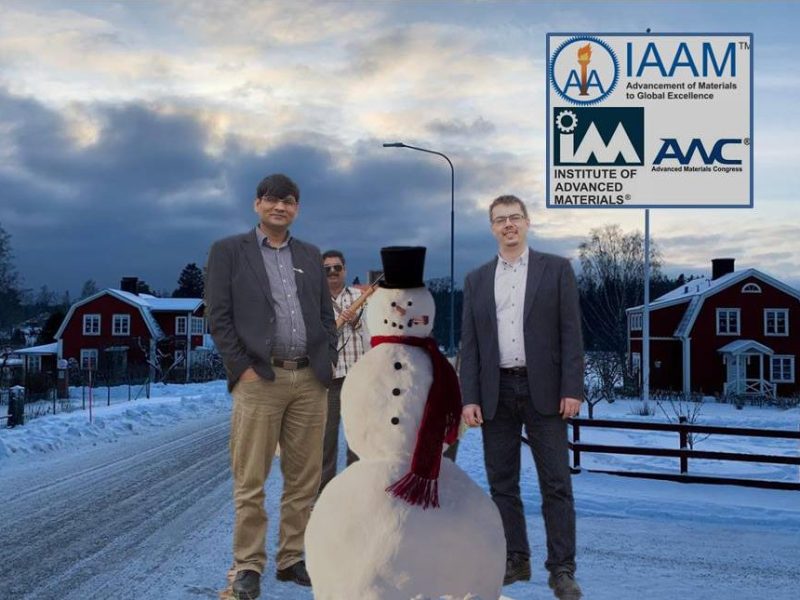
The Indefatigable Ashutosh Tiwari
Four years after Ashutosh Tiwari’s scamferences and research fraud were exposed, his impressive-sounding yet fictional “International Association of Advanced Materials”, or IAAM, still opens doors, hearts and wallets.
Until this stage, one could almost blame someone else and not humanity’s great saviour and teacher Khademhosseini for all these “irregularities”. Were it not for the papers from his own lab. Like this one:
Xuetao Shi , Serge Ostrovidov , Yiwei Shu , Xiaobin Liang , Ken Nakajima , Hongkai Wu, Ali Khademhosseini Microfluidic Generation of Polydopamine Gradients on Hydrophobic Surfaces Langmuir (2014) doi: 10.1021/la4041216

Khademhosseini explained on PubPeer that the figures were simply “incorrectly labelled“. He should have blamed the first author! This here doesn’t happen by mistake of oversight, you need to remove one fluorescence channel before copy-pasting:
Xuetao Shi , Toshinori Fujie , Akihiro Saito , Shinji Takeoka , Ying Hou , Yiwei Shu , Mingwei Chen , Hongkai Wu, Ali Khademhosseini Periosteum‐Mimetic Structures Made from Freestanding Microgrooved Nanosheets Advanced Materials (2014) doi: 10.1002/adma.201305804

Same first author Xuetao Shi, now professor at South China University of Technology:
Xuetao Shi , Serge Ostrovidov , Yihua Zhao , Xiaobin Liang , Motohiro Kasuya , Kazue Kurihara , Ken Nakajima , Hojae Bae , Hongkai Wu, Ali Khademhosseini Microfluidic Spinning of Cell-Responsive Grooved Microfibers Advanced Functional Materials (2015) doi: 10.1002/adfm.201404531

Elisabeth Bik: “Figure 5: The red signal appears much less in the GelMA panel, suggesting there are more dead cells in the Alginate materials. Pink boxes: Panels A (Alginate) and B (GelMA) appear to show an overlap in the green channel.”
Khademhosseini and his associates defecated into that fancy Wiley journal several times, here again with Shi:
Xuetao Shi , Haixin Chang, Song Chen , Chen Lai , Ali Khademhosseini, Hongkai Wu Regulating Cellular Behavior on Few‐Layer Reduced Graphene Oxide Films with Well‐Controlled Reduction States Advanced Functional Materials (2012) doi: 10.1002/adfm.201102305

ElisabethBik: “Concern about Figure 7C: Cyan boxes: in the MB column, the C and O panels appear to overlap.”
Shi and his former mentor Khademhosseini replied on PubPeer that “the images for panels C and 0 were mistakenly taken from the same dataset” and that they “will be working with the authors, journal and publisher to correct this issue.“
I wonder if the publisher or the journal editors mind all this fakery:
Alireza Moshaverinia, Chider Chen , Xingtian Xu , Sahar Ansari , Homayoun H. Zadeh , Scott R. Schricker , Michael L. Paine , Janet Moradian‐Oldak, Ali Khademhosseini, Malcolm L. Snead, Songtao Shi Regulation of the Stem Cell–Host Immune System Interplay Using Hydrogel Coencapsulation System with an Anti‐Inflammatory Drug Advanced Functional Materials (2015) doi: 10.1002/adfm.201500055

Boxes of the same color highlight areas that overlap, even though the panels are all representing different experimental conditions.”


Here the authors just told Bik to get lost:
Natashya Falcone, Menekse Ermis, Ankit Gangrade, Auveen Choroomi , Patric Young, Tess G. Mathes , Mahsa Monirizad , Fatemeh Zehtabi , Marvin Mecwan , Marco Rodriguez , Yangzhi Zhu , Youngjoo Byun , Ali Khademhosseini, Natan Roberto De Barros, Han‐Jun Kim Drug‐Eluting Shear‐Thinning Hydrogel for the Delivery of Chemo‐ and Immunotherapeutic Agents for the Treatment of Hepatocellular Carcinoma Advanced Functional Materials (2024) doi: 10.1002/adfm.202309069

Elisabeth Bik: “Figure 3A: Green boxes: The DOX and DOX-aPD-1 tubes look remarkably similar; the area around the tubes as well. Green arrow: A possible splice is visible between the DOX and the DOX-aPD-1 tube.”
Natashya Falcone, Head Coordinator of Bioengineering Education at Khademhosseini’s Terasaki Institute, told Bik off:
“This is just a representative image for each group, not data. […] Again this does not change any conclusion for any of the groups, it is solely a representative image of what the gels look like.“
Since Bik failed to run away crying and apologising like Falcone must be used from her subordinates at Terasaki, Falcone tried another approach and assured Bik that “we adhere to the highest standards of research at our institute” and “plan to submit an Erratum to the journal“.
You may recall Khademhosseini’s former mentee Yanan Du, this time he remained silent and didn’t even offer to “express our gratitude“:
Yanan Du , Majid Ghodousi , Hao Qi , Nikhil Haas, Wenqian Xiao, Ali Khademhosseini Sequential assembly of cell‐laden hydrogel constructs to engineer vascular‐like microchannels Biotechnology and Bioengineering (2011) doi: 10.1002/bit.23102


Elisabeth M Bik: Concern about Figure 4:
- Circles of the same color highlight donut-shaped constructs in panels B and D that look more similar than expected.
- The donuts are not just rotated about 180 degrees, they appear also somewhat rearranged
- Several green and red colored dots also appear to have been added or removed.”
Here is Khademhosseini with a fellow Iranian native, Esmaiel Jabbari at the University of South Carolina:
Danial Barati , Seyed Ramin Pajoum Shariati , Seyedsina Moeinzadeh , Juan M. Melero-Martin, Ali Khademhosseini, Esmaiel Jabbari Spatiotemporal release of BMP-2 and VEGF enhances osteogenic and vasculogenic differentiation of human mesenchymal stem cells and endothelial colony-forming cells co-encapsulated in a patterned hydrogel Journal of controlled release (2016) doi: 10.1016/j.jconrel.2015.12.031

Large yellow boxes: The day 4/BMP2/VEGF and day 4/NG-BMP2/NG-VEGF panels appear to contain an overlap, with a 90 degree rotation.
All panels contain repetitive areas as shown with boxes of the same color and shape.
I did only mark a fraction – there are many more repeats.”

Red boxes: A band in the b-actin panel of Figure 3e looks very similar to a band in the b-actin panel of Figure 5c, representing a different sample
Bands have very eclectic shapes, as if little bumps have been added to the bands
Blue arrows: several features in the backgrounds of both CD31 and b-actin panels look remarkably similar. These include lighter areas and vertical stripes between some bands.”
No author commented there, what can they say indeed. This is somewhat bizarre:
Praveen Bandaru , Dafeng Chu , Wujin Sun , Soufian Lasli , Chuanzhen Zhao , Shuang Hou , Shiming Zhang , Jiahua Ni , Giorgia Cefaloni , Samad Ahadian , Mehmet Remzi Dokmeci , Shiladitya Sengupta , Junmin Lee, Ali Khademhosseini A Microfabricated Sandwiching Assay for Nanoliter and High-Throughput Biomarker Screening Small (2019) doi: 10.1002/smll.201900300

The penultimate author Junmin Lee, assistant professor at Pohang University in Korea and Khademhosseini’s former postdoc, still affiliated with Terasaki Institute, lamented that “some of the original images became inadvertently mixed up or misplaced for reasons unknown to us at the time” and provided this:

Now, even assuming the explanation is not a lie, not one of those 3 images was correct in the published figure. So what about their other figures without duplications, were the images randomly distributed there also, all without affecting the conclusions of course?
Here more of that Terasakian attitude:
Xin Zhao, Qi Lang , Lara Yildirimer , Zhi Yuan Lin , Wenguo Cui , Nasim Annabi , Kee Woei Ng , Mehmet R. Dokmeci , Amir M. Ghaemmaghami, Ali Khademhosseini Photocrosslinkable Gelatin Hydrogel for Epidermal Tissue Engineering Advanced Healthcare Materials (2016) doi: 10.1002/adhm.201500005

Elisabeth Bik: “Concern about Figure 1F: Red boxes: The 5% Day 3 panel looks remarkably similar to the 10% Day 14 panel.”
The first author Xin Zhao, now professor at Hong Kong Polytechnic University, a Highly Cited Researcher and one of “The World’s Top 2% Scientists” educated Bik: “The hydrogels were fully degraded on day 3 for 5% and day 14 for 10% so the image in the box shows there is no gel. This was explained in the manuscript” and “No samples there as they are degraded. The image means 100% degradation.” Rather shameless, because the images are not similar, but pixel-identical.
Khademhosseini must have been very scared when Elisabeth Bik started to screen his papers. Here the oldest case she flagged in July 2021, a collaboration with Australian colleagues, now corrected:
Amir Mellati , Chia-Ming Fan , Ali Tamayol , Nasim Annabi , Sheng Dai , Jingxiu Bi , Bo Jin , Cory Xian , Ali Khademhosseini, Hu Zhang Microengineered 3D cell-laden thermoresponsive hydrogels for mimicking cell morphology and orientation in cartilage tissue engineering Biotechnology and Bioengineering (2017) doi: 10.1002/bit.26061

Erratum August 2022: “This erratum is being published to correct the mistake in Figure 3 caption, we wrote Figures 3a and 3b for different magnifications for H&E staining images. The Figure 3 […] should read “Figure 3. Histological and immunohistochemical staining of the cell-seeded hydrogels. (a and b) Sections were stained with H&E at (a) day 14 at a low magnification and (b) at a high magnification…”
Yes, I know, totally shameless. This one was flagged on PubPeer in June 2024, and before Christmas, Khademhosseini already successfully corrected it:
Nafiseh Masoumi , Benjamin L. Larson , Nasim Annabi, Mahshid Kharaziha , Behnam Zamanian , Kayle S. Shapero , Alexander T. Cubberley , Gulden Camci‐Unal, Keefe. B. Manning, John E. Mayer, Ali Khademhosseini Electrospun PGS:PCL Microfibers Align Human Valvular Interstitial Cells and Provide Tunable Scaffold Anisotropy Advanced Healthcare Materials (2014) doi: 10.1002/adhm.201300505

The Correction from 23 December 2024 credited the authors for finding the error all by themselves:
“We identified an error in the assembly of Figure 2B, where a representative SEM image from the PGS/PCL (1:1), random was inadvertently placed for the PGS/PCL (2:1), random during the assembly of the original images. To rectify this, we located a correct SEM image for the PGS/PCL (2:1), random, and revised Panel B in Figure 2. We would like to emphasize that replacing this image will not affect the conclusions and findings of our study.”
This paper received even a second correction:
Nasim Annabi, Suzanne M. Mithieux , Pinar Zorlutuna , Gulden Camci-Unal, Anthony S. Weiss , Ali Khademhosseini Engineered cell-laden human protein-based elastomer Biomaterials (2013) doi: 10.1016/j.biomaterials.2013.03.076

Bik noted that “1) none of the four panels in the corrected figure match the original figure, and that 2) the bar graph on the right completely different measurements and error bars.“. Khademhosseini’s former mentee and fellow Iran-native Nasim Annabi, now associate professor at UC Los Angeles, explained that “the original excel file” was unavailable. Bik found more duplications:

Elisabeth Bik: “A potential other concern in Figure 2, flagged by ImageTwin. Green boxes: Panel Ai (10% MeTro with 31% methacrylation) appears to overlap with panel BIII (15% MeTro with 31% methacrylation).”
In December 2024, Annabi seemingly denied the issue in Fig 2 with “the cells are not in the same focal plane.” But her second correction from November 2024 said something else:
“Fig. 2 A-i: An error occurred in the placement of the representative SEM image for 10 % MeTro with a 31 % methacrylation degree (Fig. 2A–i). […] This correction does not impact the pore size calculations, data interpretation, or the study’s conclusions. The authors would like to apologize for any inconvenience caused.”

Here are Annabi and her mentor Khademhosseini again, and yes, they did manage to correct this one also, because Advanced Materials:
Batzaya Byambaa , Nasim Annabi, Kan Yue , Grissel Trujillo‐de Santiago , Mario Moisés Alvarez , Weitao Jia , Mehdi Kazemzadeh‐Narbat , Su Ryon Shin , Ali Tamayol, Ali Khademhosseini Bioprinted Osteogenic and Vasculogenic Patterns for Engineering 3D Bone Tissue Advanced Healthcare Materials (2017) doi: 10.1002/adhm.201700015


The penultimate author Ali Tamayol, now associate professor at University of Connecticut, patted his critics on the head with:
“Necessary corrections are made […] The authors would like to thank you for assisting us to identify errors and improving the quality of the work.“
The correction appeared just before Christmas on 23 December 2024:
“In Figure 7C an error was identified, where a micrograph representing a perfused condition was inadvertently placed for a non-perfused condition. […] In Figure 3A two images were mistakenly used in the groups of HUVECs only, GelMAHIGH-VEGF on Day 5, and HUVECs+MSCs in GelMAHIGH-VEGF with a HUVECs/MSCs ratio of 2/1 on Day 7. […] In Figure S3 it was found that the figures in the first column did not match the legend because images of 3D hydrogel were accidentally used in place of the 2D control samples during the Figure assembly process. […]
It should be noted that all of these changes do not affect the conclusions of the manuscript.
The authors apologize for these errors.”
Here the correction about unaffected conclusions must be still in pre-production, the first auithor Serge Ostrovidov is still working under Khademhoseeini:
Serge Ostrovidov , Nasim Annabi, Azadeh Seidi , Murugan Ramalingam, Fariba Dehghani, Hirokazu Kaji , Ali Khademhosseini Controlled Release of Drugs from Gradient Hydrogels for High-Throughput Analysis of Cell–Drug Interactions Analytical Chemistry (2012) doi: 10.1021/ac202256c

The area marked with a yellow box is visible four times in panel C (in different orientations) and it also matches the red signal in panel D. Green arrows mark some visible splice marks in panel C.”
Unlike other Khademhosseini papers, this one was flagged not by Bik, but by the PubPeer user Actinopolyspora biskrensis, in October 2021:
Akhilesh K. Gaharwar , Silvia M. Mihaila , Archana Swami , Alpesh Patel , Shilpa Sant , Rui L. Reis , Alexandra P. Marques , Manuela E. Gomes , Ali Khademhosseini Bioactive Silicate Nanoplatelets for Osteogenic Differentiation of Human Mesenchymal Stem Cells Advanced Materials (2013) doi: 10.1002/adma.201300584


In June 2023, Wiley’s elite journal issued a correction:
“Figure 1d and 2b in the published article have overlapping images. The authors have performed a new set of experiments to update Figure 1d and 2b with a new set of data. […] The authors would like to thank Anna Kersey, a graduate student in Prof. Akhilesh Gaharwar’s laboratory at Texas A&M University for performing these new set of experiments.”
It must be very motivating for you to see that the iranian genius Akhilesh Gaharwar made it to professor and “Presidential Impact Fellow” in Texas with crap like this. And he now can order such desired results from his own students produce, or else.
Other sleuths joined the treasure hunt. Here Sholto David, studying a paper very much relevant for lab-grown meat:
Yumeng Xue , Han‐Jun Kim , Junmin Lee , Yaowen Liu , Tyler Hoffman , Yi Chen , Xingwu Zhou , Wujin Sun , Shiming Zhang , Hyun‐Jong Cho , JiYong Lee , Heemin Kang , WonHyoung Ryu , Chang‐Moon Lee , Samad Ahadian , Mehmet R. Dokmeci Bo Lei , KangJu Lee, Ali Khademhosseini Co-Electrospun Silk Fibroin and Gelatin Methacryloyl Sheet Seeded with Mesenchymal Stem Cells for Tendon Regeneration Small (2022) doi: 10.1002/smll.202107714

KangJu Lee, still a member of Khademhosseini’s lab, protested on PubPeer: “The published paper doesn’t have these data.” Indeed, the paper must have received a stealth correction after publication by that Wiley journal, and only the old version at PubMed bears witness to what was secretely tidied up.
Now that you probably formed an opinion on Khademhosseini’s honesty and decency, I have a serious question. This is his OMEAT manufacturing process:
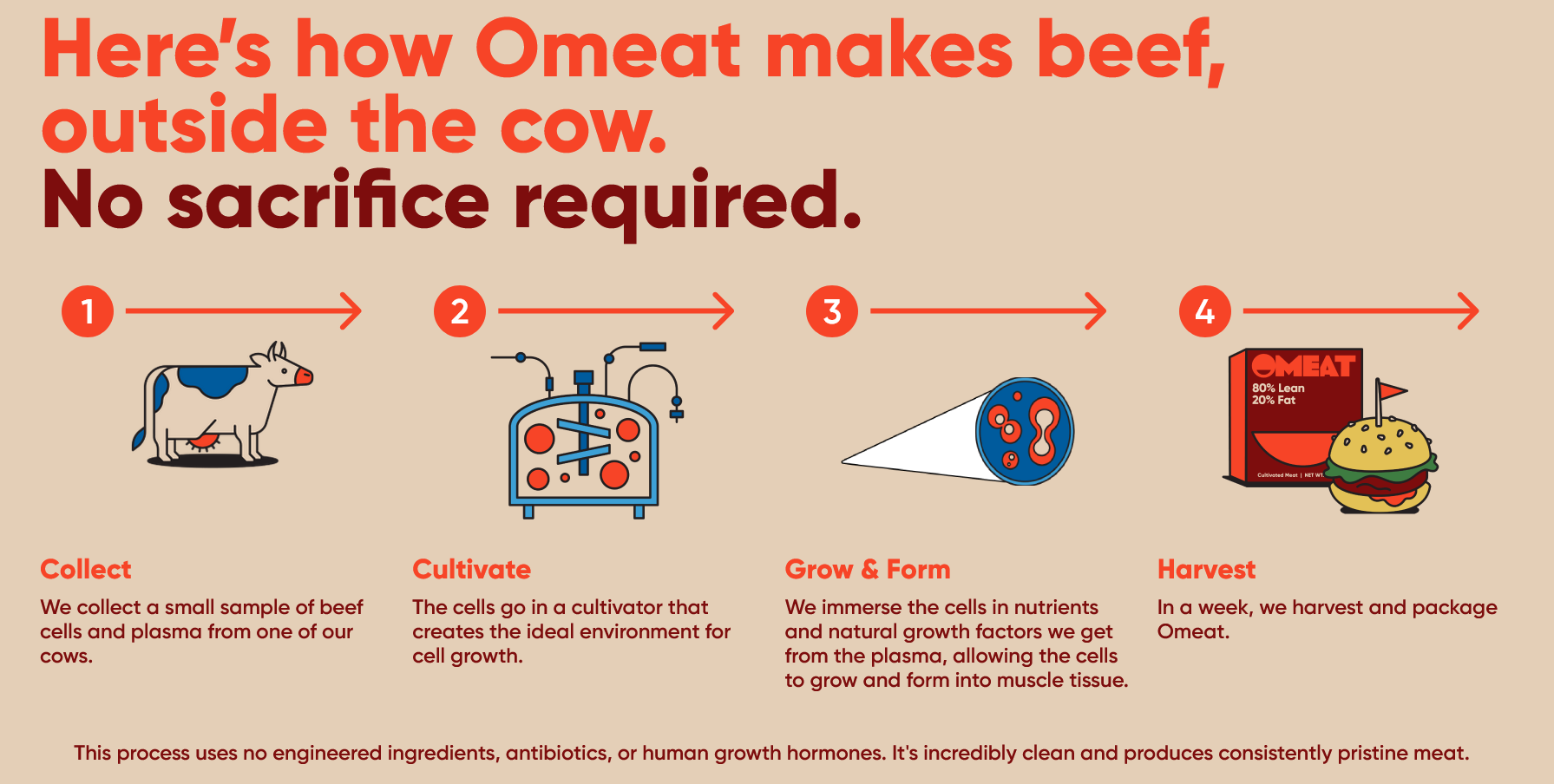
Again, consider the fact how often this man and his associates told bullshit and untruths when confronted with falsifications in their published works. What exactly would prevent such people from buying actual ground beef from slaughtered cows, and secretely repackaging it as burgers made allegedly from ethical lab-grown meat? How would anyone ever be able to scientifically check if the contents were lab-grown from cow cells as claimed?
Serious question in need of an urgent debate, considering that Khademhosseini is not the only dishonest regenerative medicine researcher who runs a multi-million dollar heavy lab-grown meat business, again, read here:
From COVID-19 to Lab-Grown Meat
Enterprising Israeli Scientists show how these things are connected.
Post-Scriptum
In 2013, Khademhosseini and a team of editor colleagues published a strange editorial in their ACS journal, its lead author was the German nanotechnologist Wolfgang Parak, at that time a collaborator of Paolo Macchiarini and Philip Jungebluth, read this 2016 article, and see below:

So here is that “Be critical but fair” editorial from 2013, ironically rather prescient of the Macchiarini affair and also of Khademhosseini’s own current situation:
Wolfgang J. Parak , Warren C. W. Chan , Jason H. Hafner , Paula T. Hammond , Mark C. Hersam , Ali Javey , Ali Khademhosseini , Nicholas A. Kotov , Paul Mulvaney , Andre E. Nel , Peter J. Nordlander , Reginald M. Penner , Andrey L. Rogach , Raymond E. Schaak , Molly M. Stevens , Andrew T. S. Wee , C. Grant Willson , Paul S. Weiss Be critical but fair ACS Nano (2013) doi: 10.1021/nn405306e
“In science, we face a similar problem: the numbers of blogs, twitter messages, etc. in which individuals accuse others of academic fraud are steadily rising. Although one might think that this trend is generally beneficial for the purity of science, there are also obvious risks involved. […] Thus, in this Editorial, we outline some general behavior guidelines that we believe should be followed in such cases. In general, we need to respect our law, in dubio pro reo, which tells us not to condemn anyone before wrongdoing has been proven. It is easy to tweet a message like “X committed fraud and manipulated data”, but how do we know that this is, in fact, true, and that instead, it was perhaps person Y who sent the tweet who just wanted to damage an unwanted competitor? “
The article then makes clear that only the journal editors are qualified to judge the evidence of data manipulation, and the evidence cannot be submitted anonymously. Also bloggers are warned not to publish anything before editorial decision is made, and to do so only non-anonymously. As I did, and got sued several times by Parak’s esteemed collaborator Jungebluth.
Donate!
If you are interested to support my work, you can leave here a small tip of $5. Or several of small tips, just increase the amount as you like (2x=€10; 5x=€25). Your generous patronage of my journalism will be most appreciated!
€5.00

 For Better Science
Hmmm … I might want to waste a bit of my time to do the LCA (Life Cycle Assessment) regarding this ambitious/hallucinating project called as O-MEAT!
LikeLike
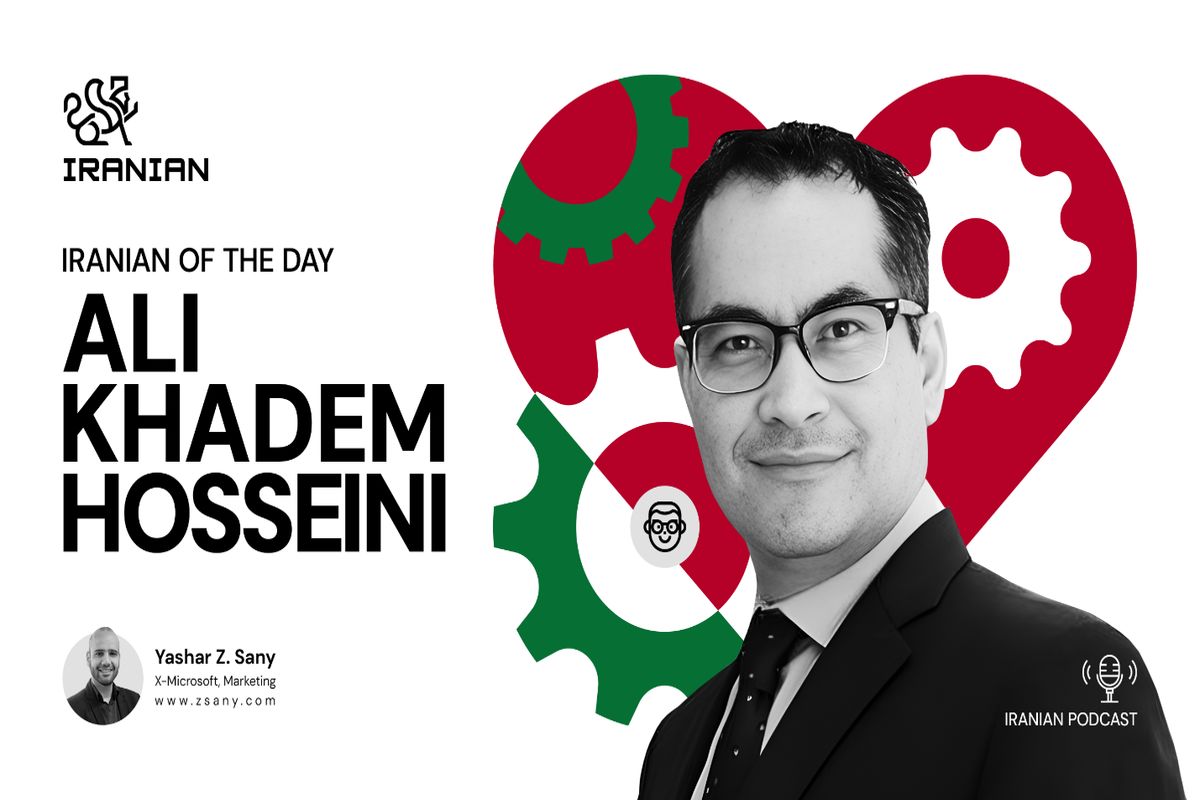
This dude (The O-Meater) is being advertised all over:
https://www.mojnews.com/%D8%A8%D8%AE%D8%B4-%D8%A8%D8%A7%D8%B2%D8%A7%D8%B1-170/580927-%D9%85%D8%B5%D8%A7%D8%AD%D8%A8%D9%87-%D8%B9%D9%84%DB%8C-%D8%AE%D8%A7%D8%AF%D9%85-%D8%AD%D8%B3%DB%8C%D9%86%DB%8C-%D8%AF%D8%A7%D9%86%D8%B4%D9%85%D9%86%D8%AF-%D8%A8%D8%B1%D8%AC%D8%B3%D8%AA%D9%87-%D8%A8%DB%8C%D9%88%D8%AA%DA%A9%D9%86%D9%88%D9%84%D9%88%DA%98%DB%8C-%D8%A8%D8%A7-%D9%BE%D8%A7%D8%AF%DA%A9%D8%B3%D8%AA-%D8%A7%DB%8C%D8%B1%D8%A7%D9%86%DB%8C%D8%A7%D9%86
LikeLike
Iranian of the day.
LikeLike
For the record, I arrived independently on the scene through an unrelated screen. Although I am not averse to joining the occasional treasure hunt.
LikeLiked by 1 person
Unfortunately, academia has become so corrupt that such cases are no longer considered rare. This is just the tip of the iceberg among many cases that go undetected or may never be exposed due to the nature of their falsified quantitative data. This flood of fake data, created by narcissists, is the result of prioritizing visionaries, big thinkers, money-driven individuals, and grant hunters over nurturing science and genuine scientists. Your grants and job applications are reviewed and evaluated by narcissists like these—what do you expect? A growing world of corruption. No wonder that when one finds a reproducible concept or experiment in a paper, it is worth celebrating more than one’s own discovery. Thank you for bringing these issues to our attention.
LikeLiked by 1 person
Amen.
LikeLike
It is claimed that all investigations have been done by Elisabeth Bik. Who’s she? What motivated her to be focused such deeply on this investigation? I didn’t find any clue to help me out. Did you?
Personally, I believe that mass paper production, even by very active labs and trustworthy scientific teams, makes it vulnerable to big issues due to rashes and the fast-paced publication processes. However, there are hundreds of predatory journals and fake data published even in well-known journals.
Unfortunately, nowadays, the quantity of publications is the matter not the quality.
LikeLike
Obviously we are motivated by irrational racism against Aryans from Iran here.
Are your papers on PubPeer, Siamak?
LikeLike
Akhilesh Gaharwar holds an administrative position in Texas A&M’s biomedical engineering department which says a lot about the department. Interestingly, he had falsely accused a student [in another lab] of stealing a script from his wife (another professor) in the past. If you look up his wife’s Google Scholar page you will notice a lot of publications listed that she has not co-authored (her name was simply similar to the authors of those publications, they had the same initials).
LikeLike
Ali Tamayol has finally been promoted to the highest position he could achieve in return for years of papermill trade! No, I’m not talking about the position of Ayatollah, but full professorship.
Khademhosseini is, of course, at the top of the thank-you list!
Tamayol is a special name. Although his current Google Scholar profile consists of keywords such as biomedical engineering, regenerative medicine, wound healing, and drug delivery, his career in papermilling and citation farming also includes scamming articles on porous media, heat transfer, and nanofluids. Here’s the OpenAlex link.
One of the co-authors of the first article on this link is Nima Shokri, a wonderful professor in Hamburg and Kaveh Madani‘s dear collaborator. For those who don’t remember Madani, he was mentioned in the comments of one of the previous FBS articles. While he was a well-behaved high-level bureaucrat in the Iranian regime, he was suddenly arrested by the IRGC and arrested for a short time (come on, that’s enough time to be considered a rebel in the eyes of Western countries). Now, while awarding Shokri under the United Nations brand, they are also increasing their cooperation with Sweden, the protector nation of the oppressed people.
Another co-author of Tamayol’s other articles on these topics is Kamel Hooman, a professor at the prestigious Delft University and editor of many journals, primarily the International Journal of Heat and Mass Transfer (IJHMT). One of these journals is the Journal of Porous Media, where he works alongside Kambiz Vafai, who is the chief editor and the distinguished professor of the porous media fraud in the scientific literature. Thanks to their editorial roles and the networks they have built among various editorial boards, these scammers can sweep their scamming stuff under the rug, such as duplicated figures and citation farming in the fraudulent articles they published. That is why you cannot see articles by these names that have been retracted or corrected. So, their names always remain clean.
Hooman was listed at the University of Queensland in Australia until 2022. As you can understand from the above information, he must have been able to settle comfortably in the Netherlands thanks to the Iranian network, whose depth in Western academia (and even politics?) is unknown and which is constantly supported by some unknown sources.
In this sense, Tamayol is actually one of the clearest examples showing that Iranian papermillers can work across disciplines and in different countries, and can engage in citation and article fraud on different topics.
LikeLiked by 1 person
It appears that the links are missing. I am adding them below in order.
Tamayol’s full professorship and greetings to Khademhosseini: https://www.linkedin.com/posts/ali-tamayol-54630335_i-am-pleased-to-share-that-i-have-been-promoted-activity-7366533877986729985-nDAU
Tamayol’s GS: https://scholar.google.com/citations?hl=en&user=IFGAubMAAAAJ&view_op=list_works
Tamayol’s OpenAlex Link: https://openalex.org/works?page=1&filter=authorships.author.id:a5082068459,primary_topic.id:t12063 note: there are also other irrelevant engineering topics, can be seen from OpenAlex database.
Tamayol’s first article in the link above: https://doi.org/10.1016/j.ijheatmasstransfer.2013.03.006
Nima Shokri GS: https://scholar.google.com/citations?user=W9y83LMAAAAJ&hl=en
Kaveh Madani: en.wikipedia.org/wiki/Kaveh_Madani
Comments on Madani in a previous FBS post: https://forbetterscience.com/2024/07/16/in-international-affairs-and-paper-mills/
Madani the UN hero awarding wonderkid Shokri: https://x.com/NimaShokri_GHI/status/1797236404650381733?lang=en
Madani in Sweden: 1- https://www.linkedin.com/posts/lunduniversity_great-leaders-dont-just-solve-problems-activity-7272933592467394561-lBlo 2- https://www.linkedin.com/posts/water-resources-engineering-division-lund-university_unuhub-unuhublund-unuinweh-activity-7328085166642356224-C6D5 3- https://www.linkedin.com/posts/lunduniversity_lund-university-to-start-new-un-collaboration-activity-7260570472319176704-3UVB 4- https://www.lunduniversity.lu.se/article/lund-university-start-new-un-collaboration-focusing-water
Tamayol’s another collaborator in irrelevant topics, Kamel Hooman: https://pubpeer.com/search?q=%22kamel+hooman%22+OR+%22k+hooman%22
IJHMT editorial board: https://www.sciencedirect.com/journal/international-journal-of-heat-and-mass-transfer/about/editorial-board
Journal of Porous Media: https://www.begellhouse.com/journals/porous-media/editorial.html
Kambiz Vafai: https://scholar.google.ca/citations?user=Im0bFJkAAAAJ&hl=en
LikeLiked by 1 person