
A story about academic elites, especially those in USA, and their attitudes.
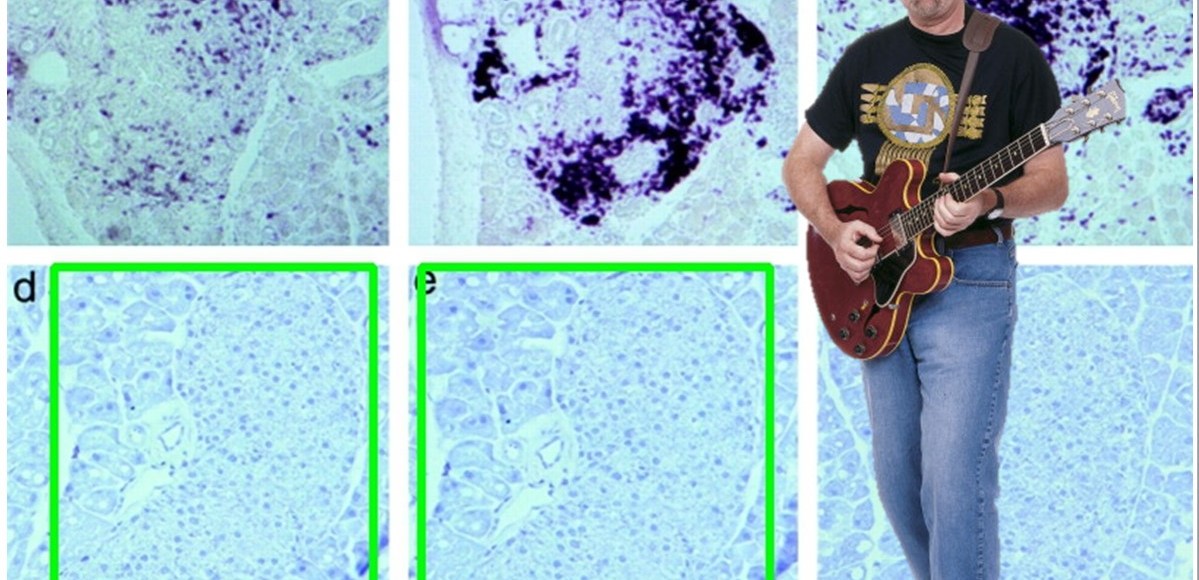
Our main hero Richard Flavell is Sterling Professor of Immunobiology at the Yale University. At conferences, he occasionally plays guitar “with the “Cellmates,” a rock band made up of other renowned scientists Ira Mellman, Leonard Kaczmarek, William Philbrick, and Flavell’s wife, Madlyn Flavell“. This rock star also once served as CEO of the pharma company Biogen.
The Englishman Flavell used to be postdoc of the famous prion researcher Charles Weissmann in Zurich, who also trained (and still supports) Adriano Aguzzi. Judging from Aguzzi’s and Flavell’s research attitudes, one really wonders what they really learned from Weissmann.
Aguzzi and the Lowlifes
The prion researcher Adriano Aguzzi used to describe his Pubpeer critics as “lowlifes”, and himself as a victim of a lynch mob. But after Elisabeth Bik helped him find even more mistakes in his papers, Aguzzi changed his stance.

Let’s look at some of Flavell’s old papers, shall we?
Wajahat Z Mehal, Shehzad Z Sheikh , Leonid Gorelik , Richard A Flavell TGF-beta signaling regulates CD8+ T cell responses to high- and low-affinity TCR interactions International Immunology (2005) doi: 10.1093/intimm/dxh233

The two FACS plots are almost identical, suggesting the same measurement with slightly different gating. But Flavell’s protege Wajahat Mehal, now himself a Yale professor, explained on PubPeer:
“…we were contacted by the journal. In response we tried to find the original data, but as this work was done over 19 years ago it has not been possible to locate it, and likely has not been retained.
I have examined the fifteen published studies which have referenced our manuscript. Eleven of these are original studies that have built on this (two are dissertations and two are book chapters). They have either confirmed or generally supported our findings, without a single one expressing an alternative opinion.
We are confident that the findings are robust and accurate“
Yes, the argument of eminence was accepted by the journal, where one of the editors is a certain Chinese superstar called Xuetao Cao.

The 16 secret retractions of Xuetao Cao at JBC
Chairman Cao’s 16 Retractions They Don’t Want You to Know About
Just before Christmas 2005, Mehal, Flavell, and another “Cellmates” band member Kaczmarek retracted a Science paper they published not ever a year earlier. The elite journal then hid the retraction notice from the article’s main page and put it behind a paywall, contravening all COPE guidelines. But you are invited to pay to read that retracted masterpiece. In fact, even the hidden retraction is paywalled.
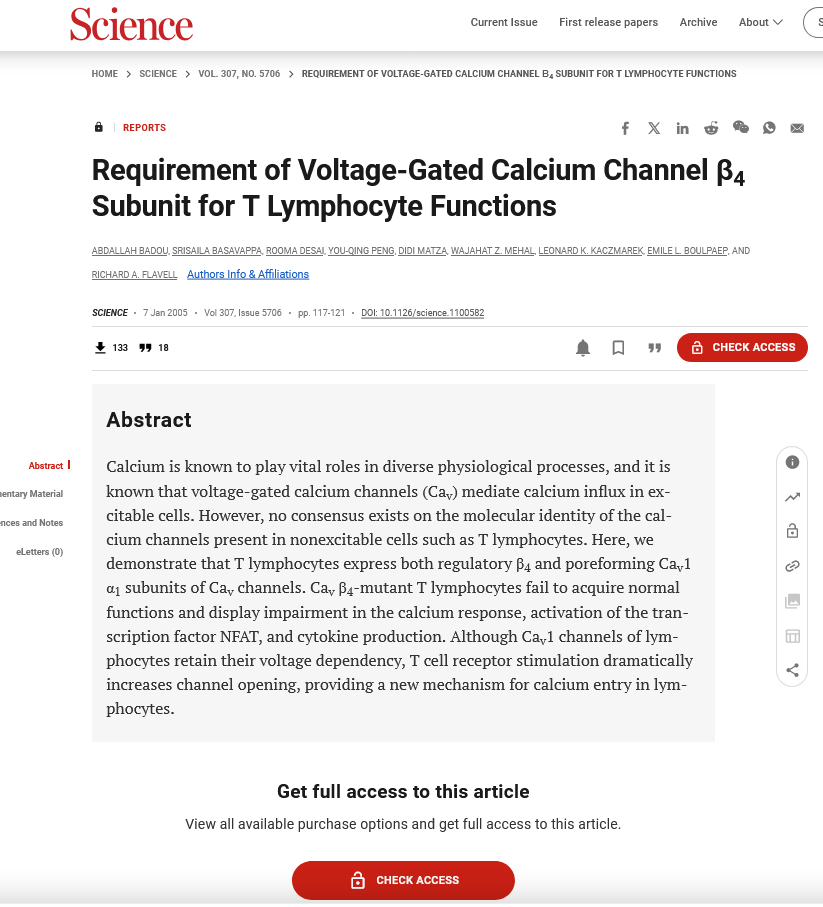
Abdallah Badou , Srisaila Basavappa , Rooma Desai , You-Qing Peng , Didi Matza , Wajahat Z. Mehal , Leonard K. Kaczmarek , Emile L. Boulpaep , Richard A. Flavell Requirement of voltage-gated calcium channel beta4 subunit for T lymphocyte functions Science (2005) doi: 10.1126/science.1100582

“We wish to retract our Report “Requirement of voltage-gated calcium channel β4 subunit for T lymphocyte functions” (1). The conclusions of our paper were based in part on electrophysiological data. We now believe that the data in Fig. 4B (prepared by S.B.) are erroneous, and that the conclusions of the electrophysiological results cannot be relied upon. In the interests of scientific integrity and the scientific literature, we believe the appropriate response is to retract this paper in its entirety.”
Retraction 23 December 2005 (hidden and paywalled)

Dirty Old Men
Does being a science genius entitle you to sexual harassment, as academic authorities in Yale and elsewhere insist? Let’s look at papers by Michael Simons, Joseph Schlessinger and Arnold Levine.
It wasn’t Flavell’s only retraction. Another paper was pulled right after it was published:
Roza I. Nurieva , Piper Treuting , Julie Duong , Richard A. Flavell, Chen Dong Inducible costimulator is essential for collagen-induced arthritis Journal of Clinical Investigation (2003) doi: 10.1172/jci17321
“My colleagues and I performed collagen-induced arthritis experiments reported in the paper under the impression that this study had been approved by the Institutional Animal Care and Usage Committee (IACUC) of the University of Washington, but we were subsequently informed by this committee that such approval had not been granted. There were no scientific errors in the paper, and we stand by the validity, importance, and interest of the results. However, the paper is to be retracted according to the JCI’s policy of publishing only studies that have been formally approved by an IACUC. We are sorry for any inconvenience this has caused.
Chen Dong”
Retraction 15 November 2003
Maybe not such a big loss for science, here another paper by Flavell and Chen Dong, who was then at MD Anderson and is now professor (and Communist Party member) at Tsinghua University in China:
Xindong Liu , Xiaowei Yan , Bo Zhong , Roza I. Nurieva , Aibo Wang , Xiaohu Wang , Natalia Martin-Orozco , Yihong Wang , Seon Hee Chang , Enric Esplugues , Richard A. Flavell, Qiang Tian , Chen Dong Bcl6 expression specifies the T follicular helper cell program in vivo The Journal of Experimental Medicine (2012) doi: 10.1084/jem.20120219

Obviously again not two different samples, but one flow cytometry measurement with two slightly different gate settings. But not for Dong, who went to PubPeer to triumphantly point out some small differences (which arose exactly because the plot wasn’t erroneously duplicated).
Another case of flawed cytometry, with Louisiana State University professor Samithamby Jeyaseelan, who is worshipped by his employer as “Rainmaker” because he pulled a $11.6 million COBRE grant from the NIH Centers of Biomedical Research Excellence:
Theivanthiran Balamayooran , Sanjay Batra , Gayathriy Balamayooran , Shanshan Cai , Koichi S. Kobayashi , Richard A. Flavell, Samithamby Jeyaseelan Receptor-interacting protein 2 controls pulmonary host defense to Escherichia coli infection via the regulation of interleukin-17A Infection and Immunity (2011) doi: 10.1128/iai.05641-11

The correction from June 2023 informed that “The inadvertent duplication did not impact the conclusions of the article, and the figure legend is correct as published.“
Yet in 2015, Flavell and Jeyaseelan retracted a previously corrected paper in the same journal:
Balamayooran Theivanthiran, Sanjay Batra, Gayathriy Balamayooran , Shanshan Cai , Koichi Kobayashi , Richard A. Flavell, Samithamby Jeyaseelan NOD2 signaling contributes to host defense in the lungs against Escherichia coli infection Infection and Immunity (2012) doi: 10.1128/iai.06230-11

Then more duplications observed for for figurs 5 and 6.”
“As these figures are not accurate representations of the original data, and correction of the data using the original blots which were used to construct the figures affects some of the manuscript’s conclusions, the authors have agreed to retract this publication. We sincerely apologize for any inconvenience caused to the readers of Infection and Immunity.”
Retraction April 2015
More for Jeyaseelan is on PubPeer. Here a rather representative (and corrected paper by his, with a regular coauthor, the University of Pennsylvania professor G. Scott Worthen:
Shanshan Cai , Rachel L. Zemans , Scott K. Young , G. Scott Worthen, Samithamby Jeyaseelan Myeloid differentiation protein-2-dependent and -independent neutrophil accumulation during Escherichia coli pneumonia American Journal of Respiratory Cell and Molecular Biology (2009) doi: 10.1165/rcmb.2008-0152oc

Erratum June 2022: “During the preparation of Figure 2F, incorrect images for the saline MD2−/− and the saline MD2+/+ images were inserted. The published images in those panels were inadvertently obtained from the LPS MD2−/− tissue sample. A corrected version of Figure 2F is presented in this erratum; the conclusions of the study are not affected by this change.”
On almost every criticised Jeyaseelan paper, with or without Worthen, someone (maybe some Rainmaker?) arrived in January 2018 to PubPeer to protest under changing anonymous identities that there was nothing wrong with the figures, and concluding every time angrily with “What is the problem here?“.
- Suillus occidentalis: “Give someone a break! A minor overlap between 2 control lung slides is always possible. What is the problem here?“
- Suillus occidentalis: “dot plots from uninfected mice have different numbers so as distribution of dots. What is the problem here?“
- Sinocyclocheilus anophthalmus: “Similar architecture on lung slides may be an artifact of microscopy. Entirely possible to have similar architecture on tissues. Conclusions are still valid. What is the problem here?“
- Gnathophis heterognathos: “so many gels. Only 2 control bands appear to be misplaced and no change in conclusions. No major concern. What is the problem here?“
- Myoxocephalus jaok: “Similar arrangement of cells in two panels is just an artifact of microscopy or real. What is the problem here?“
- Myoxocephalus jaok: “Should use the same slide for staining with multiple antibodies. What is the problem here?“
- Pyralis regalis: “Similar arrangement of cells in two panels is just an artifact of microscopy. What is the problem here?“
- Ficus retusa: “Looks perfect. What is the problem here?“
- Ficus retusa: “Erratum published. […] Do you have proof otherwise? What is the problem here?“
What is the problem here, indeed:
Samithamby Jeyaseelan, Scott K. Young , Masahiro Yamamoto , Patrick G. Arndt , Shizuo Akira , Jay K. Kolls , G. Scott Worthen Toll/IL-1R Domain-Containing Adaptor Protein (TIRAP) Is a Critical Mediator of Antibacterial Defense in the Lung against Klebsiella pneumoniae but Not Pseudomonas aeruginosa The Journal of Immunology (2006) doi: 10.4049/jimmunol.177.1.538

Correction October 2022: “In the original article, Fig. 5E had inadvertently misplaced overlapping TIRAP−/− and TIRAP+/+ images in unstimulated and TNF-α–stimulated panels.”
Can you imagine a better investment for the NIH millions?
Back to Flavell, here he is with a Yale colleague Ruslan Medzhitov, in Nature:
Tiffany Horng, Gregory M. Barton, Richard A. Flavell, Ruslan Medzhitov The adaptor molecule TIRAP provides signalling specificity for Toll-like receptors Nature (2002) doi: 10.1038/nature01180

Should we be worried when two very influential Yale professors of medicine publish stuff like this in top journals? Especially with the God of Immunology, Charles Janeway, just months before his death:
Koichi Kobayashi , Lorraine D. Hernandez , Jorge E. Galán , Charles A. Janeway , Ruslan Medzhitov, Richard A. Flavell IRAK-M Is a Negative Regulator of Toll-like Receptor Signaling Cell (2002) doi: 10.1016/s0092-8674(02)00827-9
Fig 4C

Next is how Medzhitov does science in Nature, a paper from last year. The PubPeer user Centropogon nervosus noticed that some values in the supplemental data which was sued to generate the main figures, was duplicated:
Esther B. Florsheim , Nathaniel D. Bachtel , Jaime L. Cullen , Bruna G. C. Lima , Mahdieh Godazgar , Fernando Carvalho , Carolina P. Chatain , Marcelo R. Zimmer , Cuiling Zhang , Gregory Gautier , Pierre Launay , Andrew Wang , Marcelo O. Dietrich, Ruslan Medzhitov Immune sensing of food allergens promotes avoidance behaviour Nature (2023) doi: 10.1038/s41586-023-06362-4
Fig S6c


In September 2023, Medzhitov explained on PubPeer:
“it was a copy-and-paste error in the Excel file.
It does not affect any conclusions. We will submit a correction to the journal ASAP.”
No correction was published till this day. Yale privilege I guess? Here is Medhitov’s collaboration with a UN-employed cancer researcher, Massimo Tommasino (who died in 2022):
Uzma A. Hasan , Claudia Zannetti , Peggy Parroche , Nadège Goutagny , Marine Malfroy , Guillaume Roblot , Christine Carreira , Ishraq Hussain , Martin Müller , Joyce Taylor-Papadimitriou , Didier Picard , Bakary S. Sylla , Giorgio Trinchieri , Ruslan Medzhitov , Massimo Tommasino The human papillomavirus type 16 E7 oncoprotein induces a transcriptional repressor complex on the Toll-like receptor 9 promoter The Journal of Experimental Medicine (2013) doi: 10.1084/jem.20122394
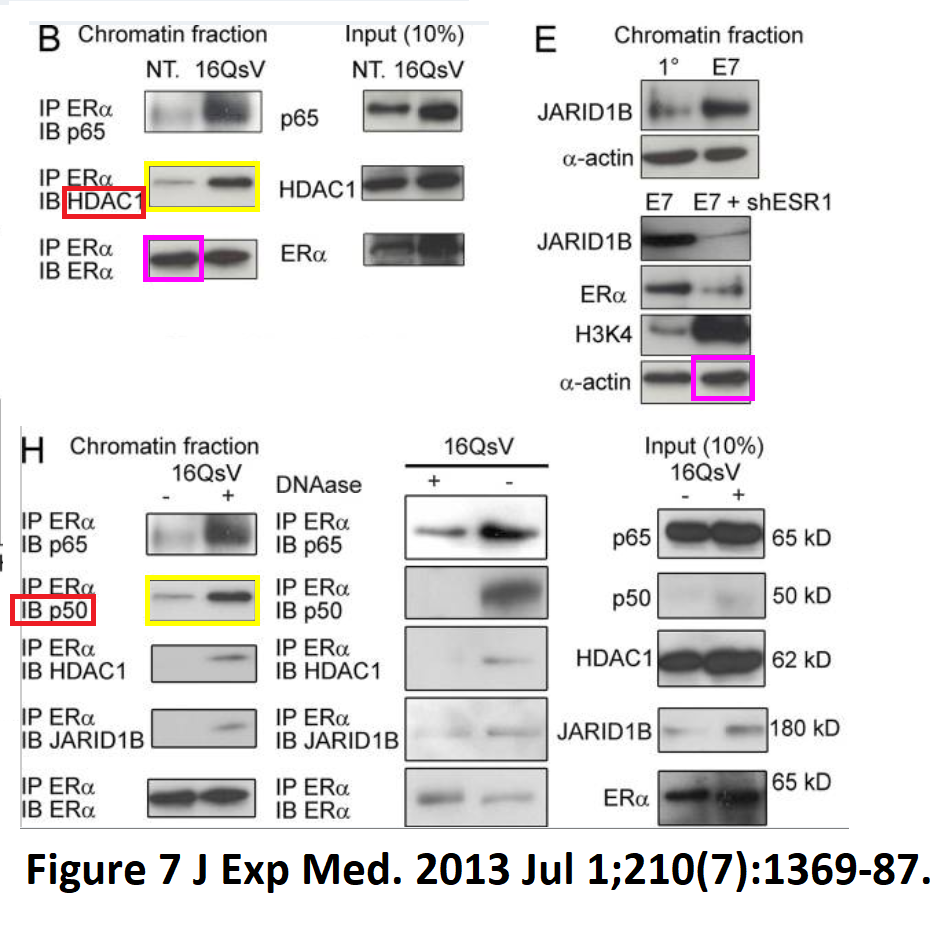

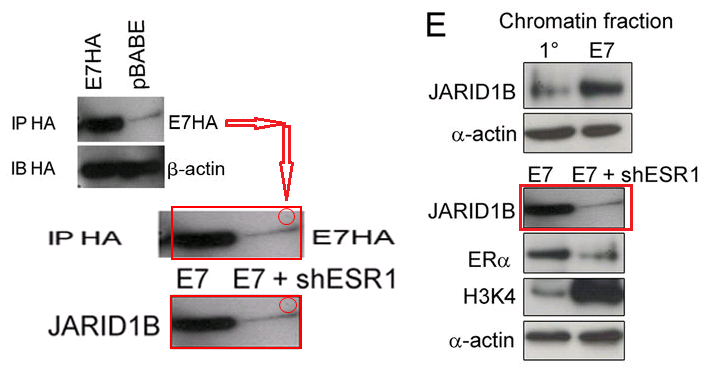
Tommasino used to work until his retirement in 2021 at the International Agency for Cancer Research (IARC) in Lyon, France, he died aged 64 the next year, in December 2022. I wrote about his fake science in this 2018 article:
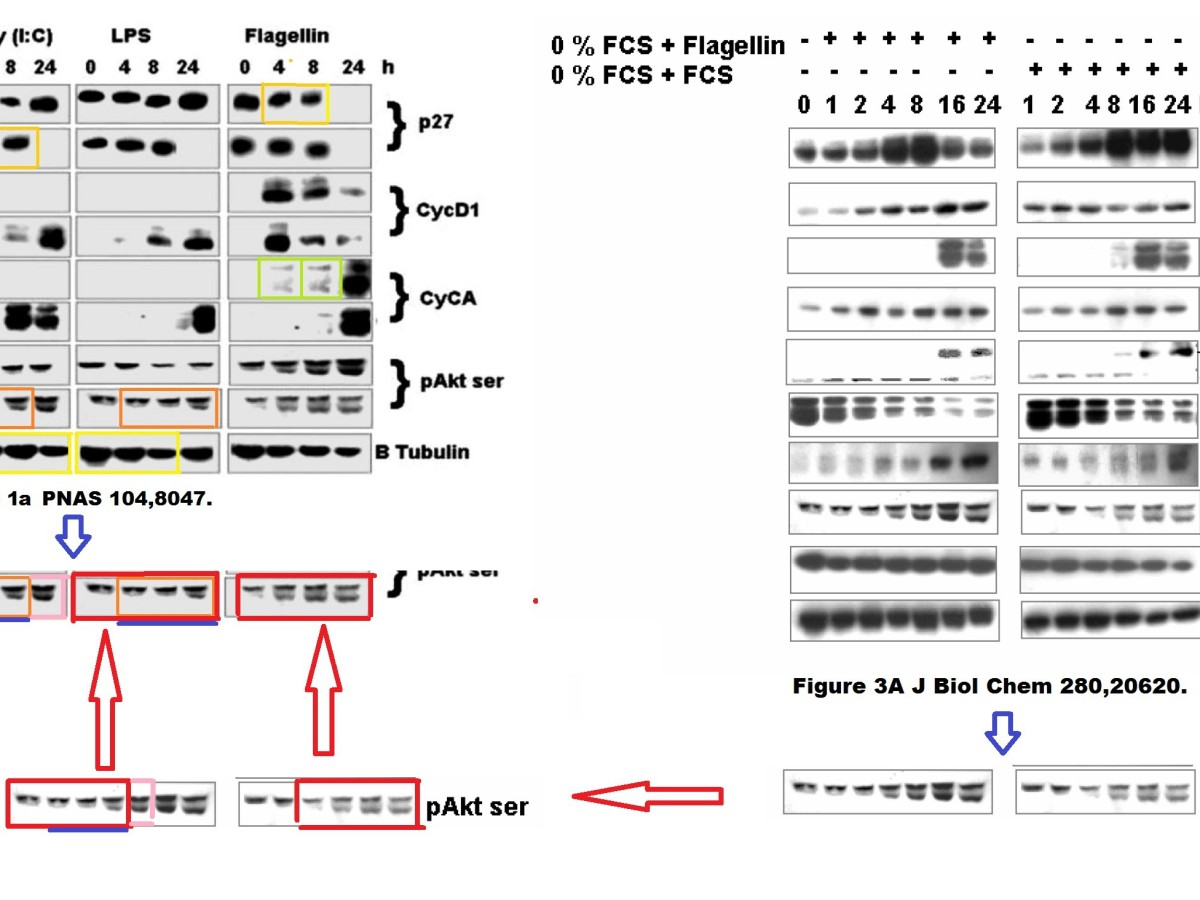
WHO cures cancer in Photoshop?
The World Health Organisation (WHO) has a cancer research unit in France, IARC. Some papers from there contain impressive manipulations. The works of art are authored by Massimo Tommasino and his former junior colleague there Uzma Hasan, now tenured group leader at INSERM. Some of this research took place at the Schering-Plough Research Institute which…
In December 2019, IARC investigated around 20 fake papers and whitewashed in full Tomassino and his mentee Uzma Hassan (who became a PI at the International Center for Infection Research (CIRI) in Lyon):
“The investigation looked at each allegation made and a rigorous approach was adopted further to the IARC Policy on Scientific Misconduct, as publicly available on the IARC internet site. The allegations relate entirely to gel and blot “splicing”. This was and to a large extent still is common practice to reduce the size and complexity of figures which are illustrations derived from multiple experiments, and not intended to show the results of those individual experiments.”
The IARC obituary from December 2023 bemoaned Tommasino’s death:
“Dr Tommasino was an enthusiastic and dedicated scientist, colleague, and friend, with a deep love for science and for life. His contributions to the research community, both at IARC and beyond, will be sorely missed.”
His grieving coauthors were so devastated that they found themselves unable to correct or retract Tommasino’s fake science.
Back to Flavell. Here he is with another Yale colleague, Robert Sherwin:
Li Wen, F. Susan Wong , Jie Tang , Ning-Yuan Chen , Martha Altieri , Chella David , Richard Flavell, Robert Sherwin In vivo evidence for the contribution of human histocompatibility leukocyte antigen (HLA)-DQ molecules to the development of diabetes The Journal of Experimental Medicine (2000) doi: 10.1084/jem.191.1.97

Here is Flavell with a Harvard colleague, Michael Moskowitz:
Dean A. Le , Yongqin Wu , Zhihong Huang , Kohji Matsushita , Nikolaus Plesnila , Jean C. Augustinack , Bradley T. Hyman , Junying Yuan , Keisuke Kuida , Richard A. Flavell , Michael A. Moskowitz Caspase activation and neuroprotection in caspase-3- deficient mice after in vivo cerebral ischemia and in vitro oxygen glucose deprivation Proceedings of the National Academy of Sciences (2002) doi: 10.1073/pnas.232473399

This kind of scientists do find each other, and I suspect nobody is surprised that Flavell collaborated with Augustine MK Choi, who later had to retract several papers and step down as dean of Weill Cornell:

O du lieber Augustine MK Choi
Augustine Choi is Dean of Weill Cornell and a misunderstood genius. He discovered that carbon monoxide is a cure for all possible diseases, just add a bit of Photoshop.
This is their common paper:
Xuchen Zhang , Peiying Shan , Leo E. Otterbein, Jawed Alam , Richard A. Flavell, Roger J. Davis , Augustine M.K. Choi, Patty J. Lee Carbon Monoxide Inhibition of Apoptosis during Ischemia-Reperfusion Lung Injury Is Dependent on the p38 Mitogen-activated Protein Kinase Pathway and Involves Caspase 3 Journal of Biological Chemistry (2003) doi: 10.1074/jbc.m208419200

Actinopolyspora biskrensis: “Figure 2a appears to have two images which overlap.”
It was corrected in October 2023 to inform the scientific community that “this correction does not affect Figure 2b quantitation data or the scientific conclusions of the work.“
Now, Patty Lee is professor at another elite university, namely Duke. She has several more papers on PubPeer, with Choi and their common collaborator Jack Elias, until recently Senior Vice President and Dean of Medicine at Brown University (read about him in September 2024 Shorts). But not only, here another paper by Lee:
Xuchen Zhang , Peiying Shan , Jawed Alam , Xin-Yuan Fu , Patty J. Lee Carbon Monoxide Differentially Modulates STAT1 and STAT3 and Inhibits Apoptosis via a Phosphatidylinositol 3-Kinase/Akt and p38 Kinase-dependent STAT3 Pathway during Anoxia-Reoxygenation Injury Journal of Biological Chemistry (2005) doi: 10.1074/jbc.m408092200

Here is Flavell with Atan Gross from Weizmann Institute in Israel :
Rachel Sarig , Yehudit Zaltsman , Richard C. Marcellus , Richard Flavell , Tak W. Mak , Atan Gross BID-D59A is a potent inducer of apoptosis in primary embryonic fibroblasts Journal of Biological Chemistry (2003) doi: 10.1074/jbc.m210296200

Two corrections were issued. The first correction from October 2012 informed that “Figs. 1A, and 7, A and B, were excessively edited” and provided “replacement of Fig 1A with an exactly identical experiment and addition of white lines to mark joint lanes in Fig 7, A and B“. The second correction from April 2013 corrected the paper’s findings because “The original text in the article does not describe the results shown in the corrected Fig. 1A accurately.”
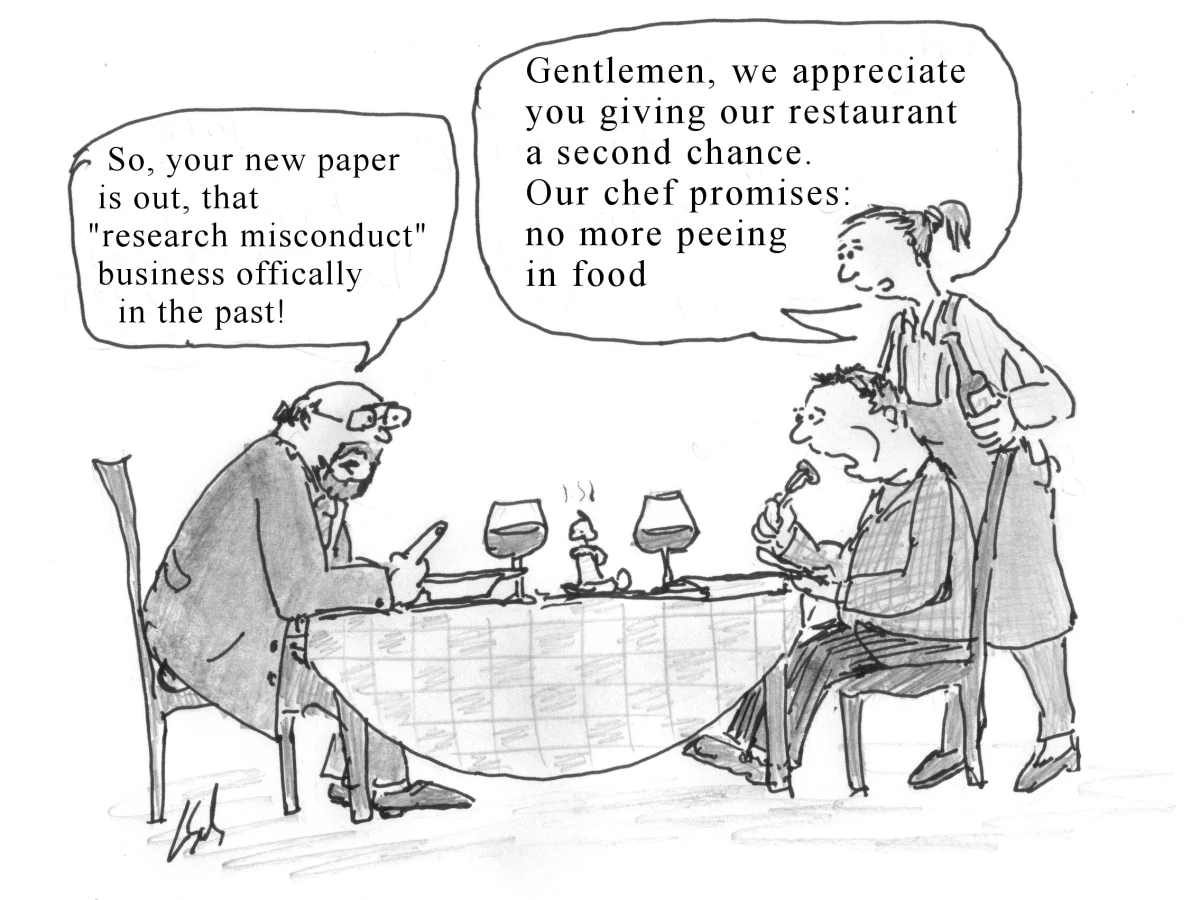
The PubPeer Stars of Weizmann Institute
Rony Seger, Jacob Hanna, Ilana Kolodkin-Gal, Atan Gross, Sima Lev, Tsvee Lapidot, Moshe Oren, Varda Rotter and others. Let’s celebrate the Weizmann Science!
This was recently found by a sleuth in the same journal:
Yankun Li , Robert F. Schwabe , Tracie DeVries-Seimon , Pin Mei Yao , Marie-Christine Gerbod-Giannone , Alan R. Tall , Roger J. Davis , Richard Flavell, David A. Brenner, Ira Tabas Free Cholesterol-loaded Macrophages Are an Abundant Source of Tumor Necrosis Factor-α and Interleukin-6 Journal of Biological Chemistry (2005) doi: 10.1074/jbc.m501759200

Actinopolyspora biskrensis: “A portion of a gel slice seems to appear in both Figure 5C and Figure 7B (after adjustment to aspect ratio)”
The last author Ira Tabas is professor at Columbia University. Here is his paper with Richard Pestell who used to be Executive Vice President at Thomas Jefferson University and Director of two NCI cancer centers until he was given a much less demanding job in US academia:
Lale Ozcan, Devram S. Ghorpade , Ze Zheng , Jane Cristina De Souza , Ke Chen , Marc Bessler , Melissa Bagloo , Beth Schrope , Richard Pestell, Ira Tabas Hepatocyte DACH1 Is Increased in Obesity via Nuclear Exclusion of HDAC4 and Promotes Hepatic Insulin Resistance Cell Reports (2016) doi: 10.1016/j.celrep.2016.05.006

Read about Pestell, who has around SIXTY papers on PubPeer, here:

The Pestilence of Pestell
Richard Pestell MB, BS, MD, PhD, FACP, FRACP. MBA, FRCP, FRSB, AO is the most dashing doctor a girl or a boy can ever dream of. What luck for Michael Lisanti to have been invited for a ride!
There is even a paper by Flavell with Guido Kroemer, who is the centre of biomedical data-fudging universe!
Mads Gyrd-Hansen , Thomas Farkas , Nicole Fehrenbacher , Lone Bastholm , Maria Høyer-Hansen , Folmer Elling , David Wallach , Richard Flavell , Guido Kroemer , Jesper Nylandsted , Marja Jäättelä Apoptosome-independent activation of the lysosomal cell death pathway by caspase-9 Molecular and Cellular Biology (2006) doi: 10.1128/mcb.00716-06

The last author, University of Copenhagen professor Marja Jäättelä, explained on PubPeer in 2016 that the raw data was unavailable, and:
“Clearly, we have made a mistake when assembling this image… It is very embarrassing, but I can assure that the mistake is unintentional and that it does not affect the interpretation of the data!“
Indeed, who doesn’t copy-paste gel bands in Photoshop by mistake. Two years later, a correction was published in 2018 journal issue:
“Fig. 1D: We accidentally duplicated the GAPDH panel between the second and third lanes. We have not been able to retrieve the original data for this experiment, but essentially the same information regarding the expression of caspase-9 is provided in Fig. 3C and 4B. We are confident that the error does not alter the interpretation of the data directly relating to Fig. 1D (Fig. 1E to G) or the conclusions of our study. In addition, splicing of blots that is not explicitly indicated occurs in this panel.
Page 7884, Fig. 3B: Splicing of blots that is not explicitly indicated occurs in this panel.
Page 7886, Fig. 4B and H: Splicing of blots that is not explicitly indicated occurs in these panels.”
There are much more fake papers by Jäättelä on PubPeer with Kroemer and his associate Carmen Garrido (read about her in October 2024 Shorts).

Kristian Helin gets the perfect job
ICR London has a new director. The Great Dane Kristian Helin is the perfect successor to continue the ideological line of fictional cancer research.
Will you be surprised that Jäättelä also collaborated with her then-colleague in Copenhagen, Kristian Helin? He now leads the Institute for Cancer Fraud in London.
Mikkel Rohde , Mads Daugaard , Mette Hartvig Jensen , Kristian Helin , Jesper Nylandsted , Marja Jäättelä Members of the heat-shock protein 70 family promote cancer cell growth by distinct mechanisms Genes & Development (2005) doi: 10.1101/gad.305405

Quite likely, if someone really did a diligent screen of Flavell’s papers, much more would be found. But what’s the point. Flavell is almost 80 years old. And he is still there at Yale, running a lab of twenty people and publishing new papers without bothering to fix old ones (Flavell never replied to my emails). We are supposed to admire this academic cult of an old silverback gorilla who never lets go of power until his death.
In February 2024, Flavell and his fellow Yale Sterling Professor Akiko Iwasaki got a $575,000 grant from PolyBio Research Foundation to study Long COVID. This, from Iwasaki’s lab, is on PubPeer since 2000, very likely same FACS sample with different gate settings.
Heung Kyu Lee, Melodie Zamora , Melissa M. Linehan , Norifumi Iijima , David Gonzalez, Ann Haberman, Akiko Iwasaki Differential roles of migratory and resident DCs in T cell priming after mucosal or skin HSV-1 infection The Journal of Experimental Medicine (2009) doi: 10.1084/jem.20080601

What’s the point indeed. None of them cares, they are busy publishing new papers.
Donate!
If you are interested to support my work, you can leave here a small tip of $5. Or several of small tips, just increase the amount as you like (2x=€10; 5x=€25). Your generous patronage of my journalism will be most appreciated!
€5.00


….and there are people who believe that “Luckily, scientific fraud is rare”. How do we prevent scientific fraud? – PMC
LikeLike
In the USA, I’ll be curious to see if there is a reckoning against academic research by the new HHS and NIH director and the republican dominated congress. Crappy alzheimer’s disease research has gotten a lot of publicity out here, and so that may be enough for congress to cut back funding, driven by conspiracy shills like RFK Jr.
People like RFK Jr seem to be taken more seriously now than Jeffry Flier by the amercian public now. Cant really blame them for thinking that way. Flier is against DEI in research, so that is a step forward, but would do himself more good if he admitted there was a serious problem with research fraud.
We could be in for some very dark times.
LikeLike
Research fraud committed by a scientist in one country can have far-reaching negative repercussions, affecting other scientists, patients, and businesses worldwide. I therefore argue that issues of research fraud should not be handled at the local level (such as by universities or even national governments), but rather by an international body. I envision the creation of an International Science Integrity Tribunal, with Leonid Schneider potentially serving as its president.
LikeLike
Thanks, but I don’t think we need a tribunal and I am not the right person anyway.
I do think that research integrity officers should be former police people or state prosecutors who know what fraud is and don’t fall for lies and excuses.
You don’t need to be a scientist to understand that digital image falsification is not ok.
LikeLike
“I have examined the fifteen published studies which have referenced our manuscript. Eleven of these are original studies that have built on this (two are dissertations and two are book chapters). They have either confirmed or generally supported our findings, without a single one expressing an alternative opinion.“
What is the point of keeping the published manuscript with the faulty data?
It is dispensable. The field would be clearer without it.
LikeLike
There may be a tendency to think that Yale is relatively free of fraud compared with the likes of Harvard, the likes of Kenneth C Anderson and C Ronald Kahn spring to mind at Harvard. Yale might simply have less fraud because it is smaller than Harvard.
In the diabetes fake world, there is only the fake world, C Ronald Kahn, Harvard reigns supreme, but one should not forget than Gerald I Shulman has an extensive Pubpeer record and at is a Yale.
PubPeer – Search publications and join the conversation.
Gerald I Shulman, MD, PhD, MACP, MACE, FRCP < Yale School of Medicine
LikeLike
The pubpeer is good in exposing errors so authors can correct the literature.
LikeLike
YOU SHOULD NOT WORRY ABOUT Yale Professors bc they know what they are doing.
LikeLike
Something new I stumbled across with Flavell, thought the name was familiar: https://pubpeer.com/publications/5945B30878D664900941A38A02A83F
LikeLiked by 1 person