

Smut Clyde visited the citation market where references to papers are bought and sold, then stuffed block-wise into “peer-reviewed” papers in allegedly respectable journals.
The following long read features many great men from China and Iran, including a professor at a Polish university. It starts with conversion of tuberculosis, proceeds to chaotic multi-swarm whale optimizers and ends with pig manure and a Manifesto.

“Should we check a few references” the reviewers asked themselves, “to ensure that they do relate in some way to their context in the text, and aren’t simply pimped out? No, that sounds like work.”
By Smut Clyde
Ehsan Kianfar is one of the most original thinkers in our lifetime. We would never have learned of the key role of tuberculosis in the Sol-Gel pathway for synthesising nanoparticles without his magisterial review paper on that method (published by Hindawi, not yet retracted). You might recognise his first four coauthors, especially the russian polymath Dmitry Bokov:
Dmitry Bokov, Abduladheem Turki Jalil , Supat Chupradit , Wanich Suksatan, Mohammad Javed Ansari , Iman H. Shewael , Gabdrakhman H. Valiev, Ehsan Kianfar Nanomaterial by Sol-Gel Method: Synthesis and Application Advances in Materials Science and Engineering (2021) doi: 10.1155/2021/5102014
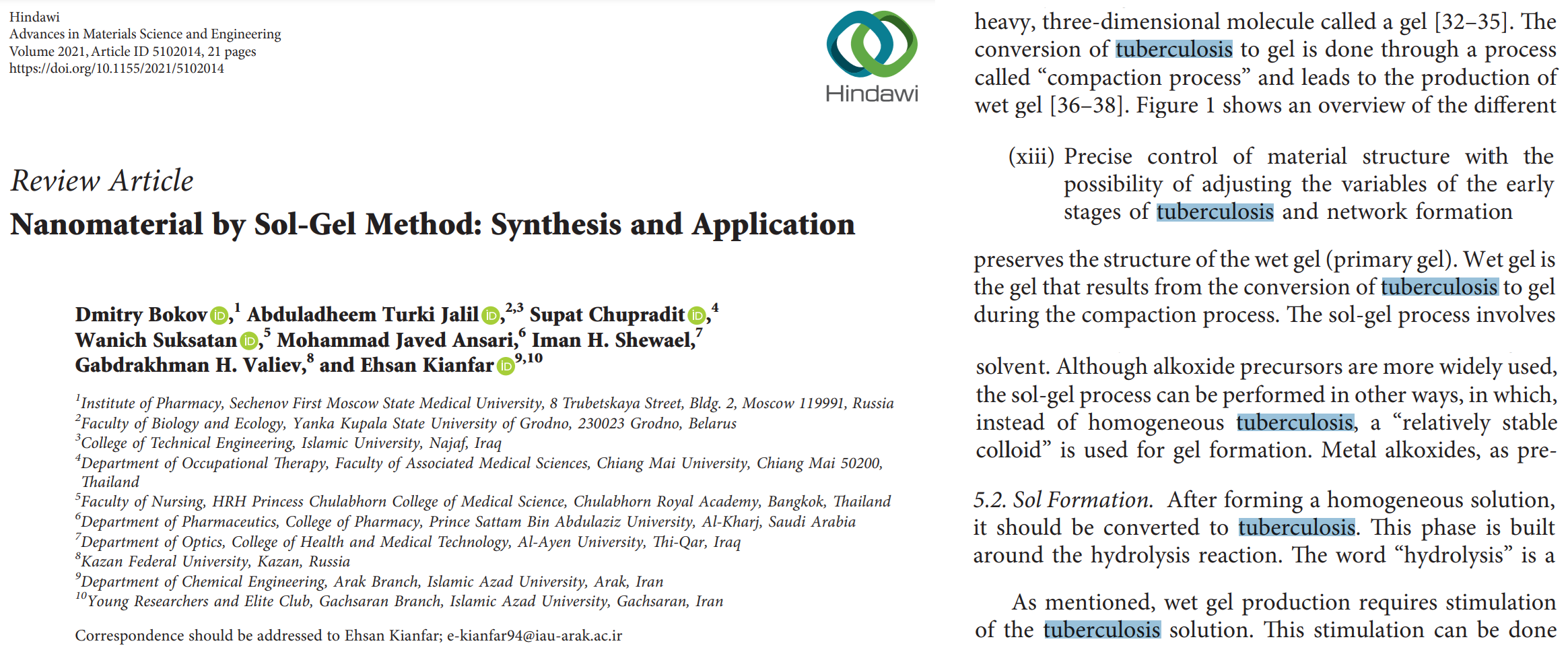
.I can only speculate that some engarbling software turned “sol” into Solanum tuberosum (potato), and from there through a process of random associations into “tuber”, then to tuberculosis, and finally to TB.
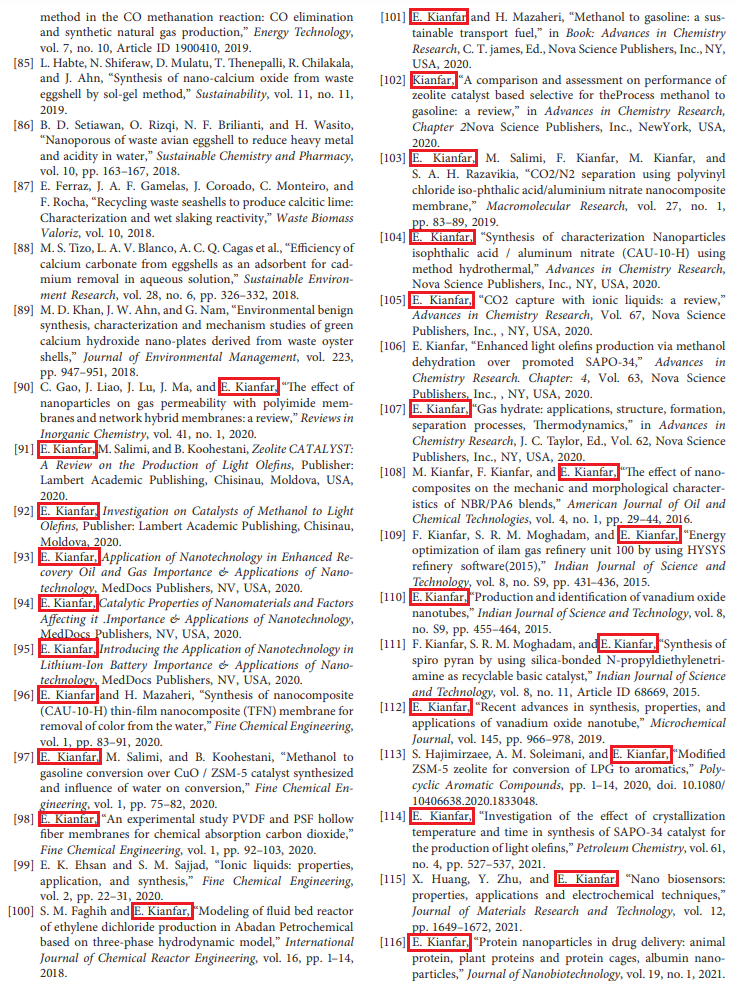 That originality is probably what forces Kianfar to cite himself all the time in lieu of any precedents. Of the 161 references in the Review, 28 are to his own previous papers. For many other references the link between the cited paper and the context of the citation is too subtle for our petty human minds to grasp… or they involve pirated journals like Systematic Reviews in Pharmacy.
Fortunately none of that mattered to the 582 later papers that have cited Bokov et al.2021 so far.
Ehsan Kianfar, Viet Cao Polymeric membranes on base of PolyMethyl methacrylate for air separation: a review Journal of Materials Research and Technology (2021) doi: 10.1016/j.jmrt.2020.12.061
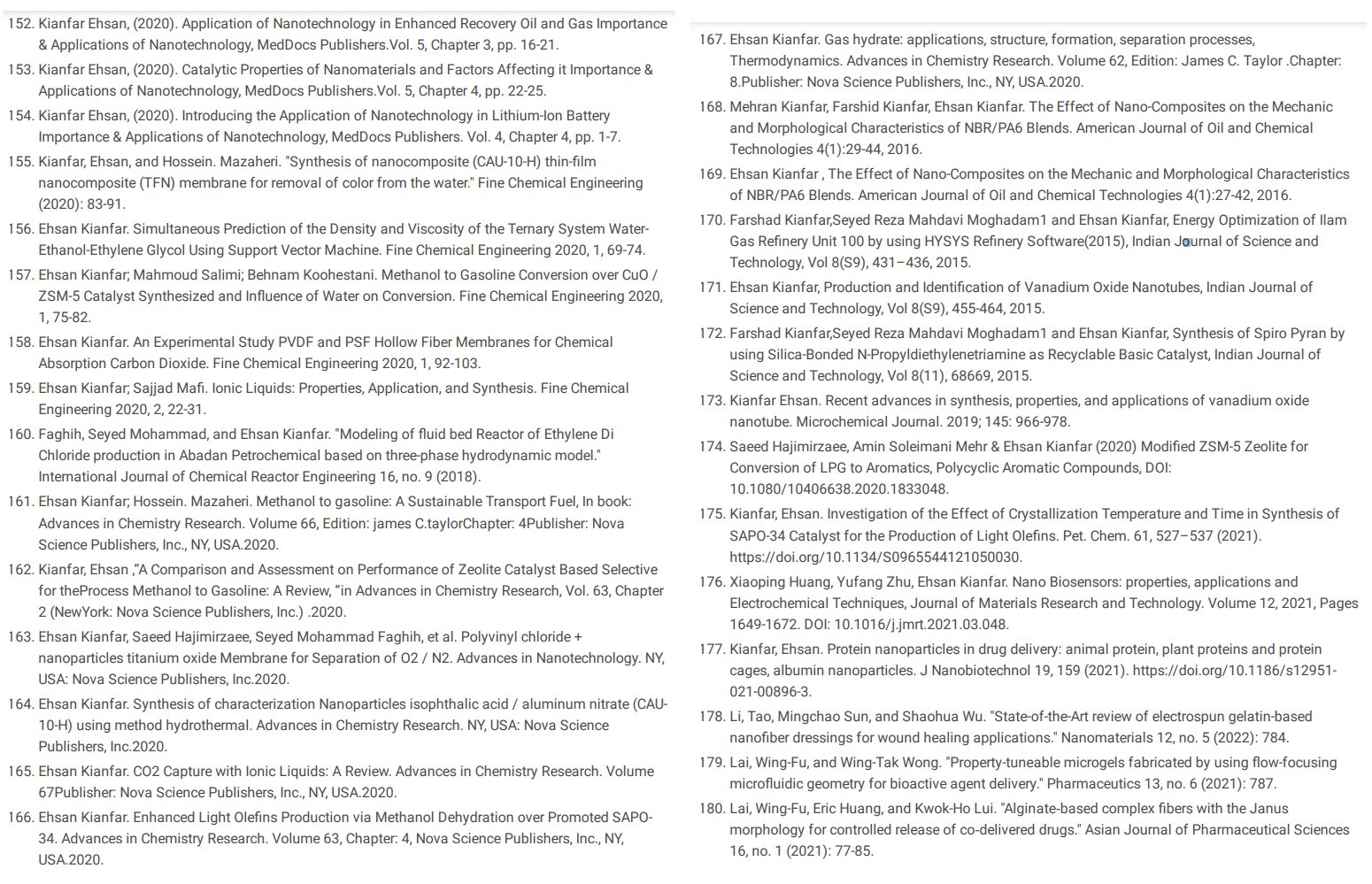 Kianfar’s referential skills reached a pinnacle of exuberance in Kianfar & Cao 2021. The last 4½ pages of this bloated corpse (out of 24½) are a clown-car procession of gibberish… though to be fair, the last 14 irrelevancies were gratuitous self-citation.
Ehsan Kianfar Dendrimer for targeted drug delivery and Vaccine and Immunostimulatory: applications and methods Research Square Platform LLC (2022) doi: 10.21203/rs.3.rs-1675825/v1
 I also enjoyed the preprint / citation-delivery vehicle, Kianfar 2022: the self-citations account for 60+ of over 300 references. Within the remainder, I will not bore you by trying to distinguish references that advertise pirated journals from those that simply lack any discernable link to the text. It was good of Dr Kianfar to provide us with a list of so many authors who paid a broker for their shabby little papers to be cited.


Does this mean it’s time for an update on the bogus-citation economy? Leonid thought it is, and now you all must suffer for his misdirected priorities. Perhaps the ‘citation payola’ industry still rewards further scrutiny. It behooves us to shake the Stupid Tree and see what falls out.
 In Table 4, listing the principal contributors to the nanoliterature on nanofluidity, Davood Toghraie would like to remind us that Mohsen Sheikholeslami is the world’s most respected nanophysicist by far. Yes, that Sheikholeslami, whose talent for self-citation surpasses even Kianfar’s and is best compared to Afshin Davarpanah (who enjoys the unfair advantage of assistance from MDPI).
Roozbeh Moshfeghi , Davood Toghraie An analytical and statistical review of selected researches in the field of estimation of rheological behavior of nanofluids Powder Technology (2022) doi: 10.1016/j.powtec.2021.117076

Here “nanotechnology” includes metallic glass, electrical network security, chemistry and swine manure.
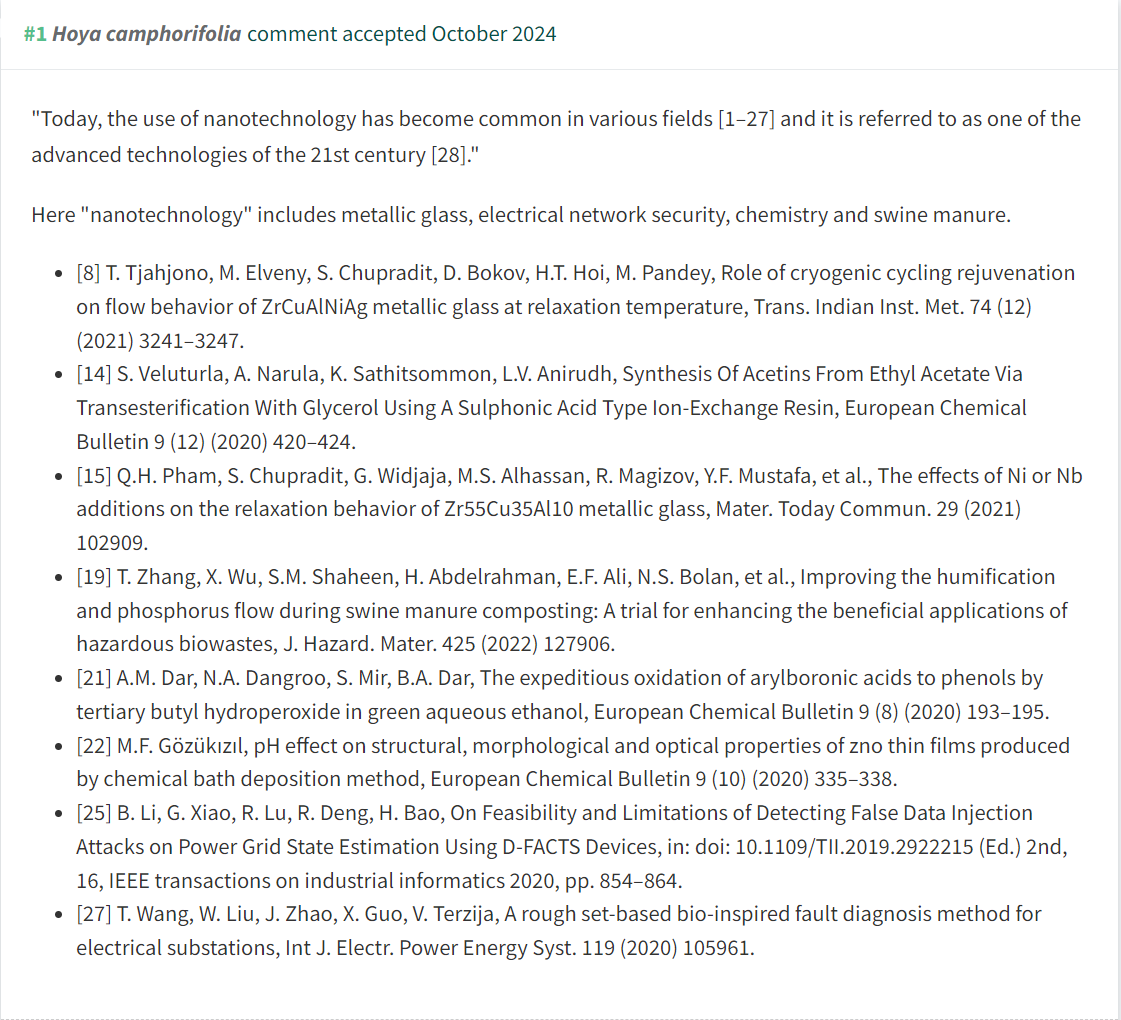 Toghraie must suspect that the h-index is worthless and easy to game (e.g. by paying other authors to cite one’s work in irrelevant contexts). If he were unaware, he’d have to wonder “Where is this money coming from?”
I am open to the possibility that his review – like Kianfar’s – is part of an elaborate Sokal-Hoax-style attempt to discredit the h-index so badly that academic administrations stop misusing it. It’s just not working fast enough.
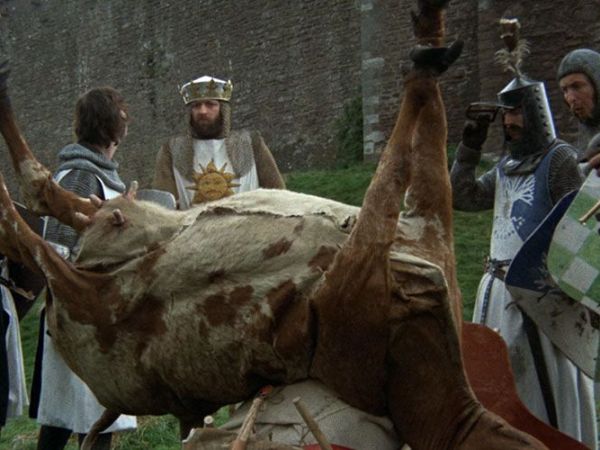
The Men Who Stare at Ketotic Cows
“The References dwell on bovine indigestion, seizures, and the work of N. Arunkumar.” – Smut Clyde, jazz-punk Klezmer musician.

Over in the tangled web of PubPeer threads, Guillaume Cabanac, Alexander Magazinov, Rhipidura albiventris and Angus J. Wilkinson (inter alia) regularly expand on the notion that if an author took bribes to falsify their References then more substantive parts of their papers also forfeit the reader’s trust. My own first contribution along this line was inspired by encounters with ketotic cows, bamboo lignin, and such. Other beguiling trails of irrelevance led me to the company of N. Arunkumar and M. Elhoseny. Also to the niche ‘Crystallography papermill‘, which turned out to be a spacious rabbit-hole indeed – a warren large enough to accommodate 800 delirious inventions. To the hilarity that is Hindawi. To Microprocessors & Microsystems. And to the phenomenon of bogus citations as a way of advertising pirated journals and predatory publishers.

We don’t need no education, We don’t need no thought control
“Of course the sentient rubber-stamps guest-editing Special Issues on behalf of papermills would have accepted anything – they don’t give two tugs on a dead dingo’s dick about content ” – Smut Clyde
“Like the tail of a scorpion, the Reference sections of these papers are the part that focus one’s attention”
Which is all to say that wherever science malfeasance has been monetised, the people engaged in it would have to be foolish to turn down the moneyteat provided by monetising the citations as well. Who knows what previously-unexplored domains of bogosity await us in the Off-world colonies on the other side of those transactional citations? The chance to begin again in a golden land of opportunity and adventure!
The recurring strips of ‘citation wallpaper’ found adorning the References sections of unrelated papers – some from papermills, some from artisanal fraudsters with no customer but themselves – are the sign that the larger science-faking food-web includes a niche of citation brokers who supply the whole industry with (1) portfolios of papers that need to be cited, and (2) an additional income stream.
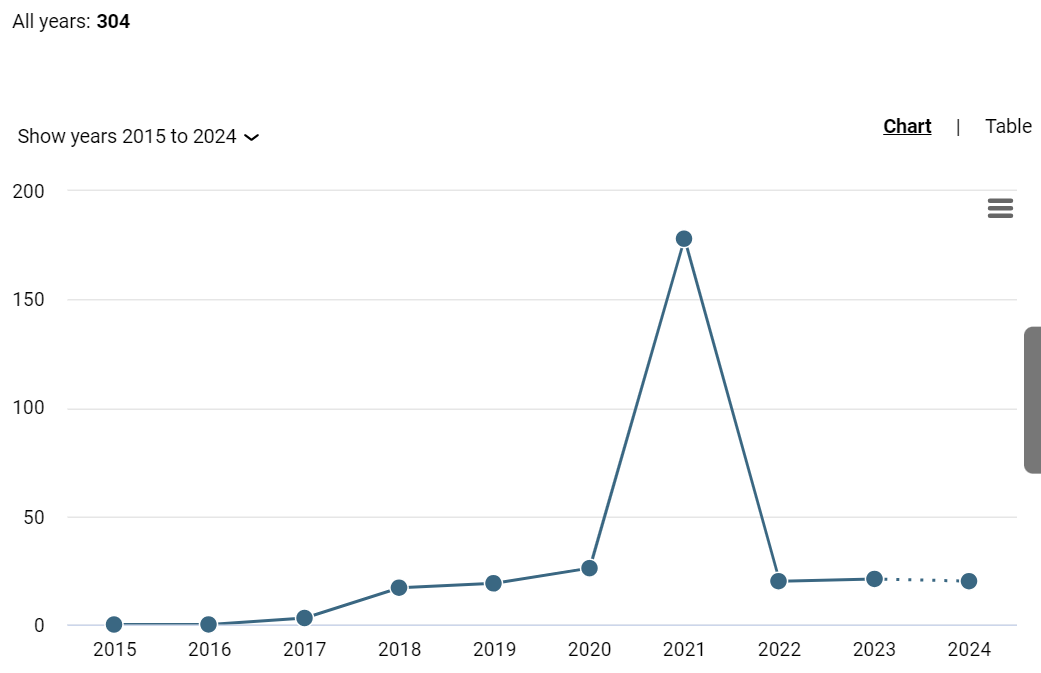
Look at it this way: the citation brokers take commissions from in-print authors who want to improve their academic metrics and retain their access to promotions that might otherwise go to honest researchers, and who have $$$ to pay for their opuscules to be cited. These citation consumers comprise one moiety of the citation marketplace. ‘Moiety’ is a fine word, especially in Scrabble games; ‘bagatelle’ and ‘picayune’ are admirable too, especially in combination.
The Invisible Hand taketh away, but sometimes the Invisible Hand giveth, and it created the other marketplace moiety: the citation suppliers. The prolific authors and papermillers who specialise in science-adjacent realms of academe where the journals are write-only and the reviewers can be trusted not to check the number or the relevance of the citations, leaving the authors free to inflate their References lists with interminable, absurd but well-paid Citation Plantations. Everyone wins! Except perhaps the institutional libraries, in the case of legacy subscription-model journals from Elsevier and Springer, who are forced by the subscription-bundling contracts to pay for all the persiflage just to get the journals they do want. But big publishers win, which is the main thing.
Mostly the Invisible Hand is busy subjecting us all to unwanted digital examinations.
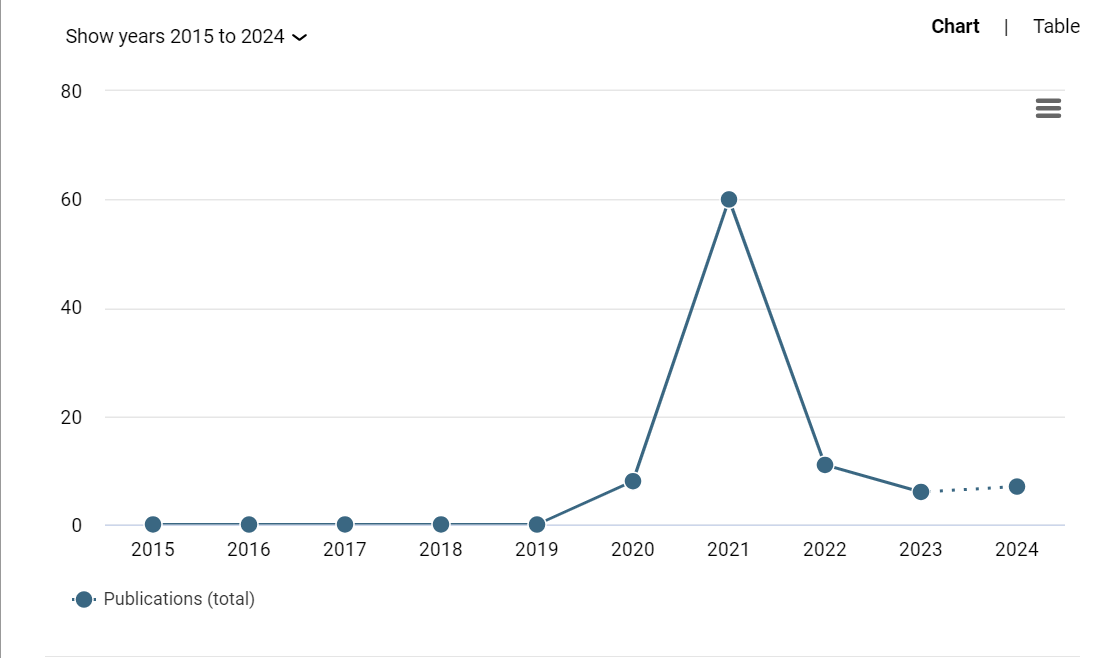
On the Demand side of the market there are so many citation consumers that we must settle for singling out “a smoother pebble or a prettier shell” the most amusing cases. Such as Yongfei Yang, whose expertise in vuggy pores in carbonates is beyond question. NEW GOAL: Use “vuggy” in a Scrabble game.
Changhe Li is especially prominent, with a corpus of studies of techniques of milling and grinding and machining (and walnut processing) which failed to win the acclamation he feels that they deserve. He also purchased coauthorship on one of the products of Anh Tuan Hoang‘s shabby little artisanal biofuel papermill. Li often features in the company of Yu-Ming Chu, 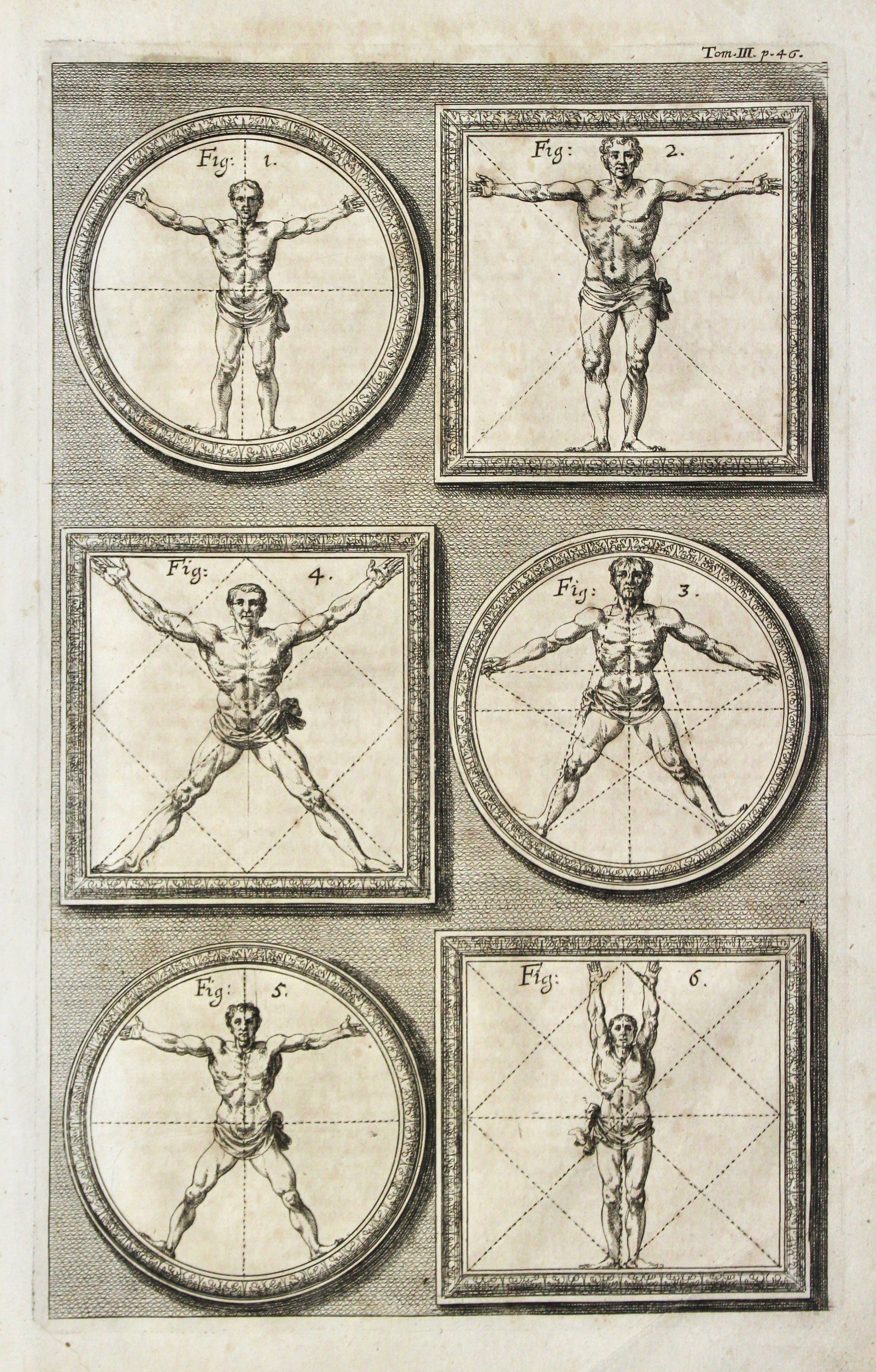 whose highly-cited papers in the fractional calculus and nano-fluidity (and much more) would make him a veritable Renaissance man if it weren’t for his stubborn refusal to pose naked while framed by circles and squares.
 The computational-microscopy oeuvre of Chao Zuo is represented by 10 entries. Chunwei Zhang, who specialises in sensors and stability in the context of structures (and being cited), has literally dozens of entries in my collection. The earliest was published in 2006 but is only now being read (sad!). One paper from each must suffice as examples.
- Zeshan Alam , Chunwei Zhang, Bijan Samali The role of viscoelastic damping on retrofitting seismic performance of asymmetric reinforced concrete structures” Earthquake Engineering and Engineering Vibration (2020) doi: 10.1007/s11803-020-0558-x
- Chao Zuo , Qian Chen , Lei Tian , Laura Waller , Anand Asundi Transport of intensity phase retrieval and computational imaging for partially coherent fields: The phase space perspective Optics and Lasers in Engineering (2015) doi: 10.1016/j.optlaseng.2015.03.006
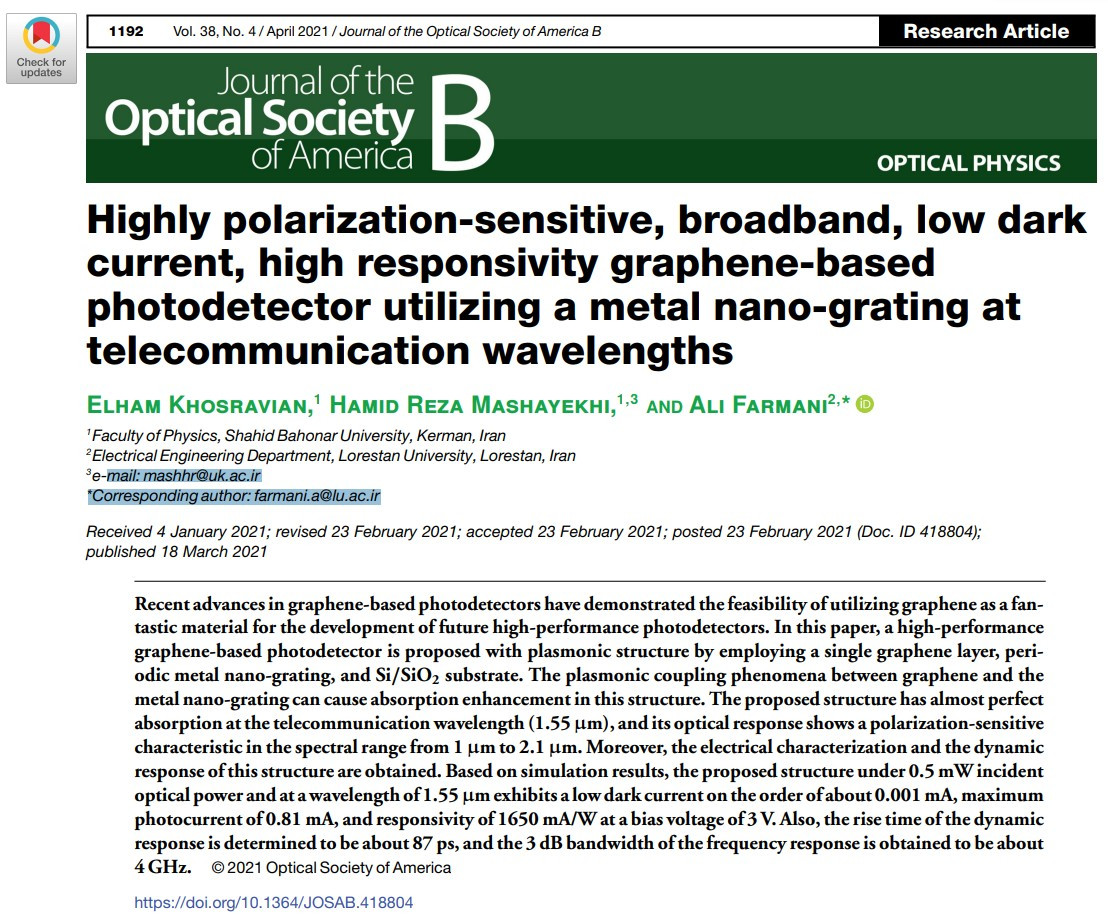 Zhang and Zuo are both well-represented in the sprawling citational oxidation ponds of Khosravian et al 2021.1 Embarrassingly, JOSA B (Journal of the Optical Society of America B) is the journal responsible for hosting this affront to all that is decent. Though it’s well-regarded, authors are still asked to suggest possible reviewers, and clearly Khosravian et al. took advantage of this to turn the journal’s pages into advertising billboards.
Elham Khosravian , Hamid Reza Mashayekhi, Ali Farmani Highly polarization-sensitive, broadband, low dark current, high responsivity graphene-based photodetector utilizing a metal nano-grating at telecommunication wavelengths Journal of the Optical Society of America B (2021) doi: 10.1364/josab.418804

I could adduce a group at Zhengzhou University of Light Industry around Zhihong Zhang, who make nanostructures for biosensing stuff; or the asphalt-centric pavement papers of Yinghong Qin. Instead I will settle for directing readers to the inevitable spreadsheet (with the warning that it’s a work in progress). Don’t worry, the ineffable Zhihan Lv is in there, pumping up at least ten of his papers with the citational equivalent of steroids.
 “Invidious” is another fine word, so let’s single out Zhixiong Li. IEEE informs us that in 2022 Li was “an Associate Editor of Measurement (Elsevier) and Measurement: Sensors (Elsevier), and a Column Editor of IEEE Intelligent Transportation Systems Magazine.” He used his high-cited status to climb the promotional ladder to Wollongong in Australia, then to Yonsei University in Korea, then to Opole Technical University in Poland (though gifting coauthorships to Opole’s Vice-Rector Grzegorz Krolczyk might have helped). Opole Polytechnic is a very special place and Leonid could not ignore it.
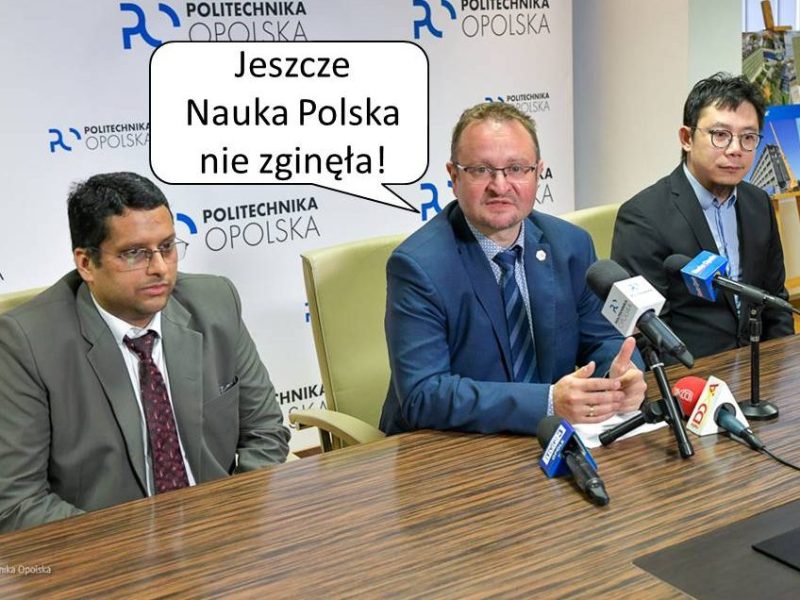
Polish science eaten by Papermill Krolczyk
“Prof. Grzegorz Królczyk, Vice-Rector for Science and Development of the Opole University of Technology, was elected President of the Council for Innovation in Higher Education and Science.”

Li’s profile-boosted papers might apply bog-standard Finite Element Modeling software to simulate the aerodynamics of a situation that differs at the margins from previous applications of the same bog-standard software. The same is true of papers in which he sold citations but they must wait for later. For now, Li’s contributions to PubPeer include
- Qishui Zhong , Jin Yang , Kaibo Shi , Shouming Zhong , Zhixiong Li , Miguel Angel Sotelo Event-Triggered H∞ Load Frequency Control for Multi-Area Nonlinear Power Systems Based on Non-Fragile Proportional Integral Control Strategy IEEE Transactions on Intelligent Transportation Systems (2022) doi: 10.1109/tits.2021.3110759

Karimipour Saga I: Setting Boundaries
“The business of selling authorships and citations needs a steady supply of paper-shaped vehicles. It is most efficient to produce these in assembly lines that focus on a narrow topic.” – Maarten van Kampen

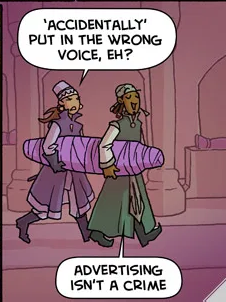
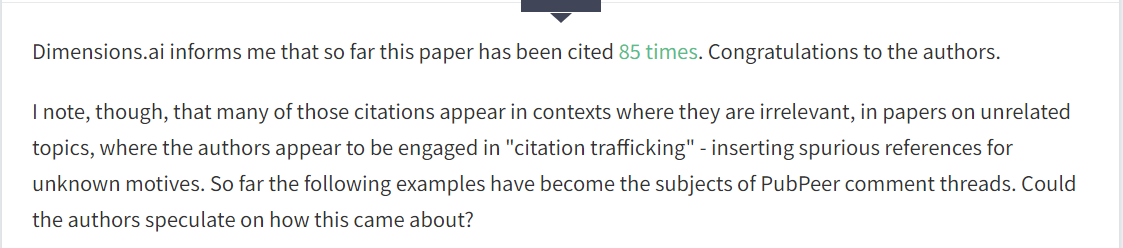
It’s not clear whether purchasing citations is actively corrosive to Science. Advertising isn’t a crime. The ones who can constructively be flagged for shenanigans2 are the citation suppliers, though they’re merely responding to a market demand (much as police find it easier to hassle sex-workers while ignoring their clients). Some publishers are grudgingly coming to accept that if authors took bribes to falsify the Reference lists then the more substantive sections of text also lose their structural integrity and cannot be trusted either. Not to forget the true-authorship concerns when whole paragraphs were copied from a citation-broker’s list, or the claims and propositions left unbolstered because an explanatory or supportive reference made way for a purchased link to “Ode to a Small Lump of Green Putty I Found in My Armpit One Midsummer Morning” (Grunthos 5703 GE).
By “some publishers” I mean Springer journals, and the ex-Hindawi stable, and IOS – they all count “inappropriate citations” among the reasons to retract while they purge entire debauched Special Issues. I very much don’t mean Elsevier.

Chen bacon sausage and Chen; Chen egg Chen Chen bacon and Chen…
Smut Clyde chases the ubiquitous multifaced Chen twins.
 I must remind readers of the Optimisation Bestiary zone within the para-scholarship demi-monde. The general goal is to find some combination of variables that’s the optimum solution to any given problem – the global peak within the landscape of the ‘solution space’ – without getting stuck on the local peaks abounding in the foothills.
 To that end, the Zone endlessly burgeons and ferments in the manner of Ubbo-Sattla, spawning a menagerie of animal-themed algorithms. The rationale for the continued existence of this academic endeavour is a “NFL theorem”: for any given algorithm you can always create a pathological problem that will slow down its convergence so other algorithms will do better. This No Free Lunch idea may be a corollary of Gödel’s Incompleteness theorem, for all I know.
The members of the Zone take this as license to devise ever-new algorithms with wombats or the Steppenwolf or a drunken latrine sloth as the Spirit Guide, taking it on faith that there surely must be some (unknown) problem for which the new addition to the cavalcade will be suited. Sadly, there is no way of telling which optimiser is optimal for a given problem except to try them all, which is why no-one in the real pragmatic world wastes time on any of these trick ponies.
Bad faith, cynicism and dishonesty are prerequisites for continued employment in the field, so the extent of citation trafficking should come as no surprise. Which brings me to Huiling Chen and Ali Asghar Heidari, and a constantly-shifting coterie of coauthors with an impressive geographic spread (reminding us that authorship positions, like everything else, are for sale).
For Chen et al. are (a) fecund sources of new metaphorical algorithms (“Improved Salp Swarm Algorithm“, “Memetic Harris Hawks Optimization“, “An evolutionary Nelder–Mead slime mould algorithm“, “Chaotic multi-swarm whale optimizer“, “Boosted hunting-based fruit fly optimization“, etc) and (b) liberal bestowers of citational largesse. Their papers typically begin or end with an orgy of citation absurdity – the academic equivalent of a scene from Caligula.

In “Elite dominance scheme ingrained adaptive salp swarm algorithm: a comprehensive study” (‘comprehensive’ is undeniable, at least in terms of pointless references) they say the quiet part out loud, boasting of the job security and inexhaustibility of this “research”.
Songwei Zhao, Pengjun Wang, Xuehua Zhao, Hamza Turabieh, Majdi Mafarja, Huiling Chen Elite dominance scheme ingrained adaptive salp swarm algorithm: a comprehensive study Engineering With Computers (2022) doi: 10.1007/s00366-021-01464-x

In “Gradient-based optimization with ranking mechanisms…” and earlier in “Metaphor-free dynamic spherical evolution…”, they went all meta (or ironic). We learn that the drawback of previous algorithms is in fact their grounding in biological-behaviour metaphors, and the special superior feature of these new head-births is that they don’t have metaphors. We are back with the previously-condemned approach: gradient-based hill-climbing.
- Iman Ahmadianfar, Wenyin Gong, Ali Asghar Heidari, Noorbakhsh Amiri Golilarz , Arvin Samadi-Koucheksaraee, Huiling Chen Gradient-based optimization with ranking mechanisms for parameter identification of photovoltaic systems Energy Reports (2021) doi: 10.1016/j.egyr.2021.06.064
- Wei Zhou, Pengjun Wang, Ali Asghar Heidari, Xuehua Zhao, Hamza Turabieh, Majdi Mafarja, Huiling Chen Metaphor-free dynamic spherical evolution for parameter estimation of photovoltaic modules Energy Reports (2021) doi: 10.1016/j.egyr.2021.07.041

 In turn Chen et al. were favoured with the lion-optimiser’s share of citations from “Slope stability evaluation using neural network optimized by equilibrium optimization and vortex search algorithm” (Foong & Moayedi 2022); and “An Innovative Metaheuristic Strategy for Solar Energy Management through a Neural Networks Framework” (Moayedi & Mosavi 2021); and “Electrical Power Prediction through a Combination of Multilayer Perceptron with Water Cycle Ant Lion and Satin Bowerbird Searching Optimizers” (Moayedi & Mosavi 2021b); and (I am not making this up) “Synthesizing Multi-Layer Perceptron Network with Ant Lion Biogeography-Based Dragonfly Algorithm Evolutionary Strategy Invasive Weed and League Champion Optimization Hybrid Algorithms in Predicting Heating Load in Residential Buildings” (Moayedi & Mosavi 2021c). Here the citations are justified and valid (if those words have any meaning in this literature), as the authors properly acknowledge Chen’s preeminence in the field.
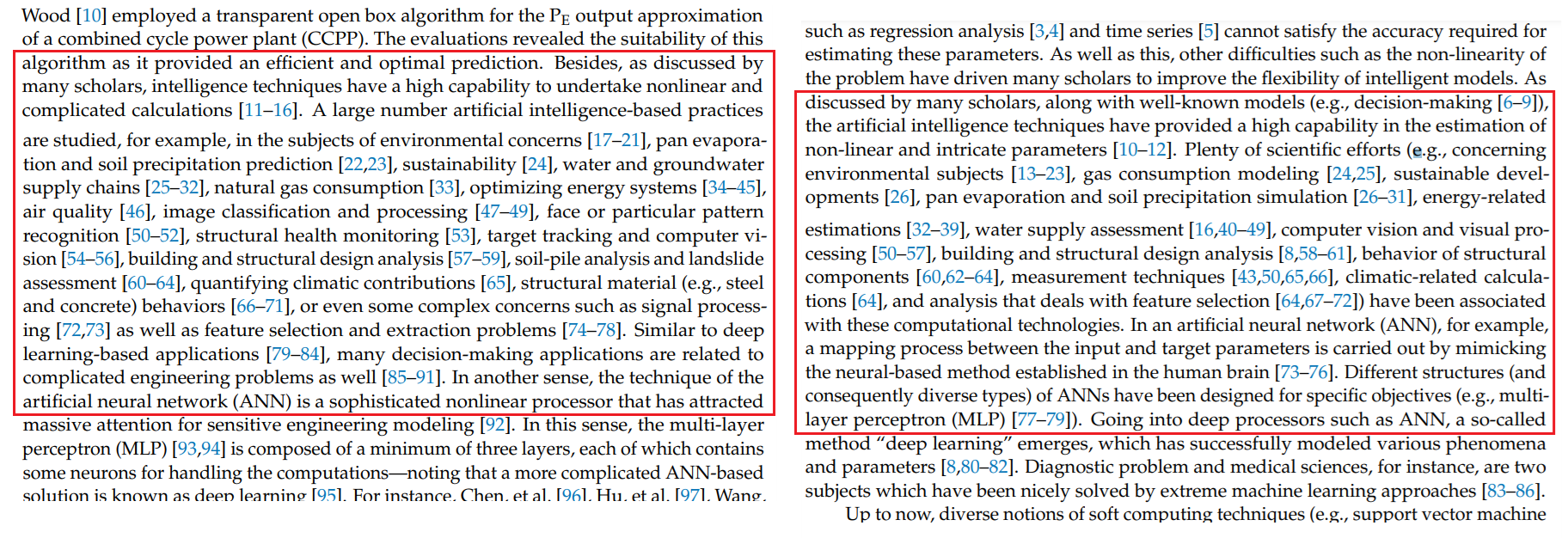
Hossein Moayedi learned much from the master… including the fact that you can publish the same Introduction again and again, and no-one will wonder how it makes sense for the same list of research areas (and the same lists of examples within each research area) to introduce and illustrate such wildly different applications. Yes, most of those examples are irrelevant but transactional.

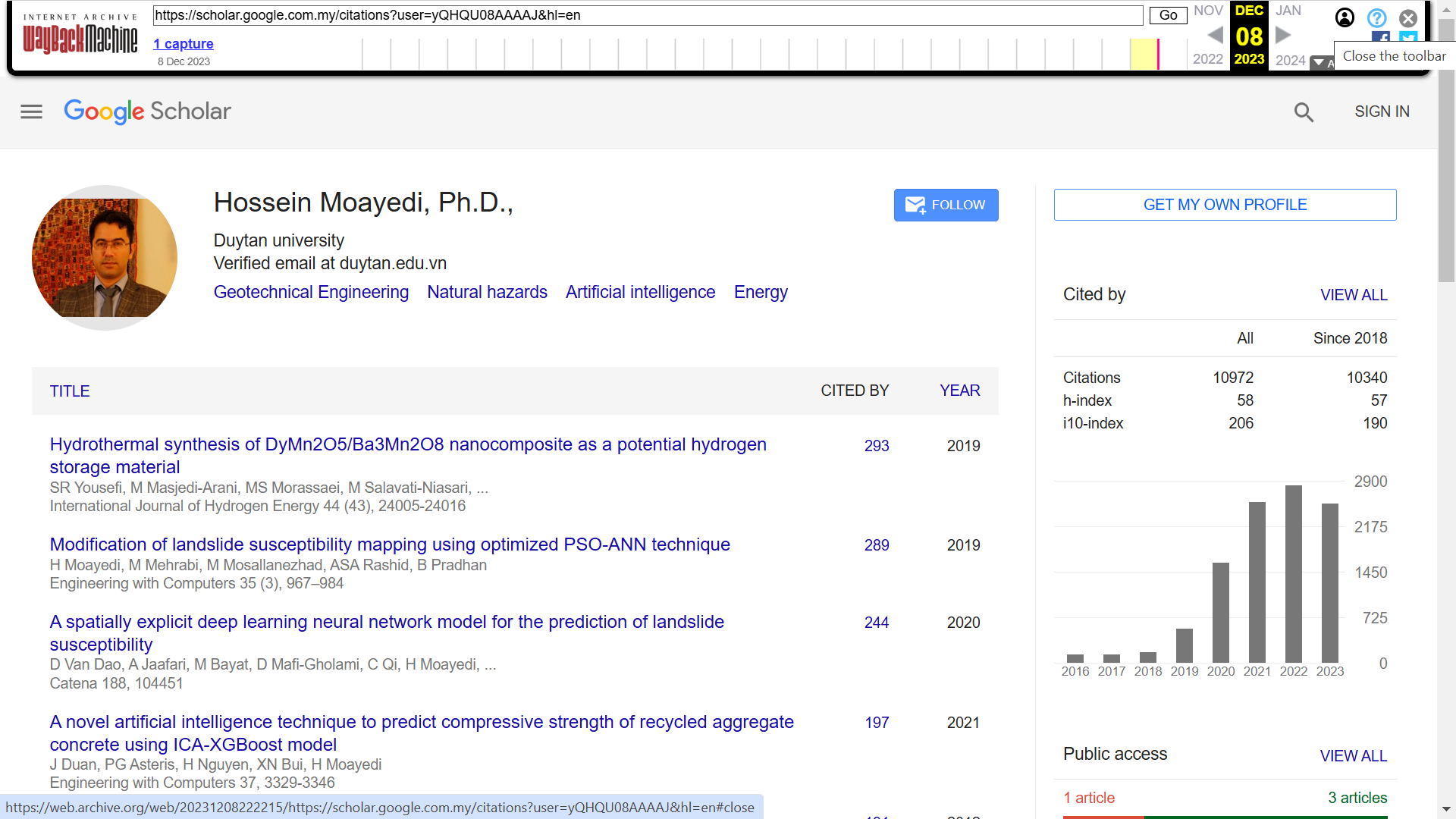 Hossein Moayedi is one of the Top 2% Scientists recruited by Duy Tan University (Vietnam) to improve their productivity. He seems to have recently zorched his profiles at ResearchGate and Google Scholar, so I’ve linked to archived versions. And he knows how to network. Do we all remember M. Santosh, “China’s second-leading geologist“?
- Alireza Arabameri, M. Santosh, Fatemeh Rezaie, Sunil Saha, Romulus Coastache, Jagabandhu Roy, Kaustuv Mukherjee, John Tiefenbacher, Hossein Moayedi Application of novel ensemble models and k-fold CV approaches for Land subsidence susceptibility modelling, Stochastic Environmental Research and Risk Assessment (2022)
- Alireza Arabameri, Subodh Chandra Pal, M. Santosh, Rabin Chakrabortty, Paramita Roy, Hossein Moayedi Drought risk assessment: integrating meteorological, hydrological, agricultural and socio-economic factors using ensemble models and geospatial techniques, Geocarto International (2022)
 Evidently Chen et al. are not the only optimisation zoo-keepers competing for a share of the citation-payola cashflow. We find, for instance, Marine Scientist Mohammad Khishe.
Following the trails of pimped-out citations led me to his pair of papers on acoustic diagnostics of Parkinson’s Disease and Cleft-Lip-&-Palate (PD, CLP). Though they’re really a single paper, as both claim to have extracted the same acoustic features from the same datasets (mischaracterising one of them), and to have trained the same panel of classifiers to distinguish PD and CLP from healthy controls.

Right: “Parkinson’s disease and cleft lip and palate of pathological speech diagnosis using deep convolutional neural networks evolved by IPWOA” (Yao et al 2022)
 The two versions differ mainly in the paid co-authorship, and in the Chimp-inspired vs. Whale-inspired hyperparameter-optimised classifiers that out-compete all the rivals in that panel. Coincidentally, their performance is identical. Paper #2 further claims that the same new algorithm also works for visual classification (better than algorithms customised for the purpose), but the authors do not show their work and by now you know how far to trust their fabulatory folderol.
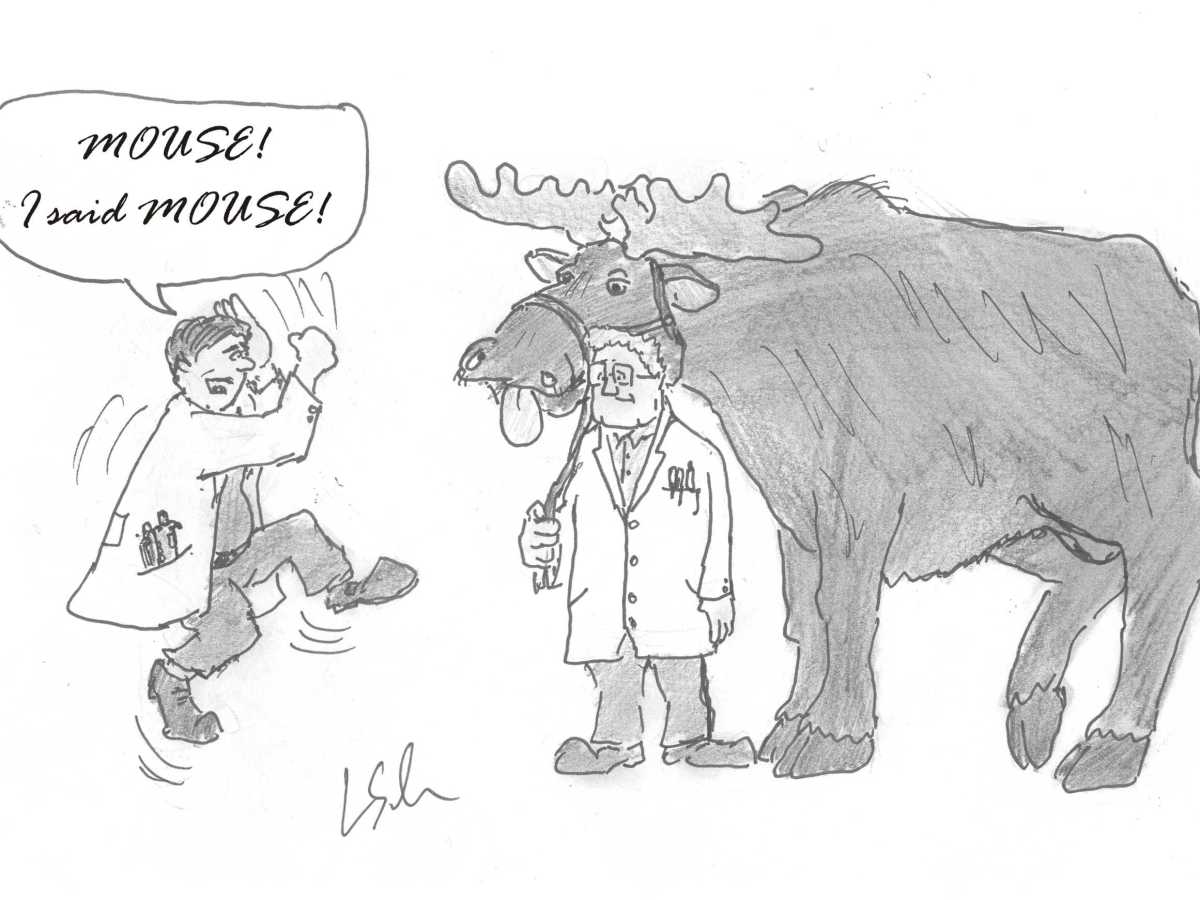
Bottom of the barrel: BatDolphin-based sparse fuzzy algorithm
“BatDolphin-based sparse fuzzy algorithm, cat swarm optimization, honey bees optimization, moth amalgamated elephant herding optimization, fitness sorted moth search algorithm, improved tunicate swarm optimization, lion algorithm, deer hunting optimization, various rider optimization schemes, grey wolf optimization, cuckoo search, and finally a bat algorithm. Such a zoo of names immediately raises suspicion, and for a good…
He transformed COVID diagnosis, but then who doesn’t?
Chao Wu , Mohammad Khishe , Mokhtar Mohammadi , Sarkhel H. Taher Karim , Tarik A. Rashid Evolving deep convolutional neutral network by hybrid sine-cosine and extreme learning machine for real-time COVID19 diagnosis from X-ray images Soft Computing (2023) [retracted]
But Khishe’s day-job outlet for his mad acoustic skills is the analysis of oceanographic sonar scans (unhandicapped by his confusion between Sonar and LIDAR). An impressive number of metaheuristic refinements proved their superiority over all their rivals when Khishe and entourage applied them to particular datasets: (a) Khishe’s own recordings of the Caspian seabed, (b) a “Gorman & Sejnowski” set, and 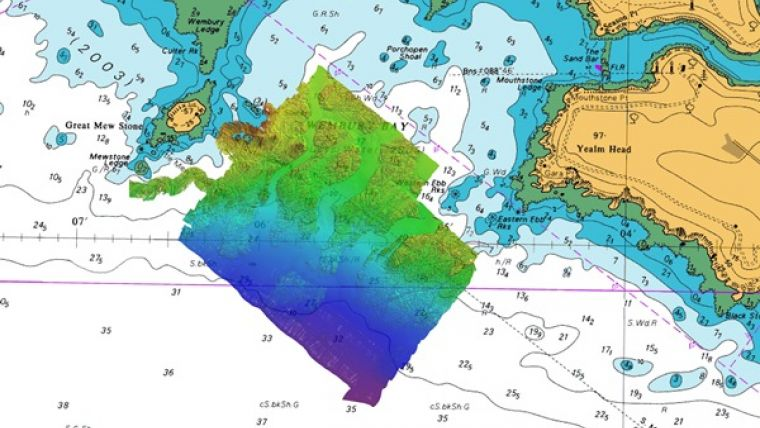 (c) the “Common Dataset 2015” for Plymouth Sound & Weybury Sands. Really it’s the same paper published again and again, slotting in different algorithmic enhancements. Springer even sells one version as a book chapter, though at least the book’s title – “Metaheuristics for Machine Learning” – does not tease the reader with high expectations that will inevitably be dashed. At least one tweaked version of this paper was sold to outside customers.
 Ignoring (a) and (b), (c) was collected and shared among a consortium of companies to provide the oceanography industry with a benchmark for refining its tools. The data don’t seem to be publicly accessible. Khishe et al. only seem to be aware of the subset of seabed scans collected by Kongsberg Maritime, and their paper(s) is/are illustrated with the same four images over and over. How they used those images in a trained-discrimination task – what was discriminated from what, and whether any alternative instances exist – these must remain a mystery, as the authors are careful not to attribute the source, and readers wishing details or the raw data are referred to links that don’t work.

[right] Fig 5.7 from “Evolving Machine Learning-Based Classifiers by Metaheuristic Approach for Underwater Sonar Target Detection and Recognition” (Khishe et al 2023)
 Figs 4 and 5 from “Mathematical simulation of Coulomb forces effect on nanofluid convective flow within a permeable media” (Almarashi 2021)
But moving right along… a second broad area of citation generation is unified by applications of Finite Element Modelling (FEM) and Lattice Boltzmann Modelling. ‘Nanofluid circulation’ comes to mind as the canonical case. We are to imagine a computer simulation of the convective flow of solvent 1, pervaded with nanoparticle 2, in an arbitrarily-shaped chamber 3… optionally adorned with porous zones, or barriers or ‘turbulators’, or with magnetic fields or rotation. Just saying, ‘Turbulator’ would make a good name for a Doppelbock.
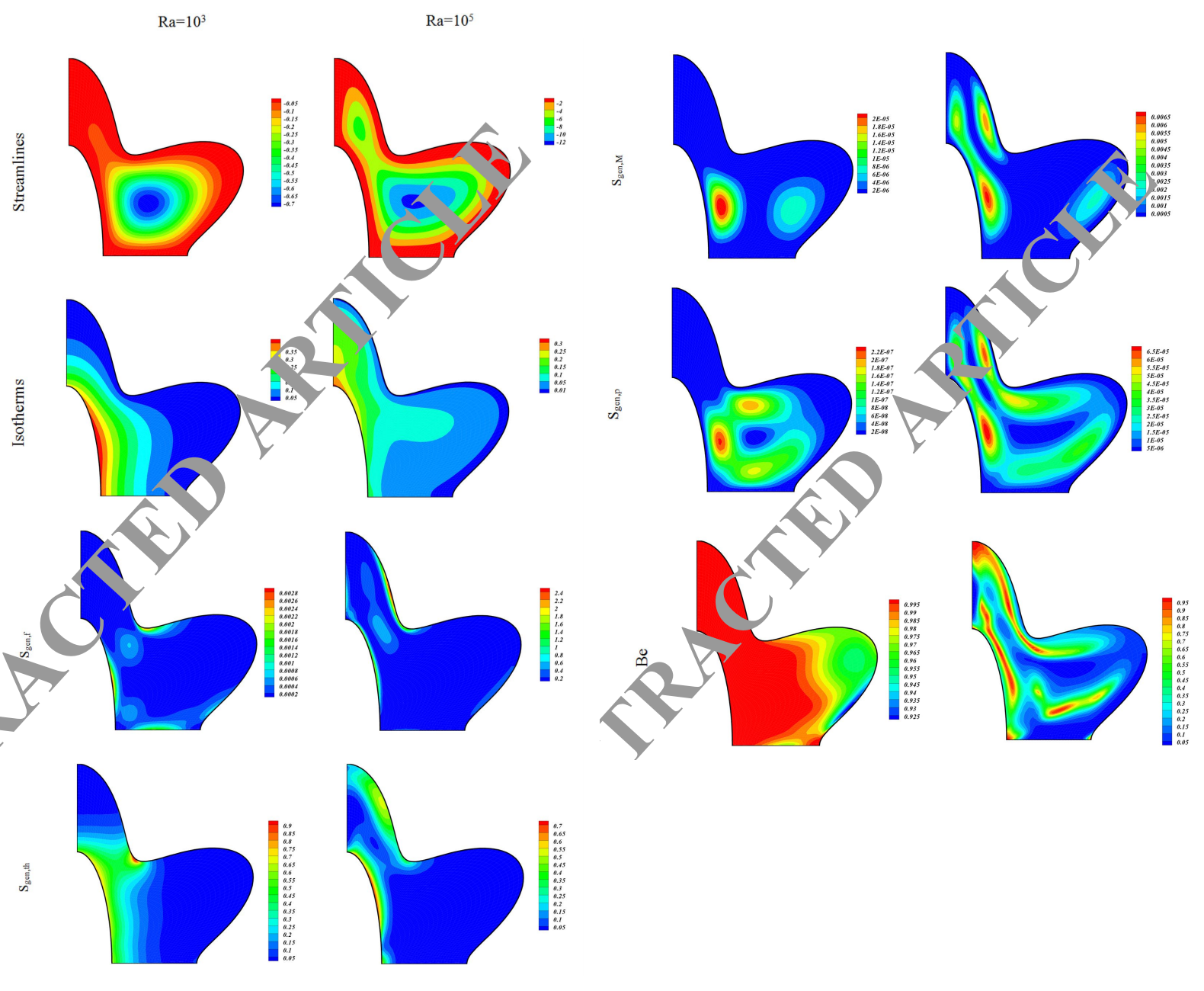
Contributions to this research program are inconsequential fingernail clippings. There is no need for innovation, and FEM software may well still be be the Fortran packages I dimly recall from a previous regeneration. The one thing that the program does offer is job security, for there is no prospect of ever exhausting all possible permutations of the variables. Therefore bad faith again, and cynicism, and pervasive h-index citation silly-buggers. Alexander Magazinov is not a fan.

Wiley: Committed to integrity? Get out!
“We have initiated post-acceptance peer review with independent reviewers… ” – Wiley.

When the only tool you have is a hammer, everything looks like a nail; and when the only software you have is FEM shareware, everything looks like a problem in simulated flow. Like vegetation in canals; or carotid-artery aneuryms.
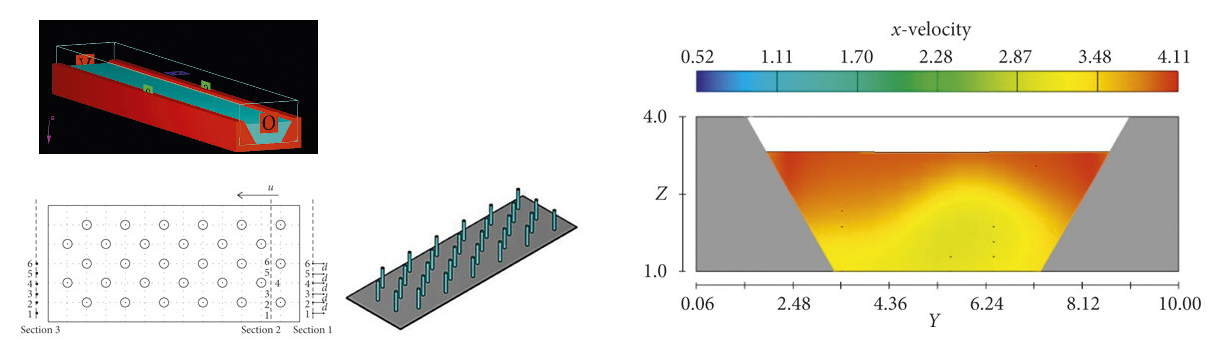
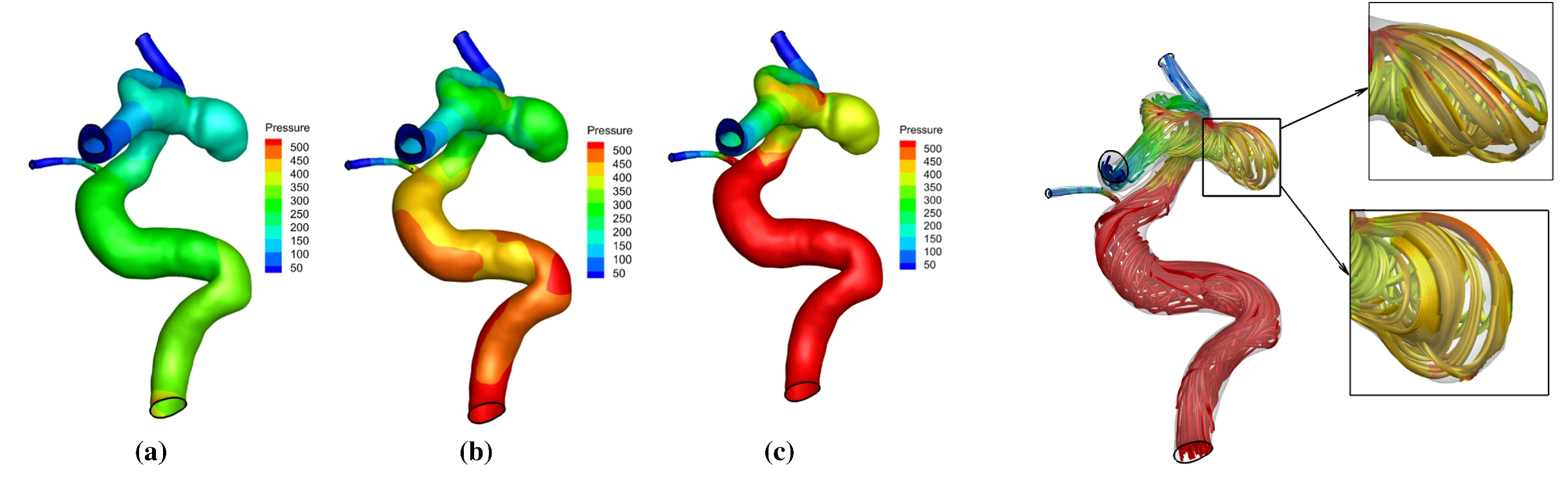
Changhe Li’s grinding-technique papers, their profiles raised by purchased or coerced citations, often invoke nanoparticulate fluids – either as the abrasive medium or as a coolant – so those citations tend to come from the nanofluid literature. Thus Li can serve as Virgil to our Dante on this descent to the scholarly underworld. He could introduce us to Yu-Ming Chu, if we were not already acquainted with that denizen of the Infernal realms.
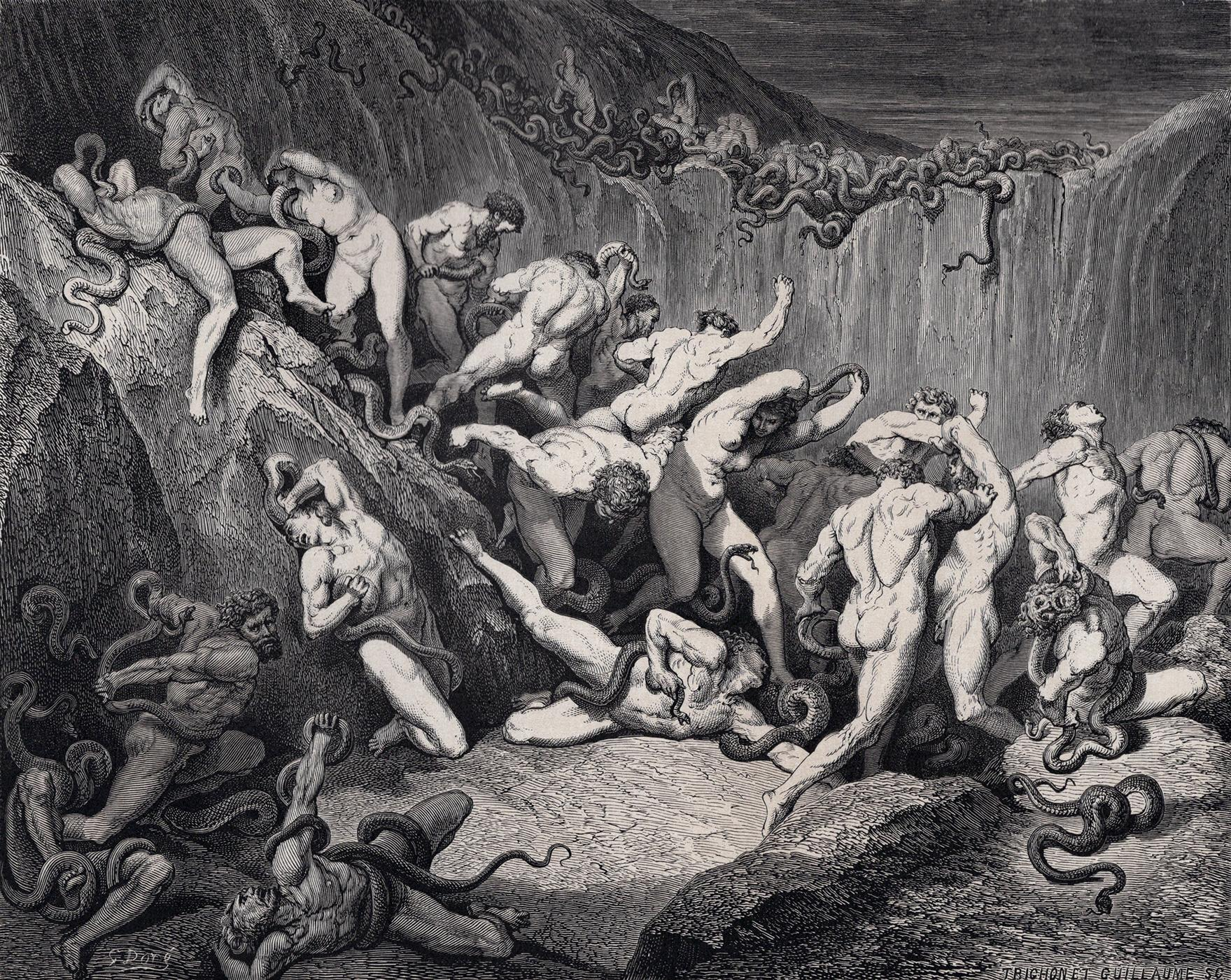
In terms of collaboration and cross-citation, Chu is mates with Rasoul Moradi; and with Alibek Issakhov from Kazakhstan. Issakhov in turn is mates with Yahya Ali Rothan and Mahmoud M. Selim. Aneurysm enthusiast M. Barzegar Gerdroodbary is somewhere in there too. Zhixiong Li is central to this network, with a few shared authorships with Yu-Ming Chu to boast of.
- Yu-Ming Chu , Dhananjay Yadav , Ahmad Shafee , Z. Li , Quang-Vu Bach Influence of wavy enclosure and nanoparticles on heat release rate of PCM considering numerical study Journal of Molecular Liquids (2020) doi: 10.1016/j.molliq.2020.114121
- Yu-Ming Chu , Nidal H. Abu-Hamdeh , Brahim Ben-Beya , Mohammed Reza Hajizadeh , Z. Li , Quang-Vu Bach Nanoparticle enhanced PCM exergy loss and thermal behavior by means of FVM Journal of Molecular Liquids (2020) doi: 10.1016/j.molliq.2020.114457

The group don’t just do nanoflow; FEM is also applicable to heat transport and energy storage, by way of PCMs, Phase Change Materials (laden with nanoparticles and switching from liquid to gas or solid depending on the temperature variable). And don’t start me on nanofluids / PCMs for thermal control of Lithium batteries, for Maarten and Alexander have already covered that. Solar energy is yet another fertile region for farming and selling citation plantations, for focused heat invites nanofluids again (and PCMS + turbulators!), and a familiar list of purchasers crowd into each Reference Section.
From the software perspective, supersonic aerodynamics of ramjets is essentially the same as nanofluid magnetohydrodynamics. This is another field where FEM offers the same liberation from the need for a laboratory to do research-shaped activities 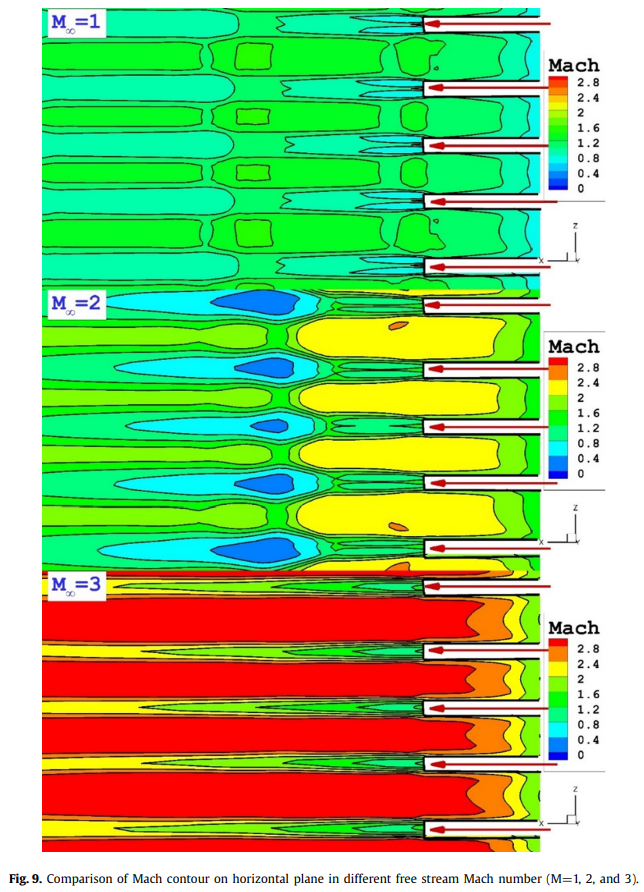 (and the same garish full-spectrum colour-map breaches of visual-communication principles, designed to make the figures look extra sciency while Edward Tufte staggers to his fainting couch). So we come again to Zhixiong Li – this time as a supplier of citations, boosting the profile of other people’s papers, rather than a consumer.
- Yu Jiang , Nidal H. Abu-Hamdeh, Rashad A.R. Bantan , Zhixiong Li Influence of upstream angled ramp on fuel mixing of hydrogen jet at supersonic cross flow Aerospace Science and Technology (2021) doi: 10.1016/j.ast.2021.107099
- Yu Jiang , Masoud Hajivand, H. Sadeghi , M. Barzegar Gerdroodbary , Zhixiong Li Influence of trapezoidal lobe strut on fuel mixing and combustion in supersonic combustion chamber Aerospace Science and Technology (2021) doi: 10.1016/j.ast.2021.106841
- Zhixiong Li , Morteza Jamshidian , Sayedali Mousavi , Arash Karimipour , Iskander Tlili Develop a numerical approach of fuzzy logic type-2 to improve the reliability of a hydraulic automated guided vehicles International Journal of Numerical Methods for Heat & Fluid Flow (2021) doi: 10.1108/hff-01-2019-0019 [retracted for plagiarism, authorship sale and suborned peer-review].
- Mouna Ben Henda , Shayma Hamza Sadon , Zahra Abdelmalek , Zhixiong Li , Quynh Hoang Le Removal of formaldehyde pollutant from petroleum industry wastewaters by polymers: A molecular dynamics simulation Engineering Analysis with Boundary Elements (2023) doi: 10.1016/j.enganabound.2023.03.017 [Expression of Concern for “potentially compromised or manipulated peer-review” and “potential citation manipulation within the article“]
- Quynh Hoang Le , Fathallah Neila , Kamel Smida , Zhixiong Li , Zahra Abdelmalek , Iskander Tlili pH-responsive anticancer drug delivery systems: Insights into the enhanced adsorption and release of DOX drugs using graphene oxide as a nanocarrier Engineering Analysis with Boundary Elements (2023) doi: 10.1016/j.enganabound.2023.09.008 [Expression of Concern for same reasons]
- Xinrui Qi , Jianmei Wang , Grzegorz Królczyk, Paolo Gardoni , Zhixiong Li Sustainability analysis of a hybrid renewable power system with battery storage for islands application Journal of Energy Storage (2022) doi: 10.1016/j.est.2022.104682 [retracted because “email addresses used by the authors during the submission process were associated with multiple researcher accounts“].
- Xinrui Qi , Maawiya Ould Sidi, Iskander Tlili, Talib K. Ibrahim, Mohamed Abdelghany Elkotb, M.A. El-Shorbagy, Zhixiong Li Optimization and sensitivity analysis of extended surfaces during melting and freezing of phase changing materials in cylindrical Lithium-ion battery cooling Journal of Energy Storage (2022) doi: 10.1016/j.est.2022.104545 [retracted for same reason]
- Bo Wang , Fangyuan Gao , Munish Kumar Gupta , Grzegorz Królczyk , Paolo Gardoni , Zhixiong Li Risk analysis of a flywheel battery gearbox based on optimized stochastic resonance model Journal of Energy Storage (2022) doi: 10.1016/j.est.2022.104926 [retracted for same reason]
- Wei Wu , Ghassan Fadhil Smaisim , S. Mohammad Sajadi , Moram A. Fagiry , Zhixiong Li , Mohamed A. Shamseldin , Hikmet Ş. Aybar Impact of phase change material-based heatsinks on lithium-ion battery thermal management: A comprehensive review Journal of Energy Storage (2022) doi: 10.1016/j.est.2022.104874 [retracted for “suspicious changes in authorship between the original submission and the revised version“]

Maybe stop accepting submissions, Herr Prof Dr Sauer?
Who needs science if you can have a 75 paper strong special edition by Afrand and Karimi? A guest post by Alexander Magazinov.
The last four on the list had been published in “Recent Advances in Battery Thermal Management” – a Special Issue of Journal of Energy Storage, guest-edited by Nader Karimi, Mohammad Arjmand, Cong Qi and Masoud Afrand – and were retracted because “peer review” consisted of Karimi and Afrand waiting until the cheque cleared. But Afrand was also an Editor of Engineering Analysis with Boundary Elements, which invited Arash Karimipour to guest-edit a Special Issue… so two more of Li’s papers fell under the shadow of an Expression of Concern. Li is a bridge between the two axes, Toghraie – Karimi – Karimipour – Afrand and Chu – Issakhov – Rothan – Selim.
None of this would work if journals weren’t willing to collaborate with this community of bullshit fountains, or to offer their services as Cloaca Maxima for its output. Two key conduits in this genre are Journal of Energy Storage and Energy Reports, where Editors are concierges rather than gatekeepers and the reviewers can be trusted not to count the self-citations – let alone question the relevance of the references. Suffice to say that Afshin Davarpanah was on the Editorial Board of Energy Reports for a while.

Journal of Molecular Liquids vs One-Man Papermills
Mu Yang catches two crooks, Ayman Atta and S Muthu, who flooded one Elsevier journal (and several others) with ridiculous hand-drawn fraud. Whom to believe, the peer review, or your own eyes?
The field is also indebted to Journal of Molecular Liquids as a safe place for their decorative, research-shaped Glass-Bead Games. We know that rigor and probity reign supreme at JML because the Board of Editors includes one Xiangke Wang. My favourite journal, though (also Z. Li’s), has to be International Communications in Heat & Mass Transfer. Just for its webpage-shortened entries, ‘j.icheatmasstransfer.20xx.xxxxxx’.

It would be invidious to neglect Engineering with Computers. As the title suggests, editorial policies place a premium on computer simulations and the sciency rainbow-hued images they produce (“the ‘engineering’ part is optional). Plus optimisation. This is, after all, the journal that gave us “excremental risk” by publishing Zhang et al (2022) – a hugely entertaining paper that supposedly trained two rival algorithms to predict something about rectangular-tunnel drilling, without specifying exactly what, or what data were used to train them.
Jun Zhang, Ruoli Shi , Shaohua Shi , A. K. Alzo’ubi , Angel Roco-Videla , Mohamed. M. A. Hussein , Afrasyab Khan Numerical assessment of rectangular tunnels configurations using support vector machine (SVM) and gene expression programming (GEP) Engineering With Computers (2022) doi: 10.1007/s00366-021-01473-w

Engineering with Computers also gave us (below at right) ‘filed of engendering’.

[right] “An intelligent fuzzy‑based hybrid metaheuristic algorithm for analysis the strength, energy and cost optimization of building material in construction management” (Ronghui & Liangrong 2022)
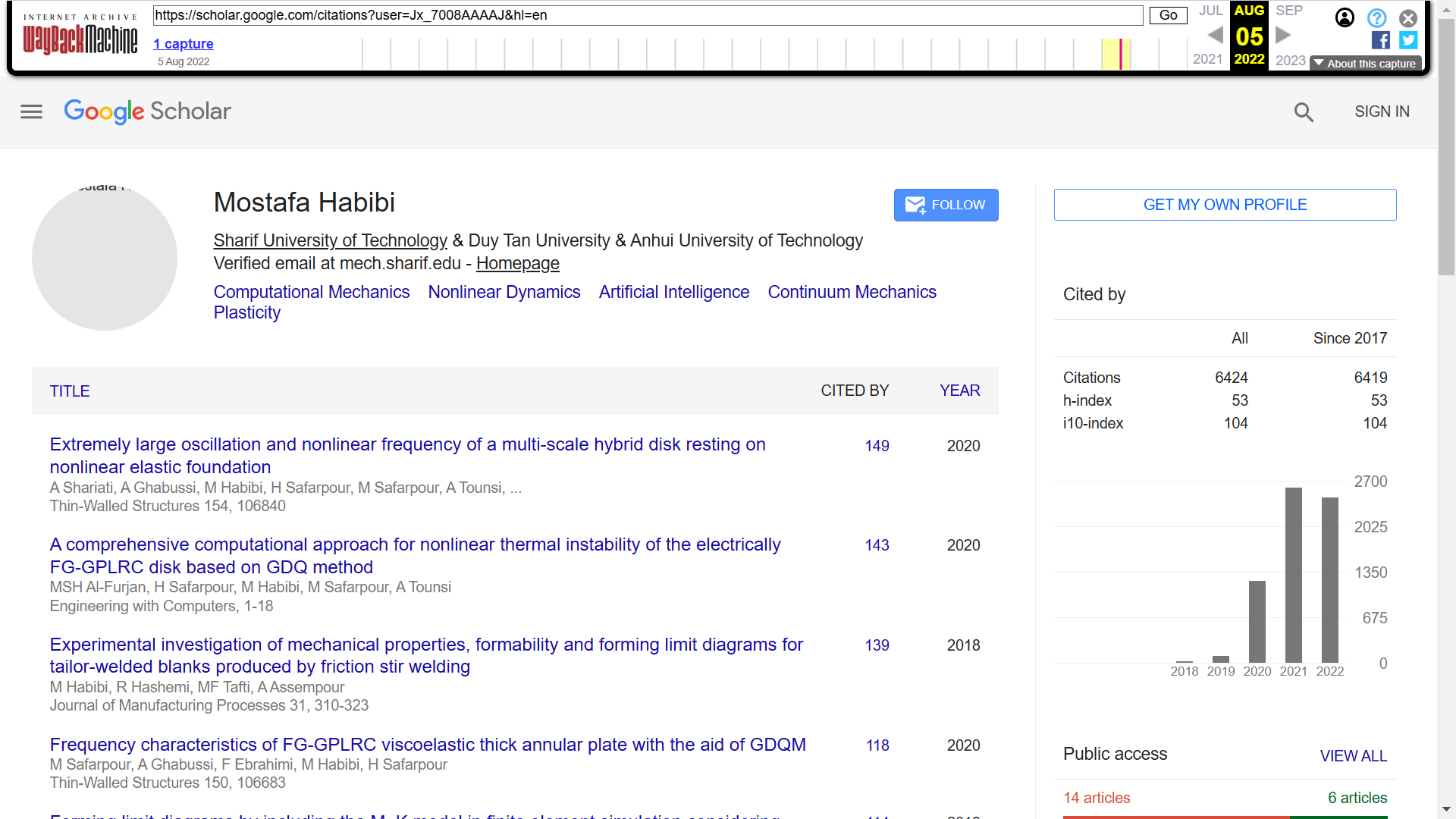 Going back to Hossein Moayedi… another recruit from Malaysia to Duy Tan University is Mostafa Habibi. The Wayback version of his Google Scholar profile is dated but someone deleted the original. Sometimes Habibi and Moayedi team up, but more often we find him being crap together with Hamed Safarpour and/or Mehran Safarpour and/or M.S.H. Al-Furjan.
Alibek Issakhov has a finger in this pie as well because why wouldn’t he?
Hui Liu, Yao Zhao, Mohammad Pishbin, Mostafa Habibi, M-O Bashir, Alibek Issakhov A comprehensive mathematical simulation of the composite size-dependent rotary 3D microsystem via two-dimensional generalized differential quadrature method Engineering With Computers (2022)
The context this time is a ‘dynamics’ parascholarship genre where the need for science-shaped publishable trivia is filled by simulating solids with all possible combinations of shape, functional-graded material composition, nano-stiffening (graphene nanoplatelets or whatever), vibration, bending force, rotation, magnetic force, etc. The Introductions of the papers unavoidably cover the same ground again over and over, and the same citation plantations.

[right] “The present text.”An iterative simulation algorithm for large oscillation of the applicable 2D-electrical system on a complex nonlinear substrate” (Huang et al 2022).
With so many possible papers, Habibi et al. can afford to sell authorship on some of them as well as citation advertising. Sometimes Habibi didn’t alter the wording enough from one permutation to the next, and advertised the authorship auction too openly, so even the supine editors of Engineering with Computers had to stage a retraction.
M. S. H. Al-Furjan, Mostafa Habibi, Alireza Rahimi, Guojin Chen, Hamed Safarpour, Mehran Safarpour, Abdelouahed Tounsi Chaotic simulation of the multi-phase reinforced thermo-elastic disk using GDQM Engineering With Computers (2023) doi: 10.1007/s00366-020-01246-x
“The Editor in Chief has retracted this article because of significant overlap with previously-published articles by the same group of authors [1, 2]. Additionally, the Publisher’s investigation found evidence of attempts to subvert the peer review process”
Retraction, June 2023
Haiquan Wang , Hongyan Zhang , Ramin Dousti , Hamed Safarpour Dynamic simulation of moderately thick annular system coupled with shape memory alloy and multi-phase nanocomposite face sheets Engineering With Computers (2023) doi: 10.1007/s00366-020-01246-x
“The Editor in Chief has retracted this article because of significant overlap with a previously-published article by different authors [1] and an article by different authors that was simultaneously under consideration in a different journal [2].”
Retraction, November 2022
Another journal with reliably incurious reviewers and editors is Mechanics Based Design of Structures and Machines, but again, a retraction happened.
Xinyuan Wu, Wenling Yang, Heng Zhang, Yingchun Yue, Mingjun Yang On the dynamics of an ultra-fast-rotating-induced piezoelectric cantilevered nanodisk surrounded by viscoelastic foundation Mechanics Based Design of Structures and Machines (2022) doi: 10.1080/15397734.2020.1858870
“It has also come to our attention that the full authorship list for this manuscript was changed during the submission and publication process. As determining authorship is core to the integrity of published work and given our concerns regarding the data, we are therefore retracting this article”
Retraction, March 2023
Do papermillers dream of eclectic journals?
“I focus on the sprawling parody literature devoted to the three Es of Energy, Economy and the Environment. Together they […] freeload on the authentic literature on energy efficiency and pollution reduction (while diluting, distracting and discrediting them).” – Smut Clyde
I had planned to explore the DFT genre (Density Functional Theory), for it is just another genre of inconsequential fingernail-clippings in which computer simulations can be reported as if they were actual experiments, for an open-ended permutational supply of small molecules bonding to substrates, and thus another hotbed greenhouse of citation farming. But this post is already too long.
Even so and notwithstanding, despite the focus here on citation providers, it is worth crossing back over to the citation-consumer side of the street, just to say hello to Tao Zhang and Daniel C.W. Tsang:
- Yaxin Deng , Tao Zhang, James Clark, Tejraj M. Aminabhavi, Andrea Kruse , Daniel C. W. Tsang , Brajendra Kumar Sharma , Fusuo Zhang , Hongqiang Ren Mechanisms and modelling of phosphorus solid–liquid transformation during the hydrothermal processing of swine manure Green Chemistry (2020) doi: 10.1039/d0gc01281e
- Tao Zhang, Xiaosha Wu , Sabry M. Shaheen, Jörg Rinklebe, Nanthi S. Bolan, Esmat F. Ali, Guoxue Li , Daniel C.W. Tsang Effects of microorganism-mediated inoculants on humification processes and phosphorus dynamics during the aerobic composting of swine manure Journal of Hazardous Materials (2021) doi: 10.1016/j.jhazmat.2021.125738
- Tao Zhang, Xiaosha Wu , Sabry M. Shaheen, Hamada Abdelrahman , Esmat F. Ali , Nanthi S. Bolan, Yong Sik Ok, Guoxue Li , Daniel C.W. Tsang, Jörg Rinklebe Improving the humification and phosphorus flow during swine manure composting: A trial for enhancing the beneficial applications of hazardous biowastes Journal of Hazardous Materials (2022) doi: 10.1016/j.jhazmat.2021.127906

Zhang & Tsang’s impact-enhancing supplements are harvested in the groves of academe discussed above, with insouciant disregard for the incongruity when people writing about “Implementation of Computer-Based Vision Technology to Consider Visual Form of Ceramic Mural Art” or “Influence of upstream angled ramp on fuel mixing of hydrogen jet at supersonic cross flow” are suddenly inspired to cite the pig-shit oeuvre. Their own interests lie elsewhere, in journals like Green Chemistry and Chemosphere and Bioresource Technology (where the offices are fitted with revolving doors to facilitate the interchange of authors, reviewers and editors). For Zhang and Tsang belong to the Brotherhood of Biochar, along with Christian Sonne and Jörg Rinklebe (coauthor in these two examples) and the wider Rinklebe Vortex of intellectual endogamy. Desmococcus patrols that beat. Yu-Ming Chu is a member on the periphery of that Vortex, such is his versatility.

I haven’t checked how many other members of the Brotherhood have availed themselves of the brokers’ services.
Alas, it is too late to attend the “Building Research Vision and Impact” at Ghent University’s Faculty of Bioscience Engineering (Tuesday 29 October, 14:30) -“Funded by the European Union … with support from the Flemish government“.
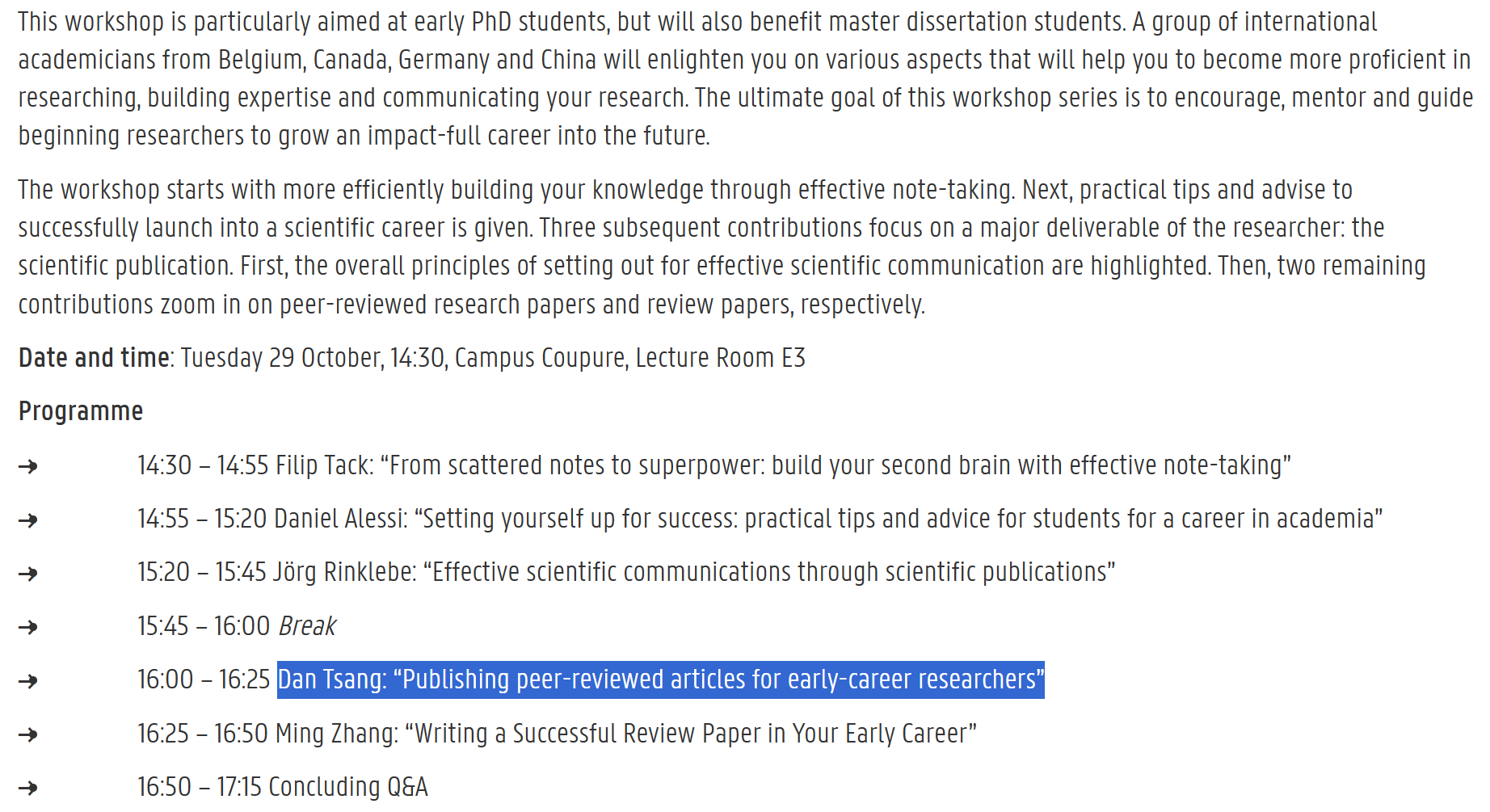
Speakers included Jörg Rinklebe and Daniel Alessi, and also Dan Tsang:
“Prof Dan Tsang of The Hong Kong University of Science and Technology is professor in the Department of Civil and Environmental Engineering. He also is Pao Yue-Kong Chair Professor in the State Key Laboratory of Clean Energy Utilisation at Zhejiang University, Hangzhou, China. He is specialized in developing green technologies for long-term decarbonisation and promoting resources circularity and sustainable development. He is Editor-in-Chief of Nature – Materials Sustainability, Chairman of the Hong Kong Waste Management Association, and Chairman of the Waste Management Subcommittee of Advisory Council on the Environment (appointed by HKSAR Government).”
We are agog to learn what pearls of wisdom Tsang had for his early-PhD audience, on “publishing peer-reviewed articles for early-career researchers“. Did he advise them to buy authorship and sell citations?
Manifesto
Imagine all this formalised as a complementary pair of tables. Table 1 consists of papers with artificially-enhanced impact factors, because their authors resorted to citation buying to boost their academic performance indices, as evidenced by multiple (though unjustified) links from Table 2. Contrariwise, Table 2 consists of the citation providers whose authors took payola from the brokers, as evidenced by multiple links to rows in Table 1. Ideally both Tables are sequenced by the order that they placed their request with the broker, or accommodated that request.
The ‘excess citation count’ is the area between the citations-per-year baseline and the spike produced by one’s deal with the broker. Typical values are 50 or 100, or even 150 if an author bought the Economy Family-Sized citation package. A spike of this form is circumstantial evidence that a deal took place. There are only two kinds of evidence, pompous and circumstantial; no-one know why.
All the necessary who-cited-whom details are present in the Clarivate database, accessible through Dimensions.ai or the front-end of your choice. Thus either Table can extend to include new entries that are linked to enough entries in the other Table. The process is crying out for someone with competence in the dark arts of API calls to automate it.
Consider the maths… if Table 1 contains 300 entries (to be conservative), and each buyer commissioned 100 citations, 1500 providers in Table 2 are needed to meet the demand (assuming that on average they include 20 bogus citations). To complicate the situation, a broker will have more than one “portfolio” of citation commissions – closing the trading window for one and opening another. While more than one broker is sure to be trading. So this may not work as a screening tool to help editors deal with current submitted manuscripts, but there remains an Augean stable of published bumfodder, waiting for a quiet word with the publisher. Or to be nuked from orbit. Whichever comes first.
- I feel obscurely guilty about skipping another Ehsan Kianfar paper-shaped ejectum. In “Comparison and evaluation of the performance of graphene-based biosensors” (Abdelbasset et al. 2022) [retracted], Kianfar and a crew of paying passengers contrived to cite 32 of Chunwei Zhang’s papers, eight by Chao Zuo, six by Changhe Li, four pirated journals, and 50-odd of Kianfar’s own earlier works. ↩︎
- Bad luck if the bogus citations were inserted by a reviewer, or by a corrupt Editor.
Also bad luck if an apparent citation buyer was the innocent victim of papermillers who copy-pasted irrelevant references purely out of laziness. From my perspective, if a paper is cited repeatedly in meaningless contexts, it doesn’t really matter whether the authors paid for those citations or they were donated by the millers as a genuine eleemosynary gesture: they function either way as a signature of the papermill’s output. ↩︎
Donate to Smut Clyde!
If you liked Smut Clyde’s work, you can leave here a small tip of 10 NZD (USD 7). Or several of small tips, just increase the amount as you like (2x=NZD 20; 5x=NZD 50). Your donation will go straight to Smut Clyde’s beer fund.
NZ$10.00

 For Better Science
Btw. The little king is also an Editor of Measurement and rejects every manuscript if there are no citation of his work or a coauthor is not his mate :))
LikeLike
Shown there as affiliated to Yonsei University. No mention of Opole?
https://www.sciencedirect.com/journal/measurement/about/editorial-board
LikeLike
was about Krolczyk , from Opole – the little king 🙂
LikeLike
Very informative and amusing post as ever. I really can’t get enough of the metaheuristic algorithms. Fortunately, they aren’t in short supply.
LikeLike
There is a lot in it that I find in common with an impressive group of article and citation abusers that I’ve been looking at over the last few weeks, ranging from Australia to the Netherlands, Malaysia to Denmark, Iraq to California. Maybe I can give two names as spoilers, SNK and KV .
The article is long but really very valuable. Thank you! Perhaps I can add a few things:
“The group don’t just do nanoflow; FEM is also applicable to heat transport and energy storage, by way of PCMs, Phase Change Materials (laden with nanoparticles and switching from liquid to gas or solid depending on the temperature variable).“
As far as I have noticed from the group I have been following, in fact PCM studies are the new name for the nanofluid scams of these abusers. As Clyde mentioned, what they call PCM is actually nanofluidic processes. Yes, maybe Chamka, Karimipour, Afrand, etc. are still practicing their skills, mainly in nanofluidics articles. But many Iranian researchers, to whom they provide articles and citation services, now prefer PCM papers rather than nanofluids.
Also, not only PCM, but other areas where similar names are accumulated are heat pipes, thermochemical energy storage, and heat transport in porous media. In particular, thermochemical energy storage is their new “original” area of research. Heat pipes and porous media are two traditional areas they have been publishing journal articles and even books! The articles I have been looking into are all based on the nanofluidic frauds of these names. Apparently these subjects are fertile enough to feed not just one but multiple age generations of certain countries and give them academic credibility and reputation!
LikeLike
I am sure you’re right. I focused on purchased citations in papers published up to late-2021, because later ones are not always accessible. I missed out in more recent developments in the Horti conclusi where such papers can safely be published.
LikeLike
RE: Kambiz Vafai >>> A real snake though!
“There is a lot in it that I find in common with an impressive group of article and citation abusers that I’ve been looking at over the last few weeks, ranging from Australia to the Netherlands, Malaysia to Denmark, Iraq to California. Maybe I can give two names as spoilers, SNK and KV.”
Note: It’s been for about 4 years just watching KV (Kambiz Vafai) to find all the details/roots about his satanic network! He’s been verrrry poisonous to the Scientific Community, as the evidences will be out (hopefully soon). Promised!
LikeLike
I was not familiar with the name. To be clear, that is an indictment of my own ignorance, not on the impact that KV might be having.
LikeLike
It was uplifting for me to learn that someone has been watching KV! because I came across his profile while looking into the group I mentioned above and their global collaborations and although I could sense his profile and the suspicious activities behind him, I could not dwell on that name because his profile was too intense with hundreds of publications and citations.
I don’t think KV represents a danger on his own, albeit he has a very intense profile. To comment on what I have noticed, there is KV and a group of his generation. Karimipour, Karimi, Afrand are some of the famous names of this generation so far. There are some troubled profiles that have not yet become famous but really deserve it. They have gone through their academic careers with some very shady academic processes in nanofluids, heat pipes, porous media and so on, and now almost all of them are full professors in different parts of the world. Only the collaborations in their publications are not enough to identify KV’s connections. It has partners with whom it has no joint publications but who have similar agendas. The chief editor and some associate editors in this journal can give an idea. Their topics, academic profiles, publishing practices are similar. I don’t want to give details right now because I haven’t finished the group I’m observing and I have a long way to go because there are too many of them.
This generation was not content to secure their own careers, they also trained younger generations with similar approaches. And these names are already in different parts of the world as associate or assistant professors. While I was looking at this younger generation, I realized the magnitude of KV and his generation. Despite starting their careers in nanofluids and heat pipes, this generation, along with their mentors, have recently grouped together in PCM, energy storage and general energy engineering.
And now this younger generation is raising their own baby generation in the topics of energy storage, in particular, thermochemical energy storage, while their older generation now being full professors and editors of journals. Nanofluids are no longer the main topic. This makes their submissions more easily accepted. They probably have no trouble finding sympathetic reviewers for their research proposals in grant calls either, thanks to their older generations holding influential positions in different parts of the world.
LikeLike
it seems we have reached a stage in which expert paper mill authors are now teaching the younger generation to continue their legacy. UGhent clearly doesn’t want to miss it!
LikeLike
I meant to say more about Zohre Moradi and Mohsen Davoudi, part of the citation-selling ‘dynamics’ group around Mostafa Habibi.
Six months ago, Maria Ángeles Oviedo-García commented at PubPeer to note that in his role as a MDPI reviewer, Habibi encourages aspiring authors there to cite Moradi.
https://pubpeer.com/publications/26347B9606DCBBFE0EA0F8AA899584
LikeLike
It’s challenging to locate the sources of article pollution, which is quite distressing. How can we effectively combat these contaminated articles while we’re working? I believe I should publish my preprint after completing my paper and allow experts on PubPeer to provide guidance and criticism. However, the discussions on PubPeer forums can also be exploited by unscrupulous individuals who may spread them to social platforms for profit, potentially exposing personal information.
Alas, conducting scientific research is becoming increasingly difficult.
LikeLike
I have seen discussions on PubPeer threads be echoed on social media, when a critic does not want the criticism to languish in obscurity there and tries to leverage it to a wider audience. But “personal information” is unlikely to become part of the discussion: the PubPeer moderators impose their standards of acceptable scholarly discourse, sometimes with Merovingian ferocity.
Inviting PubPeer comments on a preprint seems safe enough. Sometimes the comments are even constructive!
LikeLiked by 1 person
Thank you for your guidance, it has been very beneficial to me.
Once my work is completed, I plan to publish the preprint and submit my manuscript to PubPeer, allowing experts to offer constructive feedback.
I frequently encounter posts on social media platforms, particularly on WeChat’s official account platform, that discuss issues on PubPeer, mainly focusing on image duplication in academic papers.
These social media accounts likely do not have the authorization of PubPeer forum managers and critics.
Moreover, these social media outlets often emphasize the personal information of the paper’s author.
It’s worth noting that these self-media accounts may even use names similar to PubPeer and Elisabeth M Bik.
Such actions can provoke anger among people.
Their primary goal appears to be to promote their own image duplication checking services.
There are also allegations of extortion using information from papers listed on PubPeer.
I copied several links, you can use Google to translate these articles.
https://mp.weixin.qq.com/s/Fh5sxk2BsqQ8iRWHdDMXMQ
The logo for this social media platform is an AI-generated image of Dr. Elisabeth Bik, which can be viewed using the WeChat software.
https://mp.weixin.qq.com/s/Rr2cqtrSpgo0JyB9tKsxLQ
The logo of this social media’s official account is PubPeer, but the WeChat ID is named ‘bikelisabeth’.
I hope everyone can protect their legal rights.
To wrap things up, I wish you good health and all the best.
LikeLike
RE: “Two key conduits in this genre are Journal of Energy Storage and Energy Reports, where Editors are concierges rather than gatekeepers and the reviewers can be trusted not to count the self-citations – let alone question the relevance of the references. Suffice to say that Afshin Davarpanah was on the Editorial Board of Energy Reports for a while.”
Note: “Afshin Davarpanah” is currently a broker for the Journal “Energy Reports / Elsevier” and the EiC of the Journal (Nelson Fumo = https://www.google.com/search?q=nelson+fumo&oq=nelson+fumo&gs_lcrp=EgZjaHJvbWUyBggAEEUYOTIHCAEQIRiPAjIHCAIQIRiPAtIBCDcyNDhqMGo3qAIIsAIB&sourceid=chrome&ie=UTF-8) will pay the cost of the illegitimate collaborations with some Iranian papermillers!
LikeLike
Oh dear.
LikeLike
No-one asked for another Zhixiong Li / Yuming Chu collaboration, so here it is:
Examination of the nanofluid convective instability of vertical constant throughflow in a porous medium layer with variable gravity
I belatedly remembered that paid-for citations were what originally led me to Mosstafa Kazemi and his proliferating contributions to ‘Synthetic Communications’ (with various co-authors, some of them imaginary); and to many of Ali Fakhri’s collaborations.
https://forbetterscience.com/2023/08/21/synthetic-communications-with-ali-fakhri-and-his-real-or-imaginary-friends/
LikeLike
Recently, five papers by Mostafa Habibi have been retracted due to significant changes in the authorship list.
1) Zhe Liu, Sili Su, Dunru Xi & Mostafa Habibi (2022) Statement of Retraction: Vibrational responses of a MHC viscoelastic thick annular plate in thermal environment using GDQ method, Mechanics Based Design of Structures and Machines, 50:8, 2688–2713, https://www.tandfonline.com/doi/full/10.1080/15397734.2025.2538300
2) M. S. H. Al-Furjan, Bandar Alzahrani, Lijun Shan, Mostafa Habibi & Dong Won Jung (2022). Statement of Retraction:Nonlinear forced vibrations of nanocomposite-reinforced viscoelastic thick annular system under hygrothermal environment, Mechanics Based Design of Structures and Machines, 50:11, 4021–4047. https://www.tandfonline.com/doi/full/10.1080/15397734.2025.2538303
3) M. S. H. Al-Furjan, Mostafa Habibi, Dong won Jung, Hamed Safarpour & Mehran Safarpour (2022). Statement of Retraction:On the buckling of the polymer-CNT-fiber nanocomposite annular system under thermo-mechanical loads, Mechanics Based Design of Structures and Machines, 50:12, 4208–4228. https://www.tandfonline.com/doi/full/10.1080/15397734.2025.2538304
4) M. S. H. Al-Furjan, Seyedeh Yasaman Bolandi, Lijun Shan, Mostafa Habibi & Dong won Jung (2022). Statement of Retraction:On the vibrations of a high-speed rotating multi-hybrid nanocomposite reinforced cantilevered microdisk, Mechanics Based Design of Structures and Machines, 50:12, 4157–4185. https://www.tandfonline.com/doi/full/10.1080/15397734.2025.2538305
5) Zhu, Jiahao, Yi Wang, Ning An, Mostafa Habibi, and H. Wang (2024). Statement of Retraction: Application of G-Ori metamaterials as sports equipment baseball bat in an electro-magneto-elastic sandwich composite beam. Mechanics of Advanced Materials and Structures, 1-20. https://www.tandfonline.com/doi/full/10.1080/15376494.2025.2548734
LikeLike
Thanks! I marked the retractions on the spreadsheet. Of course Mechanics of Advanced Materials and Structure and Mechanics Based Design of Structures and Machines are both still swarming with papermilled fiddle-faddle, but it’s a start!
LikeLike