Schneider Shorts 4.10.2024 – A Nobel Prize candidate who saved numerous lives
Schneider Shorts 4.10.2024 - Rapamycin advocate loses battle with cancer, Switzerland's Twitter celebrity in trouble, Australia's melanoma program run by two fraudsters, a papermilling dean in Canada, a harassed innocent angel in Mexico, a Belgian phantom, with book chapters tombstoned, retractions for stars in USA and Italy, and finally, with a failed drug to cure long COVID.
Schneider Shorts of 4 October 2024 – Rapamycin advocate loses battle with cancer, Switzerland’s Twitter celebrity in trouble, Australia’s melanoma program run by two fraudsters, a papermilling dean in Canada, a harassed innocent angel in Mexico, a Belgian phantom, with book chapters tombstoned, retractions for stars in USA and Italy, and finally, with a failed drug to cure long COVID.
Table of Discontent
Obituary
“I am a soldier.” – Mikhail Blagosklonny died from lung cancer
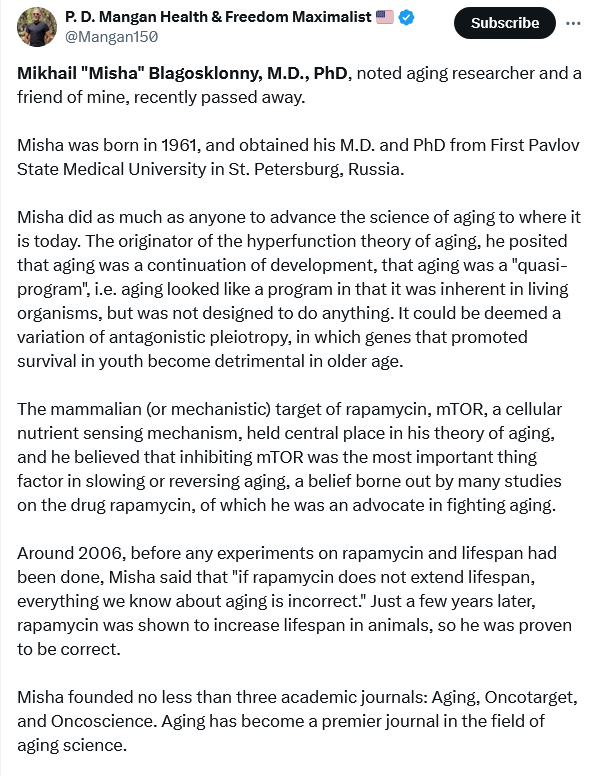
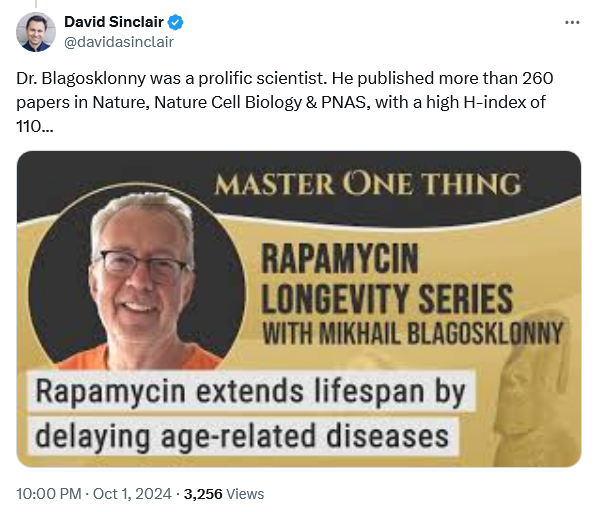
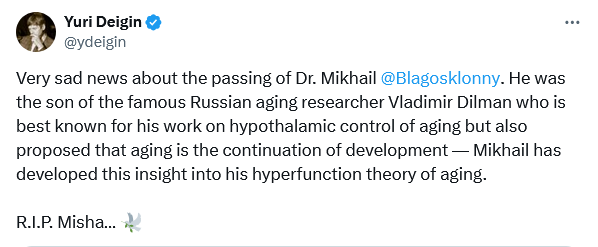
Mikhail Blagosklonny is dead, aged only 63. He was most known as the founder of the journals Cell Cycle,Oncotarget and Aging, and as a populariser of rapamycine as anti-aging and anti-cancer miracle drug.
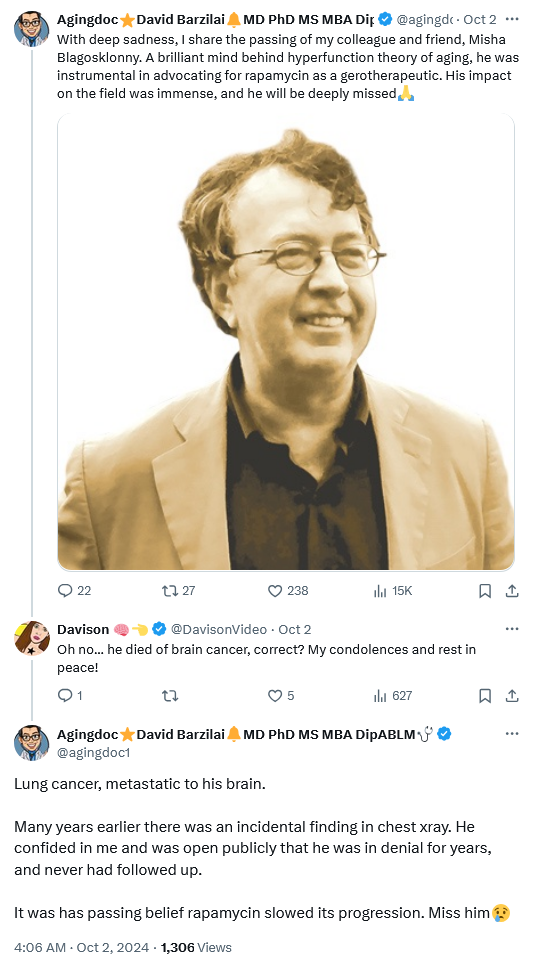
“With deep sadness, I share the passing of my colleague and friend, Misha Blagosklonny. A brilliant mind behind hyperfunction theory of aging, he was instrumental in advocating for rapamycin as a gerotherapeutic. His impact on the field was immense, and he will be deeply missed […] Lung cancer, metastatic to his brain. Many years earlier there was an incidental finding in chest xray. He confided in me and was open publicly that he was in denial for years, and never had followed up. It was has passing belief rapamycin slowed its progression.”
Blagosklonny died of lung cancer, there was previously an October 2023 editorial by Blagosklonny himself in the Oncotarget‘s clone journal Oncoscience, “My battle with cancer. Part 1”, and a press release in January 2024. Part 2 was about to be published soon, its abstract began with:
“For a divine reason, I was destined for cancer with multiple brain metastases: to create the book “My Battle with Cancer,” a far-reaching endeavor for which I was born.”
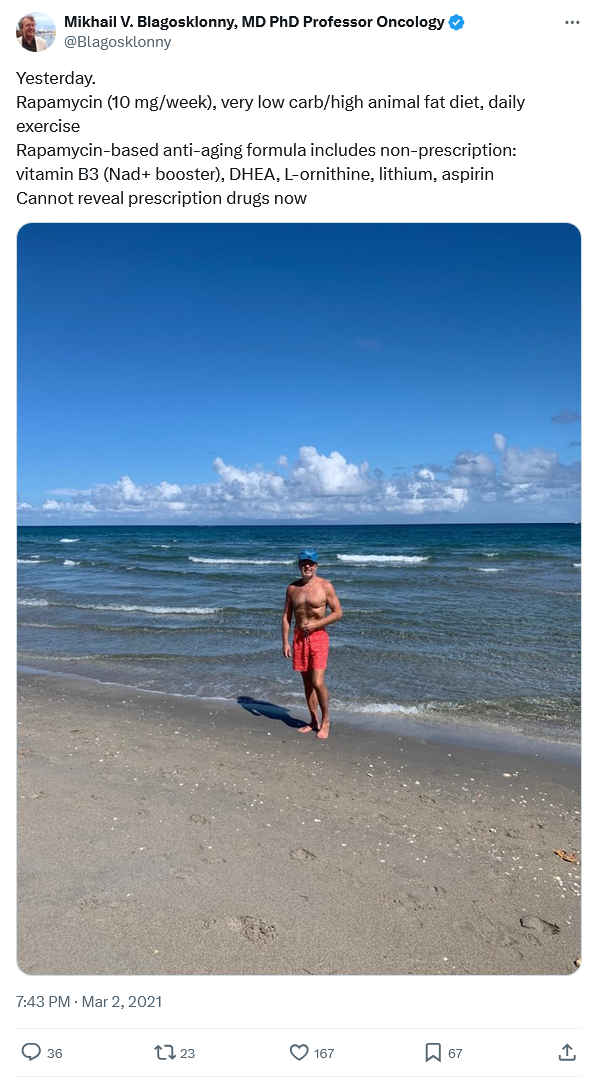
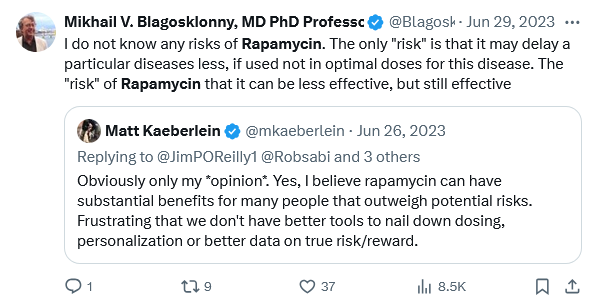
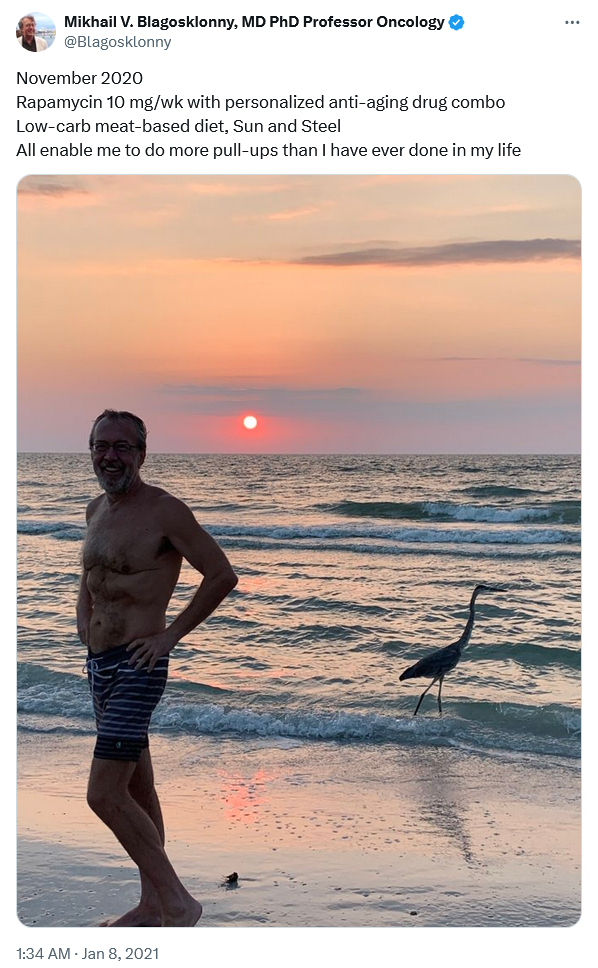
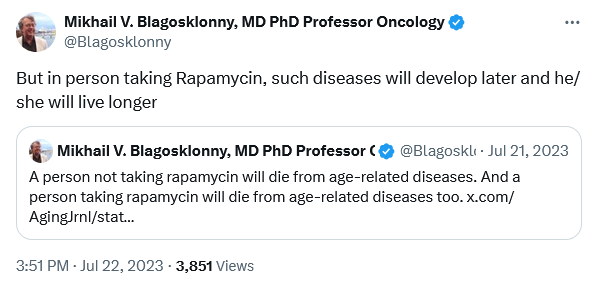
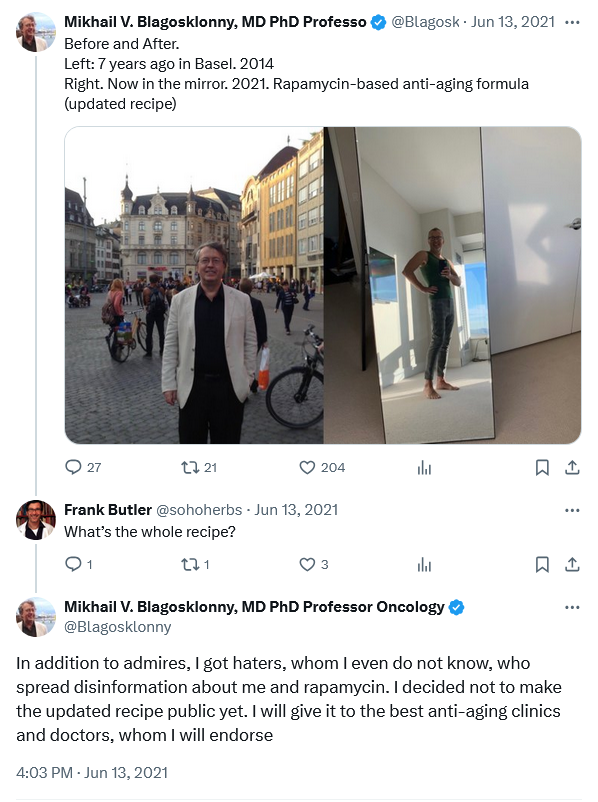
It is quite possible that it was the immunosuppressive drug rapamycin, which Blagosklonny kept taking regularly to rejuvenate himself, which killed him. In a way, he was probably a victim of a cult which he and his anti-aging peers established. Rapamycin and the human protein it acts upon, mTOR, led to a bloated research field of mTOR in aging and cancer, much of it was fraudulent.
David Sabatini, remember that story? Well, it seems the conclusions were not affected. I take an ill-informed look at the mTOR signalling research field, to understand how photoshopped data gets to be independently verified by other labs.
Rapamycin is used for kidney transplants to suppress the immune system and avoid organ rejection. Wikipedia also mentions that rapamycin has adverse effects of lung toxicity causing pneumonia and may inclease the risk for skin cancer. Thus, it is rather the opposite of an anti-aging or even an anti-cancer drug like Blagosklonny and his fellow anti-aging professors who now commiserate to his death in Twitter/X, kept insisting.
Just in March 2023, when he already suffered from lung cancer himself, Blagosklonny claimed that rapamycin “slows aging, thus delaying cancer further“, especially for “tobacco-related and lung cancer“. He should rather have listened to his own advice from 2019 that “Self-medication (even by physicians themselves) should be avoided and strongly discouraged.” Instead, this:
Video from June 18, 2021. Rapamune (rapamycin) 20 mg once in 2 weeks. High peak levels theoretically may cross the blood-brain barrier. This schedule may become mainstream in the near future but should be prescribed by a physician (under doctor supervision) pic.twitter.com/S6ct7hDJVz
— Mikhail V. Blagosklonny, MD PhD Professor Oncology (@Blagosklonny) October 7, 2021
In July 2024, Blagosklonny published a paper in Aging, where he revealed his own lung cancer therapy (which includes rapamycin):
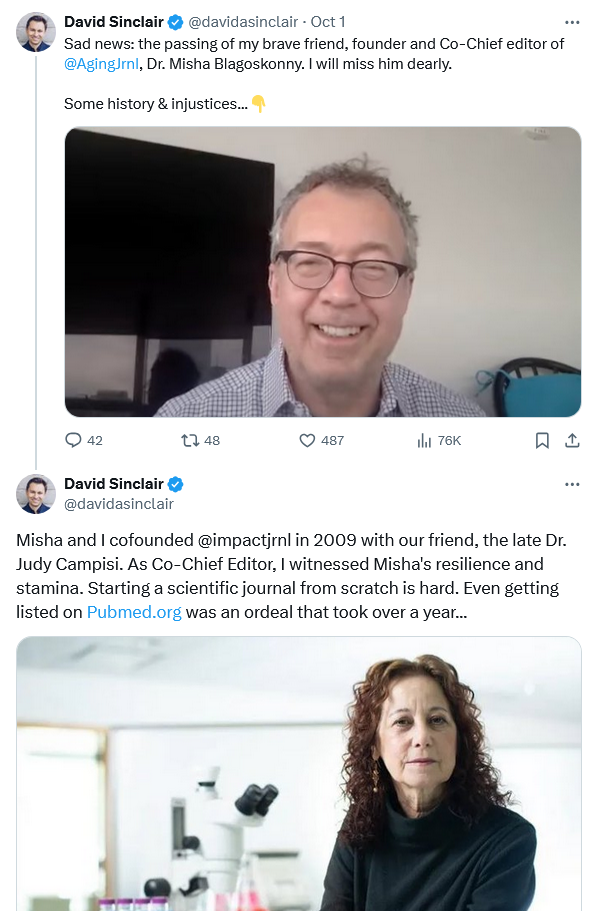
Blagosklonny founded his publishing business Impact Journals with the pay-to-publish open access journals Oncotarget and Aging together with his former postdoc turning life partner, Zoya Demidenko. The editorial boards are similar and list the who-is-who of bad science, most if not all of them have a worrisome or even a catastrophic PubPeer record. Both journals were soon run over by Asian papermills, the publication output exploded, and it must have generated a lot of money for Blagosklonny or Demidenko.
Smut Clyde congratulates Aging: “This is bespoke tailoring, in contrast to the off-the-rack products cranked out by the average papermill […] no shame befalls the journals that accept these confections.”
Because of all that fraud and papermill reporting going on, Demidenko set up a “Scientific Integrity Office” which has to be contacted under scientificintegrityoffice@impactjournals.com, instead of “All other offices, including the Editorial Office“. The Scientific Integrity Office is Demidenko herself.
The irony of course is that in their not-too-distant scientific past as scientists, Blagosklonny and Demidenko both published a lot of falsified science themselves, there are 22 threads on PubPeer. Here a recent find, showing that for rapamycin to work, data needs to be manipulated:
Actinopolyspora biskrensis: “Figure 4A seems to show differential splicing (splices in the pS6, pERK and HIF-1alpha panels, but the tubulin panel appears to be intact.”
Actinopolyspora biskrensis: “Two images in Figure 1A seem to have previously been published in a different paper with common authors (after 90-degree rotation)”
More bad science (and legal threats!) by Blagosklonny and Demidenko here:
Oncotarget, the somewhat controversial OA journal, switched from pretend-soliciting my services to threatening to sue me for defamation. Their lawyer writes my disrespect caused them financial damage.
I last wrote about Blagosklonny in July 2024 Shorts, as he was passing the reins of Editor-in-Chief of Oncotarget to Wafik El-Deiry. El-Deiry’s PubPeer record is breakthtaking, and his attitude is even worse.
I last communciated with Blagosklonny and Demidenko in July 2024 (it was a rather unpleasant experience, especially with Demidenko). As it happens, she is from Kharkiv in Ukraine, Blagosklonny is from russia, but his ancestry is in Ukraine, as he told me. I recommended that Blagosklonny donates his papermill-earned money to Ukrainian defence. He didn’t understand which war I was talking about (“Vietnam??“) while sending me the abstract of his “battle with cancer. Part 1” with these words:
“I am a soldier.”
Science Elites
A Nobel Prize candidate who saved numerous lives
Adriano Aguzzi, the greatest Italian scientist of all times and Switzerland’s most famous neurologist and COVID-19 savior, is in the news again. But this time, not in the way he usually is. Read this 2019 article, for which somebody paid to remove it from Google search results:
The prion researcher Adriano Aguzzi used to describe his Pubpeer critics as “lowlifes”, and himself as a victim of a lynch mob. But after Elisabeth Bik helped him find even more mistakes in his papers, Aguzzi changed his stance.
As reminder, data sleuths and myself exposed Aguzzi on oodles of manipulated data and a made-up PhD degree which he repeatedly decorated himself with (Aguzzi could never overcome the fact that he is merely an MD). His University of Zürich (UZH) reacted decidedly, by refusing to invetsigate anything and pushing Aguzzi into the media to be celebrated and admired as the hero who not only cures brain diseases but also somehow saved Switzerland from COVID-19. At the same time, UZH encouraged Aguzzi to insult and threaten his critics (like myself) with defamation lawsuits.
Five years passed, in which it seems Aguzzi insulted too many people who a) matter and b) had enough. The tide started to turn against him, and eventually, his falsified science became relevant. In July 2024, Aguzzi had to retract a paper with his mentee Johannes Haybaeck, who was previously sacked in Germany for causing deaths of several patients (read July 2024 Shorts). Now, Aguzzi will retract even more.
The Swiss magazine Blickreported on 29 September 2024 (translated):
“Adriano Aguzzi is one of the most important scientists in Switzerland. But now the neuropathologist’s monument is shaking: research results were falsified at his institute – and neither he nor the University of Zurich provided transparent information about the incidents. […]
A researcher who worked in Zurich until around two years ago incorporated laboratory experiments with mice that never took place into scientific work. Specifically, he reused microscope images of mouse brains from previous studies to simulate the desired research results. […]
According to information from Blick, the offending employee has now admitted his manipulations. Institute director Aguzzi has therefore had to correct or even retract several publications in recent weeks and months because they were based on the falsified results.
Furthermore, inconsistencies emerged in Aguzzi’s earlier work, which was published around 2010 and had nothing to do with the fake animal experiments. […]
A public statement from Aguzzi was also not available. According to a member of the Institute of Neuropathology, he sees himself as a “victim of fraud” – and that by a scientist he has supported for years.”
As Blick writes, Aguzzi “informed the 40 members of his institute about the problems on February 14, 2024, shortly after he was made aware of the irregularities by an unknown source“.
As reminder, everyone knew of Aguzzi’s falsified science since Christmas 2019, including Aguzzi himself who announced to sue me. It seems, UZH was preparing to ritually sacrifice some scapegoat to save Aguzzi’s reputation, but then the university lost control. Happens sometimes in Switzerland, especially in Zürich:
This withdrawn preprint is specifically mentioned by Blick:
Asvin KK Lakkaraju, Oliver Tejero, Ramon Guixà-González, Elena De Cecco, Martina Jungo, Ching-Ju Tsai, Rocco Mastromartino, Jacopo Marino, Xavier Deupi, Simone Hornemann, Gebhard FX Schertler, Adriano Aguzzi The adhesion GPCR Adgrd1 is a prion protein receptor and a mediator of prion cytotoxicitybioRxiv (2024) doi: 10.1101/2023.04.29.538801
“The authors have withdrawn their manuscript owing to several irregularities that have recently come to light. Therefore, the authors do not wish this work to be cited as reference for the project. If you have any questions, please contact the corresponding author.”
Withdrawal notice
Blick commented in this regard bluntly: “Aguzzi and his co-authors only spoke of “irregularities.” Not a word about forgery or fraud.“
Here is a paper Aguzzi now corrected, and it was not previously flagged on PubPeer:
“”It was brought to our attention that our published paper […] contains a duplication of the images in Fig. 3D (SAF84 immunohistology, TREM2+/+ and TREM2+/- mice). We consulted our experimental records and original data. We found that when assembling the images in Adobe illustrator, we unintentionally copied a SAF84 immunostaining image of a TREM2 heterozygous mouse brain onto that of a TREM2 wild-type brain. […] This error does not affect the results of our study or their interpretation.””
Also this Science paper was corrected, in April 2024:
“Upon review of supplemental fig. S4 […] it has come to the authors’ attention that brain histological images had been erroneously duplicated from one genotype (NODB10), presented in supplemental fig. S4F, to another genotype (wild-type) in supplemental fig. S4D. After reanalyzing the original tissue blocks, the authors have corrected this mistake and inserted the correct consecutive sections into supplemental fig. S4D.
The authors also found mistakes in the legend of supplemental fig. S4: Scale bars were not indicated for all figures, one genotype was wrongly indicated, and the labeling of PrP/SAF84 was not consistent. They have adjusted the legend of supplemental fig. S4 to correct the errors.”
To preserve the permanence of the scientific record, Science erased the original supplemental material once found here, and uploaded a new supplemental file (generated on 31 March 2024). Nobody can check now what was really changed and why.
This in Blick, is priceless:
“He once accused the Zurich veterinary office of being arbitrary in this context and publicly described a female official as a “mouse policeman” who had no idea about scientific concepts.”
Definitely, bullying was probably the only thing Aguzzi was always a great expert in (read November 2021 Shorts on how publicly accused a junior critic of research fraud).
The article contains strange Aguzzi descriptions like “a Nobel Prize candidate“, and “Through his work, Aguzzi has saved numerous lives, for which he has received numerous awards“, followed by how much money each award was worth. I wouldn’t bet though that Aguzzi’s falsified science saved any lives at all, maybe the opposite?
To the nosy national media which kept picking up the story, UZH announced to investigate the affair of which UZH allegedly only knew since February 2024. Not since December 2019.
More dodgy stuff was found in Aguzzi’s papers. Here is the Swiss joker is with his Israeli counterpart Oded Rechavi, turning a brain parasite into a cure:
Shahar Bracha, Hannah J. Johnson , Nicole A. Pranckevicius , Francesca Catto, Athena E. Economides , Sergey Litvinov , Karoliina Hassi , Marco Tullio Rigoli , Cristina Cheroni , Matteo Bonfanti , Alessia Valenti , Sarah Stucchi , Shruti Attreya , Paul D. Ross , Daniel Walsh , Nati Malachi , Hagay Livne , Reut Eshel , Vladislav Krupalnik , Doron Levin , Stuart Cobb Petros Koumoutsakos, Nicolò Caporale, Giuseppe Testa, Adriano Aguzzi Anita A. Koshy, Lilach Sheiner, Oded Rechavi Engineering Toxoplasma gondii secretion systems for intracellular delivery of multiple large therapeutic proteins to neuronsNature Microbiology (2024) doi: 10.1038/s41564-024-01750-6
Parus bokharensis: “i) In several conditions, it looks like the values seem to be duplicated. Could authors check if this was expected, please?”
Now, the joke is that until 29 September 2024 Aguzzi was the biggest champion of research integrity in Switzerland and beyond. He was celebrated for hsi admirable research ethics by the German Laborjournalin 2021, and the following reporting by the Swiss newspaper Tagblatt from July 2022 is just beyond inappropriate. Translated:
“The allegations are serious: one of the five most important papers on the development of Alzheimer’s is said to contain forgeries. Lead author Sylvain Lesné from the University of Minnesota is suspected 2006 study of having manipulated images of samples […]
“There is no doubt that the allegations are true,” says Adriano Aguzzi, professor of neuropathology and director of the institute at the University of Zurich. Aguzzi suspects that Lesné cheated not only on this much-cited work, but also on others.
“In several of Lesné’s works you can see the same striking patterns in depictions that appear suspicious.”
This is particularly a shame for Lesné’s co-authors, because their honest achievements have now also fallen into disrepute because of Lesné’s falsification.”
The Tagblatt article never mentioned that the Swiss research integrity hero Aguzzi and the despicable American fraudster Sylvain Lesne had joint publications which contain falsified data. Nobody ever wrote about it. Except me.
In December 2021, someone who knew my email address contacted me while claiming to be a death-facing Creutzfeldt-Jacob-Disease patient:
“Researcher Adriano Aguzzi is one of the top leaders in prion research, as you know, and your attacks on him and his contributions have deep and far-reaching impacts for those of us that carry these dreaded mutations. As you are aware this disease if triggered has a 100% fatality rate. Both myself and others within our community highly respect and appreciate Adriano’s research and his teams actions. We pray every day for a breakthrough and for all those affected.
Please reconsider your insulting and demeaning belligerence on Adriano and other researchers within this field of study. Your pen is mightier than the sword, but your words are a distraction and slow down the progress of one day finding a cure for these devasting diseases. “
Would it be insane to ask if Aguzzi trolled again?
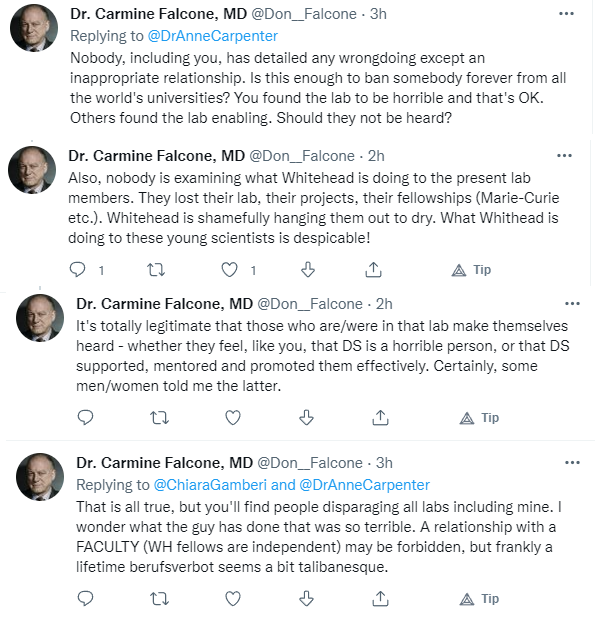
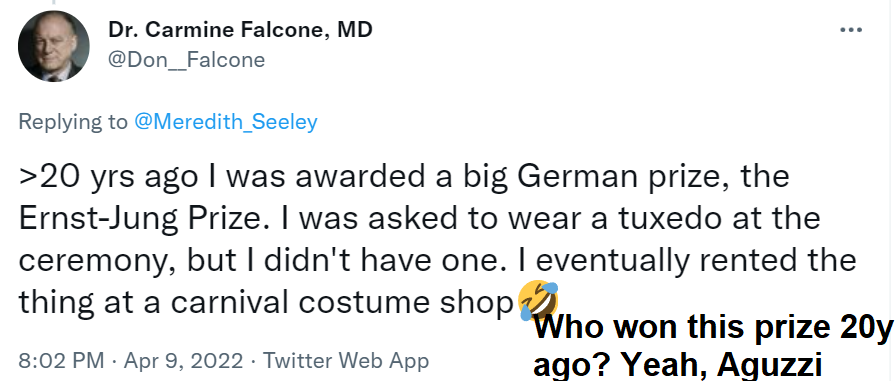
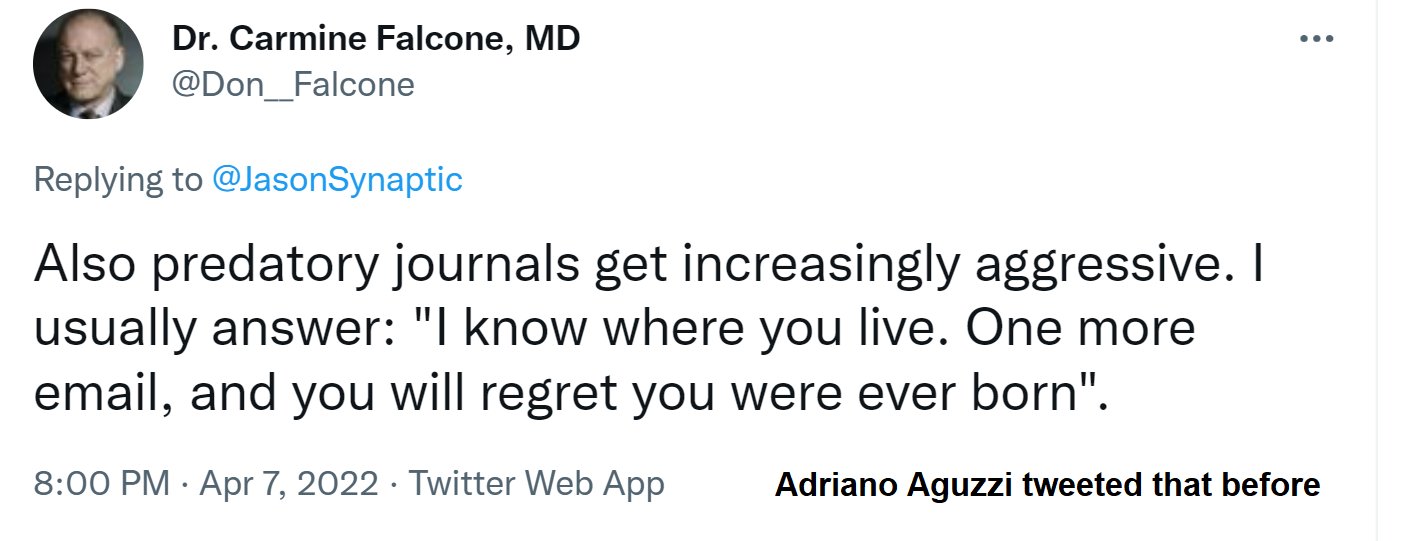
Aguzzi now deleted both his Twitter/X and his Facebook profile. Even his anonymous sockpuppet account @Don__Falcone:
I wrote to Aguzzi, also wondering if he may have had anything to do with that mysterious Italian troll described in April 2021 Shorts. Silence.
The global grand challenges our world faces
In September 2024, Nick Wise found another paper which before its publication was sold online by papermills. One customer seems to be a Canadian university dean.
Nick Wise: “On the 1st of January 2022 an advert was placed on an Iranian Telegram channel offering authorship of a paper. The keywords are a match to this paper. The text includes “✍️ The capacity of the first, second and third person of the article is empty.”
The corresponding author Moncef Nehdi has 8 papers on Pubpeer, of them 2 were retracted. Here is one, can you find one of the two mega-fraudsters named Arash Karimipour among the coauthors, the concrete one?
“Following receipt of a whistle-blower complaint, an investigation of this paper was conducted. The Editor-in-Chief no longer has confidence in the scientific integrity of this paper.
The paper exhibits evidence of authorship manipulation. Changes in authorship were made to the paper during the review and revision process, in contravention of the journal policies on authorship changes. The journal apologises to readers for not having identified these changes at the time. Following correspondence with the authorship of this paper, questions regarding appropriate contribution of all co-authors are raised. Multiple authors admit not knowing the others and “never having collaborated”. One author identified their contribution as “XRD analysis”; none is reported in the paper. The corresponding author was unable to identify the laboratories at which all aspects of the experimental were conducted.”
This was the other retraction from July 2023, again with “Arash Karimi Pour”:
“The paper exhibits evidence of authorship manipulation. Seven co-authors were added to the paper during the review and revision process, in contravention of the journal policies on authorship changes. One of these has indicated to the Editor-in-Chief that they were entirely unaware of having been listed as a co-author [this author does not appear in the published version of the paper having indicated to the publisher that they were not a co-author in advance of publication].
In the course of the investigation two issues of potential data manipulation were also identified. When raw data was requested from the corresponding author, of the initial submission [not the corresponding author listed in the published version, but still a co-author] curated data was provided. The metadata on the curated data predates the reported conduct of the study by five years. Photos of test specimens provided as ‘proof’ the study was conducted were clearly of different dimension than those reported in the paper.”
How did an editorial about insect pheromone communication get to receive 1200 irrelevant citations, almost all from papermills? Alexander Magazinov reveals The Secret of The Vickers Curse!
An experienced academic leader, Nehdi comes to U of G from McMaster University where he has served as chair of the Department of Civil Engineering since 2022. Prior to that appointment, Nehdi was a professor in the Department of Civil and Environmental Engineering at Western University from 2007 to 2021.
Nehdi, an award-winning researcher and educator, holds a PhD in civil engineering from the University of British Columbia and is a fellow of several Canadian and international engineering institutes.
“I am honoured to be chosen as the next dean of the College of Engineering and Physical Sciences at U of G,” Nehdi says. “I’m excited by the unique opportunity CEPS presents to champion transformative leadership and train professionals for the global grand challenges our world faces and look forward to collaboratively envisioning the future of the college.” […]
“As dean, Dr. Nehdi will build on the college’s commitment to providing comprehensive, meaningful learning experiences for undergraduate and graduate students, as well as deepening our global impact through research outcomes that can advance our society and help solve complex global challenges,” says Dr. Gwen Chapman, provost and vice-president (academic).
Nehdi’s five-year appointment will commence Sept. 1, 2024.”
And before his departure from McMaster, the highly cited papermiller with “470 peer-reviewed technical publications”received a medal:
“Contributing to world record-setting structures across the globe has earned Professor and Chair of the Department of Civil Engineering Moncef Nehdi the prestigious Engineering Institute of Canada K.Y. Lo Medal.
Nehdi has put Canadian engineering talent on the world stage in landmark structures including the world’s next tallest building, the world’s fourth tallest building, the world’s largest airport, the world’s most venerated pedestrian bridge and the world’s deepest and second largest water pumping station.
In a career that spans more than two decades, Nehdi’s achievements in multi-billion-dollar engineering projects in multiple countries have solidified his role as an international leader in engineering.”
What about Nehri”s achievements in the multi-million dollar papermill industry?
Retraction Watchdogging
Eminent pioneers in Australia
Retraction for two Australian superstars. The melanoma researcher Peter Hersey is professor at the University of Sydney, we are informed that he is “generally recognised as a pioneer of immunotherapy for melanoma in Australia” and “has been involved in conduct of over 50 clinical trials in melanoma“. Prior to the Sydney appointment, Hersey used to be research director at the Newcastle Melanoma Unit at the University of Newcastle Australia, where he still runs a melanoma clinic. There, Hersey installed his close associate Xu Dong Zhang as professor, who is in turn described by the University of Newcastle as “One of the world’s most eminent researchers in skin cancer” who discovered a cure for melanoma, which is about the IB5PA molecule which “helps keep the cell normal and regulated and this loss activates a chain reaction called the PI3K/Akt“.
Hersey’s and Zhang’s case was investigated by the pseudonymous Clare Francis. Now one of their papers about AKT signalling was retracted:
In August 2024, FEBS Letters editors commented on PubPeer with “The journal is aware of these issues and is currently investigating. Thank you.” The retraction was published on 27 September 2024:
“The retraction has been agreed upon following an investigation into concerns raised by a third party, which revealed inappropriate duplications of image sections within the article (Fig. 2A, 3A-C, 4A-B) depicting different experimental conditions. The authors were unable to provide a satisfactory explanation and due to the elapsed time the raw data was not available. Given the extent of the identified issues, the editors have lost confidence in the data presented and the article’s conclusions can no longer be considered reliable.”
Now, there is much, much worse stuff by Hersey and Zhang on PubPeer in need of retraction. Like this:
In fact, Hersey’s and Zhang’s fake melanoma research was first spotted by Elisabeth Bik nine years ago, who included their freshly published Oncogene paper in her study (Bik et al 2016) and in 2015 reported the fabrications to the journal, which resulted in a correction:
Bik: “Figure 4: Blue and red boxes: Duplicated lanes in Figure 4A”
Fig 6G
The 2016 Erratum mentioned that “the authors realised that Figures 4a and 6g of our paper contained inadvertently duplicated images.” In December 2021, Zhang went to PubPeer to accuse his first author CC Jiang of being solely responsible. There was more to be fixed in that paper:
“It was our inadvertent error to show the result from one cell line twice. We noted this error in 2014 with the kind assistance of one of our colleagues. The author who performed the assay immediately repeated the experiment, and the results are shown below. However, I mistakenly thought I had sent a request to the journal for correction, which I apparently had not. We will contact the journal for correction as soon as possible.”
There are 23 fake papers by Hersey on PubPeer, most are coauthored by Zhang. Zhang himself has 43 papers on PubPeer, of those 24 without Hersey as coauthor. But here is a Hersey paper without Zhang to blame:
As it happens, two of Zhang’s own papers were already retracted. By Spandidos! Cheng et al 2014 was retracted in July 2021, and Li et al 2013 was retracted in August 2021. Both were ridiculously fraudulent.
Zhang is obviously incapable of any honest action, don’t even try to ask him the time of the day. Here, he sent Jiang to share fake raw data:
S T Guo , M N Chi , R H Yang , X Y Guo , L K Zan , C Y Wang , Y F Xi , L Jin , A Croft , H-Y Tseng , X G Yan , M Farrelly , F H Wang , F Lai , J F Wang , Y P Li , S Ackland , R Scott , I U Agoulnik , H Hondermarck , R F Thorne, T Liu, X D Zhang, C C Jiang INPP4B is an oncogenic regulator in human colon cancerOncogene (2016) doi: 10.1038/onc.2015.361
Actinopolyspora biskrensis: “Some bands in Figure 5d may have repeated sections. Could the authors please provide the original uncropped scans?”
Jiang then provided fake raw data twice, on the left her first attempt, on the right her second after having been caught (zoom-in and highlights by Cheshire):
That being Australia, my prediction is that most likely nothing at all will happen. In the worst case, if some insolent Australian media ever dares to report (not likely), Zhang and Jiang will get the full blame. In any case, the big white man Hersey will be protected.
Here the retraction from 29 September 2024 (highlights mine):
“This article has been retracted at the request of the Editor-in-Chief. The journal received a complaint regarding Figure 1 of this publication, entitled “Increased striatal expression of RAGE, NF-κB, and GFAP by QUIN in rats”. The complaint alleged that there were multiple duplicated images in the three Western blots in this figure (1A, B, and C).
The senior/corresponding author, Dr. Santamaría, was contacted. He explained that he had been the victim of continuous harassment that had resulted in other such situations, and that any similarities in the images were probably due to the western blotting procedure.
Subsequently, image analysis software identified multiple (fifteen) possible sub-image duplications or manipulations in the figure. On the strength of this evidence, and in keeping with COPE standards, the Editor in Chief has decided to retract the paper.
S.F. Ali, & A. Santamaría agreed that retraction is the most appropriate action for this article. E. Cuevas, & Q. Wu acknowledged the retraction. Despite multiple attempts, contact unfortunately could not be made with the following authors to obtain their feedback regarding the retraction: S. Lantz, G. Newport, B. Divine, M. Paule & J.C. Tobón-Velasco. Apologies are offered to the readers of Neuroscience Letters that these issues were not detected during the submission and review process.”
Gosh, who is harassing Dr Abel Santamaria Del Angel (what a name!), professor at the Instituto Nacional de Neurología y Neurocirugía in Mexico, our holy innocent angel? Seven years ago, he already retracted 2 papers: Toban-Velasco et al 2012 was retracted in March 2017 over “inappropriately manipulated images in Figures 1, 2 and 4” and Carmona-Ramirez et al 2013 (about curative powers of curcumin!) was retracted in April 2017 over “inappropriately manipulated images in Figure 7B“. A total of nine Santamaria papers is flagged on PubPeer, several have papers by Santamaria were corrected.
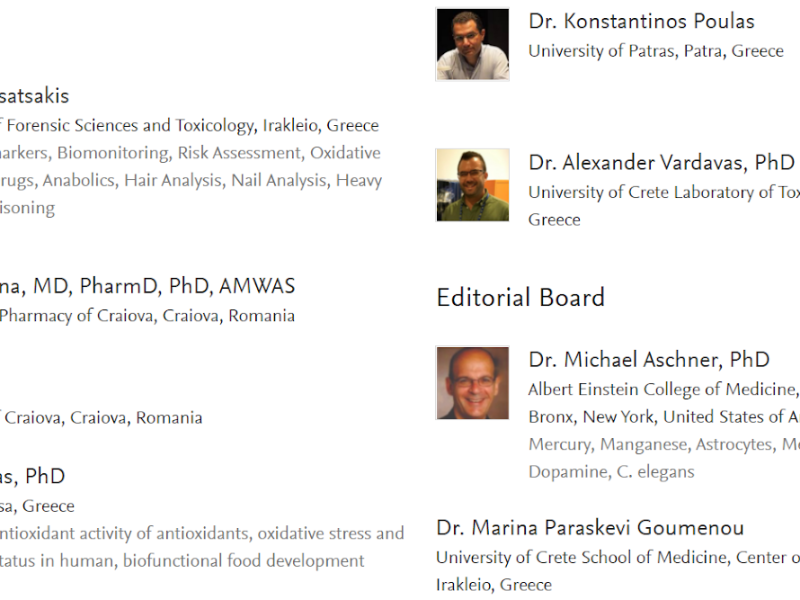
Several were co-authored by a certain Michael Aschner, professor at the Einstein College of Medicine in new York and an unhinged quack in bed with antivaxxers, covidiots and tobacco pushers, read about him here:
Aristidis Tsatsakis, Konstantinos Poulas, Ronald Kostoff, Michael Aschner, Demetrios Spandidos, Konstantinos Farsalinos: you will need a disinfecting shower once you read their papers.
Actinopolyspora biskrensis: “Could the authors please examine Figure 7F and Figure 7H? It seems as if a band has been used for two different conditions.”
The Corrigendum from October 2022 informed Elsevier readers that “authors had mistakenly switched the representative western blot images of SOD2 and actin” in Figure 7E.
This by Santamaria and Aschner was also corrected:
Ocystola ochroptera:: “in figure 15A the bands of the **AEA **condition are identical to the bands of CP 55, 940 condition when the p-Nrf2 is evaluated. In the same figure, the **2-AG **and URB-597 condition bands of p-NRF2 are the same just with different brightness and contrast. “
“In figure 14, the image H1 is the same as image E, the imagen is just rotated and with a contrast and brightness modified.”
The Corrigendum from December 2023 addressed “a couple of errors which were inadvertently made during the preparation of Fig. 14 (E and H1 panels) and Fig. 15 (western blot bands for CP55)” and assured that “the correct figures accurately represent the experimental results described in the article.”
Ocystola ochroptera flagged more of Santamaria’s papers which were corrected in 2021-2023.
Ocystola ochroptera” The authors show in figure 4e and 4f that correspond to 30 and 45 days post-lesion, respectively, the same picture. The same happens in figures 5a and 5b, which correspond to 15 and 30 days post-injury, however it is the same rotated image. The same occurs in Figures 6g and 6h even though they indicate different treatment times.”
Elsevier’s Corrigendum from October 2023 mentioned that “errors consisted in leaving images (panels) in wrong positions since the preparation of the composed figures” and that “no incorrect intention of the person assembling the figures was committed“.
Glossosoma altaicum: “It is strange that even though the repeated images were the adult and old controls, the authors decided to replace most of the images in the recently published ERRATUM, showing no changes in the bar graphs presented, and worse, the images are at different magnification, so the findings of each group cannot be compared with each other.”
To avoid such distrustful finger-pointing, Elsevier editors decided to forgo a correction in this case:
Ocystola ochroptera: “In figure 1C, the first three actin bands of** newborn** animals are identical to the three actin bands of old group only that they are slightly elongated. In figure 4A, the bands of γ-GCS of NT and 10 tBHQ of adults are identical to the bands of γ-GCS of 10 and 25 tBHQ of **old **group.
Holy Mary, how can anyone harass our innocent angel like this…
Anthony Lam did not respond
Anthony Lam retracts yet another paper. Who is Anthony Lam you ask? Anthony Lam is member of the Faculty of Economics and Business at the KU Leuven in Belgium.
This is Anthony Lam, according to author’s bio in a paper:
Problem is, Anthony Lam doesn’t exist, he was made up by Chinese papermills to please the racists among the editors and peer reviewers who would never reject a paper by a presumed fellow whitey. The above paper was retracted by Taylor & Francis in March 2024 for “compromised editorial handling and peer review process, inappropriate or irrelevant references or not being in scope of the journal or guest-edited issue“. The notice informed that “Anthony Lam did not respond to correspondence from the Editor“.
The photo was stolen, here is the original which, as Smut Clyde found out, belongs to a russian football hooligan, who may be fake as well because his last name, Kanalgerukh, transliterates as “sewer smell” in German:
Maybe it was Chinese papermill humour to submit a paper by Anthony “Kanalgerukh” Lam to Russian Physics Journal (Bi et al 2021) ?
In total, 11 Anthony Lam papers were flagged on PubPeer by the anonymous user Rhipidura albiventris. A number were retracted already, two more papermill fabrications were found citing these retracted papers (see Ardolino et al 2022 and Kalyani 2023).
Retraction notice from Springer from 25 September 2024 (highlights here and elsewhere mine):
“The Editor-in-Chief and the publisher have retracted this article. The article was submitted to be part of a guest-edited issue. An investigation by the publisher found a number of articles, including this one, with a number of concerns, including but not limited to compromised editorial handling and peer review process, inappropriate or irrelevant references or not being in scope of the journal or guest-edited issue. Based on the investigation’s findings the Editor-in-Chief therefore no longer has confidence in the results and conclusions of this article.
Furthermore, it was brought to the journal’s attention by KU Leuven that Anthony Lam is not and has never been affiliated with KU Leuven, and that a KU Leuven affiliation thus should not have been used. A closer investigation raised doubts regarding the identity of the author, suggesting the profile was made up.
The authors did not reply to correspondence from the Editor about this retraction.”
Some publishers however established the truth about Anthony Lam more than a year ago. This paper was part of special issue by Mohamed Elhoseny, it contained blocks of citations to him, to some K. Shankar and to a Shaofei Wu.
“It was brought to the attention of the journal there is no record of the author Anthony Lam ever being affiliated with KU Leuven, Leuven, Belgium. The journal has come to the conclusion that this a made-up author profile. On behalf of the authors Jinbo Chen responded that although the authors remain supportive of the scientific value and findings of the article, they agree with retraction of the article following these integrity concerns.”
The retraction was issued already on 16 June 2023, for this simple reason:
“It was brought to our attention that one of the co-authors, Anthony Lam, was not based at the institution they claimed (KU Leuven). The authors have stated that the same co-author, Anthony Lam, does not exist. The authors have not provided any information as to why this identity was created.”
Also Springer retracted a Lam paper before, already in 2022:
“An investigation by the publisher found a number of articles, including this one, with a number of concerns, including but not limited to compromised editorial handling and peer review process, inappropriate or irrelevant references or not being in scope of the journal or guest-edited issue.”
There are still Anthony Lam papers unretracted, like Leng et al 2019 or Zhang et al 2020. Presumably the editors keep waiting for the reply from their valued Belgian peer Professor Lam of KU Leuven.
A self-initiated review
First retraction for the fallen Harvard superstar psychologist Francesca Gino was issued. Turns out, she can’t stop lying even in a retraction notice.
Here the recent yet undated retraction notice (highlights mine):
“The Editor-in-Chief was contacted by the author team following a self-initiated review of the data reported in this article. In their request, the authors noted that, after an audit into their data, they no longer have confidence in the integrity of the data. The authors requested a retraction after identifying issues across several studies. The data reported in the paper was posted by the authors in 2017 at https://osf.io/mgax8/.
A committee at the journal has investigated the matter and requested the raw data and materials from all studies. The authors did not provide the raw data and materials for Studies1a, 1b, or 2, but earlier versions of the data for Studies 3-4 were submitted. The journal contacted the office of research integrity at University of Pennsylvania and Harvard Business School for the raw data. Neither office provided the raw data. Therefore, the journal could not investigate Studies 1a, 1b, or 2 any further. For Studies 3 and 4, the journal was able to compare the posted data (from 2017) to the earlier versions that were provided by the authors. The details of data collection for each study, and the concerns that were identified, are below. Given these concerns, particularly anomalies with the data in Study 1b, the retraction committee at the journal recommended the retraction of the article.
Pilot study. Participants were recruited through Mturk by a research assistant overseen by Francesca Gino and Michael Norton at Harvard Business School. The raw data and materials were not provided. The journal could not investigate this study any further.
Study 1a. Participants were recruited at Wharton Behavioral Lab by Alison Wood Brooks (PI: Maurice Schweitzer). The raw data and materials were not provided. The journal could not investigate this study any further.
Study 1b. Participants were recruited at the Wharton Behavioral Lab at Wharton Behavioral Lab by Alison Wood Brooks (PI: Maurice Schweitzer). The raw data and materials were not provided. There are anomalies in the posted data (https://osf.io/mgax8/). Specifically, there are streaks of heart rate ratings that were unlikely to have occurred naturally. The authors report they do not know who handled the data.The journal could not investigate this study any further.
Study 2. Participants were recruited through Mturk by Alison Wood Brooks. The raw data and materials were not provided. The journal could not investigate this study any further.
Study 3. Participants were recruited at the University of Chicago research lab by Juliana Schroeder (PI: Jane Risen). The authors shared earlier versions of the raw data (prior to the posted version in 2017) and materials with the journal. A reanalysis of the data showed that 6 participants’ datapoints were dropped prior to analysis but their removal was not reported in the paper. The authors report that the decisions to drop data were based on RAs’ written notes. The reanalysis shows that the focal effect becomes non-significant once all participants are included.
Study 4. The Study 4 participants were recruited at the University of Chicago research lab by Juliana Schroeder (PI: Jane Risen). The authors shared earlier versions of the raw data (prior to the posted version in 2017) and materials with the journal. A reanalysis of the data showed that 11 participants’ datapoints were dropped prior to analysis but their removal was not reported in the paper. The authors report that the decisions to drop data were based on RAs’ written notes. The reanalysis shows that the focal effect becomes non-significant once all participants are included.”
If only the great self-investigator Gino didn’t provide any raw data at all, the paper would have survived!
Validity of work should not be judged solely by representative images
A third retraction for Italy’s little genius, Lorenzo Di Cesare Mannelli aka Painful Lollo, and his mentor at the University of Florence, Carla Gheraldini.
“The journal received a communication about possible irregularities which referred to unexpectedly similar Western Blots bands in Figure 1D of this article. These are the NGF bands of DRG and PAG from sham-operated animals treated with saline or acetyl-L-carnitine, respectively. Due to the length of time since the experiments were completed, the authors were unable to provide the raw data of the results presented in this figure. Editors were therefore not able to properly assess the concerns raised regarding the figure. The authors repeated the experiments, but inconsistencies were apparent in the new data, including unexpectedly similar Western Blots bands between central nervous system regions.
Although the validity of a work should not be judged solely by the representative images presented, the undoubted signs of image manipulation disqualify the work as a whole, as it contravenes basic principles on which scientific research is based. […]”
“Professor Amenta is truly a renaissance man and a knowledge powerhouse according to his colleagues and students. Amenta’s sole focus in life is the creation and dissemination of knowledge”
Despite (or because) of 3 retractions and much more fraud on PubPeer, Gheraldini is right now celebrated in Italian media for solving chronic pain with ultra-micronized palmitoylethanolamide.
Very interesting therapeutic points of attack
One more retraction for Paul B Fisher, untouchable bigwig at Virginia Commonwealth University (VCU), read about him here:
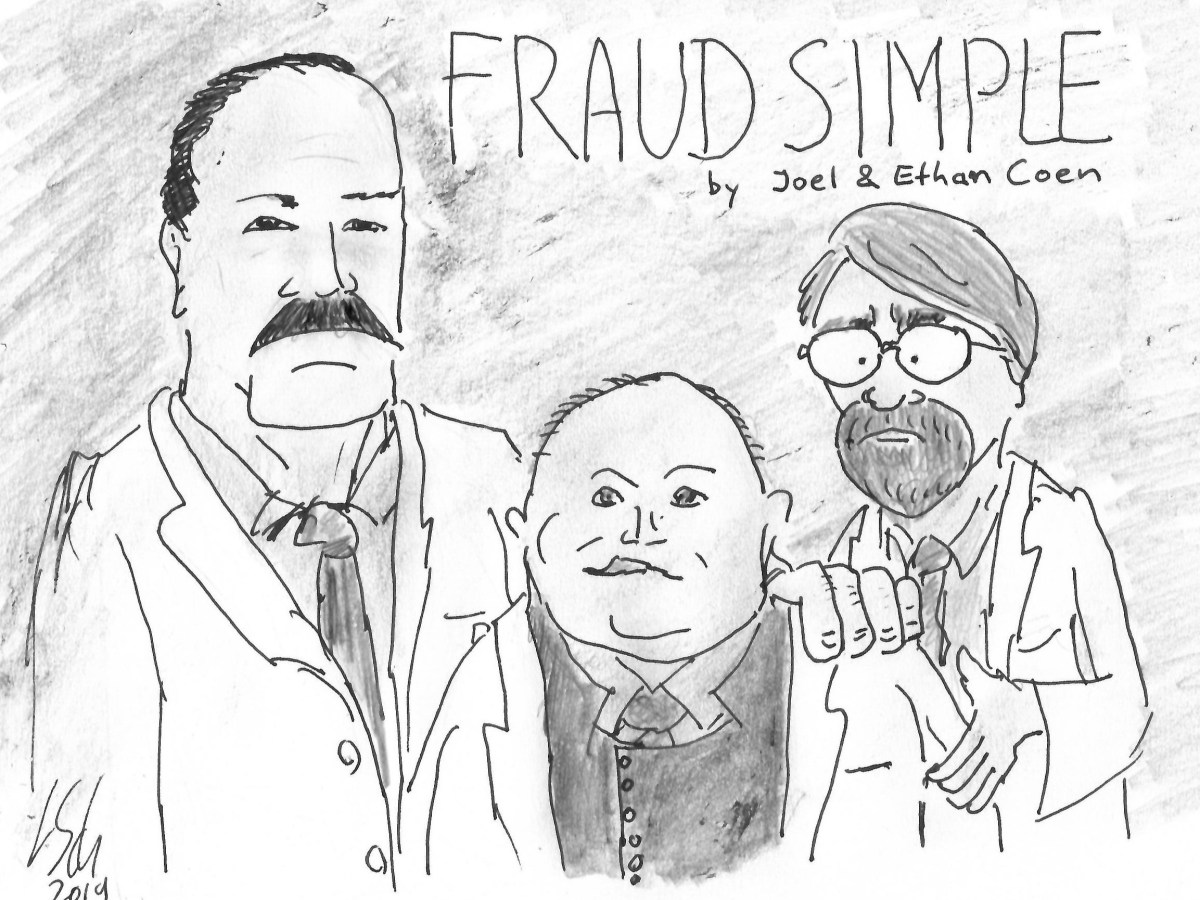
US cancer research professors Paul B Fisher, Paul Dent and Stephen Grant look like the characters of a Joel and Ethan Coen crime movie, unfortunately never filmed. Smut Clyde will give you a peek into their spree of data manipulation
“This article (1) has been retracted at the request of the editors. An internal review by the editors found the following:
•In Fig. 1A, the same image appears to have been used to represent the electrophoretic mobility shift assay band in the FN lane of 7GP cells and MeWo cells.
•The bands showing NF-κB shift in the ×25 and ×50 cold NF-κB competitor–treated condition in Fig. 2B were also used in Fig. 2C, representing NF-κB in the 50 and 100 moi conditions.
•In Fig. 4A, three pairs of images appear to partially overlap with portions being resized or reassembled, including FM516-SV Ad null and Ad.mda-9/S/Ad.Iκβ-mt32; M4Beu. Ad.mda-9/S and T1P26 Ad.null; and M4Beu. Ad.mda-9/S/Ad.Iκβ-mt32 and T1P26 Ad.Iκβ-mt32.
•In Fig. 4B, the image showing the invasion of FM516-SV cells infected with Ad.mda-9/S/Ad.IκBα-mt32 adenovirus was horizontally flipped and used to show the invasion of M4Beu. cells infected with the same adenovirus.
A copy of this Retraction Notice was sent to the last known email addresses of four of the five authors. Four authors (Habib Boukerche, Luni Emdad, Devanand Sarkar, and Paul B. Fisher) agreed to the retraction; the one remaining author (Zao-zhong Su) is deceased.”
I reported about Fisher’s earlier retraction in September 2024 Shorts. According to Retraction Watch database, Fisher had already 4 retractions, but one of those is an error created by a typo in doi, leading to someone else’s retracted paper (see same Shorts). Ivan Oransky knows, but reacted in a very strange way when I previously pointed out this exact error in his manually-curated database.
Fisher was last celebrated in February 2024 by The Scientist, as it happens for the same mda-9 stuff as now retracted. You see, Fisher invented the mda-9 gene (does it even exist?), postulated it to be an oncogene, and had been curing cancer by inhibiting mda-9 (and fudging the results) ever since. The Scientist invited America’s most powerful cancer researcher to comment on Fisher’s achievements:
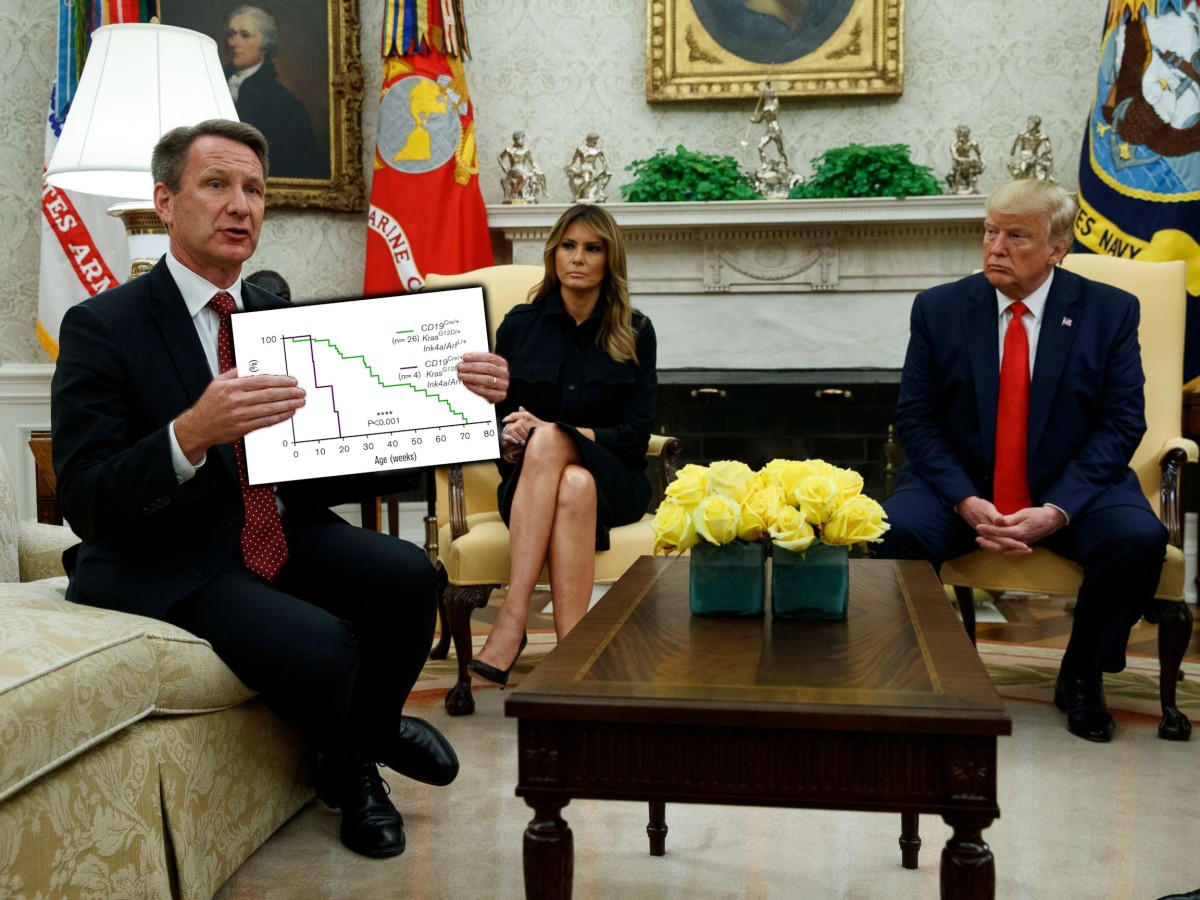
““His work and others’ illuminate very interesting therapeutic points of attack, which affect multiple cancer hallmarks,” remarked Ronald DePinho, a cancer geneticist and biologist from MD Anderson Cancer Center”
“The President’s goal of ending cancer as we know it today is grounded, in part, in the work of scientific discovery that Ned Sharpless has led at NCI”
The pseudonymous sleuth Parashorea tomentella fought for one and a half years to get a Chinese clinical study on gastroenterology retracted because it most obviously had no ethics approval. He finally succeeded.
In April 2023, the sleuth contacted the authors and the journal’s chief editor Lianyong Li with the concern that the referenced ethics approval ChiCTR2000040927 referred to a different study, for example the published paper had inclusion criteria of 18–60 years, while the registered and approved study was about patients of 70-90 years old. Other aspects, like disease grade of participants, drug treatment and number of trial arms clearly differed. On 23 April, chief editor Li announced to investigate. On 7 May 2023, the lead author Ji Liu assured Parashorea and the editor that his study was a subproject of “Clinical Innovation Exploration Project of the Medical and Health Research Project of our Medical Center (No.: 19ZX36)“
“This full project (including our published part) was approved by the Medical Ethics Review Committee of our Medical Center. Thank you for your interest in our research.“
The journal is published by Elsevier and KeAi Communications Ltd for the Asia Pacific Alliance of Liver Disease, the latter two seated in China. It seemed the editors were satisfied with this explanation, so in November 2023, Parashorea lodged a complaint with the Committee on Publication Ethics (COPE). Right away, the journal’s chief editor Li announced to COPE:
“…the authors are in the process of correcting and updating their registration information.”
The trial registration update didn’t happen, COPE followed up, and on 22 March 2024, the journal’s chief editor Li wrote to COPE:
“Since the article is unable to provide more reasonable clinical registration information, it will be retracted recently.”
Indeed, it was retracted only recently. The retraction was finally issued in late September 2024, half a year after that announcement:
“This article has been retracted at the request of the Authors.
Due to inadequate consideration of the control group in the overall design of the project, the study population in this article does not have the appropriate ethical approval.
The scientific community takes a very strong view on this matter and apologies are offered to readers of the journal that this was not detected during the submission process.”
As an exec from KeAi Communications explained in June 2024, the retraction was approved by Elsevier long ago, and was supposed to appear “by the end of May“. But then, KeAi Communications revoked the agreed retraction notice and sent Elsevier another one on 25 July 2024, which got stuck because of holidays period. Parashorea kept prodding and eventually, he succeeded.
Tombstoned
As I previously announced in September 2024 Shorts, Elsevier now started to retract book chapters by Hari and Aruna Sharma, a neuroscientist couple from the Uppsala University in Sweden. Read the main story here:
Hari Shanker & Aruna, a YouTube influencer couple in Sweden. With or without Rudolph the Red-Faced Liar. And with Anca and Dafin, two totally innocent and upright Romanians. Pushing pig brain juice an SS Nazi invented. You won’t find a better story for Christmas!
Now, Elsevier started to retract also. Mu was infromed by Elseveir exec that 7 book chapters have been “tombstoned”, apparently an Elsevier code word for such grave fraud cases. 6 chapters in the 2020 book Progress in Brain Research – Neuropharmacology of Neuroprotection, here the tombstoned titles:
“REMOVED. This chapter has been removed due to substantiated image manipulation. Following a complaint by a reader, an internal investigation discovered several examples of reused images from different publications by some of the co-authors that were presented in this work as unique. Please see Elsevier policy on Book/Chapter removal (https://www.elsevier.com/about/policies/book-chapter-removal).”
I invite you to think of reasons why Elsevier decided that this Chapter 4 however was scientifically reliable. Even if wasn’t flagged on PubPeer, just read its title:
Maybe because Sharma cooperated here with a bunch of russians. Led by Andrey Bryukhovetskiy, formerly chief neurologist of the russian Navy, now director of anti-aging NeuroVita Clinic in Moscow, the chapter opens with:
“In 2014 and 2015 Professor of neurology Andrey Bryukhovetskiy published a novel theory of the information-commutation organization of the human brain in Russia, China and the USA. The theory posits the hypothesis that the higher nervous activity (cognitive, intellectual, mnestic) of the humans and their mind are material and have microwave electromagnetic nature.”
Elsevier must have been in such an awe of this russian “analo-govnet” science and technology…
“Now, what’s believed to be the first clinical trial specifically aimed at children and young adults with long COVID is underway, recruiting subjects aged 7 to 21 on which to test a potential treatment. It builds on research that suggests long COVID in children may be linked to the gut.
In May 2021, Lael Yonker, a pediatric pulmonologist at Massachusetts General Hospital in Boston, published a study of multisystem inflammatory syndrome in children (MIS-C), which she says is now regarded as a more severe and acute version of long COVID. It showed that these children had elevated levels of a protein called zonulin, a sign of a so-called leaky gut. Higher levels of zonulin are associated with greater permeability in the intestine, which could enable SARS-CoV-2 viral particles to leak out of the intestines and into the bloodstream instead of being excreted out of the body. From there, they could trigger inflammation.
As Yonker began to see more and more children with long COVID, she theorized that many of the gastrointestinal and neurological symptoms they were experiencing might be linked. But her original study also pointed to a possible solution. When she gave the children with MIS-C a drug called larazotide, an existing treatment for people with issues relating to a leaky gut, the levels of viral particles in their blood decreased and their symptoms improved.”
This was the larazotide paper by Lael Yonker and her boss at Massachusetts General Hospital, Alessio Fasano, somehow George Church is also on it.
Lael M. Yonker , Tal Gilboa , Alana F. Ogata , Yasmeen Senussi , Roey Lazarovits , Brittany P. Boribong , Yannic C. Bartsch , Maggie Loiselle , Magali Noval Rivas , Rebecca A. Porritt , Rosiane Lima , Jameson P. Davis , Eva J. Farkas , Madeleine D. Burns , Nicola Young , Vinay S. Mahajan , Soroush Hajizadeh , Xcanda I. Herrera Lopez , Johannes Kreuzer , Robert Morris , Enid E. Martinez, Isaac Han, Kettner Griswold, Nicholas C. Barry, David B. Thompson, George Church, Andrea G. Edlow, Wilhelm Haas, Shiv Pillai, Moshe Arditi, Galit Alter, David R. Walt, Alessio Fasano Multisystem inflammatory syndrome in children is driven by zonulin-dependent loss of gut mucosal barrierJournal of Clinical Investigation (2021) doi: 10.1172/jci149633
It was followed by another larazotide clinical study with “Four children with MIS-C, ages 3–17 years” :
Lael M Yonker , Zoe Swank , Tal Gilboa , Yasmeen Senussi , Victoria Kenyon , Lena Papadakis , Brittany P Boribong , Ryan W Carroll , David R Walt , Alessio Fasano Zonulin Antagonist, Larazotide (AT1001), As an Adjuvant Treatment for Multisystem Inflammatory Syndrome in Children: A Case SeriesCritical Care Explorations (2022) doi: 10.1097/cce.0000000000000641
A press release from February 2022 explained that these “four children who received larazotide plus steroids and intravenous immune globulin (IVIG)” were compared “to 22 children who received only steroids and IVIG“, and it was found that the four on larazotide had “a significantly faster resolution of gastrointestinal symptoms and a slightly shorter hospital stay“.
Thing is, larazotide previously failed in a clinical trial for celiac disease, meaning it does nothing for leaky gut syndrom. Here the press release from June 2022 by the drug’s maker 9 Meters Biopharma:
“Interim Analysis of Phase 3 Study of Larazotide for Celiac Disease Does Not Support Trial Continuation”
An independent statistitian could not find any “statistically significant clinical effect of larazotide“.
Thus, Yonker’s and Fasano’s assumption that larazotide is “an existing treatment for people with issues relating to a leaky gut” is already wrong. But WIRED doesn’t mention that, instead:
“Yonker and her colleagues will administer larazotide to 32 patients between the ages of 7 and 21, who will take the drug for eight weeks; a further 16 patients will receive a placebo.”
Donate!
If you are interested to support my work, you can leave here a small tip of $5. Or several of small tips, just increase the amount as you like (2x=€10; 5x=€25). Your generous patronage of my journalism will be most appreciated!
Just a little twist on the case of Nehdi Muncef : Let me briefly recall that not long time ago the Elsevier Journal of “Case Studies in Construction Materials”, which retracted one of Nehdi’s articles, was in the hand of Afonso Rangel Garcez de Azevedo until he was caught duplication and paper milling: https://www.sciencedirect.com/science/article/pii/S2214509523008495
You see how becoming EiC how can elevate one person’s publication ability. as soon as he entered the EiC club, he could publish in his friends journals and his friends in his journal.
The paper miller, Afonso Rangel Garcez de Azevedo is indeed newsworthy big time.
It’s good that Moncef was finally caught. Not only did he boost his profile with papermilling and citation manipulation, but his relentless ambition for higher positions finally caught him on the radar in this way. What made Moncef a bit different from the others was that he worked with different papermillers besides the Iranian papermillers that Nick Wise captured. This raised his profile with different sources.
The Karimipour/Afrand group, which provides paper and citation service to Nehdi, also supports Arjmand at UBC, which was already caught by FBS. But there are others besides the Karimipour/Afrand group who are doing this. Here we can see how Waterloo professor Nithwani has strengthened his academic profile after Madjid Soltani, another big papermiller.
Both the fact that Nehdi was able to become a dean at a Canadian University with this profile, and the fact that, as can be seen from the simple examples I have given, they are constantly interconnected, the Iranian papermill groups, which do nothing but publish papers and spend public funds with systems that are only on paper and far from reality, are structured in all Canadian universities proves why Canada has an increasingly cumbersome university research system that is far from innovative outputs, especially in the last 10 years.
Diversity is important and valuable because it drives innovation and raises awareness. If you manage the organization according to your own mentality, where you come to the country under the concept of diversity, take advantage of the opportunity to study under equal conditions, and then after you obtain an academic position with this opportunity, you do not provide the same opportunity to others, you create a system in which only you benefit but those who give you this opportunity suffer. This is corruption itself.
“Hersey used to be research director at the Newcastle Melanoma Unit at the University of Newcastle Australia, where he still runs a melanoma clinic. There, Hersey installed his close associate Xu Dong Zhang as professor, who is in turn described by the University of Newcastle as “One of the world’s most eminent researchers in skin cancer” “
18 November 2024 Editorial Expression of Concern for Peter Hersey and Xu Dong Zhang, Br J Cancer. So much problematic data that it warrants a retraction. What is the Br J Cancer saving it for?
The Editor-in-Chief is issuing this Editorial Expression of Concern to inform the readers about the following concerns:
a.Figures 2B and 4A, GAPDH bands appears to be similar;
b.Figure 2B, SK-mel-28 Pro-caspase-3 bands appear to be similar, and Figure 2B Cleaved Caspase-3, appears to have repetitive features;
c.Figure 2C PUMA MM200 lanes 1 and 2 appear to be similar;
d.GAPDH bands in Figure 2C, MM200 and and Figure 5D SK-mel-28 appears to be similar;
e.Figure 4A p53 lanes 2 and 3 appears to be similar
Due to age of article, raw images are not available for further analysis. Readers are therefore advised to interpret these results with caution.
Authors N. M. Mhaidat and P. Hersey did not respond to correspondence from the Publisher about this Editorial Express of Concern. The Publisher has been unable to find current email addresses of authors X. D. Zhang, J. Allen, K. A. Avery-Kiejda, and R. J. Scott.
Oncol Lett 8: [Related article:] 699–704, 2014; DOI: 10.3892/ol.2014.2211
Following the publication of the above paper, concerns were raised about the presentation of data in Figs. 6 and 9. In Fig. 6 (and Fig. 9, which shared the same control β-actin protein bands), it was drawn to the Editor’s attention that the leftmost pair of the β-actin bands shown for the HCT116 experimental gels were strikingly similar to the rightmost β-actin bands featured for the SW480 gels; furthermore, in Fig. 9, the phosphorylated (P)-PKCε and PKCε panels for both the HCT116 and SW480 experiments also looked remarkably similar.
Upon investigating this matter independently in the Editorial Office, the Editor of Oncology Letters has decided that this paper should be retracted from the Journal on the grounds of a lack of confidence in the presented data, with probable errors having been made in compiling the data in these figures. The authors were asked for an explanation to account for these concerns, but the Editorial Office did not receive a reply. The Editor apologizes to the readership for any inconvenience caused.









 , Matteo Bonfanti , Alessia Valenti , Sarah Stucchi , Shruti Attreya , Paul D. Ross , Daniel Walsh , Nati Malachi , Hagay Livne , Reut Eshel , Vladislav Krupalnik , Doron Levin , Stuart Cobb Petros Koumoutsakos, Nicolò Caporale, Giuseppe Testa, Adriano Aguzzi Anita A. Koshy, Lilach Sheiner, Oded Rechavi Engineering Toxoplasma gondii secretion systems for intracellular delivery of multiple large therapeutic proteins to neurons Nature Microbiology (2024) doi: 10.1038/s41564-024-01750-6














 For Better Science
Just a little twist on the case of Nehdi Muncef : Let me briefly recall that not long time ago the Elsevier Journal of “Case Studies in Construction Materials”, which retracted one of Nehdi’s articles, was in the hand of Afonso Rangel Garcez de Azevedo until he was caught duplication and paper milling: https://www.sciencedirect.com/science/article/pii/S2214509523008495
and extensively publishing in his journal:, e.g., https://www.sciencedirect.com/science/article/pii/S2214509522000298
Afonso Rangel Garcez de Azevedo from publishing one paper per year suddenly published 80 per year, just after he become EiC:
https://www.scopus.com/authid/detail.uri?authorId=57218164219
You see how becoming EiC how can elevate one person’s publication ability. as soon as he entered the EiC club, he could publish in his friends journals and his friends in his journal.
The paper miller, Afonso Rangel Garcez de Azevedo is indeed newsworthy big time.
LikeLiked by 1 person
With Fediuk. Of course.
LikeLiked by 1 person
Two more problematic papers for Professor Peter Hersey and Professor Xu Dong Zhang, Newcastle, Australia:-
https://pubpeer.com/publications/662BBBC5A0EF259E94B1CEE9E86709#2
https://pubpeer.com/publications/5DD7C151DC77096F11511EE68771CE#1
LikeLike
When data from one paper
PubPeer – 2-Deoxy-D-glucose enhances TRAIL-induced apoptosis in human…
turns up in another paper with unrelated authors
PubPeer – Apoptosis induced by Ginkgo biloba (EGb761) in melanoma cell…
is that evidence of paper milling?
LikeLiked by 1 person
It’s good that Moncef was finally caught. Not only did he boost his profile with papermilling and citation manipulation, but his relentless ambition for higher positions finally caught him on the radar in this way. What made Moncef a bit different from the others was that he worked with different papermillers besides the Iranian papermillers that Nick Wise captured. This raised his profile with different sources.
The Karimipour/Afrand group, which provides paper and citation service to Nehdi, also supports Arjmand at UBC, which was already caught by FBS. But there are others besides the Karimipour/Afrand group who are doing this. Here we can see how Waterloo professor Nithwani has strengthened his academic profile after Madjid Soltani, another big papermiller.
Both the fact that Nehdi was able to become a dean at a Canadian University with this profile, and the fact that, as can be seen from the simple examples I have given, they are constantly interconnected, the Iranian papermill groups, which do nothing but publish papers and spend public funds with systems that are only on paper and far from reality, are structured in all Canadian universities proves why Canada has an increasingly cumbersome university research system that is far from innovative outputs, especially in the last 10 years.
Diversity is important and valuable because it drives innovation and raises awareness. If you manage the organization according to your own mentality, where you come to the country under the concept of diversity, take advantage of the opportunity to study under equal conditions, and then after you obtain an academic position with this opportunity, you do not provide the same opportunity to others, you create a system in which only you benefit but those who give you this opportunity suffer. This is corruption itself.
LikeLike
“Hersey used to be research director at the Newcastle Melanoma Unit at the University of Newcastle Australia, where he still runs a melanoma clinic. There, Hersey installed his close associate Xu Dong Zhang as professor, who is in turn described by the University of Newcastle as “One of the world’s most eminent researchers in skin cancer” “
An interesting evolution.
https://www.newcastle.edu.au/profile/zee-upton
LikeLike
“Eminent pioneers in Australia – a black mark for Peter Hersey and Xu Dong Zhang”
Professor Xu Dong Zhang / Staff Profile / The University of Newcastle, Australia
“Australia holds the unfortunate title of the highest incidence of melanoma in the world.”
That’s unfortunate.
Sections grants and funding.
Professor Xu Dong Zhang / Staff Profile / The University of Newcastle, Australia
Total funding
$23,200,070
That’s unfortunate.
LikeLike
“Eminent pioneers in Australia – a black mark for Peter Hersey and Xu Dong Zhang”
University of Newcastle investigating top melanoma researchers – Retraction Watch
LikeLike
Another one for Xu Dong Zhang.
https://pubpeer.com/publications/825AD38189CC4AAA012570A93913B4#1
LikeLike
Retraction Watchdogging
Major Australian newspaper, Sydney Morning Herald, reporting.
University investigates papers by top Australian cancer researchers after retractions
LikeLike
According to the Sydney Morning Herald article:
“Zhang has received $6,093,479 in taxpayer-funded medical research grants as chief investigator, while Hersey has received $2,349,374.”
Has any of that been invested in property?
LikeLike
Very odd that the problematic Peter Hersey/Xu Dong Zhang data isnot causing any outrage considering this: The sunscreen scandal shocking Australia – the world’s skin cancer capital – BBC News
LikeLike
Wayne D Thomas, Xu Dong Zhang and Peter Hersey 2000 J Immunol (a famous repository for fakes, e.g. the Silvia Bulfone-Paus fakes, PubPeer – Search publications and join the conversation.) paper.
Very well spotted byJohn A Loadsman:
PubPeer – TNF-related apoptosis-inducing ligand-induced apoptosis of m…
LikeLike
18 November 2024 Editorial Expression of Concern for Peter Hersey and Xu Dong Zhang, Br J Cancer. So much problematic data that it warrants a retraction. What is the Br J Cancer saving it for?
Editorial Expression of Concern: Temozolomide induces senescence but not apoptosis in human melanoma cells | British Journal of Cancer
Editorial Expression of Concern to: British Journal of Cancer https://doi.org/10.1038/sj.bjc.6604017, published online 30 October 2007
The Editor-in-Chief is issuing this Editorial Expression of Concern to inform the readers about the following concerns:
Due to age of article, raw images are not available for further analysis. Readers are therefore advised to interpret these results with caution.
Authors N. M. Mhaidat and P. Hersey did not respond to correspondence from the Publisher about this Editorial Express of Concern. The Publisher has been unable to find current email addresses of authors X. D. Zhang, J. Allen, K. A. Avery-Kiejda, and R. J. Scott.
LikeLike
“Eminent pioneers in Australia – a black mark for Peter Hersey and Xu Dong Zhang”
Another Xu Ding Zhang paper with problematic data.
https://pubpeer.com/publications/1B309C42E15729585E9E85E0952A33#1
LikeLike
Eminent pioneers in Australia – a black mark for Peter Hersey and Xu Dong Zhang
14 April 2025 Retraction Oncol Lett for Rick F Thorne, Newcastle University, Newcastle, NSW 2300, Australia
[Retracted] 5‑Fluorouracil‑induced apoptosis in colorectal cancer cells is caspase‑9‑dependent and mediated by activation of protein kinase C‑δ
Oncol Lett 8: [Related article:] 699–704, 2014; DOI: 10.3892/ol.2014.2211
Following the publication of the above paper, concerns were raised about the presentation of data in Figs. 6 and 9. In Fig. 6 (and Fig. 9, which shared the same control β-actin protein bands), it was drawn to the Editor’s attention that the leftmost pair of the β-actin bands shown for the HCT116 experimental gels were strikingly similar to the rightmost β-actin bands featured for the SW480 gels; furthermore, in Fig. 9, the phosphorylated (P)-PKCε and PKCε panels for both the HCT116 and SW480 experiments also looked remarkably similar.
Upon investigating this matter independently in the Editorial Office, the Editor of Oncology Letters has decided that this paper should be retracted from the Journal on the grounds of a lack of confidence in the presented data, with probable errors having been made in compiling the data in these figures. The authors were asked for an explanation to account for these concerns, but the Editorial Office did not receive a reply. The Editor apologizes to the readership for any inconvenience caused.
https://pubpeer.com/publications/A1287A94B137A118BB217CBB2BF38E
LikeLiked by 1 person
08 May 2025 Editorial Expression of Concern in Oncogene for Rick Thorne, Peter Hersey and Xu Dong Zhang.
Editorial Expression of Concern: Ets-1 mediates upregulation of Mcl-1 downstream of XBP-1 in human melanoma cells upon ER stress | Oncogene
LikeLiked by 1 person