

Schneider Shorts of 27 September 2024 – Greek professor sentenced to prison for extortion, superconductor discovery questioned, reproducibility breakthrough retracted, Spanish foundation chair appointed, MDPI editors exposed, all Elsevier authors replaced, with an innocent rector in Sweden, anti-aging solutions, monkeys predicting US elections, fighting mice, and lots of other nonsense.
Table of Discontent
Science Elites
- A faked character with faked prison matter – Elias Aifantis denies being the extortionist sentenced to 17 months
- Not grossly negligent – Uppsala Rector Anders Hagfeldt innocent of papermilling, again
- The ideal figure to preside – Carlos Lopez-Otin chairs Lilly Foundation
- Questions about consistency with reality – Jorge Hirsch and Maarten van Kampen invade Misha Eremets’ raw data
Scholarly Publishing
- Broken Electronics – Dorothy Bishop scrutinises MDPI editors
Retraction Watchdogging
- And we succeeded! – Brian Nosek retracts reproducibility study which was supposed to save science
- Lost confidence – Texas man Jason Fleming gets his first retraction
- Regrettably – belated retraction for Rony Seger somehow leads to Silvio Gutkind
- Conflicts between the authors and the data – 3 Elsevier retractions where all authors were replaced
Science Breakthroughs
- A toss-up – Monkeys predict US elections by judging the jaw line
- A selection of macaques – monkeys abused to prove metformin rejuvenates men
- Sweet Mary Jane – German scientists get young and high
- Cancer-Blocking Benefits of Milk and Meat – nutritional advice from Japan
- Our findings are revolutionary – Israeli Scientists use baby poo to create fighting mice
- Raccoon dogs, civets, and bamboo rats – COVID-19 proximal origin proselytizers issue another paper
Science Elites
A faked character with faked prison matters
In Greece, an unnamed professor was sentenced to prison term (suspended) for extorting his PhD students. Evidence points towards the 73 year old Elias Aifantis, emeritus professor of engineering at the Aristotle University of Thessaloniki, and also professor of at Michigan Technological University in USA. Aifantis prominently featured in this insane story about financial fraud committed by his daughter, Katarina Aifantis, apparently on his instructions:
My heart belongs to Daddy, So I simply couldn’t be bad
“A complex fraud involving a Greek scientist and her network of international researchers has been uncovered by investigators from the European Anti-Fraud Office (OLAF).”

Here is English-language news coverage from 21 September 2024:
“A court has sentenced a university professor to 17 months’ imprisonment, suspended for three years, after finding him guilty of attempting to extort his students.
According to the indictment, the professor had demanded that researchers participating in university programs that he supervised hand over a part of their monthly research grants.
Typically, he told his PhD students and postgraduates that if they did not pay a kickback of 300-400 euros from their research grants, he would block subsequent payments or remove them from the programs.
“He threatened to intervene to have four monthly payments returned if I did not pay him 300 euros out of my 720-euro grant,” one of the complainants said.”
A Greek-language article mentioned that the salaries came from the Foundation’s Special Account for Research Funds (ELKE). It also quotes the guilty professor basically admitting that he extorted his PhD students and postdocs with negative evaluations and sacking if they didn’t “perform”, i.e. paid him:
“The accused academic spoke of “conspiracy and blatant lies” in his defence plea. “I didn’t ask for money. It was paraphrased what I told them that “if no work is produced, the money must be returned”. In the first two months I gave opportunities, then I delayed the signature, but as leverage to perform at work,” he said”
The article also contains a video, where two of the victims are interviewed:
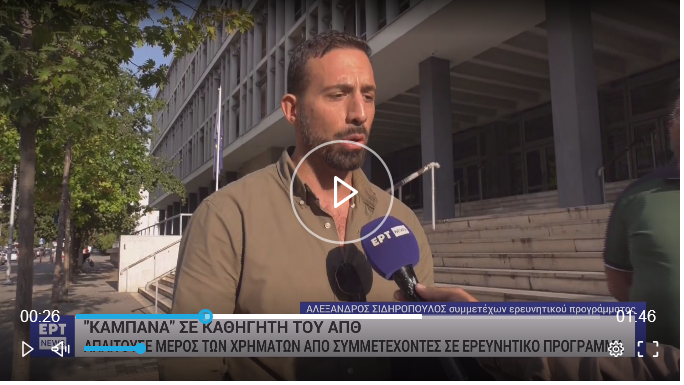
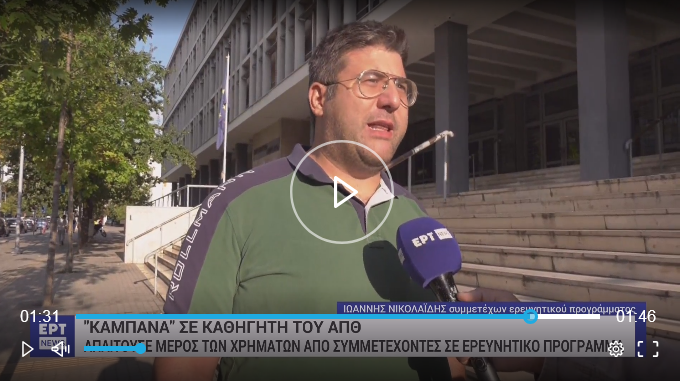
A quick internet search swiftly revealed who the senior author on their papers is: Elias Aifantis. Who replied to me with this:
“you don’t have to worry or being concerned with faked prison matters for your fellow scientists. If you are interested in a groundbreaking modification/revision of Newton’s law to extend its validity from his universal expression for the “gravitational force”– which holds planetary system intact–to my newly derived expression for the “strong force”– which holds the nucleus together–please let me know .
l will be more than happy to send you my recent Chapter in Springer and a related brief SUMMARY to include , if you wish,in your popular science matters website.“
I also cc-ed Aifantis’s universities in Greece and USA. His comment on that was:
“I have not any employer…neither in Greece nor in US.Thus it was not necessary to make my former ones worrying for one of their most recognized world wide scientist.“
The Aristotle University indeed continues celebrating Aifantis as if nothing happened, here is their September 2024 Congratulatory Message on his being a Highly Cited Researcher.
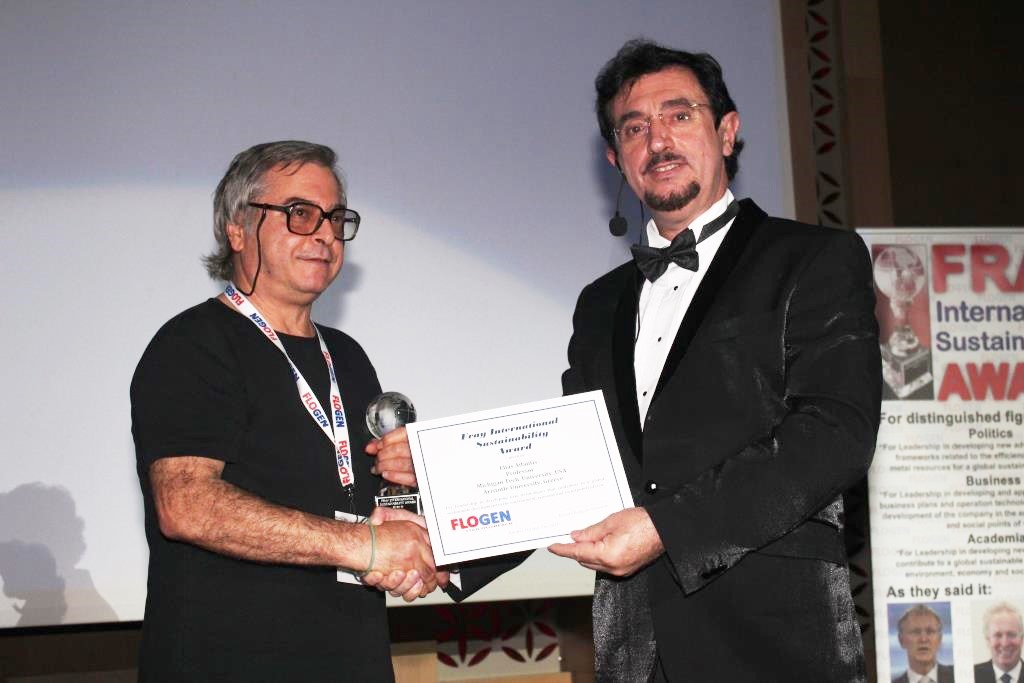
Tempting though it was to learn of a “groundbreaking modification/revision of Newton’s law“, I rather wanted to hear about the court sentencing. Aifantis then lashed out against his former students Sidiropoulos and Nikolaides:
“#1) l deny that l have anything to do with the Professor that the 2 individuals refer to.
#2) He may be a faked character they invented as their faked research l supervised at Aristotle University (AUT) before my retirement in August 2018.
#3) Their name was added in the articles l have published with other of my AUT co-workers in order to help them in their academic career : one for his PhD defence and the other for his admission to the doctoral program.Their real contribution was vanishingly small and they had published nothing before (or later) on their own or jointly with others.”
Yep, the whistleblowers are always the real fraudsters, ask Paolo Macchiarini. And if it wasn’t Aifantis sentenced for abusing Aifantis’s students, how can he be so sure that the “hypothetical character” in the Greek national news “does not exist having no place on this planet“? Aifantis also announced to sue everyone:
“As the matter concerns academic integrity and involves 2 lnstitutions in EU and US that l have been associated with, along with possible damage through uninformed or biased social media , l have arranged for an appointment (after my landing in early afternoon ) for an appointment with a distinguished lawyer on international affairs for further action.”
“after my landing”? Did he flee the country? Aifantis denied that, too.
Not grossly negligent
Anders Hagfeldt will soon become the most innocent university rector in Swedish history. Somehow he fell into bed with Iranian papermillers which sounded like a good thing to do for a professor in Switzerland. But then he was appointed rector of the the University of Uppsala in Sweden and it became embarrassing. Hagfeldt was whitewashed with the argument that his sins from Switzerland don’t matter in Sweden:

Swedish rector Anders Hagfeldt pronounced innocent of papermilling
“The board’s conclusion is therefore that the deviations regarding figure 2b and 2c in article 1 constitute serious deviations from good research practice”
Yet there still were Iranian papermill papers with Hagfeldt’s new Uppsala affiliation. Luckily, the Swedish Board of (NPOF) decided that while in all other cases all authors are responsible for the content of their papers, this rule doesn’t apply to Hagfeldt.
The papers are reported to NPOF were subject of July 2024 Shorts. First two studies, coauthored by Hagfeldt with papermillers Seyyed Alireza Hashemi , Seyyed Mojtaba Mousavi, Mohammad Arjmand, Wei-Hung Chiang and Seeram Ramakrishna:
- Seyyed Alireza Hashemi , Seyyed Mojtaba Mousavi , Hamid Reza Naderi , Sonia Bahrani , Mohammad Arjmand, Anders Hagfeldt , Wei-Hung Chiang , Seeram Ramakrishna Reinforced polypyrrole with 2D graphene flakes decorated with interconnected nickel-tungsten metal oxide complex toward superiorly stable supercapacitor Chemical Engineering Journal (2021) doi: 10.1016/j.cej.2021.129396

- Seyyed Alireza Hashemi , Seyyed Mojtaba Mousavi , Sonia Bahrani , Navid Omidifar , Mohammad Arjmand, Seeram Ramakrishna, Anders Hagfeldt, Kamran Bagheri Lankarani , Wei-Hung Chiang Decorated graphene oxide flakes with integrated complex of 8-hydroxyquinoline/NiO toward accurate detection of glucose at physiological conditions Journal of Electroanalytical Chemistry (2021) doi: 10.1016/j.jelechem.2021.115303

https://doi.org/10.1016/j.jelechem.2021.115303 (this paper)
https://doi.org/10.1016/j.aca.2021.339407 (companion paper)”
NPOF’s verdict on both cases:
“The Board for Review of Misconduct in Research (hereinafter the Board) decides that Anders Hagfeldt is not guilty of misconduct in research.”
That was because Hagfeldt explained that he Anders Hagfeldt “contributed to the articles as an expert in metal oxides” and also “mentored one of the other co-authors, a PhD student, in the analysis of electrochemical measurements, and discussed and commented on manuscripts.“. In fact, he only collaborated virtually, in digital meetings where he “discussed completed figures, tables and images” and never had “any active role in measurements or controls“.
Hagfeldt also reminded NPOF that the first paper was corrected in August 2023:
“the FTIR spectrum in Fig. 1(a) (I) does not accurately represent the graphene oxide (GO) used in this research […] because of an error in archiving the obtained data“.
For the second paper, Hagfeldt also supplied this copyright licence agreement between Elsevier and Seyyed Alireza Hashemi to reproduce the duplicated figure:
Only the scale bar was incorrect, but:
“According to what Anders Hagfeldt has been told, the journal considers that the incorrect scale marking is to be categorized as a minor error that does not affect the outcome of the article. Therefore, the journal has considered the correction unnecessary, according to Anders Hagfeldt.”
Obviously Elsevier doesn’t give a toss, unsurprisingly. Still, NPOF did decide:
“The omission of the correct scale markings constitutes falsification”
Also for the first paper did NPOF ruled on falsification:
“The Board thus concludes that the wrong image and associated material description were published by the authors in article la and that the image and text do not show what was intended. Omitting the correct image and the correct material description constitutes falsification as defined above. […] the Board has assessed that it is a serious deviation from good research practice.”
So if those were falsifications, why is Hagfeldt innocent? Well, you need to think dialectically. Highlights mine:
“The ALLEA European Code of Conduct for Research Integrity states that all parties to a collaboration must take responsibility for the integrity of the research. It also states that all authors are fully responsible for the content of the publication unless otherwise stated. The Vancouver Rules emphasize that a co-author is responsible for his/her own contribution but also for the scientific integrity of other co-authors’ contributions.
According to the author presentation in article la, Anders Hagfeldt has contributed with validation and analysis, and in article 2a he is stated to have contributed with validation and supervision. The Board notes that this is consistent with what Anders Hagfeldt has also stated in his opinions. It has not emerged that he had insight into the material or that he made the selection of images. Against this background, the Tribunal considers that Anders Hagfeldt was not grossly negligent and should therefore not be held responsible for the errors that occurred.In summary, the Board finds that Anders Hagfeldt has not been guilty of research misconduct.”
In the next case, Hagfeldt not only participated as author AFTER he was whitewashed by NPOF from charges of papermilling, he also abused his power as Editor-in-Chief of this Royal Society of Chemistry journal:
Zohreh Niazi , Anders Hagfeldt, Elaheh K. Goharshadi Recent progress on the use of graphene-based nanomaterials in perovskite solar cells Journal of Materials Chemistry A (2023) doi: 10.1039/d2ta09985c

Hagfeldt’s valued colleague Elaheh K. Goharshadi coauthored papers with the major papermiller Omid Mahian (read about him in August 2024 Shorts) Another collaboration of Goharshadi’s, Jamsaz et al 2021 , was with the French couple Sabine Szunerits and Rabah Boukherroub! Read about them here:
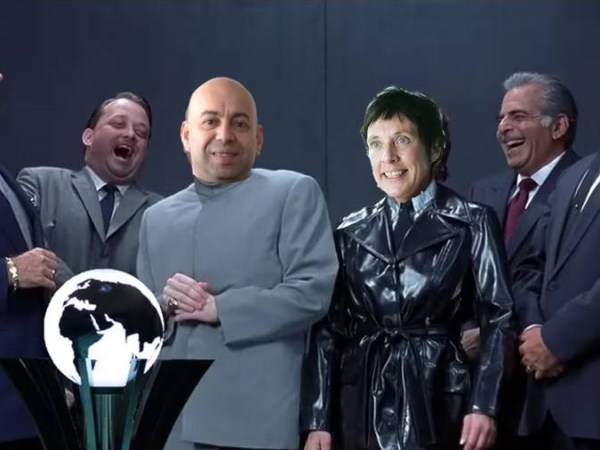
Lille Papermille
French nanotechnologists Sabine Szunerits and Rabah Boukherroub put EU Commission’s money to good use. The EU cannot afford a papermill gap to Iran and China!
There were also other inappropriate citations, like to Hagfeldt’s associate Ramakrishna. NPOF decided to reject my notification:
“The issue of citation fraud does not concern falsification, fabrication or plagiarism. It is thus an issue that is intra-scientific and not included in the legal definition of research misconduct. The complaint should therefore be rejected.”
Dear Swedish fraudsters, papermilling and citation scams have been now legalised in your country. Or maybe not, don’t try it unless you are a rector. Not even at Uppsala!
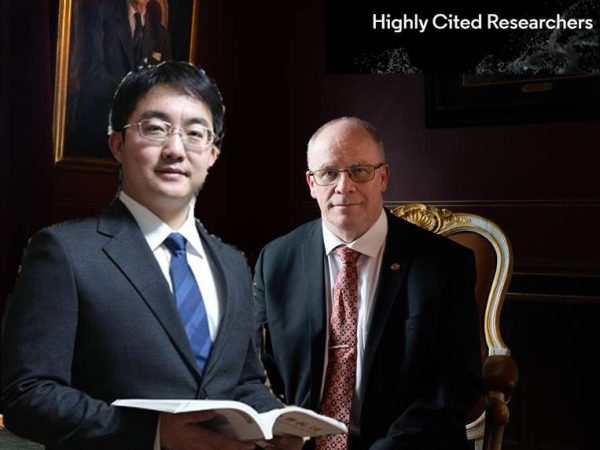
“They happened before I joined Uppsala University”
“There are therefore grounds for suspecting that there have been such serious deviations from good research practice that the matter should be referred to the National Board for Assessment of Research Misconduct for further investigation.”
The ideal figure to preside
News from Spain! Carlos Lopez-Otin, an old anti-aging creep who retracted 9 papers and murdered thousands of mice to cover up for his bad science, a phoney martyr saint who embraced Opus Dei while hiding with his best friend Guido Kroemer in France, a bully who threatened his critics with lawsuits, has a new job. St Carlos of Oviedo will now decide who gets funded in Spanish in science.
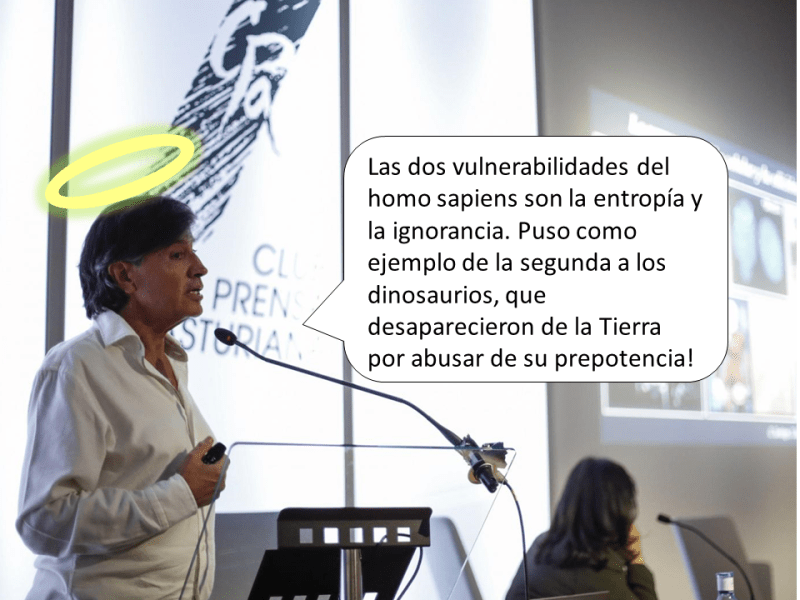
Carlos Lopez-Otin and the revoked Nature Mentoring Award
St Carlos of Oviedo almost was canonised as Spain’s first living martyr, but now Nature revoked his mentoring award. Spanish media and science elites are desperate, even the Queen is not amused. The Royal Academy of Sciences insists Lopez-Otin is a victim of journal’s failure.
Local news report from 19 September 2024 (Google-translated):
“The Lilly Foundation has announced the appointment of Professor Carlos López Otín as the new president of the Scientific Council and Dr. Ruth Vera as new counselor. López Otín will succeed Mariano Barbacid, a founding member of the Lilly Foundation who has held this position since the creation of the institution in 2001. Professor Barbacid will continue to be linked to the Foundation as a member of his Board, a position he also holds from the beginning.
As reported by the Lilly Foundation in a press release, these appointments aim to “reaffirm” their commitment to “excellence in the field of scientific research and dissemination.
“In addition to promoting science, we are convinced that its experience and vision will contribute significantly to the objectives we have in our Foundation to contribute to the development of medicine in Spain and the promotion of the values of humanism,” explained the director of the Lilly Foundation, José Antonio Sacristán.”
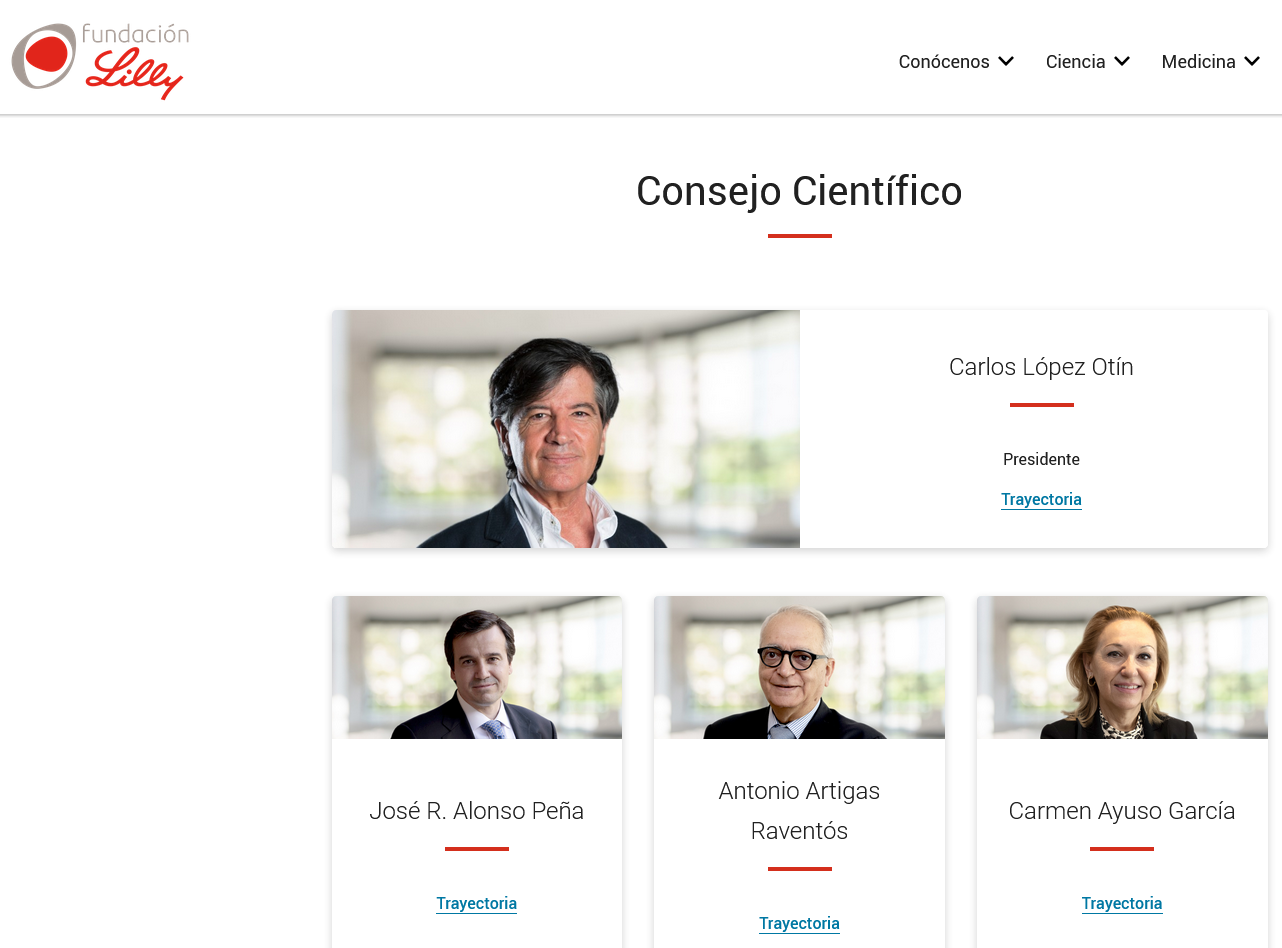
Lilly Foundation is sponsored by the pharma giant Eli Lilly. Its Spanish branch issues research grants and awards. The new president Lopez-Otin is described by Lily Foundation as “one of the most prestigious scientists in the field of biomedicine at the international level“, and:
“José Antonio Sacristán stressed that “the trajectory of Professor López Otín, marked by his commitment to the advancement of knowledge and the formation of new generations of scientists, makes him the ideal figure to preside over the Scientific Council of the Lilly Foundation.”
I’m sorry, did you expect something different from Spanish science?
Questions about consistency with reality
In Germany, a science superstar is about to fall. Mikhail Eremets, 75 year old group leader at the Max Planck Institute for Chemistry in Mainz, received another devastating attack from his arch-enemy, Jorge Hirsch. Who joined forces with Maarten van Kampen to publish a preprint which basically declares Eremets’ celebrated superconductor a fantasy based on rigged data. For background, read below and August 2024 Shorts.
Superconductive Witch Hunt
“J. Hirsch. […] engaged in unscrupulous practices, including falsifying analyses and selectively presenting data to support unfounded claims. […] Hirsch’s tactics include manipulation of public opinion, personal attacks on our team members, and threats and complaints to our management and funding agencies.” – Mikhail Eremets, the single most highly regarded high pressure experimentalist today.
This is the new preprint, published on 18 September 2024:
J. E. Hirsch, M. van Kampen Analysis of “Revaluation of the lower critical field in superconducting H_3S and LaH_10 (Nature Comm. 13, 3194, 2022)” by V. S. Minkov et al, arXiv (2024) doi: 10.48550/arXiv.2409.12211
The abstract:
“In Nat Comm. 13, 3194, 2022 [1] and an “Author Correction” to it [2], Minkov et al. presented magnetization data versus applied magnetic field for H3S and LaH10 under pressure, argued that the data provide evidence that these materials are superconducting at high temperatures, and extracted from the reported data the behavior of lower critical fields versus temperature. In several papers [3–6] analyzing Refs. [1, 2] it was shown that the published magnetization data could not have been obtained from the reported measured data through the processes described in Refs. [1, 2]. Recently, Minkov et al performed a revaluation of their experimental results [7] and argued that the results derived from their new analysis are consistent with the results reported earlier [1]. In addition, they
made public the underlying data [8] from which the data published in Ref. [1] were derived. In this paper we analyze those underlying data and conclude that (a) the data published in Ref. [1] are incompatible with the underlying measured data, and (b) the revaluation analysis presented in Ref. [7] does not support the conclusions drawn by the authors in Ref. [7] nor Ref. [1]”
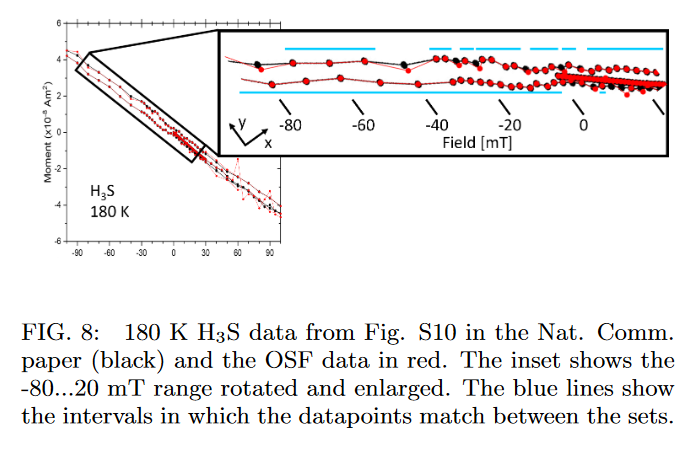
Those are the references:
- V. S. Minkov, S. L. Bud’ko, F. F. Balakirev, V. B. Prakapenka, S. Chariton, R. J. Husband, H. P. Liermann, M. I. Eremets Magnetic field screening in hydrogen-rich high-temperature superconductors Nature Communications (2022) doi: 10.1038/s41467-022-30782-x
- V. S. Minkov, S. L. Budko, F. F. Balakirev , V. B. Prakapenka, S. Chariton, R. J. Husband, H. P. Liermann and M. I. Eremets,, “Author Correction: Magnetic field screening in hydrogen-rich high-temperature superconductors”, Nature Communications (2023). doi: 10.1038/s41467-023-40837-2
- J. E. Hirsch and F. Marsiglio, “On magnetic field screening and trapping in hydrogen-rich high-temperature superconductors: unpulling the wool over readers’ eyes”, J Supercond Nov Magn (2023) doi: 10.1007/s10948-023-06622-4
- J. E. Hirsch, “Can linear transformations bend a straight line? Comment on “Author Correction: Magnetic field screening in hydrogen-rich high-temperature superconductors” , Physica C (2024). doi: 10.1016/j.physc.2023.1354400
- J. E. Hirsch, ”Hysteresis loops in measurements of the magnetic moment of hydrides under high pressure: Implications for superconductivity”, Physica C (2024). doi: 10.1016/j.physc.2024.1354449
- J. E. Hirsch, “On the Author Correction to “Magnetic field screening in hydride superconductors” ”, Nature Communications (2024) doi: 10.1038/s41467-024-52327-0
- V. S. Minkov, E. F. Talantsev, V. Ksenofontov,, S. L. Bud’ko, F. F. Balakirev, M. I. Eremets Revaluation of the lower critical field in superconducting H3S and LaH10 (NatureComm. 13, 3194, 2022). osf (2024) doi: 10.17605/OSF.IO/7WQXB
- Vasily Minkov, Fedor Balakirev, Mikhail [sic!] Dataset supporting the manuscript “Magnetic field screening in hydrogen-rich high-temperature superconductors” osf (2024) doi: 10.17605/OSF.IO/7WQXB
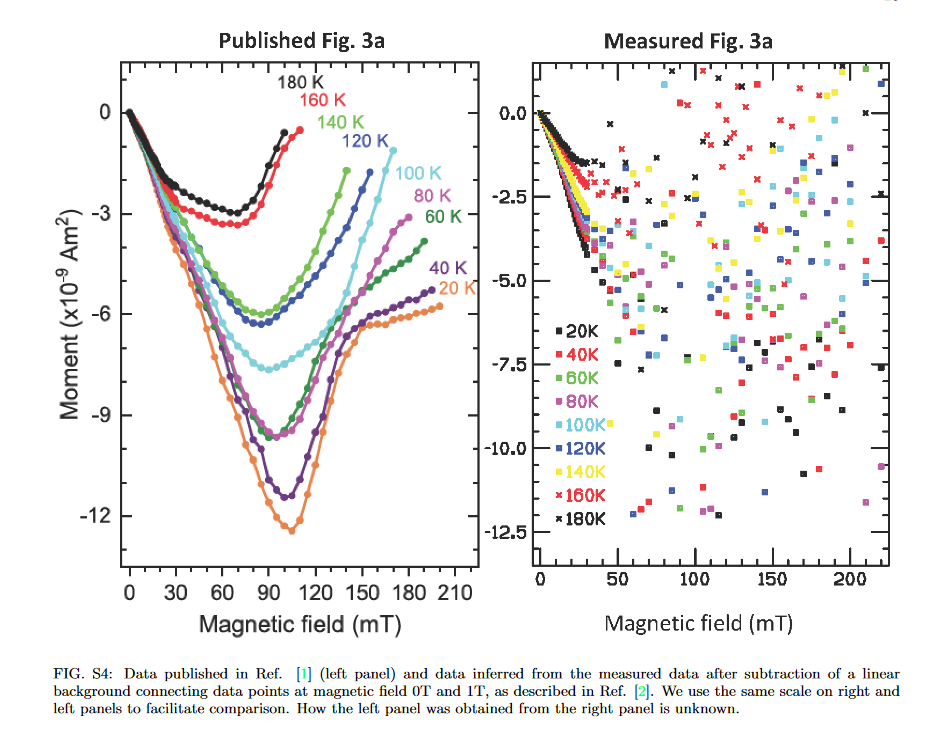
The conclusions by Hirsch and van Kampen:
“(1) The data reported in Ref. [1] are incompatible with the underlying measured data of [8] in a variety of ways.
(2) The revaluation procedure [7] uses arbitrary criteria for choosing the parameters in the fitting procedure, and the large noise of the data precludes any objective determination of where they deviate from linearity.
(3) As a consequence of (1) and (2), the revaluation analysis presented in Ref. [7] does not support the conclusions drawn by the authors in Ref. [7] nor Ref. [1].
(4) Questions about the consistency of a variety of statements in Refs. [1], [2], [7] with reality remain open”
It will probably drive Eremets and his russian colleagues mad that Hirsch’s stated affiliation is not “prison” but “Department of Physics, University of California,
San Diego“, while Maarten’s stated affiliation is… “ForBetterScience, Erlensee, Germany“.
As reminder, Eremets is 75, long past retirement age in Germany, even at universities. Max Planck Society allows him to continue running a lab presumably because they expect Eremets to win a Nobel Prize in Physics and earn himself and his institution billions of dollars with his superconductor technology. As Ranga Dias almost did, you know.

Anatomy of a Retraction 2 – Superconductive Fraud
Maarten van Kampen dispels the superconductive illusions of Ranga Dias and Ashkan Salamat. Will we also receive a cease-and-desist letter now?

Well good luck. Eremets’s Nature Comms paper is barrelling down towards retraction. But then again, Max Planck Society’s Head of Communications explained to me how to think right about Eremets’s ongoing collaboration with his close associate in russia, Evgeny Talantsev:
“Given that over thousands of Russian scientists have publicly spoken out against the Russian war of aggression, we do not believe it makes sense to fundamentally give up all personal bilateral relationships. Scientists like Otto Hahn were happy to be part of the international scientific community – even during National Socialism. They were able to reconnect with these scientific networks after the war. The MPG is therefore very critical of the burning of all bridges, especially with Russian civil society.“
I wouldn’t compare Talantsev or even Eremets for that matter, to Otto Hahn, both for scientific and political reasons. Neither of them nor any of their russian colleagues was heard speaking out publicly against anything except the brutal aggression of Jorge Hirsch.
Scholarly Publishing
Broken Electronics
Dorothy Bishop, emeritus professor of Oxford University, is not a fan of MDPI, and she now provides more arguments why this publisher is only good for papermills.
Bishop now scrutinised the MDPI journal Electronics and its guest editors, in a blog post from 24 September 2024:
“First, in common with nearly all MDPI journals, Electronics has regularly broken the rule that specifies that no more than 25% of articles should be authored by a Guest Editor. As mentioned in a previous post, this is a rule that has come and gone in the MDPI guidelines, but which is clearly stated as a requirement for inclusion in the Directory of Open Access Journals (DOAJ). 13% of Special Issues in Electronics completed in 2023-4 broke this rule. […]
Even more intriguing, for around 11% of the 517 Special issues of Electronics published in 2023-4, the Guest Editor doesn’t seem to have done any editing”

Research on Intelligent Trash Can Garbage Classification Scheme
“It’s not as if the Special-Issue Guest Editors or the imaginary ‘Peer Reviewers’ pay attention to the provenance of the images that fill the Figure-shaped gaps, or care whether the supposed alternatives in these horse-races are even algorithms at all.” – Smut Clyde

Bishop searched for PubPeer comments for editorial board members and guest editors at Electronics for the years 2023-2024, and found these characters, quote:
- “As well as being a section board member of Electronics, Danda B Rawat (Department of Electrical Engineering and Computer Science, Howard University, Washington, DC 20059, USA) is Editor-in-Chief of Journal of Cybersecurity and Privacy, and a section board member of two further MDPI journals: Future Internet and Sensors. A PubPeer search reveals him to be co-author of one paper with tortured phrases, and another where equations make no sense [with the notorious papermill owner Gunasekaran Manogaran, read about him here, -LS] […]
- Aniello Castiglione (Department of Management & Innovation Systems, University of Salerno, Italy) is Section Board Member of three journals: Electronics, Future Internet, and Journal of Cybersecurity and Privacy, and an Editorial Board member of Sustainability. PubPeer reveals he has co-authored one paper that was recently retracted because of compromised editorial processing, and that his papers are heavily cited in several other articles that appear to be used as vehicles for citation stacking.
- Natalia Kryvinska (Department of Information Systems, Faculty of Management, Comenius University in Bratislava, Slovakia) is a Section Board Member of Electronics. She has co-authored several articles with tortured phrases. [her coauthor Muhammad Rizwan is a papermilling member of the Jörg Rinklebe vortex,- LS] […]
- Heena Rathore (Department of Computer Science, Texas State Uni, San Marcos, Texas, USA) is a Guest Editor of this Special Issue. She has been lead author on a paper containing tortured phrases. [her coauthor Mohsen Guizani was also seen papermilling with Zhihan Lv, who in turn was sacked in Uppsala for papermilling, -LS]
- Aimin Yang (College of Science, North China University of Science and Technology, Tangshan 063000) is one of five Chinese Guest Editors of a Special Issue on Intelligent Analysis and Security Calculation of Multisource Data. It is unclear what he did in this role: he was not mentioned as Academic Editor for any of the 12 papers the Special Issue. A PubPeer search reveals indicators of citation stacking (i.e. citing of irrelevant references) in his articles.
- Joseph Bamidele (Department of Computer Science, University of Ilorin, Ilorin, Nigeria) is a Guest Editor of a Special Issue on Artificial Intelligence in Cybersecurity for Industry 4.0. A PubPeer search identifies him as lead author on an article with tortured phrases. [and this one by Bamidele was retracted for “non-standard phrasing, and image irregularities”, – LS] […]
- Gwanggil Jeon (Incheon National University, Korea) has acted as Academic Editor for 18 Special Issues in Electronics. He is not on the Editorial Board of the journal, but he has been Guest Editor for two special issues in Remote Sensing, and one in Sensors. PubPeer comments note recycled figures and irrelevant references in papers that he has co-authored, as well as a problematic Special Issue that he co-edited for Springer Nature, which led to several retractions. [GG Jeon is an associate of a papermiller named Awais Ahmad, who is not to be confused with another Awais Ahmad, who in turn is the mentee of Rafael Luque, who was sacked by the Univesity of Cordoba. Ahmad however has just successfully defended his PhD, his papermilling was declared “benign-by-design” – LS, corrected]
- Hamid Reza Karimi (Department of Mechanical Engineering, Politecnico di Milano, Milan, Italy) has acted as Academic Editor for 12 Special Issues in Electronics. He was previously Guest Editor for two Special Issues of Electronics, one of Sensors, one of Micromachines, and one of Machines. In 2022, he was specifically called out by the IEEE for acting “in violation of the IEEE Principles of Ethical Publishing by artificially inflating the number of citations” for several articles.
- Finally, Juan M. Corchado (University of Salamanca, Spain) has acted as Academic Editor for 29 Special Issues. He was picked up by my search as he is not currently listed as being an Editor for Electronics, but that seems to be a relatively recent change: when searching for information, I found this interview from 2023.
The papermilling den of Gliwice
“As you will see, there is a lot of papermilling happening in Gliwice, as if this place has suddenly become attractive to many “researchers” from different corners of the papermilling spectrum. ” – Alexander Magazinov

Juan Manuel Corchado is the newly elected rector of University of Salamanca. In this capacity he ordered his university repository technician to destroy evidence and delete around 200 fake papers which Corchado wrote for no other purpose but to provide citations to him, using fake sockpuppet accounts he created on ResearchGate. The rector, who now faces mass-retractions from Springer, was however fully whitewashed by his university (read El Pais and summary in September 2024 Shorts). But it was not the end of it – El Pais reported on 23 September 2024:
“A report prepared at the request of the Spanish Research Ethics Committee certifies the “deliberate” and “systematic manipulation” of the curriculum of the rector of the University of Salamanca, Juan Manuel Corchado. The 131-page document is signed by Emilio Delgado and Alberto Martín , two of Spain’s greatest experts in bibliometrics, which is the study of a person’s scientific activity. Its conclusions are forceful: Corchado and his closest collaborators organized “a publication and citation factory” with “strategies based on questionable publishing behavior and bad editorial practices, if not on openly fraudulent practices.””
The Ethics Committee demands that the University of Salamanca opens a proper investigation. Tough luck, the Rector Magnificus declared in the media that the case is closed for him. And the Governing Council of the University of Salamanca, voted 50 to 3 that Corchado is utterly innocent.
As Bishop mentions, MDPI announced on 23 September 2024 their “New Tools for Advancing Research Integrity and Peer Review“. It has a “Eureka – Reviewer Recommender“, which is an AI tool to find “potential reviewers from our internal databases with extensive publication records within the field of the manuscript”. As Bishop notes, papermillers do tend to have “quite substantial portfolios of publications“, making them the ideal candidates for Eureka. MDPI also has an Online Proofreading platform which serves to satisfy all requirement for papermills: editing tortured phrases, fake figures and nonsense equations, and of course also citation stacking, or “Adding, editing, deleting, and swapping references in real time“.

Russkiy Mir at Elsevier and MDPI
Alexander Magazinov presents you two russian professors whom Elsevier and MDPI consider respectable: a Lt Colonel of putin’s mass-murdering army, and a machine-gun totting rascist. Both buy from papermills.
The papermill customer is king at MDPI.
Retraction Watchdogging
And we succeeded!
Brian Nosek is GOD of research integrity and research reproducibility, at least in psychology and neuroscience. This psychology professor at the University of Virginia in USA is the founder of Center for Open Science (COS), its preprint server PsyArXiv, and of the Reproducibility Project, where Nosek and his team first reproduced 100 psychology studies, and then 53 papers on cancer research.
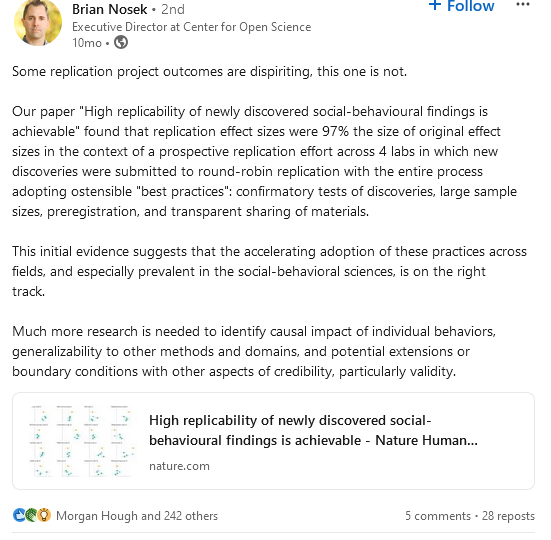
Now Nosek’s own paper celebrating his COS achievements about preregistration and reproducibility (“The Reforms Are Working“) was retracted. For biases and bad methodology, which is rather ironic.
John Protzko , Jon Krosnick , Leif Nelson , Brian A. Nosek , Jordan Axt , Matt Berent , Nicholas Buttrick , Matthew DeBell , Charles R. Ebersole , Sebastian Lundmark , Bo MacInnis , Michael O’Donnell , Hannah Perfecto , James E. Pustejovsky , Scott S. Roeder , Jan Walleczek , Jonathan W. Schooler High replicability of newly discovered social-behavioural findings is achievable Nature Human Behaviour (2023) doi: 10.1038/s41562-023-01749-9
Published less than a year ago, it was celebrated in Science in November 2023:
“Now, one of the first systematic tests of these practices in psychology suggests they do indeed boost replication rates. When researchers “preregistered” their studies—committing to a written experiment and data analysis plan in advance—other labs were able to replicate 86% of the results, they report today in Nature Human Behaviour. That’s much higher than the 30% to 70% replication rates found in other large-scale studies. […]
It’s the first replication attempt that has followed studies from their conception through to independent replication, says Brian Nosek, executive director of the Center for Open Science and one of the four lab directors. Rather than choose a sample of studies from the literature retrospectively, he and his colleagues wanted to track whether they could more easily replicate work that had tried to improve rigor right from the start: “And we succeeded!””
Well, they did not. The study was criticised already back then:
“However, the fact that the researchers chose which of their studies to put forward for replication gives some pause to Berna Devezer, a metascientist at the University of Idaho (UIdaho) who was not involved in the work. The 16 findings used in this study were chosen very differently from past replication studies—they “are not randomly selected from, or representative of, a well-defined literature,” she says.”
Devezer and Joseph Bak-Coleman from Max Planck Institute in Konstanz, Germany, also published their criticism on OSF PsyArXiv, it now also accompanies the retraction as Matter Arising. There is now a detailed blog post by Bak-Coleman just out. The retraction notice for Nosek’s paper from 24 September 2024 stated:
“The Editors are retracting this article following concerns initially raised by Bak-Coleman and Devezer1.
The concerns relate to lack of transparency and misstatement of the hypotheses and predictions the reported meta-study was designed to test; lack of preregistration for measures and analyses supporting the titular claim (against statements asserting preregistration in the published article); selection of outcome measures and analyses with knowledge of the data; and incomplete reporting of data and analyses.
Post-publication peer review and editorial examination of materials made available by the authors upheld these concerns. As a result, the Editors no longer have confidence in the reliability of the findings and conclusions reported in this article. The authors have been invited to submit a new manuscript for peer review.
All authors agree to this retraction due to incorrect statements of preregistration for the meta-study as a whole but disagree with other concerns listed in this note.”
Times Higher Education has a some extensive coverage on this retraction, where they mention:
“Another collaborator, the University of California at Berkeley business professor Leif Nelson, is part of a trio of scholars whose blog, Data Colada, has rooted out problems in the work of behavioral-science stars like Amy Cuddy, Dan Ariely, and Francesca Gino.”
But THE doesn’t mention what makes the last author particualrly interesting. Jonathan Schooler is a fan of the parapsychology quack Daryl Bem!
From a 2017 Slate article about Bem’s claims on precognition (i.e., clairvoyance) and other psychic nonsense:
““I think the jury is still out,” says Jonathan Schooler, a psychologist at University of California–Santa Barbara who was one of the original peer reviewers for Bem’s paper. Schooler, who is very open to the evidence for ESP, […] says that precognition could be real.”
There, Schooler was quoted with “I still believe in psi, but I also think that methods in the field need to be cleaned up”. And this is relevant to his now retracted reproducibility study:
“Both Schooler and Bem now propose that replications might be more likely to succeed when they’re performed by believers rather than by skeptics. […] “If it’s possible that consciousness influences reality and is sensitive to reality in ways that we don’t currently understand, then this might be part of the scientific process itself,” says Schooler. “Parapsychological factors may play out in the science of doing this research.””
A guy who firmly believes in supernatural is in charge of research reproducibility in science. Cool.
Part 1: Frontiers in Paranormal Activities
This is my currently final (two-part) instalment on the topic of Frontiers listing by Jeffrey Beall as a potential, possible or probable predatory publisher. This time I will focus on the Frontiers scientists: the authors as well as the academic editors. In brief, it appears that Frontiers’ own rules for peer review and conflict of…
Lost confidence
Retraction for the former MD Anderson bigwig Jason B. Fleming. He previously abandoned his extremely rewarding positions as Chief of Pancreas Surgery, Executive Director of Perioperative Services and co-Director of MD Anderson’s Pancreatic Cancer Moon Shot Program, to become Chair of Gastrointestinal Oncology at Moffitt Cancer Center in Fliorida. In March 2024, Fleming returned to Texas to become a Deputy Director for Clinical Affairs of the Simmons Comprehensive Cancer Center at UT Southwestern. Basically, he is out of science. Which is good, what with his PubPeer record!
Cell Death and Depravity
Is the journal Cell Death and Disease a disease itself, parasitised by Chinese paper mills? Can it be cured? Not with this team of doctors on editorial board.
This was now retracted, by a journal of the Cell Death and Depravity family which generally doesn’t mind fake science. Flagged by Cheshire already in January 2021 and July 2022:
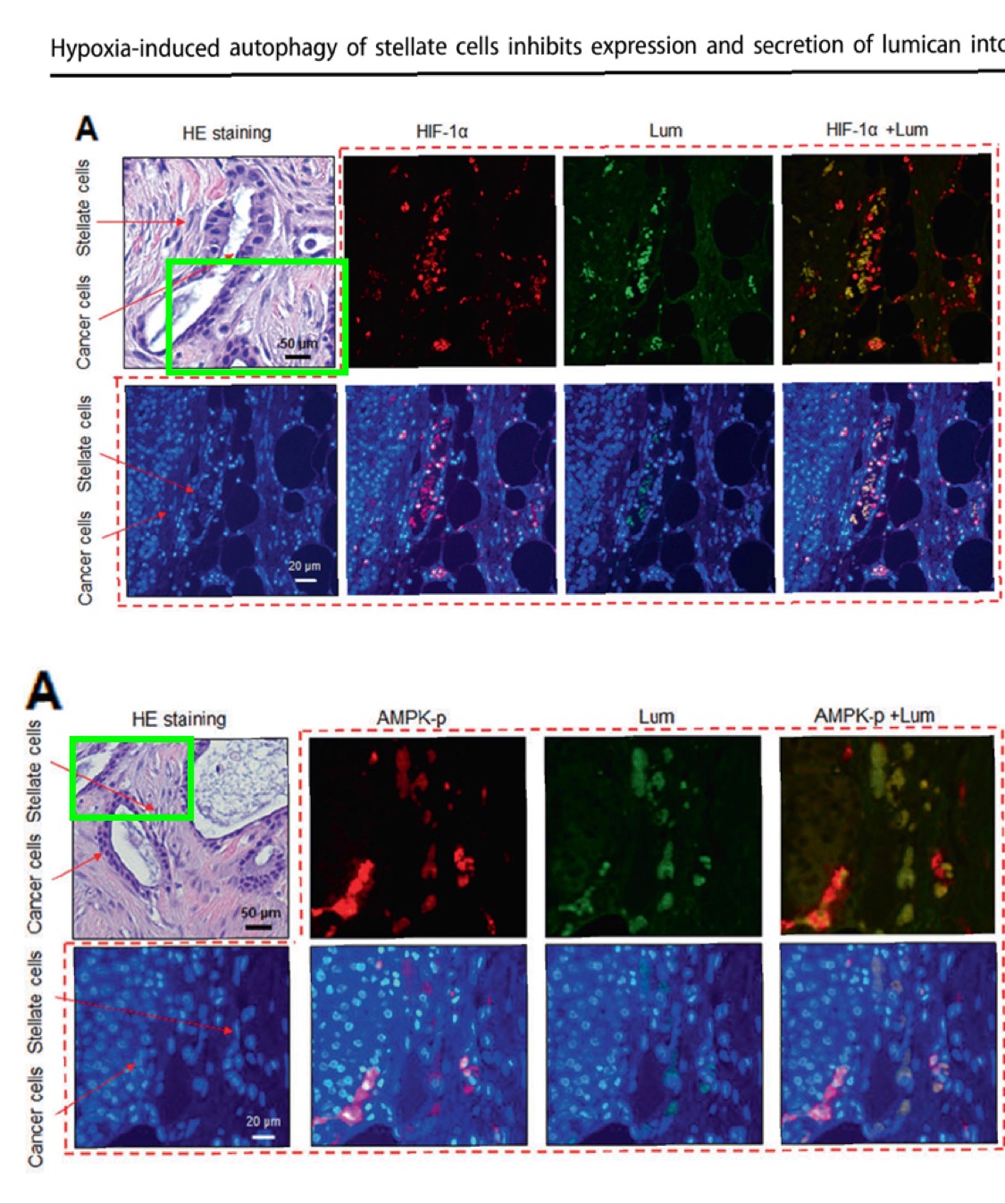
Xinqun Li , Yeonju Lee , Ya’an Kang , Bingbing Dai , Mayrim Rios Perez , Michael Pratt , Eugene J. Koay , Michael Kim , Rolf A. Brekken , Jason B. Fleming Hypoxia-induced autophagy of stellate cells inhibits expression and secretion of lumican into microenvironment of pancreatic ductal adenocarcinoma Cell Death and Differentiation (2019) doi: 10.1038/s41418-018-0207-3


The retraction was issued on 25 September 2024:
“The Editor in Chief has retracted this article. After publication, concerns were raised over the following issues:
- The HE staining images in Figs. 1A and 4A appear to partially overlap; the magnification seems to be different, but not the scale bars;
- In Figs. 2C and 3F, the HPSC b-actin bar appears to be very similar but the time stamps are different;
- The HIG-1 bands in Figs. 1E and 2E seem to partially overlap; they appear to be cropped differently.
The authors did not provide the original images on request but stated that these issues were a result of mistakes. The Editor-in-Chief has, therefore, lost confidence in the integrity of the article’s findings. The authors did not state explicitly whether they agree to this retraction.”
Maybe this also should be retracted by Cell Death and Depravity?
Bingbing Dai , Jithesh J. Augustine , Ya’an Kang , David Roife , Xinqun Li , Jenying Deng , Lin Tan , Leona A. Rusling , John N. Weinstein , Philip L. Lorenzi , Michael P. Kim, Jason B. Fleming Compound NSC84167 selectively targets NRF2-activated pancreatic cancer by inhibiting asparagine synthesis pathway Cell Death and Disease (2021) doi: 10.1038/s41419-021-03970-8

Quite likely Fleming found a new job at UT Southwestern because his mentor Rolf Brekken is professor there. Brekken is the last author on the retracted paper, and of course he and Fleming have much more on PubPeer. Like this, flagged by Clare Francis:
Jason B. Fleming , Guo-Liang Shen , Shane E. Holloway , Mishel Davis , Rolf A. Brekken Molecular Consequences of Silencing Mutant K-ras in Pancreatic Cancer Cells: Justification for K-ras–Directed Therapy Molecular Cancer Research (2005) doi: 10.1158/1541-7786.mcr-04-0206


Fleming also has joint fabrications with James Abbruzzese and Paul Chiao, both mentioned here:
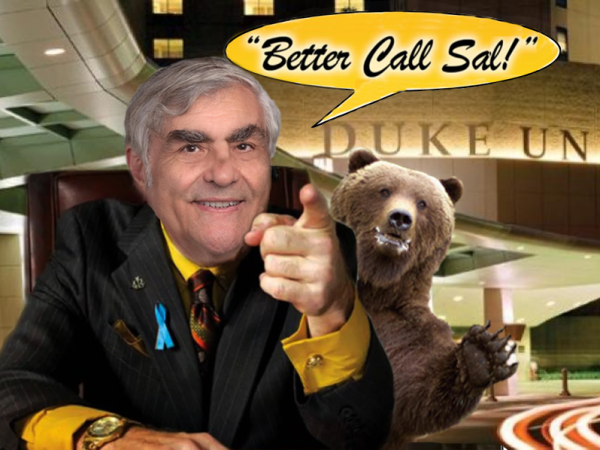
Cancer at Duke? Better call Sal!
“I have NEVER faked data. If you wish to carry on what appears to be a vendetta please supply me the name of your lawyer and I will have my lawyer contact him.” – Sal Pizzo, Duke University

Regrettably
Rony Seger, the zombie scientist of Weizmann Institute in Israel, earns one more retraction. In 2017, this cancer researcher earned 9 retractions in Journal of Biological Chemistry (JBC), his Israeli employer subsequently found Seger guilty of “of serious misconduct that included manipulation of data” and banned from mentoring graduate students. Read here:
The PubPeer Stars of Weizmann Institute
Rony Seger, Jacob Hanna, Ilana Kolodkin-Gal, Atan Gross, Sima Lev, Tsvee Lapidot, Moshe Oren, Varda Rotter and others. Let’s celebrate the Weizmann Science!
Seger’s speciality is claiming that mobile phones cause cancer. Like in this paper, flagged on PubPeer by Condylocarpon amazonicum already in 2016 and now finally retracted by Portland Press:
Joseph Friedman, Sarah Kraus, Yirmi Hauptman , Yoni Schiff , Rony Seger Mechanism of short-term ERK activation by electromagnetic fields at mobile phone frequencies Biochemical Journal (2007) doi: 10.1042/bj20061653
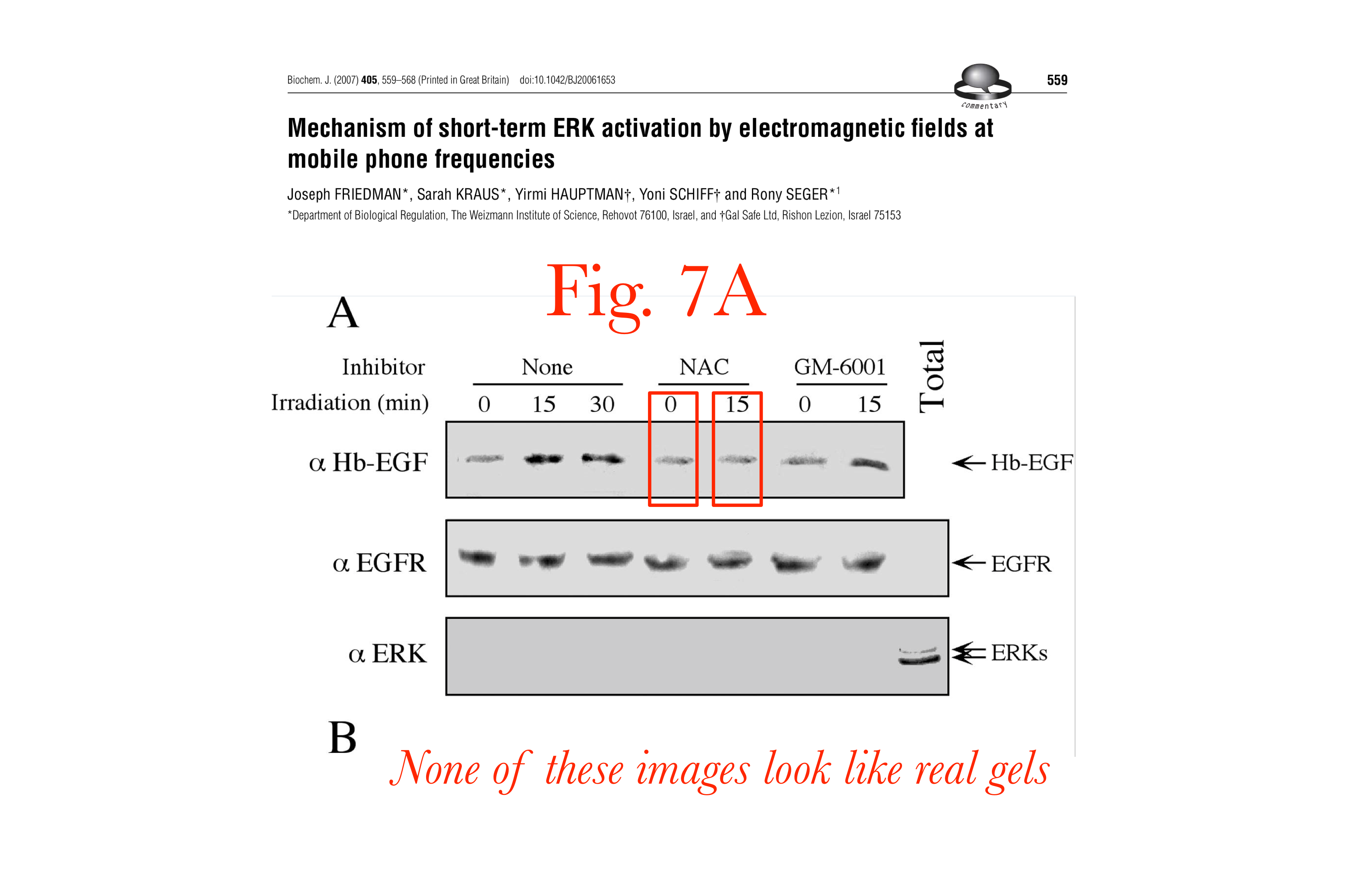

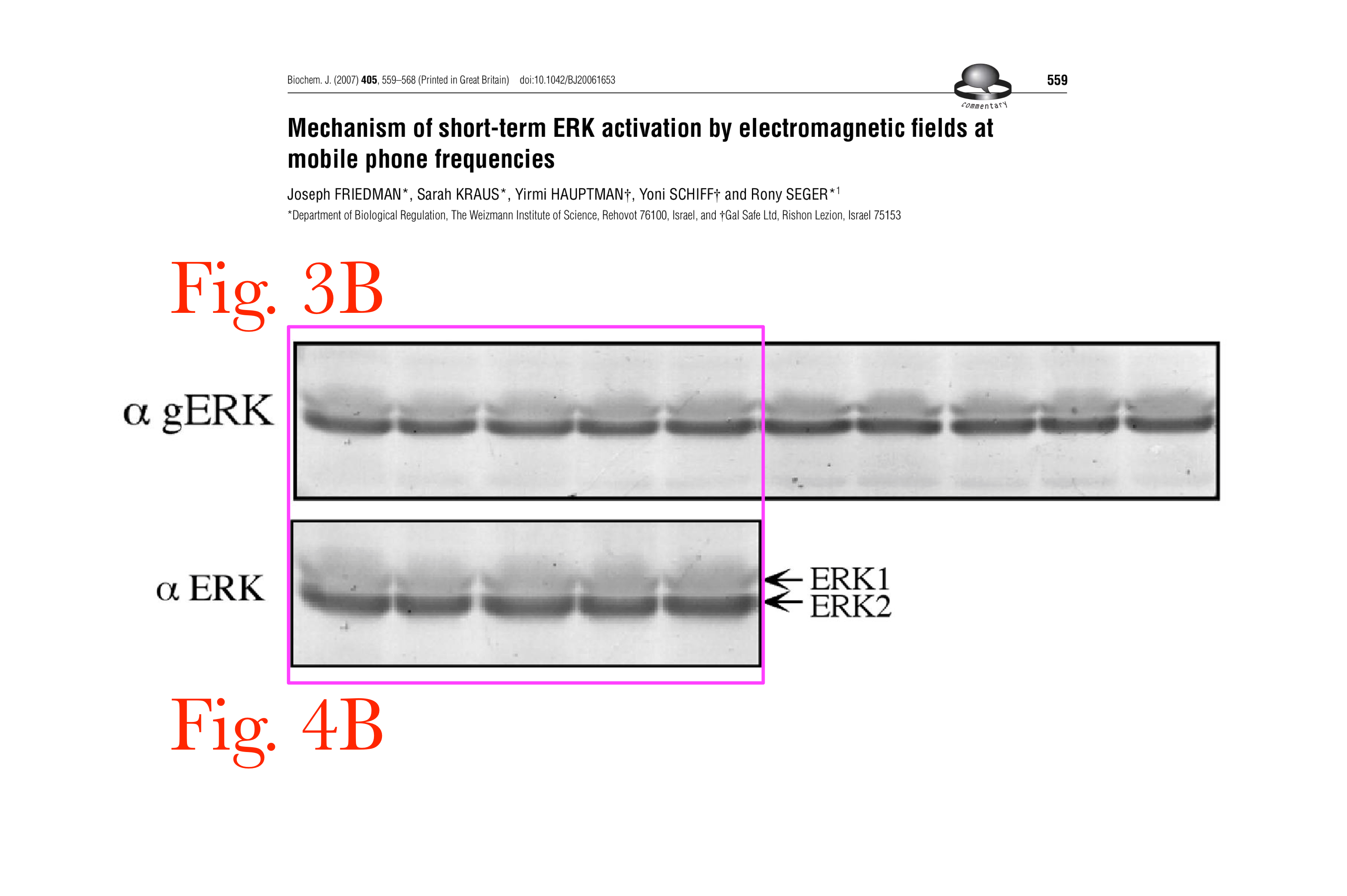


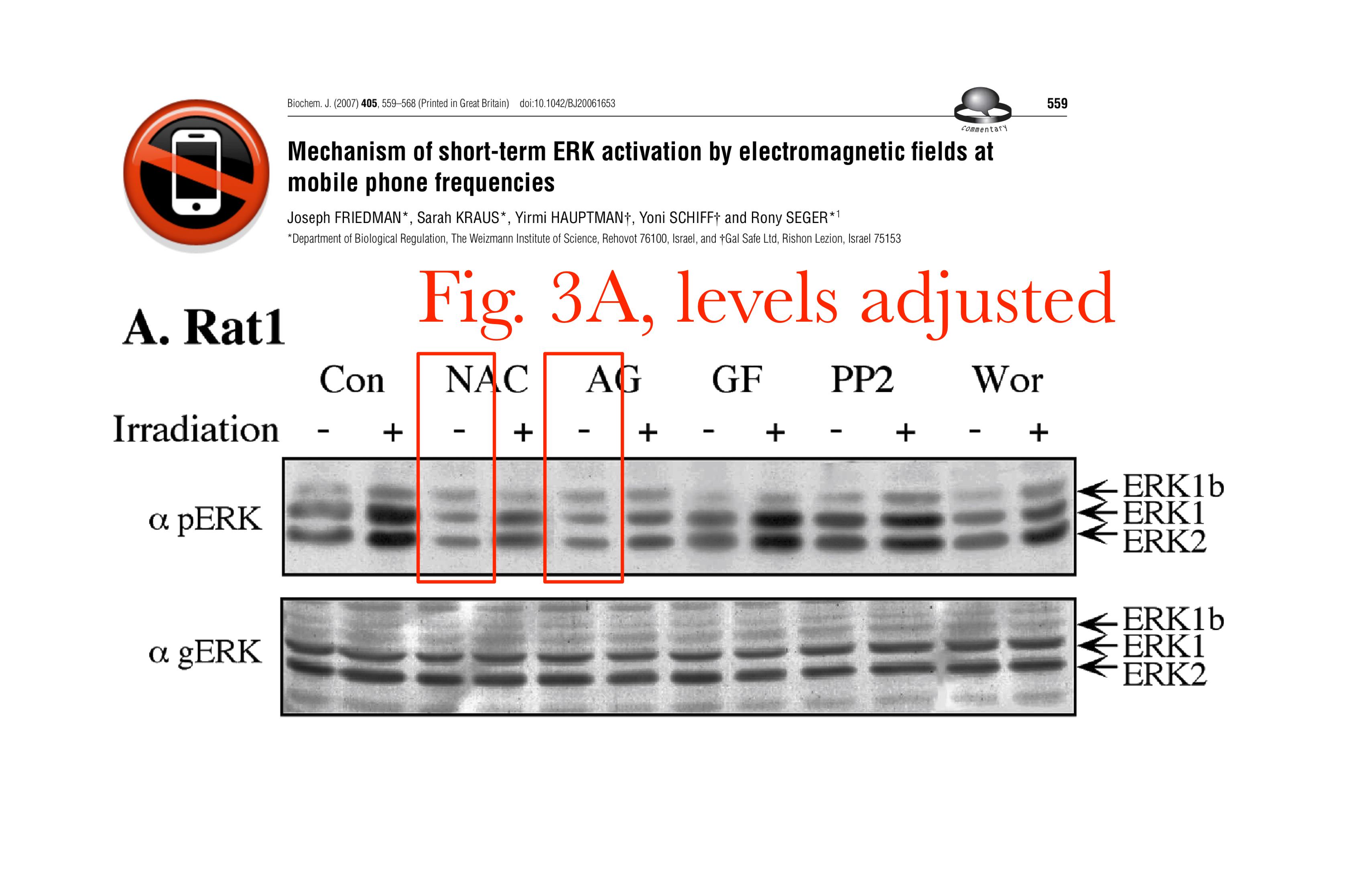

In March 2017, the PubPeer user mentioned that “the Chair and the three Vice Chairs of the Biochemical Journal Editorial Board have now been invited to the conversation.” Merely three and a half years later, in October 2020, an Expression of Concern was issued by the journal:
“The Editorial Office and the Editorial Board has been made aware of potential issues surrounding the scientific validity of this paper, hence has issued an expression of concern to notify readers whilst the Editorial Office investigates.”
The matter seemed closed for good, but now, on 20 September 2024, a retraction was published out of the blue (highlights mine):
“Regrettably, this article: Friedman et al. (2007) Biochemical Journal 405, 559–568 is being retracted from the Biochemical Journal at the request of the Biochemical Society Publications Committee and the Chair of the Journal’s Editorial Board. Following receipt of a notification from a reader alerting the Journal to suspected issues regarding data presentation in this publication, the Journal undertook a full internal review and consulted with the corresponding author. The Journal’s investigation determined that the identified concerns of band duplication and image manipulation were valid. The problems are not believed to represent intentional scientific misconduct by the authors, however, who were able to provide a new set of data figures without the noted problems. Nonetheless, given the extent of the concerns identified, which affect all eight data figures in the paper, the Society and Journal have decided to retract the article rather than publish a correction of unprecedented scope at this late stage. The authors have agreed with this action and are preparing a new corrected article that will be submitted to the Journal for peer review.”
The Editor-in-Chief and Yale University professor Mark Lemmon chose not to reply to my email to explain the regrettable delay in this retraction (of 7 years). Maybe this is the reason: look at his own a paper with a certain Silvio Gutkind, distinguished professor at University of California San Diego:
Maria Soledad Sosa , Cynthia Lopez-Haber , Chengfeng Yang , Hongbin Wang , Mark A. Lemmon, John M. Busillo , Jiansong Luo , Jeffrey L. Benovic , Andres Klein-Szanto, Hiroshi Yagi , J. Silvio Gutkind, Ramon E. Parsons , Marcelo G. Kazanietz Identification of the Rac-GEF P-Rex1 as an essential mediator of ErbB signaling in breast cancer Molecular Cell (2010) doi: 10.1016/j.molcel.2010.11.029


Gutkind has a hefty PubPeer record of around 25 papers, including with Alfredo Fusco, Pier-Paolo Di Fiore, or Cun-Yu Wang, read about this one here:

Naughty dentists, or how UCLA hunts a whistleblower
Dentistry professors at UCLA published manipulated data in top-level journals. When a colleague reported them, the university retaliated against the whistleblower.
Like this, with Salvatore Pece, a former Italian mentee of Gutkind who is now professor at IEO and University of Milan, Italy:
Salvatore Pece , J. Silvio Gutkind Signaling from E-cadherins to the MAPK pathway by the recruitment and activation of epidermal growth factor receptors upon cell-cell contact formation The Journal of biological chemistry (2000) doi: 10.1074/jbc.m006578200

There is an extra irony. Also Gutkind used to be the PI of Kaoru Sakabe, who then became a research integrity manager at the society journal JBC, where she caused those mass-retractions for Seger and many other fraudsters (until the research integrity team was dissolved and the journal outsourced to Elsevier).
Interview with JBC research integrity manager Kaoru Sakabe
This is my interview with Kaoru Sakabe, research integrity manager at the Journal of Biological Chemistry. Will the tough stance on science fraud be abandoned, now that the publisher partnered with Elsevier?
And yes, Sakabe even retracted at least one of her former boss’s own papers in JBC:
José Luis Oliva, Natasha Zarich , Natalia Martínez , Rocío Jorge , Antonio Castrillo , Marta Azañedo , Susana García-Vargas , Silvia Gutiérrez-Eisman , Angeles Juarranz , Lisardo Boscá, J. Silvio Gutkind, José M. Rojas The P34G mutation reduces the transforming activity of K-Ras and N-Ras in NIH 3T3 cells but not of H-Ras The Journal of biological chemistry (2004) doi: 10.1074/jbc.m404058200


The JBC retraction from July 2018 mentioned that “authors state that although replicated experiments performed at the time of the article support the results and conclusions presented in this published paper, they consider that the responsible course of action is to withdraw the article in the interests of maintaining the publication standards of the journal“.
Conflicts between the authors and the data
Papermill humour now. Elsevier retracted some very insolent papermill activities:
Zhouding Liu , Morteza Nazari-Heris Robust bidding strategy of interconnected multi-carrier systems in the electricity markets under the uncertainty in electricity load Sustainable Energy Technologies and Assessments (2023) doi: 10.1016/j.seta.2023.103245
This is the undated retraction notice (highlights mine):
“This article has been retracted at the request of the Editor-in-Chief.
Post-publication, the Editor-in-Chief discovered suspicious changes in authorship between the original submission and the revised version of this paper.
In summary, authors Rui Hou & Wei Gao were removed from the paper and authors Zhouding Liu & Morteza Nazari-Heris were added to the revised paper without explicit approval by the journal Editor, which is contrary to the journal policy on changes to authorship.
The authors failed to provide a satisfactory explanation to the above points. Morteza Nazari-Heris stated that they were unaware of the submission and eventual publication of this paper and that Zhouding Liu added their name without obtaining their permission. The Editor in Chief has determined that the paper should be retracted.”
The journal has an impact factor of 7.1, rather exclusive.
Elsevier’s Pandemic Profiteering
Aristidis Tsatsakis, Konstantinos Poulas, Ronald Kostoff, Michael Aschner, Demetrios Spandidos, Konstantinos Farsalinos: you will need a disinfecting shower once you read their papers.
A similar retraction, in the Elsevier journal Environmental Research (impact factor 7.7). Appeared in a Special Issue edited by the Spanish papermiller Damià Barceló::
Wanzheng Ma Assessing nonpoint source pollution risk in watersheds using a water-functioning zone approach Environmental Research (2024) doi: 10.1016/j.envres.2024.119547
Retraction notice (highlights mine):
“This article has been retracted at the request of the Special Issues Editor.
The authors have plagiarized part of a paper that had already appeared in Water Research, 240 (2023) 120092, https://doi.org/10.1016/j.watres.2023.120092.
[…]
Furthermore, unauthorised authorship changes were made to this paper at Revision 1. The original submission had one author. Upon resubmission, this author was removed and replaced by a completely different author. No explanation was given and this change was not approved by the editor. Neither author has subsequently provided an explanation for the authorship change. Such authorship changes breach the policies of the journal and as a result, the editors no longer have confidence in this paper and are retracting it. The journal apologises for not having identified the problematic authorship changes during the review process and for any resulting inconvenience.”
Just so you understand: that papermilling git Barcelo claims all credit for uncovering this fraud. As it happens, one of the journal’s Editors-in-Chief is Aijie Wang, a Chinese papermiller who edits her own papers (read May 2024 Shorts). The Danish papermiller Christian Sonne is Associate Editor, read about him here:
Again Environmental Research, flagged by Mu Yang on PubPeer in July 2024, in the same Barcelo issue, and again he seems to claim the credit:
Janani Rajendran , Prasanna Jeyaraman , Elamathi Sakthivel , Abdulrahman I. Almansour , Natarajan Arumugam , Pandian Bothi Raja Chemical free, bio-Intercalation of selenium nanoparticles for highly accelerated photo-responsive of organic contaminants debasement and their in-vitro anti-bacterial agents, anti-oxidants effect, cyto-toxic analysis Environmental Research (2024) doi: 10.1016/j.envres.2024.119479

The retraction notice (highlights mine):
“This article has been retracted at the request of the Editor.
The corresponding author has asked the journal to withdraw the article due to ‘conflicts between the authors and the data’.
Additionally, the authors have plagiarized Figure 4 of a paper that had already appeared in Journal of Materials Research38, 1909–1918, (2023). https://doi.org/10.1557/s43578-023-00965-3
[…]
Furthermore, post-acceptance, the editor discovered suspicious changes in authorship between the original submission and the revised version of this paper. The editor reached out to the authors for an explanation, but they failed to provide a satisfactory explanation to these changes. Such authorship changes breach the policies of the journal and as a result, the editors no longer have confidence in this paper and are retracting it. The journal apologises for not having identified the problematic authorship changes during the review process and for any resulting inconvenience.”
Thus, papermills submit manuscripts, communicate with the journal, and replace all authors depending on who pays and who doesn’t. Shall we really believe Elsevier has no automatic alarm system for such author replacement events? A student can code this tool before breakfast, but a crooked editor on a papermill’s payroll approving such authorship changes is not something a code can solve.
Elsevier’s research integrity
A Chinese paper gets rejected at Elsevier after reviewer spotted fraud. Same paper re-appears unchanged in another Elsevier journal, the editors refuse any action.
Elsevier however wishes you to know there are “Five ways in which Elsevier is safeguarding the research landscape“, which are mostly about “cutting-edge tools” and “diverse and amazing people“:
“As the volume of fraudulent materials is increasing at scale, boosted by systematic manipulation, such as “paper mills” that produce fraudulent content for commercial gain, and AI-generated content, we are increasing our investment in human oversight, expertise and technology to help detect, correct and remove fraudulent content, and work closely with the community to advance protections for research integrity. […]
Alongside a dedicated team of in-house experts focused on research integrity and publishing ethics, we use sophisticated technology at all stages of the submission, editorial, and peer review processes to detect plagiarism, fraudulent content, and other integrity and ethics concerns…”
Yeah right.
Science Breakthroughs
A toss-up
Science is obviously the highest science authority so who are we to roll on the floor laughing at the following Science News idiocy from 23 September 2024:
“Could three monkeys gazing at photos of Kamala Harris (D) and Donald Trump (R) predict which will win the November U.S. presidential election? Don’t be too quick to dismiss the idea. According to a preprint published this month on bioRxiv, macaques stare longer at the faces of candidates who end up losing. […]
“We do serious science,” says co-author Michael Platt, a neuroscientist at the University of Pennsylvania (UPenn). For example, the team has run what UPenn neuroscientist Yaoguang Jiang calls “monkey Tinder” experiments, in which macaques are shown faces of monkeys they’ve never seen before. The researchers found a monkey will only sneak a glance at a high-status male—presumably because staring is seen as aggression. But their gaze lingers if shown a low-status male monkey or a female. “They’re detecting something purely based on the picture,” Jiang says.”
So they showed moneys “candidate pairs from U.S. elections for senate, governor, and president while tracking the animal’s eyes.” The result:
“The animals generally fixed their gaze on one person in each pairing. In 273 senate and governor races from 1995 to 2008 the monkeys gazed more frequently, or for the longest period of time, at the losing candidate 54.4% of the time. That’s better than chance alone, the researchers note. The animals were even more accurate when asked about races in “swing” states, choosing the winner 58.1% of the time. For presidential elections from 2000 to 2020, however, the “gaze bias” was no better than flipping a coin: It indicated the loser in just 50.4% of the six elections.”
This is the preprint:
Yaoguang Jiang, Annamarie Huttunen Naz Belkaya, Michael L Platt, Monkeys Predict US Elections, bioRxiv (2024) doi: 10.1101/2024.09.17.613526
The take-home message is that “Winning candidates, on average, had 2% more “prominent” jaws (based on the jaw’s proportion to the cheek).“

So who will win the US elections, the fascist wannabe-dictator and criminal sexual harasser, or the low-status female?
““It was a toss-up” Platt says. But the animals did suggest Trump’s vice presidential pick, Senator J. D. Vance (R–OH), would lose if he ran face-to-face against Minnesota Governor Tim Walz (D), Harris’s running mate.”
Science has spoken, eh?
A selection of macaques
More monkey research, much less funny though.
Metformin has been established as a miracle anti-aging drug. Nobody knows why, it is not like diabetes patients all look younger on metformin, but nevertheless those anti-aging scientists who matter (like Steve Horvath, the Guardian of Aging Clock, read September 2024 Shorts), have decided.
Allegedly, Horvath takes metformin himself, because as he says, “death is my enemy“. And to close the academic debate once and for all, Horvath teamed up with a bunch of Chinese who don’t have to bother about monkey abuse prevention in their labs in China. This is the result, in Cell:
Yuanhan Yang , Xiaoyong Lu , Ning Liu , Shuai Ma , Hui Zhang , Zhiyi Zhang , Kuan Yang , Mengmeng Jiang , Zikai Zheng , Yicheng Qiao , Qinchao Hu , Ying Huang , Yiyuan Zhang , Muzhao Xiong , Lixiao Liu , Xiaoyu Jiang , Pradeep Reddy , Xueda Dong , Fanshu Xu , Qiaoran Wang , Qian Zhao, Jinghui Lei, Shuhui Sun, Ying Jing, Jingyi Li, Yusheng Cai, Yanling Fan, Kaowen Yan, Yaobin Jing, Amin Haghani, Mengen Xing, Xuan Zhang, Guodong Zhu, Weihong Song, Steve Horvath, Concepcion Rodriguez Esteban, Moshi Song, Si Wang, Guoguang Zhao, Wei Li, Juan Carlos Izpisua Belmonte, Jing Qu, Weiqi Zhang, Guang-Hui Liu Metformin decelerates aging clock in male monkeys Cell (2024) doi: 10.1016/j.cell.2024.08.021
“Declaration of interests J.C.I.B., S.H., C.R.E., P.R., and A.H. are employees of Altos Labs. S.H. is a founder of the non-profit Epigenetic Clock Development Foundation, which has licensed several of his patents from UC Regents and distributes the mammalian methylation array.”
As you see, there’s another US anti-aging bigwig on board: Juan Carlos Izpisua Belmonte, who left the Salk Institute to found and direct the billionaire-sponsored anti-aging biotech Altos Labs. Read about him here:
The Island of Dr Izpisua Belmonte
Human-monkey chimeras arrive to solve the problem of organ shortage. Thank Juan Carlos Izpisua Belmonte, who is ready to cure all possible diseases and even the old age. With chutzpah and Cell on his side.
It seems, Concepcion Rodriguez Esteban, Pradeep Reddy and Amin Haghani are Izmisua Belmonte’s former group members at Salk who followed the boss to Altos Labs. Also several Nobel Prize laureates are employed or payrolled by Altos Labs, plus other bigwigs (and questionable characters like Pura Muñoz-Cánoves), and even the President of European Research Council (ERC), Maria Leptin.
Now, the news coverage from 20 September 2024 about this Cell breakthrough:
“But metformin’s anti-aging effects were yet to be tested in primates, so biologist Yuanhan Yang and colleagues from the Chinese Academy of Sciences spent 40 months studying the effects of metformin on crab-eating macaques (Macaca fascicularis), one of our closest relatives.
The monkeys in this experiment were all males aged 13-16 years old, which is the equivalent of ages 40-50 in human development.
A selection of the macaques were given a daily dose of metformin for a little over three years continuously, roughly equating a standard treatment for humans who are managing their type 2 diabetes.”
The monkeys were all killed (probably even a relief, better not to think of the conditions they were kept in), and their brains and other organs measured by Horvath’s Clock:
“The drug reduced the fluctuations in gene transcription associated with aging in multiple different tissues, affecting pathways associated with aging like cell death and fibrosis and reactivating aging-repressed pathways involved in development, like DNA repair and lipid metabolism.
It decreased the old monkeys’ biological age by several measures, slowed liver aging and enhanced production of chemicals that protect the liver. But most importantly, the study found that metformin does indeed delay brain aging, and provides neuroprotection in elderly monkeys, “rescuing” their frontal lobe by an average of nearly six years.”

Henry Markram crushes COVID-19 with metformin and Atkins diet
Henry Markram deployed his Blue Brain supercomputer to crack COVID-19, thanks to Open Access and Frontiers. He now announces to use the technology to “address so many other diseases, accelerate science, and help save the planet from climate change”
If you ask why male monkeys only – why would any self-respecting billionaire mogul or kleptocratic dictator wish to extend his wife’s life?
Chinese science is superior because anything goes in a totalitarian dictatorship, you see:
“Members of the Chinese research team have already launched a 120-person phase II clinical trial testing similar effects in humans, in collaboration with a pharmaceutical company that manufactures metformin.”
I wouldn’t be surprised if the trial’s participants’ brains will be removed for studies also.
As a reminder, metformin does f***-all to rejuvenate diabetics. But Nir Barzilai, another metformin pusher, explains:
“Metformin affects all the hallmarks of aging. […] It’s not glucose-dependent at all. The papers show that metformin is better than other drugs for diabetes to decrease mortality. In those studies, the people on metformin had worse glucose control, for example…And let me say another thing. Rapamycin, which is an important drug in longevity, increases glucose levels, and still is helpful for healthspan. So it’s not about glucose.”
Free tip: if you take metformin and rapamycin BOTH, you will become immortal. There’s a catch: you won’t be even able to kill yourself after millennia as the only living being on a deserted poisonous planet, because thanks to metformin and rapamycin your body will keep regenerating ETERNALLY.
Sweet Mary Jane
Metformin as anti-aging drug is really boring and silly. Luckily, there are scientists with a sense of humour.
A press release from 17 September 2024 by the University Hospital Bonn in Germany:
“A low-dose, long-term administration of cannabis has been shown to not only reverse aging processes in the brain but also exhibit anti-aging effects. Researchers from University Hospital Bonn (UKB) and the University of Bonn, in collaboration with a team from Hebrew University in Israel, demonstrated this effect in mice.
The key to this discovery lies in the protein switch mTOR, which influences cognitive performance and metabolic processes throughout the body.”
Chill out, I told you it will be funny.

mTOR: conclusions not affected?
David Sabatini, remember that story? Well, it seems the conclusions were not affected. I take an ill-informed look at the mTOR signalling research field, to understand how photoshopped data gets to be independently verified by other labs.
Here is the paper, done in collaboration with Israeli ScientistsTM:
Andras Bilkei-Gorzo, Britta Schurmann, Marion Schneider, Michael Kraemer, Prakash Nidadavolu, Eva C. Beins, Christa E. Müller, Mona Dvir-Ginzberg and Andreas Zimmer, “Bidirectional Effect of Long-Term Δ9-Tetrahydrocannabinol Treatment on mTOR Activity and Metabolome” ACS Pharmacology & Translational Science (2024) DOI: 10.1021/acsptsci.4c00002
It was not their first:
“In a previous study, the Bonn researchers, together with a team from the Hebrew University of Jerusalem, were able to show that long-term, low-dose administration of tetrahydrocannabinol (THC), the active ingredient in cannabis, has an anti-aging effect on the brain by restoring cognitive abilities and synapse density in old mice. […]
“We concluded that long-term THC treatment initially has a cognition-enhancing effect by increasing energy and synaptic protein production in the brain, followed by an anti-aging effect by decreasing mTOR activity and metabolic processes in the periphery,” says Bilkei-Gorzo. “Our study suggests that a dual effect on mTOR activity and the metabolome could be the basis for an effective anti-aging and cognition-enhancing drug.” “
You know what to do to stay forever young.
Cancer-Blocking Benefits of Milk and Meat
In other anti-aging related news, Japanese researchers found out that eating meat prevents cancer!
A press release from RIKEN from 21 September 2024, titled “Scientists Uncover New Cancer-Blocking Benefits of Milk and Meat Proteins“:
“Researchers at the RIKEN Center for Integrative Medical Sciences (IMS) in Japan, led by Hiroshi Ohno, have discovered that food antigens such as milk proteins play a role in preventing tumor growth in the small intestine. Their experiments demonstrated how these proteins activate the intestinal immune system, enabling it to halt the development of new tumors. The findings were recently published in the journal Frontiers in Immunology.”
This is the Frontiers paper:
Takaharu Sasaki, Yuna Ota, Yui Takikawa, Tommy Terrooatea, Takashi Kanaya, Masumi Takahashi, Naoko Taguchi-Atarashi, Naoko Tachibana, Haruka Yabukami, Charles D. Surh, Aki Minoda, Kwang Soon Kim and Hiroshi Ohno, “Food antigens suppress small intestinal tumorigenesis” Frontiers in Immunology. (2024) DOI: 10.3389/fimmu.2024.1373766
Transgenic mice prone to intestinal tumours were fed with albumin, which is present only in meat and dairy products, and the result was:
“When the mice were given this diet, tumors in the small intestine were suppressed just as they has been with normal food.”
Our findings are revolutionary
If you wish more Israeli ScientistsTM breakthroughs, here is a press release from the Bar-Ilan University from 23 September 2024:
“Disruptions in the gut microbiome, especially due to early-life antibiotic use, lead to increased aggression in mice. […]
The team also transplanted a microbiome derived from infants who had received antibiotics shortly after birth into mice, observing notable increases in aggression compared to those receiving a microbiome from infants not exposed to antibiotics.”
Yes! Mice become fighting machines if you shove some poo from sick babies up their bums. We are told that the mastermind of this travesty is a Omry Koren, professor and vice dean at Azrieli Faculty of Medicine at Bar-Ilan University. And he preveously also created fighting flies:
“The study builds on previous findings that demonstrated a correlation between antibiotic exposure and heightened aggression in fruit flies. By utilizing a mouse model, the researchers have taken this investigation a step further, examining behavioral, biochemical, and neurological changes in response to microbiome alterations. […]
“Our findings are revolutionary,” said Prof. Koren. “They suggest that a disrupted microbiome during critical developmental periods can lead to persistent aggressive behaviors later in life.””
The fighting fly paper from Koren’s lab was Grinberg et al iScience 2022 (“Male flies treated with antibiotics exhibited significantly more aggressive behaviors“). This is his new fighting mice paper:
Atara Uzan-Yulzari , Sondra Turjeman , Lelyan Moadi , Dmitriy Getselter , Efrat Sharon , Samuli Rautava , Erika Isolauri , Soliman Khatib , Evan Elliott , Omry Koren A gut reaction? The role of the microbiome in aggression Brain Behavior and Immunity (2024) doi: 10.1016/j.bbi.2024.08.011
The revolutionary breakthrough was funded by the European Research Council (ERC) Horizon 2020 grant and a Consolidator Grant to Koren, who probably is now trying to sell his treatment to Israeli Defence Force to create super-soldiers.
Raccoon dogs, civets, and bamboo rats
Scientists and politicians stopped trying to figure out where COVID-19 originally came from, simply because we can’t afford to anger China even more and risk a World War III.
So certain of China-friendly virologists (specifically Angela Rasmussen, Kristian Andersen, Michael Worobey and Marion Koopmans) arrived on the stage once again to sternly warn you that COVD-19 came from “raccoon dogs, civets, and bamboo rats” and if you ever mention lab leak again they will bite your f***ing head off, as they regularly did throughout the pandemic.
The Lab Leak Theory
A lab leak theory of the COVID-19 origins has enough circumstantial evidence and historical basis to support the urgent need for an independent and unbiased investigation. But until recently, scientists dismissed lab leak as a conspiracy theory. In public at least.
So here is their recent paper in Cell, published on 19 September 2024:
Alexander Crits-Christoph , Joshua I. Levy , Jonathan E. Pekar , Stephen A. Goldstein , Reema Singh , Zach Hensel , Karthik Gangavarapu , Matthew B. Rogers , Niema Moshiri , Robert F. Garry , Edward C. Holmes , Marion P.G. Koopmans , Philippe Lemey , Thomas P. Peacock , Saskia Popescu , Andrew Rambaut , David L. Robertson , Marc A. Suchard , Joel O. Wertheim , Angela L. Rasmussen , Kristian G. Andersen, Michael Worobey, Florence Débarre Genetic tracing of market wildlife and viruses at the epicenter of the COVID-19 pandemic Cell (2024) doi: 10.1016/j.cell.2024.08.010
Alina Chan noticed about this new Proximal origin study, comparing it to an earleir one by the same team (Pekar et al Science 2022):
“The latest analysis by Proximal Origin authors and colleagues directly refutes their own 2022 claims in Science. Their new Cell paper argues that the pandemic most likely started with Lineage A (but the early market cases were all Lineage B) & likely only in early Dec 2019.”
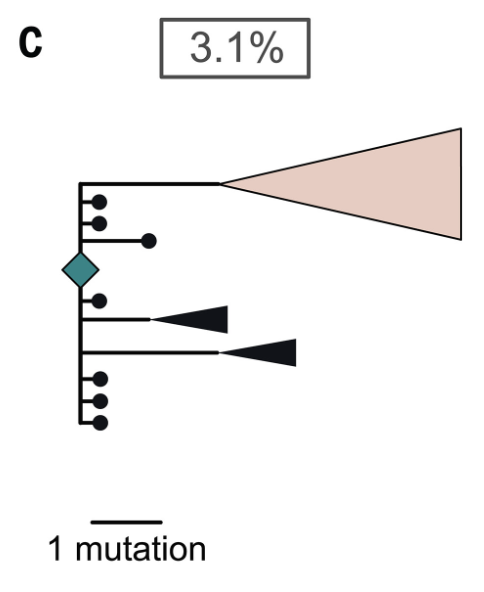
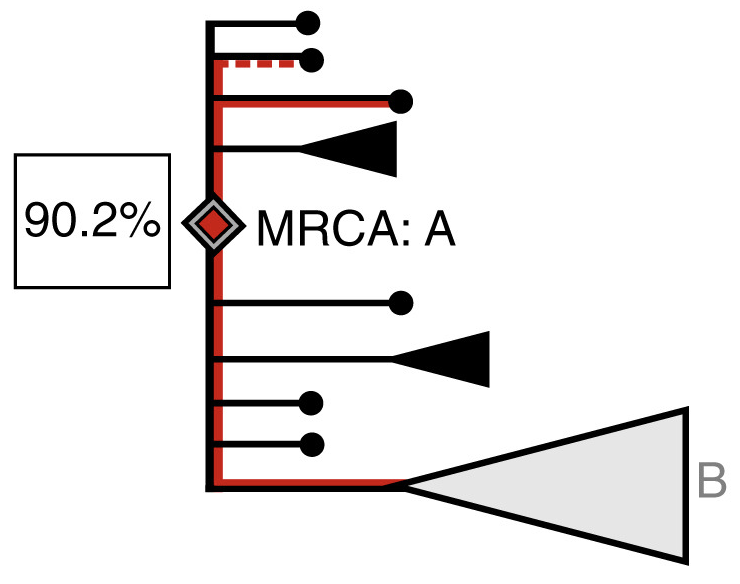
The preprint of the Cell paper already featured in March 2023 Shorts, and another preprint by the same group in March 2022 Shorts (likely the precursor of Pekar et al 2022 in Science). Crits-Cristoph et al was submitted to Cell in September 2023, meaning it was most likely rejected by Nature and probably also by Science. Even Cell editors needed a year to fight back unhappy reviewers.
Nature News covered the new publication rather sceptically:
“The researchers argue that their reanalysis adds more weight to the market being the site of the first spillover events, in which animals with the virus infected people, sparking the pandemic. […]
However, the team’s conclusion differs from the first peer-reviewed analysis of the data, published in Nature2 in April last year, in which a separate team also identified several animals and the virus but concluded the role of the market in the pandemic’s origin was unclear. […]
The authors of the Cell study also argue that the viral diversity present in the market suggests it was the site of the pandemic’s emergence. In particular, they say the presence of two SARS-CoV-2 lineages — known as A and B — circulating in the market suggests that the virus jumped twice from animals to people. The researchers conclude that, although it is possible that infected humans brought the virus to the market on two separate occasions, that is a much less likely scenario than the virus jumping twice from animals…”

Viral by Alina Chan & Matt Ridley – Book review
Alina Chan’s book with Matt Ridley on the Origins of COVID-19 is finally out. It is a very informative read!
Basically, the last argument of Rasmussen, Andersen et al is that of bullying and authority.
Donate!
If you are interested to support my work, you can leave here a small tip of $5. Or several of small tips, just increase the amount as you like (2x=€10; 5x=€25). Your generous patronage of my journalism will be most appreciated!
€5.00

 For Better Science
There are two Awais Ahmads, actually. Like Arash Karimipours, both are fraudsters.
One (Luque’s mentee, pseudo-chemist) has affiliations in Spain and Pakistan.
The other (GG Jeon’s associate, pseudo-computer-scientist, AI, IoT and all shit) has affiliations in Korea and Italy.
LikeLike
And, since we’ve ended up mentioning Awais Ahmad the Chemist, let’s celebrate his (and Luque’s) fresh retraction from Fuel.
https://doi.org/10.1016/j.fuel.2022.126930
“This article has been retracted at the request of the Editor-in-Chief.
In investigating concerns regarding suspicious changes in authorship between the original submission and the revised version of this paper the Editor reached out to the authors for an explanation. In summary, one author was removed from the paper during revision. The author’s names Fakhar E Alam and Shafaqat Ali were then added to the revised paper without explanation and without exceptional approval by the journal Editor, which is contrary to the journal policy on changes to authorship.
The authors failed to provide a satisfactory explanation to the above change.
Post-publication, the Editor also discovered suspicious email addresses used by some authors during the submission process that were associated with multiple researcher accounts. The Editor has determined that the authorship of the paper cannot be relied upon, and the article needs to be retracted.”
LikeLike
“The issue of citation fraud does not concern falsification, fabrication or plagiarism. It is thus an issue that is intra-scientific and not included in the legal definition of research misconduct. The complaint should therefore be rejected.“
What? What? What? What? So I can commit citation fraud. With citation fraud, I can boost my academic profile and the number of articles and get an advantage in academic grants. Is that so?
I guess at the end of a so-called investigation in which a Scandinavian was supposed to be rescued by his Scandinavian colleagues, instead of facing the consequences of Iranian papermilling activities in which he was involved out of sympathy for the Iranians, we found out that citation fraud is not actually fraud. Great work. The Scandinavians, as usual. Now I understand why Sadrizadeh is so relaxed.
LikeLike
Would it be possible to mention Ahn D Le briefly in dispatches?
Surely that should be alumna of the year?
Dr. Anh Le Earns 2023 Alumnus of the Year Award | UCLA Dentistry
Anh D. Le, DDS, PhD – Penn Dental Medicine (upenn.edu)
Her contribution to dental research into gingival stem cells and other such dental trivia, a nice little cranny.
PubPeer – Resveratrol inhibits hypoxia-induced accumulation of hypoxia…
PubPeer – Increased vascular endothelial growth factor may account for…
PubPeer – Tumor-Like Stem Cells Derived from Human Keloid Are Governed…
PubPeer – Mesenchymal Stem Cells Derived from Human Gingiva Are Capabl…
PubPeer – Exosomes from TNF-α-treated human gingiva-derived MSCs enhan…
PubPeer – Mechanisms of hypoxic regulation of plasminogen activator in…
PubPeer – Nicotine induces hypoxia-inducible factor-1alpha expression…
PubPeer – Bisphosphonates suppress insulin-like growth factor 1-induce…
LikeLike
Metformin!
Some claim ‘metformin shortens life span and limits cell survival when provided in late life’.
https://www.biorxiv.org/content/10.1101/863357v1
Highlights
Stabilization of cellular ATP levels alleviates late life metformin toxicity in vitro and in vivo.
Hm, so its not only a caloric restriction mimetic but also a senolytic because it kills old cells by ‘ATP exhaustion’!
Also wrt your Free Tip: ‘…metformin and rapamycin BOTH…’:
‘We found that interventions stabilizing cellular ATP levels, such as ATP repletion and TOR inhibitor rapamycin, alleviate late life metformin toxicity in vitro and in vivo. ‘
LikeLike
psst. Let them take their metformin and rapamycine.
Speaking of rapamycine.
Compare these posts of Misha Blagosklonny, who boasted taking rapamycine for many years.
https://www.mikhailblagosklonny.com/blog/cancer-prevention-with-rapamycin/
https://www.mikhailblagosklonny.com/blog/rapamycin-time-is-now-unless-its-too-late/
and:
https://www.oncoscience.us/news/pr/dr-blagosklonnys_battle-with-cancer-part-1/
https://x.com/Blagosklonny/status/1817712567357215100
Will Misha ever consider that his rapamycine anti-aging self-therapy may have EXACERBATED his lung cancer?
LikeLike
Oh well, there’s always a trade-off. Rapamycin’s mTOR inhibition vs. Rapamycin’s immune system suppression…
LikeLike
In a way, rapamycine will make Blagoskolonny immortal, all he needs to do is to culture his lung cancer into a cell line.
LikeLike
So when do you expect the first ‘partial immortality’ anti-aging papers?
LikeLike
Another correction for Hetz and Glimcher
https://genesdev.cshlp.org/content/38/15-16/785.long
LikeLike
Btw… Science Breakthrough
miR-29 is an important driver of aging-related phenotypes
https://www.nature.com/articles/s42003-024-06735-z
I always admire how busy people like N.S. and C.L.O. find the time to assist their peers.
‘N.S. assisted in conducting experiments that characterized the miR-29TG mice. X.M.C., D.R.V., and C.L.O. generated the miR-29-deficient mice and conducted the experiments involving the LmnaG609G and Zmpste24-/- miR-29-deficient mice.’
LikeLike
Oh dear I think St Carlos of Oviedo and Trump’s darling Sharpless Ned discovered Asian ncRNA papermills….
LikeLike
hi Leonid, a recently published advice of LOWI at https://lowi.nl/advies-2024-11/ [in Dutch] reveals that it is no problem at all for LOWI and for all at LOWI that co-author Pieter Borger has used a fake affiliation (“gefingeerde affiliatie”, last sentence of item 22) in Erasmus MC publications.
This advice reveals as well that it is no problem for LOWI and for all at LOWI to publish an Erasmus MC manuscript in the IJVTPR ijvtpr.com (item 31, 31.1 & 31.2). John W. Oller is EiC of this ‘journal’, James Lyons-Weiler and various other covid cranks are associate editors of this ‘journal’.
LikeLike
In Korea, some professors seemed to falsely register ghost researchers and embezzled national research funds. Sounds like a fantastic business model in academia.
https://news.mt.co.kr/mtview.php?no=2024061117513897403
https://www.imaeil.com/page/view/2024031411191235675
LikeLike
Well, that was a fairly big surprise! I just received a phone-call from one of my old professors at university, telling me that he just saw my name on an English-language blog that covers academic scandals.
Yes, I was one of the two people interviewed in the Aifantis case. Yes, I can confirm it was him. No, he was not alone; there was obviously also the huge assistance of his loyal lapdog Avraam Konstantinidis, who has built a career out of running interference/errands/rackets for Aifantis.
Judging by what he responded to your e-mails… he hates having to keep his mouth shut, doesn’t he?
LikeLike
Thanks for coming here. I wrote you an email!
LikeLike