

It is the Nobel Prize week, and yet you, dear reader, came to this website where Nobelists are constantly being pooh-poohed upon. So you shall not be disappointed, for our hero here is the winner of the 2019 Nobel Prize for Physiology or Medicine, Gregg Semenza, professor at the Johns Hopkins University in USA.
Semenza shared his 2019 Nobel Prize with two other researchers, but only his papers keep popping up on PubPeer bearing telltale signs of data fakery. There are some recurrent author names suggesting naughty mentees or collaborators, but still, in many cases Semenza is the last and corresponding author, so the final responsibility is his. After all, also Nobel Prize recognition comes from that same last authorship.
First, some scientific background. The Nobel Prize Committee explains the 2019 award scientific rationale:
“Animals need oxygen for the conversion of food into useful energy. The importance of oxygen has been understood for centuries, but how cells adapt to changes in levels of oxygen has long been unknown. William Kaelin, Peter Ratcliffe, and Gregg Semenza discovered how cells can sense and adapt to changing oxygen availability. During the 1990s they identified a molecular machinery that regulates the activity of genes in response to varying levels of oxygen. The discoveries may lead to new treatments of anemia, cancer and many other diseases.”
Like everything else in cancer research, the hypoxia field is full of fraud, just search “HIF” (hypoxia-inducible factor which Semenza discovered) alone on PubPeer. One should hope the Nobel Prize (and Lasker, and other award-winning) labs might provide a pleasant exception, but alas…
In an interview with the Journal of Clinical Investigation (JCI) on the occasion of his Nobel Prize, Semenza was quoted:
“The one thing I pretended when I was younger was that I was an FBI agent. Investigating crimes, being a detective, it’s like being a scientist, right?“
Well, now science detective Clare Francis had a look into Semenza’s papers. And there was a lot, over 20 flagged papers on PubPeer before Clare Francis gave up and moved on to another case. The findings in Semenza’s research are rivalling those of another winner of the Nobel Prize in Physiology or Medicine, Louis Ignarro, so this is rather serious.
Have a look at this 8-year old paper on HIF-1 from the Semenza lab:
H Zhang, C C L Wong, H Wei, D M Gilkes, P Korangath, P Chaturvedi, L Schito, J Chen, B Krishnamachary, P T Winnard, V Raman, L Zhen, W A Mitzner, S Sukumar, G L Semenza HIF-1-dependent expression of angiopoietin-like 4 and L1CAM mediates vascular metastasis of hypoxic breast cancer cells to the lungs Oncogene (2012) doi: 10.1038/onc.2011.365
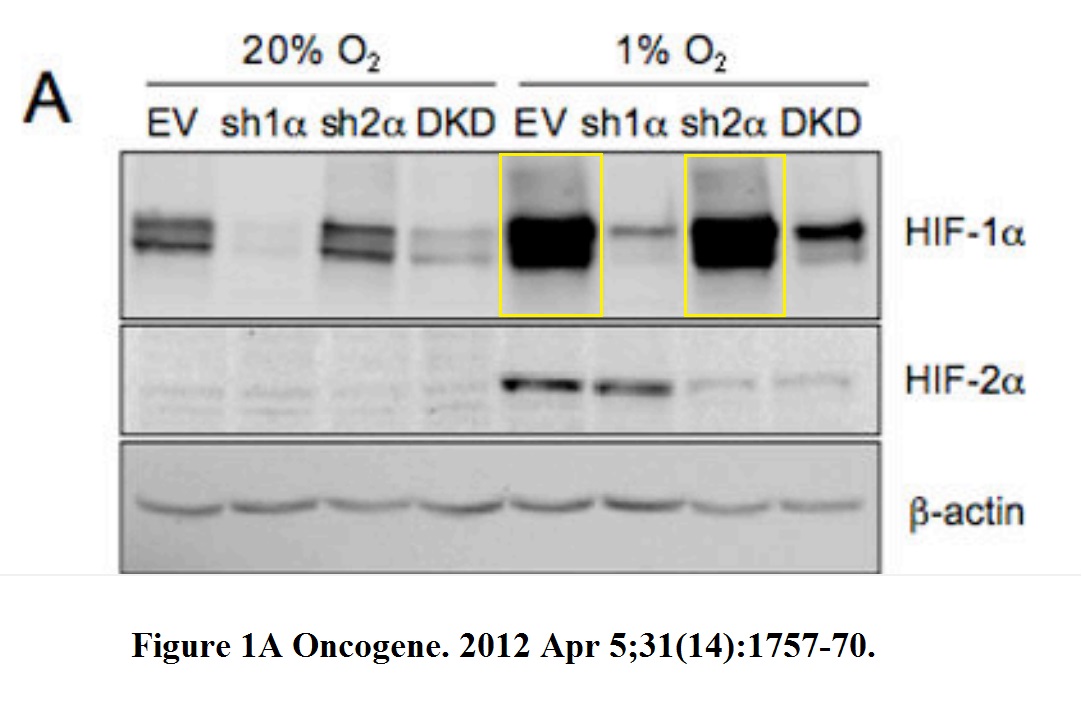
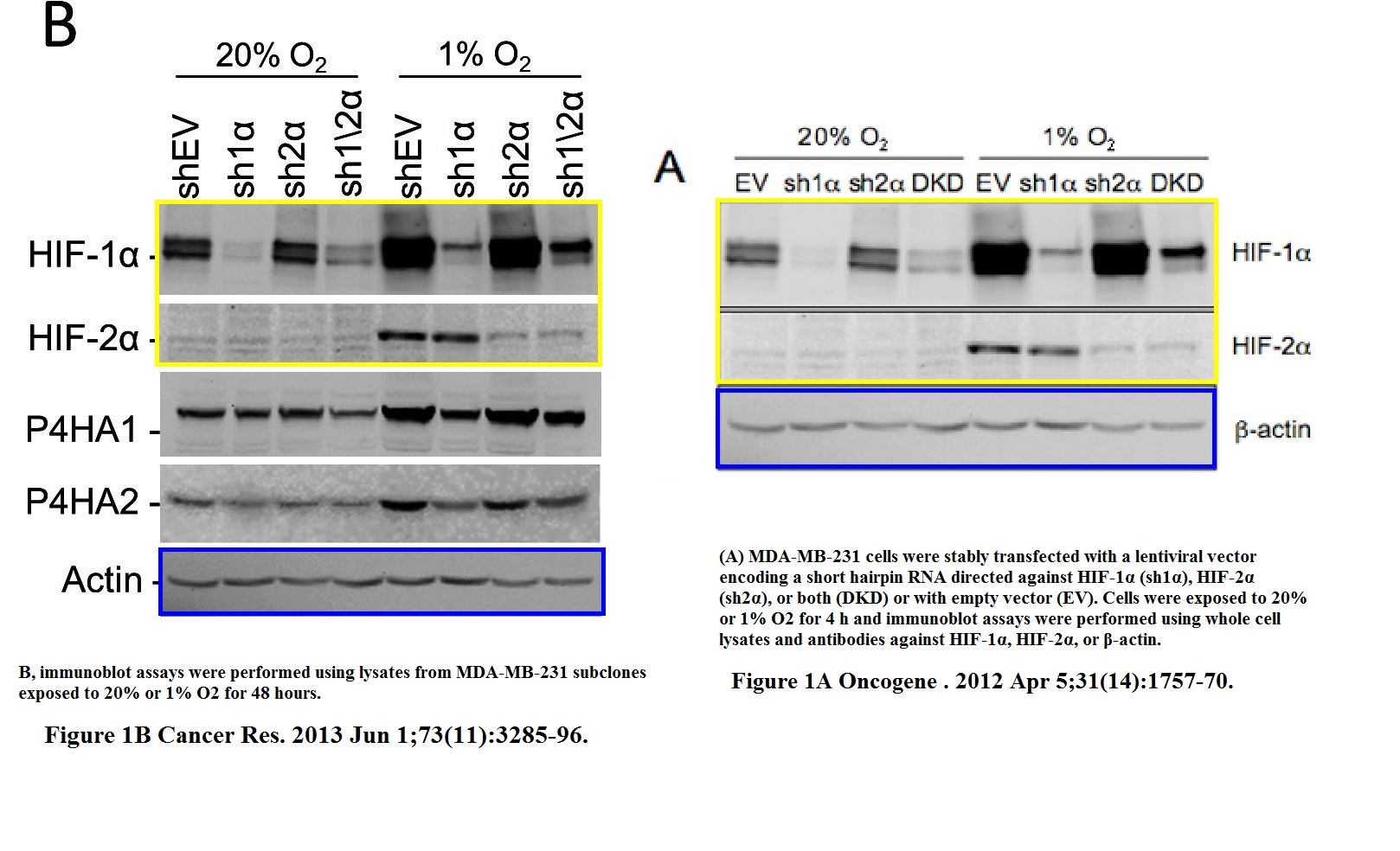
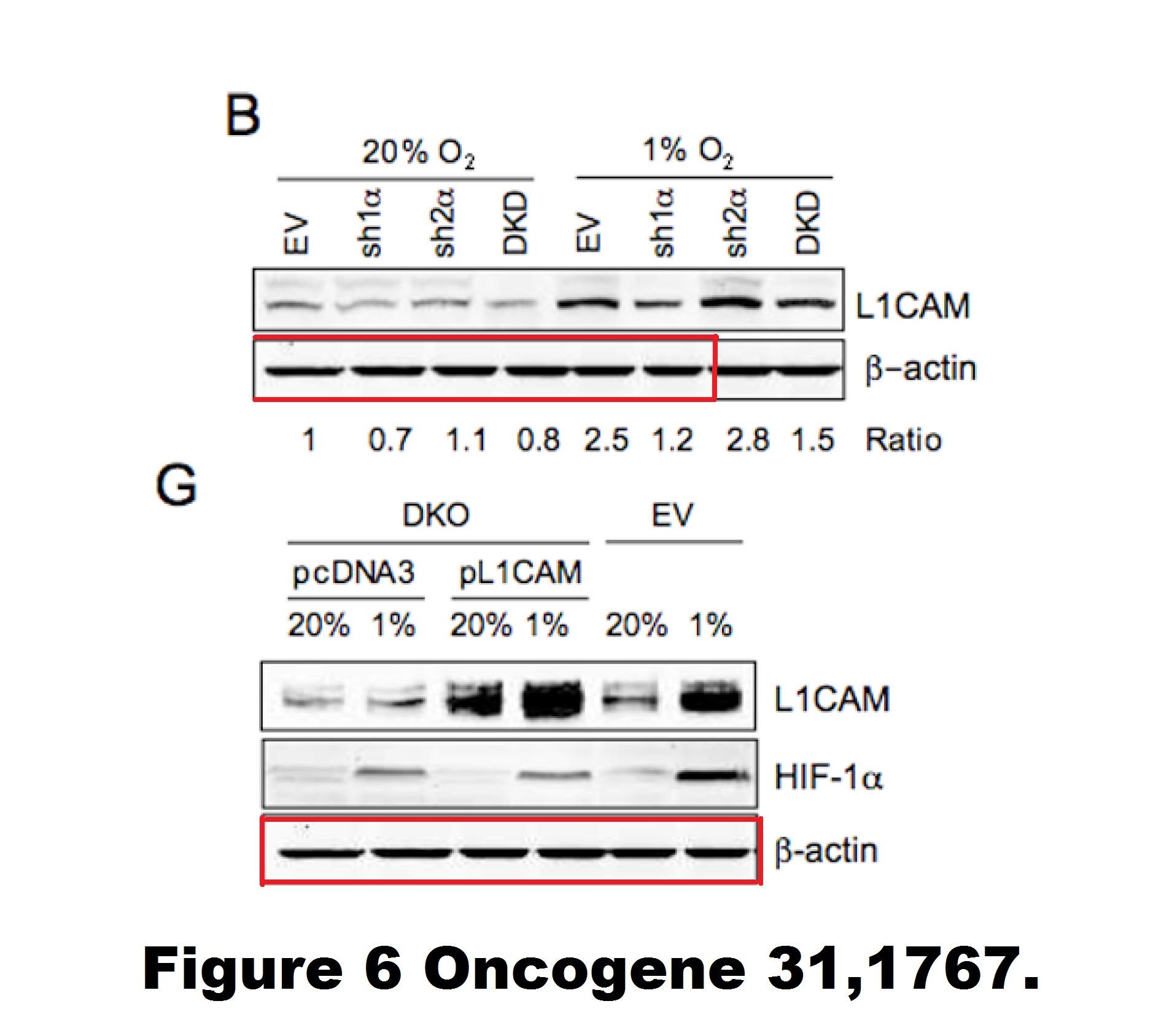
A gel in Figure 1A contains two bands which are likely copy-pasted. Figure 6 reuses a loading control for utterly unrelated experiments and samples. Judging from the band shapes and spacing, the beta-actin blot does not match either the gel shown in panel B nor G.
The issue with Figure 1A is minor compared to that: the research results were recycled in a different paper, Gilkes et al Cancer Research 2013. Luckily for all involved, Oncogene‘s Editor-in-Chief Justin Stebbing practices research integrity only in theory.
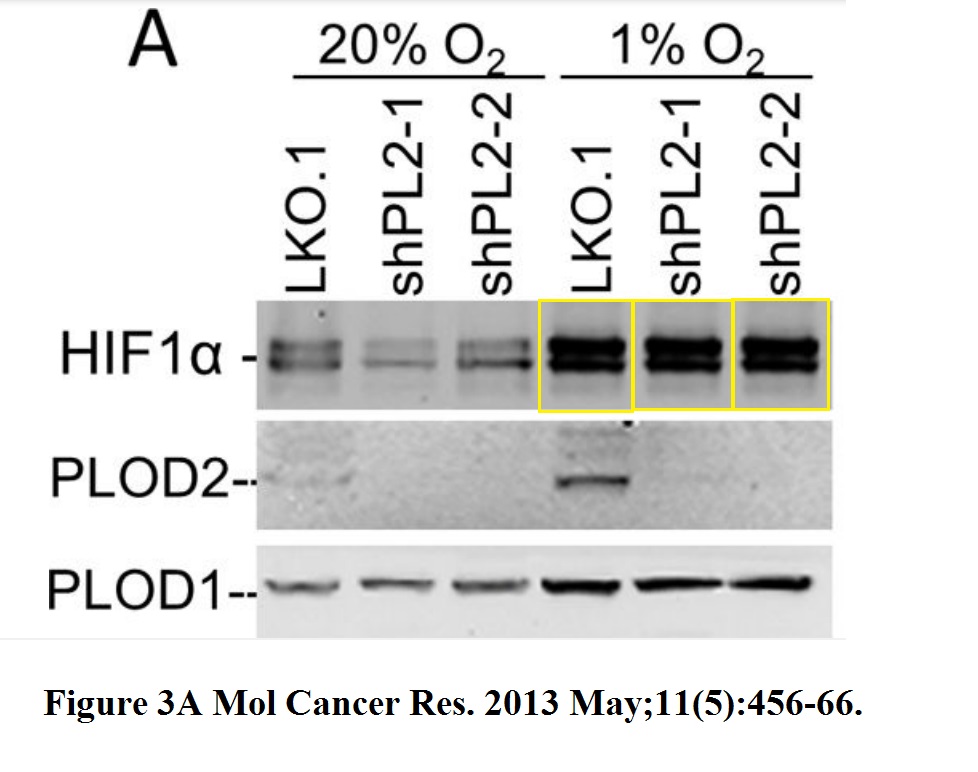
Or how about this 7 year old paper, again with Semenza as last author, where the Nobel-Prize-winning HIF1a data suffered some copy-pasting.
Daniele M. Gilkes, Saumendra Bajpai, Carmen C. Wong, Pallavi Chaturvedi, Maimon E. Hubbi, Denis Wirtz, Gregg L. Semenza Procollagen lysyl hydroxylase 2 is essential for hypoxia-induced breast cancer metastasis Molecular cancer research : MCR (2013) doi: 10.1158/1541-7786.mcr-12-0629
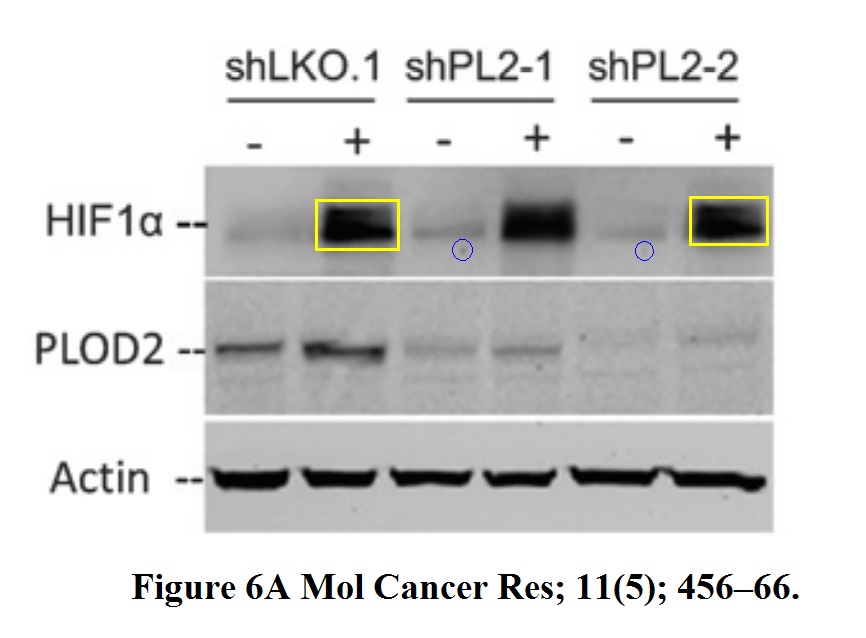
The first author of the above paper, Daniele Gilkes, remained close to her mentor and is now assistant professor at Johns Hopkins. In case you might think Semenza had no clue what his postdoc was doing, here their own words:
“Having a mentor that was both a clinician and a scientist was extremely important and impactful for my training,” Gilkes said. “Gregg helped me to focus on research that could make a true impact on improving outcomes.” […]
She noted that even with as many as 15 people in the lab, Semenza always responded quickly to her questions.
“I try to do that for my students, because that was really important to me,” she said. “It made me feel like he was very interested in the work that I was doing and that it was important to him. But it’s difficult to emulate.”
Is Gilke teaching her student the Art of the Photoshop now? Maybe. Here another first-author paper of hers from Semenza lab, where Johns Hopkins University’s Vice Provost for Research, Denis Wirtz, is again coauthor. In this capacity, Wirtz would be in charge of investigating the Nobelist’s papers (including those he himself coauthored) for suspected research misconduct.
Daniele M. Gilkes, Saumendra Bajpai, Pallavi Chaturvedi, Denis Wirtz, Gregg L. Semenza Hypoxia-inducible factor 1 (HIF-1) promotes extracellular matrix remodeling under hypoxic conditions by inducing P4HA1, P4HA2, and PLOD2 expression in fibroblasts The Journal of biological chemistry (2013) doi: 10.1074/jbc.m112.442939
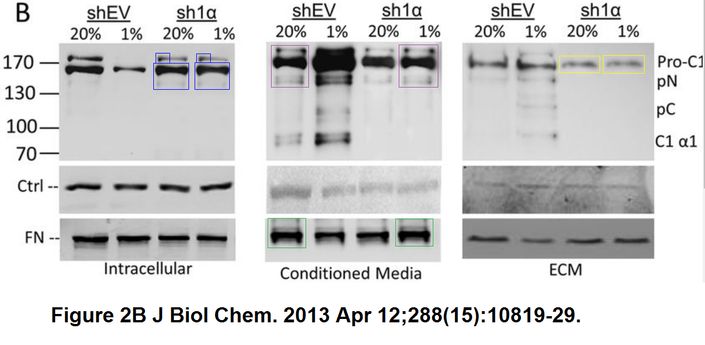
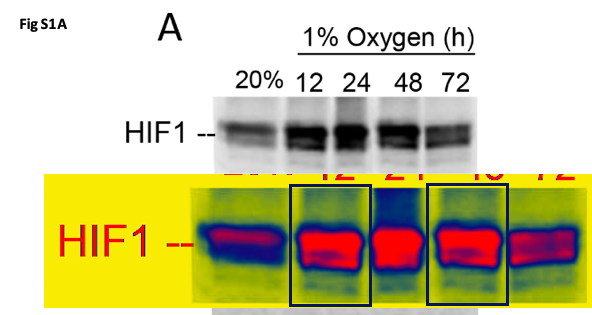
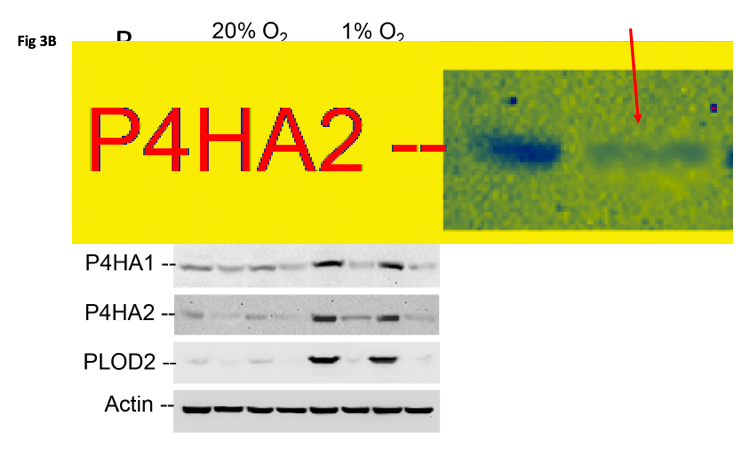
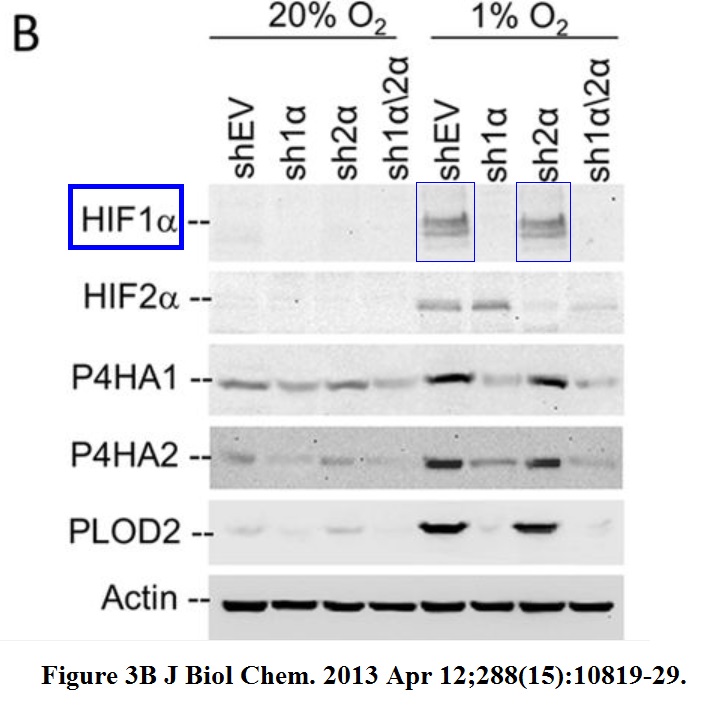
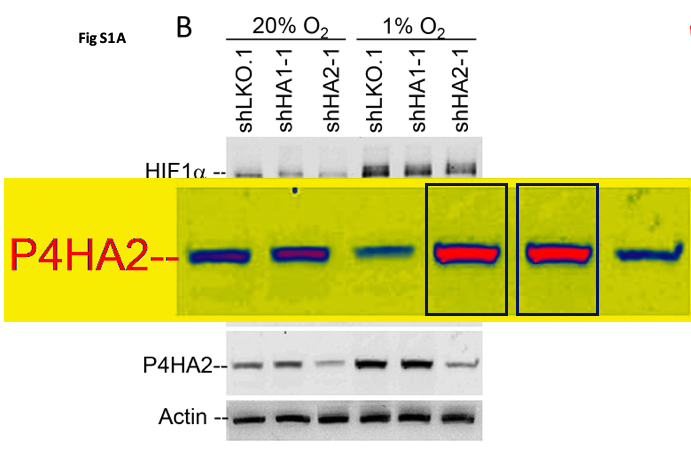
An utter disaster. Someone should be worried now, because the journal JBC and its society publisher ASBMB are quite tough on data fakery.
The next Gilkes et al paper from Semenza’s lab, again with Wirtz as coauthor, is also an utter train wreck, and is only safe from any danger of retraction because PNAS never cares about such things, certainly not with contributed (i.e., not really peer reviewed) papers. And this one was eminently contributed by the National Academy of Sciences member Semenza himself.
Daniele M Gilkes, Lisha Xiang, Sun Joo Lee, Pallavi Chaturvedi, Maimon E Hubbi, Denis Wirtz, Gregg L Semenza Hypoxia-inducible factors mediate coordinated RhoA-ROCK1 expression and signaling in breast cancer cells Proceedings of the National Academy of Sciences of the United States of America (2014) doi: 10.1073/pnas.1321510111

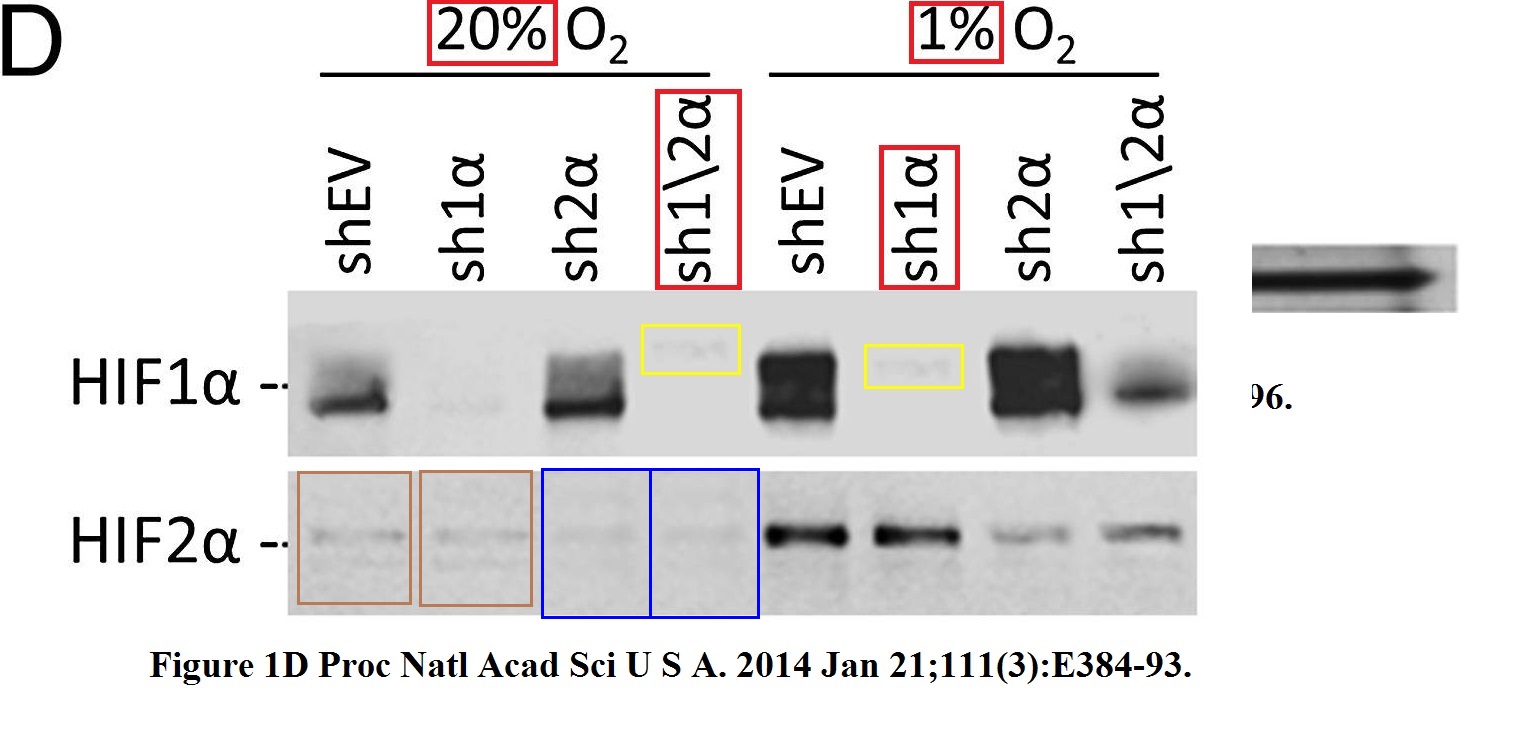
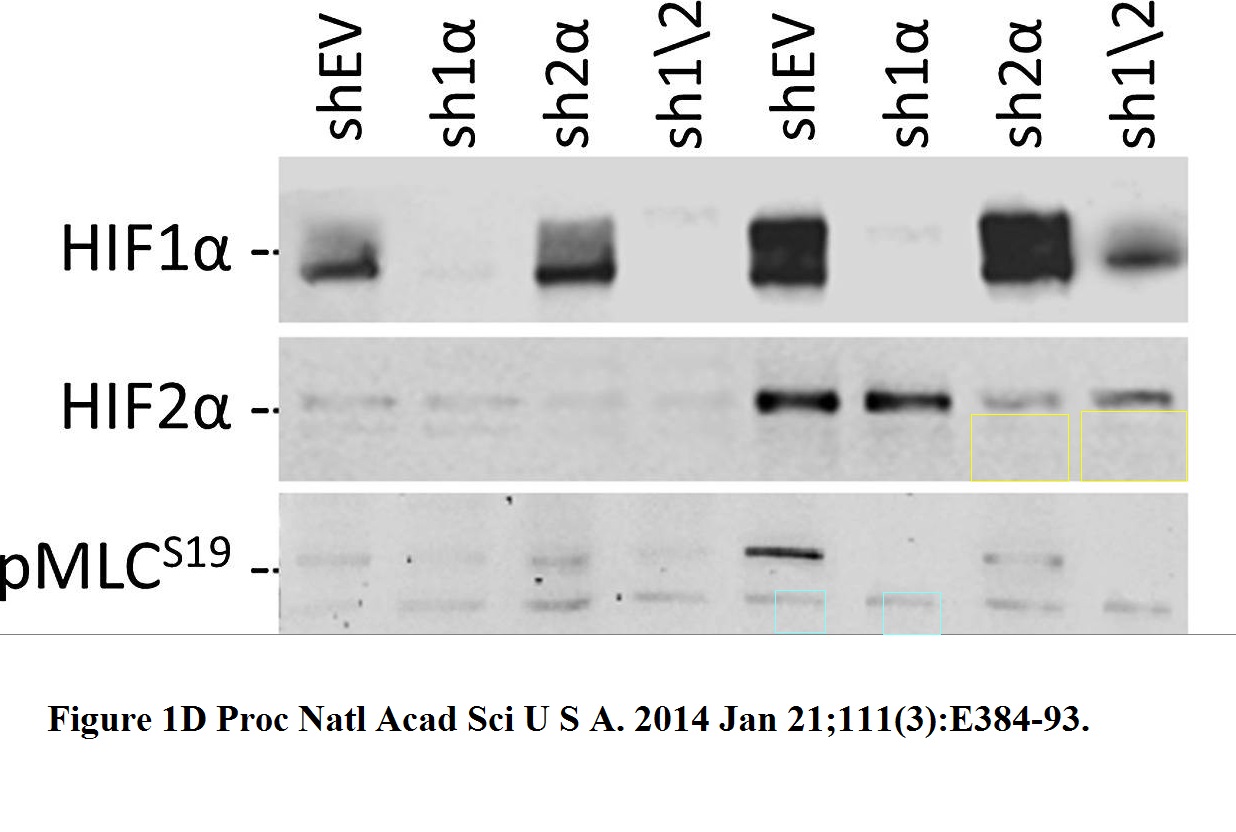

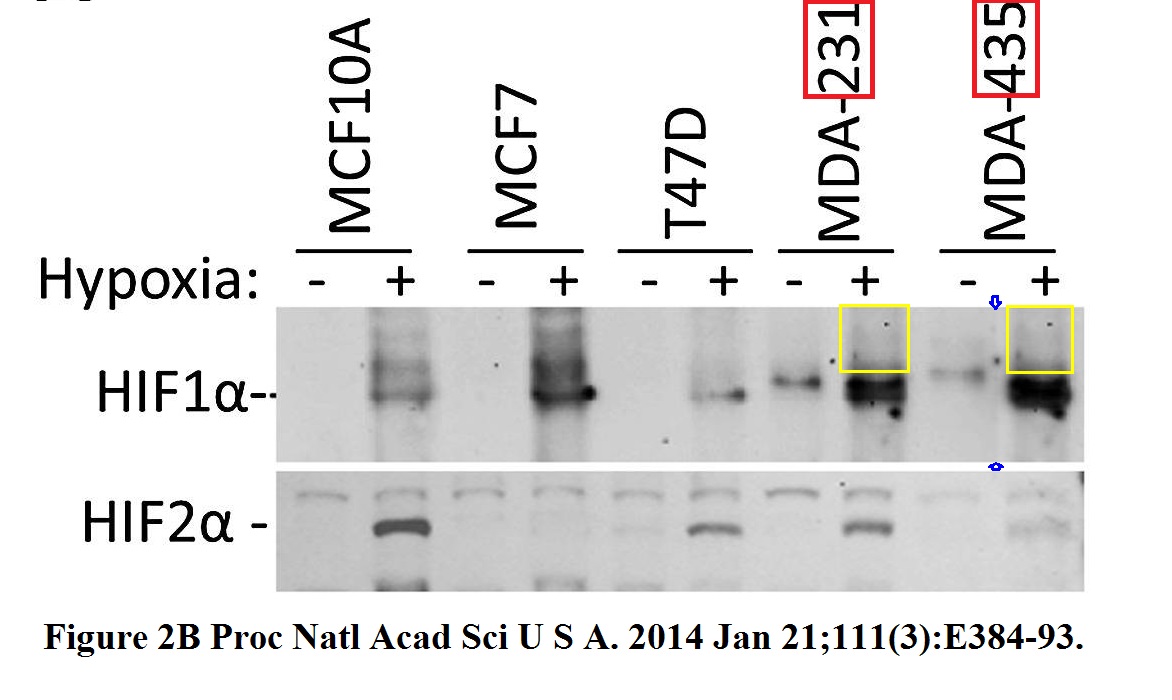
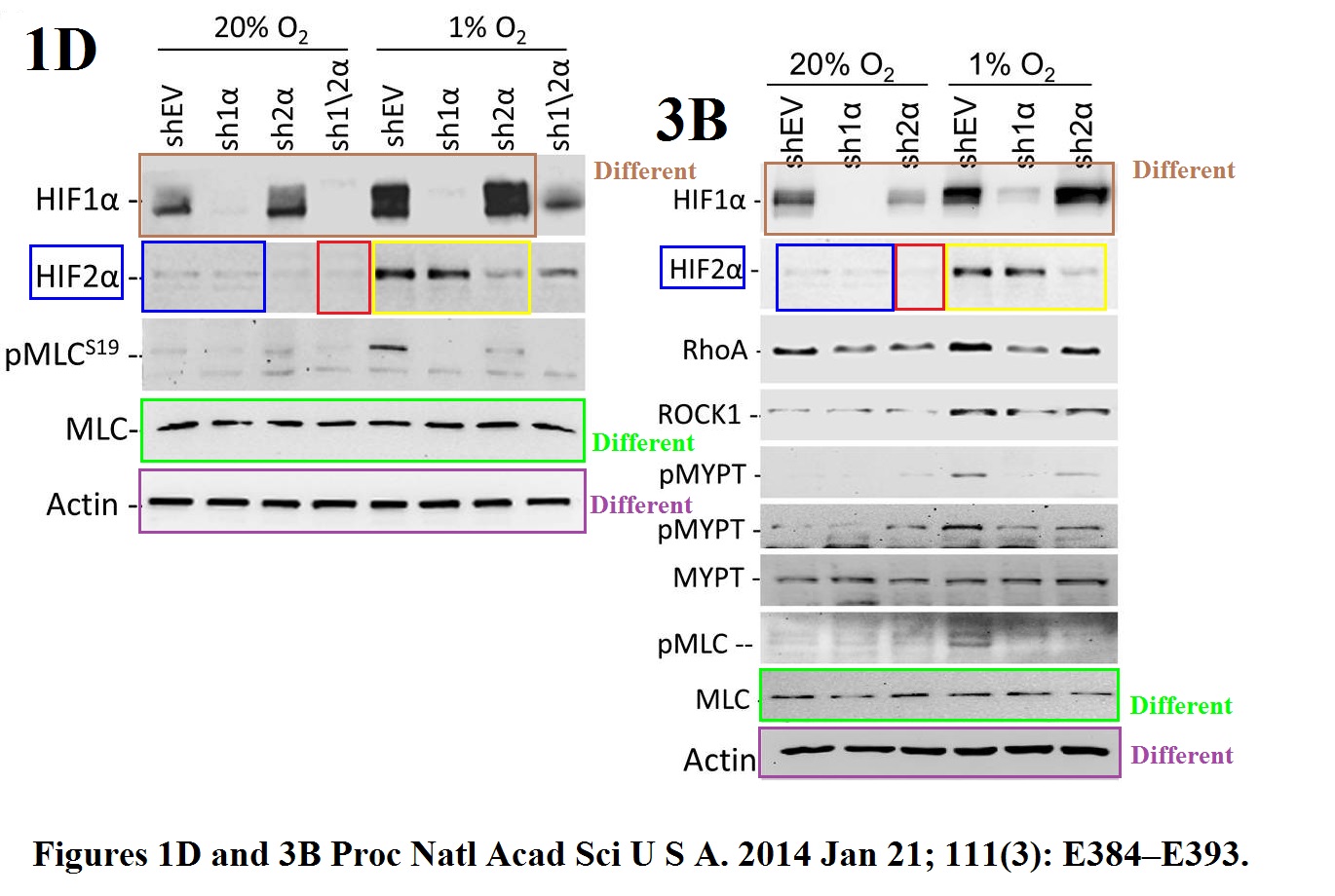
The HIF2a gel was reused, after some splicing, the sample labels remained same, except the red-boxed one. But why did the authors recycle only that gel, and not the loading control Actin, or HIF1a or pMLC? Maybe becasue the two figures show slightly different results for these?
The Figure 5C of the next Gilkes et al paper from Semenza lab was fixed in 2013, because it was “incorrect”. No details were provided by the journal, of which Semenza is deputy Editor-in-Chief, so here Clare Francis:
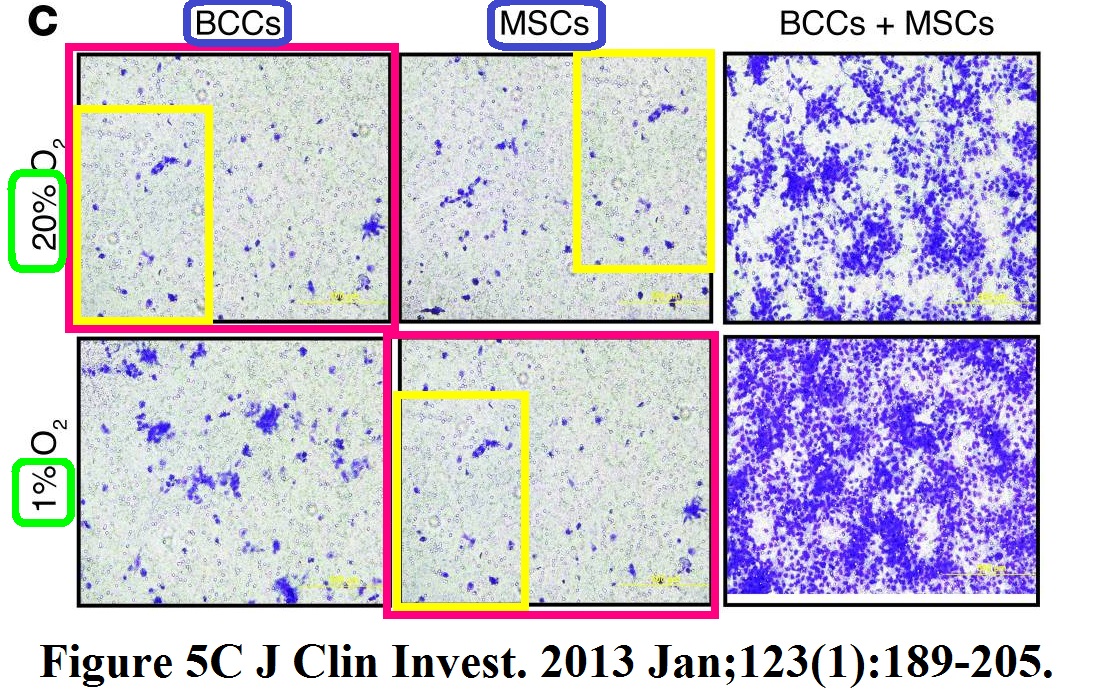
Pallavi Chaturvedi, Daniele M. Gilkes, Carmen Chak Lui Wong, Kshitiz, Weibo Luo, Huafeng Zhang, Hong Wei, Naoharu Takano, Luana Schito, Andre Levchenko, Gregg L. Semenza Hypoxia-inducible factor–dependent breast cancer–mesenchymal stem cell bidirectional signaling promotes metastasis The Journal of clinical investigation (2012) doi: 10.1172/jci64993
Semenza’s deputy Chief Editor colleague at JCI, Arturo Casadevall, is an internationally celebrated champion of research ethics, but only in theory, e.g. it does not seem to apply to his own papers.
When the Nobelist was interviewed in January 2020 about his work as JCI Deputy chief editor, by his editorial board colleague Elyse Dankoski, she somehow mentioned that “JCI’s current editorial board seems committed to tackling problems in scientific publishing, such as bias in first authorship as well as data manipulation issues“. I wonder if Semenza winced, or chuckled darkly. He was also asked: “Can you share any insights into what you’re looking for when you evaluate a submitted article?“.
The reply was hilarious:
“Pretty simple, just answer two questions:
Is this work novel and impactful?
Do the results adequately support the conclusions?“
Do you, dear reader, think those cloned gel bands were sufficiently novel and impactful and do they affect the conclusions of Nobel Prize winning papers from the Johns Hopkins lab of Dr Semenza?
Let me show you a bit more, now some collaborative research.
For example, there was a collaboration of Semenza with Nanduri Prabhakar of University of Chicago. Prabhakar even wrote an editorial on the occasion of Semenza’s Nobel Prize in the society journal Physiology. All three papers below have the same first author Guoxiang Yuan from Chicago, but would they have been published in these journals if not for Semenza’s significant coauthorship? Not in PNAS for sure, where Semenza “contributed” the paper to bypass peer review.
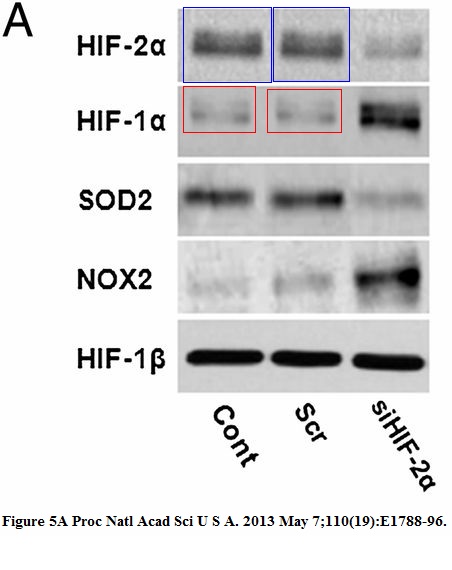
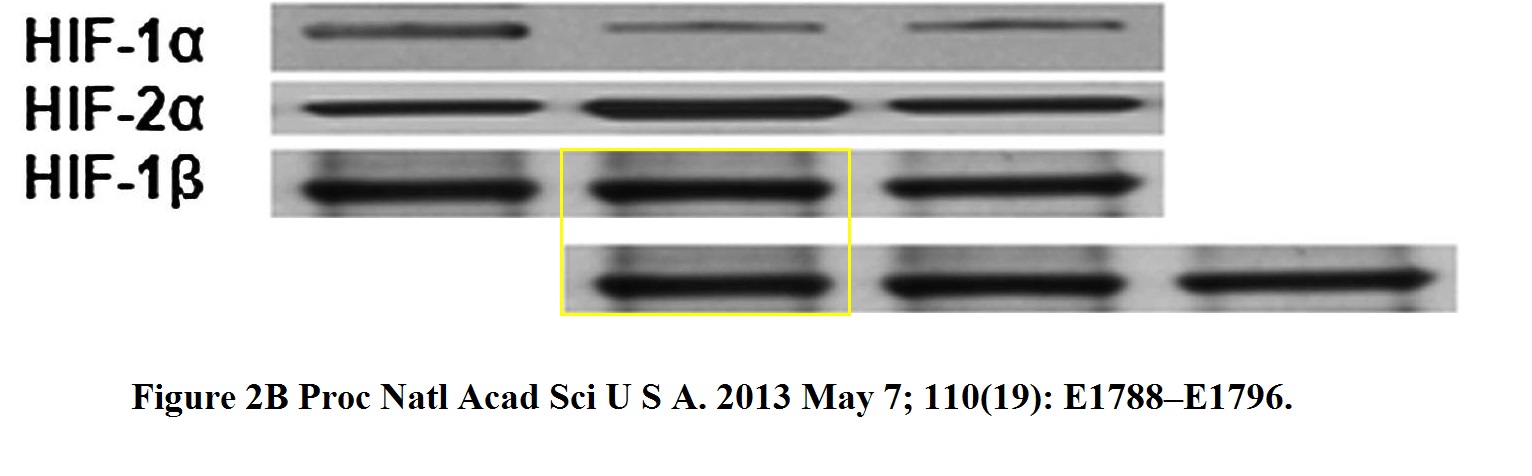
All these copy-pasted gel bands are depressing. But even more depressing is the knowledge that none of these three journals is likely to retract them, or to do anything in the first place. Because Semenza won the Nobel Prize.
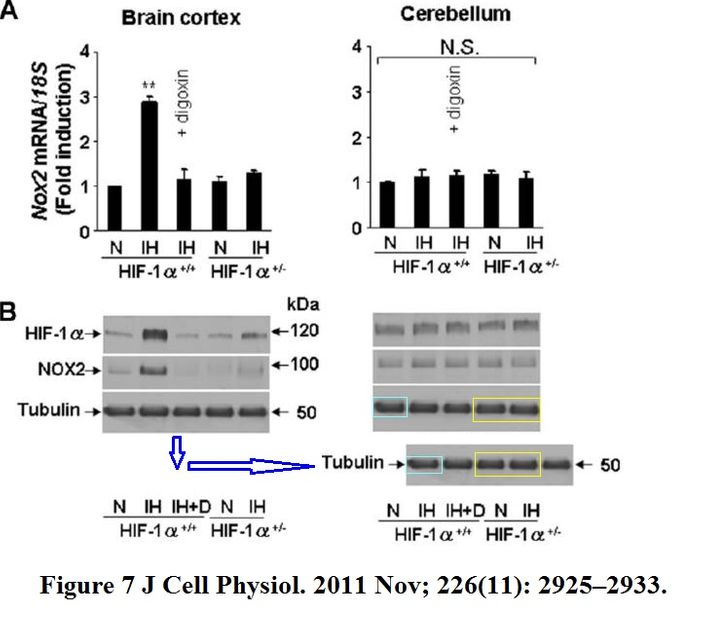
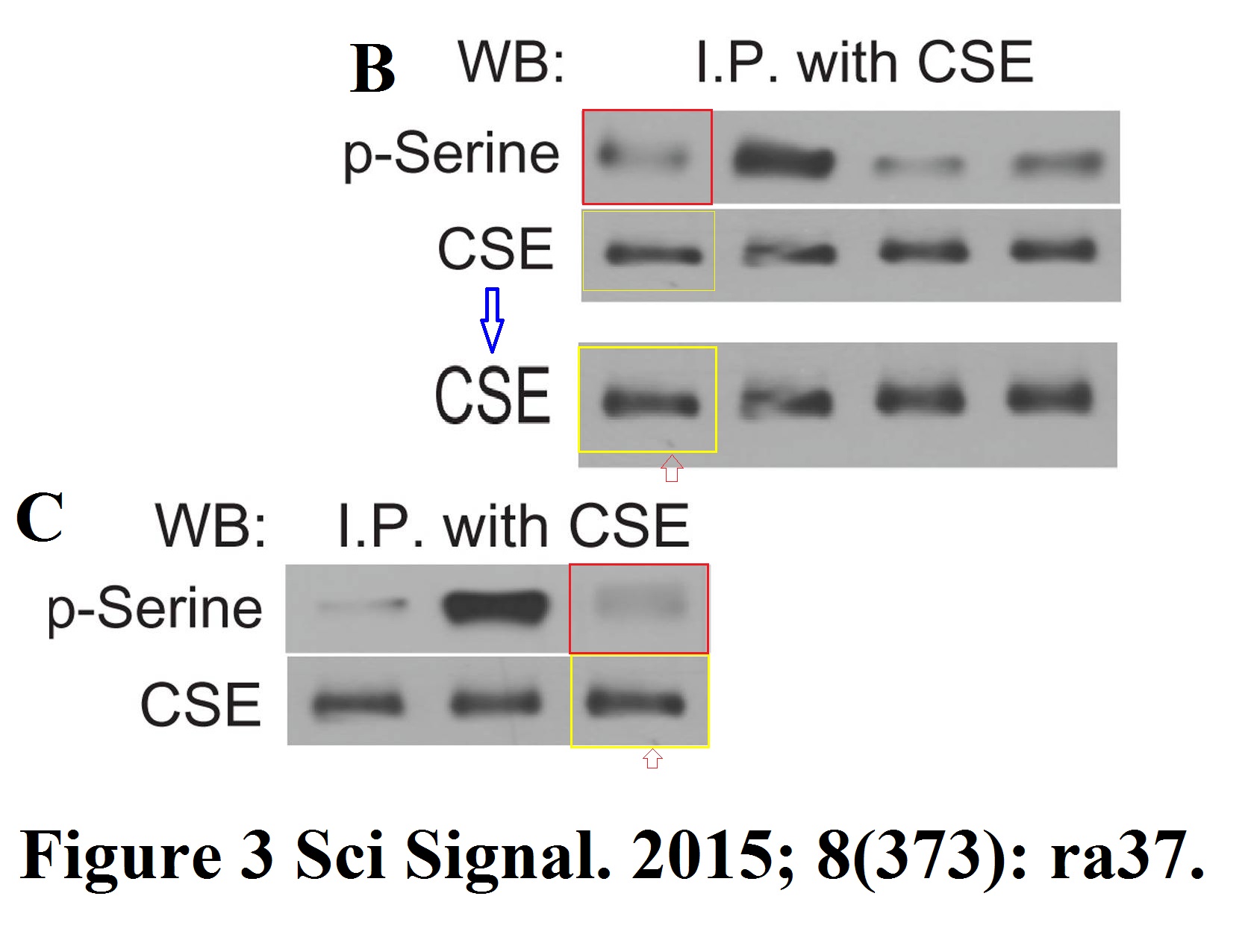
There were certainly strange things going on in Semenza’s lab. The following might look like a misunderstanding, or a mistake, but seems to be more sinister:
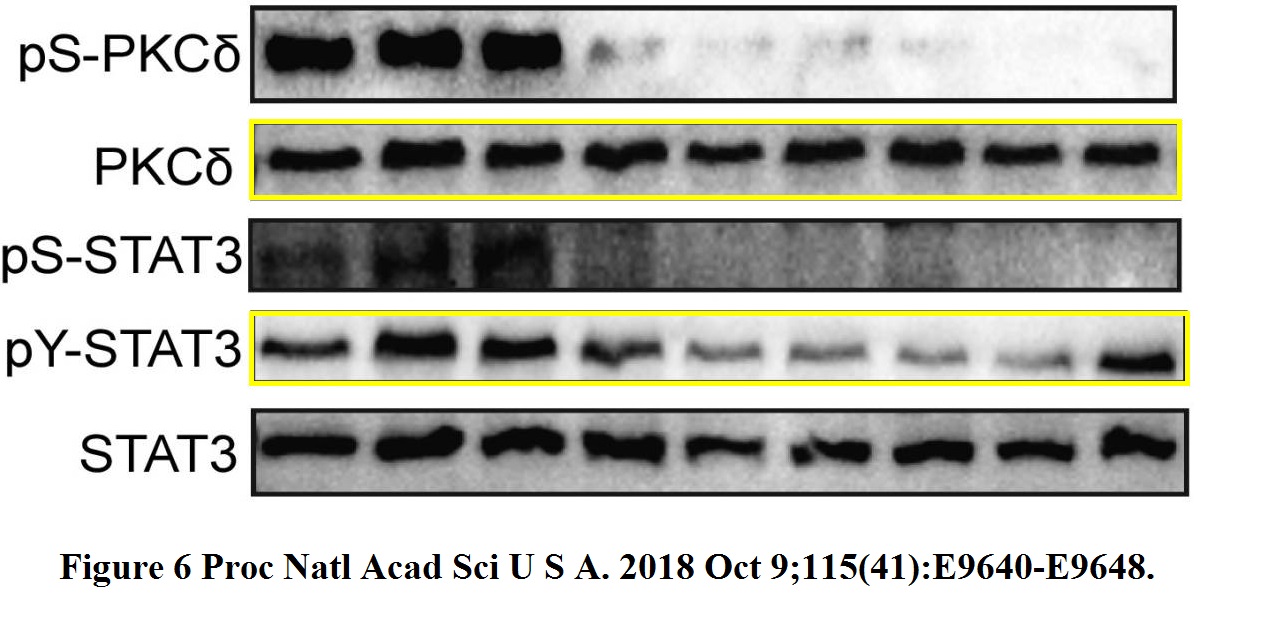
Jie Lan, Haiquan Lu, Debangshu Samanta, Shaima Salman, You Lu, Gregg L. Semenza Hypoxia-inducible factor 1-dependent expression of adenosine receptor 2B promotes breast cancer stem cell enrichment Proceedings of the National Academy of Sciences of the United States of America (2018) doi: 10.1073/pnas.1809695115
There should be two gels, one probed for PKCdelta (total and phosphorylated) and another probed for STAT3 (total and phosphorylated). But the PKCdelta and pY-STAT3 bands are so similar they must have come from same gel. Is the declared pY-STAT3 signal really the pS-PKCdelta signal? In this case, what happened to the correct pY-STAT3 gel, and what are the other gels really showing then? This cannot happen by mistake. Luckily, also this PNAS paper was contributed by Semenza, so there is no case, as far as the journal is concerned.
When the discoverer of the HIF proteins received his Nobel Prize phone call, he said:
“Yeah, well certainly nobody expects that, that’s for sure. Even after people have been telling you for, you know, 20 years or more that it’s going to happen, no one expects it.“
He might have expected the Nobel, but did Semenza expect Clare Francis?
Another collaborative paper with a similar problem prompted one Cell Press editor to admit he either has no clue of molecular biology, or does not care a bit about basic data integrity.
De Huang, Tingting Li, Xinghua Li, Long Zhang, Linchong Sun, Xiaoping He, Xiuying Zhong, Dongya Jia, Libing Song, Gregg L. Semenza, Ping Gao, Huafeng Zhang HIF-1-mediated suppression of acyl-CoA dehydrogenases and fatty acid oxidation is critical for cancer progression Cell Reports (2014) doi: 10.1016/j.celrep.2014.08.028
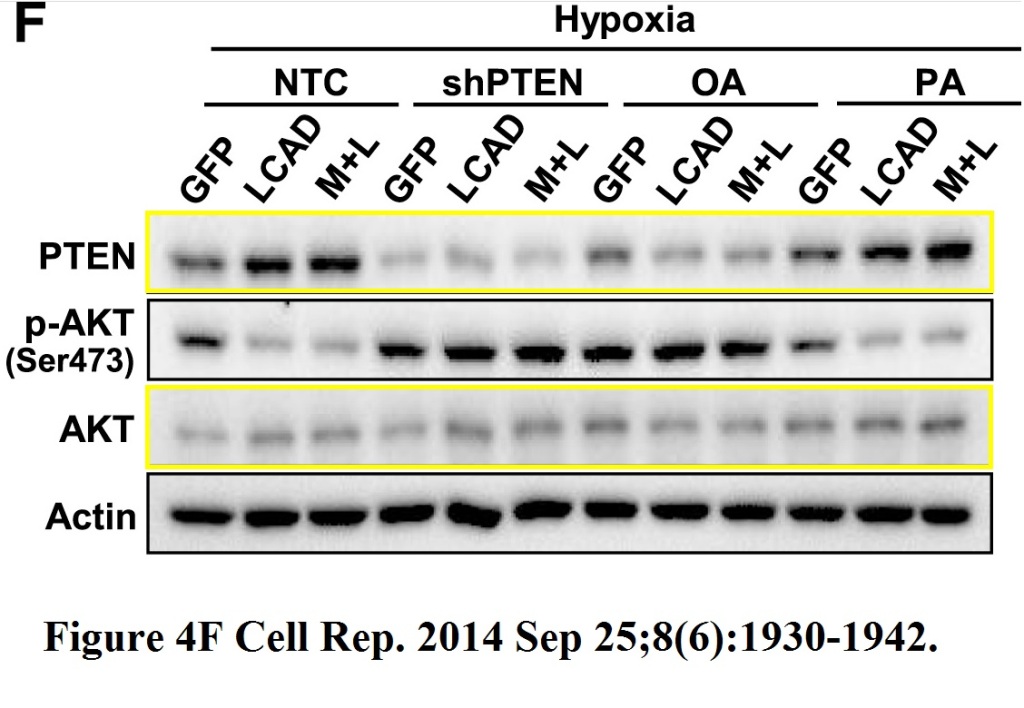
Basically, the phospho-AKP blot comes from a different gel for which no loading control was done. Stephen Matheson, Editor-in-Chief of Cell Reports, wrote to Clare Francis:
“I agree, but I don’t think those at all need to be from the same blot. This is not problematic.“
That is only partially correct, Steve. There can be indeed more than one gel, but each of those must be supplied with its own loading control. How do you know that for the p-AKT gel the same amount of protein lysate was loaded in, say, lane 1 as opposed to lane 2 and 3, or lane 4? Answer: blind trust because one of the authors went on to win a Nobel Prize. Semenza is by the way the only non-China-based author on that paper, you can guess what his actual contribution was. Yes, I am aware that gift authorships are a form of scientific misconduct. But see, it helped not only to get that paper published in a Cell family journal, but also to get it to remain published there.
As it will have helped another Cell Press paper, this time from South Korea, where Semenza’s name again stands out like a sore thumb, as the only contributor from Johns Hopkins.
Jason S. Lee, Yunho Kim, Ik Soo Kim, Bogyou Kim, Hee June Choi, Ji Min Lee, Hi-Jai R. Shin, Jung Hwa Kim, Ji-Young Kim, Sang-Beom Seo, Ho Lee, Olivier Binda, Or Gozani, Gregg L. Semenza, Minhyung Kim, Keun Il Kim, Daehee Hwang, Sung Hee Baek Negative regulation of hypoxic responses via induced Reptin methylation Molecular cell (2010) doi: 10.1016/j.molcel.2010.06.008
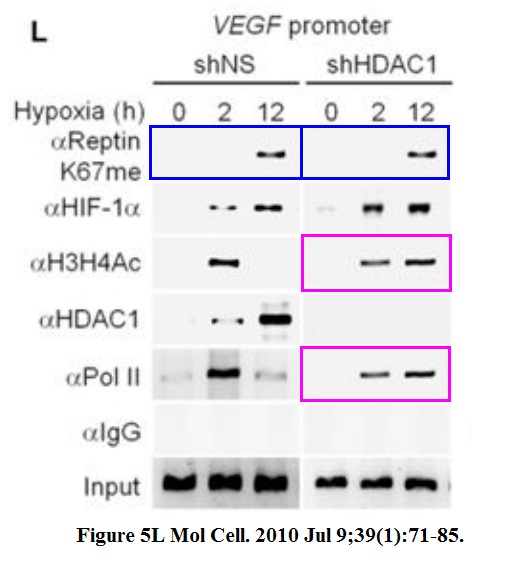
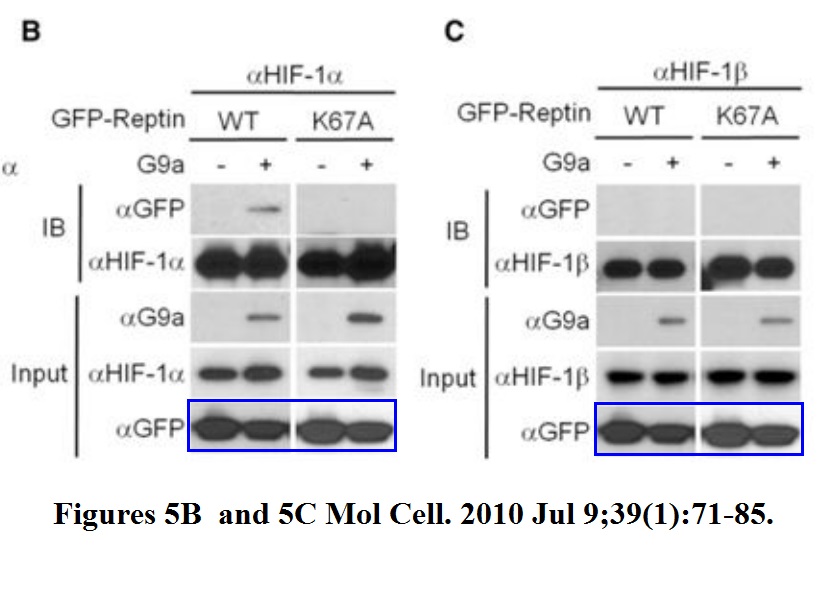
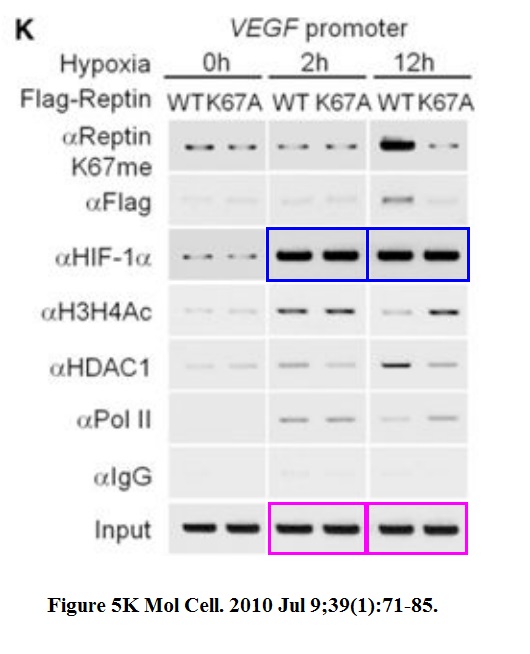
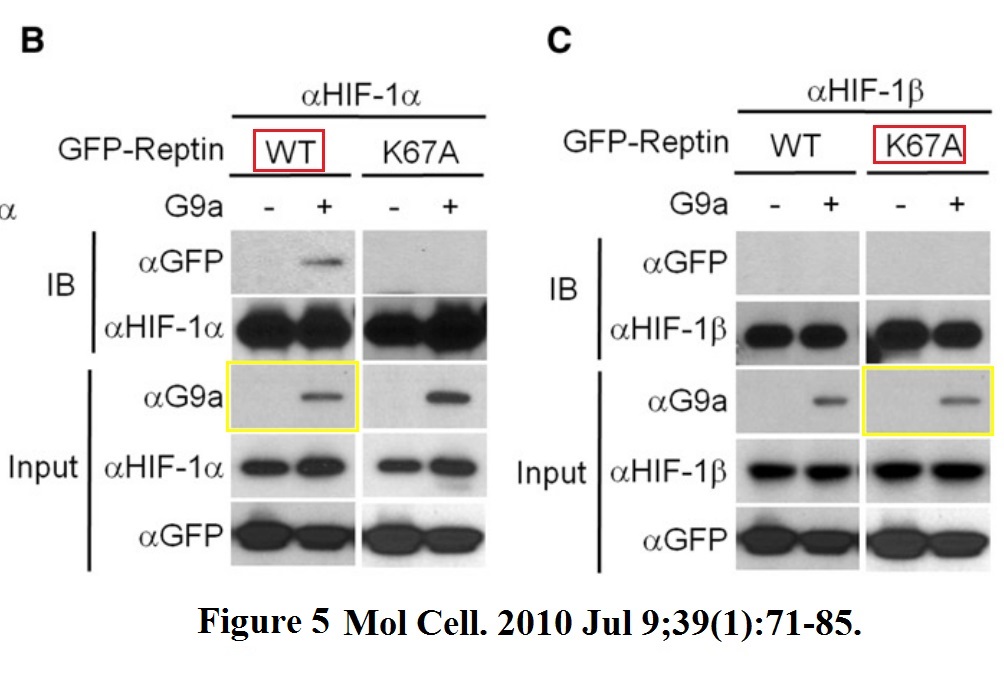
Nobody, absolutely nobody at Molecular Cell will have any problem with this. This is a journal which rejects retraction requests from universities. Maybe this is a good opportunity to wonder, sure, Cell Press and Elsevier in general does not give a flying toss about falsified data, but how about torturing small animals? Is it their thing also? Does it get them off or will they finally get off their bums and do something about scientific malpractice? Don’t hold your breath. Have a look at what was done to these mice:
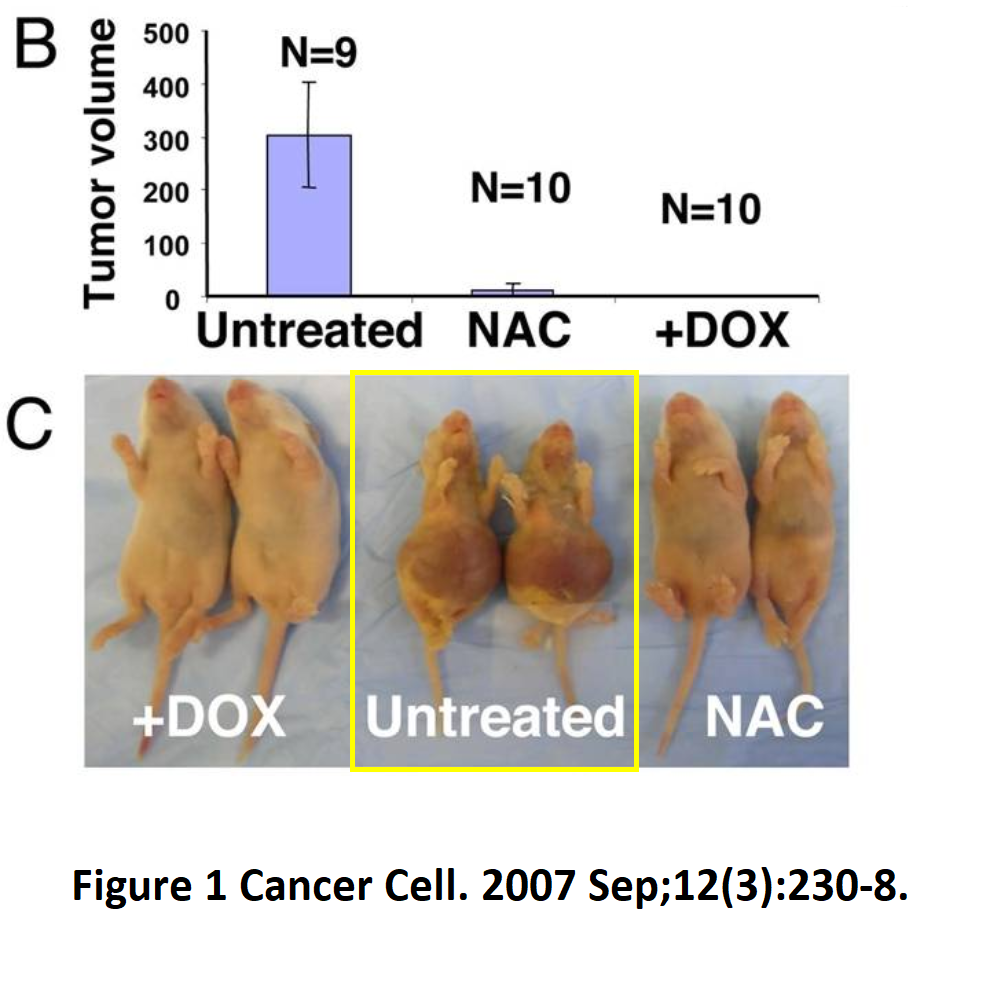
Ping Gao, Huafeng Zhang, Ramani Dinavahi, Feng Li, Yan Xiang, Venu Raman, Zaver M. Bhujwalla, Dean W. Felsher, Linzhao Cheng, Jonathan Pevsner, Linda A. Lee, Gregg L. Semenza, Chi V. Dang HIF-dependent antitumorigenic effect of antioxidants in vivo Cancer Cell (2007) doi: 10.1016/j.ccr.2007.08.004
This animal research work was done at Johns Hopkins. Did nobody really notice that the xenograft tumours grew so huge that the animals must have horribly suffered? That the nude mice should have been euthanised long before the tumours became this big, as per standard animal experimenting guidelines in USA? The authors failed there, and so did the editors and peer reviewers. Will something happen to this Cancer Cell paper now? Don’t be silly, Semenza won the Nobel Prize.
Better let’s look at some cloned western blot bands again, those are at least funny. Here some older stuff Semenza published with Kiichi Hirota, now professor at Kansai Medical University in Japan.
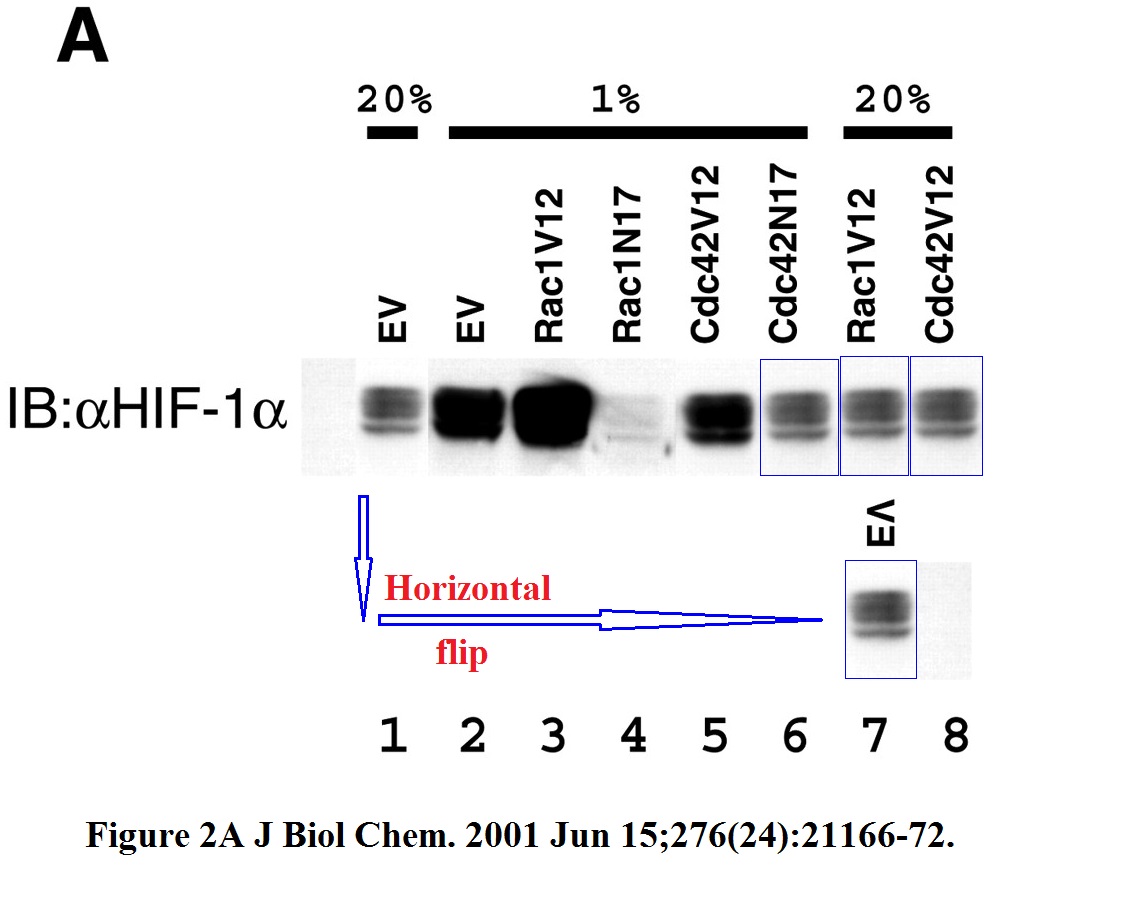
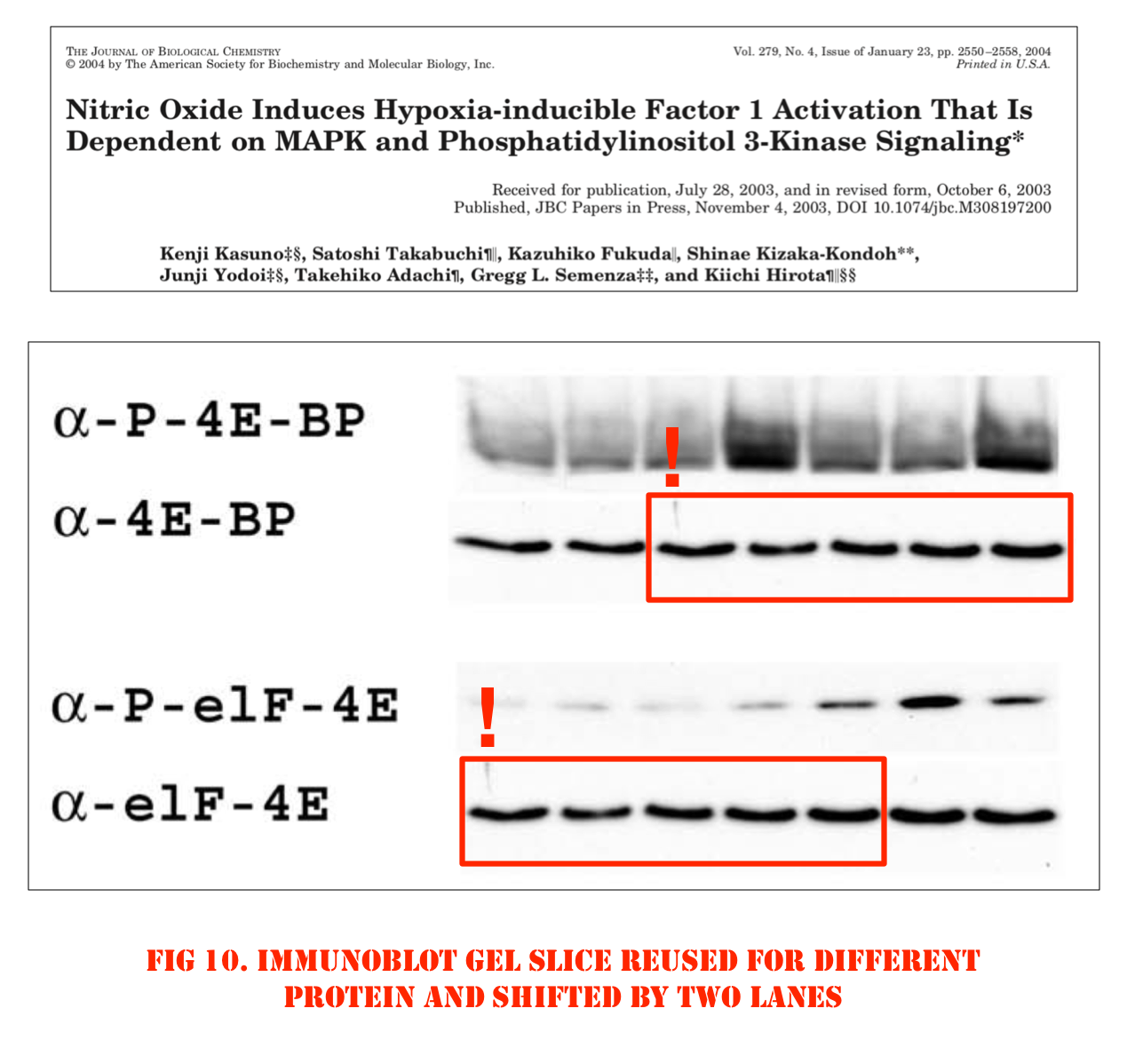
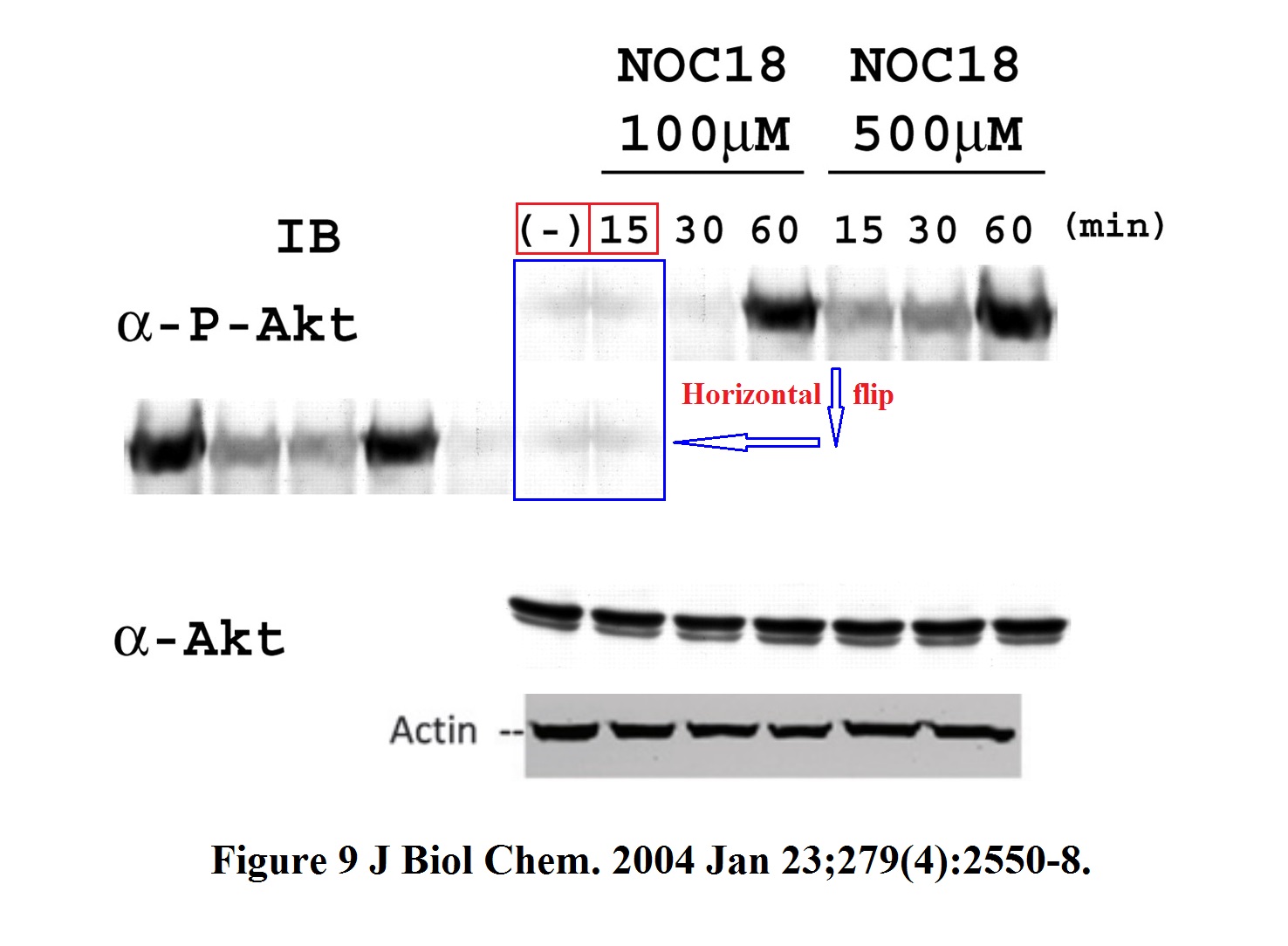
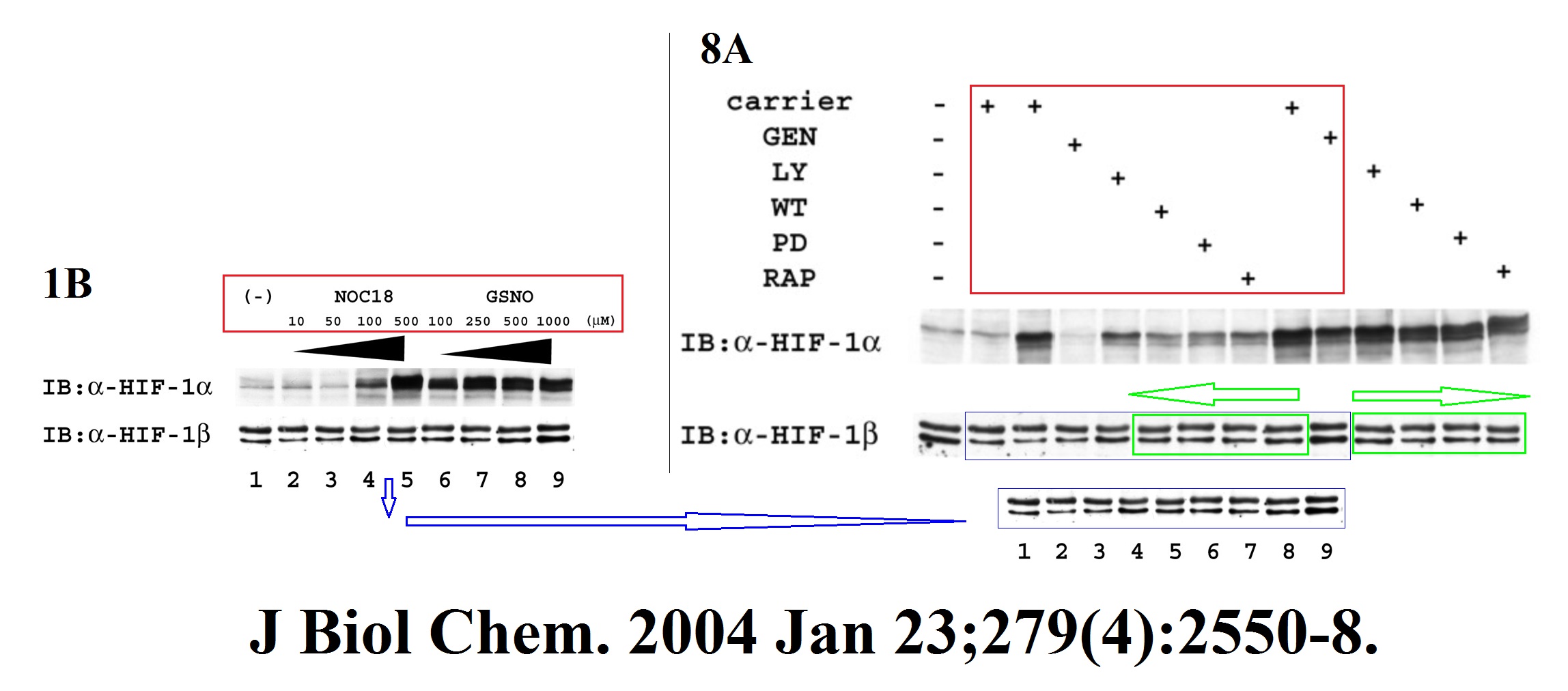
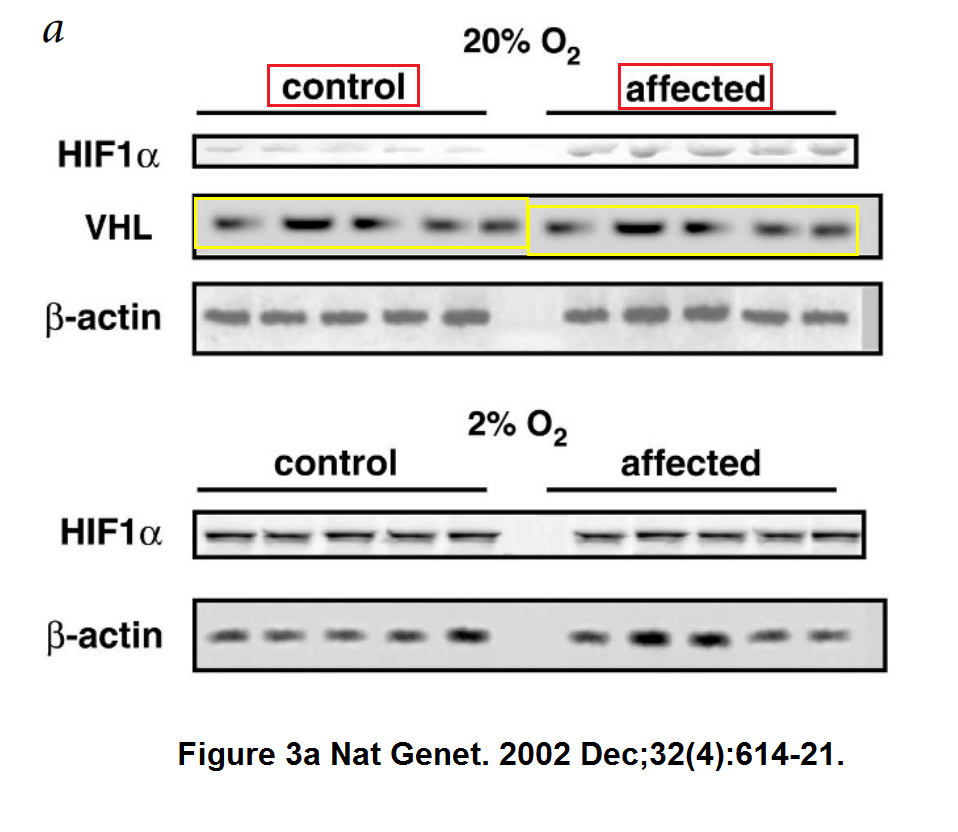
Hirota (“my h-index is “49“) became Semenza’s collaborator when the former joined Johns Hopkins School of Medicine as visiting professor in 1999-2002. In this regard, also this study in Nature Genetics, where a gel was falsified:

So far, Semenza had one retraction, in 2011 and with some other Japanese colleagues, for Tomita et al Biochemical Journal 2007. Back then the notice said “The last author, Naoki Mori, takes full responsibility for the misrepresentation of data in this paper“.

When he won the Nobel Prize, Semenza said in an interview with ACS magazine c&en:
“All science is a collaborative effort. I have all these hardworking postdocs and graduate and undergraduate students in the lab. Everybody works together as a team. I have a really fine group of people who work in the lab. My major criterion for picking people is that they’re really nice to work with because we spend a lot of time together.“
You took the responsibility for their work when accepting your Nobel Prize and other awards, Professor Semenza. Time to take responsibility for the fabricated figures your team published.
Update 8.10.2020
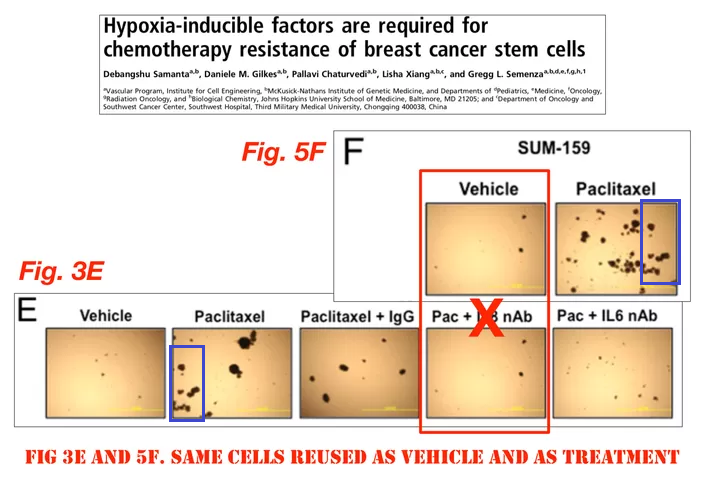
Johns Hopkins University confirmed to me to be aware of the issues. Meanwhile, Clare Francis resumed checking Semenza’s publications (see comment section). One is worth posting here, because it is another PNAS contributed paper, where one of the friendly reviewers Semenza hand-picked was…. Maria Alfonsina Desiderio, from University of Milan, Italy. Remember her? Desiderio has 5 retractions now, for data fakery.
This is the paper:
Debangshu Samanta, Daniele M. Gilkes, Pallavi Chaturvedi, Lisha Xiang, and Gregg L. Semenza Hypoxia-inducible factors are required for chemotherapy resistance of breast cancer stem cells PNAS (2014) doi: 10.1073/pnas.1421438111

Update 10.10.2020
This gets worse and worse. Another one contributed by Semenza to PNAS:
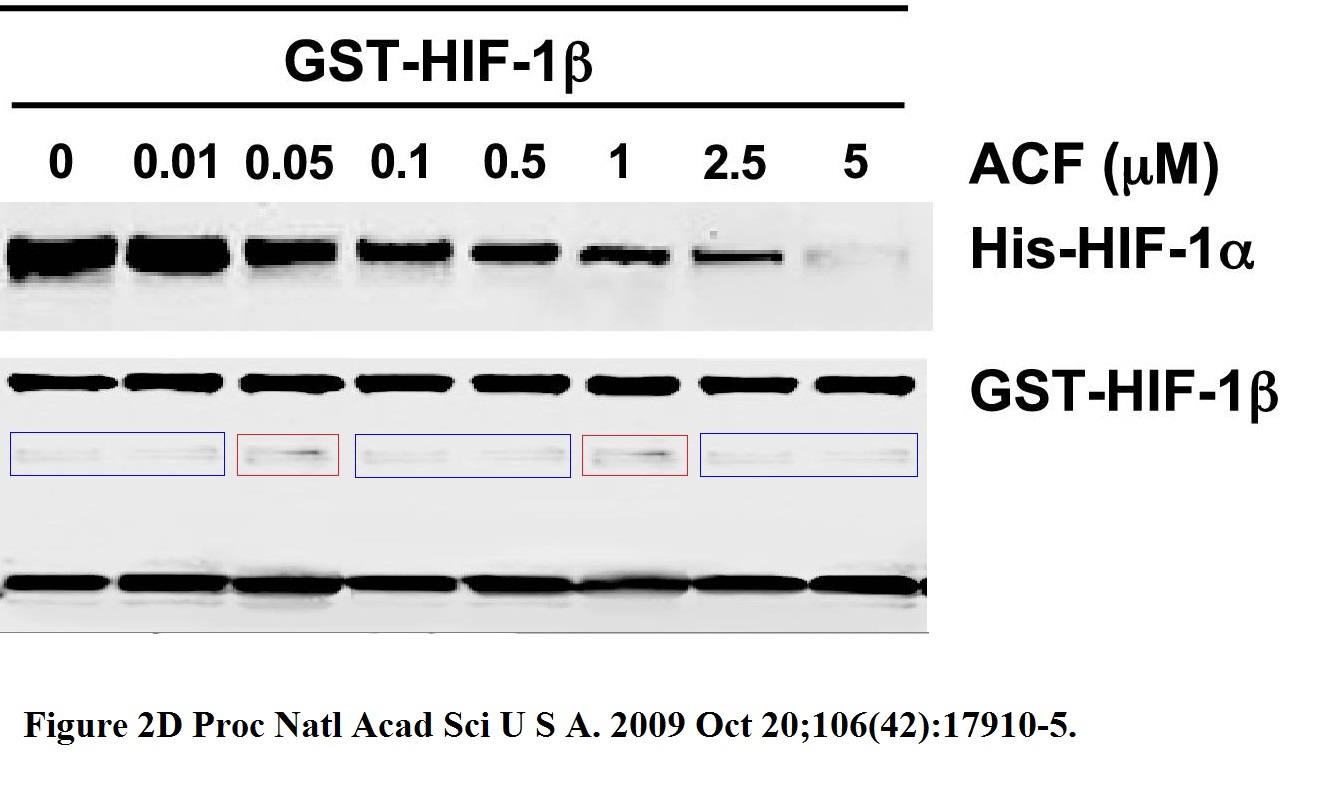
KangAe Lee, Huafeng Zhang, David Z Qian, Sergio Rey, Jun O Liu, Gregg L Semenza Acriflavine inhibits HIF-1 dimerization, tumor growth, and vascularization Proceedings of the National Academy of Sciences (2009) doi: 10.1073/pnas.0909353106
Someone erased all the lower gel bands, as evidenced by the cloned fragments. Does this affect the conclusions? It sure does, very much. And how about this, by similar author collective (yes, also contributed by Semenza):
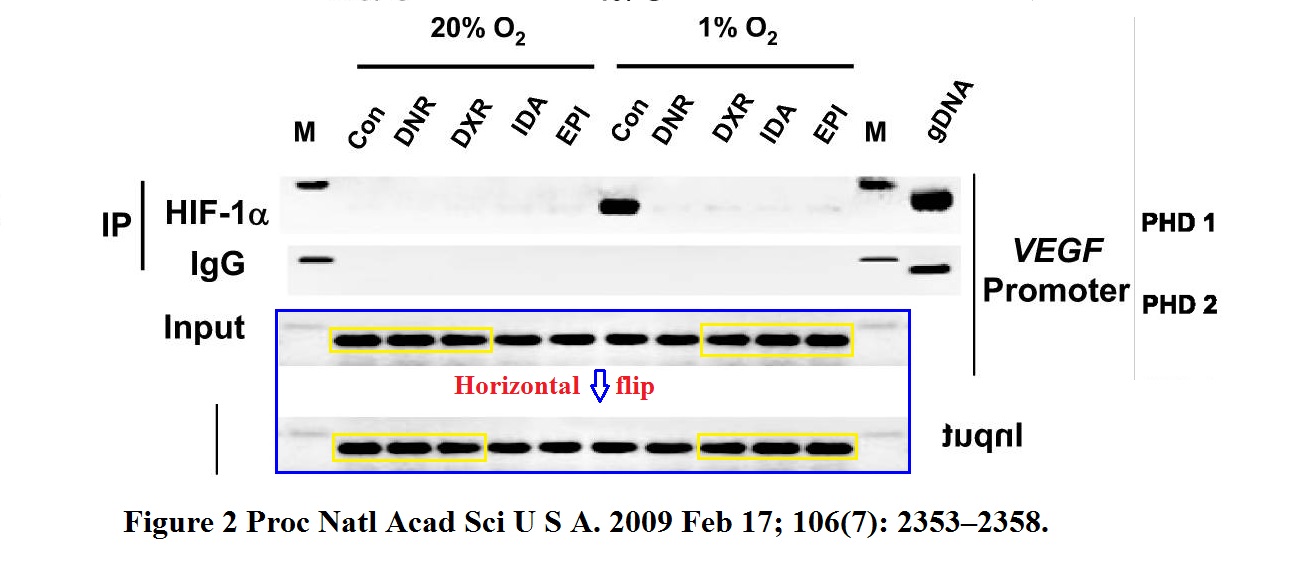
KangAe Lee, David Z Qian, Sergio Rey, Hong Wei, Jun O Liu, Gregg L Semenza Anthracycline chemotherapy inhibits HIF-1 transcriptional activity and tumor-induced mobilization of circulating angiogenic cells Proceedings of the National Academy of Sciences (2009) doi: 10.1073/pnas.0812801106

Someone commented on PubPeer: “I think the whole row is a mirror“. It does look like a falsified loading control. In the same paper, mouse images are sometimes strangely similar, as if that mouse was imaged just seconds and not days apart as the study description claims. The first author, KangAe Lee is now at Princeton University, here is another classic of hers flagged by Clare Francis.
Did you perchance also have trouble reproducing Semenza’s research results, as some of my readers already complained?
Update 14.10.2020
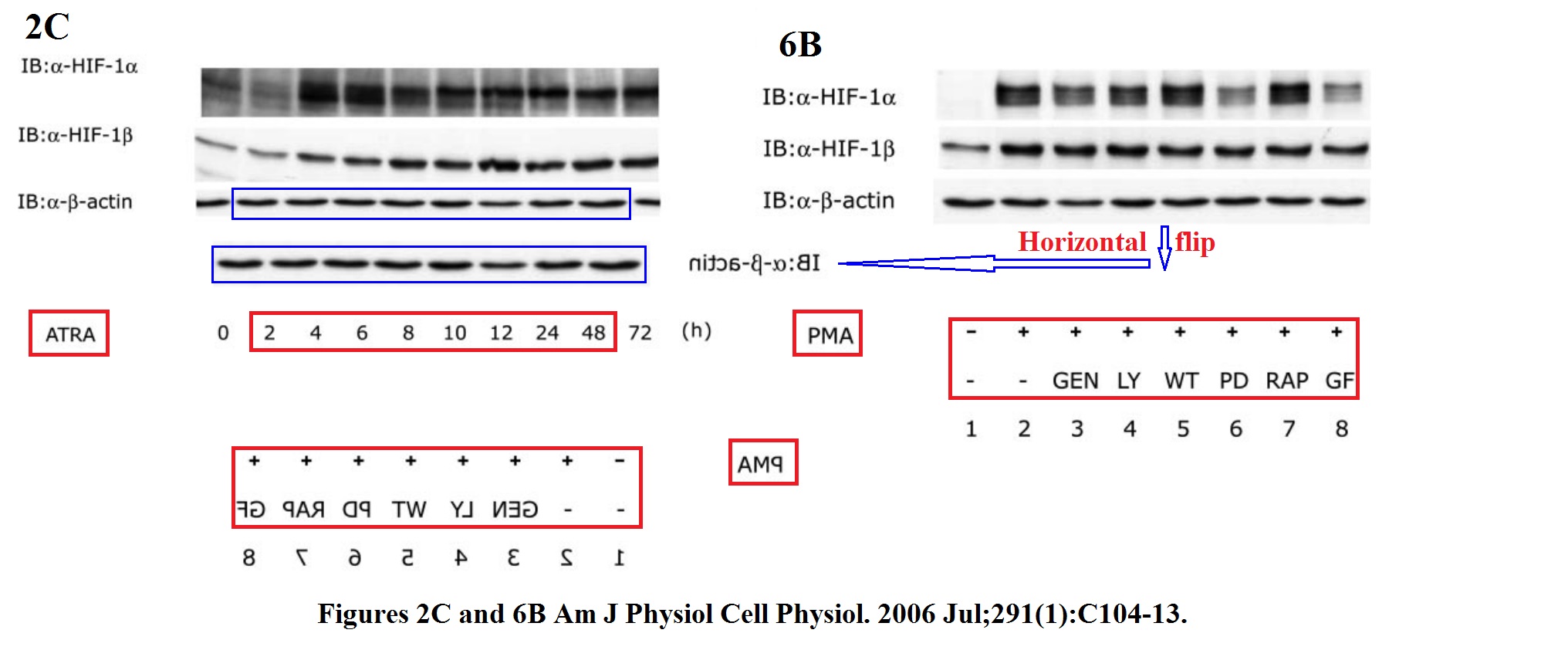
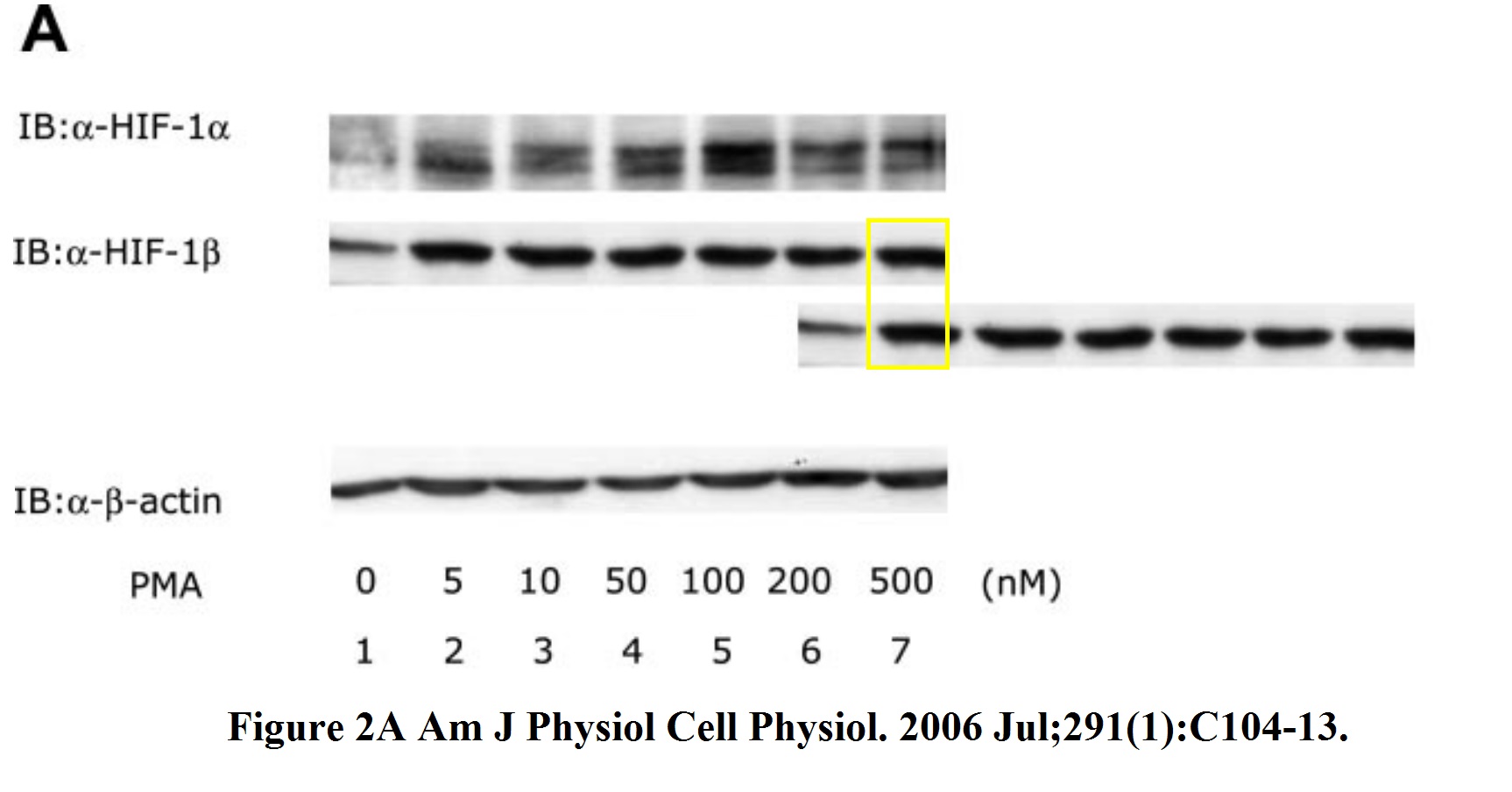
The treasure hunt continues! This article became popular with Japanese readers, so here a collaborative paper of Hirota and others, where Semenza will probably now regret to have agreed to signing as coauthor:
Tomoyuki Oda, Kiichi Hirota, Kenichiro Nishi, Satoshi Takabuchi, Seiko Oda, Hiroko Yamada, Toshiyuki Arai, Kazuhiko Fukuda, Toru Kita, Takehiko Adachi, Gregg L. Semenza, Ryuji Nohara Activation of hypoxia-inducible factor 1 during macrophage differentiation AJP Cell Physiology (2006) doi: 10.1152/ajpcell.00614.2005
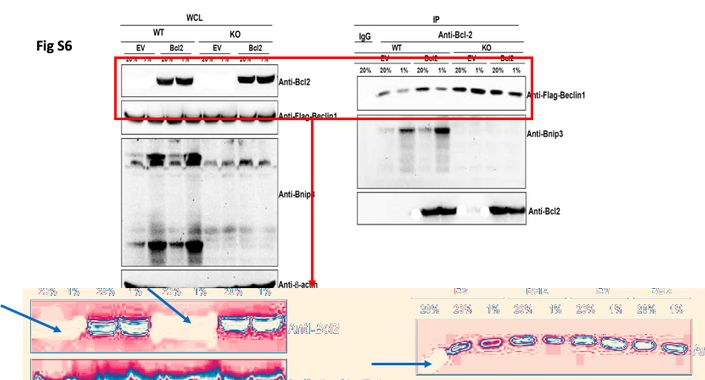
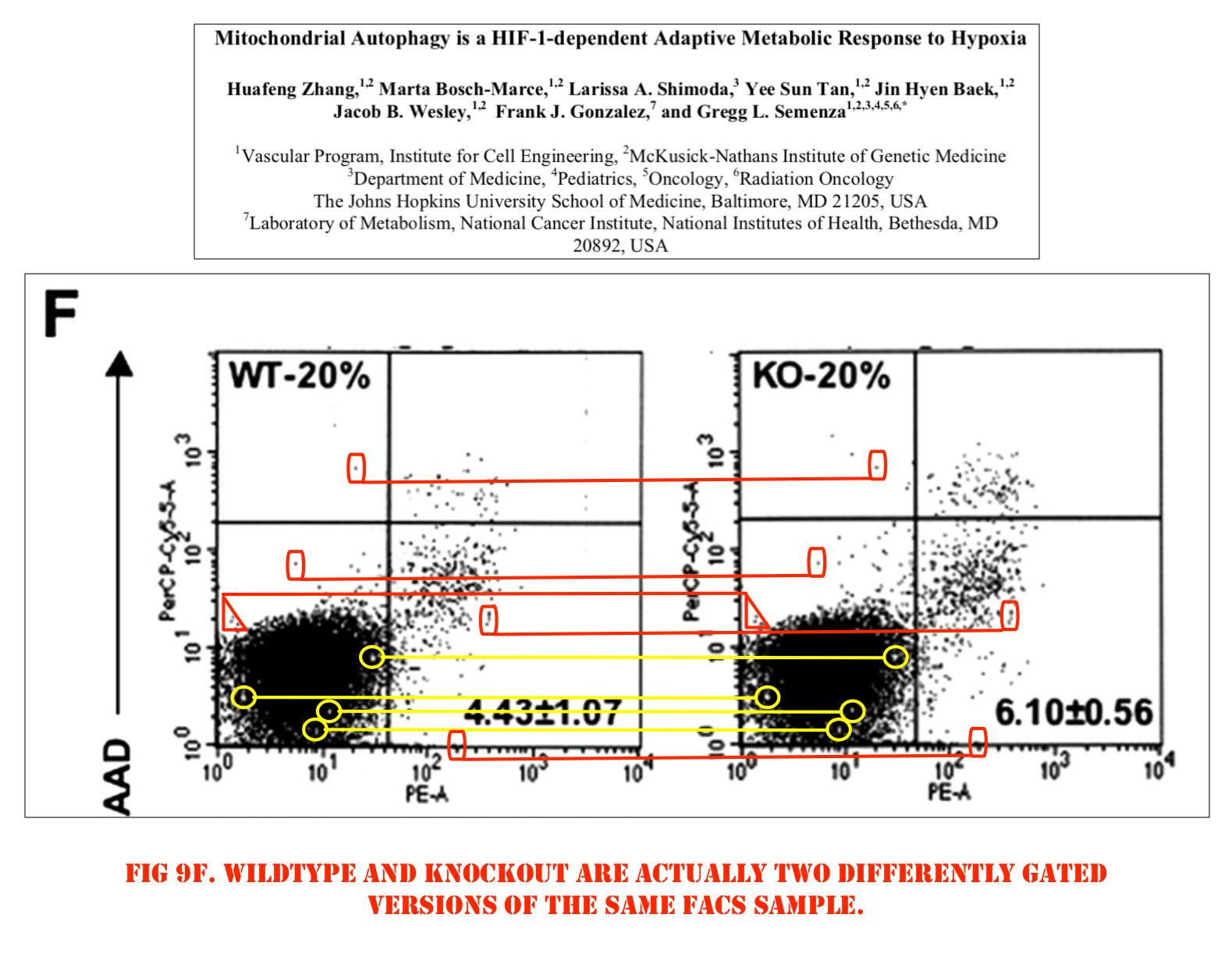
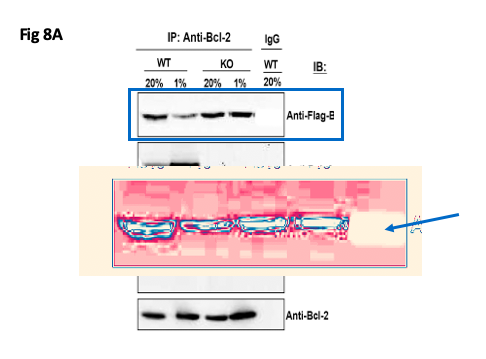
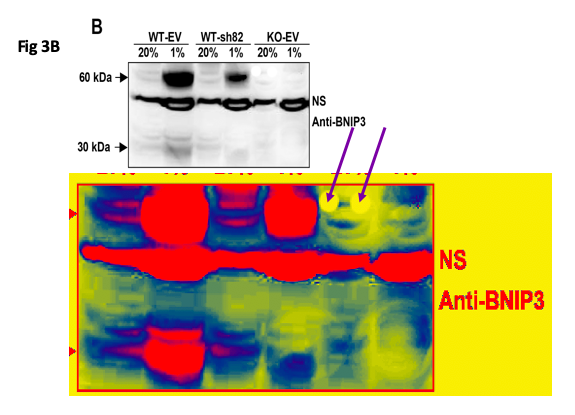
From Japan to China. Remember Huafeng Zhang, coauthor on several problematic papers from Semenza lab, and now professor at the University of Science and Technology of China in Hefei? Here another one:
Huafeng Zhang, Marta Bosch-Marce, Larissa A. Shimoda, Yee Sun Tan, Jin Hyen Baek, Jacob B. Wesley, Frank J. Gonzalez, Gregg L. Semenza Mitochondrial autophagy is an HIF-1-dependent adaptive metabolic response to hypoxia Journal of Biological Chemistry (2008) doi: 10.1074/jbc.m800102200
Update 17.10.2020
Welcome to the new episode of Gregg’s Photoshop Adventures. By now, first media reported, NRC (in Dutch). Recall the Gilkes et al Cancer Research 2013 paper briefly flagged at the very beginning above, for data reuse? It’s worse, than originally thought; contributed by Elisabeth Bik:

Daniele M Gilkes, Pallavi Chaturvedi, Saumendra Bajpai, Carmen C Wong, Hong Wei, Stephen Pitcairn, Maimon E Hubbi, Denis Wirtz, Gregg L Semenza Collagen prolyl hydroxylases are essential for breast cancer metastasis Cancer Research (2013) doi: 10.1158/0008-5472.can-12-3963
Update 19.10.2020
There are presently over 40 Semenza papers on PubPeer with serious concerns raised. Here a somewhat fresh one, for Cell Press to do diddly-squat about, as part of their advertisement programme for the ethically challenged among scientists:
Haiquan Lu, Ivan Chen, Larissa A. Shimoda, Youngrok Park, Chuanzhao Zhang, Linh Tran, Huimin Zhang, Gregg L. Semenza Chemotherapy-Induced Ca 2+ Release Stimulates Breast Cancer Stem Cell Enrichment Cell Reports (2017) doi: 10.1016/j.celrep.2017.02.001
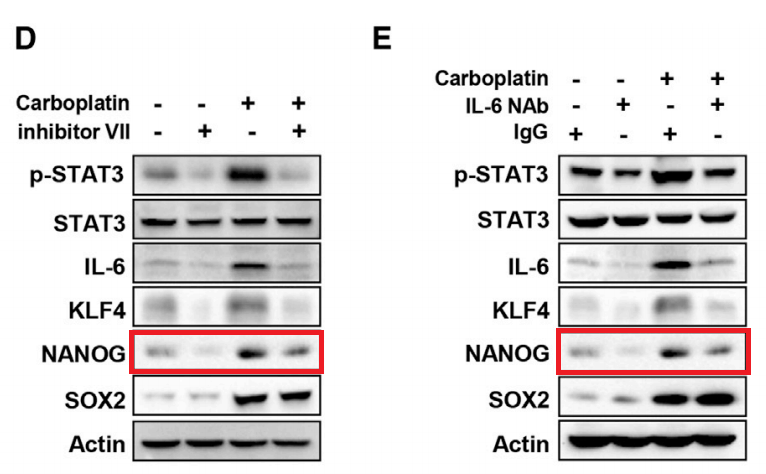
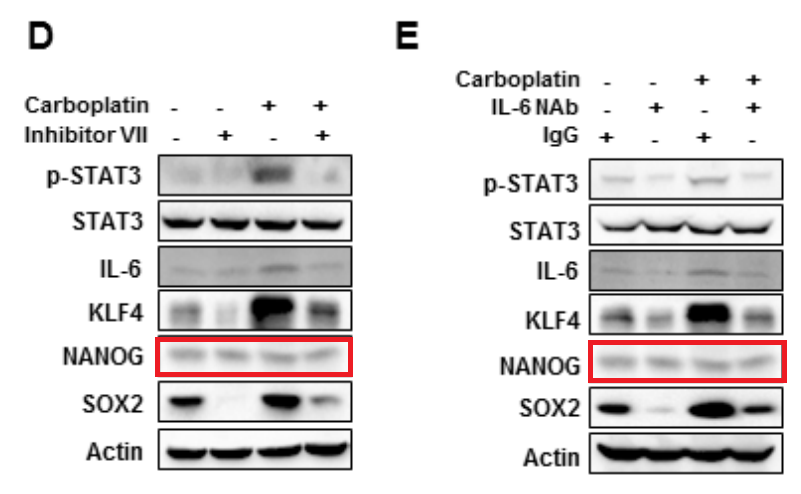
Very lazy approach, also the loading controls (STAT3, Actin) were from a “library”, and not from the same gel.
This is the oldest Semenza paper flagged so far, it is likely to be part of the Nobel Prize qualification:
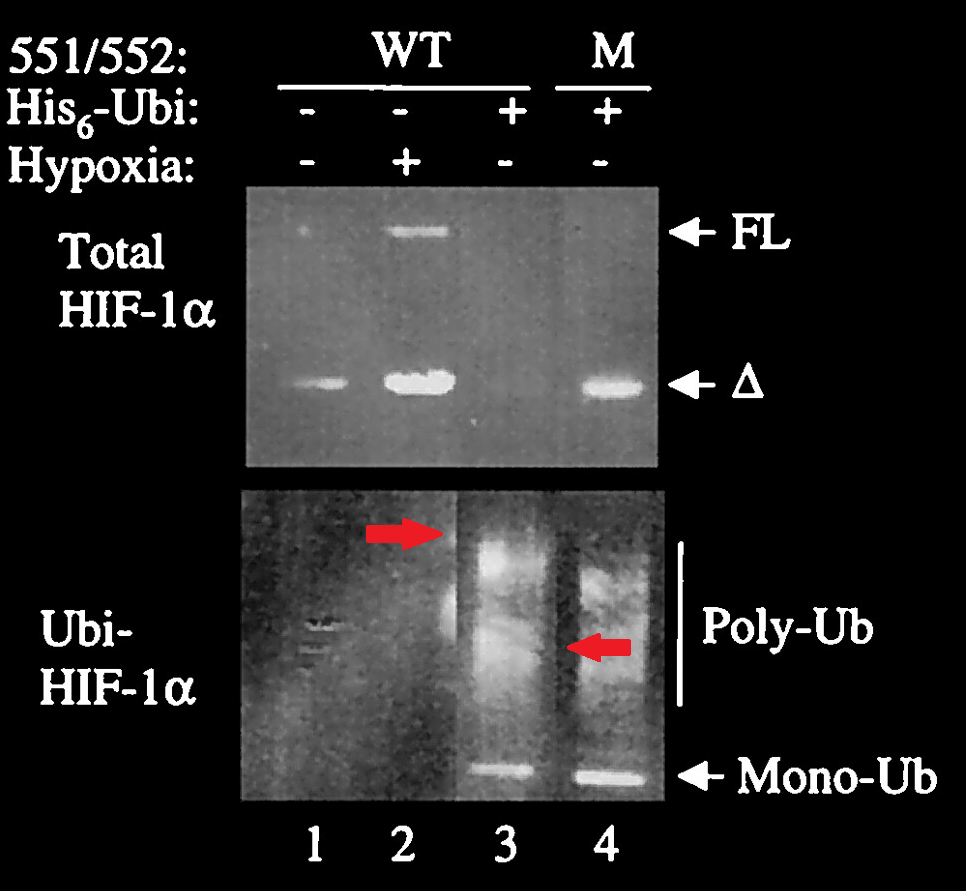
C. H. Sutter , E. Laughner , G. L. Semenza Hypoxia-inducible factor 1alpha protein expression is controlled by oxygen-regulated ubiquitination that is disrupted by deletions and missense mutations Proceedings of the National Academy of Sciences of the United States of America (2000) doi: 10.1073/pnas.080072497
Apparently, someone disagreed with the signal in the third lane, so it was overlaid with “better” results.
Jonathan Links, Vice Provost and Research Integrity Officer at Johns Hopkins University, replied to me again:
“I am acknowledging receipt of this additional information. I am reiterating what I told you previously: Please refer to the Johns Hopkins University Research Integrity policy—which I provided to you previously. Johns Hopkins will adhere to the federal research misconduct regulations and the provisions of that policy, which specifically address confidentiality.“
The policy is here, its procedure stipulates the appointment of an internal inquiry by the Hopkings School of Medicine before deciding on a formal investigation. I however do not know how the faculty can find anyone with “unresolved personal, professional or financial conflicts of interest” in such a high profile case.
Donate!
If you are interested to support my work, you can leave here a small tip of $5. Or several of small tips, just increase the amount as you like (2x=€10; 5x=€25). Your contribution to getting the Nobel prize abolished.
5.00 €

 For Better Science
H Zhang, C C L Wong, H Wei, D M Gilkes, P Korangath, P Chaturvedi, L Schito, J Chen, B Krishnamachary, P T Winnard, V Raman, L Zhen, W A Mitzner, S Sukumar, G L Semenza HIF-1-dependent expression of angiopoietin-like 4 and L1CAM mediates vascular metastasis of hypoxic breast cancer cells to the lungs Oncogene (2012) doi: 10.1038/onc.2011.365
Penultimate author already on the radar.
Cancer Res . 2006 Oct 1;66(19):9527-34. doi: 10.1158/0008-5472.CAN-05-4470.
HOXB7, a homeodomain protein, is overexpressed in breast cancer and confers epithelial-mesenchymal transition
Xinyan Wu 1, Hexin Chen, Belinda Parker, Ethel Rubin, Tao Zhu, Ji Shin Lee, Pedram Argani, Saraswati Sukumar
Affiliation
1Breast Cancer Program, Department of Oncology, Johns Hopkins University School of Medicine, Baltimore, Maryland, USA.
PMID: 17018609 DOI: 10.1158/0008-5472.CAN-05-4470
Figure 2B and 5C much more similar than expected.
https://pubpeer.com/publications/A5F447F64C5098FAA0AB5E8E357BE7#1
https://imgur.com/t8sMbLb
2016 correction.
https://pubpeer.com/publications/A5F447F64C5098FAA0AB5E8E357BE7#9
https://cancerres.aacrjournals.org/content/75/11/2401.full
In this article (Cancer Res 2006;66:9527–34), which appeared in the October 1, 2006, issue of Cancer Research (1), an incorrect Western blot scan was used for β-actin as a loading control in the right panel of Fig. 5C. The corrected panel appears below. The authors regret this error.
LikeLike
It is rumoured (Sweden has a small population) that the Nobel Committee for Physiology or Medicine has decided that Robert Weinberg will not receive a Nobel Prize because of his 5 retractions.
http://retractiondatabase.org/RetractionSearch.aspx#?auth%3dWeinberg%252c%2bRobert%2bA
If Gregg Semenza reaches 5 retractions would it be fair to retract his Nobel Prize?
LikeLike
Pingback: Bert Vogelstein and Heiko Hermeking mull lawsuits – For Better Science
If you get retractions before the Nobel Prize, you will not receive it (Robert Weinberg).
If you get the Nobel Price before retractions, you will not be retracted (Greg Semenza), even if the issues are bigger. Perhaps corrections, but no retractions.
LikeLiked by 1 person
March 15 2022
Correction: PHGDH Expression Is Required for Mitochondrial Redox Homeostasis, Breast Cancer Stem Cell Maintenance, and Lung Metastasis
Debangshu Samanta; Youngrok Park;Shaida A. Andrabi;Laura M. Shelton;Daniele M. Gilkes;Gregg L. Semenza
Author & Article Information
Cancer Res (2022) 82 (6): 1153.
https://doi.org/10.1158/0008-5472.CAN-21-4328
This is a correction to: PHGDH Expression Is Required for Mitochondrial Redox Homeostasis, Breast Cancer Stem Cell Maintenance, and Lung Metastasis
In the original version of this article (1), there was an error in Fig. 7F. Specifically, photomicrographs of a lung section from the same mouse (M2) injected with sh4 knockdown cells were inadvertently presented as lung sections from mice M1 and M2. The correct images have been provided, and the error has been corrected in the latest online HTML and PDF version of the article. The authors regret this error.
Reference
1. Samanta D, Park Y, Andrabi SA, Shelton LM, Gilkes DM, Semenza GL.
PHGDH expression is required for mitochondrial redox homeostasis, breast cancer stem cell maintenance, and lung metastasis.
Cancer Res 2016;76:4430–42.
LikeLike
Pingback: Bloch and the Greek Horrors – For Better Science
LikeLike
“We believe that the overall conclusions of the paper remain valid, but we are retracting the work due to these underlying concerns about the figures. We apologize for the inconvenience.”
God’s final message to his creation.
LikeLike
But the conclusions always remain valid. It’s the narrative that matters. AMEN.
LikeLiked by 1 person
Many will say:
“every great man has a few skeletons in his cupboard”.
The 4 retractions will be proof positive for these people that Gregg Semenza is a great man.
They will tap the side of their noses as if they are letting you know a deep secret (the way of the world).
LikeLike
4 September 2, 2022 Gregg Semenza retractions for image duplication:-
https://www.pnas.org/doi/full/10.1073/pnas.2213289119
https://www.pnas.org/doi/full/10.1073/pnas.2213285119
https://www.pnas.org/doi/full/10.1073/pnas.2213288119
https://www.pnas.org/doi/full/10.1073/pnas.2213287119
LikeLike
Scientific community celebrating the intrepid Retraction Watch Watchdogs in 3… 2….
LikeLike
That’s too cryptic.
On Sat, Sep 3, 2022 at 8:10 AM For Better Science < comment-reply@wordpress.com> wrote:
LikeLike
Hey, I could be wrong. Maybe RW and other proper journalists will pretend the 4 PNAS retractions by Nobel Prize laureate and JHU professor Semenza never happened. We will know next week!
LikeLike
Genes Dev . 2001 Oct 15;15(20):2675-86. doi: 10.1101/gad.924501.
FIH-1: a novel protein that interacts with HIF-1alpha and VHL to mediate repression of HIF-1 transcriptional activity
P C Mahon 1, K Hirota, G L Semenza
Affiliation
1
Institute of Genetic Medicine, Departments of Pediatrics and Medicine, The Johns Hopkins University School of Medicine, Baltimore, Maryland 21287-3914, USA.
PMID: 11641274 PMCID: PMC312814 DOI: 10.1101/gad.924501
Problematic data figure 7B. Much more similar than expected.
LikeLike
“Hi Laureen, Do we do anything with this or should I delete?“
https://forbetterscience.com/2022/08/03/editors-vs-the-anonymous/
LikeLike
https://retractionwatch.com/2022/09/03/nobel-prize-winner-gregg-semenza-retracts-four-papers/
“But even before that, the pseudonymous Claire Francis began pointing out potential image duplications and other manipulations in Semenza’s work on PubPeer, as described in October 2020 by Leonid Schneider.”
LikeLike
Some things even I can’t explain.
LikeLike
Yet more problematic data
J Biol Chem. 2013 Apr 12;288(15):10819-29. doi: 10.1074/jbc.M112.442939.
Epub 2013 Feb 19.
Hypoxia-inducible factor 1 (HIF-1) promotes extracellular matrix remodeling under hypoxic conditions by inducing P4HA1, P4HA2, and PLOD2 expression in fibroblasts
Daniele M Gilkes 1, Saumendra Bajpai, Pallavi Chaturvedi, Denis Wirtz, Gregg L Semenza
Affiliation
1Vascular Program, Institute for Cell Engineering, Johns Hopkins University School of Medicine, Baltimore, Maryland 21205, USA.
PMID: 23423382 PMCID: PMC3624462 DOI: 10.1074/jbc.M112.442939
Figure 2B. Much more similar than expected.
LikeLike
Pingback: Merito – ocasapiens
Only 2 years late!
https://www.nature.com/articles/d41586-022-03032-9
LikeLike
And no mention of either you or me. Nature is the Truth.
LikeLike
How Nobel! It ain’t Gregg Semenza, but a British knight.
https://www.nobelprize.org/prizes/medicine/2019/ratcliffe/facts/
Comment 3 (coming after a correction).
https://pubpeer.com/publications/F84C2476DF4FF221271FEF84633EF0#
LikeLike
6th retraction for Gregg Semenza.
pnas.org/doi/10.1073/pnas.2305537120
PNAS
RETRACTION
Retraction for Lee et al., Acriflavine inhibits HIF-1 dimerization, tumor growth, and vascularization April 26, 2023 120 (18) e2305537120 https://doi.org/10.1073/pnas.2305537120
Vol. 120 | No. 18
Retraction of “Acriflavine inhibits HIF-1 dimerization, tumor growth, and vascularization,” by KangAe Lee, Huafeng Zhang, David Z. Qian, Sergio Rey, Jun O. Liu, and Gregg L. Semenza, which was first published October 20, 2009; 10.1073/pnas.0909353106 (Proc. Natl. Acad. Sci. U.S.A. 106, 17910–17915). The undersigned authors note, “We are retracting this article due to issues regarding the bottom panel of Figure 2D. Visible in this blot are the GST-HIF-1β band of interest at the top, a faint doublet in the middle, and a strong band migrating just above GST at the bottom, which is likely a degradation product of GST-HIF-1β. It appears that in the middle doublet, lanes 2, 5, and 8 are duplicate images; lanes 3, 6, and 9 are duplicate images; and lanes 4 and 7 are duplicate images. There is also concern of possible manipulation of the data shown across the bottom band. We believe that the overall conclusions of the paper remain valid, but we are retracting the work due to these underlying concerns about the figure. We apologize for the inconvenience.” David Z. Qian, Sergio Rey, Jun O. Liu, and Gregg L. Semenza
LikeLike
Gregg Semenza’s 6 retractions nicely tabulated! Helps keep tabs on things.
http://retractiondatabase.org/RetractionSearch.aspx#?auth%3dSemenza%252c%2bGregg%2bL
LikeLike
7th Retraction for Gregg Semenza.
https://www.nature.com/articles/s41388-023-02720-8
Retraction Note
Published: 23 May 2023
Retraction Note: HIF-1-dependent expression of angiopoietin-like 4 and L1CAM mediates vascular metastasis of hypoxic breast cancer cells to the lungs
H. Zhang, C. C. L. Wong, …G. L. Semenza
Oncogene (2023)
The Original Article was published on 22 August 2011
Retraction to: Oncogene https://doi.org/10.1038/onc.2011.365, published online 22 August 2011
The authors have retracted this article as multiple image irregularities have been noted within this article, specifically:
Figure 1A, upper panel (HIF-1a blot), lanes five and seven appear to be duplicates.
Figure 6B, lower panel (b-actin blot), the first six lanes appear to be identical to Fig. 6G, lower panel (b-actin blot).
Figure 3G, the image of the third mouse in the D10 Saline group is identical to the image of the third mouse in the D21 Digoxin group.
G Semenza, CC Wong, P Korangath, L Schito, J Chen, B Krishnamachary, V Raman and S Sukumar agree to this retraction. D Gilkes does not agree to this retraction. H Zhang and W Mitzner have not responded to any correspondence from the editor about this retraction. The editor was not able to obtain current email addresses for H Wei, P Chaturvedi, L Zhen and PT Winnard.
Author information
Authors and Affiliations
Vascular Program, Institute for Cell Engineering, The Johns Hopkins University School of Medicine, Baltimore, MD, USA
H. Zhang, C. C. L. Wong, H. Wei, D. M. Gilkes, P. Chaturvedi, L. Schito, J. Chen & G. L. Semenza
Department of Oncology, The Johns Hopkins University School of Medicine, Baltimore, MD, USA
H. Zhang, P. Korangath, S. Sukumar & G. L. Semenza
McKusick-Nathans Institute of Genetic Medicine, The Johns Hopkins University School of Medicine, Baltimore, MD, USA
C. C. L. Wong, H. Wei, D. M. Gilkes, P. Chaturvedi, J. Chen & G. L. Semenza
Department of Radiology, The Johns Hopkins University School of Medicine, Baltimore, MD, USA
B. Krishnamachary, P. T. Winnard Jr & V. Raman
School of Life Science, The University of Science and Technology of China, Hefei, Anhui, China
H. Zhang
University of Rome ‘La Sapienza’, Rome, Italy
L. Schito
Division of Physiology, The Johns Hopkins University School of Public Health, Baltimore, MD, USA
L. Zhen & W. A. Mitzner
Departments of Pediatrics, Medicine, Radiation Oncology, and Biological Chemistry, The Johns Hopkins University School of Medicine, Baltimore, MD, USA
G. L. Semenza
Corresponding author
Correspondence to G. L. Semenza
LikeLike
Editor (Johns Hopkins) all smiles with Gregg Semenza (Johns Hopkins).
https://www.hopkinsmedicine.org/profiles/details/larissa-shimoda
https://pubpeer.com/search?q=Larissa+shimoda
LikeLike
https://www.msn.com/en-us/news/technology/nobel-laureate-hopkins-researcher-retracts-additional-articles-bringing-total-to-six-in-two-years/ar-AA1eCFVx
LikeLike
Glad to see Ivan Oransky and Retraction Watch once again get credited with my reporting.
LikeLike
Two fresh retractions in J Biol Chem for Gregg Semenza. J Biol Chem uses the word withdrawal instead of retraction.
https://www.jbc.org/article/S0021-9258(23)02153-1/fulltext
https://www.jbc.org/article/S0021-9258(23)02172-5/fulltext
LikeLike
Retraction number 10, Gregg Semenza, Mol Cancer Research 2nd October 2023.
https://aacrjournals.org/mcr/article/21/10/1120/729213/Retraction-Procollagen-Lysyl-Hydroxylase-2-Is
LikeLike
” This article (1) has been retracted at the request of the authors. The authors found that lanes 4, 5, and 6 of the HIF-1α immunoblot in Fig. 3A are identical images. An internal review corroborated the authors’ claim, and the editors agreed with the authors’ retraction request. The authors apologize to the scientific community and deeply regret any inconveniences or challenges resulting from the publication and subsequent retraction of this article.”
This is just sad and pathetic. At lrast Semenza wasn’t allowed to blame a nameless student who wasn’t a coauthor and left the lab decades ago.
LikeLike
I think people pointed out the problematic data at Pubpeer.
The culprits did no turn themselves in.
Editor-in- chief C Molecular Cancer Research is:
The lesson for today is:
If you get 10:retractions, you get to keep your Nobel Prize.
LikeLike