

The geneticist Kay Davies received every possible high honour the British society can bestow. She is the Dame Commander of the Order of the British Empire, Fellow of Royal Society, winner of Women in Science and Engineering Lifetime Achievement Award, and many other things. Her carefully curated Wikipedia page educates us what a scientific genius, a superior human being and a life-saviour of sick children she is:
“Dame Kay Elizabeth Davies, DBE FRS FMedSci (née Partridge; born 1 April 1951) is a British geneticist. She is Dr Lee’s Professor of Anatomy at the University of Oxford and a Fellow of Hertford College, Oxford. She is director of the Medical Research Council (MRC) functional genetics unit, a governor of the Wellcome Trust, a director of the Oxford Centre for Gene Function, and a patron and Senior Member of Oxford University Scientific Society. Her research group has an international reputation for work on Duchenne muscular dystrophy (DMD). In the 1980s, she developed a test which allowed for the screening of foetuses whose mothers have a high risk of carrying DMD.[citation needed]“
Davies has been last seen as Wellcome Trust governor and deputy chair in 2017, and disappeared completely from the governor board in 2019. She probably has more important things to do meanwhile. What the Wikipedia fails to mention, is Dame Kay’s problematic PubPeer record, discussed below. The only common author on all these criticised papers is the Dame Commander of the Order of The British Empire. Davies is also Editor-in-Chief of the journal Human Molecular Genetics (HMG), published by Oxford University Press. In this function, she occasionally tells whistleblowers to get lost when they report to her fabricated data which her journal published.
For example, in the affair of German diabetes researcher and zombie scientist Kathrin Maedler, and her publication Le Bacquer et al, HMG 2011, Davies declared to me despite clear evidence of research misconduct “that the data are fine after looking at raw data“.
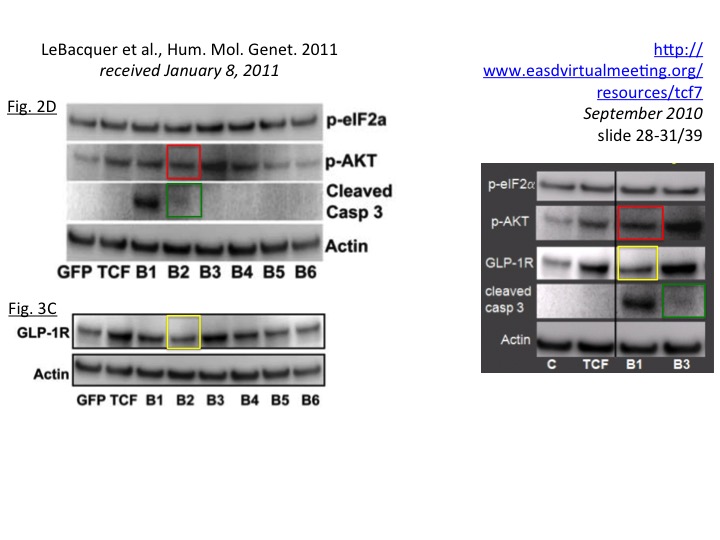
Maedler’s past collaborator and the paper’s other corresponding author Philippe Froguel asked Davies for retraction, only to be told by Davies “that the agreement of both corresponding authors was necessary”. Obviously Maedler did not agree, the paper was left untouched. The case is described in detail here.
A similar case was recorded on PubPeer. A paper by the Napoletan autophagy researcher Andrea Ballabio, Settembre et al HMG 2008, was flagged for clear data manipulation. Gel bands were slapped-on in Photoshop, the authors probably did not approve of the original experimental result.
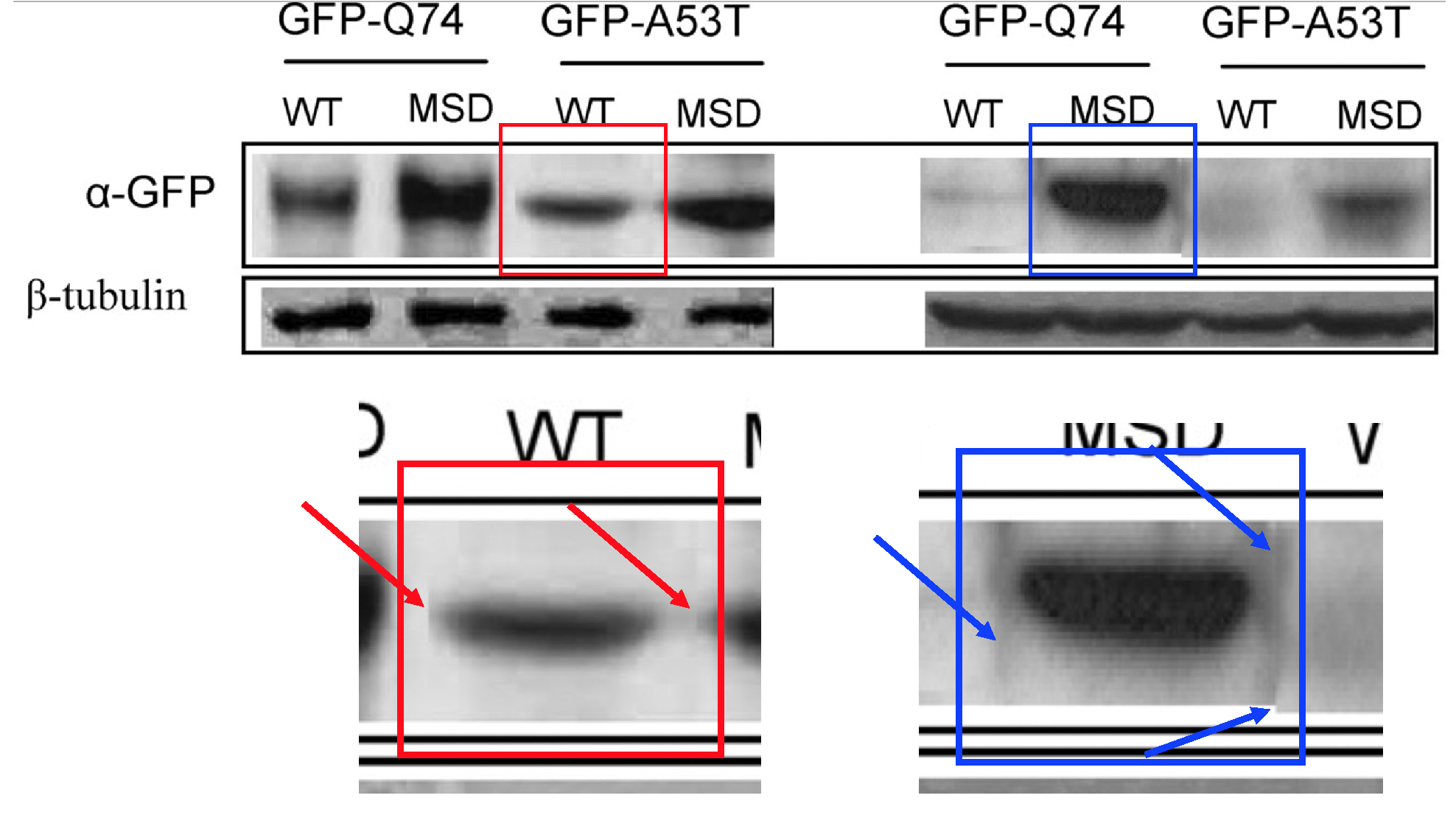
Ballabio has an impressive PubPeer record, his past collaborators on criticised papers include the infamous Napoletan fraud kingpin Alfredo Fusco. Maybe this is why Davies saw again the need to protect a fellow Photoshop artist, she is namely quoted with this in Ballabio’s defence:
“The authors have thoroughly checked through the original data and presented the results to us. We are completely satisfied with their response. This has been looked into in considerable detail and we are happy that there has been no data manipulation.”
Another former Ballabio collaborator is the Napoletan Maria Pia Cosma, now award-winning zombie scientist at CRG in Barcelona where she was whitewashed some years ago by none other than the Holy Inquisitor of Heresy and Blasphemy, Juan Valcarcel. Cosma was however investigated back in Italy, and corrections were requested. Some did happen, others did not. This Fraldi et al HMG 2008 paper from Cosma’s old lab in Naples was left untouched despite clear evidence of blatantly photoshopped gel images, with many copy-pasted gel bands.
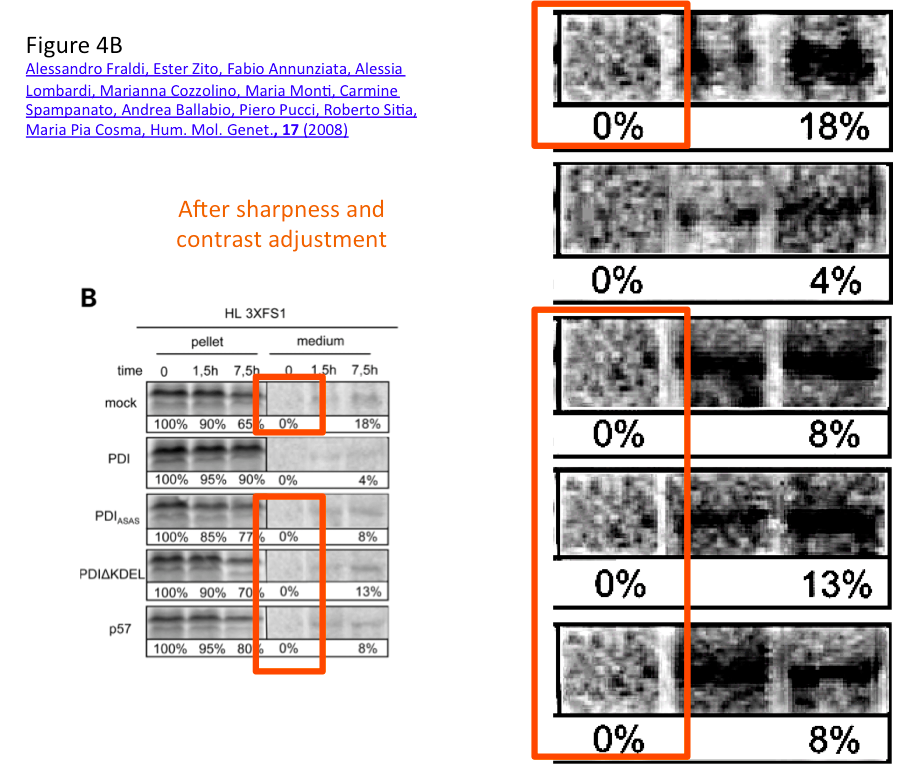
Conveniently for Cosma and Ballabio, the HMG editor Dame Kay was busy commandeering the British Empire and the UK science.
But of course it is not only the papers from other Photoshop artists with which Dame Kay allows to pollute her own journal, Human Molecular Genetics. She herself shows how science is done properly. First, let’s have a look at this 15-year-old collaborative study. But do not start pointing people at Dame Kay’s Japanese coauthors before you finish reading this article.
Michiko Ishikawa-Sakurai, Mikiharu Yoshida, Michihiro Imamura, Kay E Davies, Eijiro Ozawa ZZ domain is essentially required for the physiological binding of dystrophin and utrophin to beta-dystroglycan Human Molecular Genetics (2004) doi: 10.1093/hmg/ddh087

This protein binding assay is radioactive beyond what is the conventionally accepted in molecular biology. Highlighted areas were obviously duplicated, after some stretching and contrast adjustment. A paper like this should be disposed of as a toxic radioactive waste.
Now, let’s move on to an HMG paper from Dame Kay’s own lab in Oxford.
Emmanuelle Bitoun, Peter L. Oliver, Kay E. Davies The mixed-lineage leukemia fusion partner AF4 stimulates RNA polymerase II transcriptional elongation and mediates coordinated chromatin remodeling Human Molecular Genetics (2007) doi: 10.1093/hmg/ddl444
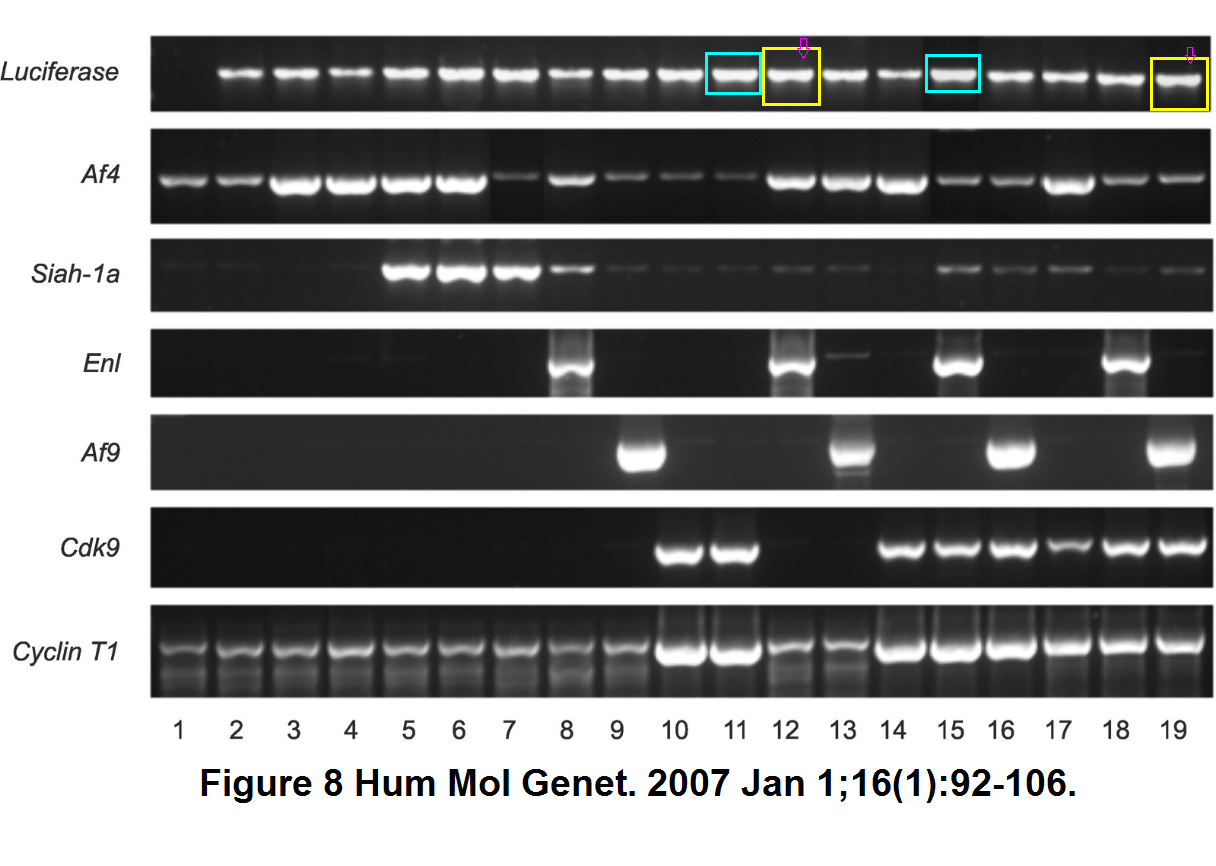
Lane 15 has darker background than its neightbours. Please compare bands lanes 11 and 15.”
The bands highlighted in the luciferase RT-PCR panel are too similar, they are probably duplicated. As reminder, this was published by the chief editor in her own journal.
One year later, someone got bored. A gel was simply copy-pasted 4 times, each time as a different RT-PCR reaction. One right below the other, and nobody at that Springer journal noticed.
Karl J. A. McCullagh, Ben Edwards, Matthew W. Kemp, Laura C. Giles, Matthew Burgess, Kay E. Davies Analysis of skeletal muscle function in the C57BL6/SV129 syncoilin knockout mouse Mammalian Genome (2008) doi: 10.1007/s00335-008-9120-2
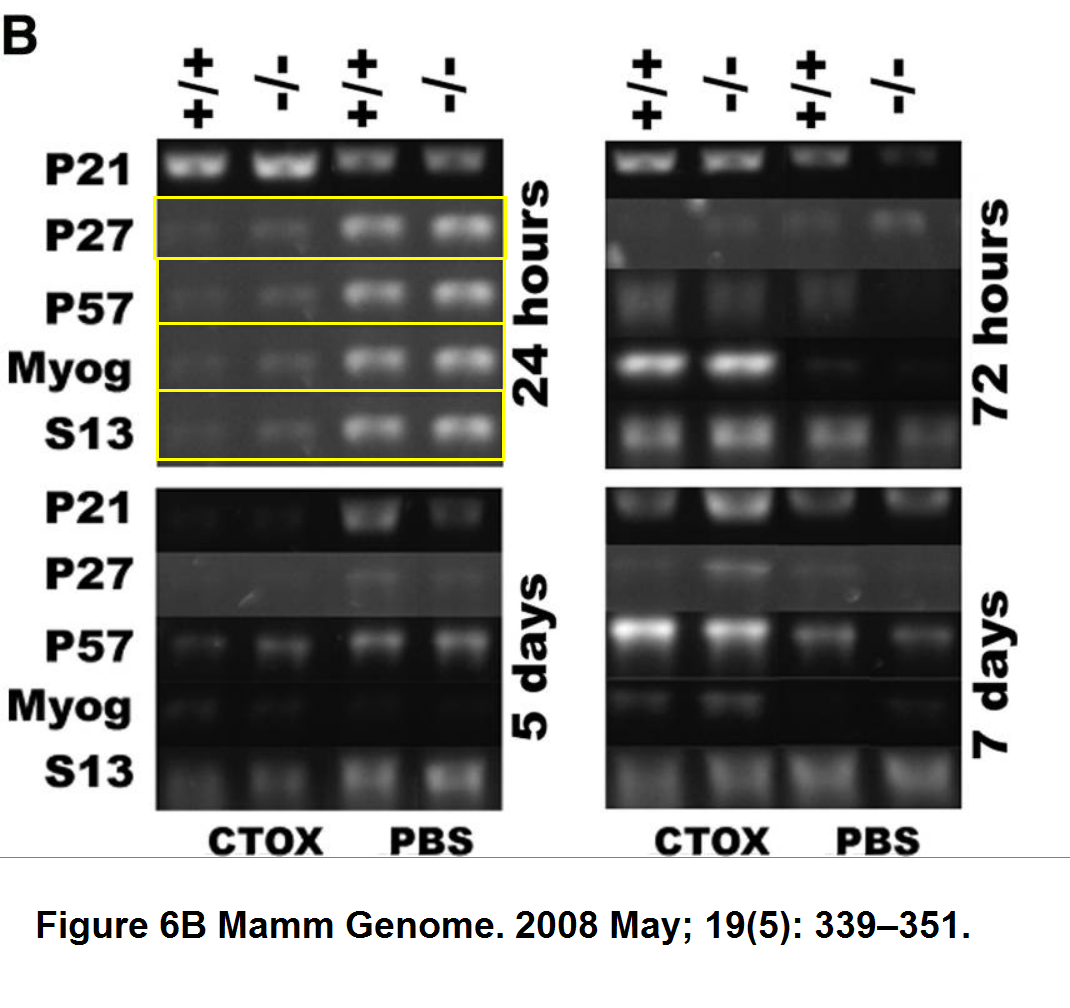
The Oxford professor Davies picked her publishing venues carefully. Cell Press is a safe harbour for dishonest science, the Elsevier-owned publishing house made clear on various occasions (here and here, including in case of Maria Pia Cosma) that data manipulation does not warrant any editorial action whatsoever. Hence, this paper in the Cell Press journal Molecular Therapy:
Aurélie Goyenvalle, Jordan Wright, Arran Babbs, Vivienne Wilkins, Luis Garcia, Kay E Davies Engineering multiple U7snRNA constructs to induce single and multiexon-skipping for Duchenne muscular dystrophy Molecular Therapy (2012) doi: 10.1038/mt.2012.26
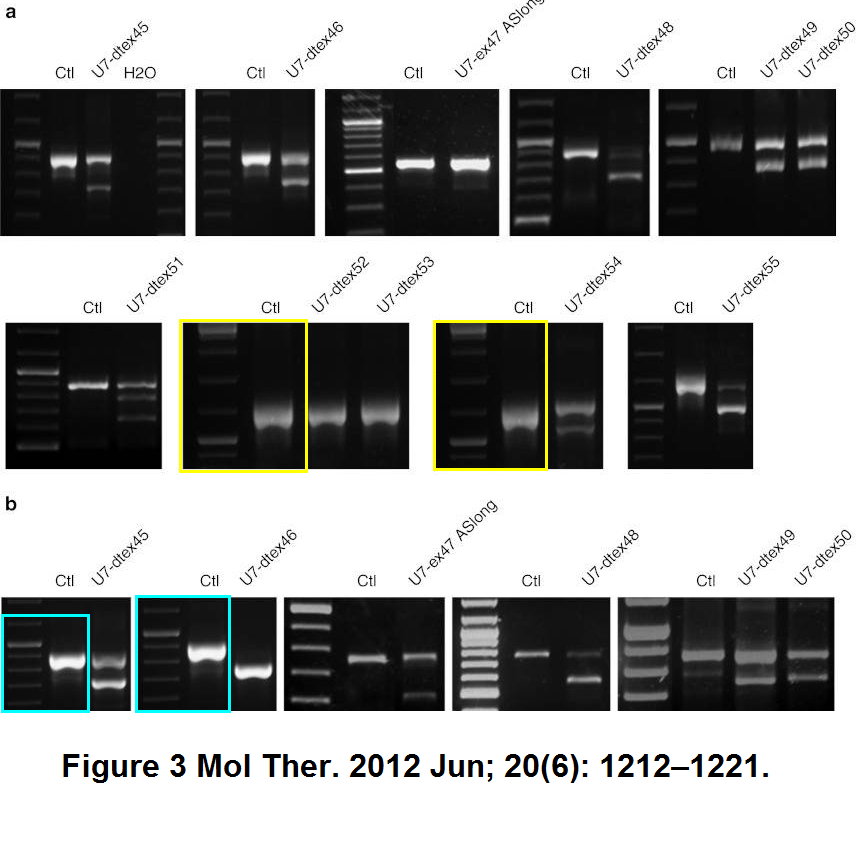
It’s just the controls, right? Sure, the highlighted gels were fabricated in Photoshop, but you can rest assured Cell Press will not care the slightest bit. Also the following paper appeared in a Cell Press journal, just last year. The problem was recently spotted by the hobbyist image integrity sleuth Cheshire:
Tahnee L. Kennedy, Simon Guiraud, Ben Edwards, Sarah Squire, Lee Moir, Arran Babbs, Guy Odom, Diane Golebiowski, Joel Schneider, Jeffrey S. Chamberlain, Kay E. Davies Micro-utrophin Improves Cardiac and Skeletal Muscle Function of Severely Affected D2/mdx Mice Molecular Therapy — Methods & Clinical Development (2018) doi: 10.1016/j.omtm.2018.10.005

Here, same image of a tissue sample was used to present data from one vehicle control mouse and one mouse infected with a transgene-expressing adeno-associated-virus. That the image was slightly rotated, cropped and possibly digitally retouched suggests that was not a mistake of oversight, but likely intentional data manipulation.
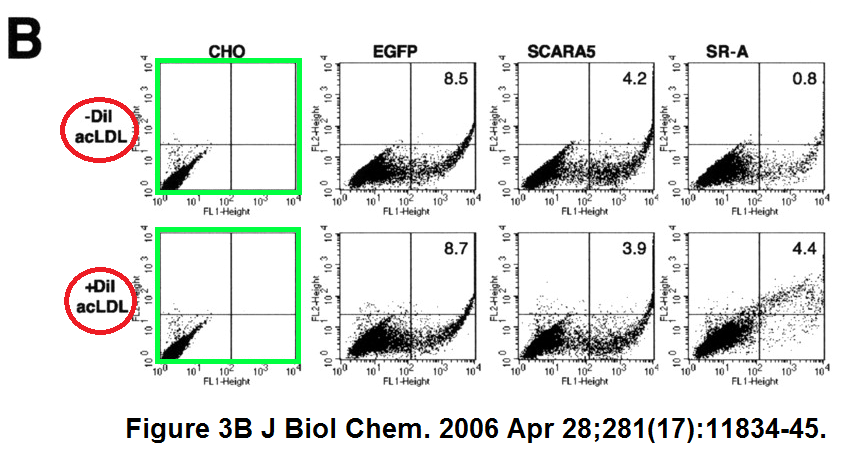
There is hope that at least one journal can start a process. Because Davies has also published in the no-nonsense Journal of Biological Chemistry. The issue is relatively minor, a duplicated flow cytometry plot, but it might get things moving.
Yanyan Jiang, Peter Oliver, Kay E. Davies, Nick Platt Identification and characterization of murine SCARA5, a novel class A scavenger receptor that is expressed by populations of epithelial cells The Journal of biological chemistry (2006) doi: 10.1074/jbc.m507599200
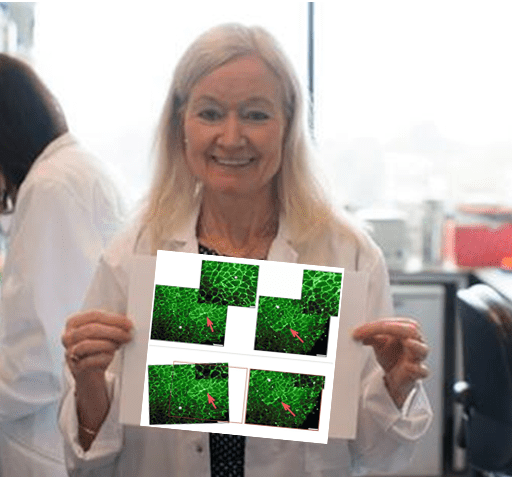
Now you might think, well one rotten apple but surely we can trust the rest of British highest academic elites and the nation’s science leadership? It depends. Have you seen the PubPeer record of the Scientific Director of Cancer Research UK (CRUK), Karen Vousden?
Update 11.03.2020
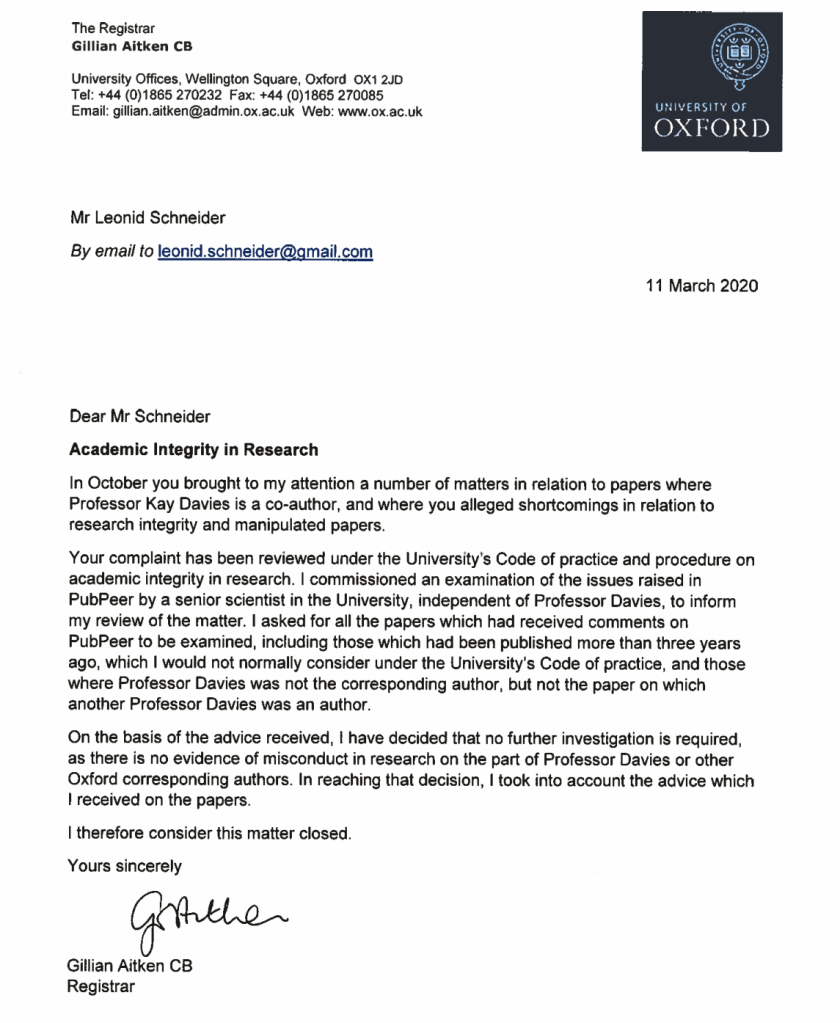
The registrar of University of Oxford, Gillian Aitken, pronounced to me that the PubPeer evidence bears no merit (highlights mine):
“Your complaint has been reviewed under the University’s Code of practice and procedure on academic integrity in research. I commissioned an examination of the issues raised in PubPeer by a senior scientist in the University, independent of Professor Davies, to inform my review of the matter. I asked for all the papers which had received comments on
PubPeer to be examined, including those which had been published more than three years ago, which I would not normally consider under the University’s Code of practice, and those where Professor Davies was not the corresponding author, but not the paper on which another Professor Davies was an author.On the basis of the advice received, I have decided that no further investigation is required, as there is no evidence of misconduct in research on the part of Professor Davies or other Oxford corresponding authors. In reaching that decision, I took into account the advice which I received on the papers.
I therefore consider this matter closed.”
Donate!
If you are interested to support my work, you can leave here a small tip of $5. Or several of small tips, just increase the amount as you like (2x=€10; 5x=€25). Your generous patronage of my journalism, however small it appears to you, will greatly help me with my legal costs.
€5.00

 For Better Science
23 November 2023 correction (Editor’s Note) for Kay Davies.
Correction for:
ZZ domain is essentially required for the physiological binding of dystrophin and utrophin to β-dystroglycan
Michiko Ishikawa-Sakurai, Mikiharu Yoshida, Michihiro Imamura, Kay E. Davies, Eijiro Ozawa
Human Molecular Genetics, Volume 13, Issue 7, 1 April 2004, Pages 693–702, https://doi.org/10.1093/hmg/ddh087
Published: 12 February 2004
23 November 2023 correction.
https://academic.oup.com/hmg/advance-article/doi/10.1093/hmg/ddad200/7442735
“This is an Editor’s Note regarding: Human Molecular Genetics, Volume 13, Issue 7, 1 April 2004, Pages 693–702, https://doi.org/10.1093/hmg/ddh087
Concerns about the presentation of Figures 1B, 2B, 3C, and 3D were raised on PubPeer in 2013, 2019, and 2020, and a whistleblower alerted the current editorial team to the potential issues in August 2023. The Editors then contacted the corresponding author. Because the experiments were conducted 20 years ago, the authors no longer have the original data.
However, the authors have provided the following explanation about the appearance of edges along the panels of Figures 1B, 3C, and 3D, which is due to experimental processing, rather that image alteration: “In an overlay assay, the protein sample to be bound is electrophoresed and transferred to a membrane, the membrane is cut into strips, and the different probes which are examined for binding to the protein, are separately overlayed on each strip and incubated separately. The strips are then washed to remove unbound probe molecules. Strip washing is made separately to prevent mixing of the probes. Then the stripes are arranged on a plate. In the resulting panel thus made, the probes on the strips are detected in a manner dependent on the examiner’s choice. This gives the results. Because probes often bind nonspecifically at the cut edges of the strips and because there are often discrepancies in washing, the process often results in longitudinal lines and background discrepancies, respectively. Gaps between lanes are also detected due to strip alignment.”
Regarding the potential similarity in the D-deltaF and D-ZZ panels of Figure 2B, the journal conducted further image analysis and the Editors reviewed their findings with the authors. Together they determined that while the lanes appear very similar, they are not identical.
While these issues may not affect the results or conclusion of the study, in the absence of original data, the Editors advise readers to examine these figures with care.”
“In the resulting panel thus made, the probes on the strips are detected in a manner dependent on the examiner’s choice.”
Sounds very subjective.
LikeLike
Just because Dame Kay is thick as two planks doesn’t mean she can treat us like we are her fellow idiots.

LikeLike