
In Spain, there seems to be a tradition of reacting to emerging evidence of data manipulation with handing out prestigious awards to authors of these papers. This is how we were all taught that all the PubPeer evidence matters nothing whatsoever, as Pura Munoz-Canoves, Maria Pia Cosma and Manel Esteller were celebrated with prizes and grants for their research achievements (read here , here and here). Now there is a new popular academic hero in Spain, Carlos López-Otín, Professor of Biochemistry and Molecular Biology at the University of Oviedo, and EMBO member. Lopez-Otin was now awarded a 2017 Mentoring Award, presented to him by Sir Philip Campbell, on behalf of his journal Nature, which Editor-in-Chief Sir Philip has been for the last 22 years.
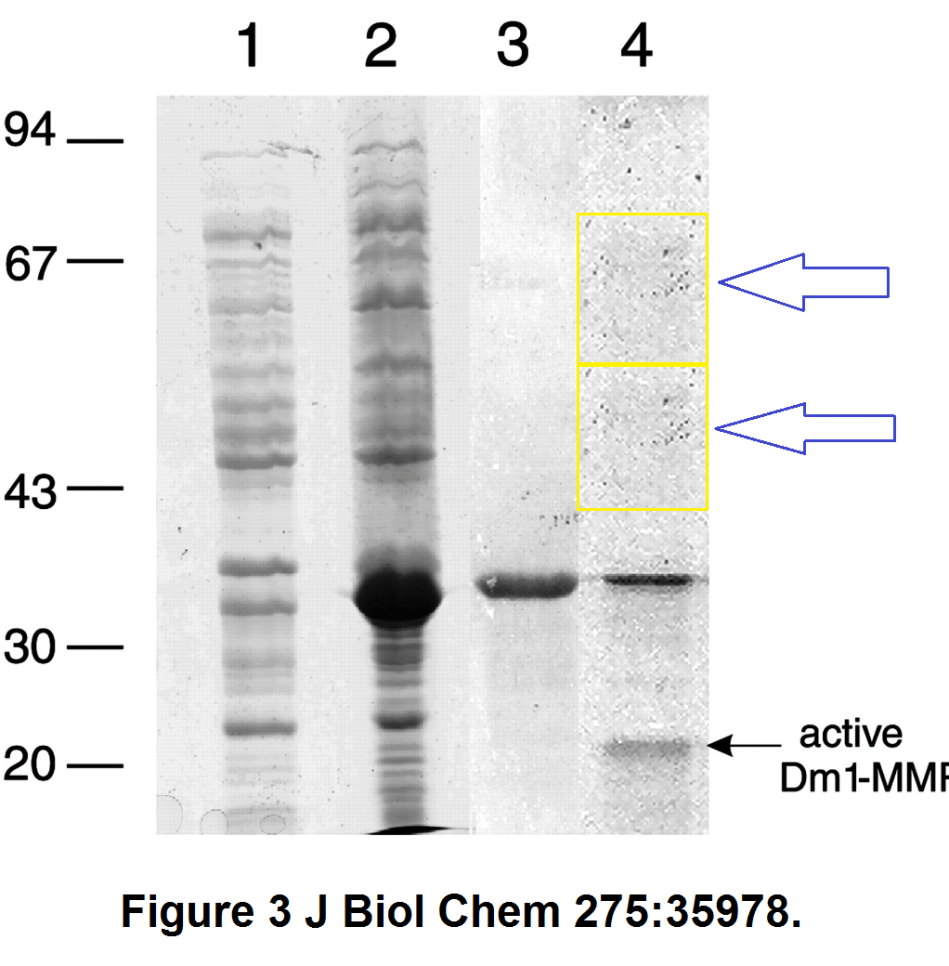
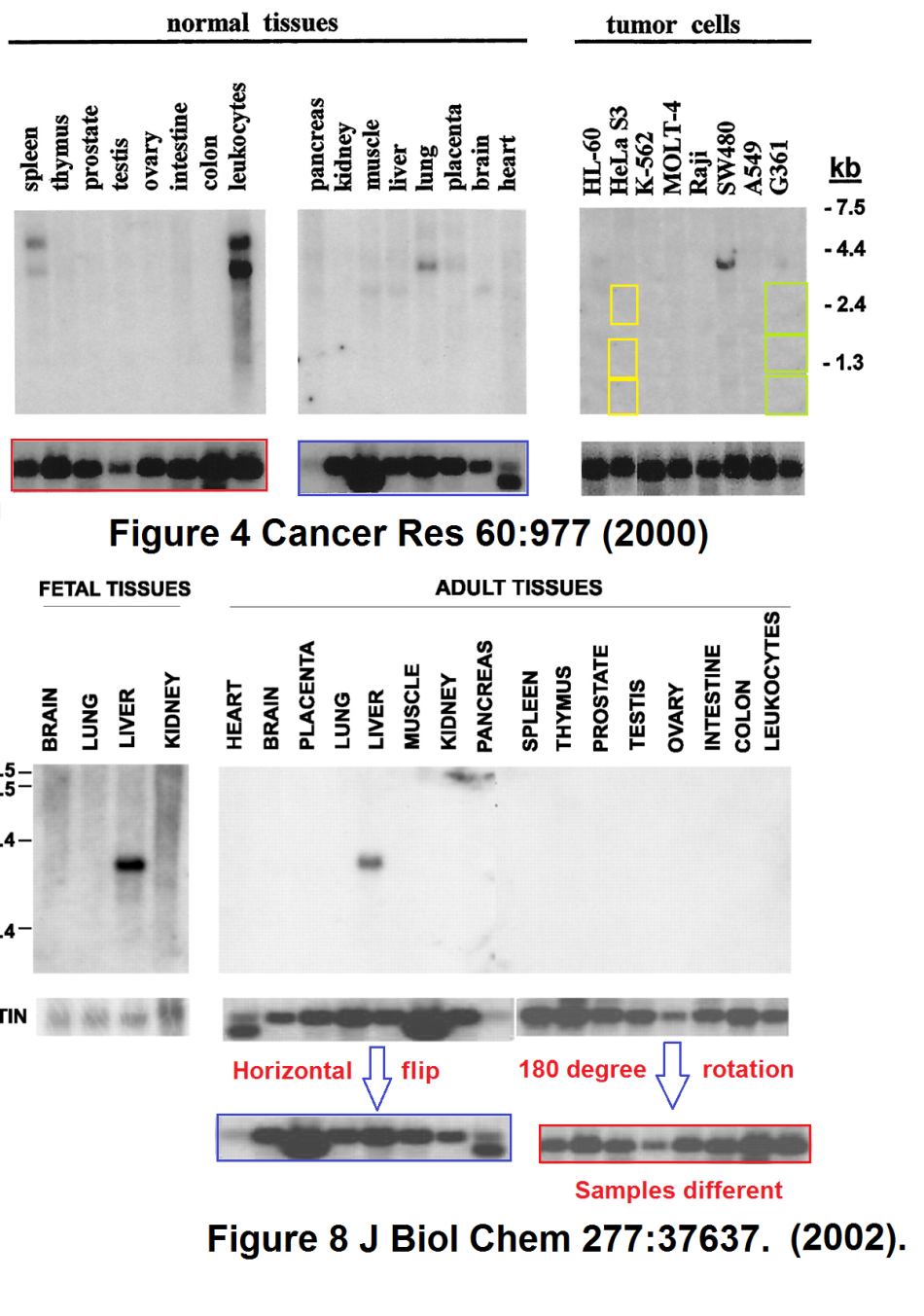
The journal Nature remains the highest authority in science, this Mentoring Award is Sir Philip’s parting present to the Nature-reading scientific community, as he is being promoted inside Springer Nature’s publishing hierarchy. It is in this way a statement of what Nature and its publisher think of research integrity. Lopez-Otin’s evidence record on PubPeer is telling enough, however most of the evidence of digitally manipulated gel images there was posted around 2-3 months ago, by the pseudonymous Claire Francis. Maybe the evidence appeared too late, and the award decision couldn’t be stopped anymore. Which would explain why Nature deleted their own tweet announcing the mentorship awards after I replied to it with PubPeer evidence on Lopez-Otin’s papers. According to another Nature website, which was for some reason also deleted, the closing date for nominations was Monday 31 July 2017. So I share some examples below, all are from papers where Lopez-Otin is last and corresponding author.
Nature tweeted the article about mentorship awards in Spain, to which I replied. Unlike with other social media, you cannot remove replies to your tweets if you disagree with those. Pop, the original Nature tweet was deleted, Nature followers on Twitter were then spared reading this filth:
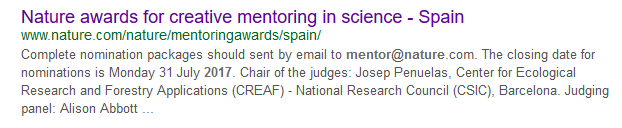
The Nature site which invited award nomination from Spain, was gone as well. This was the awarding committee, according to residues that site left Google search and this source:
Chair of the judges: Josep Penuelas, Center for Ecological Research and Forestry Applications (CREAF) – National Research Council (CSIC), Barcelona
Judging panel:
Alison Abbott, Nature, Munich, Germany
Emilia R. Solano, CIEMAT, Madrid, Spain
Juan Lerma, Instituto de Neurociencias de Alicante – UMH, Alicante, Spain
Mariano Barbacid, Centro Nacional de Investigaciones Oncológicas, Madrid, Spain
Pilar Ruiz Lapuente, Institute of Cosmos Sciences, University of Barcelona, Barcelona, Spain

For some reason, jury member Alison Abbot failed to mention her decisive role in her follow-up Nature article, while the past one listing her as member of the judging panel was deleted.
When issuing the award, Sir Philip said about Lopez-Otin:
“Spain’s great examples are no exception – they are extraordinary in their ability to nurture emerging scientists of great diversity.”
Extraordinary re-use of a loading control indeed, in this paper from Lopez-Otin lab:
Alison Abbot, who was one of the judges, later wrote in this Nature article:
“López-Otín’s mentees praised his ability to draw out and encourage even the shyest lab member. “Carlos gave me the strength to pursue an independent career as a principal investigator,” one wrote. “He made me feel that my career was a priority for him, and it is thanks to him that my career has advanced further than I would ever have imagined.” Another noted how López-Otín had encouraged trainees to read widely and think big. “Carlos told me that ground-breaking work comes from broad scientific knowledge, while overspecialization is the path to small science.”
Nominators said that López-Otín insisted on celebrating every accepted paper or project in the lab and was widely generous with advice”.
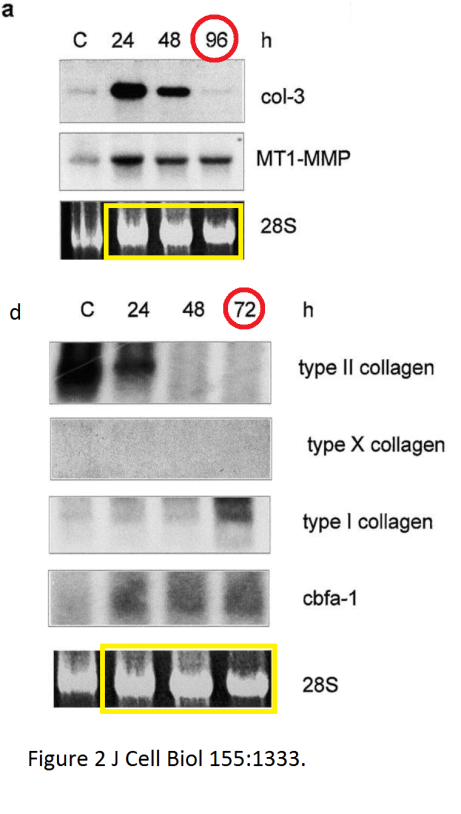
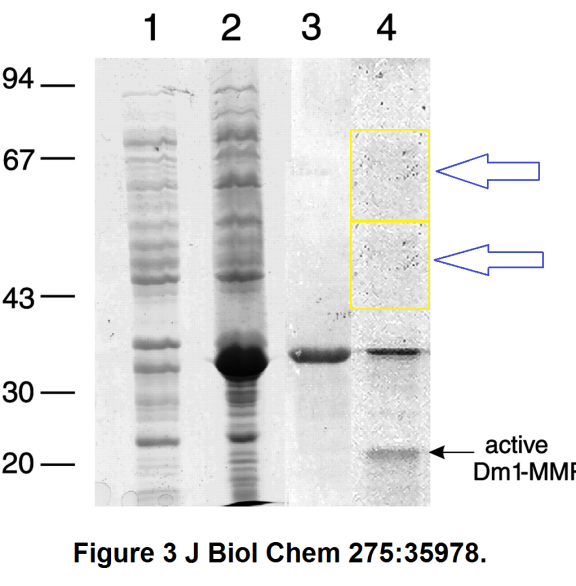
One wonders, how was this copy-pasting on the background, apparently required in order to get this paper accepted, celebrated?
Another quote from the Nature article by Alison Abbot:
“Carlos has been a constant catalyst of scientific activities in Asturias, a region marked by decades of economic and social distress,” wrote one of his mentees”.
In this vein, was prompting people to clone gel bands part of those catalytic activities of the mentorship award-winner Lopez-Otin?

Even Sir Philip’s own Nature family wasn’t spared of Lopez-Otis irregularities. This PubPeer post discusses Soria-Valles et al, Nature Cell Biology, 2015, and how the provided original blot images in the supplementary data do not match their published figure counterparts.
Donate!
If you are interested to support my work, you can leave here a small tip of $5. Or several of small tips, just increase the amount as you like (2x=€10; 5x=€25). Your generous patronage of my journalism will be most appreciated!
€5.00

 For Better Science
J Biol Chem. 1999 May 14;274(20):13800-9.
Molecular cloning and structural and functional characterization of human cathepsin F, a new cysteine proteinase of the papain family with a long propeptide domain.
Santamaría I1, Velasco G, Pendás AM, Paz A, López-Otín C.
Author information
1
Departamento de Bioquímica y Biología Molecular, Facultad de Medicina, Universidad de Oviedo, 33006-Oviedo, Spain.
How many biological forms can you see?
See: https://imgur.com/1J1hiFp
LikeLike
Pingback: How Lopez-Otin et al mocked data policy at Nature Cell Biology – For Better Science
Pingback: Lopez-Otin and Kroemer: birds of a feather flock together – For Better Science
Pingback: Lopez-Otin and Daley retract Nature Cell Biology paper – For Better Science
Pingback: El Teatro de la Ciencia y la Academia. El Otín-Gate – Investigadores En Paro
Pingback: El Teatro de la Ciencia y la Academia. El Otín-Gate – Información Alternativa
Pingback: El caso López-Otín de fraude científico - La Ciencia de la Mula Francis
Pingback: Carlos Lopez-Otin and the revoked Nature Mentoring Award – For Better Science