

In the past months, Smut Clyde has been deep-diving into papermill citation market, and he now returns to the surface to tell you what he saw.
The short version is: some people (let’s not call them scientists) pay money to a papermill broker to have their “works” cited. The broker assembles all to-cite papers from all their clients into a list and hands it out to the papermill which produces the “research” papers. In each paper, no matter its topic, the list of to-cite papers gets replicated in the reference section in exactly the same sequence, with random words in main text referring to unrelated papers someone paid to see cited, and without any regard to meaning or sanity. Having been paid by the citation broker, the papermill seeks a second source of income, by selling the authorships on these papers which cite the list. And here is where it gets even crazier: sometimes there are no buyers, or the papermill doesn’t bother to find buyers because thanks to AI and its LLM, the production of “research papers” is cheap and fast these days. Thus, authors are invented, but not randomly: these fictional scholars often hail from countries which the publishers support with publication fees wavers – countries like Ukraine. After all, a dollar saved is a dollar earned for the papermill, and those waived publication fees are a tremendous saving. And of course this entire scheme would never fly, were it not for the open-door policy of certain “peer-reviewed” journals where nobody reads anything, or cares about anything but money – at Elsevier, Springer Nature and Wiley.
Smut Clyde will now show you many hilarious examples of how this bizarre scheme works in practice. Here is one, to disprove the popular misconception that papermill and citations fraud is not a “first-world” problem:
Please applaud the title of this amazing study in a Springer Nature journal with impact factor of 21.8(!!!), authored by not one, not two, but three German professors of medicine from the University Clinic Hamburg-Eppendorf – Prof. Dr. med. Dr. med. dent. Martin Gosau (director of the Clinic of Oral and Maxillofacial Surgery) and his two colleagues, Prof. Dr. med. Dr. med. dent. Reinhard Friedrich and Prof. Dr. med. Dr. med. dent. Ralf Smeets:
Ming Yan , Martin Gosau , Reinhard E. Friedrich , Ralf Smeets , Yi Yang , Ling-ling Fu Evolution of microstructure, electromagnetic shielding, and in vitro corrosion properties of Mg-Ni composites for cancer biomarker applications Advanced Composites and Hybrid Materials (2025) doi: 10.1007/s42114-024-01150-8
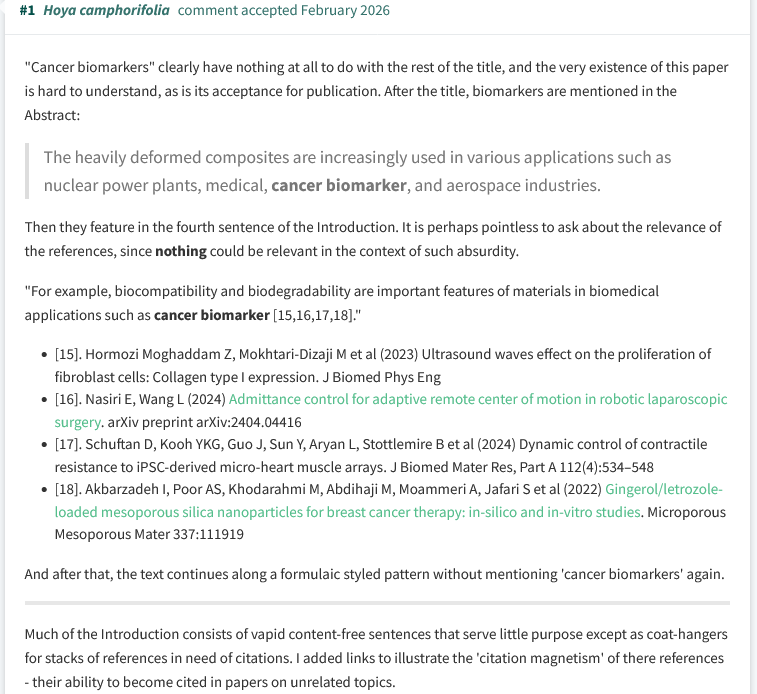
Hoya camphorifolia on PubPeer
We are informed that Prof Dr Dr Gosau “did investigation, visualization, validation, wrote the manuscript“, while Prof Dr Dr Friedrich “did supervision, investigation, wrote, and reviewed the manuscript” and Prof Dr Dr Smets “did investigation, data curation“. Who indeed are we, especially that Smut Clyde, to criticise such an important maxifacial surgery study from Germany.
And now, over to Smut Clyde, but first two requests:
- If you are a professional science writer and want to make this story a big scoop of yours, try to credit Smut Clyde aka Dr David Bimler and the website where he publishes his investigations, and NOT some unrelated academics you generally credit with everything you read here.
- If you are an academic “forensic meta-scientist” who wants to publish a research study on this topic, well, here is a dataset you can use, but please don’t declare it as your own: the Google Sheets ‘Citation Provider‘ (~5300 entries) and ‘Citation Consumer‘ (~3300 entries).

Crunchy Frog and Cockroach Cluster – When the Machine Stops
by Smut Clyde
I am old enough to remember when ‘facile’ was a pejorative term, implying glibness and superficiality and absence of reflection. Then the nanotech bros (who have all of those) got hold of the wrong end of the memory-stick, and the titles of their nanotwaddle became all “Facile Synthesis of X” and “Facile Assembly of Y”, until the rest of academia picked up on the new definition and accepted ‘facile’ as good. Only a handful of tiresome pedants still cling to the old meaning, still hoping to fit the genie back into the tube and the toothpaste back into the lamp.
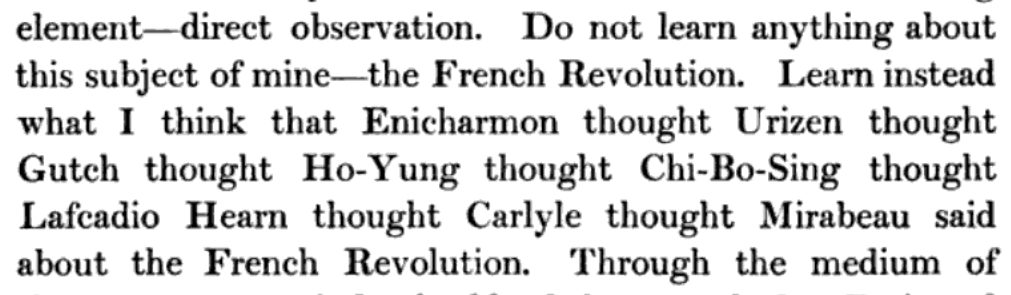 This is leading up to the point that Literature Review papers and ‘Progress Updates’ and such are popular but facile. They are comfortably publishable and completely unproductive; a Review of the State of a Research Direction is the paper you write when the Head of Department is all frowny about your low productivity but you have nothing original to report.
Sadly, you can’t just delegate the writing to a LLM – their unshakable habit of confabulating plausible-sounding but fictional References from some parallel universe (like a Travel Guide with hallucinated landmarks) is not compatible with the point of a Review, i.e. to take readers for a tour of the field and introduce them to significant contributions… NO WAIT that’s not a problem when half of the References are absurdly irrelevant and not there to benefit the readers, but rather because outside authors paid to be cited.
The Citation Payola
“The proposition that a niche of citation brokers exists, opens our eyes to other transaction options..” . Smut Clyde

Which is to say that I am enlongening developments that our host previously enshortened. As a dog returneth to its vomit, as a sow returneth to her mud-wallow (or perhaps vice versa), so Smut returneth to the topic of Citation Payola. For the symbiotic relationship of citation brokers and papermillers comes with the corollary that citation spam can help identify new studios and genres of milling. Progress Review Papers are one such genre.
Speculative claims regarding motives
 For the demand for citations continues its inexorable growth. It may be that the career-enhancing competition to become a Highly-Cited Researcher created an inflationary spiral, so that we enter the realms of Hyper-Cited, Ultra-Cited and even Meta-Cited. And by providing cover for two- or three hundred references, each Progress Report opens up scope for a citational lolly-scramble of unprecedented scale. So the millers drew up a template and fired up the production lines… “Oh joy!”, the Peer Reviewers react each time. “The author clearly grasped the topic in its entirety, and surveyed it with exhaustive thoroughness, which means we don’t have to bother to read that part of the manuscript.”
 A Professor Mokhtar Hjiri adorns the faculty at Imam Mohammad ibn Saud Islamic University in Saudi Arabia, while 11 of his 2025 papers adorn PubPeer (so far). A few convey the general pattern:
- Nouf Ahmed Althumairi, Mokhtar Hjiri, Abdullah M. Aldukhayel, Anouar Jbeli, Kais Iben Nassar Recent Advances in Dielectric and Ferroelectric Behavior of Ceramic Nanocomposites: Structure Property Relationships and Processing Strategies Nanomaterials (2025) doi: 10.3390/nano15171329
- Mokhtar Hjiri , Anouar Jbeli , Nouf Ahmed Althumairi , N. Mustapha , Abdullah M. Aldukhayel Ceramic perovskites via sol–gel processing: progress, challenges, and applications Journal of Sol-Gel Science and Technology (2025) doi: 10.1007/s10971-025-06948-6
- Sonia Soltani , Mokhtar Hjiri , Najwa Idris A. Ahmed, Anouar Jbeli , Abdullah M. Aldukhayel , Nouf Ahmed Althumairi Metal halide perovskites for energy applications: recent advances, challenges, and future perspectives RSC Advances (2025) doi: 10.1039/d5ra02730f

Shake the Stupid Tree and see what falls out
“Does this mean it’s time for an update on the bogus-citation economy? Leonid thought it is, and now you all must suffer for his misdirected priorities. ” – Smut Clyde
 We also have the group of Hana Afshar, Farangis Shahi, Aliakbar Jafari and Vana Fakhri, spread around Departments of Amirkabir University of Technology in Tehran. So far they have 22 Pubpeerified papers; these citational core-dumps were directed at Polymer Engineering & Science and Polymers for Advanced Technologies in a noble attempt to occupy those journals’ blank pages (not to forget Polymer-Plastics Technology and Materials!).
Ali Hamzehlouy , Sara Zarei , Razhan Salah Othman , Farangis Shahi , Hana Afshar , Arsia Afshar Taromi , Hossein Ali Khonakdar Recent Advances in Biomedical Applications of MXene‐Integrated Electrospun Fibers: A Review Polymers for Advanced Technologies (2025) doi: 10.1002/pat.70112
 Professor Hossein Ali Khonakdar (PubPeer record) is on the fringes of that group – or perhaps at the centre, as he is Senior Author on review-papers he shares with other members (all laden with citational cargo like some quinquereme of Nineveh). This Iranian scholar, who just a few years ago left Germany as senior Humboldt fellow at TU Dresden and Leibniz Institute for Polymer Research, deserves his own entry, though, if only for his gloriously huffy responses when the texts he signed are queried on PubPeer: all “Do-You-Know-Who-I-Am!?”, with reminders of his elevated status and numerous accomplishments, yet unaccountably he omits his retractions from these, like Rafiei et al 2025, for “references that are irrelevant to the article“.
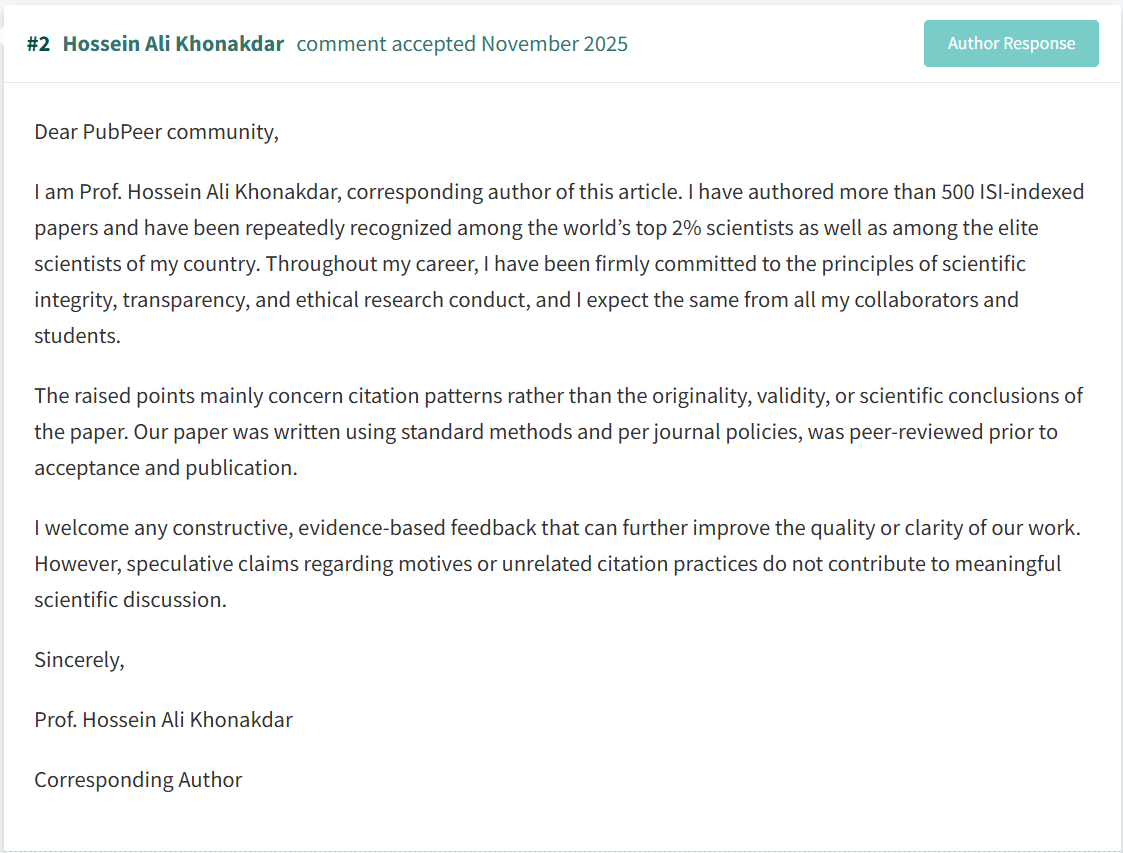
[…] However, speculative claims regarding motives or unrelated citation practices do not contribute to meaningful scientific discussion.”
- Razhan Salah Othman , Sara Zarei , Hasan Rezaei Haghighat , Arsia Afshar Taromi , Hossein Ali Khonakdar Recent Advances in Smart Polymeric Micelles for Targeted Drug Delivery Polymers for Advanced Technologies (2025) doi: 10.1002/pat.70180
- Melika Hasani , Majid Abdouss , Shahrokh Shojaei , Hossein Ali Khonakdar Controlled release in sodium alendronate/halloysite/hydroxyapatite/gelatin nanocomposite scaffolds: A new insight into bone tissue engineering Materials Chemistry and Physics (2024) doi: 10.1016/j.matchemphys.2024.129821
- Shahab Moghari , Hasan Rezaei Haghighat , Ghasem Naderi , Hossein Ali Khonakdar Design and Network Architectures of Conductive Hydrogels: Properties, Functionalities, and Emerging Applications Polymer Engineering & Science (2025) doi: 10.1002/pen.70189
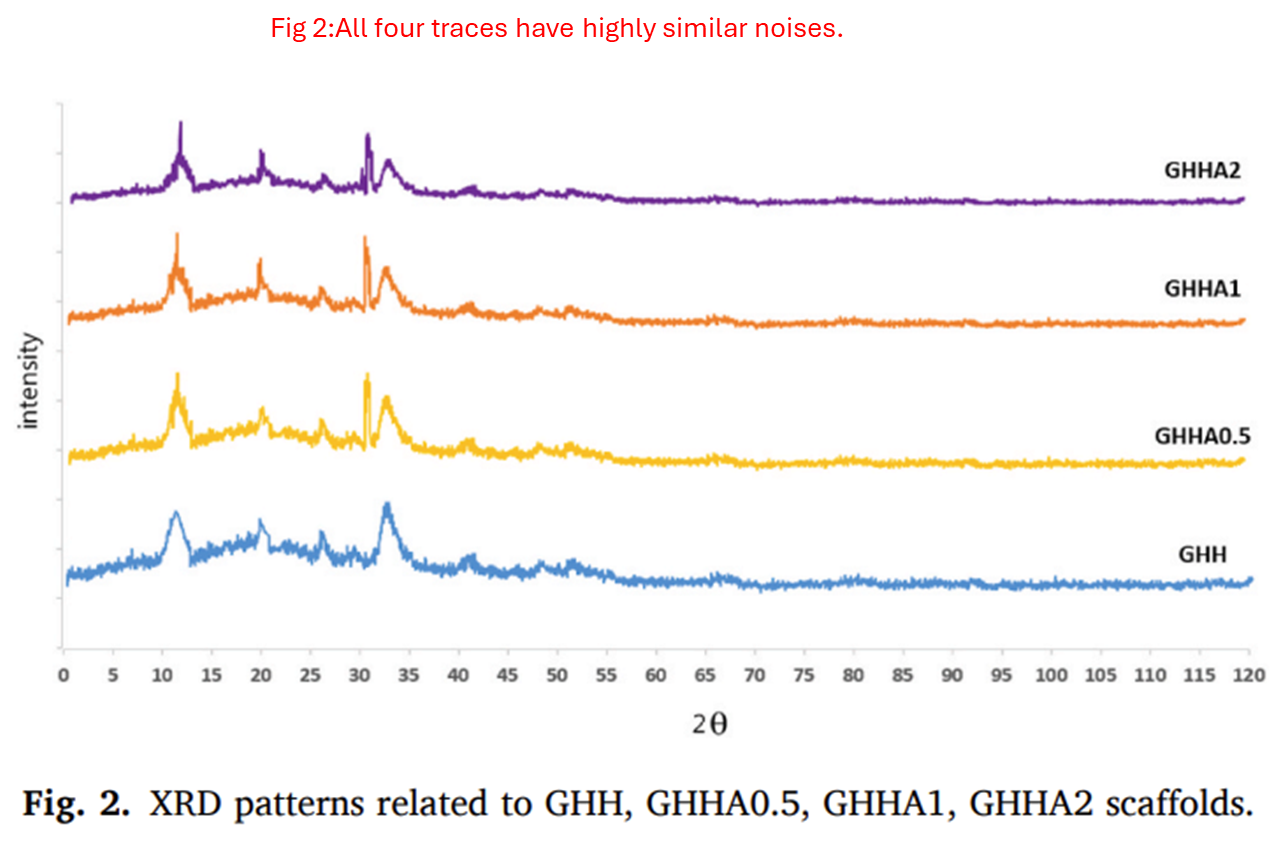
Would you believe it, at Dr. Babasaheb Ambedkar Marathwada University in India, a group around Physics Department chair Babasaheb N. Dole (PubPeer record) decorate the References of their papers with the same strip of citational wallpaper.
- R. B. Sonpir , D. V. Dake , N. D. Raskar , V. A. Mane , K. M. Chavan , S. S. Munde , P. R. Kayande , H. A. Khawal , B. N. Dole Enhanced Photocatalytic and Gas Sensing Performance of Tungsten Carbide based Ni doped Co 3 O 4 /TiO 2 Nanocomposite ChemistrySelect (2025) doi: 10.1002/slct.202504702
- Vijay A. Mane , Dnyaneshwar V. Dake , Nita D. Raskar , Ramprasad B. Sonpir , Kartik M. Chavan , Ketan P. Gattu , Elias Stathatos , Babasaheb N. Dole Multifunctional Fe-Doped Bi2O3/TiO2 heterojunctions for environmental remediation and gas sensing Surfaces and Interfaces (2025) doi: 10.1016/j.surfin.2025.105908
So that was the situation. Then the swelling income stream from citation sales turned the proceeds of authorship auctions on FaceBorg and Telegram channels into a mere lagniappe that the millers could profitably forego (sparing themselves the tiresome farf). The plot twist is this: fake Review papers submitted to reliably complaisant editors with completely fictional authors. Alexander Magazinov pointed out that “Dravodri Petrenko“, “Marika Zolotov“, and “Ivanova Dremovich” – nominally from Department of Chemistry, Lviv State University of Life Safety (in Ukraine) are NOT plausible Ukrainian names.
- Dravodri Petrenko , Marika Zolotov , Ivanova Dremovich Emerging insights into g-C 3 N 4 –inorganic nanocomposites for eco-friendly photocatalytic degradation of organic contaminants Inorganic and Nano-Metal Chemistry (2025) doi: 10.1080/24701556.2025.2585158
- Dravodri Petrenko , Marika Zolotov , Ivanova Dremovich A Comprehensive Review on g-C3N4–TiO2 Nanocomposites for Photocatalytic Removal of Organic Pollutants: Insights into Synthesis and Degradation Mechanisms Journal of Inorganic and Organometallic Polymers and Materials (2025) doi: 10.1007/s10904-025-04064-0
They are obviously invented by someone who thinks they can guess what a Ukrainian name might look like, but actually they can’t.

Eligible for a full waiver
“I reviewed papers published in special issues of Hindawi journals that had corresponding authors from low- and middle-income countries. It seems, the APC waiver policy may be being abused by papermills” – Parashorea tomentella

“O brave new world, that has such people in’t”
 Others joined the game – pointing out that (for instance) a certain ‘Otieno Kimani‘ is variously affiliated to Kenya, Somalia and Ukraine [Hattip Anna Abalkina].
- Emmanuel Kipkorir , Otieno Kimani Electrochemical sensing of pharmaceutical pollutants using modified glassy carbon electrodes with nanostructures: A review Inorganic Chemistry Communications (2025) doi: 10.1016/j.inoche.2025.114827
- Ibrahima Bineta , Otieno Kirmani A Review of g-C3N4-Based Photocatalysts for Antibiotic Elimination: Mechanistic Insights and Operational Parameters Chinese Journal of Analytical Chemistry (2025) doi: 10.1016/j.cjac.2025.100626
- From synthesis to applications: Graphitic carbon nitride in environmental remediation Desalination and Water Treatment (2025) doi: 10.1016/j.dwt.2025.101495
Meanwhile ‘Diop Ndiaye‘ bilocates between Ukraine and Senegal
- Diop Ndiaye , Arjun Akill A critical review on g-C₃N₄ for environmental remediation: synthesis, properties, and pollutant photodegradation RENDICONTI LINCEI (2025) doi: 10.1007/s12210-025-01371-z
‘Kateryna Mykhailivna Doroshenko‘ and ‘Oleksander Ivanovich Shefchenko‘ are very close, but still not entirely convincing as Ukrainian names, even if allegedly affiliated with the Taras Shevchenko National University of Kyiv:
- Kateryna Mykhailivna Doroshenko , Oleksander Ivanovich Shefchenko Graphene-based MXene nanocomposites for highly sensitive and selective detection of diverse analytes Fullerenes, Nanotubes and Carbon Nanostructures (2025) doi: 10.1080/1536383x.2025.2553699
- Kateryna Mykhailivna Doroshenko , Oleksander Ivanovich Shefchenko Rational design and translational advancement of phospholipid-based nanocarriers for targeted cancer therapy Bioorganic & Medicinal Chemistry Letters (2025) doi: 10.1016/j.bmcl.2025.130396
- Kateryna Mykhailivna Doroshenko , Oleksander Ivanovich Shefchenko From hydrothermal assembly to AI-enabled sensing: A comprehensive review of MXene merged graphene nanoplatforms for real-time detection of gases, biomarkers, and multi-analyte systems Inorganic Chemistry Communications (2026) doi: 10.1016/j.inoche.2025.115795
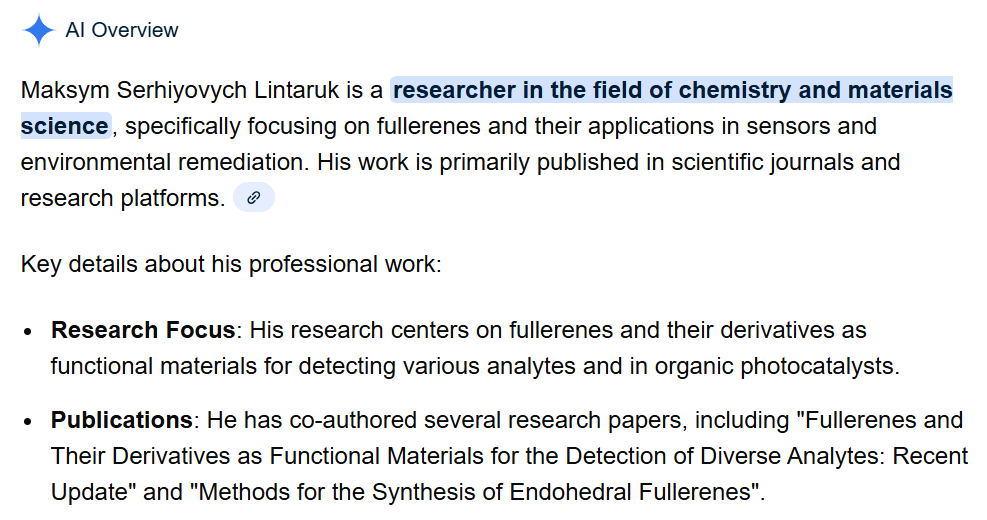 As with the other irreal constructs, G**gle AI assures me that ‘Maksym Serhiyovych Lintaruk‘ and ‘Iryna Pavlivna Horbenyuk’ (both from Department of Chemical Engineering, Dnipro Technological University, Dnipro) are real people. It even imagines other papers for them.
- Maksym Serhiyovych Lintaruk, Iryna Pavlivna Horbenyuk Fullerenes and Their Derivatives as Functional Materials for the Detection of Diverse Analytes: Recent Update Chinese Journal of Analytical Chemistry (2025) doi: 10.1016/j.cjac.2025.100661
Until someone collapses their probability distribution function by observing them, ‘R.R. Roushree‘ and ‘Rijah Haimbodi‘ might be in Somalia and/or Namibia.
- R. R. Roushree, Rijah Haimbodi Recent Advances in ZnO-Based Nanocomposites for Amoxicillin Photocatalytic Degradation and Adsorption in Wastewater: A Review Journal of Inorganic and Organometallic Polymers and Materials (2025) doi: 10.1007/s10904-025-03943-w
- Roushree RR, Rijah Haimbodi Recent Advances in ZnO/MOFs: Synthesis, Characterization, and Applications in Sustainable Antibiotic Wastewater Treatment Chinese Journal of Analytical Chemistry (2025) doi: 10.1016/j.cjac.2025.100619

Polymer Papermillers Taking the Piss
Papermill Industry enters its Logical Growth Phage. Smut Clyde explains what coordination polymer chemistry has to do with chickenshit.
The latter piece was assembled with such slipshod laziness that the responses from ChatGPT – copy-pasted verbatim into the manuscript – include its explanation of how it will handle its instructions to plunder existing material.
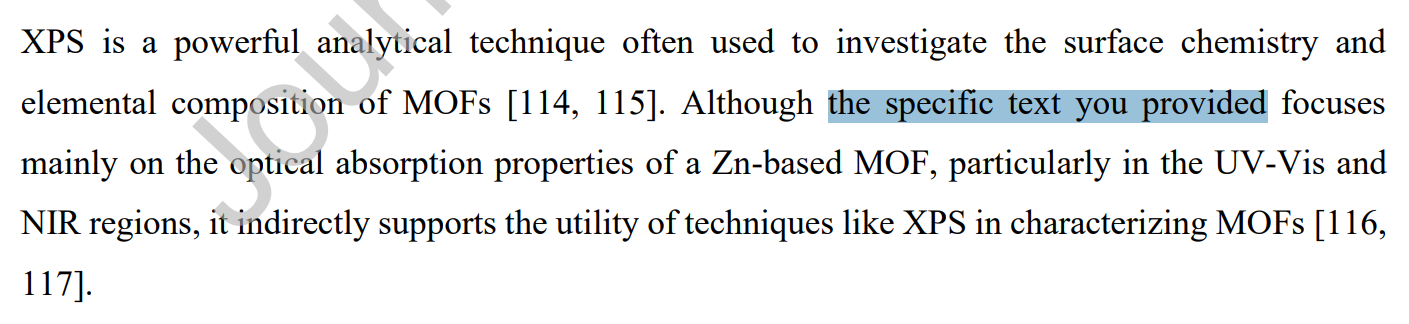
As noted by our host at the beginning – first observed by Parashorea tomentella – the national origin of each Non-Player Character is chosen to earn that paper a reduction in the publication charges. Dalmeet Singh Chawla made the same point in his recent coverage of this fictive-authorship phenomenon.
So this is where we are now: Papermillers use glorified spell-check software to generate paper-shaped slabs of word-wooze by instantiating a text template. They don’t bother reading the instantiations; clearly the editors and reviewers of the target journals don’t either. The ‘authors’ certainly don’t read the text because they’re NPCs whose characters never advanced further than their affiliations and disposable nonce-names. The journal subscribers don’t read it either because the publishers are pushing AI services to do that for you – rendering down the material that some other AI spun from straw. What all this churn accomplishes is a transfer of $$$ from academic institutions to publishers, and from would-be Highly Cited Researchers (or actual Highly Cited Researchers, running as fast as they can to stay in the same place) to citation-pimping papermills.
We will meet some of the Highly Cited Researchers. But first, two more cases of ChatGPT-response copy-paste FAIL from the same citation pimps (following different templates).
Jialong Liu , Xin Su , Yang Wang Evaluating sports complex sustainable supply chains: A prospective assessment technique method of moments quantile regression research PLOS One (2025) doi: 10.1371/journal.pone.0323054

What could be more scholarly than second-person asides?
Wenjia Cao, Xinwen Zhang, Khalid Iqbal Using green finance to study energy elasticity, coal subsidy, energy transition and energy dependence in E7 economies: an efficiency analysis with data envelopment analysis Energy Strategy Reviews (2025) doi: 10.1016/j.esr.2025.101794
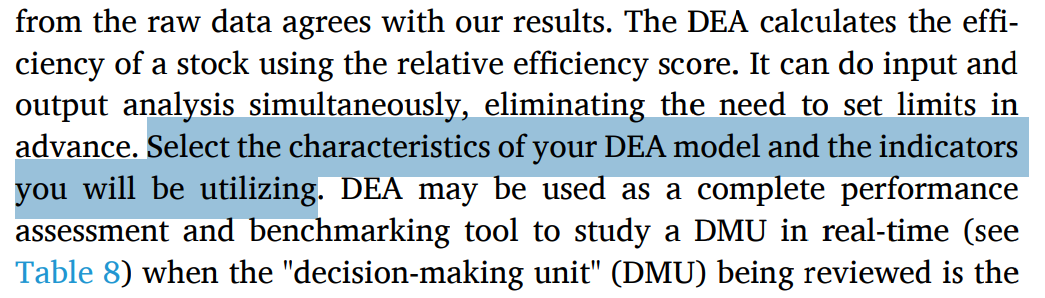
This is a good time to note that papermillers and citation brokers work so well together because they are two sides of the same operation. Companies offer to improve your manuscript to a publish-ready stage, AND to choose an appropriate journal and submit it on your behalf, AND to ‘enhance its visibility’, i.e. ensuring that it’s well-cited. Of course the incompleteness of your manuscript can extend all the way to ‘merely aspirational’. Oh hi, Futurity Publishing [Hat-tip Nick Wise].

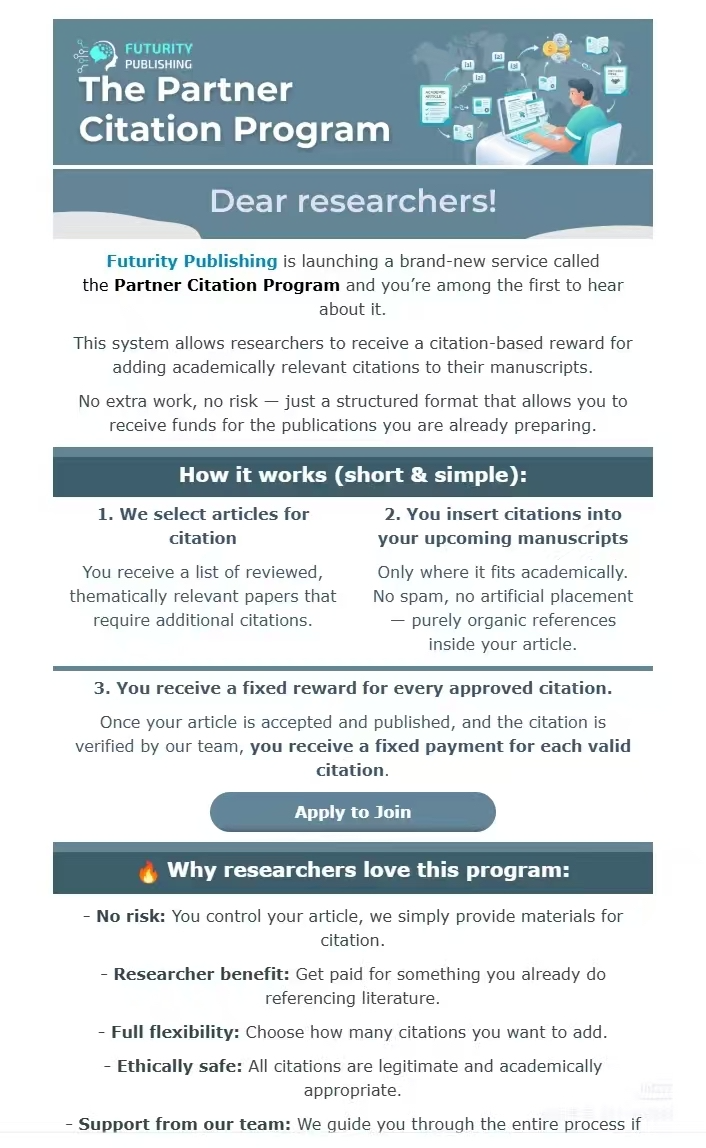 The price to be cited in a Scopus- or Web-of-Science-indexed journal drops to US$15 each time if you buy 10 or more. Or you can let the business adorn the manuscript it’s writing for you, with citations for the benefit of other authors.
‘Futurity’ is a Ukrainian dude though he finds Poland more in need of his synergistic skill-set. Previously he was explicitly a papermiller and dealer in co-authorships; his ‘Article Academy’ is no longer active (less profitable than predatory publishing and scamferences?) but Nick found an archived copy of the website.
This digression mentions ‘Futurity’ purely as an illustration. The papermill / citation-brokerage that concerns us here is a much larger business, most likely operating out of China – though it also targets customers in South Asia, the Middle East, and sundry post-Soviet ‘Stans.

Grinding slowly but exceeding small
“I have no idea what is happening here, but fortunately it is not my job to adjudicate questions of who stole what from whom.” – Smut Clyde
Machine-Learning Terrordome
A second genre is currently popular in papermill / citation-spam circles; it would be a shame to ignore it (does the industry stage fashion events to showcase the season’s new styles? With catwalks, and supermodel authors to display them?). This is a Machine-Learning Terrordome format, where the purported authors curate a dataset, explain the urgent need to interpolate between data-points and predict results for cases where no experimental data have been collected or simulations run, and throw everything at the problem like so many bowls of spaghetti against the wall – CNNs, Random Forests, Decision Trees, even Ridge Regression – to see what sticks performs best.
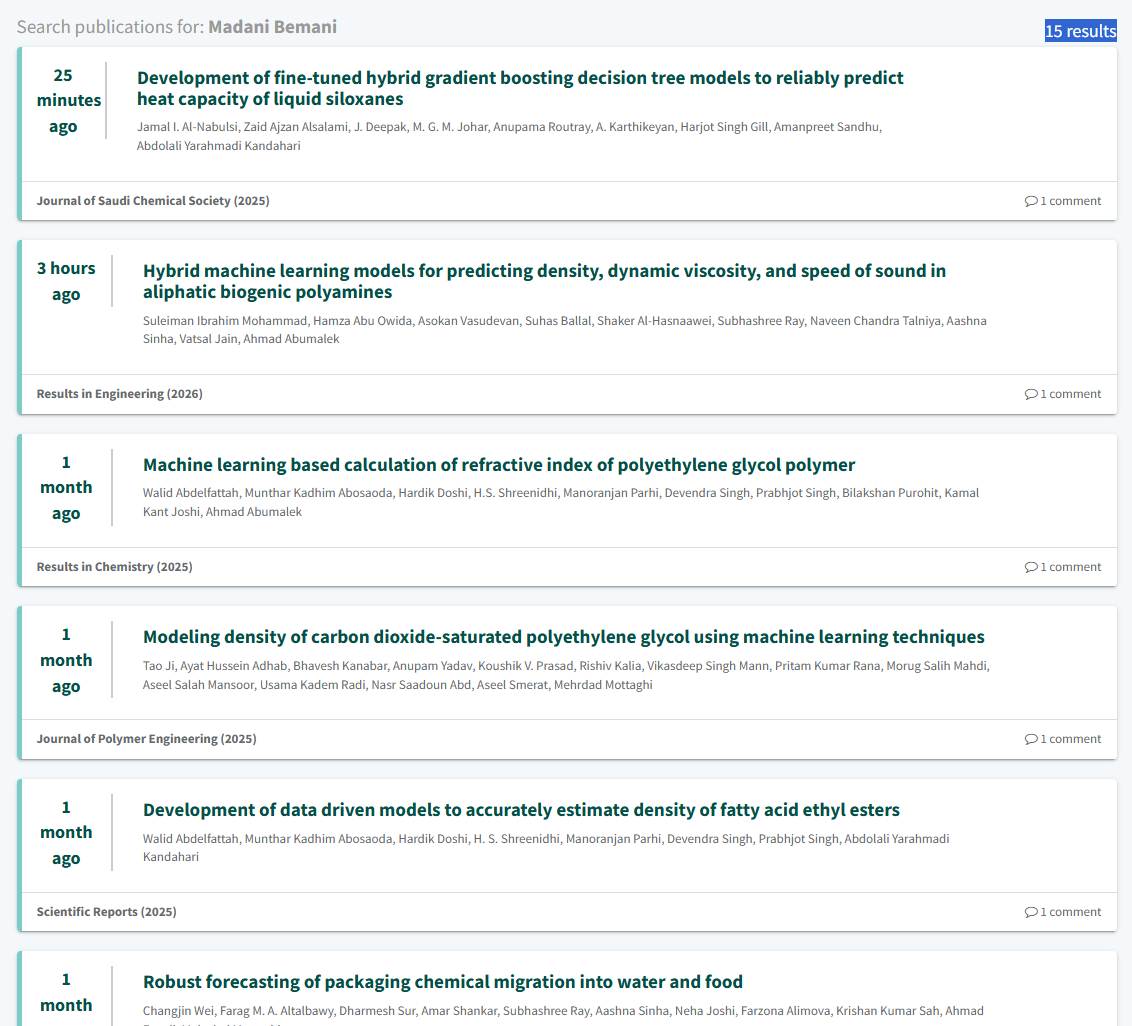 “Development of fine-tuned hybrid gradient boosting decision tree models to reliably predict heat capacity of liquid siloxanes” (Al-Nabulsi et al. 2025) is a recent, florid example of the style. For some reason one feature of the template is the conferral of citations upon an M. Madani and an A. Bemani for their exercises in optimising fossil-fuel extraction, which eases the task of locating other instances within the haystack of PubPeer.
Below, Abdelfattah et al (a and b) scraped a collection of 211 data points from the literature and analyzed it twice with two different menus of spaghetti – so in the end we have no idea which Machine Learning approach is optimal.
- Walid Abdelfattah , Munthar Kadhim Abosaoda , Krunal Vaghela , Gowrishankar J , Prabhat Kumar Sahu , Kamred Udham Singh , R Sivaranjani , Samim Sherzod Accurate modeling of biochar yield based on proximate analysis Energy Exploration & Exploitation (2025) doi: 10.1177/01445987251359321
- Walid Abdelfattah , Munthar Kadhim Abosaoda , Krunal Vaghela , Gowrishankar J , Prabhat Kumar Sahu , Kamred Udham Singh , R. Sivaranjani , Rohit Chauhan , Siya Singla , Samim Sherzod Predicting biochar yield from biomass pyrolysis: A comprehensive data-driven approach using machine learning and SHAP analysis Results in Engineering (2025) doi: 10.1016/j.rineng.2025.105389
In the same vein, someone cranked the handle on the papermill machine and then there was this:
Guoliang Hou, Ahmad Alkhayyat, Ahmad Almalkawi , Anupam Yadav , H. S. Shreenidhi , Vishnu Saini , Shirin Shomurotova , Devendra Singh , Vatsal Jain , Aseel Smerat , Ahmad Khalid Development of robust machine learning models to estimate hydrochar higher heating value and yield based upon biomass proximate analysis Bioresources and Bioprocessing (2025) doi:10.1186/s40643-025-00979-1
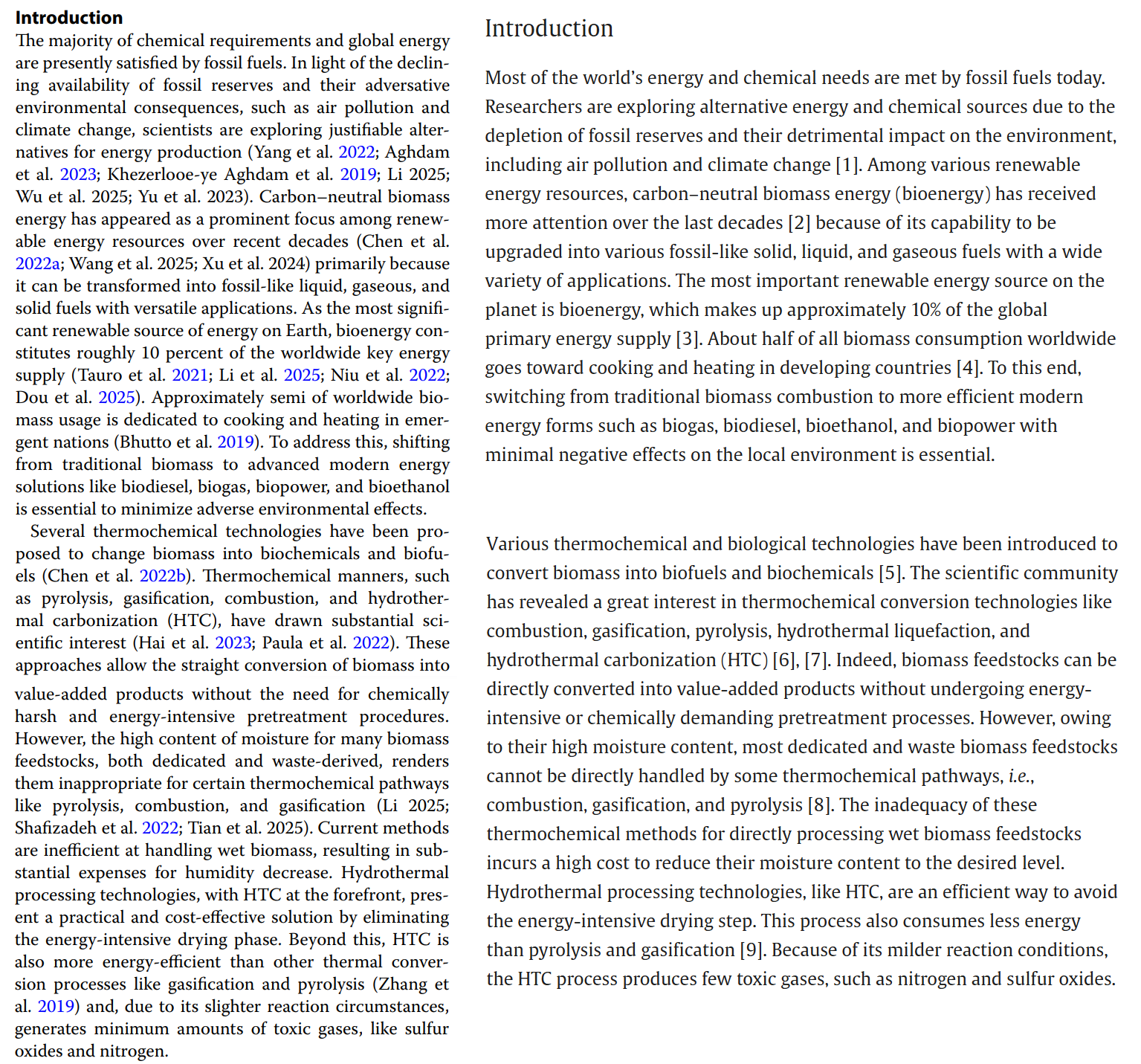
The curated dataset, and to be honest most of the text, were someone else’s work (Shafizadeh et al 2023… well not really their work either: the last authors Meisam Tabatabaei and Mortaza Aghbashlo are known papermillers, read below), but the important thing is that the References were, um, the same as in Abdelfattah 2025a and 2025b.
Typically a concluding paragraph urges other researchers to apply the spaghetti / wall paradigm elsewhere, and this is where the conventions of the genre allow an orgy of citational promiscuity, for anything can be a dataset-interpolation problem if you say it is.
Jamal I. Al-Nabulsi , Zaid Ajzan Alsalami , J. Deepak , M. G. M. Johar , Anupama Routray , A. Karthikeyan , Harjot Singh Gill , Amanpreet Sandhu , Abdolali Yarahmadi Kandahari Development of fine-tuned hybrid gradient boosting decision tree models to reliably predict heat capacity of liquid siloxanes Journal of Saudi Chemical Society (2025) doi: 10.1007/s44442-025-00039-5
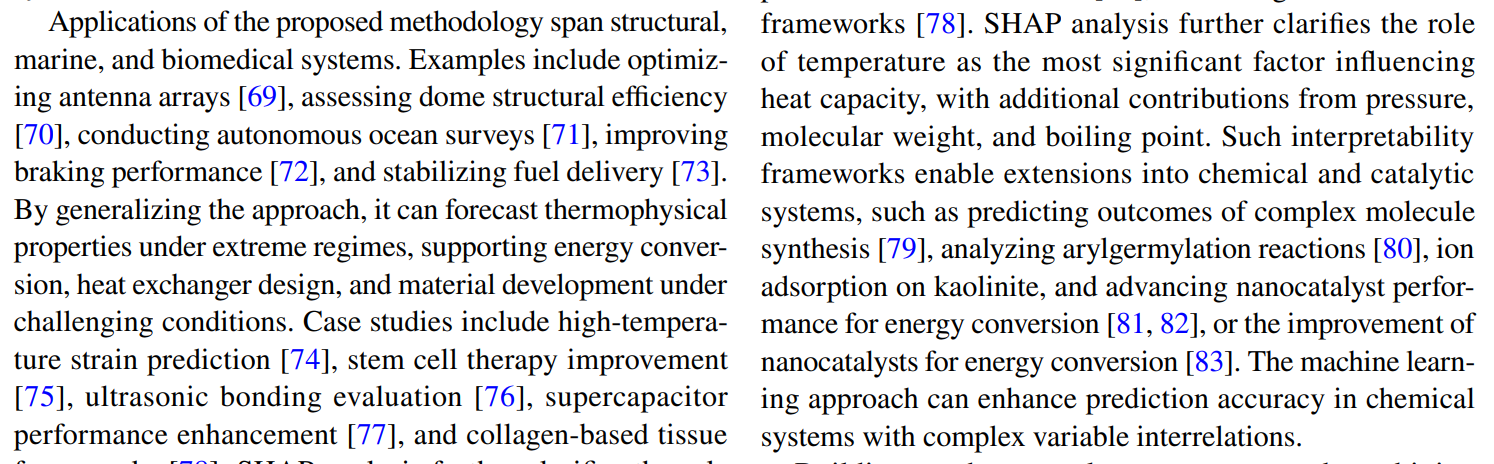
There is a subsection for each of the modes of Machine Learning competing in the gladiatorial arena, wittering on in the inimitable LLM style about its strengths and weaknesses, and also providing more slots where irrelevant citations can stow away. These subsections necessarily repeat from one instantiation of the template to the next (rephrased just enough to fool a plagiarism scanner), and it does not bear thinking about the agonies of boredom that hypothetical reviewers would endure if they ever had to read this flapdoodle.
I am in the position to play Griftmas Angel and bring you these glad tidings because the long-running citation-market investigation progressed to the stage where I’m extending the ‘Citation Provider‘ and ‘Citation Consumer‘ tables into real time, adding papers that are published NOW. That is, the papers festooned with all the red flags that I’ve been rubbing in publishers’ faces for over a year.
Elsevier chooses Papermills and Patriarchy, Chief Editor resigns
“Among these candidates that you “vetted” were people with no expertise in the field (either 0 or 1 publication), people with longer PubPeer profiles and more retractions than most people have articles on their CVs, and people whose names appear as authors on sold paper sites. ” – Jillian Goldfarb

This is a good example, in Elsevier’s journal Fuel (read about it above):
Xueying Wang , Kun Zhang , Zhenxue Jiang , Yanhua Lin , Yan Song , Chengzao Jia , Shu Jiang , Lin Jiang , Hulin Niu , Jing Li , Yunbo Zhang , Xingmeng Wang , Xinyang He , Jingru Ruan , Weishi Tang , Hengfeng Gou , Fengli Han , Xuejiao Yuan , Yuanyuan Wang Hydrocarbon generation and pore evolution in marine organic-rich shales across maturation stages Fuel (2025) doi: 10.1016/j.fuel.2025.136050
This study had accrued 10 citations last time I checked – kudos to the authors! Sadly, nine of those more-recent citing papers exist primarily to dispense citational glitter upon authors in need of such adornment… Seven are Recent Advances / Comprehensive Reviews, from fictitious authors, surveying (graphitic carbon nitride)(ZnO MOFs)(g-C3N4–TiO2 Nanocomposites)(Graphene-based MXene nanocomposites)(etc.). Two are instantiations of the Machine-Learning Play-Off genre: finding the best ML framework to extrapolate “CO2 deposition conditions in cryogenic natural gas processing systems” and “Thermophysical properties of used frying oil biodiesels blended with alcohols“. Only one paper cites this example in a relevant context.
I could say more about the ‘fossil-fuel-facilitation’ genre of papermilling that encompasses both Wang et al 2025 and the paper citing it; ‘shale gas extraction’ and ‘deeper drilling for a better future’ are increasingly popular areas of academic bullshit (hence the Madani-Bemani oeuvre) – but let’s not get distracted. The point is that these nine displays of citation shenanigans appeared before 15 December 2025, when our example was even formally published! … though the post-print world of ‘early views’ and ‘forthcoming papers’ has rendered the concept of ‘publication date’ increasingly vague, and the manuscript was visible from June 2025 onwards as it moved along the publication pipeline in slow peristalsis.
Purchasing citations in advance of publication is one manifestation of the inflationary spiral. We also see the complementary phenomenon: established professors are engrossed in their administrivial head-of-departmental duties of inserting themselves as co-author on every publication emitted from their department, but that is still not enough to maintain their hard-won positions at the top of the greasy pole, so they dust off old back-catalogue papers and pay the citation brokers to send them out on come-back tours. Having slumbered in moldering hard-copy oblivion for a decade or two like dead Cthulhu dreaming in sunken R’lyeh, accruing one or two citations each year, older papers are suddenly resurrected as citation magnets and attract a belated spike of academic crack.
Of course we need examples of these revenant references. Now the PubPeer links are not lists of that author’s dodgy papers, but lists of dodgy papers that cite him.

A Critique of Pure Reason
“the rarest, most sought-after token of recognition is when the Chen brothers steal your identity to use as a fictive co-author on one of their plagiarism gallimaufreys. For instance, “Bunnitru Daleanu” was based on (and memorialises) the nonpareil Rumanian mathematician Dumitru Baleanu – now resident in Turkey” – Smut Clyde
Red Mud and beyond
 We have already met Bing Bai (PubPeer record) – Professor at the School of Civil Engineering, Beijing Jiaotong University. Some build upon a foundation of sand; Bai built his success on mud. Specifically, the “red mud” that’s the main output of bauxite processing, with aluminium production spewing it out in megatonnes. Reporting the positive side of industrial waste might not guarantee academic success but it is not an obstacle either, so Bai’s papers focus on harnessing the powers of Red Mud to neutralise other toxic effluents.
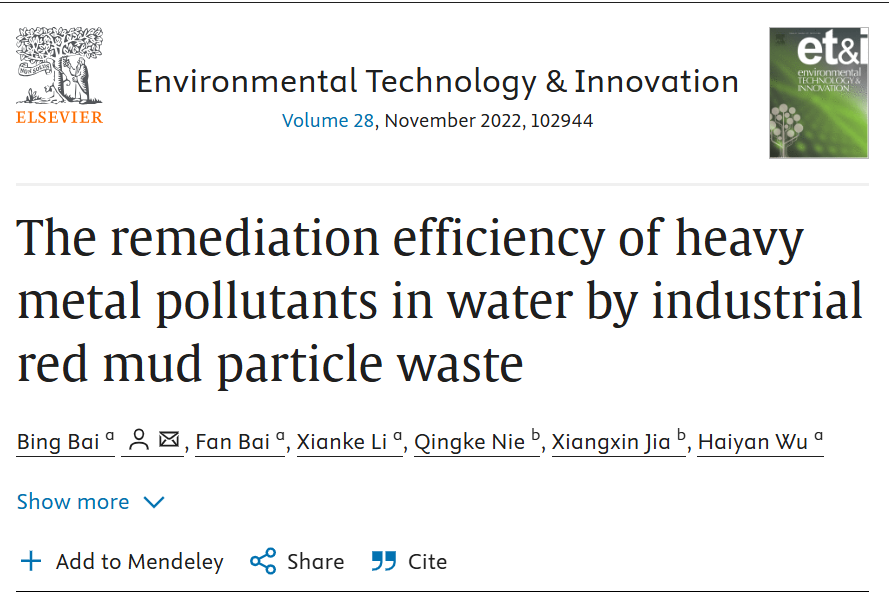 Thus “A high-strength red mud–fly ash geopolymer and the implications of curing temperature” (Bai et al 2023), so far cited 303 times; and “The remediation efficiency of heavy metal pollutants in water by industrial red mud particle waste” (Bai et al 2022), 429 times.
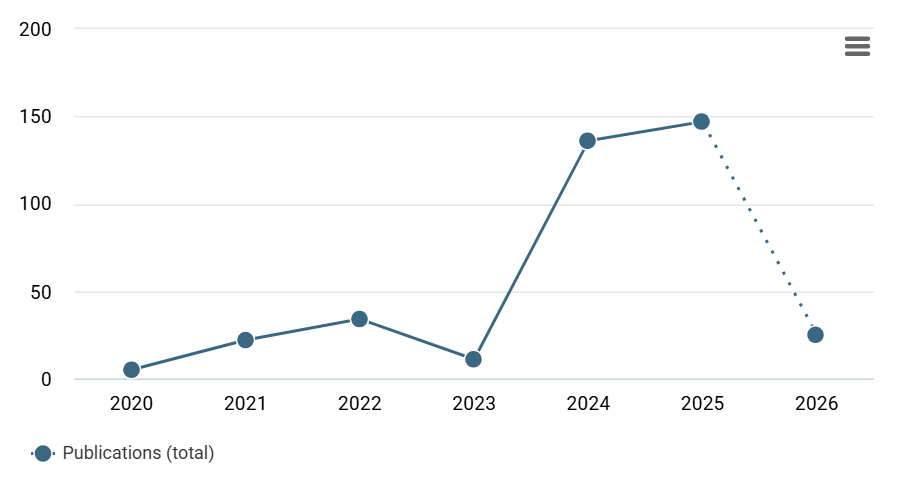 Bai’s earlier papers were less red-mud-centric, and pre-dated the option of citation payola: e.g. “Temperature-driven migration of heavy metal Pb2+ along with moisture movement in unsaturated soils” (Bai et al 2020) accrued some early interest before sinking back into obscurity by 2023. Then a citation tsunami rolled in during 2024-2025, bringing its total up to 380 (so far) as he makes up for lost opportunity. Feel free to search the ‘Citation Recipients’ table for more of his work.
But wait, we are informed that Bai “was named to Stanford University’s career list of the “World’s Top 2% Scientists” for four consecutive years. […] He was awarded the 15th Scientist Medal by the International Association of Advanced Materials (IAAM), and was admitted as a Fellow of IAAM in 2024.” So I guess someone personally awarded by Ashutosh Tiwari at his IAAM scamference is not a fraud after all!

Thomas Müller’s Own Goal
“There is a justified concrete suspicion that third-party funders would from their side terminate the financial support of our client because of the above mentioned representation of our client. This would lead to significant financial losses.”
But moving along…
 Hongqiang Yang (PubPeer record) professes at Nanjing Forestry University, where he’s Dean of the Department of Applied Economics. For a decade or so he’s been publishing steadily on environmental aspects of the forestry and fluvial economies, with no recent Stakhovanite spurt of productivity, so his citation score for 2025 is a mystery. Per G**gle Scholar, many papers contributing to that score are practically antediluvial…
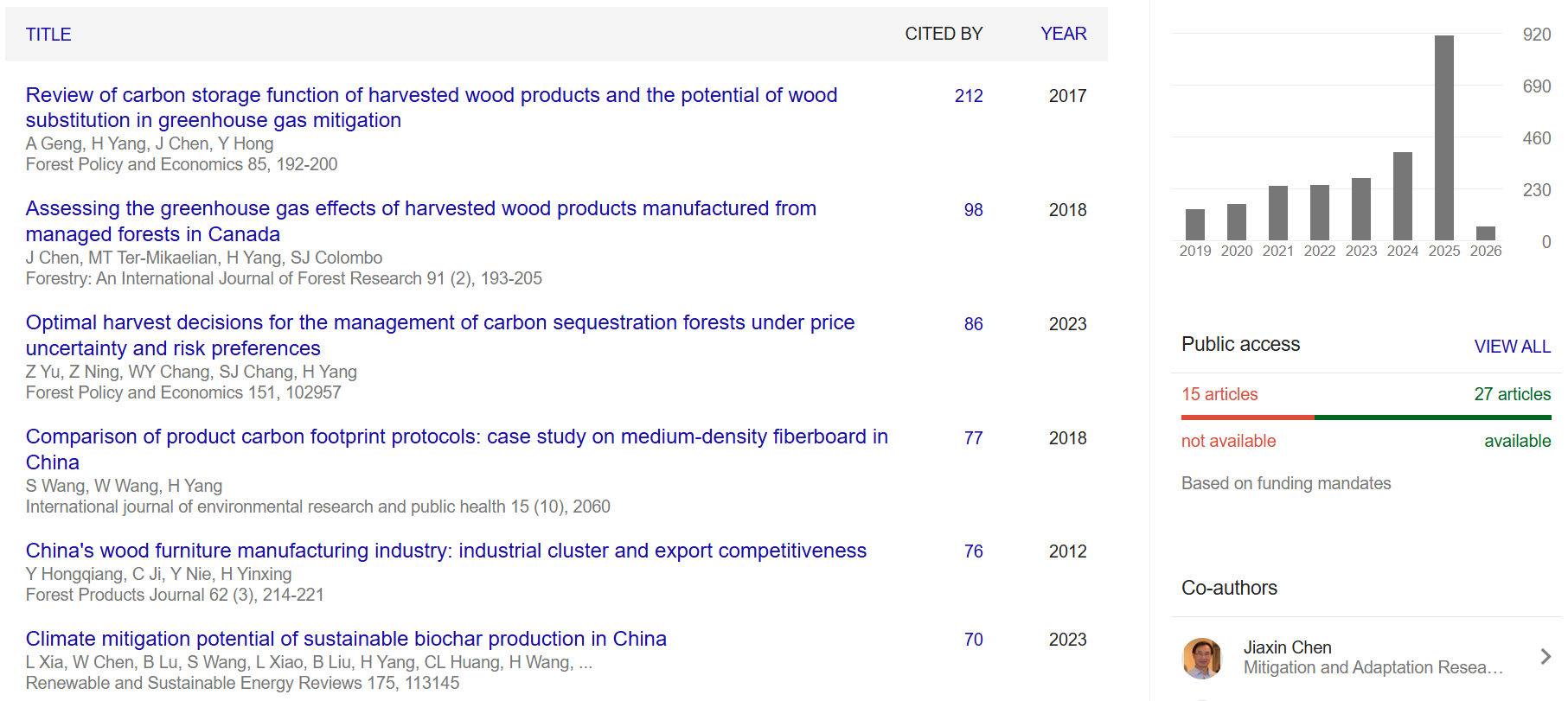
HA HA only joking, of course it’s not a mystery. Below, citations/year for “The forest ecological footprint distribution of Chinese log imports” (Nie et al 2010) and “Greenhouse gas reduction and cost efficiency of using wood flooring as an alternative to ceramic tile: A case study in China” (Geng et al 2017), cited 36 and 61 times. Here the citing papers cover the spectrum… perovshite, and DFT / graphene analogues, and environmental remediation with biochar nanocatalysis, but especially ‘Recent Progress’ literature reviews by Khonakdar or Shahi or imaginary authors.
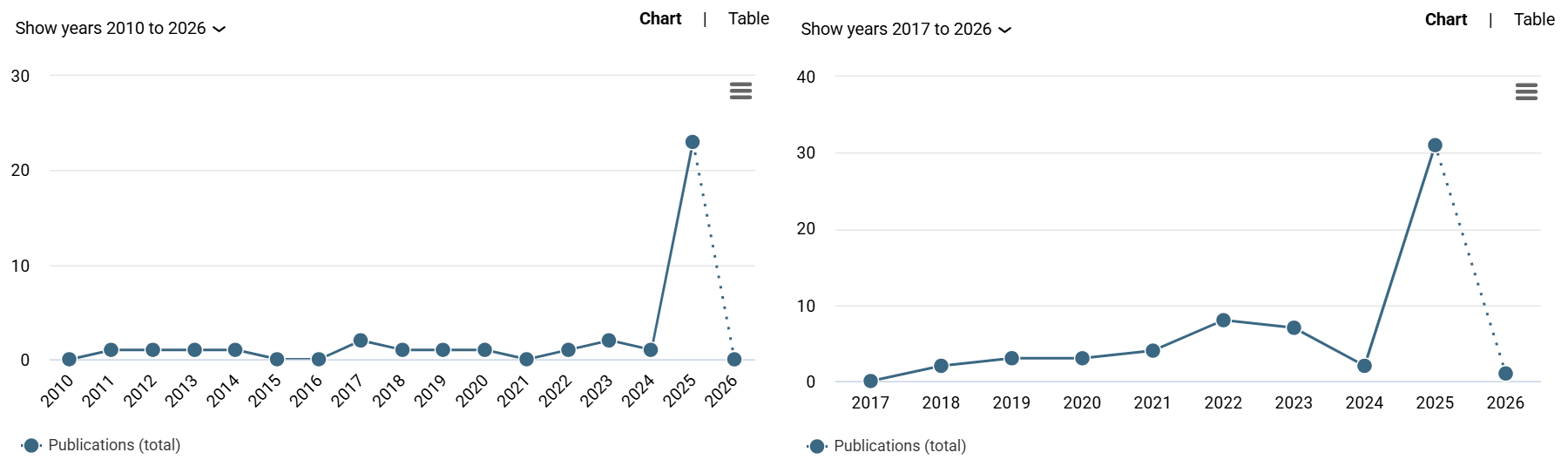
This entire cohort of authors must have ordered citational recognition for their older papers at about the same time – perhaps the millers were offering a two-for-one special, or they started advertising their services through a new medium – so the papers appear all cheek-by-jowl and hugger-mugger in the citation plantations reported above. Anyway, moving along:
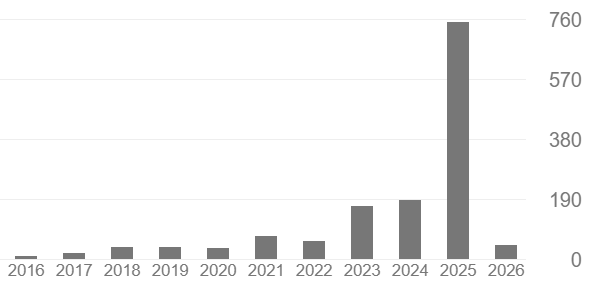
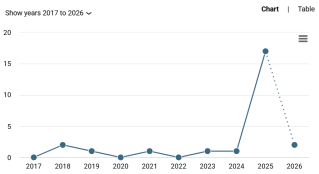 Huanhuan Zhang (PubPeer record) is “a professor and doctoral supervisor at Xidian University” (Xi’an) and, we are told, ‘has been selected into the Elsevier “Top 2% of the World’s Top Scientists List“‘. His back-catalogue of papers on antenna engineering earned him 700 citations in 2025… for instance, “Fast Wideband Scattering Analysis Based on Taylor Expansion and Higher-Order Hierarchical Vector Basis Functions” (Zhang et al 2014).
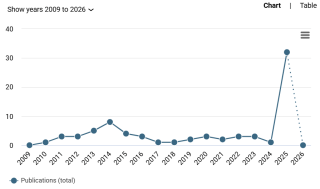 Professor Benpeng Zhu (PubPeer record) of School of Optical and Electronic Information at Huazhong University of Science and Technology, was apparently “a joint Ph.D. student of the Department of Biomedical Engineering at University of Southern California, Los Angeles, CA, and School of Physics and Technology at Wuhan University, China”. His oeuvre is centred on piezoelectric films as ultrasound transducers, and earned him nearly 1600 citations in 2025 – e.g. “Low temperature fabrication of the giant dielectric material CaCu3Ti4O12 by oxalate coprecipitation method” (Zhu et al 2009).
- Conversely, Xiubao Sui (PubPeer record) is all about infrared imaging and professes on that topic at Nanjing University of Science and Technology. Nearly 1300 citations in 2025.
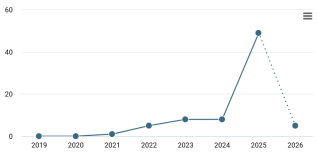 Tingsheng Qiu of Jiangxi University of Science and Technology (PubPeer record): electrochemistry of minerals. For instance, “Molecular dynamics simulation of aluminum inhibited leaching during ion-adsorbed type rare earth ore leaching process“ (Zhu et al. 2019).
- Guo Feng of Jingdezhen Ceramic Institute (PubPeer record) invests heavily in citation promotion, with 24 papers on ceramic precipitation represented in the spreadsheet (so far). For instance, “Effect of Oxygen Donor Alcohol on Nonaqueous Precipitation Synthesis of Alumina Powders“ (Feng et al. 2019).
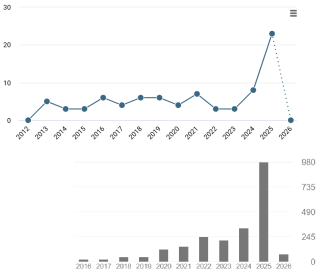 It’s the same story for Yiqing Yao of North-West Agriculture & Forestry University (PubPeer record), whose specialty is (aptly enough) advanced composting techniques. Citation records for [above] “Anaerobic digestion of poplar processing residues for methane production after alkaline treatment“ (Yao et al. 2013) as a microcosm of [below] across papers – h/t G**gle Scholar.
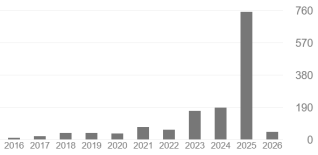 Zhiquan Yang of Kunming University of Science and Technology (PubPeer record) has a double-major CV in which cement grouts are represented and then flood debris. For instance, “Study on the effects of different water-cement ratios on the flow pattern properties of cement grouts“ (Yang et al. 2011). His G**gle Scholar entry speaks of a serious commitment to citation promotion.
- Yizhuang Zhou (PubPeer record) heads a laboratory at Guilin Medical University for studying
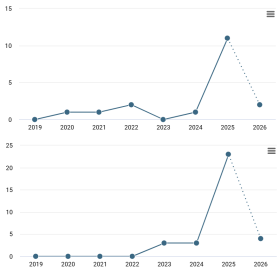 bacterial genomics and fluorescent nanosensors. For instance, “A high-resolution genomic composition-based method with the ability to distinguish similar bacterial organisms” (Zhou et al 2019) and “Rational Construction of a Fluorescent Sensor for Simultaneous Detection and Imaging of Hypochlorous Acid and Peroxynitrite in Living Cells, Tissues and Inflammatory Rat Models” (Zhou et al. 2022). After reading the titles “Developing a de Novo Designed Broth to Rapidly Recover Lactic Acid-Injured Escherichia coli to Ensure Almost no Multiplication during Repair for Precise Enumeration” (Zeng et al. 2023) and “A broad-spectrum broth rapidly and completely repairing the sublethal injuries of Escherichia coli caused by freezing and lactic acid alone or in combination for accurate enumeration” (Zeng et al 2024), feeling hungry.
 - I promised not to digress about fossil-fuel facilitation but then I had to mention Huai Su of China University of Petroleum (PubPeer record) who studies Energy Resilience. Which is to say, more oil-wells and pipelines.
- Another research area that’s not an obstacle to academic success is carbon-capture / sequestration, which is always just about to happen, with the implication that fossil-fuel consumption can continue unchecked. Hence Shijian Lu (PubPeer record) at China University of Mining and Technology.
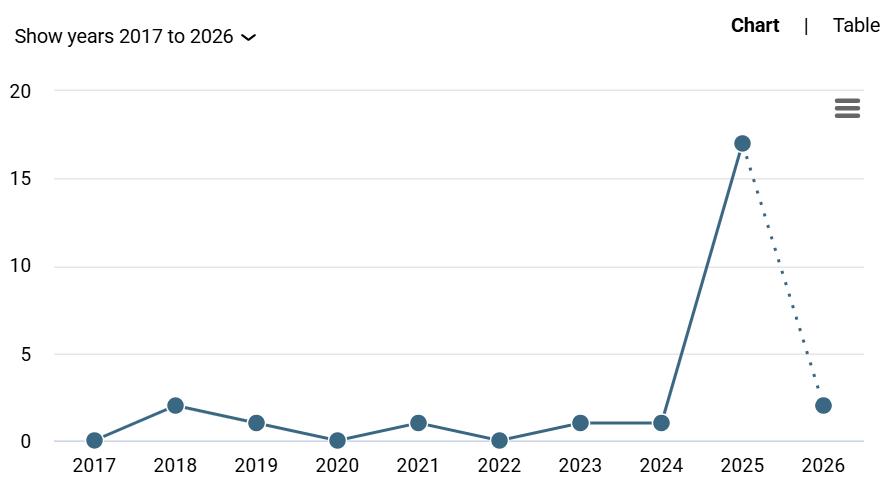
- “Assortative mating on blood type: Evidence from one million Chinese pregnancies” (Hou et al. 2022) is a strange one-off. Someone should blog about it. Since its appearance in PNAS (because PNAS!), only three later researchers trusted its claims enough to cite it as precedent for their own work; that wasn’t good enough, so 47 other citations (so far) came from the familiar paper-shaped delivery vehicles. I do wonder whether the million couples who took advantage of a pre-pregnancy health-check service really consented to the retention of all their personal details for subsequent data-mining.
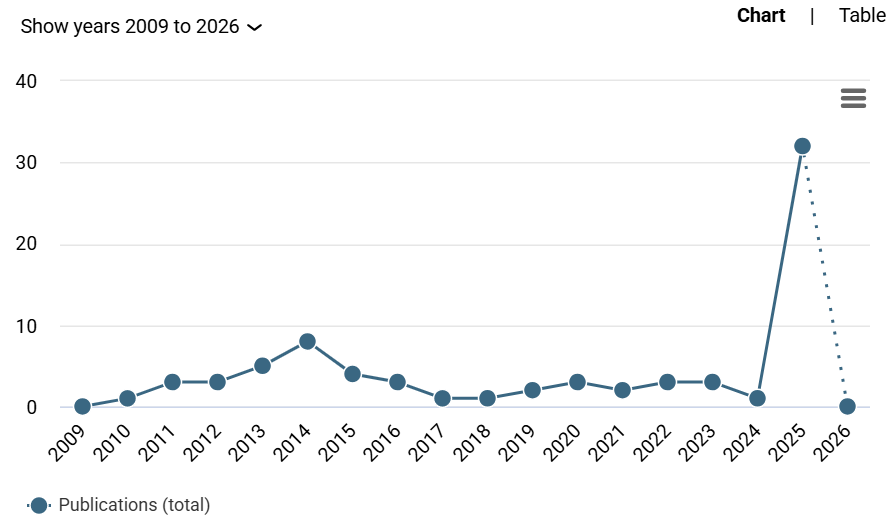
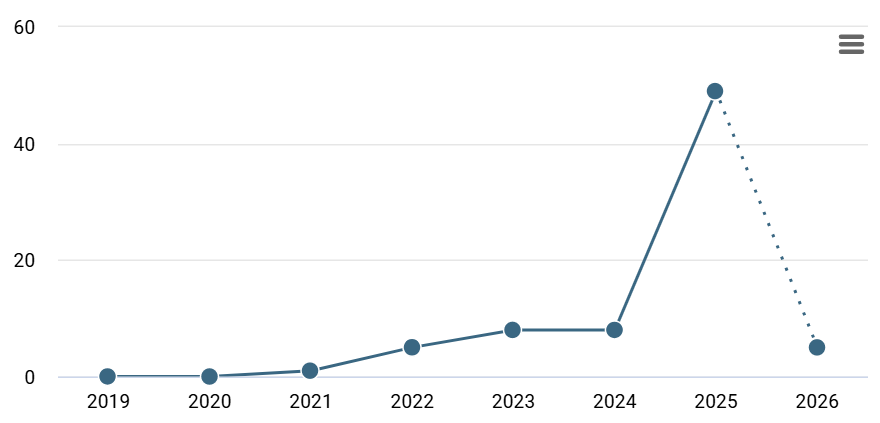
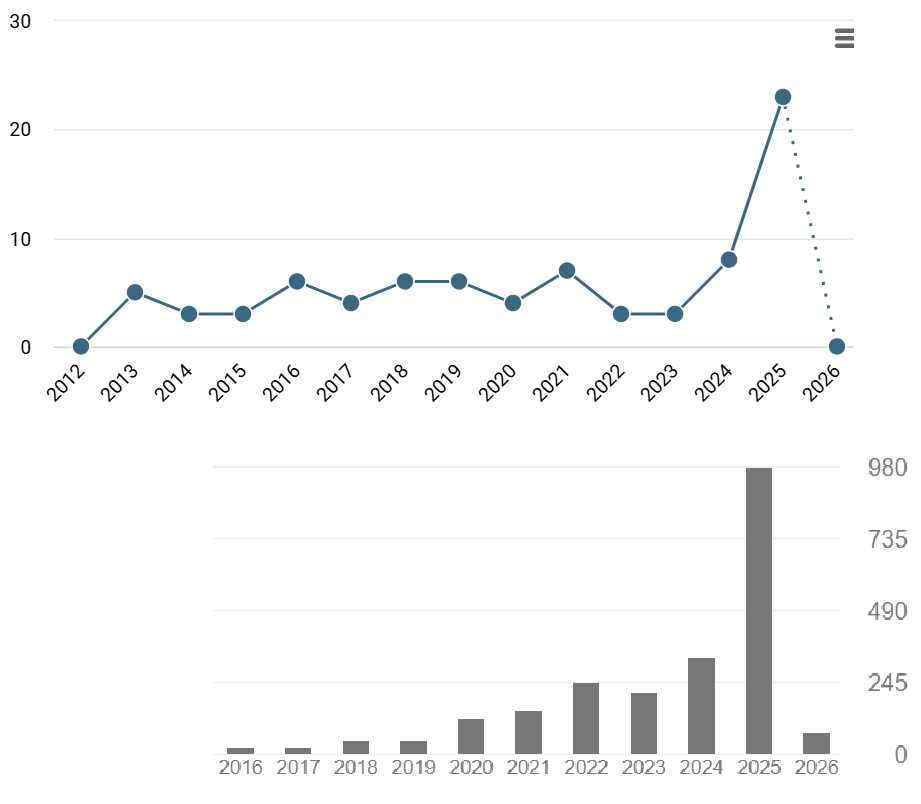
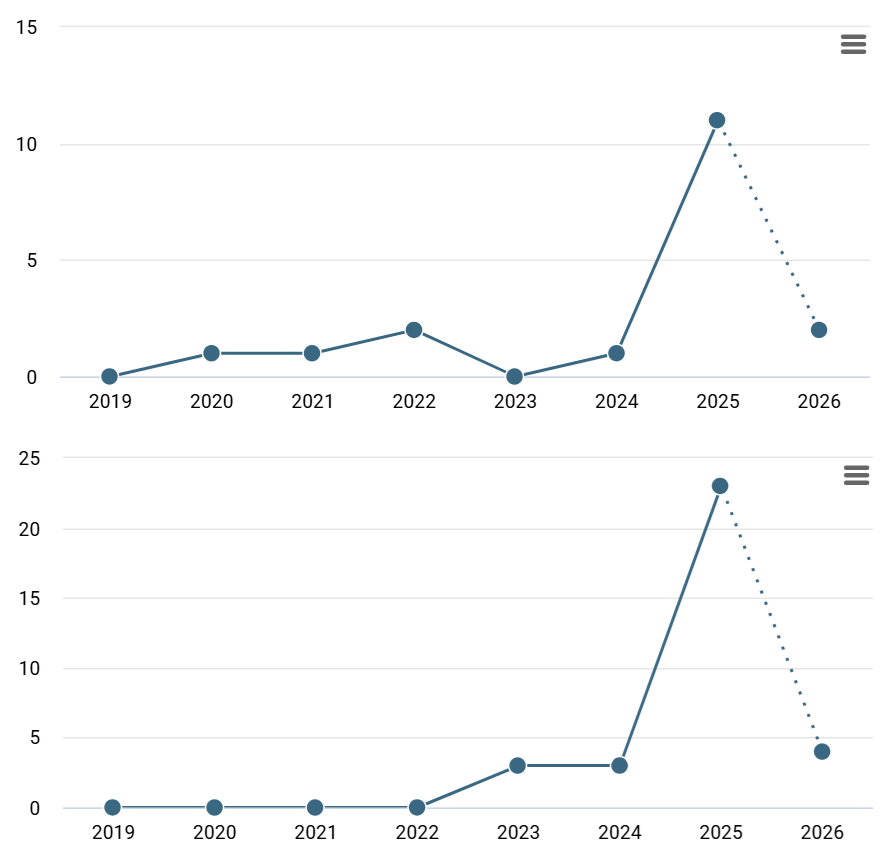

Tooth-Fairy-Meets-Easter-Bunny Science of TCM
Smut Clyde follows the dark path of Traditional Chinese Medicine again. What will he find there? As usual, all the big publishers peddling TCM fraud, that’s what.
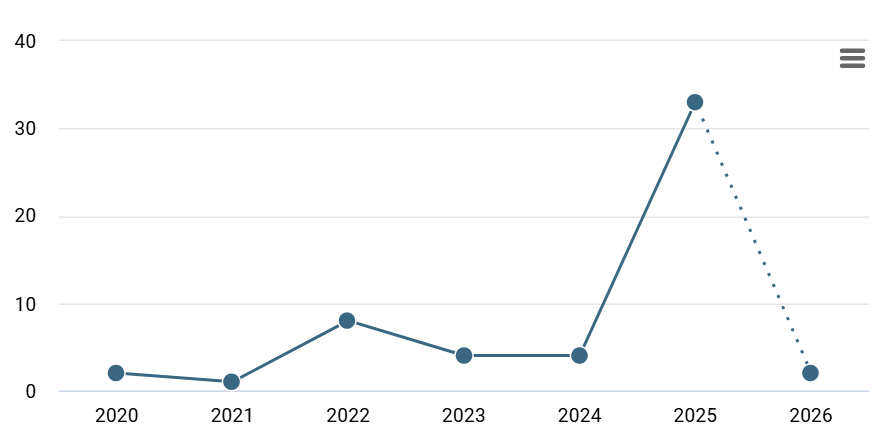
Lichun Zhao is a small fish in present company, publishing only 8 papers in 2025; It may be that Guizhou University of TCM lacks the prestige and facilities of the institutions mentioned above. In lieu of a G**gle Scholar entry, anyone interested in his expertise must hasten to Best Researcher Awards here, here or here (for the young man has called upon the services of the award-yourself Vanity Trophy websites). There we learn that “He bridges Traditional Chinese Medicine (TCM) with modern bioscience, exploring minerals’ pharmacological effects, ferroptosis mechanisms, bacteriostatic mineral activity, and the integration of TCM with AI and big data”. A few alluring titles will serve to illustrate Zhou’s bullshit-apologia pontificial record. They appeared in journals that range from RSC Advances to Journal of College of Physicians And Surgeons Pakistan, but all display the 2025 spike in citations – for academic advancement requires more than Best-X Awards.
- Zhou et al. 2019 “Inhibitory Effect of Semen Litchi Drug Serum on the Proliferation of Human Hepatoma HepG2 Cells and Expression of VEGF and MMP-9” (14 citations)
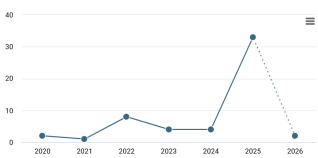 Yang et al 2020 “Extraction of flavonoids from Cyclocarya paliurus (Juglandaceae) leaves using ethanol/salt aqueous two‐phase system coupled with ultrasonic” (26 citations)
- Zhou et al. 2020 “Preparation of cyclocarya paliurus Sugar-Free Jelly” (12 citations) – recipes as well!
- Yang et al. 2020 “The PI3K/Akt and NF-κB signaling pathways are involved in the protective effects of Lithocarpus polystachyus (sweet tea) on APAP-induced oxidative stress injury in mice” – retracted for “concerns with the reliability of the data” (20 citations)
- Huang et al. 2020 “Isolation and Identification of Chemical Constituents from Zhideke Granules by Ultra‐Performance Liquid Chromatography Coupled with Mass Spectrometry” (24 citations)
- Zhou et al. 2024 “Rubidium salt can effectively relieve the symptoms of DSS-induced ulcerative colitis” (22 citations)
Fried Divine Comedy, featuring anti-cancer cockroach and phallic fungus
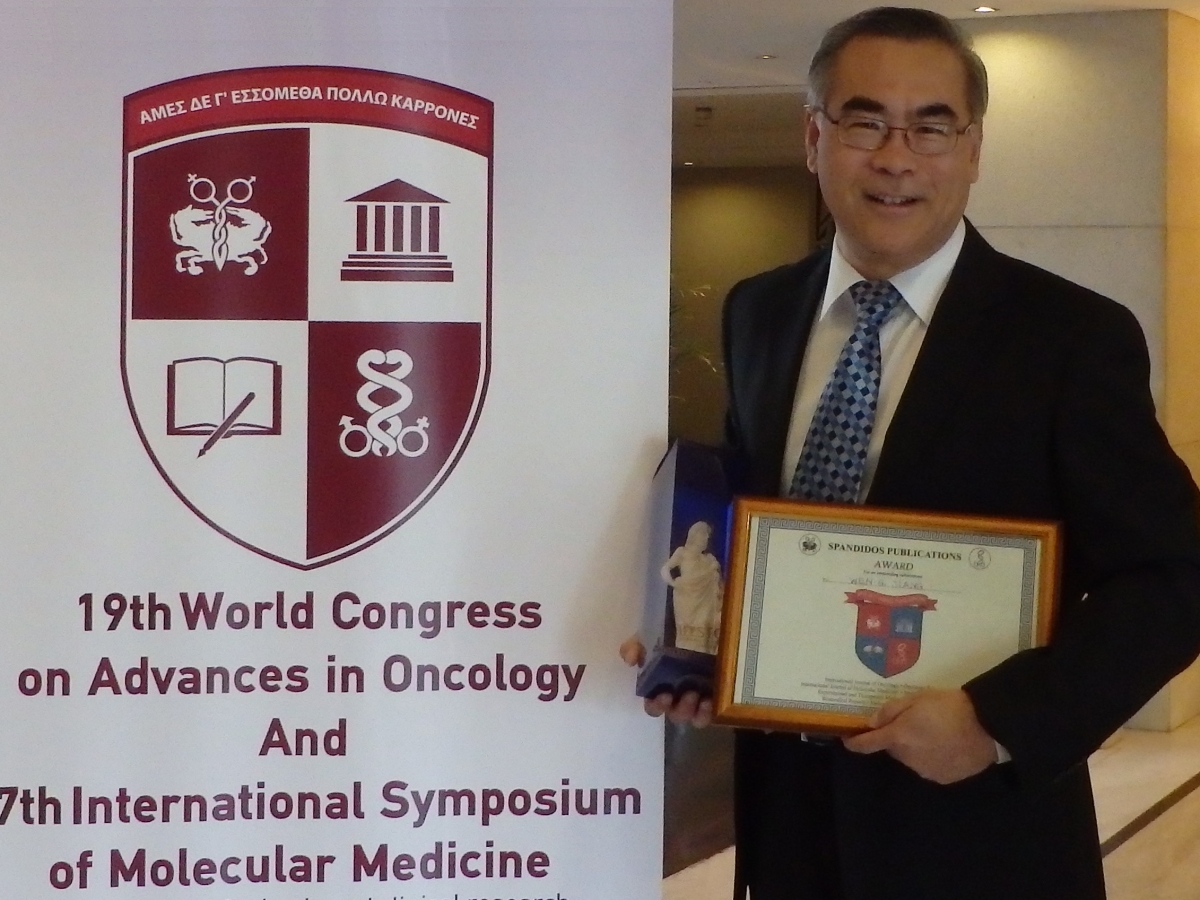
This is a follow-up to the previous article, about a misconduct investigation at the Cardiff University in UK into the published works of cancer researcher Wen Jiang, professor of Surgery and Tumour Biology, Fellow of Royal Society of Medicine and chair of Cardiff China Medical Research Collaborative. The following guest post by my regular contributor Smut…
I gave so much space to Lichun Zhao because, as promised in the title, we’re approaching the domain of cockroach clusters and crunchy frog. The Traditional Chinese Medicine scammacopoeia looms up ahead!
Sundry herbal magic
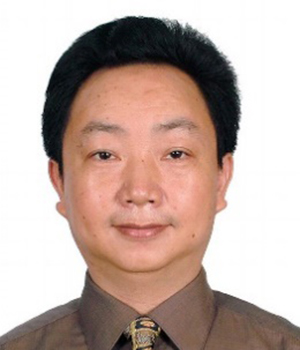 Professor Zhengzhi Wu of First Affiliated Hospital of Shenzhen University is founder and
 helmsman ‘discipline leader’ of “Proteomics Tertiary Laboratory” of the National Administration of Traditional Chinese Medicine. This must demand much of his attention, for he has not been active of late, leaving only his early-career papers and IEEE-scamference presentations to accrete citations. Their topics range from salivary proteomes and a diagnostic taxonomy of tongue furs, to curing Alzheimer’s Disease and tunicamycin poisoning with Tiantai #1 (I’m sure I ordered that once at a pho stall in Hanoi). And Natural Brain-Kenetine. He was publishing on Cerebrolysin long before Eliezer Masliah and Hari Sharma boarded the gravy train. The list of honours he boasts on his Sigma Xi page is glorious.

Cerebrolysin: Sharmas, Masliah, and EVER Pharma
“Poking around PubMed (Dysdera the spider is always on the hunt for new hornet’s nests) [..], I came across one image in two papers by Eliezer Masliah. […] By a conservative count, I contributed to about 160 out of 300 slides in the final dossier” – Mu Yang

Guihua Tian (PubPeer record) comes to us from Dongzhimen Hospital, Beijing University of Chinese Medicine. His own highly-cited bridge-building search for real-world biochemical mechanisms that will explain the incommensurate concepts and diagnostic categories of TCM has covered electroacupuncture, “leg-bathing in decoction” to cure rheumatism, and “Wenxin Keli in cardiovascular diseases“, but also (I am not making this up) robotic rehabilitation. Several papers describe animal models for post-stroke pain and chronic pain – that is to say, he found ways to damage lab rats enough to leave them in continuous torture, so that he could advertise this or that worthless placebo by testing it on them.
I hasten to assure the readers that Machine Learning Tournaments and Literature Surveys (however facile) are not the only formats for this citation-craving cohort. At some point in the pipeline, a different Bing Bai interrupted normal programming for a citational rampage:
Bing Bai , Rui Ma , Jabbar Rehima Exploring the impact of psychological capital and work–family conflict on stress regulation and success in competitive athletes Frontiers in Psychology (2025) doi: 10.3389/fpsyg.2025.1566508
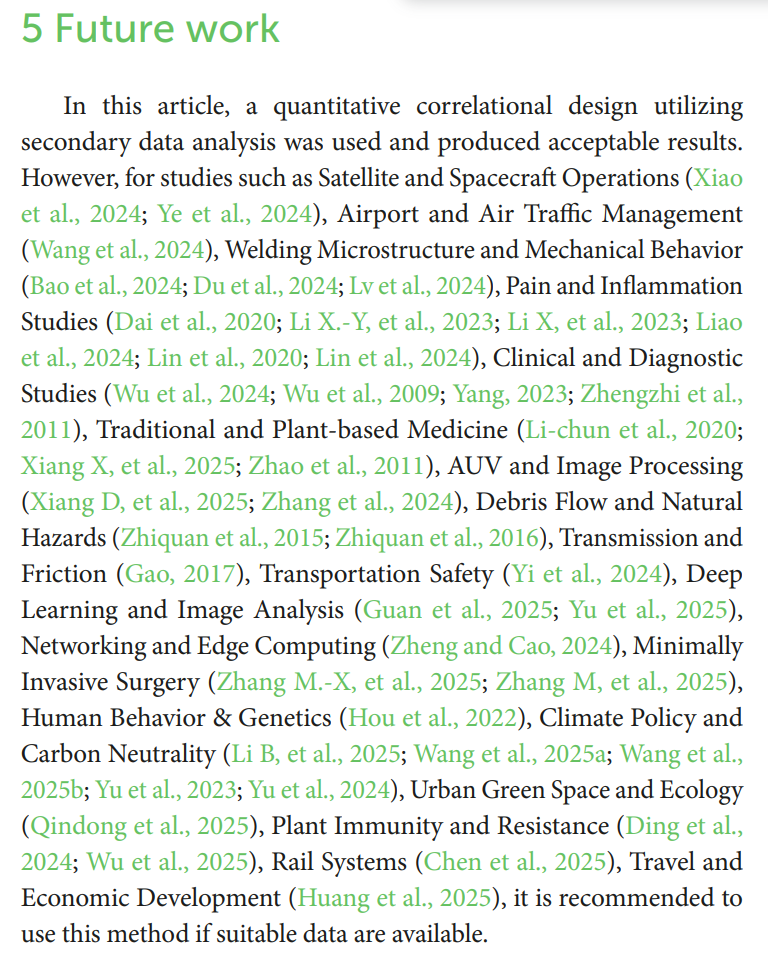
I can only suppose that the authors acquired an unstructured omnium-gatherum of papers that had nothing to do with their topic, and nothing in common apart from their own authors’ desires for citations; unable to face the task of creating individual pretexts to cite each item on the list, they threw them all into this bizarre paragraph.
G.-H. Tian and Z.-Z. Wu and L.-C. Zhao are there with sundry herbal magic, but also H.-Q. Yang. And Z.-Q. Yang. And assortative mating. The pretext for this lolly-scramble is stupid enough to be insulting: “it is recommended to use this method if suitable data are available”.
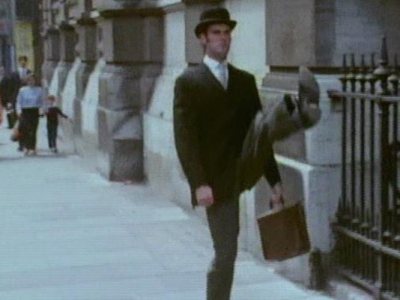
Research on Intelligent Trash Can Garbage Classification Scheme
“It’s not as if the Special-Issue Guest Editors or the imaginary ‘Peer Reviewers’ pay attention to the provenance of the images that fill the Figure-shaped gaps, or care whether the supposed alternatives in these horse-races are even algorithms at all.” – Smut Clyde
My gateway to this whole fractal warren – rabbit-holes made up of lots of smaller rabbit-holes – was also sports-related:
Daoming Qian , Qiankun Cui Optimizing endurance performance in elite swimmers: effects of L-carnitine supplementation and hydration strategies Applied Water Science (2025) doi: 10.1007/s13201-025-02495-1
Applied Water Science is a journal where co-Editor-in-Chief Saad A. Aljlil has a special “communicated by” channel for stove-piping papermill citation-delivery vehicles into publication (like PNAS), but again I refuse to get sidetracked. Here, someone decided that the references were too focused on providing information to the readers that would uphold the authors’ assertions, when they could have been delivering citations to the usual beneficiaries…

- Tian G, Qian K, Li X, Sun M, Jiang H, Qiu W, Xie X, Zhao Z, Huang L, Luo S (2023) Can a holistic view facilitate the development of intelligent traditional Chinese medicine? A survey. IEEE Trans Comput Soc Syst 10(2):700–713 [Betteridge’s Law would like a word]
- Li X, Cai H, Tian G, Hu B (2023b) Life Field theory: an objective presentation of the dynamic evolution of human life. IEEE Trans Comput Soc Syst 10(4):1423–1427
“Life Field theory” – I’m just going to look at that for a while.
I write “someone” because it is not always the fault of authors shopping from papermills. Incautious researchers sometimes send their manuscripts to an ‘outside contractor’ to massage the text into the proper style and forward it to an appropriate journal, and the company takes the opportunity to insert a handful of spurious citations – because again, these are all branches of the same business.
Asked about the relevance of citations for the benefit of G.-H. Tian, an author explained that they were inserted on the strongly-expressed advice of a peer-reviewer.
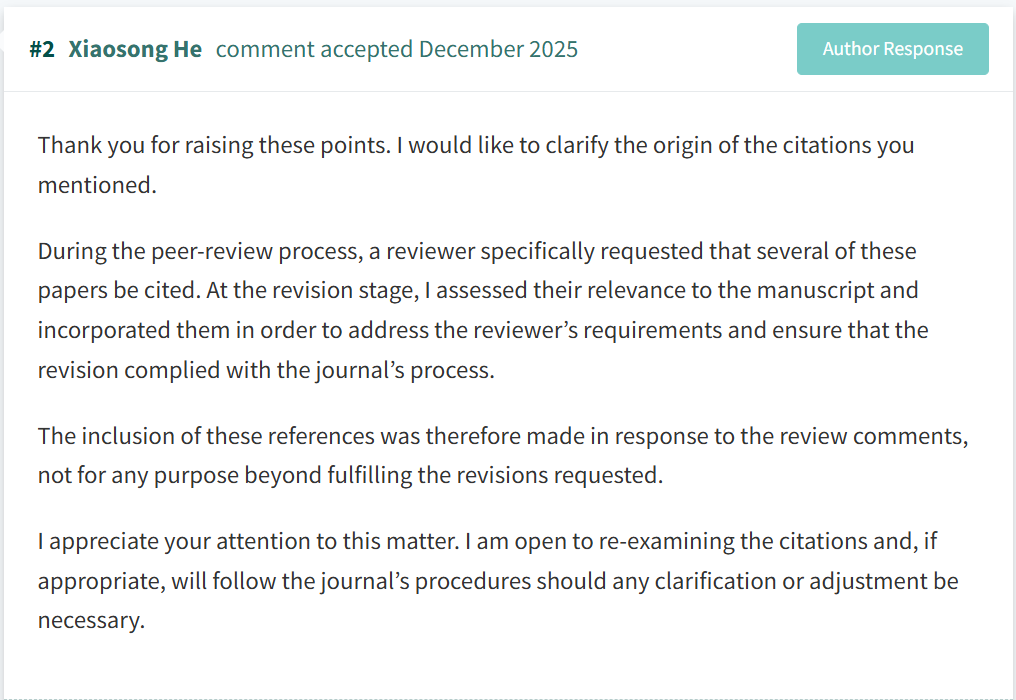
Physical and Engineering Sciences in Medicine is the journal in question, and curiously, the same thing keeps happening there. It is tempting to infer that our mystery reviewer is Tian in person, but I choose to believe that the citation brokers / papermillers have corrupt, coercive editors and sock-puppet reviewers on the payroll to lean on authors as another way of delivering the citations they contracted for. It’s what I would do, anyway. Also, the beneficiary of inserted citations is sometimes Z.-Z. Wu (see Zarei et al 2025).

We don’t need no education, We don’t need no thought control
“Of course the sentient rubber-stamps guest-editing Special Issues on behalf of papermills would have accepted anything – they don’t give two tugs on a dead dingo’s dick about content ” – Smut Clyde
And another PubPeer-thread example of a corrupt reviewer coercing on someone else’s behalf – this time in British Journal of Pharmacology. The coerced author quoted the reviewer’s rationales for each additional spurious citation, and they are redolent with the dumbprints of LLM word-wooze.
The third participant
It would be wrong to dwell on the industry that provides citation payola, and a sample of the customers who pay for it, and finish without glancing at the third participant in every transaction: the journals that accept the citation vehicles.
One of those hallucinatory confections with imaginary authors (Doroshenko & Shefchenko 2026) was accepted for Springer Nature’s Inorganic Chemistry Communications. This cloaca has published 96 of the entries in my spreadsheet, over the period 2021-2026, retracting precisely one, by the legendary Maria Jade Catalan Opulencia (and her friends from China, Brazil, Egypt and Uzbekistan!), when the editors could no longer ignore its authorship manipulations and papermill provenance:
Saade Abdalkareem Jasim , Maria Jade Catalan Opulencia , Azam Abdusalamovich Khalikov , Walid Kamal Abdelbasset , Erich Potrich , Tiejun Xu Investigation of reaction mechanisms of CO2 reduction to methanol by Ni-C80 and Co-Si60 catalysts Inorganic Chemistry Communications (2022) doi: 10.1016/j.inoche.2022.109358
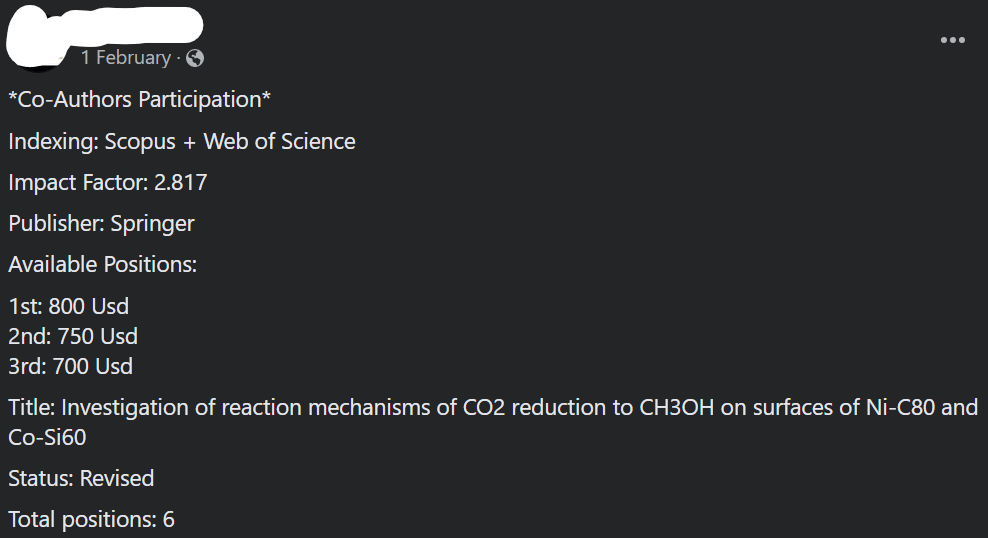
I’m not saying that the editors are trying to attract papermillers, but how would the situation differ if they were?
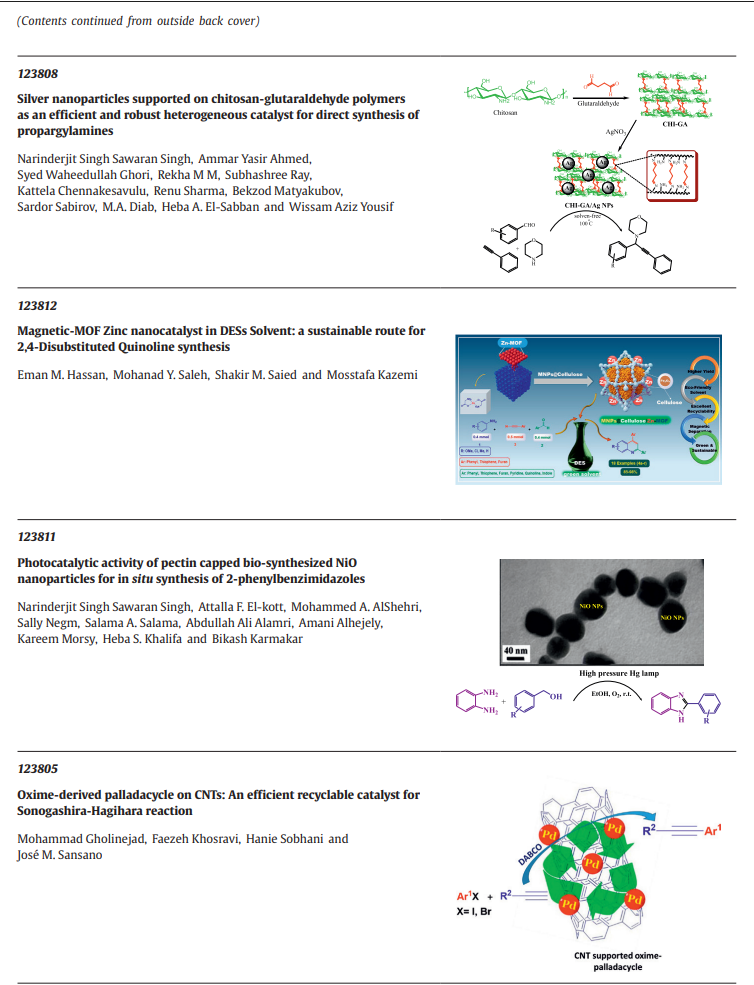 Elsevier’s Journal of Organometallic Chemistry (only 49 entries) is even more fetid – an unrelenting fire-hose of make-believe science, where the same deep-pocketed papermill customers appear again and again to apply the same templates again and again and immortalise the resulting fiddle-faddle in the scientific record.
Right at the start we met Wiley’s Polymer Engineering & Science and Polymers for Advanced Technologies – the favorite journals of that circle of more firmly-existing Progress Reviewers. Evidently there is so much Advanced Polymer Science going on that a single Wiley journal was not enough. So far, 13 and 17 entries in the spreadsheet.

The Augean Elsevier and Springer stables house any number of equally dire outlets, with editors committed to Epistemological Diversity: that is, software-synthesised slop must be published as well as truthful reports of actual experiments. Case Studies in Thermal Engineering (128 entries)… Journal of Sol-Gel Science & Technology… Journal of Alloys & Compounds (one of B.N. Dole’s rampages, see Pawar et al 2026), with a remarkable 389 citations)… Journal of Energy Storage (another Dole rampage, Mane et al 2025)… Hereditas… Journal of Materials Science: Materials in Electronics… Discover Oncology, where the authors totally didn’t use a LLM to produce some “Armoored Biocadac“:
Omer Qutaiba B. Allela, Abdulkareem Shareef , S. Renuka Jyothi , Priya Priyadarshini Nayak , J. Bethanney Janney , Gurjant Singh , Ashish Singh Chauhan , Firdavs Oripov , Hayder Naji Sameer , Ahmed Yaseen , Rasim M. Salih , Mohaned Adil Engineering CAR T NK and NKT cell therapies to target cancer stem cells and overcome stem like resistance Discover Oncology (2025) doi: 10.1007/s12672-025-04276-3
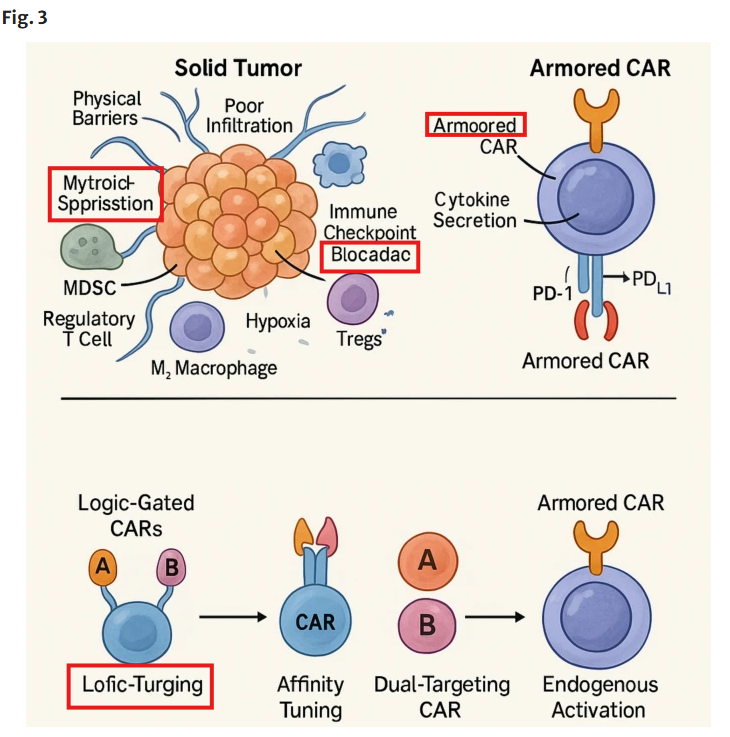
Fig 3 (H/t Viola sheltonii) Can the authors please clarify what lofic-turging and mytroicl-spprisstion are?
But bored now.
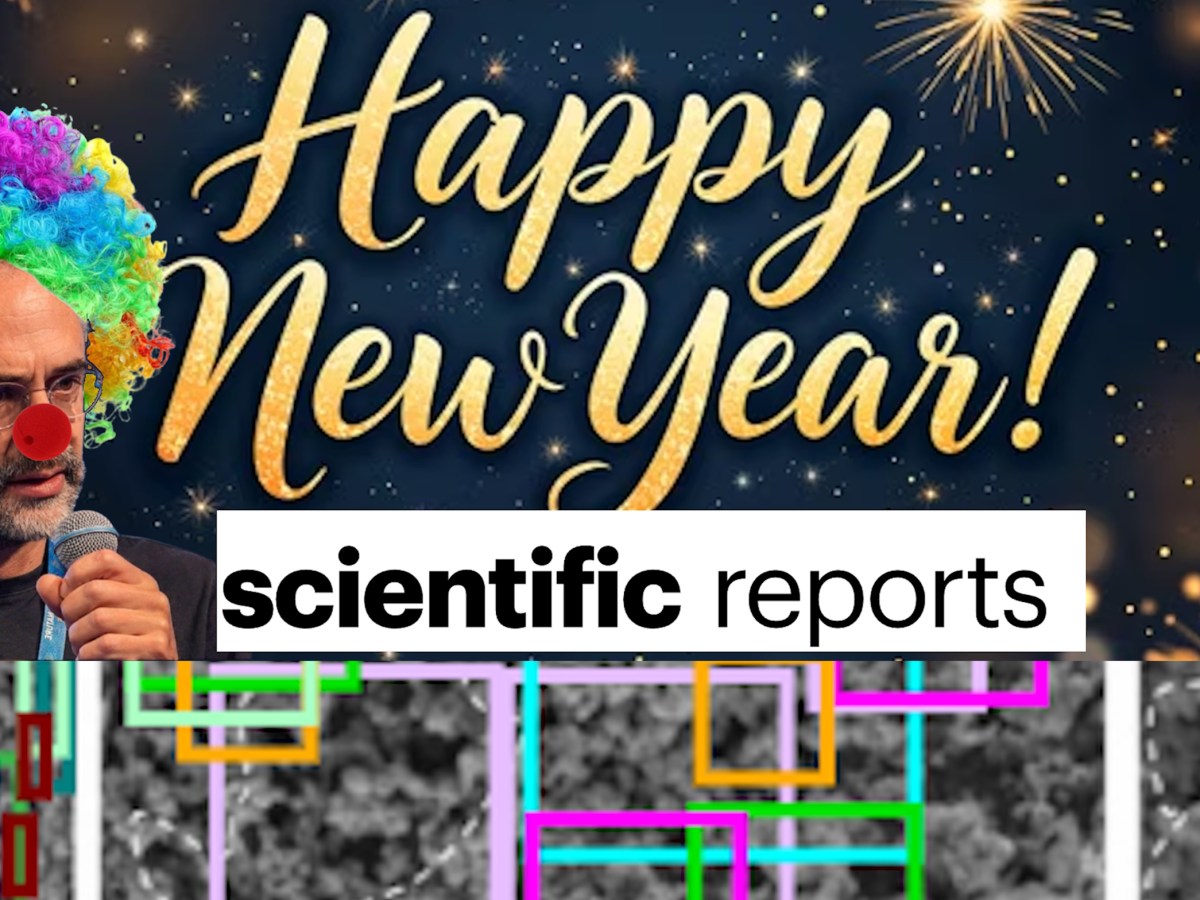
Scientific Reports 2025: A Year in Review
“In this blog I write about papers published by Scientific Reports in 2025, so we could consider it to be a sort of “wrap-up” of highlights and special achievements in the world’s biggest scientific journal™ in 2025.” – Sholto David

Scientific Reports is a special case with its pullulating swarms of Editors and reviewers. Its editorial structure – vast, flat and decentralised, like the Eurasian steppes – is an open invitation for the fake-science stakeholders to insert their sockpuppets and pollute the pool. The outcome was predictable.
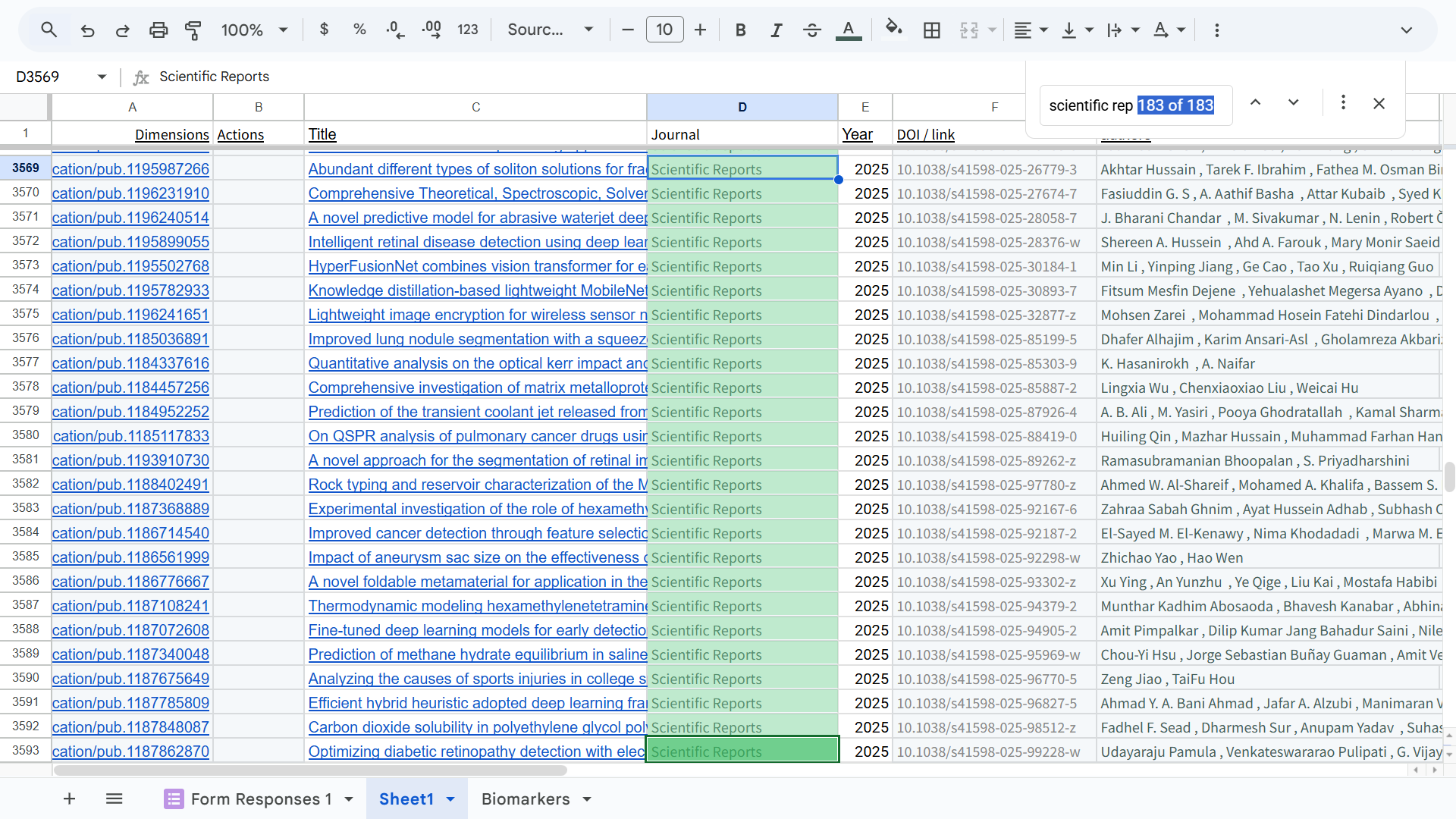
The following study is an instantiation of the ‘Solitons’ template. Somehow the editors and reviewers at Scientific Reports contrived not to notice that a citation at the heart of the manuscript is a portal to the Citation-Spam Constellation, and that the 20 familiar clowns that spill out of the clown-car have nothing to do with partial differential equations. A useful convention in this genre is that anything can be a PDE if you say it is.
Naseem Abbas, Akhtar Hussain , Tarek F. Ibrahim , Faizah D Alanazi , Burak Oğul , Elkhateeb S. Aly , Jorge Herrera Exploring complex phenomena in fluid flow and plasma physics via the Schrödinger-type Maccari system Scientific Reports (2025) doi: 10.1038/s41598-025-17403-5

I’ll finish with International Journal of Electrochemical Science – if only because the Editorial Advisory Board boasts our old friend Professor Anthony P F Turner, former professor at Linköping University in Sweden, until he fell arse over tit and was chased out in shame over the fraud of his protege and business partner – the legendary Ashutosh Tiwari.
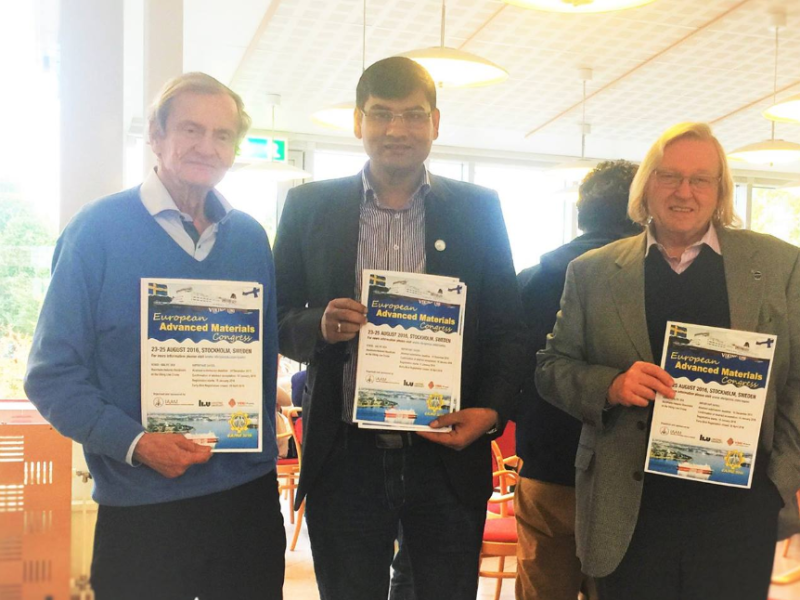
Linköping investigation: Tiwari trips over Sharma’s fraud
The last act of the Ashutosh Tiwari travesty at Linköping University (LiU) in Sweden took place. Tiwari, the fake professor and master of predatory conferences, tripped only over his vanity of gift co-authorship on 3 papers by his Allahabad mate Prashant Sharma, a shameless nanotechnology data faker with presently 26 retractions.
The aforementioned journal used to be the organ of ESG, a single-journal Serbian publisher, until Elsevier acquired it at the end of 2022. By that time it had become a papermill with its own house journal, and its own electrochemistry-specific template for paper generation, so the contents of later issues are awash with such atrocities as this:
Jiaqi Fan, Tongjun Shang , Peiquan Duan Design of electrochemical sensor for 1,3-propanediol detection in presence of glycerol International Journal of Electrochemical Science (2023) doi: 10.1016/j.ijoes.2023.100031
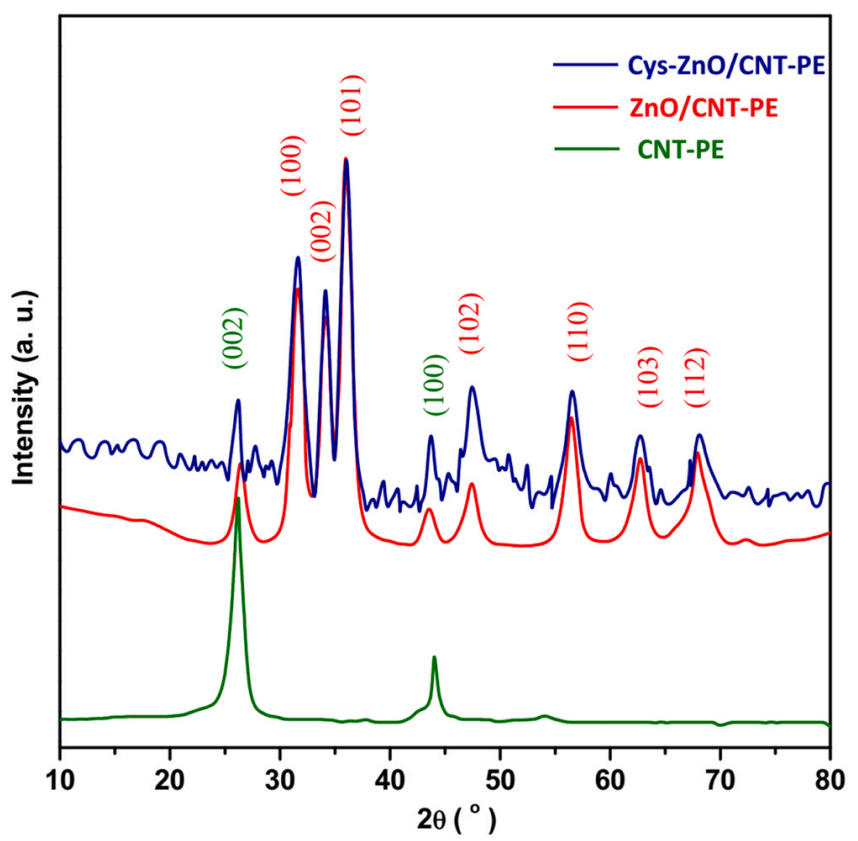
Perhaps the authors could describe the equipment used to plot Fig 1 (especially the blue diffractogram, with its curious squiggles).
Or this:
Chenyang Song Enhancing photocatalytic degradation of hydrolyzed polyacrylamide in oilfield wastewater using BiVO4/TiO2 heterostructure nano-photocatalyst under visible light irradiation International Journal of Electrochemical Science (2023) doi: 10.1016/j.ijoes.2023.100363
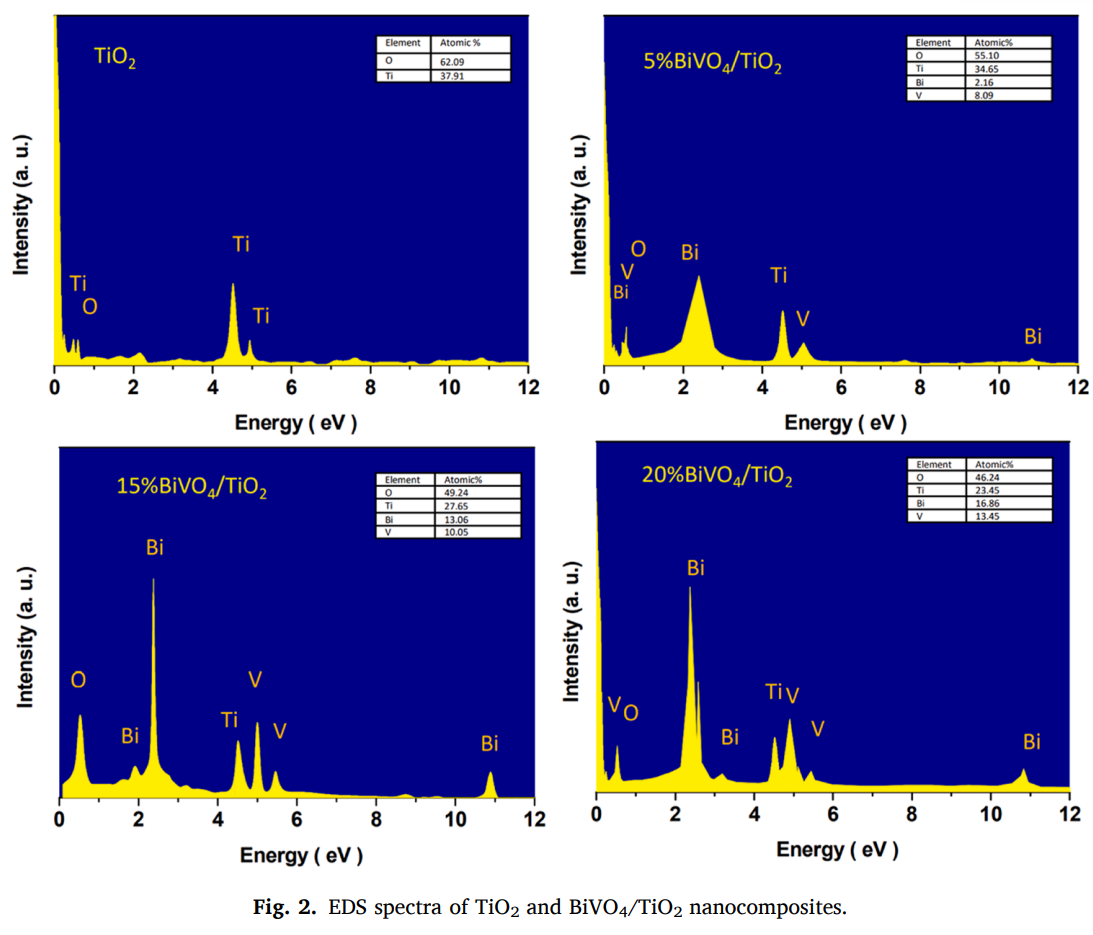
The EDX spectra of Fig 2 are a curious mixture of smooth curves, straight lines, corners, and the occasional vertical line.
Or maybe this:
Xiaohui Guo, Yingwei Fan Determination of nitrite in food specimens using electrochemical sensor based on polyneutral red modified reduced graphene oxide paste electrode International Journal of Electrochemical Science (2023) doi: 10.1016/j.ijoes.2023.100290
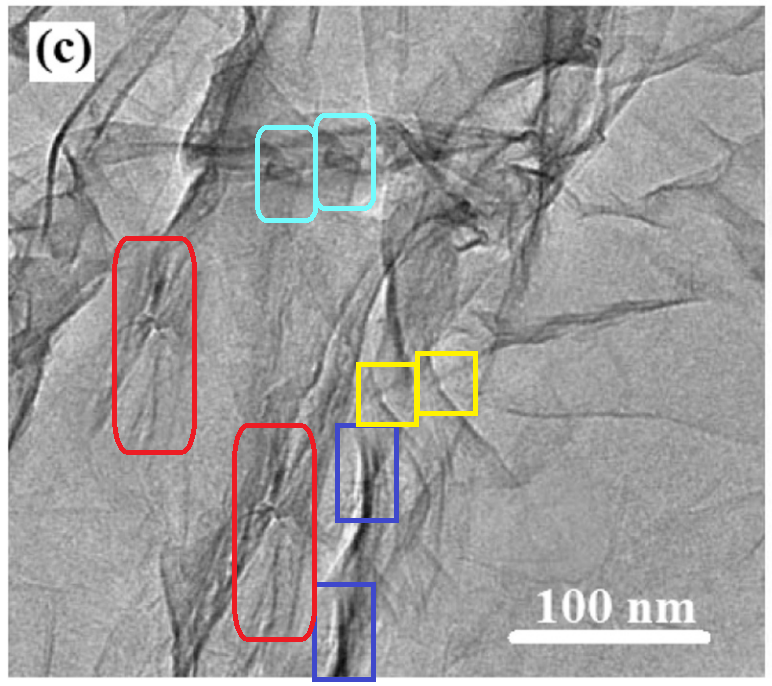
Fig 2c emerged not from a laboratory, but from software.
All characterised by hand-scribbled XRD patterns; and EDF spectra assembled from straight lines; and images captured using software rather than an electron microscope.
Also characterised by citation spam for the usual beneficiaries (notably Changhe Li – though also J. Rouhi, R. Savari, H. Karimi-Maleh and their mates) – for of course the template was designed around slots where purchased citations go. Between those slots the text is repetitive, formulaic, and plagiarised, but there was never any danger of anyone reading it.

The Highly Cited Researchers of Clarivate
“here is my advice to Clarivate: better get lost. ” – Alexander Magazinov

The examples are from 2023, i.e. published (along with at least 23 other citation-delivery vehicles) under new Elsevier management. To be fair, perhaps they were already in the pipeline when ESG outsourced production; and during 2024 the torrent dried up as if the papermillers had migrated to a different host. But the Editorial Board that presided over their piracy has not changed at all.
The papermillers, their electrochemistry template and their photoshop skills can now be found under the sheltering aegis of Alexandria Engineering Journal, the organ of Alexandria University’s Faculty of Engineering (though again production was outsourced to Elsevier). So we have this:
Yao Chen , Weibo Dai , Shuying Zhou , Xi Liu , Wenying Chen , Yucheng Zheng , Xiaoyi Chen , Geqin Sun An electrochemical biosensor based on graphene oxide for determination of sertraline hydrochloride as an antidepressant drug Alexandria Engineering Journal (2023) doi: 10.1016/j.aej.2023.07.043
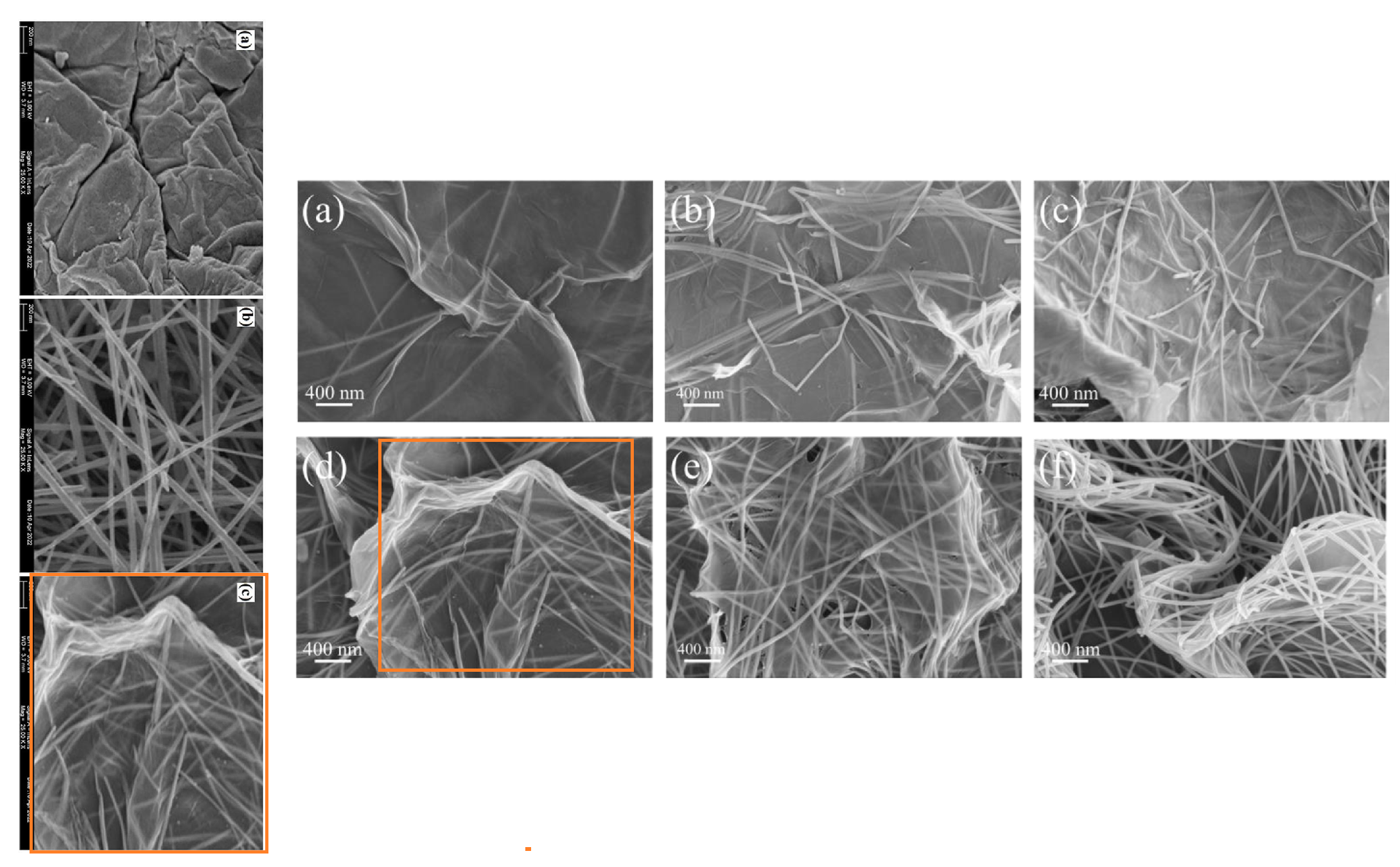
[right] Fig 3 from “Synergetic Effects of Silver Nanowires and Graphene Oxide on Thermal Conductivity of Epoxy Composites” (Zhang et al 2019).
And even this:
Xuesong Ren , Qi Jiang , Jianwei Dou Electrochemical detection of oxaliplatin as an anti-cancer drug for treatment of breast cancer using TiO2 nanoparticles incorporated graphitic carbon nitride Alexandria Engineering Journal (2023) doi: 10.1016/j.aej.2023.10.010
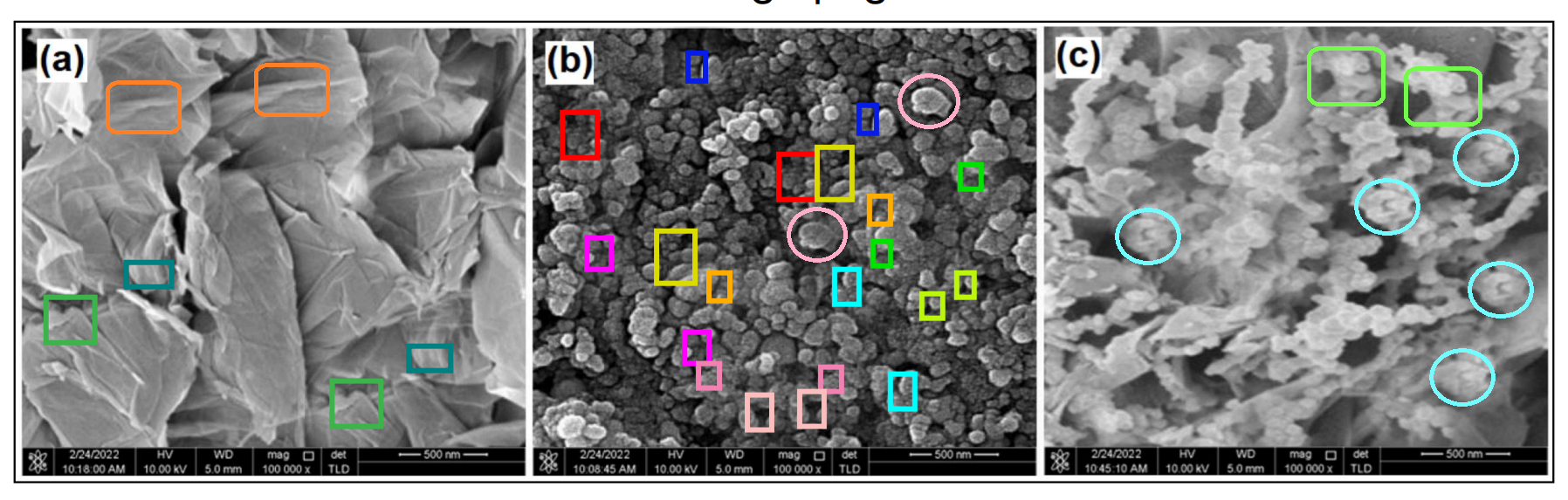
Sadly, Alexandria Engineering Journal was already a happy hunting-ground for papermills long before the electrochemistry crowd arrived, with a notable fondness for the ‘Nanoflow’ (Galal et al 2025) and “nonlinear partial differential equation’ (Guo et al 2024) styles of wibble. I like to think that the Egyptian university kept control of quality when they outsourced production to Elsevier. Another competitor for the title of “Most wretched hive of citation payola and papermills” is Journal of Radiation Research & Applied Sciences – from the Egyptian Society of Radiation Sciences and Applications but yet again published by Elsevier.
I almost forgot the heat conductance of hamburgers – gloriously invented by an over-ripe instance of the classic ‘nanoflow’ template for citation-package generation. Elsevier’s Hybrid Advances reluctantly retracted that paper:
Muhammad Usama Arshad , AliB.M. Ali , M. Huzaifa Yaseen, Dana Mohammad Khidhir , Nadia Batool Cattaneo-Christov heat transfer method on free convective three-dimensional flow with periodic permeability Hybrid Advances (2025) doi: 10.1016/j.hybadv.2025.100536

The retraction only happened because Nadia Batool complained that papermillers had stolen her identity to coauthor their nanorrhoea and misused her email account with University of Potsdam in Germany (see, a first-world problem again!):
“Post-publication, the journal was alerted by Dr. Nadia Batool and the University of Potsdam, Germany, that her name was added to the authorship list without her knowledge or involvement in the research. Additionally, a fictious email address was associated with her during the submission process.
An investigation conducted by Elsevier’s Research Integrity & Publishing Ethics team on behalf of the journal confirmed that Dr. Nadia Batool had been impersonated.”
I am steadfast in refusing to get sidetracked; also the Batool imbroglio really deserves its own post; I only mention it because the editors of Journal of Radiation Research and Applied Sciences are notably open to nanorrhoea absurdities, so many ‘Nadia Batool’ artefacts enjoyed their hospitality. Until the retractions began.
It would also be wrong to finish without a Conclusion of some kind, and it is this: the arms-race or vicious spiral of citation inflation spins off some remarkable Bremsstrahlung phenomena from its widening gyre. On one side: late-career scientists resorting to purchased promotion of their early-career papers. On the other side: whole new genres of paper-shaped artifacts that are little more than packaging for ever-larger citation cargoes; journal-shaped artifacts that are little more than conduits for publishing them; protection-racket sockpuppet reviewers; and papermillers no longer bothering to find buyers of naming rights on their products.
This latest citation scandal is surely the one that discredits the Hirsch index at last, and forces the holders of purse-strings and signers of contracts to go back to determining the value of research projects the hard way. Just like each previous scandal and retraction tsunami did.

Do papermillers dream of eclectic journals?
“I focus on the sprawling parody literature devoted to the three Es of Energy, Economy and the Environment. Together they […] freeload on the authentic literature on energy efficiency and pollution reduction (while diluting, distracting and discrediting them).” – Smut Clyde
CODA
The latest ‘progress review’ citation sack just dropped through from the alternative universe where the authors do exist. It is the fourth by ‘Doroshenko / Shevchenko’, because publishers have learned absolutely nothing:
Kateryna Mykhailivna Doroshenko , Oleksandr Ivanovych Shevchenko From Liposomes to Virosomes: Evolution of Phospholipid Nanocarriers in Drug Delivery Biotechnology Journal (2026) doi: 10.1002/biot.70178
The Reference Section is the usual omnium-gatherum of familiar names.
I also learned from the ‘pedia that the industry is hoping to rebrand Red Mud as ‘processed bauxite‘ – a less-concerning name when the method of disposal is to incorporate it into concrete as a substitute for some more structural ingredient. Hey, it works for the Mafia.
The final final word belongs with Kaimeng Xu: Associate Professor at Southwest Forestry University (Kunming) and Visiting Scholar at University of Tennessee (PubPeer record), whose Highly-Cited papers dwell on the synthesis and applications of cellulose / chitosan composite nanomaterials. Because that final word is “facile’.
- Zhang et al.”Effects of facile chemical pretreatments on physical-chemical properties of large clustered and small monopodial bamboo microfibers isolated by steam explosion” (2024) – 12 citations
- Zhang et al. “Facile fabrication of electrospun hybrid nanofibers integrated cellulose, chitosan with ZIF-8 for efficient remediation of copper ions” (2025) – 38 citations
![[Citation not needed]](https://forbetterscience.com/wp-content/uploads/2022/03/mv5bowfkmmy2njytyjdkms00njjklthkyjctmmrintm0n2y1mgvjxkeyxkfqcgdeqxvymtiwodk1ntq40._v1_1.jpg?w=1200&h=900&crop=1)
[Citation not needed]
“Even university management eventually realised that self-citations of your work, in your own papers, shouldn’t really count (“see ‘Toenail Clipping Microphotographs, Part 1’, S, Clyde 2018″). So people progressed to citation cabals among cronies, referring to each other’s work” – Smut Clyde

 For Better Science
On your Provider list I spotted this paper:
https://pubpeer.com/publications/D01AC86A646DFCAE3D9C71FD063AD0
The middle co-author “Nikolaj Jade” does not seem to work at the Wrocław University (frankly, his name doesn’t look Polish) and his e-mail
“2021004127@poers.edu.pl” uses an non-existent *.edu.pl domain. I googled for other papers with this domain and found loads of papers by Chinese authors.
Can you enlighten me what is going on here? 😀
LikeLike
The whois record indicates that poers.edu.pl is registered to:
“simle merdfajgdasfasd100000 GJJAS, CW+86.1012345678”
whatever it means 😀
LikeLiked by 1 person
A good observation!
I hunted around in turn and saw that those papers seem to date from 2022-2023, They mostly appeared in predatory journals, plus Hindawi and IEEE journals (but I repeat myself). Lots of conference reports.
That was the period when papermills were pipelining their products into Hindawi journals, using disposable burner email accounts to manage the submissions on behalf of their customers – often buying blocks of student accounts from Chinese universities (or even from colleges in Burundi) to make the correspondence look plausibly academic. So my guess is that someone set up the “poers.edu.pl” domain to provide papermills with pseudo-academic e-addresses.
Looks like the account purchasers were told that their fake affiliation was specifically with University of Wrocław. Hence the creation of ‘Nikolaj Jade’.
LikeLiked by 1 person
Typo correction: “We also have the group of Hana Afshar, Farangis Shahi, Akiakbar Jafari and Vana Fakhri, spread around …”, it must be Aliakbar Jafari.
Re, Professor Hossein Ali Khonakdar (https://orcid.org/0000-0001-8143-9338), he is one of hundreds highly qualified personnel (HQP) people and international ring of academic mafia organized and guided by Chul B Park of University of Toronto (https://orcid.org/0000-0002-1702-1268). A major world-class papermill and academic fraud circle. A more complete list of trained HQPs is available at: https://mpml.mie.utoronto.ca/lab/alumni/.
From HAK‘s orcid page:
“He was selected as a “Highly Cited Researcher” in the list of top 2% scientists published by Stanford University for 2021, 2022 and 2023.(https://elsevier.digitalcommonsdata.com/datasets/btchxktzyw/4)He was awarded by the Ministry of Science, Research and Technology of Iran as Iran’s outstanding researcher in 2023.”
And, from CBP‘s orcid page:
“Professor Park has been very active in training of highly qualified personnel (HQP). He has completed training of 659 highly qualified personnel”
LikeLike
Here we go, brand-new abbreviations developed in the Academy of Papermill, University of Toronto:
Highly Cited Researcher = HCR
Highly Qualified Personnel = HQP
in exceptional extraordinary cases:
Very Highly Cited Researcher = VHCR
Very Highly Qualified Personnel = VHQP
LikeLike
“Typo correction” – Fixed, thanks!
Also thanks for the “Highly Qualified” tip.
LikeLike
Very good piece, impressive. Hats off to Smut Clyde.
LikeLike
Impressive and interesting as always. A few observations:
Round these parts, facile primarily means “easily done”. I never understood how that became a put-down, but I assume it’s a British thing.
As for Prof. Hossein Ali Khonakdar and his 500 ISI-indexed papers, if he worked in my field his publication fees would have totalled over $4 million by now, even if we kept to the cheaper journals (with Nature group marques you’re lucky to get away with $8K USD). He obviously didn’t pay anything close to that to churn out his piss-poor papers, so it seems the additional perversity of parasitism must be lain at his feet.
But at least he’s real, I guess.
LikeLike
And, regarding running a papermill citation circle, it is very unlikely that the institution (IPPI, http://en.ippi.ac.ir/) paid that “totalled over $4 million by now” just for this specific staff. IPPI website reveals several more staff like Prof. HAK as “top 2% of researchers worldwide based on standardized citation metrics (http://en.ippi.ac.ir/index.aspx?siteid=2&fkeyid=&siteid=2&pageid=535&newsview=762) and “World’s Top 1% Highly Cited Researchers” (http://en.ippi.ac.ir/index.aspx?siteid=2&fkeyid=&siteid=2&pageid=535&newsview=775).
It seems, IPPI doesn’t care about research integrity among staff, only enjoy prestige and high ranking achieved in any form. No investigation on suspecious international activities of their staff. This can seriously damage credibility of IPPI.
LikeLike
I would be interested to read a post on the “the Batool imbroglio”. Seems that “papermillers had stolen her identity” is an unlikely excuse given that N.B. is a corresponding author on nanorrhoea papers and an editorial board member of a nanorrhoea journal. “Papermiller’s remorse” seems like a more likely explanation.
LikeLike
One another highly profilic reseracher without PhD students and working in a teaching university publishing so many papers (few under investigation). Named highly cited researcher and most of the papers are simply collaborative with China and Iran
A note from Clarivate (https://clarivate.com/).
Dear Dr Ajeet Kaushik,
Our Highly Cited Researchers program identifies and celebrates individuals who have demonstrated significant and broad influence in their field(s) of research. Each researcher selected has authored multiple Highly Cited Papers that rank in the top 1% by citations for their field(s) and publication year in the Web of Science Core Collection over the past 11 years — indicating exceptional influence in their respective disciplines.
This recognition is an outcome of a long journey, which is unconditionally well-supported by peers, supervisors, institutions, associates, collaborators, and scholars. I am very thankful to everyone and feel more motivated to do well in the field of STEM-Education and STEM-Training at Florida Polytechnic University.
Florida Polytechnic University
American Chemical Society
Florida Section of the American Chemical Society
Royal Society of Chemistry
The Electrochemical Society
ECS Florida Polytechnic University Student Chapter
AAAS – The American Association for the Advancement of Science
LikeLike
Worth Looking how many publications without a research group https://scholar.google.com/citations?hl=en&user=RYH8Z_4AAAAJ&view_op=list_works&sortby=pubdate
LikeLike