

Schneider Shorts of 17 October 2025 – epigenetic inheritance in Communist ideology, Alzheimer’s cured with nanoparticles, two Swedish scientists curing cancer, with publishers fighting trash correlation studies, retractions for former Nobelium professor, and finally, how to use proper channels.
Table of Discontent
Science Elites
- Guarantee that all western blots are unique – Karin Öllinger may need to have a second look
- Cow mucus lubricants – Hongji Yan solves HIV and cancer
Scholarly Publishing
- Skyrocketing submissions – no more spurious correlations from databases!
- An interesting hobby – only the best people on the editorial board
Retraction Watchdogging
- They may not have a clear understanding of EDX – retractions rain for Mo Bilal
Science Breakthroughs
- The sperm of trained men – making the next generation of China’s athletes
- Nanotechnology strategy that reverses Alzheimer’s – and totally without any COIs!
Science Elites
Guarantee that all western blots are unique
A reader reminded me that I haven’t written about the Linköping University (LiU) for some time. That Swedish university brought us such titans like Ashutosh Tiwari and his patron Anthony Turner (both out), May Griffith (in Canada), and Omer Nur and Magnus Willander (still at LiU).
Now meet the LiU professor Karin Öllinger , a melanoma researcher who studies “The lysosome as a therapeutic target?” She now has some papers on PubPeer, courtesy of the pseudonymous Claire Francis and other sleuths. Let’s start with the oldest one:
Petra K. Wäster, Karin M. Öllinger Redox-Dependent Translocation of p53 to Mitochondria or Nucleus in Human Melanocytes after UVA- and UVB-Induced Apoptosis Journal of Investigative Dermatology (2009) doi: 10.1038/jid.2008.421


The other author Petra Wäster is now a lecturer at LiU, still working with Öllinger, who announced on PubPeer in October 2025:
“I can guarantee that all western blots are unique. Unfortunately, this paper was published 16 years ago. According to Swedish government regulations, we are required to retain raw data from research projects for 10 years after the results have been published and the project has been financially reported to the funding agency. After that, the research data may be discarded.”
After all raw data was destroyed, all that remains is a guarantee. This one is probably also already too old to fix:
P. Wäster , I. Rosdahl , K. Öllinger Cell fate regulated by nuclear factor‐κB‐ and activator protein‐1‐dependent signalling in human melanocytes exposed to ultraviolet A and ultraviolet B British Journal of Dermatology (2014) doi: 10.1111/bjd.13278

This paper is also not yet 10 years old, and it contains at least two kinds of data issues:
Kyriakos Orfanidis , Petra Wäster , Katarzyna Lundmark , Inger Rosdahl , Karin Öllinger Evaluation of tubulin β‐3 as a novel senescence‐associated gene in melanocytic malignant transformation Pigment Cell & Melanoma Research (2017) doi: 10.1111/pcmr.12572


And here, the image wasn’t just duplicated, it also changed brightness:
Cecilia Bivik Eding , Jakob Domert , Petra Wäster , Fredrik Jerhammar , Inger Rosdahl , Karin Öllinger Melanoma growth and progression after ultraviolet a irradiation: impact of lysosomal exocytosis and cathepsin proteases Acta Dermato Venereologica (2015) doi: 10.2340/00015555-2064

Surely the raw data can be found for this paper:
Petra Wäster, Ida Eriksson , Linda Vainikka , Karin Öllinger Extracellular vesicles released by melanocytes after UVA irradiation promote intercellular signaling via miR21 Pigment Cell & Melanoma Research (2020) doi: 10.1111/pcmr.12860

Sholto David: “Figure 4b: Green triangles, two bands appear to be near identical.”
There highlighted gel bands and the surrounding background are indeed too similar. Quite possibly someone is a very professional Photoshop artist. In this regard, this paper provides some worrysome clues:
Petra Wäster, Kyriakos Orfanidis , Ida Eriksson, Inger Rosdahl , Oliver Seifert, Karin Öllinger UV radiation promotes melanoma dissemination mediated by the sequential reaction axis of cathepsins–TGF-β1–FAP-α British Journal of Cancer (2017) doi: 10.1038/bjc.2017.182

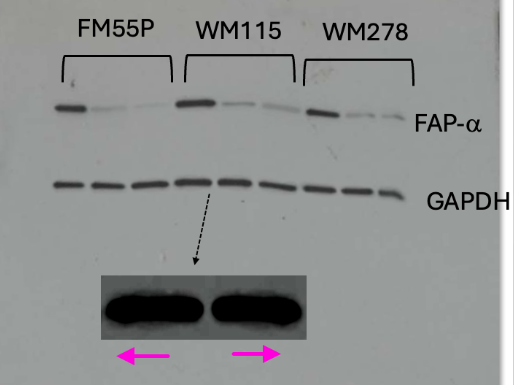
Öllinger replied that “An error occurred during final editing of the figure“, and that “The E-cadherin is wrong“, which she replaced. But then, there was another suspect case of gel band duplication in Fig 4E, which Wäster sought to disprove with her “original blot“. I made a comparison, on the right, top. Then another sleuth found a suspected gel band duplication in Wäster’s “original blot” (right, bottom):

In this regard, how can 4 different melanoma cell lines share the same GAPDH loading control? What’s the point of peer review then?

Maybe there’s a problem in Öllinger lab after all.
Cow mucus lubricants
Same reader alerted me to another Swedish scholar, an expert on bioactive materials – Hongji Yan, currently a researcher at University of Uppsala. Well, yes, you heard of that university also:

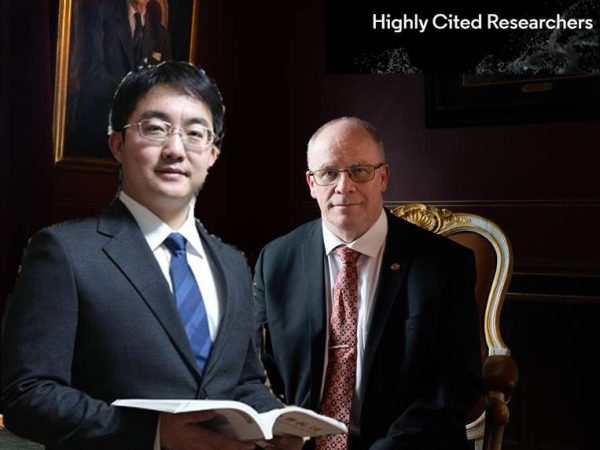
Swedish rector Anders Hagfeldt pronounced innocent of papermilling
“The board’s conclusion is therefore that the deviations regarding figure 2b and 2c in article 1 constitute serious deviations from good research practice”

In February 2024, the university celebrated Yan’s achievements:
“Hongji Yan, a researcher at Uppsala University, has been awarded a substantial grant from the Horizon Europe funding programme European Innovation Council (EIC) for his research project NatProLub – nature-inspired lubricating gels that could potentially help many vulnerable individuals worldwide.”
Yan’s promise is to develop lubricants which will protect from HIV and other infections those women who can’t rely on the use of condoms. These hydrogels are made from cow mucus (this was even on Sverige Radio), Yan started that work at the lab of Thomas Crouzier at KTH in Stockholm. Here is how it works:
Hongji Yan , Morgan Hjorth , Benjamin Winkeljann , Illia Dobryden , Oliver Lieleg , Thomas Crouzier Glyco-Modification of Mucin Hydrogels to Investigate Their Immune Activity ACS Applied Materials & Interfaces (2020) doi: 10.1021/acsami.0c03645


Uppsala University informed in September 2024 that Yan’s hydrogels can be used for treatment of hernia. More on these amazing cow mucus gels, Mia Phillipson is Yan’s current boss at Uppsala:
Hongji Yan , Cédric Seignez , Morgan Hjorth , Benjamin Winkeljann , Matthew Blakeley , Oliver Lieleg , Mia Phillipson , Thomas Crouzier Immune‐Informed Mucin Hydrogels Evade Fibrotic Foreign Body Response In Vivo Advanced Functional Materials (2019) doi: 10.1002/adfm.201902581

And another Uppsala study, with their professor Oommen Varghese. Here novel transfection reagents were invented, please admire the reproducibility:
Hongji Yan , Oommen P. Oommen , Di Yu , Jöns Hilborn , Hong Qian , Oommen P. Varghese Chondroitin Sulfate‐Coated DNA‐Nanoplexes Enhance Transfection Efficiency by Controlling Plasmid Release from Endosomes: A New Insight into Modulating Nonviral Gene Transfection Advanced Functional Materials (2015) doi: 10.1002/adfm.201500695

Outside of Sweden, Yan works on curing cancer together with his colleagues in China:
Shupei Qiao , Yufang Zhao , Hui Tian , Ishara Manike , Liang Ma , Hongji Yan, Weiming Tian 3D Co-cultured Endothelial Cells and Monocytes Promoted Cancer Stem Cells’ Stemness and Malignancy ACS Applied Bio Materials (2021) doi: 10.1021/acsabm.0c00927


Yan’s colleague Weiming Tian of Harbin Institute of Technology in China explained:
“Due to the large number of immunofluorescence images, there were copy-and-paste errors. However, upon reviewing the original data, these errors do not affect the conclusions of this study. We will contact the editorial office as soon as possible to make corrections.“
Cow mucus is fun, but here Yan and Tian made a lubricant from the naked mole rat:
Yufang Zhao , Shupei Qiao , Xiaolu Hou , Hui Tian , Shuai Deng , Kangruo Ye , Yongzhan Nie , Xiongbiao Chen , Hongji Yan , Weiming Tian Bioengineered tumor microenvironments with naked mole rats high-molecular-weight hyaluronan induces apoptosis in breast cancer cells Oncogene (2019) doi: 10.1038/s41388-019-0719-4


In June 2025, Tian announced to publish a Correction, which appeared on 24 July 2025 but left out the problems with Fig 3 which Tian regretted on PubPeer, promising “to address this issue and ensure the necessary corrections are made“. No second correction so far, so we stick with the first:
“The published version of Figure 4c contained a figure compilation error wherein the control panel displayed experimental data, this has been rectified in the attached corrected version. I confirm that this correction does not affect the scientific conclusions of this manuscript and apologize to the journal and readers for this mistake.
The published version of Figure 8a-b contained improperly selected specimens due to an assembly oversight, this has been rectified in the attached corrected version. I confirm that this correction does not affect the scientific conclusions of this manuscript and apologize to the journal and readers for this mistake.”
“I confirm“? The paper has 9 more authors next to Tian.
“They happened before I joined Uppsala University”
“There are therefore grounds for suspecting that there have been such serious deviations from good research practice that the matter should be referred to the National Board for Assessment of Research Misconduct for further investigation.”
This nanofabrication was supposed to be corrected also (according to Tian), but so far the correction didn’t happen:
Bongsong Zhang , Juzhi Zhao , Hongji Yan, Yufang Zhao , Hui Tian , Cao Wang , Ruiqi Wang , Jiaming Jin , Yue Chen , Chaofan Yang , Chunfeng LI , Yanwen Jiao , Kaipeng Zheng , Fuxing Zhu , Weiming Tian A novel nano delivery system targeting different stages of osteoclasts Biomaterials Science (2022) doi: 10.1039/d2bm00076h


Tuoba laticeps: “The upper panel in figure 4a and figure 5a have an unexpected overlap.”
These two papers by Yan and Tian are currently being investigated by IOP Publishing, one of them is with Crouzier:

Fig 3

Fig 8
There’s more for Yan on PubPeer. Also for Tian.
Scholarly Publishing
Skyrocketing submissions
Science reported on 8 October 2025 how scholarly publishers decided to crack down on rubbish correlation studies:
“Last month, PLOS and Frontiers both announced submissions that use data sets such as the U.S. Centers for Disease Control and Prevention–run National Health and Nutrition Examination Survey (NHANES), which collects diet and health data on more than 130,000 people, will not even be considered, unless the researchers do additional work to confirm their findings. Individual journals are imposing similar restrictions. […]
Emily Chenette, editor-in-chief of PLOS ONE, says PLOS journals have seen skyrocketing submissions of papers that find a statistical link between a health condition (such as depression) and a possible cause (such as vitamin D levels) in a specific group of people, such as women under age 35.”
Two recent announcements by PLOS and by Frontiers were referenced. We are also told that:
“Springer Nature has rejected thousands of NHANES papers across its journals, including at Scientific Reports.”
Apparently it is to fight Asian papermills. Next to NHANES, another databank commonly used for such correlation studies is UK Biobank. PLOS and Frontiers intend to apply similar rules there also.
Now, I have some great Science Breakthroughs example of trash correlation studies which used UK Biobank and NHANES data. Including PLOS claiming that coffee prevents stroke and dementia (Zhang et al 2021, see November 2021 Shorts)
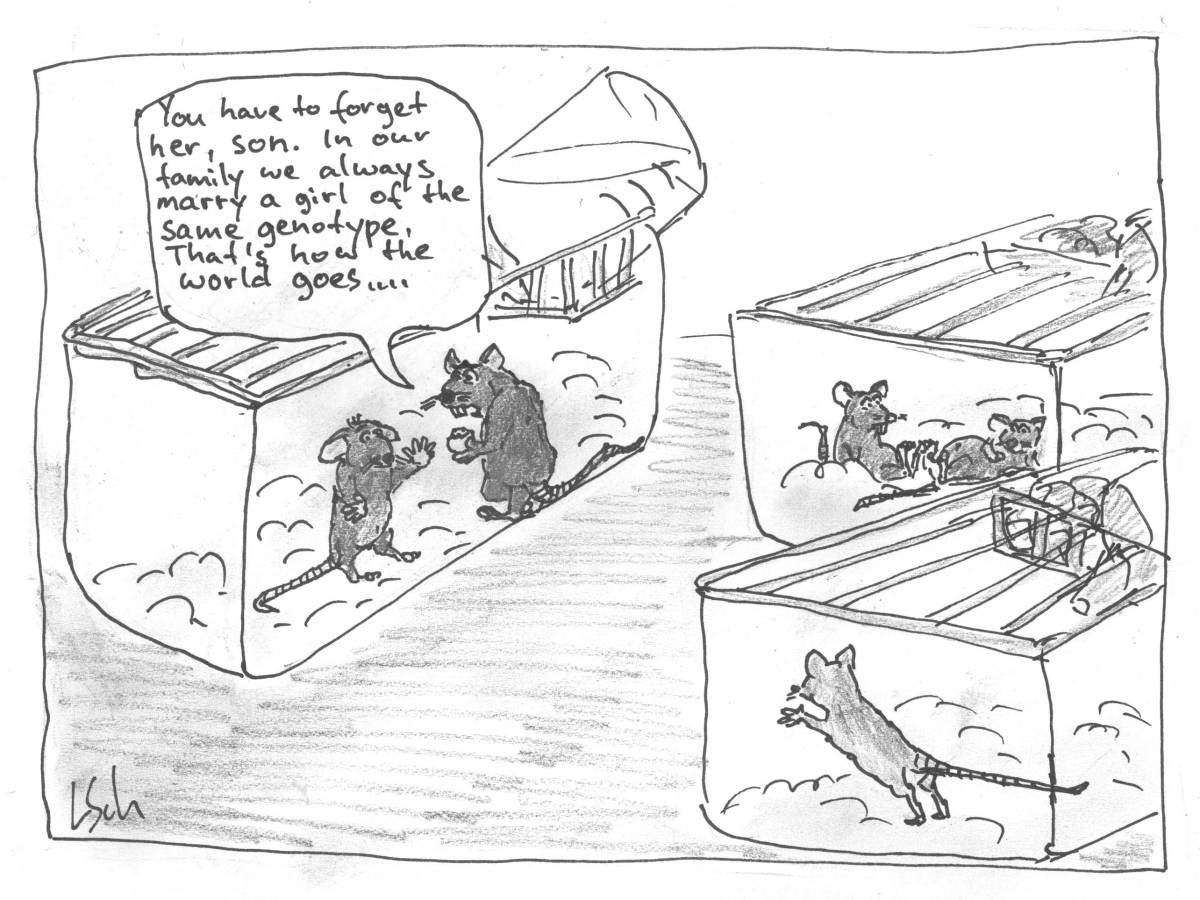
Most prominently Stuart Ritchie (Britain’s greatest hero of research ethics) claimed in Nature Communications (Hill et al 2019) that rich people obtain their wealth by having a higher IQ and better genes, read here:
I am not a racist but…
Some geneticists have very unorthodox ideas. These might sound like racism or eugenics to simple folks, but it is really high science. UK Biobank is apparently on board.
In 2024 Guardian reported that UK Biobank intentionally let eugenicists and racists, including the Nazi pseudoscientist Emil Kirkegaard, use their database for their “studies” (see October 2024 Shorts).
Here are other examples of silly correlation studies I had, and I only found them because they made international news:
- US researchers used NHANES data to prove in Elsevier that supermarket mushrooms prevent depression (Ba et al 2022, see January 2022 Shorts)
- Canadian researchers used NHANES data to prove in Canadian non-profit journal that eating meat prevents cancer (Papanikolau et al 2025, see August 2025 Shorts)
- Chinese researchers used NHANES, UK Biobank and other databases to prove in Springer Nature and a society journal that coffee, tea and cheese prevent death (Zhou et al 2024, Ye et al 2024, Liu et al 2022, Choi et al 2022, see June 2024 Shorts, June 2022 Shorts and September 2022 Shorts).
- European cardiologists used UK Biobank to prove in their society journal that coffee prevents cardiovascular diseases and death (Chieng et al 2022, see September 2022 Shorts)
- British researchers used UK Biobank to prove in BMC that coffee prevents all liver diseases (Kennedy et al 2021, see June 2021 Shorts).
- British researchers used UK Biobank to prove in a society journal that alcohol prevents cataracts in the eye (Chua et al 2021, see April 2021 Shorts)
For lulz, I searched for Frontiers, PLOS or Nature group papers with keywords “NHANES” and “chocolate”. I found out that:
- Chocolate prevents oral cancer (Wang et al Front. Nutr 2024)
- Flavanols including from dark chocolate prevent obesity (Liu et al Front. Nutr 2024)
- Flavanols including from dark chocolate prevent all-cause death (Parmenter Nature Foods et al 2025)
- Caffeine from hot chocolate prevents obesity (Liu & Cui PLOS One 2025)
- Chocolate prevents fatty liver disease (Kong et al Sci Reps 2024)
No wonder papermills use NHANES and UK Biobank data to mass-produce rubbish. If others are allowed to submit such studies, and get celebrated in the news, especially when the authors are white Europeans or North Americans, why shouldn’t papermills have the same right?
An interesting hobby
From the Proper Channels department. The pseudonymous sleuth Claire Francis was once again met with rudeness and hostility by the US American associate editor of a very, very questionable Elsevier journal.
An easy case, some Chinese paper reusing data from another study by same authors:
Yuan Zhan , Qian Huang , Zhesong Deng , Shanshan Chen , Ruonan Yang , Jiaheng Zhang , Yating Zhang , Maocuo Peng , Jixing Wu , Yiya Gu , Zhilin Zeng , Jungang Xie DNA hypomethylation-mediated upregulation of GADD45B facilitates airway inflammation and epithelial cell senescence in COPD Journal of Advanced Research (2024) doi: 10.1016/j.jare.2024.02.005

Yuan Zhan , Zhesong Deng , Ruonan Yang , Shanshan Chen , Jiaheng Zhang , Yating Zhang , Hao Fu , Qian Huang , Yiya Gu , Zhilin Zeng , Jinkun Chen , Jixian Zhang , Jixing Wu , Jungang Xie Phytosphingosine Alleviates Cigarette Smoke‐Induced Bronchial Epithelial Cell Senescence in Chronic Obstructive Pulmonary Disease by Targeting the Free Fatty Acid Receptor 4 MedComm (2025) doi: 10.1002/mco2.70345
The mice are also described as of different genotype, age, and source. In the Journal of Advanced Research paper, they are Gadd45b KO wildtype littermates “procured from GemPharmatech Co., Ltd. (Nanjing, China)“, in Wiley’s MedComm the wildtype mice were “acquired from Shulaibao in Wuhan, China“.
Fraud is the only explanation, which includes papermilling. Now, the Elsevier journal is owned by the Cairo University in Egypt, and is run by its president and vice-president, the Editor-in-Chief is Egypt’s former Minister of Higher Education. The sleuth was sceptical, and contacted the first senior editor of Journal of Advanced Research with a western university affiliation they found on the editorial board. Jeffrey A. Medin, professor at the Medical College of Wisconsin was initially very supportive:
“good catch. Thanks for pointing this out. I have alerted the journal publishers”.
And then Medin became upset about the sleuth’s anonymity, and wrote (highlight his):
“This journal is published by a reputable publishing house. I have notified them of your additional concerns.
you have an interesting hobby. And an important one. It might be better served to target more consequential papers, however. There is indeed fraud in publishing; nothing new here. Indeed, I have been a victim of this fraud myself.
unfortunately, you somehow think that I am responsible for final publishing decisions at JAR. I am not. My role as an Associate Editor is to help line up reviewers and adjudicate manuscripts. I also have a day job (more than 1). As such I am asking my institution to block your emails.“
Indeed, nobody on this planet works more and harder than a male professor. I tried to contact Medin, surely he will want to talk to “a real person; not hiding behind a Nom de Guerre“, as he demanded from Claire Francis? Medin eventually replied with his theory that Leonid Schneider is yet another fake identity of Claire Francis, and announced to have all my emails blocked as well.
Well, can someone tell Medin that he shares the editorial board with the most awful papermillers?
- Associate Editor Mohammad Taheri, Iranian papermiller (PubPeer record), likely regime’s agent in Germany, who was found guilty of research misconduct by University of Jena. Read about him here:

Look What the Cat Dragged In
Meet Mohammad Taheri, PhD, a humble PhD student in Jena, Germany, and his equally unremarkable Iranian associate Dr Soudeh Ghafouri-Fard.

- Associate Editor Jean‐Marc Sabatier from Aix-Marseille University in France, who is both a rabid antivaxxer and a papermiller (PubPeer record, read November 2024 Shorts)
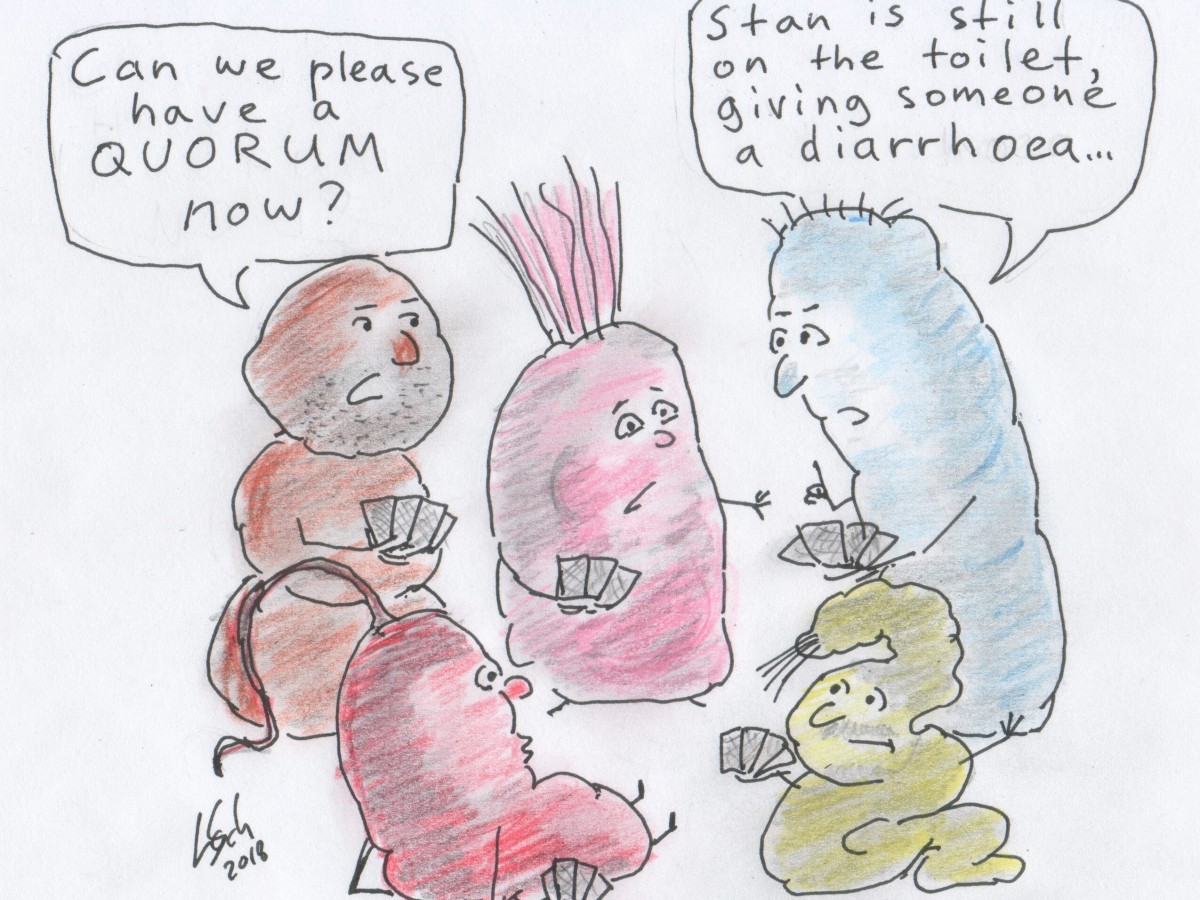
- Associate Editor Daniela Calina, Romanian papermiller (PubPeer record), works with the legendary fraudster Abhijit Dey, read about them here:
I have almost 100 manpower with me at any time
“WE DONT PAY FOR PAPERS. YOU MUST KNOW THAT THESE BEST IN THE PLANET JOURNALS GO THROUGH RIGOROUS PEER REVIEW” – Abhijit Dey, papermiller
- Associate Editor Dumitru Baleanu, Romanian papermiller in Turkey (PubPeer record), read here:

A Critique of Pure Reason
“the rarest, most sought-after token of recognition is when the Chen brothers steal your identity to use as a fictive co-author on one of their plagiarism gallimaufreys. For instance, “Bunnitru Daleanu” was based on (and memorialises) the nonpareil Rumanian mathematician Dumitru Baleanu – now resident in Turkey” – Smut Clyde

I checked some other Associate Editors for Pubpeer records. (not those with Chinese names for obvious reasons). Gamal Esmat had a retraction of his phony COVID-19 cure, Olga Golubnitschaja loves to publish in EPMA Journal in Springer (where she is Editor-in-Chief), with 2-5 days between submission and acceptance. US professor Firas Kobeissy published some fake data, for example:
Ming Cheng Liu , Firas Kobeissy, Wenrong Zheng , Zhiqun Zhang , Ronald L Hayes , Kevin K.W Wang Dual vulnerability of tau to calpains and caspase-3 proteolysis under neurotoxic and neurodegenerative conditions ASN NEURO (2011) doi: 10.1042/an20100012

Actinopolyspora biskrensis: “Some sections of the bands shown in Figure 8A and 8B seem unexpectedly similar. Although there are differences, there are similarities even within the background features of several lanes.”
Then I saw this by the Egyptian professor Mohamed-Elamir Hegazy (who trained in Germany as Humboldt Fellow):
Mahmoud A. A. Ibrahim , Alaa H. M. Abdelrahman , Mohamed A. M. Atia , Tarik A. Mohamed , Mahmoud F. Moustafa , Abdulrahim R. Hakami , Shaden A. M. Khalifa , Fahad A. Alhumaydhi , Faris Alrumaihi , Syed Hani Abidi , Khaled S. Allemailem , Thomas Efferth , Mahmoud E. Soliman , Paul W. Paré , Hesham R. El-Seedi , Mohamed-Elamir F. Hegazy Blue Biotechnology: Computational Screening of Cembranoid Diterpenes for SARS-CoV-2 Main Protease Inhibition Marine Drugs (2021) doi: 10.3390/md19070391

Here is Hegazy with his German mentor, Thomas Efferth:
Aveen N. Adham, Mohamed Elamir F. Hegazy, Alaadin M. Naqishbandi , Thomas Efferth Induction of Apoptosis, Autophagy and Ferroptosis by Thymus vulgaris and Arctium lappa Extract in Leukemia and Multiple Myeloma Cell Lines Molecules (2020) doi: 10.3390/molecules25215016

And here is the Canadian professor Raimar Löbenberg with Iranian papermillers:
Mehri Niazi , Parvin Zakeri-Milani , Mehdi Soleymani-Goloujeh , Ali Mohammadi , Muhammad Sarfraz , Raimar Löbenberg , Saeedeh Najafi-Hajivar , Javid Shahbazi-Mojarrad , Masoud Farshbaf , Hadi Valizadeh Effects of self-assembled cell-penetrating peptides and their nano-complexes on ABCB1 expression and activity Iranian journal of basic medical sciences (2021) doi: 10.22038/ijbms.2021.51675.11727


I had enough of Journal of Advanced Research, and stopped with this professor of Cairo University, Khaled Abo-EL-Sooud:
Khaled Abo-EL-Sooud , Yasmina M. Abd-El Hakim , Mohamed M.M. Hashem , Abeer E. El-Metwally , Bayan A. Hassan , Hayat H.M. El-Nour Restorative effects of gallic acid against sub-chronic hepatic toxicity of co-exposure to zinc oxide nanoparticles and arsenic trioxide in male rats Heliyon (2023) doi: 10.1016/j.heliyon.2023.e17326

Gallibacterium anatis: “Figcheck software reported a pair of overlapped images collected from two different groups in Fig.4.”
See, Claire Francis was right, this Elsevier journal cannot be trusted.
Retraction Watchdogging
They may not have a clear understanding of EDX
The Pakistani papermiller Muhammad Bilal, once celebrated as “Nobelium” professor at the Gdansk University of Technology in Poland (and now hiding as humble postdoc in Belgium), started to lose papers. Read about Bilal’s fraud here:
Nobelium Bilalski, a Gdansk papermiller
“To date, he has authored over 700 peer-reviewed articles, 150 book chapters, 25 edited books, and 10 editorial-type scientific articles in various areas of Science and Engineering. Dr. Bilal has a h-index of 94 with 34 000 citations (Google Scholar).”
Retraction Nr 1:
Hina Liaquat , Muhammad Imran , Shoomaila Latif , Sajid Iqbal , Nazim Hussain , Muhammad Bilal Citric acid-capped NiWO4/Bi2S3 and rGO-doped NiWO4/Bi2S3 nanoarchitectures for photocatalytic decontamination of emerging pollutants from the aqueous environment Environmental Research (2022) doi: 10.1016/j.envres.2022.113276

Dysdera arabisenen: “Fig 7: Several labels seem to have been erased. There is an unusual indentation”
In February 2025, Elsevier issued an Expression of Concern, mentioning concerns “regarding potential manipulation of images in the article.” The retraction notice, future-dated 1 December 2025 now says:
“Concerns regarding figure 7 were reported on PubPeer at https://pubpeer.com/publications/F27285C3EB6AD577FB8483973638C1 and the authors’ response was assessed by the editor. When comparing the published version with the raw data, some peaks appear to have been replaced with different elements: (7a) the S peak in the raw data has been replaced with Bi, and (7b) the Na peak has also been replaced with Bi. This replacement has specific significance with reference to figure 7b as Na is an impurity, and may influence the results and discussion. Removing Na and replacing with Bi removes the need to explain the possible presence of Na impurity which is exactly what was done at the end of Section 3.5. The authors also claimed that the weight of Bi is 17.70 %, whereas the raw data indicates it is only 5.23 %. Similarly, weight of Ni is 9.45 %, whereas the raw data indicates it is only 5.37 %. In the published data, Na has a weight of 0, whilst the raw data shows it as 12.7 %. These discrepancies mean that whilst weight % values in the raw data total up to 100 %, in the published article, they total 103.84 %. The authors claimed that these errors were made unintentionally during manuscript preparation.
The Editor has therefore lost confidence in the reliability of the findings presented in this article, and is retracting it. The authors extended their apology for inconvenience caused.”
Issues of global relevance
“I like ImageTwin, but seeing things with just eyes is like hand-to-hand combat….” – Mu Yang
Retraction Nr 2 in the same Elsevier journal undergoing spring cleaning due to massive papermill infestation:
Aqsa Riaz , Muhammad Saeed , Mamoona Munir , Azeem Intisar, Sabah Haider , Shahzaib Tariq , Nazim Hussain , Rehana Kousar , Muhammad Bilal Development of reduced graphene oxide-supported novel hybrid nanomaterials (BiWO@rGO and Cu-WO@rGO) for green and efficient oxidative desulfurization of model fuel oil for environmental depollution Environmental Research (2022) doi: 10.1016/j.envres.2022.113160

Fig.4a cited in [Riaz et al] is similar to 4a cited in [Saeed et al 2022] (Former is attributed to rGO while latter is attributed to g-C3N4).
Figure 4c cited in [Riaz et al] is similar in pattern to 4b cited in [Saeed et al 2022](Former is attributed to Cu-WO4@rGO while latter is attributed to Ni-WO3@g-C3N4 composite).”

The retraction notice, dated 1 December 2025, referred to data reused between this paper and Saeed et al 2022 (without Bilal) in ACS Omega (highlight mine):
“Whilst some of the authors are common to both articles, the materials described in each of the identical spectra are different. The editor also noted that Figure 4c (ER) and Figure 4b (ACS Omega) are different, contrary to the claims made on PubPeer. In his assessment, the editor also remarked that the authors assigned a peak in the EDX spectrum to hydrogen. This is unusual because hydrogen cannot be detected using EDX. Moreover, in the ER article, the peak assignment for Cu is incorrect as it should be between 8 and 9 keV instead of below 8. In their response, the authors mention detecting C, H, and O using EDX, which indicates that they may not have a clear understanding of the EDX. For all of these reasons, the Editor has lost confidence in the reliability of the findings presented in this article as a whole and is retracting it. The authors disagree with the retraction and dispute the grounds for it.
Finally, Dr. Rehana Kousar was added at first revision without declaration or explanation.”
As I mentioned at the end of the article below, Bilal is now postdoc at the University of Antwerp. This Belgian university however stopped reply to all emails regarding Bilal.
Bad Choices in Dresden IV
A guide on what qualities universities in Germany, Italy and elsewhere in Europe expect from their foreign PhD students and postdocs.
Bilal was deemed a genius because he published on every possible research field which he could connect to environmental clean-up. Here some microbiology, one author is aptly named – Diane Purchase, professor at Middlesex University in London. in UK (see also her papermilled product with Bilal, Saran et al 2023, it contains “substantial metals”, “emphatically charged” no less):
Sonam Tripathi , Ram Chandra , Diane Purchase , Muhammad Bilal , Raja Mythili , Sangeeta Yadav Quorum sensing – a promising tool for degradation of industrial waste containing persistent organic pollutants Environmental pollution (2022) doi: 10.1016/j.envpol.2021.118342
The paper was flagged on PubPeer for nonsense references. The recent retraction notice goes (highlight mine):
“A number of concerns regarding irregularities in the references were documented on PubPeer at https://pubpeer.com/publications/FB620FD7131ACA0AA888A6F156AD40 . An investigation by the journal revealed that significant numbers of references were added when the revised version of the manuscript was submitted on 28 September 2021. The beneficiaries of these were co-authors Sonam Tripathi, Ram Chandra and, to a lesser extent, Diane Purchase, and Guest Editor Govarthanan Muthusamy. The assessing editor confirmed that a significant number of these added citations were not germane to the work and as such, confidence in the work is lost.
Additionally, unauthorised authorship changes were made when the revised version of this paper was submitted, following suggestions for relatively minor revisions from the reviewers and Guest Editor, with author Raja Mythili being added to the paper to replace another author who was deleted. No satisfactory explanation was given for this change, nor was it approved by the editor. This authorship change breaches the policies of the journal and as a result, the editors no longer have confidence in this paper and are retracting it. The journal apologises for not having identified the problematic authorship change during the review process and for any resulting inconvenience. […]
For all of the above reasons, the editor has lost confidence in the contributions of the authors and the reliability of the findings presented in this article as a whole, and is retracting it. Muhammad Bilal, signing an email on behalf of all authors, does not agree with the retraction and disputes the grounds for it.“
Elsevier chooses Papermills and Patriarchy, Chief Editor resigns
“Among these candidates that you “vetted” were people with no expertise in the field (either 0 or 1 publication), people with longer PubPeer profiles and more retractions than most people have articles on their CVs, and people whose names appear as authors on sold paper sites. ” – Jillian Goldfarb
But not every papermill fabrication by Bilal is in danger of retraction. He and his friend Hafiz Iqbal just corrected this, in another Elsevier journal taken over by papermills (read above). Alexander Magazinov flagged an instance of the Vickers Curse:
Mehvish Mumtaz , Zulqarnain Baqar , Nazim Hussain , Afifa , Muhammad Bilal , Hafiz Muhammad Husnain Azam , Qurat-ul-ain Baqir , Hafiz M.N. Iqbal Application of nanomaterials for enhanced production of biodiesel, biooil, biogas, bioethanol, and biohydrogen via lignocellulosic biomass transformation Fuel (2022) doi: 10.1016/j.fuel.2021.122840
After 10 wt% of MgO catalysts have been introduced, the quantity of hydro sugars has dropped most, and the furan compounds have been raised [116].
[116] Vickers NJ. Animal communication: when i’m calling you, will you answer too? Curr Biol 2017;27(14):R713–5.
This erroneous Vickers citation happens when papermillers mistype the doi of some Elsevier paper they wanted to add, and then some mysterious Crossref bug always resolves this mistyped doi into Vickers, read here:
The Vickers Curse: secret revealed!
How did an editorial about insect pheromone communication get to receive 1200 irrelevant citations, almost all from papermills? Alexander Magazinov reveals The Secret of The Vickers Curse!
A Corrigendum from 1 August 2025 replaced the moth pheromone editorial with a random paper in this same journal Fuel, surely making the Editor-in-Chief Bill Nimmo happy:
“The authors regret that reference [116] in our article was mistakenly included, likely due to an error during the citation management process using EndNote software. This oversight was entirely unintentional. To ensure accuracy, we kindly request that this reference be replaced with the correct one in the manuscript.
[116] Velusamy, K., Devanand, J., Kumar, P. S., Soundarajan, K., Sivasubramanian, V., Sindhu, J., & Vo, D. V. N. (2021). A review on nano-catalysts and biochar-based catalysts for biofuel production. Fuel, 306, 121632.
The authors would like to apologise for any inconvenience caused.”
Maybe Endnote makers should sue Elsevier for such false accusations? Bilal and his former Polish patron Teofil Jesionowski, the rector of the Poznan University of Technology, also corrected this Vickers-Cursed study:
Ahmad Farhan , Javeria Arshad , Ehsan Ullah Rashid , Haroon Ahmad , Shahid Nawaz , Junaid Munawar , Jakub Zdarta , Teofil Jesionowski, Muhammad Bilal Metal ferrites-based nanocomposites and nanohybrids for photocatalytic water treatment and electrocatalytic water splitting Chemosphere (2023) doi: 10.1016/j.chemosphere.2022.136835

This time, the Corrigendum from October 2025 didn’t blame Endnote and offered a replacement paper by European authors and not in Elsevier:
“The authors regret that reference Vickers, 2017 cited in the Introduction section in our article was mistakenly included. This error was unintentional and not intended to mislead readers. For clarity and accuracy of the study, please replace this reference with the following reference in the text: Schwarzenbach et al., 2010 (René P. Schwarzenbach, Thomas Egli, Thomas B. Hofstetter, Urs von Gunten, Bernhard Wehrli, Global Water Pollution and Human Health, Annual Review of Environment and Resources 35 (2010), 109–136). The authors would like to apologise for any inconveniences.”
Science Breakthroughs
The sperm of trained men
Epigenetic transgenerational inheritance makes a regular return in science news. The worst such study was in my view the Holocaust trauma epigenetic inheritance drivel Yehuda et al 2016, by Rachel Yehuda from Mount Sinai in New York, USA, and Elisabeth Binder from Max Planck Institute of Psychiatry in Munich, Germany. Back then, their discovery was first celebrated, then criticised, now everyone pretends the study never happened.
Moshe Szyf, the Israeli scientist in Canada and author of falsified science, pushed similar theories, about epigenetic inheritance of “education, family structure and religious values” in Jews who escaped persecution in Europe. Read here:

Moshe Szyf demands an apology
“We demand that you publicly apologize to our clients and retract all your statements within one week from today. Failure to do so will result in our taking an action in both public and private law, against you and McGill University.” – Moshe Szyf and Michael Meaney, via lawyer
Another Israeli researcher, Oded Rechavi of Tel Aviv University, famously postulated that even memories can be epigenetically inherited, at least in nematodes. But then again, he also refuses to correct the errors in his papers (see PubPeer), and threatens lawsuits instead (read March 2024 Shorts).
Now, we have news from China proving that the Communist Party was always right. Science reported on 7 October 2025:
“now, a paper suggests male mice that exercise can pass their newly gained fitness on to male offspring. If the same holds true in humans, the researchers say, fathers could help improve the health of any future children by staying in shape themselves.
The study is the latest example of how traits can be passed to the next generation not through the DNA in genes, but via snippets of DNA’s chemical cousin, RNA, packed as cargo into sperm cells and delivered to the embryo. […]
Xin Yin, a reproductive biologist at Nanjing University, […] often noticed that athletes’ children “seemed to be naturally better at sports.” Together with Xi Chen, also a reproductive biologist at Nanjing, Yin turned his casual observation into a research project. At first, the team made male mice run on a treadmill for 2 weeks.”
Predictably, these mice immediately sired athletic progeny, which also “didn’t become obese or diabetic when exposed to a high-fat diet“! And: “the team isolated one miRNA from the mice that seemed most likely to confer increased fitness.”
Not just this: male medical students around 19 years of age were made to exercise and then masturbated (yes!) at the Nanjing Women and Children’s Healthcare Hospital:
“The team collected sperm from eight men who trained regularly and 24 others who didn’t, and found that human equivalents of seven of the 10 miRNAs were elevated in the sperm of trained men.”
Told you, the Communist Party is always right, one can create a new type of human, or at least a new type of mouse by forced training.
Here is the study:
Xin Yin , Azhar Anwar , Linbo Yan , Ranran Yu , Yang Luo , Liang Shi , Botao Li , Jiehao Chen , Gaoli Liang , Yongci Chen , Jie Tang , Jie Liang , Yansheng Kan , Zhihao Zhang , Xiahuan Zhou , Jizheng Ma , Chenbo Ji , Yanbo Wang , Qipeng Zhang , Jing Li , Liang Li, Xiaozhi Zhao, Feng Yin, Liyuan Sheng, Dijun Chen, Tao Zhang, Chen-Yu Zhang Xi Chen Paternal exercise confers endurance capacity to offspring through sperm microRNAs Cell Metabolism (2025) doi: 10.1016/j.cmet.2025.09.003
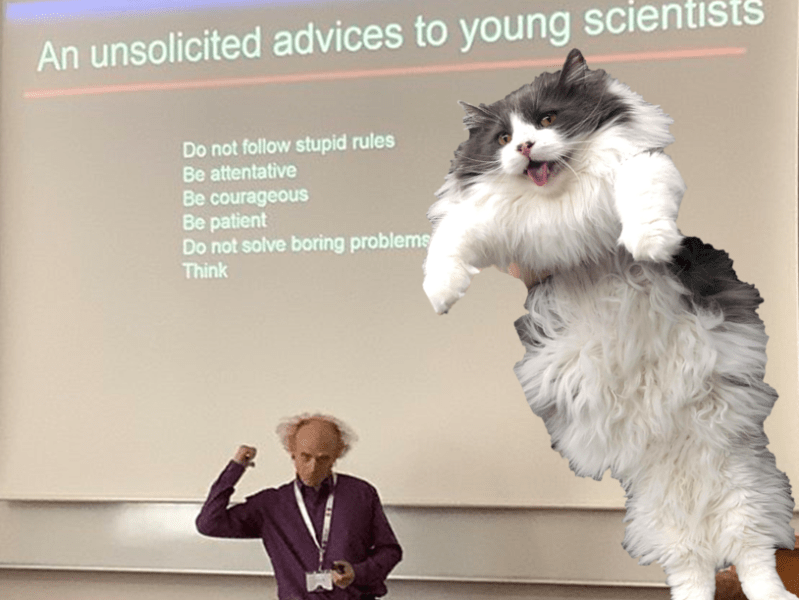
All you zombies
“Personally I prefer cats to humans because they are little furry psychopaths so we are on the same wavelength.” – Smut Clyde
Science also proudly pointed to their own achievements with Chinese transgenerational education:
“Recent research has identified so-called microRNAs (miRNAs) in sperm cells as one way epigenetic information can be passed on. For example, scientists have shown that diet, stress, and toxins can have an impact on the embryo through miRNAs. A 2021 paper suggested male mice can confer a susceptibility to depression to their offspring this way.”
It’s this paper, among other methods of animal torture, male mice were stuck into “50-ml conical tubes with holes for air flow for 2 to 3 hours per day for 14 consecutive days“:
Yanbo Wang , Zhang-Peng Chen , Huanhuan Hu , Jieqiong Lei , Zhen Zhou , Bing Yao , Li Chen , Gaoli Liang , Shoubin Zhan , Xiaoju Zhu , Fangfang Jin , Rujun Ma , Jun Zhang , Hongwei Liang , Ming Xing , Xiao-Rui Chen , Chen-Yu Zhang , Jing-Ning Zhu , Xi Chen Sperm microRNAs confer depression susceptibility to offspring Science Advances (2021) doi: 10.1126/sciadv.abd7605
Mice were also chronically abused for 3 weeks by loud noise, flashing light, cage flooding and starvation. Depression was measured by dropping mice into water and watching them swim for their lives. All this to fabricate this unhinged stupidity about sperm miRNAs causing depression in progeny.
I think forgery of data from animal experiments should be treated as a crime of animal torture.
Nanotechnology strategy that reverses Alzheimer’s
Alzheimer’s Disease has been cured once again, this time with nanoparticles.
Here a fresh press release from Spain:
“A research team co-led by the Institute for Bioengineering of Catalonia (IBEC) and West China Hospital Sichuan University (WCHSU), working with partners in the UK, has demonstrated a nanotechnology strategy that reverses Alzheimer’s disease in mice.
Unlike traditional nanomedicine, which relies on nanoparticles as carriers for therapeutic molecules, this approach employs nanoparticles that are bioactive in their own right: “supramolecular drugs.” […]
Instead of targeting neurons directly, the therapy restores the proper function of the blood-brain barrier (BBB), the vascular gatekeeper that regulates the brain’s environment. By repairing this critical interface, the researchers achieved a reversal of Alzheimer’s pathology in animal models.”
This is the paper, it used the mouse model “APP/PS1”, all animal experiments were done in China, according to stated ethics approval. The nanoparticle injection immediately cured those mice of all Alzheimer’s symptoms.
Junyang Chen , Pan Xiang , Aroa Duro-Castano , Huawei Cai , Bin Guo , Xiqin Liu , Yifan Yu , Su Lui , Kui Luo , Bowen Ke , Lorena Ruiz-Pérez , Qiyong Gong, Xiaohe Tian, Giuseppe Battaglia Rapid amyloid-β clearance and cognitive recovery through multivalent modulation of blood-brain barrier transport Signal Transduction and Targeted Therapy (2025) doi: 10.1038/s41392-025-02426-1
“The authors declare no competing interests. Giuseppe Battaglia is an associate editor of Signal Transduction and Targeted Therapy, but he has not been involved in the process of manuscript handling”
Yes sure, Nature and Science begged to have this paper, but the ICREA professor at IBEC, visiting professor at UCL (UK) and Sichuan University (China), and Highly Cited Researcher Giuseppe Battaglia wanted his own journal to have the exclusive honour. More important: Batallia was not truthful about having no COIs. In 2018, he co-founded the British biotech called ViaNautis (a former UCL spin-off which used to be called SomaServe), where he is presently director. The company lists Bataglia as its “technology inventor” and announced in October 2024 a collaboration with Eli Lilly:
“ViaNautis’ proprietary polyNaut® nanovesicles are designed to deliver genetic materials with precise targeting of specific tissues and cell types. This technology aims to improve current genetic medicine delivery, potentially transforming treatment options for various diseases.”
Also Aroa Duro-Castano, researcher at UCL, forgot to add her COI, namely being R&D Director at the Spanish company Curopath, which advertises as “your trusted CDMO partner for non-viral drug delivery programs“.
Battaglia however protested on PubPeer that neither he nor Duro-Castano had any financial COIs:
“None of the work presented in the paper is associated with Vianautis or its current research pipelines. These focus primarily on gene therapy, with some activities in brain delivery and upcoming projects related to Alzheimer’s disease. However, those efforts are based on the delivery of nucleic acids and are not associated with the mechanisms or findings reported here. While a patent application was initially filed in relation to this work, it was subsequently withdrawn. We are currently exploring new intellectual property strategies, but no formal steps have yet been taken. In line with journal policy, this was duly reflected in our conflict-of-interest declaration.
Finally, while Dr. Duro-Castano is currently employed by Curapath, her contributions to this study were carried out during her previous position at UCL, where the work was initiated. The activities and data presented are unrelated to Curapath, and thus, no conflict of interest exists.“
Indeed, academics think they have no COIs until their companies start earning them enough money – the amount varies with individual greed, rule of the thumb is: anything below a million of dollars is not a conflict of interests.
Regenerating in Hannover, Part 2: Axel Haverich’s “growing” heart valves
The science of the fallen star of regenerative medicine Paulo Macchiarini was simple: take a dead organ, strip it of its cells and seed the carcass with stem cells (usually the magic cells from bone marrow). After some days in a “bioreactor”, you take out a living trachea, esophagus, even heart, and implant it into a…
The press release quotes Battaglia:
“”What’s remarkable is that our nanoparticles act as a drug and seem to activate a feedback mechanism that brings this clearance pathway back to normal levels.””
And another coauthor at IBEC and University of Barcelona, a former UCL researcher:
“”Our study demonstrated remarkable efficacy in achieving rapid Aβ clearance, restoring healthy function in the blood–brain barrier and leading to a striking reversal of Alzheimer’s pathology,” concludes Lorena Ruiz Perez”
And the Chinese PhD student of Duro-Castano’s at UCL:
“Only one hour after the injection, we observed a reduction of 50–60% in Aβ amount inside the brain,” explains Junyang Chen”
I for one am sure that everything will work in China, especially nanoparticles.
Now, it took me some time to understand that a certain Italian neuroscientist called Giuseppe Battaglia with fake papers on PubPeer is a different person, and affiliated with the Sapienza University of Rome. So I will tell you about that other Battaglia another time.
Donate!
If you are interested to support my work, you can leave here a small tip of $5. Or several of small tips, just increase the amount as you like (2x=€10; 5x=€25). Your generous patronage of my journalism will be most appreciated!
€5.00
Donate!
If you are interested to support my work, you can leave here a small tip of $5. Or several of small tips, just increase the amount as you like (2x=€10; 5x=€25). Your generous patronage of my journalism will be most appreciated!
€5.00

 For Better Science
I notified UAntwerp about these recent retraction of Dr Bilal a week ago. No response so far. Not even an acknowledgment of receiving my message. But who would like to lose such a valuable aset? Gdansk Tech also didn’t care about his fraud until it was publicized on FBS and Forum Akademickie.
LikeLiked by 2 people
The Amsterdam UMC homepage of Saskia Mostert, first author of a horrible antivax study published in June 2024 in BMJ Public Health, does not exist anymore. It seems to me that this implies that Saskia Mostert is no longer employed by Amsterdam UMC. Is this correct? Backgrounds at https://pubpeer.com/publications/BD524B3E696274C2F24DFFC8CCA546
LikeLiked by 2 people
“Guarantee that all western blots are unique – Karin Öllinger may need to have a second look”
There’s something about malignant melanoma, could it be the grant money?
Schneider Shorts 4.10.2024 – A Nobel Prize candidate who saved numerous lives – For Better Science
LikeLiked by 1 person
Much closer to home, Sweden in fact. Malignant melanoma has all those positives, such as the money, the money, and the money. People prick up their ears and are very afraid, when they hear somebody mention malignant melanoma.
Leonard and Ada Girnita guilty of research misconduct – For Better Science
” [Leonard Girnita’s] His wife [Ada Girnita] used to be a regular feature on Swedish TV and radio. The melanoma expert was advising viewers on sun exposure…”
LikeLike
Sometimes I am a bit slow, don’t get things quite right. Is Springer Nature running a paper mill?
Integrated analysis of cell cycle and p53 signaling pathways related genes in breast, colorectal, lung, and pancreatic cancers: implications for prognosis and drug sensitivity for therapeutic potential | Discover Oncology
PubPeer – Integrated analysis of cell cycle and p53 signaling pathways…
LikeLike
It’s sometimes hard to know what to do with these types of image. On the one hand, if you’re writing a legitimate paper and you need a convenient picture of your gene/protein of interest in your tissue of interest, then the HPA (human protein atlas) can be a useful source for such material. Provided you attribute the image to HPA, it’s not a problem and many journals are OK with this.
OTOH, if you’re a paper-miller and want a ready source for images for your mill, then HPA is also great. It’s often hard to assign paper-mill status based on the use of such images alone.
LikeLike
“The pseudonymous sleuth Claire Francis was once again met with rudeness and hostility by the US American associate editor of a very, very questionable Elsevier journal.”
Another shining example for the Journal of Advanced Research to deal with.
PubPeer – Metformin suppresses vascular smooth muscle cell senescence…
Also, which Elsevier journals are not questionable? Could Elsevier provide a list?
LikeLike
https://pubpeer.com/publications/C7348FC1DB2D2BEEC5FC1586D443C0
A comment by the authors on the identical graphs:
”Completely different numerical values are inserted into the figure. The x-axis is very compressed and ****creates an illusion that the patterns appear similar”
Interesting that this is due to the compression of the x-axis. But I guess we’re all relieved to know this was just a ****optical illusion.
LikeLike
I can’t help wondering if Karin Öllinger used **** as a profanity.
LikeLike
Karin has replied on PubPeer, but again, the response seems to generate more questions than answers. https://pubpeer.com/publications/26851CEEF95EE6275F142836E253C5#4
LikeLike
Oh dear.

LikeLike
Karin in a hole, digging:
“it is expected that the loading controls appear very similar — this should be interpreted as a sign of quality. We cannot control the fact that two bands on the same gel may look identical.”
https://pubpeer.com/publications/AD59AFE928550A039B1700FCD8318E#9
LikeLike
“Cancer research paper found to have genuine replicable data, proper reagent descriptions, and logically sound statistical analysis and conclusions with broad applicability to understanding human disease mechanisms and identifying plausible therapeutic targets.” Just kidding.
LikeLiked by 1 person
Like this?
Super-adjuvant nanoparticles for platform cancer vaccination
https://www.cell.com/cell-reports-medicine/fulltext/S2666-3791(25)00488-4
LikeLike
I said human.
LikeLike
These two shitty papers of Mo Bilal in danger now.. many comments already added but Rector Teofil Jesionowski threatened EiC and publisher, no one can touch his paper… there are many other comments both of them look like scramble words.. full of nonsense paragraphs.
PubPeer – Metal ferrites-based nanocomposites and nanohybrids for phot…
PubPeer – Application of nanomaterials for enhanced production of biod…
LikeLike