

Schneider Shorts of 15 August 2025 – how to cite only good sources, two Californian professors and one Canadian victimised by time-warp conspiracies, with a Nature Exclusive, Cell Press refusing retraction, a German professor papermilling, and Manhattan Project of Eugenics!
Table of Discontent
Industry Giants
- Manhattan Project – Jiankui He’s wife and George Church’s postdoc set up a business
Science Elites
- Four Cameroonian Plant Extracts – Udo Bakowski stumbled into a papermill
- Leaks, unauthorized access, and unforeseen breaches – Lin Zhang and Jian Yu are victims of a huge conspiracy!
- Appointed to assume – David Latchman profits from someone else’s bullying
Scholarly Publishing
- Some authors disagree – Cell Press expresses concerns for Sonia Melo & Raghu Kalluri
- We recognize the similarity – Amina Zoubeidi is victim of a huge conspiracy!
- Bitter competition instead of collaboration – Do-or-Die papermill study cites only the good sources
- A million thing to do – Nature’s “Exclusive” investigation of Zhihan Lv
Industry Giants
Manhattan Project
George Church, MIT professor and serial entrepreneur, most known for his slightly unhinged de-extinction company Colossal, founded a new eugenics business.
Well, he didn’t found it himself directly, probably because a) some people still remember Church’s eugenics dating app digiD8 (read article below), and b) the new business is just too nasty for Church to be seen directly associated with.
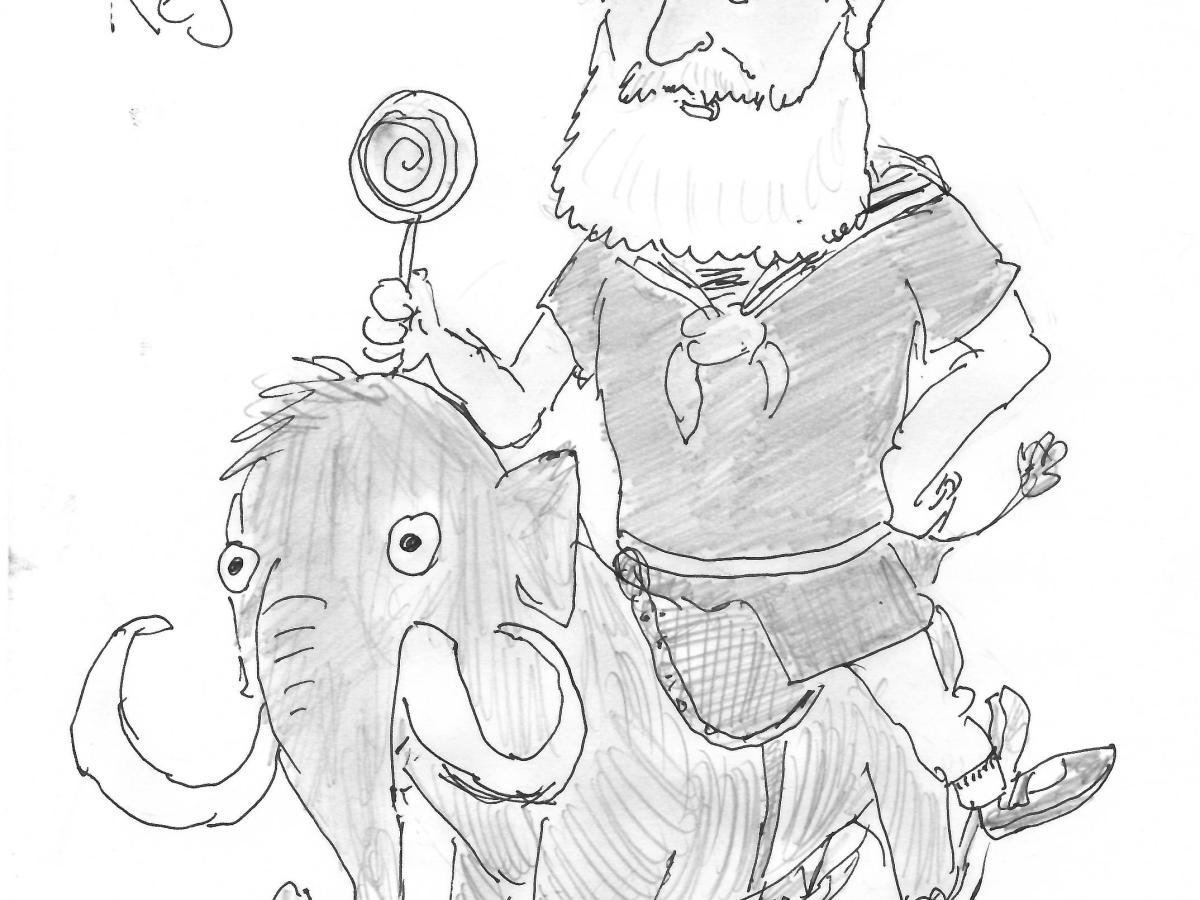
George Church, Colossal W*nker
From mammoths to eugenics to anti-aging scams: god-impersonator George Church knows how to make money with bullshit.

This is why a certain Eriona Hysolli. Church’s MIT lab member and Colossal’s Head of Biological Sciences (celebrated as such in 2023 TIME100 Next!). founded the Manhattan Project: a business designed to deliver gene-edited babies to rich customers:
“We use precision gene correction to address inherited disease at its source, the embryo, before it can affect future generations. All of our work is conducted within the United States, under rigorous regulatory oversight and guided by deep ethical responsibility.”
Indeed, what a perfect timing to pick that name for a eugenics company on the 80th anniversary of the Hiroshima and Nagasaki bombing. Under Trump and RFK Jr, this business not only won’t be sanctioned, the US government will probably provide the company with detained immigrant women to experiment upon.
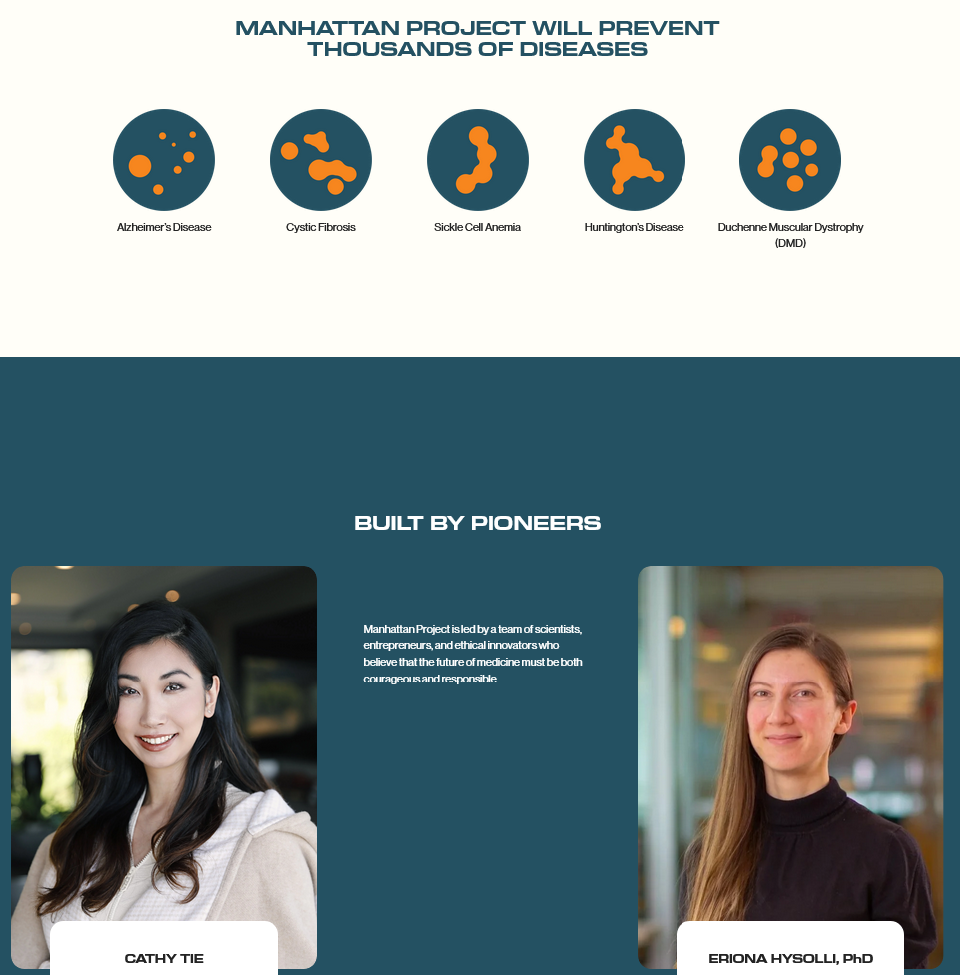
Even if one doesn’t care about basic ethics and moral: how does one genetically edit out Alzheimer’s if science still doesn’t know what causes it and whether it is a genetic disease at all?
But actually, Church is not the main man behind the Manhattan Project. Another celebrity geneticist is.
Some may recall the case of Jiankui He in China, who in 2018 announced to have gene-edited human embryos which resulted in the birth of live babies. Back then, He was fired, his lab closed and he himself was put in prison for 3 years. Read here:
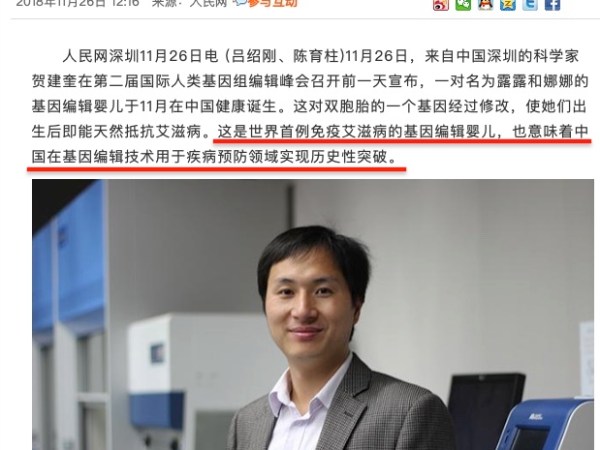
CRISPRed babies in China: a growing scandal
First gene-edited human babies were allegedly born, two twin girls. Jiankui He, associate professor at the South University of Science and Technology of China claimed to have used CRISPR gene editing technology, in a registered clinical trial, to make babies resistant to HIV. Did this really happen? In any case, everyone now takes distance to…
In his November 2018 interview with Science, Church defended He from criticism, which he saw “like a bullying situation“. Church admitted knowing He personally, and made clear he had absolutely no problem with this kind of human experiments:
“The most serious thing I’ve heard is that he didn’t do the paperwork right.”
In this regard, MIT Technology Review brought on 23 May 2025 an article about the other founder of Manhattan Project, titled “Meet Cathy Tie, Bride of “China’s Frankenstein”. The Frankenstein is Jiankui He, who set up a Twitter/X account after his prison release, @Jiankui_He:
“…over time, it evolved and started to go viral. First came a series of selfies accompanied by grandiose statements (“Every pioneer or prophet must suffer”). Then, in April of this year, it became particularly outrageous and even troll-like, blasting out bizarre messages (“Good morning bitches. How many embryos have you gene edited today?”). This has left observers unsure what to take seriously.
Last month, in reply to MIT Technology Review’s questions about who was responsible for the account’s transformation into a font of clever memes, He emailed us back: “It’s thanks to Cathy Tie.” […]
He’s posts became increasingly provocative, with better English and a unique sensibility reflecting online culture. “Stop asking for cat girls. I’m trying to cure disease,” the account posted on April 15. Two days later, it followed up: “I literally went to prison for this shit.” “
Yes, Manhattan Project’s other founder Cathy Tie is the wife of Jiankui He, since April 2025. He’s previous wife divorced him “divorced him in 2024 “because of a major fault on his side.”. In fact, we learn that Manhattan Project was originally set up by He 3 days before his marriage to Tie, and called… “Cathy Medicine”.
MIT Technology Review also mentions in passing that Tie used to be sponsored by none other but the infamous far-right billionaire Peter Thiel, a native German in USA who sponsors various fascist movements to destroy democracy:
“She became a Thiel fellow in 2015, when she was just 18. That program, started by the billionaire Peter Thiel, gave her a grant of $100,000 to drop out of the University of Toronto and start a gene testing company, Ranomics. […]
By February 2025, Tie was ready to announce another new venture: the Los Angeles Project, a stealth company she had incorporated in 2023 under her legal name, Cheng Cheng Tie. The company, started with the Texas-based biohacker and artist Josie Zayner, says it will try to modify animal embryos; one goal is to make fluorescent glow-in-the-dark rabbits as pets.”
What can go wrong. He’s wife Tie and Church’s uhm, let’s say “postdoc” Hysolli, found a eugenics company to deliver perfect gene-edited children for the ultra-rich men. Together with that insane lunatic Josiah Zayner. And it is quite likely that the money comes from Thiel.
I wonder if they were inspired by Epstein’s plans.
Science Elites
Four Cameroonian Plant Extracts
Meet Udo Bakowsky, director of the Institute for Pharmaceutical Technology & Biopharmacy of the University of Marburg in Germany. He studies nano-scale drug delivery systems you probably already go ooof.
Here is cancer being successfully cured with not one, not two, not three, but four Cameroonian plants! In MDPI again, only the penultimate author is from Cameroon, all others from Bakowsky’s institute:
Ahmed Somaida, Imran Tariq, Ghazala Ambreen, Ahmed Mohamed Abdelsalam, Abdallah Mohamed Ayoub, Matthias Wojcik , Jean Paul Dzoyem , Udo Bakowsky Potent Cytotoxicity of Four Cameroonian Plant Extracts on Different Cancer Cell Lines Pharmaceuticals (2020) doi: 10.3390/ph13110357

Another study from Marburg, and here the sleuth found something more peculiar than an image duplication:
Imran Tariq , Muhammad Yasir Ali , Muhammad Farhan Sohail , Muhammad Umair Amin , Sajid Ali , Nadeem Irfan Bukhari , Abida Raza , Shashank Reddy Pinnapireddy , Jens Schäfer , Udo Bakowsky Lipodendriplexes mediated enhanced gene delivery: a cellular to pre-clinical investigation Scientific Reports (2020) doi: 10.1038/s41598-020-78123-6

Sholto David: “Figure 7e: Images in blue rectangles do not show liver histology. Would the authors please check and comment? The image in the middle looks OK. The images in blue might be muscle?”
Another MDPI masterpiece, this time Bachowsky is the only author from Germany:
Sherif Ashraf Fahmy, Iten M. Fawzy, Basma M. Saleh, Marwa Y. Issa, Udo Bakowsky, Hassan Mohamed El-Said Azzazy Green Synthesis of Platinum and Palladium Nanoparticles Using Peganum harmala L. Seed Alkaloids: Biological and Computational Studies Nanomaterials (2021) doi: 10.3390/nano11040965

Archasia belfragei: “There seem to be various repetitive noise signatures within and across different XRD patterns in Figure 3“
Another Egyptian papermill product, again MDPI, and what is this strange obsession with chitosan papermills have?
Sherif Ashraf Fahmy , Asmaa Ramzy , Asmaa A. Mandour, Soad Nasr , Anwar Abdelnaser , Udo Bakowsky, Hassan Mohamed El-Said Azzazy PEGylated Chitosan Nanoparticles Encapsulating Ascorbic Acid and Oxaliplatin Exhibit Dramatic Apoptotic Effects against Breast Cancer Cells Pharmaceutics (2022) doi: 10.3390/pharmaceutics14020407

Archasia belfragei: “Figure 1: E and F seem to represent the same image but are supposed to show two distinct materials.”
It all is rather reminiscent of the case of another German ethno-pharmacologist Michael Wink, retired dean at the University of Heidelberg, whose former PhD students kept supplying him with papers of which one wonders if any research was ever performed at all, or rather bought off a papermill (read March 2024 Shorts). Considering the affiliations, exactly the same must be true with Bakowsky, the difference to Wink is: he doesn’t reply to emails.
Now, Pakistan papermills, and hooray, there can be no nanotheranostics bullshit bingo without curcumin:
Imran Tariq, Hira Hassan , Sajid Ali , Syed Atif Raza , Pervaiz Akhtar Shah , Muhammad Yasir Ali , Zain Tariq , Udo Bakowsky Ameliorative delivery of docetaxel and curcumin using PEG decorated lipomers: A cutting-edge in-vitro/ in-vivo appraisal Journal of Drug Delivery Science and Technology (2024) doi: 10.1016/j.jddst.2024.105814

Archasia belfragei: “The last figure contains two panels reflecting different conditions displaying seemingly the same image”
Mistake of oversight, will Bachowsky surely say. This also? the figures were published in parallel by unrelated authors!
Sherif Ashraf Fahmy , Eduard Preis , Udo Bakowsky , Hassan Mohamed El-Said Azzazy Palladium Nanoparticles Fabricated by Green Chemistry: Promising Chemotherapeutic, Antioxidant and Antimicrobial Agents Materials (2020) doi: 10.3390/ma13173661

indicate different materials”
C. Vijilvani , M.R. Bindhu, F.C. Frincy , Mohamad S. AlSalhi , S. Sabitha , K. Saravanakumar , Sandhanasamy Devanesan , M. Umadevi , Mamduh J. Aljaafreh , Muhammad Atif Antimicrobial and catalytic activities of biosynthesized gold, silver and palladium nanoparticles from Solanum nigurum leaves Journal of photochemistry and photobiology. B, Biology (2020) doi: 10.1016/j.jphotobiol.2019.111713
That Vijilvani et al 2020 paper also contains utterly fake EDX spectra. It was submitted on 10 October 2019 and published on 15 November 2019. Bachowsky’s paper was submitted on 19 July 2020, more than half a year later. The Marburg professor as the corresponding author can therefore take his pick: being guilty of plagiarism or of using the same papermill. But we know they will all agree it is not his paper and not his responsibility.
Finally, here is Bachowsky and his Marburg institute colleague, Professor Cornelia Keck, with a genius idea of new interesting ways to use a cucumber:
Abraham M. Abraham, Sabrina Wiemann , Ghazala Ambreen, Jenny Zhou, Konrad Engelhardt, Jana Brüßler, Udo Bakowsky, Shu-Ming Li, Robert Mandic, Gabriella Pocsfalvi, Cornelia M. Keck Cucumber-Derived Exosome-like Vesicles and PlantCrystals for Improved Dermal Drug Delivery Pharmaceutics (2022) doi: 10.3390/pharmaceutics14030476

Leaks, unauthorized access, and unforeseen breaches
Meet US cancer researchers Lin Zhang and his wife Jian Yu. They met as postdocs at Johns Hopkins University, then in 2002 they went together to the University of Pittsburgh, where they simultaneously became professors in 2015. In April 2023, they both left the east coast for the west coast to become professors at Keck School of Medicine of University of Southern California in Los Angeles.
And yes, they always publish together. 22 of their papers are already flagged for data manipulation on PubPeer. Like this, in the prestigious PNAS:
Suisui Hao , Jingshan Tong , Anupma Jha , Denise Risnik , Darleny Lizardo , Xinyan Lu , Ajay Goel , Patricia L. Opresko , Jian Yu , Lin Zhang Synthetical lethality of Werner helicase and mismatch repair deficiency is mediated by p53 and PUMA in colon cancer Proceedings of the National Academy of Sciences (2022) doi: 10.1073/pnas.2211775119

Sholto David: “Figure 5D: Unexpected overlap between images that should show different treatment conditions.”
Here an older paper with our young and creative couple and some academic heavyweights: Gerard Zambetti is Associate Director for Education and Training at St. Jude Children’s Research Hospital, there are also two Pittsburgh professors, Michael Epperly and Joel Greenberger:
Wei Qiu , Eleanor B. Carson-Walter , Hongtao Liu , Michael Epperly , Joel S. Greenberger , Gerard P. Zambetti , Lin Zhang , Jian Yu PUMA regulates intestinal progenitor cell radiosensitivity and gastrointestinal syndrome Cell Stem Cell (2008) doi: 10.1016/j.stem.2008.03.009

There’s another older study by Yu and Zhang with Zambetti, Wu et al Gut (2007), a western blot was duplicated there.
eLife is a non-profit journal which generally has zero tolerance for research fraud. Let’s see if they read For Better Science. There’s an interesting coauthor: the McGill university professor Nahum Sonenberg who acts as PhD mentor to some Davis Joseph, the prodigy son of the known FLOGEN scamference organiser, Florian Kongoli (read November 2024 Shorts).
Hang Ruan , Xiangyun Li , Xiang Xu , Brian J Leibowitz , Jingshan Tong , Lujia Chen , Luoquan Ao , Wei Xing , Jianhua Luo , Yanping Yu , Robert E Schoen , Nahum Sonenberg , Xinghua Lu , Lin Zhang , Jian Yu eIF4E S209 phosphorylation licenses myc- and stress-driven oncogenesis eLife (2020) doi: 10.7554/elife.60151


The Pittsburgh gastroenterology professor Robert Schoen is coauthor on both papers reusing same images. The second one has other issues:
Hang Ruan , Brian J Leibowitz , Yingpeng Peng , Lin Shen , Lujia Chen , Charlie Kuang , Robert E Schoen, Xinghua Lu , Lin Zhang , Jian Yu Targeting Myc-driven stress vulnerability in mutant KRAS colorectal cancer Molecular Biomedicine (2022) doi: 10.1186/s43556-022-00070-7

Sholto David: “Figure 5A: Unexpected overlap between images that should show different treatment conditions.”
Schoen again:
Xiao Tan , Jingshan Tong , Yi-Jun Wang , Rochelle Fletcher , Robert E. Schoen, Jian Yu, Liangfang Shen, Lin Zhang BET Inhibitors Potentiate Chemotherapy and Killing of -Mutant Colon Cancer Cells via Induction of DR5 Cancer Research (2019) doi: 10.1158/0008-5472.can-18-3223


Song et al Theranostics (2020) by Zhang, Yu and Schoen has very similar problems. Zhang and Yu’s paper were first flagged in 2022 by the pseudonymous sleuth Claire Francis, more recently Sholto David joined the hunt. Here older findings:
Xiangyun Li , Mei Li , Hang Ruan , Wei Qiu , Xiang Xu , Lin Zhang , Jian Yu Co-targeting translation and proteasome rapidly kills colon cancer cells with mutant RAS/RAF via ER stress Oncotarget (2017) doi: 10.18632/oncotarget.14063


This was already corrected, featuring Alberto Bardelli, the Scientific Director of IFOM institute in Milan:
Kyle Knickelbein , Jingshan Tong , Dongshi Chen , Yi-Jun Wang , Sandra Misale , Alberto Bardelli , Jian Yu , Lin Zhang Restoring PUMA induction overcomes KRAS-mediated resistance to anti-EGFR antibodies in colorectal cancer Oncogene (2018) doi: 10.1038/s41388-018-0289-x

Claire Francis: “Figure 2F. Much more similar than expected.”
In November 2022, Zhang replied with “We will look into the original data and handle this matter properly once we figure out what was going on.” A Correction was published in May 2023:
“Following publication of this article, the authors noted incorrect flow cytometry pictures had inadvertently been used to summarize the results of the described experiment in a file that was used to generate Fig. 2F. […]
The authors regret the error and confirm it does not impact on the conclusions of the paper.”
I don’t think anything Zhang and Yu ever published had any other conclusions except being totally fraudulent. But I agree, those conclusions are unaffected.
Here is a mysterious case. Data reused inside the paper and between papers by Yu and Zhan. But not only. Some western blots appeared one year later in a 2018 paper by another team of Chinese authors. But then again, the same western blot also appeared in a totally fraudulent Chinese papermill fabrication with a yet another set of authors, which was submitted to Oncotarget in July 2016 and published in December 2016. The mystery is that Yu’s and Zhan’s study was submitted to Cancer Research later, in November 2019, and published in January 2017:
Jingshan Tong , Peng Wang , Shuai Tan , Dongshi Chen , Zaneta Nikolovska-Coleska, Fangdong Zou , Jian Yu, Lin Zhang Mcl-1 Degradation Is Required for Targeted Therapeutics to Eradicate Colon Cancer Cells Cancer Research (2017) doi: 10.1158/0008-5472.can-16-3242


J Tong , S Tan , F Zou , J Yu , L Zhang FBW7 mutations mediate resistance of colorectal cancer to targeted therapies by blocking Mcl-1 degradation Oncogene (2017) doi: 10.1038/onc.2016.247

Xiaowei Shen , Jianping Huang , Gang Liu , Hao Zhang , Xiwei Zhang , Xiancheng Kong , Lei Du Matrine Inhibits Neuroblastoma Cell Proliferation and Migration by Enhancing Tribbles 3 Expression Oncology Research Featuring Preclinical and Clinical Cancer Therapeutics (2018) doi: 10.3727/096504018×15168461629558
Shida Yang , Zhiyong Zhu , Xiaobing Zhang , Ning Zhang , Zhicheng Yao Idelalisib induces PUMA-dependent apoptosis in colon cancer cells Oncotarget (2017) -doi: 10.18632/oncotarget.14043
Here it became really interesting:
Jingshan Tong , Xiao Tan , Xiangping Song , Man Gao , Denise Risnik , Suisui Hao , Kaylee Ermine , Peng Wang , Hua Li , Yi Huang , Jian Yu, Lin Zhang CDK4/6 Inhibition Suppresses p73 Phosphorylation and Activates DR5 to Potentiate Chemotherapy and Immune Checkpoint Blockade Cancer Research (2022) doi: 10.1158/0008-5472.can-21-3062


Not just these duplications. Some images in this paper stem from works published years before. And by totally different authors. And two of those were already retracted.

Guoqing Li , Ying Liu , Fanru Meng , Zhongbin Xia , Xia Wu , Yuxuan Fang , Chunwang Zhang , Yu Zhang , Dan Liu LncRNA MEG3 inhibits rheumatoid arthritis through miR-141 and inactivation of AKT/mTOR signalling pathway Journal of Cellular and Molecular Medicine (2019) doi: 10.1111/jcmm.14591

Huiling Qu , Xiaofu Song , Zhuyin Song , Xin Jiang , Xin Gao , Lijuan Bai , Jiao Wu , Li Na , Zhicheng Yao Berberine reduces temozolomide resistance by inducing autophagy via the ERK1/2 signaling pathway in glioblastoma Cancer Cell International (2020) doi: 10.1186/s12935-020-01693-y
Dan Yue, Xun Sun Idelalisib promotes Bim-dependent apoptosis through AKT/FoxO3a in hepatocellular carcinoma Cell Death & Disease (2018) doi: 10.1038/s41419-018-0960-8
Both Qu et al 2020 and Yue & Sun 2018 were flagged by Smut Clyde on PubPeer in 2022 as the sleuth was chasing Chinese papermills, the former paper was retracted in June 2024 for sharing images with unrelated publications, the latter paper was retracted in October 2024, for same reasons. Again, Jian Yu and Lin Zhang are not coauthors, and neither is anyone of their colleagues.
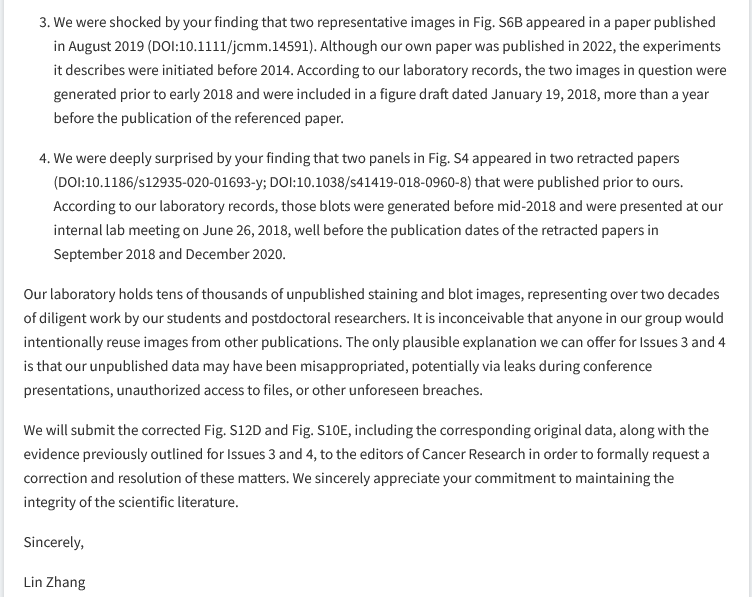
But Zhang still could explain, as he did on PubPeer:
“3. We were shocked by your finding that two representative images in Fig. S6B appeared in a paper published in August 2019 (DOI:10.1111/jcmm.14591). Although our own paper was published in 2022, the experiments it describes were initiated before 2014. […]
4. We were deeply surprised by your finding that two panels in Fig. S4 appeared in two retracted papers (DOI:10.1186/s12935-020-01693-y; DOI:10.1038/s41419-018-0960-8) that were published prior to ours. […]
The only plausible explanation we can offer for Issues 3 and 4 is that our unpublished data may have been misappropriated, potentially via leaks during conference presentations, unauthorized access to files, or other unforeseen breaches.”
It a gigantic conspiracy, in fact a gigantic China Hoax which goes to the very root of the Deep State and must involve the Clintons, Obama and other Democrats!
Appointed to assume
In UK, the Vice-Chancellor of the University of London was removed for bullying. The Standard reported on 30 May 2025:
“Professor Wendy Thomson was suspended following a board meeting on May 21, which was chaired by deputy chair Kavita Reddi, according to The Times.
In a letter seen by the newspaper, Simon Cain, the university’s director of human resources, confirmed the board of trustees had unanimously decided to suspend Thomson pending the outcome of an independent investigation. […]
In a second letter sent by staff to the board of trustees, Thomson was accused of presiding over a “culture of bullying and fear”.”
No details on Thomson’s bullying were provided, but what the journalists reported as a side note is actually another scandal:
“Professor David Latchman, the deputy vice-chancellor, was appointed to assume Thomson’s duties”

David Latchman, uncensored
I publish exclusively two uncensored UCL screening panel reports into the David Latchman and Anastasis Stephanou affair. Now we know which papers were investigated and which requested retractions didn’t happen.
David Latchman! The multimillionaire heir who, when he was still Master of Birkbeck, was charged with research misconduct in countless biomedical papers, and escaped all responsibility by recruiting the most expensive law firm which then bullied his investigator and by donating huge amounts of money to his employer. Latchman’s mentees Tiziano Scarabelli and Anastasis Stephanou were found guilty and kicked out. Latchman himself was declared only “reckless“, because his lawyers re-wrote the investigative report which actually found Latchman guilty of research misconduct.
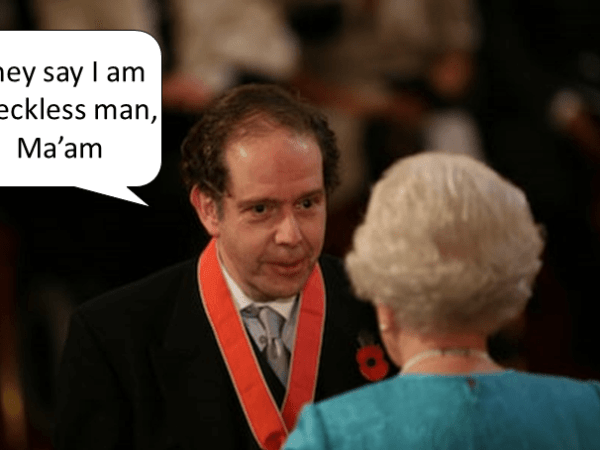
Investigator: “Dr Latchman, as senior author, should bear the weight of responsibility as there was no other author in common”
In David Latchman affair, UCL finally gave censored investigative reports to journalists. These show the Master of Birkbeck was found guilty of misconduct by recklessness, trice. Former investigator John Hardy now speaks out exclusively on my site.
Now, we don’t know if Latchman is also a bully on top of being a cheater and a liar, to qualify for his new job as Vice Chancellor of the University of London. Fact remains the main problem was him, not just his fraudster goblins Scarabelli and Stephanou.
Yogesh J.K. Patel , Martin D. Payne Smith , Jacqueline De Belleroche , David S. Latchman Hsp27 and Hsp70 administered in combination have a potent protective effect against FALS-associated SOD1-mutant-induced cell death in mammalian neuronal cells Brain research. Molecular brain research (2005) doi: 10.1016/j.molbrainres.2004.10.028

Or this, also flagged by Claire Francis:
- Elizabeth Ensor , Karen Mathews , Martin D. Payne Smith , David S. Latchman Sensory neurons from mice lacking the Brn-3b POU family transcription factor are resistant to death-inducing stimuli both in vitro and in vivo Brain research. Molecular brain research (2003) doi: 10.1016/s0169-328x(03)00322-x
- Elizabeth Ensor , Martin D. Smith , David S. Latchman The BRN-3A transcription factor protects sensory but not sympathetic neurons from programmed cell death/apoptosis The Journal of biological chemistry (2001) – doi: 10.1074/jbc.m007068200

You got the message. More in my older articles.

Latchman and Wohl Foundation: gifts that keep on giving
David Latchman, Master of Birkbeck and professor of genetics at UCL was once again cleared of all suspicions of research misconduct, while his two subordinates took all the blame, for just 7 papers. Over 40 flagged for suspected data manipulations were ignored. Latchman is namely also Chair of the over £100 Million-heavy Maurice Wohl Charitable…
Scholarly Publishing
Some authors disagree
Cell is being it nasty self again.
A Cancer Cell paper by the cancer researchers Sonia Melo (now zombie scientist at I3S in Porto, Portugal), her former postdoctoral mentor Raghu Kalluri, and his colleague George Calin (both professors at MD Anderson in Houston, Texas, USA), received a very peculiar expression on concern. I first reported about the PubPeer-recorded problems in this study in an article from December 2015, the study was just one year old then. Several more articles about Melo and Kalluri followed.
Melo and Kalluri defend discredited Nature paper with preprint, where they admit data “adjustments”
Sonia Melo, the Portuguese cheater scientist and her former US-boss Raghu Kalluri issued some days ago a biorxive preprint, which sole purpose is to defend their discredited Nature paper from 2015. There, they originally claimed to have found a unique biomarker for early pancreatic cancer, a much hailed promise to save lives of many cancer…
Kalluri previously set up a company based on Melo’s research, Codiak Biosciences, which raised huge amounts of money but went bancrupt in 2023 (read March 2023 Shorts). Only one paper by Melo and Kalluri was retracted, Melo et al, Nature Genetics, 2009, Melo also lost her EMBO Young Investigator funding (see my article from March 2016), other joint papers were saved, like the one which follows.
Sonia A. Melo , Hikaru Sugimoto , Joyce T. O’Connell , Noritoshi Kato , Alberto Villanueva , August Vidal , Le Qiu , Edward Vitkin , Lev T. Perelman , Carlos A. Melo , Anthony Lucci , Cristina Ivan , George A. Calin, Raghu Kalluri Cancer exosomes perform cell-independent microRNA biogenesis and promote tumorigenesis Cancer Cell (2014) doi: 10.1016/j.ccell.2014.09.005


Zombie scientist Sonia Melo awarded by AstraZeneca
Sonia Melo is back, and not to be messed with. The Portuguese zombie scientist is responsible for a number of papers with manipulated data (only one was retracted, Melo et al, Nature Genetics, 2009), saw her EMBO Young Investigator funding withdrawn in 2016, but was whitewashed and reinstalled by her employing institute Instituto de Investigação e…
The PubPeer evidence was all posted in 2015-2016. Elsevier and Cell Press knew and did absolutely nothing until now. On 7 August 2025, a bizarre Expression of Concern was published (highlights mine):
“The editors of Cancer Cell are issuing this temporary Expression of Concern regarding the above article.
Substantial concerns have been raised about the integrity of several figures in the publication. The University of Texas MD Anderson Cancer Center (MDACC) has completed an institutional investigation into both the data in the article and related data in patent WO 2015/085096. The investigation identified the following issues:
- The last six lanes of the Dicer blot in Figure 3A are duplicated, flipped, and relabeled from the anti-CD9 blot in the same figure.
- Source data for Figure 2C tRNAMet and Figure 5C derive from a single experiment but are labeled as separate experiments.
- Figure 1G tRNAMet appears to originate from the same experiment as Figure 1G miR-10b, despite being published as separate experiments.
- The final three lanes of the anti-flotillin control blot in Figure 7B are duplicated from Figure S3A, though represented as different experiments.
- Figures 1G miR-10b and miR-21 do not match the laboratory records, with mislabeled time points and missing molecular weight markers in the original data.
- Figure S1I contains TSG101 blots that are mislabeled and do not correspond to the correct cell lines or experiments, with some data omitted.
- Figure 5A tRNAMet in the patent reuses a flipped version of Figure 2C tRNAMet from the paper, despite being presented as derived from different cancer cell types.
- Figure 5A tRNAVal in the patent reuses and mislabels Figure 2C pre-miR-21 from the paper, again with mismatched cell types.
- Figure 5A tRNALeu in the patent reuses and mislabels Figure 5D pre-miR-21 from the paper, also with mismatched cell types.
The MDACC investigation concluded that there are no authentic, original, and uncontested data to verify the results presented in the publication and recommended retraction of the article.
Some authors disagree with these findings. They state that MDACC previously investigated the publication in 2016 without recommending retraction and believe that this earlier conclusion should not be disregarded, as they are unaware of any new data integrity concerns. They also assert that all original data supporting the paper’s conclusions have been located and provided to the MDACC committee and can be used to correct the figure errors.
Cancer Cell is currently reviewing these concerns in accordance with the Committee on Publication Ethics (COPE) guidelines and Elsevier’s policies. This Expression of Concern will remain associated with the article while our review is ongoing. Once a conclusion is reached, the editors will take appropriate action. Should the editors determine that a satisfactory resolution cannot be reached with the information available, a further notice will be issued to update the scientific community.”
I wrote about that 2016 investigation by MD Anderson which indeed whitewashed Kalluri, simply because he rose $80 million for his Codiak scam:

Sonia Melo case: PhD advisor Esteller sham-investigated, postdoc PI Kalluri with $ 80Mio COI
Sonia Melo, Portuguese cancer researcher and recipient of the prestigious EMBO Installation Grant, now has her publications investigated by EMBO for suspected image manipulations. Her current and former research institutions are apparently actively avoiding any attempts to scrutinise her papers, some due to very heavy financial conflicts of interest. Yet my information suggests that Melo’s former…
But now that Codiak spectacularly failed and lost a lot of people (not just investors, also the public!) a lot of money, Kalluri’s standing is not as good as it used to be. Thus, a new investigation, which finally found fraud and ordered a retraction.
And if you are surprised that Cell Press refuses to follow up on an institutional request for a retraction: this is their normal policy. Unless the corresponding author begs for it, there will be no retraction. Leiden University Medical Centre was told by Cell press to go f*** themselves with their request for Maria Fousteri retractions, the university spent years twisting Fousteri’s former mentor’s and last author’s arm to make him agree to a retraction. Read November 2021 Shorts and here:
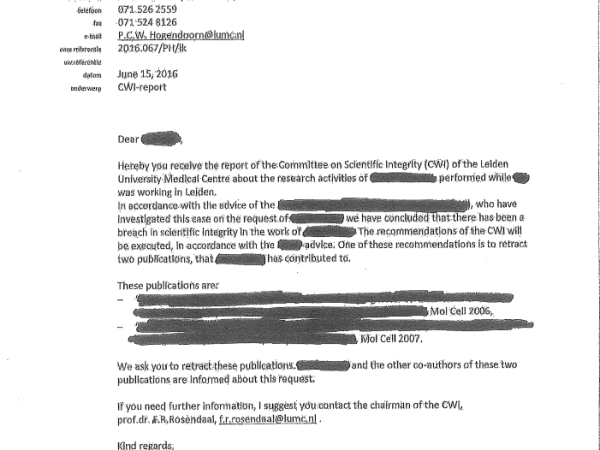
Fousteri affair: Dutch integrity thwarted by academic indecency
Two and a half years after Maria Fousteri was found guilty of scientific misconduct by her former employer, the Leiden University Medical Center (LUMC), exactly nothing at all happened. ERC and Molecular Cell ignored LUMC letters from June 2016, while Fouster’s British co-authors interfered to save own papers. Of 4 scheduled retractions, none took place.
Now the question is: will MD Anderson give up, and do as Cell Press wants (nothing)? Or will they also waste years pressuring Kalluri to agree to a retraction?
Oh, and Melo’s and Kalluri’s coauthor George Calin is not just someone, he is the mentee of Carlo Croce and was so far completely untouchable despite all the massive fraud in his miRNA oncology “research”. Read here:
We recognize the similarity
I previously wrote about the Knight of the Order of Canada Martin Gleave, distinguished professor of urology at the University of British Columbia (UBC) and founding director of the Vancouver Prostate Centre. Gleave’s support also brought Amina Zoubeidi to the top, she is now UBC professor and member of the Executive Board of the Vancouver Prostate Centre:

Trials and Errors of Martin Gleave
“The magnitude was much greater than we had expected or hoped for,” – Martin Gleave
Aneurus Inconstans followed in Claire Francis’ footsteps and had a look at more of Zoubeidi’s papers. He found a lot of naughty stuff there, currently around 30 papers on PubPeer in total. In one case, a journal by the the American Society for Clinical Investigation has acted decisively:
Shaghayegh Nouruzi , Takeshi Namekawa , Nakisa Tabrizian , Maxim Kobelev , Olena Sivak , Joshua M Scurll , Cassandra Jingjing Cui , Dwaipayan Ganguli , Amina Zoubeidi ASCL1 regulates and cooperates with FOXA2 to drive terminal neuroendocrine phenotype in prostate cancer JCI Insight (2024) doi: 10.1172/jci.insight.185952


A clear case of plagiarism? Wait!
The finding above was independently made by Claire Francis and Aneurus. The former notified the journal, and received on 8 August 2025 this reply from Corinne Williams, Senior Science Editor at JCI Insight (highlight mine):
“Thank you for bringing the issue below to our attention. The Editors have had the opportunity to review the source files of the tissue microarray panels presented in the JCI Insight manuscript and have determined that the data were collected in 2016 by the pathology core at the Vancouver Prostate Centre (VPC), using British Columbian Canadian prostate cancer specimens obtained from surgeries performed at Vancouver General Hospital and UBC Hospital.
As the source of the samples was not clearly stated in the original publication, we have issued a formal correction to include this information (https://insight.jci.org/articles/view/196861).
We recognize the similarity between the images in the Frontiers Oncology paper and the JCI Insight paper; however, we are only able to o verify the data in our own paper.“
See, the editors believe the authors who say the image is theirs, and it was the Chinese who must have stolen it, jumped into a time machine, and published it 3 years earlier. You saw the same attitude in another Short above.
The Corrigendum from 8 August 2025 actually doesn’t even refer to immunohistochemistry data, but to “tissue microarray” gene expression dataset which “was generated in 2016 by the pathology core at the Vancouver Prostate Centre“.
Anyway, here some more examples of Zoubeidi’s research:
Thomas Cordonnier , Jennifer L. Bishop , Masaki Shiota, Ka Mun Nip , Daksh Thaper , Sepideh Vahid , Devon Heroux, Martin Gleave, Amina Zoubeidi Hsp27 regulates EGF/β‐catenin mediated epithelial to mesenchymal transition in prostate cancer International Journal of Cancer (2015) doi: 10.1002/ijc.29122


Or this:
N Li , A Zoubeidi, E Beraldi , M E Gleave GRP78 regulates clusterin stability, retrotranslocation and mitochondrial localization under ER stress in prostate cancer Oncogene (2013) doi: 10.1038/onc.2012.212

And more recent papers, without Gleave:
D Thaper , S Vahid , K M Nip , I Moskalev , X Shan , S Frees , M E Roberts , K Ketola , K W Harder , C Gregory-Evans , J L Bishop , A Zoubeidi Targeting Lyn regulates Snail family shuttling and inhibits metastasis Oncogene (2017) doi: 10.1038/onc.2017.5


This is even worse, flagged by Aneurus and Claire Francis:
Nakisa Tabrizian , Shaghayegh Nouruzi , Cassandra Jingjing Cui , Maxim Kobelev , Takeshi Namekawa , Ishana Lodhia , Amina Talal , Olena Sivak , Dwaipayan Ganguli , Amina Zoubeidi ASCL1 is activated downstream of the ROR2/CREB signaling pathway to support lineage plasticity in prostate cancer Cell Reports (2023) doi: 10.1016/j.celrep.2023.112937


And guess what, the above paper was just retracted in August 2025:
“This article has been retracted at the request of the editors.
Post-publication, an investigation conducted on behalf of the journal by Elsevier’s Research Integrity & Publishing Ethics (RI&PE) team identified concerns around the authenticity of the following figures/image panels:
(1)
Figure 4D (WB ROR2 16D CRPC), Figure 5A (WB ROR2 16D CRPC), and Figure 6D (WB ROR2 16D CRPC) appear to depict the same source image but are described as representing different experimental samples;
(2)
Figure 4D (WB ROR2 42D ENZR) and Figure 6D (WB ROR2 42D ENZR) appear to depict the same source image but are described as representing different experimental samples;
(3)
Figure 4D (WB B-actin 16D CRPC) and Figure 6H (Wb B-actin 42D ENZR) appear to depict the same source image but are described as representing different experimental samples;
(4)
Figure 5A (WB ERK 42F ENZR) and Figure 5F (WB ERK whole lysate) appear to share an overlapping region indicating that they depict the same source image but are described as representing different experimental samples;
(5)
Figure 5D (WB b-actin) and Figure 6E ( WB b-actin) appear to depict the same source image but are described as representing different experimental samples;
(6)
Figure 5D (WB ROR2) and Figure 6E (WB ROR2) appear to depict the same source image but are described as representing different experimental samples;
(7)
Figure 5D (WB ERK) and Figure 6E (WB ERK) appear to depict the same source image but are described as representing different experimental samples;
(8)
Figure 5A (WB p-ERK) and Figure 6E (WB p-ERK) appear to share an overlapping region indicating that they depict the same source image but are described as representing different experimental samples;
(9)
Figure 6E (WB CREB1) and Figure 6D (WB b-actin CREB1 CRPC 16D CRPC) appear to share an overlapping region indicating that they depict the same source image but are described as representing different experimental samples; and
(10)
Figure 6D (WB b-actin CRPC C4-2B) and Figure 6D (WB b-actin NEPC 42D ENZR) appear to share an overlapping region indicating that they depict the same source image but are described as representing different experimental samples.
Figures S2B, S4B, S5D, and S5E also had issues that were discovered by the authors during the investigative process.
The editors and RI&PE team requested that the authors provide comment on these concerns, as well as the original unprocessed image files to aid investigation. Although the authors were cooperative in providing raw data, the editors, alongside the support of the RI&PE team, determined that the explanations and the data provided were unsatisfactory in resolving these concerns.
The editorial team has determined that the findings of the article cannot be relied upon and has decided to retract the article.
The authors do not agree with the decision of the editors.”
Maybe there was an Investigation in Vancouver, where Zoubeidi was ordered to ask for this retraction?
Not yet retracted yet very fake, a collaborative study with a fellow Vancouver Prostatian, Paul Rennie:
Peyman Tavassoli, Latif A. Wafa , Helen Cheng , Amina Zoubeidi , Ladan Fazli , Martin Gleave, Robert Snoek , Paul S. Rennie TAF1 differentially enhances androgen receptor transcriptional activity via its N-terminal kinase and ubiquitin-activating and -conjugating domains Molecular endocrinology doi: 10.1210/me.2009-0229

Aneurus inconstans: “Figure 5C: three androgen receptor (AR) bands appear also as actin bands (red lines), please see the comparison after rescaling at the bottom. Moreover, the last two AR bands to the right are identical (blue lines, and also the two actin bands to the left are identical (green lines).”
And a paper from before Zoubeidi met Gleave:
Amina Zoubeidi, Joice Rocha , Fatima Z. Zouanat , Lucie Hamel , Eleonora Scarlata , Armen G. Aprikian , Simone Chevalier The Fer Tyrosine Kinase Cooperates with Interleukin-6 to Activate Signal Transducer and Activator of Transcription 3 and Promote Human Prostate Cancer Cell Growth Molecular cancer research (2009) doi: 10.1158/1541-7786.mcr-08-0117


Let me end with a somewhat bizarre video of Zoubeidi. I guess it must have inluenced the decision of the men running JCI Insights?
Bitter competition instead of collaboration
A major papermill study has just revolutionised everything. It was so important that the God of science writers, Carl Zimmer himself, wrote about it in New York Times, and all the media worldwide followed suit:
“A team of researchers found evidence of shady organizations churning out fake or low-quality studies on an industrial scale. And their output is rising fast, threatening the integrity of many fields.
“If these trends are not stopped, science is going to be destroyed,” said Luís A. Nunes Amaral, a data scientist at Northwestern University and an author of the study, which was published in the Proceedings of the National Academy of Sciences on Monday. […]
For their analysis, the scientists built a database of more than a million scientific papers. They searched for the papers in online forums where sleuths share duplicated images and tortured phrases, as well as the Retraction Watch Database, maintained by the Center for Scientific Integrity.
The researchers compiled a list of 30,000 papers that have either been retracted or show signs of having come from a paper mill.”
This is the paper:
Reese A. K. Richardson , Spencer S. Hong , Jennifer A. Byrne , Thomas Stoeger , Luís A. Nunes Amaral The entities enabling scientific fraud at scale are large, resilient, and growing rapidly Proceedings of the National Academy of Sciences (2025) doi: 10.1073/pnas.2420092122
And this is the Dataset S01 of 30k papers from “online forums” which you can download in Supplemental Data and which Zimmer spoke of:
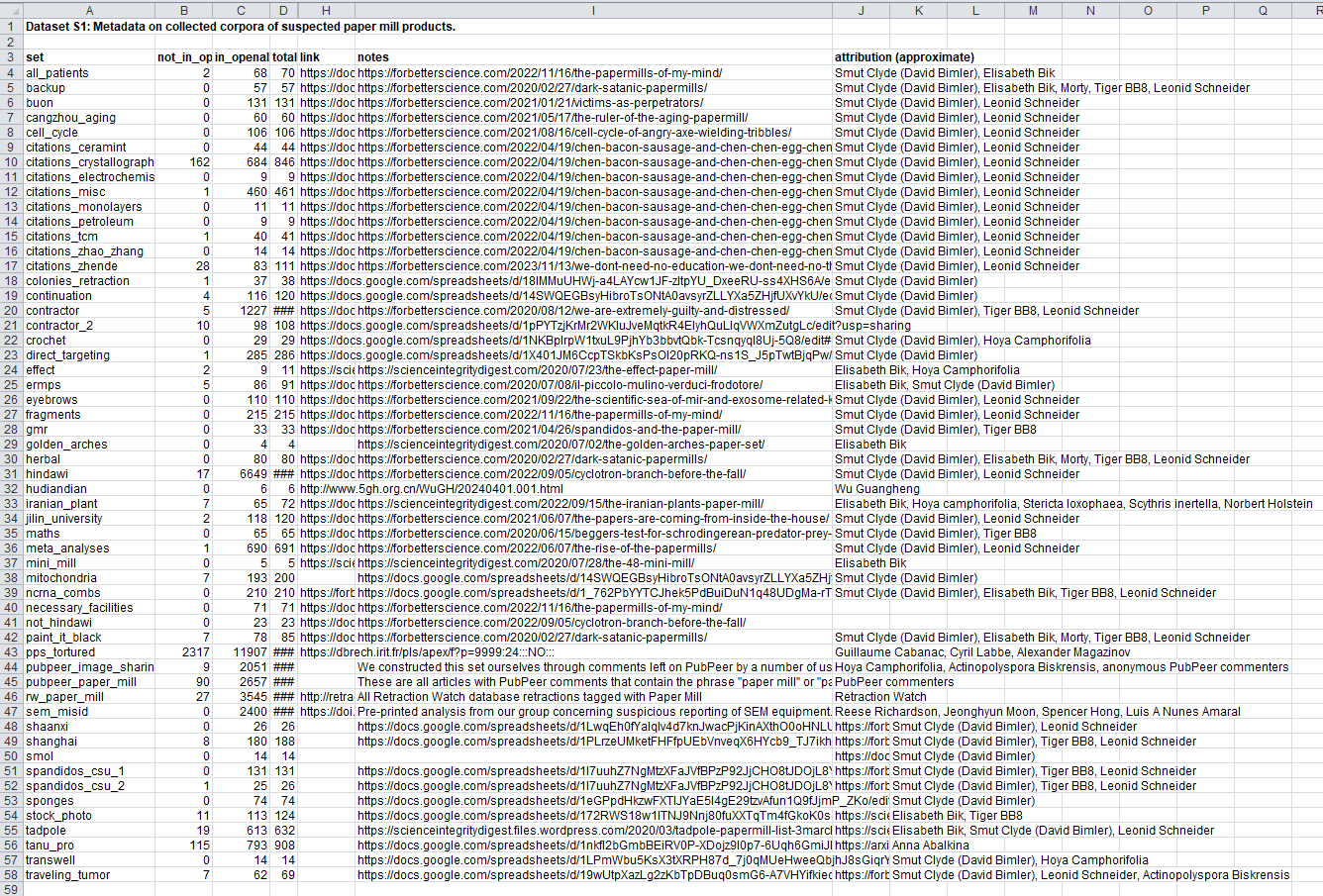
As you will see if you zoom in, almost all of the sources the Richardson et al study used came from For Better Science, including all those Google Sheets files by Smut Clyde. Which is great, surely the authors will have credited our work with references and acknowledgements in the main text, not just with hyperlinks hidden in a supplemental Excel sheet?
The full-service paper mill and its Chinese customers
An investigation by Elisabeth Bik, Smut Clyde, Morty and Tiger BB8 reveals the workings of a paper mill. Its customers are Chinese doctors desperate for promotion. Apparently even journal editors are part of the scam, publishing fraudulent made-up science.
Well, nope. Their acknowledgments only credit funding sources. The references never mention For Better Science or Smut Clyde. No, not because it is editorially forbidden to reference blogs – Retraction Watch is well referenced. Also these authoritative studies were referenced:
“Universities can sanction researchers with rescission of contracts. Journals can sanction authors with retraction of publications. Literature aggregators can sanction journals by removing them from their indices (deindexing) (38–40).”
(39) J. Teixeira da Silva, Paper mills and on-demand publishing: Risks to the integrity of journal indexing and metrics. Med. J. Armed Forces India 77, 119–120 (2020).
(41) J. A. Teixeira da Silva, A. Al-Khatib, Ending the retraction stigma: Encouraging the reporting of errors in the biomedical record. Res. Ethics 17, 251–259 (2021).
Of course they had to cite that stalker looney Jaime A. Teixeira da Silva (JATdS), who used to be a plant scientist and an image integrity sleuth, but then gradually went mad, paranoid, and deluded. JATdS publishes his unhinged brainfarts every few days and on any random topic, occassionally accusing everyone of everything. In predatory journals mostly, which makes him a valued expert on pradatory publishing.
Did the authors of the PNAS study ever read what JATdS writes? Most recent JATdS masterpieces were titled “Linguistic wokeism: Revisionism of the gypsy moth and Asian carp, and fate of the Russian salad” (Teixeira da Silva 2025) and “Variation in the Spelling of Ukrainian President’s Family Name in Indexed Academic Literature” (Teixeira da Silva & Erfanmanesh 2025), and I demand these must be also cited by Richardson et al. I have more suggestions of JATdS studies to cite, especially the last one in the list:
- “Unsolicited Emails and Spam: An Unsustainable Burden for Academics” (Teixeira da Silva 2025)
- “A Vision for the Formal Documentation and Digitalization of Sports Commentators’ Commentaries” (Teixeira da Silva & Scelles 2025)
- “Crow (Corvus spp.) meat: research possibilities to determine nutritional quality and health risks” (Teixeira da Silva 2024)
- “Why the secrecy behind an award-winning skin cancer-treating soap?” (Teixeira da Silva 2024)
- “Twitter should now be referred to as X: How academics, journals and publishers need to make the nomenclatural transition” (Teixeira da Silva & Nazarovets 2024)
- “Vigilantism and “Plastic Wrap Civil Justice” in 2022 during the Russo-Ukrainian War” (Teixeira da Silva 2024)
- “Is ChatGPT a valid author?” (Teixeira da Silva 2023)
- “Use of nasal tampons for on-field management of nasal bleeds (epistaxis) in sports” (Teixeira da Silva 2023)
- “A new dimension in publishing ethics: social media-based ethics-related accusations” (Teixeira da Silva & Dobránszki 2019),
- “The illicit and illegitimate continued use of Jeffrey Beall’s “predatory”open access black lists” (Teixeira da Silva 2018)
- “The opacity of the PubPeer Foundation: what PubPeer’s “About” page tells us” (Teixeira da Silva 2018)
- “Science Watchdogs” (Teixeira da Silva 2018)
- “Freedom of speech and public shaming by the science watchdogs” (Teixeira da Silva 2018)
- “Challenges to Michael Eisen’s bid for US Senate seat in 2018” (Teixeira da Silva 2018)
- “Preprints should not be cited” (Teixiera da Silva 2017)
- “Slang and profanity: poor moderation and journalistic / editorial standards by Retraction Watch” (Teixeira da Silva et al 2017)
- “An Interview with Jaime A. Teixeira da Silva: Insight into Improving the Efficiency of the Publication Process” (Teixeira da Silva & Shaughnessy 2017)
- “Why does Retraction Watch continue to offer support to Jeffrey Beall, and legitimize his post-mortem “predatory” lists?” (Teixiera da Sila 2017)
- “The Profoundly Unethical Nature of Retraction Watch’s Call for Coercion” (Teixiera da Sila 2017)
- “Ivan Oransky the 2004-2006 Digital Undertaker for Elsevier’s the Lancet” (Teixiera da Sila 2017)
- “Stings, hoaxes and irony breach the trust inherent in scientific publishing” (Al-Khatib & Teixeira da Silva 2016)
- “Leonid Schneider calls Springer Nature’s Science and Engineering Ethics Predatory, Without Proof” (Teixeira da Silva et al 2019)
But academia loves citing JATdS already (especially “Ethical perspectives and ramifications of the Paolo Macchiarini case“, Teixeira da Silva et al 2017), exactly because there is nothing else in the “peer reviewed literature” on those specific topics. And nobody in academia ever reads a paper beyond the title, even those academics who specialise on research integrity and publication ethics and berate others for using nonsense references.
By the way, the celebrity coauthor of the PNAS study, the Australian professor Jennifer Byrne, became in 2020 the world-known authority on papermills after she was falsely attributed with the work of Smut Clyde and other sleuths (originally published on For Better Science), specifically for finding over 600 papermilled studies and tracing them to a single Chinese papermill. A false claim which admittedly others kept making, but which Byrne never found time to publicly correct. I briefly discuss it here:
Editors and other real papermill heroes
“Long story short, we investigated our published papers and then retracted those with data integrity issues. That is it.” – Dr Heather Smith, Editor-in-Chief
It is a bit ironic that five years later Byrne gets credited by all the authoritative media with Smut Clyde’s work on For Better Science a second time.
Because instead of the actual sleuths, authoritative sources like this had to cited:
“Agents for paper mills have also recently been reported to attempt to bribe journal editors (29, 30) and to “hijack” the entire editorial processes at some journals (31–33).”
(30) B. A. Sabel, E. Knaack, G. Gigerenzer, M. Bilc, Fake publications in biomedical science: Red-flagging method indicates mass production. medRxiv [Preprint] (2023). https://doi.org/10.1101/2023.05.06.23289563 (Accessed 18 October 2023).
Now, Berhard Sabel‘s papermill study was ridiculed and debunked by proper experts as rubbish already when it appeared as preprint (read May 2023 Shorts). That’s probably why it never resurfaced in a peer reviewed journal. But Sabel is a German professor who even wrote a book about papermills (or had one written, read May 2025 Shorts), and therefore he must be referenced.
And this:
“Because of the increasing complexity of the knowledge being created and increased specialization, the system relies on the good-faith assumption of genuine contributions by all participants (7–10).”
(8) E. M. McNally et al., Conflicting interests: When whistleblowers profit from allegations of scientific misconduct. J. Clin. Investig. 132, e166176 (2022).
(10) J. P. Tennant, T. Ross-Hellauer, The limitations to our understanding of peer review. Res. Integr. Peer Rev. 5, 6 (2020).
Now, Jon Tennant (who died in a midnight motorcycle accident in Bali) used to be celebrated by everyone in the Open Access community (including the Plan S author and former EU Commissioner Robert-Jan Smits), at least up until Tennant was ousted and shunned over accusations of sexual harassment. His sister Rebecca and others cried conspiracy and even murder, and blamed Leonid Schneider for their hero’s death as if I was some brand of alcohol. A great guy to be cited.
Elizabeth MCNally accused Elisabeth Bik and other sleuths in her referenced editorial of being greedy rotten characters who slander scientists for money. Discussed here:
Proofig – the Kolodkin-Gal family business
“Don’t let online controversies and aggressive blogs easily ruin everything you’ve worked for to build your reputation […] Whether the image issue is innocent or intentional, the outcome is still the same. Bloggers will attack that publication with image issues, which will damage your reputation and may even lead to a costly investigation. We are…
Maybe this is why For Better Science and its contributors are not thanked or referenced. We are bad, horrible, nasty people. Unlike Tennant or JATdS.
By the way, there is a supplementary text (Appendix 01) with more references. None again to For Better Science though. At least there, David Bimler aka Smut Clyde gets mentioned, but not for providing the immense dataset which the Richardson et al study used:
” Like disease and gene regulation, there are other fields with a high demand for publications for which templates could be used to produce plausibly-motivated but otherwise fraudulent publications. For instance, there is growing concern about papermills in materials science (20, 21)…”
(20) D Bimler, Better living through coordination chemistry: A descriptive study of a prolific papermill that combines crystallography and medicine. Res. Sq. (2022).246
(21) R Richardson, J Moon, SS Hong, LA Amaral, Widespread misidentification of sem instruments in the peer-reviewed materials science and engineering literature. OSF Prepr. (2024).

Polymer Papermillers Taking the Piss
Papermill Industry enters its Logical Growth Phage. Smut Clyde explains what coordination polymer chemistry has to do with chickenshit.

The lead author Reese Richardson is also a sleuth, he described his study as “A do-or-die moment for the scientific enterprise” in his blog, where he also decided never to mention For Better Science or Smut Clyde, whose work he used for his research. Instead, Reese decided to warn the humanity of a future where scientific exploration will cease to exist, leaving humanity only with “bitter competition instead of collaboration, pageantry instead of exploration“, “drudgerous pursuit of meaningless metrics” and “cheap answers” instead of abundant questions and wondering.
My readers know that Reese describes the already existing daily reality in academia worldwide. The “bitter competition instead of collaboration” bit can be even observed on his own PNAS paper.
A million thing to do
In the context of the above discussed Richardson et al PNAS 2025 study, Nature revealed on 7 August 2025 their own “Exclusive“:
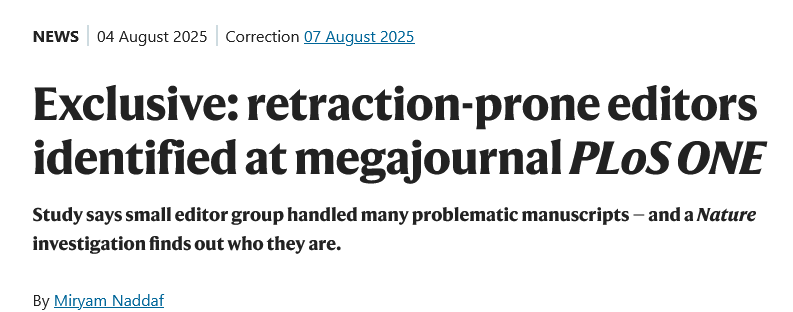
“Nearly one-third of all retracted papers at PLoS ONE can be traced back to just 45 researchers who served as editors at the journal, an analysis of its publication records has found.
The study1, published in Proceedings of the National Academy of Sciences (PNAS) on 4 August, found that 45 editors handled only 1.3% of all articles published by PLoS ONE from 2006 to 2023, but that the papers they accepted accounted for more than 30% of the 702 retractions that the journal issued by early 2024.”
Alexander Magazinov was not impressed by this clever conclusion. He instead proposed a hypothesis “that so many retractions are concentrated with that few editors is because that’s how sleuths work, not because of how papermills work“. Basically, the editorial boards at PLOS One and of other journals are populated by masses of scientific nobodies like Lv whose only talent is papermilling. Pick any one, and you will find problems.
But Nature is certainly not interested in what Magazinov thinks, and here is why.
“Nature’s analysis identified 3 of those 19 editors. […] Another editor flagged in Nature’s analysis is Zhihan Lv (also known as Zhihan Lyu), a researcher in virtual reality, who ranked second in the list of editors who handled high numbers of retracted PLoS ONE papers. Between 2017 and 2021, Lv edited 54 papers, and 43 of these have been retracted, including 31 this year. All notices cited concerns about peer-review integrity and potential manipulation of the publication process.”
Actually, no. Zhihan Lv was identified by Magazinov, reported to PLOS One and the University of Uppsala where Lv worked at that time, and we also notified the Swedish national authority NPOF, and published the outcome on For Better Science. None of that was mentioned in the Nature‘s “Exclusive” reporting.
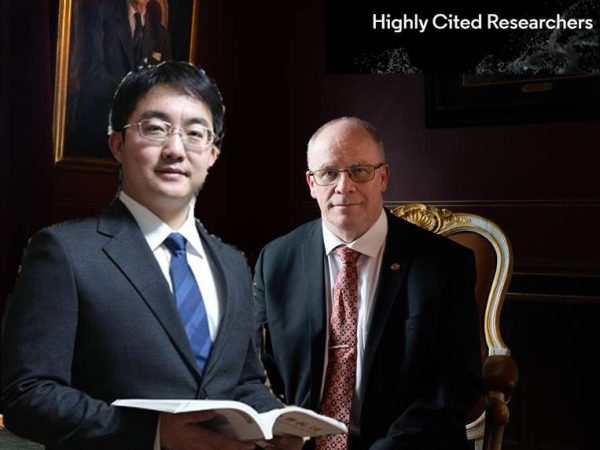
“They happened before I joined Uppsala University”
“There are therefore grounds for suspecting that there have been such serious deviations from good research practice that the matter should be referred to the National Board for Assessment of Research Misconduct for further investigation.”
I clarified this on social media, and received this astounishing message from the Nature journalist, Miryam Naddaf, who eventually admitted to have based her “Exclusive” reporting exclusively on For Better Science material:
“I read the blog when I first started working on this piece months ago, and I read the report that you kindly had available in English in there. Because I read your note on the possibility of Zhihan Lv and Haibin Lv being brothers, I included a question about whether they were blood related in the emails I sent them.
The last few days, basically since I received the embargoed PNAS press release and learned that the paper was coming out on Monday, I just had a million thing to do, the writing, fact checking and making sure everyone involved or mentioned had the right to respond. I can’t pin on anyone else, it’s truly a shortcoming on my end. But I’m thankful that you pointed out to it and that we can make it right for you and Alexander.”
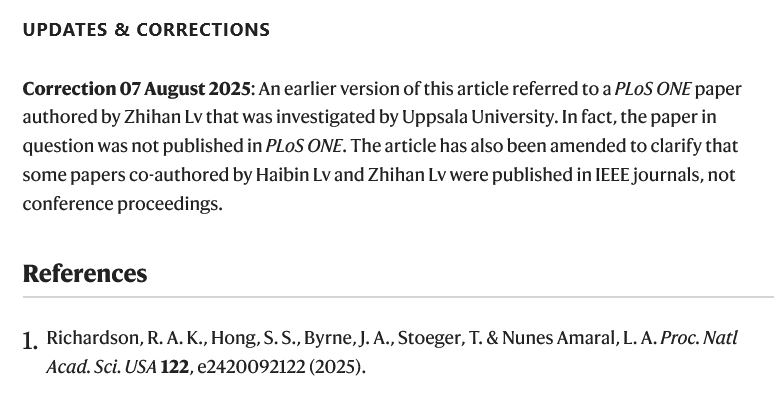
Some time later, Nature added a paragraph crediting Magazinov and For Better Science. No actual reference to the For Better Science article and no editorial note to highlight this change were added. There’s just this:
Donate!
If you are interested to support my work, you can leave here a small tip of $5. Or several of small tips, just increase the amount as you like (2x=€10; 5x=€25). Your generous patronage of my journalism will be most appreciated!
€5.00

 For Better Science
I thought the same thing when I read Richardson’s article. It was very consistent with the FBS and Smut Clyde databases. Reading it here convinced me. What I don’t understand is why they avoid citing the real source. Those who follow these research integrity topics can easily see what’s missing. Those who don’t care about these topics won’t care about Richardson’s article either. What could be the reason for ignoring the real source?
As for the added weird YouTube video, according to many internet statistics, these sections are skipped over quickly without being watched.
The sad part is that it shouldn’t be this easy to conduct fraudulent research by fooling people and manipulating public funds, using problematic results to advance one’s career, and facing no consequences in return.
LikeLiked by 2 people
The reason for this omission is simple: me.
Academics live in perpetual fear of those they perceive as alpha males.
In this case, the academic RI community sees a certain Ivan as their leader. Who mandates that Schneider must be never mentioned or spoken to.
They all comply, and then get angry at me when I refuse to understand.
But what I do find hilarious in this case, is their referencing of Sabel, Tennant, and especially JATdS.
In totalitarian societies loyal servants of the regime do voluntary debasement. They perform embarrassing acts of self-humilation to prove their unconditional loyalty.
LikeLiked by 3 people
“In totalitarian societies loyal servants of the regime do voluntary debasement. They perform embarrassing acts of self-humilation to prove their unconditional loyalty.“
Similar to what Hannah Arendt said… But I still don’t think that fully explains it. If you are the root cause, they can reject you by doing a better job than you. This table is very clearly an FBS and Clyde-driven table. Claiming to take responsibility for academic ethics while failing to mention the main source of the work just makes the person look ridiculous.
As for RW, they usually only announce retractions and cases that have already been reported. However, the real problem is that articles that should be retracted are not being retracted due to a dumb network of various relationships, from editorial roles to authorship and peer review. Academic ethics reports that are never prepared. Even if these reports were prepared and the retractions were made, the fraudsters would still not be fired and would continue to use the funds for their own interests. There is no such news flow in RW. As I said, retractions are important, but the real problem is the tens of thousands of studies that should be retracted but are not for various reasons.
LikeLike
Your last paragraph says it all.
LikeLiked by 1 person
It still does not explain why they have not cited Smut Clyde and his huge database. More likely explanation is more trivial and possibly related to some text lines in funding applications. “We discovered…” increases chances for funding a lot more than ” As discovered by Smut Clyde .” (or anyone else).
LikeLiked by 2 people
Certain forms of early onset Alzheimer’s are genetically based, but these cases are RARE. Manhattan Project, at best, is misleading people and is creating false hope.
LikeLiked by 3 people
A very recent paper illustrating the genetic complexity underlying Alzheimer’s and other dementias: https://www.nature.com/articles/s41467-025-62108-y
LikeLike
Remember my post about Teofil Jesionowski’s GTSE24 conference, whose web page disappeared within a week after I notified Elsevier about this authors-editors circle?
Schneider Shorts 18.07.2025 – Invisible to the naked eye – For Better Science
On July 1st I sent this story to Nature as correspondence. No response. Do you think Miryam Naddaf may be interested in it? I don’t care if she acknowledges my contribution. I am only interested in publicizing this story. Just a reminder – it involved:
Damia Barcelo – until March 2025 Editor-in-Chief of Science of the Total Environment
Ewa Korzeniewska – Associate Editor of Science of the Total Environment
Jacob de Boer – Co-Editor-in-Chief of Chemosphere
Patryk Oleszczuk – Associate Editor of Chemosphere
Ashok Pandey – former Editor-in-Chief of Bioresource Technology
Jörg Rinklebe – former Editor-in-Chief of Environmental Pollution and former Associate Editor of Journal of Hazardous Materials
Robert Letcher, Grzegorz Lisak, Christian Sonne – Editors of Environmental Research
Long D. Nghiem – Co-Editor-in-Chief of Environmental Technology & Innovation, Editor of Journal of Membrane Science
Li Gao – Section Editor of Journal of Water Process Engineering
Janusz Pawliszyn – Editor-in-Chief of Trends in Analytical Chemistry and Green Analytical Chemistry
Anne Meyer – Editor of Biotechnology Advances
Marta Ziegler-Borowska – Executive Editor of International Journal of Biological Macromolecules
And these are just the ones I have identified.
PubPeer contains dozens of comments indicating conflicts of interests between these editors and many participants of this conference.
Or maybe Elsevier is untouchable and Nature will never write anything which can damage the reputation of the biggest science publisher? Or maybe Reese Richardson, Jennifer Byrne or Thomas Stoeger would be interested in investigating this case? Yes, I know, not many of these papers have been retracted so far. But this is not going to happen unless this circle is somehow broken.
LikeLiked by 1 person
Regarding PENASgate, I would like to take the most charitable view and imagine that they felt it was easier to get past the PENAS reviewers by hiding the source of the data in the supplement. After all, reviewers would never bother to look at the data.
Still, it makes you wonder why bother to submit to PENAS at all? Chasing glam journals seems to be part of the problem, at least in my humble opinion, but I have never published anything important, so it’s hard to know.
I can see why Leonid would be irritated, given that he takes the risk of publishing heretical accusations while others pontificate in PENAS. I don’t know what Smut’s opinion is, perhaps they asked him before publishing?
Reminds me of Yuri Lazebnik’s description of the development of scientific fields in “Can a biologist fix a radio?…”
Lazebnik, Yuri. “Can a biologist fix a radio?—Or, what I learned while studying apoptosis.” Cancer cell 2.3 (2002): 179-182.
LikeLiked by 2 people
Sure sure, I could follow and even understand “we had to hide FBS sources to please peer reviewers”. And we had to cite Sabel, Tennant and JATdS for same reason.
But what about Reese’s blog post? Did that one have to get approved also?
Btw, Jennifer Byrne now blocked me on BluSky.
If I am such a bad evil lying women-hater why does she keep using my site?
LikeLiked by 1 person
Now also German public broadcaster reports, half of the article is about How Sabel Fights Asian Papermills.
https://www.tagesschau.de/wissen/forschung/organisierter-wissenschaftsbetrug-100.html
LikeLiked by 1 person