

Behold, Smut Clyde‘s Magnus Opus. For years, the sleuth was studying papermill practices of buying and selling of citations. It is a complex analysis of a complex yet financially very rewarding immense scam. No sane person would ever take this work upon himself.
Those in a hurry (e.g., publishing executives seeking career promotion by stealing Smut’s work, journalists seeking to attribute credit to a random person whose main qualification is being unconnected to For Better Science) will find THOUSANDS of such highly cited and highly citing publications in the Table A (citation providers) and Table B (citation recipients).
Thus, I hope Smut Clyde will also finally publish a version of his analysis as a preprint, because otherwise some much more respectable academic will write an authoritative peer-reviewed paper, or even another authoritative book on papermills.
According to the malicious calculations of a certain critic less versed in literature than in arithmetic …
By Smut Clyde
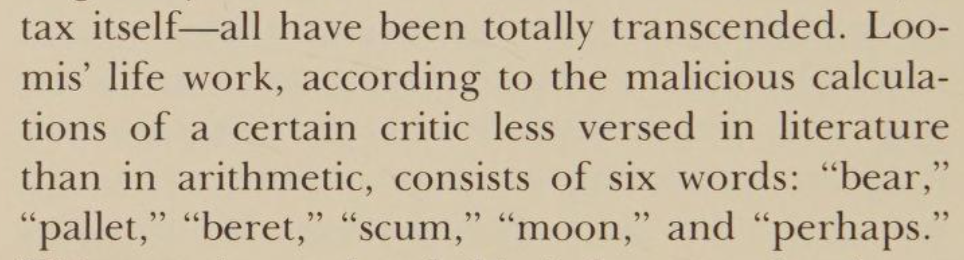 Successfully enumerating the six words of F. J. C. Loomis’ literary oeuvre was just the beginning of a career in university administration for the ‘certain critic’ mentioned by Borges and Bioy-Casares. Institutions around the world gratefully adopted his key insight, that counting is easier than evaluating… in particular, counting how often each faculty member has published, and how often those publications are cited, is a work-reducing substitute for the tiresome task of rating their academic quality.
 Of course the switch to the h-index as the basis of tenure and promotion decisions was an incentive to manipulate and falsify that statistic in the worthy cause of career advancement. Industries of citation-milling as well as paper-milling arose to enrich the fake-science ecosystem. That is to say, the phenomenon of citation payola is a natural corollary of the cold equations of Goodhart’s and Campbell’s Laws.
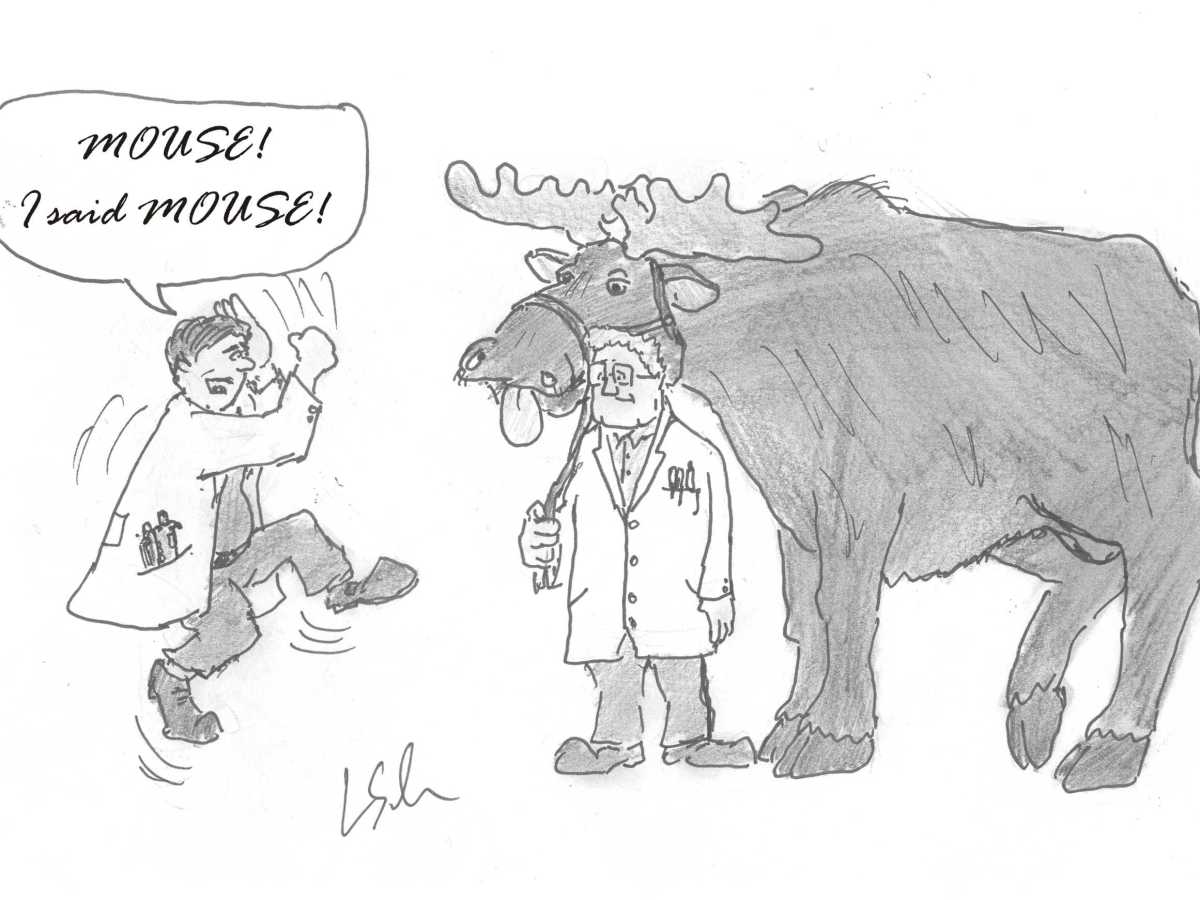
![[Citation not needed]](https://forbetterscience.com/wp-content/uploads/2022/03/mv5bowfkmmy2njytyjdkms00njjklthkyjctmmrintm0n2y1mgvjxkeyxkfqcgdeqxvymtiwodk1ntq40._v1_1.jpg?w=1200&h=900&crop=1)
[Citation not needed]
“Even university management eventually realised that self-citations of your work, in your own papers, shouldn’t really count (“see ‘Toenail Clipping Microphotographs, Part 1’, S, Clyde 2018″). So people progressed to citation cabals among cronies, referring to each other’s work” – Smut Clyde

A South-East Asian termite contributor to a PubPeer comment thread drew the curtain aside to give us a glimpse of how the citation market operates, with a first-hand though anonymous account. It is the ‘pay it forward‘ model of citation abuse.
“step 1: you need to find an agent, who has and manages a pool of papers, you should pay the fee and put your papers in the pool.
step 2: in the future when you have a manuscript, you shall tell the agent about the title and the keywords, the agent would then tell you to cite some papers in the pool, and this is what you see here, these papers are not related to the topic but belong to a more broad topic like “materials science” “catalyst” etc, and it makes sense. The agents are not scholars, they are running a business.
step 3: after you have done this, in the future, your own paper would be cited by the other groups of authors in their papers. Since your papers are in the pool, the agent would request other groups in the pool to cite them as an exchange.
step 4: the agents would give you word that how many citations to your paper would be granted in a specific time frame, for example, in the next year 30 citations.”
Oriensubulitermes inanis on excessive self-citation in Xiong et al 2021
Sahar Zinatloo-Ajabshir , Sobhan Mortazavi-Derazkola , Masoud Salavati-Niasari Sono-synthesis and characterization of Ho2O3 nanostructures via a new precipitation way for photocatalytic degradation improvement of erythrosine International Journal of Hydrogen Energy (2017) doi: 10.1016/j.ijhydene.2017.04.252
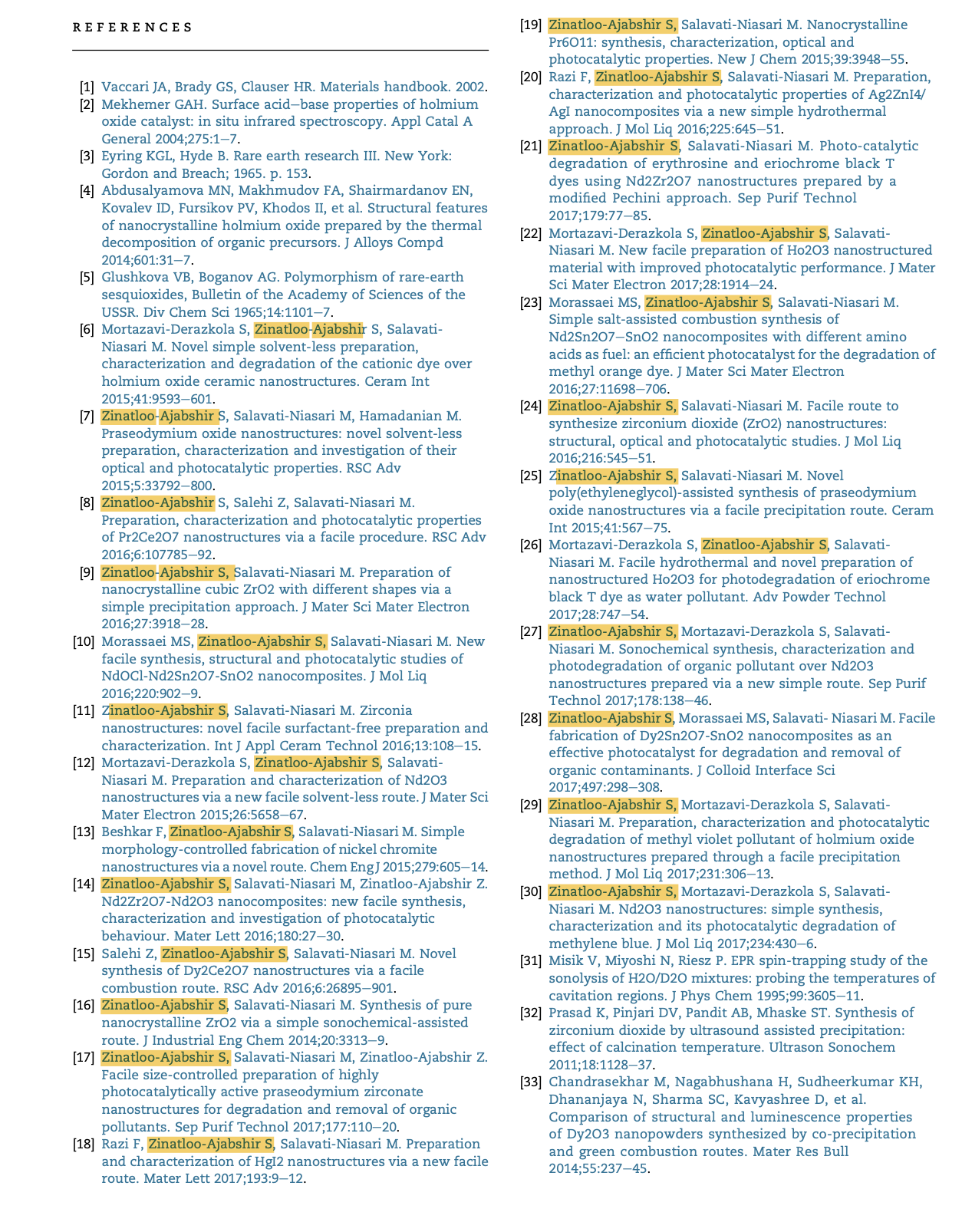
Archasia belfragei “EVERY SINGLE REFERENCE from 7 to 30 was authored by Sahar Zinatloo-Ajabshir“
Crucially, the authors on whom one bestows citations and the authors from whom one receives them are not the same group. This non-reciprocal nature is less conspicuous, at least in the minds of the participants, than a simple citation cartel whose members have agreed to provide mutual assistance by citing one another’s work – the Strangers-on-a-Train model (with excessive self-citation as the trivial limiting case).
In practice a citation database such as Dimensions.ai provides glimpses of the network, inviting one to tug on a single thread to see if the knitted garment begins to unravel. Then the entire wardrobe explosively defabricates itself and buries you under a heaving mound of wool, with the risk of death by suffocation – the fate that met Draco the Lawgiver. So I launched a few forays into the network in the hope of inspiring some adept in the dark arts of parsing API calls (i.e. anyone but me) to automate the whole process.
The proof-of-concept project ran away and a year later, Table A of citation providers has well over 3000 entries, and is not yet fully merged with an earlier version that focused on the 2017-2021 phase of citation payola; while Table B of citation recipients is fast approaching 2000 entries. Both are on-line G**gle sheets if anyone wants to play. Both are only small fractions of the full picture.
The Men Who Stare at Ketotic Cows
“The References dwell on bovine indigestion, seizures, and the work of N. Arunkumar.” – Smut Clyde, jazz-punk Klezmer musician.
By strict pay-it-forward rules, the two tables would be roughly the same size. Each member of Table A, having sown spurious, charitable citations to benefit members of Table B, would reap a harvest of equally unearned citations from the next cohort of providers and would enter Table B in turn. In practice, though, Oriensubulitermes inanis did not have the full story, and only a minority of participants in the citation market show the Janus-faced quality of belonging to both tables. The proposition that a niche of citation brokers exists, opens our eyes to other transaction options. Authors might commission some quota of citations to raise the profile of already-published research without citing others in return: compensating the broker in some other way. Conversely, a papermill assembling manuscripts that clients will sign is not greatly concerned about those customers’ academic statistics, and if the miller takes on a commission to provide citations, he or she will prefer compensation in more conventional currency (the relationship between citation brokers and papermilling is a topic of its own).
That’s it, really. That’s the post. But I have a reputation for exhaustiveness to maintain so (as Milgram said) the experiment post must go on!

A rule-based structure of three pigs
Smut Clyde came to check how the Elsevier journal Microprocessors & Microsystems so far handled its “problems caused by dishonest guest editors and reviewers”.
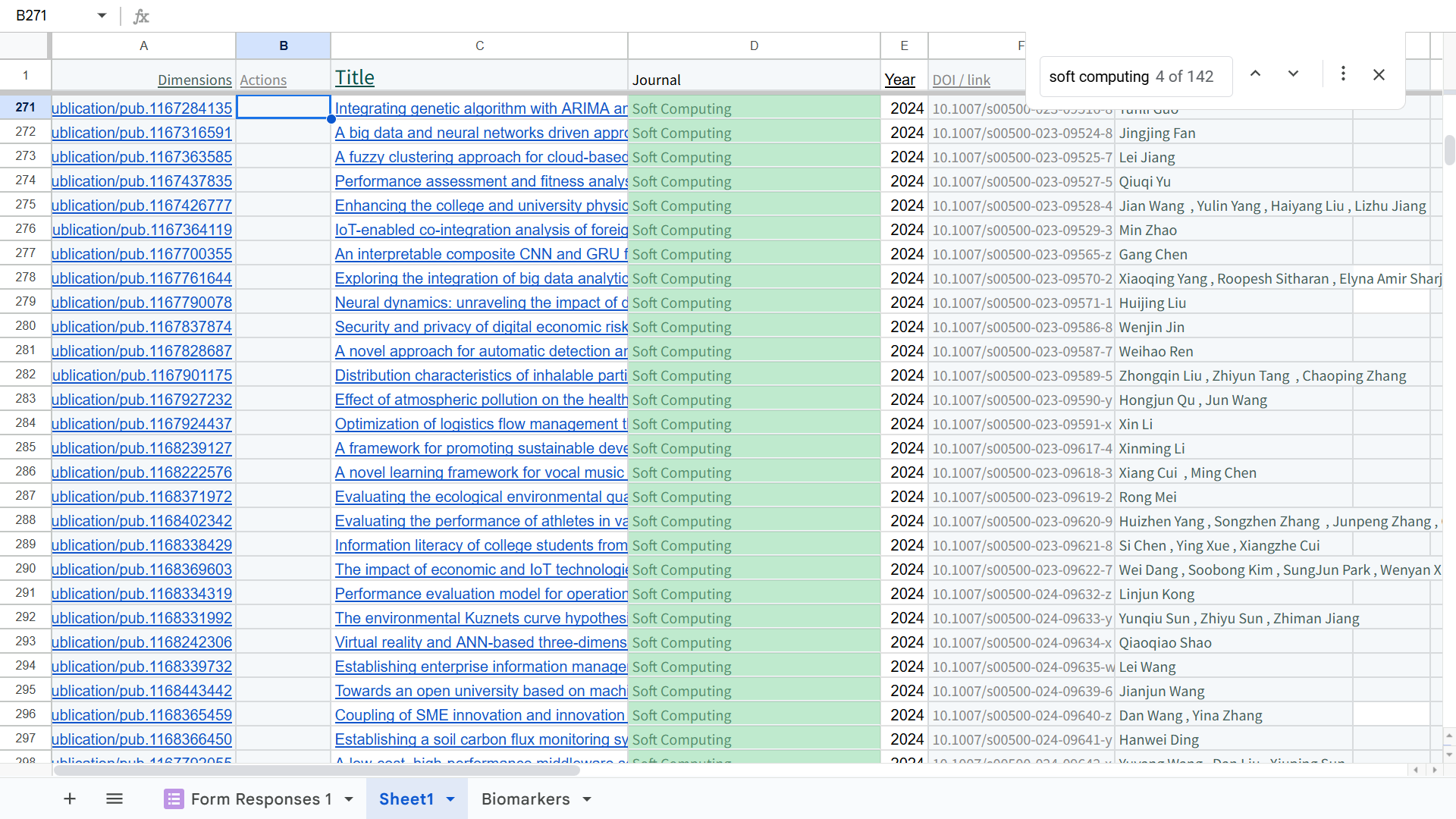
To whet your breath and bate your appetite, or possibly vice versa, we can begin with Soft Computing. This implausible journal with the unprepossessing name (that might well be a homage to Claes Oldenburg or William Burroughs) is unlikely to inspire anyone to pay for a subscription, but libraries end up subscribing anyway as part of the long tail of their bundled deals with Springer. Last year it was a spectacle of crime-scene clean-up as the publisher mass-retracted the crime sprees of guest-edited Special Issues, as if to prove that the journal has standards and that there are manuscripts which somehow fall below them. Yet despite Chris Graf’s “ironclad commitment to ensuring the integrity of our content“, no-one learned a thing… even as Victor the Cleaner was dissolving the bodies in acid retracting papers, papermills were at work… the same ones that had previously destroyed Microprocessors & Microsystems (read here) and Journal of Intelligent & Fuzzy Systems (read elsewhere) and the Hindawi / Wiley stable like parasitoid wasp larvae eating a live caterpillar from within.
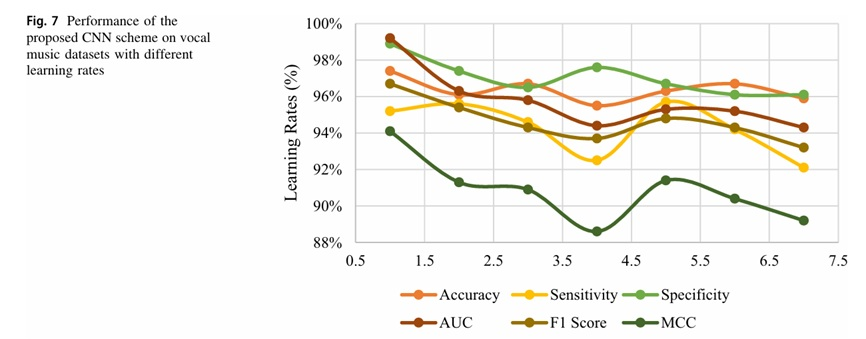
PubPeer stalwart Rhipidura albiventris actually looks at a lot of this nonsense, and copies the Figure-shaped images over to PubPeer (yeoman’s work, or sheer madness? I could not possibly comment). The style is familiar from the Hindawi gobbledegook sandwiches: someone filled the gaps where illustrations should be by choosing random Excel chart options and throwing in a handful of made-up numbers. Sonchus saudensis joined in the game too.
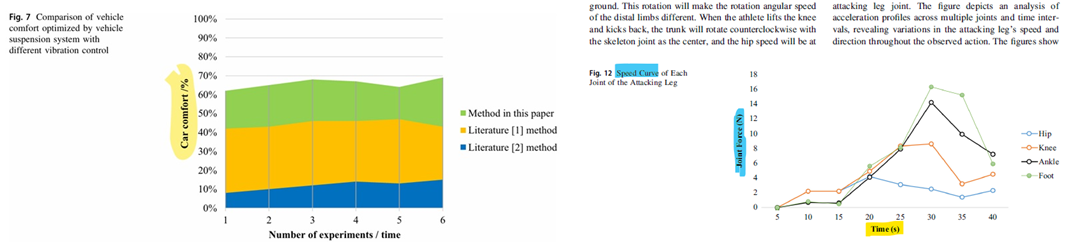
[right]: Application of IoT-enabled computing technology for designing sports technical action characteristic model (Li 2023)
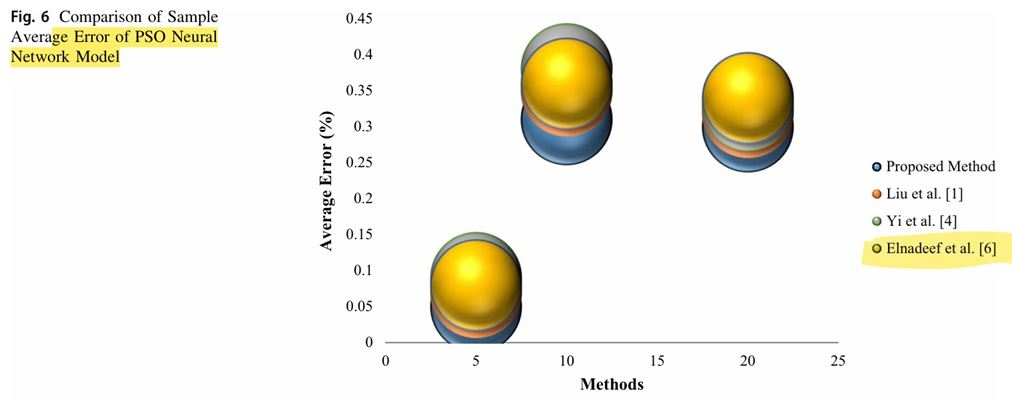
The customers for these assembly-line products are typically not academics or medical clinicians in pursuit of promotion, but polytechnic teachers of PE (or music, art, media studies or whatever) who need to adorn their CVs… hence titles like ‘Designing a training assistant system for badminton using artificial intelligence‘ and ‘Analyzing the rotation trajectory in table tennis using deep learning‘. Competition is tough!
Weihao Ren A novel approach for automatic detection and identification of inappropriate postures and movements of table tennis players Soft Computing (2024) doi: 10.1007/s00500-023-09587-7
What matter here, though, are the citations. The nominal authors of these confections all choose to buttress their different assertions with references drawn from a single narrow gamut, so a familiar constellation of nonsensical titles appears dozens… scores… over a hundred times. It is the sort of coincidence that would not have passed unnoticed had Soft Computing used genuine reviewers or a Board of Editors with any integrity.
‘Distribution characteristics of inhalable particulate pollutants and their effects on cardiopulmonary respiratory system of outdoor football players in a smart healthcare system‘ (Liu et al 2024)
‘Effect of atmospheric pollution on the health of soccer players using generalized additive models’ (Qu & Wang 2024)
‘Optimization of logistics flow management through big data analytics for sustainable development and environmental cycles’ (Li 2024)
To be fair to Soft Computing, although the flow of template-driven fiddle-faddle is a fire-hose torrent (with the papermill using William Burrough’s “cut-up” technique to automate the creative process), it has not taken over the journal’s Tables of Contents completely. There are plenty of people out there writing their own hand-crafted, artisanal floppy-calculation parascience that needs to be published somewhere. But my conclusions are not affected.
Moving right along, I was reading about perovskites – a class of mineral crystal structures that cries out to be misspelled, no relation to ‘blatherskites’ – and learned that lead and aluminium are both room-temperature superconductors:
Feng Zhao, Muhammad Irfan, Ahmad M. Saeedi, Raed H. Althomali, Gideon F. B. Solre, Majed M. Alghamdi, Adel A. El-Zahhar, Sana Ullah Asif, Hesham M. H. Zakaly Transition Metal-induced Stability Enhancement with a Multivalued Optical Response Signature in Ga-based Based Hybrid Perovskite Solar Cells Journal of Inorganic and Organometallic Polymers and Materials (2025) doi: 10.1007/s10904-025-03762-z
“Superconductivity, in which metals like lead and aluminum lose entirely their electrical resistance at temperatures close to zero degrees Celsius, relies on phonons, which are also crucial for thermal and acoustic properties [43–45]”
This delightful paper is a fount of information, and the chatbot tasked with writing its Introduction managed to cover a range of topics from fuel and fireworks through to iron pyrites as a catalyst for pollutants.

Sadly, what is lacking here (as well as focus and coherence) is support for the authors’ assertions… yes, there are citations, but they have no more bearing on their immediate context than they have on the nominal subject of the paper. For the References section is primarily a citation-delivery vehicle, and beneficiaries of the authors’ referential incontinence include many familiar ‘citation magnets’.
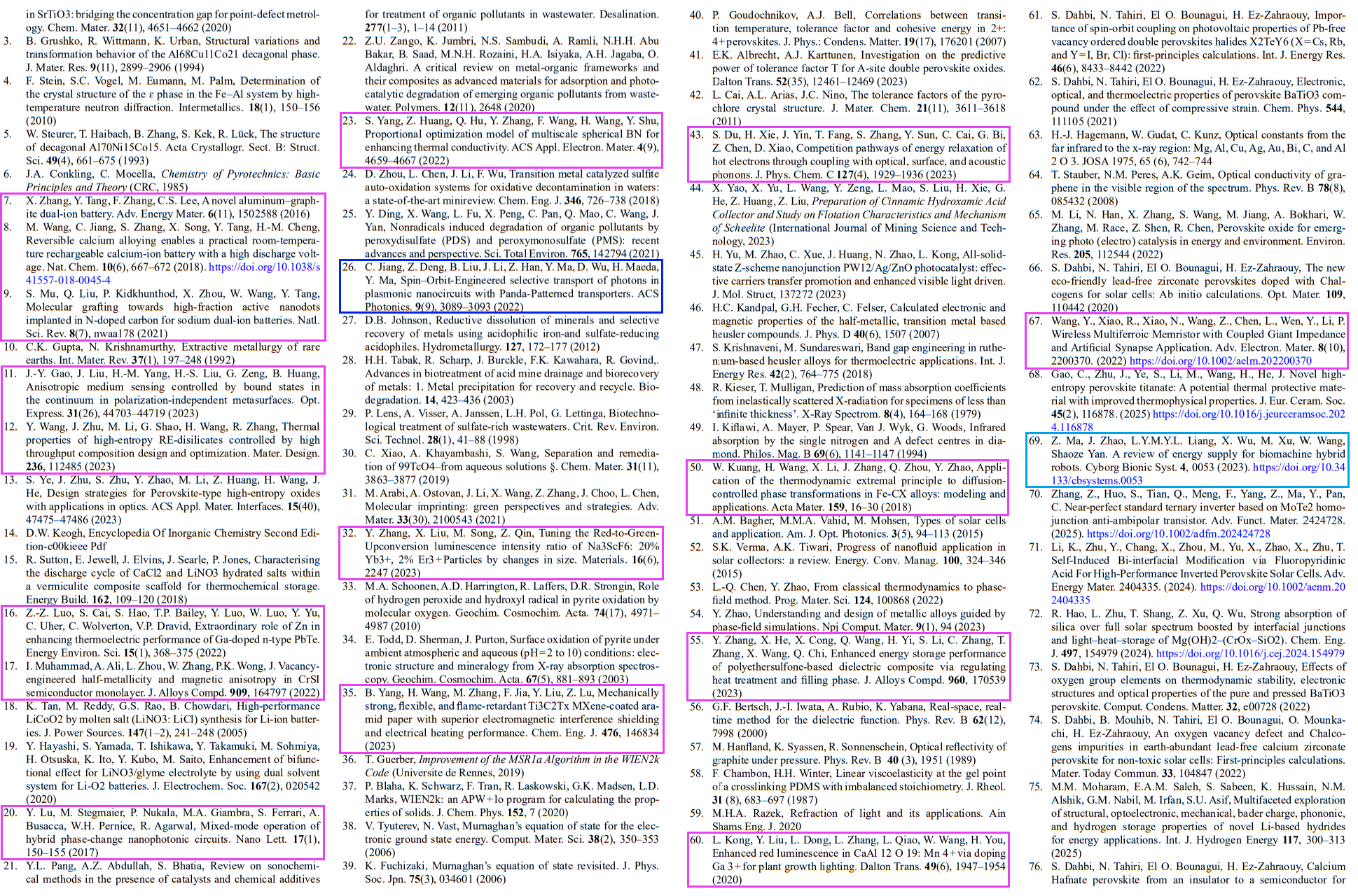

My favourite is #26:
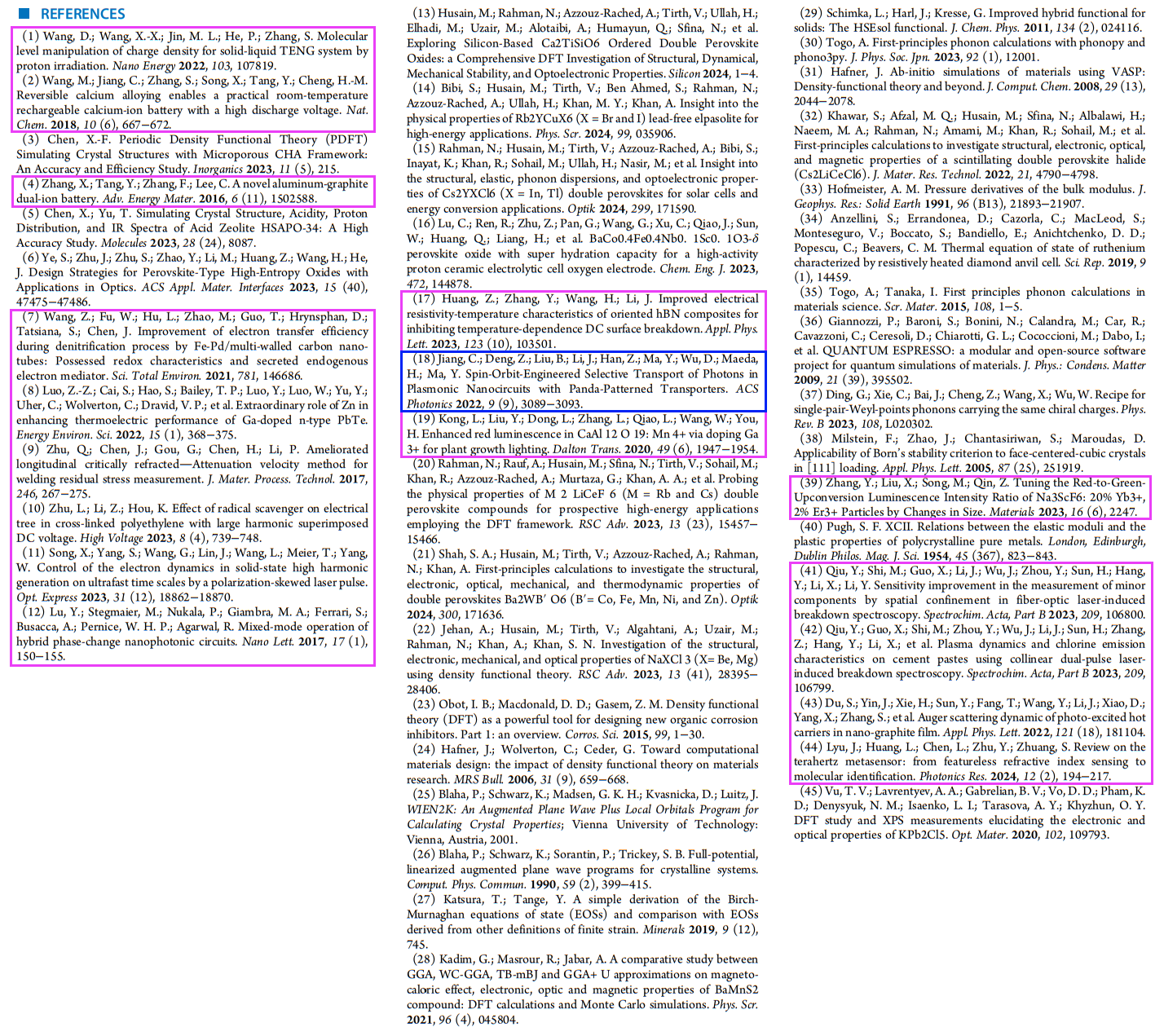
- 26. C. Jiang, Z. Deng, B. Liu, J. Li, Z. Han, Y. Ma, D. Wu, H. Maeda, Y. Ma, Spin–Orbit-Engineered selective transport of photons in plasmonic nanocircuits with Panda-Patterned transporters. ACS Photonics. 9(9), 3089–3093 (2022)
#69 doesn’t count – despite robots – because it isn’t a recurring miscitation. Yet.
- 69. Z. Ma, J. Zhao, L.Y.M.Y.L. Liang, X. Wu, M. Xu, W. Wang, Shaoze Yan. A review of energy supply for biomachine hybrid robots. Cyborg Bionic Syst. 4, 0053 (2023). https://doi.org/10.34133/cbsystems.0053
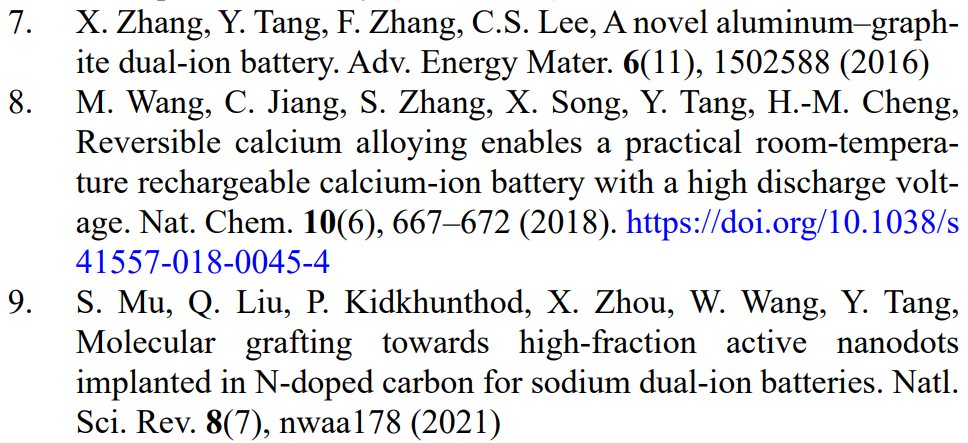 Refs #7 to #9 also reward our attention. The beneficiary is one Yongbing Tang (RG profile), elevated to the Chinese Academy of Sciences for his breakthroughs in battery electrochemistry, undisputed maestro of the citation orchestra (more celebrated even then Changhe Li or Yu-Ming Chu). So far Tang has 17 papers represented in Table B for receiving multiple, inexplicable, charitable citations. The three best-sellers (from 2017, 2018, 2016) have been cited so far 571, 1503, and 1713 times, unassisted by relevance or seminal status or a software glitch in the style of The Vickers Curse – their citation magnetism is the strongest on record.
The Vickers Curse: secret revealed!
How did an editorial about insect pheromone communication get to receive 1200 irrelevant citations, almost all from papermills? Alexander Magazinov reveals The Secret of The Vickers Curse!

Setting aside that digression, another instantiation of the Perkovskite template appeared in Results in Physics. The citation magnets adorning the References are not the same as in the first list, but there are overlaps – notably the panda-patterned transporter again, and two of Yongbing Tang’s payola beneficiaries.
Amina , Muhammad Uzair , Amir Sohail Khan , A.M. Quraishi , Albandary Almahri , Mukhlisa Soliyeva , Vineet Tirth , Ali Algahtani , Abdullah , Rawaa M. Mohammed , Mahidur R. Sarker , N.M.A. Hadia , Abid Zaman Study of structural, electronic, optical and mechanical properties of K2ScCuF6 and K2YCuF6 perovskites via DFT calculations Results in Physics (2024) doi: 10.1016/j.rinp.2024.107845
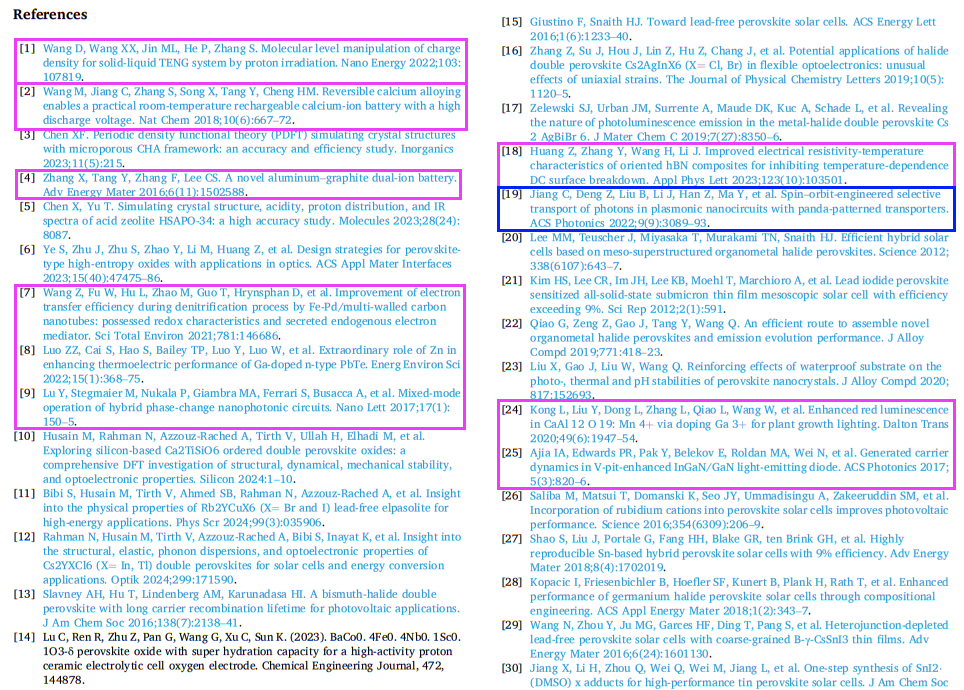
It might be that two research groups independently contracted with a citation broker to promote absurdities from a single pool (or decided to shoehorn them into their text), so the names at the top of these two papers are the actual as well as the ostensible authors; or alternatively, they bought from the same papermill.
 Papermillers emerge from or gravitate to fields where subtle variations on a theme extend to infinity in all directions, and where there is no danger of uncouth Reality intruding on one’s beautiful speculations (because software simulations do the hard work): fields like hypersonic flow in scramjets, or small-molecule / nanostructure bonding, or bestiary-themed optimisation algorithms. Or theoretical perovskite crystallography. Which is why there are now 46 entries in Table A about ‘perovskite’, all farming citations as another income stream, all avoiding the tedium and expense of experiments by calculating the predicted properties of hypothetical, unsynthesised structures, with words in the title like “First principles” or “Ab inito” or “Density Functional Theory“. It helps, too, that there is money in researching perovskites, in the hope of better solar panels.
Bottom of the barrel: BatDolphin-based sparse fuzzy algorithm
“BatDolphin-based sparse fuzzy algorithm, cat swarm optimization, honey bees optimization, moth amalgamated elephant herding optimization, fitness sorted moth search algorithm, improved tunicate swarm optimization, lion algorithm, deer hunting optimization, various rider optimization schemes, grey wolf optimization, cuckoo search, and finally a bat algorithm. Such a zoo of names immediately raises suspicion, and for a good…

The worst-afflicted journals are
- Optical and Quantum Electronics (Springer, four papermill perovskites).
- Physica Scripta (IOP, four products).
- Journal of Physics and Chemistry of Solids (Elsevier, four products).
- Journal of Materials Science: Materials in Electronics (Springer, three products).
- Inorganic Chemistry Communications (Elsevier, three products).
That count of 46 omits papers where the word ‘perovskite’ was left out of the title. For instance this – different authors; same millers, same citation payola:
Saima Ahmad Shah , Mudasser Husain , Nasir Rahman , Nourreddine Sfina , Muawya Elhadi , Vineet Tirth , Afraa Alotaibi , Aurangzeb Khan Revealing the Structural, Elastic, Electronic, and Optical Properties of K2ScCuCl6 and K2YCuCl6: An In-Depth Exploration Using Density Functional Theory ACS Omega (2024) doi: 10.1021/acsomega.4c01923
À propos Inorg.Chem.Comms., and à propos “small-molecule / nanostructure bonding”, much could be said about that journal’s rigour and regard for integrity but I do not want to pre-empt any blogpost that people might be writing about it. So far it is represented in Table A by 56 entries. Here I single out a disinformative grotesque that took advantage of Elsevier‘s pandemic-urgency fast-track-publication pipeline to educate us in the second paragraph that “Clinical research has shown that chloroquine has significant effectiveness for in vitro COVID-19 control [5]“. One hopes that the editors are proud of publishing it:
Khalid M. Alharthy , Marwa Fadhil Alsaffar , Hassan N. Althurwi , Faisal F. Albaqami , Russul Reidh Abass , Aisha Majid Alawi , Sarah Salah Jalal , Shazia Tabassum , Hao Zhang , Wang Peng Boron nitride nanocage as drug delivery systems for chloroquine, as an effective drug for treatment of coronavirus disease: A DFT study Inorganic Chemistry Communications (2023) doi: 10.1016/j.inoche.2023.110482
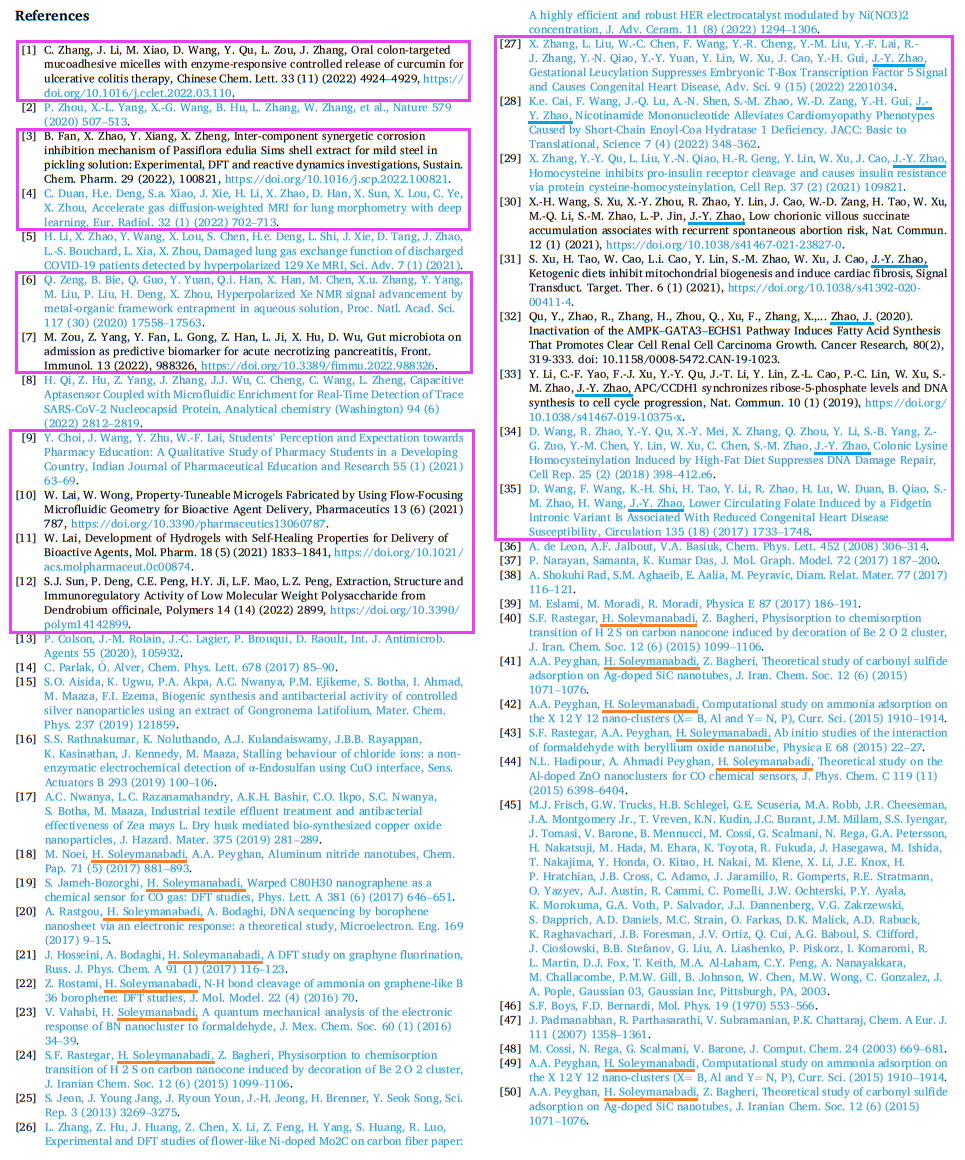
Evidently a geas had been laid upon the authors, enjoining them to cite as many works of Hamed Soleymanabadi as possible (often misattributing them in the text so that any resemblance between References and the in-text citations is coincidental). But the primary role of the References remained to serve the needs of familiar citation magnets, notably ones with a Jian-Yuan Zhao as author.
Setting aside that digression in turn, please admire another area of papermill productivity, where Soliton Solutions abound. ‘Solitons‘ are (as any fule kno) isolated, non-dispersing, stable waves in some medium (solid, fluid, plasma or the Luminiferous Æther). The recipe for generating manuscripts for sale is simple: choose the differential equation that defines how the medium behaves (i.e. how perturbations propagate in time and space), then find a new family of wave-forms that obey that equation while also fitting the ‘soliton’ criteria. Adorn with garish rainbow-hued graphics, inject a quota of citations, sign with the buyer’s name, and send to a reliably complaisant journal like Springer’s Optical & Quantum Electronics or Elsevier’s Results in Physics.
Don’t worry about getting the terminology right. A special class of soliton are distinguished by a singularity or cusp, and thus called ‘Cuspons’; here some bumblefuck engarbled that into “cupson” (16 times!), but the paper was accepted anyway, because Scientific Reports:
Yuanyuan Liu , Jalil Manafian , Gurpreet Singh, Naief Alabed Alkader , Kottakkaran Sooppy Nisar Analytical investigations of propagation of ultra-broad nonparaxial pulses in a birefringent optical waveguide by three computational ideas Scientific Reports (2024) doi: 10.1038/s41598-024-56719-6
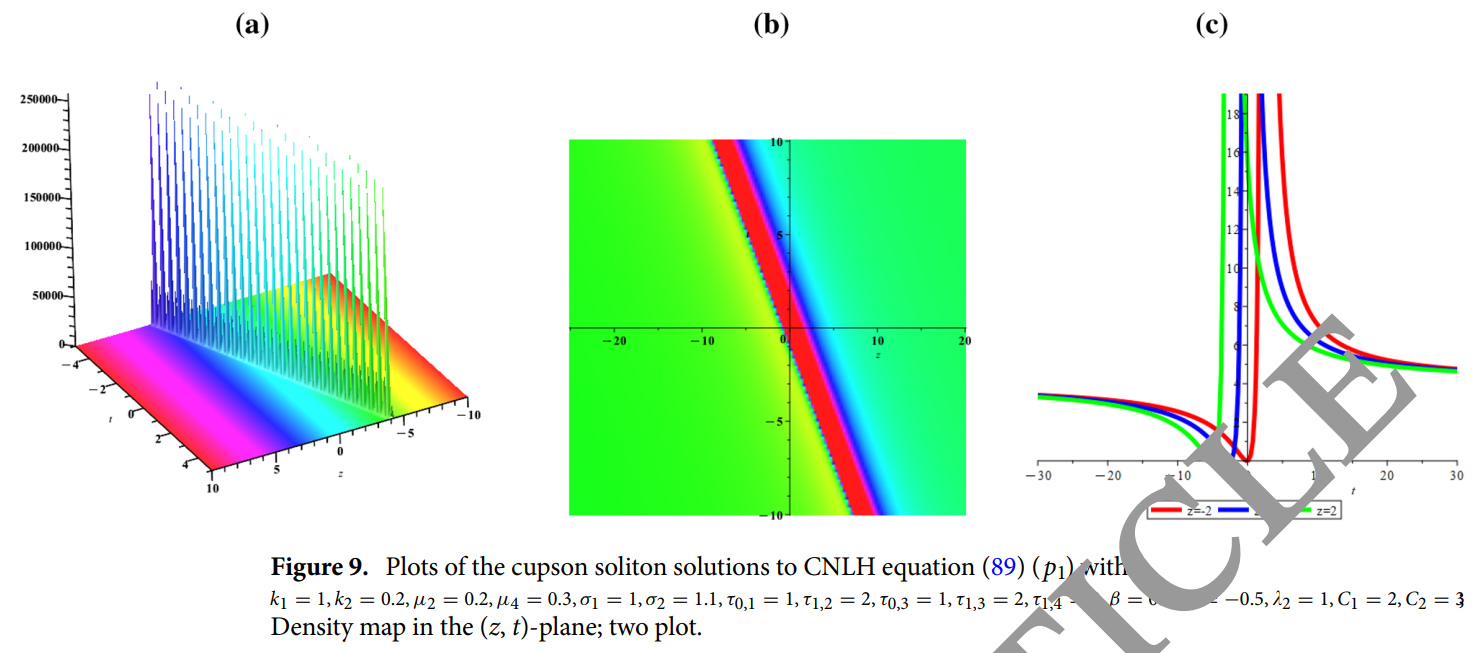
It was retracted in January 2025 though not because of ‘cupson’, or all the citation spam, but because the editors were belatedly nagged into consulting actual peer-reviewers, who found the maths to be broken.

Each sub-genre of fiction has its own literary conventions and traditions. In the Soliton literature it is an accepted convention that if you say it’s lingerie a method of solution then it is. Any paper can be transformed into a technique for solving Partial Differential Equations, simply by excerpting a few words from the title and appending them with “method”, which creates a pretext to cite it. Allowing Liu et al to invent the “single-lap adhesive joints method“.
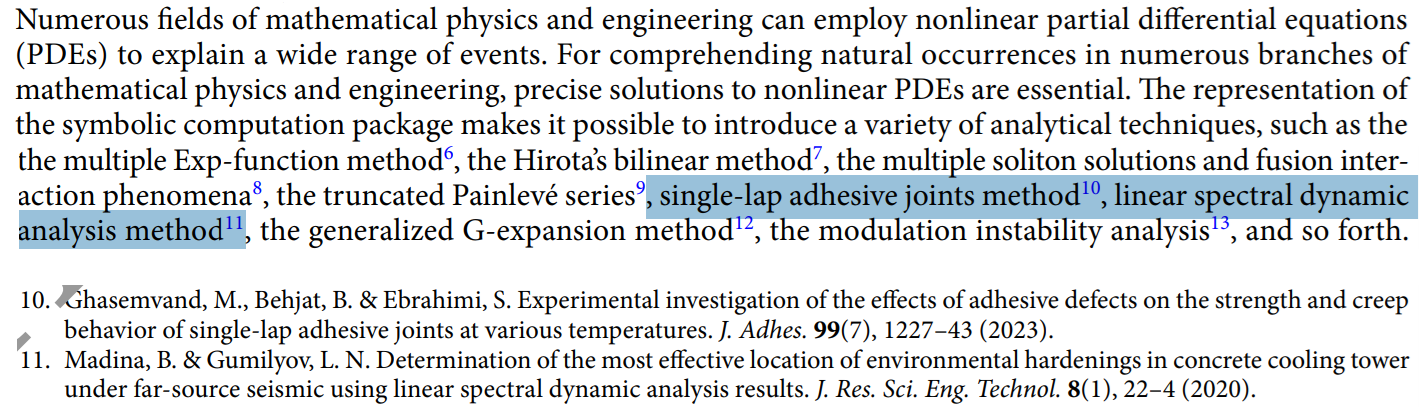
A longer omnium-gatherum of “analytical methods” in the same paper winds down in tones of faint despair when the authors can no longer pretend that there is any coherence or common element to the list of papers that the citation broker asked them to include (other than a shared desire for citations), and they resort to a hopeless “et cetera”. Many items in the core-dump should be familiar.
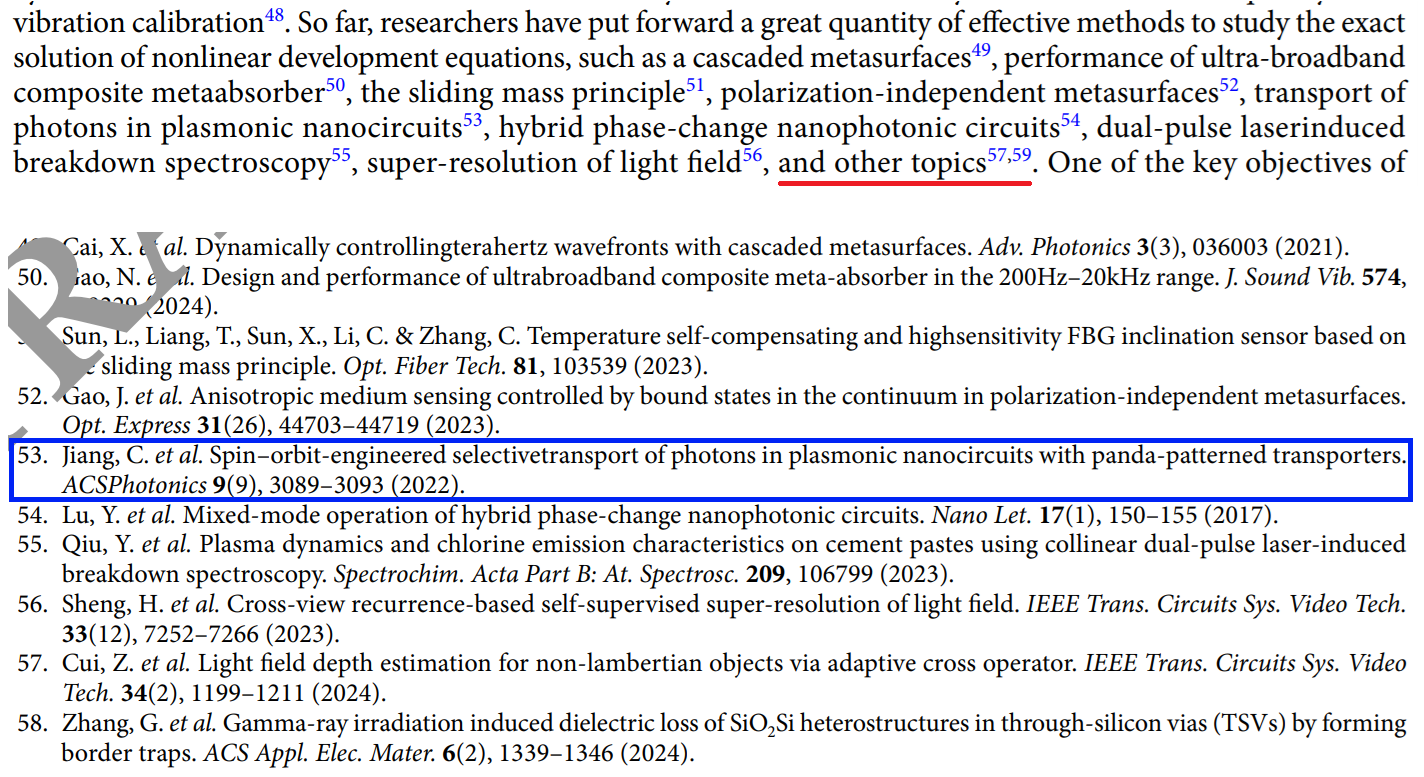
By the same token, anything can be included in a sprawling pantechnicon of soliton examples (before citing it) simply by calling it so. Yes, Yongbing Tang is a beneficiary again; his battery-breakthrough empire numbers ‘Soliton Solutions’ among the provinces that pay him citational tribute.
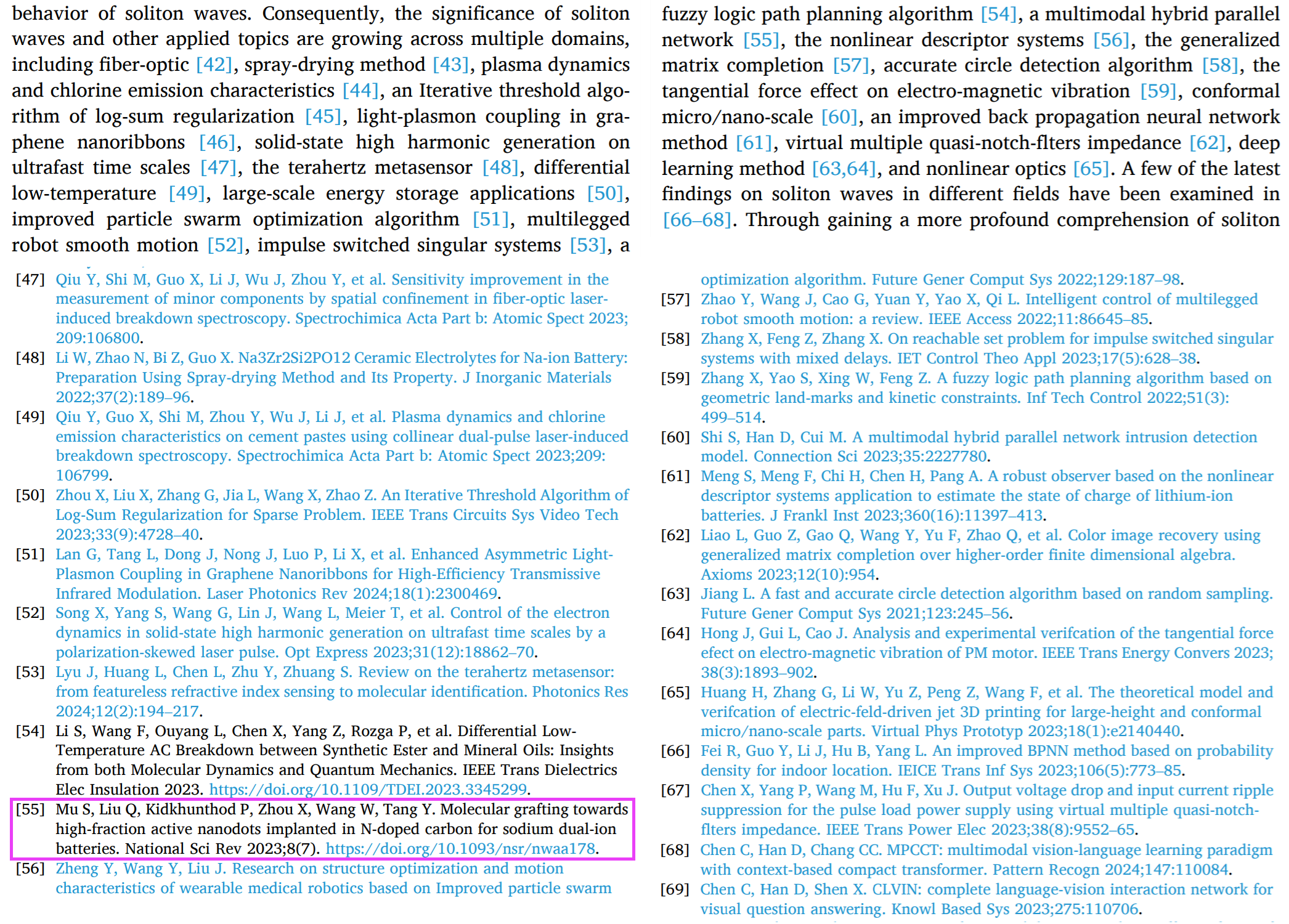
A certain Jalil Manafian (PubPeer record) is key author of many soliton citation-delivery vehicles (each time with a different troupe of coauthors), but this isn’t always the case, leaving room to speculate whether he’s a papermiller or just a frequent papermill customer. At any rate, he joined a number of PubPeer comment threads to defend the relevance of the references – so credit for being a good sport!
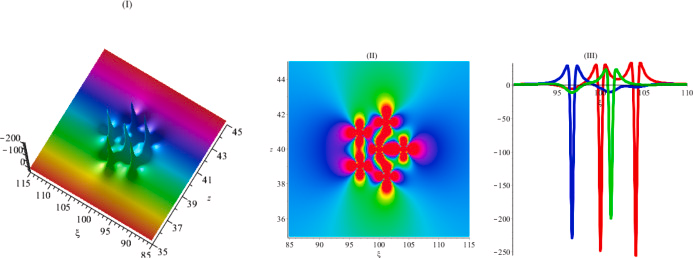 One more citational lolly-scramble with more full-spectrum garish graphics to give you tequila-hangover flashbacks. Some of the titles are misspelled as a result of copy-pasting from a document that contained ligatures, turning ‘fl’ and ‘ffi’ into ‘f’.
Shuya Guo , Defeng Kong , Jalil Manafian, Khaled H. Mahmoud , A.S.A. Alsubaie, Neha Kumari , Rohit Sharma , Nafis Ahmad Modulational stability and multiple rogue wave solutions for a generalized (3+1)-D nonlinear wave equation in fluid with gas bubbles Alexandria Engineering Journal (2024) doi: 10.1016/j.aej.2024.06.053
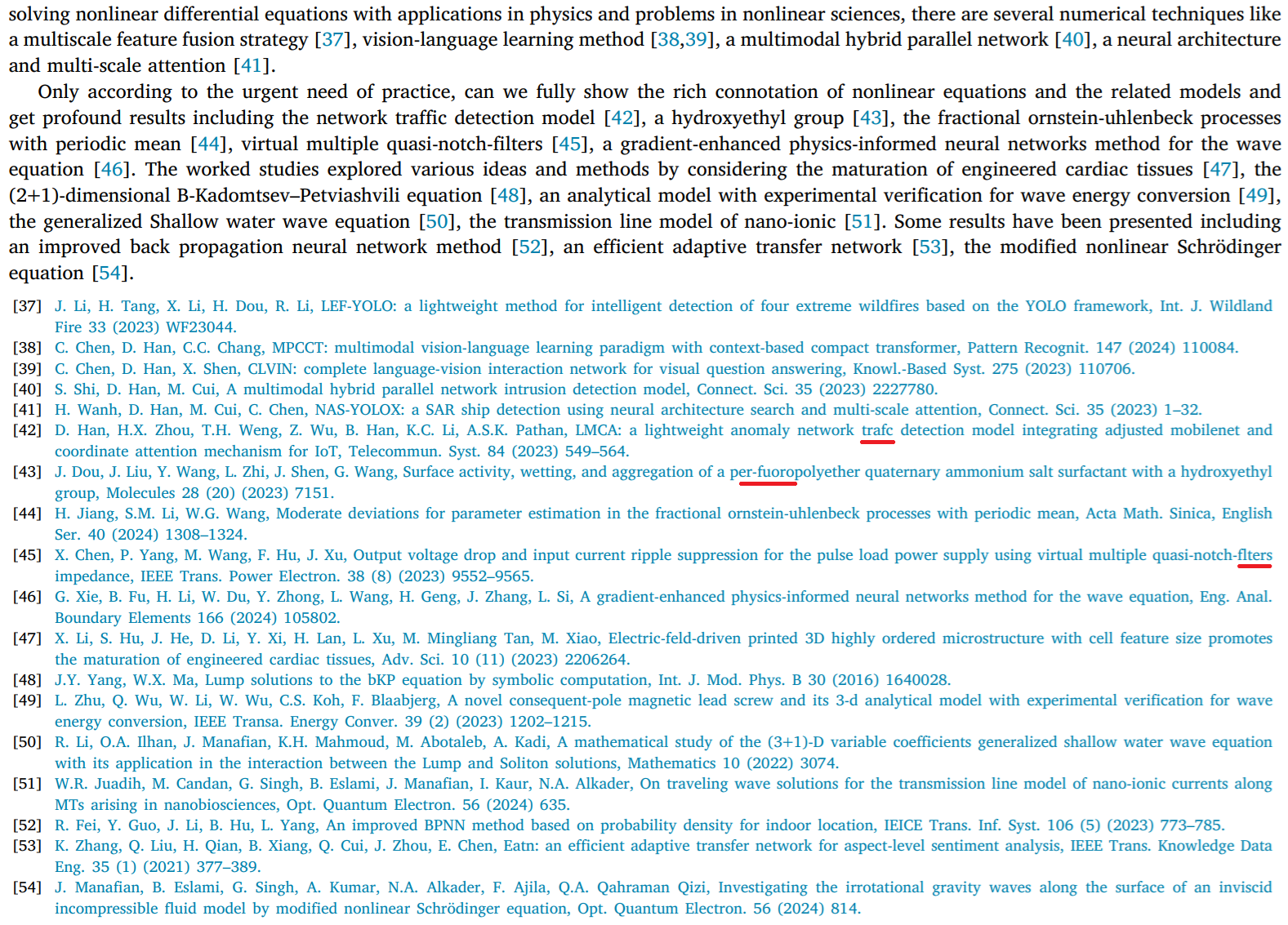
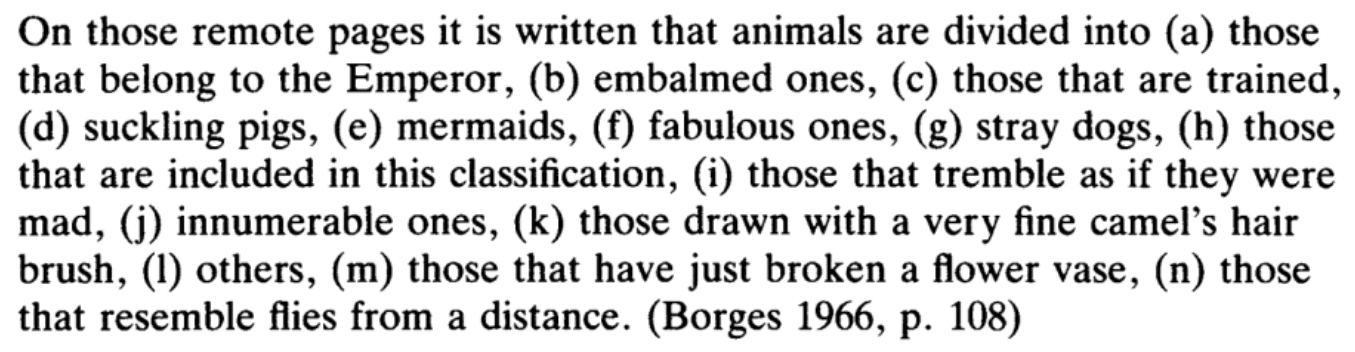 I am open to the possibility that the absence of structure or system in Manafian’s compendia of citation magnets is because they are meant as a homage to J. L. Borges’ Celestial Emporium of Benevolent Knowledge.
In a similar approach to packaging a citation payload, the assorted references commissioned by the citation broker are fed to a chatbot to rewrite each title (or every second or third title) as brief summaries which are strung together without explanation or concern for coherence, with the incoherent, nonsensical farrago becoming a ‘Related Works’ section. This relies on the peer reviewers not wondering “How are these papers related??” But hey, Scientific Reports. This was Included in ‘Cancer Top 100 of 2023‘:
M. G. Dinesh , Nebojsa Bacanin, S. S. Askar , Mohamed Abouhawwash Diagnostic ability of deep learning in detection of pancreatic tumour Scientific Reports (2023) doi: 10.1038/s41598-023-36886-8
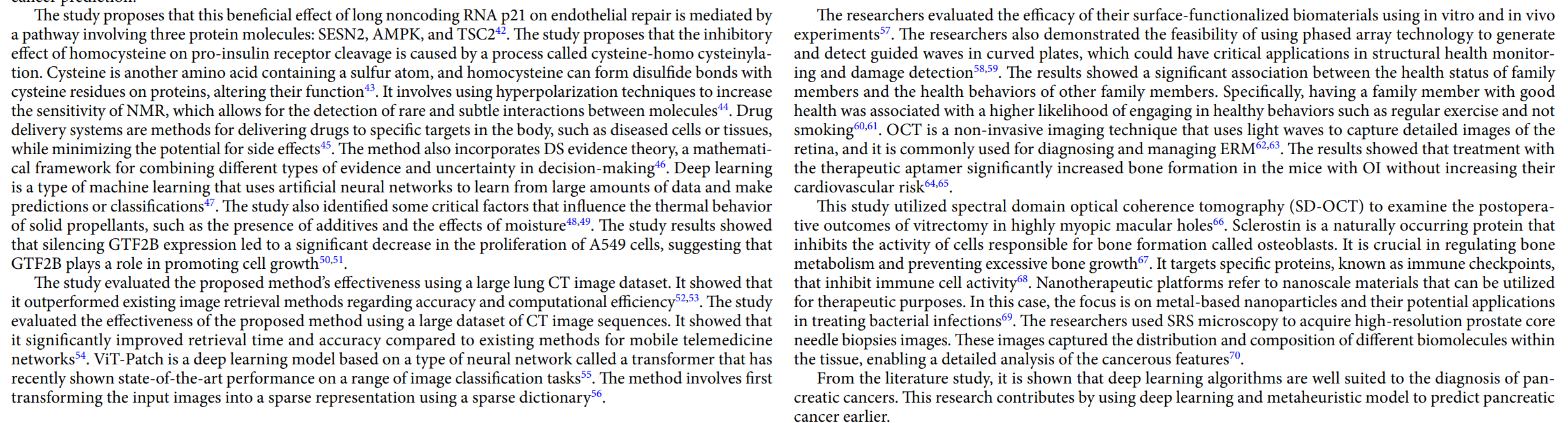
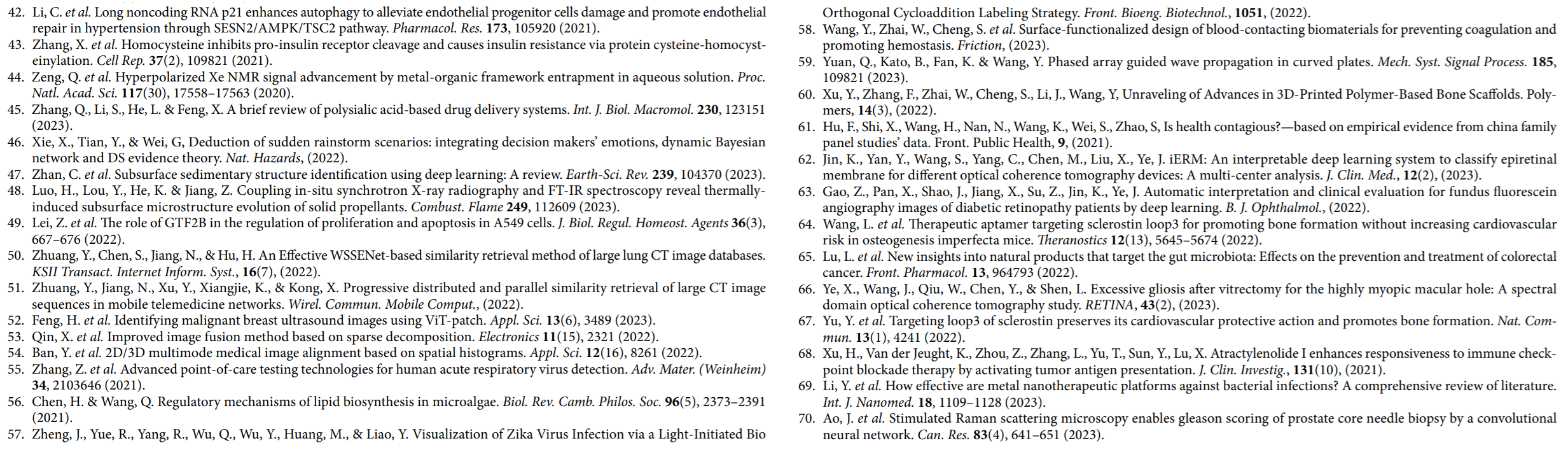
Among coauthors is some Nebojsa Bacanin Dzakula, Vice-rector for Scientific Research at Singidunum University in Belgrade, Serbia. His oncology study also delivers a citation for Zhihan Lv, who is well-represented in Table B! Drink!
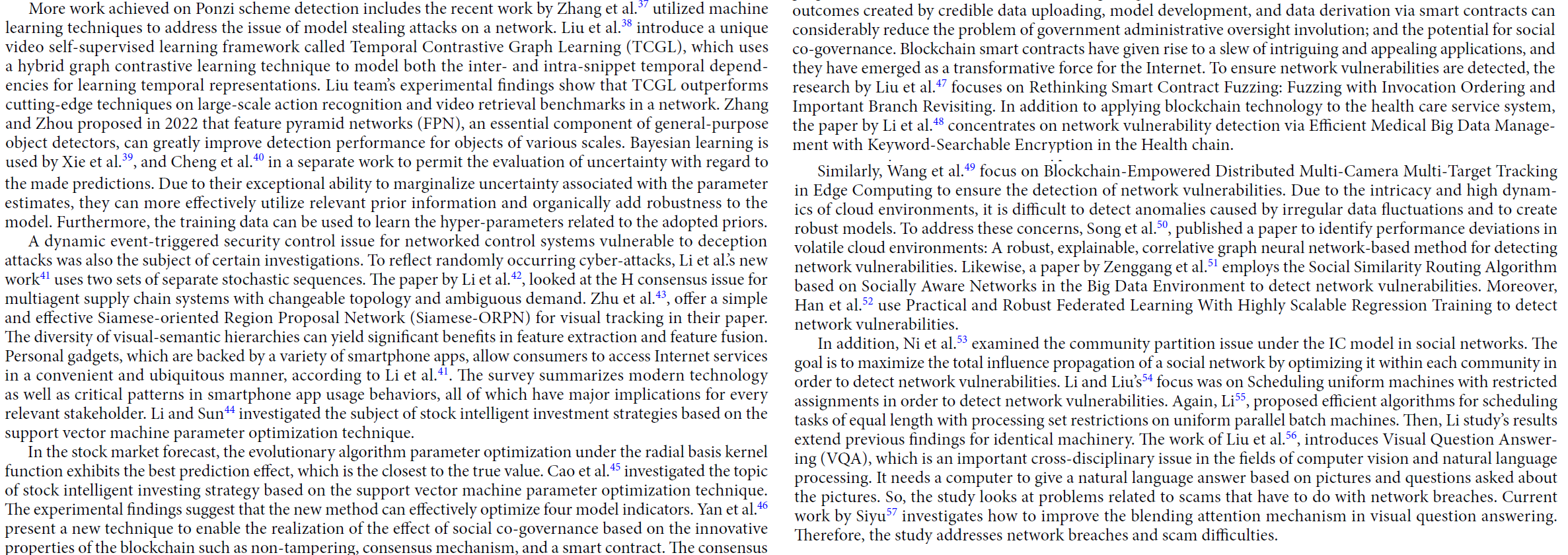
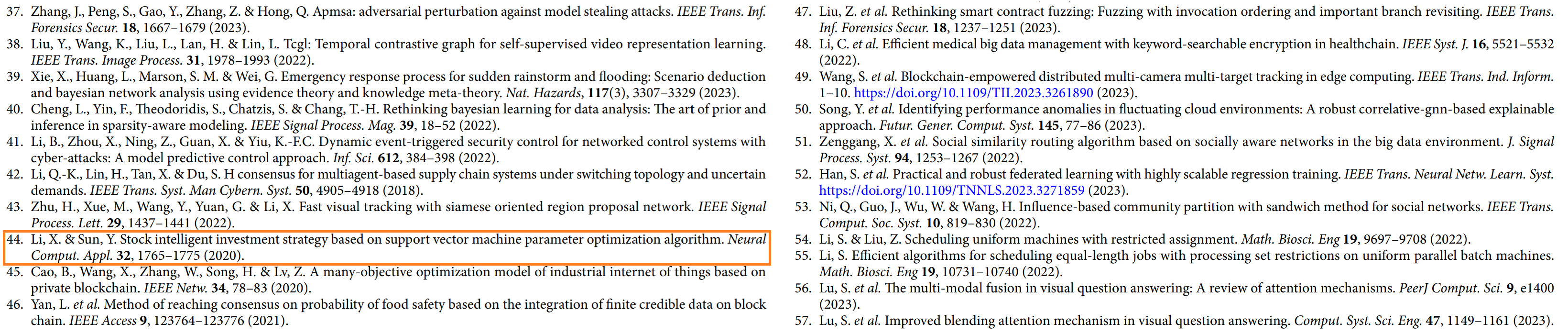
“Current work by Siyu57 investigates how to improve the blending attention mechanism in visual question answering. Therefore, the study addresses network breaches and scam difficulties”
[Narrator: It obviously doesn’t].
Absolutely no-one is surprised by the endorsement of this citational style by IEEE Access, for the IEEE is decadent and depraved [Thompson 1970]. Two citations for Zhihan Lv! Drink! And read this:
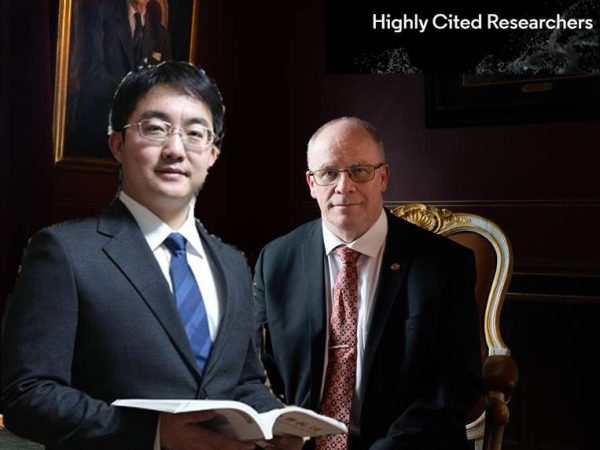
“They happened before I joined Uppsala University”
“There are therefore grounds for suspecting that there have been such serious deviations from good research practice that the matter should be referred to the National Board for Assessment of Research Misconduct for further investigation.”

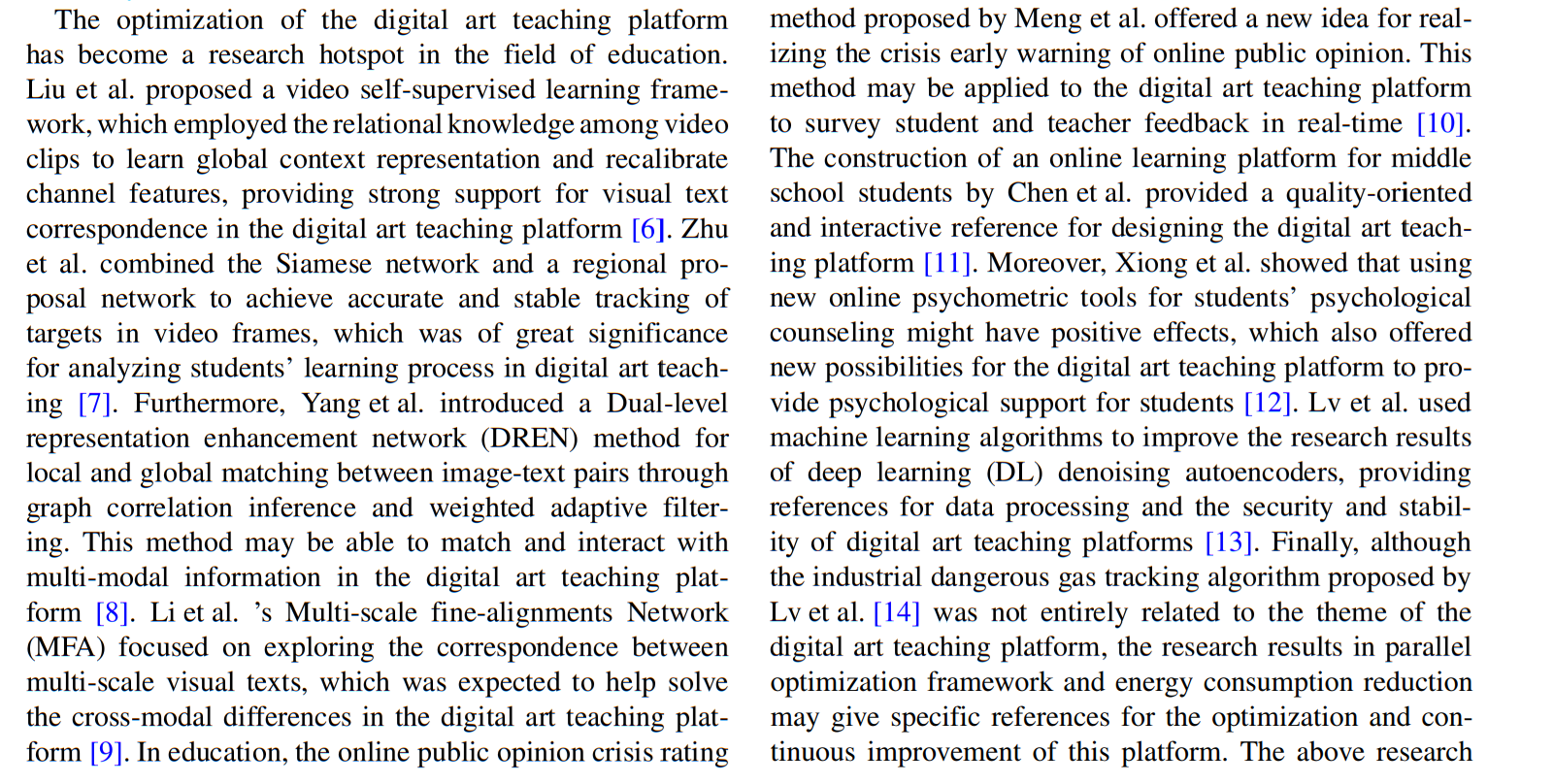
“Finally, although the industrial dangerous gas tracking algorithm proposed by Lv et al. [14] was not entirely related to the theme of the digital art teaching platform, the research results in parallel optimization framework and energy consumption reduction may give specific references for the optimization and continuous improvement of this platform.”
 Liu & Ko compared a Group 1 and a Group 2 in detail, but the figure- and table-shaped images are nonsensical, speculative imaginations of what results might look like if any research had been conducted. No-one at IEEE Access wondered what the groups were, or what data was involved.
Yiying Liu , Young Chun Ko The Optimization of Digital Art Teaching Platform Based on Information Technology and Deep Learning IEEE Access (2023) doi: 10.1109/access.2023.3318120
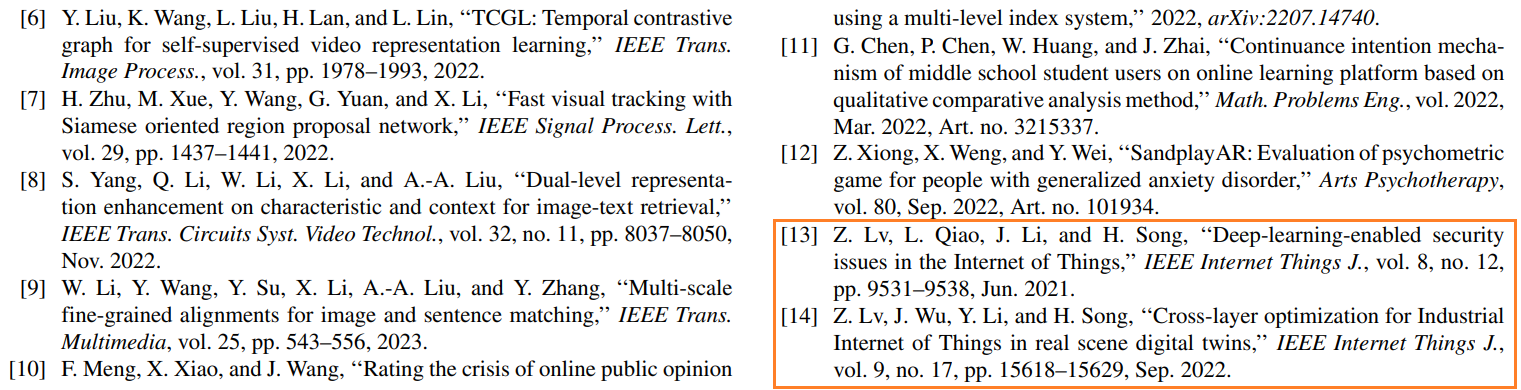
That is another digression, though. This is not the place for a “taxonomy of styles of citation insertion” – which would include
- The ‘Circus‘ style. Scores of transactional citations are packed into a single parenthesis and spill out from it like clowns emerging from a clown-car. As seen up above with Sahar Zinatloo-Ajabshir et al (2017): “Many attempts have been put on the shape and size-controlled fabrication of materials [7-30].”
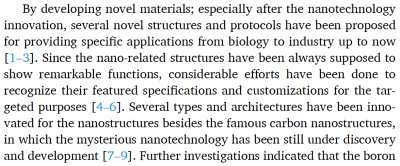 The “Wardrobe“. A row of vapid, vacant truisms contribute nothing to the text and serve no purpose except as coat-hangers for two or three citations suspended from each. For instance: ‘Explorations of structural and electronic features of an enhanced iron-doped boron nitride nanocage for adsorbing/sensing functions of the hydroxyurea anticancer drug delivery under density functional theory calculations’ (Saadh et al 2023). The longer the title, the better the paper!
- The ‘Little Toot the Tugboat‘ style occupies a middle ground between clown-cars and wardrobes. Each sentence is a titular tugboat, blowing its little whistle as it guides a veritable supertanker of citations safely into harbour.
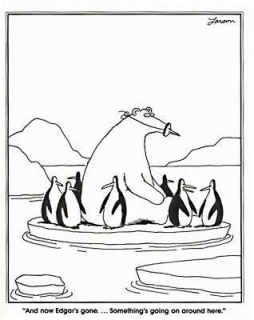 The ‘Human shield‘. In a cluster of citations, the first few and perhaps the last are valid (or at least defensible) but we know they’re only there as protective camouflage for the fare-paying passengers sheltering in their shadow.
- We have already met the ‘Lingerie‘ style – “If you say it’s relevant, it is.”
- The ‘Wedding at Cana‘, which ‘saves the best vintage until last’. The payload is delivered as a closing paragraph, presenting a gallimaufry of citations as potential future directions that would benefit (in unexplained ways) from the authors’ analysis. This style is popular in the optimisation literature.
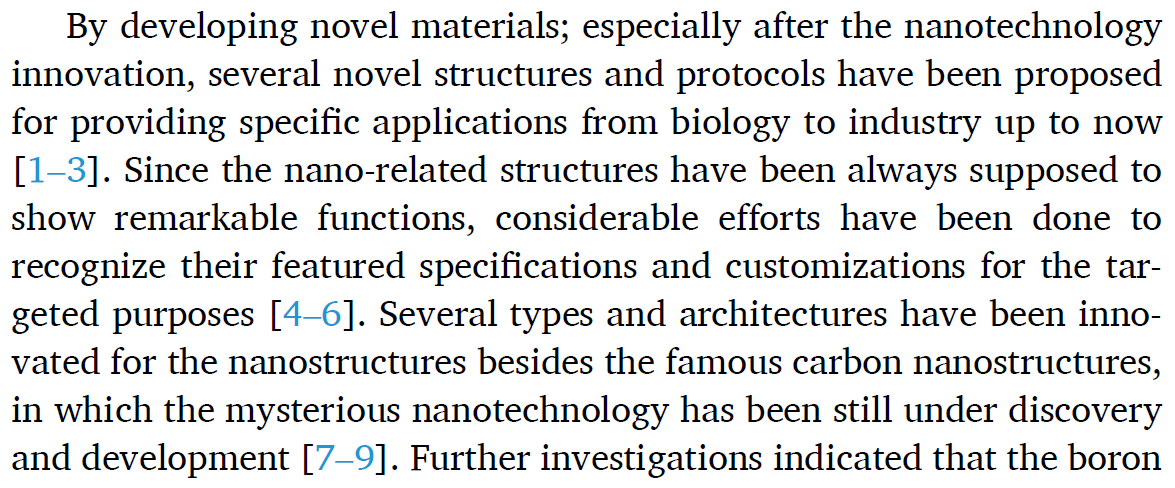
Such a taxonomy would swiftly develop into another homage to J. L. Borges.
 What this is the place for, is a fourth case-study! It will return us to the hallowed pages of Environmental Science & Pollution Research (ESPR) – the subject of gentle correction from Alexander Magazinov, followed by an extinction event and an accompanying Stalinist purge of the upper editorial echelons when the publisher staged an intervention. But the toxic-waste clean-up has hardly begun and many retraction candidates remain.
The route to the details takes us past Wenfeng Zheng (GS profile) and Lirong Yin (GS profile), of (respectively) the University of Electronic Science and Technology of China and Louisiana State University in USA, collaborators on scores of Highly Cited Papers. The range of research interests shown in their G**gle Scholar entries is impressively wide, but it hardly prepares one for the ecumenical diversity of their papers. There is medical imaging, text analysis, sentiment analysis of Twitter traffic, robotics, remote sensing, e-commerce, network models of semantic and visual reasoning…
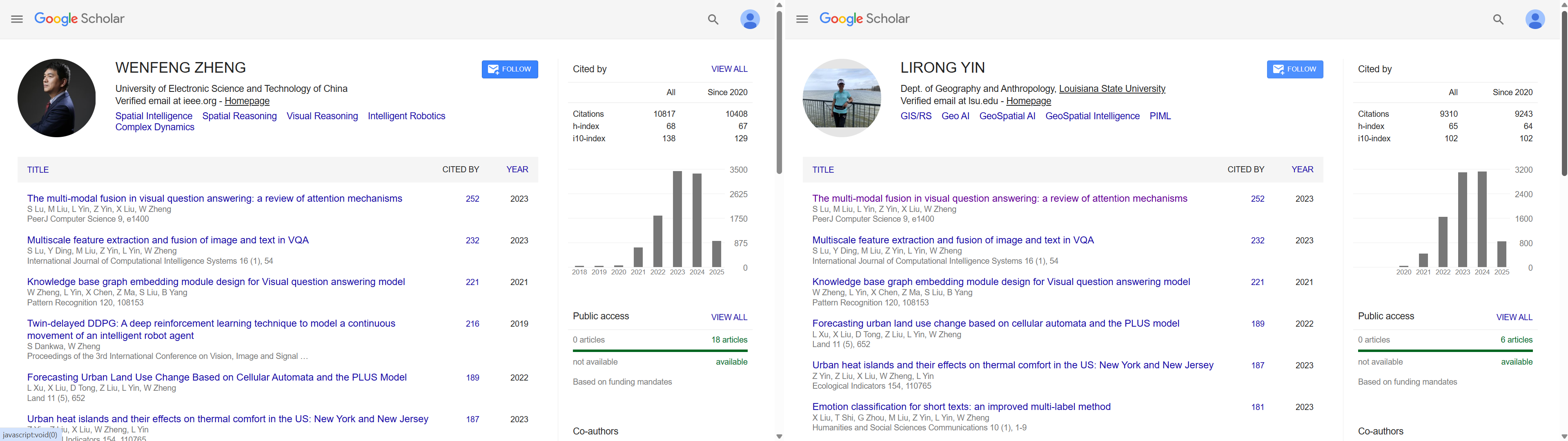
And over 70 papers (so far) found their way into Table B.
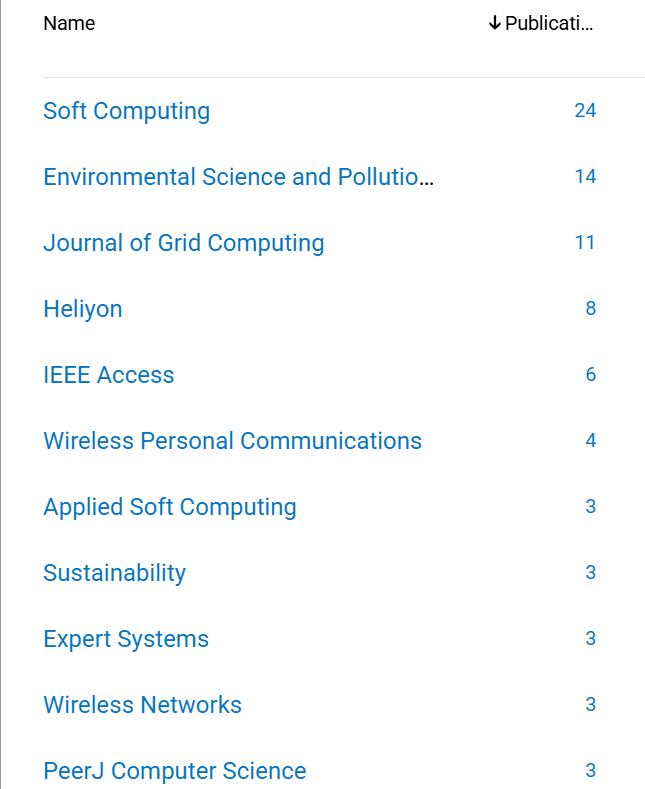 The range of journals responsible for those papers in Table A that bestowed citations upon Yin and Zheng is not so diverse. Consider, by way of example, ‘Developing Multi-Labelled Corpus of Twitter Short Texts: A Semi-Automatic Method‘ (Liu et al 2023). Dimensions.ai gives a helpful breakdown. Soft Computing is at the top (see also the examples above). And there is a long tail of equally-familiar journals – Wireless Personal Communications, Applied Soft Computing, Wireless Networks, Journal of Grid Computing, Multimedia Tools & Applications, Neural Computing & Applications, Journal of Cloud Computing – all competing to publish the parascholarly stream of paper-shaped paradigm-change bundles of buzzwords. But also ERPS, where (as Alexander Magazinov noted last year) automated sentiment / corpus analysis of Twits is not such a natural fit.

Environmental Pseudoscience and Polluted Research
“We are living in a faked world and there is a lot of un-verified avatars. “, Philippe Garrigues, EiC
On the subject of Wireless Personal Comms. (Environmental Research & Pollution Science can wait for a moment!) there was a crime-scene clean-up in December 2022 for the usual reasons: “An investigation concluded that the editorial process of this guest-edited issue was compromised by a third party and that the peer review process has been manipulated“.  But the only policy change was to rebrand ‘special issues’ as ‘Collections’, the Welcome mat is still out for papermillers and chat-bots, and the trail of W. Zheng citation payola led me to this fly-blown, high-flown Collection of 76 papers of meaningless jibber-jabber.
In a brief aside, the atrocities below adorn yet another grab-bag of Worship Words (Big Data; edge- cloud- fog- light-drizzle-computing; etc.) and W. Zheng citations, which were sewn into a Paper-shaped skin and extruded through a peer-review-free spigot… Journal of Cloud Computing this time. They are aspirational fantasies of what results might look like in the unlikely event of actual research (or even actual simulations). Each panel is plotted in a different style of Excel charting – what kind of monster does that? – because the papermillers were so preoccupied with whether or not they could, they didn’t stop to think if they should.

Anyway, ESPR at last! I took 27 eight-by-ten colour glossy photographs with circles and arrows and a paragraph on the back of each one explaining what each one was, no wait, I screen-grabbed PubPeer entries for four random ESPR papers, with lines and boxes to show the recurring transactional citations. Note the consistent focus on improving L. Yin’s and W. Zheng’s academic statistics.
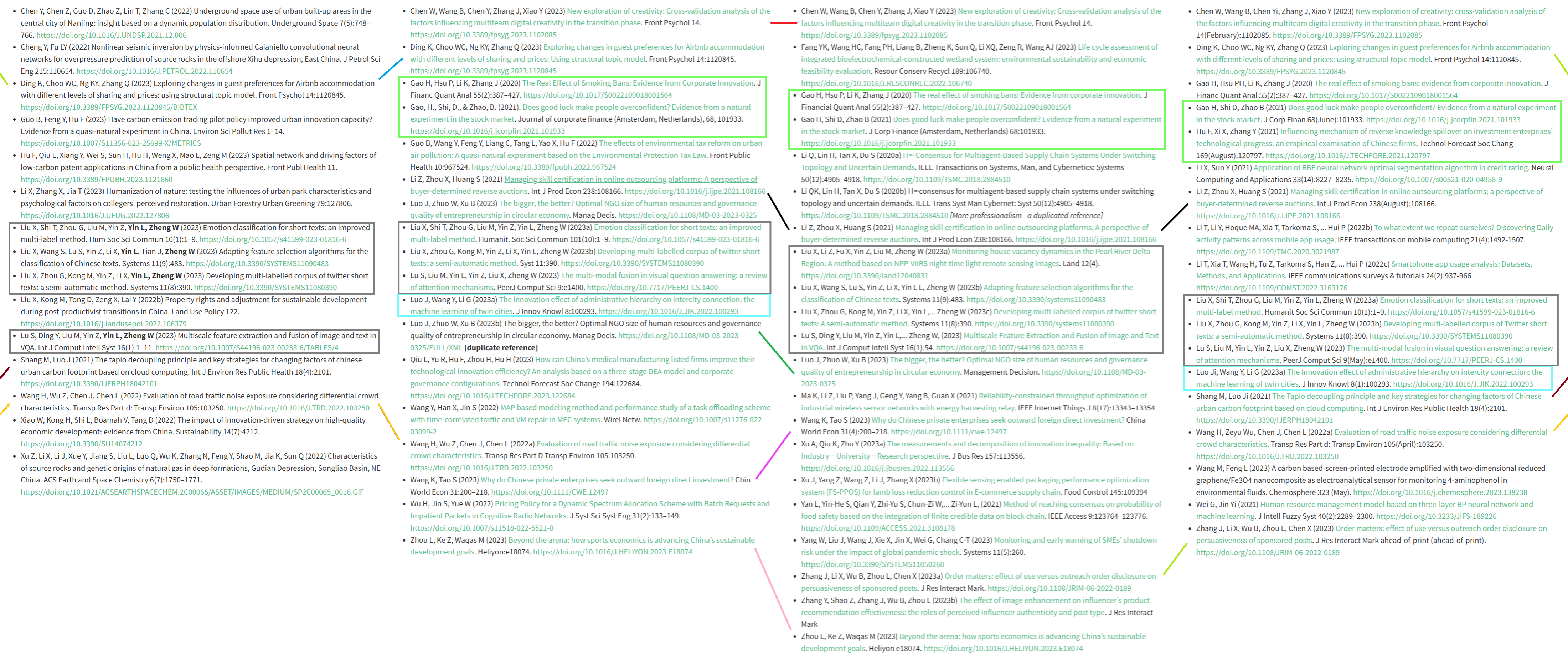
‘How does an innovative decision-making scheme affect the high-quality economic development driven by green finance and higher education?’ (Lan & Lyu 2023);
‘Does circular economy affect environmental performance? The mediating role of sustainable supply chain management: the case study in China’ (Liu & Lu 2023);
‘The hidden linkage of corporate efficiency and green innovation with human resource management practices: a newly perspective from China’ (Wang 2024)
The diagram could be extended to the other 20 ESPR papers flagged by Magazinov but no-one would thank me for that. Or to 69 ESPR entries in Table A that pimped different Yin / Zheng papers, such as their extensive ‘Haze’ oeuvre. All 93 drew references from a shared pool and are unlikely to be the work of separate authors. Change my mind! To be fair to the journal, 26 of 93 are retracted already.
Salesmen of Green Economy Bullshit
“This bullshit is a form of greenwashing, as policymakers might believe that with growing amount of “research” we are making progress. Except we are heading nowhere.” – Alexander Magazinov
Cited by ‘Spatial green growth in China: exploring the positive role of investment in the treatment of industrial pollution’ (Imran et al 2023):
- Liu Y, Tian J, Zheng W, Yin L (2022b) Spatial and temporal distribution characteristics of haze and pollution particles in China based on spatial statistics. Urban Clim 41:101031. https://doi.org/10.1016/j.uclim.2021.101031
- Shang K, Chen Z, Liu Z, Song L, Zheng W, Yang B, …, Yin L (2021). Haze prediction model using deep recurrent neural network. Atmosphere, 12(12), 1625. https://doi.org/10.3390/atmos12121625
- Wu X, Liu Z, Yin L, Zheng W, Song L, Tian J, …, Liu S (2021) A haze prediction model in Chengdu based on LSTM. Atmosphere, 12(11), 1479. https://doi.org/10.3390/atmos12111479
- Yin L, Wang L, Huang W, Liu S, Yang B et al (2021) Spatiotemporal analysis of haze in Beijing based on the multi-convolution model. Atmosphere 12(11):1408. https://doi.org/10.3390/atmos12111408
- Yin L, Wang L, Huang W, Tian J, Liu S, Yang B, …, Zheng W (2022) Haze grading using the convolutional neural networks. Atmosphere 13(4):522. https://doi.org/10.3390/atmos13040522
- Zhang Z, Tian J, Huang W, Yin L, Zheng W, …, Liu S (2021) A haze prediction method based on one-dimensional convolutional neural network. Atmosphere, 12(10):1327. https://doi.org/10.3390/atmos12101327
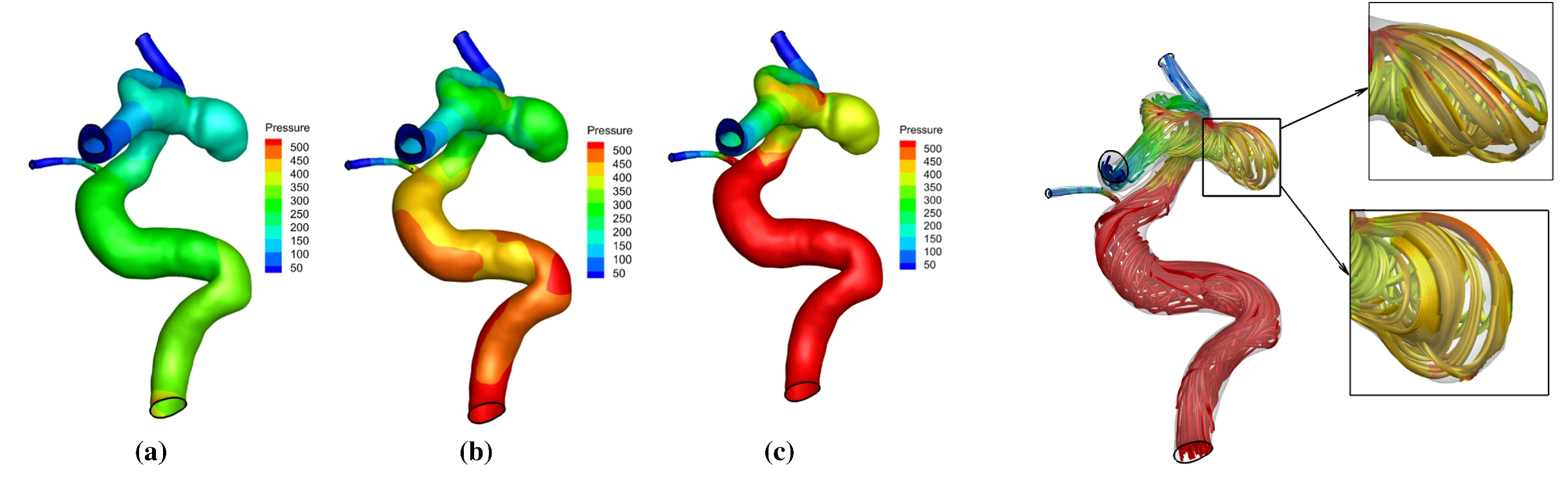 My next cross-paper comparison jumps to a “aneurysm / hemodynamics / flow simulation” niche in the citation market, where different millers operate – again, motivated by the ease of multiplying manuscripts when you don’t waste time running experiments and need only re-run the simulation software with slight tweaks to parameters and conditions. (1) It illustrates the same general point, though: if your career has progressed from cranking out disposable garbage papers for yourself to cranking out garbage papers and selling co-authorship to others, you’ll probably pimp out the References section as an additional income stream. Also (2) it’s another colour-coded eye-sore so the judges allowed it.

‘Influence of parent vessel feature on the risk of internal carotid artery aneurysm rupture via computational method’ (Fattahi et al 2023a).
‘Usage of computational method for hemodynamic analysis of intracranial aneurysm rupture risk in different geometrical aspects’ (Fattahi et al 2023b).
I infer the existence of a galaxy of special-purpose papermills, all burdening the Reference sections of their products with transactional citations from a common pool. Citation brokerage is the One Ring that draws every commercial participant in the fake-science economy into its accretion disk. It follows that any well-targeted topic in Table A could be the sign of as-yet uncharacterised papermills…
- Metaheuristic optimisation algorithms (optionally embedded in Neural Nets)
- Generalisations of Fuzzy Logic
- Extreme Learning, Convolutional NNs, all the Worship Words of AI
- Flow simulation (for hypersonic flow, aneurysms, etc.)
- Nanoflow simulation with turbulators, porous media, magnetic particles…
- Batteries, supercapacitors, fuel cells (and how to cool them with nanoflow)
- Solar energy collection with perovskites or nanoflow
- Modelling the (circular) energy economy – generation, fuel cells, batteries
- Energy-harvesting Nanogenerators
- Statics, dynamics, vibration of nanoparticle-reinforced materials
- Corrosion resistance
- Concrete composition and reinforcement
- Electrochemistry
- Nanosensor electrochemistry
- Green biosynthesis of NPs for pollutant remediation, drug delivery, etc,
- DFT molecular-bonding simulations for remediation, drug detection/delivery
- Those that have just broken a flower vase
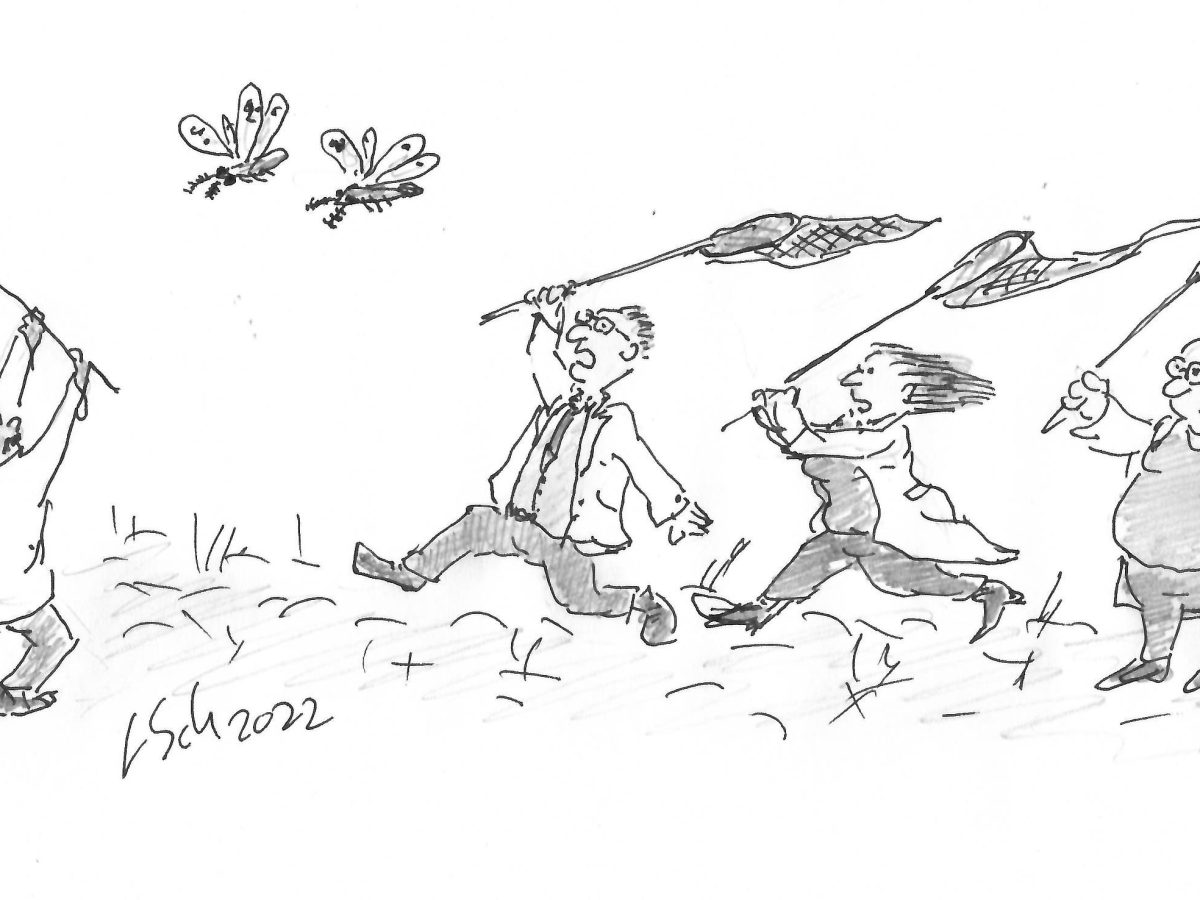
- Those that look like flies from a distance

Anyone can start a papermill!
“There are no capital requirements or significant technological barriers, anyone can create papers by rewriting already published works, either themselves or with the assistance of ChatGPT or other software. With a Telegram channel or WhatsApp group the papermiller can easily organise the sale of authorship” – Nick Wise

So this post could have been much larger. Like Isaac Newton, I am “playing on the seashore, and diverting myself in now and then finding a smoother pebble or a prettier shell than ordinary, whilst the great ocean of truth lay all undiscovered before me“. Quite how Newton accomplished this while also standing on the shoulders of giants is a matter for debate. I choose to believe that the giant in question was a primitive Mecha that Newton had constructed to repel oceanic Kaiju, patrolling the beach with great clockwork strides; and that Newton used the telescope mounted at the control station on its shoulders for pebble inspection, along with the lever-operated pneumatic scoop for collecting them.
Individual authors in Table A are also of interest (for sufficiently loose values of ‘interest’) when they show up over and over. Some will be signatories of citation-delivery vehicles merely because they are regular papermill customers. But when names recur, each time with a different supercargo of fare-paying coauthors, it is almost as if some millers at the cottage-industry level like to keep their own names on some of the manuscripts they sell. Some have appeared in For Better Science previously… Ali Fakhri makes 22 appearances (often with his mate Vinod Kumar Gupta (PubPeer record). Mosstafa Kazemi (PubPeer record) is there four times with his synthetic communications.

Synthetic Communications with Ali Fakhri and his real or imaginary friends
“the entire dramatis personae seem to have crawled out of our man’s sock drawer, and the page-count of Synthetic Communications would be grievously impoverished without his contributions, whether direct or uncredited.”- Smut Clyde
This is how I met Esmail Vessally (PubPeer record) who publishes in Royal Soc. Chem. journals, working in esoteric Fluorine / Silicon branches of organic chemistry, except when he takes the senior authorship slot in one of Yan Cao‘s (PubPeer record) 57 wretched DFT-study fingernail parings in Cao et al 2022. Vessally’s Review papers are admirably thorough, often going well outside the remit suggested by the title, but his accomplishments in inappropriate references and self-citations do not provide images as striking as skanky backtracking FTIR plots:
Mohammad Reza Poor Heravi, Parinaz Aghamohammadi , Esmail Vessally Green synthesis and antibacterial, antifungal activities of 4H-pyran, tetrahydro-4H-chromenes and spiro2-oxindole derivatives by highly efficient Fe3O4@SiO2@NH2@Pd(OCOCH3)2 nanocatalyst Journal of Molecular Structure (2022) doi: 10.1016/j.molstruc.2021.131534

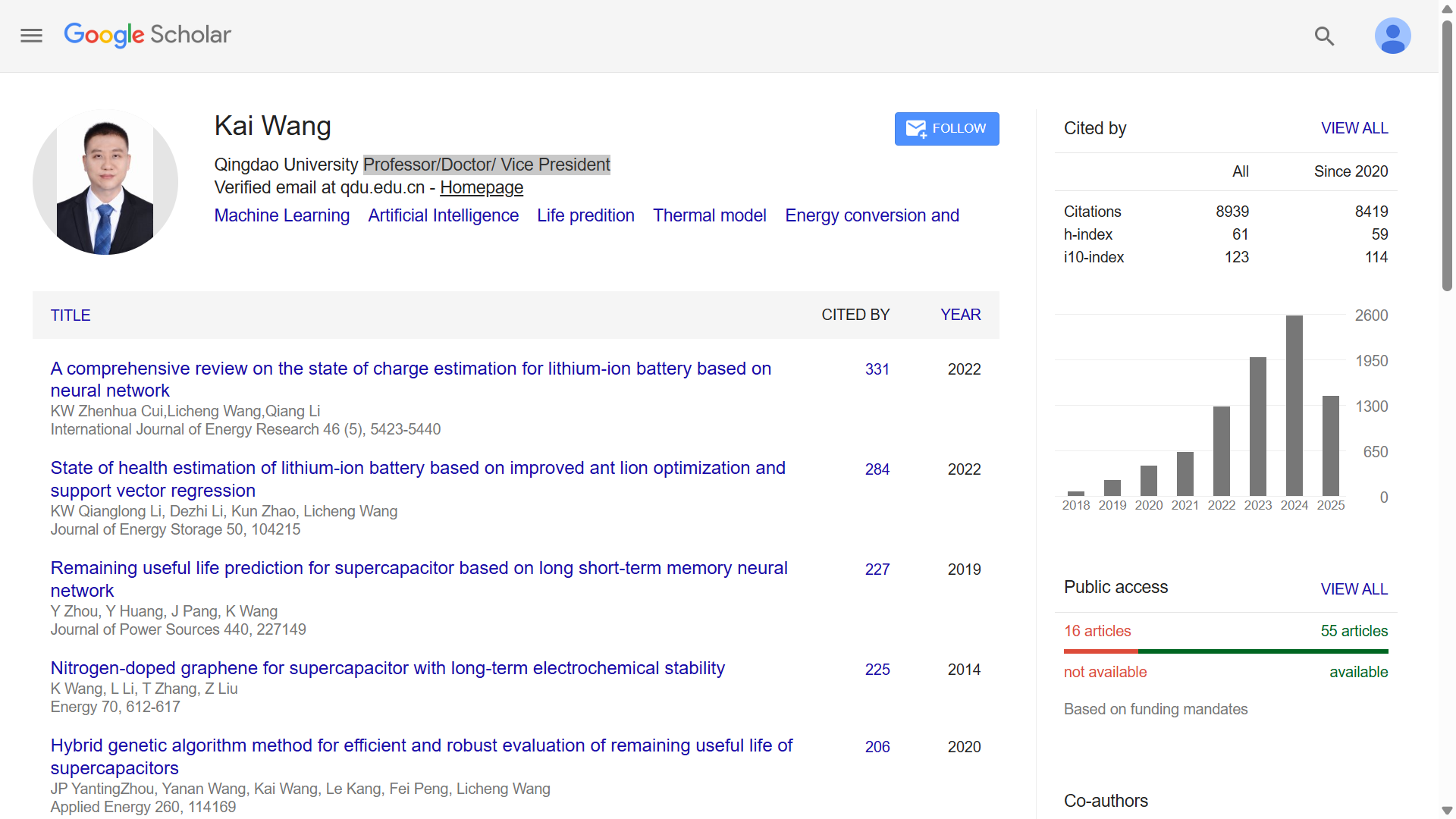 A certain Professor / Doctor / Vice President at Qingdao University, Kai Wang (GS profile), deserves a post of his own – for his publication fecundity features supercapacitors and Lithium-Ion batteries, often in the company of optimising algorithms or the Higher Obscurities of AI fiddle-faddle to predict their remaining charge and State-of-Health. But he also co-signs works by Shoufeng Tang (GS profile) who specialises in degrading pollutants with nanomaterials, eleven times so far (thank you, simulated molecular bonding!). Wang and Tang are of special interest (FSLVOI) because their papers display the Janus face: they work both sides of the street and appear in both Tables, first providing citations to (irrelevant) beneficiaries before accruing their own citations from a later cohort of providers.
The names in high-rotation over in Table B are equally revealing – it’s not just Lirong Yin, Wenfeng Zheng, and Yongbing Tang, for we also encounter [picking a few smoother pebbles at random]…
- Mohammad Trik (GS profile) and Edris Khezri (GS profile) at North Tehran and Boukan branches of Islamic Azad University. Their 12 and eight entries in Table B overlap. Both CVs boast many other citation magnets which still need adding to the table.
- Hongbo Jian (GS profile), a computing professor at Hunan University, is another player in the edge-computing / IoT sandpit, earning him more editorial roles at IEEE journals than a tomcat has scars. Collaborators on his payolafied papers include Zhu Xiao (GS profile, also at Hunan University) and Schahram Dustdar (GS profile), who is professor and academician of TU Wien in Austria.
- Hazrat Bilal (GS profile) is a roboticist at Shenzhen University and the University of Science and Technology of China. First author of ‘Jerk-bounded trajectory planning for rotary flexible joint manipulator: an experimental approach‘ (2003) – but aren’t all our trajectories bounded by jerks?
- One or two of Bilal’s papers featured Muhammad Shamrooz Aslam (GS profile) as coauthor, but Aslam is of interest in his own right if you like
pina coladascontrol theory and Tagaki-Sugeno Fuzzy Systems. - Huiling Du (RG profile) – Professor at Xi’an University of Science and Technology – has nine entries at the moment. A couple of her ceramics papers are notable for the number of citations donated to them by crystallography / MOF fakes (e.g. ‘High temperature negative wear behaviour of VN/Ag composites induced by expansive oxidation reaction‘), but that’s not the only papermill embiggening her academic statistics.
- Foshan University gives us Chongxiong Duan (RG profile), another beneficiary of citations from the MOF fraud-factory – perhaps more defensibly, for his Table B entries are MOF-centric themselves. Sometimes shares authorship with Kai Wang (e.g. ‘Room-Temperature Rapid Synthesis of Two-Dimensional Metal–Organic Framework Nanosheets with Tunable Hierarchical Porosity for Enhanced Adsorption Desulfurization Performance’).
- Caoxing Huang (GS profile) has eleven highly-cited papers in Table B on the digestion and archeology of lignin.
- Bing Bai (RG profile), from the School of Civil Engineering at Beijing Jiaotong University. Twelve papers on lead pollution in soil, and on finding industrial uses to dispose of the “red mud” byproduct of aluminium production (because “produce less red mud” is not an option).
- Wenchen Ma (GS profile) is already a friend of For Better Science, on account of coauthoring a series of steel-fatigue papers – citation magnets as well as citation-delivery vehicles – along with Filippo Berto and Reza Masoudi Nejad.
 Or, it may be, the same paper, published repeatedly (h/t Angus Wilkinson). The plagiarism offended the International Journal of Fatigue (and Berto lost his editorial position there), but the retraction did not impair Ma’s career as a structural engineer, and his LinkedIn account informs me that he’s now a Senior Civil Engineer at Tesla with US Permanent Residency. The payola-inflated impact of his other papers – including his PhD thesis from the University of Nevada – more than made up for it.
 - From Tohoku University in Japan, Distinguished Professor Hao Li (GS profile) publishes about ‘digital catalysis’ and DFT, with coauthor Graeme Henkelman (U Texas).
- Yan Peng (GS profile) professes in Robotics at Shanghai University. Her six entries in the Table enrich the Three Laws of Robotics with nanogenerators, energy harvesting and triboelectricity.
- Those drawn with a very fine camel’s-hair brush.
- Others.
The Men Who Stare at Ketotic Cows
“The References dwell on bovine indigestion, seizures, and the work of N. Arunkumar.” – Smut Clyde, jazz-punk Klezmer musician.
I reluctantly omit Harry Haoxiang Wang from this list of brokerage customers, having covered him a while ago; while Changhe Li, Yu-Ming Chu, Chao Zho and Chunwei Zhang came up more recently. But previous coverage of Zhihan Lv is no reason to ignore his frequent coauthor Bin Cao (RG profile) at Hebei University of Technology. whose 18 entries in Table B involve Blockchains, 6G and IoT (with bonus optimisation).

Shake the Stupid Tree and see what falls out
“Does this mean it’s time for an update on the bogus-citation economy? Leonid thought it is, and now you all must suffer for his misdirected priorities. ” – Smut Clyde
Loyal readers will recall Gunasekaran Manogaran‘s operation and how he brought affordable junk papers within the reach of everyone (not just clinicians at Chinese hospitals) by targeting Special Issues, recruiting boiler-rooms of students in Vellore to lower the quality of the products and scale up quantity, training the millers who later turned Microprocessors & Microsystems and the Hindawi stable into smoldering holes in the ground. Seeing that these production-line word-farts could double up as citation-delivery vehicles, Manogaran built up a cosmopolitan circle-jerk Greater Co-Prosperity Sphere of collaborators to share the benefits of authorship and citation payola. Zhihan Lv was one of those associates – a bridge between Manogaran’s citational portfolio and the portfolio described here. Thus he serves to illustrate (again) that recurring general point: deals with the citation broker tend to coexist with other modes of malarkey.
It is hard to say whether Z. Lv (and H. H. Wang, and so on) inspired or were inspired by Manogaran’s operation. In some of the papers authored by H. H. Wang (whether he signed them or not), the citational donations are confined to the Wang / Manogaran circle; in others, the Wang / Manogaran junk citations mingle with ones drawn from the citation broker’s ‘main sequence’.
Research on Intelligent Trash Can Garbage Classification Scheme
“It’s not as if the Special-Issue Guest Editors or the imaginary ‘Peer Reviewers’ pay attention to the provenance of the images that fill the Figure-shaped gaps, or care whether the supposed alternatives in these horse-races are even algorithms at all.” – Smut Clyde
I could extend earlier regions of Table B to create a fuller history of citation brokerage, but the chronology is muddied by the caveat that ordering citations from the broker for a given paper didn’t have to happen on its date of publication: 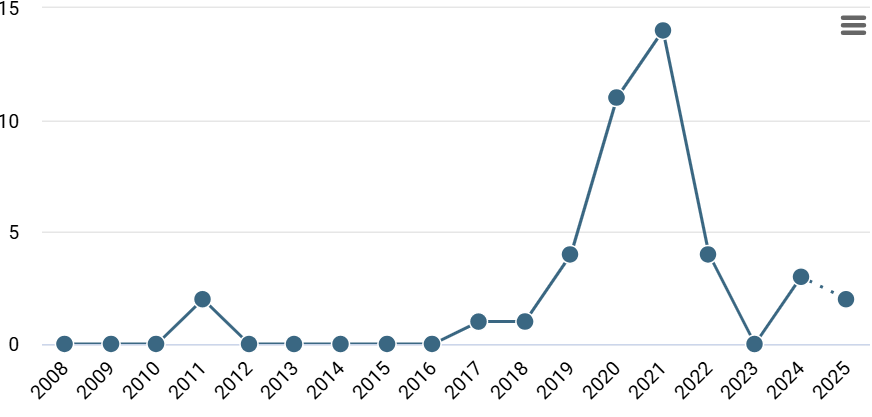 Chunwei Zhang has papers from 2008 and 2009 that went unread until the sudden inflation of their citation counts over a decade later. If the tables are ever filled in sufficiently, the crucial period for a Table-B paper is defined by internal evidence (i.e. the publication dates of the Table-A papers that cite it). Think of Tables A and B as the rows and columns of a single very large matrix.
Also too, more recent phases of the citation economy have been a higher priority, to catch junk-citation-laden papers that are being published now. Editors are invited to use Table B as a screening tool, as long as they acknowledge For Better Science and myself; otherwise Leonid will stare at them in sad reproach.
Editors and other real papermill heroes
“Long story short, we investigated our published papers and then retracted those with data integrity issues. That is it.” – Dr Heather Smith, Editor-in-Chief
The course of the narrative has touched upon certain journals with a special openness to this form of corruption. Table A is (I repeat) a work in progress and far from a representative sample, but feel free to browse through it in search of other outstanding offenders. [cough Scientific Reports]
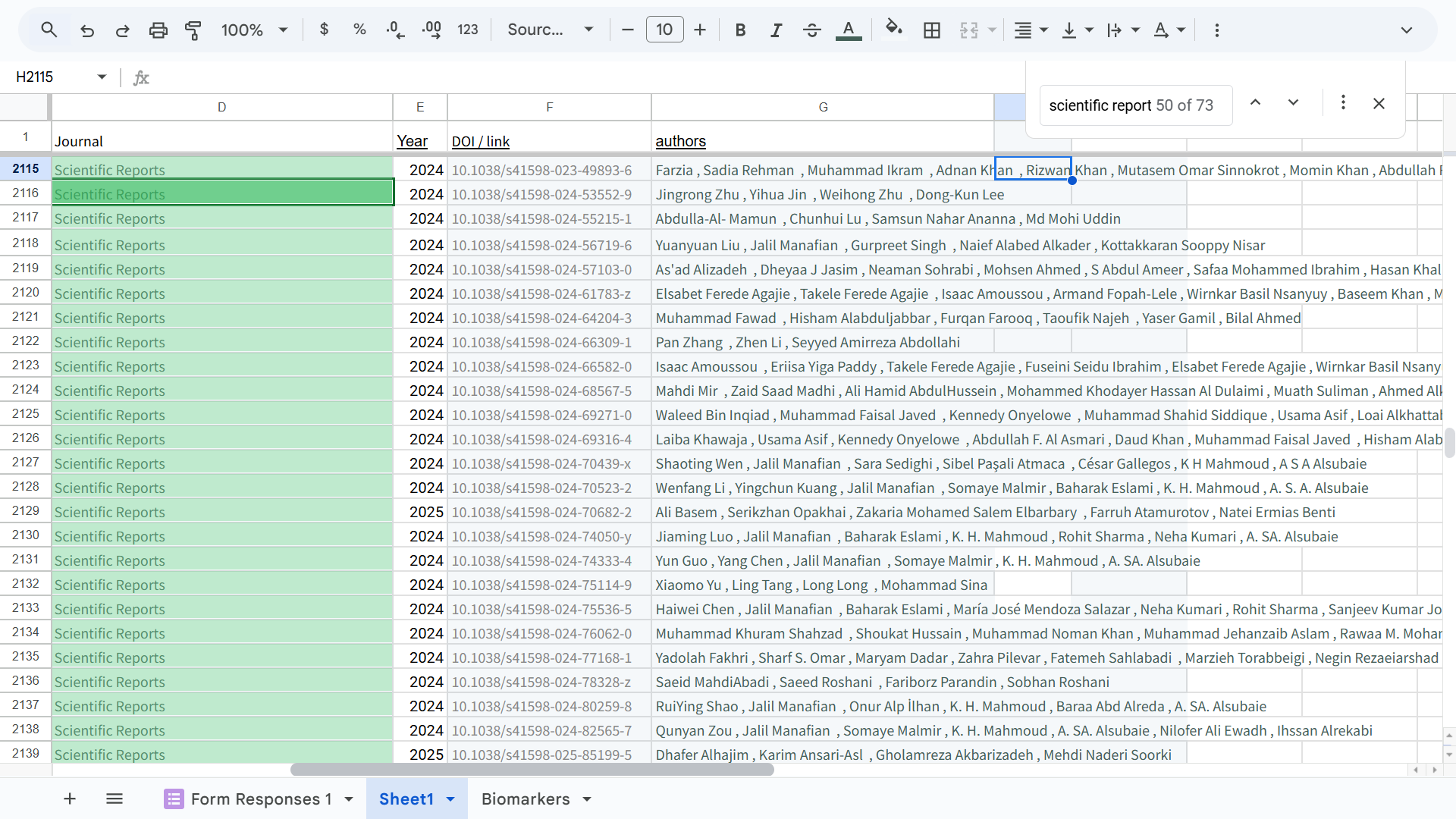
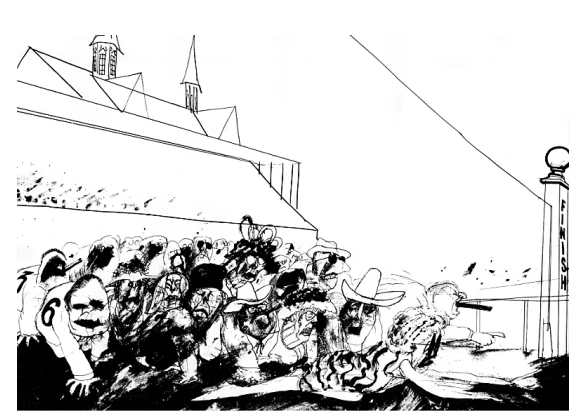
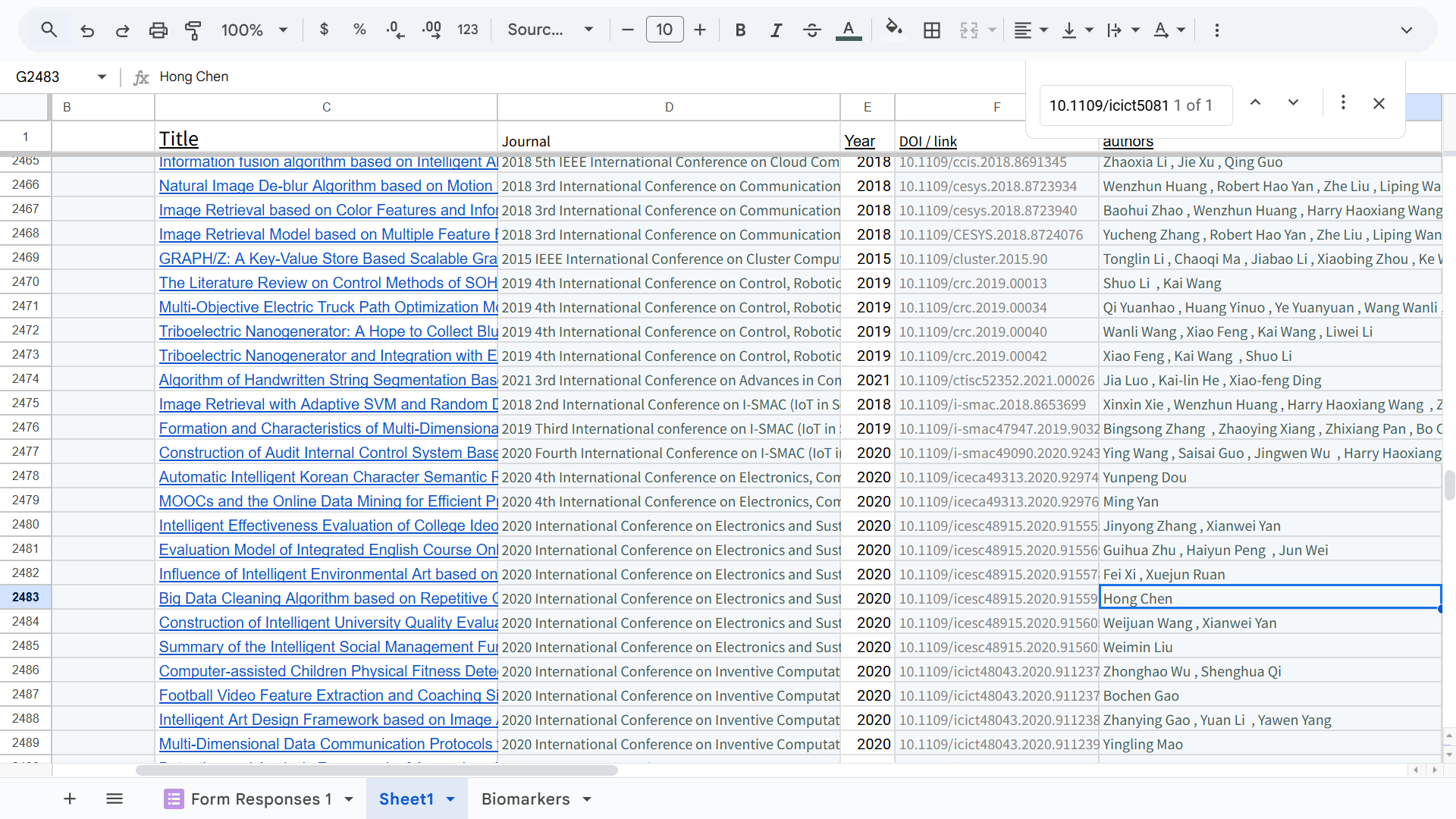
There is less to be learned from sorting Table B by the ‘journal’ or ‘DOI’ fields to see who housed the papers whose authors would later inflate their importance. I can’t deny, however, that IEEE journals are hugely over-represented there. I’m not saying that IEEE policies sanction or encourage this kind of shenanigans, but that over-representation brings us back to the point that the IEEE is decadent and depraved, and membership is an important step for anyone set on a career of academic criminality.
Alternative Title: A Career of Evil
One certainly encounters science-faking scoundrels who didn’t pay to be high-ranking members of the IEEE freemasonry of mutual assistance, but it happens less often than one might think. IEEE Scamference Proceedings in particular are hothouses of citation scamming – even more so than IEEE Access! – because people who offer to edit and review IEEE Scamference proceedings are exactly whom you expect.
Nor am I saying that participation in the citation-payola market is guaranteed to betray every papermill… but there are many mills and millers who were traced that way, or could have been traced that way in the absence of other evidence. Earlier forays into the morass revealed several distinct clusters of papers on low-dimensional DFT, and herbalism fiddle-faddle, and of course exotic polymer crystals – the work of separate papermills that have their own internal lists of citations to promote but also traffic with the ‘main spectrum’.

Polymer Papermillers Taking the Piss
Papermill Industry enters its Logical Growth Phage. Smut Clyde explains what coordination polymer chemistry has to do with chickenshit.
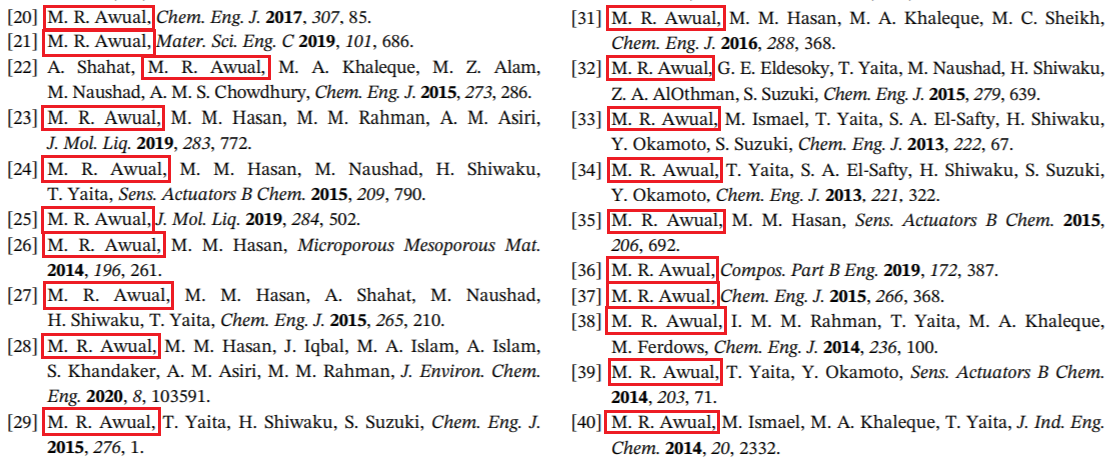
Since I am all about the relevance, I take this opportunity to highlight one of several products from the polymer papermill that somehow became advertising billboards for the scientific accomplishments of M. Rabiul Awual:
Rui‐Qin Song , Xia Ma , Guang‐Yun Song Tb(III)‐based coordination polymer for detection of Cu(II) ion and treatment effect on Alzheimer’s disease by reducing inflammatory response and inflammatory cytokines release Journal of the Chinese Chemical Society (2020) doi: 10.1002/jccs.201900515
I had planned to finish this guided tour of the citation marketplace with a coda about one of these semi-separate papermills, this time specialising in the topic of biomarkers. But (1) the post is already too long, and (2) I am tired. So our host is complaining that the post doesn’t have a proper conclusion.
I will settle for observing that the ‘crystallography papermillers’ are operating again, undeterred by the retraction massacres of their earlier products. The focus is now on fake MOFs (with specifications copy-pasted from MOF structures that do exist) embedded in hydrogels as delivery vehicles for less exotic drugs. Though the millers can’t resist the temptation to show off their acquisition of molecular-docking software by illustrating these fantasies with simulations of the MOF unit cells interacting with some random signaling protein [PRO-TIP: the unit cell of a MOF doesn’t exist in isolation]. The inference is that the MOF is the actual source of the made-up therapeutic value, while the drug it purportedly delivers is a confounding placebo. Reviewers didn’t care.
Peilin Zhu , Zhuonan Meng , Pengcheng Chen , Shuping Chu , Bin Wang , Cheng Chen Copper complex@Paclitaxel: A new dual-functional fluorescent-responsive composite material and treatment on esophageal cancer cells Inorganica Chimica Acta (2024) doi: 10.1016/j.ica.2024.122192

The template used to fabricate these artefacts includes a gift of four citations or so for a certain Liming Fan, whose work is not irrelevant but is not notably relevant either. Typically the Data Availability statement informs us that “No datasets were generated or analysed during the current study” (but a paper was published anyway). And there are one or two other diagnostic dumbprints. If nothing else, accepting these fabulations gives the Editors of Journal of Fluorescence and Journal of Coordination Chemistry something to do when not retracting the products of the mill’s earlier recension.
Caidi Zhao, Wei Wu Fluorescent Properties of Mesalazine-Loaded Hydrogel Nanocomposites for the Treatment of Ulcerative Colitis Journal of fluorescence (2025) doi: 10.1007/s10895-024-04134-5

Donate to Smut Clyde!
If you liked Smut Clyde’s work, you can leave here a small tip of 10 NZD (USD 7). Or several of small tips, just increase the amount as you like (2x=NZD 20; 5x=NZD 50). Your donation will go straight to Smut Clyde’s beer fund.
NZ$10.00

 For Better Science
Thanks for this study! I saw a flood of b.s. DFT perovskite prediction papers (b.s. stands not only for band structure here 😉 ) and even managed to publish a comment in J Phys. Chem. Solids (https://www.sciencedirect.com/science/article/pii/S002236972500352X?via%3Dihub) to a particularly bizzare one. After reading your article now all makes sense to me.
LikeLiked by 1 person
Terrible, terrible and totally unsurprising.
Since you are quoting Borges, he would probably declare: “These things resemble scientific papers and citations from a distance.”
Maybe the single bright spot in all of this, is that no actual scientist would ever take any of these “papers” seriously, or try to follow up on it or cite it. Maybe in biomarkers (which as you mention is another infested field) this is different? But in physics or material science: I cannot imagine that anyone with physics or material training would bother reading or citing these “papers”. So they do not make much harm to any actual scientific field. They just live in their own corrupt self-citing and citation-generating and career-promotion-generating little (or not so little) universe.
As I suggested before: the solution is to come up with a separate subset of Pubmed and other literature databases which ONLY consist of reputable journals (where some official body does regular QC and throws them out at the first sign of papermilling or hijacking) and authors with ‘pubpeer issues’ are also excluded.
PS. What is a “single-lap adhesive joints method” anyway? Perhaps something a strip club customer would apply.
LikeLiked by 1 person
The Chinese professor at a Japanese University caught my attention, so I clicked on his GS profile, and this “distinguished professor” certainly merits the title. His H-index is 61 and judging by the photo he’s about 17. A quick calculation reveals that he’s been publishing since he was in elementary school.
LikeLiked by 1 person
I have long wondered what made submarines red.
LikeLike
The last (Wu) paper mentioned is so pathetic that the authors think the PDB structure entry 4EAK is the name of the protein they discuss. For the record, that image shows a ribbon presentation of an X-ray structure of the core of AMP-activated protein kinase (AMPK) co-crystallized with ATP (https://www.rcsb.org/structure/4EAK). It’s so far from even being bullshit to discuss further.
LikeLike