

Schneider Shorts of 22 November 2024 – a witch-hunter’s obituary, a Nobelist awarded and awarding, a dirty old man protected in Marseille, mTORman funded in Czechia, a Polish mayor arrested, a superconductor wunderkind sacked, with Austro-Romanian papermilling, and retractions for various important men.
Table of Discontent
Obituary
- Several groundbreaking advances and breakthrough discoveries – Mikhail Eremets is dead
Science Elites
- Research misconduct while a faculty member – Ranga Dias finally sacked
- Semenza International Cell Engineering in Medicine Award – how low can a zombie Nobelist go?
- Harassed and threatened by pseudoscientists – how Marseille university kept Raoult report secret
- Riskier project with a potential – David Sabatini gets a fat grant in Czechia
- Collegium Humanum – Wroclaw mayor arrested in Polish diploma mill scandal
Scholarly Publishing
- They probably exaggerated a bit – Austrian professor works with Romanian papermiller
- Advised to take caution – Concerns expressed for Peter Hersey and XD Zhang
Retraction Watchdogging
- None of the authors responded – Robin Ali and Tiansen Li lose a paper
- Vital to the integrity – Gilles Guillemin and Nady Braidy lose another one
- Significant time elapsed – two more retractions for Cuzzocrea and friends
- Not able to provide an explanation – two retractions for Vincenzo Talesa and Cinzia Antognelli
Obituary
Several groundbreaking advances and breakthrough discoveries
The superconductor physicist Mikhail Eremets is dead, aged 75.
On 19 November 2024, the Max Planck Institute for Chemistry in Mainz, Germany, announced:
“The Institute has lost a highly acclaimed scientist and esteemed colleague whose groundbreaking research has significantly advanced the field of superconductivity. Among other achievements, Dr. Mikhail Eremets discovered superconductivity at near-room temperature in hydrogen-rich materials.
Since 2001, Mikhail Eremets had led the High-Pressure Chemistry and Physics research group at the Max Planck Institute for Chemistry. He passed away on Saturday, November 16, 2024, at the age of 75, after a prolonged illness. Born on January 3, 1949, in the Pinsk region of Belarus, he studied physics in Moscow and conducted research in France, the UK, Japan, and the USA before joining the institute in Mainz in 2001.
Mikhail Eremets and his group achieved several groundbreaking advances and breakthrough discoveries in high-pressure and superconductivity research, including the discovery of new phases and properties of elemental hydrogen, nitrogen, sodium and other substances.”
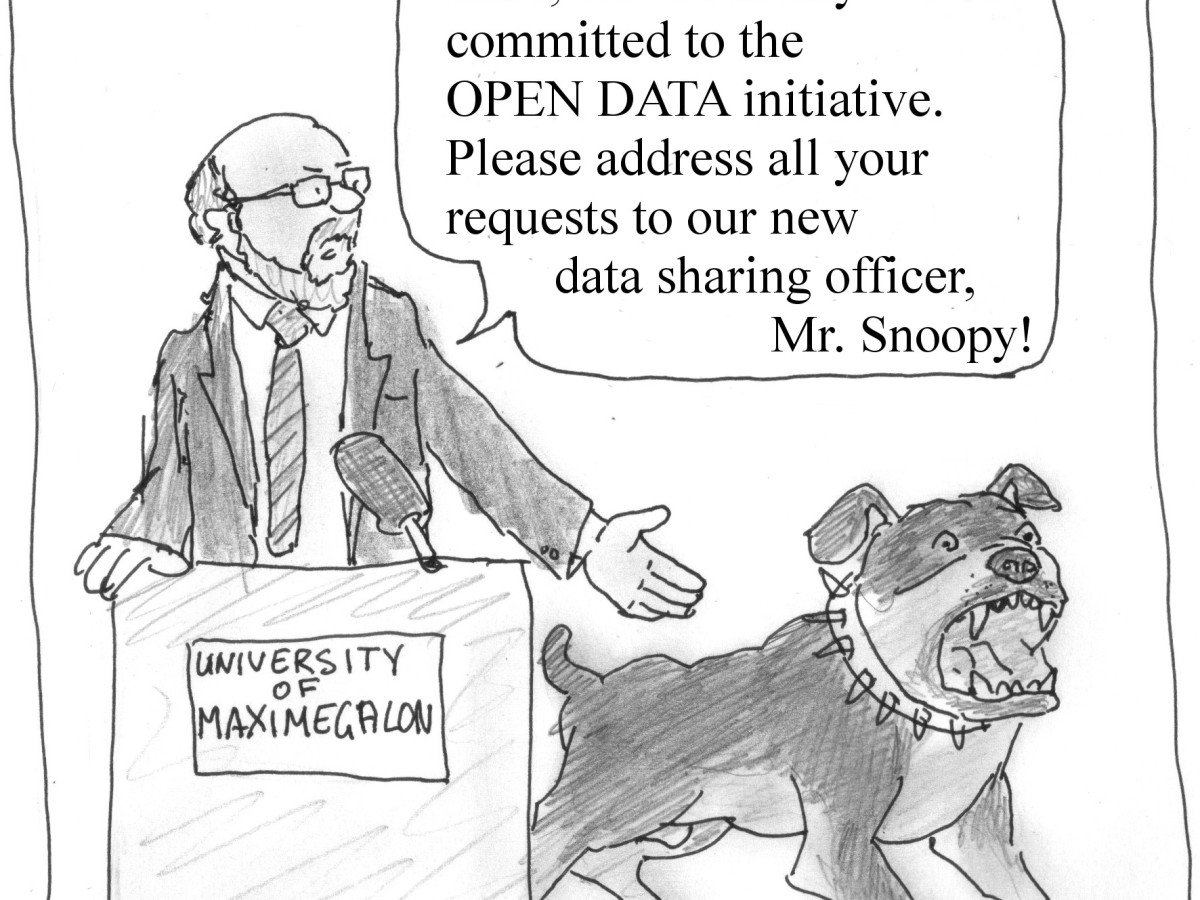
Superconductive Witch Hunt
“J. Hirsch. […] engaged in unscrupulous practices, including falsifying analyses and selectively presenting data to support unfounded claims. […] Hirsch’s tactics include manipulation of public opinion, personal attacks on our team members, and threats and complaints to our management and funding agencies.” – Mikhail Eremets, the single most highly regarded high pressure experimentalist today.

It is very unfortunate that Eremets dedicated his last days to defending falsified superconductor science from his lab, refusing to share original data, and leading a witch-hunt against his critics, especially against Jorge Hirsch. Read the article above.
Hirsch and Maarten van Kampen found evidence that the published data in Minkov et al Nature Comms 2022 paper was likely falsified, and also the raw data which was partially (!) released by Eremets and his staff scientist Vasily Minkov after a prolonged mud-slinging was likely falsified (read August 2024 Shorts). The Max Planck Society has been running an investigation which presumably has been abandoned now with Eremets’s death. It is not clear at all if the faulty paper will be retracted now. Minkov remains employed by the Max Planck Institute in Mainz.
I shall always remember Eremets giving this presentation on how to spot witches:

Anyway, one way or another, the Max Planck Society won’t get their long-planned Nobel Prize for Eremets and his superconductor now.
Science Elites
Research misconduct while a faculty member
In other failed Nobel Prize superconductor news, Ranga Dias was finally sacked by the University of Rochester in USA, as Wall Street Journal reported on 18 November 2024.
After several high profile retractions (especially two in Nature) and findings of massive fraud against Dias personally (read April 2024 Shorts), the university which used to whitewash and defend their purported wunderkind finally recognised that he was maybe a bit of a liability rather than an asset.
It was the work of sleuths like Maarten van Kampen which caused Dias’s second and particularly embarrassing Nature retraction:

Superconductive Fraud: The Sequel
“After the huge box-office success of “Nature 2020: Room-temperature superconductivity in CSH” this March our Nature studios released a sequel with the same star-studded cast: “Nature 2023: Near-ambient superconductivity in N-doped LuHx”. – Maarten van Kampen

Since WSJ is heavily paywalled, we shall rely on other sources. Ars Technica wrote on 19 November 2024:
““In the past year, the university completed a fair and thorough investigation—conducted by a panel of nationally and internationally known physicists—into data reliability concerns within several retracted papers in which Dias served as a senior and corresponding author,” a spokesperson for the University of Rochester said in a statement to the WSJ, confirming his termination. “The final report concluded that he engaged in research misconduct while a faculty member here.”
The spokesperson declined to elaborate further on the details of his departure, and Dias did not respond to the WSJ’s request for comment. Dias did not have tenure, so the final decision rested with the Board of Trustees after a recommendation from university President Sarah Mangelsdorf. Mangelsdorf had called for terminating his position in an August letter to the chair and vice chair of the Board of Trustees, so the decision should not come as a surprise. Dias’ lawsuit claiming that the investigation was biased was dismissed by a judge in April.”

Anatomy of a Retraction 2 – Superconductive Fraud
Maarten van Kampen dispels the superconductive illusions of Ranga Dias and Ashkan Salamat. Will we also receive a cease-and-desist letter now?
Nature also reported, and mentioned:
“…Dias continues to work at Unearthly Materials, his Rochester-based company that aims to make novel superconductors. In 2022, the company received $15 million in funding from the venture capital group Plural, based in London. A spokesperson for Plural declined to comment on Dias’s misconduct, and after receiving questions from the Nature news team for this story, references to Dias disappeared from the company’s website.”
Semenza International Cell Engineering in Medicine Award
Gregg Semenza, 2019 Nobel Prize in Physiology or Medicine Laureate and Johns Hopkins University professor, who may or may not have been found guilty of research misconduct which led to currently 11 retractions (read March 2024 Shorts), became an embarrassing zombie.
Nobody serious wants to invite him to give a talk or give him an award. But unserious people do, and now Semenza made a total pillock of himself at a predatory conference.

Gregg Semenza: real Nobel Prize and unreal research data
“Even after people have been telling you for, you know, 20 years or more that it’s going to happen, no one expects it.” -Gregg Semenza, Nobel Prize winner 2019
In 2020, the Dutch journalist Pepijn van Erp uncovered a ridiculous scamference circus called FLOGEN by a Florian Kongoli. The business model is rather simple, as van Erp wrote:
“Kongoli presents himself as a consultant in technology development operating from his company FLOGEN technologies Inc. The SIPS conferences are organised by FLOGEN STAR OUTREACH, “a not-for-profit, non-political and all-inclusive science organization that takes no sides in political, scientific or technological debates” and superficially it looks like these conferences are not Kongoli’s main activity. But his private enterprise does not show much activity at all, Kongoli only seems busy with organising these SIPS conferences.
It looks like Kongoli has found a nice business model. He manages to get some Nobel laureates to accept an invitation to the conferences – which are always in nice luxury venues – and then uses their status to lure in academics and some business people to pay for participation. […]
If you are a really well-known Nobelist and have shown to be cooperative, Kongoli might even name a new award after you. He has for instance already instated the Geim International Innovation Award and the Stoddart International Scientific Award.”
Not everyone prancing around as Kongoli’s best buddy with a named award is a Nobelist. Some are outright frauds, like the antisemite Ruggiero Santilli or the creepy Elias Aifantis and his wunderkind daughter Katerina, read below. Papa Aifantis was recently sentenced in Greek court to a prison term for extorting money from his lab members (read September 2024 Shorts).
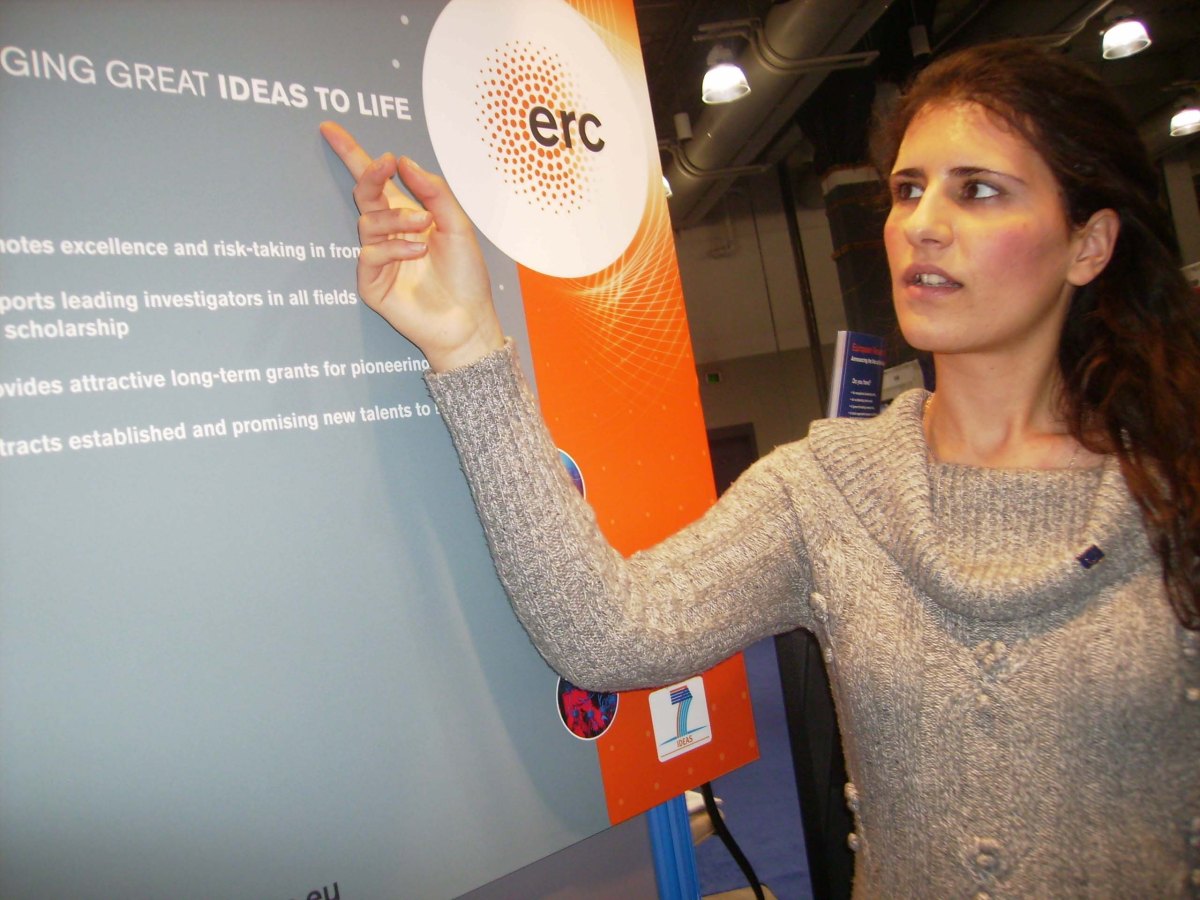
My heart belongs to Daddy, So I simply couldn’t be bad
“A complex fraud involving a Greek scientist and her network of international researchers has been uncovered by investigators from the European Anti-Fraud Office (OLAF).”

Another Jewish conspiracy against Ruggiero Santilli!
EU Commission gives €6 million to an obscure German start-up, promising to convert sewage to synthetic fuels. Internet sources suggest behind all this is “Professor” Ruggiero Santilli, the litigious “Florida Genius”, eternally self-appointed Nobel Prize candidate and sock- puppeteering businessman. Exactly the kind of “fringe scientist” Smut Clyde likes to write about!
But yes, Kongoli does manage to recruit an impressive amount of Nobelists to perform in his FLOGEN circus: Andre Geim, Konstantin Novoselov, Fraser Stoddart, Avram Hershko, Ferid Murad, Dan Shechtman, Rudolph Marcus, Klaus von Klitzing, Yuan T. Lee, Kurt Wuthrich, Randy Schekman and others. And most recently, it was Semenza!
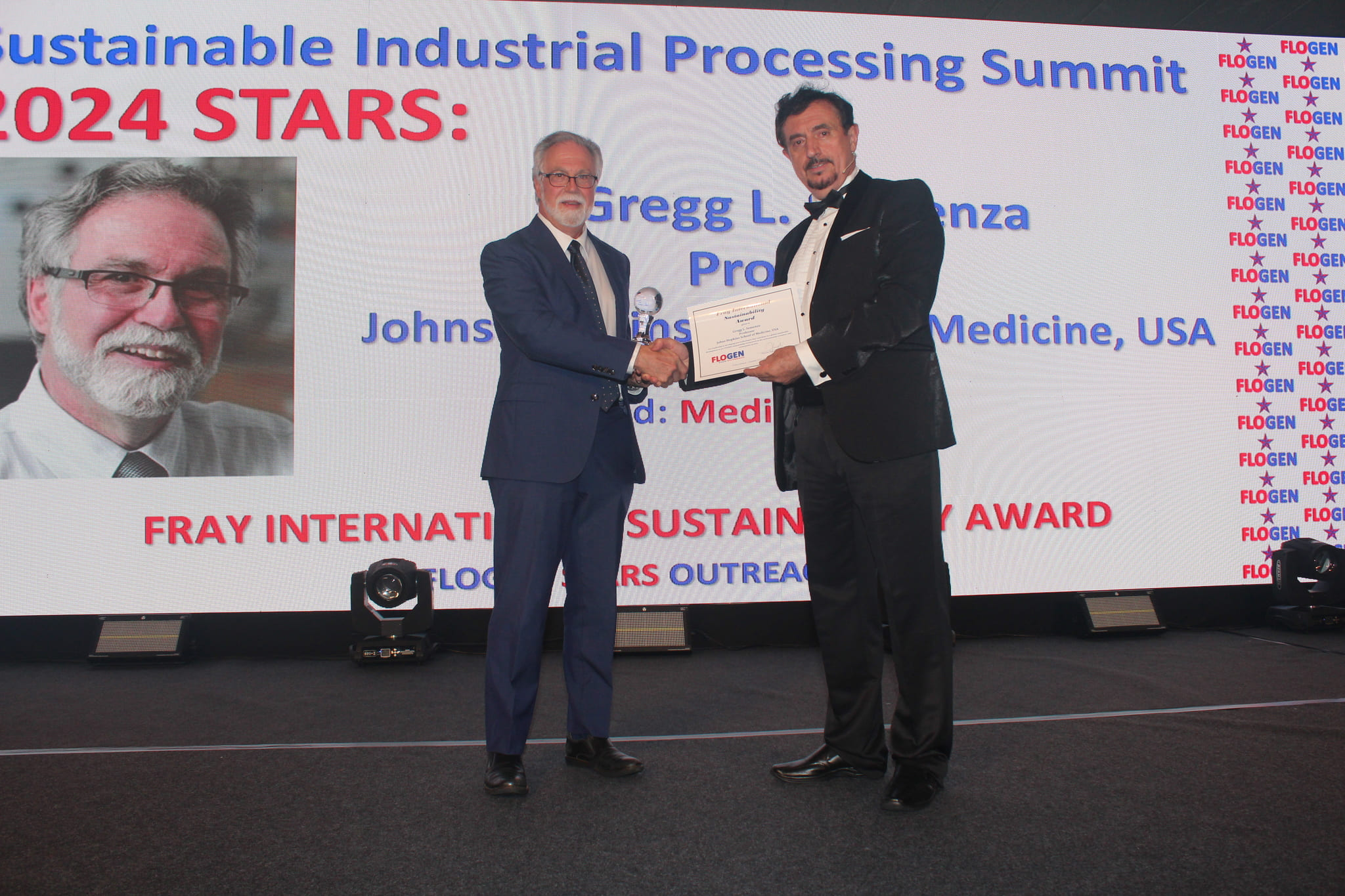
In October 2024, Semenza was awarded the usual worthless crap called “Fray Award” for his sustainably retracted research, at the 2024 FLOGEN SIPS scamference in Out of the Blue Resort in Crete, Greece (“Featuring 10 Nobel Laureates, an internationally renowned law judge, and many distinguished guests“). The award is named after Derek J. Fray who in 2011 was the first major scientist to fall into Kongoli’s honey trap. Kongoli gives the Fray Sustainability Award either to his celebrity guests (i.e., Nobelists or Aifantis), or to apparently anyone paying for it.
Wait, that’s not all. Semenza’s FLOGEN embarrassment is even deeper. At the same October 2024 FLOGEN SIPS in Crete, Semenza personally presented the “Semenza International Cell Engineering in Medicine Award” to… Kongoli’s son, Davis Joseph! Here is the ceremony where Joseph (on the left) thanks his father (on the right, with Semenza):
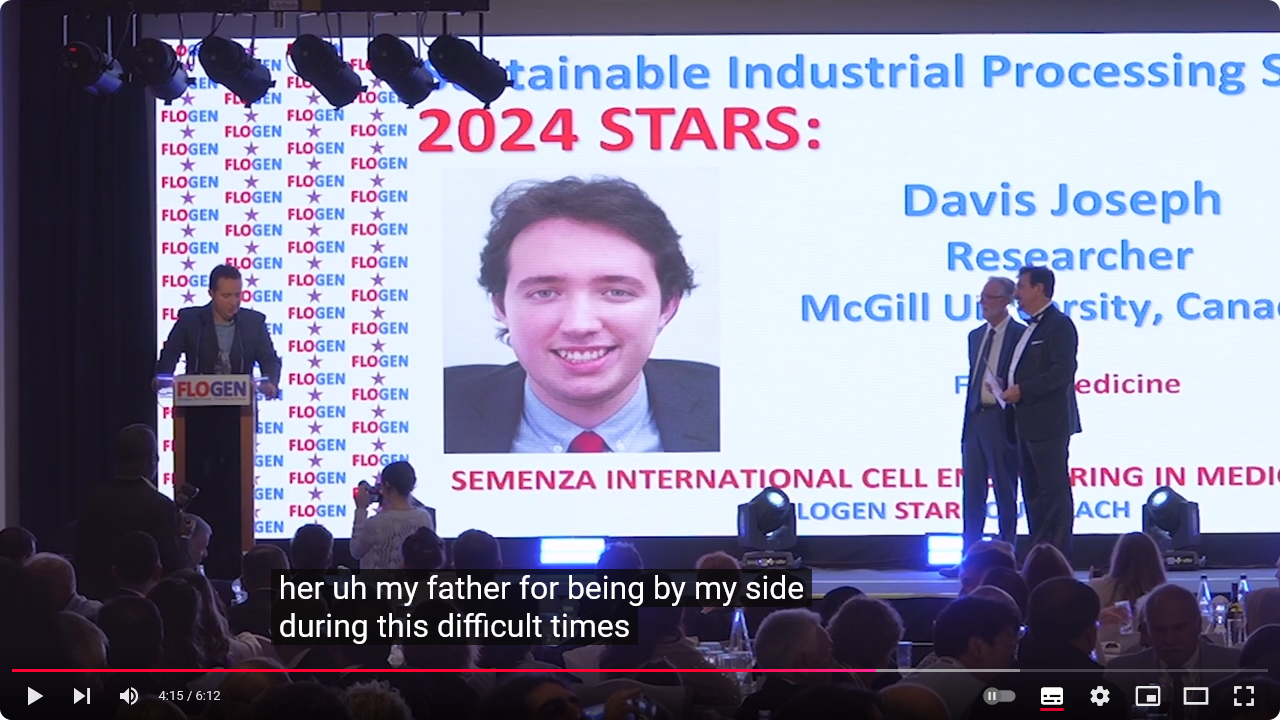
As aside: at the same scamference, a post-mortem award was given to Kongoli’s wife Migen Dibra, who used to act as Chair of FLOGEN SIPS Law Symposium from 2011 until her death in February 2024. Joseph took from his father the specially created “Otis International Judicial and Mediation Award” on behalf of his deceased mother.
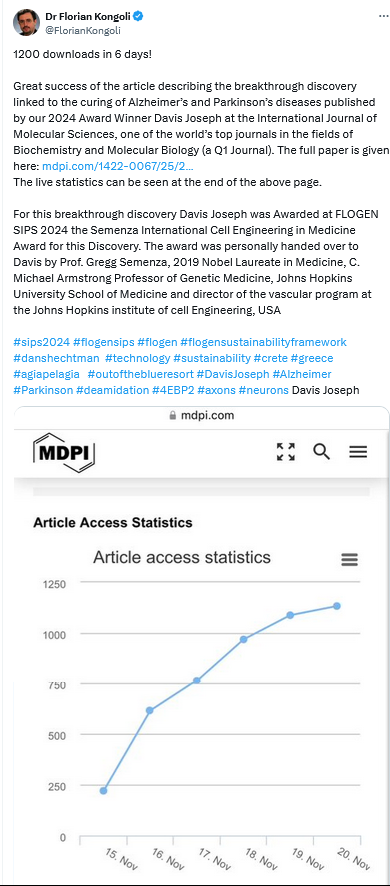
As Kongoli proudly announced on X, he had Semenza award his son for this extremely suspicious trash which Joseph published in an MDPI special issue edited by grateful FLOGEN awardees (Haruhiko Inufusa, Shigeru Hirano and Koji Abe):
Davis Joseph The Fundamental Neurobiological Mechanism of Oxidative Stress-Related 4E-BP2 Protein Deamidation International Journal of Molecular Sciences (2024) doi: 10.3390/ijms252212268
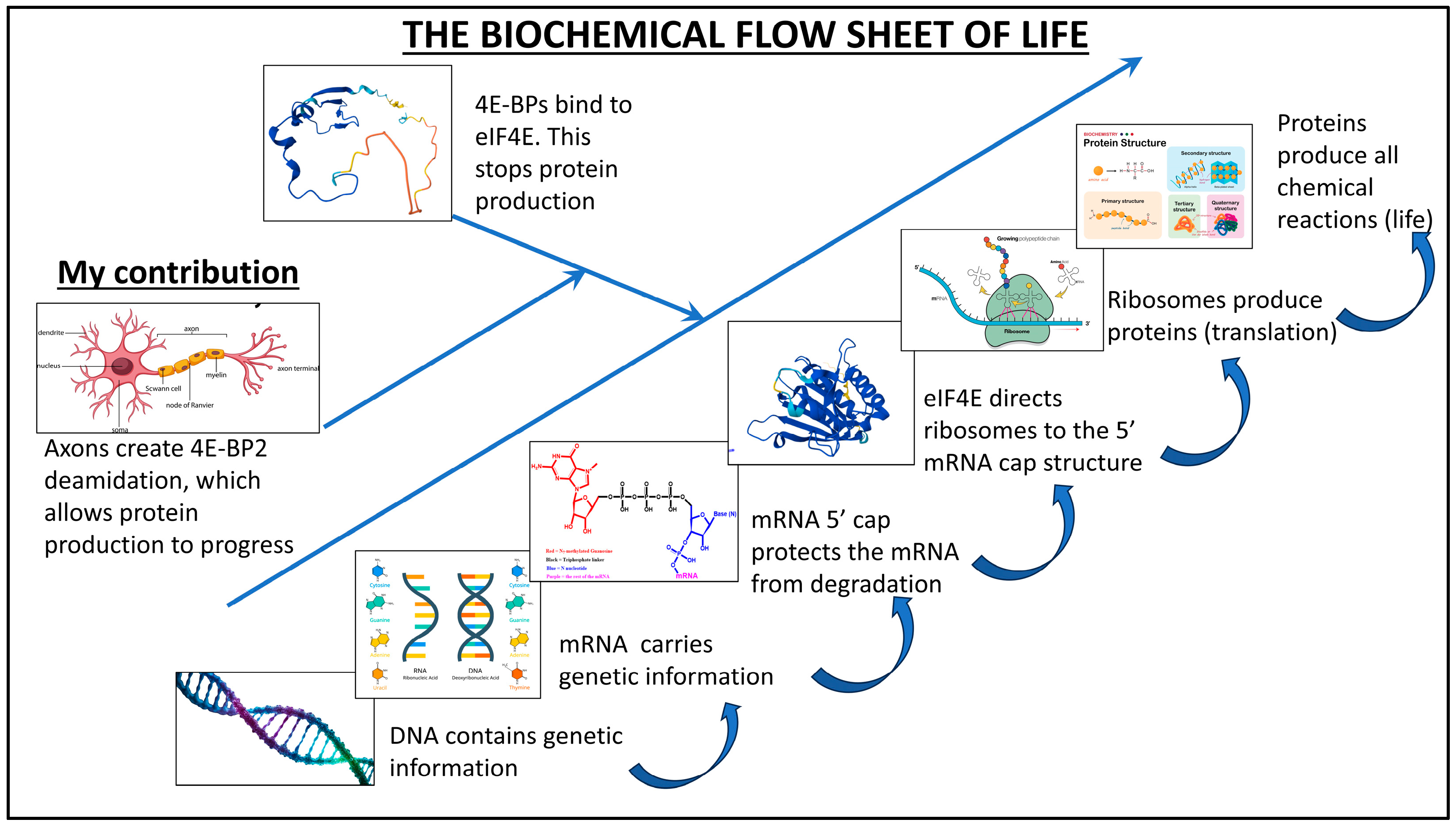
Joseph declares in his paper to be a FLOGEN employee, and: “This research received external funding from FLOGEN Technologies Inc. with the following funding number: FL/03-09-2024/1250″.
That’s the level Semenza reached.
I now wonder if the next Nobelist at FLOGEN will be Sir Paul Nurse?

Harassed and threatened by pseudoscientists
News from France on the Didier Raoult scandal, exclusive reporting by L’Express from 16 November 2024 (Google-translated):
“On June 30, 2022, Eric Berton, president of Aix-Marseille University (AMU), decided to open an investigation into eight scientific studies emanating from his institution. For months, this work carried out with the IHUm Méditerranée infection (IHUm) – and all linked to Didier Raoult – has been at the center of an intense controversy. The studies are suspected by other researchers of serious ethical breaches, multiple errors, and even non-compliance with French law. The university then commissioned a group of independent international experts and ethics specialists to shed light on these cases. The latter presented their conclusions seven months later, on January 27, 2023. But their investigation will never be published. The report is buried and its existence hidden from the general public. This was without counting on the obstinacy of Fabrice Frank, an independent researcher who has been involved for years in the fight against scientific fraud and who obtained the document after an impressive obstacle course.”
Didier Raoult fraud: “Je ne regrette rien”
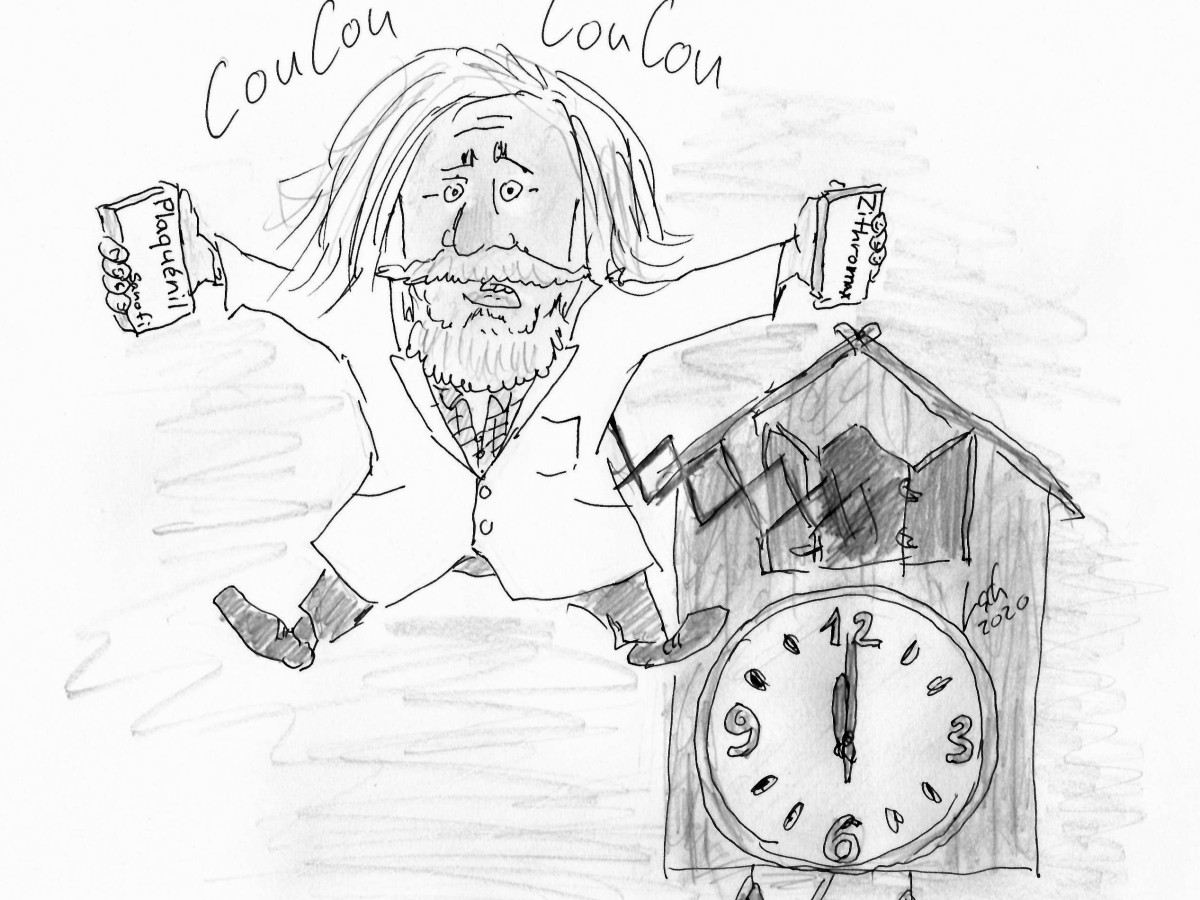
One year on: more fake data, financial fraud and illegal and falsified clinical trials by the chloroquine guru Didier Raoult.
8 papers by the now-retired IHU director Raoult and his colleagues were investigated, 7 of them are by now retracted (Dao et al 2010 (corrected), and the retracted Edouard et al 2016, Amrane et al 2018. Belkacemi et al 2018, Prudent et al 2018, Drali et al 2012, Angelakis et al 2014 and Angelakis et al 2013. For some reason none of Raoult’s clinical studies promoting his deadly cure of hydroxychloroquine for COVID-19 were ever investigated.
The report found that the authors (Raoult, but also the current IHU employees Jean-Christophe Lagier, Philippe Brouqui, Philippe Gautret, Michel Drancourt, Philippe Parola, Mathieu Million, Jean-Marc Rolain, and even the current IHU director Pierre-Edouard Fournier, breached the Declaration Of Helsinki and French law. The investigators “discovered that in addition to errors in the results, some of this work seemed to have been carried out without the necessary authorizations“. Frank and his colleague Victor Garcia published the entire report, I make a copy here:
Yet the report was never released. Aix-Marseille University (AMU) president Eric Berton let the journalists know: “The university took all the measures in its power from the first alerts and the report was immediately sent to the Ministry of Higher Education and Research,” and that he “privileged action over communication.”. As reminder, except of the retiree Raoult everyone else remains at IHU, only Raoult’s critics were put on trial in court, by IHU in fact. This is called “action” in France.
Liberté, Égalité, Fraternité – only for Raoult and French elites
“Didier Raoult, the IHU institute, and Eric Chabrière all decided to sue Leonid Schneider for defamation and insults, which they claim to be present in this article. They also sued me, because I translated it into French and put it on my blog ” – Alexander Samuel
L’Express also quotes the email exchanges between Fabrice Frank and Audrey Calvo, AMU ethics committee coordinator in charge of “ethics and research” issues. I personally also had the pleasure to have been threatened with lawsuits by Calvo, read June 2024 Shorts. She also informed me what the Declaration of Helsinki really means: the right of academic researchers to commit fraud and to be protected from investigations.
Frank placed a Freedom of Information inquiry with the university, regarding the Raoult investigative report, and was ignored for months. After a French authority confirmed to him that he was entitled to a reply, Calvo did reply, telling Frank she was “too busy”.
But the university reacted elsewhere. IHU researcher and AMU professor Eric Chabriere, Raoult’s most loyal henchman (and a hateful antisemite who received a Marseille court approval to use troll identities to threaten people with violence), slandered Frank on X (“Fabrice Franck never talks about his hobbies (sic) in Morocco. Does he receive people at his home? At a hotel? In private establishments?“)

France’s Ugly Brown Derriere
“legions d’honneurs, prix, promotion…. Le champ du cygne de ce système politico médical qui n’a plus le choix que de se soutenir mutuellement. Patience, en d’autre temps, on a donné des médailles aux derniers combatants. On connait la fin” – Capitaine Eric Chabriere.
Frank complained to AMU, and was in turn threatened with harassment lawsuits by Calvo. Publicly on LinkedIn, and by email:
“And yet everything has been said, I am harassed and threatened by pseudo-scientists, pseudo-whistleblowers, do you know that there is a legal status for whistleblowers, right? We will talk about it when you return from Morocco“

Calvo also put the president of the National Consultative Ethics Committee Jean-François Delfraissy in cc, who never reacted. Frank complained to the IHU vice-president Louis Schweitzer, and eventually, he obtained the report which Calvo denied him.
When journalists inquired, AMU defended Calvo. Indeed, the rector Berton and his fellow leaders love Calvo, for what she is:
“…the coordinator of the university’s ethics committee shares or “likes” articles from the BoulevardVoltaire site, one of the main far-right disinformation sites, but also from France Soir, a conspiracy and antivax blog that has distinguished itself in particular for its articles calling for the beheading of researchers who criticize Didier Raoult or who fight against scientific fraud. She also shares articles praising hydroxychloroquine and azithromycin, Professor Raoult’s treatment, the ineffectiveness of which has long been demonstrated. She also likes posts celebrating Alexandra Henrion Claude, the geneticist and muse of anti-vaccines anti Covid-19, or Donald Trump and his anti-vax advisor Robert Francis Kennedy, “likes” articles from ValeursActuelles, Radio Courtoisie, etc. She also frequently exchanges with Professor Eric Chabrière.”

On LinkedIn, you can observe Calvo and Chabriere (whom she was asked to investigate many times) openly chatting like the best buddies they are. I wouldn’t be surprised if they meet in Raoult’s or even Berton’s office to share a crate of wine and to make lists of “vermin” (a Chabriere experession!) to get rid of.
Riskier project with a potential
In Czechia, a great biomedical scholar received a big fat five year research grant.
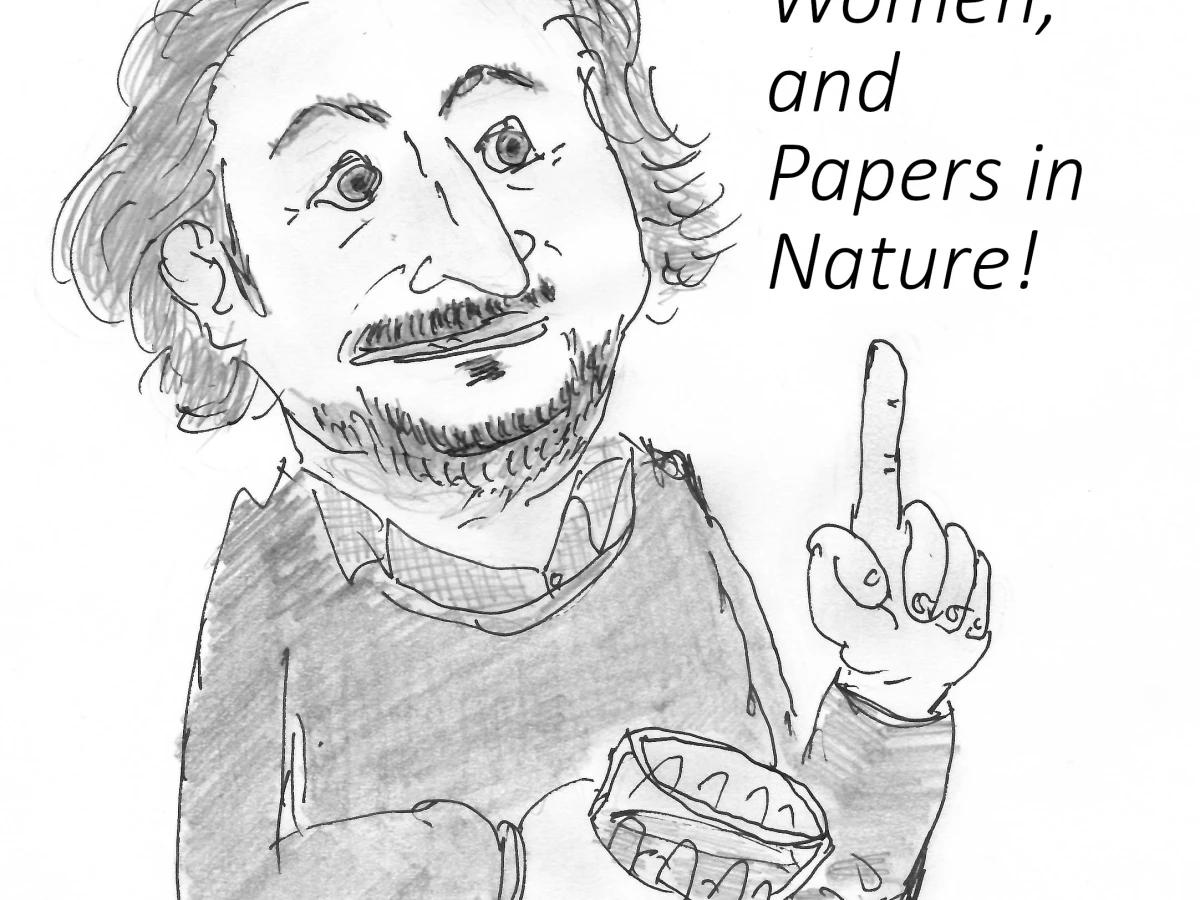
The Sex Privileges of mTORman David Sabatini
“The Plaintiff is Professor Sabatini […] the self-described powerful senior scientist, who had demanded sex of her when she was a graduate student ending her studies and about to start a fellowship at the Whitehead, in a program Sabatini would direct. […] And it is the man who had made it clear – throughout her…
Science cheater David Sabatini, who was sacked for sexual harassment at MIT, then almost recruited by the New York University (which had to cave in to student protests), the successfully recruited by the Institute of Organic Chemistry and Biochemistry (IOCB Prague) in Prague, Czechia (read November 2023 Shorts). But then, Sabatini buggered off back to Boston where he announced to open his own IOCB lab in Boston, sponsored by billionaire bros like Bill Ackman who pitched together last year to collect $25 million (read May 2024 Shorts). But then things again turned sour, as Science reported on 24 September 2024:
“In the latest blow to a once high-flying career, the U.S. Department of Health and Human Services (HHS) is seeking to debar biologist David Sabatini from receiving National Institutes of Health (NIH) grants based on 2021 sexual misconduct findings from an investigation by the Whitehead Institute for Biomedical Research (WIBR). The proposed action comes weeks before Sabatini plans to jump-start his research by opening a lab in Boston as a U.S. branch of his new employer, a Czech research institute. […]
The debarment letter came to light last week in a related Massachusetts lawsuit in which Sabatini is suing WIBR; its director, Ruth Lehmann; and his accuser, Kristin Knouse, a biologist now at the Koch Institute for Integrative Cancer Research and the Massachusetts Institute of Technology (MIT). […] Last year, a judge threw out all of the charges against WIBR except for workplace discrimination. Sabatini is appealing that decision […]
Sabatini asked the court to release privileged documents from the lawsuit for him to file with HHS in support of his argument he should not be debarred.”
To compensate for this tragic loss in USA, the national funding agency Czech Science Foundation (GA ČR) now gave Sabatini a five year EXPRO grant of CZK 50 million (around €2 million) for his IOCB project “The importance of nutrient detection and the influence of the mTORC1 signaling pathway on physiological processes in vivo” (#25-15254X).
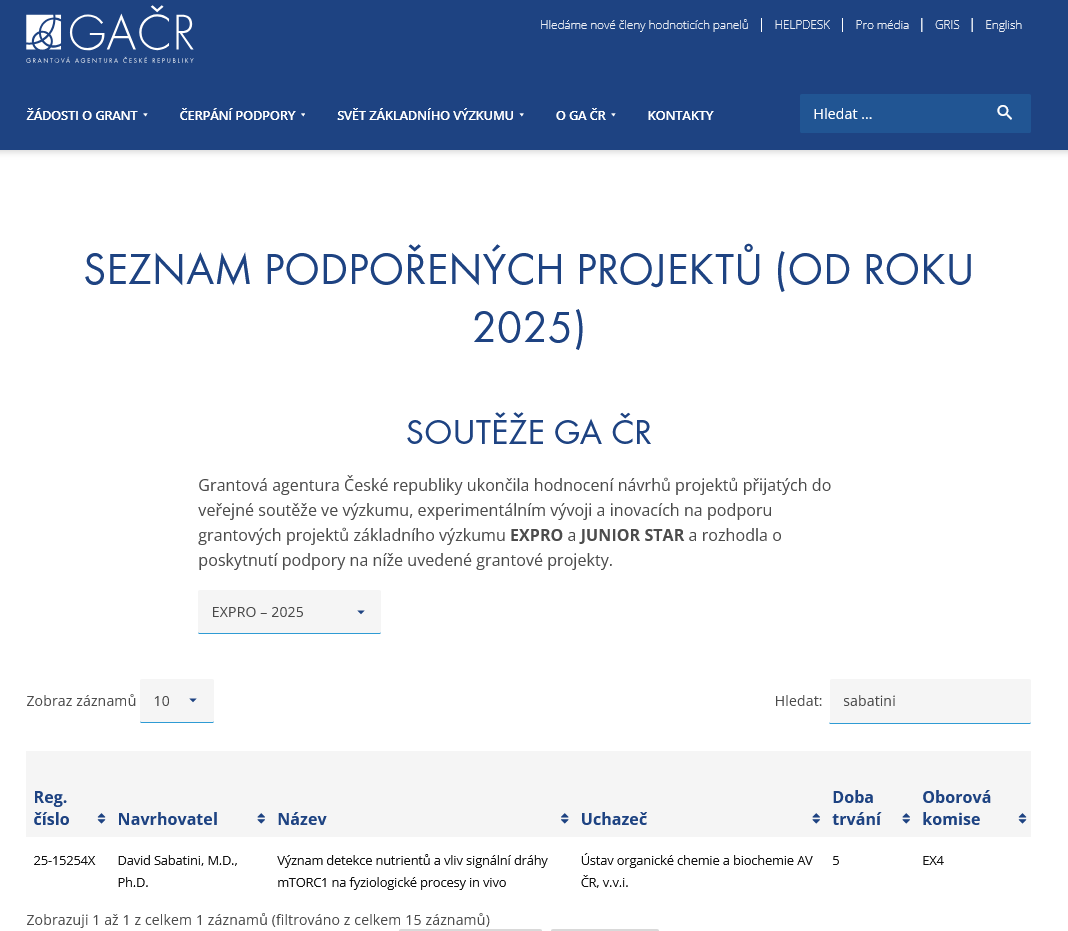
We are informed:
“The aim of these competitions is to offer above-standard conditions to excellent researchers who have been carefully selected by foreign experts. […] EXPRO will allow experienced scientists to implement riskier projects with the potential to achieve a breakthrough discovery.”
Two million Euro is an enormous amount of money, especially in Czechia. Financially, this Czech EXPRO grant is equivalent to an ERC one by the EU Commission. Indeed, “One of the responsibilities of the researchers is to submit an application for an ERC grant.”
However, the awarded scientist has to be physically present in Czechia, at least for 50% of the time. Will Sabatini return? Or will IOCB just lie to GA ČR and enjoy the money, while Sabatini drunkenly loafs on his sofa in Boston, swiping Tinder?

Dirty Old Men
Does being a science genius entitle you to sexual harassment, as academic authorities in Yale and elsewhere insist? Let’s look at papers by Michael Simons, Joseph Schlessinger and Arnold Levine.
Collegium Humanum
The mayor of the Polish city of Wroclaw, Jacek Sutryk, has been arrested in the wake of a huge diploma mill scandal. The fake Polish university with a franchise in Wroclaw is called “Collegium Humanum“.
Polish news site Money.pl reported on 14 December 2024, quoting the Ministry of Interior (Google-translated):
“This morning, on suspicion of crimes and irregularities in the Collegium Humanum, on the prosecutor’s orders, CBA agents detained the mayor of Wrocław. After completing the procedural activities, the detainee was transported to the local department of the National Prosecutor’s Office in Katowice,”
The prosecutor then announced that the mayor is charged “in an investigation into irregularities at the former Collegium Humanum university“.
“The services and the prosecutor’s office are investigating the potential illegal trade in diplomas by the Collegium Humanum.
Hundreds of “bogus” certificates could have come out of a private university. This mainly concerns postgraduate MBA , which open the way to taking up positions on supervisory boards and management boards of State Treasury companies. […]
The credibility of documents issued by Collegium Humanum was to be ensured, among others, by foreign universities. However, it turned out that they were not authorized to conduct MBA studies.
Collegium Humanum graduates included, among others: politicians, presidents and board members of State Treasury companies, officers of special services and military commanders”
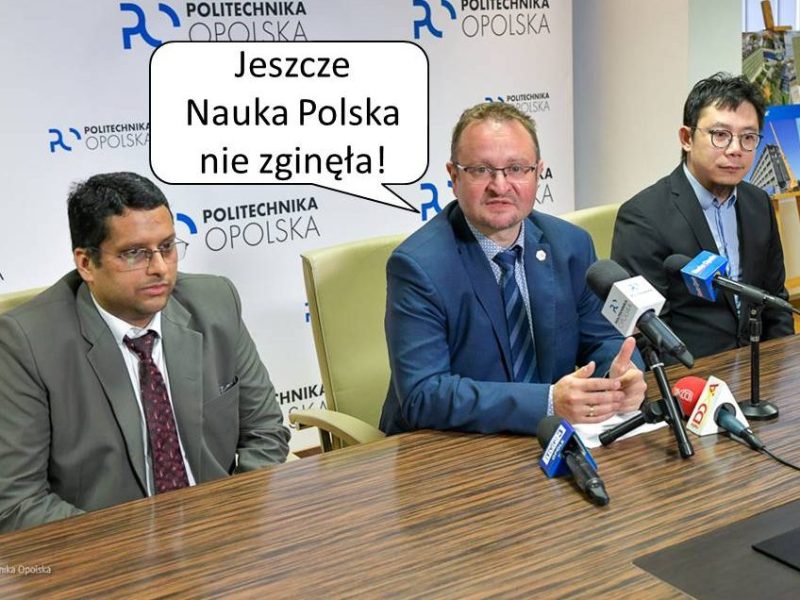
Polish science eaten by Papermill Krolczyk
“Prof. Grzegorz Królczyk, Vice-Rector for Science and Development of the Opole University of Technology, was elected President of the Council for Innovation in Higher Education and Science.”
Also the Wroclaw mayor Sutryk bough a diploma. but he thinks that’s legal because he didn’t pay with public money:
“I have talked about it many times in the media and I have no problem with it. This is what my private transfer looks like, from a private bank account, for my postgraduate studies. I paid for my studies from my own pocket, I also passed the exam ,” wrote Jacek Sutryk on Facebook .
The problem with this so-called university was subject to national and international reporting, especially by Newsweek.pl. In September 2024, Notes from Poland reported:
“A politician from Poland’s opposition Law and Justice (PiS) party, Ryszard Czarnecki, and his wife have been detained and questioned by prosecutors in relation to alleged corruption connected with a private university. […] the proceedings, which are being carried out by the Central Anticorruption Bureau (CBA) and the National Prosecutor’s Office, concern Collegium Humanum, a private university based in Warsaw. […]
Collegium Humanum, which was founded in 2018, has been shrouded in controversy since 2020, when media reports began to emerge that it was acting as a degree factory, providing MBAs to figures associated with the then-ruling PiS party that allowed them to take positions at state-owned companies.
It later also emerged that figures associated with the then-opposition Civic Platform (PO), which is now the main ruling party, also received degrees from the college.
Last year, six people associated with the university were detained. Its rector, Paweł Czarnecki, is facing 75 charges for a variety of alleged crimes, including for accepting over 1 million zloty in return for issuing over 1,000 diplomas, reports the Rzeczpospolita daily.
Some media reports have suggested that Paweł Czarnecki is Ryszard Czarnecki’s nephew, but the PiS politician denies they are related. Ryszard Czarnecki was, however, publicly associated with Collegium Humanum, where he is an honorary professor.”
Poland has many state-owned companies, after each election the top jobs were distributed among the relatives and friends of the ruling coalition. The PiS government passed a law that candidates for such jobs must have an MBA degree. But where to get one if you have none? This is how the diploma mill Collegium Humanum was founded. After PiS was deposed in the last Polish elections, a clean-up began.
The papermilling den of Gliwice
“As you will see, there is a lot of papermilling happening in Gliwice, as if this place has suddenly become attractive to many “researchers” from different corners of the papermilling spectrum. ” – Alexander Magazinov

You laugh, but a) Poland finally managed to free itself from far-right kakistocracy, and b) this is where USA is rapidly going.
Scholarly Publishing
They probably exaggerated a bit
We now go to Romania.
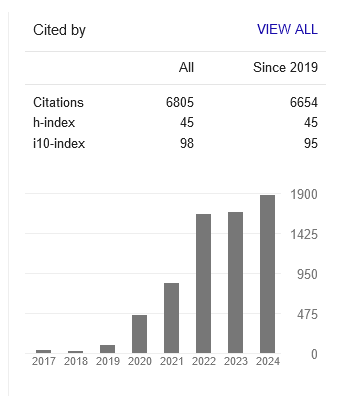
Meet Romulus-Dumitru Costache, project director at Transilvania University of Brasov working on “low-carbon resilient technologies”, and “flood hazard assessment expert” at Danube Delta National Institute for Research and Development. A man with knowledge and expertise his country depends upon.
Indeed, Costache, who graduated with PhD in 2017 (see his award application), is about to become one of the nation’s most highly cited researchers. He publishes research papers faster than others read, and everything he publishes becomes highly-cited state-of-the art right away. Here a paper by Costache where the papermill couldn’t be bothered to write his name correctly:
Alireza Arabameri, M. Santosh , Fatemeh Rezaie, Sunil Saha, Romulus Coastache, Jagabandhu Roy , Kaustuv Mukherjee, John Tiefenbacher, Hossein Moayedi Application of novel ensemble models and k-fold CV approaches for Land subsidence susceptibility modelling Stochastic Environmental Research and Risk Assessment (2022) doi: 10.1007/s00477-021-02036-7
The study contains blocks of nonsense references to someone named Chunwei Zhang, who is not a geographer, but a materials researcher in China willing to pay good money to be cited. Costache’s “coauthors” are from Iran, India and Vietnam, plus a geography professor from Texas (John Tiefenbacher) and an Australia-based papermiller called M Santosh (read June 2024 Shorts). Another international collaboration:
Asish Saha , Subodh Pal , Alireza Arabameri , Thomas Blaschke, Somayeh Panahi , Indrajit Chowdhuri , Rabin Chakrabortty , Romulus Costache , Aman Arora Flood Susceptibility Assessment Using Novel Ensemble of Hyperpipes and Support Vector Regression Algorithms Water (2021) doi: 10.3390/w13020241
There, we have blocks of citations to works by Chao Zuo on the topic of computational microscopy.
Here is an MDPI paper of Costache’s with his wife Iulia , and coauthors from Vietnam, India and Austria:
Romulus Costache, Alireza Arabameri, Thomas Blaschke, Quoc Bao Pham, Binh Thai Pham, Manish Pandey, Aman Arora, Nguyen Thi Thuy Linh, Iulia Costache Flash-Flood Potential Mapping Using Deep Learning, Alternating Decision Trees and Data Provided by Remote Sensing Sensors Sensors (2021) doi: 10.3390/s21010280
“In recent years, new techniques and models have been developed by researchers worldwide [10,11,12,13,14,15,16,17,18,19,20,21,22,23,24,25,26,27,28,29,30,31,32,33,34,35].”.
None of these references is of any scientific relevance except to their Chinese authors who paid to be cited.
There is an German coauthor on the two papers above: the geographer Thomas Blaschke, who, as Wikipedia informs us, is one of “40 most cited scientists worldwide and is therefore the most frequently cited researcher at Paris-Lodron University” in Salzburg, Austria, where he is professor since 2001. I wrote to Blaschke and asked to explain these collaborations and especially the inappropriate mass citations. This was his reply (translated):
“I have co-published with several international author groups, including the two publications mentioned.
The hard work (citations on the state of the art) mostly comes from doctoral students. In one of the cases mentioned, they probably exaggerated a bit and claimed the state of the art with 26 publications.
However, this does not mean that the publications are in doubt; according to Google Scholar, they have been cited 70 times and 134 times respectively.
If you have a specific question, feel free to ask more!“
Indeed, those two papers are very well-cited. By papermillers, including by Blaschke’s valued collaborator Costache himself. There are however no PhD students of Blaschke’s among the authors, not sure why the need to reflexively blame them. I inquired about that, but Blaschke reneged on his offer to answer my questions.
Advised to take caution
In October 2024 Shorts, I wrote about the case of the Australian melanoma researcher Peter Hersey, professor at the University of Sydney, who used to be research director at the Newcastle Melanoma Unit at the University of Newcastle Australia, where he still runs a melanoma clinic. There, Hersey installed his close associate Xu Dong Zhang as his successor.
The two oncologists received a retraction in September 2024 and they have tons of fake papers on PubPeer. This one was however decided by the qualified and dedicated editors to be way too fraudulent to be retracted:
N M Mhaidat , X D Zhang , J Allen , K A Avery-Kiejda , R J Scott , P Hersey Temozolomide induces senescence but not apoptosis in human melanoma cells British Journal of Cancer (2007) doi: 10.1038/sj.bjc.6604017


On 18 November 2024, the Editor-in-Chief and University of Glasgow professor Jeff Evans MB, BS, MD, FRCP, FRCPE, FRCPGlasg, FACP (UK), issued this Editorial Expression of Concern:
“The Editor-in-Chief is issuing this Editorial Expression of Concern to inform the readers about the following concerns:
- a.Figures 2B and 4A, GAPDH bands appears to be similar;
- b.Figure 2B, SK-mel-28 Pro-caspase-3 bands appear to be similar, and Figure 2B Cleaved Caspase-3, appears to have repetitive features;
- c.Figure 2C PUMA MM200 lanes 1 and 2 appear to be similar;
- d.GAPDH bands in Figure 2C, MM200 and and Figure 5D SK-mel-28 appears to be similar;
- e.Figure 4A p53 lanes 2 and 3 appears to be similar
Due to age of article, raw images are not available for further analysis. Readers are therefore advised to interpret these results with caution.
Authors N. M. Mhaidat and P. Hersey did not respond to correspondence from the Publisher about this Editorial Express of Concern. The Publisher has been unable to find current email addresses of authors X. D. Zhang, J. Allen, K. A. Avery-Kiejda, and R. J. Scott.”
As it happens, the same British Journal of Cancer issued a similarly helpless Editorial Expression of Concern to a fake paper by Manel Esteller and Carlos Cordon-Cardo, Aleman et al 2008 (“Given the age of the article, the authors no longer have access to their original data, making it impossible to verify or correct the images. Readers are advised to take caution“. The concerned study is discussed here:

Carlos Cordon-Cardo and Friends
The Schneider Rule teaches that if you wish to meet many science cheaters you must follow one of them.
Case closed, presumably to prevent future retraction requests? Unlike Mount Sinai professor Cordon-Cardo, both Hersey and Zhang are under investigation by their employer. This happened following Claire Francis’s notification to the University of Newcastle. This was announced by Retraction Watch one month later, on 4 November 2024. On 12 November 2024, The Sydney Morning Herald reported:
“Several scientific papers by two of Australia’s leading cancer researchers are being investigated by the University of Newcastle after research integrity concerns were raised. […] Zhang has received $6,093,479 in taxpayer-funded medical research grants as chief investigator, while Hersey has received $2,349,374. […]
In an emailed statement, University of Newcastle’s pro vice-chancellor of research, Professor Juanita Todd, said she could “confirm the university is currently reviewing concerns raised regarding the research publications in question. However, we cannot comment until the review is complete.”
The University of Sydney confirmed it was looking into the matter as well. The National Health and Medical Research Council said it was aware of the matter but had no remit to investigate.”
Meanwhile, the sleuth Claire Francis is still digging and finding things. Like this:
F Yang , K H Tay , L Dong , R F Thorne , C C Jiang , E Yang , H-Y Tseng , H Liu , R Christopherson , P Hersey , X D Zhang Cystatin B inhibition of TRAIL-induced apoptosis is associated with the protection of FLIP(L) from degradation by the E3 ligase itch in human melanoma cells Cell Death & Differentiation (2010) doi: 10.1038/cdd.2010.29


Other sleuths joined:
Wayne D. Thomas , Xu Dong Zhang, Agustin V. Franco , Tam Nguyen , Peter Hersey TNF-related apoptosis-inducing ligand-induced apoptosis of melanoma is associated with changes in mitochondrial membrane potential and perinuclear clustering of mitochondria The Journal of Immunology (2000) doi: 10.4049/jimmunol.165.10.5612

John A Loadsman: “Could the authors please comment on the similarity between the highlighted cells in three of the panels in this figure?” (Fig 4)
Retraction Watchdogging
None of the authors responded
Retraction for Britain’s top ophthalmologist, the UCL professor Robin R Ali (read December 2023 Shorts) and his colleagues in Harvard. The last author Tiansen Li is now senior investigator at National Eye Institute of NIH in Bethesda.
X Sun , B Pawlyk , X Xu , X Liu , O V Bulgakov , M Adamian , M A Sandberg , S C Khani , M-H Tan , A J Smith , R R Ali, T Li Gene therapy with a promoter targeting both rods and cones rescues retinal degeneration caused by AIPL1 mutations Gene Therapy (2010) doi: 10.1038/gt.2009.104


The paper was retracted on 15 November 2024:
“The Editor-in-Chief has retracted this article. After publication, concerns were raised regarding the western blot images presented in the figures. Specifically:
- In Fig. 1b, the Cone PDE blot lanes 4–6 appear to have a different background compared with the rest of the image, and the bands appear highly similar to Fig. 1c Rod PDE lanes 4–6.
- Several Ac-tubulin bands appear to be highly similar in Fig. 5a and b.
The Editor-in-Chief therefore no longer has confidence in the presented data.
None of the authors have responded to any correspondence from the editor or publisher about this retraction.”
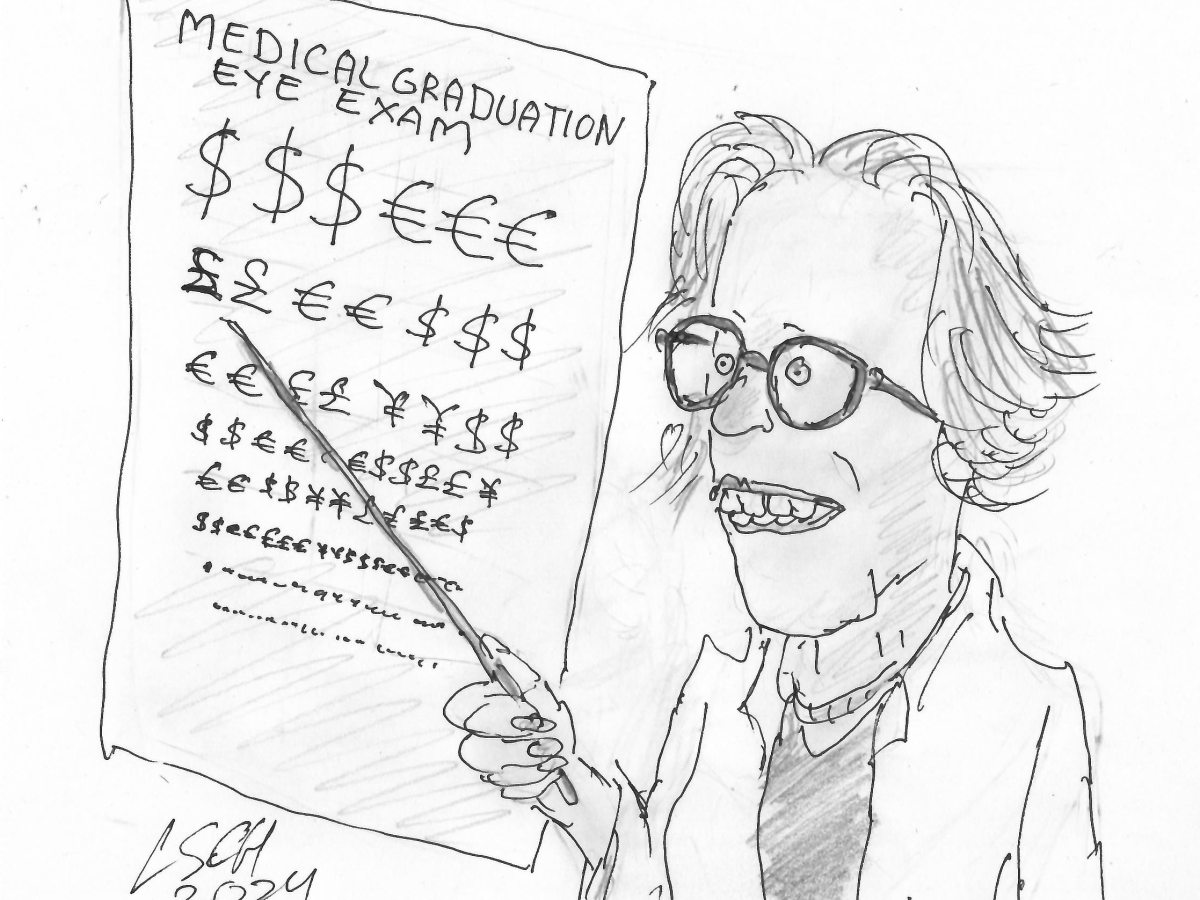
My Big Fat Greek Ophthalmology
From fake cancer research to fake ophthalmology – just follow Mitsi and Vassiliki and you’ll meet Dementios and other bad eye doctors, including a horrible German we hoped to never see again.
Not everything is so negative. This, by Li and Ali, was corrected three times, by an Oxford University Press journal which hates whistleblowers and loves fraud. The data is based on the PhD thesis of Ali’s student Mei Hong Tan, the thesis is full of falsified data also:
Mei Hong Tan, Alexander J. Smith, Basil Pawlyk, Xiaoyun Xu , Xiaoqing Liu , James B. Bainbridge, Mark Basche , Jenny McIntosh, Hoai Viet Tran , Amit Nathwani, Tiansen Li, Robin R. Ali Gene therapy for retinitis pigmentosa and Leber congenital amaurosis caused by defects in AIPL1: effective rescue of mouse models of partial and complete Aipl1 deficiency using AAV2/2 and AAV2/8 vectors Human Molecular Genetics (2009) doi: 10.1093/hmg/ddp133


Feel free to peruse the above study’s two corrections, Correction 1 (December 2023) and Correction 2 (April 2024). More by Li:
Basil S. Pawlyk , Oleg V. Bulgakov , Xiaoqing Liu , Xiaoyun Xu , Michael Adamian , Xun Sun , Shahrokh C. Khani , Eliot L. Berson , Michael A. Sandberg , Tiansen Li Replacement Gene Therapy with a HumanRPGRIP1Sequence Slows Photoreceptor Degeneration in a Murine Model of Leber Congenital Amaurosis Human Gene Therapy (2010) doi: 10.1089/hum.2009.218

Or this, already corrected in 2005 because ““r/rpeak” incorrectly appeared as “pA” for the ordinate label in Fig. 5B“:
Xiaoqing Liu , Oleg V Bulgakov , Xiao-Hong Wen , Michael L Woodruff , Basil Pawlyk , Jun Yang , Gordon L Fain , Michael A Sandberg , Clint L Makino , Tiansen Li AIPL1, the protein that is defective in Leber congenital amaurosis, is essential for the biosynthesis of retinal rod cGMP phosphodiesterase Proceedings of the National Academy of Sciences (2004) doi: 10.1073/pnas.0405160101

What is it with ophthalmology…

Jan and Ricky, two blind mouse ophthalmologists
“I am the authorised spokesperson on this matter” – Prof Jan Provis, emerita dean
Vital to the integrity
Another retraction for the Australian neuroscientists Gilles Guillemin and his former mentee Nady Braidy. Their fake science as recorded on PubPeer was exposed in this article, which I shared with their employers, the Macquarie University and UNSW:
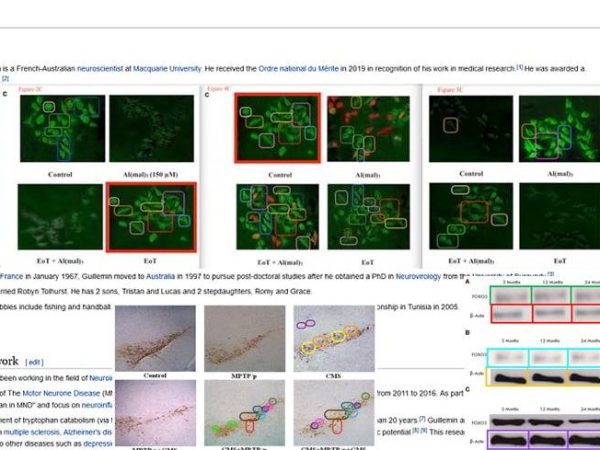
“NONE of the work HAS NOT BEEN DONE in my lab”
“you can make a mistake once, but twice hmmmm I’d like to have my name removed from the potential revised version of this manuscript”, – Prof Guillemin.
Guillemin and his wife Robyn Tolhurst (they embezzled the Macquarie’s funds together, read January 2023 Shorts) were kicked out of Macquarie in 2023 (with Retraction Watch taking “exclusive” credit) and decided to focus on selling food supplements (read October 2024 Shorts). Sir Gilles (as he used to call himself) also started to buy authorships from Iranian papermills, on whatever topic they had on offer (read December 2023 Shorts).
Braidy however remained employed by UNSW as Senior Research Fellow. In fact, exactly because of this UNSW was investigated, as ABC News reported in December 2023:
“The Australian Research Integrity Committee (ARIC) is set to investigate UNSW’s handling of an alleged case of research misconduct.
The allegations were first brought to the attention of UNSW in September 2021 by two research integrity experts. They involve scientists from the University’s Centre for Healthy Brain Ageing (CHeBA).
But more than two years later, UNSW has not completed its preliminary assessment of the allegations, the first step in determining if a full investigation is required […]
Nine of the papers flagged for investigation were led by Dr Nady Braidy, who leads CHeBA’s Brain and Ageing Lab. […]
A university spokesperson stated the case was “complex, covering multiple institutions, investigators, and publications” and noted the university “is as eager to resolve the matter as the many stakeholders are” and “additional resourcing” had been allocated to the case in recent months.
“It is vital to the integrity of all investigations that they are conducted in full before a conclusion is reached,” they said.
Correspondence seen by the ABC suggests the preliminary assessment will not be completed before March 2024.”
Now it’s November 2024. Braidy remains listed as UNSW employee. Yet an email I sent him how bounced. I guess they finally let him go. No big loss also here:
Nady Braidy, Gilles J. Guillemin, Hussein Mansour , Tailoi Chan-Ling, Anne Poljak, Ross Grant Age related changes in NAD+ metabolism oxidative stress and Sirt1 activity in wistar rats PLOS ONE (2011) doi: 10.1371/journal.pone.0019194

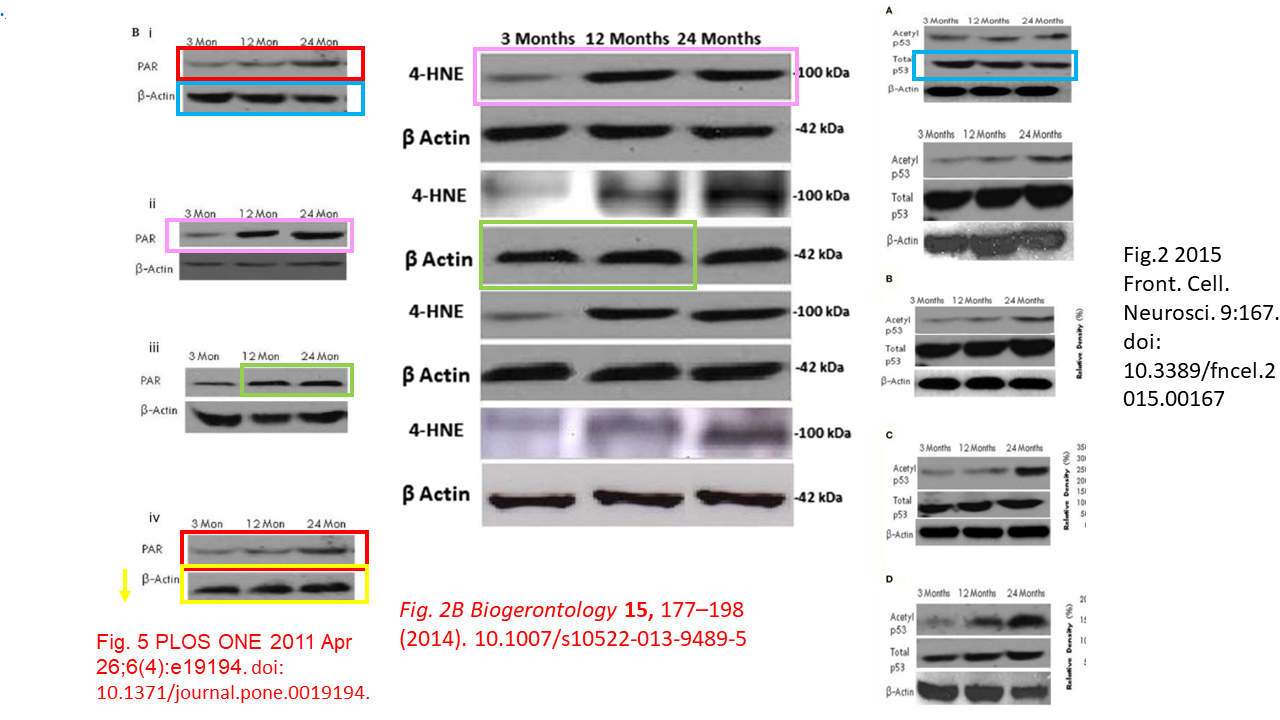
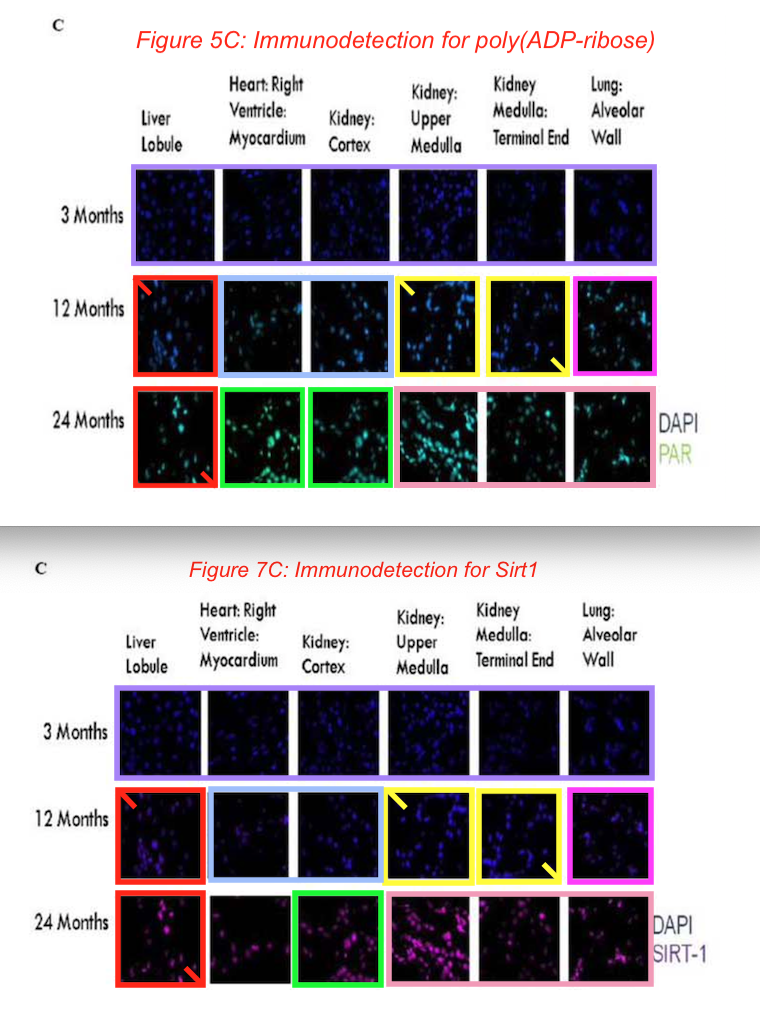
Boxes of the same color highlight panels that look more similar to each other than expected. They represent different primary antibodies (PAR in Figure 5C or SIRT-1 in Figure 7C), time points, or anatomical sites. Note that the exposure or orientation varies as well.”
In January 2022, PLOS One issued an Expression of Concern regarding “western blots in Figs 2, 5, 7 and 8, microscopy images in Figs 5 and 7, and charts in Fig 1.“, since another PubPeer user noticed that “The error bars in most of the figures in this paper are also remarkably similar“.
More was found after that by Sholto David, which suggests that Brady’s PhD thesis might be dodgy as well:

On 13 November 2024, the retraction arrived:
“After publication of the Expression of Concern on this article [1, 2], additional concerns were raised about results presented in Figs 7 and 8. Specifically, in Figs 7Biv, 8A and 8C in this article, a number of further blots and/or bands appear similar to each other across two or more figure panels. Some blots and/or bands in these figures of [1] also appear similar to images in Figs 2 and 4 in [3].
The authors have not provided the underlying data that support the published results. As such PLOS cannot resolve the concerns about the similarities between the articles [1, 3, 4] summarized above and in the Expression of Concern [2] and so the PLOS ONE Editors retract this article.
All authors either did not respond directly or could not be reached.”
Significant time elapsed
The fallen rector of the University of Messina, Salvatore Cuzzocrea, will soon have no papers left. He received two more retractions now, in the same society journal published by Wiley. It makes it nine retractions for Cuzzo, with more to come.
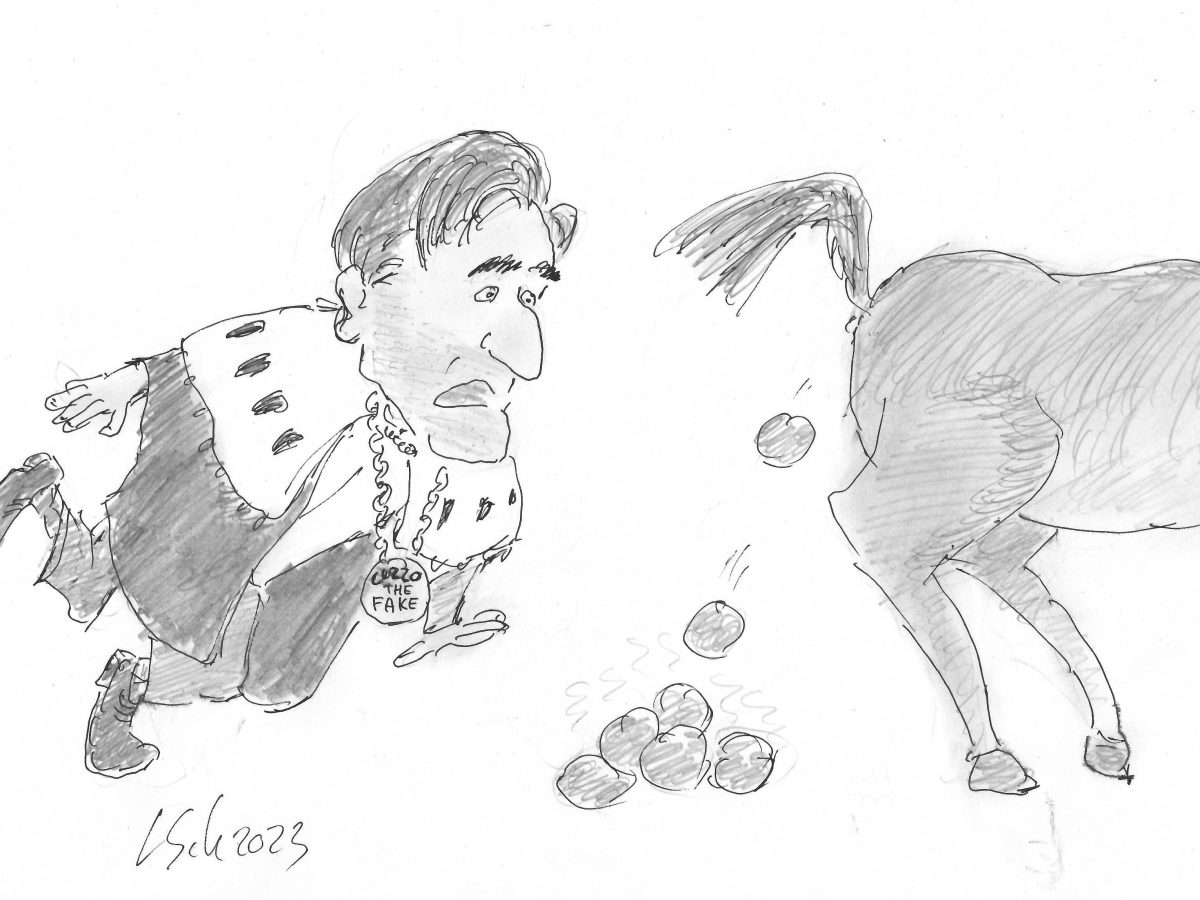
Cuzzocrea’s Magnificent Fall
“These unscrupulous charlatans in Messina should be fired on the spot tomorrow morning, forced to return twenty years of undeserved wages and sent to work the land” – Aneurus Inconstans

Nr 1, with Cuzzo’s former mentor in London, the Queen Mary University professor Chris Thiemermann:
Salvatore Cuzzocrea, Prabal K Chatterjee, Emanuela Mazzon, Laura Dugo , Ivana Serraino , Domenico Britti , Giuseppe Mazzullo , Achille P Caputi, Christoph Thiemermann Pyrrolidine dithiocarbamate attenuates the development of acute and chronic inflammation British Journal of Pharmacology (2002) doi: 10.1038/sj.bjp.0704463


The retraction was published on 17 November 2024.
“The retraction has been agreed due to concerns raised by third parties on the data presented in the article.
Specifically, the Western Blot presented in Figure 6 was found to have been presented in multiple previous publications with at least one common author and in a different scientific context. Furthermore, duplication has been detected within Figure 3. Due to the significant time elapsed since publication, the authors were unable to retrieve the full set of original data, and the data provided was found insufficient to address the concerns. As the editors have lost trust in the accuracy and integrity of the overall body of data presented in the article and consider the conclusions invalid, the article must be retracted.”
It is “merely” the sixth retraction for Thiemermann, but five more are expected to come out in Frontiers soon, for Wall et al 2019, O’Riordan et al 2019, O’Riordan et al 2020, Mohammad et al 2021 and Verra et al 2023.
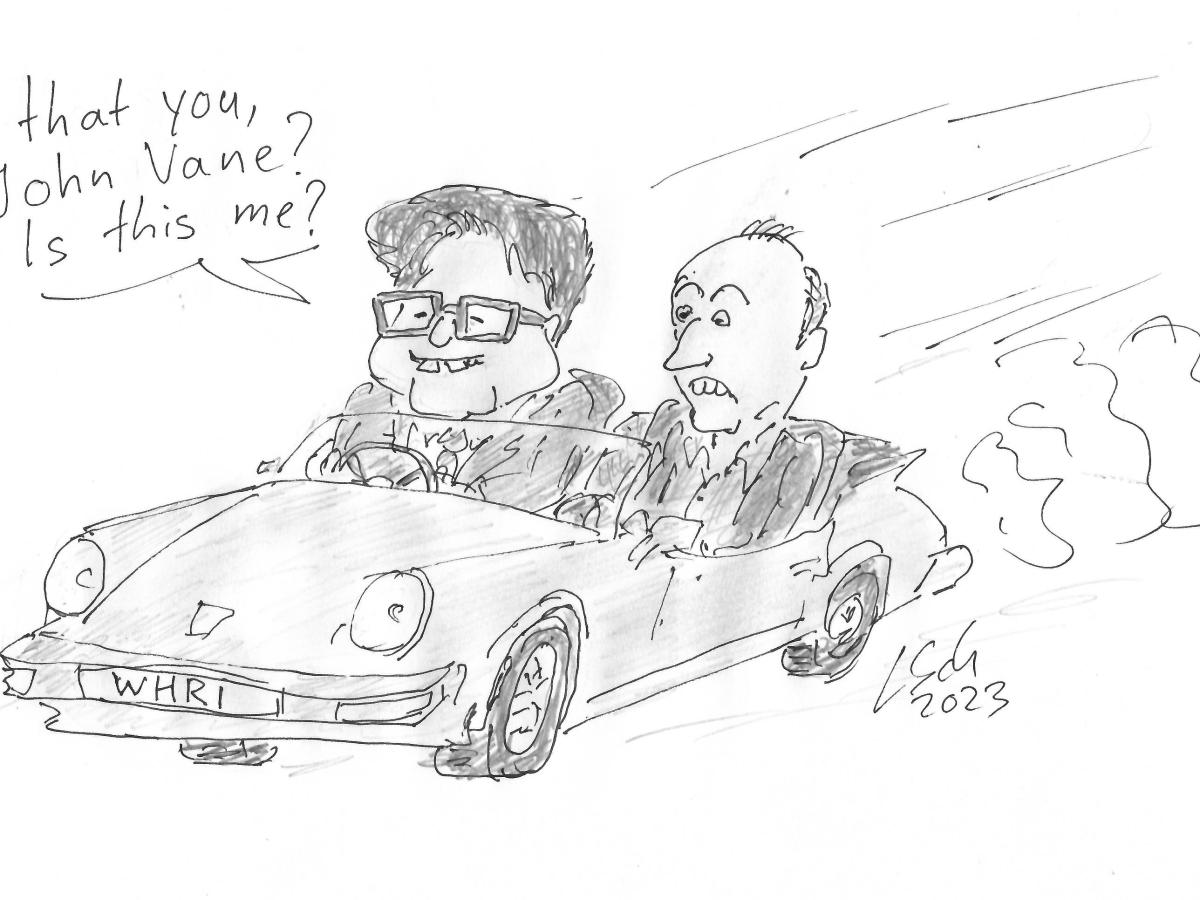
Queen Mary and John Vane’s Cowboys
Welcome to the the William Harvey Research Institute in London. Meet two proteges of its founder, the late Nobelist Sir John Vane: Chris Thiemermann and Mauro Perretti. Then meet their own rotten mentees, especially Salvatore Cuzzocrea and Jesmond Dalli.
The second Cuzzocrea retraction is without Thiemermann, but with Cuzzo’s Messina colleague Achille Caputi, former dean of medicine and clinic director, former president of the Italian Society of Pharmacology and former Vice President of Italian Society of Toxicology. Caputi retired as emeritus in 2016 and started to push homeopathy as member of the “Noble Pharmaceutical Chemical College”.
Salvatore Cuzzocrea, Emanuela Mazzon, Carla Bevilaqua , Giuseppina Costantino , Domenico Britti , Giuseppe Mazzullo , Angela De Sarro , Achille P Caputi Cloricromene, a coumarine derivative, protects against collagen-induced arthritis in Lewis rats British Journal of Pharmacology (2000) doi: 10.1038/sj.bjp.0703695

This retraction was also issued on 17 November 2024, and mentioned:
“Specifically, image elements of Figure 7 were found to have been published in a different article with at least one common author and in a different scientific context. Further investigation by the journal team revealed that also Figure 4B was published in the same article to represent a different treatment.”
Not able to provide an explanation
We remain in Italy. I wrote in February 2024 Shorts about the EU- and Nestle-funded chocolate researchers Vincenzo Talesa and Cinzia Antognelli of the University of Perugia. Back then, I received only silence from this university, but the publishers announced to investigate. Now the first two retractions arrived, both in Wiley journals.
In the first case, the Italians stole data from a study by an unrelated group at University of Pittsburgh:
Vincenzo N Talesa , Ivana Ferri , Guido Bellezza , Harold D Love , Angelo Sidoni , Cinzia Antognelli Glyoxalase 2 Is Involved in Human Prostate Cancer Progression as Part of a Mechanism Driven By PTEN/PI3K/AKT/mTOR Signaling With Involvement of PKM2 and ERα The Prostate (2017) doi: 10.1002/pros.23261
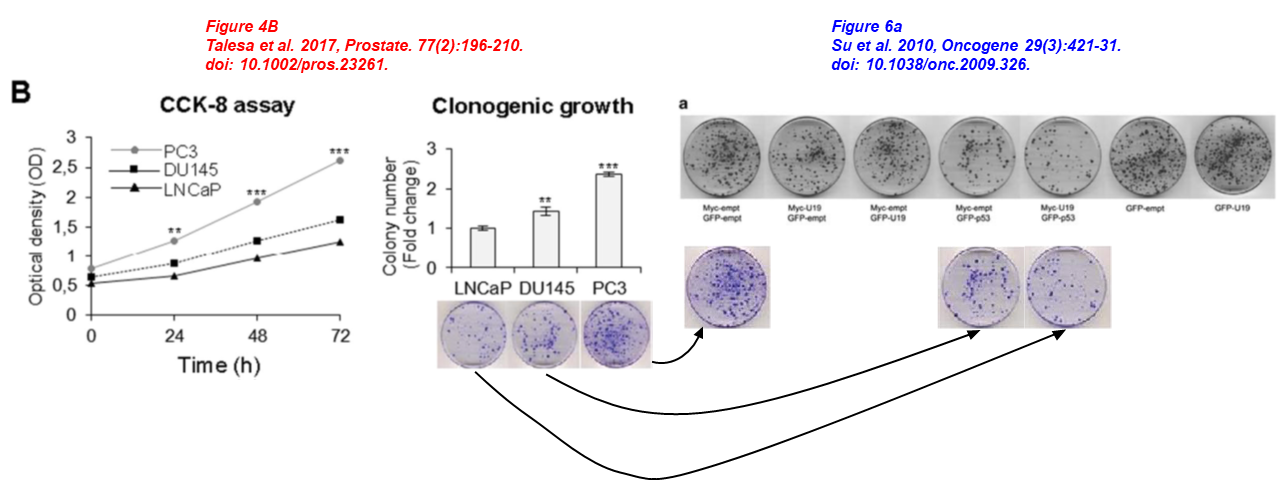
The retraction came on 17 November 2024:
“The publisher received a report from a third party which detailed duplications of the cell staining images in Figure 4B of this article from a previously-published article by a different group of authors (Su et al. 2010 [https://doi.org/10.1088/1755-1315/687/1/012140]). The authors responded to an inquiry by the publisher, but they were not able to provide original, unmodified data or images for the experiments reported in their article. The authors were also not able to provide an explanation for the duplication of images from another article. The retraction has been agreed to because the duplication of images from another article which reports on different experimental conditions fundamentally compromises the conclusions of the article. The authors did not respond to our notice regarding the retraction.
This is the second retraction, also here the data was stolen, this time from some Chinese cheaters. Again, the odd non-Italian coauthor is the US American Harold Love of Vanderbilt:
Cinzia Antognelli, Ivana Ferri , Guido Bellezza, Paola Siccu , Harold D. Love , Vincenzo N. Talesa, Angelo Sidon Glyoxalase 2 drives tumorigenesis in human prostate cells in a mechanism involving androgen receptor and p53‐p21 axis Molecular Carcinogenesis (2017) doi: 10.1002/mc.22668


Moreover, it is even more astonishing that all the images of crystal violet stainings of this article by Antognelli et al. 2017 also appear in Figure 4B of Liu et al. 2015, which is a paper published two years before by a completely unrelated group of people on a completely unrelated topic.”
The retraction appeared on 15 November 2024 and is worded similarly:
The publisher received a report from a third party which detailed duplications of the cell staining images in Figures 2 F and 5 C of this article from a previously-published article by a different group of authors (Liu et al. 2015 [https://doi.org/10.3390/ijms160921897]). Additional investigation by the publisher uncovered duplications and rotations of cell staining images in Figures 2 F, 3B, and 5 C. The authors responded to an inquiry by the publisher, but they were not able to provide original, unmodified data or images for the experiments reported in their article. The authors were also not able to provide an explanation for the duplication of images with another article or the duplication and rotation of images within this article. The retraction has been agreed to because the duplication of images from another article which reports on different experimental conditions, as well as duplication and rotation of images between figures in this article, fundamentally compromises the conclusions of the article. The authors did not respond to our notice regarding the retraction.”
It is probably none of my business where the chocolate giant Nestle invests its sugar-trafficking money, but I hoped for a reaction from Isidoros Karatzas, Head of the Research Ethics and Integrity Sector at the European Commission. Silence there also, but Talesa and Antognelli remain proud members of the EU and Nestle jointly funded Choko-Age consortium. Our public money goes to all the right pockets.
Donate!
If you are interested to support my work, you can leave here a small tip of $5. Or several of small tips, just increase the amount as you like (2x=€10; 5x=€25). Your generous patronage of my journalism will be most appreciated!
€5.00

 For Better Science
Turns out, this Thiemermann paper in Frontiers was already retracted, on 8 November 2024:
Chiara Verra, Shireen Mohammad , Gustavo Ferreira Alves , Elisa Porchietto , Sina Maren Coldewey , Massimo Collino , Christoph Thiemermann Baricitinib protects mice from sepsis-induced cardiac dysfunction and multiple-organ failure Frontiers in Immunology (2023) doi: 10.3389/fimmu.2023.1223014
Fig 4:
Retraction:
LikeLiked by 2 people
This one escaped my notice. Then are 7 the retractions for “Porsche” Chris as of today.
LikeLiked by 2 people
Pingback: Davis Joseph, son of Florian Kongoli, sues McGill University for 500 milion dollar - Pepijn van Erp