

Schneider Shorts of 23 August 2024 – why an mpox drug failed, Slovak professor’s dirty secret, Italian alpha male’s second retraction, Kazakh-Hungarian collaboration spammed, with confusion about sold authorships, tricky assays, a book of curcumin, and finally, with ACS setting priorities straight.
Table of Discontent
Science Breakthroughs
- Close, but no SIGA – How Dennis Hruby’s mpox drug tecovirimat failed
Science Elites
- A pace that scientists cannot explain – Beata Gavurova’s dirty secret
- Sometimes my lab people may take wrong images – Zhiqiang Qin’s tricky assays
Scholarly Publishing
- Inadvertently duplicated – David Argyle assuages concerns
- We understand this is frustrating – ACS sets its priorities straight
- Curcumin-Based Nanomedicines as Cancer Therapeutics – Elsevier issues a book
- Highly diverse scientific background and geographical origin – Elsevier concerned by papermilling
Retraction Watchdogging
- Added to revised paper without explanation – Iranian papermill sold authorships, again
- Duplication, rescaling and splicing – Giorgio Palù and Cristina Parolin lose another paper
- Modified dragonfly algorithm and whale optimization approach – Sage retracts 11 papers with one notice
- Treated as spam – Lorant Denes David and his Kazakh collaboration
Science Breakthroughs
Close, but no SIGA
On 16 August 2024, Nature informed us that the hopes for the drug tecovirimat as a Mpox (monkey-pox) cure have failed.
“Tecovirimat, an antiviral drug, is used to treat mpox, despite there being limited clinical evidence that it resolves symptoms. The drug was originally developed to treat smallpox, which is caused by a related virus; both are members of the Orthopoxvirus genus. […]
During the trial, launched by the NIH’s National Institute of Allergy and Infectious Diseases (NIAID) in Bethesda, Maryland, and the DRC’s National Institute of Biomedical Research in Kinshasa, people infected with clade I were given either tecovirimat or a placebo pill. According to the NIH, which announced early results on 15 August, the antiviral did not reduce the duration of mpox symptoms compared with the placebo. […]
The maker of tecovirimat, SIGA Technologies, based in New York City, suggested in a press release that trial participants who had received early treatment with the drug and those who had severe disease had shown a “meaningful improvement”. But the full data have not been released. They are being analysed, and a manuscript is being prepared for submission to a peer-reviewed journal…”
Cheshire has a theory why this drug may have failed. For that, he checked the published research by SIGA‘s Executive Vice President and Chief Scientific Officer (former Vice President of Research) Dennis E. Hruby, who also used to be department chair of microbiology at the Oregon State University. Here is Hruby’s research on pox viruses:
Chelsea M Byrd, Dennis E Hruby Development of an in vitro cleavage assay system to examine vaccinia virus I7L cysteine proteinase activity Virology Journal (2005) doi: 10.1186/1743-422x-2-63


“There seem to be some similar issues in the background of the middle panel of Figure 2.”
There’s also a set of three papers on pox viruses by Hruby where mice were recycled. It may be very, very distantly relevant to the current mpox clinical fail, since, I hope you forgive us for making this inappropriately strenuous association, the drug tested in these mouse studies was ST-246 (now sold as TPOXX), which is, uhm, tecovirimat:
- Douglas W. Grosenbach, Robert Jordan, David S. King , Aklile Berhanu , Travis K. Warren , Dana L. Kirkwood-Watts , Shanthakumar Tyavanagimatt, Ying Tan , Rebecca L. Wilson , Kevin F. Jones , Dennis E. Hruby Immune responses to the smallpox vaccine given in combination with ST-246, a small-molecule inhibitor of poxvirus dissemination Vaccine (2008) doi: 10.1016/j.vaccine.2007.11.095
- Aklile Berhanu , David S. King , Stacie Mosier , Robert Jordan, Kevin F. Jones , Dennis E. Hruby , Douglas W. Grosenbach ST-246 Inhibits In Vivo Poxvirus Dissemination, Virus Shedding, and Systemic Disease Manifestation Antimicrobial Agents and Chemotherapy (2009) doi: 10.1128/aac.00678-09
- Robert Jordan, Janet M. Leeds, Shanthakumar Tyavanagimatt, Dennis E. Hruby Development of ST-246® for Treatment of Poxvirus Infections Viruses (2010) doi: 10.3390/v2112409


Here is another ST-246/tecovirimat paper by Hruby, Fig 5 contains a duplication:
Sophie Duraffour, María M. Lorenzo , Gudrun Zöller , Dimitri Topalis , Doug Grosenbach , Dennis E. Hruby, Graciela Andrei , Rafael Blasco , Hermann Meyer , Robert Snoeck ST-246 is a key antiviral to inhibit the viral F13L phospholipase, one of the essential proteins for orthopoxvirus wrapping Journal of Antimicrobial Chemotherapy (2015) doi: 10.1093/jac/dku545

According to Hruby’s company SIGA:
“Since the 2022 outbreak, TPOXX has been recommended by the CDC for treatment, off-label, following a formal diagnosis or suspected case of mpox […]Tecovirimat-SIGA is approved by the EMA and MHRA for the treatment of smallpox, mpox, cowpox, and vaccinia complications following vaccination against smallpox in adults and children weighing at least 13kg. Tecovirimat is not yet approved as a treatment for mpox outside of the EU and UK.”
Because TPOXX worked so great pre-clinically, right? Thanks to Hruby’s research, SIGA also has “an improved candidate for the treatment of Lassa fever“:
Kathleen A. Cashman , Mark A. Smith , Nancy A. Twenhafel , Ryan A. Larson , Kevin F. Jones , Robert D. Allen , Dongcheng Dai , Jarasvech Chinsangaram , Tove’ C. Bolken , Dennis E. Hruby, Sean M. Amberg, Lisa E. Hensley , Mary C. Guttieri Evaluation of Lassa antiviral compound ST-193 in a guinea pig model Antiviral Research (2011) doi: 10.1016/j.antiviral.2011.02.012

Science Elites
A pace that scientists cannot explain
In an article from October 2023, I mentioned a papermill fabrication in a certain problematic Elsevier journal, Fuel:

Elsevier chooses Papermills and Patriarchy, Chief Editor resigns
“Among these candidates that you “vetted” were people with no expertise in the field (either 0 or 1 publication), people with longer PubPeer profiles and more retractions than most people have articles on their CVs, and people whose names appear as authors on sold paper sites. ” – Jillian Goldfarb

The journal has been deeply infiltrated by papermills, which one editor, Jillian Goldfarb, tried to stop, and got removed herself. Under the Editor-in-Chief Bill Nimmo, nobody reviews or even reads anything at Fuel, even lazily plagiarised fabrications with tortured titles like “Green ammonia as peerless entity for realm of clean-energy carrier toward zero carbon emission: Purviews, neoteric tendencies, potentialities and downsides” get waved through. But I digress.
The Fuel paper I mentioned in the 2023 article was this publication, by the Vietnam-based Indian papermiller Kathirvel Brindhadevi (who of course has more papers in Fuel) and a certain coauthor from Slovakia, Beata Gavurova:
Xuan Wang , Abeer S. Aloufi , Beata Gavurová , Quynh Hoang Le , Kathirvel Brindhadevi Assessment of noise and vibration characteristics of Botryococcus braunii microalgae and hydrogen blends in internal combustion engines for highway vehicles Fuel (2024) doi: 10.1016/j.fuel.2023.129502

33, but the picture of a molecule nearby is definitely not cerium (III) oxide. Moreover, nowhere in the text cerium (III) oxide is even mentioned, except for title of ref. [18].” Reference 18 goes to another papermilled product in Fuel, co-“authored” by same Slovakian professor, Beata Gavurova.
Now, the Slovak newspaper Denik N published their own investigation on 14 August 2024:
“Economist Beáta Gavurová from the Technical University in Košice publishes more than 40 scientific publications per year (one every 9 days), which is a pace that scientists cannot explain. […] Representatives of the Technical University in Košice and Professor Beáta Gavurová did not respond to our questions. […]
The economist has dozens of articles in journal that have been labeled as unreliable or predatory. Some journals where she published have already been removed from scientific databases. […]
Scientific detectives pointed out several inconsistencies in the works of Beata Gavurová and the works of her co-authors from institutions in Pakistan or India.
“Her authors are all over Asia, which only makes sense when a papermill sells authorships online.” scientific detective Leonid Schneider told Denník N. […]
For example, Beáta Gavurová has three articles with co-author Kathirvel Brindhadevi from the University of Vietnam. This person has up to on PubPeer 24 records about possible errors in their scientific articles. […]
“Everything indicates that Kathirvel Brindhadevi is a so-called papermiller,” a scientific detective who goes by the pseudonym Indigofera Tanganyikensis told us (Dennik N knows the identity of this scientist). “This is a red flag if Professor Gavurova is working with Kathirvel Brindhadevi,” added the scientific detective.”

More from Denik N:
“Indigofera Tanganyikensis said that Kathirvel Brindhadevi shows signs of fraudulent behavior because he has a lot of articles in a short period of time (197 articles as of 2018) and they often have nonsensical content. They concern many fields that are not related to each other. “The co-authors are from many countries, including China and Vietnam, where paper mills have infiltrated. The data is not shared – mostly confidential for unknown reasons – and [Kathirvel Brindhadevi] has most of the papers in journals like Fuel, Environmental Research and Chemosphere that have been infiltrated by paper mills. In many papers, none of the authors conducted any experiments,” the scientific detective described the dubious practices of scientist Kathirvel Brindhadevi.
Leonid Schneider, another scientific detective, also considers this person to be a papermiller: “Real scientists don’t publish about everything, but papermillers do.””
Indeed, Kathirvel Brindhadevi, assistant professor at the Duy Tan University in Vietnam, buys whatever the papermill has on sale. Her PubPeer record alone covers biofuels, waste management, environmental clean-up, agriculture, and of course also cancer research, where she was struck by The Vickers Curse:
Puttasiddaiah Rachitha , K. Krupashree , Hemanth Kumar Kandikattu , Geetha Nagaraj , Tahani Awad Alahmadi , Sulaiman Ali Alharbi , Rajasree Shanmuganathan , Kathirvel Brindhadevi , Vinay Basavegowda Raghavendra Nanofabrication of cobalt-tellurium using Allium sativum extract and its protective efficacy against H2O2-induced oxidative damage in HaCaT cells Environmental Research (2023) doi: 10.1016/j.envres.2023.115659
“Bimetallic nanoparticles have gained popularity among the scientists due to their small size, vast surface area, and use in a number of environmental, technological, and medical applications (Mirzaei et al., 2021; Smitha et al., 2022; Vickers, 2017).”
N.J. Vickers, Animal communication: when i’m calling you, will you answer too?
Current biology, 27 (14) (2017), pp. R713-R715
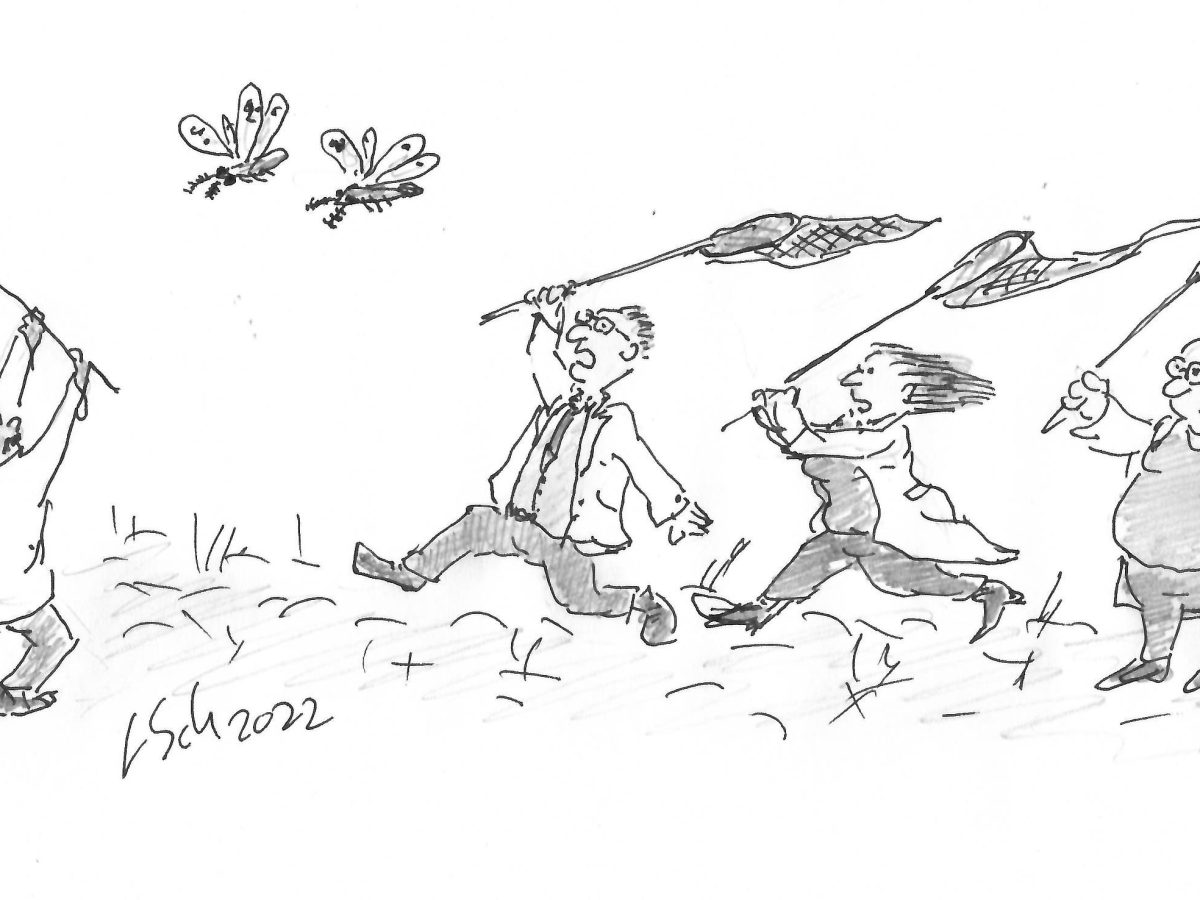
The Vickers Curse: secret revealed!
How did an editorial about insect pheromone communication get to receive 1200 irrelevant citations, almost all from papermills? Alexander Magazinov reveals The Secret of The Vickers Curse!

There was also this, note that unlike zucchini, the word “nano” never appears in this Applied Nanoscience paper:
Nguyen Chi Thanh , Emad M. Eed , Ashraf Elfasakhany , Kathirvel Brindhadevi Antioxidant, anti-inflammatory and anti-proliferative activities of green and yellow zucchini (Courgette) Applied Nanoscience (2022) doi: 10.1007/s13204-021-02111-z
Still, nanoparticles from oranges proved “antimicrobial and antioxidant potential”, at least in Environmental Research. There were also other foodstuffs, some very exotic. Diabetes was cured using nanoparticles flavoured with the fruit of the African sausage tree:
Manimegalai Sengani , Shreya Chakraborty , Menaka Priya Balaji , Rajakumar Govindasamy , Tahani Awad Alahmadi , Sami Al Obaid , Indira Karuppusamy , Nguyen Thuy Lan Chi , Kathirvel Brindhadevi, Devi Rajeswari V Anti-diabetic efficacy and selective inhibition of methyl glyoxal, intervention with biogenic Zinc oxide nanoparticle Environmental Research (2023) doi: 10.1016/j.envres.2022.114475

Cancer was cured with oyster mushrooms:
J. Manjunathan, S. Shyamalagowri , M. Kamaraj , S.P. Thyagarajan , V. Kaviyarasan , Kathirvel Brindhadev In vitro evaluation of growth reticence and anticancer potential of 5α,8α-epidioxy-24ᶓ-methylcholesta-6,22-dien-3β-ol and ergosta-5,7,22-trien-3β-ol bioactive isolated from an edible mushroom Lentinus tuberregium (fr.) Environmental Research (2023) doi: 10.1016/j.envres.2022.114765

But also Gavurova is a polymath. Assuming she us really an economist by training, it is peculiar that the Slovak professor also published so much research on biofuels – see her paper above, and also in Fuel: biodiesel from karanja and safflower or from algae (here and here), or from plastic waste. Or even from on chicken fat waste in Environmental Research, in the same Elsevier journal the economist shared her expertise on biogas and on biochar. In other papermill-infested Elsevier journals Gavvrova published on wastewater treatment, nanotechnology, concrete production, photovoltaics, ecology and so on.
Denik N also mentioned that the Faculty of Mining, Ecology, Management and Geotechnologies of the Technical University in Košice tasked Gavurova with investigating herself, already in May 2024. The outcome is private and personal, just like everything connected to Gavurova’s PUBLICations.
Sometimes my lab people may take wrong images
Zhiqiang Qin, associate professor at University of Arkansas for Medical Sciences, announced some corrections. His papers were flagged on PubPeer by Sholto David (be aware there’s also a papermilling namesake from the First Affiliated Hospital of Nanjing Medical University in China who suffered several retractions).
This one is however by our American ZQ Qin:
Lu Dai , Momka Bratoeva , Bryan P. Toole , Zhiqiang Qin, Chris Parsons KSHV activation of VEGF secretion and invasion for endothelial cells is mediated through viral upregulation of emmprin‐induced signal transduction International Journal of Cancer (2012) doi: 10.1002/ijc.26428


Qin explained the gel reuse on PubPeer:
“We have checked original data and found these results are from the same experiments. However, due to too many proteins need to be tested, we tested them on two gels/membranes, so we tested Actin on both gels.“
Here is one of these papers which recycled the blot, it has other issues also:
Zhiqiang Qin, Lu Dai , Mark G. Slomiany , Bryan P. Toole, Chris Parsons Direct Activation of Emmprin and Associated Pathogenesis by an Oncogenic Herpesvirus Cancer Research (2010) doi: 10.1158/0008-5472.can-09-4663


Qin specialises on Kaposi’s sarcoma-related herpesvirus (KSHV), here is one such paper:
Zhiqiang Qin , Lu Dai , Bryan Toole , Erle Robertson , Chris Parsons Regulation of Nm23-H1 and Cell Invasiveness by Kaposi’s Sarcoma-Associated Herpesvirus Journal of Virology (2011) doi: 10.1128/jvi.01596-10


As it happens, I previously wrote about Qin’s coauthor Erle Robertson, virology professor at the University of Pennsylvania with a massive PubPeer record of over 50 papers:

mTOR: conclusions not affected?
David Sabatini, remember that story? Well, it seems the conclusions were not affected. I take an ill-informed look at the mTOR signalling research field, to understand how photoshopped data gets to be independently verified by other labs.
For these and for other papers Qin shared replacement data on PubPeer:
“We apologize for these errors and have provided corrected images”


- Lu Dai , Jimena Trillo-Tinoco , Aiping Bai , Yihan Chen , Jacek Bielawski , Luis Del Valle , Charles D. Smith , Augusto C. Ochoa , Zhiqiang Qin , Chris Parsons Ceramides promote apoptosis for virus-infected lymphoma cells through induction of ceramide synthases and viral lytic gene expression Oncotarget (2015) doi: 10.18632/oncotarget.4759
- Zhiqiang Qin , Lu Dai , Jimena Trillo-Tinoco , Can Senkal , Wenxue Wang , Tom Reske , Karlie Bonstaff , Luis Del Valle , Paulo Rodriguez , Erik Flemington , Christina Voelkel-Johnson , Charles D Smith , Besim Ogretmen , Chris Parsons Targeting sphingosine kinase induces apoptosis and tumor regression for KSHV-associated primary effusion lymphoma Molecular Cancer Therapeutics (2014) doi: 10.1158/1535-7163.mct-13-0466
Back then, Qin used to be a lab member of Christopher H Parsons from Medical University of South Carolina. My attempts to contact Parsons failed. I did succeed in contacting Qin, who claimed to have lost contact to Parsons also:
“he has left my old institute many years ago……….actually, many authors in those papers have left……..”
As for the problems in his papers and the replacement figures he provided on PubPeer, Qin blamed his “lab people” :
“Firstly, many thanks for pointing out these problems and we apologize for that which should not happen. However, I do not think we did data manipulation. You can see most errors happened in cell invasion images, for quantification analysis, we usually take 4-5 images from each group although the chamber membranes are small, some groups such as “KSHV” and “KSHV+n-siRNA” they showed similar results. So when showed representative images, sometimes my lab people may take wrong images from the same group (but you can see the images are not completely overlapped) [this makes it worse, not better, -LS]. However, we think such error does not affect the final conclusion of our papers. Due to the limitation of these assays, we almost not do it now in lab (these are all old papers). Yes, we have noticed [notified?- LS] our old institution about these corrections/reasons, and contacted journals now. Thanks again!“
Indeed, the corrections already started!
Lu Dai , Luis Del Valle , Wendell Miley , Denise Whitby , Augusto C. Ochoa, Erik K. Flemington, Zhiqiang Qin Transactivation of human endogenous retrovirus K (HERV-K) by KSHV promotes Kaposi’s sarcoma development Oncogene (2018) doi: 10.1038/s41388-018-0282-4

Correction 18 June 2024: “Following the publication of this article it was noted that the bottom left panel presented in Figure 3B was incorrect due mislabelling. Figure 3B has now been revised and is presented below. This change does not affect the conclusions of the article. The authors apologise for any inconvenience caused.“
By the way, someone moved on from faking cell invasion assays and started to fake western blots after leaving Parson’s lab. This was flagged by Clare Francis:
Lu Dai , Aiping Bai , Charles D Smith , Paulo C Rodriguez , Fangyou Yu, Zhiqiang Qin ABC294640, A Novel Sphingosine Kinase 2 Inhibitor, Induces Oncogenic Virus-Infected Cell Autophagic Death and Represses Tumor Growth Molecular Cancer Therapeutics (2017) doi: 10.1158/1535-7163.mct-17-0485

Zhiqiang Qin: “We have checked original WB imaging and found not problem including EGR1 lane. We do not know any author from that Oncol Rep paper so have no idea why they used similar pictures with ours. Thank you.”

Scholarly Publishing
Inadvertently duplicated
Scottish trash scientists from Edinburgh get an expression of concern. One of them is a veterinarian and a bullying psychopath in charge of the entire medical school at the University of Edinburgh: David Argyle. The first author is his mentee, now research fellow named Lisa Pang, together they have some very problematic papers on PubPeer.

David Argyle – brave, resilient and progressive
“I have worked at several universities in my career, and never have I encountered the degree of bullying, harassment, intimidation, and discrimination that I have here. The atmosphere is utterly toxic, and everyone is scared to say anything in case it is heard and reported to [David Argyle] or [Richard Mellanby]. It is like working…
The penultimate author is another Edinburgh professor named Ted Hupp, he and his wife and fellow Edinburgh professor Kathryn Ball published quite some bad science of their own (see PubPeer).
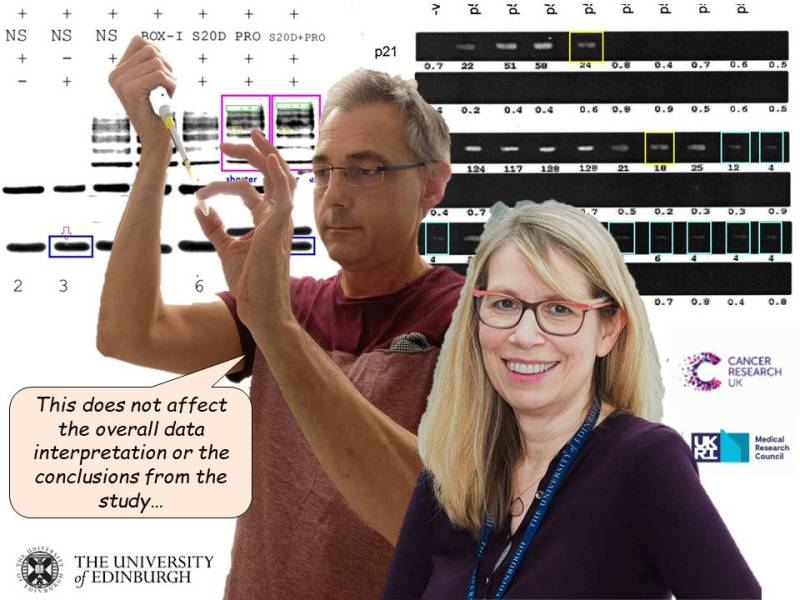
The Hupp and Ball Game
“Ted Hupp and Kathryn Ball may very well feel like kissing David Argyle on both cheeks.”
This is the concerned paper, originally flagged in April 2024 by Clare Francis:
Lisa Y. Pang, Emma L. Gatenby , Ayako Kamida , Bruce A. Whitelaw, Ted R. Hupp, David J. Argyle Global gene expression analysis of canine osteosarcoma stem cells reveals a novel role for COX-2 in tumour initiation PLoS ONE (2014) doi: 10.1371/journal.pone.0083144

The Expression of Concern was published on 15 August 2024:
“Following the publication of this article [1], concerns were raised that the Fig 1G Fibronectin results of [1] appears similar to the Fig 1D Fibronectin result of [2] despite being used to represent results from different cell lines.
The corresponding author stated that the Fig 1G Fibronectin results were correctly reported in the PLOS ONE article [1] but were inadvertently duplicated in [2]. They stated that all cell lines were blotted together, and that the incorrect lanes were selected when preparing the Fibronectin results presented in [2].
The available original data underlying Fig 1 [1] are provided in S1–S5 Files. The original blot image underlying the Fig 1G β-catenin panel is no longer available. The authors did not clarify the availability of the remaining data.
The PLOS ONE Editors issue this Editorial note to notify readers of the above concern, which PLOS considers resolved, and to share the available original data for Fig 1 that have been provided by the corresponding author.”
The Oncotarget study where the Fibronectin data was “inadvertently duplicated” was not corrected because nobody cares. The paper had also other issues, flagged by Cheshire in January 2021 yet never approved by PubPeer moderators:
Lisa Y. Pang, Lauren Saunders , David J. Argyle Epidermal growth factor receptor activity is elevated in glioma cancer stem cells and is required to maintain chemotherapy and radiation resistance Oncotarget (2017) doi: 10.18632/oncotarget.19868
Actinopolyspora biskrensis: “The empty lane for the Negative Controls in Figure 1C appear to be featureless, and instead appear to show possible crops.”
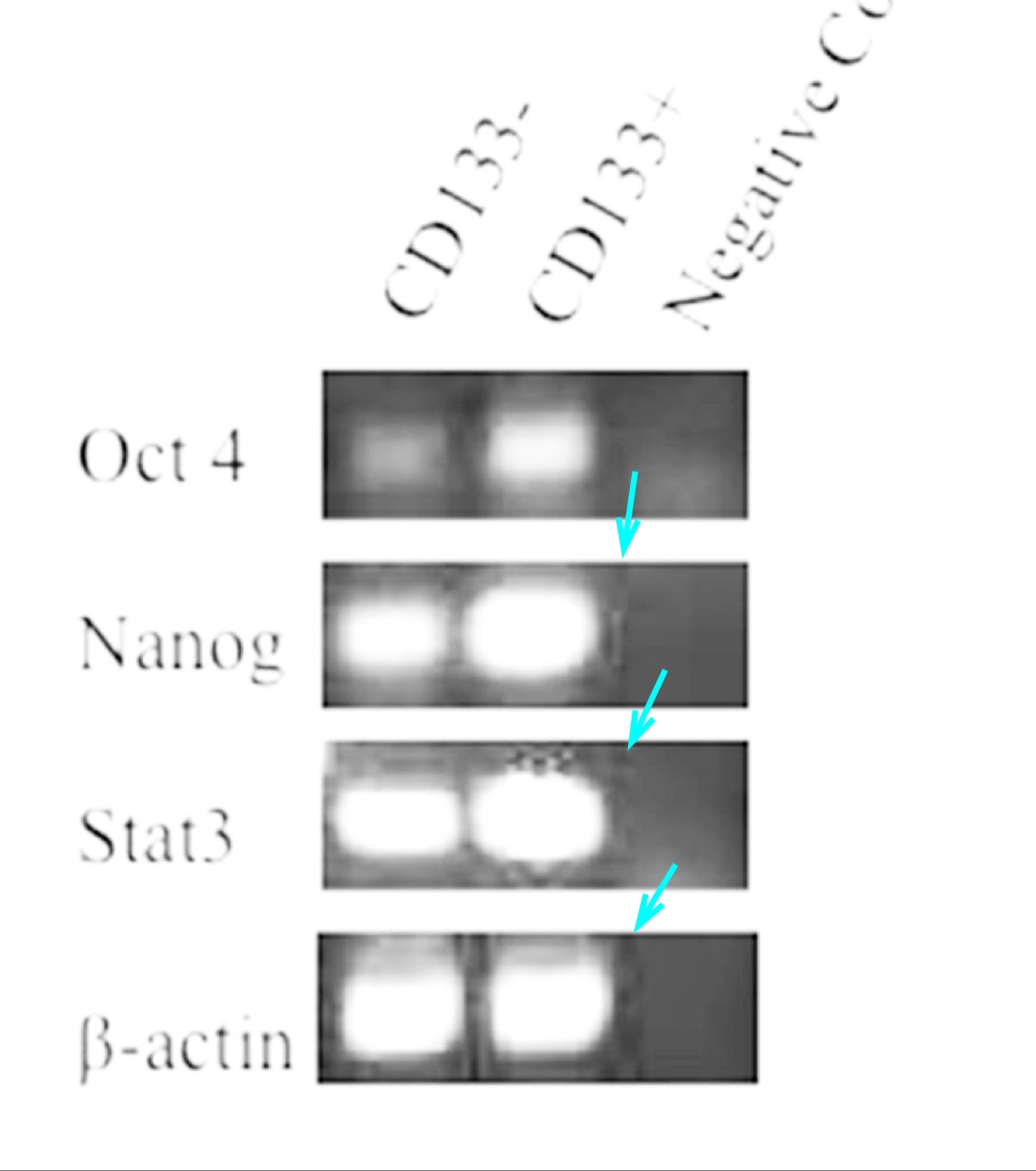
Here another recent find by Cheshire, with Pang, her mentor Argyle and Argyle’s wife Sally, who is of course also a faculty member in Edinburgh. They cured cancer with dog pain medication:
Lisa Y Pang , Sally A Argyle , Ayako Kamida , Katherine O’Neill Morrison , David J Argyle The long-acting COX-2 inhibitor mavacoxib (Trocoxil™) has anti-proliferative and pro-apoptotic effects on canine cancer cell lines and cancer stem cells in vitro BMC Veterinary Research (2014) doi: 10.1186/s12917-014-0184-9

Argyle, Pang, Hupp and Ball were apparently all fully whitewashed by their Scottish university, it was agreed to fix some papers with corrections. After massive accusations of bullying, the head of vet school Argyle was promoted to head all of medicine and received an official licence from the University of Edinburgh to terrorize everyone as he pleases.

David Argyle: can bullying lead to bad science?
David Argyle was about to become President of the Royal College of Veterinary Surgeons. But then bullying allegations emerged, which the University of Edinburgh swiftly dismissed and suppressed. Now they can do same with the data integrity concerns in Argyle’s research.
We understand this is frustrating
The American Chemical Society (ACS) educated Sholto David that their own publication guidelines mean nothing.
It is about the case of a Pakistani papermill which published same figures in 4 different journals, with different authors. One of them in ACS Omega, submitted 4 February 2021, accepted 7 April 2021 and published 16 April 2021. It announced nothing less but a discovery of an Alzheimer’s cure, which is the pest control fumigant naphthalene (once used in mothballs):
Fareeha Anwar , Uzma Saleem , Atta Ur Rehman , Bashir Ahmad, Tariq Ismail , Muhammad Usman Mirza , Lee Yean Kee , Iskandar Abdullah , Sarfraz Ahmad Toxicological Screening of 4-Phenyl-3,4-dihydrobenzo[]quinolin-2(1)-one: A New Potential Candidate for Alzheimer’s Treatment ACS Omega (2021) doi: 10.1021/acsomega.1c00654

The other 3 appearances were in Frontiers, only the first one shares the authors with the ACS Omega paper:
- Fareeha Anwar , Uzma Saleem , Atta-Ur Rehman , Bashir Ahmad , Matheus Froeyen , Muhammad Usman Mirza , Lee Yean Kee , Iskandar Abdullah , Sarfraz Ahmad Toxicity Evaluation of the Naphthalen-2-yl 3,5-Dinitrobenzoate: A Drug Candidate for Alzheimer Disease Frontiers in Pharmacology (2021) doi: 10.3389/fphar.2021.607026 Submitted: 16 September 2020, Accepted: 18 March 2021, Published: 10 May 2021.
- Qurat Ul Ain, Uzma Saleem, Bashir Ahmad , Iqra Khalid Pharmacological screening of silibinin for antischizophrenic activity along with its acute toxicity evaluation in experimental animals Frontiers in Pharmacology (2023) doi: 10.3389/fphar.2023.1111915 Sumbitted: 30 November 2022
- Asifa Bashir, Muhammad Naveed Mushtaq, Waqas Younis , Irfan Anjum Fenchone, a monoterpene: Toxicity and diuretic profiling in rats Frontiers in Pharmacology (2023) doi: 10.3389/fphar.2023.1119360 Submitted: 8 December 2022
This means, that the Frontiers 2021 paper was submitted and accepted before the one in ACS Omega. But of course there is also the issue of massive fraud and papermilling. Another publication by the same team, again on the health benefits of naphthalene, and again in Frontiers:
Fareeha Anwar , Uzma Saleem , Atta Ur Rehman , Bashir Ahmad, Tariq Ismail , Muhammad Usman Mirza , Sarfraz Ahmad Acute Oral, Subacute, and Developmental Toxicity Profiling of Naphthalene 2-Yl, 2-Chloro, 5-Nitrobenzoate: Assessment Based on Stress Response, Toxicity, and Adverse Outcome Pathways Frontiers in Pharmacology (2021) doi: 10.3389/fphar.2021.810704

Obviously Frontiers don’t give a rat’s bottom, since the authors paid good money for the best customer service. But what about ACS? Sholto contacted the ACS editors in April 2024. Merely four months later, he received a reply from a nameless member of the “Managing Team” of ACS Omega:
“Thanks for your patience as we looked into the case. The authors agree regarding the image duplication. However, as you’d notice all the papers highlighted in the PubPeer thread were published later than the ACS Omega article […]
In principle and per COPE guidelines, we cannot predict the likelihood of image duplication beforehand and the other papers would need to be retracted or corrected for image duplication. If there are any further scientific concerns with supporting evidence related to this article to warrant further investigation, please let us know.
- https://doi.org/10.3389/fphar.2023.1119360 (Published: 26 January 2023)
- https://doi.org/10.1021/acsomega.1c00654 (Published: April 16, 2021)
- https://doi.org/10.3389/fphar.2023.1111915 (Published: 02 February 2023)
- https://doi.org/10.3389/fphar.2021.607026 (Published: 10 May 2021)
I hope this provides clarification. We, of course, will closely monitor the future submissions from this author. Many thanks for your vigilance.
We are happy to hear your feedback, if any.”
Publishers referring to those wretched “COPE guidelines” is the biggest red flag for covering up fraud there is. But anyway, ACS Omega’s own guidelines for authors say this:
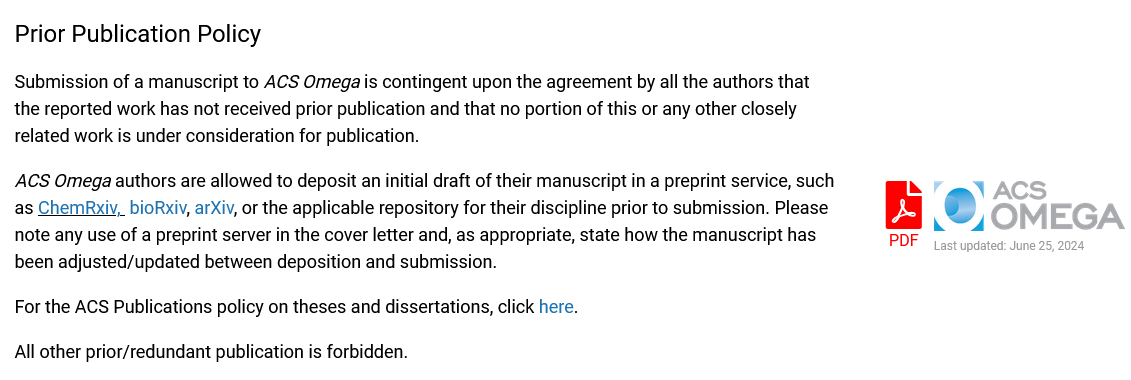
Those are of course just guidelines and mean nothing. Indeed, Sholto reminded ACS that “The frontiers paper was received months before this idiocy in Omega, so despite your protest, the ACS paper does not have priority” and added “Even if your paper did have priority, are you really trying to say you think these results might be genuine?“
The nameless Managing Team of ACS Omega replied with:
“We understand this is frustrating. We are looking into the publications from this author for supporting evidence for taking any action. But what we wish to clarify is that this image duplication, whilst indicating scientific misconduct cannot be used to retract the scientific record.“
I can only explain this demented behaviour with undue consumption of naphthalene. Because regardless of the fake figures, the science is solid, right?
Curcumin-Based Nanomedicines as Cancer Therapeutics
Elsevier published a book the whole world was waiting for.
“Curcumin-Based Nanomedicines as Cancer Therapeutics“

You can order it for $165 plus tax, and its editors are Prashant Kesharwani from India and Amirhossein Sahebkar from Iran. Both of course have impressive PubPeer records of fake and papermilled trash, currently 11 papers for Kesharwani and around 20 papers for Sahebkar. The former published also with Nabil Alhakamy and Usama Fahmy (read about these Saudi papermillers in November 2022 Shorts). Sahebkar however is the bigger fraudster here, he even belongs to the circle of Soudeh Ghafouri-Fard, read here:

Look What the Cat Dragged In
Meet Mohammad Taheri, PhD, a humble PhD student in Jena, Germany, and his equally unremarkable Iranian associate Dr Soudeh Ghafouri-Fard.
Elsevier simply had to recruit Sahebkar as book editor: he already has 5 retractions, Momtazi-Borojeni et al 2019 in BMC for data forgery, Ganjali et al 2022, Jamialahmadi et al 2022 and Stamerra et al 2022 in Hindawi for “systematic manipulation of the publication and peer-review process“, plus one in Elsevier for plagiarism: Mirzaie et al 2018.
But Sahebkar’s unretracted rest is also fake of course. There are fabricated clinical trials, but also preclinical studies, like this Mahdiani et al 2024 with curcumin:
Milad Hashemzehi , Reihane Behnam-Rassouli , Seyed Mahdi Hassanian , Maryam Moradi-Binabaj , Reyhaneh Moradi-Marjaneh , Farzad Rahmani , Hamid Fiuji , Mahdi Jamili, Mahdi Mirahmadi , Nadia Boromand , Mehran Piran , Mohieddin Jafari , Amirhossein Sahebkar , Amir Avan , Majid Khazaei Phytosomal‐curcumin antagonizes cell growth and migration, induced by thrombin through AMP‐Kinase in breast cancer Journal of Cellular Biochemistry (2018) doi: 10.1002/jcb.26796

Here is Sahebkar dabbing in virology:
Vahid Bagheri , Foroogh Nejatollahi, Seyed Alireza Esmaeili , Amir Abbas Momtazi , Mohamad Motamedifar , Amirhossein Sahebkar Neutralizing human recombinant antibodies against herpes simplex virus type 1 glycoproteins B from a phage-displayed scFv antibody library Life Sciences (2017) doi: 10.1016/j.lfs.2016.11.018

Kesharwani and Sahebkar also published together, for example:
Violina Kakoty , Sarathlal KC , Shobha Kumari , Chih-Hao Yang , Sunil Kumar Dubey , Amirhossein Sahebkar , Prashant Kesharwani, Rajeev Taliyan Brain insulin resistance linked Alzheimer’s and Parkinson’s disease pathology: An undying implication of epigenetic and autophagy modulation Inflammopharmacology (2023) doi: 10.1007/s10787-023-01187-z
“Several experimental models display that Akt signalling inhibition causes DA neurodegeneration (Chen et al. 2014) and expression of α-syn in PD is affected by dysregulation of Akt signalling (Vickers 2017) (Fig. 2).”
Vickers NJ (2017) Animal communication: when i’m calling you, will you answer too? Curr Biol 27:R713–R715
Yes, the Vickers Curse. Sahebkar was struck by it no less than NINE times by now, as Alexander Magazinov counted.
The Vickers Curse: secret revealed!
How did an editorial about insect pheromone communication get to receive 1200 irrelevant citations, almost all from papermills? Alexander Magazinov reveals The Secret of The Vickers Curse!
The new Elsevier book has 19 chapters, of which 13 were contributed by Sahebkar. And one chapter (nr 17) was contributed by a certain nano-curcumin expert named Parames C Sil, read about him here:

Bosone Layer
“[Taurine’s] exact biological role is unclear, which is why Parames Sil and his students decided that it must be an antioxidant, and therefore the ideal treatment for cadmium- or arsenic-poisoning.” – Smut Clyde

I do agree, only papermill fraudsters are qualified to edit a book about curcumin nanoparticles against cancer. Because there is probably not a single non-fraudulent study in that field. Is Elsevier trolling?
Highly diverse scientific background and geographical origin
Elsevier cracks down on papermill fraud. Zero tolerance!
A monumental COVID-19 clinical study by world-leading experts from Iran, with renowned collaborators in russia, India and Indonesia:
Armin Mahmoud Salehi Khesht , Vahid Karpisheh , Balsam Qubais Saeed , Angelina Olegovna Zekiy , Lis M. Yapanto , Mohsen Nabi Afjadi , Mohsen Aksoun , Maryam Nasr Esfahani , Fatemeh Aghakhani , Mahsa Movahed , Navneet Joshi , Kazem Abbaszadeh-Goudarzi , Shahin Hallaj , Majid Ahmadi , Sanam Dolati , Ata Mahmoodpoor , Vida Hashemi, Farhad Jadidi-Niaragh Different T cell related immunological profiles in COVID-19 patients compared to healthy controls International Immunopharmacology (2021) doi: 10.1016/j.intimp.2021.107828
An Expression of Concern from 14 July 2024 explained that everything is actually OK (highlights mine):
“In this article, it is stated that all samples were obtained from the “Imam Reza Hospital of Tabriz University of Medical Sciences, Tabriz, Iran” for a study into the frequency and function of T lymphocytes involved in the immune responses of SARS-CoV-2 patients with varying disease severity compared to normal subjects. However, the scientific background and geographical origin of the co-authors appear highly diverse, including an author affiliated with a Department of Aquatic Management, and another one with a Department of Prosthetic Dentistry. Further, concerns included the addition of two co-author names to the submission during the first revision process, without requesting or receiving permission from the handling Editor, which is contrary to the journal policy on changes to authorship.
Extensive discussion with the corresponding author has not provided justification for the breadth of authors that is considered fully acceptable by the Editor-in-Chief. Complete, trustworthy documentation from the corresponding author supporting the significant contribution of all the co-authors has not been provided. Sadly, no documentation was received from the institutions at which the major research took place.
The above-mentioned concerns have led the Editor-in-Chief to publish this expression of concern.”
Case closed, concerns assuaged, defiinetely no papermill fraud going on here. The utterly trustworthy corresponding author Farhad Jadidi-Niaragh from Tabriz University of Medical Sciences in Iran has over 30 papermill fabrications flagged on PubPeer, with the worst of appermillers among his coauthors. One of his papers, in another Elsevier journal (coauthors Abduladheem Turki Jalil, Dmitry Bokov and Wanich Suksatan, was also fixed with an Expression of Concern because Elsevier lawyers advised the chief editor not to retract it unless she wishes to face a lawsuit from the authors (read April 2023 Shorts). Therefore, it is possible that the Iranian papermill fraudstser Jadidi-Niaragh found a way to avoid retractions, by threaten lawsuits. It doesn’t always work out though, like here:
Asal Barshidi , Vahid Karpisheh , Fatemeh Karimian Noukabadi , Fariba Karoon Kiani , Mohammad Mohammadi , Negin Afsharimanesh , Farbod Ebrahimi , Seyed Hossein Kiaie , Jamshid Gholizadeh Navashenaq , Mohammad Hojjat-Farsangi , Naime Majidi Zolbanin , Ata Mahmoodpoor , Hadi Hassannia , Sanam Nami , Pooya Jalali , Reza Jafari, Farhad Jadidi-Niaragh Dual Blockade of PD-1 and LAG3 Immune Checkpoints Increases Dendritic Cell Vaccine Mediated T Cell Responses in Breast Cancer Model Pharmaceutical Research (2022) doi: 10.1007/s11095-022-03297-9

A retraction was published on 26 December 2023, despite Jadidi-Niaragh’s disgreement and presumed threats:
“The Editor-in-Chief has retracted this article. After publication, concerns were raised regarding the data presented in Figs. 1 and 2. Specifically:
- In Fig. 1c, the quality/resolution of the graph is inconsistent.
- In Fig. 1d, some background features appear to be duplicated.
- Fig. 1e appears highly similar to Fig. 1b (rotated and modified) in [1]
- In Fig. 2a, some areas appear to be duplicated.
- In Fig. 2e, some parts of the plots appear highly similar between different groups.
The authors have stated that the image in Fig. 1e was used by mistake and provided alternative images. However, they have been unable to provide the full raw data for Figs. 1 and 2 for validation. The Editor-in-Chief therefore no longer has confidence in the presented data.”
Previously, same journal retracted this, so it seems it is really up to the editor:
Sepideh Izadi , Asma Moslehi , Hadiseh Kheiry , Fariba Karoon Kiani , Armin Ahmadi , Ali Masjedi , Sepideh Ghani , Behnam Rafiee , Vahid Karpisheh , Farnaz Hajizadeh , Fatemeh Atyabi , Akram Assali , Farnaz Sadat Mirzazadeh Tekie , Afshin Namdar, Ghasem Ghalamfarsa , Mozhdeh Sojoodi, Farhad Jadidi-Niaragh Codelivery of HIF-1α siRNA and Dinaciclib by Carboxylated Graphene Oxide-Trimethyl Chitosan-Hyaluronate Nanoparticles Significantly Suppresses Cancer Cell Progression Pharmaceutical Research (2020) doi: 10.1007/s11095-020-02892-y


Figure 7a, Pharmaceutical Research (2020), doi: 10.1007/s11095-020-02892-y, https://pubpeer.com/publications/7D49F094497D19E3F9512A9A015F88
Figure 7A, European Journal of Pharmacology (2020), doi: 10.1016/j.ejphar.2020.173235, https://pubpeer.com/publications/B106B8CD73E7A713202487673495D5“
That trash was retracted on 11 November 2022, this time Jadidi-Niaragh agreed:
“The Editor-in-Chief has retracted this article because of similarities between figures within this article, as well as between figures in this article and previously published work [1]. In particular:
- Figure 7a (panel Untreated vs CT26) has similarities with Figure 7a (panel NP-siRNA HIF-1α vs B16F10) of [1].
- Figure 4C (panel CT-26 GAPDH) has similarities with Figure 4C (panel 4T1 GAPDH).
- Figure 6a (panel untreated vs 4T1) has similarities with Figure 6a (panel NP. Vs 4T1) of [1].
- Figure 6a (panel Untreated vs B16-F10) has similarities with Figure 6a (panel NP. Vs B16-F10) of [1].
- Figure 6a (panel NP-siRNA HIF-1α vs CT26) has similarities with Figure 6a (panel NP-siRNA CD73 vs CT26) of [1].
- Figure 6a (panel NP-siRNA HIF-1α – Dinaciclib vs 4T1) has similarities with Figure 6a (panel NP-siRNA CD73/HIF-1α vs CT26) of [1].
- Figure 7a (panel Untreated vs 4T1) has similarities with Figure 7a (panel NP-siRNA HIF-1α vs 4T1) of [1].
- Figure 7a (panel Untreated vs B16-F10) has similarities with Figure 7a (panel Untreated vs 4T1) of [1].”
Retraction Watchdogging
Added to revised paper without explanation
At least in the next case, Elsevier retracted. Also here, the editors had absolutely no way of knowing that they were dealing with papermill fraudsters (/sarcasm).
Zhe Liu , Zhanguo SU , Azher M. Abed , Risabh Chaturvedi , Mahrad Feyzbaxsh , Ali Kiani Salavat A comparative thermodynamic and exergoeconomic scrutiny of four geothermal systems with various configurations of TEG and HDH unit implementations Applied Thermal Engineering (2022) doi: 10.1016/j.applthermaleng.2022.119094
The retraction from 16 August 2024 (highlights mine):
“This article has been retracted at the request of the Editor-in-Chief.
In investigating concerns regarding suspicious changes in authorship between the original submission and the revised version of this paper the Editor reached out to the authors for an explanation.
In summary, the paper was submitted by Mahrad Feyzbaxsh (original Corresponding Author) and Ali Kiani Salavat. During revision, the author names Liu Zhe (New First Author), Zhanguo SU (New Corresponding Author), Azher M. Abed, and Risabh Chaturvedi were all added to the revised paper without explanation and without exceptional approval by the journal Editor, which is contrary to the journal policy on changes to authorship.
The addition of these authors was not justified by the revisions made to the paper and did not align with the journal’s policies on authorship criteria.
Overall, the Editor has determined that the authorship of the paper cannot be relied upon, and the article needs to be retracted.”
Mahrad Feyzbaxsh was previously caught on selling authorships for a papermill fabrication which also was recently retracted (read July 2024 Shorts).
Duplication, rescaling and splicing
In March 2024 Shorts I wrote about the high-profile case of Giorgio Palù, who resigned as director of Italian Medicines Agency (AIFA) ten days after his nomination for this job. The article also mentioned Palu’s close associate Cristina Parolin, professor of medicine at the same University of Padua, and some of the fake papers they published together.
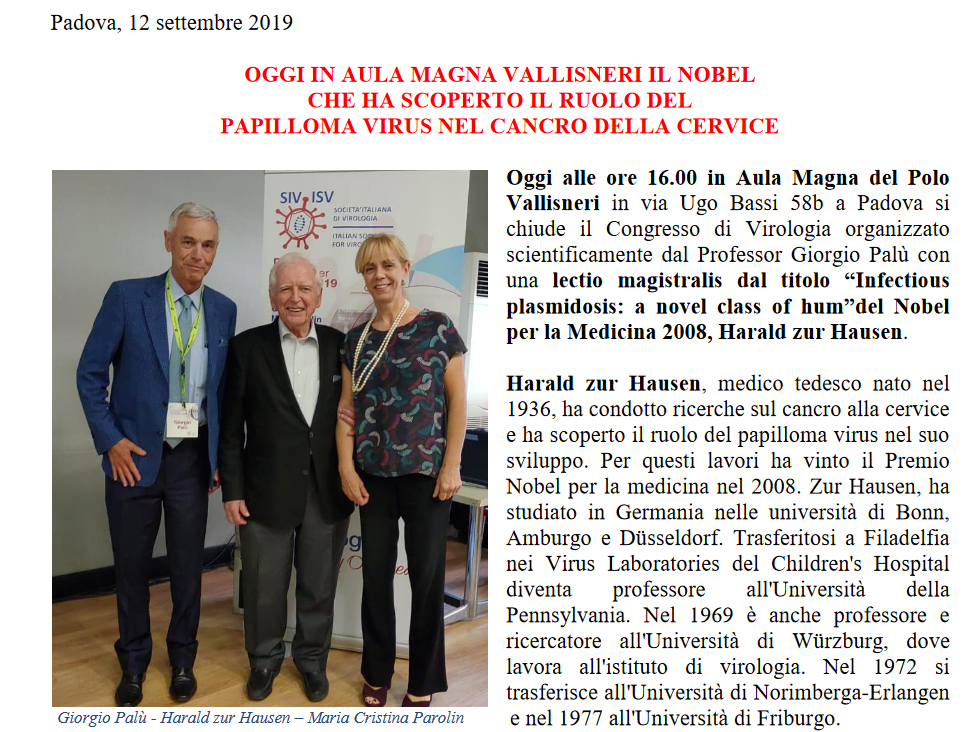
Well, one of them was now retracted, the second retraction for Palu and Parolin after Caduco et al 2013.
F Sarinella , A Calistri, P Sette , G Palù, C Parolin Oncolysis of pancreatic tumour cells by a γ34.5-deleted HSV-1 does not rely upon Ras-activation, but on the PI 3-kinase pathway Gene Therapy (2006) doi: 10.1038/sj.gt.3302770


The Retraction Note was published on 16 August 2024:
“The Editor in Chief retracted this article because of significant concerns regarding a number of Figures presented in this work, which question the integrity of the data. Specifically, concerns have been raised with Figures 3, 4, 5 and 7, involving potential duplication, rescaling and splicing of images to represent different conditions. The Editor no longer has confidence in the veracity of the data and has retracted the article to correct the scientific record.
Authors A. Calistri, M. Parolin & G. Palù disagree with this retraction. Authors F. Sarinella and P. Sette could not be contacted in correspondence regarding this retraction.”
Thank you, Editor-in-Chief Janine Scholefield from Council for Scientific and Industrial Research in South Africa, for not being afraid of pompous and entitled Italian alpha males.
Modified dragonfly algorithm and whale optimization approach
SAGE Publishing retracted 11 papermill fabrications in one go on 16 August 2024, with one single notice:
“The following articles have been retracted at the request of the publisher:
- Sureshkumar K, Ponnusamy V. Hybrid renewable energy systems for power flow management in smart grid using an efficient hybrid technique. Transactions of the Institute of Measurement and Control. 2020;42(11):2068-2087. doi:https://doi.org/10.1177/0142331220904818
- Arunsankar G, Srinath S. Harmonics mitigation in hybrid shunt active power filter connected renewable energy source using an intelligent controller. Transactions of the Institute of Measurement and Control. 2021;43(1):102-121. doi:https://doi.org/10.1177/0142331220932642
- Thenpennaisivem S, Senthilkumar V. Improvement of transient and small signal stability in micro grid by hybrid technique with virtual synchronous generator control scheme. Transactions of the Institute of Measurement and Control. 2021;43(12):2835-2859. doi:https://doi.org/10.1177/01423312211013173
- Kaya I. Integral-Proportional Derivative tuning for optimal closed loop responses to control integrating processes with inverse response. Transactions of the Institute of Measurement and Control. 2020;42(16):3123-3134. doi:https://doi.org/10.1177/0142331220941657
- Annapandi P, Banumathi R, Pratheeba N, Manuela AA. An efficient optimal power flow management based microgrid in hybrid renewable energy system using hybrid technique. Transactions of the Institute of Measurement and Control. 2021;43(1):248-264. doi:https://doi.org/10.1177/0142331220961687
- Taeib A, Salhi H, Chaari A. Constrained cuckoo search algorithm and Takagi-Sugeno fuzzy models for predictive control. Transactions of the Institute of Measurement and Control. 2021;43(5):1088-1101. doi:https://doi.org/10.1177/0142331220966308
- Kumari KK, Babu RSR. An efficient modified dragonfly algorithm and whale optimization approach for optimal scheduling of microgrid with islanding constraints. Transactions of the Institute of Measurement and Control. 2021;43(2):421-433. doi:https://doi.org/10.1177/0142331220961657
- Thumu R, Harinadha Reddy K, Rami Reddy C. Unified power flow controller in grid-connected hybrid renewable energy system for power flow control using an elitist control strategy. Transactions of the Institute of Measurement and Control. 2021;43(1):228-247. doi:https://doi.org/10.1177/0142331220957890
- Anbazhagi T, Asokan K, AshokKumar R. A mutual approach for profit-based unit commitment in deregulated power system integrated with renewable energy sources. Transactions of the Institute of Measurement and Control. 2021;43(5):1102-1116. doi:https://doi.org/10.1177/0142331220966312
- Saravanan S, Sivakumaran TS. A hybrid technique used in grid integration of photovoltaic system for maximum power point tracking with multilevel inverter. Transactions of the Institute of Measurement and Control. 2021;43(1):215-227. doi:https://doi.org/10.1177/0142331220964101
- Venkatesh Kumar C, Ramesh Babu M. A novel hybrid grey wolf optimization algorithm and artificial neural network technique for stochastic unit commitment problem with uncertainty of wind power. Transactions of the Institute of Measurement and Control. Epub ahead of print 12 April 2021. doi:https://doi.org/10.1177/01423312211001987
After an internal investigation Sage has become aware that the submissions contain indicators of third-party involvement and attempts to manipulate the peer-review process.
As the peer-review process has not met Sage’s expectations of high quality and ethical peer-review, the publisher cannot uphold the integrity of the research. In line with COPE guidelines and Sage policies, these articles are retracted.
The authors have been informed of this decision using the email addresses provided at submission.”
So sad to see them go, those “modified dragonfly algorithm and whale optimization approach“, “constrained cuckoo search algorithm“, “hybrid grey wolf optimization algorithm” and “elitist control strategy”…
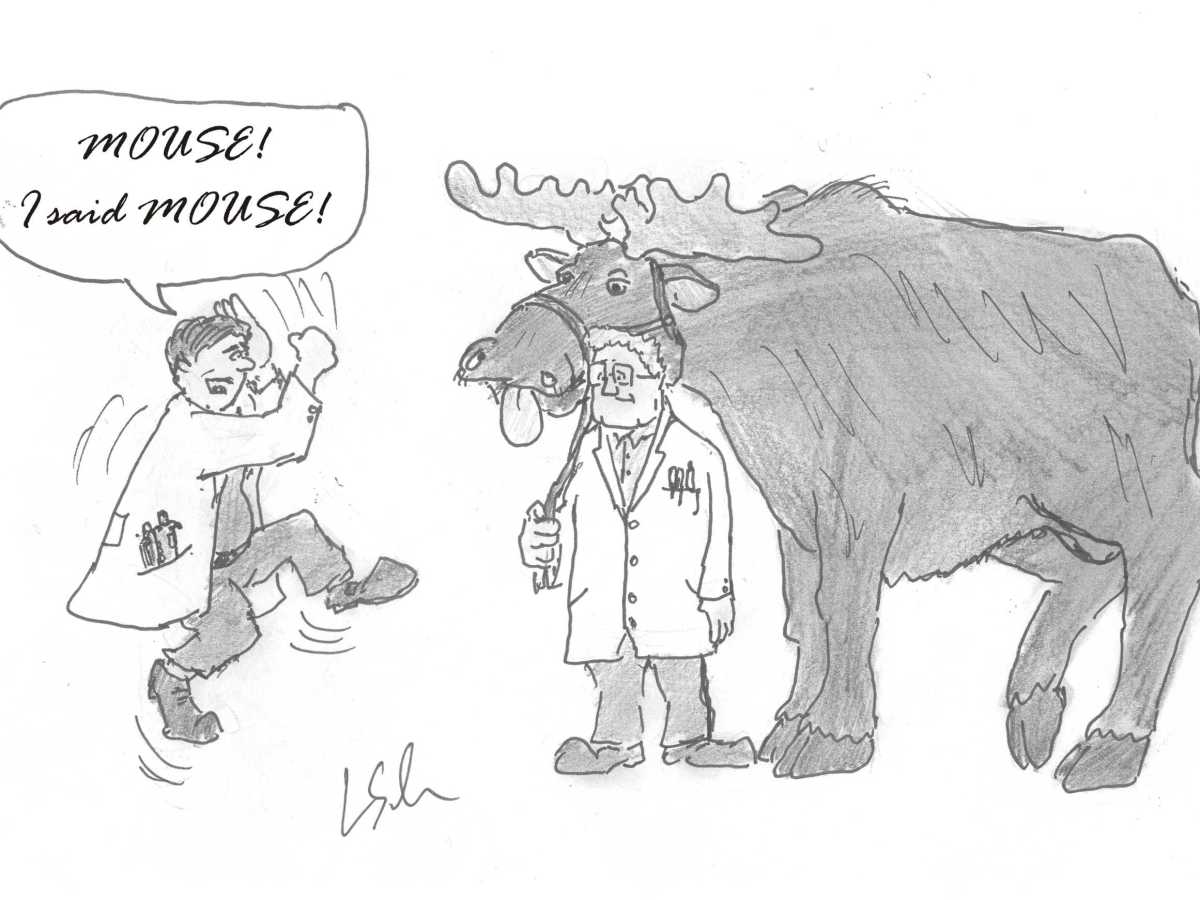
Bottom of the barrel: BatDolphin-based sparse fuzzy algorithm
“BatDolphin-based sparse fuzzy algorithm, cat swarm optimization, honey bees optimization, moth amalgamated elephant herding optimization, fitness sorted moth search algorithm, improved tunicate swarm optimization, lion algorithm, deer hunting optimization, various rider optimization schemes, grey wolf optimization, cuckoo search, and finally a bat algorithm. Such a zoo of names immediately raises suspicion, and for a good…

Treated as spam
A retraction for the Hungarian papermiller Lóránt Dénes Dávid, about whom I wrote in February 2024 Shorts because someone under his name has been issuing insane threats of violence against Alexander Magazinov and myself in emails and comment section of For Better Science. Back then, my correspondent “Prominent Prof. Dr. habil. habil. habil. Dávid Lóránt Dénes“ denied his involvement. His dean József Kárpáti assured me back then:
“As the direct organisational supervisor of Professor Dávid, I can just confirm that his personality is to utmost far from such unacceptable behavior. Knowing him in person, I could absolutely not believe he is associated with any kinds of offensive correspondence you have attached. The entire exchange of messages clearly seems to be a misuse of his personality.“
The publication ethics enthusiast Denes himself wrote to me:
“I am a decent father of 3 children with no criminal record. I do not visit your website, nor am I interested in it. […] Professionally, I can tell you that I have been involved in the reclamation/rehabilitation of industrial and mining sites for more than 30 years, with a special focus on tourism. We have implemented several very successful projects and we have ongoing research and early stage concepts in Kazakhstan. It is a process preceded by basic research, and later we are looking for opportunities for after-use.“
And now PLOS One retracted his paper on Kazakhstan, originally flagged by Magazinov in February 2024:
Ruslan Safarov, Zharas Berdenov, Raushan Urlibay , Yuriy Nossenko , Zhanat Shomanova , Zhuldyz Bexeitova , Andrej Kulak , Imre Varga , Andrej Balog , Rita Nyizsalovszki Domjánné , Lóránt Dénes Dávid Spatial distribution of elements, environmental effects, and economic potential of waste from the Aksu ferroalloy plant [Kazakhstan] PLoS ONE (2023) doi: 10.1371/journal.pone.0283251
There, waste disposal in Kazakhstan was referenced with studies about Romanian folklore or museum indoor microclimate. The tourism professor Denes also managed to insert several irrelevant citations to himself by simply mentioning the word “tourism” in the text:
“When studying the environmental aspects of technogenic objects, it is necessary to determine the degree of effect on human health, the use of green solutions and the potential for tourism development [29–32].”
Some Denes self-citations were added without even creating a pretence. The handling editor was a fellow Hungarian and Denes’ collaborator, László Vasa.
The retraction was published on 15 August 2024:
“After this article [1] was published, the following concerns were raised:
- The article [1] contains citations, including by the last author, that do not support the statements in which they are cited. The authors did not respond to address this concern, and as this issue remains unresolved the reliability of information reported in the article is in question.
- There are concerns about authorship, competing interests, and peer review.
- A member of the PLOS ONE Editorial Board reviewed the article [1] and stated that based on the reported methodology the study appears to be based on single point data with no replicates collected during sampling. This has implications for the data quality and the reliability of the article’s results and conclusions.
The PLOS ONE Editors retract this article [1] due to the above concerns. We regret that the issues were not addressed prior to the article’s publication.
LDD responded but expressed neither agreement nor disagreement with the editorial decision. RS, ZB, RU, YN, ZS, ZB, AK, IV, AB, and RND either did not respond directly or could not be reached.”
I also contacted Denes about this retraction. His reply:
“The message, and any further messages from you, will be treated as spam.“
His “very successful” Kazakhstan project is spam now. In this regard, Denes and his Kazakh waste removal experts have unlimited expertise:
Zhanat Kairollinovna Shomanova , Ruslan Zairovich Safarov , Ardak Sydykovna Zhumakanova , Yuri Gennadievich Nosenko , Aisulu Talgatovna Zhanibekova , Nelya Lukpanovna Shapekova , Lóránt Dénes Dávid ELECTRON MICROSCOPY SURFACE STUDY OF CATALYSTS BASED ON FERROALLOY PRODUCTION WASTE SERIES CHEMISTRY AND TECHNOLOGY (2018) doi: 10.32014/2018.2518-1491.29
More on PubPeer.
Donate!
If you are interested to support my work, you can leave here a small tip of $5. Or several of small tips, just increase the amount as you like (2x=€10; 5x=€25). Your generous patronage of my journalism will be most appreciated!
€5.00

 For Better Science
https://akw.sk/konspiratori-sk-cast-2/
Please translate. She is not a single one in Slovakia.
LikeLike
From what I understand the article accuses me of being silent on other Slovak cases, specifically of some unnamed high-publishing academic.
LikeLike
No, no. It is just a reminder that there are other cases in Slovakia. More “interesting”.
LikeLike
I wrote about Brestic already
Contrary to what some think, For Better Science is not dedicated to Slovakian academic issues.
But I know you attack me and the Slovak journalist Otakar Horak for writing about the WRONG papermillers.
Well, can you think what my advice is, or do I have to formulate it?
LikeLike
Yes, please.
LikeLike
Go fucking dig yourself, Jan, and stop pestering me.
LikeLike
Lol. Just lol. Not just scientifically trash, Jan Lakota is a rascist troll, likely a russian agent.
https://www.nbsprot.ru/jour/article/view/273
https://www.nbsprot.ru/jour/article/view/32
And this guy goes around pointing fingers at us.
Go fuck off to russia, Jan. Banned from this site.
LikeLike
“Vakcína” mohla zabiť viac ľudí ako samotná choroba by Lakota.
That is, some antivaxxery on top of the above. So, full house we have.
And on that ground he apparently wants us to investigate some Miloš Jeseňák. We leave it to himself.
LikeLike
Problem is that Jan Lakota is exactly the kind of “scientist” the rascist anti-science regime of Fico wants.
https://www.dw.com/en/slovakia-ongoing-protests-against-increasingly-authoritarian-government/a-69969609
LikeLike
When someone gets lawyers involved, they may fuck off all together right away. Then fuck off a few more times.
LikeLike
Every German or US universities have at least 100 researchers with more than 50 articles per year. Why you find 40 articles too many for an Slovakian professor who has several students? such limitations and jealousies even damaged our sport. We got only one Bronze in Olympics. Why for instance Acharya U. R. from Australia with more Pubpeer records and same suspicious coauthors is not criticised, yet you aim to damage the reputation of one female scientist in a small country with only 5.5M population. This is a clear case of jealousy motivated and initiated by her looser colleagues and the known competitor universities like SAS, etc. Lets see who will have the last laughter.
LikeLike
Very simple, Jan Lakota is an antivaxxer, so he accuses vaccine researchers of fraud. .
https://akw.sk/konspiratori-sk-1-cast/
LikeLike
For me the number of irrelevant research e.g., nano or fuel with the collaboration of irrelevant Saudi Arabian’s individuals is disturbing. The government’s incentives and adjusting the Universities’ annual budgets based on the number of publications causes this chaos. Yet nothing new here just like the case of Marian Brestic.
LikeLike
Thank you for the little foray into Sahebkar! I’m a science communicator specialising in cosmetic science – a paper of his from 2015 on rosemary oil for hair regrowth has recently managed to convince a whole bunch of dermatologists to promote it on social media and in magazines as an alternative to minoxidil.
Unfortunately it seems like a lot of dermatologists don’t get taught that bar charts with cylinders are suspicious, and that the Hamilton Rating Scale for Depression isn’t used to measure hair growth…
LikeLike
It must be this one:
Yunes Panahi , Mohsen Taghizadeh , Eisa Tahmasbpour Marzony , Amirhossein Sahebkar
Rosemary oil vs minoxidil 2% for the treatment of androgenetic alopecia: a randomized comparative trial
SKINmed Dermatology for the Clinician (2015)
pdf here:
Click to access rosemaryminoxidil.pdf
Published in this parody of a medical journal owned by some Jo-Ann Kalaka-Adams:
https://skinmedjournal.com/
LikeLike
Yes that’s the one! I was flummoxed when I read it, and made an article and YouTube video about it – someone kindly posted some of my critiques to PubPeer on my behalf.
Here are some of the doctors and scientists promoting rosemary oil as a hair loss treatment based solely on this paper. Some of them have millions of followers on social media.
It’s amazing how much influence one obviously garbage paper in a low-tier journal (combined with many careless perceived experts seeking social media virality) can have – the dermatologist who first alerted me to the paper still has patients asking about rosemary oil all the time. It’s my third most popular video after only 5 months, because so many people are specifically searching for rosemary oil (and as you can imagine, the comments are full of people telling me I’m an idiot/shill for casting doubt on their snake oil).
LikeLiked by 1 person
They should also consider parsley, sage and thyme oil. Available at Scarborough Fair or at your local hair-loss quack.
LikeLike
Since the Vickers curse appeared here – what are we to make of seemingly legitimate papers with the Vickers curse?
Here are two examples that (to me) seem fine. The other citations are legitimate and I don’t see glaring red flags indicating fraud.
https://link.springer.com/article/10.1186/s40795-023-00724-x
https://doi.org/10.1371/journal.pone.0251670
LikeLike
Given the origin of the Vickers curse (a truncated space in a copypasted Elsevier DOI), I wouldn’t be surprised if it somehow ended up in legitimate papers who didn’t pay enough attention (it could also be citation coercion). The 2nd paper you linked has already been flagged by Alexander Magazinov though, for the Vickers and a following unrelated citation (and honestly the rest of the article doesn’t look good).
LikeLike
thanks, that makes sense. And you’re right about the second paper – took another look and it doesn’t look good.
LikeLike
2 retractions for Anna Bagnato.
https://cdnsciencepub.com/doi/10.1139/cjpp-2024-0264
https://cdnsciencepub.com/doi/10.1139/cjpp-2024-0265
LikeLike
AIRC Scientific Committee – AIRC Direzione Scientifica
Anna Bagnato is the first, top left, member of the AIRC (Italian Committee for Research on Cancer) science committee .
Anna Bagnato Pubpeer record: PubPeer – Search publications and join the conversation.
You have to click on the photos for the names to appear. The names don’t show unless you click. A very funny gallery!
Antonino Befiore, top row, 3 across: PubPeer – Search publications and join the conversation.
Maurizio D’Incalci, 2 across, 3 down, rings a few bells. PubPeer – Search publications and join the conversation.
Franco Locatelli. First row, 4 down. PubPeer – Search publications and join the conversation.
Diego Pasini. First coloum, 5 down. PubPeer – Search publications and join the conversation.
Claudio Sette. Bottom row, leftmost. PubPeer – Search publications and join the conversation.
LikeLike
Correction.
That should read Antonino Belfiore, top row, 3 across.
PubPeer – Search publications and join the conversation.
LikeLike
A book the whole world has been waiting for 😂 I’m still trying to understand why ACS thanked you for the additional input. After all, you just pointed out their own guidelines, and the publication metadata. I suspect they’ll continue to do nothing.
LikeLike
I think ACS thanked me for my advice that they take naphthalene
LikeLike
I wonder how this issue isn’t discussed at all on a political level. I mean, there are hundreds, possibly thousands of fraudsters, working in jobs they didn’t deserve. And in so many fields the number of people trying to get a paid job far outweighs the number of people actually working in the field. So political parties could have a strong incentive for calling for a clean up.
One explanation that comes to mind is, of course, corruption. But this would be illegal. Right?
LikeLike
Unfortunately, there’s no corruption or conspiracy. All politicians orient their science lawmaking on the advice of scientists (it is yet another issue which kind of scientists politicians like Trump or Orban listen to).
But in any case, let’s see which science elites advise the German government science-wise.
Simone Fulda, Klaus-Michael Debatin, Roland Lill and so on.
And in Italy, well, visit PubPeer for each of them.
LikeLike
As of now, the main product of academia is streamlining public money into the “right” private pockets. Discoveries, if any, are a byproduct.
In this sense, the system works perfectly. No need for any call to action.
LikeLike
The main problem is that the job of generating data in a academic lab is largely a crappy one. There is an good deal of pressure/temptation to cheat to get out of it so you can move on to a better one in science. That way you don’t have to go through the mental suffering and expense of re-training into something you may not like so much or be good at.
LikeLike
Exactly right magazinovalex, academia is working as it always intended to and won’t change anytime soon. Charles Babbage lamented about scientists fudging data in the 1830’s!!!
LikeLike
Highly diverse scientific background and geographical origin – Elsevier concerned by papermilling
What? That it is not making enough money from it?
LikeLike
One of the reason I immigrated from Slovakia to the US; corrupted science. It is sad but true story.
LikeLike
I wonder if someone is bothered by Wiwanitkit Vioj having 500 papers in a year.
LikeLike
Second RETRACTION for Giorgio Palù and Cristina Parolin, retraction to Gabellini et al. 2006 J Cell Physiol:
PubPeer – Increased expression of <i>LGI1</i> gene triggers growth inh…
Journal of Cellular Physiology | Cell Biology Journal | Wiley Online Library
LikeLike
” The authors did not respond to an inquiry by the publisher and a request for original data. ”
Very professional from the dude who was in charge of national pharma industry oversight as director of the Italian Medicines Agency (AIFA)
LikeLiked by 1 person