
Smut Clyde is worried about the research field of green technologies and environmental protection. For it has been conspicuously taken over by papermills, entire Elsevier journals publish nothing but, thanks to a certain type of editors. It is not just Asian names which keep popping up, but also Nordic ones, like Jörg Rinklebe and Christian Sonne.
Do papermillers dream of eclectic journals?
By Smut Clyde
There’s one chapter of ‘Do Androids Dream of Electric Sheep?‘ that didn’t find a place in Blade Runner. Fearless replicant hunter Deckard is arrested and taken to an unfamiliar police station that turns out to be a simulacrum: it’s staffed by replicants themselves for camouflage, in mimicry of real law enforcement. Modern academic publishing feels like that; whole bogus traditions of parody science or ‘parascholarship’ are developing in imitation of actual research, forged papers citing other forged papers in a cargo-cult travesty of academic practice. The temptations of parascholarship are obvious; you are more productive and higher-ranked than genuine researchers, hence better-rewarded, because you don’t waste time or any of your funding on conducting genuine research.

Victims as perpetrators
Smut Clyde as Detective Columbo investigates: The victims of a paper mill are actually in cahoots with the perpetrators! Stealth corrections happen faster than one can catch them!

The equivalent of Deckard’s discovery are the journals run by the papermill industry (with active participants on their editorial boards, not just guest-editing corrupted Special Issues). We have previously met Cell Cycle, and Cell. Phys. Biochem. (which Karger sold to a consortium of academics at fire-sale price), and Oncology Research (which Cognizant Communication sold to an even lower-rent publisher that is more comfortable with ignoring criticism), and J. BUOn (which is now an abandoned ghost-town where mournful coyotes howl in the distance).

We don’t need no education, We don’t need no thought control
“Of course the sentient rubber-stamps guest-editing Special Issues on behalf of papermills would have accepted anything – they don’t give two tugs on a dead dingo’s dick about content ” – Smut Clyde
Here I focus on the sprawling parody literature devoted to the three Es of Energy, Economy and the Environment. Together they pay homage to worthy concepts like “green sustainable production” and “circular economy”. Certain journals come to mind: Sustainability, Fuel, Chemosphere, Science of the Total Environment… These freeload on the authentic literature on energy efficiency and pollution reduction (while diluting, distracting and discrediting them). The net subtext is to minimise the issues of climate change and environmental degradation, distracting from the urgency of a transition to a less destructive economy, almost as if the pollution / extraction industries were funding the whole phenomenon. I must credit “Desmococcus antarctica” as collaborator.

Environmental Pseudoscience and Polluted Research
“We are living in a faked world and there is a lot of un-verified avatars. “, Philippe Garrigues, EiC

We have already met Environmental Science and Pollution Research (ESPR) in the context of its hospitality to paper-shaped advertisements for pirated journals. Alexander Magazinov looked at its regular contributors and recognised many names from the annals of Stakhovanite scholarly mass-production. ESPR was founded 30 years by Otto Hutzinger as a serious publication but was acquired by Springer in 2007. Hutzinger’s original vision is easily forgotten now, for the current Editor-in-Chief Philippe Garrigues (retired CNRS Research Director at the University of Bordeaux, for whom boating and fishing are higher priorities than scholarly integrity) has placed his own stamp on the journal’s reputation.
So this happened: A recent Stalinist purge of the upper editorial echelons (though the lack of show-trials is disappointing). Garrigues remains in place, along with a few other rubber-stamps that somehow acquired sentience – but Goodbye to Mohamed M. Abdel-Daim, Nicholas Apergis, Arshian Sharif.
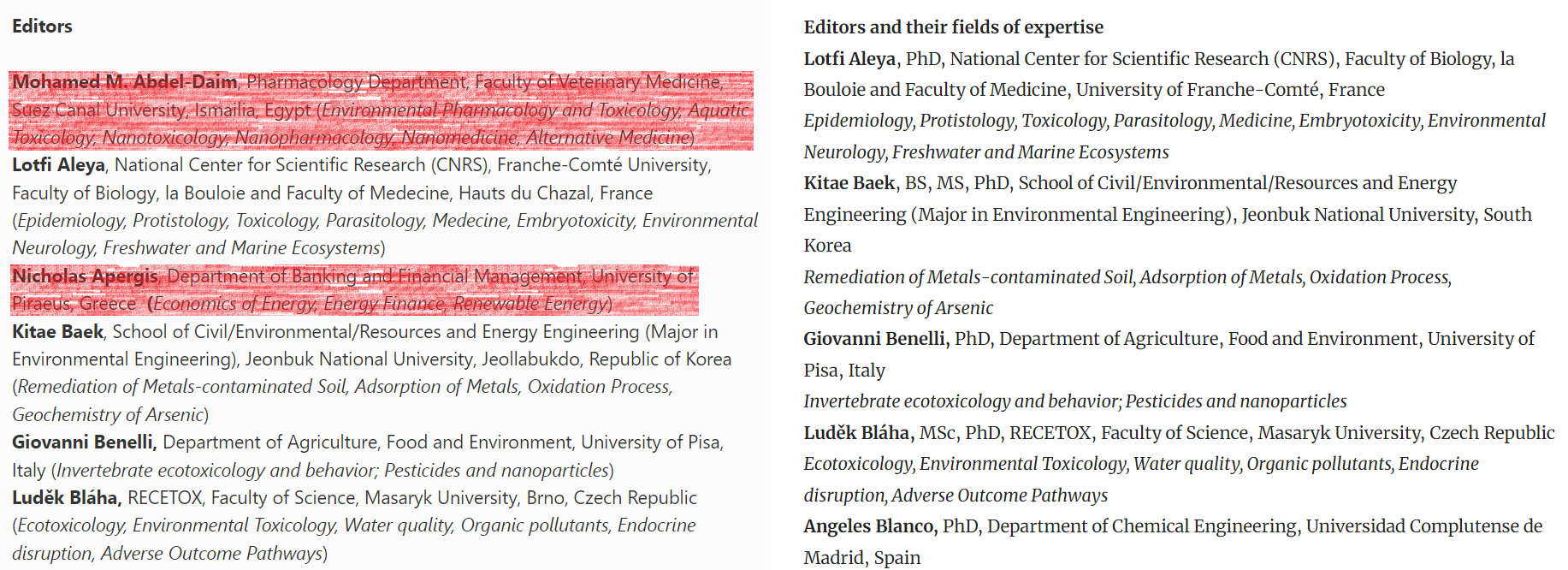
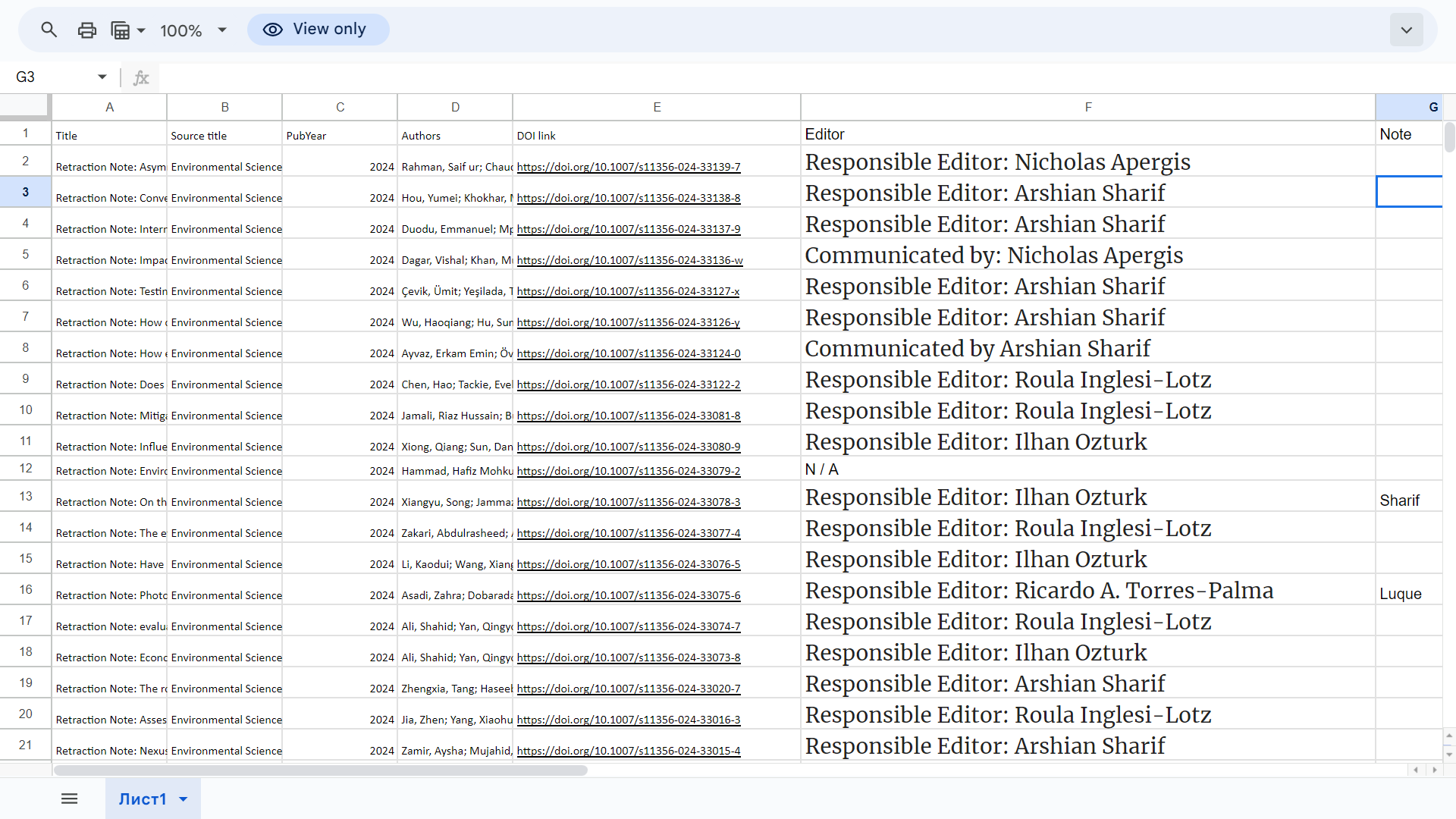
Coincidentally, these were often the Responsible Editors or the Communicators who facilitated 53 papers that were retracted in an accompanying bloodbath. Perhaps this all happened at Garrigues’ instigation, but one might easily speculate that Springer staged an intervention.
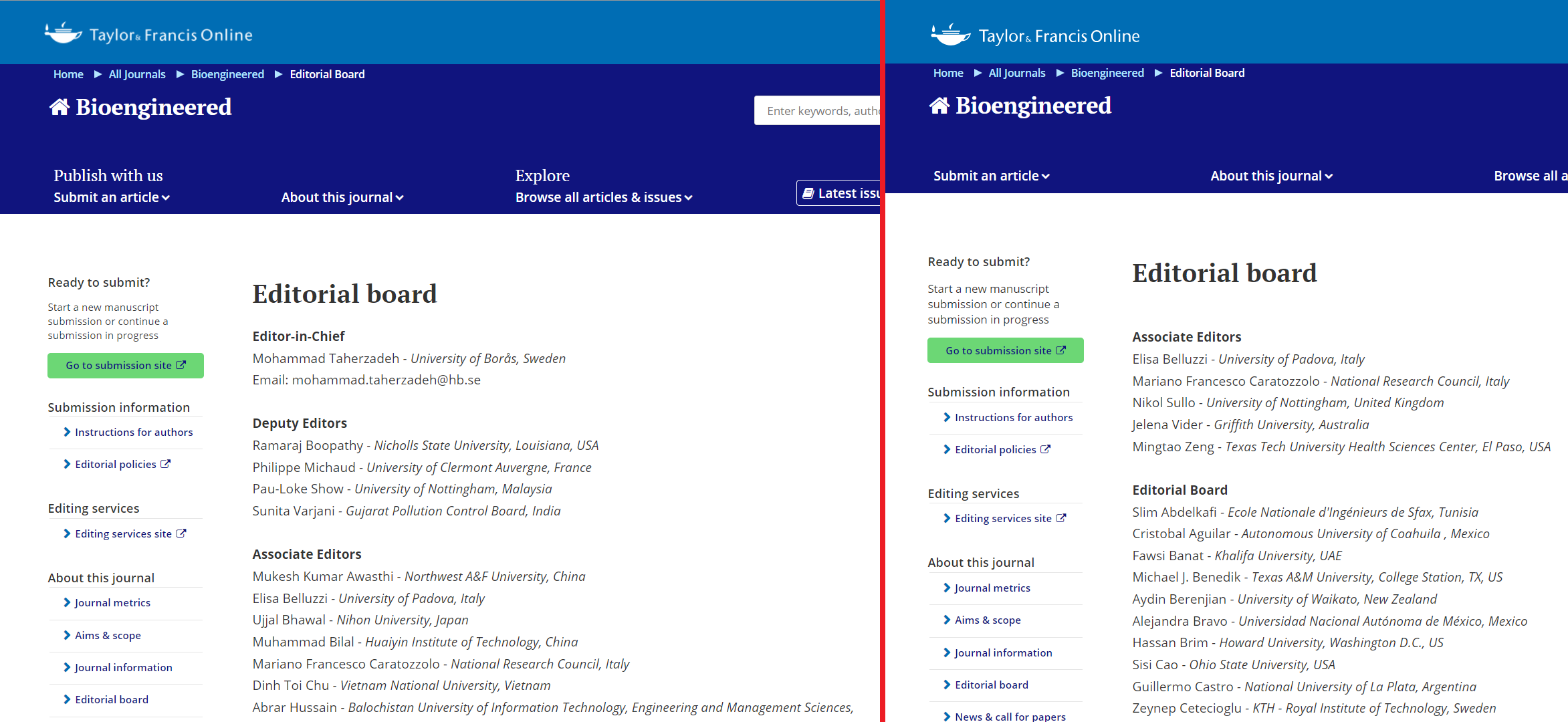
 Then there is Bioengineered, where a clean sweep of the Editorial Office evicted the Editor-in-Chief Mohammad Taherzadeh, all the Associate Editors and 10 out of 15 emergency back-up editors (including Jinhui Liu and Jiaheng Xie, “up-and-coming stars” from Nanjing Medical University); almost as if these Gatekeepers of Scholarship had been caught taking bribes. CCTV footage captured the scene in the Bioengineered office when the deputation from Taylor & Francis explained the changes in publication standards and policies.
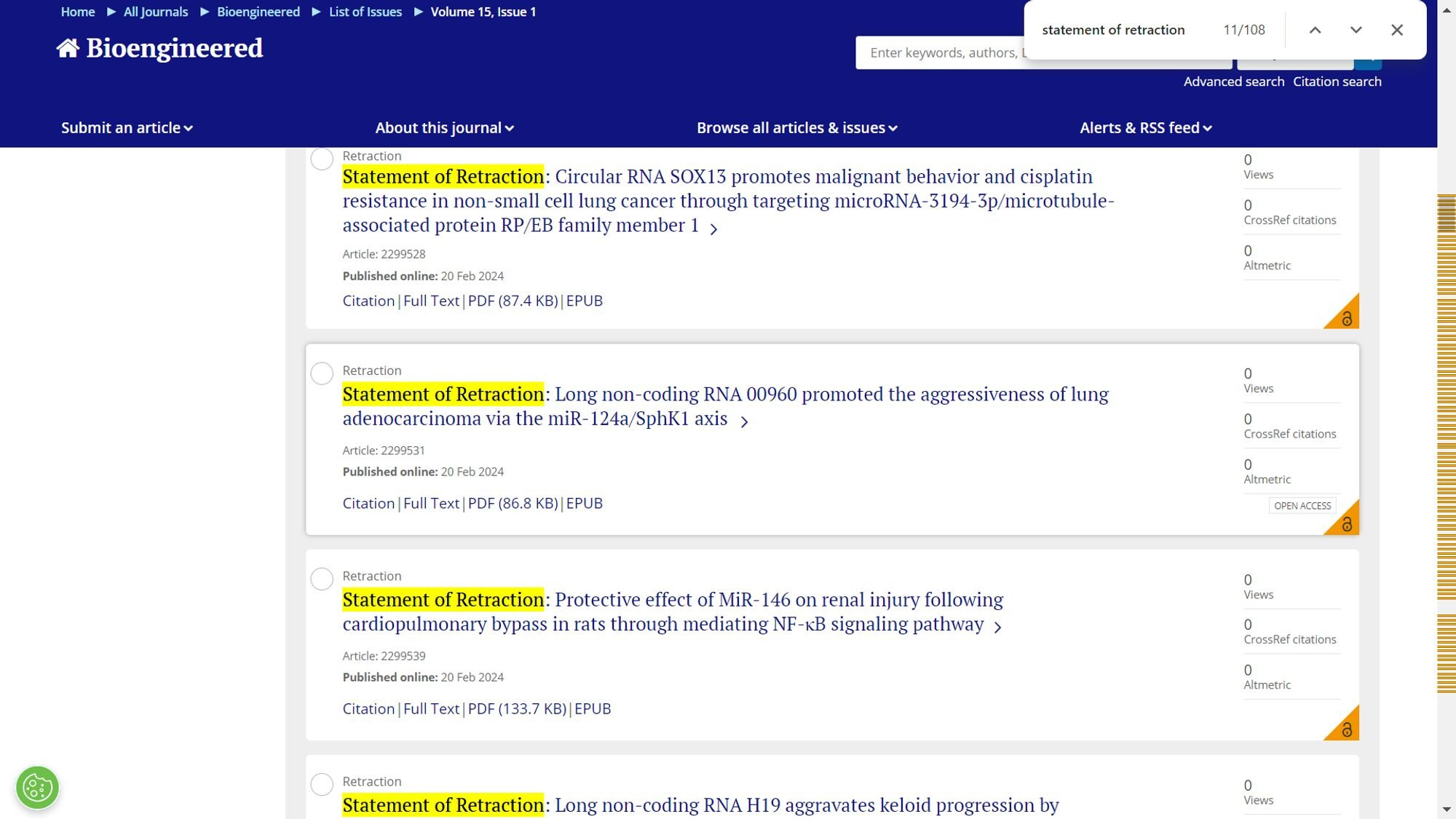 Again, a mass retraction happened at the same time; on 20 February 2024, in one swell foop, 45 papers went to live on a farm in the country (on top of nine retractions from the end of January), comprising 90% of that issue. A depublication of this scale would have been newsworthy once but now we are desensitised to atrocity.
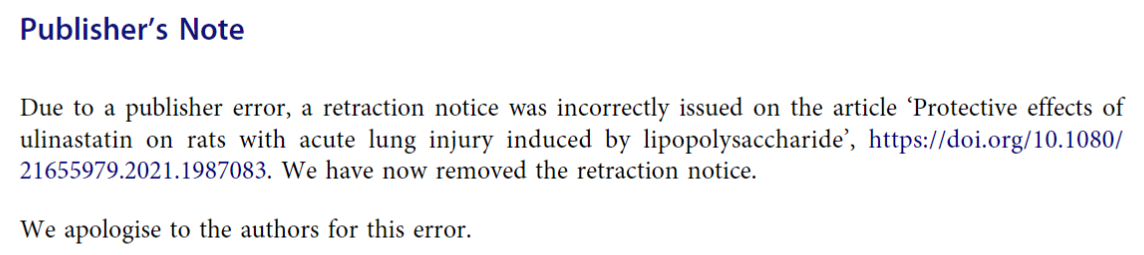
On 1 March Bioengineered deretracted nine of those retractions, explaining that the papers were innocent victims of administrative zeal, swept up in the dragnet by mistake. Perhaps the new administration forgot to change the locks and allowed ex-Editor-in-Chief Taherzadeh to sneak back in during the night. They since had to re-retract one of the reprieved papers, and more will follow, for they are all unmitigated garbage scows. It seems a lot of unnecessary work.
Don’t worry about Taherzadeh. He was stripped of this outlet for his talents but he has others. We find him in the editorial troika at Systems Microbiology & Biomanufacturing, under Co-Editor-in-Chief Ashok Pandey. 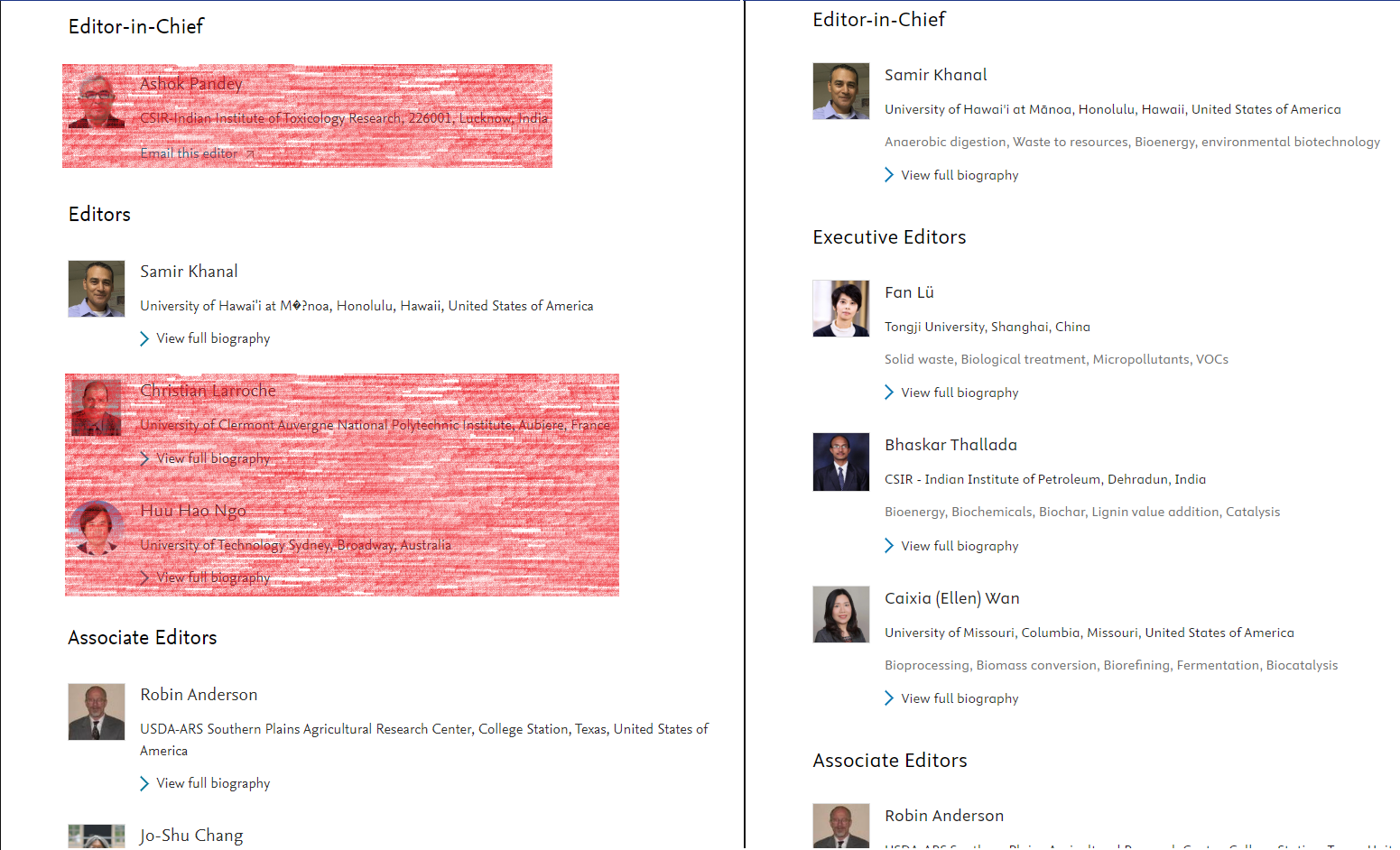 Until late last year he was one of the editors of Bioresource Technology, again under Pandey (another journal swept clean by a recent purge, though no mass retractions yet). Taherzadeh is one of the Renaissance men and when he and Ashok Pandey aren’t flimflamming together, we find them on the fringes of the Rinklebe-Sonne network of reciprocating coauthorship / editing – later on in this story.

The incredible collaborations of Renaissance men and women
Nick Wise and Alexander Magazinov on the authorships-for-sale market on social media. Merely $700 for the 7th position on some paper way outside your expertise!
By way of a parenthetical note: Bioengineered is an outlier in the present discussion; a special case, occupying a different niche in the fabricated-paper economy. Yes, it caters to the scholarly market of academic wannabees who sustain their phony-baloney careers by buying (or selling) authorship on fat portfolios of forgery – but also to the secondary biomedical clientele of one-time buyers (driven by the special incentives and pressures on Chinese clinicians).
On account of the clinical client base, the nature of papermilling here is different from in biomedicine. The material is largely text-based – in contrast to biomedicine, where the conventions of the genre oblige the millers to fabricate or plagiarise illustrative examples of the putative raw data. Here is where we find authorship bazaars, citation payola, endless disposable collections of fingernail clippings presented as Narrative Literature Reviews, and incestuous reciprocal networks of authors reviewing and editing one another’s papers.
This first customer base of Highly Cited Academics drives fake-paper production lines in many sectors of the demimonde of parascholarship (or Parody Science, call it what you will). Hence the Energy, Economy, Environment magisteria, but also Education studies. Each sector has its own compromised journals; far too many to cover in one post. [end parenthetical note]

Hymie Dearness – Confessions of a Mitochondriac
“I am not angry with the post-publication surgery that the publisher performed on the affected papers after discovering the shenanigans, scrubbing off the names of spurious reviewers. Just very disappointed.” – Smut Clyde
Alternative title:
Review unto others as you would have them review unto you
No-one wants a multi-role situation where the same people alternate between editing, reviewing and co-authoring one another’s papers. That is how you get mitochondriacs (and Habsburgs). To be fair, narrow novel research fields make it challenging to recruit peer-reviewers with the appropriate expertise who aren’t close associates of the authors, but that is why editors are paid so well. Akira Abduh posted an essay on “Citation Rings” at ResearchGate:
The case study involves hyperprolific author Jörg Rinklebe or sometimes written as Joerg Rinklebe. Rinklebe has been identified as part of the biochar ring in the previous publication and also has been expelled from the title Highly Cited Researcher by Clarivate in 2023 …
Reciprocal Citations: It’s been observed that papers authored by Dr. Rinklebe frequently cite works by specific researchers, such as Yong Sik Ok and Nanthi Bolan. Additionally, these researchers might also cite Dr. Rinklebe’s work extensively.
Courtesy of that essay, here is the Citation Vortex centred on Prof. Prof. mult. Dr.-Ing. agr. Jörg Rinklebe. It is a Who’s Who of Hyperprolificity.

 Readers may recall Gaurav Sharma and Mu. Naushad, whom we met as protégés of Florian Stadler. They are working hard to become part of the Rinklebe Vortex and I am disappoint to see that the map does not yet show them.
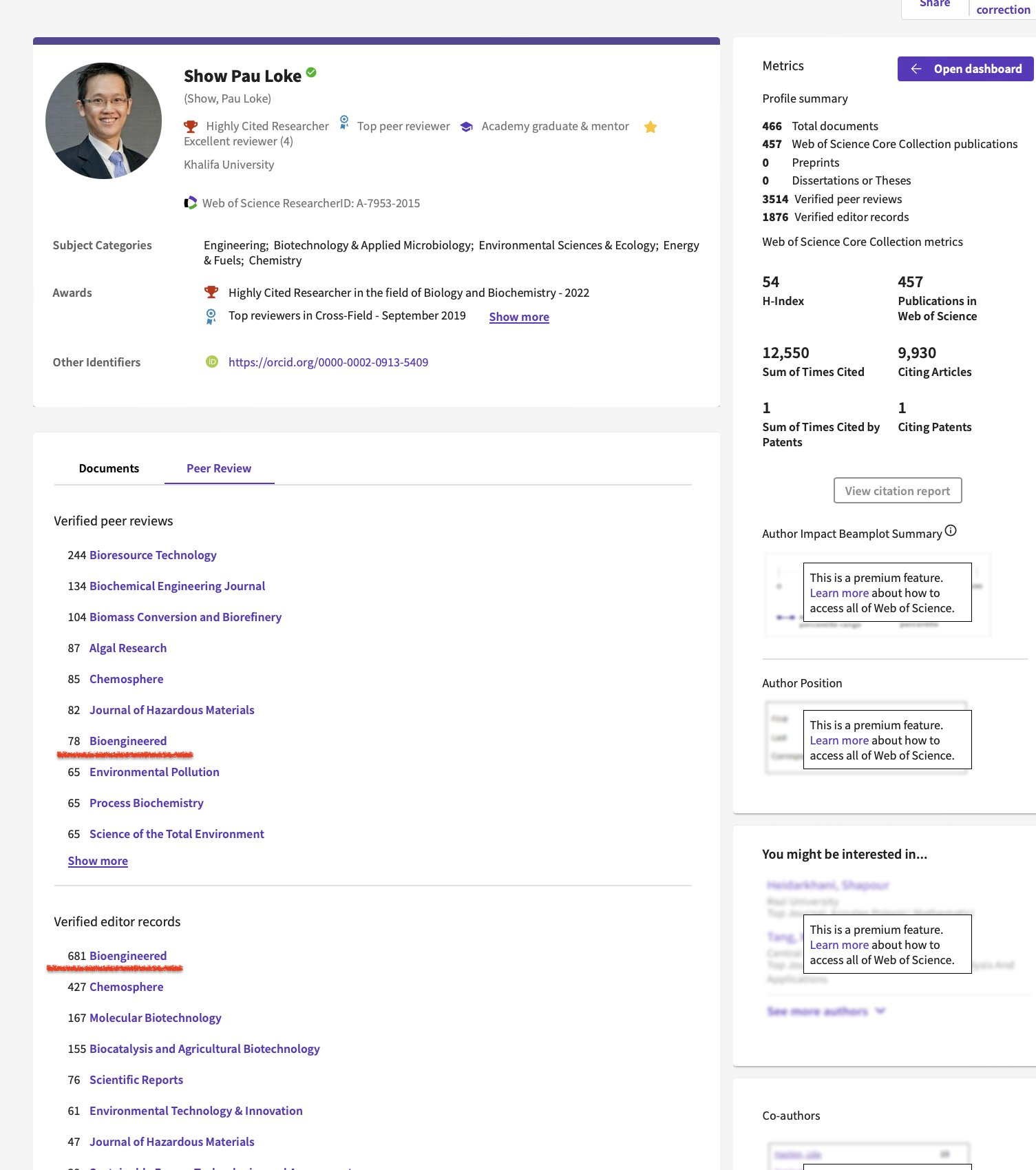
Instead, please admire the Web-of-Science entry for unstoppable Reviewing Machine Pau Loke Show, who is on the map.
Any journal with an Editorial Board packed with Rinklebe and his associates falls unavoidably under a pall of suspicion.
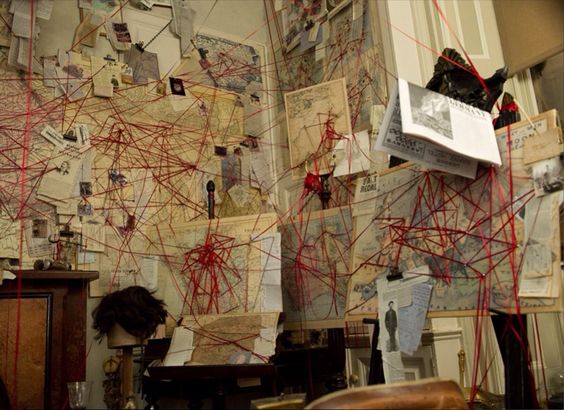
Over in PubPeer threads, Desmococcus antarctica monitors these editor/author links so you don’t have to, notably in the neighbourhood of the journals that concern us here, where links sprout ever more connections in an asymptotic entanglement that is in danger of solidifying. E.g. here, or here.
Biochar stands out even in present company. “Biochar” is (as any fule kno) charcoal – plant matter transformed in the crucible (‘valorised’) by refining fire. In the form of Terra preta it became popular in the last decade or so as a form of carbon sequestration. Anyway the topic deserved its own journal, named, well, what else – Biochar.
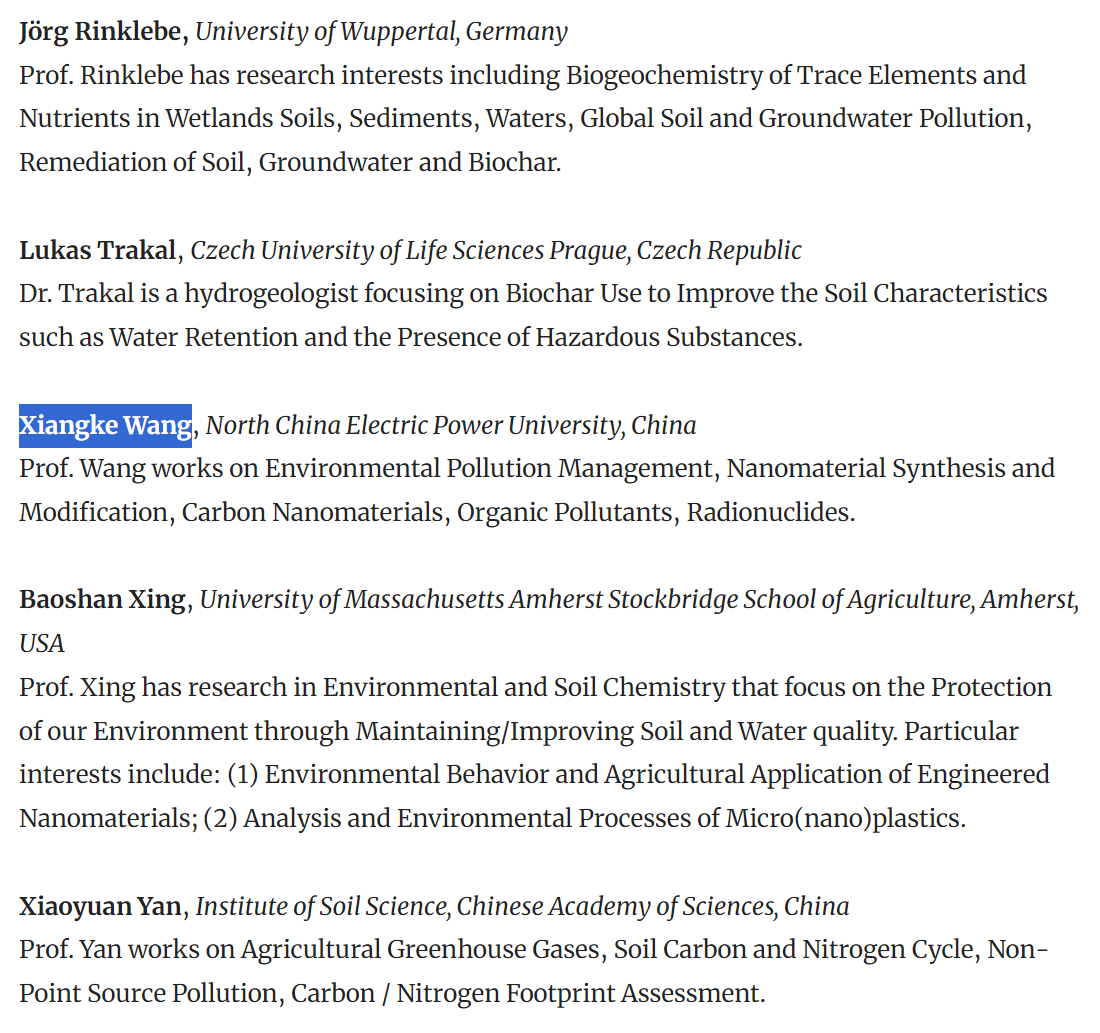 The Editorial Board seems to have been recruited using the Rinklebe Vortex as a guide, with Hailong Wang as one Editor-in-Chief, and Rinklebe and Kitae Baek and Yong Sik Ok among the editors (picking a few names at random). But Xiangke Wang, doyen of spectroscopic cut-and-paste! After so many exposures and retractions, one would expect that he had “burned the implements of his craft, and began life anew as a trainer of performing elephants”. How is it possible that his fraudulent papermilling career continues?!

Yubing Sun: contaminated science, Synchrotron fraud and citation scam
Smut Clyde and TigerBB8 investigate another case of nanotechnology research in China. Connected teams of authors pretended to work on cleaning up the environment of radioactive pollution, and instead released a toxic sludge of fraudulent data and citations.
In an unpublished essay, Desmococcus notes [“tongue so firmly in cheek as to protrude from the vulgar bodily orifice”] that the members of this cohort may have mastered the secrets of hyper-productive text generation but they have not been spoiled by it. They could easily husband all their energy and time for the selfish ends of maximising CVs, but nothing could be further from the truth; in fact they devote time for selfless editorial roles across multiple journals, and the thankless task of reviewing submissions to those journals.
Next to publishing a lot, these very prominent researchers also give back to society by acting as reviewers and editors for their less successful peers. By doing so they are able to spread their wisdom and knowledge to the lesser gifted. Of course, as with their research and publishing they do this also at a rate that is simply unfeasible for the common people (aka regular scientists). Tsang for example reviewed 20-35 papers per month in 2018-2019. Without a doubt, he was rewarded for this and received the Top reviewers in Cross-Field, Top reviewers in Chemistry, Top reviewers in Biology and Biochemistry, Top handling editors, Top reviewers in Environment and Ecology, Top reviewers in Engineering awards from Publons in 2019. This again highlights the superiority of these researchers, almost inhumanely! Of course, let’s not forget, he all does this in combination with publishing 1 paper every 3 days.
One typical day of Tsang’s life is filled with writing 1⁄3 paper, review 1 paper, editing for 10 journals, and citing 100 other papers. This is of course in addition to his work at Hong Kong Polytechnic, teaching, research, collaborating internationally, and supervising PhD students. He did this 365 days a week, 24 hours a day, who needs sleep anyway?
It does not end there of course, aside from reviewing, these prominent scientists also act as editors. Tsang for example filled his spare time as editor of npj Materials Sustainability, Journal of Environment Management, Waste Disposal and Sustainable Energy, Carbon research, Biochar, Carbon Capture Science and Technology, Journal of Hazardous Materials, Bioresource Technology, Environment Pollution, Science of the Total Environment, Chemosphere, Critical Reviews in Environmental Science and Technology and many others.
Afterwords
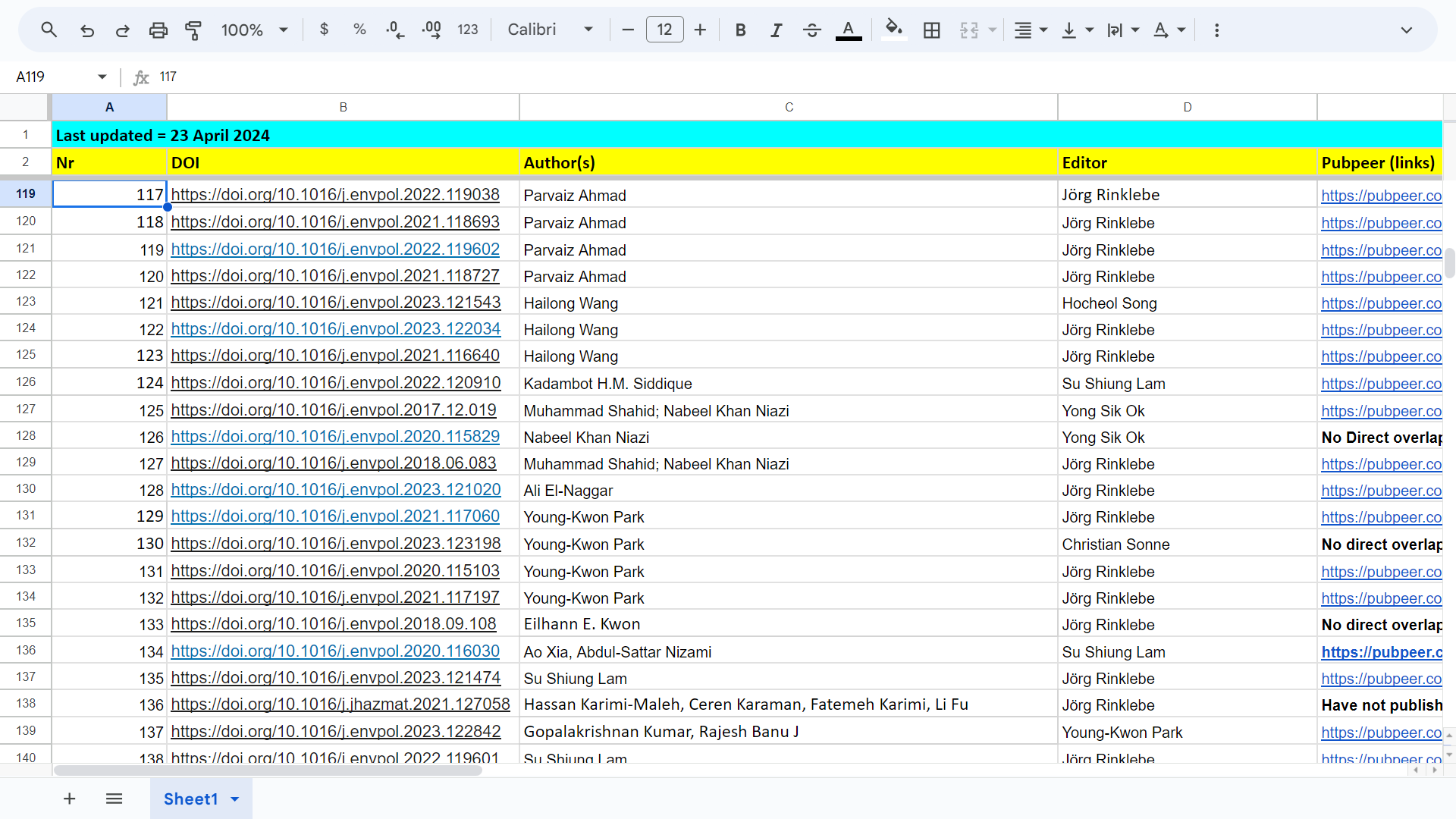
Alexander Magazinov has already cast a cold eye over Environmental Pollution. The Wikipedia entry for that journal is hopelessly out-of-date, giving its Editors-in-Chief as David O. Carpenter and Eddy Y. Zeng. This hasn’t been true since ca. 2016… a 2020 snapshot shows Christian Sonne taking Carpenter’s place, and Rinklebe as Special Issue Editor. Rinklebe was promoted to full Editor-in-Chief status (alongside Sonne and Zeng) some time between March and June 2022.
Some more spreadsheets:
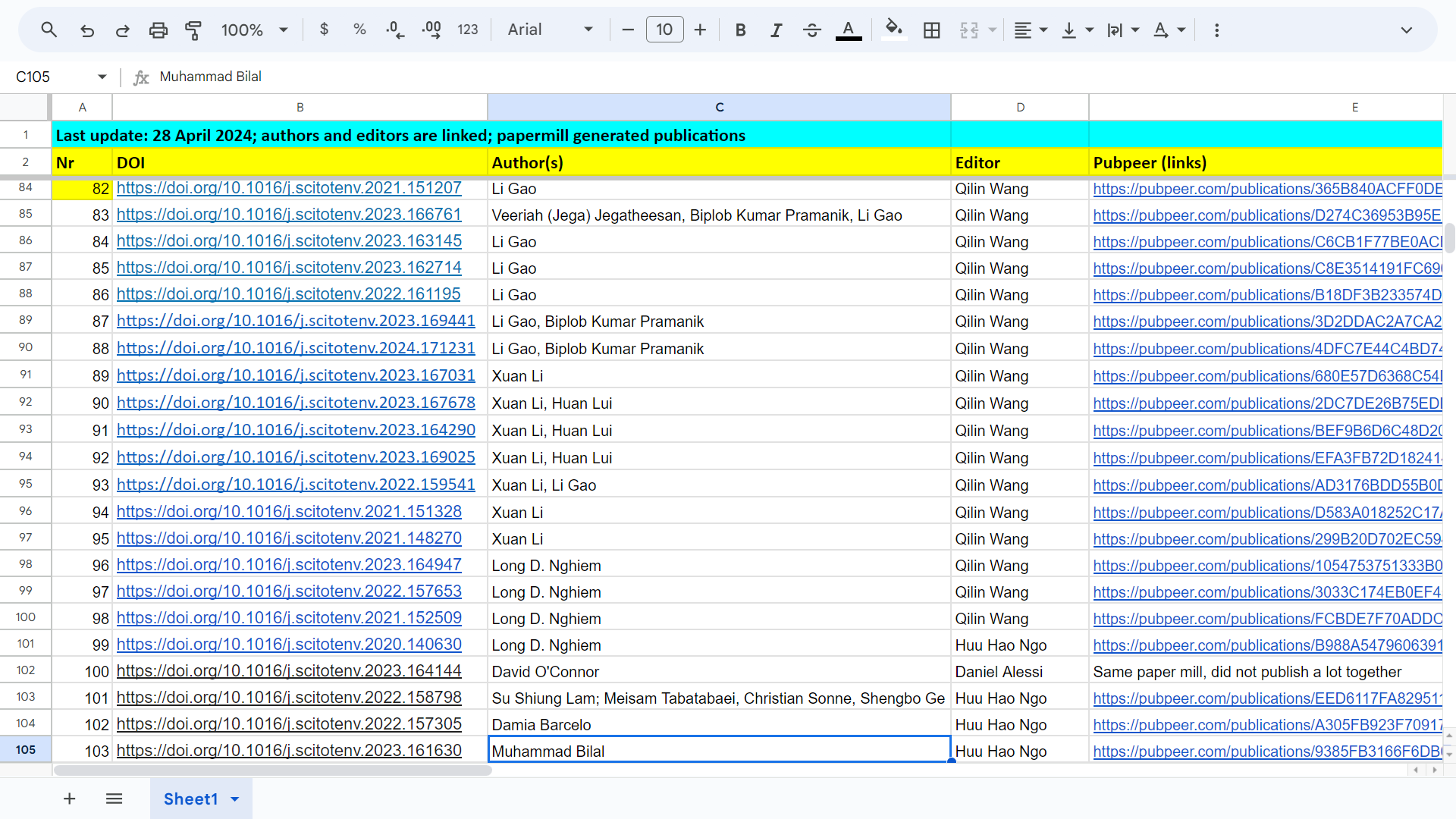
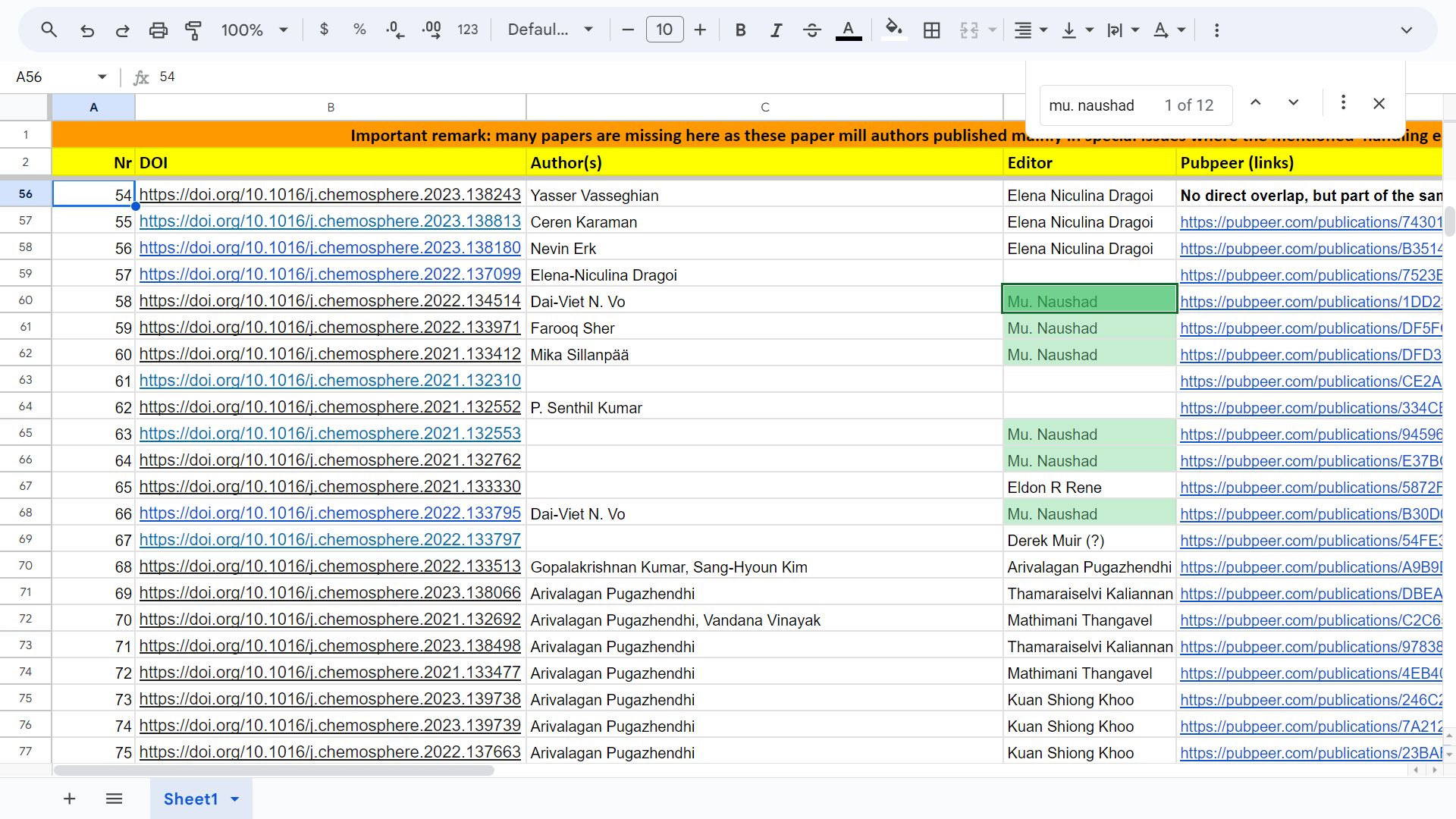
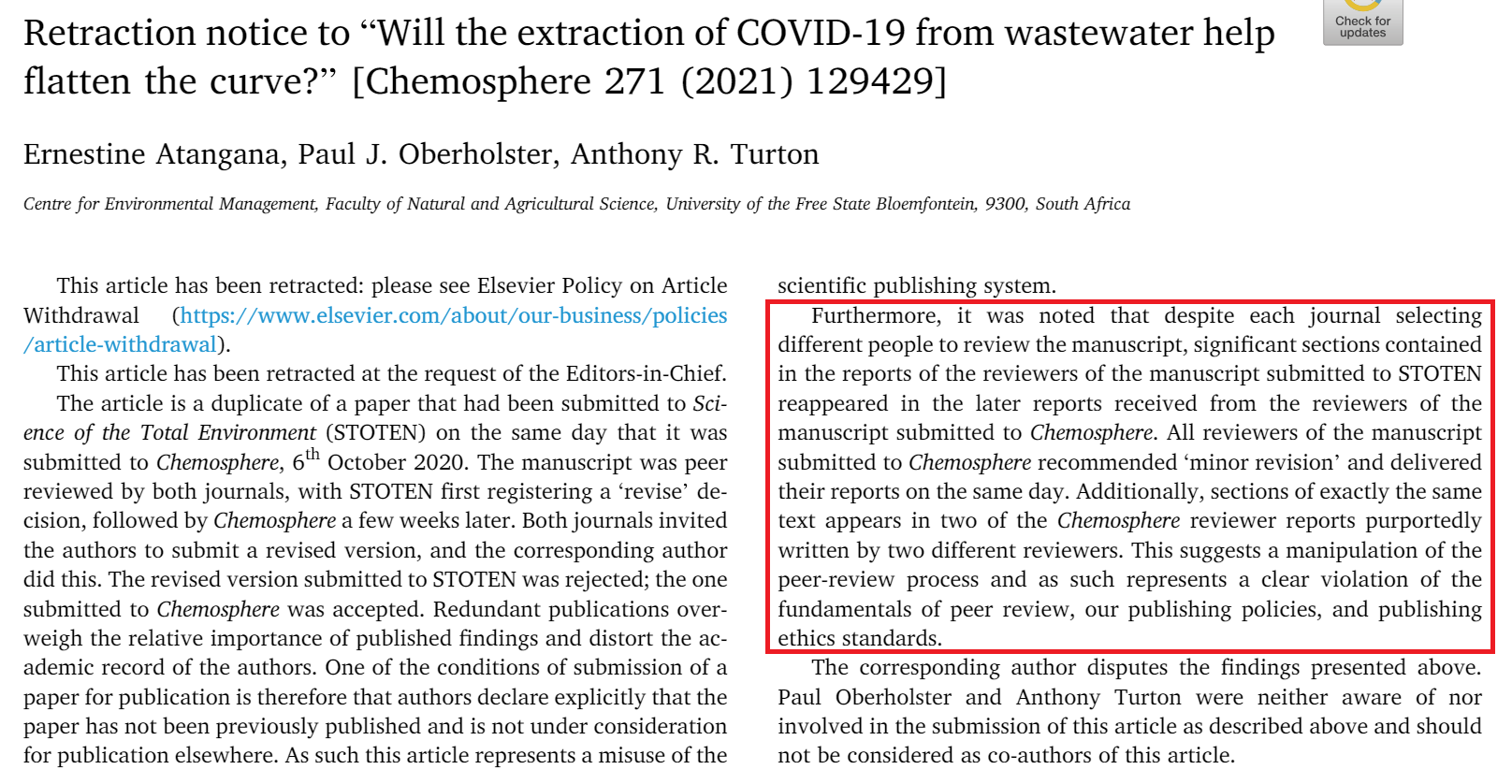
The Chemosphere pollution is largely confined to Guest Editors and Special Issues. They have only announced three Special Issues this year, only one since January; perhaps there is a hold on their Special Issue program. Sometimes the Editors issue retractions, which I will take as a sign of good faith. Here for instance, though not strictly papermill-related, they retracted a brainfart from rogue epidemiologist Ernestine Atangana, on account of duplicate submission (not to forget the duplicated fake peer-reviews that she used for both submissions).
In April and May they issued 64 Expressions of Concern involving the usual reasons (“unusual changes to the authorship of the article prior to publication”, “potential undisclosed conflicts of interest by a reviewer”). The Papers thereby entering the Retraction Fast-track were largely published in Special Issues, e.g.
- “Recent trends on layered nanomaterials for water and wastewater treatment approaches” (Eds. Farooq Sher, Elena-Niculina Dragoi, Fu Li).
- “Global Challenges and Innovations in Water Treatment and Waste Management” (Eds. Balakrishnan Deepanraj, Hwai Chyuan Ong, Pau Loke Show, Shaik Feroz).
- “Advancement on Sustainable & Interfacial Engineering of Membrane-based Environmental Remediation” (Eds. Kuan Shiong Khoo, Mubashir Mohammad, Awais Bokhari).
Five of the Concern-arousing authorship-selling papers were by S.Sudheer Khan who is an old friend of For Better Science. In another case Mika Sillanpää was the authorship purchaser.
Along with Bioengineered and Environmental Science & Pollution Research, Chemosphere is currently on-hold from being indexed in the Clarivate Web-of-Science.

But boring the readers is the last thing on my mind, so “Total Environmental Advances” and “Environmental Advances” are left as an exercise for the reader. The former benefits from the editorial contributions of Rinklebe and Qilin Wang inter alia, while the latter is another Sonne journal, and no doubt they fill a gap in the market. I will just add that Desmococcus also prepared spreadsheets for
- Bioresource Technology. The entries here, heavy on Pau Loke Show and Qilin Wang, are legacies of the Pandey-Taherzadeh editorial regime.
- Environmental Technology & Innovation. Within the Editorial Board, Eldon Rene (in charge of Special Issues) has received special attention.
- Fuel.
- Journal of Hazardous Materials.
I cannot possibly comment on the suggestion that this last journal was founded by and named after Abdul Al-Hazmat, the “Mad Arab” in H.P. Lovecraft stories, seeker after blasphemous knowledge and corresponding author of the Necronomicon. On the positive side, some time between January 2023 and now, Journal of Hazardous Materials dispensed with Rinklebe’s editorial skills overseeing its Special Issue program (though it still has Kitae Baek and others).
And some time between June 2022 and now, Ecotoxicology and Environmental Safety lost the Special Issue assistance of Hassan Karimi-Maleh (though it still has Mohamed Abdel-Daim as Associate Editor).
Here is further cause for optimism. In 41 Energy-Economy-Efficiency papers, spread over multiple journals, authors boasted of an academic affiliation to a nonexistent institution (Sun-Life Co., in Baku, Azerbaijan, read March 2024 Shorts). Some have actually been retracted! Bravo Journal of Cleaner Production!

The retraction notes allude to unauthorised changes in authorship with coauthors standing down to make room for replacements – suggesting that authorship had been auctioned off. Typically these transactions resulted in a list of high-bidding hopefuls from China, along with a single Azeri or Iranian author (not always even one). The 41 papers comprised
- Eight from Journal of Cleaner Production.
- Six from Energy.
- Four from Sustainable Energy.
- Four from International Journal of Hydrogen Energy (IJHE).
- Three from Energy Reports.
- Two from Journal of Building Engineering.
- Two from Electric Power Systems Research.
- Twelve from miscellaneous journals hosting one paper each.
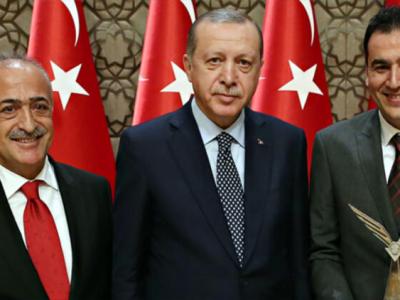
Erdogan’s academic elites
Önder Metin had a rogue PhD student whom he trusted “to ensure their academic growth”. But “mistakes were made by mistake”, conclusions are never affected. Yet those who still complain, will pay dearly.

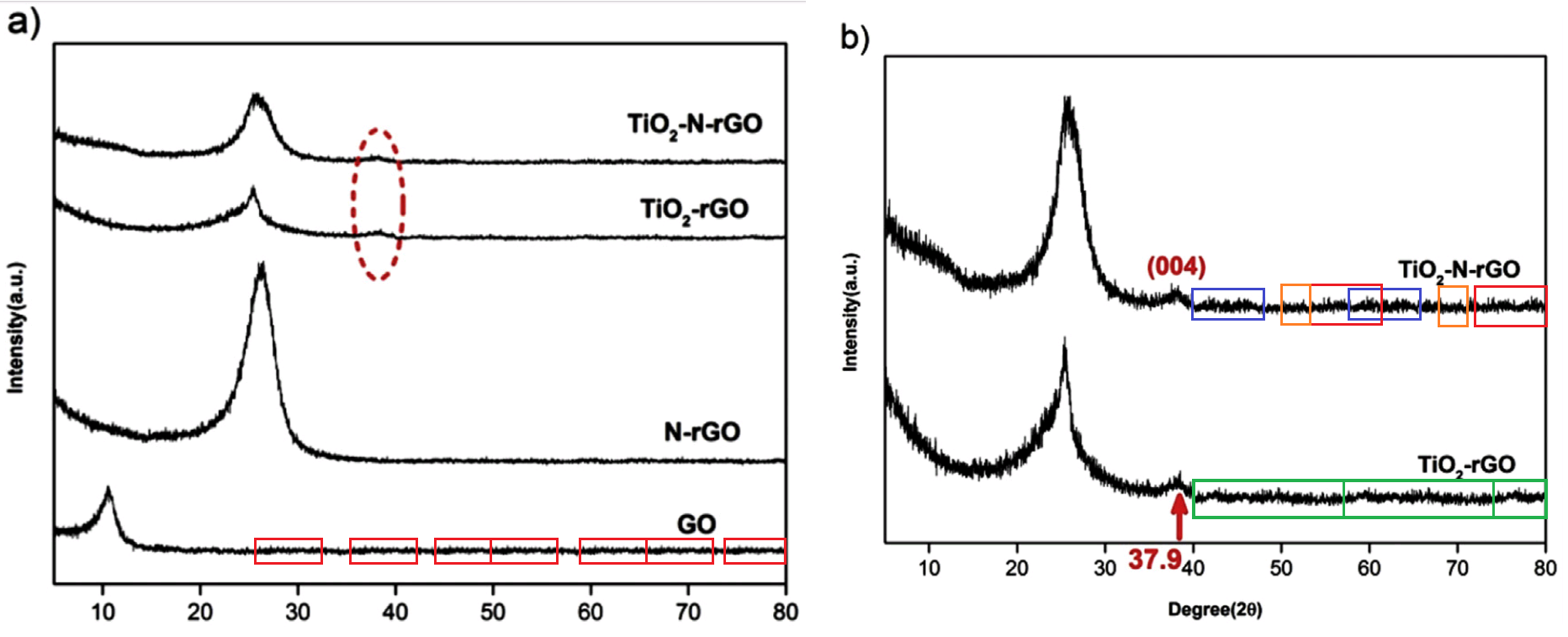
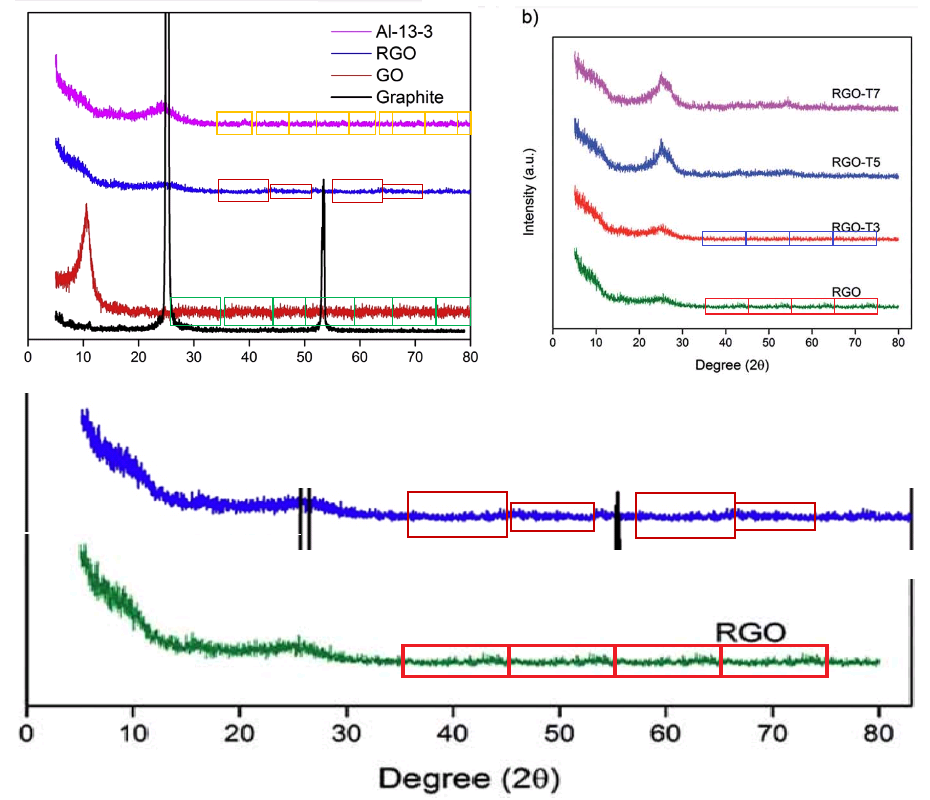
This is not strictly evidential to the topic of compromised journals. Still, we have not touched on IJHE for a while, and this is provides an excuse. It seems to show up in any discussion of faked spectra and fabricated x-ray diffraction patterns.
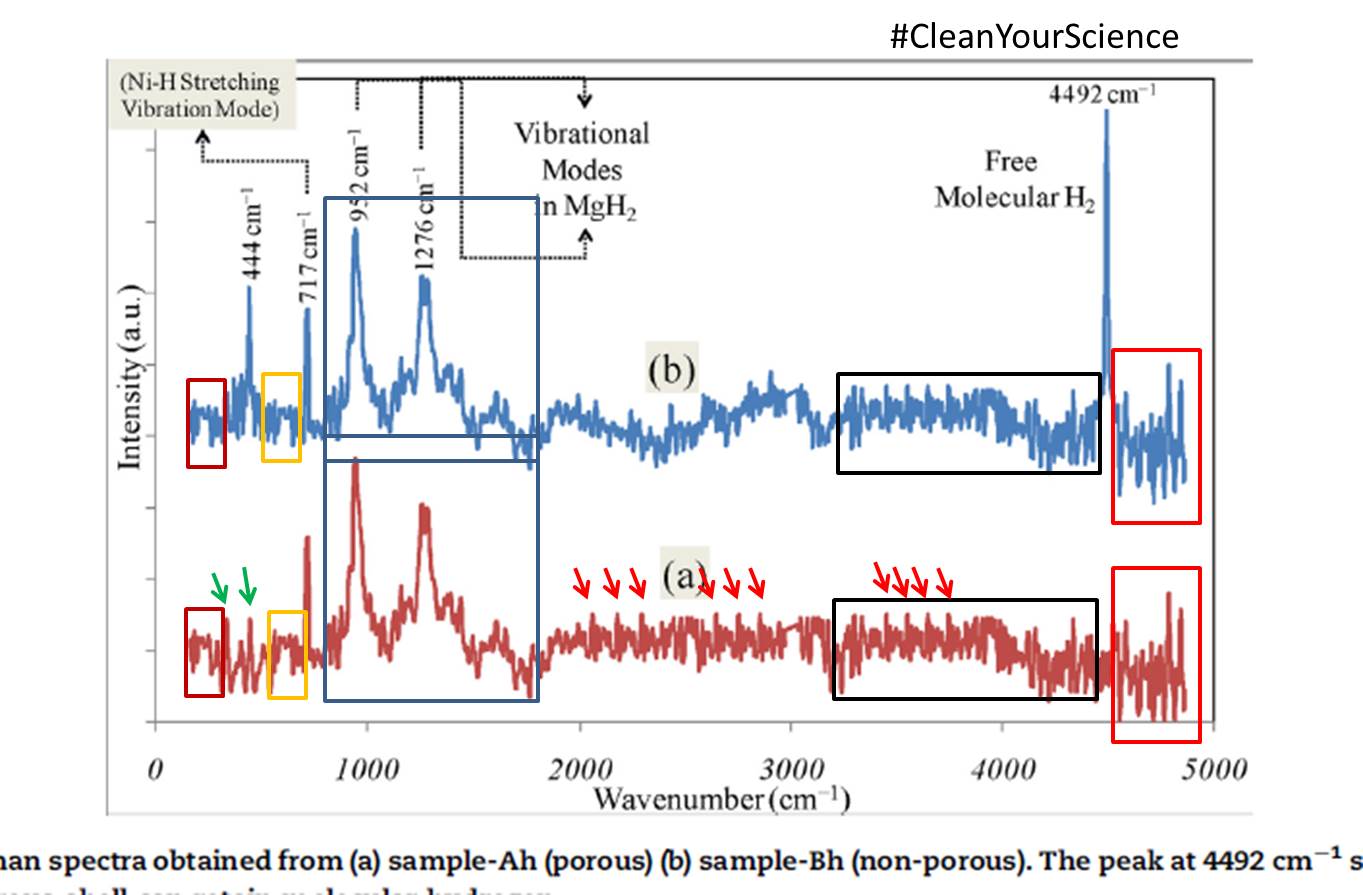

IJHE is memorable for Fatih Sen, for the trust it places in Ali Fakhri as a Reviewer, and for housing the esoteric neo-Alchemical fantasies from Ruggiero Santilli (magnecular bonds!!). Not to forget the dynastic appointment of its Editors… a pyramid is probably under construction somewhere in preparation for the demise of founding editor T. Nejat Veziroglu, to provide suitably Pharaonic accommodation for his embalmed body.

Don’t mess with Fatih Sen
Fake nanotechnology is always fun, but it does get extreme here. Word of advice: if you are in Turkey, better don’t point fingers at Professor Fatih Sen’s research. Things get broken easily.
Two more IJHE horror stories, because why not?
- “Synthesis of anatase TiO 2 with exposed (001) facets grown on N-doped reduced graphene oxide for enhanced hydrogen storage” (Gohari-Bajestani et al 2017).
- “Decoration of graphene sheets with Pd/Al2O3 hybrid particles for hydrogen storage applications” (Bajestani et al 2017).
But the best is yet to come! For I have “saved the best wine for last”, which is a wise policy if you don’t trust the guests to stick around just for the company. A few weeks ago, Alexander Magazinov caught the usual suspects in the middle of launching a new journal, Green Biomaterials:
Other people joined the pile-on. It even reached Schneider Shorts.
F.X. Coudert pulled together a Twiddle thread of the Editor-in-Chief’s greatest hits.
In the most recent developments, Taylor & Francis are having second thoughts about hosting a henhouse run by foxes [UPDATE: the nascent journal has shuffled off this mortal coil and joined the Choir Invisible]. Meanwhile Murdoch and Macquarie Universities (at the opposite sides of Australia) are no longer quite so convinced that Navid Rabiee’s academic profile is something to boast about – he is resigning from Murdoch while Macquarie did not renew his contract.
It sounds like another assignment for fearless replicant hunter Rick Deckard.
Donate to Smut Clyde!
If you liked Smut Clyde’s work, you can leave here a small tip of 10 NZD (USD 7). Or several of small tips, just increase the amount as you like (2x=NZD 20; 5x=NZD 50). Your donation will go straight to Smut Clyde’s beer fund.
NZ$10.00

 For Better Science
Very funny read as always, had me laughing on the train.
LikeLike
My work here is done.
LikeLike
Your description fits the papermill activities of Qusay Hassan. All duplication figures and paraphrasing. It is so fascinating that he still publishing his nonsenses. No retraction so far. a baby papermill.
LikeLike
would be great to add the journal of “Steel and Composite Structures”
https://www.techno-press.org/?journal=scs&subpage=6
Just check the work of Nasrin Bohlooli for a brand new insight into the modern papermilling. copy-paraphrase-paste, image duplication. production line.
LikeLike
Very good article! Here are the parts I particularly like:
“…entire Elsevier journals publish nothing but, thanks to a certain type of editors. It is not just Asian names which keep popping up, but also Nordic ones, like…”
“…whole bogus traditions of parody science or ‘parascholarship’ are developing in imitation of actual research, forged papers citing other forged papers in a cargo-cult travesty of academic practice. The temptations of parascholarship are obvious; you are more productive and higher-ranked than genuine researchers, hence better-rewarded, because you don’t waste time or any of your funding on conducting genuine research.”
I think the editorial offices are definitely involved in this papermill business. The point is well made therefore.
LikeLike
You don’t really need to write ‘I think’… when it comes to stating the editorial offices are involved. It is no longer a case of ‘thinking’ or suspecting. They are. No doubt about it. And Elsevier is very slow in actually removing bad (fraudulent) editors.
LikeLike
You are right. Moreover, Elsevier continues to announce new journals. It is difficult to find academics in editorial board positions for so many journals. Naturally, it opens up a big playing field for papermill academics.
LikeLike
Problem is also that Elsevier (and Nature) refuse to act pro-actively. THey don’t bother to screen the new editors. Nor do they communicate between journals. Editor gets kicked out from journal 1 for fraud, no worries, journal 2 will take him/her as editor…. Yeah, like this you can continue the fraud for ever.
LikeLike
Dear For Better Science team, A friend of mine informed me that two frauds, Qusay Hassan, Nasrin Bohlooli copied several articles of mine and my students and published again. I was asked to contact you for seeking help. I checked her claim and realised that it is true, their recently published articles are our old concepts published again. I dont want to make conflicts with these two frauds from Iraq and some other middle-east countries, but they must stop doing that.
LikeLike
I’m sorry, anonymous Professor, but if you are not interested in following up a suspected plagiarism of your works, why exactly is this my job?
LikeLike
Don’t be too hard on him. I think he, professor, has an occupational disease. He delegates tasks instead of taking direct action.
LikeLiked by 2 people
It seams these professors already reported these issues to the several editorials, e.g., that the article titled: “The paths toward non-viral CAR-T cell manufacturing: A comprehensive review of state-of-the-art methods” https://www.sciencedirect.com/science/article/pii/S002432052400273X had been previously published by them: https://www.frontiersin.org/journals/immunology/articles/10.3389/fimmu.2022.867013 but it seams nobody cares. And their comments on Pubpeer still under moderation for weeks. what else they do other than seek help anywhere they can. it is sad.
LikeLike
“The paths toward non-viral CAR-T cell manufacturing: A comprehensive review of state-of-the-art methods” may or may not have borrowed from a previous paper (I can’t access the full text), but the authors don’t include Qusay Hassan or Nasrin Bohlooli, so I’m not sure where it fits here.
LikeLike
Thank you Smut Clyde for checking it out. The articles share common coauthors as a reason that they are produced by a common team and all connected, e.g, https://pubpeer.com/publications/964B28C616131E4C1EDE09EB3A37D4
I call Qusay Hassan papermill as they produce articles through paraphrasing and copied figures, e.g., all figures are are copied: https://www.sciencedirect.com/science/article/abs/pii/S2213138824001899
and again it shares common authors. Qusay Hassan often has 14-20 coauthors from more than 8-10 countries. When coauthors are more than 10, there is always something going on.
LikeLike
I agree with the analyses in the fields of energy and environment. I have observed similar processes. Many Elsevier journals have been mentioned but I would like to add a few more. In the fields of energy, thermodynamic analysis, economic analysis and energy storage, I have noticed papermill-like activities causing citation inflation in the following journals (yes, almost all of them have editors known for their papermill activities)
Sustainable Energy Technologies and Assessments, Sustainable Cities and Societies, Energy, Energy Conversion and Management.
I can’t blame all the editors of these journals, but some are known for their papermill activities. Moreover, many papermill researchers have had the opportunity to publish low quality work in high impact factor journals by guest editing special issues.
This article also mentions the International Journal of Hydrogen Energy and Erdogan’s academics, so I would like to share an observation I have noticed recently. Linked to the team at IJHE, there are some names that shine. So, sorry for you but Fatih Sen is losing his popularity because there are new rising stars! One of them is a very interesting profile, Umit Agbulut: https://scholar.google.ca/citations?user=CAMWOtQAAAAJ&hl=en .
Just look at the number of citations and articles per year. But I didn’t stop there, I followed him through open sources (mainly LinkedIn). Since most of his posts are in Turkish, I have to rely on translation apps. In one of his posts, he was proud that he published above 60 papers a year and said he would increase this. In another (and older) post, he said something like this (I am relying on translation apps), as if to imply that he considers this work an art: “Once you publish your paper, it is no longer yours, but a product of the academic community. I would also like to thank the researchers who found our publications valuable and gave hundreds of citations”
Moreover, he was at a modest and small university in Turkey when he produced these publications. And now? At the same university as Ibrahim Dincer; Yildiz Technical University: https://avesis.yildiz.edu.tr/umit.agbulut . According to my search, this university is considered one of the top 3 technical universities in Turkey. When I concentrated on this issue on LinkedIn, Twitter and Facebook, I noticed something else from the posts, most of which were in Turkish. There is a huge academic ethics struggle in Turkey. And things are actually not going badly! I think there is still hope in some places. If I summarize very briefly;
Erdogan has ruled Turkey for nearly 21 years. Many of the profiles we see here are names that have risen to prominence during this period. I think Erdogan and his administrators provide financial support under the name of “incentives” to researchers who publish academic publications in order to move their universities up in the rankings. This naturally leads to manipulation. This is how the names we are talking about gain power. Universities appear stronger and try to show the public that Erdogan’s administration is effective. But this is nothing but corruption. That’s why Turkish researchers involved in papermill activities are already based at universities in Turkey. They are not doing it in Western academies like the Iranians and they are not as professional and well connected as them. Probably their only priority is to increase the number of publications and get more grants and promotions at their universities in Turkey. On a small note, Ibrahim Dincer also came back to Turkey from Canada (after presenting Pouria Ahmadi to the academic world with Marc Rosen) under Erdogan administration. Yes, so far this is the bad side of the story. Here’s the hopeful part;
Although he has built up an autocratic power, the recent elections have shown that the opposition, despite years of defeat, has not given up and is now winning elections. Even in the elections they lost, they were favorites. Similarly, Turkish academics, who still care about ethical values, have created really useful organizations against academic corruption in Turkey, while maintaining their own rescue zones. In solidarity, they are raising awareness against papermill and citationmill activities, mostly in Turkish. I don’t want to target those smaller and relatively larger organizations by naming them here (in case this website is followed by the IJHE group). As far as I have been able to follow some of the posts in Turkish, I have only glimpsed a few of them. I am sure there are other groups. One professor even wrote something like this on LinkedIn just last week; “How can you produce 5 papers in a year with a single student? Something is wrong!”. I have to admit I laughed a bit at that because I started my papermill searching activities in energy and environment with what I noticed in Scandinavian countries and in Scandinavia they publish 45 papers a year, not 5. But I was happy to see the reaction of “it might be unethical!” to even 5 papers.
What I observed surprised me a little bit. While I have been criticizing those in Western academia until now, I did not expect to see that much resistance in Turkey, even though they are under much more academic and economic pressure.
LikeLike
As ever, Smut Clyde’s humour is as dry as a dead dingo’s donger…
LikeLike
Regarding “Mohammad J. Taherzadeh” teaching/papermilling in Boras, Sweden,
The above comments are true. “Mohammad J. Taherzadeh” has published many gibberish articles, and the question comes up: Why a scientifically groundless ‘concept’ should be investigated further as a subject of scientific study and its influence be disseminated everywhere in scientific literature(s), including textbooks?
If interested, please also check the following PubPeer threads:
https://www.pubpeer.com/search?q=Mohammad+J.+Taherzadeh
https://www.hb.se/en/research/research-portal/research-areas/resource-recovery/
LikeLike
Jörg Rinklebe is an outstanding researchers, a professor dedicated to his work and only publishes the most scientific solid research! He has been cleared officially by the Wuppertal university of any wrongdoing!
And yes, this is official news from Wuppertal received from a third party. Whether the rest of my message is sarcastic or not, is up to you to decide.
LikeLike
nice sarkasm. Rinklebe is low educated, he is like technician, not true scientist
LikeLike
I hope the time will come for Tejraj (Bhavi) Aminabhavi of the Chemical Engineering Journal and his collaborators, such as Mohammad Arjmand and all other paper/citation mills. These people are destroying all science just for their shitty careers.
LikeLike
Chemosphere has been delisted by clarivate! One journal down, many more to go. Which journal will be next? STOTEN?
LikeLike
The first retraction where Jörg Rinklebe played a role is a fact!
https://doi.org/10.1016/j.chemosphere.2019.125331
LikeLike
Pau Loke Show just got 3 more retractions, one of the papers he edited himself (+ links with reviewers) and yet, the authors dispute the retractions: https://doi.org/10.1016/j.chemosphere.2022.135626 ; https://doi.org/10.1016/j.chemosphere.2021.130886 ; https://doi.org/10.1016/j.chemosphere.2022.134792
LikeLiked by 1 person
Rinklebe has a retraction: https://doi.org/10.1016/j.plaphy.2023.107872
LikeLike
Taherzadeh is no longer in Borås. His linkedin post is here. I wish he had been fired, but as far as I understand, things like that don’t happen in Sweden. At least we now know which food company we need to be very careful about from now on.
LikeLike
Zeng has been the (co-)EIC since 2016. While the real issues start with Rinklebe and Sonne, one could wonder whether Zeng had anything to do with it as well. In the most optimstic situation he had no clue about all the stuff happening under his nose, but even in this scenario you can wonder whether he is capable of being an EIC. If this type of stuff happens under your nose and you have no clue what is happening, I do wonder about it.
LikeLike