Well, what do you say to that. Two of Germany’s most influential scientists were caught with bad science. Our heroes are Klaus-Michael Debatin and his former mentee Simone Fulda.
Fulda is currently President of the University of Kiel, prior to that she was Vice-President for Research at the Goethe University of Frankfurt. Debatin used to be Dean of the Medical Faculty and Vice-President for Medicine of the University of Ulm, as well as CEO and Medical Director of the university clinic. He and Fulda sit on the boards of the most important academic institutions and charities in Germany and abroad. Both are Fellows of the German Academy of Sciences, Leopoldina (CVs here and here). Both are Senators of the German Research Council (DFG). Both hold senior positions at the German Cancer Aid (Deutsche Krebshilfe) charity. Fulda also advises the Paul Ehrlich Institute, decides about the fellowships at Alexander von Humboldt Foundation, coordinates regional research investments of the Mercator Research Center Ruhr and the German-Israeli research cooperation of the DFG. She also used to be member of the German Science and Humanities Council (Wissenschaftsrat) and currently chairs the Research Information Committee at the Joint Science Conference, which advices the national and federal state governments.
In a way, a biomedical scientist can’t even fart in Germany without permission from Fulda and Debatin.
In 2017-2018, Fulda and Debatin were members of the “Working Group “Quality in Clinical Research” of the DFG Senate Commission on Key Questions in Clinical Research”. The group published this White Paper, titled “Reproducibility of Results in Medical and Biomedical Research”, which then informed the DFG policies on research ethics and integrity. It is mostly boring inane text which finds nothing out of order and binds nobody to nothing. But this excerpt is funny, considering who issues this advice:
“Basic and advanced training for researchers should focus much more on self-reflection, openness and a culture of error acceptance. Learning methods for quality improvement should be regarded as an essential feature of a researcher’s continuing professional development.”
Another member of that DFG committee was Christopher Baum, then-president of the Hannover Medical School (MHH), who at exactly that time arrived at the verdict that the trachea transplant experiments by MHH professor Paolo Macchiarini and his acolyte Philipp Jungebluth were ethically unassailable, and issued a decree (on the right) that Jungebluth’s MD dissertation must never be investigated. Baum later resigned over nepotism accusations (read here).
To help Fulda, Debatin, Baum and others to figure out how research reproducibility REALLY works, DFG invited a guest member to their committee: the DFG Senator and University of Marburg professor Roland Lill. As it happens, Lill was just at that time being whitewashed by the DFG for data irregularities in his own papers. Obviously, DFG was intentionally recruiting a certain kind of people with a purpose.
The biochemistry research lab of professor Roland Lill at the Philipps University Marburg in Germany is a place where space, time and western blot continuum collapses into an anomalous singularity, where paradoxes abound, but only one fact remains certain: there was never any data manipulation in the lab of this senator of the German Research…
Both Debatin and Fulda are paediatricians by training, Debatin used to be the head of the paediatric oncology at the German Cancer Center (DKFZ) in Heidelberg before he fully moved to Ulm, first as vice-dean, then as dean. Fulda followed him there to become professor of paediatric oncology, before moving to Frankfurt, and then to Kiel, rising with each step, up to her current magnificent rectorship. It is logical Debatin and Fulda hold top positions at the German Society of Pediatrics and Adolescent Medicine, where they sit on the commission for university questions.
But their main speciality is cancer research. They write authoritative books about it of course, like the two volume “Apoptosis and Cancer Therapy“. The idea is to kill cancer by inducing apoptosis pathways, in cancer cells only.
The money which German state invested into Debatin and Fulda is enormous. Here is a press release by the Ulm University Hospital from 2020, about a €4.4 million grant from the DFG (translated):
“The scientists in the Clinical Research Group (KFO 167) are investigating the question of how misguided regulation of apoptosis, the programmed cell death, can lead to diseases. […]
“The funding commitment is a great honor for the clinical research group, which helps to strengthen Ulm’s focus on cancer research,” says Prof. Dr. Klaus-Michael Debatin, spokesman for the group, medical director of the Clinic for Pediatric and Adolescent Medicine and dean of the Medical Faculty. [..] Nationwide, the Ulm group is the only clinical research group that works on apoptosis, which is the technical term for the programmed death of damaged cells. It was created on the basis of Professor Debatin’s many years of work and discoveries on cell death signaling pathways.
“Our goal is to use our findings from basic research to develop improved diagnostics and therapy for cancer,” explains Prof. Dr. Simone Fulda, the scientific leader of the research group.”
Now I will show you with what Debatin and Fulda really blessed the German society and cancer patients.
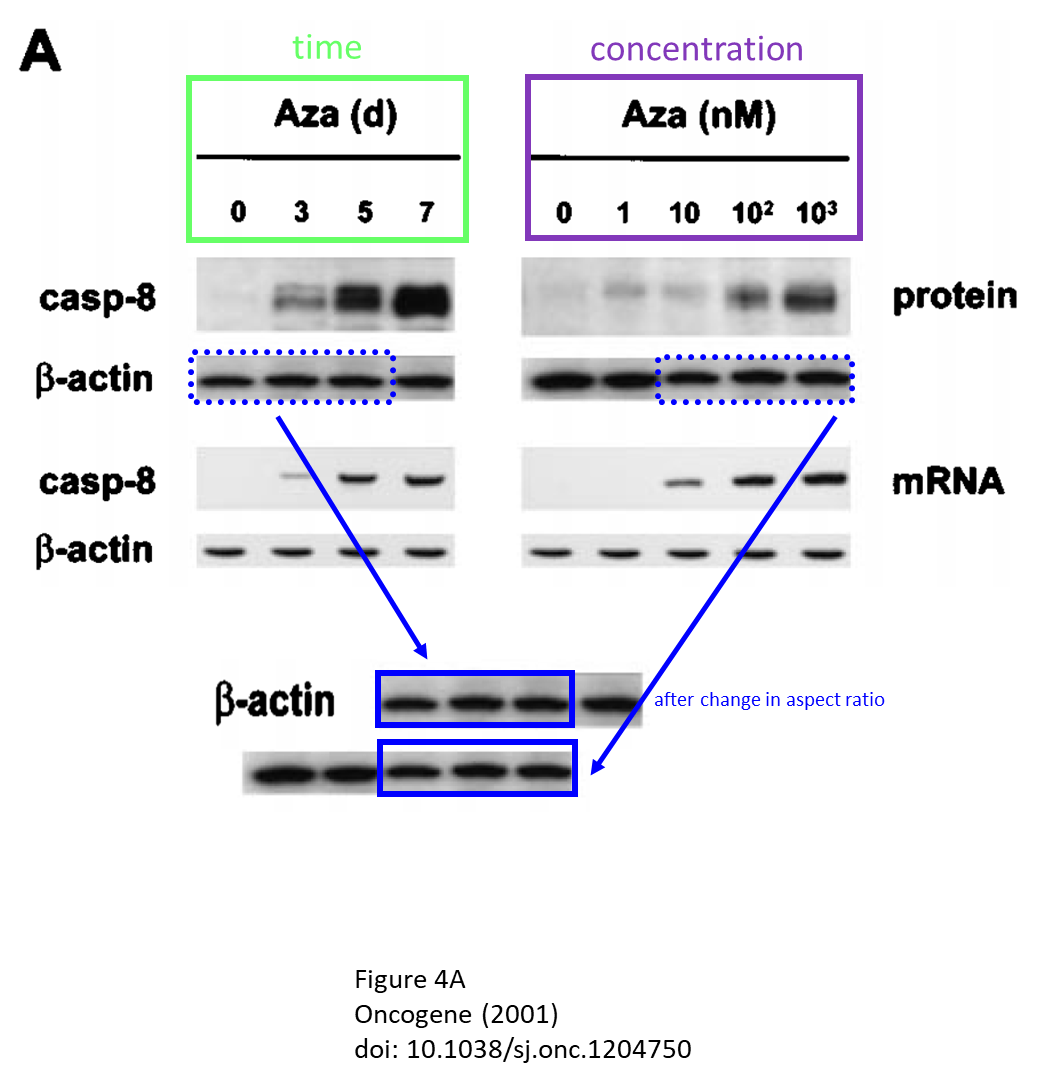
Let’s start with the journal Oncogene. Fulda and Debatin found a way to kill brain tumours:
The material you see here was originally flagged on PubPeer by Clare Francis, with the help of Cheshire, two pseudonymous sleuths. Maybe DFG should invest into these experts of data integrity, instead of investing into those “experts”:
The last author of the next Oncogene paper, Irmela Jeremias, trained as Debatin’s postdoc at the German Cancer Center (DKFZ), Heidelberg, and became unit director at Helmholtz Institute and professor at the LMU Munich. Like Fulda and Debatin, Jeremias never replied to my emails.
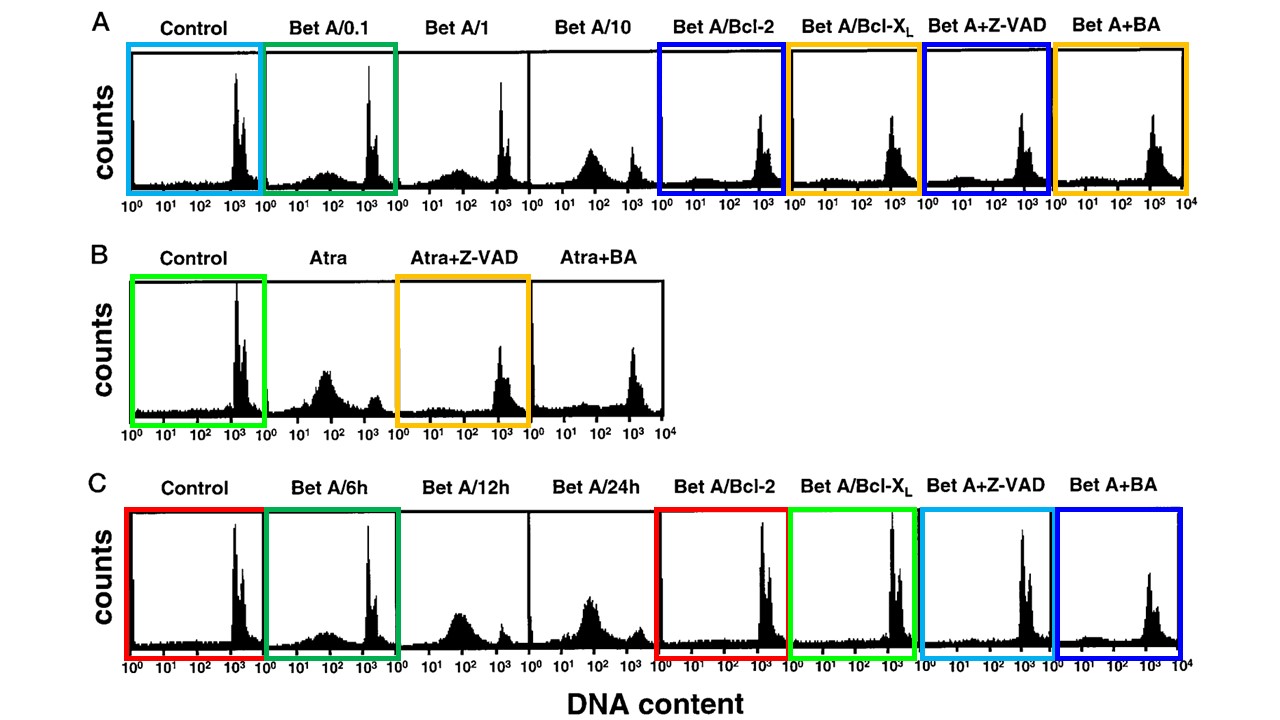
And another one, featuring Fulda. The editorial office of this journal is located at the German Cancer Research Center (DKFZ), where Debatin and his postdoc Jeremias worked at that time. Back then, birch tree bark was proposed as a new anti-cancer medicine, and the Debatin team jumped on that train:
We remain by the birch tree and its betulinic acid, but with a special guest. In 2011, a hospital magazine announced a breakthrough (translated):
“The active ingredient is obtained in a complex process from the bark of the birch tree (Latin: Betula alba). As early as 1995, it was discovered that betulinic acid can kill cells of black skin cancer, melanoma. Further studies by, among others, the working group of Prof. Simone Fulda and Prof. Klaus-Michael Debatin from the Clinic for Child and Adolescent Medicine at the University of Ulm showed that betulinic acid is also effective against other types of cancer, including malignant brain tumors, in preclinical models.
On the long journey of transferring the results of basic research from the laboratory bench to the hospital bed, the Ulm scientists are now cooperating with Prof. Guido Kroemer from the Gustave Roussy Cancer Research Institute in Villejuif near Paris. “The search for a new drug against cancer can only be successful if we join forces,” explains Fulda, who coordinates the two-year joint project.”
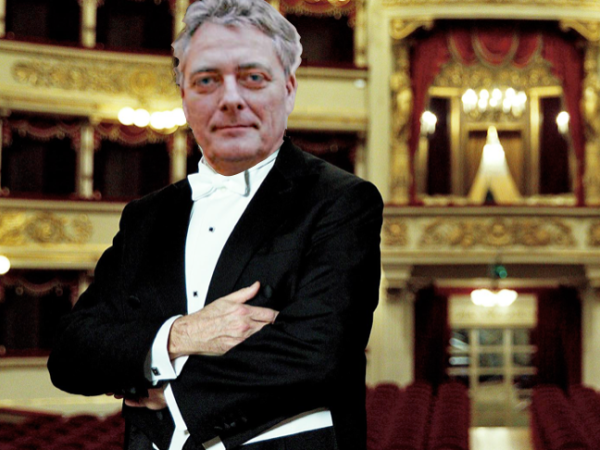
Guido Kroemer receives on 8 November 2019 the €1mn Lombardy Award for Healthy Ageing, at La Scala in Milan. And why not, one panel member was Carlo Croce.
Yes! Guido Kroemer, a German superstar in France, the centre of data fudging universe in biomedicine, and Debatin’s & Fulda’s fellow Fellow of the Leopoldina Academy! The duo sits on various boards with Kroemer, and in fact, Fulda even did her postdoc in Kroemer’s Institut Gustave Roussy. This is what the German medical community celebrated:
Gosh, I wonder why birch tree bark never made it as chemotherapeutic, despite such solid peer-reviewed preclinical evidence? To be fair, Fulda’s & Debatin’s PubPeer record is amateurish compared to Kroemer’s. EIGHTY papers. All bad. None retracted.
“Fig. 3A – More similar than expected. Should represent different conditions (Jurkat cells expressing FADD-DN or Bcl-2).” Actually, all 6 images are identical.
“Gels with similar features are also observed in Figure 3B (contrast enhanced).”
Debatin and Fulda posted a lenghty response on PubPeer in August 2020, excerpts:
“Figure 3A shows results comparable to the data published in the EMBO journal (Scaffidi et al, 1998) and Figure 3B shows the results for doxorubicin-induced DISC formation in type I (BJAB) and type II (Jurkat) cells. Thus, the data are robust and stable. […] After 20 years, there are no original data in our lab files. This is in line with national regulations, in particular the regulation of the Deutsche Forschungsgemeinschaft (DFG – German Research Council), that asks for a 10-year storage of original data. As a remark, original data are discussed at our lab meetings with all members of the lab since more than 25 years. What is also important concerning the allegation is that the question per se (too similar) is difficult to understand, since on the basis of published data (Scaffidi et al, 1998) similar results are expected, i.e. no induction of CD95L and of CD95 DISC. This applies to 3A as well as to 3B.
However, the critique appears to be related to a similarity in the pattern of a film or membrane. The basis of this critique is difficult to understand. The results are similar since no specific signals are seen, as there is no induction of CD95L and no recruitment of caspase-8 or FADD to CD95 DISC in type II Jurkat cells. It is obvious that films with no signals detected are represented and, therefore, only background signals from the film, the membrane and/or the cassette can be seen. Since we use similar films, the background of the films upon strong enlargement could easily be similar and/or the environment, i.e. the cassette, where film and membranes are stored for exposure, could or should be similar, because the same structure on the cassette and the film is present and the exposure conditions are the same.”
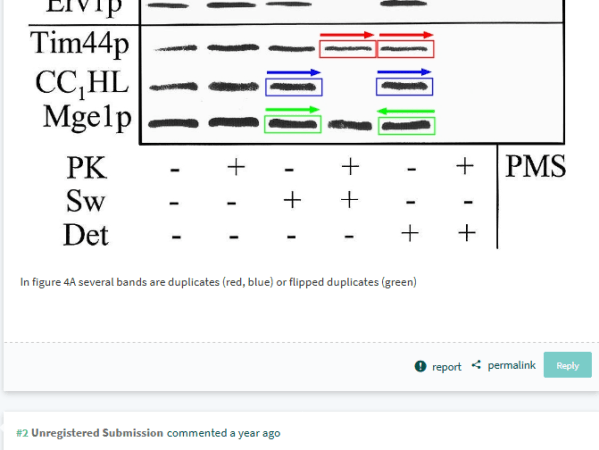
This is utter nonsense, but maybe Debatin and Fulda never ran a gel themselves? Still, they signed with their authoritative titles: “Vice President – Ulm University Vice President – Frankfurt University“. Well, here is a specific signal for them, in Figure 7B, and there they didn’t reply anymore:
Later on, even more was found:
As reminder, this duo in 2017/2018 designed the national guidelines for reproducibility in biomedicine for the DFG. Because the signal in their own gels is so remarkably reproducible, you know.
More in Oncogene, that damn cassette struck again:
Enough of Oncogene, let’s look at other rotten journals. In this paper, Figure 4c contains two identical panels, but not only, because the evil cassette struck again:
Clare Francis, the sleuth who exposed this entire circus, has a theory why the obvious irregularities in Debatin’s and Fulda’s papers mostly stopped at around 2012:
“I wonder if Silvia Bulfone-Paus had an effect on others. Klaus-Michael Debatin’s clearly problematic papers stop in 2012. Silvia was on the front of Der Spiegel in January 2011.“
There are zombie papers, those are the long-discredited or even misconduct-riddled publications, which somehow avoid retractions and continue contaminating scientific literature. The “Arsenic Life” paper in Science is such a parade example, but also cancer and stem research hide an impressive collection of zombie papers. Zombie scientists are those once renowned researchers, who were caught…
An interesting theory indeed. Either Debatin and Fulda became better scientists after 2012, or they just started to act smarter. Let’s look at more of their old papers. How about some flow cytometry? Of the kind where same FACS measurement of one sample was gated slightly differently to stand for two different experiments?
Debatin’s mentee Claudia Friesen eventually made it to lab head in Ulm. I guess those who, uhm, disappointed Debatin, they didn’t make it to anything. Not all bad papers were published by Debatin and Fulda jointly. Friesen again, with Debatin:
Fulda apparently also never believed in loading controls. Anything goes. Here is a rather new paper, from Frankfurt, a collaboration with KU Leuven in Belgium:
In September 2020, the authors issued a Correction:
“Since online publication of this article, the authors noticed that Fig. 3b does not show the correct graph for Bortezomib. […] This unintentional mistake does not alter the conclusions of the study. The authors apologise for any inconvenience caused.”
Fulda could have corrected this as well, it rots on PubPeer since 2016:
And now it gets a bit weird. Another one of Debatin’s former mentees in Ulm, Ingrid Herr, now professor at the University of Heidelberg, previously published a guest post on my site, about her own (foreign) PhD students forging data behind her back.
“Dear colleagues, scientists, check your lab members’ raw data, publications, and dissertations even more thoroughly than before to protect scientific ethics and data integrity and maintain trust in science!” – Ingrid Herr
“If we still had the raw data, I would post a correction. However, this publication is already 18 years old, so the raw data no longer exist. Nevertheless, this unintended mistake does not affect the core message of this publication in any way”
Only a few days later, the raw data miraculously materialised, Herr shared it on PubPeer with the note:
“After reviewing our old hard disks, I have successfully identified the raw data from 2005.”
“Following publication of the original article [1], errors were identified in Fig. 2; specifically in Fig. 2b.
In the row showing cells 2 weeks after cisplatin, ‘CO’ and ‘DEX’ have been replaced with the correct data.
The authors provided the journal with the original data. The corrected figure is provided here. The correction does not have any effect on the results or conclusions of the paper.”
It is not clear why the authors used different magnifications for different time points. With the new control images, it is also not at all clear why much of the untreated primary tumour cells disappeared in a week, while the survivors changed their morphology. Are those peculiarities connected to the fact that the raw data suddenly became available after being lost for good?
By the way, Herr’s and Debatin’s coauthor in Heidelberg, the thoracic surgery professor Hendrik Dienemann, is a former patron of Paolo Macchiarini‘s acolyte Philipp Jungebluth. Dienemann even replaced Macchiarini as last author of a republished study (Jungebluth et al 2015) which original (Jungebluth et al 2015) was retracted some months ago. Read here.
Is the journal Cell Death and Disease a disease itself, parasitised by Chinese paper mills? Can it be cured? Not with this team of doctors on editorial board.
Here is another Debatin & Herr paper, this time with Gerry Melino, chieftain of the Cell Death & Depravity gang (where Denbatin’s valued collaborator Guido Kroemer is key member). You saw some of Debatin’s and Fulda’s papers in Melino’s Cell Death & Depravity journals above.
Scientists never reuse DNA ladder lanes like this. Unless the fragments on their gels did not have the desired size? In August 2015, an “Addendum” was published:
“The authors note: ‘The marker in Figures 2a and 4 is identical, being from the same identical experiment that was then presented in two separate figures for editorial reasons. The marker in Figures 3a and 6b is identical, being from the same identical experiment that was then presented in two separate figures for editorial reasons. Both experiments were performed in 1997, and submitted at the end of 1998 (received 15.1.1999). At that time it was not required to insert a blank line of separation, as it is mandatory in these days. There is no evidence of wrongdoing, hence the results and conclusion remain valid. We thank the alert reader for bringing this issue to our attention, and we deeply apologize to readers for the erroneous labeling.’”
The paper was only 6 years old back then, and still the original gels were not available to prove the authors’ weird claim.
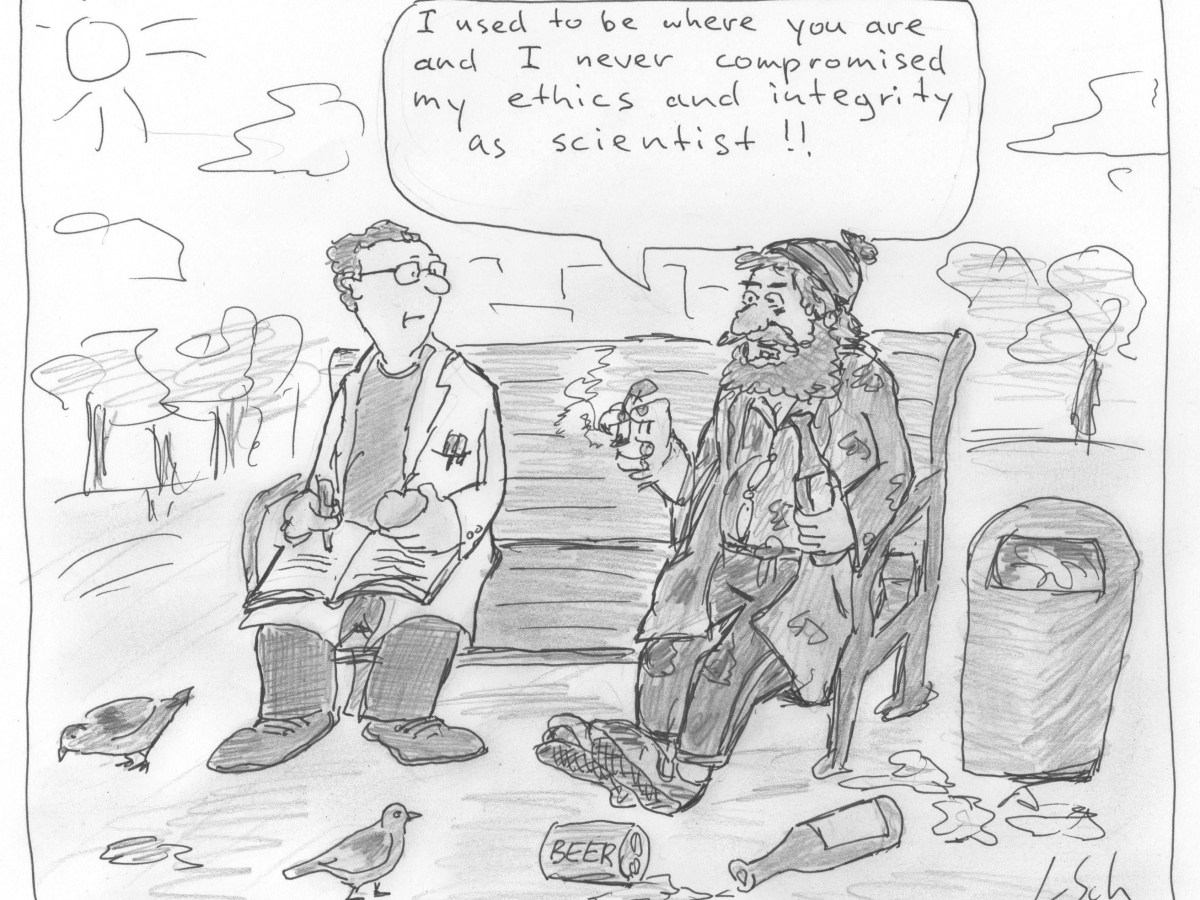
In any case, maybe Ingrid Herr is not really such a great role model of research integrity after all. You can triumphantly log this under: where Schneider went wrong.
I guess you will agree that the PubPeer records of Debatin and Fulda are serious enough to ask for institutional investigations. So I contacted the Universities of Ulm, Kiel and Frankfurt, as well as DKFZ and of course also the DFG. The DFG research integrity officer wrote to me on 9 January 2024:
“We will examine the suspicions you have reported and will contact you again as soon as we have reliable information.”
I asked if they intend to decide as with another DFG Senator, Roland Lill. DFG remained silent. We all know where this is going.
German Research Foundation (DFG) terminated the investigation against their Senator and Marburg University professor Roland Lill, after having found no research misconduct. No comments are issued on the integrity of the data in his papers on yeast biochemistry, or on some unusual image manipulations which were already admitted by Lill and his former PhD students…
The Ombudsman of the University of Kiel replied on 19 January 2024, acknowledging that my notification “could affect a person who is by now working at the Christian-Albrechts-Universität Kiel (CAU)“. He announced to investigate the allegation “regardless of the position of the accused person(s)“, but alas, the papers were published before that person came to Kiel, so the case was “forwarded to the ombudsman’s office of the relevant university” (presumably University of Ulm), and until then:
“The presumption of innocence applies to all steps in the process up to clear proof of misconduct.”
Naturally, in Ulm the presumption of innocence rules supreme as well, so they didn’t even acknowledge receiving my my notification. There is nothing to investigate for them regarding their leader. And why should they, even Christoph Thiemermann is a guest professor at the Ulm university clinic.
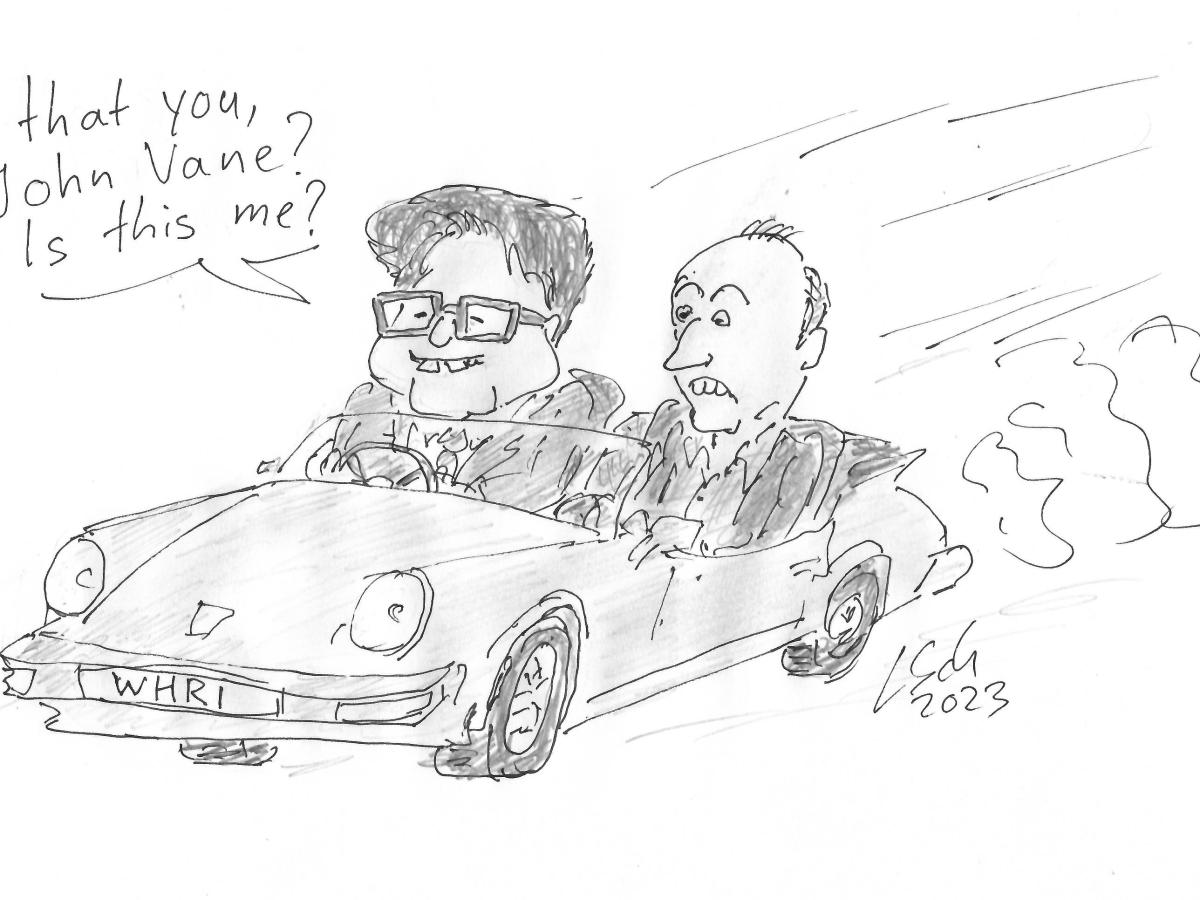
Welcome to the the William Harvey Research Institute in London. Meet two proteges of its founder, the late Nobelist Sir John Vane: Chris Thiemermann and Mauro Perretti. Then meet their own rotten mentees, especially Salvatore Cuzzocrea and Jesmond Dalli.
“I am taking this step with a heavy heart and a sense of responsibility for the university since a sufficient foundation of mutual trust no longer remained with some parts of the university to ensure successful cooperation”, – Simone Fulda











 For Better Science
Fresh problematic data for Klaus-Michael Debatin. PubPeer – Therapeutic targeting of mutant p53 in pediatric acute lymph…
LikeLike
Why am I not surprised to see Selivanova on board…
LikeLike
Journal retracts retraction. Editorial Announcement
LikeLike