Schneider Shorts 29.12.2023 - 10 most-read stories of 2023, Bik picking on Italians, with silly editorial notes and anti-aging cures for rich and poor.
Schneider Shorts of 29 December 2023 – 10 most-read stories of 2023, Bik picking on Italians, with silly editorial notes and anti-aging cures for rich and poor.
My list of Paolo Macchiarini‘s trachea transplant patients, was by far the most popular article in 2023. That is because Macchiarini became a pop idol: star of various documentaries, especially the Netflix 3-part series “Bad Surgeon: Love under Knife“, a true-crime fiction series “Dr Death” and even a Swedish opera: “Mytomania“! My list still counts as 2023, because it was updated in December 2023 with information about yet another patient, originally reported by the “Bad Surgeon” series.
This article lists all known (including those not officially declared) patients of the scandal surgeon Paolo Macchiarini, who received from him a cadaveric or plastic trachea. It will be updated whenever I receive any new evidence.
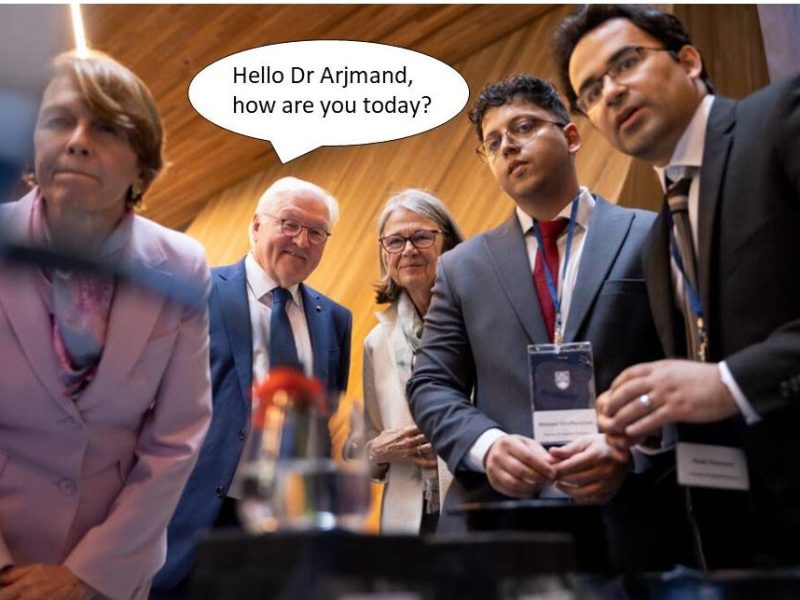
Unexpected success in 2023: the story of Mohammad Arjmand, an Iranian papermiller who made a huge career in Canada because nobody really cares about fake science there. Arjmand even got to meet Germany’s President on his official visit to Canada.
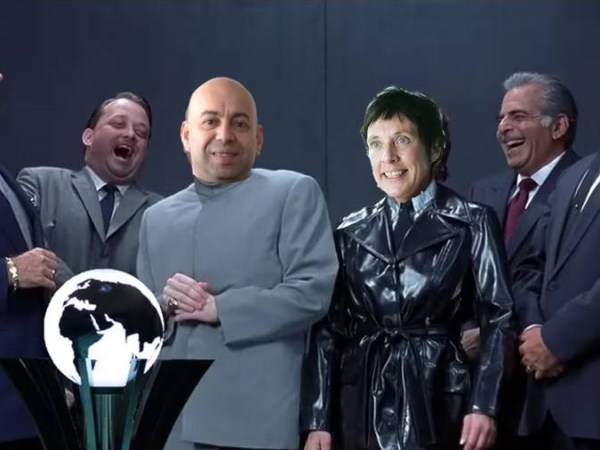
A success thanks to Le Monde”s coverage of my work. The story of an Austrian woman, Sabine Szunerits and her Persian-French husband Rabah Boukherroub, who achieved highest honours in France, thanks to ridiculously fabricated nanotechnology. Also, Ukrainian scientists got dragged in.
French nanotechnologists Sabine Szunerits and Rabah Boukherroub put EU Commission’s money to good use. The EU cannot afford a papermill gap to Iran and China!
Another popular story, thanks to readers from Brazil, who must have been upset about the tricks Julio Cesar Ferreira deployed to make it big in academia, at home and in Stanford. Where his teacher, the Israeli Scientist(TM)Daria Mochly-Rosen, raises one biotech startup after another.
And yet another successful scientific duo: Elsa Flores, associate director of the Moffitt Cancer Center, and her mentor Tyler Jacks at MIT. They already had to retract one paper, there may be more.
“PCR reactions run on agarose gels commonly look similar due to artifacts introduced by the agarose gel and comb.” Dr Elsa R Flores, Associate Director, Moffitt Cancer Center
The amazing story of Ranga Dias‘ fake superconductors. After the first one was retracted by Nature for fraud, the elite journal proudly published another one, about an even cooler superconductor by Dias! Of course that one was eventually proven to be fake as well, and Nature had to retract that paper, too. In between another Dias’ paper got retracted and it also turned out that his PhD thesis was also fake, i.e. plagiarised. Science editors point fingers at their Nature colleagues and laugh their butts off because nobody is talking about Dias’ equally fraudulent and unequally retraction-proof paper about fictional metallic hydrogen which Dias once published in Science. Written by Maarten van Kampen:
“After the huge box-office success of “Nature 2020: Room-temperature superconductivity in CSH” this March our Nature studios released a sequel with the same star-studded cast: “Nature 2023: Near-ambient superconductivity in N-doped LuHx”. – Maarten van Kampen
The story of an Italian alma mater of research fraud, the University of Messina in Sicily. It is not just the Fraud Squad of Francesco Squadrito and other academic mafia families (literal families, yes). The fish stinks from its head: Messina’s rector Salvatore Cuzzocrea published so much fake trash that it was enough to sack him a dozen of times. Yet he was forced to resign over actual theft! Written by Aneurus Inconstans:
“The University of Messina was, in short, a good business that appealed to many, including organized crime on both sides of the Strait of Messina.” – Aneurus Inconstans
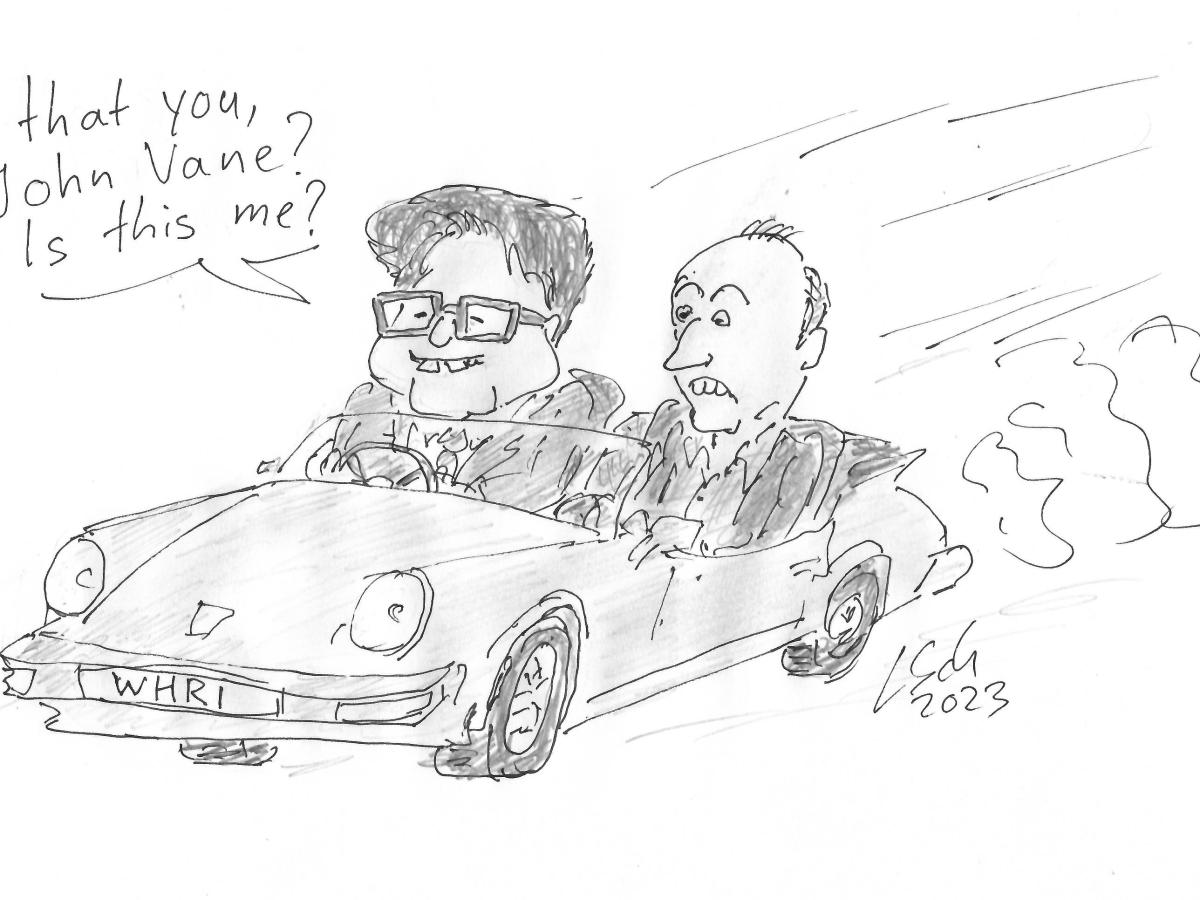
Fittingly, next in popularity comes the story about Cuzzocrea’s mentor, Chris Thiemermann, a German who rose big in UK thanks to the patronage of yet another questionable Nobel Prize laureate. John Vane‘s institute at Queen Mary University of London became an utter fraud swamp. Actually, the entire university is.
Welcome to the the William Harvey Research Institute in London. Meet two proteges of its founder, the late Nobelist Sir John Vane: Chris Thiemermann and Mauro Perretti. Then meet their own rotten mentees, especially Salvatore Cuzzocrea and Jesmond Dalli.
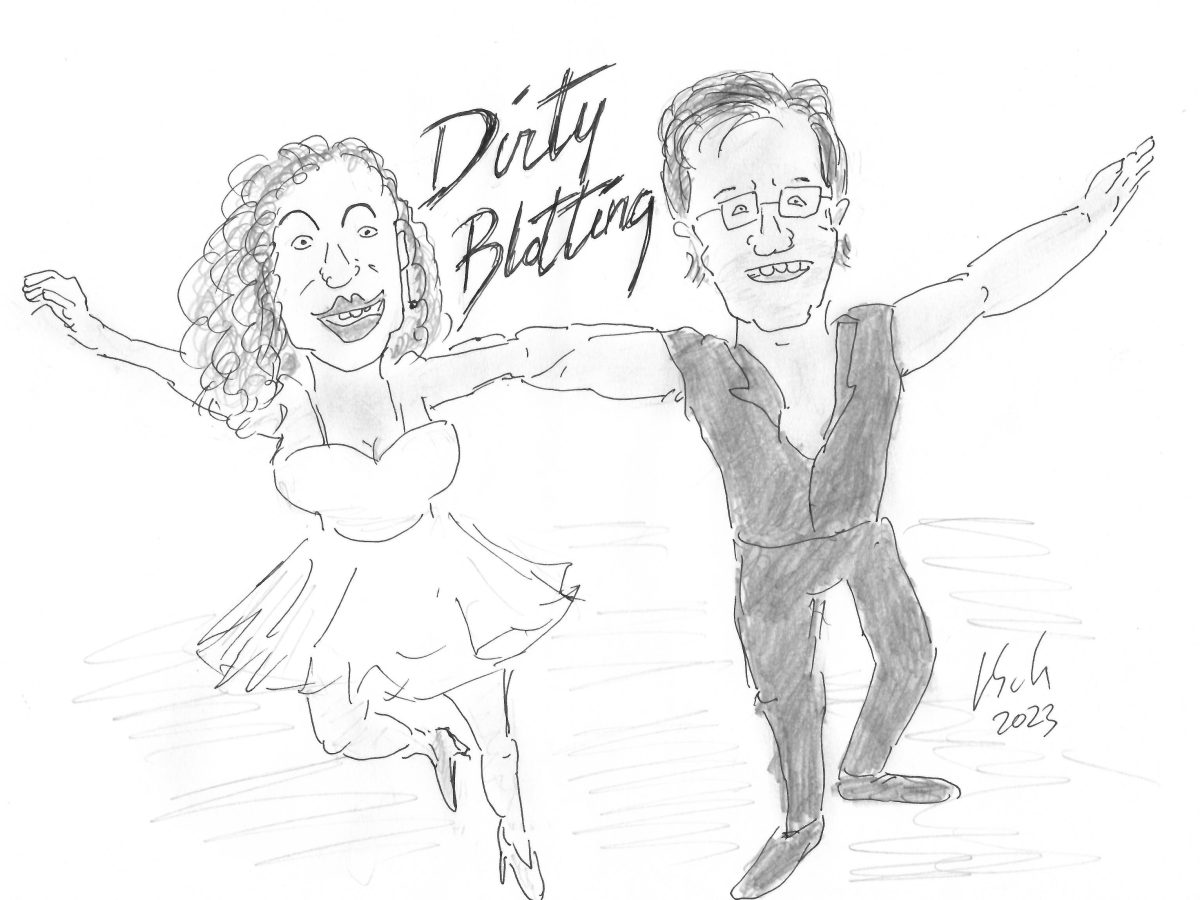
A story about two best friends and absolute role models for WomenInSTEM: Valerie Weaver and Ashani Weeraratna. Their cancer research may be dodgy, but at least Valerie’s poetry is better.
I shall skip a number of positions and list here a very underrated article – the story of The Vickers Curse. It is almost about pirates – actually about papermills. An editorial about moth pheromones by Neil Vickers got cited over 1400 times by now because of a bug in Crossref’s doi system which attributed all broken Elsevier doi numbers to this Vickers editorial. Investigation by Alexander Magazinov and Maarten van Kampen:
How did an editorial about insect pheromone communication get to receive 1200 irrelevant citations, almost all from papermills? Alexander Magazinov reveals The Secret of The Vickers Curse!
Bonus mention: An article about papermilling fraudsters from October 2022 did not make top 10 last year, but it became the third-most read article of 2023! Written by Alexander Magazinov and Nick Wise:
Nick Wise and Alexander Magazinov on the authorships-for-sale market on social media. Merely $700 for the 7th position on some paper way outside your expertise!
Elisabeth Bik has blogged again, and her topic is a small Italian publisher Verduci Editore and its journal which had been overrun by Chinese papermills. But not only by Chinese and not only by papermills!
“The European Review for Medical and Pharmacological Sciences continues to be a safe space for paper mills and very low-quality articles. Its special December issue (Supplement 6) is filled with 16 papers, all written by the same author, who appears to be using the journal as one big advertisement for his MAGI supplement-selling business. No conflicts of interest to declare!”
You can read about this journal here, by Smut Clyde:
“I choose to think of the paper-mills as something like a mediaeval monastic scriptorium, with one table of tonsured monks working on the text, while the limners at another table illuminate the Figures.” – Smut Clyde
Elisabeth personally uncovered one of the papermills which European Review for Medical and Pharmacological Sciences (ERMPS) collaborated with. She now writes that the journal “was found to have retracted 166 paper mill papers), many paper mill productions are still untouched“.
“In 2020 the percentage of Chinese papers dropped abruptly, most likely because of ERMPS’s inclusion on an “Early Warning List” released by the National Science Library of the Chinese Academy of Sciences. ERMPS received the highest warning level on that list, mainly because of the high number of retractions from Chinese scholars by that journal.”
The four guest editors wrote a significant chunk of the contents of this special issue: Tommaso Beccari authored 7 of 16 articles, Elisabetta Albi (none), Pietro Chiurazzi (4 of 16), Maria Rachele Ceccarini (4 of 16).
But that is nothing compared to the contributions of one special author. All 16 articles in the December supplement were authored by Matteo Bertelli, MD, PhD. Bertelli is the last author on 14 of the 16 papers, the spot usually reserved for the most senior and supervising researcher.
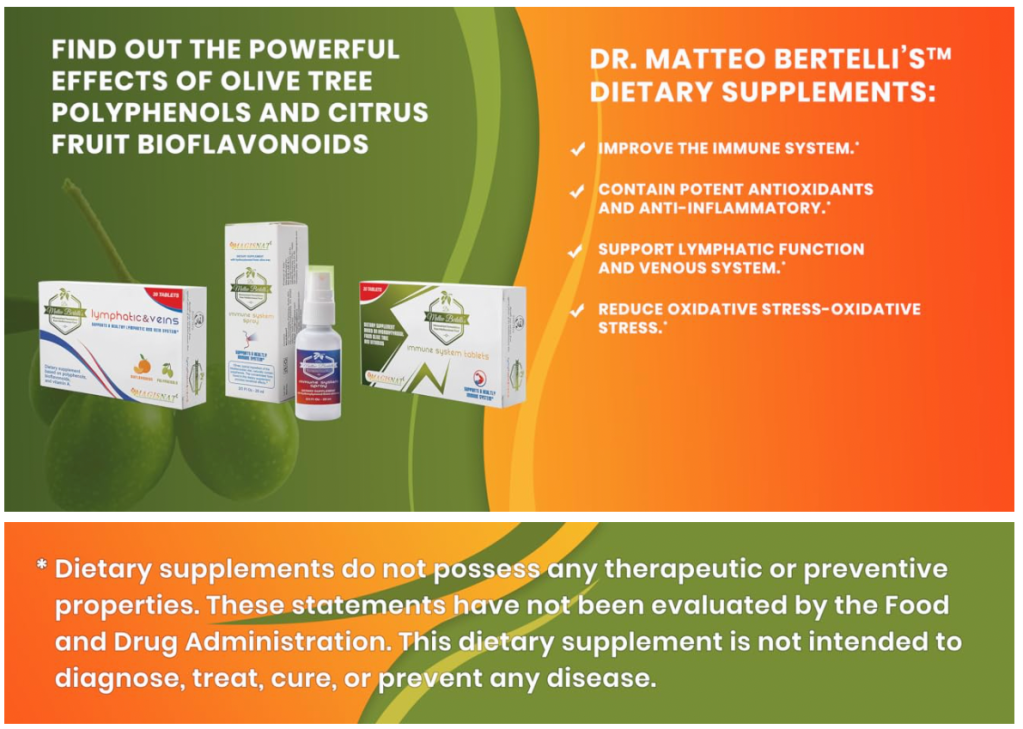
Bertelli is founder of the Italian MAGI Group and its US version MAGIsnat (see more detail below). Bertelli has a ‘passion for the benefits of the Mediterranean Diet and Lifestyle to bring balance and wellness to individuals and societies’. He does this mainly by selling supplements on Amazon, using many disclaimers to prevent the FDA from complaining about these products.
The supplements contain extracts from olives, such as the polyphenol hydroxytyrosol, and flavonoids from citrus fruits.”
In his ERMPS papers, Bertelli (self-described “a renowned geneticist” who “continues a legacy from his ancestor Dr. Achille Bertelli, who in the 1800s founded a nutritional supplement company“) promotes his commercial supplements as cures for anorexia, obesity and of course, for COVID-19. Yet he and his co-authors always declare:
“The authors declare no conflicts of interest.”
Bertelli also creates a market for his anti-COVID-19 supplements by warning of dangers of COVID-19 vaccines. Elisabeth debunked his paper on PubPeer:
“The Methods state that 81 patients were recruited, clinical data was only known for 70 of them, and the Discussion mentions 95 patients. […] The paper also includes an elusive ‘viral integration study’, which is only mentioned in the Supplemental, in which patient sera are tested with two (!) rounds of 35 PCR cycles.”
70 PCR cycles will prove to you that those Long COVID patients contain DNA from sperm whales and petunias in their blood. Actually, an idea for an ERMPS paper, but it costs €1500 to publish your fakes there.
Frontiers awaits the outcome
A Frontiers Expression of Concern refers to an ongoing institutional investigation in USA. Applause for Frontiers? Not so fast.
The paper was originally flagged by Elisabeth Bik.
“Cyan and burnt-orange rounded boxes: Nuclei (DAPI, blue stain) of two panels look remarkably similar to nuclei in Figure 3A of a slightly older paper by some of the same authors […] The panels appear to represent different cell types and experiments The red and green fluorescent signals are different”
“With this notice, Frontiers states its awareness of serious concerns surrounding the article “MRE11 and UBR5 co-operate to suppress RNF168-mediated fusion of dysfunctional telomeres” published on 2021 Nov 22. An investigation is currently being conducted by the Office of Ethics and Compliance at the University of California San Francisco, in accordance with applicable institutional policies and procedures. This expression of concern has been posted while Frontiers awaits the outcome of that investigation. It will be updated accordingly after that time.”
In reality, the investigation must have ended long ago. Because the other paper from which the data had been reused, was already retracted in September 2022, as Retraction Watchreported.
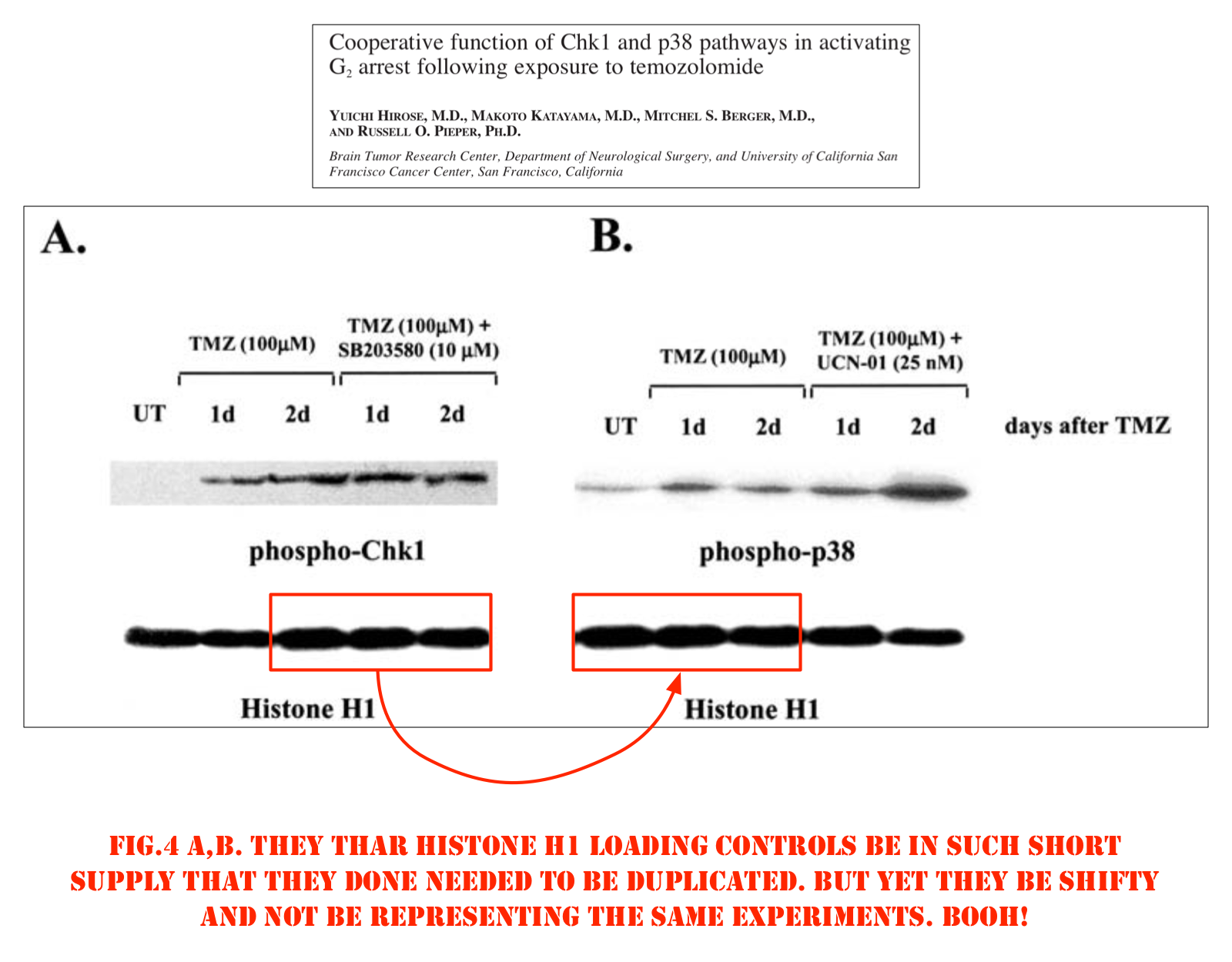
All other figures were fake, fabricated in Photoshop. Some examples:
Supplemental Figure S5A
“Figure S1 […] many of the error bars are unaligned to the center of the bar and several are spaced above and away from the midline of the bar. The y-axis also shows quite variable spacing between tick marks.“
“On 5 May 2021, Science Translational Medicine published the Research Article “A subset of PARP inhibitors induces lethal telomere fusion in ALT-dependent tumor cells” by J. Mukherjee, A. Pandita, C. Kamalakar, T.-C. Johannessen, S. Ohba, Y. Tang, C. L. Dalle-Ore, R. Bjerkvig, and R. O. Pieper (1). On 13 August 2022, the authors were made aware of concerns about the mechanistic data presented in the paper (parts of Figs. 3 to 7 and figs. S2, S5, and S6). The corresponding author, Russell O. Pieper, reported the matter to the appropriate office at his institution, the University of California–San Francisco, where it is currently being examined. In the interim, the corresponding author, with the agreement of all authors, has requested that the Research Article be retracted. Thus, Science Translational Medicine is retracting the paper in full.”
If Frontiers really cared, they would have retracted that paper a year ago. UCSF professor Russ Pieper has more fraudulent publications on PubPeer, currently 13 of them (most flagged rather recently). Many do not have Joydeep Mukherjee as coauthor, and the fraud dates at least two decades back. For example:
David Sabatini, remember that story? Well, it seems the conclusions were not affected. I take an ill-informed look at the mTOR signalling research field, to understand how photoshopped data gets to be independently verified by other labs.
The other problematic Pieper papers on PubPeer (nice alliteration!) are just as fake.
My suspicion is that Pieper (“Haderle Endowed Chair“, “Director of Basic Science in the UCSF Brain Tumor Center, the Vice-Chairman of the UCSF Department of Neurological Surgery, and a co-PI of the UCSF Brain Tumor SPORE“) is currently suing UCSF to keep his job. Despite two active NIH grants, his lab currently consist of only three people, him and Mukherjee included. That’s why publishers don’t hurry with the retractions until Pieper specifically asks for them.
Longitudinal lines and background discrepancies
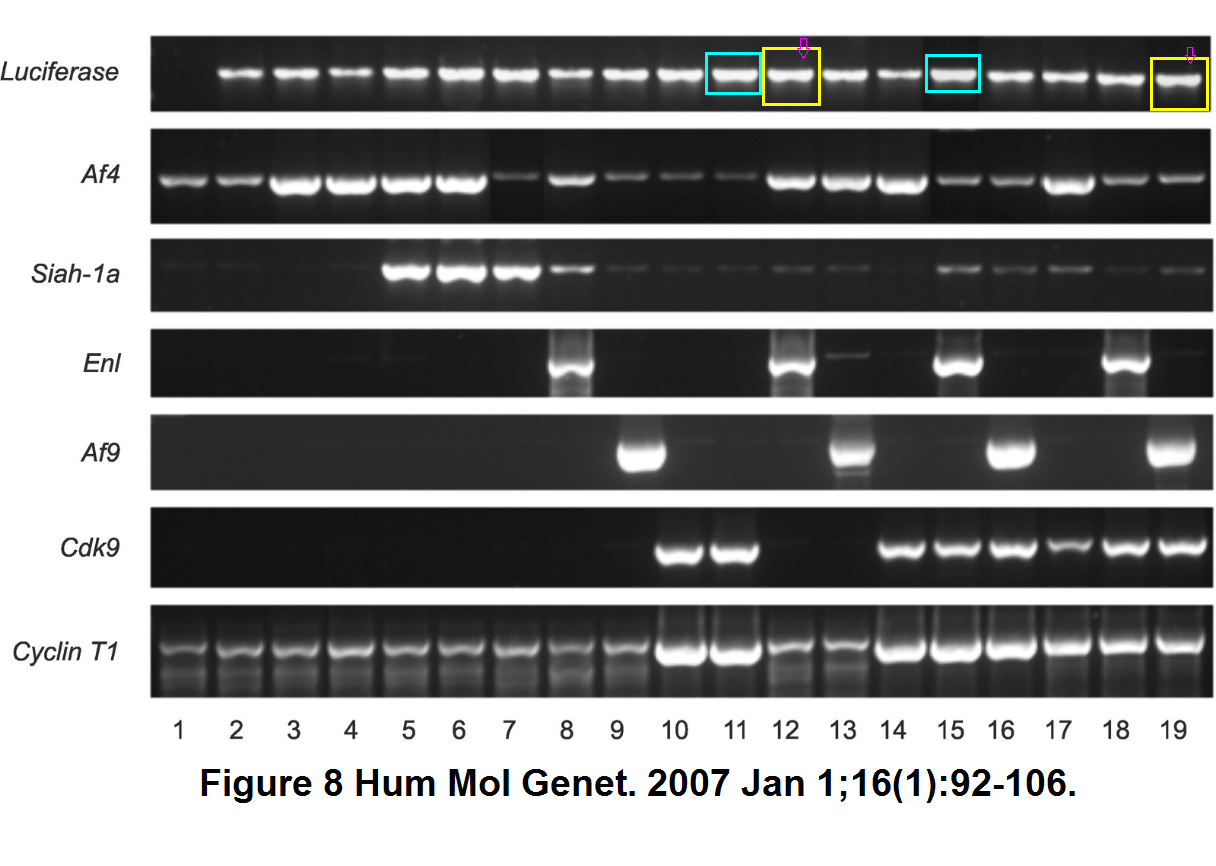
Other Editorial Notes, at the Oxford University press journal Human Molecular Genetics (HMG) indicate interesting goings-on behind the curtains. The affected scientist is the Oxford professor, Dame Commander of the British Empire Kay Davies, who is also the former Editor-in-Chief (and now honorary editor) of HMG. Her Oxford University refused to investigate her papers on the grounds that upper class nobility never does anything wrong.
Oxford professor Dame Kay E Davies, DBE FRS FMedSci, edits the journal Human Molecular Genetics. If you are a scientist who likes Photoshop, but afraid to get caught, give Dame Kay a call!
Normally, HMG never acted on fraud, certainly not on Davies’ own papers. She and her journal did aggressively retaliate against whistleblowers though. But now, some insane Editor Notes were issued, under the assumption that everyone out there is an idiot as well.
The Editor’s Note appeared on 23 November 2023 (highlights mine):
“Concerns about the presentation of Figures 1B, 2B, 3C, and 3D were raised on PubPeer in 2013, 2019, and 2020, and a whistleblower alerted the current editorial team to the potential issues in August 2023. The Editors then contacted the corresponding author. Because the experiments were conducted 20 years ago, the authors no longer have the original data.
However, the authors have provided the following explanation about the appearance of edges along the panels of Figures 1B, 3C, and 3D, which is due to experimental processing, rather that image alteration: “In an overlay assay, the protein sample to be bound is electrophoresed and transferred to a membrane, the membrane is cut into strips, and the different probes which are examined for binding to the protein, are separately overlayed on each strip and incubated separately. The strips are then washed to remove unbound probe molecules. Strip washing is made separately to prevent mixing of the probes. Then the stripes are arranged on a plate. In the resulting panel thus made, the probes on the strips are detected in a manner dependent on the examiner’s choice. This gives the results. Because probes often bind nonspecifically at the cut edges of the strips and because there are often discrepancies in washing, the process often results in longitudinal lines and background discrepancies, respectively. Gaps between lanes are also detected due to strip alignment.”
Regarding the potential similarity in the D-deltaF and D-ZZ panels of Figure 2B, the journal conducted further image analysis and the Editors reviewed their findings with the authors. Together they determined that while the lanes appear very similar, they are not identical.
While these issues may not affect the results or conclusion of the study, in the absence of original data, the Editors advise readers to examine these figures with care.”
Translation: the gel lanes are obviously identical, but because the raw data does not exist and the authors’ explanation that the identical signal was created by unspecific antibody signal is so silly and laughable, the editors decided that it doesn’t matter anyway because of unaffected conclusions. Yes, they think you are a fellow moron and will understand.
This is the second part of the Bologna whistleblower account. As the university was burying their own misconduct findings, Oxford University Press and their ignoble editor were busy punishing and gaslighting the whistleblower.
There, a huge Correction was issued on 30 September 2023:
“The authors and editors are updating the captions for Figures 3, 5, and 8 to provide more information about the presentation of the samples.
The updates (below in bold italics) clarify that the experimental lanes were all done at the same time, using the same gel, and the variation in background coloration is due to rearranging the lanes in the order published. […]
The difference in background between lanes 1, 2 and 3 in Figure 3C is because the samples were not resolved in the same part of the gel. Ahead of article publication, the samples were spliced into the current position by the authors for the sake of presenting the figure in a coherent manner. […]
The white lines between lanes 1, 2, 3 and 4 of the Myc-Enl/FLAG-Af9 row of Figure 5A indicate that the protein bands detected in these lanes come from parts of the same blot that were incubated with different antibodies. Ahead of article publication, the lanes were spliced and juxtaposed into the current position for the sake of presenting the figure in a coherent manner. […]
Some of the samples for the luciferase and Af4 rows were mistakenly loaded in a different order compared to the rest of the rows. The samples were resolved prior to article publication on the same agarose gel, although some samples were not directly next to each other as presented in the figure. Ahead of article publication, the samples were spliced into the current position by the authors for the sake of presenting the figure in a coherent manner.“
What gel band duplications? You must stop looking where you are not allowed to look! Probably also here the editors (i.e. Dame Kay and friends) decided that the bands were not identical.
Still, it seems, Dame Kay is in a pickle now, hence those idiotic corrections informing the scientific community that conclusions are not affected by similarities which are not duplications.
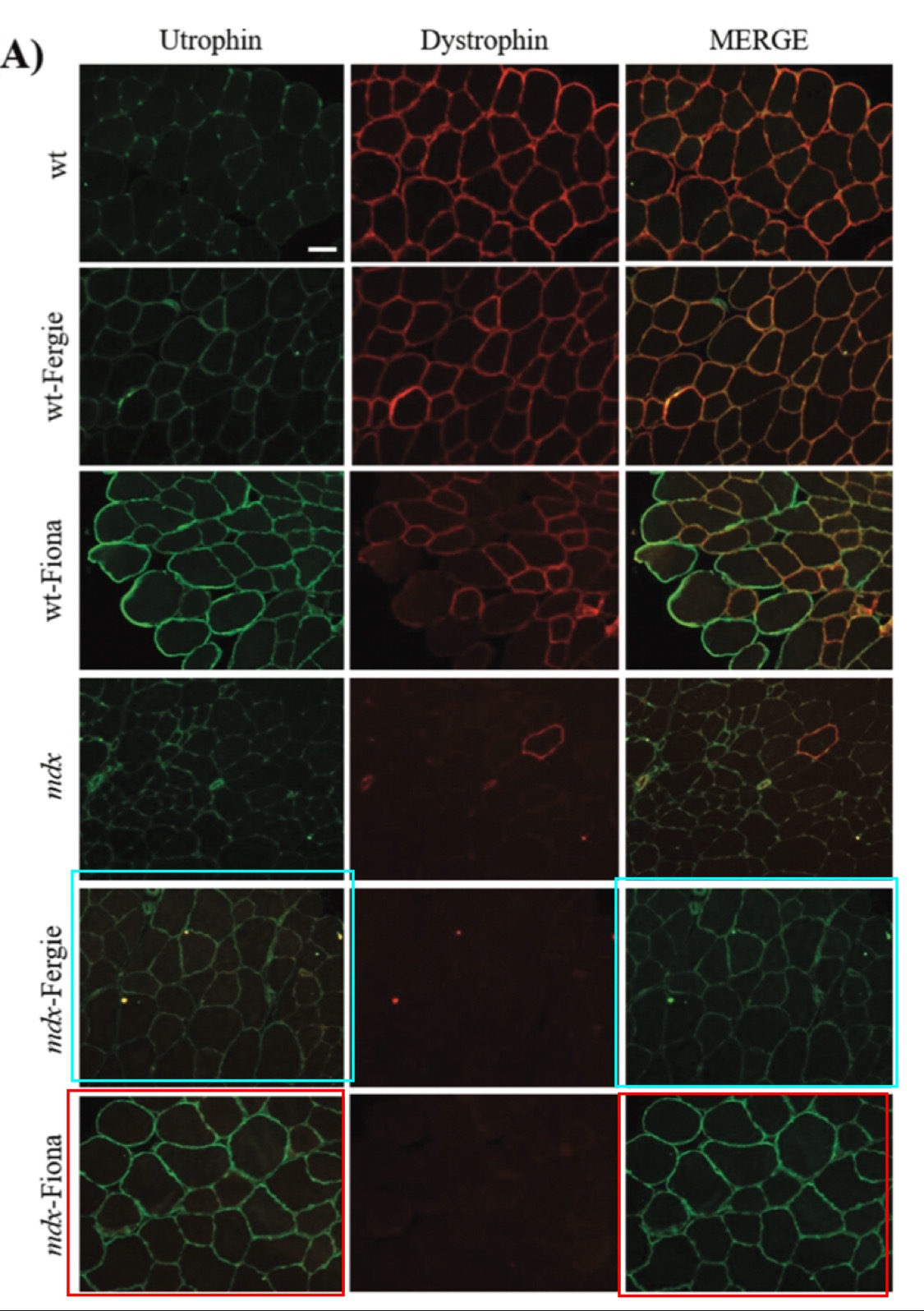
“In October 2019, the first author provided an updated Figure 1, which was embedded into the online version of the article, and the text below was added to the figure caption online. The journal is now issuing a correction notice to highlight this change more prominently to readers.
“Publisher’s note: Two frames in Panel A of Figure 1 were mounted the wrong way round when this paper was first published online. The image for mdx-Fergie utrophin has been moved to the mdx-Fergie merge location and vice versa. The image for mdx-Fiona utrophin has been moved to the mdx-Fiona merge location and vice versa. These changes do not affect the conclusion and an updated figure has been published to replace the original.””
4 years ago, this journal, then led by Dame Kay, falsified the version of record by issuing a stealth correction. The new Editor-in-Chief is Charis Eng, Professor at the Cleveland Clinic.
Do the corrections asap
In September 2022, I wrote an article about some researchers of the University of Strasbourg in France, including about the neuroscience professor Jean-Christophe Cassel, and Anne-Laurence Boutillier, whom I suspected to be his former PhD student, current lab co-director, and possibly even his partner). Neither of them replied to reject those suppositions.
But one and a half years later, on 11 December 2023, out of the blue, Cassel wrote to me:
“On your website, you introduce yourself as a journalist. In my view, a real journalist should check, rather twice than once, info to be published. Anne Laurence Boutillier is not my former PhD student. She is not the current lab co-director. She is not my partner in life. We do not form a couple. Each of these allegations is false. Do the corrections asap. JC Cassel“
Again, I checked, by writing to Cassel and Boutillier in July 2022. But what drove him to complain now? Maybe all these supposition do not apply ANYMORE? Or maybe it was because of the impending retraction.
On 22 December 2023, Cassel and Boutillier received their well deserved Christmas present- a retraction. Someone has been naughty:
“After this article [1] was published, concerns were raised about some of the western blots in Figures 1 and 2. Specifically:
In Figure 1B, there are vertical discontinuities between:
Lanes 2 and 3, and 5 and 6 in the K5Ac panel.
Lanes 2 and 3, 4 and 5, and 5 and 6 in the Tetra Ac panel.
Lanes 2 and 3 in the K12Ac panel.
Lanes 2 and 3 in the total H2B panel.
In Figure 2C, there are vertical discontinuities between:
Lanes 1 and 2 in the K12Ac panel.
Lanes 2 and 3 in the Tetra Ac panel.
Lanes 2 and 3, and 6 and 7 in the total H2B panel.
Lanes 2 and 3, and 3 and 4 in the K9K14Ac panel.
Lanes 2 and 3, 3 and 4, and 6 and 7 in the total H3 panel.
During editorial follow up on these issues, the authors stated that the data underlying this article [1] are no longer available.
The corresponding author [Boutillier, -LS] stated that images were spliced because only a representative subset of samples (lanes) from the original experiments were included in the published figures. The ninth author [Cassel, -LS] stated that the data presented in Figures 1B and 2C in [1] were provided as illustrations, and that the semi-quantitative data reported in [1] correspond to evaluations referencing each assessment to the control from the same experimental sample. The captions for Figures 1B and 2C in [1] state that ‘Typical western blots are presented/shown in duplicates’.
The corresponding author also stated that total histones were not run on the same gel as modified histones as they migrate to the same position on the gel, but they indicated all quantifications were performed using the appropriate corresponding control samples.
In the absence of the original raw image data, the above concerns cannot be resolved and PLOS cannot verify the reliability of the reported results and conclusions. Therefore, the PLOS ONE Editors retract this article.
ALB, MM, AB, APdV, OB, JCC, RN, and MAM did not agree with the retraction. AS and JPL either did not respond directly or could not be reached.
ALB stands by the article’s findings.”
The figures were just “illustrations” for raw data which didn’t exist. I congratulated Cassel to the retraction, he didn’t reply.
Science Breakthroughs
A well-established traditional medicine
How do you recognise quality cancer research and distinguish it from the pseudoscience, scams and quackery?
Simple: you avoid predatory publishers, trust the journal impact factor and especially you must trust learned societies and their journals, edited by the highest academic authorities in the field. The journal Gastroenterology is published by Elsevier, owned by the American Gastroenterological Association, has an impact factor of 30, its editors are professors at elite institutions in USA and Canada. Only the most rigorous research by the most qualified international experts passes the highest peer review standards at Gastroenterology. What this journal publishes is the most authoritative state-of-the-art science in its field.
So yes, bowel cancel can be cured by Traditional Chinese Medicine.
Hongyan Gou , Hao Su , Dehua Liu , Chi Chun Wong , Haiyun Shang , Yi Fang , Xianyi Zeng , Huarong Chen , Yan Li , Ziheng Huang , Miao Fan , Chunxian Wei , Xin Wang , Xiang Zhang , Xiaoxing Li , Jun Yu Traditional Medicine Pien Tze Huang Suppresses Colorectal Tumorigenesis Through Restoring Gut Microbiota and MetabolitesGastroenterology (2023) doi: 10.1053/j.gastro.2023.08.052
“Pien Tze Huang (PZH) is a well-established traditional medicine with beneficial effects against inflammation and cancer. We aimed to explore the chemopreventive effect of PZH in colorectal cancer (CRC) through modulating gut microbiota. […] PZH manipulated gut microbiota and metabolites toward a more favorable profile, improved gut barrier function, and suppressed oncogenic and pro-inflammatory pathways, thereby suppressing colorectal carcinogenesis.”
The authors are from the Chinese University of Hong Kong and disclose to have no conflicts of interests. Wikipediainforms about PZH:
“The sole manufacturer of Pien Tze Huang is the Zhang Zhou Pien Tze Huang Pharmaceutical Company Limited, China. The prescription and technology have been classified as state secrets…”
But it passed peer review anyway. Allegedly, the PZH recipe is centuries old and it includes as primary ingredients “musk, ox gallstone, snake gall“, and of course also ginseng, because you can’t have TCM without ginseng. The musk is derived from musk deer.
No, that was not BMJ Christmas edition.
Skin of a 28-year-old
New Year is the right occasion to do something for your health. And what is better for your health than extending your lifespan? Look what ultra-rich do, like the tech billionaire Bryan Johnson, about whom Business Insiderreported this Christmas:
“The 46-year-old tech millionaire has said he spends about $2 million a year on his efforts to live longer and reverse his so-called biological age. He calls the program Project Blueprint — and it’s now led him to a remote Caribbean island for injectable gene therapy.
Johnson had his first round of follistatin therapy offered by biotech startup Minicircle in September, he said on Instagram.
Follistatin is a protein in the human body that is said to help increase muscle mass and reduce inflammation. It would cost the average customer $25,000 a dose.
It’s important to note that it’s not approved by the FDA — and some scientists have said they aren’t sure it even works. Minicircle is backed by billionaire Peter Thiel and OpenAI CEO Sam Altman, Bloomberg reported. The company hasn’t yet published data on medical trials, the report said. […]
Although Johnson is apparently spending millions of dollars on antiaging, Minicircle’s co-founder told Bloomberg the company isn’t charging the multimillionaire. […]
Johnson has said his team of doctors at Project Blueprint has helped him have the skin of a 28-year-old, the heart of a 37-year-old, and the lung capacity of an 18-year-old.”
Careful with this rejuvenation, or Johnson will get milk teeth and genitals of a 5 year old. A recent article by Wired celebrating anti-aging therapies mentions that Elizabeth Parrish, CEO of Bioviva, also received follistatin injections, together with those of telomerase:
““Three steps to a healthier you,” Parrish told the group. She rattled off a list of treatments on offer: klotho gene therapy for cognition, follistatin gene therapy for muscle growth, telomerase gene therapy for anti-aging.”
Minicircle is named after the DNA plasmid transfection technology they use. It is supposed to be “reversible”, but plasmids can integrate into DNA. Even if the gene expression works, follistatin won’t rejuvenate you. But being rich does wonders for your health indeed. That’s why Parrish and Johnson feel so great. Try it also!
The most substantial improvement in lifespan
But if you are not obscenely rich, there is a cheap way to extend your lifespan while getting high, perfectly legally even!
It’s nutmeg. You may even have some left-over from Christmas cookies!
Science, or rather Aging, the papermill garbage trash journal run by crooks and fraudsters, has spoken.
Smut Clyde congratulates Aging: “This is bespoke tailoring, in contrast to the off-the-rack products cranked out by the average papermill […] no shame befalls the journals that accept these confections.”
Here is the breakthrough discovery from Korea, for which the journal issued a press release on 13 December 2023:
“Nutmeg has been extensively studied and proven to possess antioxidant properties that protect against aging and alleviate serious diseases such as cancer, heart disease, and liver disease. […] In this new study, researchers […] present evidence that Nectandrin B (NecB), a bioactive lignan compound isolated from nutmeg, significantly extended the lifespan of the fruit fly Drosophila melanogaster by as much as 42.6% compared to the control group.
“[…] we hypothesized that NecB might possess anti-aging efficacy.”
The dramatic reduction of intracellular ROS levels by NecB captured the researchers’ attention. NecB also improved age-related symptoms including locomotive deterioration, body weight gain, eye degeneration, and neurodegeneration in aging D. melanogaster. The researchers wrote that this result represents the most substantial improvement in lifespan observed in animal experiments to date, suggesting that NecB may hold promise as a potential therapeutic agent for promoting longevity and addressing age-related degeneration.”
I wonder if the authors and editors wrote this while intoxicated by nutmeg. Here is their paper:
Ji-Seon Ahn , Nasir Uddin Mahbub , Sura Kim , Han-Byeol Kim , Jong-Soon Choi , Hea-Jong Chung , Seong-Tshool Hong Nectandrin B significantly increases the lifespan of Drosophila – Nectandrin B for longevityAging (2023) doi: 10.18632/aging.205234
I like the opening sentences which clumsily combines Western medicine fraud with TCM fraud:
“…many modern researches have the main goal of improving health and anti-aging, especially developing safe therapeutic agents for age-related diseases. Previous studies have identified many longevity compounds, including resveratrol [5, 6], rapamycin [7], metformin [8], spermidine [9], etc. Herbal medicine, which have a long history in Asian countries, also have anti-aging character and may therefore affects age-related disabilities. The efficacy of traditional Chinese medicine (TCM) depends on the function of various compounds in these herbs [10–16].”
Aging even made a video:
One-Time
Monthly
I thank all my donors for supporting my journalism. You can be one of them! Make a one-time donation:
I thank all my donors for supporting my journalism. You can be one of them! Make a monthly donation:
We had in France a pair of pseudo-scientist twins, Igor and Grichka Bogdanov, who followed for 50 years very special treatments, including certainly surgery and probably growth hormone (top secret indeed) to increase their lifespan. This treatment banned any vaccine, of course. And they both died aged 72 within one week (December2021/January 2022), after having caught Covid-19. So much fuss for nothing!
Bogdanovs very successfully applied lifespan-extending interventions only to their faces. Unfortunately it was the rest of their bodies that suffered a rather sudden end to healthspan.
“In 2012, Fulda was appointed a member of the German Science Council by the Federal President. In this advisory body, she helps draw up recommendations for the federal and state governments on developing the content and structure of higher education institutions, science and research.”
“Following the successful adoption of the Structural and Development Plan 2021-2025 by the Senate and University Council in December 2020, the starting signal was given in January 2021 for the “Roadmap Excellence Strategy” strategy process under the leadership of the University Board and with the participation of the University’s research priority areas, faculties, committees and departments.”
Whose excellence is Simone Fulda talking about, surely not her own impeccable record?
Probably a good idea for the University of Kiel to pull that guest article.
Präsidentin Prof. Dr. med. Simone Fulda, Uni Kiel, ist eine Frau in STEM (Wissenschaft, Technologie, Ingenieurwesen und Mathematik), die heuchlerische Tugendsignale über Gleichberechtigung von sich gibt. Gibt es dafür eine spezielle Ecke?
Ich glaube, die Leute verstehen die Dinge blitzschnell. Warum brauchen Universitäten Jahre, um Maßnahmen zu ergreifen? Ein ordnungsgemäßes Verfahren sollte ein Jahr dauern, nicht 5, 10 oder nie.
Once again I wonder if Silvia Bulfone-Paus had an effect on others. Klaus-Michael Debatin’s clearly problematic papers stop in 2012. Silvia was on the front of Der Spiegel in January 2011.
The timing of the problematic Hannover papers, and their end, was the first time that I thought that Silvia Bulfone-Paus had an effect on others.
There may very well be a German legacy.
Johnson has said his team of doctors at Project Blueprint has helped him have the skin of a 28-year-old, the heart of a 37-year-old, and the lung capacity of an 18-year-old.
I do not want to know what Johnson keeps in his collection of ‘trophies’.





















 For Better Science
“Previous studies have identified many longevity compounds, including resveratrol [5, 6], rapamycin [7], metformin [8], spermidine [9], etc.”
And if any of them worked, would we need more longevity compounds?
LikeLike
One can never have enough anti-aging crap to run a trash journal. Ask Misha B, the resveratrol pusher.
LikeLike
The more the merrier!
LikeLike
We had in France a pair of pseudo-scientist twins, Igor and Grichka Bogdanov, who followed for 50 years very special treatments, including certainly surgery and probably growth hormone (top secret indeed) to increase their lifespan. This treatment banned any vaccine, of course. And they both died aged 72 within one week (December2021/January 2022), after having caught Covid-19. So much fuss for nothing!
LikeLike
Bogdanovs very successfully applied lifespan-extending interventions only to their faces. Unfortunately it was the rest of their bodies that suffered a rather sudden end to healthspan.
LikeLike
Okay, Ulm (Houston)… we’ve had a problem here.
https://pubpeer.com/search?q=Debatin+
LikeLike
Okay, Houston … we’ve had a problem here too (Kiel).
Problems thick and fast.
https://pubpeer.com/search?q=Fulda
https://www.gleichstellung-chancengleichheit-familie.uni-kiel.de/en/womenportraits/portraits/simone-fulda
LikeLike
What a laugh!
https://www.dkfz.de/en/presse/pressemitteilungen/2014/dkfz-pm-14-09b-German-Cancer-Award-for-Simone-Fulda.php
Not only given an award, but this!
“In 2012, Fulda was appointed a member of the German Science Council by the Federal President. In this advisory body, she helps draw up recommendations for the federal and state governments on developing the content and structure of higher education institutions, science and research.”
LikeLike
Fulda and Debatin sit on all possible German boards. They are controlling all of science in Germany.
LikeLike
https://www.uni-kiel.de/en/research/priority-research-areas/kiel-life-science/news-events/newsletter/content/news/gastbeitrag-prof-simone-fulda-auf-dem-gemeinsamen-weg-unter-die-top-15-der-deutschen-universitaeten
“Following the successful adoption of the Structural and Development Plan 2021-2025 by the Senate and University Council in December 2020, the starting signal was given in January 2021 for the “Roadmap Excellence Strategy” strategy process under the leadership of the University Board and with the participation of the University’s research priority areas, faculties, committees and departments.”
Whose excellence is Simone Fulda talking about, surely not her own impeccable record?
Probably a good idea for the University of Kiel to pull that guest article.
LikeLike
Wie hoch ist die Wahrscheinlichkeit, dass Präsidentin Prof. Dr. med. Simone Fulda 2024 zurücktritt?
LikeLike
Präsidentin Prof. Dr. med. Simone Fulda, Uni Kiel, ist eine Frau in STEM (Wissenschaft, Technologie, Ingenieurwesen und Mathematik), die heuchlerische Tugendsignale über Gleichberechtigung von sich gibt. Gibt es dafür eine spezielle Ecke?
https://pubpeer.com/search?q=fulda
LikeLike
Ich glaube, die Leute verstehen die Dinge blitzschnell. Warum brauchen Universitäten Jahre, um Maßnahmen zu ergreifen? Ein ordnungsgemäßes Verfahren sollte ein Jahr dauern, nicht 5, 10 oder nie.
LikeLike
Die Universität Kiel sollte einen Master of Science für angewandte Tugendsignalisierung und Gleichberechtigung anbieten.
LikeLike
Worse than I thought, and current! Germany needs thid as much as a hole in the head!
https://www.gleichstellung-chancengleichheit-familie.uni-kiel.de/en/womenportraits/portraits/simone-fulda#:~:text=About%20Simone%20Fulda&text=She%20is%20a%20doctor%2C%20who,among%20other%20places%20in%20France.
“[Simone Fulda] chair of the Commission for Research Information in Germany since 2021”
What a laugh!
LikeLike
https://www.uniklinik-ulm.de/kinder-und-jugendmedizin/team/prof-klaus-michael-debatin-english.html
LikeLike
What’s the difference between Friedhelm Hermann and Marion Brach on one hand, and Klaus-Michael Debatin and Simone Fulda on the other?
LikeLike
Once again I wonder if Silvia Bulfone-Paus had an effect on others. Klaus-Michael Debatin’s clearly problematic papers stop in 2012. Silvia was on the front of Der Spiegel in January 2011.
https://www.spiegel.de/wissenschaft/medizin/massive-vorwuerfe-spitzenforscherin-unter-betrugsverdacht-a-739146.html
LikeLike
Now that is indeed possibly not a coincidence!
LikeLike
The timing of the problematic Hannover papers, and their end, was the first time that I thought that Silvia Bulfone-Paus had an effect on others.
There may very well be a German legacy.
LikeLike
Johnson has said his team of doctors at Project Blueprint has helped him have the skin of a 28-year-old, the heart of a 37-year-old, and the lung capacity of an 18-year-old.
I do not want to know what Johnson keeps in his collection of ‘trophies’.
LikeLiked by 1 person