Schneider Shorts 29.09.2023 – The requested page could not be found
Schneider Shorts 29.09.2023 - an Egyptian cheater wiped out, superconductive fraud to be retracted again, editors finding nothing out of order, with a Mexican Photoshop artist, another dodgy correction, and finally, with eugenic, pardon, genetic evidence for segregated schools.
Schneider Shorts of 29 September 2023 – an Egyptian cheater wiped out, superconductive fraud to be retracted again, editors finding nothing out of order, with a Mexican Photoshop artist, another dodgy correction, and finally, with eugenic, pardon, genetic evidence for segregated schools.
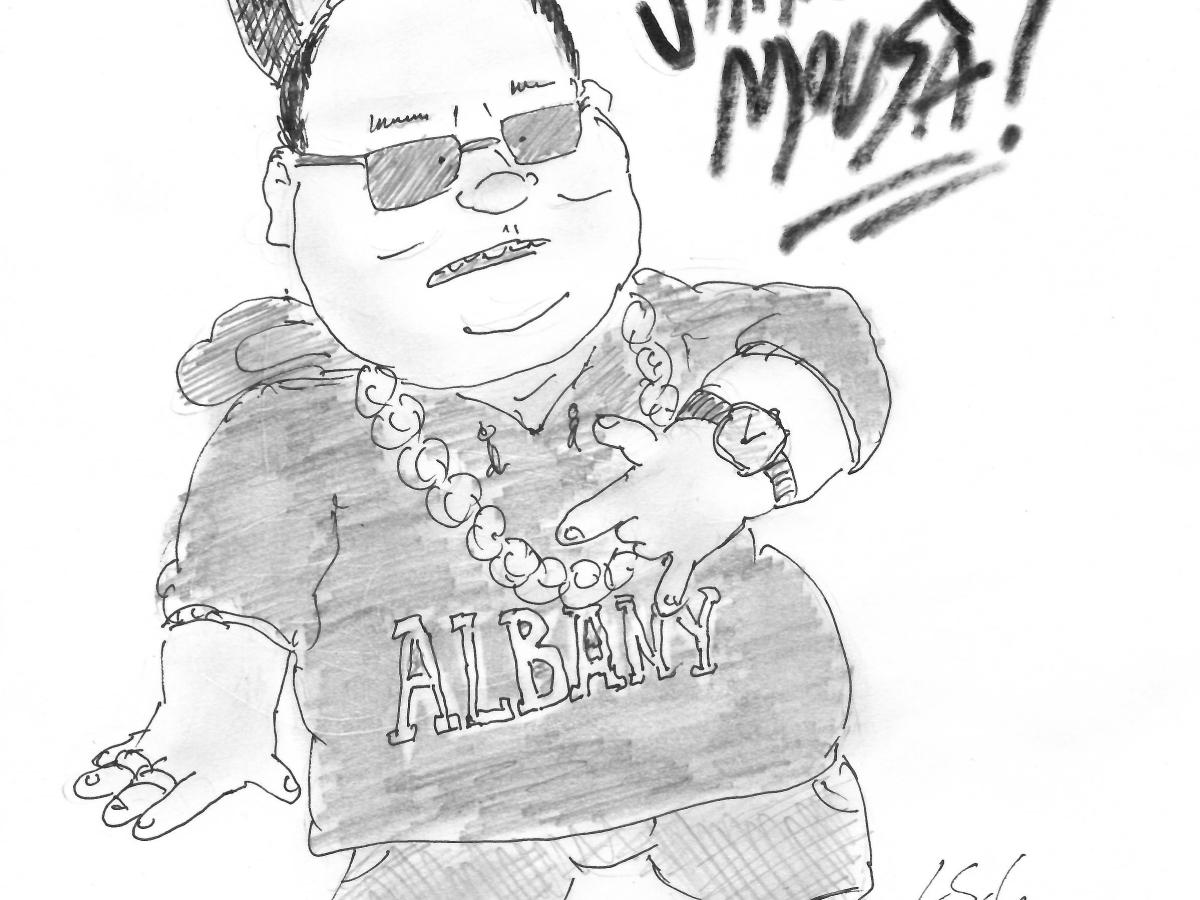
It seems the Albany College of Pharmacy and Health Sciences (ACPHS) in New York, USA, sacked Shaker Mousa. He used to be their “endowed, tenured Professor and Executive Vice President and Chairman of the Pharmaceutical Research Institute (PRI)”. Up until in 2022, Mousa was paid as ACPHS’ Vice Provost Of Research over $300k a year. Now: as if he never existed. The college deleted his institutional profile and even purged their online presence of old press releases mentioning Mousa. They don’t reply to emails and will probably now sue everyone claiming that Mousa ever worked at Albany.
Gone with the wind, everything. Mousa’s name and face can’t be found among academic faculty anymore (where he used to be at least a year ago). Even the entire PRI website is deleted, presumably to prove that the 2002-founded institute has never existed – a Google search returns nothing now. But internet archive still has it, and also Mousa’s profile page at PRI.
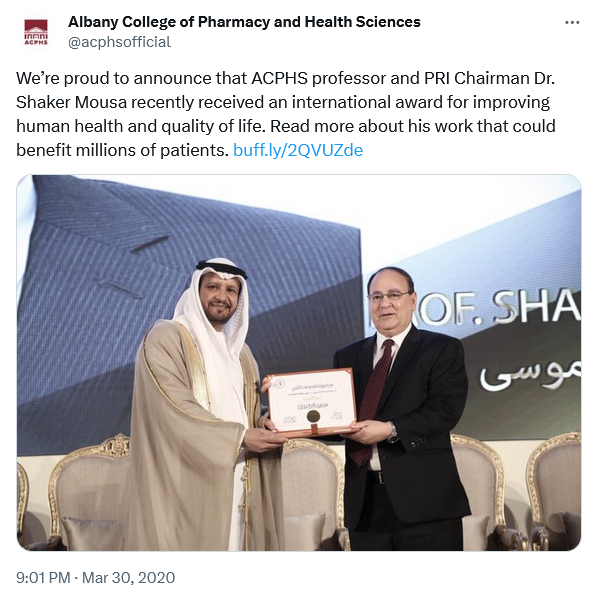
There are still some old tweets around! Like this one, where the link to press release lead to “The requested page could not be found.”
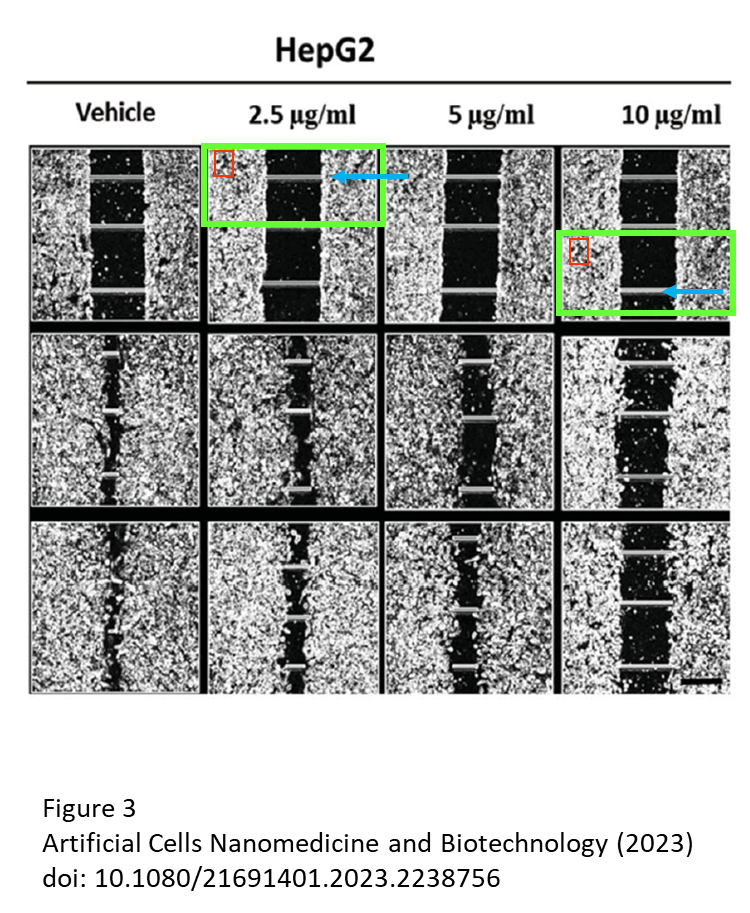
Also four of Mousa’s over 50 problematic papers on PubPeer were retracted. But never mind: Mousa keeps publishing and everywhere Cheshire keeps finding new fraud, for example:
To be fair, the artist-forger on these papers may be Mousa’s buddy Steve Harakeh, professor at King Abdulaziz University in Saudi Arabia. Harakeh states on OMICS website(!) that he is presently “a member of “Yousef Abdullatif Jameel Research Chair for Prophetic Medicine”” and that he once “joined the Linus Pauling Institute for Science and Medicine where he worked and published with Professor Pauling who is the only holder of two unshared Noble prizes in the world.” He also has a a hilarious PubPeer record, for example:
On PubPeer, Harakeh openly admitted to have bought that paper of a papermill:
“This work was outsourced to a private laboratory outside the Kingdom of Saudi Arabia during the COVID-19 outbreak. We apologise for not having someone with expertise in SEM check the images. The results that we got on the reduction of biofilm formation by phage are displayed in Figure 8 and stand on their own without the SEM images.”
Just last June 2023, Mousa visited the Ain Shams University in his home country Egypt, and was presented by the vice-president as “Professor of Clinical Pharmacy at the Albany Faculty of Pharmacy and Health Sciences, New York State“:
“In his speech, Prof. Ayman Saleh welcomed Prof. Shaker Mousa, a graduate of the University of Alexandria, who is considered one of the great scientists and one of the pioneers of nanotechnology, pointing out that his excellency contributed to the discovery and development of many drugs, especially heart medications, and he also made rich additions in the field of scientific research, and he has more than a thousand scientific research published in international scientific journals.”
Mousa is third from left. Screenshot from asu.edu.eg
Mousa and ACPHS did not reply to my emails.
The results change NOTHING!
Oscar Portillo-Morenois dead, his papers retracted post-mortem, so here is a new and rather young shooting star of Mexican science. Meet María Rosa Avila-Costa, full professor of neuroscience at National Autonomus University of Mexico (UNAM).
The Mexican potty-mouth Oscar Portillo Moreno dopes nanostructured thin films, or so he says. In reality it is not clear if he ever performed any experiments.
Unlike the dead fraudster, Avila-Costa does not use profanities to insult PubPeer critics, but her message is same.
María Rosa Avila-Costa, Laura Colín-Barenque , Armando Zepeda-Rodríguez , Silvia B. Antuna , Liliana Saldivar O , Guadalupe Espejel-Maya , Patricia Mussali-Galante , Maria Del Carmen Avila-Casado , Alfonso Reyes-Olivera , Veronica Anaya-Martinez , Teresa I. Fortoul Ependymal epithelium disruption after vanadium pentoxide inhalationNeuroscience Letters (2005) doi: 10.1016/j.neulet.2005.01.072
Imagine the amount of work someone invested back then to create this forgery, with the old Photoshop software no less. Avila-Costa reacted on PubPeer with:
“This photo was NOT touched in any way, in 2005 the photos, at least the ultrastructure ones, were developed and printed on paper and sent in an envelope, in addition the intention of the photo was to demonstrate the integrity of the tight junctions and the presence of cilia in the control group, unlike the exposed group. Find something useful to do! The intention was NOT to analyze ribosomes, nuclei, or cilia shape, so the results change NOTHING!”
In another post, she proudly admitted to have personally created this image:
“This article is from 18 years ago, I remember it very well because I was very excited to carry out a study on scanning electron microscopy for the first time. […] I remember that I took the micrographs, in addition to doing the analysis. At that time, at least I didn’t have photoshop. The micrographs were given to me on paper, I chose the best ones to send for publication and that was it. I assure you that the analysis is well done, the data is true. The micrograph shown here actually has several similarities, I honestly don’t know why it came out like that, what I can assure you is that the objective of this micrograph was to demonstrate that the control group had the tight junctions intact, nothing more, and if you see the article, the comparison with the Vanadium-exposed group tight junctions is impressive. The scanning microscopy clearly shows the cilia loss, compared to the control group.”
But, as Aneurus Inconstans noticed:
“Basically all the cilia of this control mice micrograph appear to be digitally added/modified.”
Here is the full figure.
Even Avila-Costa admitted: “If you read the article, this figure shows the cilia loss (B) of the vanadium-esposed mice and A shows the cilia of the control mice…” Yes, yes, if the cilia in control mice (Fig 2C) were all photoshopped, no wonder the Vanadium treated mice lost them as expected!
I informed the Editor-in-Chief of Neuroscience LettersPamela E. Knapp, professor at the Virginia Commonwealth University in Richmond, USA. And received no reply. What can you expect from an Elsevier trash-bin which publishes fraud like this here, about Iranian honey curing Alzheimer’s, and then does nothing because the authors posted fake “raw data”:
And you can read in earlier Friday Shorts what other Iranian papermill fraud this journal happily corrected.
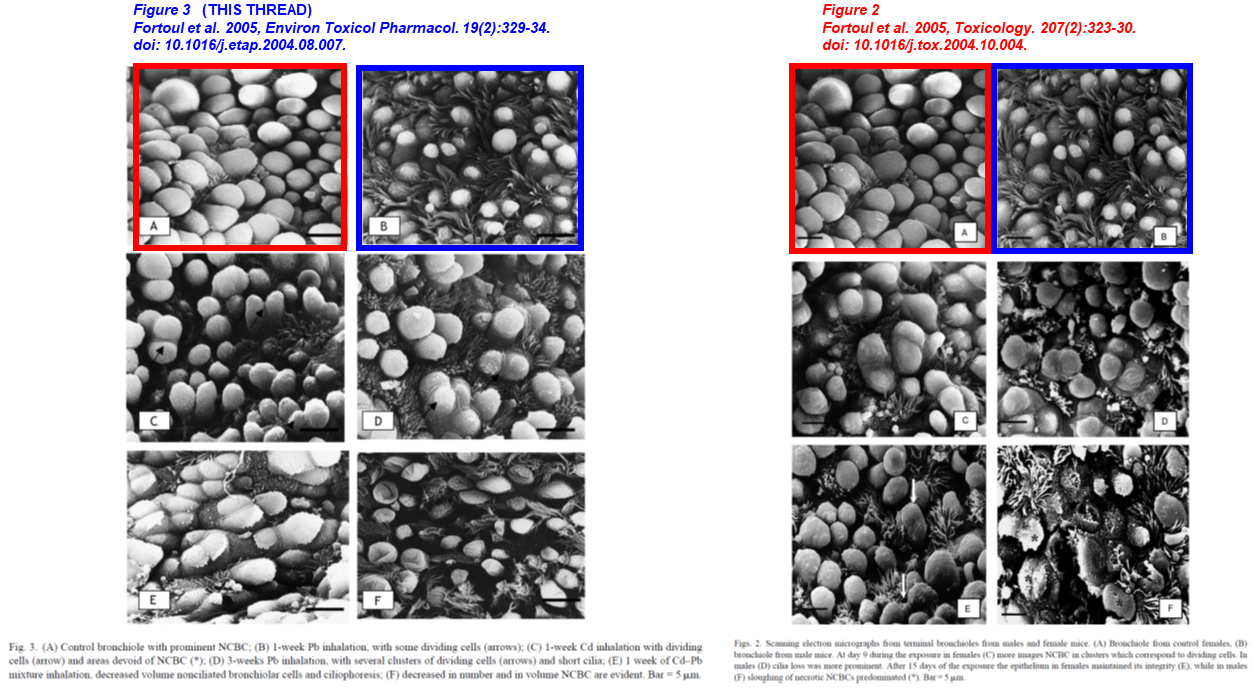
Elsewhere, Avila-Costa poisoned mice with cadmium and lead. It was enough for two papers, but not as one usually does it. Here, her fellow UNAM professor Teresa Imelda Fortoul Vander Goes is the first author:
Teresa I. Fortoul, Liliana Saldivar O. , Guadalupe Espejel-Maya , Patricia Bazarro N. , Patricia Mussali-Galante , Maria Del Carmen Avila-Casado , Laura Colin-Barenque , Maria-Rosa Avila-Costa Inhalation of cadmium, lead or its mixtureEnvironmental Toxicology and Pharmacology (2005) doi: 10.1016/j.etap.2004.08.007
“Figure 2: micrographs (A) and (B) [Toxicology 2005] are described as female control mice and male control mice, respectively. However, these two same micrographs appear in Figure 3 [Env Tox Pharm 2005] , a paper submitted and accepted at the same time by the same group, where they describe control mice (3A) and 1-week Pb inalation treated mice (3B), respecively. The micrographs slightly differ in dimension and brightness between the two articles.”
Sometimes I think journals reject papers for lack of forgeries. Update: Look at this:
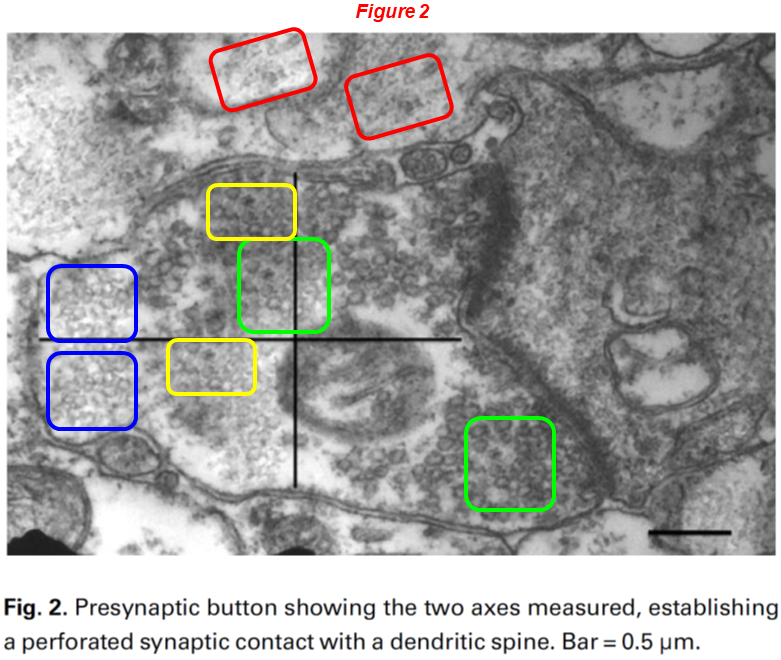
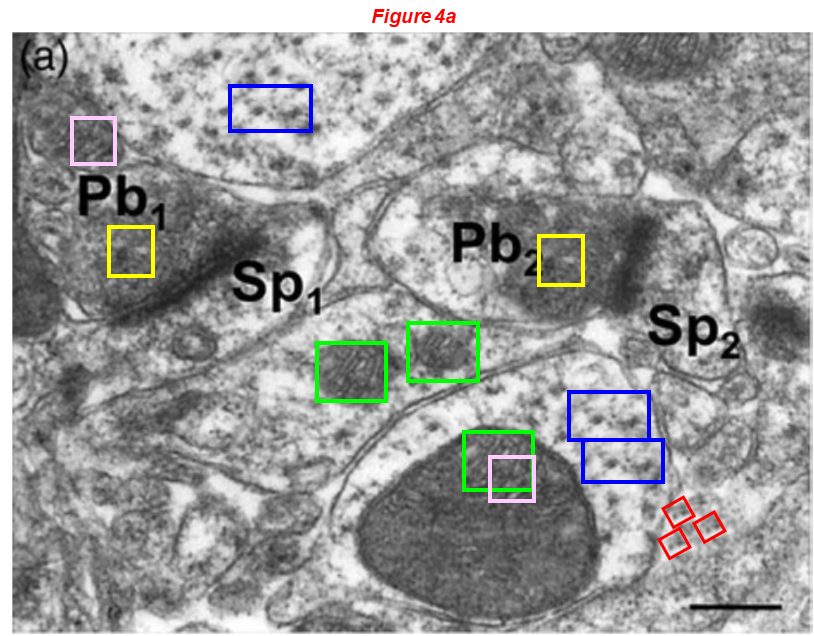
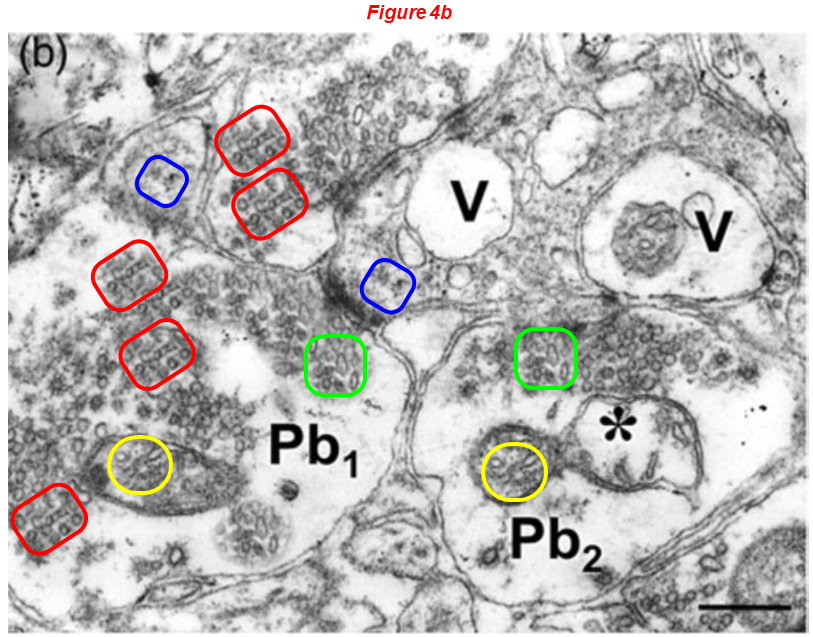
“Those photomicrographs were edited because we did not have good ones at the time we are sending the article, but, again, if you read the article, the intention was to show the postsynaptic perforations, which we found many in the experimental group. Figure 2 is just to show how perforated synapses look, I use the same photo in a chapter, thus it was not permitted to use the same photo, that was just illustrative, the 4a and 4b micrographs were also used in another publication that is why I edited them, but the main finding, the perforated synapses was not edited at all.”
She faked the images because she didn’t have any “good ones”.
Scholarly Publishing
We respectfully request and recommend
Turned out, that Martin van Kampen was right all along and Nature was wrong. Ranga Dias‘ and Ashkan Salamat‘ssecond superconductor paper in Nature was just as fraudulent as the retracted first. This revelation was not really surprising, except maybe to Nature and Dias’ employer, the University of Rochester, who chose to declare Dias innocent of all suspicions of research misconduct because they smelled money.
“After the huge box-office success of “Nature 2020: Room-temperature superconductivity in CSH” this March our Nature studios released a sequel with the same star-studded cast: “Nature 2023: Near-ambient superconductivity in N-doped LuHx”. – Maarten van Kampen
“We respectfully request and recommend that Nature issue a retraction,” eight of the 11 authors wrote to Tobias Rödel, a senior editor at the journal, according to the letter, which was obtained by The Wall Street Journal.
The co-authors charge that University of Rochester physicist Ranga Dias, the lead researcher, “has not acted in good faith in regard to the preparation and submission of the manuscript,” and they list what they say are multiple flaws in the paper.
Within days, Rödel replied in an email that was obtained by the Journal: “We are in absolute agreement with your request that the paper be retracted.” […]
Ahead of this, Dias emailed a letter to at least six of his co-authors in early September asking them to “cease and desist” sharing their concerns with Nature’s editors, or risk a defamation lawsuit.”
Dias used to deploy lawyers against his critics before, and it didn’t prevent the retraction of his first Nature paper. It also didn’t help that Dias’ collaborator Russell Hemley “independently” proved in June 2023 that the superconductor is real, celebrated in the New York Times (read here).
I obtained the letter in question, it is signed by Nathan Dasenbrock-Gammon, Elliot Snider, Raymond McBride, Hiranya Pasan, Dylan Durkee, Sachith E. Dissanayake, Keith V. Lawler, and ta-da, the second founder of Dias’ startup Unearthly Materials: Ashkan Salamat!
Aside of research fraud. Dias also committed patent fraud, by patenting “superconducting” LuH material which he obtained commercially. The letter to Nature states:
“With the exception of Extended Data Figure 13a, all samplesused for analyses underlying the LuH Paper were commercially purchased samples. […] In fact, the vast majority of samples were commercially purchased. Also, commercially purchased samples were sold as LuH3 and only later found to have nitrogen impurities. No treatment procedures were carried out on the commercially purchased samples used to produce most of the data within the LuH Paper. All University of Rochester team members objected to these misleading statements used throughout the LuH Paper.”
The journalist Dan Garisto also posted Dias’ cease-and desist letter on X/Twitter:
The WSJ article ends with:
“This would be at least the third retraction in about a year of a paper with Dias as a senior researcher. Physical Review Letters retracted a study in August that described the properties of a manganese compound. Last September, Nature retracted a 2020 paper describing superconductivity in a material containing carbon, sulfur and hydrogen.
The University of Rochester said that it has commissioned outside experts to investigate papers by Dias, and the investigation is continuing.
Dias has also been accused by other physicists of plagiarizing parts of his doctoral thesis conducted at Washington State University. A university spokesperson said in July that WSU was aware of the accusations, but didn’t confirm or deny an investigation.
Dias previously said he is addressing questions raised about his thesis.”
He probably writes cease-and desist letters to the investigative committees.
No compelling evidence for the retraction
Alexander Magazinov wrote once again to the Editor-in-Chief of the Elsevier journal Engineering Analysis with Boundary Elements (EABE), Alexander Cheng, Emeritus Dean of Engineering and Professor of Civil Engineering at the University of Mississippi, USA. In his earlier attempt, Magazinov got charged by Cheng with research misconduct, while the papermilling fraudster Masoud Afrand was defended.
Now Magazinov reported another fraudster in EABE, Iskander Tlili, who has a PubPeer record of papermilling and bought citations (often with further toxic characters like Arash Karimipour (presently editorial board member at EABE!), Dumitru Baleanu and Ali Chamkha).
“Did you know that Chamkha is “Ranked in the World’s Top 0.02267% Scientist”? Or that he “Completed all degrees in a record time of five years”?” – Maarten van Kampen
The text is just nonsense, a word salad meant to insert meaningless citations to those who paid. For example:
“Molecular dynamics simulations may be used to calculate the free energy of implantation of C60. These simulations revealed that a polar C60 spontaneously incorporates into the hydrophobic region of the bilayer [29,30]. The results were included in the analysis of the free energy of C60 insertion. However, it was shown that functionalized polar C60 might enter cells by a mechanism termed clathrin-mediated endocytosis [9,31]. The results of experimental studies confirmed this. Solubility may be improved by chemically functionalizing fullerene and nanotubes [5,32–34].”
Magazinov noted: “Nowhere else fullerenes appear in this study, and “clathrin-mediated endocytosis” is even less relevant.” This had no other purpose but to add a block of citations to Afrand:
“Emerging autonomous electronic gadgets need ever-smaller energy- generating and storage options [22–27].”
Also, Tlili’s Chinese “coauthor” Conggang Li very unexpectedly used a russian Yandex e-mail address to submit this paper: conggang2023@yandex.com. Or more likely, the russian papermill created it on the spot. But it did not impress Cheng, he already made his peace with Tlili (who has 9 papers in EABE). Like this:
Orchestes quercus: “8 of the 32 citations in this paper go to Mohammed Kedri: […] It is not only Kedri that is cited out-of-context. In fact, most papers are cited out-of-context.”
Cheng stated that Tlili’s papers passed peer review, with 2 to 3 reviewers and a revision even. He concluded that because the formalities were adhered to, there was no compelling evidence for the retraction.
Citation scams are Tlili’s speciality. Here he is in another Elsevier journal:
“There are also other numerical studies [55-67] on natural convection which are truly worthwhile to read.”
The meaningless references go to Tlili, Chamkha and Afrand’s papermilling associate, Nader Karimi. The scam was possible at this journal because the then-Editor-in-Chief, the German professor Dirk-Uwe Sauer was, just like Cheng, very permissive to papermill activities.
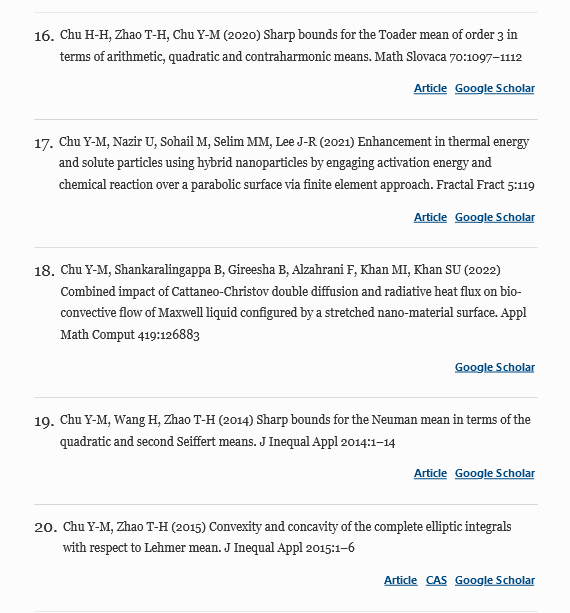
“Many mathematical researchers have focused their research on new methods of solving Eqs. [63–68]. The use of mathematical relations has been suggested by many researchers due to its high accuracy [68–73]. […] Many engineering applications are usually faced with two different optimization problems [74–78]. […] Uncited references: [56 – 58].”
All to satisfy the paying customer and citation scammer Yu-Ming Chu and the special issue editor Karimi. Also the “uncited references”.
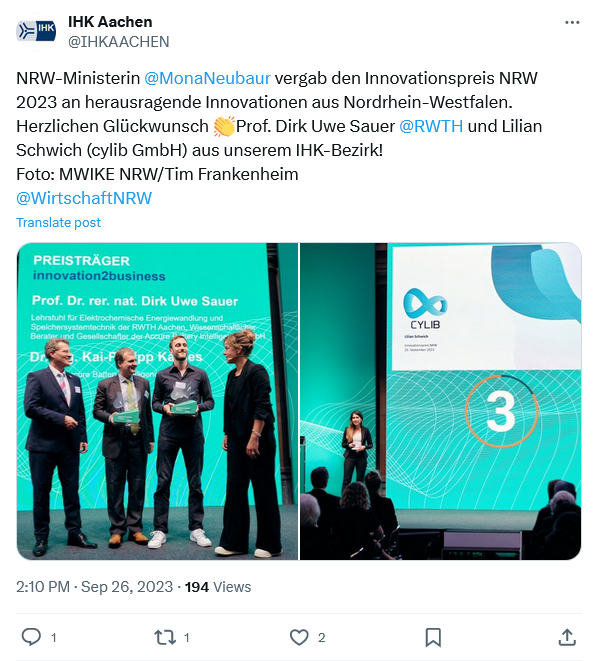
Sauer had to step down as EiC, but here he receives a €50k Innovation Award 2023 from the industry minister of the state North Rhine-Westphalia for his innovations in Iranian papermilling, erm, pardon, in smart battery business.
Elsewhere, but not at Elsevier, Tlili and his buddy Karimipour suffered retractions. Here at Emerald, a retraction for plagiarism:
“It has come to our attention that there are concerns regarding the authorship of the paper and that the peer review process was compromised. Portions of the article are also taken, without attribution,”
Note that Cheng insists his peer review worked fine and can’t be arsed to check his 9 Tlili papers for plagiarism.
A lengthy and labour-intensive process
Another German Editor-in-Chief with a fondness for papermills. I reported to Dirk Weuster-Botz, professor for biochemical engineering at the elite university TU Munich and Editor-in-Chief of the Springer Nature journal Bioprocess and Biosystems Engineering (BPBSE), the following abomination:
The title is already stupid enough. The paper cites retracted papermill forgeries, but not only. Please enjoy the Introduction (best sentence highlighted):
“As a novel type of widely used mineral particles [1], metal–organic framework [2] and metallic nanoparticles [3,4,5] such as zinc oxide were noticed and explored by researchers due to their suitable mechanical [6, 7], physical [8, 9] and chemical properties [10,11,12,13] that are combined with a higher adsorption power than other zinc-containing compounds [14, 15]. Zinc oxide is one of the compounds of zinc that was recognized as a safe substance by the US Department of Food and Drug Administration [16]. The properties of nanostructures led to their various applications such as anticancer [17, 18], tissue engineering [19,20,21], antimicrobial [22, 23], degradation [24], photocatalyst [25,26,27,28,29], antioxidant [30], sensor [31,32,33,34,35,36], sensing [37,38,39], agriculture [40,41,42], absorption [43], purification [44, 45], energy [46,47,48,49], anti-inflammatory therapy [50], food analysis [51], and drug carriers [52,53,54]. Among the notable properties of zinc oxide nanoparticles, one can point out their high chemical stability, low dielectric constant, high catalytic activity, absorption of infrared and ultraviolet light, and most importantly their antibacterial properties [55]. Confirming the therapeutic and toxic effects of these compounds can stand as a significant step throughout the advancements of cancer [56,57,58,59,60,61,62,63] and fungal/bacterial infection disease [64,65,66] treatments [67,68,69] such as COVID 19 [70, 71]. The primary prevention of infection [72,73,74] and cancers’ diseases [75,76,77], new development in research [78,79,80] and innovation [81,82,83,84], such as nanotechnology [85, 86], materials [87,88,89] and digital technologies [90], have the need to improve our understanding of diseases [91,92,93] such as cancer [94,95,96,97]. In fact, recent developments [98] in all field of science [99,100,101] and technology [102,103,104] have impact on human health [105,106,107,108] and life [109,110,111,112].“
It’s the most ridiculous citation vehicle a papermill ever published, seems to be the speciality of the lead author Fuad Ameen from King Saud University in Saudi Arabia (see also Ameen 2022). Of course the references make no sense either, random papers by whoever paid. This was however Weuster-Botz’s reply (translated):
“The editor’s task is to organize the review process. If the reviewers recommend a revised manuscript for publication, this is also done without any further examination of the manuscript’s content. Otherwise, no scientist would bother to review manuscripts for this journal anymore. I would also be happy to forward your request to the authors.“
Obviously no proper peer review took place there, but Weuster-Botz seemed content, just like his colleague Cheng above. Alexander Magazinov found a similar piece of trash in that journal, an Iranian papermill product with nonsense citations. Including a huge list of references (often in blocks) to a certain papermill buyer Yu-Ming Chu. All of them on mathematics, totally unrelated to the paper, and two of these references were already retracted:
I was not convinced the peer review works at BPBSE, and also about Weuster-Botz’ own role as EiC, so he explained:
Weuster-Botz, expert on correct referencing. Photo: Twitter
“I understand from your emails that you are apparently not very familiar with the scientific review process of manuscripts and the role of editors in scientific journals.
As an editor, I invest a lot of time in my task (4-5 hours per week) and do not “sell my name or affiliation” to the publisher Springer.
About 70% of submitted manuscripts cannot be published in BPBSE after going through the multi-stage review process. And even the published manuscripts usually have to be revised several times by the authors according to the reviewers’ comments. In the end, there can still be a final rejection of the manuscript. This is a lengthy and labor-intensive process for both reviewers and authors.“
Wait what? If these bizarre papermill fabrications are seen as peer-reviewed quality science, personally approved by Weuster-Botz apparently, what does his journal reject then? Anything resembling actual research? Or Cheng’s journal, for that matter? Is the peer review process all about extorting masses of nonsense citations?
An alternative image is provided
In 2021, US plant scientist Natasha Raikhel , emeritus professor at University of California Riverside, wrote in an email:
“You can be assured that neither I nor any of my colleagues are aware or would tolerate any data manipulation. I and the people in my lab were always very careful and 90% of the time every blot was run by two different people and independently confirmed.“
Since then, Raikhel proved to have rather high tolerance to data manipulation by issuing problematic corrections. Here is the most recent one, issued together with a German co-author – Karin Schumacher, Vice-rector for Quality Development at the University of Heidelberg with a PubPeer record of her own:
The Correction was published on 21 September 2023:
“After concerns were raised by readers regarding some SYP51-CFP immunoblot features in Fig. 1A, the authors were unable to retrieve the original image after 13 years of publication for validation; therefore, an alternative image is provided in the revised Fig. 1. The authors, in addition, have provided in Fig. 1B (iii, iv) control images for immuno-negative staining that were not included in the original publication.”
Aneurus Inconstans wondered:
“I cannot help but notice that in corrected Figure 1A the upper blot was replaced, whilst the middle and lower blots remained the same but also replaced with versions of better resolution. […] where does the replacement come from? Did the authors performed a completely new experiment, or did they retrieve an second try from the past?“
Maybe they just made it up. This was corrected in 2021, and I show you just SOME of the problems with that awful paper:
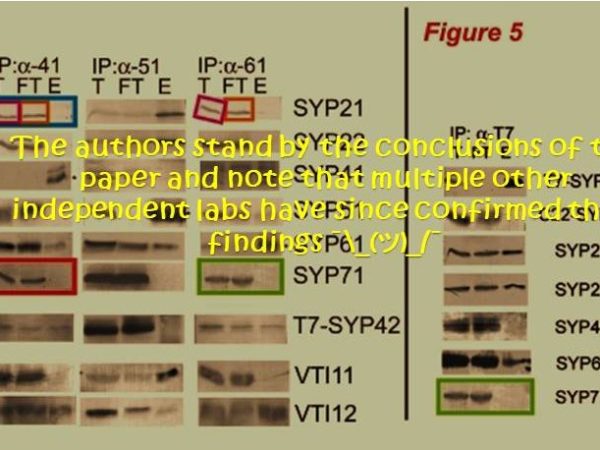
“The authors […] wish to note errors in their paper. Several mistakes in the assembly of Figure 4 resulted in the duplication of bands that were actually from Figure 5. Unfortunately, due to the length of time since publication, retirement of the corresponding author and one other author (N.V.R. and V.K.) and all of the authors no longer at the site of the work since the time of publication, the primary data are no longer available to support correction of the figure. The authors stand by the conclusions of the paper and note that multiple other independent labs have since confirmed their findings using independent reagents or mass spectroscopy (Yano et al., 2003; Niiharma et al., 2005; Ebine et al., 2008; Kato et al., 2010; El Kasmi et al., 2013; Fujiwara et al., 2014; Takemoto et al., 2018). The authors regret the errors and apologize to the community.”
They couldn’t be even arsed to replace the duplicated gel bands with some new fabrications, pardon, “alternative images”. Just like for another 2021 Correction, for Rosado et al 2010, because “primary data and materials relevant to this work are no longer available” and “the results presented in Supplemental Figures 6 panels B and C do not affect, change, or interfere with any of the other findings and conclusions presented in the manuscript.” So it is a sign of progress that Raikhel et al now have to at least pretend to have done the experiments as described.
Until 6 years later
It took Spandidos merely 6 years from Elisabeth Bik‘s notification in 2017 to retraction:
It is a product of a Chinese papermill, papers with similar-styled “flaw cytometry” were already retracted. Smut Clyde, who even wrote an article about this mill, said on X/Twitter:
“It helped that the papermillers were so proud of their hand-stippled scatterplots that they used them again & again in literally dozens of papers. Showing complete (arguably well-earned) contempt for the journals’ editors & reviewers.“
“Following the publication of this paper, it was drawn to the Editor’s attention by a concerned reader that, for the flow cytometric experiments shown in Fig. 4A on p. 2352, the images selected for the FasL‑ and FasL+ experiments were strikingly similar. Moreover, it appeared that various of the data shown in this figure, and western blotting data shown in Fig. 3A, were strikingly similar to data that had appeared in different form in different articles published by different authors at different research institutes. Owing to the fact that some of the data in the above article had already been published, or were under consideration for publication, prior to its submission to Experimental and Therapeutic Medicine, the Editor has decided that this paper should be retracted from the Journal. The authors were asked for an explanation to account for these concerns, but the Editorial Office did not receive a reply. The Editor apologizes to the readership for any inconvenience caused.”
Bik said:
“I reported the concerns noted above in #1 and #2 to the journal in September 2017, while the retraction did not happen until 6 years later.“
Science Breakthroughs
How far you go in school
A press release by the Stanford University which was picked up by various news outlets informs us that “DNA of your peers may influence your own educational attainment“. It is a continuation of the eugenics classic that children of professors, doctors, lawyers and other wealthy educated elites are genetically superior to proletarian children.
“While there’s scientific evidence to suggest that your genes have something to do with how far you’ll go in school, new research by a team from Stanford and elsewhere says the DNA of your classmates also plays a role.
“We examined whether the genes of your peer groups influenced your height, weight or educational attainment. We didn’t find a correlation to height or weight, but did find a small one with how far you go in school,” says Ben Domingue, assistant professor at Stanford Graduate School of Education and first author of the new paper, published online Jan. 9 in Proceedings of the National Academy of Sciences.
The link can be explained by what researchers call social genetic effects, when the health or behavior of one individual is affected by the genes of another. The effect shows up, recent research on mice has found, with roommates, as well.”
The eugenics study was possibly rejected by other journals for being garbage. So it ended up in PNAS by bypassing proper peer review, “contributed” by National Academy of Sciences member Kathleen Mullan Harris:
Benjamin W. Domingue, Daniel W. Belsky , Jason M. Fletcher , Dalton Conley , Jason D. Boardman , Kathleen Mullan Harris The social genome of friends and schoolmates in the National Longitudinal Study of Adolescent to Adult Health Proceedings of the National Academy of Sciences (2018) doi: 10.1073/pnas.1711803115
From the abstract:
“In a national sample of more than 5,000 American adolescents, we found evidence of social forces that act to make friends and schoolmates more genetically similar to one another compared with random pairs of unrelated individuals. This subtle genetic similarity was observed across the entire genome and at sets of genomic locations linked with specific traits—educational attainment and body mass index—a phenomenon we term “social–genetic correlation.” We also find evidence of a “social–genetic effect” such that the genetics of a person’s friends and schoolmates influenced their own education, even after accounting for the person’s own genetics.”
The Stanford press release references an earlier PNAS paper on eugenics, Nicholas A. Christakis & James H. Fowler 2014, which proved that “inter-racial” friendships are against not only God, but also against nature: “friends share similar genes (they can be as genetically close as fourth-cousins […]).”
Now you know why many white parents seek out for their kids white schools without Blacks and foreigners. They are just following the science of eugenics, pardon, genetics! And you see, the good old segregated schools of the good old Jim Crow times were actually scientifically founded!
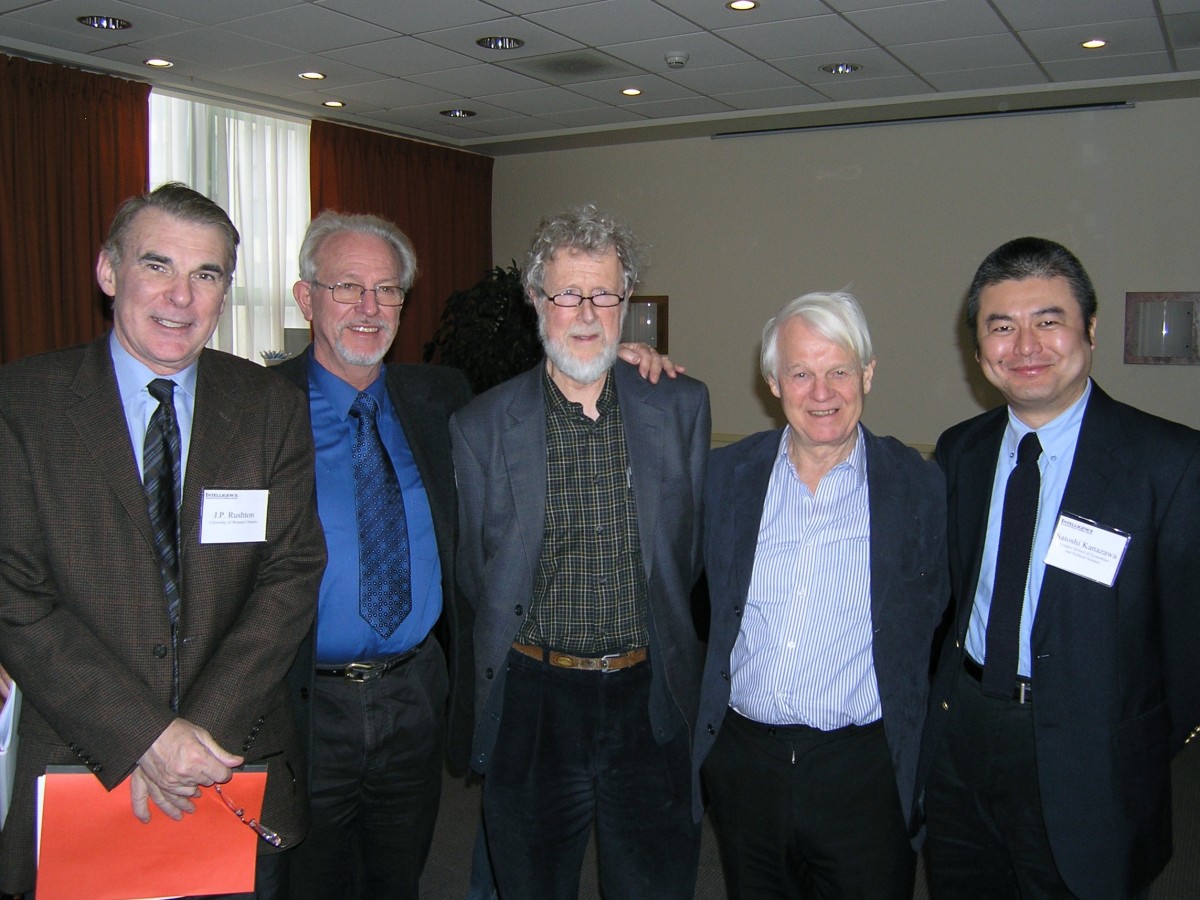
Outright racism and misogyny became rare in academia, eugenics and bigotry lurk these days not in Mankind Quarterly but in respected journals, wrapped in fancy genetics and neuroscience. Meet one of the last of the old school racist IQ psychologists, Satoshi Kanazawa.
Our talkative Dr Avila-Costa replied:
“Those photomicrographs were edited because we did not have good ones at the time we are sending the article, but, again, if you read the article, the intention was to show the postsynaptic perforations, which we found many in the experimental group. Figure 2 is just to show how perforated synapses look, I use the same photo in a chapter, thus it was not permitted to use the same photo, that was just illustrative, the 4a and 4b micrographs were also used in another publication that is why I edited them, but the main finding, the perforated synapses was not edited at all. The micrographs that you mention are showing damaged neuropil (4b) or the control tissue (4a).“
Kaveh Bazargan is certainly working on animations. Although photoshopping is painfully obvious (and the argument of the main author really surprising).
I’m not being serious, it would just be a funny animation… 😁 The argument is surprising from the perspective of how silly it is, but pretty routine for a PubPeer response sadly.
Wonder what the reason is behind the superconducting friendly fire…
Maybe an attempt to escape unscathed after it’s becoming obvious that there would be consequences in addition to the retractions. After all, they have received at least few M$ for their unearthly start-up.
Given the normal life cycle of graduate students and post-docs, it looks like the whole Dias gang were caught in his net of fakery with nowhere to run. We should at least admire their willingness to own up to the truth as oppose to trying to Trump it out to the last buck.
That’s the whole point, it’s not admirable at all. There’s too much water in the ship therefore the rats need to save themselves. They were all behind the great captain during the first retracted paper. And now run for your careers…




















 For Better Science
“In another post, she proudly admitted to have personally created this image:”
Actually Dr Avila-Costa proudly admitted she manupulated images of another paper, this one:
https://pubpeer.com/publications/A2028D85822430C43FD65B3D1C3C28
These are the issues:
Our talkative Dr Avila-Costa replied:
“Those photomicrographs were edited because we did not have good ones at the time we are sending the article, but, again, if you read the article, the intention was to show the postsynaptic perforations, which we found many in the experimental group. Figure 2 is just to show how perforated synapses look, I use the same photo in a chapter, thus it was not permitted to use the same photo, that was just illustrative, the 4a and 4b micrographs were also used in another publication that is why I edited them, but the main finding, the perforated synapses was not edited at all. The micrographs that you mention are showing damaged neuropil (4b) or the control tissue (4a).“
LikeLike
I MISSED THAT!!!
LikeLike
Incredible, she admitted “photoshopping” images as if it was a completely normal practice.
LikeLike
But it is.
LikeLike
Figure 2C is certainly a legendary contribution to manipulated electron microscopy images. Has anyone tried to make the animation yet?
LikeLike
Kaveh Bazargan is certainly working on animations. Although photoshopping is painfully obvious (and the argument of the main author really surprising).
LikeLike
I’m not being serious, it would just be a funny animation… 😁 The argument is surprising from the perspective of how silly it is, but pretty routine for a PubPeer response sadly.
LikeLike
This book states that Shaker Mousa was at Albany.
https://books.google.co.uk/books/about/Anti_Angiogenesis_Strategies_in_Cancer_T.html?id=tHfvjwEACAAJ&source=kp_author_description&redir_esc=y
LikeLike
Unfaked fakery, phantom professors….Who you gonna believe?
LikeLike
Wonder what the reason is behind the superconducting friendly fire…
Maybe an attempt to escape unscathed after it’s becoming obvious that there would be consequences in addition to the retractions. After all, they have received at least few M$ for their unearthly start-up.
LikeLiked by 1 person
Rats, sinking ship, you know
LikeLiked by 1 person
Given the normal life cycle of graduate students and post-docs, it looks like the whole Dias gang were caught in his net of fakery with nowhere to run. We should at least admire their willingness to own up to the truth as oppose to trying to Trump it out to the last buck.
LikeLike
Salamat is still ok with scamming Unearthly Materials investors.
https://www.unearthlymaterials.com/about
And Dias writes about himself:
“Driven by a lifelong obsession with superconductors, Ranga Dias has left an indelible mark on the field of physics. His ground-breaking discoveries include metallic hydrogen and room-temperature superconductivity, two of the top three “holy grails” in physics. ”
The metallic hydrogen, which disappeared forever as soon as someone asked to see it, was published by Dias & Silvera in Science.
https://pubpeer.com/publications/EA2E65E4B21F1D84CF320415A5D867
You know, the same journal which now pretends to be the one having uncovered the Dias fraud in Nature.
https://www.science.org/content/article/another-retraction-looms-embattled-physicist-behind-blockbuster-superconductivity
LikeLike
Difficult not to misread the above as, “has left an inedible mark,” aka pooped.
LikeLiked by 1 person
That’s the whole point, it’s not admirable at all. There’s too much water in the ship therefore the rats need to save themselves. They were all behind the great captain during the first retracted paper. And now run for your careers…
LikeLiked by 1 person