

Stephen P Jackson, Cambridge University professor and a major heavyweight in the field of DNA damage and cancer research worldwide, has trouble with another former postdoc. This time, Jackson Lab papers by Abdeladim Moumen were flagged on PubPeer. The man owns a biotech startup which currently provides all Morocco with proprietary COVID-19 kits.
The evidence in Moumen & Johnson papers, as flagged by Clare Francis, is heavy, and it looks like the second case of serious data falsification in the famous Cambridge lab.
In September 2018, I published the leaked news about the investigations into research fraud and bullying committed by Jackson’s former postdoc, Abderrahmane Kaidi. The University of Bristol sacked its lecturer, according to the documents I published later on it was over bullying of Kaidi’s lab members. Two papers from the Jackson lab were retracted in April 2019, one in Nature (Kaidi and Jackson 2013) and one in Science (Kaidi et al 2010), following an investigation by the University of Cambridge, which was referenced in a retraction notice:
“The investigation concluded that the first author, Abderrahmane Kaidi, was responsible for the falsification of the data.”
Now same story, different postdoc?
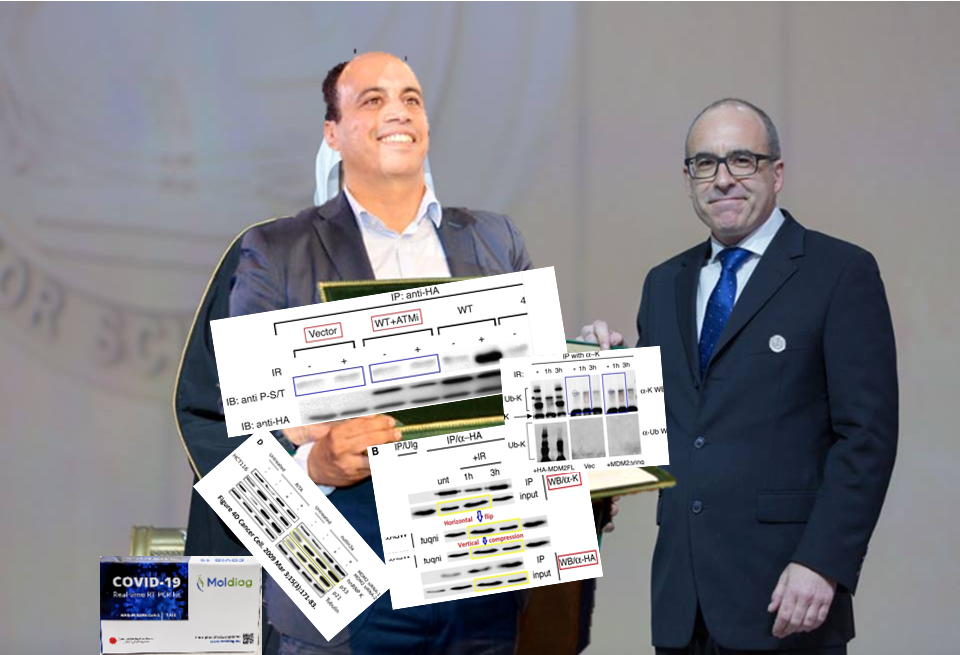
The common lead author on the 3 papers from Jackson lab I will discuss below is Abdeladim Moumen. The Moroccan native did his PhD in the lab of Henri Buc at the Institut Pasteur in Paris, after his postdoc stint with Jackson Moumen became associate professor at the St George’s University in London, and in 2012 he returned to Morocco to works as a research director at the Moroccan Foundation for Advanced Science, Innovation and Research (MAScIR). Moumen also founded a MAScIR biotech spin-off, Moldiag, here its advertisement:
A success story, nothing to be ashamed of. And yet Moumen is not present in the group photo from 2017 Jackson Lab Reunion meeting, but Kaidi is grinning in the front, third to our left from Jackson (as disclaimer: also my ex-boss from Milan is there, second row right behind Jackson).
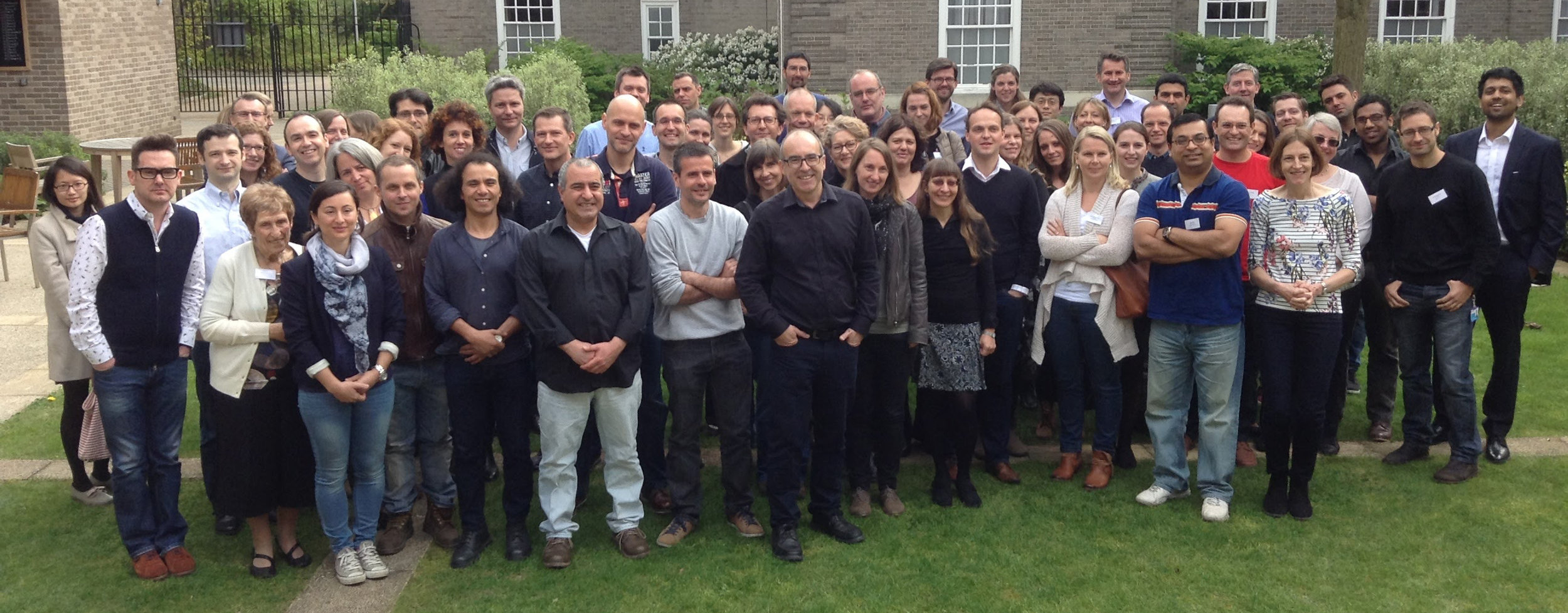
Strange. Jackson lab reunions are big events sponsored by pharma industry like Astra Zeneca (who purchased Jackson’s company KuDOS) and a matter of huge prestige for all invited. If they are invited, that is. Jackson explained to me in an email:
“If I remember correctly, Professor Moumen was invited to the reunion event, but was unable to attend.“
Last year, Moumen’s company Moldiag produced a COVID-19 testing kit, the only one made in Morocco. For some reason, the governmental authorities were slow in approving those kits, which was presented as a scandal in local media. The oversight was swiftly fixed, in November 2020 Moldiag supplied the Moroccan public sector with a million of kits, and an advanced version was immediately approved. The company’s CEO Moumen was quoted:
“The Covid-19 test was developed by the team at the Mascir medical biotechnology center in three weeks thanks to the experience accumulated over the past 10 years. In 2 months, we had a test ready and validated by Moroccan and foreign laboratories“.

I now wish to reassure everyone in Morocco that Moumen’s COVID-19 must be 1000% reliable, as his previous research from the Jackson lab proves. Like this Cell paper:
Abdeladim Moumen, Philip Masterson, Mark J. O’Connor, Stephen P. Jackson hnRNP K: an HDM2 target and transcriptional coactivator of p53 in response to DNA damage Cell (2005) doi: 10.1016/j.cell.2005.09.032


Wow. Look at all these fake western blots, with their cloned gel bands, recycled several times! Is anything at all in that Cell paper which is not fake? There is even more, look at this dance of the fake gel bands:


Did you notice that some data from the 2005 paper was reused in a different Cell press publication four years later, with Jackson and Moumen as co-authors? That was done in collaboration with Galina Selivanova in Sweden, a Karolinska Institutet professor who was in 2016 subject to a misconduct investigation (as I previously reported), which ended with full acquittal for all 9 Karolinska professors involved.
Selivanova has 7 papers flagged on PubPeer, four received Errata declaring that these “do not change the validity of the data nor the conclusions from the experiments“. Also the following 2009 Jackson-Moumen collaboration was corrected right when it was first published, because “In the right panel of Figure 6A of this article, the splicing from non-neighboring lanes was not indicated“.
Martin Enge, Wenjie Bao, Elisabeth Hedström, Stephen P. Jackson, Abdeladim Moumen, Galina Selivanova MDM2-dependent downregulation of p21 and hnRNP K provides a switch between apoptosis and growth arrest induced by pharmacologically activated p53 Cancer Cell (2009) doi: 10.1016/j.ccr.2009.01.019
Which in Elsevier’s corporate philosophy means there is no need to declare that a blot in Figure 4D was recycled from a different paper where it showed something else. The paper has even more issues. Two years ago, this evidence was posted:


Selivanova commented on PubPeer, also 2 years ago:
“We acknowledge the lane splicing in Fig4B and offer to inform the journal about this, so that they can decide whether to offer a correction, in which the lanes are separated by a line.
- In regard to the potential duplication of images, we acknowledge that there are similarities between the images. Unfortunately, because of the people’s mobility between different jobs and countries since 2008, we no longer have access to the original data. Therefore we are unable to conclude if these are distinct blots or were the same with one being inadvertently mislabeled. We apologize for this.
- Whatever the case, the induction of p53 and p21 by nutlin shown in Fig 4D have been observed by us and numerous other labs over many years, and these blots confirm what are well established facts about the p53/p21 response. Thus, whatever the case with the potential relatedness between the images, this does not alter the conclusion of our studies.“
Because Selivanova was previously absolved in full by a Karolinska investigation, and the Elsevier journal Cancer Cell did not see the need to issue a second correction, the data manipulation was legalized. Retraction is not an option for a Cell press journal (read here and here).
The case is closed, forever and for all eternity, so I suppose Clare Francis shouldn’t have bothered submitting this new evidence, of the blots recycled from a Moumen-Jackson Cell 2005 paper, and also this:

Four figures at least in that Selivanova-Jackson copro-duction are manipulated. Expect exactly nothing from the publisher.
But let’s have a look at a third paper Moumen authored in Jackson’s lab.
Abdeladim Moumen, Christine Magill, Katherine L Dry, Stephen P. Jackson ATM-dependent phosphorylation of heterogeneous nuclear ribonucleoprotein K promotes p53 transcriptional activation in response to DNA damage Cell Cycle (2013) doi: 10.4161/cc.23592


One fake western blot with cloned gel bands, one more manipulated gel figure where a lane was slapped on? Are the conclusions affected by this?
After a reminder email, Jackson replied to me announcing action:
“Thank you for your message below and for writing to me, making me aware of the recent PubPeer posts, which I had not seen before you brought them to my attention. I take issues of research integrity very seriously and shall of course review the concerns posted on PubPeer to establish whether there are any issues that need to be addressed.“
The Cambridge professor added:
“I have forwarded your email to the Director of the Gurdon Institute so that appropriate institutional due diligence can be undertaken.“
Moumen did not reply when contacted via LinkedIn.
Unsurprisingly, the shenanigans continued once Moumen set up his own lab in London:
Jogitha Selvarajah, Androulla Elia, Veronica A. Carroll, Abdeladim Moumen DNA damage-induced S and G2/M cell cycle arrest requires mTORC2-dependent regulation of Chk1 Oncotarget (2015) doi: 10.18632/oncotarget.2813

Before we end, here something else indirectly related to the Jackson Lab.
One of the most successful Jackson mentees is Simon Boulton, senior group leader at The Crick in London. This is from Boulton’s own lab:
J. Ross Chapman, Patricia Barral, Jean-Baptiste Vannier, Valérie Borel, Martin Steger, Antonia Tomas-Loba, Alessandro A. Sartori, Ian R. Adams, Facundo D. Batista, Simon J. Boulton RIF1 is essential for 53BP1-dependent nonhomologous end joining and suppression of DNA double-strand break resection Molecular Cell (2013) doi: 10.1016/j.molcel.2013.01.002

It looks like a falsified figure, where a gel was recycled in different experimental context. Luckily it’s Cell Press again, which closes the case before it can be opened.
The article was updated on 5.04.2021 to include additional evidence of data manipulation.
Donate!
If you are interested to support my work, you can leave here a small tip of $5. Or several of small tips, just increase the amount as you like (2x=€10; 5x=€25). Your generous patronage of my journalism will be most appreciated!
€5.00

 For Better Science
Data Figure 8C Nucleic Acids Res. 2004; 32(18): 5553–5569 much more similar and different to data in J Virol. 2003 Apr; 77(7): 4315–4325 than expected.
FYI:
J Virol . 2003 Apr;77(7):4315-25. doi: 10.1128/jvi.77.7.4315-4325.2003.
CK2 Protein Kinase Is Stimulated and Redistributed by Functional Herpes Simplex Virus ICP27 Protein
Maria D. Koffa,1,† Joy Kean,1 George Zachos,2 Stephen A. Rice,3 and J. Barklie Clements1,*
Author information
Institute of Virology, University of Glasgow, Glasgow G11 5JR,1 Beatson Laboratories, University of Glasgow,
Glasgow G61 1QH, Scotland, United Kingdom,2 Department of Microbiology, University of Minnesota Medical
School, Minneapolis, Minnesota 554553
*Corresponding author. Mailing address: Institute of Virology, University of Glasgow, Church St., Glasgow, G11 5JR Scotland, United Kingdom. Phone: 44-141-330-4027. Fax: 44-141-337-2236. E-mail: ku.ca.alg.riv@stnemelc.b.
†Present address: Gene Expression Programme, European Molecular Biology Laboratory, D-69117 Heidelberg, Germany.
LikeLike
J Virol. 2001 Mar; 75(6): 2710–2728 continued.
Figures 6E and 6F. Much more similar and different than expected.
LikeLike
J Virol. 2001 Mar; 75(6): 2710–2728.
doi: 10.1128/JVI.75.6.2710-2728.2001
PMCID: PMC115896
PMID: 11222695
Herpes Simplex Virus Type 1 Blocks the Apoptotic Host Cell Defense Mechanisms That Target Bcl-2 and Manipulates Activation of p38 Mitogen-Activated Protein Kinase To Improve Viral Replication
George Zachos,1,2,† Margy Koffa,1 Chris M. Preston,3 J. Barklie Clements,1 and Joe Conner2,*
Author information
Institute of Virology, University of Glasgow,1 and MRC Virology Unit, Institute of Virology,3 Glasgow G11 5JR, and
School of Biological and Biomedical Sciences, Glasgow Caledonian University, Glasgow G4 0BA,2 United Kingdom
*Corresponding author. Mailing address: School of Biological and Biomedical Sciences, Glasgow Caledonian
University, Cowcaddens Rd., Glasgow G4 0BA, United Kingdom. Phone: (44 141) 331 3219. Fax: (44 141) 331
3208. E-mail: J.Conner@gcal.ac.uk
†Present address: CRC Beatson Institute for Cancer Research, Glasgow G61 1BD, United Kingdom.
Problematic data. Much more similar than expected.
Figures 1B and 1C.
Figures 2A and 2C.
Figure 4.
LikeLike
J Virol. 2001 Mar; 75(6): 2710–2728 continued.
Figure 3B. Much more similar and different than expected.
Figure 2A. Much more similar and different than expected.
Figure 1D. Much more similar than expected.
Figure 2. Much more similar and different.
LikeLike
From the published record I understand that John Barklie Celements “passed” in 2005.
https://pubpeer.com/publications/BCE5F8FADDAE33607C9EC30F00AE3D#6
https://www.deepdyve.com/lp/springer-journals/in-memoriam-john-barklie-clements-1946-2005-Fr9K4Q1SOc
The two highly problematic papers, the first in 2001 (J Virol. 2001 Mar; 75(6): 2710–2728) and the second in 2004 (Nucleic Acids Res. 2004 Oct 14;32(18):5553-69), make me think of two articles, which have appeared on this site:-
https://forbetterscience.com/2017/11/27/how-irun-cohen-and-weizmann-institute-almost-cured-diabetes/
” while Ofer Lider, associate professor of Immunology at Weizmann, was dying from leukaemia, his dedicated colleagues were apparently secretly stuffing manipulated data into his publications. ”
“What was done to the scientific and human legacy of the immunologist Ofer Lider, is the basically academic equivalent of urinating of someone’s literal grave.”
and
https://forbetterscience.com/2018/07/04/another-dead-scientist-framed-with-manipulated-data/
“On 7 April 2010 the Spanish diabetes researcher Margarita Lorenzo, Professor of Biochemistry at the Complutense University in Madrid, died of metastatic melanoma, aged only 51. Two months after her death, Lorenzo’s colleagues submitted a paper to the journal Diabetes (published by American Diabetes Association), which was accepted for publication 4 weeks later.”
“While she was dying of cancer, her colleagues advanced their careers using her reputation, using their own disreputable Photoshop skills.”
It seems that John Barklie Clements was highly regarded in his field, yet a highly problematic paper (where he was senior author, there being only 2 authors) was published the year before he died, and another highly problematic paper was published (where he is penultimate author) was published 4 years before he died.
I do wonder if the 2 articles which have appeared on this site offer “mechanistic insight” into the 2 problematic John Barklie Clements papers. History tells what has happened. Just as there is “unity of biology” there is “unity of human behaviour”.
The extant authors could help disprove this hypothesis:
The data in J Virol. 2001 Mar; 75(6): 2710–2728 and Nucleic Acids Res. 2004 Oct 14;32(18):5553-69 individually are uncommonly similar
FYI:-
First highly problematic paper.
J Virol. 2001 Mar; 75(6): 2710–2728.
doi: 10.1128/JVI.75.6.2710-2728.2001
PMCID: PMC115896
PMID: 11222695
Herpes Simplex Virus Type 1 Blocks the Apoptotic Host Cell Defense Mechanisms That Target Bcl-2 and Manipulates Activation of p38 Mitogen-Activated Protein Kinase To Improve Viral Replication
George Zachos,1,2,† Margy Koffa,1 Chris M. Preston,3 J. Barklie Clements,1 and Joe Conner2,*
Author information
Institute of Virology, University of Glasgow,1 and MRC Virology Unit, Institute of Virology,3 Glasgow G11 5JR, and
School of Biological and Biomedical Sciences, Glasgow Caledonian University, Glasgow G4 0BA,2 United Kingdom
*Corresponding author. Mailing address: School of Biological and Biomedical Sciences, Glasgow Caledonian
University, Cowcaddens Rd., Glasgow G4 0BA, United Kingdom. Phone: (44 141) 331 3219. Fax: (44 141) 331
3208. E-mail: J.Conner@gcal.ac.uk
†Present address: CRC Beatson Institute for Cancer Research, Glasgow G61 1BD, United Kingdom.
Pubpper record for this paper: https://pubpeer.com/publications/C8355EB31AA9094B285775C81813E5
Second highly problematic paper.
Nucleic Acids Res. 2004 Oct 14;32(18):5553-69. doi: 10.1093/nar/gkh876. Print 2004.
Protein kinase CK2 phosphorylation regulates the interaction of Kaposi’s sarcoma-associated herpesvirus regulatory protein ORF57 with its multifunctional partner hnRNP K
Poonam Malik 1, J Barklie Clements
Affiliation
1Division of Virology, Institute of Biomedical and Life Sciences, University of Glasgow, Church Street, Glasgow, G11 5JR, Scotland, UK.
PMID: 15486205 PMCID: PMC524287 DOI: 10.1093/nar/gkh876
Pubpper record for this paper: https://pubpeer.com/publications/BCE5F8FADDAE33607C9EC30F00AE3D
LikeLike
J Biol Chem. 2003 May 2;278(18):15973-82. doi: 10.1074/jbc.M212306200. Epub 2003 Feb 20.
Evidence for a mechanism of recombination during reverse transcription dependent on the structure of the acceptor RNA
Abdeladim Moumen 1, Lucette Polomack, Torsten Unge, Michel Véron, Henri Buc, Matteo Negroni
Affiliation
1
Unité de Regulation Enzymatique des Activités Cellulaires, CNRS-FRE 2364, Département de Biologie Structurale et Chimie and CNRS-URA 1960, Institut Pasteur, 25-28 rue du Docteur Roux, 75724 Paris cedex 15, France.
PMID: 12595540 DOI: 10.1074/jbc.M212306200
Problematic data figure 4. Much more similar than expected.
Figure 4Primer extension assays. Denaturing polyacrylamide gel analysis of primer extension products. A, synthesis of DNA was initiated specifically on the dG1Eb RNA in the absence (1–4) or in the presence of an equimolar amount of either aG1Eb (5–8) or aE2 templates (9–12) as acceptor RNA. B, DNA synthesis was primed on dE2 in the absence (1–5) or the presence of either aG1Eb (6–10) or aE2 (11–15). The reactions were terminated at different incubation times: 1, 3, 10, and 30 min (A) and 1, 3, 5, 10, and 30 min (B). The position of the pause site on the sequence corresponding to SL is shown ingray. The drawings at the bottom schematically indicate which donor and acceptor RNA templates were employed in the assays shown above, using the same representation as in Fig. 3.
LikeLike
Galina Selivanova on PubPeer.
https://pubpeer.com/publications/F5D947C61E8B23CCD1EB716E4A1059#13
” We decided to perform a new experiment for the Figure 4D in my lab in Stockholm (the previous experiment has been performed in S Jackson’s lab in Cambridge). We performed Nutlin treatment of HCT116 cells with MDM2 depleted or not by two different siRNAs and performed immunoblotting for p53 and p21. Please see below the new western blot clearly showing that p21 is induced upon Nutlin treatment with or without MDM2 knockdown.”

The three panels can never show the same gel, for each lane, the band shapes and width do not match. It is two or maybe three separate gels, the p21 gel is definitely a separate one. This suggests either that a) Prof Selivanova engages in questionable research practices or b) she has absolutely no clue how to do simple experiments properly. In either case, I am not sure what use any of her research is.
LikeLike
“Abdeladim Moumen, Philip Masterson, Mark J. O’Connor, Stephen P. Jackson hnRNP K: an HDM2 target and transcriptional coactivator of p53 in response to DNA damage Cell (2005) doi: 10.1016/j.cell.2005.09.032”
AstraZeneca lapped it all up. What a laugh!
https://www.astrazeneca.com/our-company/our-people/mark-o-connor.html
“I head up the DNA Damage Response (DDR) biology area within AstraZeneca’s IMED Biotech Unit and am the science lead for the company’s broader DDR franchise.”
“In 1999, I returned to the UK to take up a position as one of the three science team leaders at KuDOS, a spin-out biotech company based on the work of Professor Steve Jackson at Cambridge University.”
“As well as being a named inventor on multiple patents, I have a strong publication record, many of which have come through close external collaborations, that include peer reviewed publications in Cell, Cancer Cell, Cancer Discovery, Molecular Cell, Nature Cell Biology, Journal of Clinical Oncology and the New England Journal of Medicine.”
Speaks volumes about peer review.
“Featured publications
hnRNP K: an HDM2 target
hnRNP K: an HDM2 target and transcriptional coactivator of p53 in response to DNA damage. Moumen A1, Masterson P, O’Connor MJ, Jackson SP. Cell 2005 16: 123(6):1065-78.”
LikeLike
Mol Cancer Ther. 2017 Apr;16(4):566-577. doi: 10.1158/1535-7163.MCT-16-0378. Epub 2017 Jan 30.
AZD6738, A Novel Oral Inhibitor of ATR, Induces Synthetic Lethality with ATM Deficiency in Gastric Cancer Cells
Ahrum Min 1 2, Seock-Ah Im 3 2 4, Hyemin Jang 1, Seongyeong Kim 1, Miso Lee 1, Debora Keunyoung Kim 5, Yaewon Yang 1 4, Hee-Jun Kim 1 6, Kyung-Hun Lee 1 2 4, Jin Won Kim 1 7, Tae-Yong Kim 1 2 4, Do-Youn Oh 1 2 4, Jeff Brown 8, Alan Lau 9, Mark J O’Connor 9, Yung-Jue Bang 1 2 4
Affiliations
1Cancer Research Institute, Seoul National University, Seoul, Korea.
2Biomedical Research Institute, Seoul National University Hospital, Seoul, Korea.
3Cancer Research Institute, Seoul National University, Seoul, Korea. moisa@snu.ac.kr.
4Department of Internal Medicine, Seoul National University College of Medicine, Seoul, Korea.
5Rice University, Houston, Texas.
6Department of Internal Medicine, Chung Ang University College of Medicine, Seoul, Korea.
7Department of Internal Medicine, Seoul National University Bundang Hospital, Seongnam, Korea.
8AstraZeneca R&D Boston, Waltham, Massachusetts.
9AstraZeneca UK Ltd., Macclesfield, Cheshire, United Kingdom.
PMID: 28138034 DOI: 10.1158/1535-7163.MCT-16-0378
Figure 5A. Much more similar than expected.
LikeLike
Apologies I made a terrible mistake.
Figure 5A refers to this paper and involves many more people:
Problematic data figure 5A. Much more similar than expected.
See: https://imgur.com/91xe4No
Breast Cancer Res. 2015 Mar 7;17:33. doi: 10.1186/s13058-015-0534-y.
Histone deacetylase inhibitor, suberoylanilide hydroxamic acid (SAHA), enhances anti-tumor effects of the poly (ADP-ribose) polymerase (PARP) inhibitor olaparib in triple-negative breast cancer cells
Ahrum Min 1 2, Seock-Ah Im 3 4 5, Debora Keunyoung Kim 6, Sang-Hyun Song 7, Hee-Jun Kim 8 9, Kyung-Hun Lee 10 11 12, Tae-Yong Kim 13 14 15, Sae-Won Han 16 17 18, Do-Youn Oh 19 20 21, Tae-You Kim 22 23 24, Mark J O’Connor 25, Yung-Jue Bang 26 27 28
Affiliations collapse
Affiliations
1Cancer Research Institute, Seoul National University College of Medicine, Seoul, 110-799, Korea. mar6716@snu.ac.kr.
2Biomedical Research Institute, Seoul National University Hospital, Seoul, 110-799, Korea. mar6716@snu.ac.kr.
3Cancer Research Institute, Seoul National University College of Medicine, Seoul, 110-799, Korea. moisa@snu.ac.kr.
4Department of Internal Medicine, Seoul National University College of Medicine, Seoul, 110-799, Korea. moisa@snu.ac.kr.
5Biomedical Research Institute, Seoul National University Hospital, Seoul, 110-799, Korea. moisa@snu.ac.kr.
6Seoul International School, Seongnam, 461-830, Korea. deborak.98@gmail.com.
7Cancer Research Institute, Seoul National University College of Medicine, Seoul, 110-799, Korea. song1030@snu.ac.kr.
8Cancer Research Institute, Seoul National University College of Medicine, Seoul, 110-799, Korea. heejun.dino11@gmail.com.
9Department of Internal Medicine, Chung Ang University College of Medicine, Seoul, 156-755, Korea. heejun.dino11@gmail.com.
10Cancer Research Institute, Seoul National University College of Medicine, Seoul, 110-799, Korea. drleekh@gmail.com.
11Department of Internal Medicine, Seoul National University College of Medicine, Seoul, 110-799, Korea. drleekh@gmail.com.
12Biomedical Research Institute, Seoul National University Hospital, Seoul, 110-799, Korea. drleekh@gmail.com.
13Cancer Research Institute, Seoul National University College of Medicine, Seoul, 110-799, Korea. ktyongmd@gmail.com.
14Department of Internal Medicine, Seoul National University College of Medicine, Seoul, 110-799, Korea. ktyongmd@gmail.com.
15Biomedical Research Institute, Seoul National University Hospital, Seoul, 110-799, Korea. ktyongmd@gmail.com.
16Cancer Research Institute, Seoul National University College of Medicine, Seoul, 110-799, Korea. saewon1@snu.ac.kr.
17Department of Internal Medicine, Seoul National University College of Medicine, Seoul, 110-799, Korea. saewon1@snu.ac.kr.
18Biomedical Research Institute, Seoul National University Hospital, Seoul, 110-799, Korea. saewon1@snu.ac.kr.
19Cancer Research Institute, Seoul National University College of Medicine, Seoul, 110-799, Korea. ohdoyoun@snu.ac.kr.
20Department of Internal Medicine, Seoul National University College of Medicine, Seoul, 110-799, Korea. ohdoyoun@snu.ac.kr.
21Biomedical Research Institute, Seoul National University Hospital, Seoul, 110-799, Korea. ohdoyoun@snu.ac.kr.
22Cancer Research Institute, Seoul National University College of Medicine, Seoul, 110-799, Korea. kimty@snu.ac.kr.
23Department of Internal Medicine, Seoul National University College of Medicine, Seoul, 110-799, Korea. kimty@snu.ac.kr.
24Biomedical Research Institute, Seoul National University Hospital, Seoul, 110-799, Korea. kimty@snu.ac.kr.
25AstraZeneca UK Ltd, Macclesfield, Cheshire, SK10 2NA, UK. mark.j.occonnor@astrazeneca.com.
26Cancer Research Institute, Seoul National University College of Medicine, Seoul, 110-799, Korea. bangyj@snu.ac.kr.
27Department of Internal Medicine, Seoul National University College of Medicine, Seoul, 110-799, Korea. bangyj@snu.ac.kr.
28Biomedical Research Institute, Seoul National University Hospital, Seoul, 110-799, Korea. bangyj@snu.ac.kr.
PMID: 25888415 PMCID: PMC4425881 DOI: 10.1186/s13058-015-0534-y
LikeLike
https://retractionwatch.com/2023/05/09/retractions-should-not-take-longer-than-two-months-says-uk-parliament-committee/#more-127086
LikeLike
Breast Cancer Res. 2015 Mar 7;17:33. doi: 10.1186/s13058-015-0534-y.
Figure 5A. Much more similar than expected.
Figure 4A. Much more similar than expected.
LikeLike
Nat Commun. 2017; 8: 1392.
Published online 2017 Nov 9. doi: 10.1038/s41467-017-01401-x
PMCID: PMC5680267
PMID: 29123096
ATR kinase inhibition induces unscheduled origin firing through a Cdc7-dependent association between GINS and And-1
Tatiana Moiseeva,1 Brian Hood,2 Sandy Schamus,1 Mark J. O’Connor,3 Thomas P. Conrads,2 and Christopher J. Bakkenistcorresponding author1,4
Author information
1Department of Radiation Oncology, University of Pittsburgh School of Medicine, Hillman Cancer Center, Research Pavilion, Suite 2.6, 5117 Centre Avenue, Pittsburgh, PA 15213-1863 USA
2Inova Schar Cancer Institute, Inova Center for Personalized Health, Annandale, VA 22003 USA
3DNA Damage Response Biology, Innovative Medicines and Early Clinical Development, Little Chesterford, Saffron Walden, CB10 1XL, UK
4Department of Pharmacology and Chemical Biology, University of Pittsburgh, Pittsburgh, PA 15261 USA
Christopher J. Bakkenist, Email: bakkenistcj@upmc.edu
corresponding author
Figure 1d. Much more similar than expected.
LikeLike
Abdeladim Moumen, Philip Masterson, Mark J. O’Connor, Stephen P. Jackson hnRNP K: an HDM2 target and transcriptional coactivator of p53 in response to DNA damage Cell (2005) doi: 10.1016/j.cell.2005.09.032
Mark J O’Connor is penultimate author here:
PubPeer – Androgen Receptor Inhibitor Enhances the Antitumor Effect of…
LikeLike
Another Mark J O’Connor, England, problematic publication. Still no correction.
https://pubpeer.com/publications/70794BC33BF7457D7520183185C18B
LikeLike
Retraction, but Moumen declined to sign the retraction notice.
https://www.cell.com/cell/fulltext/S0092-8674(24)01156-5
LikeLiked by 1 person
Stephen Jackson has got the green light from the University of Cambridge.
3 retractions and you are in!
Loud and clear message. No ambiguity.
LikeLike
Festivities which delay retractíons in England.
“We can’t possibly do anything because it’s
the Easter holidays, the summer holidays, the Christmas holidays (2021),
the Easter holidays, the summer holidays, the Christmas holidays (2022),
the Easter holidays, the summer holidays, the Christmas holidays (2023),
the Easter holidays, the summer holidays, (2024).”
LikeLike
Many of the comments, mirrored in the retraction notice by the authors, appeared at Pubpeer in March 2021.
Another way of looking at the time it took to retract the paper is in comparison with the World Wars. Not as long as World War Two, but approaching the duration of World War One, and it’s only one paper.
LikeLike
Cambridge researcher pulls Cell paper five years after Nature, Science retractions – Retraction Watch
” Images in some of Moumen’s other papers have been flagged on PubPeer, as reported by For Better Science in 2021. “
LikeLike
Huh.
LikeLike
Cambridge researcher pulls Cell paper five years after Nature, Science retractions – Retraction Watch
“The University of Cambridge, with Professor Jackson’s full cooperation, investigated this matter and concluded that these figures are not reliable. The University found no evidence of wrongdoing by Professor Jackson.“
We have it in writing. University of Cambridge gives Stephen Jackson the green light!
He is still at the University, and there was no wrongdoing! What more evidence do you want, except the data?
What we learn is that 4 retractions are O.K. with the University of Cambridge.
3 previous retractions together with the recent retraction from Cell make 4 retractions. It goes with the territory, blame the underlings, modern leadership! The dogs may bark but the caravan goes on! An embodiment of it.
Retraction Watch Database
LikeLike
27 March 2025 Expression of Concern
https://www.tandfonline.com/doi/full/10.1080/15384101.2025.2463772
Expression of Concern
We, the Publisher and Editor of Cell Cycle, are issuing an Expression of Concern for the following article:
Moumen, A., Magill, C., Dry, K., and Jackson, S. P. ATM-dependent phosphorylation of heterogeneous nuclear ribonucleoprotein K promotes p53 transcriptional activation in response to DNA damage. Cell Cycle. 2013;12(4): 698–704. DOI: 10.4161/cc.23592
Following publication of this article, concerns about the integrity of Figures 1A, and 3B in the article were brought to the Publisher’s and Editor’s attention. As part of the investigation, the authors were contacted for any information that would help confirm the validity of Figures 1A and 3B. Whilst the authors were cooperative, given the length of time elapsed since publication, the authors were unable to fully address the concerns as they were unable to provide the original Western blot data, including the molecular weight markers.
Therefore, we are unable to address the concerns regarding Figures 1A and 3B; however, the Editor confirms that the concerns raised about Figure 1A and 3B do not affect the overall validity or integrity of the reported findings. We advise readers to interpret the information presented in Figure 1A and 3B with due caution.
The authors have been notified about this Expression of Concern. Should further information come to light, the journal will reassess any concern raised.
LikeLike
Steve Jackson saved his fake paper.
White man’s burden.
LikeLike
“Martin Enge, Wenjie Bao, Elisabeth Hedström, Stephen P. Jackson, Abdeladim Moumen, Galina Selivanova MDM2-dependent downregulation of p21 and hnRNP K provides a switch between apoptosis and growth arrest induced by pharmacologically activated p53 Cancer Cell (2009) doi: 10.1016/j.ccr.2009.01.019“
Surely there is enough problematic data in this paper for it to be retracted now?
Fresh problematic data comes to light.
See comments #21 and beyond. For the Cell stable of journals owned by the mega-profitable Elsevier, there is never enough problematic data.
PubPeer – MDM2-dependent downregulation of p21 and hnRNP K provides a…
LikeLike