
The World Health Organisation (WHO) recently included Traditional Chinese Medicine into its global medical compendium, thus recognising that dried and powdered bits of rare and endangered animals can cure all possible ailments and diseases. But of course Modern Medicine remains valid also, and in fact the WHO’s International Agency for Research on Cancer (IARC), with its seat in Lyon, France, uses modern technologies to find new cancer therapies. One such digital technology, applied very efficiently all very the world, is based on Photoshop, where images of western blots and other research data get artistically modified to facilitate the publishability of the postulated cancer therapy ideas in respected peer reviewed research journals. It does not really help cancer patients, but the beneficial effect on the academic and industry careers of such scientists is extremely significant and has been extensively validated and reproduced over the years.
The cancer researchers at WHO whose papers contain such impressive manipulations, are Massimo Tommasino, head of Infections and Cancer Biology Group at IARC, and his former junior colleague there Uzma Hasan, now tenured group leader at INSERM in Lyon. Some of their best or worst papers (depending how you judge it) were authored together with an industrial researcher, Jaromir Vlach, working for the Schering-Plough Research Institute which was eventually taken over by the German pharma giant Merck (known in USA as EMD).The evidence was posted on PubPeer by anonymous commenters, one of whom was the pseudonymous Clare Francis, who also alerted me to that case.
Update 3.12.2019: WHO now pronounced that their investigation:
“Found no evidence of scientific misconduct and concluded that the allegations made on PubPeer are not adequately supported and are therefore unfounded”
This was for example what Hasan, Tommasino and Vlach published on the topic of immune system responses, in the elite journal PNAS, Hasan et al 2007:
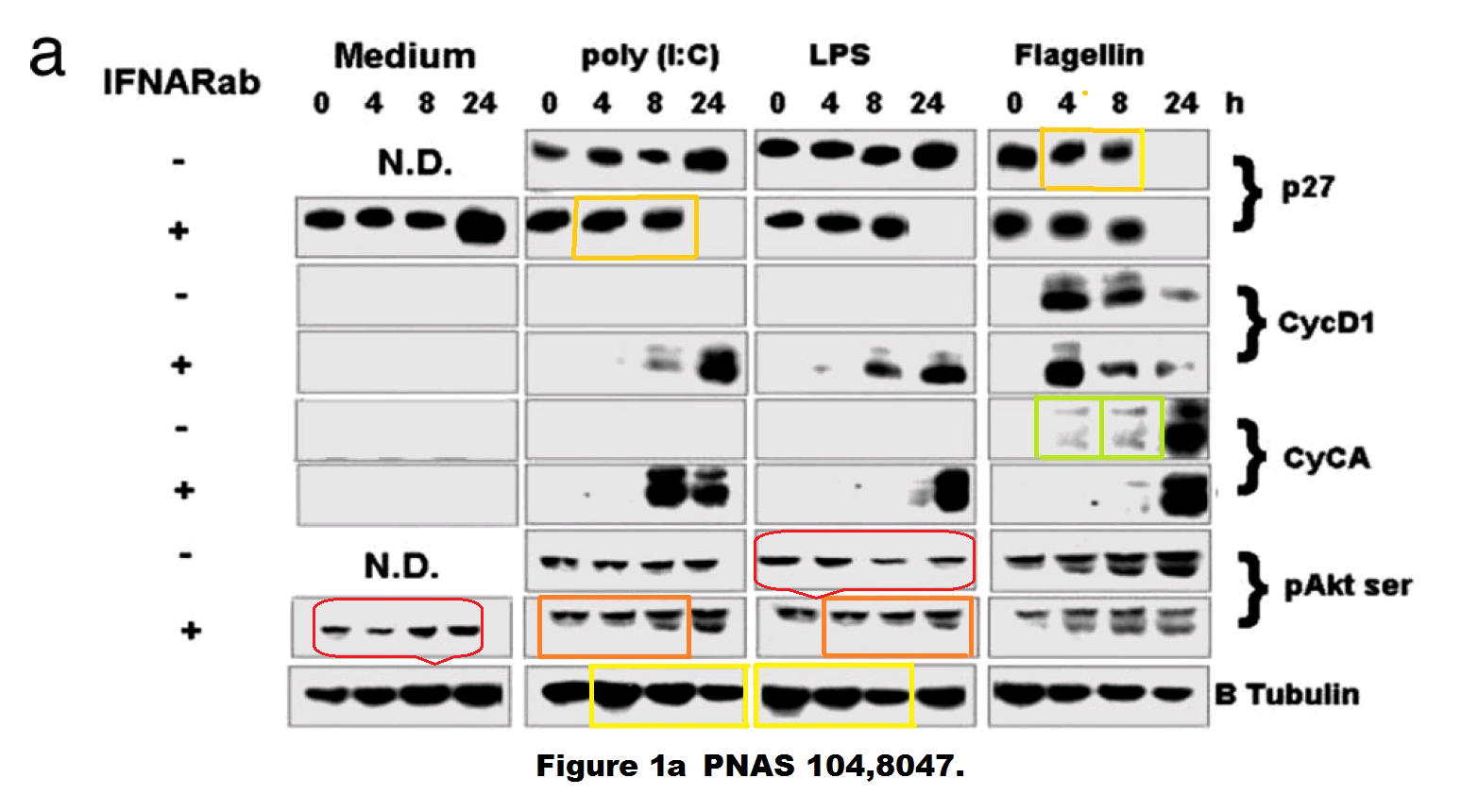
This figure contains a plethora of duplicated gel bands, so much that it is actually almost funny. Who is responsible, we do not know. The contributions say that Tommasino only contributed “new reagents/analytic tools”, while research was designed by Vlach and the two first authors. The first and corresponding author Hasan was at that time already in Tommasino’s IARC department for Infections and Cancer Biology. That PNAS paper of hers contains many other examples of Photoshop activities, like this Figure 5 here:
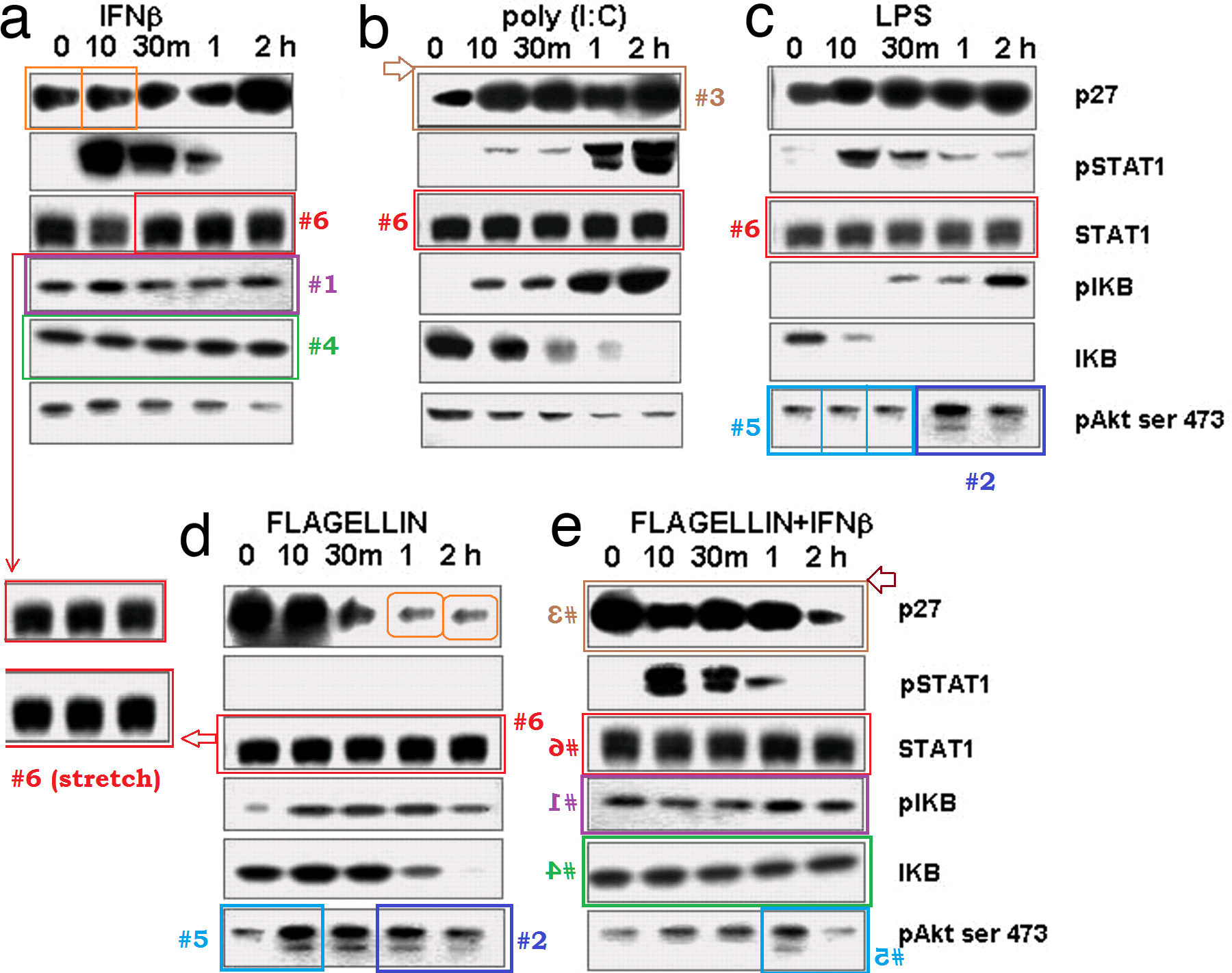
The industry researcher Vlach is the last author and the project designer, but it seems the work was done at IARC, since that this Photoshop tour de force was publicly funded:
“This work was supported by grants from La Ligue Contre le Cancer (Comité de Savoie) and the grant “Applied Tumour Virology” German–French cooperation, German Cancer Research Center (DKFZ), Heidelberg–Cancéropôle du Grand-Est, Besançon.”
The afore-ridiculed Figure 1A of Hasan et al PNAS 2007 contains elements which previously appeared in a different context, in a different paper and likely also in a different lab where Hasan worked until 2005, at Schering-Plough with Vlach (Hasan et al JBC 2005):
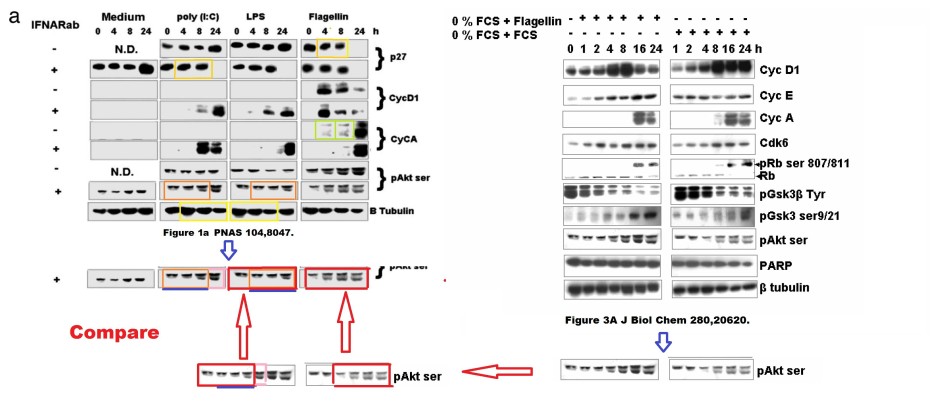
That 2005 paper appeared in the Journal of Biological Chemistry, which is known to be tough on data manipulation, might become a problem for this paper’s three authors. Good for Tommasino that he is not one of them. There is even a duplicated flow cytometry measurement, quantified slightly differently, maybe to obscure similarities.
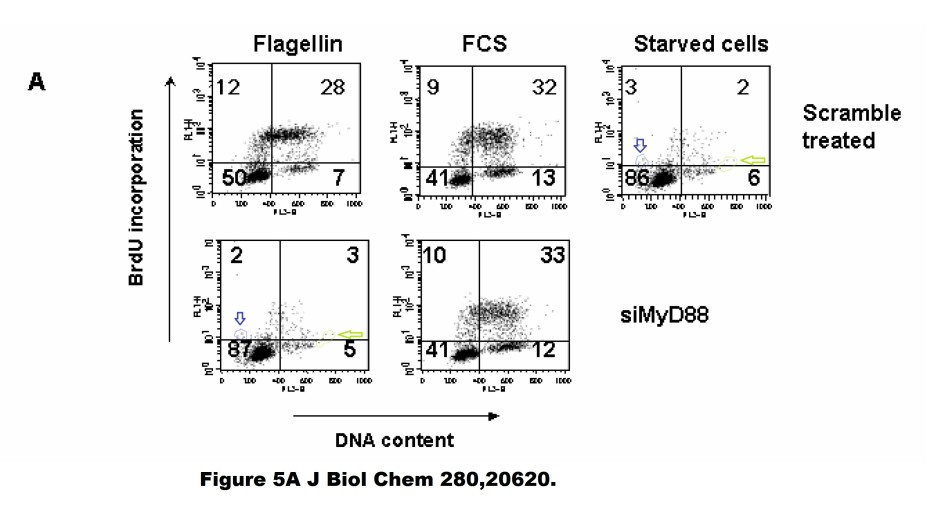
Also this Hasan et al JBC 2005 study contains more of creative tricks which helped the authors elucidate the molecular pathway of Toll-signaling in immune cells. Who knew it happens through post-experimental digital data duplication?
Hasan’s work at Schering-Plough before her move to IARC with Tommasino was truly productive. Look at this interesting figure from Hasan et al J Immunology 2005:
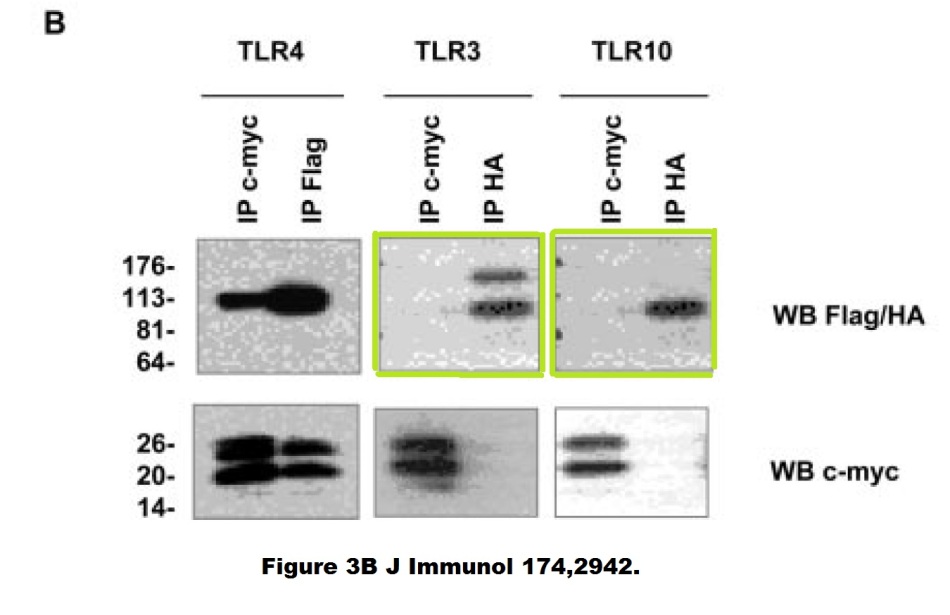
The framed western blot two images for Flag/HA are very similar, except the upper gel band. How can this be? Can someone accidentally reuse same image twice, while accidentally erasing the top band in one of them? There is more to find in that paper also. Tommasino is not coauthor, but is credited with having provided “invaluable advice on this manuscript”, just like in the other Hasan et al JBC 2005 paper from Schering-Plough, now part of Merck.
With Tommasino as last author, but now without Vlach and his pharma industry input, Hasan authored same year 2007 this paper, Hasan et al J Immunology 2007. Also here, Hasan is corresponding author. This IARC study helped us understand how cervical cancer develops and offered “future promise for the prevention of infectious diseases, cancer, and autoimmune diseases“. This is how this promise works, and this is just one example from that paper:
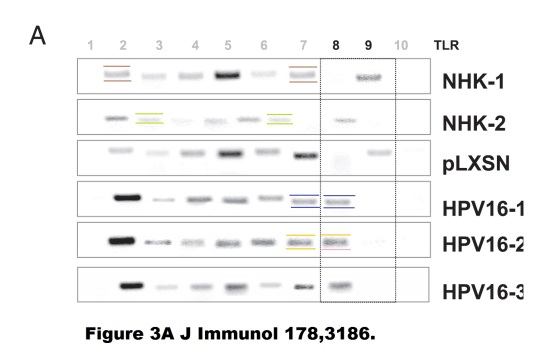
Apparently, by re-using certain western blot bands, a potential prevention therapy for cervical cancer can be established. Amazing research, done by WHO scientists at IARC, with public support:
“The study was supported by grants from La Ligue Contre le Cancer (Comité de la Savoie), “Applied Tumour Virology” German-French cooperation, and Deutsches Krebsforschungszentrum-Cancéropôle du Grand-Est.”
2007 was a particular year in Tommasino’s IARC lab, with a particularly rich harvest of Photoshopped papers in prestigious journals. Also this paper features Hasan as one of coauthors, Mansour et al, Virology 2007., Tommasino is the corresponding author. The study offers insights into mechanisms of cervix cancer progression and suggests how this cancer can be early detected. This is how the clinical approach would work:
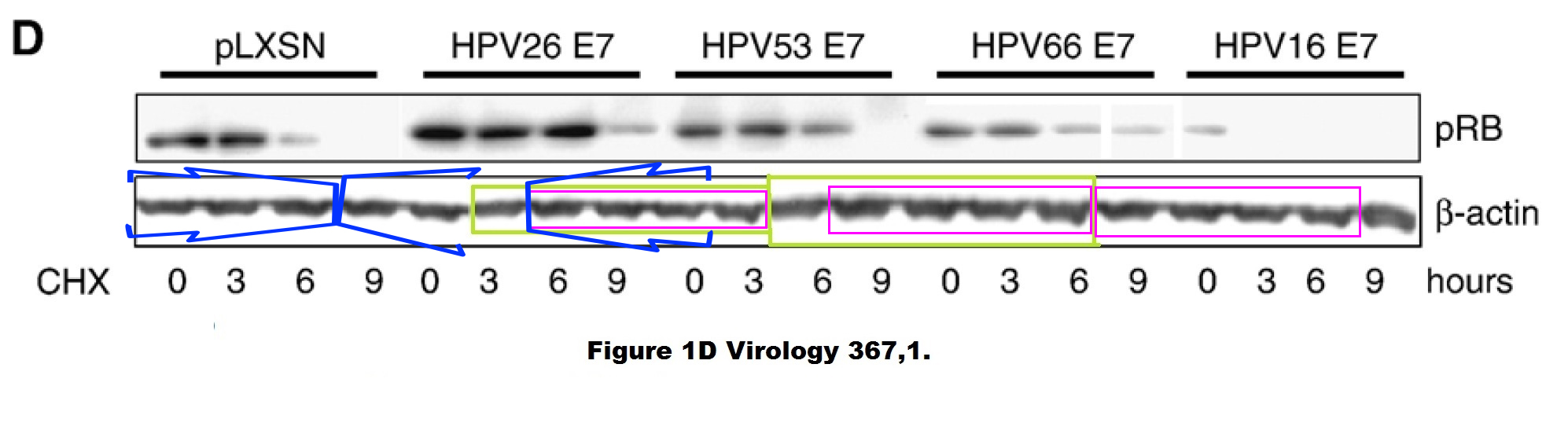
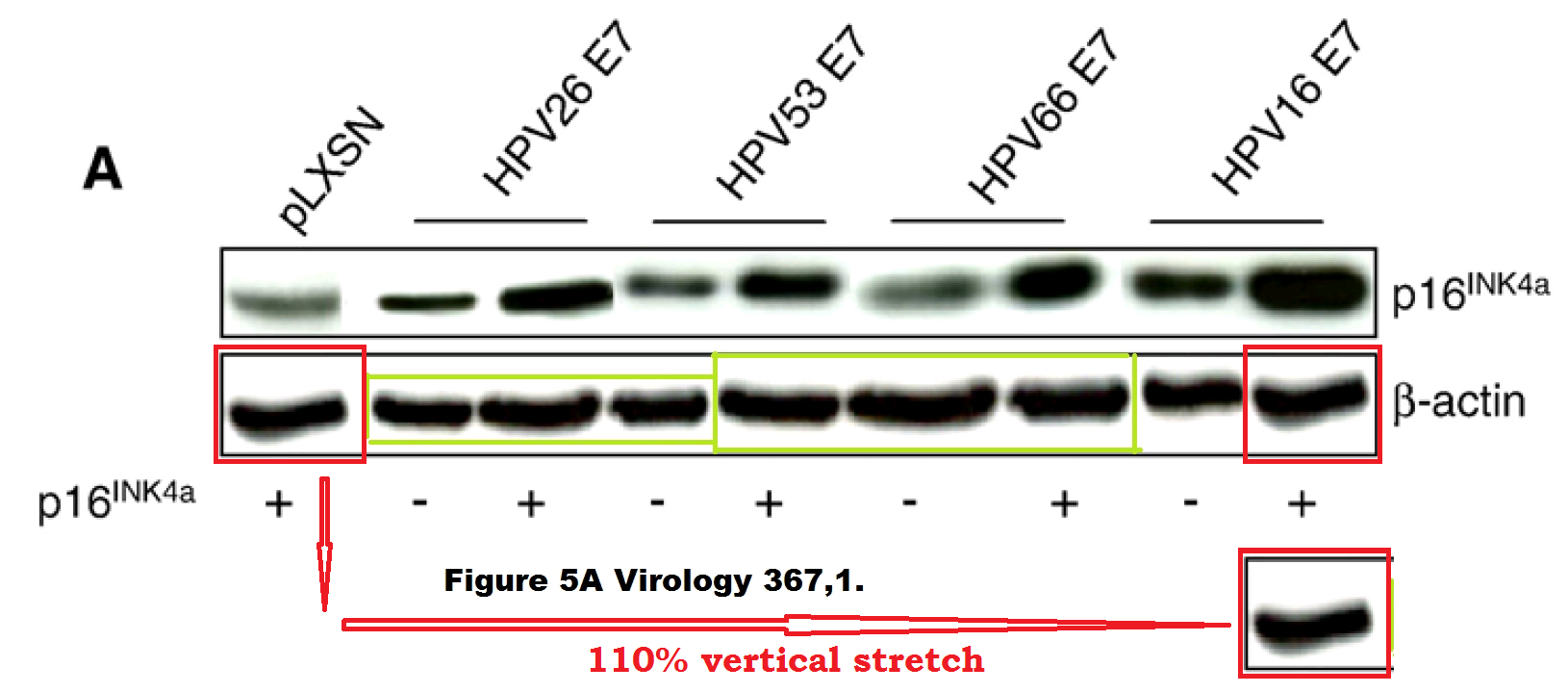
Female patient at risk of cervical cancer will be asked to sit upon the printout of these Photoshopped western blot images, or other examples from that paper. Any resident cervical cancer cells inside the patient will be appalled by such pathetically crude data manipulations of loading controls and die in shame. In case you wonder, why some authors need to manipulate such allegedly unimportant bits of the figure like loading controls: it’s probably because the correct loading controls would have rendered the entire figure as useless or even fraudulent. Hence, cancer is being attacked not with science, but with Photoshop. This is probably exactly what EU Commission had in mind when funding this travesty :
“The study was partially supported by grants from European Union (LSHC-2005-018704) Deutsche Krebshilfe (grant N. 10-1847-To I), and Association for International Cancer Research to MT and a grant from La Ligue Contre le Cancer (Comité du Rhône)”
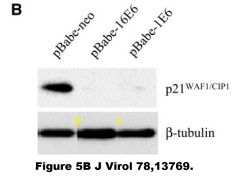
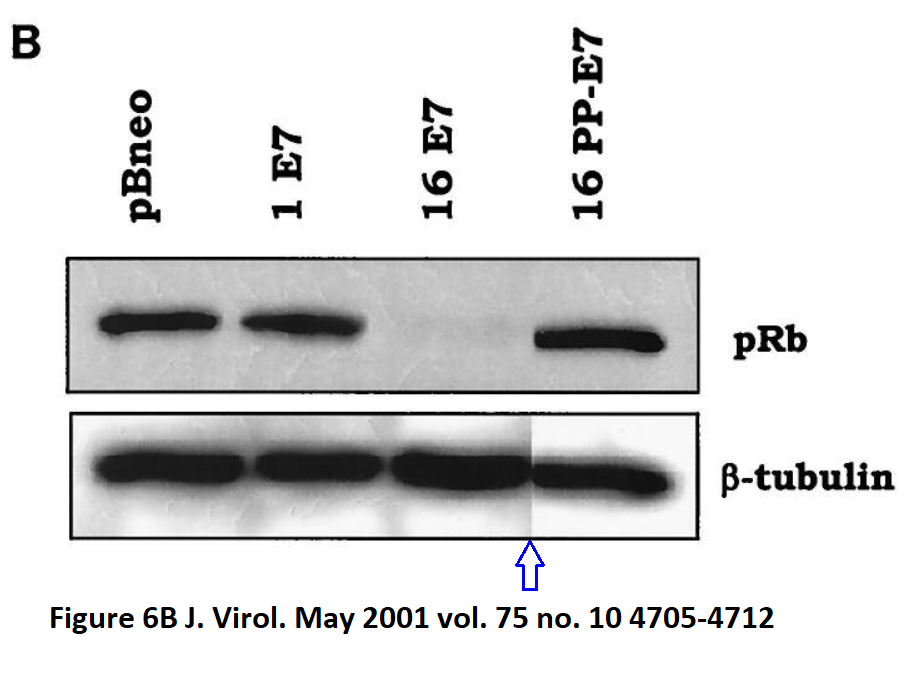
Tommasino never had a high opinion of loading controls anyway, it seems he saw them as nuisance and tried to make a point of this by publishing such ridiculously Photoshopped stuff. Who is interested in how much sample was loaded where, if the end picture of signal differences and its scientific message is what matters? Nobody, that’s WHO. This is why we find in older Tommasino papers figures like this, in Malanchi et al 2004 or Giarre et al 2001, both passed peer review in Journal of Virology:
Unfortunately such attitude to research integrity in Tommasino’s department at IARC is not ancient history. The following comes from two relatively recent papers from that lab, Shahzad et al J Virology 2013 and Siouda et al PLOS Pathogens 2014:
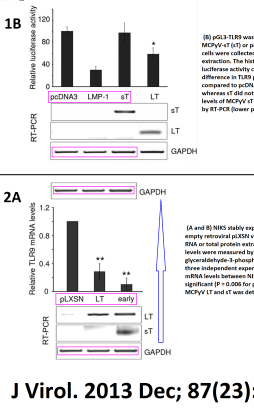
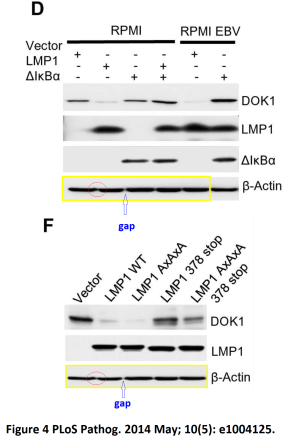
We learn that viruses play a key role in carcinogenesis, and the correct way to clinically intervene on viral infection to prevent cancer is to reuse loading controls for various experiments, to placate some pesky peer reviewers.
Even the EMBO fellow and newly minted INSERM group leader Dr Hasan was back at publishing copy-pasted cancer therapy ideas, at Journal of Experimental Medicine, Hasan et al, JEM, 2012:
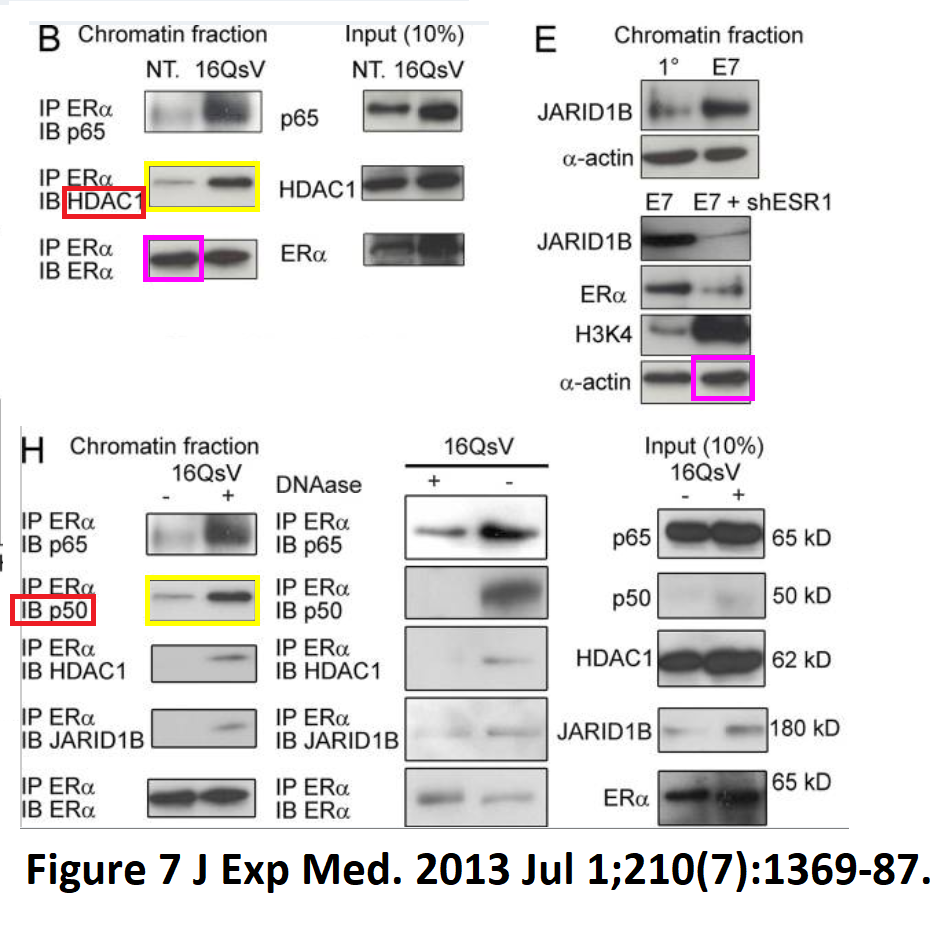
We now see how such creative approach to cancer research literally paid out for Hasan:
“This study was supported by the EMBO Fellowship Program (U.A. Hasan), La Ligue Régionale de la Loire contre le Cancer (U.A. Hasan), la Fondation pour la Recherche Médicale (U.A. Hasan), l’Association Research sur la Cancer (U.A. Hasan), and CLARA Procan Axe II innate sensors platform, Lyon (M. Tommasino)”.
The penultimate author is elite HHMI-funded researcher at Yale, USA, he is also thanked for his advice in several manuscripts by Hasan, Vlach and Tommasino. What will he say of such unconventional approach which as the authors assure, “may provide a novel therapeutic strategy for cervical cancers”?
I informed Merck and WHO Ethics team about those issues in August 2018. Merck replied that they “take such inquiries seriously” and are reviewing the information on Vlach’s publications which I sent them. From WHO, a request for more information arrived, because the PubPeer information was deemed insufficient as such:
“from the links you have posted, we can see the titles of a number of publications but it is difficult to assess what may have happened. We would need to know specifically which data may have been changed, in which publications, when and by whom.”
I replied immediately with explanatory examples, but have not heard from the WHO Ethics Team ever again. My recent two requests for an update went unanswered as of yet.
Update 3.12.2019
In November 2019, I wrote to WHO again. I received a reply: WHO expects PubPeer to remove slanderous evidence against their scientists who did absolutely NOTHING wrong.
This is the statement I received:
“Thank you for bringing your concerns to the attention of WHO. We have reviewed them and an investigation was undertaken into the matter.
The investigation looked at each allegation made and a rigorous approach was adopted further to the IARC Policy on Scientific Misconduct, as publicly available on the IARC internet site.
The allegations relate entirely to gel and blot “splicing”. This was and to a large extent still is common practice to reduce the size and complexity of figures which are illustrations derived from multiple experiments, and not intended to show the results of those individual experiments. Cell Press (http://crosstalk.cell.com/blog/common-pitfalls-in-figure-prepartion) say, “it is OK to remove irrelevant or blank lanes from a gel in order to present your data in a streamlined way to readers, but when you do it, you need to mark it clearly so that there is obvious transparency about how the figure was prepared” (2015). The Journal of Cell Science have suggested that “Any grouping or consolidation of data (e.g. removal of lanes from gels and blots or cropping of images) must be made apparent (i.e. with dividing lines or white spaces) and should be explicitly indicated in the figure legends.” (see http://jcs.biologists.org/sites/default/files/Revisionattachment_JCS.pdf )
It is noted that the splicing was not hidden deliberately, though on occasion it is noted it was less obvious in the printed figure and the figure legends did not always make the splicing clear. These minor errors are common in papers and should be avoided. The authors in question have been informed of what IARC expects and a policy on gels and blots from the Journal of Cell Science has been adopted.
Noting all this, the investigation:
- Found no evidence of scientific misconduct and concluded that the allegations made on PubPeer are not adequately supported and are therefore unfounded,
- Identified a small number of individual cases where errors in the figures require corrections, and
- Advised the authors to provide all available original data for the papers cited on PubPeer to the journal editors for their information.
Further to the above and in line with the IARC Policy on Scientific Misconduct and the investigation, it was determined that the matter could be closed.”
Donate!
If you are interested to support my work, you can leave here a small tip of $5. Or several of small tips, just increase the amount as you like (2x=€10; 5x=€25). Your generous patronage of my journalism will be most appreciated!
€5.00

 For Better Science
Over the next few years many people who are highly incompetent at the lowest, or fraudsters at the lowest, are going to die.
There does need to be a mechanism to retract their highly problematic papers. We are all familiar with stories of students during the Middle Ages being silenced when what they saw with their own eyes did not fit what some Great from the ancient World had described. We can all laugh about that, but we are faced with a similar problem with problematic papers which are barely 15-20 years old.
LikeLike
2 new ones for Massimo Tommasino
https://pubpeer.com/publications/04C72269D985F0E9FE790CC9BB3E6F
https://pubpeer.com/publications/135FF70E30259C528E14B2A11F2F69
LikeLike
2 new ones for Uzma Hasan
https://pubpeer.com/publications/295FFB94651D9A60ADBDC0F35D0CFD
https://pubpeer.com/publications/93D42CA7A66DDA79318A7FB4B496ED
LikeLike
More problematic coming to light.
2013 Journal of Experimental Medicine. Comments #6, #7, and #8
PubPeer – The human papillomavirus type 16 E7 oncoprotein induces a tr…
2018 PLoS Pathogens.
PubPeer – Human papillomavirus type 16 antagonizes IRF6 regulation of…
LikeLike
This Virology paper isn’t quite right either.
PubPeer – Human papillomavirus types detected in skin warts and cancer…
LikeLike
More problematic data in J Biol Chem 2005, comments #7 and 8
PubPeer – Toll-like receptor signaling stimulates cell cycle entry and…
and J Biol Chem 2007, comment #26
PubPeer – Cell proliferation and survival induced by Toll-like recepto…
It’s O.K. because the French system only cares about itself, not the data.
LikeLike