

On the Iberian peninsula, there seems to be a tradition to give well-connected scientists suspected (or even convinced) of data fudging an award. In Spain, Carlos López-Otín, Professor of Biochemistry and Molecular Biology at the University of Oviedo, was given a Mentoring Award from the elite journal Nature, on recommendation from Spanish academia and despite evidence of data irregularities in his papers. This prompted my readers, in particular the famous pseudonymous data integrity sleuth Clare Francis, to comment on on PubPeer and on my site (as “Zebedee”) with additional evidence, which made Lopez-Otin’s scientific credibility look progressively worse and worse, with each new post.
Eventually, an image of a Northern blot (showing expression of mRNAs which code for proteins) was found to appear recurrently across several papers from that Oviedo lab, where the authors pretended it was a newly produced analysis. In reality, it was a “library” loading control reused so the authors could re-run same RNA gel of human tissue lysates over the years and never check ever again what they have actually loaded on their gels. Eventually Lopez-Otin et al even stopped caring what order of samples that original loading control had.
Clare Francis was soon joined on his quest for the Perennial Northern Blot of Oviedo by Elisabeth Bik, famous microbiology blogger and image duplication detective, and my regular contributor (also pseudonymous) Smut Clyde, who now presents you the findings of no less than 23 appearances of that same northern blot in 23 publications from Lopez-Otin’s lab in the guest post below. It is just as convincing as if the Spanish actor Antonio Banderas appeared in 23 different films still dressed in same costume from his 1995 hit Desperado, carrying same guitar case. Incidentally, also Lopez-Otin’s Perennial Northern Blot made its first appearance at around that year.

The cancer researcher Lopez-Otin is an actual real-life celebrity in Spain. On 29 June 2017, he helped the King of Spain open the Princess of Girona Foundation Awards ceremony, together with another Spanish celebrity of the creative art of the pretend, Antonio Banderas. The Princess Foundation wrote about their 2017 gala host:
“Carlos Lopez-Otín is an academician of the European Academy and the Royal Academy of Sciences of Spain, and Doctor Honoris Causa by several Spanish and foreign universities. Throughout his scientific career he has received several awards such as the European FEBS Prize for Biochemistry, the DuPont Award for Life Sciences, the “Carmen and Severo Ochoa” Award, the Mexico Prize for Science and Technology, King Jaime I Prize Research and the National Research Award “Santiago Ramón y Cajal”
That multiple award winning research star is also EMBO member, just like some other of his Spain-based colleagues of questionable research integrity are: Maria Pia Cosma and Pura Munoz-Canoves. These two also regularly receive juicy research grants and recognition: Munoz-Canoves’ most recent was the “Vanguardia de la Ciencia” award, while Cosma was given in 2016 “Ciutat de Barcelona” award. Another Spanish researcher with shady data in his papers is Manel Esteller, he also gets awarded regularly, in 2016 it was the Catalonia International Prize from (now fugitive) President Puigdemont. In Portugal, Esteller’s former PhD student and now zombie scientist Sonia Melo was given a Prémio FAZ Ciência award from Fundação AstraZeneca, only two months ago. There are surely more of such questionable Iberic awardees, readers are welcome to salute these stars of Photoshop in the comment section.
I personally have a theory that in this way the system of Iberian academia announces who is untouchable, in order to intimidate critics of research misconduct in their own ranks. Probably a pathetic left-over from the fascist past of Spain and Portugal. The subliminal message is: yes, we all know what these award-winners did to create those big papers and we don’t mind at all. The award-giving farce shows who the role models are and what Spanish and Portuguese scientists are expected to do with their silly notions of research integrity: shove it, start making big papers whatever it takes, or lose your job. In fact, not even the arch-zombie scientist Susana Gonzalez had to suffer unemployment, unlike masses of honest young Spanish scientists.
A Perennial Northern Blot, by Smut Clyde
The title of this post refers to the famously picaresque Western blot belonging to a Brazilian diabetes researcher. 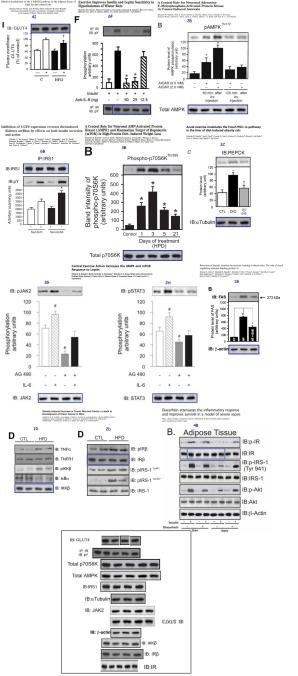 In its protean versatility, Mario Saad‘s pentadecaplicating blot could transform itself into any protein — tubulin, actin, GLUT4, IRS1 — from any combination of source conditions. It thereby appeared in at least 15 versions, spread across 10 papers in “an intricate publishing web“, serving as the loading control in that many different experiments (that is, as a measure of the total level of extracted protein, for normalising the measurements of the protein of interest). In my imagination it spoke with the voice of Robin Williams. This site forwarded a report on the Wandering Western… the ensuing saga included editorial Expressions of Concern, lawsuits, an investigation by Saad’s university that saw no evidence of misconduct, and 13 retractions so far (RetractionWatch are keeping score).
The present case also concerns re-use of a loading control, but this time featuring a Northern blot. The compass-point tradition for naming gel-electrophoresis techniques began with Sir Edwin Southern, pioneer of Southern blotting, for this is how humor works in molecular biology. It has been explained to me that Northern blots do not directly measure the popularity of a protein in the cellular economy; instead, mRNA (encoding for a protein) is the chemical species, extracted from various sources (lanes), and spread out into bands according to molecular weight. Then transferred (blotted) from the electrophoresis gel to a filter for stability, and detected by inducing the mRNA to bind to a matching and radiotracing DNA probe.
So in this case, a team of researchers have a bank of 28 “cell smoothies”: two sets of eight tissue types, one set of eight cancer-cell lines, and four fetal-tissue samples. In a series of papers published over a decade, the team have characterised numerous proteins from within the self-organising complexity of the human cell — sequencing the DNA for each protein and specifying its chromosomal location, describing its role within that complexity, and checking which tissues express it (which depends on which genes remained active in each lineage of cells that differentiated and specialised and became a tissue). That is to say, the Northern Blots were just one aspect of the papers, and they are all outside my comfort grade and above my pay zone.

Each study took a few drops from the stored samples, blotted it (“Filters containing about 2 µg of polyadenylated RNAs from the indicated human tissues”), and probed for the mRNA of choice. But there are limits to the precision that a pipette can provide — even in the hands of a trained gene-modified laboratory monkey — so the final stage is to wash the probe DNA out of the filter and probe it again for Actin (a background “housekeeping” protein, required by cells to maintain their architecture, unless they are dead) to correct for the actual aliquots that were used. Thus papers in this sequence typically include a phrase along these lines:
“Filters were subsequently hybridized with a human actin probe to ascertain differences in RNA loading”.
It is conceivable, however, that this phrase was repeated from the first paper, along with the loading blot itself. Comparing 23 papers, there appears to be one original blot for each bank: four blots, which are variously compressed and clipped according to the exigencies of publication, and varying also in exposure, rather than a separate measurement after each separate exercise in tissue localisation. The sources are ‘Zebedee’, commenting on threads at this site; anonymous contributors to PubPeer threads; Elisabeth Bik; and myself.
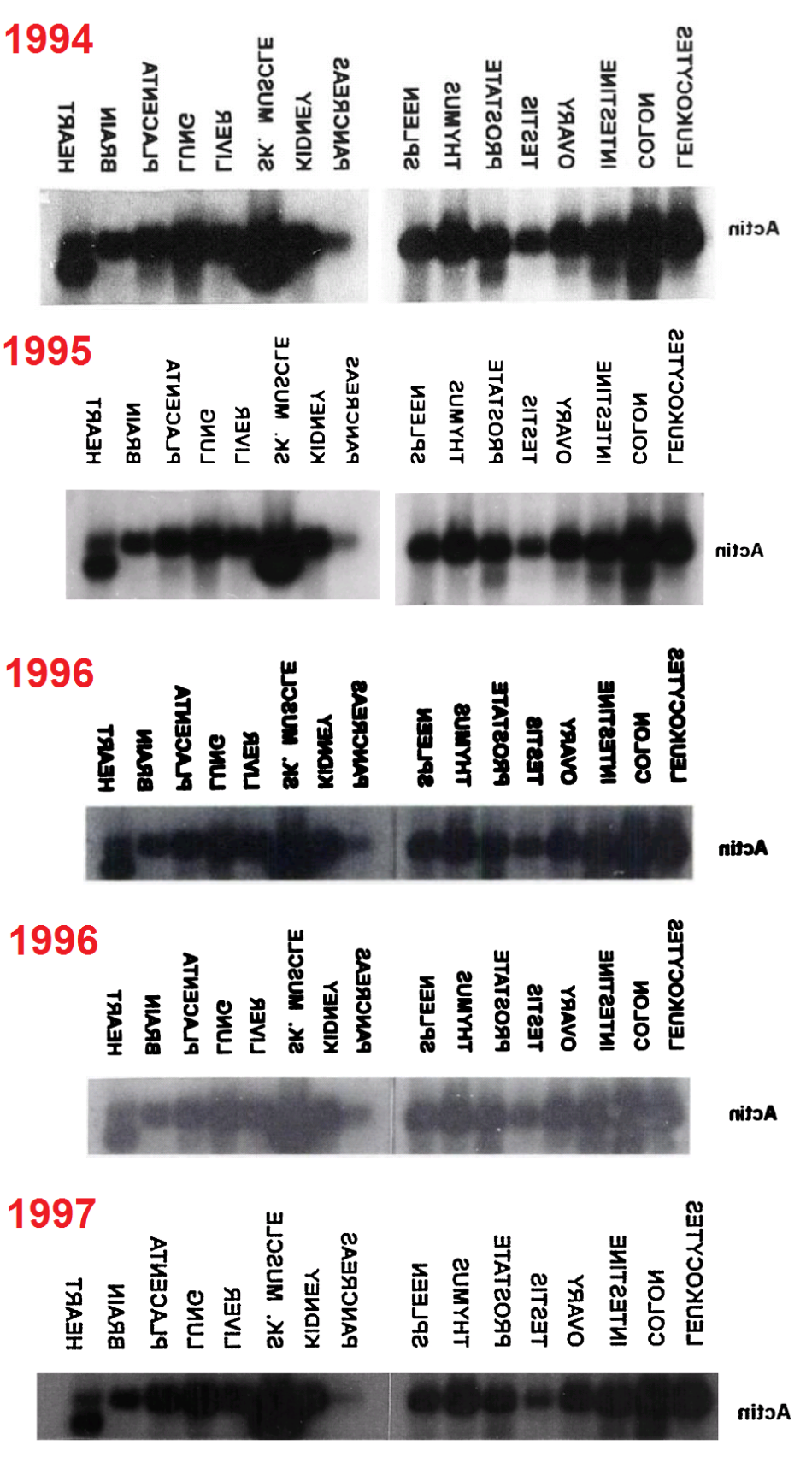
This comes to our notice because a 23-fold replication beats the 15-fold record of the Brazilian wanderer. Crucially, though the possible copies are consistently identified as Actin, and the authors have tried to label the sources of the lanes consistently. The reuse of a ‘loading library’ is deprecated, but this does not begin to approach the problematic level of the Brazilian Western: there was no attempt to mislead (other than the claim that the control in each study was specific to it, made subsequently to the data to be controlled). It is a perennial blot, always in the same place, rather than a wanderer or vagrant.
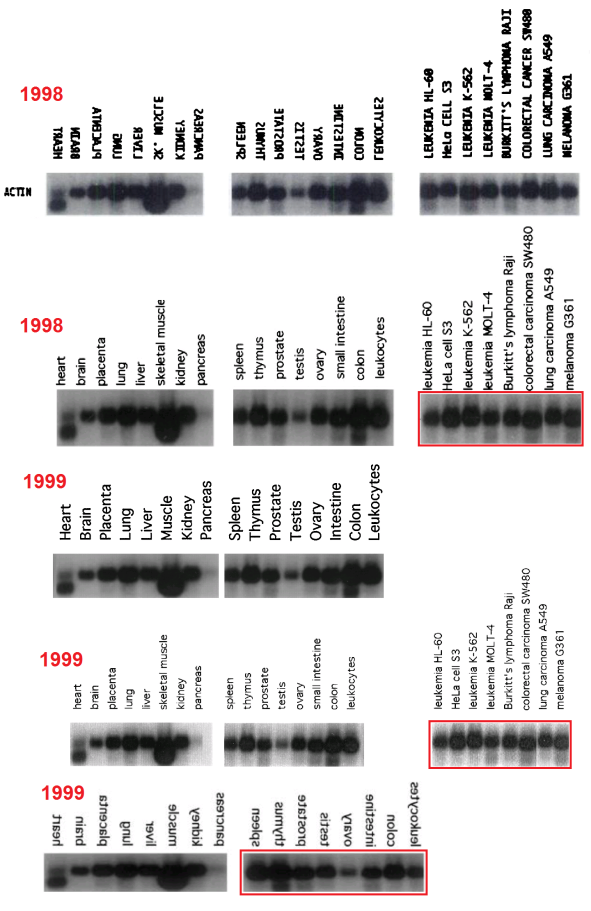

Regrettably, the labelling of lanes was not as consistent as was intended. In a 2003 appearance of the fetal-tissue blot, it was flipped horizontally relative to the lane labels, as marked with a red box in the Figures. Note that in some publications the lanes are listed in reverse order — from Leucocytes to Heart rather than vice versa — and in the Figures I have flipped each band and labels in such cases, to keep a single sequence of tissue types (hence the mirror-image text in places).
Red boxes were also necessary in some cases where the cancer-cell blot was flipped relative to its lane labels, and for the #2 array of tissue cells in the 1999 paper. In addition, that blot was rotated through 180° from 2001 onwards (so that the Actin background for Thymus cells becomes that of Colon cells, and vice versa, while Testes and Ovary change places, and Spleen with Leucocytes). This is marked with orange boxes. One can only hope that these pictorial labelling issues did not extend into the measurements of Actin from the blots, as used in the quantitative results.
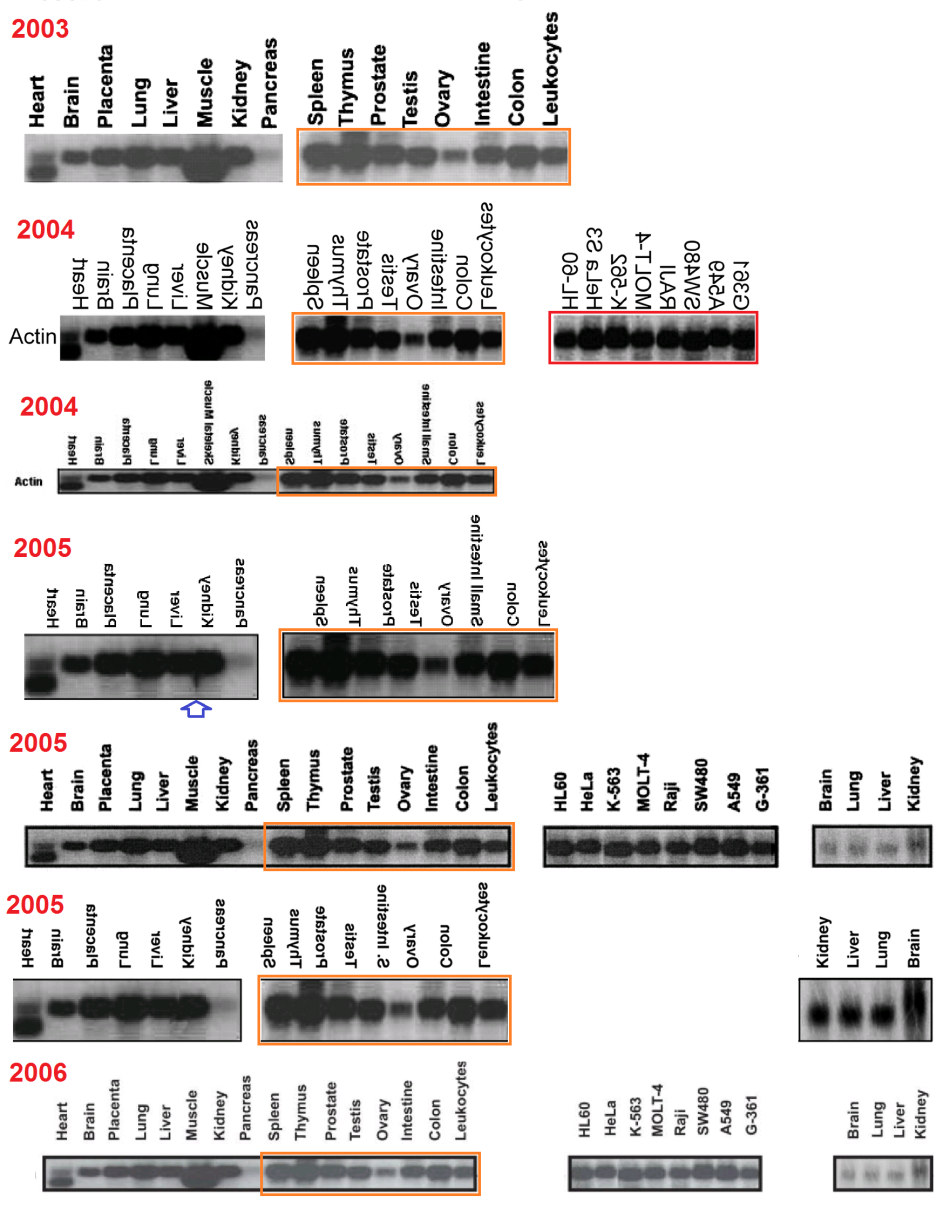
Finally, two blue arrows mark the omission of ‘Pancreas’ and ‘Skeletal muscle’ from one study each, with the loading band spliced to remove that lane.
I am going to play ‘good cop’ here, and propose that the corner-cutting absence of study-specific controls probably made little difference to the results. Corrigenda to the paper acknowledging the use of archival controls would be appropriate (along with correction of any flipped and rotated bands). Other issues have been raised about other figures in some of the papers, but I do not address those here.
Details of the 23 publications follow. We are still hopeful of finding a few more examples of the Perennial Northern Blot.
- 1994. “Human cathepsin O. Molecular cloning from a breast carcinoma, production of the active enzyme in Escherichia coli, and expression analysis in human tissues“, Velasco et al; J Biol Chem., 269(43):27136-42.
- 1995. “Cloning and expression analysis of a novel human serine hydrolase with sequence similarity to prokaryotic enzymes involved in the degradation of aromatic compounds“, Puente & López-Otín; Journal of Biological Chemistry 270, 12926-12932. DOI 10.1074/jbc.270.21.12926 Figure 5.
- 1996. “Cloning and Expression Analysis of Human Bleomycin Hydrolase, a Cysteine Proteinase Involved in Chemotherapy Resistance“, Ferrando et al.; Cancer Research 56: 1746-1750. PMID: 8620487
- 1996. “Molecular Cloning of a Novel Membrane-type Matrix Metalloproteinase from a Human Breast Carcinoma“, Puente et al; Cancer Research 56:944-949.
- 1997. “Identification and characterization of a novel human matrix metalloproteinase with unique structural characteristics, chromosomal location, and tissue distribution“, Pendás et al; J Biol Chem. 272(7):4281-6. doi: 10.1074/jbc.272.7.4281 Figure 7.
- 1998. “Cathepsin L2, a Novel Human Cysteine Proteinase Produced by Breast and Colorectal Carcinomas“, Santamaría et al; Cancer Res. 58(8):1624-30.
- 1998. “Cathepsin Z, a novel human cysteine proteinase with a short propeptide domain and a unique chromosomal location“, Santamaría et al; J Biol Chem. 273(27):16816-23. doi: 10.1074/jbc.273.27.16816 Figure 5.
- 1999. “Cloning and characterization of human MMP-23, a new matrix metalloproteinase predominantly expressed in reproductive tissues and lacking conserved domains in other family members“, Velasco et al; J Biol Chem. 274(8):4570-6. doi: 10.1074/jbc.274.8.4570 Figure 6.
- 1999. “Molecular cloning and structural and functional characterization of human cathepsin F, a new cysteine proteinase of the papain family with a long propeptide domain“, Santamaría et al; J Biol Chem. 274(20):13800-9. doi: 10.1074/jbc.274.20.13800 Figure 6.
- 1999. “Identification and Chromosomal Location of Two Human Genes Encoding Enzymes Potentially Involved in Proteolytic Maturation of Farnesylated Proteins“, Freije et al; Genomics 58, 270–280. DOI: 10.1006/geno.1999.5834
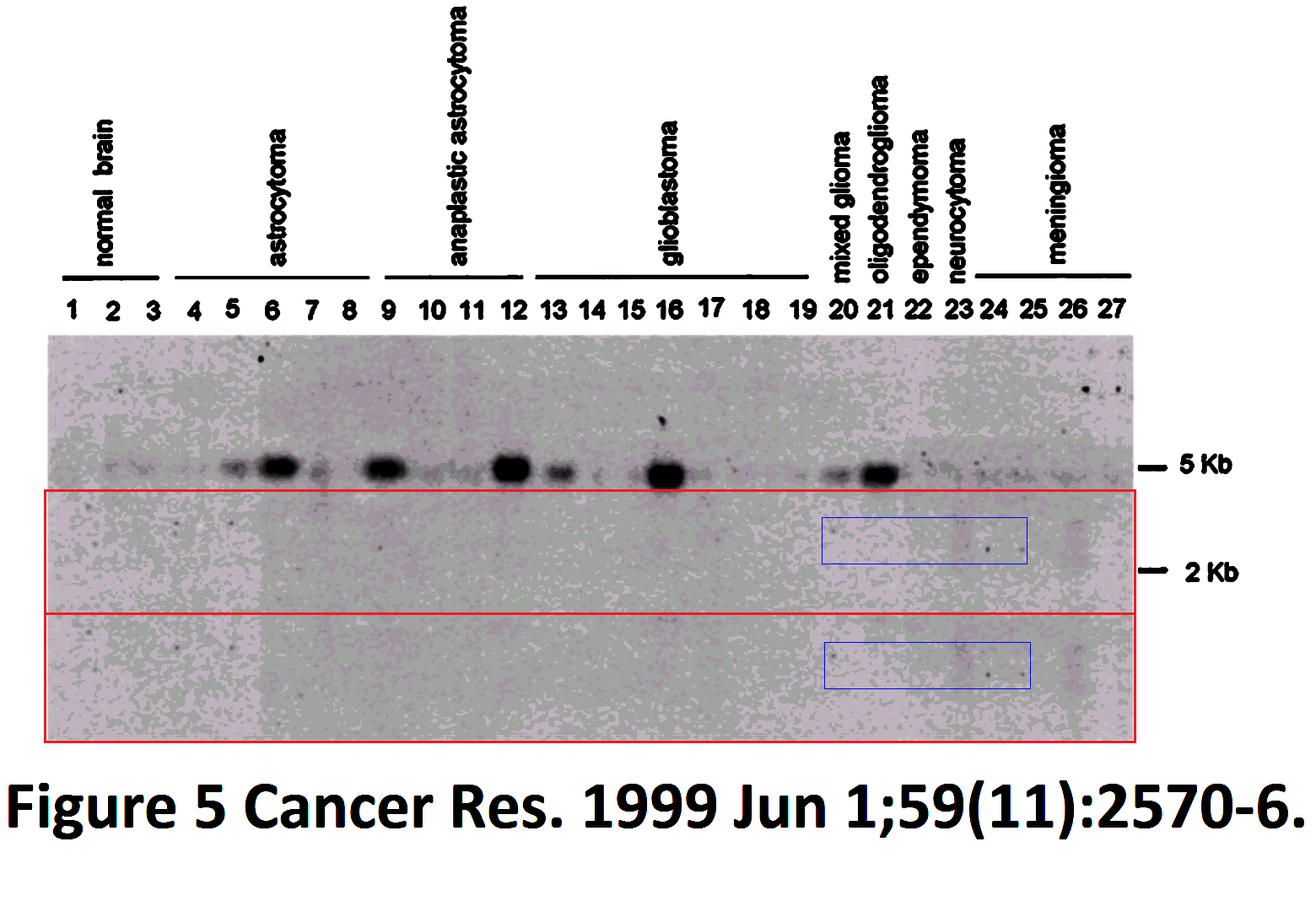
- 2000. “Human MT6-matrix metalloproteinase: identification, progelatinase A activation, and expression in brain tumors“, Velasco et al; Cancer Research 60, 877–882. pubmed: 10706098
- 2001. “Identification, Characterization, and Intracellular Processing of ADAM-TS12, a Novel Human Disintegrin with a Complex Structural Organization Involving Multiple Thrombospondin-1 Repeats“, Cal et al; Journal of Biological Chemistry 276, 17932-17940. doi: 10.1074/jbc.M100534200 Figure 5.
- 2002. “Matriptase-2, a Membrane-bound Mosaic Serine Proteinase Predominantly Expressed in Human Liver and Showing Degrading Activity against Extracellular Matrix Proteins“, Velasco et al; J Biol Chem. 277(40):37637-46. doi: 10.1074/jbc.M203007200 Figure 8.
- 2002 “Cloning, expression analysis, and structural characterization of seven novel human ADAMTSs, a family of metalloproteinases with disintegrin and thrombospondin-1 domains“, Cal et al; Gene 283 49-62. doi: 10.1016/S0378-1119(01)00861-7
- 2003. “Polyserase-I, a human polyprotease with the ability to generate independent serine protease domains from a single translation product“, Cal et al; PNAS 100(16): 9185–9190. doi: 10.1073/pnas.1633392100 Figure 4.
- 2003. “Human Autophagins, a Family of Cysteine Proteinases Potentially Implicated in Cell Degradation by Autophagy“, Mariño et al; Journal of Biological Chemistry 278, 3671-3678. doi: 10.1074/jbc.M208247200 Figure 3.
- 2003. “Identification and Characterization of ADAMTS-20 Defines a Novel Subfamily of Metalloproteinases-Disintegrins with Multiple Thrombospondin-1 Repeats and a Unique GON Domain“, Llamazares et al; Journal of Biological Chemistry 278(15):13382-13389. doi: 10.1074/jbc.M211900200 Figure 4.
- 2004. “Identification and Characterization of Human and Mouse Ovastacin“, Quesada et al; JBC 279 (25) 26627-26634. doi: 10.1074/jbc.M401588200 Figure 3.
- 2004. “Cloning and enzymatic analysis of 22 novel human ubiquitin-specific proteases“, Queseda et al; Biochemical and Biophysical Research Communications 314, 54-62. doi: 10.1016/j.bbrc.2003.12.050
- 2005. “Identification of Human Aminopeptidase O, a Novel Metalloprotease with Structural Similarity to Aminopeptidase B and Leukotriene A4 Hydrolase“, Díaz-Perales et al; Journal of Biological Chemistry 280, 14310-14317. doi: 10.1074/jbc.M413222200 Figure 4.
- 2005. “Human Polyserase-2, a Novel Enzyme with Three Tandem Serine Protease Domains in a Single Polypeptide Chain“, Cal et al; JBC 280, 1953-1961. doi: 10.1074/jbc.M409139200 Figure 3.
- 2005. “Identification and Characterization of Human Archaemetzincin-1 and -2, Two Novel Members of a Family of Metalloproteases Widely Distributed in Archaea“, Diaz-Perales et al; JBC 280(34):30367-30375. doi: 10.1074/jbc.M504533200 Figure 4.
- 2006. “Identification and characterization of human polyserase-3, a novel protein with tandem serine-protease domains in the same polypeptide chain“, Cal et al; BMC Biochemistry. doi: 10.1186/1471-2091-7-9 Figure 7.
Update 7.05.2018. Based on reader comment:


Donate!
If you are interested to support my work, you can leave here a small tip of $5. Or several of small tips, just increase the amount as you like (2x=€10; 5x=€25). Your generous patronage of my journalism will be most appreciated!
€5.00

 For Better Science


J Biol Chem. 2013 May 17;288(20):14647-56. doi: 10.1074/jbc.M112.439893. Epub 2013 Apr 2.
Matrix metalloproteinase Mmp-1a is dispensable for normal growth and fertility in mice and promotes lung cancer progression by modulating inflammatory responses.
Fanjul-Fernández M1, Folgueras AR, Fueyo A, Balbín M, Suárez MF, Fernández-García MS, Shapiro SD, Freije JM, López-Otín C.
Author information
1
Departamento de Bioquímica y Biología Molecular, Facultad de Medicina, Instituto Universitario de Oncología, Universidad de Oviedo, 33006 Oviedo, Spain.
2018 correction.
http://www.jbc.org/content/293/30/11970.short
Fig. 2A did not indicate the borders between different sections of the same gel. Additionally, an unused lane was mistakenly included in the original assembly of the actin panel causing a shift in lanes 12–14. Fig. 4B did not indicate the borders between different sections of the same immunoblot. Also, the incorrect β-actin immunoblots were used for the left CHI3L3 panel and the RAGE panel. The RAGE immunoblot was performed with the same samples run in parallel for the detection of CHI3L3 and β-actin shown in the left-most panel. These errors have now been corrected and do not affect the results or conclusions of this work.
LikeLike
Big shame on JBC and spanish science. JBC admits that you can add and remove any fraudulent data later on. Prestigious of Nature award recipients! @uniovi_info @nature @jbiolchem @alison_c_abbott @ASBMB
“the corrected version of Fig. 4A is provided in which these panels are omitted.”
http://www.jbc.org/content/293/30/11785.short
LikeLike
More comment on G&D paper 2012.
Nuclear lamina defects cause ATM-dependent NF- B activation and link accelerated aging to a systemic inflammatory response
Genes & Development (2012) – 15 Comments
pubmed: 23019125 doi: 10.1101/gad.197954.112 issn: 1549-5477 issn: 0890-9369
Fernando G Osorio , Clea Bárcena , Clara Soria-Valles , Andrew J Ramsay , Félix De Carlos , Juan Cobo , Antonio Fueyo , José M P Freije , Carlos López-Otín
https://pubpeer.com/publications/4E89FBEE8E6605B592593CF801E7BD#16
“I compiled issues in figures 2, 5 and 6. beta-actin bands were duplicated between figures 2 and 5 (both were Zmpste24 samples). Lamin A/C bands were horizontally flipped between figures 2 and 6 (Zmpste24 and Lmna samples).”
LikeLike
Soria-Valles 2015 Nature Cell Biology paper is increasing its comments on Pubpeer…
NF-κB activation impairs somatic cell reprogramming in ageing
Nature Cell Biology (2015) – 94 Comments
pubmed: 26214134 doi: 10.1038/ncb3207 issn: 1465-7392 issn: 1476-4679
Clara Soria-Valles , Fernando G. Osorio , Ana Gutiérrez-Fernández , Alejandro De Los Angeles , Clara Bueno , Pablo Menéndez , José I. Martín-Subero , George Q. Daley , José M. P. Freije , Carlos López-Otín
https://pubpeer.com/publications/836AB3A8AB4FD562A2D4CBFBF8ED18#95
“Figure 8b, H3K79me2 and b-actin bands came from different samples. The bands were cropped from different blots of apparently irrelevant lanes.”
//s.imgur.com/min/embed.js
LikeLike
Weirdness in ‘original blots’ from Soria-Valles et al., 2015 Nature Cell Biolohy paper, commented on Pubpeer.
NF-κB activation impairs somatic cell reprogramming in ageing
Nature Cell Biology (2015) – 96 Comments
pubmed: 26214134 doi: 10.1038/ncb3207 issn: 1465-7392 issn: 1476-4679
Clara Soria-Valles , Fernando G. Osorio , Ana Gutiérrez-Fernández , Alejandro De Los Angeles , Clara Bueno , Pablo Menéndez , José I. Martín-Subero , George Q. Daley , José M. P. Freije , Carlos López-Otín
https://pubpeer.com/publications/836AB3A8AB4FD562A2D4CBFBF8ED18#97
“Both rabbit (Lmnb1) and mouse (p21) primary abs were exposed on the same blot used in figure 2a and supplementary figure 6a. The whole blots submitted by authors seem to be actually patchwork of bands.”
LikeLike
Almost breaking-record number of PubPeer comments, the collaborative paper on @NatureCellBio from Carlos Lopez-Otin @uniovi_info and George Daley @G_Q_Daley dean of Harvard medical school @harvardmed is receiving.
https://daley.med.harvard.edu/publications
LikeLike
Additional comment on Pubpeer regarding Soria-Valles et al., 2015 NCB.
More evidence of WB from irrelevant samples, involving band fipping.
NF-κB activation impairs somatic cell reprogramming in ageing
Nature Cell Biology (2015) – 98 Comments
pubmed: 26214134 doi: 10.1038/ncb3207 issn: 1465-7392 issn: 1476-4679
Clara Soria-Valles , Fernando G. Osorio , Ana Gutiérrez-Fernández , Alejandro De Los Angeles , Clara Bueno , Pablo Menéndez , José I. Martín-Subero , George Q. Daley , José M. P. Freije , Carlos López-Otín
https://pubpeer.com/publications/836AB3A8AB4FD562A2D4CBFBF8ED18
“Also, in figure 2a, p16 and Lmnb1 came from different samples. The bands were cropped from different blots of apparently irrelevant lanes. What’s more, p16 bands were flipped during cropping.”
LikeLike
More PubPeer comments on Soria-Valles et al., 2015 NCB.
High-contrast image reveals that NF-kB bands seems to be artificial.
NF-κB activation impairs somatic cell reprogramming in ageing
Nature Cell Biology (2015) – 100 Comments
pubmed: 26214134 doi: 10.1038/ncb3207 issn: 1465-7392 issn: 1476-4679
Clara Soria-Valles , Fernando G. Osorio , Ana Gutiérrez-Fernández , Alejandro De Los Angeles , Clara Bueno , Pablo Menéndez , José I. Martín-Subero , George Q. Daley , José M. P. Freije , Carlos López-Otín
https://pubpeer.com/publications/836AB3A8AB4FD562A2D4CBFBF8ED18#101
“High-contrast image revealed that NF-kB bands used in figure 7a are actually smear and artificial (indicated in blue rectangle). Real bands appear on above area (red rectangle). Refer blot B, below one, for actual size of NF-kB (red rectangle).”
LikeLike
Tradition of band splicing. Both labs of Carlos Lopez-Otin and George Daley were made to match.
LikeLike
Induction of chronic myelogenous leukemia in mice by the P210bcr/abl gene of the Philadelphia chromosome
Science (1990) – 7 Comments
pubmed: 2406902 issn: 0036-8075
G Q Daley , R A Van Etten , D Baltimore
https://pubpeer.com/publications/32494494DF1BA35389D4DD4215FDB6
Inappropriate splicing on George Daley’s most important gel at David Baltimore lab.
Interestingly, 5 out of 7 comments were moderated (deleted) on pubpeer. Do pubpeer fellas surrender to the power of Harvard Medical School Dean?
LikeLike
Pubpeer censored for upper class PIs.
Such a frequent record of “moderation” on posts related with Harvard Medical School Dean, George Q. Daley.
Pubpeer is biased, unfortunately.
5 out of 7 comments deleted.
https://pubpeer.com/publications/32494494DF1BA35389D4DD4215FDB6
2 out 2 comments deleted.
https://pubpeer.com/publications/9FFA7E2C80B6F11BDF006C3E6A1C1D
1 out of 5 comments deleted.
https://pubpeer.com/publications/CC2645E6699CB04102B6632962552C
Several comments had been deleted without traces being left, peers claiming those were totally gone and unseen.
https://pubpeer.com/publications/03698513C41957E1BFDE9396741C97
LikeLike
Funny to see the Pubpeer moderation (censor) is so frequent to George Daley, Dean of Harvard Medical School. Pubpeer is favor of big power PIs.
That’s why Leonid should keep working.
LikeLike
Nature Cell Biology paper from Soria-Valles et al. has received over 100 comments on pubpeer.
Readers are pointing out how the raw data were made.
NF-κB activation impairs somatic cell reprogramming in ageing
Nature Cell Biology (2015) – 109 Comments
pubmed: 26214134 doi: 10.1038/ncb3207 issn: 1465-7392 issn: 1476-4679
Clara Soria-Valles , Fernando G. Osorio , Ana Gutiérrez-Fernández , Alejandro De Los Angeles , Clara Bueno , Pablo Menéndez , José I. Martín-Subero , George Q. Daley , José M. P. Freije , Carlos López-Otín
https://pubpeer.com/publications/836AB3A8AB4FD562A2D4CBFBF8ED18
“Single blot in supplementary figure 1e had three lines of bands (top one is beta-actin, middle and bottom ones are unknown), but they do not match with lanes each other. Each line of bands came from irrelevant lanes.”
“Both rabbit (IKBA) and mouse (p16) primary abs were exposed on the same blot used in figure 7a and supplementary figure 6a. The whole blots submitted by authors seem to be actually patchwork of bands. Indeed, there was a trace of band cropping around p16 bands.”
“beta-actin bands for figure 3c actually came from irrelevant lanes. beta-actin bands do not match with sample lanes on the raw blot, apparently pasted from somewhere.”
LikeLike
Pubpeer readers found out more evidence of sample flipping practices in Soria-Valles et al., 2015 Nature Cell Biology paper.
NF-κB activation impairs somatic cell reprogramming in ageing
Nature Cell Biology (2015) – 112 Comments
pubmed: 26214134 doi: 10.1038/ncb3207 issn: 1465-7392 issn: 1476-4679
Clara Soria-Valles , Fernando G. Osorio , Ana Gutiérrez-Fernández , Alejandro De Los Angeles , Clara Bueno , Pablo Menéndez , José I. Martín-Subero , George Q. Daley , José M. P. Freije , Carlos López-Otín
https://pubpeer.com/publications/836AB3A8AB4FD562A2D4CBFBF8ED18#113
“figures 3c, 4i and supp. 6a. -uncertain bands and objects on blots -trace of crop in p16 lane -bands were collected from random blots for p-p53, p53, p21 and p16 -image duplications”
https://imgur.com/a/6rS8F8e
“In figure 2a, p16 flipped the order of samples CTR and NGPS.”
https://imgur.com/a/mRHhj0f
“Band flipping coincides with ageing… P-IKK2 and P-ATM blots were developed from the same gel, as can seen in the shape and spot at right upper corner of gel (white arrow). P-ATM was developed, and striped. Then, P-IKK2 was developed. Bands of P-ATM were flipped when panel figure 7a was prepared.”
https://imgur.com/a/70Q0n25
LikeLike
Correction induced another question on Fanjul-Fernandez et al. 2013 JBC paper.
Matrix metalloproteinase Mmp-1a is dispensable for normal growth and fertility in mice and promotes lung cancer progression by modulating inflammatory responses
Journal of Biological Chemistry (2013) – 3 Comments
pubmed: 23548910 doi: 10.1074/jbc.m112.439893 issn: 0021-9258 issn: 1083-351X
Miriam Fanjul-Fernández , Alicia R. Folgueras , Antonio Fueyo , Milagros Balbín , María F. Suárez , M. Soledad Fernández-García , Steven D. Shapiro , José M. P. Freije , Carlos López-Otín
“Compareing with corrected figure 2A with original one, I cannot understand how bands of lane 13-14 can be totally different from original figure if they are still subsequent samples from lane 12, that corrected figure tries to assure lane 12-14 are subsequent.”
LikeLike
More cases of sample flipping in Soria-Valles et al., Nature Cell Biology (2015).
NF-κB activation impairs somatic cell reprogramming in ageing
Nature Cell Biology (2015) – 114 Comments
pubmed: 26214134 doi: 10.1038/ncb3207 issn: 1465-7392 issn: 1476-4679
Clara Soria-Valles , Fernando G. Osorio , Ana Gutiérrez-Fernández , Alejandro De Los Angeles , Clara Bueno , Pablo Menéndez , José I. Martín-Subero , George Q. Daley , José M. P. Freije , Carlos López-Otín
https://pubpeer.com/publications/836AB3A8AB4FD562A2D4CBFBF8ED18
“Another sample flip occured on the other half of the same gel (figure 6b). In addition, samples were shifted. P-IKK2 and P-ATM blots were developed from the same gel, as can seen in the shape of right upper corner of above gel. P-ATM was developed, and striped. Then, P-IKK2 was developed. Bands of P-ATM were shifted and flipped when panel figure 6b was prepared.”
LikeLike
Hello Leonid,
I have been following PubPeer comments on Carlos Lopez-Otin’s Nature Cell Biology paper (Soria-Valles et al). “this paper is dedicated to the memory of Néstor M.O.” a donor of Néstor-Guillermo progeria syndrome (NGPS) used in figure 2a that was distrustfully flipped to make up over-expression of p16 in Néstor’s cells. And sadly more sample switches of HGPS (another type of progeria) at figure 6b and of >87 yrs aged-donor cells at figure 7a to make up activation of NF-kB pathway.
As a researcher involved in ageing study, I cannot believe their working ethics for samples provided by progeria patients and aged donors (>87 yrs). The patients (and their families) had donated their own cells and tissues hoping to advance science, but Lopez-Otin and colleagues, including Pabro Menéndes (Jossep Carreras Imstitute) and George Q. Daley (Dean of Harvard Medical School) who provided crucial materials, bit the hand that feeds. Lopez-Otin and colleagues should be rewarded on their disrespectful manner on science and their patients.
I have posted on PubPeer. In case they do not accept, I would like to post the capture here.
LikeLike
Seems that pubpeer did not put a post by above Progeria Researcher.
Leonid, can you cover recent issues on Lopez-Otin and colleagues? Situation has evolved since your last article with Smut Clyde.
https://pubpeer.com/publications/836AB3A8AB4FD562A2D4CBFBF8ED18
LikeLike
NF-κB activation impairs somatic cell reprogramming in ageing
Nature Cell Biology (2015) – 125 Comments
pubmed: 26214134 doi: 10.1038/ncb3207 issn: 1465-7392 issn: 1476-4679
Clara Soria-Valles , Fernando G. Osorio , Ana Gutiérrez-Fernández , Alejandro De Los Angeles , Clara Bueno , Pablo Menéndez , José I. Martín-Subero , George Q. Daley , José M. P. Freije , Carlos López-Otín
More examples of sample flipping and lack of controls in Soria-Valles et al., 2015 Nature Cell Biology.
https://pubpeer.com/publications/836AB3A8AB4FD562A2D4CBFBF8ED18
Samples were flipped in figure 8b. Results of WB quantification became completely opposite.
“b-actin loading control for panel figure 5f was totally missing from raw data shown in supplementary figure 9. As mentioned in earlier posts, there was no label, exposure time and markers on blots, so how the authors could orientate lanes?”
LikeLike
Pingback: How Lopez-Otin et al mocked data policy at Nature Cell Biology – For Better Science