
The tracheal transplant experiments on three human patients were performed by the German scientists Heike and Throsten Walles without any previous animal testing, as now admitted to me by the Fraunhofer Institute for Interfacial Engineering and Biotechnology (Fraunhofer IGB) in Stuttgart. It also came to light that the pig intestine-based tracheal transplant was eventually deemed as too toxic, and a follow-up animal testing was apparently cancelled. Heike Walles is still associated with Fraunhofer IGB while being together with her husband employed as professors at the University Clinic of Würzburg. A patient of theirs received in 2007 a tracheal transplant of unknown size and shape, prepared from decellurised and in vitro re-populated pig intestine; this unnamed person died only some weeks after, of causes unknown to us. We know however, that two weeks before that operation, a tubular tracheal graft made from pig intestine was test-implanted into the patient’s arm for a week. After a quick analysis, a second in parallel prepared graft was implanted into the patient’s airways. Remarkably, only preliminary first in-arm test, but not the main operation, was ever published (Mertsching et al 2009), around two years after the patient’s death. The next patient, an Indian immigrant Pavninder Singh, received a large tracheal patch, which apparently did not perform as expected: the patient’s tracheostomy had to be re-opened, there was also apparently heavy inflammation. That patient committed suicide 2.5 years after the operation, and became in 2013 a central character of a book chapter which described his and the scientists Walles’ story (Bernhard Albrecht, “Patient of My Life”). Only in 2015 was the case of that patient published as a research paper (Steinke et al, 2015), his tracheostomy went for some reason unmentioned, just like the fact that Singh was no longer alive since 2011. All these tracheal transplants were prepared in the lab of Heike Walles (back then under her former husband’s name Mertsching) at Fraunhofer IGB, the transplantations took place at the neighbouring Robert Bosch Hospital, Clinic Schillerhöhe, where Thorsten Walles used to work as surgeon, before becoming professor in Würzburg. The details can be read in this article.
Humans first
The book author Albrecht wrote, likely after speaking with Walleses, “in animal experiments they already implanted the [tracheal, LS] grafts successfully”. This is what the spokesperson of Fraunhofer IGB, Claudia Vorbeck declared to me in regard to the Fraunhofer tracheal transplants in her email from January 20th, 2017, highlight mine:
“The Fraunhofer IGB itself does not carry out animal tests. If animal experiments are necessary for our work, we will assign these to companies or collaboration partners authorized to perform animal experiments. Whenever possible, however, the Fraunhofer IGB prefers alternative methods for animal experiments. In the case of the project for the production of an autologous trachea graft, no animal experiments were necessary until 2009 due to the preliminary work of Prof. Walles in Hanover. The publications can be found via PubMed”.
The preliminary work in Hannover (exactly, at the Hannover Medical School, MHH) which Vorbeck refers to, was performed by the Walles couple together with their former superior, and now the world-infamous scandal surgeon, Paolo Macchiarini. Not a single Walles publication available on PubMed suggests any previous animal testing of pig intestine-derived tracheal transplants in Hannover (or elsewhere), but one case of an in-human test: that of the patient Ernst Fromhage, who received in 2003 a tiny (“size of a Eurocent-coin”) tracheal patch of decellurised pig intestine. The intervention was published as MacChiarini (sic!) et al 2004 and the method as Walles et al, 2004. Macchiarini is corresponding author on both publications, and was celebrated for this operation in local media, without any mention of Walleses whatsoever. It was also Macchiarini alone (Macchiarini, 2004) who replied to the harsh and most likely very much justified criticism on that operation, which was issued by the late eminent expert of thoracic surgery, Hermes Grillo (Grillo, 2005). The Walleses were left out of the loop here again, on this allegedly exclusively their own discovery. Now however, the two Würzburg professors Walles had a German court sentence me for libel, in absentia, for stating that Macchiarini was in any way involved in that 2003 operation and the associated tracheal transplant technology (unless I can bring up enough money to pay a lawyer to defend myself, the verdict remains guilty, and I also have to pay the huge court costs).
The patient Fromhage died 16 months after the operation, for probably unrelated causes. We have however objectively no clue how the tiny tracheal patch performed at that time, the paper MacChiarini (sic!) et al 2004 declares only:
“Outpatient endoscopies on the 3rd, 6th, and 12th postoperative weeks confirmed the above early postoperative findings and showed that the graft was airtight and surfaced with autologous ciliated respiratory epithelium (Figure 2, C and D), with no evidence of chronic inflammation, granulation tissue, infection, or erosion. Vascular ingrowth was detectable from the patch margins as soon as by the 6th week and completed by the 12th postoperative week. After 12 weeks, the entire patch was functionally and morphologically completely integrated into the adjacent airway”.
Macchiarini and Walles
Let us assume, even if just for the argument’s sake, that this is the only fully trustworthy tracheal transplant paper by Macchiarini (since we already know the accusations, evidence and commission findings about all of his other transplants and publications). Let us for now trust Macchiarini and his partners Walles here that that tiny piece of pig intestine became somehow vascularised and grew a healthy epithelium, and not just overgrown by fibrotic scar tissue. Was it however safe to extrapolate that now large sections of trachea can be replaced with a pig-intestine based grafts, even after the technology was in vitro optimised by Heike Walles at her new Lab at Fraunhofer IGB? Apparently, this federally funded and applied technology oriented research institution decided that the technology was sufficiently proven. Without any animal testing whatsoever, two human patients received Fraunhofer-made large tracheal grafts in a Stuttgart clinic. None of these three is alive today to help assess the actual success of their transplants.
One year after Walleses transplanted in 2007 a patient in Stuttgart with a tracheal graft of unknown size or shape, their former boss Macchiarini performed in Barcelona his famous transplant of a decellurised and bioreactor-“regenerated” small section of bronchus. That patient, Claudia Castillo, is still alive, but she lost her lung (here the full story of Claudia’s Trachea). Noteworthy, Macchiarini is being repeatedly accused of having done this transplant without any previous animal testing. He denies this, but so far refuses to provide evidence. The only testing which Macchiarini did perform before operating the patient Castillo, was an inflammation-assessment of subcutaneously implanted pieces of decellurised trachea carcass in pigs and rats. Heike and Thorsten Walles obviously never even did this, with full support of the former’s academic employer, the engineering-oriented Fraunhofer Society. With Macchiarini, three clinical research institutions were involved internationally, and an ethics approval for compassionate care use was given by the Hospital Clinic Barcelona. With Walles, we don’t know if any ethics approval was sought or granted. As you can read below, the information is secret.
Bo Risberg, emeritus professor of surgery at the University of Gothenburg, famously coined the expression of “Chernobyl of Ethics“ in regard to the Macchiarini scandal. Back in February 2016, he kindly provided me with this Open Letter, where he took issue with the scientific, medical and ethical shortcomings of Macchiarini’s trachea transplants. Now, Risberg declared this in regard to the work of Heike and Thorsten Walles:
“Amazingly the authors introduced xenografts into humans without proper animal testing! That´s Macchiarini style!
These are unethical experiments in the same class as the scandal at Karolinska in Stockholm. There, preclinically untested plastic tracheas were used. Here xenografts, admittedly decellularized and seeded with autologous cells, were implanted, but likewise without any preclinical testing.
Surprisingly none of the journals asked for the written approval of the Ethics committee.”
Secret ethics
Indeed, an interesting question, but very difficult to answer, as I demonstrate below. After the operation on Fromhage, the Walleses left Hannover for Stuttgart and operated the next follow-up patient in 2007, and the last one, Singh, in 2009. We do not know if any ethics approvals were issued or necessary for these transplants, since the German watchdog institution Paul Ehrlich Institute (PEI) keeps avoiding answering my Freedom of Information inquiry on this, placed on December 10th 2016. Which is apparently perfectly OK, since there is really no overarching institution to complain to in Germany. I was only given this general information by Susanne Stöcker, head of the PEI’s Press and Information Office:
“Regarding the treatment of the three patients, I would point out that, in the case of medical emergencies, there is the possibility of a “compassionate use” within the doctor’s therapy freedom, possibly “under justifying emergency”. In such cases, there is no requirement for approval or approval”.
The paper about Singh operation, Steinke et al, 2015, makes no reference to any ethics approvals, only to “patient education and informed consent”. There was however an ethics approval given for the in-arm test of Singh’s unnamed predecessor in 2007. The paper Mertsching et al 2009, which focuses solely on that in-arm test and utterly omits the subsequent airway transplant, and which was published two years after the patient’s death, writes:
“Informed consent of the patient was obtained beforehand and ethical committee approval sought from the Eberhard Karls University Tuebingen. In addition, permission for compassionate use was obtained from the medical association Nordwürttemberg”.
I asked the Ethics Commission of the Medical Faculty and Clinic of the University of Tübingen these two questions:
- was an authorization granted also for the subsequent transplantation of the airways?
- was the transplantation of the patient Singh in 2009 also approved by the same ethics commission?
Right away I received this puzzling reply from the head of the Tübingen ethics commission, Dieter Luft:
“Unfortunately, I cannot yet answer this inquiry because the ethics committee is obliged to maintain confidentiality and discretion in accordance with § 5 para 3 medical profession – Chamber law Baden-Württemberg. Information can only be divulged following a written consent to lift the confidentiality issued by Prof. Walles”.
Update 24.01.2017: Marlies Kepp, head of communications at Robert-Bosch Hospital, where the operations were performed answered in this way when I asked her about who issued the ethics permits:
“…these processes are part of doctor-patient confidentiality”.
That’s probably it, in Germany it’s best to trust your doctor. It doesn’t really matter here that the patient Singh agreed to have this confidentiality fully waived, so the book about his doctor Thorsten Walles and his transplant could be written.
The Albrecht book where the Singh operation is described in detail mentions therefore certain highly relevant clinical aspects aspects which we will not find in any of Walles’ own publications. Like Singh’s re-opened tracheostomy and an “inflammation in his throat”, which was raging for “many months”, following the transplant of the pig-intestine patch. Then there was this incident with Thorsten Walles and German health authorities:
“On a hot Saturday in August 2009 Walles found a letter from authorities in his home mail. […] He broke the Medicinal Produce Law in its most recent form of June 22nd 2009, he read. He was threatened with three years in prison and withdrawal of his licence to practice medicine”.
The issue was resolved a few days after, since the Singh operation took place three months before the new law came into force. Apparently a whistle-blower reported Walles to the authorities: “there were not many suspects”. Nobody likes whistle-blowers. In fact, now it is myself who is threatened with 6 months prison by the German authorities if I dare repeating after the same Albrecht book or mentioning Macchiarini.
Update 24.01. 2017. Today I received two communications. One was a new court letter from Landesgericht Würzburg, giving me less than 2 weeks to reply before a trial against me will be opened on the behest of Walles, primarily for publishing the court documents, tweeting and for allowing to comment and quote from my site, especially to those being abroad and outside of German jurisdiction. Peculiarly, the Walleses now use their home address, which suggest that they wilfully gave false testimony in court before by insinuating to be representing the University Clinic of Würzburg, in order to get that injunction against me passed. The letter is available here.
Too dangerous for animals?
The other communication was an email from Gaston Reeck, of Unit 616 – Health Care, Federal Ministry of Education and Research (BMBF):
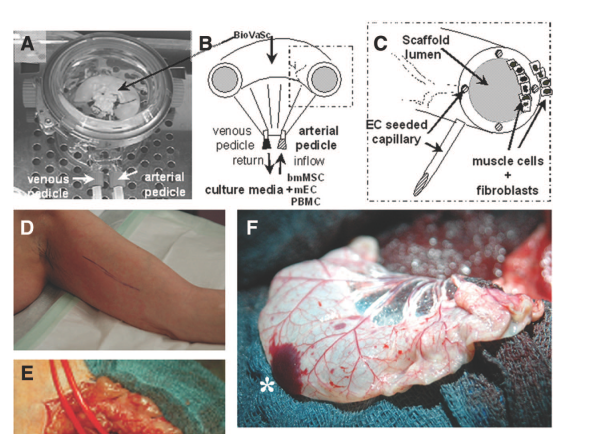
“In the following, I would like to answer the questions you have asked about the BMBF-funded project “RegTech: Bioartificial Reconstruction Tissues for Surgery”, as far as it is possible to refer to the TIB (Leibniz-Informationszentrum Technik und Naturwissenschaften Universitätsbibliothek) Final report of the project for free access at the following link. https://www.tib.eu/en/such/download/?tx_tibsearch_search[docid]=TIBKAT%3A872484653&tx_tibsearch_search[searchspace]=tn&cHash=db1348564f8730136468571c4ea2e4e4#download-mark
The clinical trial envisaged in the aforementioned project was not started, as the manufacturing authorization according to § 13 AMG [medicinal produce law, -LS] as basic requirement for a clinical application of the Biological vascularized Scaffolds (BioVaSC) within the project duration was not given.
For the BMBF-funded project, EUR 1,516,300 were earmarked for the planning period from 01.07.2009 to 31.12.2015. The intended purpose of the clinical validation of the bioartificial reconstruction tissue for the tracheal surgery was not achieved. As explained in the final report, the work could not be carried out in full. The amount of funding has therefore not been paid in full”.
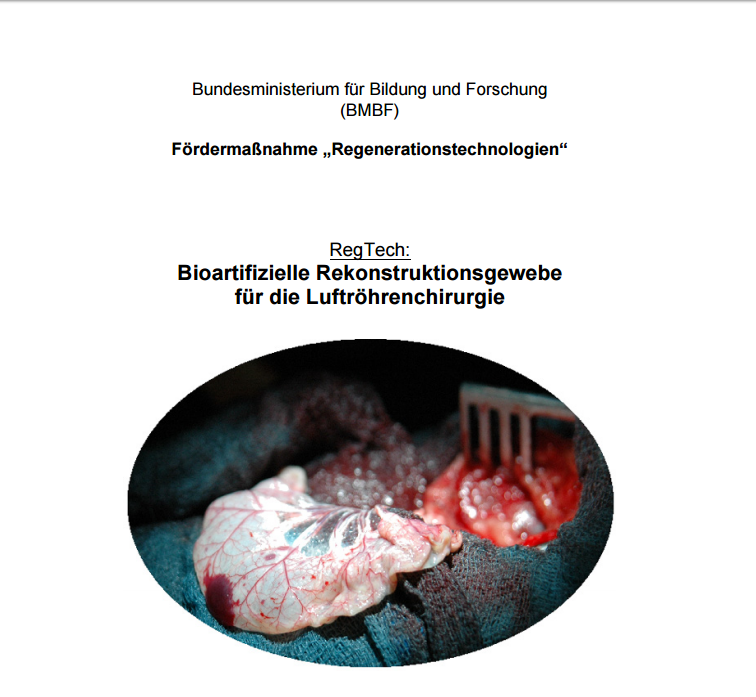
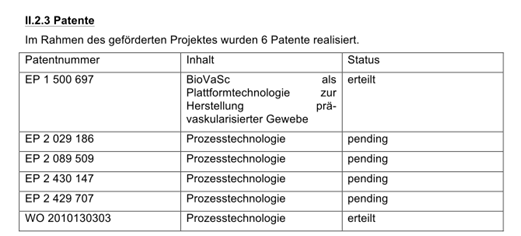
In fact, this final project report to BMBF, which was authored by Thorsten Walles and submitted in the 2nd half of 2016, suggests that his tracheal transplants, previously implanted into 3 human patients, proved later on as too toxic (i.e., full of endotoxins) and unsuitable for animal experimenting. The clinical trial (which never was) run from 7.2009 to 9.2012 and was extended twice, until it ended on 31.12.2015. Of the five Milestones, Walles admits only the first one was achieved: Milestone 1, application for the Manufacturing Authorisation, submitted after repeated failure again on 4.08.2015 (and then denied). The Fraunhofer Institute ceased its engagement with the project already on 31.03.2010, the project was managed from 01.10.2009 on at the University of Würzburg, thus basically for the entire 6-year duration of the project. As a reminder, this University denied to me previously any connection to Walles’ tracheal transplants and to any “regulatory or scientific aspects” of those.
Below some quotes, original text of Walles, and his partner Oliver Pullig (then at Fraunhofer IGB, now together with Heike and Thorsten Walles at University of Würzburg). Here for example what they discovered about the tracheal transplants, decellurised obviously by same method as before for two human patients:
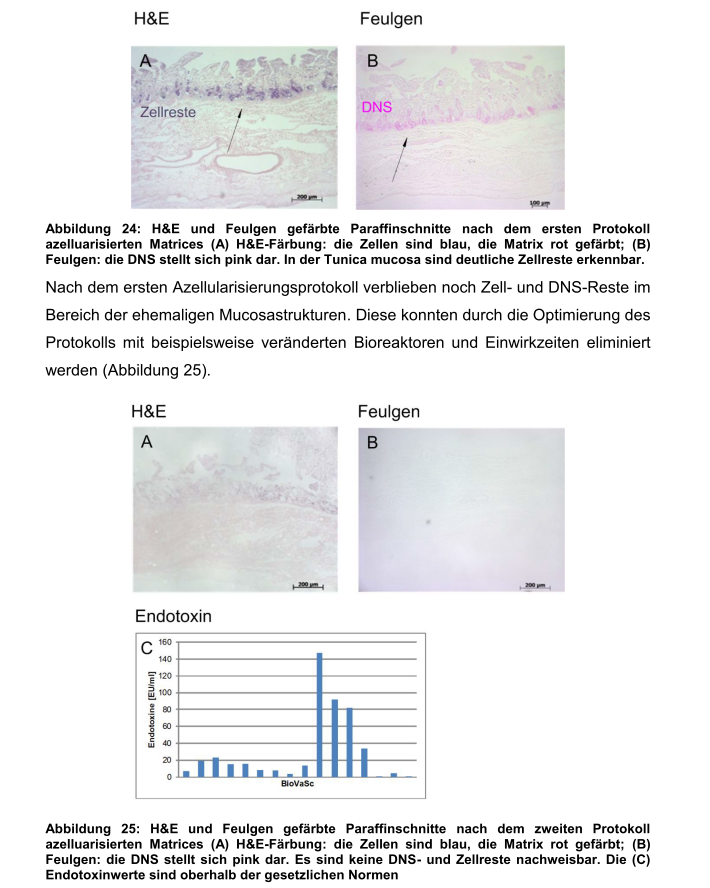
“In the follow-up analysis of the toxin content a too high amount of endotoxins was found. Initially we could achieve though the use of additional cooling steps during decellurisation and use of antibiotics a reduction of endotoxins below the critical level of 0.25 EU/ml.
It proved during the transfer of the R&D technology to BioVaSc manufacturing in GMP conditions that there was no GMP authorisation for some of the previously used substances (e.g., DNAse from Roche [also see reader comment below, -LS] and a change in the process became necessary. Afterwards the pharmacopoeia of BioVaSc showed again critical endotoxin concentrations…”
Update 6.02.2017: In fact, it seems the endotoxins (which a residues of bacteria, capable of causing life-threatening inflammation) were never measured previously when three humans were transplanted. The method was first established and validated by Heike Walles’ PhD student Iris Dally, as evidenced by her dissertation from 2013.
The bioreactor technology, which was previously used on human patients, was found not GMP compliant and was slammed by the state’s authorities during the project evaluation. At the same time, the federal watchdog PEI (the same one which evades answering my FOI inquiry) demanded already in 2010 some animal testing:
“A second consultation took place on 23. 09.2010 at Paul-Ehrlich-Institute in Langen. During the consultation, the necessity and the kind of the animal experiments, relevant for the approval, was discussed. Agreement was the implementation of rodent-implantations to prove and exclude the xenogenic immune reaction to the applied decellurised matrix. The requested experiments on large animals to evaluate the transplants were postponed”.
Thus, Walleses’ tracheal transplants were deemed to dangerous to be implanted into airway of livestock like sheep. They had to be first tested for biocompatibilty as subcutaneous implants in rats, which apparently also never happened (why, actually?). This, mind you, after 3 humans received same technology under compassionate care use.
Walleses now fight in court against me tooth and nail to decry any association with Macchiarini as libel. This is however what Thorsten Walles himself wrote just as the scandal was raging in June 2016, free from every scepticism and in bold:
“In an extensive investigation by the Karolinska Institute, Macchiarini and his coworkers were exonerated of the then raised accusations of scientific misconduct.”
In reference to Macchiarini and his plastic trachea technology, Walles commented that “a scientific assessment of these therapies is currently not possible” and wrote:
“A disadvantage of these two therapy methods [the other one by Emmanual Martinod, using cryo-frozen aortic grafts, -LS], that after the implantation in patients strong inflammation response to the implants occurs, which must be treated extensively and controlled”.
Well, according to the Albrecht book, Walles’ last patient was suffering from very similar symptoms. For “many months”, in fact. According to the final BMBF report, the late patient Singh was examined in the first half of 2011 (shortly before his suicide) and was found fit and active, and able to speak. His re-opened tracheostomy went once again unmentioned.
If you think all this Kafkaesque court attack by Walleses on me makes no sense, tell this to their University Clinic of Würzburg and sign the Open Letter by Prof Rafael Cantera here.
Update 15.03.2017. There were indeed no animal experiments ever performed at all, as confirmed by an investigation by the University of Würzburg (my report here and here, original document here). Nevertheless, the University website still falsely proclaims that “tests in large animals were successfully performed” before Singh was operated (here and here, backup copies here and here).
If you would like to support my court litigation financially, donation amount doesn’t matter, please go to my Patreon site or contact me.

 For Better Science
Pingback: Walles tracheal transplant patients: secrets and lies – For Better Science
Pingback: Will words or actual evidence count in the Walles case? – For Better Science
Pingback: Walles misconduct investigation in Würzburg widens inside a federal cover-up; Jungebluth’s dissertation whitewashed in Hannover – For Better Science
Pingback: Paul-Ehrlich Institute admits to have approved Walles tracheal transplant over phone, without questions – For Better Science
Pingback: Walles court trial against me ends with “amicable settlement” – For Better Science
Pingback: Hannover Medical School MHH: where doctor careers matter more than patient lives? – For Better Science
Pingback: EU commemorates dead patients of Macchiarini & Birchall with a phase 2 trachea transplant trial TETRA – For Better Science
Pingback: Tiwari’s IAAM honours Magdeburg – For Better Science
Pingback: Heike Walles guilty of research misconduct – For Better Science