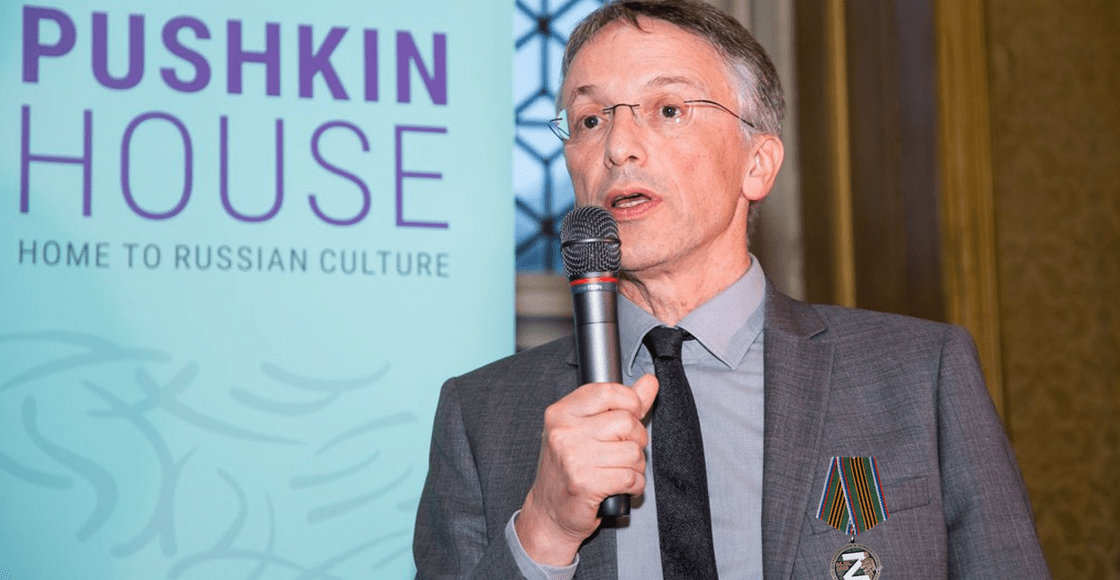

On the occasion of this week’s fourth anniversary of russia’s genocidal full-scale attack on Ukraine, I collected here three cases where Western academics took sides with russia, in a most blatant matter.
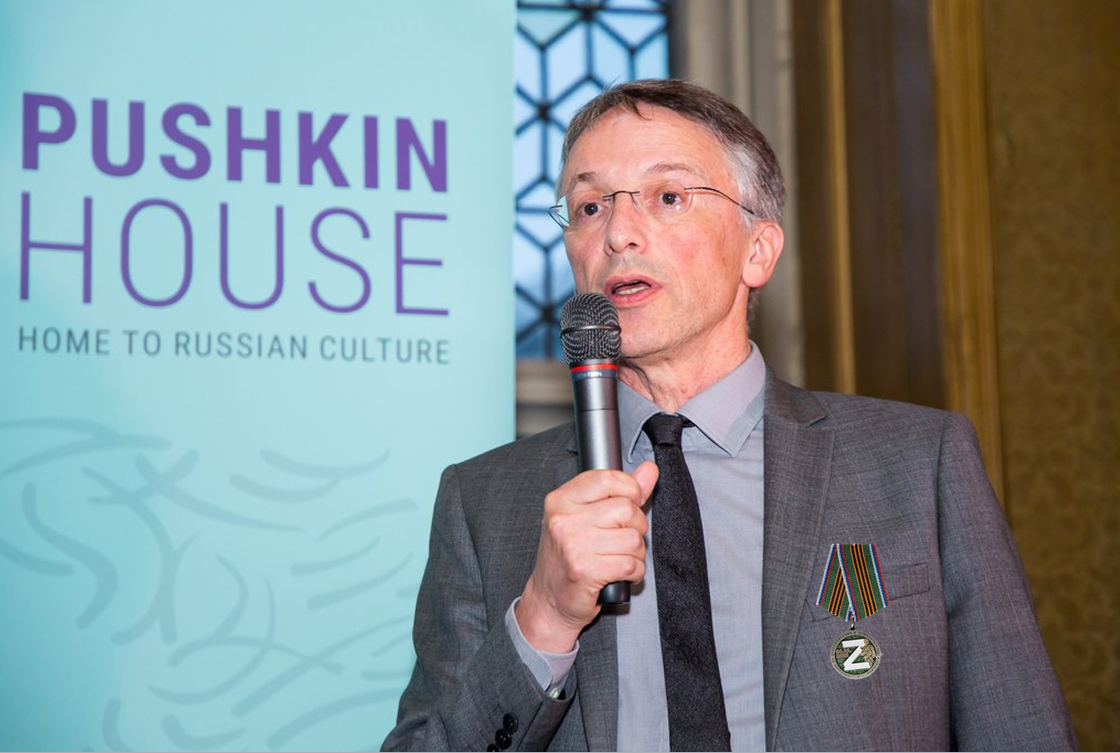
The Great Russian Historian
This week, there was the fourth anniversary of russia’s full-scale attack on Ukraine. In Germany, in a very expensive and fancy location, at Schloss Elmau in Bavaria, a Symposium ends on 27 February 2026. It is titled “World in Pieces“, and curated by the Bulgarian political scientist Ivan Krastev, a known critic of russian imperialism. His invited speakers are mostly academics, like the very prominent historian Timothy Garton Ash and the philosopher Peter Sloterdijk.
One guest however stands out like a sore thumb: Yuri Slezkine, professor of russian, Jewish and Soviet history at UC Berkeley. Slezkine is also a native russian, and no, he didn’t break off with him homeland. Not at all.
Here is an announcement by the Yeltsin Center of a lecture which Slezkine gave in Yekaterinburg, russia, on 12 May 2023. The topic was US-American imperialism:
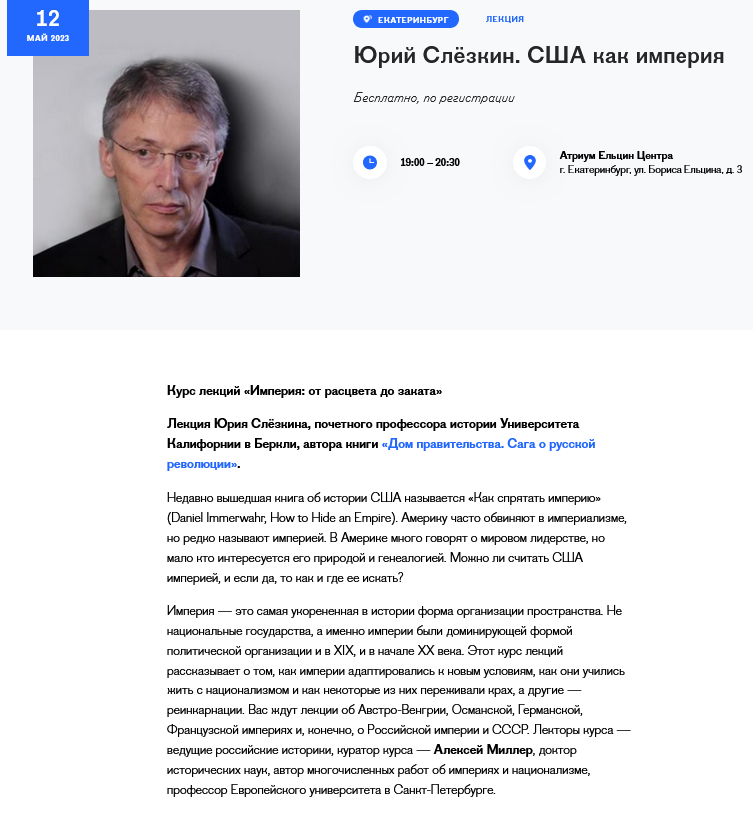
But that’s not all. Let me translate some of that announcement:
“Lecture by Yuri Slezkin, professor emeritus of history at the University of California at Berkeley, author of the book “Government House. The Saga of the Russian Revolution” . […]
America is often accused of imperialism, but is rarely called an empire. In America there is a lot of talk about global leadership, but few are interested in its nature and genealogy. Can the United States be considered an empire, and if so, how and where to look for it?
[…] The course lecturers are leading Russian historians, the course curator is Alexey Miller, Doctor of Historical Sciences, author of numerous works on empires and nationalism, professor at the European University in St. Petersburg.”
Slezkine’s host Alexey Miller (not to be confused with the Gazprom boss of the same name) is a russian history professor in St Petersburg and an outspoken russian imperialist. The German historian Franziska Davies wrote in her October 2025 blog post that until 2022 Miller used to be “a regular guest at international conferences, served as an advisor to students and postdoctoral researchers at Western universities, and published in peer-reviewed journals“, despite his anti-Ukrainian imperialist views, which he shared already in his 2003 book „The Ukrainian Question: The Russian Empire and Nationalism in the Nineteenth Century”.
Slezkine regularly gives lectures in russia about someone else’s imperialism. In March 2024, it was a whole cycle of lectures at the European University at Saint Petersburg, which is neither European nor independent as it claims, but fully loyal to putin’s regime. Slezkine taught at that university also in April 2023, here is his St Petersburg lecture, titled: “Another, and this time final, decline of Western civilization”:
There, Slezkine spoke about his “Pushkin Faith” and about russia being a “separate civilisation”.
In May 2024, while in russia, Slezkine gave an interview to the russian imperial propagandist Fyodor Lukyanov, on the topic of western moral degeneration to less.
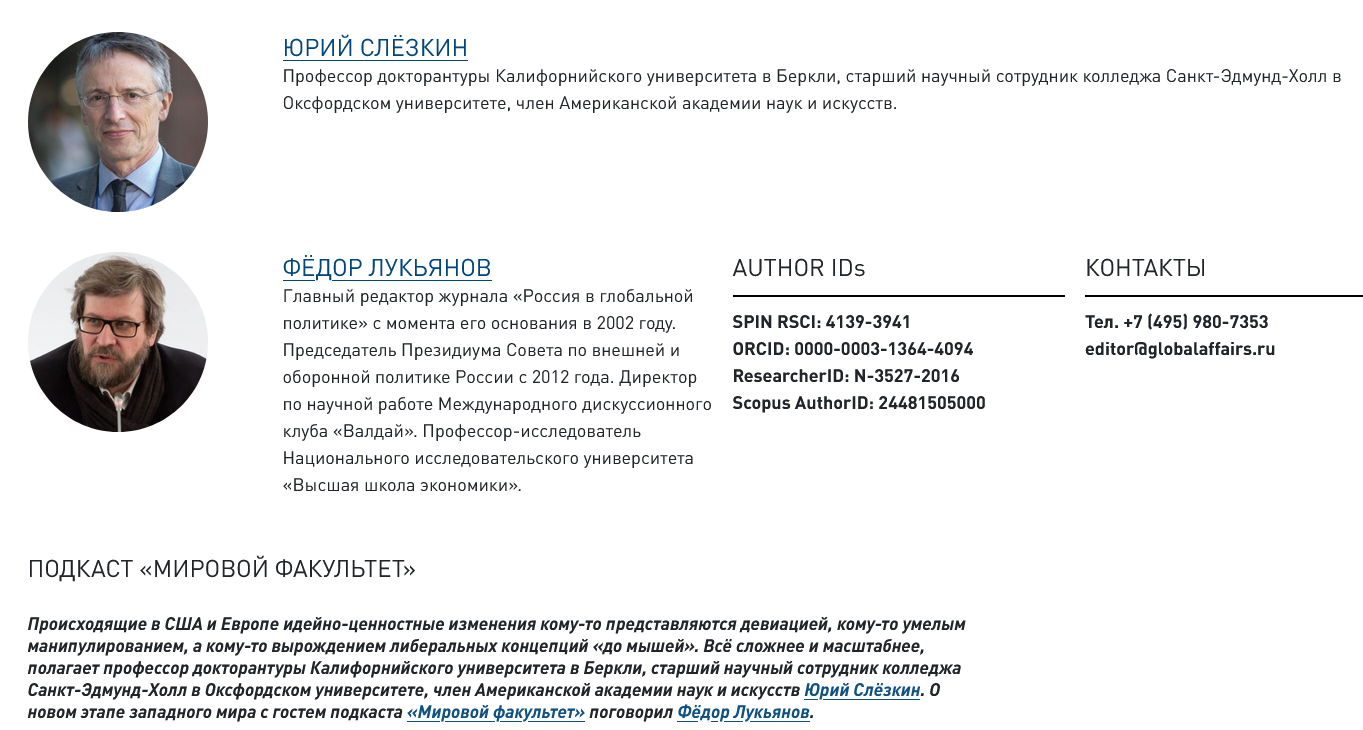
That interview was published by the journal “Russia in Global Politics“, managed by putin’s oligarch Vladimir Potanin, its editorial board members include next to Lukyanov russia’s Foreign Minister Sergey Lavrov, putin’s advisor Yuri Ushakov, and other prominent russian “politicians” and “diplomats”. Basically, a collection of war criminals, child kidnappers and murderers. Slezkine didn’t mind at all.
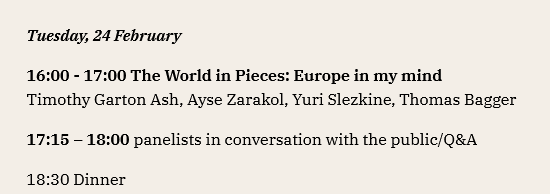
The Schloss Elmau conference opened on 22 February 2026 with a concert by a russian pianist (while Ukrainian pianists are dying on the front lines). It ended on 26 February with a piano concert by Ludovico Einaudi (by the way, who pays for all that actually?). Dietmar Mueller-Elmau, the owner of this luxury hotel (where Germany holds G7 meetings), also shared his wisdom on a panel with Krastev and four more male thinkers.
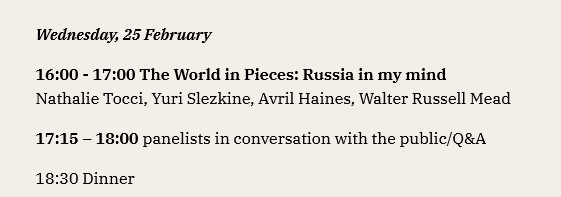
On 24 February 2026, of all days, Slezkine sat on the panel “The World in Pieces: Europe in my mind” with Timothy Garton Ash, Cambridge professor Ayse Zarakol, and the German diplomat Thomas Bagger. The next day, Slezkine spoke about what’s really close to his heart: his beloved russia, and he did this on the panel “The World in Pieces: Russia in my mind“. Other panel members were the former CIA Deputy Director Avril Haines, the University of Florida professor Walter Russell Mead, and the Italian political scientist Nathalie Tocci.
I contacted Krastev and the academic panel members, but received no reply, from nobody.
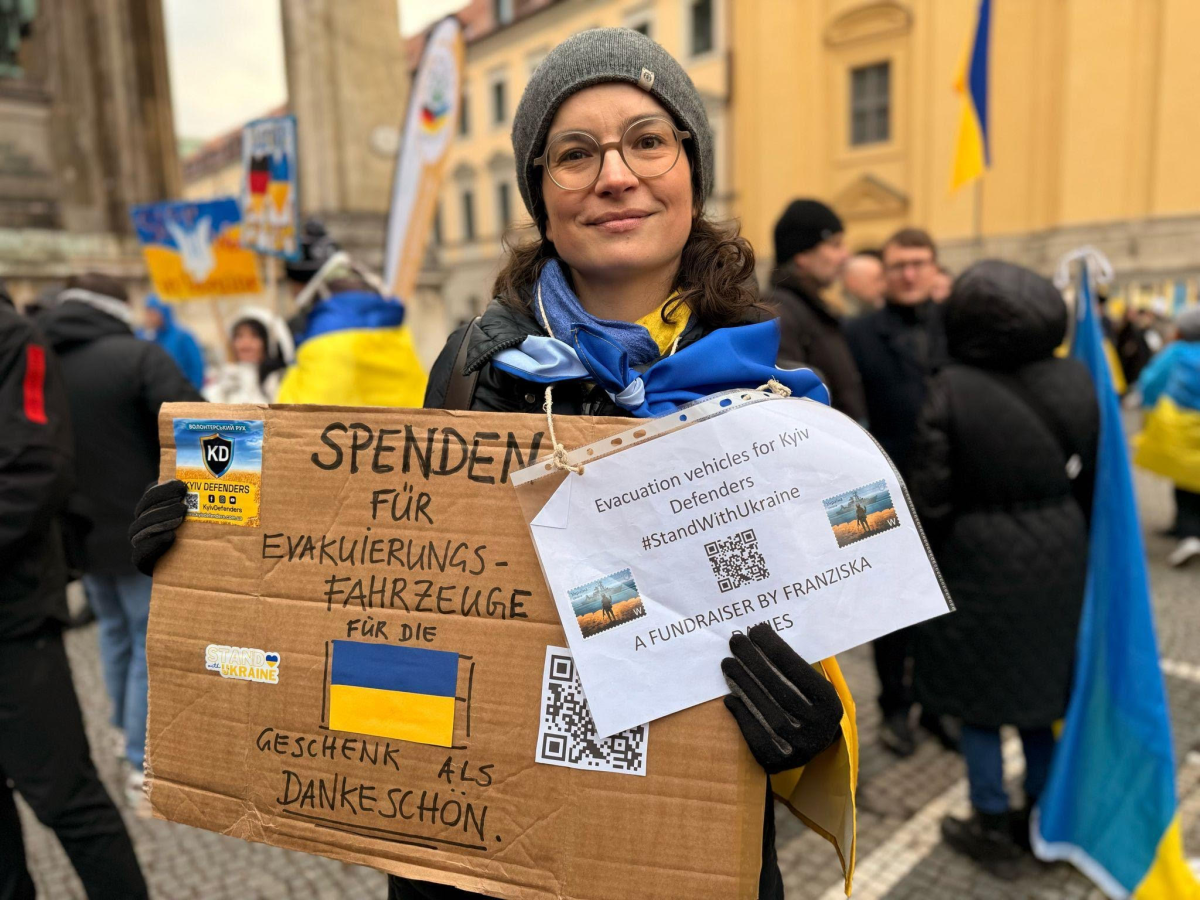
Time to overcome Western arrogance – by Franziska Davies
“Russia can be defeated; Russia has been defeated before. The question is not one of possibility, but of political will.” – Franziska Davies

The Great German Chemist
As russia continues its genocidal war against Ukraine, the United Nations’ organisation UNESCO happily continues issuing a chemistry prize together with the russian government. And the bribe money is very good.
On 23 January 2026, a new Call for Nominations was published:
“Awarded annually to two prizewinners, the prize recognizes individuals for outstanding achievements in the development, dissemination, and international cooperation of the basic sciences, with significant transformational impact at the regional or global level. Each prizewinner receives a financial award of USD 250,000, a gold medal, and a diploma.”
The Mendeleev Prize is being awarded by UNESCO and putin’s regime since 2021:
“The UNESCO-Russia Mendeleev International Prize in the Basic Sciences aims to raise awareness of the importance of these disciplines for peaceful and prosperous societies.”
Yes, they are that cynical.
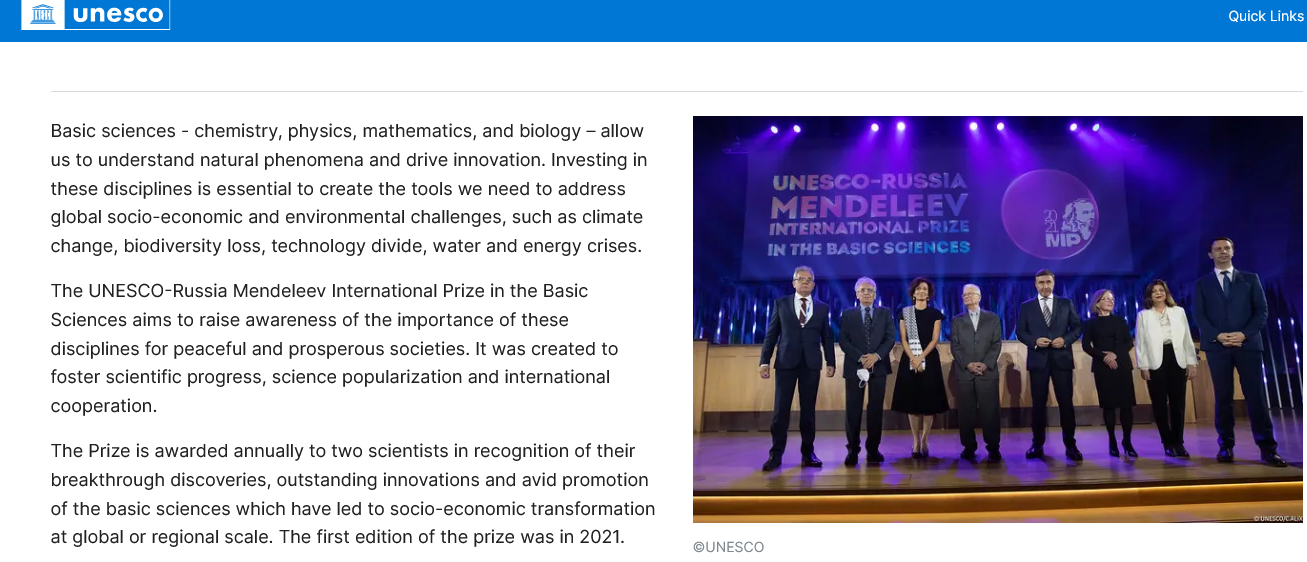
The announcement from 4 February 2026 on the russian side was made by russia’s infamous foreign ministry ork Maria Zakharova:
“We are also looking forward to the announcement of winners in the third contest, as approved by the new UNESCO Director-General Khaled El-Enany. The award ceremony will take place in 2026 at the UNESCO Paris headquarters.
The deadline for submitting applications for the Mendeleev Prize’s fourth edition is March 15, 2026.”
Now, you might wonder, what kind of a sick person would be interested in such a prize and its blood money while russia daily murders Ukrainian civilians with drone and missiles, with particular dedication to bombing maternity hospitals, schools and kindergartens. Many UNESCO heritage sites are being destroyed or damaged, too, not that UNESCO really gives a f***.
In November 2021, as russian armed forces were surrendering Ukraine in preparation of the full-scale attack, the lucky winners were: some russian man (expected) and Vincenzo Balzani, emeritus professor of University of Bologna in Italy. The $250k prize money were assigned “on the recommendation of an eminent international jury chaired by Professor Jean-Pierre Sauvage, winner of the 2016 Nobel Prize in Chemistry.” Sauvage seems to love everything russian, read here:

Nobelists advertise for russian papermill?
“I never agreed to collaborate with this organization. END OF STORY!” – Sir J Fraser Stoddart “I do not know what your business is, and I find the email below highly offensive.” – Morten Meldal
But with the next round two years later, nobody could pretend ignorance about russia’s crimes. In December 2023, the Mendeleev award went again to a russian and to a foreigner, here Klaus Müllen, the 79 years old emeritus director of the Max Planck Institute (MPI) for Polymer Research in Mainz, Germany. UNESCO informed:
“Professors Beletskaya and Müllen were selected by the Director-General of UNESCO for this second edition of the prize on the recommendation of an eminent international jury chaired by Professor Ana María Cetto Kramis, President of the Mexican Physical Society.”
Yes, Müllen did personally travel to Moscow, despite flight bans from the EU. He can be seen at the December 2023 award ceremony, where he met orks like Dmitry Chernyshenko (Deputy Prime Minister), Valery Falkov (Minister of Higher Education), Alexander Pankin (Deputy Foreign Minister), and other people. Müllen seems very happy about the famous russian hospitality:
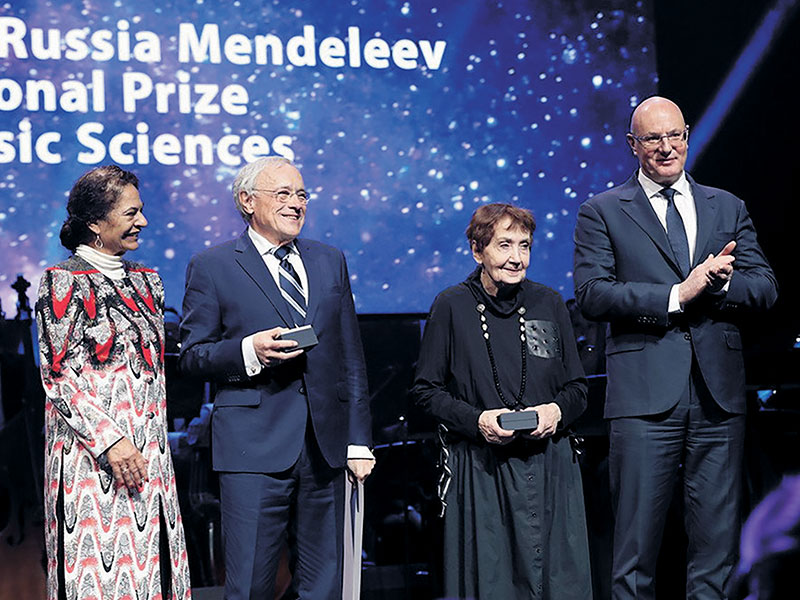
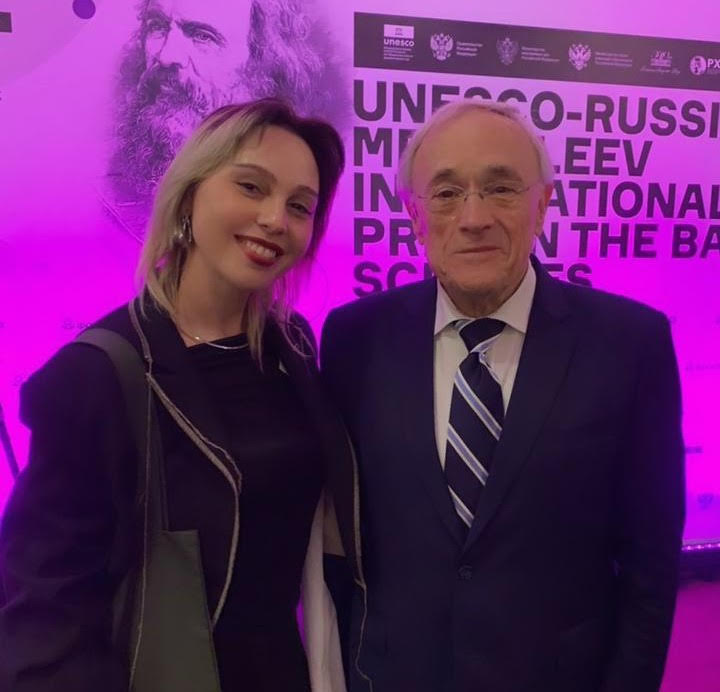
Müllen must have had such fun in russia, that he later gave an online seminar to his russian friends in February 2024, titled totally not cynically “‘Is the Future Black?” The only sad bit is that, being almost 80, Müllen doesn’t have much time left to fully enjoy that russian blood money of quarter a million of dollars.
I asked the Max Planck Society (MPG) to explain Müllen’s behaviour, and their Head of Communications told me this (translated):
“This is an individual decision over which the MPG has no influence. Just as it is a purely personal decision of our Nobel Prize winner Ferenc Krausz to resign his membership in the Russian Academy of Sciences due to the Russian war of aggression.
As an institution, the MPG has taken a clear position on the matter: With the start of the war of aggression, institutional cooperation with Russia was put on hold.
But the following also applies here: The MPG has no influence on bilateral cooperation, as this would restrict the academic freedom of its scientists.”
Yet Müllen’s own MPI for Polymer Research Mainz (my last job in science happened to have been at that institute!) is very happy about that russian award:
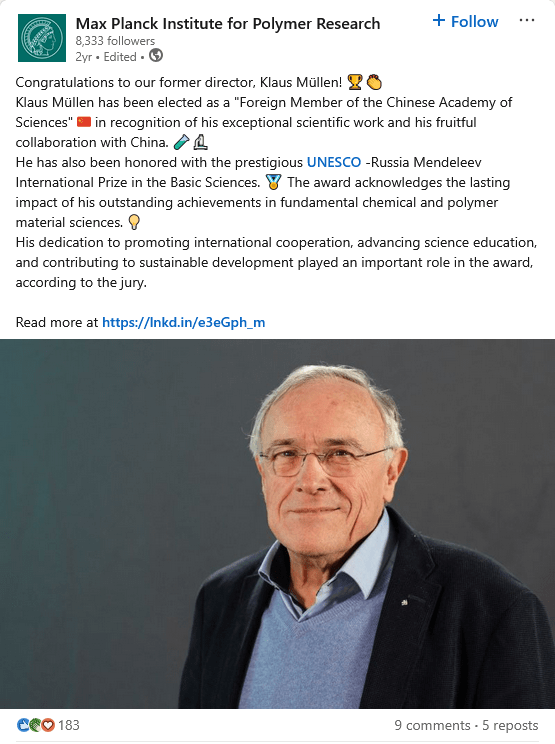
“Congratulations to our former director, Klaus Müllen! 🏆👏
[…]
He has also been honored with the prestigious UNESCO -Russia Mendeleev International Prize in the Basic Sciences. 🏅 The award acknowledges the lasting impact of his outstanding achievements in fundamental chemical and polymer material sciences. 💡”
(MPIP Mainz on LinkedIn. Link goes to UNESCO announcement)
The MPG spokesperson told me that this announcement is not problematic because it is by the institute and not by the society. Indeed, individual Max Planck Institutes are perfectly free to continue their collaborations with russia, never mind what the society at large may have announced (see September 2024 Shorts).
Müllen himself never replied to my emails.
Oh, and there is another German professor involved, as Mendeleev Prize Jury member in 2023 and now in 2026: Martin Möller, professor at RWTH Aachen University. In 2018, his DWI Leibniz Institute proudly announced that Möller was “elected foreign member of the Russian Academy of Sciences“, on the occasion of his research at Nesmeyanov Institute in Moscow being sponsored by a “Mega Grant of the Government of the Russian Federation“.
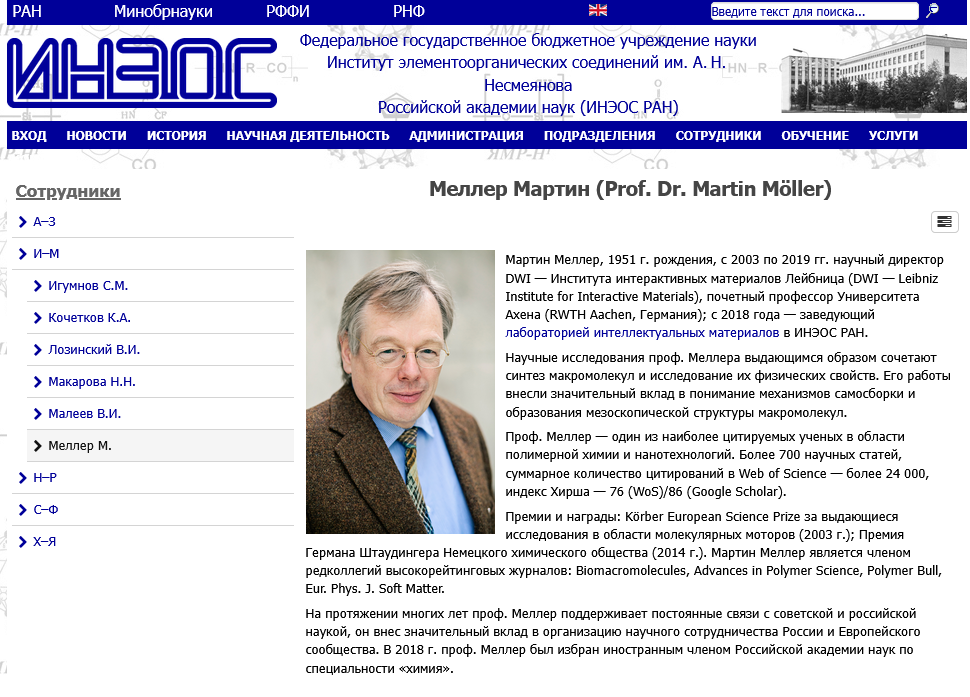
Next to Möllen, other foreign jury members from 2023 and 2026 are Eugenio Coronado Miralles (University of Valencia, Spain), Krishna N Ganesh (IISER, India), Faith Njoki Karanja (University of Nairobi, Kenya) and Farida Fassi (CERN, University of Warwick, UK and IFIC, Spain). The Chair Ana María Cetto Kramis (National Autonomous University of Mexico) is a former IAEA Deputy Director General, she just returned from another trip to her beloved russia, discussing nuclear safety (unironically).
Boycott Russian Science (and Everything Else) – Thoughts on War in Ukraine
The state it’s in, we don’t need Russian science anyway.
The Great Holocaust Historians
Meet Marta Havryshko, a Ukrainian native who fled the country when the full scale invasion started, to become guest scientist at University of Basel in Switzerland and then Fellow at US Holocaust Memorial Museum and visiting assistant professor at Clark University in Worcester, USA. Her qualifications for the job: being a self-proclaimed feminist victim of Ukrainian Nazi-nationalist-antisemitic persecution.
As Vatnik Soup informs, Havrishko accuses past and today’s Ukrainians of being evil Nazis who love to murder Jews and wage war against innocent russians. Never mind that President Zelenskyy is ethnically Jewish.
The line of argument is: of course it’s bad what russia does, but Ukrainians brought it upon themselves by being an evil bunch of Nazis. Havrishko openly accuses Ukraine of having started the war (sic!), and takes sides with anyone who supports russia: putin-loving far-right “vloggers”, Tulsi Gabbard, German AfD, the openly antisemitic Polish Confederation party…
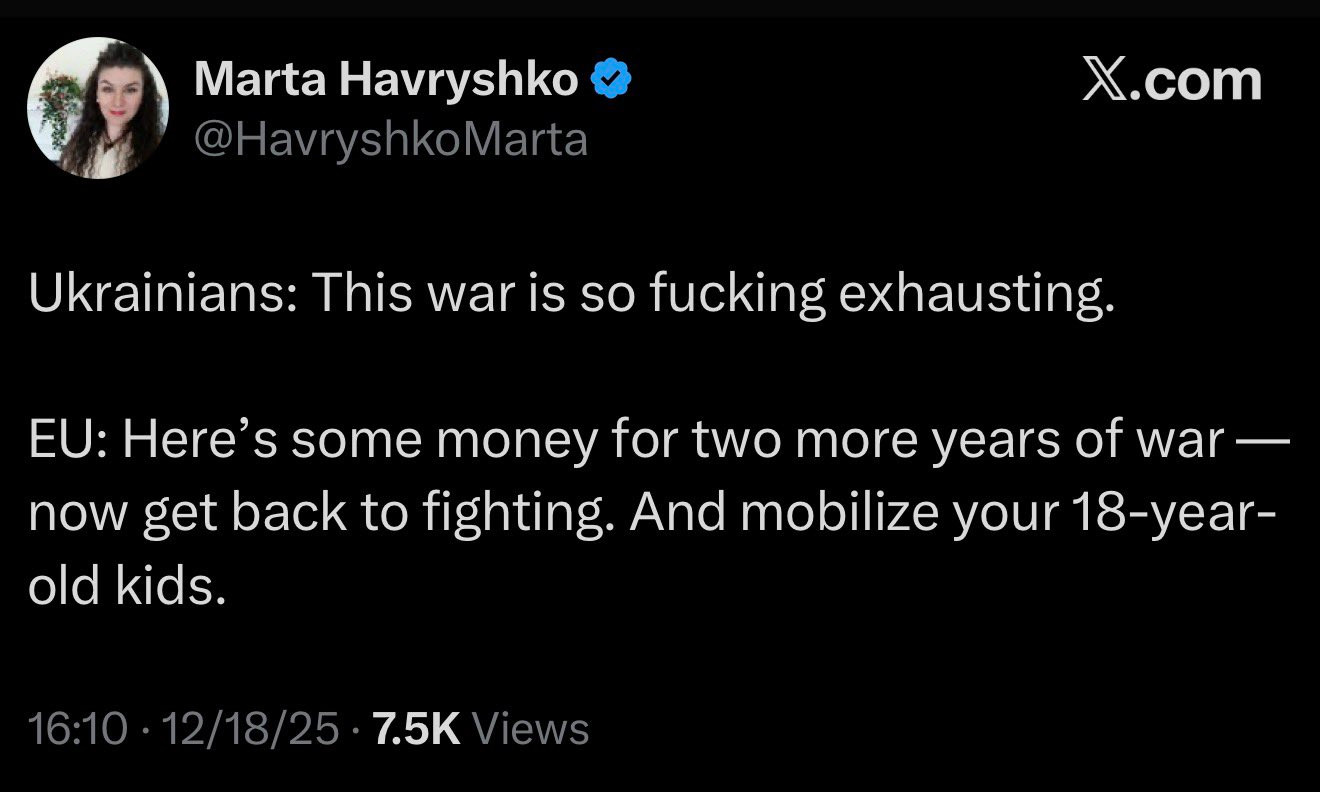
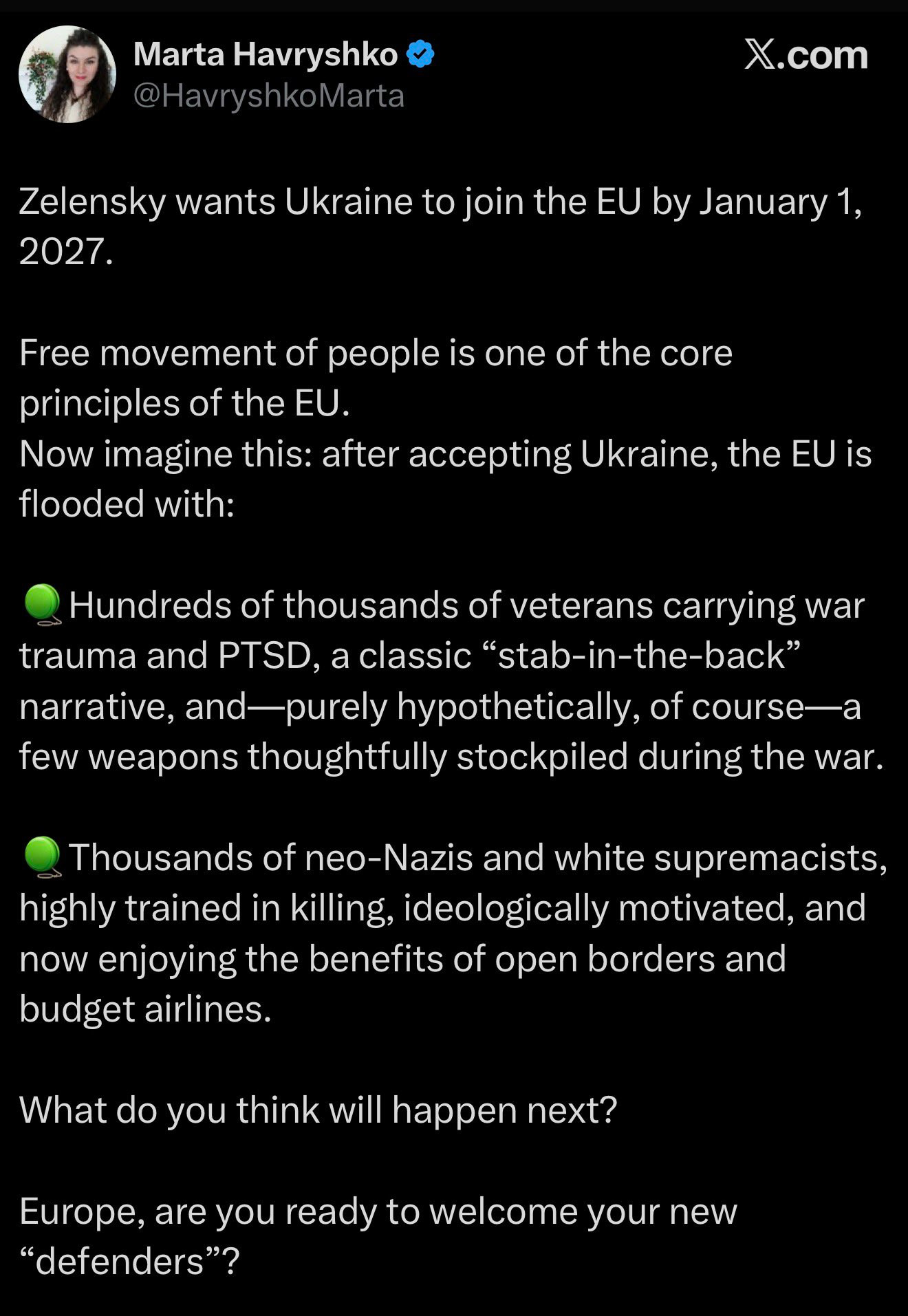
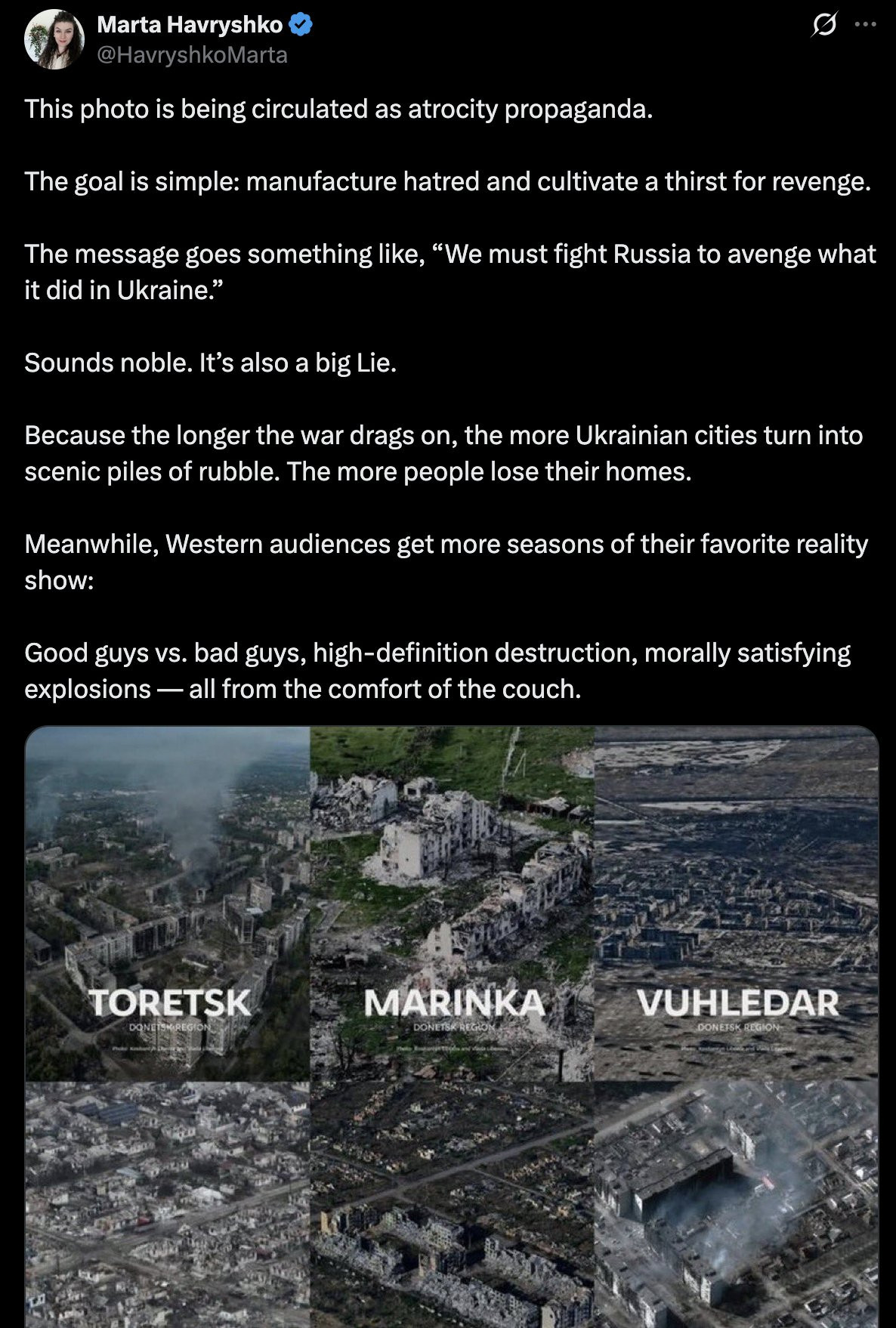
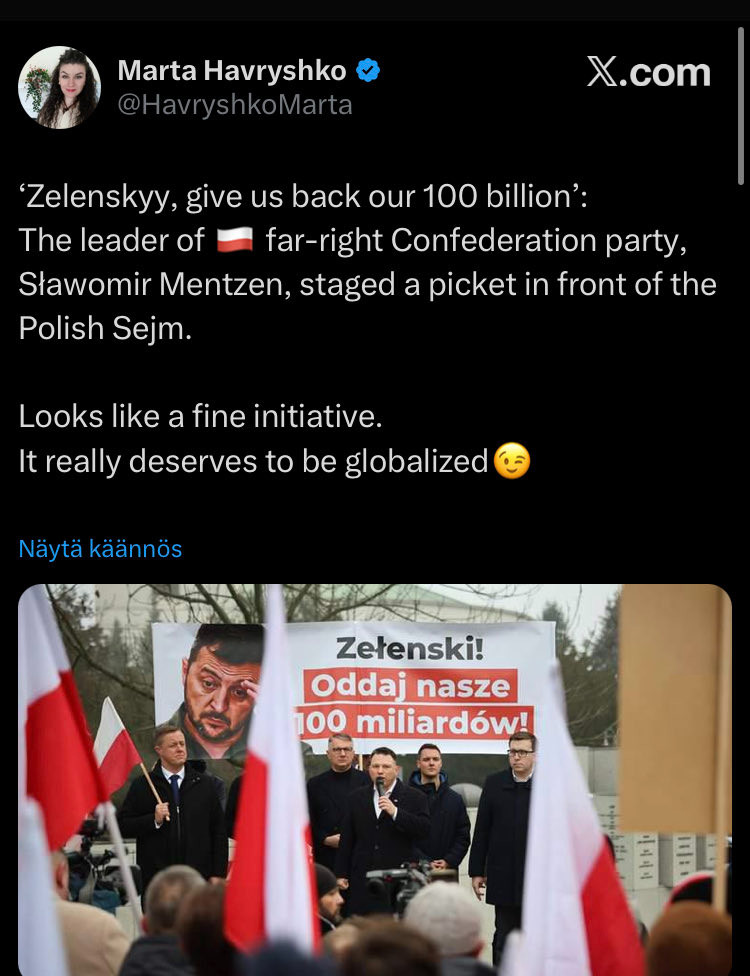
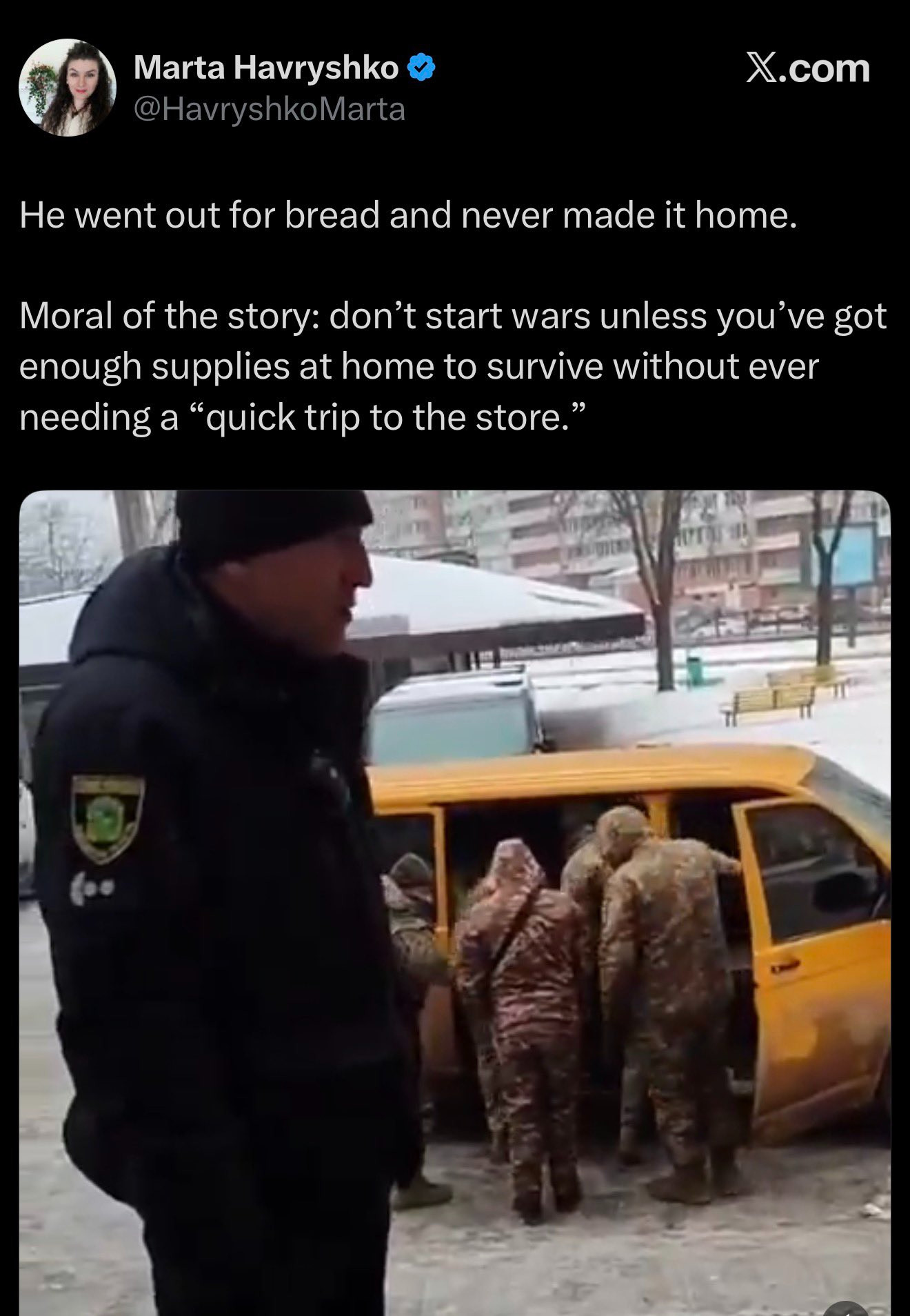
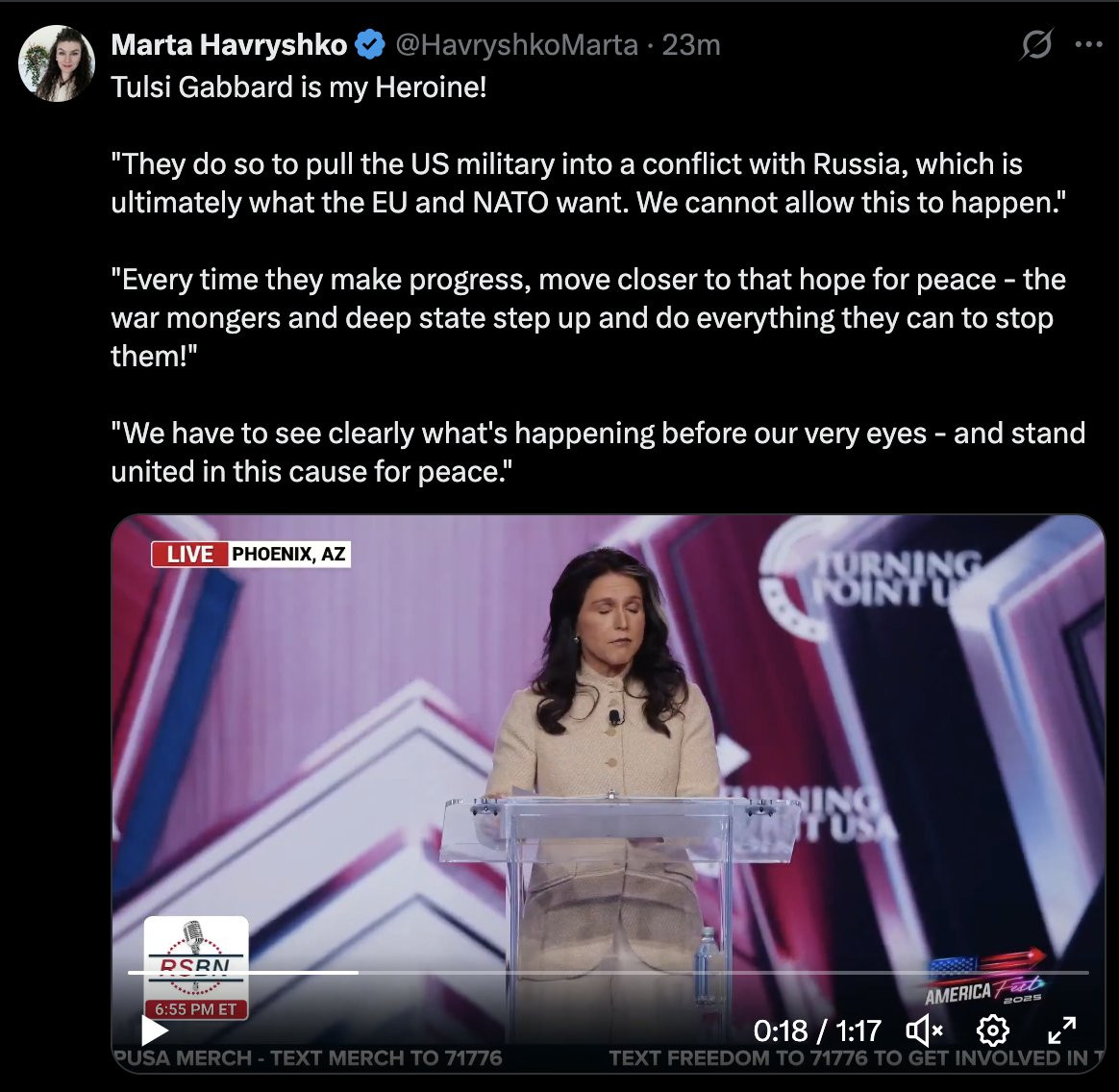
And this is the person the academic community decided to defend from criticism. On 22 July 2025, this long open letter was published in the magazine New Global Politics, and signed by many people -some anonymous, some not really relevant, but also quite some major historians of the Holocaust and of Ukraine and Eastern Europe. Excerpts (links theirs):
“We, the undersigned, express deep concern about the mounting restrictions on academic freedom in Ukraine in relation to the complex issues of Ukrainian politics and history. […]
In addition to these tragedies, we are witnessing an alarming rise in harassment, threats, and persecution—often stemming from nationalist activism and public campaigns — targeting scholars who continue their research under these exceptionally difficult wartime conditions. Particularly vulnerable are those working on sensitive, underexamined, and often politically inconvenient topics such as the far right, ethnonationalism, and democratic backsliding in Ukraine.
One such scholar is Ukrainian historian and war refugee Dr. Marta Havryshko […]
Despite this record, Dr. Havryshko has been subjected to sustained antisemitic abuse, as well as death and rape threats targeting her and her child. For over a year, these threats have come from an international far-right network responding to her critical stance on Ukrainian ethnonationalism and her work on the historical and contemporary far right in Ukraine. Many of the threats originate from Ukrainian and Russian far-right actors involved in military activities. Given the network’s connections to far-right terrorism, U.S. law enforcement agencies—including the police and the FBI—have been actively investigating these threats with utmost seriousness.
But in Ukraine, the response has been strikingly different. In the domestic media space, some pro-government bloggers, journalists, public figures, militants, and “concerned citizens” have attacked and stigmatized Dr.Havryshko’s research, accusing her of spreading “pro-Russian propaganda” and labeling her a “Russian asset.” […]
We stand not only with Marta, but with all scholars, journalists, and researchers whose conscience does not align with official narratives.
In today’s Ukraine, the notion of protecting the nation’s reputation—crucial for maintaining international support during wartime—is increasingly used to justify repression and to curtail academic freedom and public debate. As a result, the space for open reflection on the country’s own internal challenges has dramatically narrowed.”
I wonder if this was written by the Kremlin. The signatories include a huge number of history professors, the German historian and Clark University professor Thomas Kühne likely invited Havryshko as guest scholar.
But diplomacy, but elections! – Thoughts on russia’s war on Ukraine
Once again, two dictators prepare to divide Europe.
Not being a historian myself, I asked ChatGPT to name the most prominent signatories:
- Omer Bartov (Brown University, USA),
- Jane Burbank (New York University, USA),
- Doris Bergen (University of Toronto, Canada),
- David Marples (University of Alberta, Canada)
- Paul J. Himka (University of Alberta, Canada),
- J.P. Daughton (Stanford University, USA)
- Robert Crews (Stanford University, USA),
- Havi Dreifuss (Tel Aviv University, Israel),
- Anna Muller (University of Michigan-Dearborn, USA),
- Anna Holian (Arizona State University, USA), Kristin Stapleton (University at Buffalo, USA),
- Mark Levene (University of Southampton, UK),
- Ivan Katchanovski (University of Ottawa, Canada),
- Andrew I. Port (Wayne State University, USA),
- Kristin Stapleton (University at Buffalo, USA),
- Grzegorz Rossoliński-Liebe (FU Berlin, Germany),
- Jacques Sapir (EHESS, France),
- Anna Hugon (Université Paris 1, France),
- Sandra Boehringer (University of Strasbourg, France),
- Thomas Lindenberger (TU Dresden, Germany),
- Françoise Thébaud (University of Avignon, France),
- David d’Avray (UCL and University of Oxford),
- Janice Kulyk Keefer (University of Guelph, Canada),
- Craig Brandist (University of Sheffield, UK), Chris Read (University of Warwick, UK).
Antisemite Antifascists – Thoughts on Israel and Ukraine
Does the anti-colonial left really care about Palestinians? Or do they just dislike Jews?
I should explain that portraying Ukrainian as Nazis and antisemites is an old Soviet tradition which started even before World War 2. Jews inside Soviet Union (like myself) were indoctrinated by the regime that Ukrainians would hate them and only russia protects the Jews from another slaughter by Ukrainians. At the same time, Jewish people outside of USSR were convinced by the Soviet propaganda that Ukrainians were the main perpetrator of the Holocaust, worse than Germans even. Germans in turn eagerly accepted this Soviet fiction of Ukrainian responsibility (for obvious reasons), in 2013 German public television even aired a series (“Unsere Mütter, unsere Väter“), with Wehrmacht soldiers as the good guys and beastly Ukrainians as sadistic mass-murderers of Jews. Not just lay people – generations of academic historians, on left and right, were trained to despise everything Ukrainian. Even after russia’s full-scale war against Ukraine started in 2022, our media was still busy “uncovering” Ukraine’s Nazi activities.
Unsurprisingly, Havryshko’s employer, the US Holocaust Memorial Museum, endorsed ICE terror on non-white children, with the argument that it’s only wrong when Jewish children were the target. Seriously.

Earlier this month, I published an article about high-ranking academics organising support letters for a peer under accusations of sexual harassment (now there are also accusations of plagiarism, including from those who signed the letter):
Marginalised and isolated in academic publishing activities
A history professor remains a valuable peer even if credibly accused of sexual harassment. And even of plagiarism? Will they still defend him with their letters?
It seems, professors love to rally behind the worst characters doing the worst things, and here they rallied in support of russia’s war on Ukraine.
Note: two of these three cases above already appeared in Friday Shorts.
Donate!
If you are interested to support my work, you can leave here a small tip of $5. Or several of small tips, just increase the amount as you like (2x=€10; 5x=€25). Your generous patronage of my journalism will be most appreciated!
€5.00

 For Better Science
Oh my god, the Nazi Curtis Yarvin was also at that Schloss Elmau conference…

https://www.zeit.de/2026/11/curtis-yarvin-rechtsextremismus-schloss-elmau-ivan-krastev-peter-sloterdijk
LikeLike