

Schneider Shorts of 2 January 2026 – a young PhD student in London, a police raid in Madrid, things you can achieve with semaglutide, with Alzheimer’s reversed, Springer Nature taking action, and why you must have chocolate and coffee now.
Table of Discontent
Science Elites
- 25 million euros – police raids CNIO centre in Madrid, Spain
- One young PhD student – Ajan Reginald is never too old to learn new tricks
Scholarly Publishing
- Insulting all authors rather than the articles – Springer Nature takes action, with a new editor
Science Breakthrough
- Ozempic face – financial advice to Americans
- Very excited and encouraged – Andrew Pieper reverses Alzheimer’s!
- Enjoy dark chocolate or coffee, or both – a simple secret to longer life
Science Elites
25 million euros
More corruption in Spanish science!
El Mundo reported on 23 December 2025 (Google-translated):
“The National Police appeared this Monday at the headquarters of the National Cancer Research Center (CNIO) and seized several computers and documentation, as EL MUNDO has learned from in-person sources. […]
This action occurs after the Anti-Corruption Prosecutor’s Office opened proceedings following the complaint filed by the director of Operations of the house until last September, who, also supported by the director of Regulatory Compliance, assures that a criminal plot by former senior officials centered on the manager of the institution for 23 years, Juan Arroyo , was able to deduct up to 25 million euros from the budgets in 18 years, by rigging contracts.
EL MUNDO exclusively on this complaint three weeks ago”
Arroyo was already removed from his position by the Board of Trustees. Peculiarly, CNIO’s scientific director Maria Blasco was sacked for embezzlement and workplace harassment a few months before (read June 2025 Shorts), and Blasco accused Arroyo of embezzlement also. The latter however remained at CNIO as Deputy Director of Economic Affairs, and was only kicked out after El Mundo revealed the theft of €25 million by him and his acolytes.
El Pais reported on 22 December 2025 about companies Arroyo’s associates set up to divert CNIO’s money to them: Gedosol (€13 million in contracts), Zeus SL (€5.4 million in contracts) and Alaos ITL SL (€11 million in contracts).

The Royal Academy of Exact, Physical, and Natural Bullying
“If, within the aforementioned 15 days, you have not proceeded to make the retraction I am requesting, this corporation will consider itself free to take any legal actions necessary under the law.” – Jesus Maria Sanz Serna, President

One young PhD student
If you missed the pathological fraudster, liar and struck-off dentist Ajan Reginald, well, the dearest lad of the Nobel Prize laureate Sir Martin Evans is now working towards that PhD degree he always dreamt of!
And not just somewhere, but at the Queen Mary University of London (QMUL), specifically at Centre for Genomics and Child Health. He enlisted under his alternative name, Trevor:

Ajan, who is still a spring chicken aged merely 53, is listed as the PhD student of one QMUL professor named Joanne Martin MA MB BS MA PhD RCPathME FIBMS (Hon) FFPH (Hon) FRCPI (Hon) FRCPath, who is Deputy Vice Principal Health and director of the Blizard Institute at QMUL, plus former director on the Board of Barts Health NHS Trust and former President of the Royal College of Pathologists. On top of that, Martin combines her supervision of Ajan with her work as non-executive director at Ajan’s and Evans’s company Cardiogeni, a Celixir-revival scam I wrote about in June 2025 Shorts.

Requiem for Celixir
How the Nobel Prize winner Sir Martin Evans and the lying crook Ajan Reginald almost succeeded, were it not for Patricia Murray.
We wish young Ajan all the best for his PhD studies, I only pity all those QMUL employees whom his Deputy VP supervisor will sack without mercy should they protest at this obscenity. As we all know Ajan, he will most likely steal stuff off the internet for his dissertation, as he did with the data for Celixir patents.
Other new arrivals to Cardiogeni board are:
- Armand Keating, professor at Princess Margaret Cancer Centre, University of Toronto, Canada. Just like Ajan’s PhD mentor Jo Martin, Keating already works as “independent Chief Medical Advisor” for Ajan’s and Sir Martin’s other shell company, Roquefort Therapeutics (read September 2023 Shorts).
- Chaim Hurvitz, an Israeli entrepreneur who in 2017 was involved in massive fraud at his company Teva Pharmaceutical (founded by his late father Eli Hurvitz). Hurvitz Jr’s activities caused Teva to pay a $519 million bribery settlement in USA for violating the US Foreign Corrupt Practices Act. He was additionally investigated by Israeli police for Teva’s bribes to officials in Ukraine, Mexico and Russia)
- Lord James Bethell, 5th Baron Bethell, former nightclub manager and upper-class git who during the pandemic paid bribes to get appointed as Minister for NHS Test and Trace, a position he then used to enrich himself (as exposed by Private Eye) for which he was subject to an investigation by the House of Lords. Fun fact: his late father, the 4th Baron Bethel, lost his ministry job due to allegations of being an agent for Soviet KGB.
Presumably Ajan will now again run to lodge a fraudulent DMCA-Take Down claim and order cheap threats from Pakistan against me and this article, as he did with all my previous reporting (read June 2024 Shorts).

Sir Martin and Ajan, the stem cell gold-diggers
Sir Martin Evans, winner of Nobel prize 2007, founded in 2009 the stem cell start-up Celixir, together with a struck-off dentist Ajan Reginald. With the help of the British heart surgeon Stephen Westaby, they ran a very profitable clinical trial in Greece, which now moved into UK.
Scholarly Publishing
Insulting all authors rather than the articles
Springer Nature has zero tolerance for research fraud and antivaxxery. To prove how seriously they mean it, the publisher did NOT retract the fraudulent paper Tsatsakis et al 2025 in the journal Daru by its Editor-in-Chief Mohammad Abdollahi (with his fellow papermillers Aristidis Tsatsakis, Michael Aschner and Anca Oana Docea), and instead solved the case by adding a second Editor-in-Chief. Who is of course yet another papermiller.
Read the back story here:

An expert criticism by fraudsters and antivaxxers: the case of PubPeer
“A concerning trend is the rise of “hyper-skepticism”” – ChatGPT
Springer Nature swiftly issued this editorial note:

Appropriate action has now been taken. Abdolhahi obviously couldn’t be removed because he is the former COPE Council member, thus one of world’s top authorities on publication ethics. Hence, enjoy his expert opinion, from LinkedIn, the second post refers directly to yours truly:
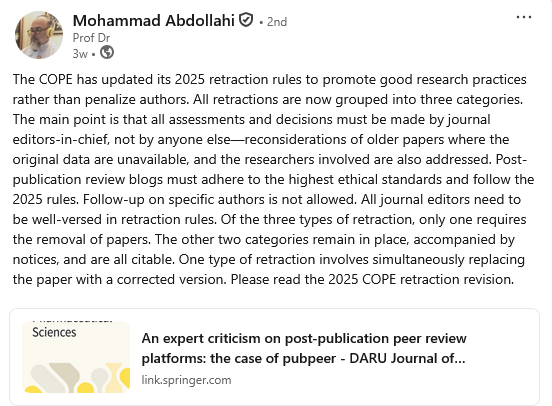

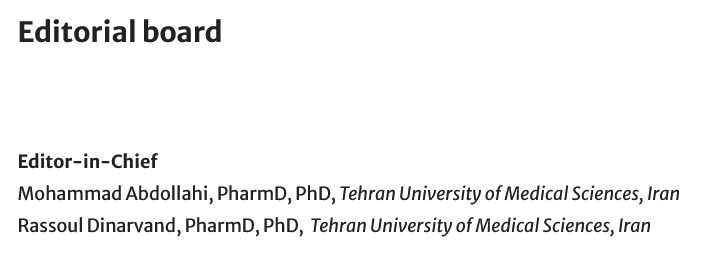
Daru is published by Springer Nature, but run by the Tehran University of Medical Sciences, and Abdolhahi’s new colleague Rassoul Dinarvand is also professor at that university:
Dinarvand’s qualifications are on PubPeer, 25 threads currently. Here a retraction to convince even the most sceptical of Springer Nature executives:
Fatemeh Talaei , Ebrahim Azizi , Rassoul Dinarvand, Fatemeh Atyabi Thiolated chitosan nanoparticles as a delivery system for antisense therapy: evaluation against EGFR in T47D breast cancer cells International Journal of Nanomedicine (2011) doi: 10.2147/ijn.s22731
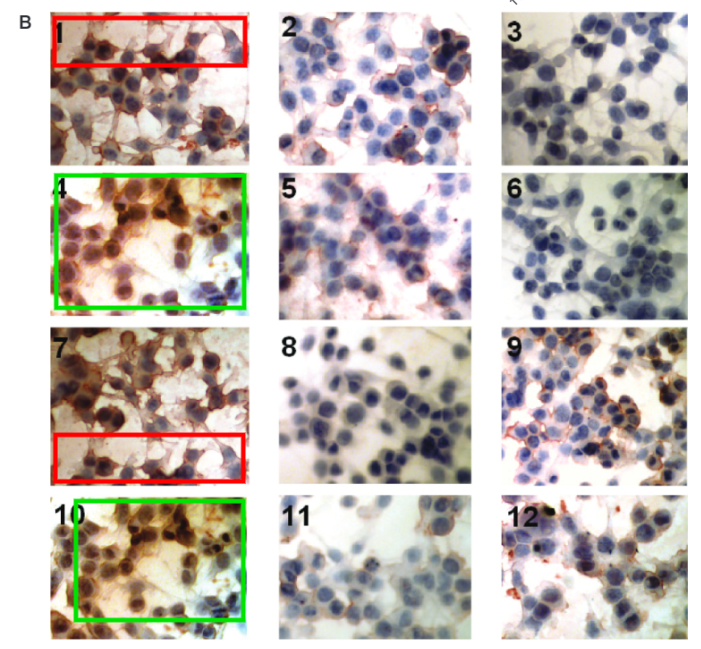
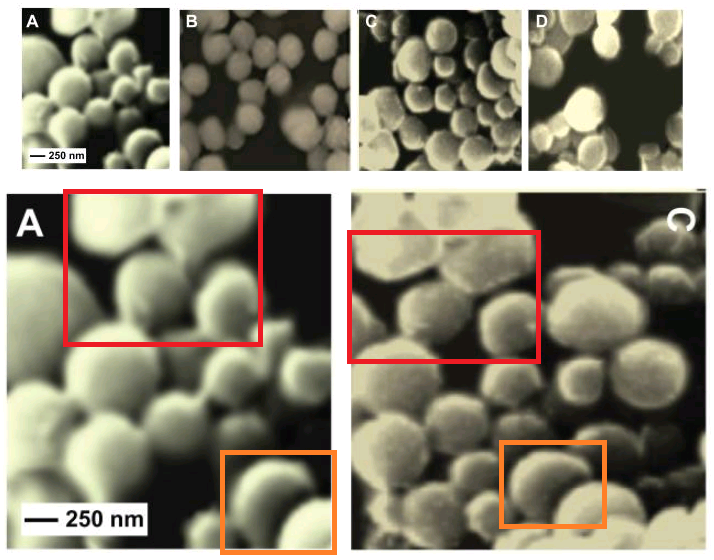
An unnamed person, who may or may not be Dinarvand, replied on PubPeer that the pictures were merely for “esthetic purpose […] and not for any type of measurement“, and that “comments by dubious persons such as Actinopolyspora biskrensis and Hoya camphorifolia shows the competition between journals and is very disturbing in general!“.
The retraction arrived on 11 August 2022:
“Concerns were raised regarding the alleged duplication of images in Figures 3 and 7. Specifically,
- Figure 3A, chitosan nanoparticles, appears to have been duplicated with a similar image for Figure 3C, DOX-NAC-C nanoparticles.
- Figure 7B 1, FBS-free RPMI, appears to have been duplicated with a similar image for Figure 7B 7, NAP-C.
- Figure 7B 4, NAC-C, appears to have been duplicated with a similar image for Figure 7B 10, Chitosan.
The authors responded to our queries but were unable to provide a satisfactory explanation for the duplicated images and the Editor requested for the article to be retracted. The authors were notified of this decision.”
Here Dinarvand signed his comment:
- Zahra Nagheh , Shiva Irani, Reza Mirfakhraie , Rassoul Dinarvand SN38-PEG-PLGA-verapamil nanoparticles inhibit proliferation and downregulate drug transporter ABCG2 gene expression in colorectal cancer cells Progress in Biomaterials (2017) doi: 10.1007/s40204-017-0073-y
- Farhad Alvandifar , Baharnaz Ghaffari , Navid Goodarzi , Nazanin Shabani Ravari , Fahimeh Karami , Mohsen Amini , Effat Souri , Mohammad Reza Khoshayand , Mehdi Esfandyari-Manesh , Razieh Mohammad Jafari , Fatemeh Atyabi , Shiva Irani , Rassoul Dinarvand Dual drug delivery system of PLGA nanoparticles to reverse drug resistance by altering BAX/Bcl-2 Journal of Drug Delivery Science and Technology (2018) doi: 10.1016/j.jddst.2018.07.019

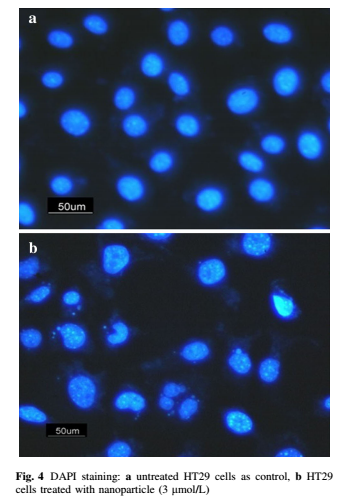
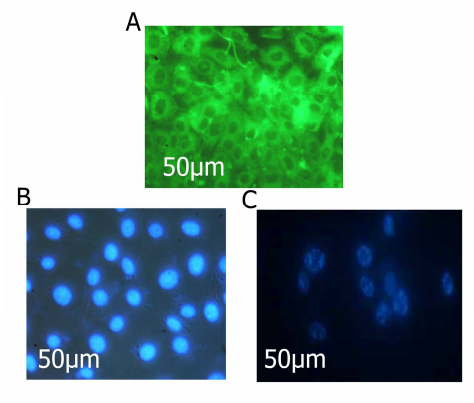
Dinarvand explained that the cloned nanoparticles were “unintended mixup” and issued in March 2023 a Corrigendum for the latter paper, that its “Figs. 3a and b are not correct” and that this “correction does not change the discussion or conclusions of the article.” Figure 6b was left as it was, as Dinarvard explained, it “does no have any effect on the manuscript results and conclusion“, and anyway, it was “an unintended mistake by the student“.
This was also corrected, in 2022, for “an error in Fig. 3“:
Fatemeh Khonsari , Mostafa Heydari , Rassoul Dinarvand , Mohammad Sharifzadeh , Fatemeh Atyabi Brain targeted delivery of rapamycin using transferrin decorated nanostructured lipid carriers Bioimpacts (2022) doi: 10.34172/bi.2021.23389
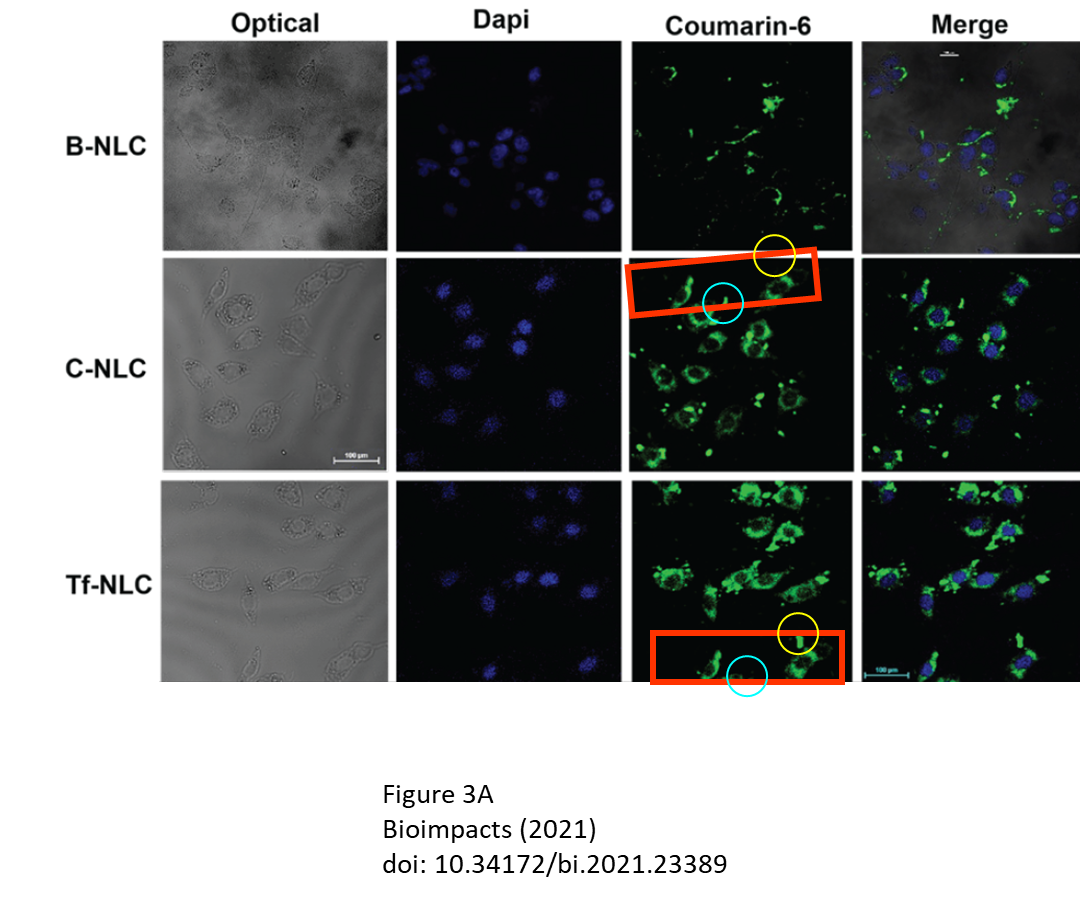
Actinopolyspora biskrensis: “The images shown for C-NLC and Tf-NLC seem to overlap at the margin (shown in red boxes), after rotation. Of concern, however, are some areas where features appear in one image but not the other (compare yellow and cyan circles).”
Here, Dinarvand defecated into his own Daru journal, and two other journals. There’s more fraud in those 3 papers, click on PubPeer links.
- Parichehr Hassanzadeh, Fatemeh Atyabi, Rassoul Dinarvand , Ahmad-Reza Dehpour , Morteza Azhdarzadeh , Meshkat Dinarvand Application of nanostructured lipid carriers: the prolonged protective effects for sesamol in in vitro and in vivo models of ischemic stroke via activation of PI3K signalling pathway Daru : journal of Faculty of Pharmacy, Tehran University of Medical Sciences (2017) doi: 10.1186/s40199-017-0191-z
- Parichehr Hassanzadeh, Elham Arbabi, Fatemeh Atyabi, Rassoul Dinarvand Nerve growth factor-carbon nanotube complex exerts prolonged protective effects in an in vitro model of ischemic stroke Life Sciences (2017) doi: 10.1016/j.lfs.2016.11.029
- Parichehr Hassanzadeh, Elham Arbabi , Fatemeh Atyabi, Rassoul Dinarvand Ferulic acid-loaded nanostructured lipid carriers: A promising nanoformulation against the ischemic neural injuries Life Sciences (2018) doi: 10.1016/j.lfs.2017.11.046
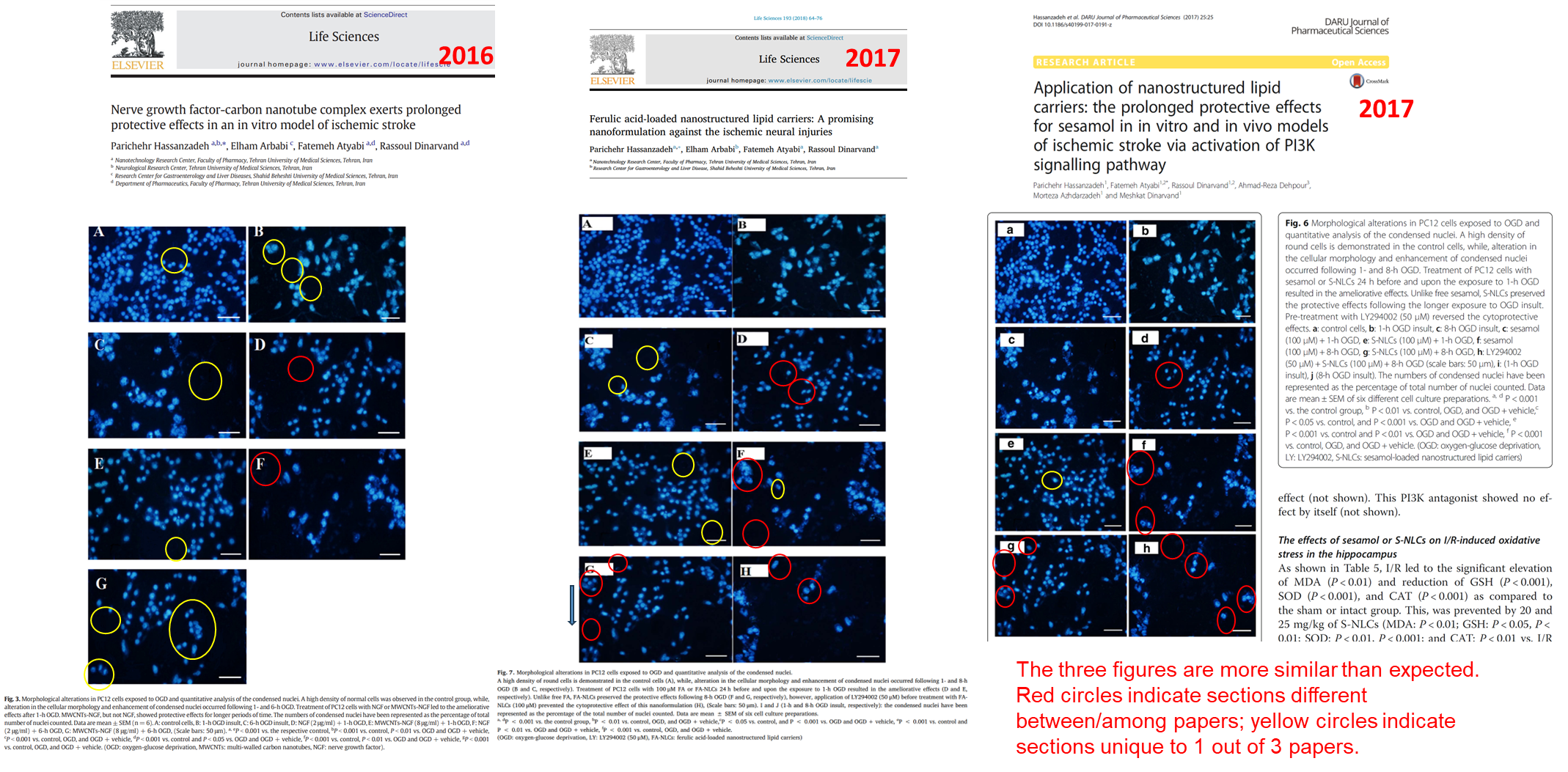
The rest of Dinarvard’s stuff on PubPeer is just as fake, appreciate for example Tekie et al 2017, Motasadizadeh et al 2022 or Narouzi et al 2020.
In Iran, papermills seem to be operated by the government inside the universities. And Dinarvand is indeed a massive papermiller, as we can see from his publications with the papermill giants like Navid Rabiee, Mohammad Reza Saeb, Michael Hamblin , Rajender Varma and Pooyan Makvandi, see Rabiee et al 2021 or this, again in Springer Nature:
Navid Rabiee , Mojtaba Bagherzadeh, Amir Mohammad Ghadiri , Yousef Fatahi , Nafiseh Baheiraei , Moein Safarkhani , Abdullah Aldhaher , Rassoul Dinarvand Bio-multifunctional noncovalent porphyrin functionalized carbon-based nanocomposite Scientific Reports (2021) doi: 10.1038/s41598-021-86119-z
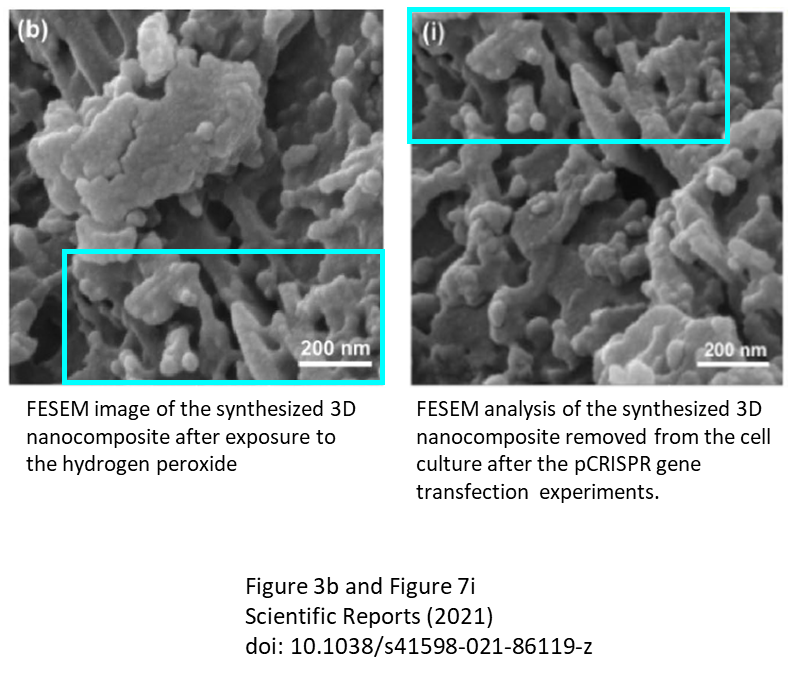
Actinopolyspora biskrensis: “An image in Figure 3 and Figure 7 seem to overlap”
Naturally, Springer Nature did not retract this fraud, in May 2023, with a mega-correction. It started with:
“The original version of this Article contained errors in the Results section resulting from an incomplete revision of the text to reflect changes in the figures during review. Figure legends and the Results section were corrected accordingly.”
so yes, I full agree with Springer Nature that Dinarvand is the right man for this job as chief editor.
Science Breakthrough
Ozempic face
An ingenious and very American solution to the economic hardships many Americans may experience thanks to Trump and MAGA:
If you can’t afford to buy food, inject semaglutide drugs like Ozempic or Wegovy, and you won’t feel hungry! Gizmodo reported on 22 December 2025:
“Scientists at Cornell University examined the shopping habits of people after they began taking a GLP-1 drug. Compared with similar households with no reported GLP-1 use, people on GLP-1s spent less on their grocery bill, particularly on snack foods. The effects on grocery spending only seemed to last as long as people were on the drug, however.
“The data show clear changes in food spending following adoption,” said study author Sylvia Hristakeva, an assistant professor at Cornell’s SC Johnson College of Business, in a statement from the university. […]
About a third of households reported discontinuing their GLP-1s during the study. And the researchers observed that these people’s grocery bills climbed back up to their baseline. […]
“These findings highlight the potential for GLP-1 medications to significantly change consumer food demand, a trend with increasingly important implications for the food industry as GLP-1 adoption continues to grow,” the authors wrote”
Here is the paper:
Sylvia Hristakeva , Jūra Liaukonytė , Leo Feler EXPRESS: The No-Hunger Games: How GLP-1 Medication Adoption is Changing Consumer Food Demand Journal of Marketing Research (2025) doi: 10.1177/00222437251412834
In even better news for all those who want to bring down their grocery bills, but are afraid of needles, BBC reported on 23 December 2025:
“The US Food and Drug Administration (FDA) has approved a pill version of the weight-loss drug Wegovy, according topharmaceutical giant Novo Nordisk.
It is the first pill of its kind to receive approval from the regulator, marking a new era for weight-loss drugs.
Wegovy’s Danish makers Novo Nordisk said the once-daily pill was a “convenient option” to the injectable and would provide the same weight loss as the shot.”
Semaglutide needs to be constantly injected (or swallowed) to have its effect. That’s why it is normally prescribed to patients was otherwise untreatable Type 2 diabetes. But not in America, where everyone who wants to look sexy and save on food bills, can buy it.
Well, the known side effects of semaglutide are serious enough already, and we have no idea of its long-term effects. Anyway. Business Insider reported on 20 December 2025 about another market the semaglutide hype created:
“The rise in GLP-1s has contributed to the alloClae fervor. It’s not only Ozempic face — it’s deflated Ozempic boobs, hips, butt.”
What is this alloClae, you wonder? It’s made by the US company Tiger Aesthetics, and it’s made from dead people:
“Business Insider spoke to a half dozen plastic surgeons, largely based in New York and California, who, together, have completed around 75 procedures with alloClae since it became available earlier this year. They described wealthy executives and corporate types clamoring for the product […] Demand for alloClae has outpaced supply, resulting in a shortage and backlog of appointments. […]
While alloClae comes from a cadaver, the product is less macabre than you may think, and even patients who may be turned off by the whole dead body thing typically come around to it, Dr. Bob Basu, the president of the American Society of Plastic Surgeons, said.
When individuals donate their bodies for science, such as organ donations, tissue banks often collect abdominal fat cells. Tiger Aesthetics purchases that fat, screens it for diseases, purifies it, and processes it. By the end, it looks like clumpy butter in a syringe.”
One injection costs $100,000. Why not using cheap pork fat instead, nobody will know.
Very excited and encouraged
US scientists found an easy cure for Alzheimer’s Disease (AD), which even reverses its effects! The cure is NAD+ supplements, sold by any anti-aging provider of your choice.
The genius behind the cure is Andrew A. Pieper, professor at Case Western Reserve University and Louis Stokes Cleveland VA Medical Center, in Cleveland, Ohio, and co-founder of the company Glengary Brain Health, Inc. Here a press release by his university from 23 December 2025:
“Using diverse preclinical mouse models and analysis of human AD brains, the team showed that the brain’s failure to maintain normal levels of a central cellular energy molecule, NAD+, is a major driver of AD, and that maintaining proper NAD+ balance can prevent and even reverse the disease. […]
The study was based on their previous work, published in Proceeding of the National Academy of Sciences USA, showing that restoring the brain’s NAD+ balance achieved pathological and functional recovery after severe, long-lasting traumatic brain injury.
They restored NAD+ balance by administering a now well-characterized pharmacologic agent known as P7C3-A20, developed in the Pieper lab. […]
“We were very excited and encouraged by our results,” said Andrew A. Pieper […] “Restoring the brain’s energy balance achieved pathological and functional recovery in both lines of mice with advanced Alzheimer’s. Seeing this effect in two very different animal models, each driven by different genetic causes, strengthens the new idea that recovery from advanced disease might be possible in people with AD when the brain’s NAD+ balance is restored.””
The PNAS paper was Vázquez-Rosa, et al 2020, there Pieper promoted P7C3-A20 for the treatment of traumatic brain injury, via its alleged “restoration of blood–brain barrier“. His follow-up study to make P7C3-A20 for Alzheimer’s was so enormously revolutionary and earth-shattering, that it ended up in Cell Reports Medicine, which is Cell Press’s trash bin of a trash bin:
Kalyani Chaubey , Edwin Vázquez-Rosa , Sunil Jamuna Tripathi , Min-Kyoo Shin , Youngmin Yu , Matasha Dhar , Suwarna Chakraborty , Mai Yamakawa , Xinming Wang , Preethy S. Sridharan , Emiko Miller , Zea Bud , Sofia G. Corella , Sarah Barker , Salvatore G. Caradonna , Yeojung Koh , Kathryn Franke , Coral J. Cintrón-Pérez , Sophia Rose , Hua Fang , Adrian A. Cintrón-Pérez, Taylor Tomco, Xiongwei Zhu, Hisashi Fujioka, Tamar Gefen, Margaret E. Flanagan, Noelle S. Williams, Brigid M. Wilson, Lawrence Chen, Lijun Dou, Feixiong Cheng, Jessica E. Rexach, Jung-A Woo, David E. Kang, Bindu D. Paul, Andrew A. Pieper Pharmacologic reversal of advanced Alzheimer’s disease in mice and identification of potential therapeutic nodes in human brain Cell Reports Medicine (2025) doi: 10.1016/j.xcrm.2025.102535
Here is an older paper by Pieper, flagged on PubPeer in February 2022:
Terry C. Yin , Jeremiah K. Britt , Héctor De Jesús-Cortés , Yuan Lu , Rachel M. Genova , Michael Z. Khan , Jaymie R. Voorhees , Jianqiang Shao , Aaron C. Katzman , Paula J. Huntington , Cassie Wassink , Latisha McDaniel , Elizabeth A. Newell , Laura M. Dutca , Jacinth Naidoo , Huxing Cui , Alexander G. Bassuk , Matthew M. Harper , Steven L. McKnight , Joseph M. Ready, Andrew A. Pieper P7C3 neuroprotective chemicals block axonal degeneration and preserve function after traumatic brain injury Cell Reports (2014) doi: 10.1016/j.celrep.2014.08.030
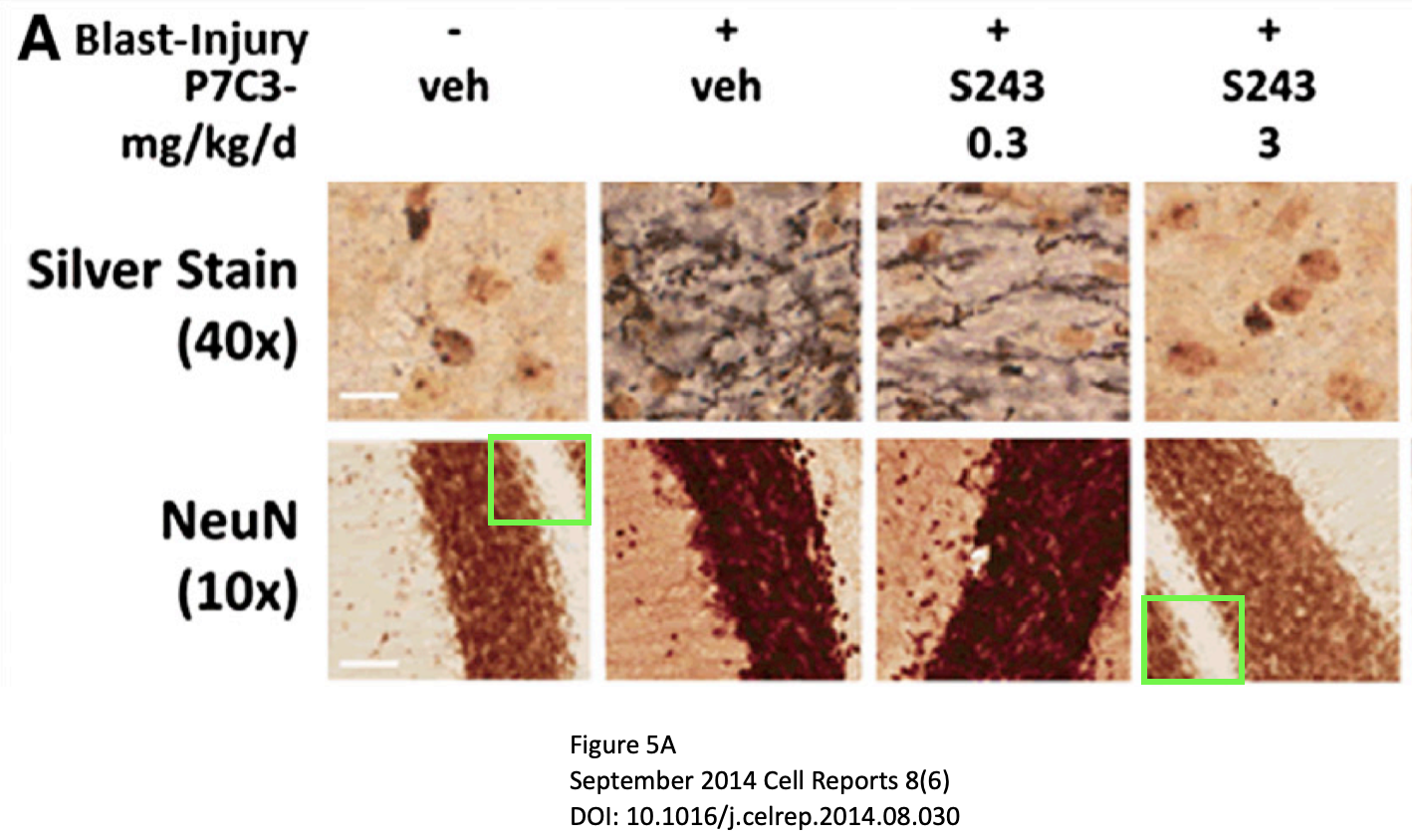
Pieper replied on PubPeer right away, apparently offering replacing images. No correction was ever issued though.
Enjoy dark chocolate or coffee, or both
Washington Post brought us exciting news on 26 December 2025, from the lab of Jordana Bell at King’s College London in UK, in collaboration with colleagues in Germany:
“If you enjoy dark chocolate or coffee, or both, you may be benefiting from a substance found in these products that is linked to a reduction in cellular aging.
A study published this month in the journal Aging found that people with higher blood levels of an alkaloid called theobromine seemed to have slower cellular aging as measured by “epigenetic clocks,” models that estimate aging based on molecular biomarkers. […]
The researchers used data from participants in two groups: 509 women from the TwinsUK cohort; and 1,160 men and women from the KORA group in Germany.[…]
After running further tests to see whether other cocoa components — including caffeine — showed similar patterns, Bell and her team discovered it occurred only with theobromine. […]
The findings about theobromine add to what we know about the other health-promoting compounds in dark chocolate, such as polyphenols.”

Ruler of the Aging Papermill
Smut Clyde congratulates Aging: “This is bespoke tailoring, in contrast to the off-the-rack products cranked out by the average papermill […] no shame befalls the journals that accept these confections.”

The study was published in a papermill-infested trash journal Aging, founded by the late Mikhail Blagosklonny and the late Judith Campisi, its editorial board is the who-is-who of the worst cheaters in the field of anti-ageing and cancer research:
Ramy Saad , Ricardo Costeira , Pamela R. Matías-García , Sergio Villicaña , Christian Gieger , Karsten Suhre , Annette Peters , Gabi Kastenmüller , Ana Rodriguez-Mateos , Cristina Dias , Cristina Menni , Melanie Waldenberger , Jordana T. Bell Theobromine is associated with slower epigenetic ageing Aging (2025) doi: 10.18632/aging.206344
Epigenetic age by DNA methylation was measured using Steve Horvath‘s technology, Horvath is also member of Aging‘s editorial board.
Any doctor who doesn’t prescribe chocolate and coffee to their patients, for all diseases, is guilty of gross medical malpractice and grievous bodily harm.
Chocolate health: advice by Thomas Lüscher and peer review by Jonas Malmstedt
Christmas season is the time to eat lots of chocolate. And as science teaches us, your confectionery is actually the superfood which will make you healthy, slim and clever. Good for you, good for the chocolate industry which often generously sponsors such scientists. In May 2016, I brought a story about chocolate health research and…
Donate!
If you are interested to support my work, you can leave here a small tip of $5. Or several of small tips, just increase the amount as you like (2x=€10; 5x=€25). Your generous patronage of my journalism will be most appreciated!
€5.00

 For Better Science
some are still influenced by post-published review blogs. In one instance, the weblog’s personnel started insulting all authors rather than the articles, bringing up their pasts, even private ones, and using very harsh, brutal words.
Indeed, this text shows how desperate these men have become. These papermillers, spoiled by publishers, have been inflating their profiles for over a decade by playing with articles and citations, while also serving in organizations like COPE with a level of shamelessness that an ordinary person couldn’t even imagine. This is basically narcissism. Anyway, one blog is destroying their entire system. This is a wonderful thing. All they can do is post to the crowd applauding them with the cards of victimhood and fake expertise they have accumulated over the year. This is indeed a wonderful thing.
LikeLiked by 1 person
Dinarvand, lol. Just f*cking lol.
Some other folks he had the dishonor to co-operate with are here:
Amir Mohammad Ghadiri, Mojtaba Bagherzadeh, Navid Rabiee, Mahsa Kiani, Yousef Fatahi, Antonio Di Bartolomeo, Rassoul Dinarvand, Thomas J Webster, Green synthesis of CuO- and Cu2O-NPs in assistance with high-gravity: The flowering of nanobiotechnology, Nanotechnology (2020), doi: 10.1088/1361-6528/aba142
LikeLike
Doing a PhD at QMUL… Do you think he has more to learn about scientific fraud from this institution, or more to teach? Perhaps it will be an even exchange of ideas.
LikeLiked by 1 person
‘.. harsch and brutal words …’ Someone’s feeling butthurt.
Science end users are exhausted, angry, and frankly insulted by the industrial scale of papermilling, misconduct, and fraud that has infected the literature. A lifetime of careful reading, checking, and thinking is being burned away sifting through garbage that never deserved to exist. Hours turn into years spent disentangling fake data, recycled figures, invented methods, and citations that lead nowhere. This is not scholarship. It is intellectual pollution, and everyone downstream is forced to breathe it.
The damage is not abstract. Real money is wasted. Public funds, grant budgets, institutional resources, and patient hope are shoveled into the pockets of frauds who game the system with confidence and greed. These people collect promotions, tenure, awards, and speaking slots on the back of lies, while honest researchers fight for scraps and credibility. The illegitimate gains are obscene, and the opportunity cost is brutal. Every fraudulent paper displaces real work that could have advanced knowledge, saved time, or improved lives.
What makes this rage harder to swallow is that this mess should never have reached end users in the first place. Peer review and editorial oversight were supposed to be the gatekeepers. That was the job. That was the promise. Instead, end users are forced to become unpaid detectives, auditors, and janitors, cleaning up after a system that waved trash through with a smile. Sloppy review, cowardly editors, and incentive driven publishing have shifted the burden onto the very people least responsible for the failure.
The culprits themselves act with breathtaking arrogance. Fraud is not an accident for them. It is routine. A matter of course. They copy, fabricate, and submit with the calm entitlement of people who know the system will likely protect them. When exposed, they deflect, deny, and posture, as if being caught falsifying the scientific record is a minor inconvenience rather than an assault on collective knowledge. Their contempt for the community is obvious, and their confidence is fueled by years of weak consequences.
End users are done being polite about this. The literature is rotting, trust is eroding, and lives and careers are being wasted cleaning up deliberate deception. This is not a gray area or a misunderstanding. It is fraud, enabled by negligence and rewarded by silence. The anger is justified, the language should be harsh, and the patience is gone.
LikeLiked by 2 people
There it is https://publicationethics.org/guidance/guideline/retraction-guidelines, this committee has been converted from phony to fraudulent by assuring these … will keep their masks of scientists.
LikeLike