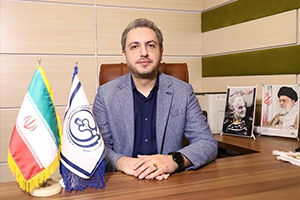

Papermills are considered a third world problem. Nobody in the west reads those papers, and only third world researchers engage in papermilling, white professors don’t do that.
Now, The BMJ published a clinical trial which looks like a product of a very advanced Iranian papermill. With involvement of a British professor.
A paper published in The BMJ is likely to define the standards of health care worldwide. This is not funny, especially on such a contaminated topic as stem cell therapies in cardiology, especially with its authors PubPeer records of fraud and papermilling. One can confidently speak of a total fail at BMJ.
This is comparable only to the pandemic disaster at NEJM and The Lancet, where massive clinical studies were fabricated out of thin air, and ironically, only got exposed because the fraudster Sapan Desai chose to denounce chloroquine as COVID-19 cure! Read here:
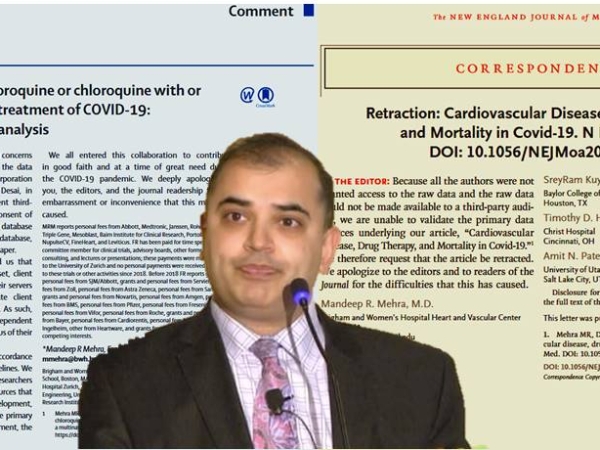
Would Lancet and NEJM retractions happen if not for COVID-19 and chloroquine?
NEJM and The Lancet retract two fake papers, one was dealing with chloroquine. Did we just get a brief glimpse into the fraudulent abyss of medical literature and the corruption of medical elites, briefly opened by the current COVID-19 situation?

So here we are, with cells from umbilical cord of newborn babies deployed to cure heart attacks. BMJ even issued a press release on 29 October 2025, so proud they were of this Iranian super-science:
“Patients with weak heart function who receive stem cell therapy shortly after a heart attack are at lower risk of developing heart failure and related hospital stays compared with standard care, finds a clinical trial published by The BMJ today.
The researchers say the findings suggest this technique may be a valuable add-on procedure for this particular group of patients after a heart attack to prevent subsequent heart failure and reduce the risk of future adverse events.”
This is the BMJ study, based on the PREVENT-TAHA8 phase 3 clinical trial (NCT05043610) in Shiraz, Iran, where between September 2021 and October 2024 a large number of patients were allegedly injected with cells from umbilical cords:
Armin Attar, Seyed Alireza Mirhosseini , Anthony Mathur, Sheik Dowlut , Ahmad Monabati , Mohammad Kasaei , Firoozeh Abtahi , Yahya Kiwan , Massoud Vosough , Negar Azarpira Prevention of acute myocardial infarction induced heart failure by intracoronary infusion of mesenchymal stem cells: phase 3 randomised clinical trial (PREVENT-TAHA8) BMJ (2025) doi: 10.1136/bmj-2024-083382

As the press release explains, the study followed 396 patients (average age 57-59 years) who experienced their first heart attack:
“Of these, 136 patients in the intervention group received an intracoronary infusion of allogenic Wharton’s jelly derived mesenchymal stem cells within 3-7 days of their heart attack in addition to standard care. The remaining 260 control group patients received standard care alone. […]
Compared with the control group, intracoronary infusion of stem cells was associated with reduced rates of heart failure (2.77 vs 6.48 per 100 person years), readmission to hospital for heart failure (0.92 vs 4.20 per 100 person years), and a combined measure of cardiovascular death and readmission for heart attack or heart failure (2.8 vs 7.16 per 100 person years). […] by six months heart function in the intervention group showed a significantly greater improvement from baseline at six months compared with the control group.”

Sir Martin and Ajan, the stem cell gold-diggers
Sir Martin Evans, winner of Nobel prize 2007, founded in 2009 the stem cell start-up Celixir, together with a struck-off dentist Ajan Reginald. With the help of the British heart surgeon Stephen Westaby, they ran a very profitable clinical trial in Greece, which now moved into UK.
All this is rather reminiscent of the heart attack cell therapy business by the British Nobel Prize laureate Sir Martin Evans (awarded for the discovery of stem cells!) and his criminal associate and struck-off dentist Ajan Reginald. They ran a dodgy (and unethical) clinical trial with “mesenchymal stem cells” (from the blood of Welsh heart attack patients!), in order to market the proprietary “iMP cells” via their company Celixir. It worked out great, with massive public investments and a phase 2 clinical trial in London, until the Liverpool professor Patricia Murray spoiled everything. Read here:

Requiem for Celixir
How the Nobel Prize winner Sir Martin Evans and the lying crook Ajan Reginald almost succeeded, were it not for Patricia Murray.
Ajan’s criminal idea was of course not original, the cult of curing heart attacks with stem cells goes further back. Piero Anversa even invented the entire research field of cardiac stem cells (which proved not to exist). But what this Iranian team claims is something else: they say that so-called mesenchymal stem cells (here from umbilical cords) can somehow acquire pluripotency and differentiate into every tissue they encounter, thus healing all possible organs. If you inject them into the heart, they will become cardiomyocytes and cure broken hearts. And this science-fiction was originally postulated by the Belgian professor Catherine Verfaillie when she was still at University of Minnesota in USA, in her now retracted Nature paper Jiang et al 2002.

Catherine Verfaillie, the Zombie Scientist of KU Leuven
Catherine Verfaillie is a zombie scientist: her past stem cell research long discredited, but she still is an influential and very well funded star of Belgian science. Now Elisabeth Bik had a fresh new look at Verfaillie’s papers
Even today, journalistic authorities like New Scientist declare cord blood’s fictional pluripotency to be a scientific fact. Here the reporting from 29 October 2025 about our BMJ study:
“Armin Attar at Shiraz University in Iran and his colleagues took a different approach: they used mesenchymal stem cells, which can differentiate into structural cells such as cartilage and fat. […]
These results are the strongest indication yet that stem cells can help restore cardiac function after a heart attack.”
Verfaillie’s fake stem cell claims were swiftly put clinically in practice on actual heart attack patients by the cardiology professor Bodo Strauer in Germany, who, after his dishonesty was exposed, lawyered-up against the media and his University of Düsseldorf, retired as emeritus and never had to suffer any consequences of his patient abuse. Mentioned below:

The stem cell faith healers, or magic inside your bone marrow
Bone marrow stem cells are magic, they can do everything. If you don’t believe it, you are simply a loser scientist and will never get funded. Prior to his bombastic fall from grace, the celebrity surgeon and professor of regenerative medicine Paolo Macchiarini was considered a genius stem cell wizard and a miracle healer. He…
Even worse: Verfaillie’s stem cell fraud also inspired the lethal human experiments with “bioengineered” trachea transplants by Paolo Macchiarini. So no, it is not funny at all that The BMJ brings this fraudulent stem cell cult back into the arena, and expects us all to applaud. But we live in crazy times – Trump’s Secretary of Disease Robert F Kennedy Jr is an eager customer and supporter of stem cell scammers.
It would be very difficult in Europe or North America to register such unhinged clinical trial with umbilical cord blood injected into the hearts of heart attack patients, especially for those with good chances of recovery, and especially for 400 of them. Not just because of total lack of any expected benefit, but because the treatment is likely to kill them, what with the predictable immune reaction and thrombosis.
But under the terror regime of Iran, one can do with patients whatever one wants, and isn’t this great, say medical authorities in the west. So hooray to our clever Iranian peers who just discovered an amazing cure for heart attack, and anyone who criticises it, is a racist.
You can’t expect reliable university science to happen in a murderous totalitarian regime. All you can expect from Iran is papermill fraud, my personal suspicion is that these papermills may be operated by Iranian regime, in order to provide their agents with top CVs so these can be placed into faculty jobs in the naive West. As it happened in Germany, in fact also with made-up clinical studies:

Look What the Cat Dragged In
Meet Mohammad Taheri, PhD, a humble PhD student in Jena, Germany, and his equally unremarkable Iranian associate Dr Soudeh Ghafouri-Fard.

Unsurprisingly, the BMJ study was immediately criticised on PubPeer.
Dorothy Bishop noted that “there is a puzzling discrepancy between the deposited data and what is stated in the study registration and methods, regarding the age of the participants“, specifically despite 340 patients having been allegedly excluded for being older than 65 years, the deposited data file for the treated 396 patients includes 127 patients aged 65 or over, “with the oldest being 86 years old“.
Nick Brown found “a curious repeating pattern of records in the dataset“:

Brown found other issues, like: “The patient’s weight is available in 334 cases. Of these, 288 are integers. Multiples of 5kg are heavily over-represented.” Other PubPeer users chimed in:

Thomas Kesteman noted:
- “Potassium (K) data show only two possible values, which can’t possibly correspond to laboratory values.
- 12 individuals have impossible coagulation tests results (INR 0 or > 10) that should have prompted clinicians to reiterate testing.“
Sophie Hill figured out that “K is actually stands for κ, a gender specific constant“, where “In the correct formula, κ=0.7 for women and 0.9 for men. The authors appear to have mistakenly used κ=1.0 for men.” She also described “pattern of sequential duplicate values” for Age and HFdevel_days which “is very hard to explain“.
Wasn’t this supposed to have been peer reviewed?
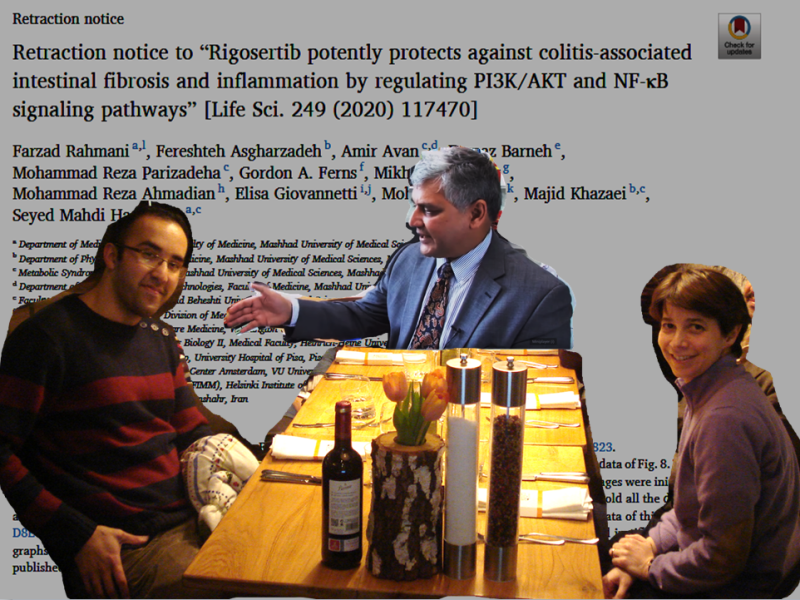
The trial’s principal investigator Armin Attar, who is professor and Vice-Chancellor for Education at Shiraz University of Medical Sciences, went to PubPeer to address the growing criticisms:
“Because these tests are clinically required for all patients before angiography, their collection imposed no cost on researchers and no additional procedure on participants. Importantly, these baseline test values had no influence on study outcomes—their presence or absence does not alter the endpoint analyses or any result of the trial.
Nevertheless, we have initiated a full technical audit of our data assembly and analysis pipeline. […] The complete audit package will be posted within 2–3 weeks, and any confirmed errors will be transparently corrected via the journal.“

Well, Attar can also investigate these two papers of his, with his fellow BMJ coauthor and Shiraz colleague Ahmad Monabati:
- Maryam S. Tavangar , Armin Attar, Mahboobeh Razmkhah , Seyed‐Mojtaba Hosseini , Ahmad Hosseini , Ahmad Monabati , Fereshteh Shafiei Differential expression of drug resistance genes in CD146 positive dental pulp derived stem cells and CD146 negative fibroblasts Clinical and Experimental Dental Research (2020) doi: 10.1002/cre2.297
- Mohammadhossein Khorraminejad-Shirazi , Mahsa Sani , Tahereh Talaei-Khozani , Mohammadreza Dorvash , Malihe Mirzaei , Mohammad Ali Faghihi , Ahmad Monabati , Armin Attar AICAR and nicotinamide treatment synergistically augment the proliferation and attenuate senescence-associated changes in mesenchymal stromal cells Stem Cell Research & Therapy (2020) doi: 10.1186/s13287-020-1565-6

There is another image reuse in the Tavangar et al 2020 paper, and the other paper has only one common author, the papermiller Seyed‐Mojtaba Hosseini:

Seyed Mojtaba Hosseini , Mohammad Farahmandnia , Sepehr Kazemi , Benafshe Shakibajahromi , Fatemeh Sabet Sarvestani , Zahra Khodabande A Novel Cell Therapy Method for Recovering after Brain Stroke in Rats International Journal of Stem Cells (2015) doi: 10.15283/ijsc.2015.8.2.191
Let us look at other BMJ authors then.
Anthony Mathur
Anthony Mathur is the only whitey on the paper, which is probably what convinced BMJ to trust the study. He is professor of cardiology at the Queen Mary University of London (QMUL) and Consultant Cardiologist at Nuffield Health at St Bartholomew’s Hospital and Barts Heart Centre. Mathur informs us that he is “a key opinion leader in interventional and regenerative cardiology“, and that his “expertise includes […] stem cell therapy, gene therapy and artificial intelligence in cardiology.”
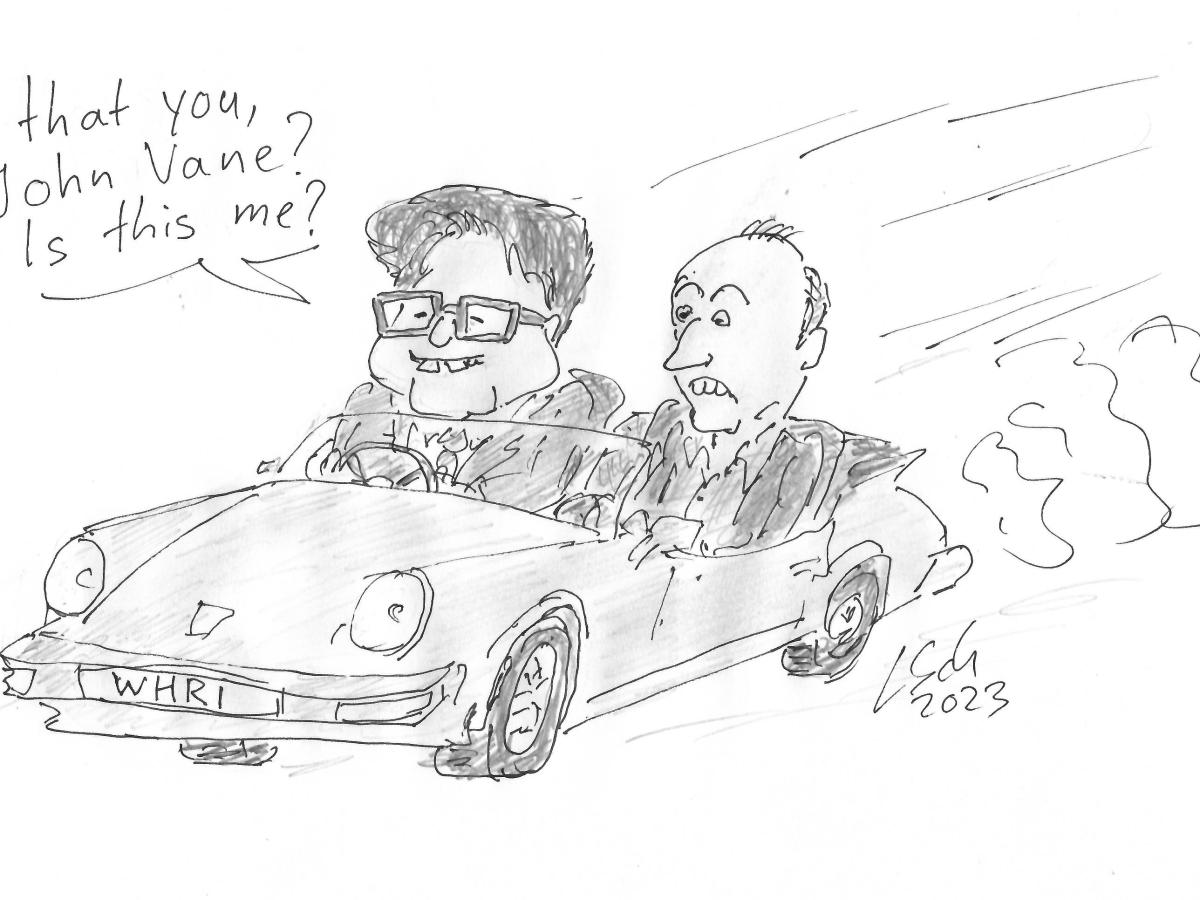
Queen Mary and John Vane’s Cowboys
Welcome to the the William Harvey Research Institute in London. Meet two proteges of its founder, the late Nobelist Sir John Vane: Chris Thiemermann and Mauro Perretti. Then meet their own rotten mentees, especially Salvatore Cuzzocrea and Jesmond Dalli.
Here he is, studying bone marrow cells as a cure for heart attack, with two major cheaters from his own QMUL: Chris Thiemermann (read above) and Ken Suzuki:
Matthew J. Lovell , Mohammed Yasin , Kate L. Lee, King Kenneth Cheung , Yasunori Shintani , Massimo Collino, Ahila Sivarajah , Kit-yi Leung, Kunihiko Takahashi , Amar Kapoor , Mohammed M. Yaqoob, Ken Suzuki, Mark F. Lythgoe, John Martin , Patricia B. Munroe, Chris Thiemermann, Anthony Mathur Bone marrow mononuclear cells reduce myocardial reperfusion injury by activating the PI3K/Akt survival pathway Atherosclerosis (2010) doi: 10.1016/j.atherosclerosis.2010.07.045


By the way, the person who in 2023 put herself in charge of the Thiemernann investigation, is Amrita Ahluwalia, Dean for Research at QMUL faculty of medicine. She owns a joint company with Mathur, Iona Therapeutics. No wonder Thiemernann was whitewashed in full (as I heard).

Ken Suzuki: The King of Hearts at QMUL
“The only difficult part might be deciding whether Ken has been intentionally deceptive or wildly incompetent, although the difference in practice doesn’t seem so important.” – Sholto David

Back to Mathur. Like all his coauthors, he declares in the BMJ study to have “no financial relationships with any organisations that might have an interest in the submitted work in the previous three years; no other relationships or activities that could appear to have influenced the submitted work.”
That is not exactly correct. Mathur owns the company Heart Cells, and is trustee of a similarly named “charity” Heart Cell Foundation, which was set up in 2003 by a wealthy British patient whom Mathur treated with bone marrow cell injections at the University of Frankfurt in Germany (the patient died in 2006). The Foundation offers “compassionate” stem cell therapies for cardiovascular disorders, using autologous bone marrow, see for example this news reporting from September 2025:
“As Chloe says: ‘These doctors are literally wizards. How can some cells that were inside my hip bone have had this effect on a disease that no-one is supposed to be able to treat?’“
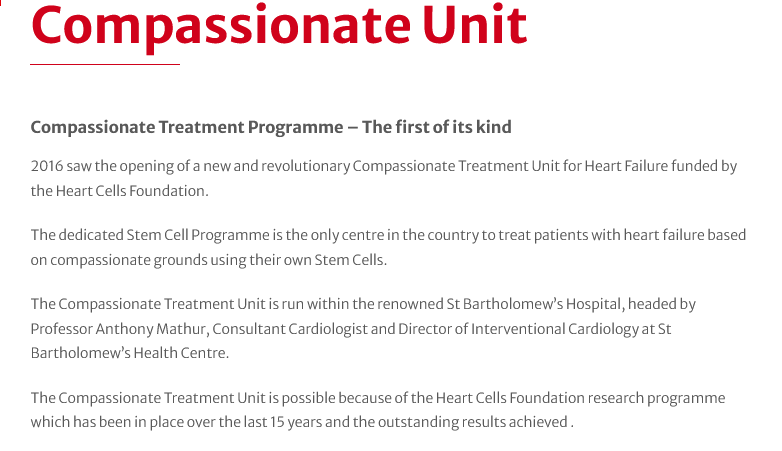
Another director of Heart Cells is Wayne Channon, who also owns the company Cells4Life, which pushes exactly what this BMJ paper is about: cord blood therapies. Noteworthy, Channon took credit for Heart Cell Foundation’s stem cell treatments of heart attack patients, and he did this in his capacity as Heart Cells director.
In fact, BMJ previously brought an investigation into the Cells4Life business (“UK’s largest private biobank for cord blood banking“), based on the information gather by Patricia Murray (read August 2024 Shorts). Cell4Life charges young families huge sums to store the umbilical cord blood from their newborns, the selling point being the company’s proprietary cell extraction technology TotiCyte:
“Patricia Murray, professor of stem cells and regenerative medicine at the University of Liverpool, says that there is no clear scientific reason why TotiCyte should outperform market alternatives. “All they’ve got in TotiCyte is DMSO and dextran, which are well established cryoprotectants,” she said, “There may just be a slight difference in the percentages of DMSO and dextran, but you wouldn’t expect it to have such a dramatic effect on cell survival.”[…]
Murray points to a written opinion by an international searching authority (ISA or patent office) in 2014 when Cells4Life applied for a patent under the World Intellectual Property Organisation. The ISA examined TotiCyte’s application to sediment red blood cells as well as its role as a cryoprotectant and concluded: “It follows that the addition of DMSO to the dextran composition does not add any technical effect in the use and method for white blood cell enrichment and appears merely to serve as a patent strategical means to establish novelty over the art.””
Jacklin Kwan, BMJ (2024)
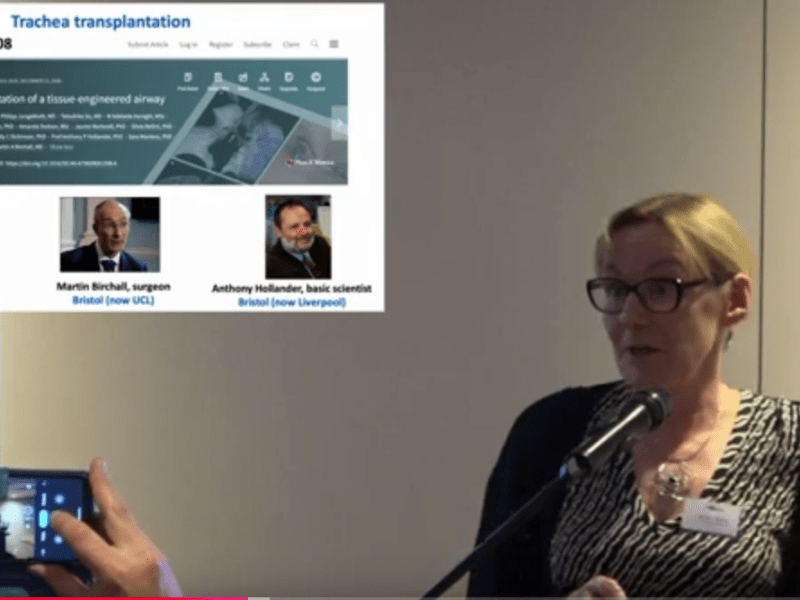
Martin Birchall, Paolo De Coppi, and other clowns of UCL’s degenerative medicine
Several years ago, UCL investigated the Macchiarini affair and found their surgeon Martin Birchall was not only innocent, but also entitled to more money and more patients to experiment upon. Now, Patricia Murray was awarded for exposing this UCL malfeasance, and Sholto David scrutinised UCL papers for data manipulation.
But then again, the company claims their TotiCyte technology is scientifically verified – Channon and his Cell4Life partners only manage to place it in a bottom-feeding predatory journal by the predatory publisher Herald:
Jeff Drew, Rachel Slaughter, Alexander Klimentov, Wayne M Channon, Claudia Rees, William Harrington, Megan Watts and Lesley-Ann Martin TotiCyte, a Paradigm Shift in Stem Cell Isolation and Storage from Umbilical Cord Blood Stem Cells Research Development & Therapy (2021) doi: 10.24966/srdt-2060/100073
Cells4Life also used to have a collaboration with the Duke University in USA, where cerebral palsy was treated with injections of umbilical cord cells, with parents paying enormous sums for this abuse. This same cord blood therapy by the Duke professor Joanne Kurtzberg was also used for autism, as mentioned in this article:
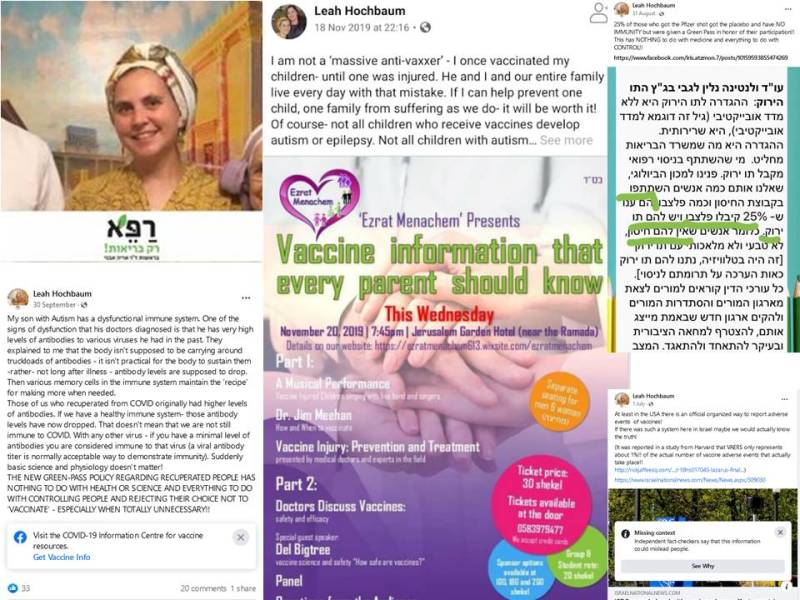
Gesundheit! Israeli Scientists treat autism with stem cells
A mysterious clinical trial in Israel is recruiting autistic children for blood draws. As the company’s founder admitted, the actual therapy on offer is extraction of bone marrow “stem cells” and their injection into patient’s spine. Smut Clyde investigates.

BBC wrote in this regard in 2019:
“Cells4Life, the cord blood stem cell bank that supported Jay’s fundraising, still state on their website that “the trials at Duke have shown cord blood can reverse the symptoms of cerebral palsy”.
Now, we indeed have no direct proof that Mathur would also be engaged in the Cells4Life business, although it cannot be excluded given his business partnership with Channon on Heart Cells. In any case, this announcement by the Royan Stem Cell Technology Company & Cord Blood Bank in Tehran, Iran from 2015, is interesting:
“A delegation from Royan Stem Cell Technology Company made visits to some cord blood centers to Dubai, including Cells4Life Company and DCRC (Dubai Cord Blood Research Center). During these visits, two sides brought up and discussed many scientific and commercial issues and exchanged their experiences in this “
In 2015, the Cells4Life franchise in the Emirates, MedCells, reported: “Iran’s Royan Institute has begun using stem cells to treat patients with kidney disease in a new clinical trial.” Here is a MedCells announcement from 2017:
“A new trial using umbilical cord blood stem cells will assess if they can treat cerebral palsy. The trial is being organised by the Royan Institute, the Tehran University of Medical Sciences, and the Iran Blood Transfusion Organization (IBTO).
The first phase of the trial will see 130 children between the ages of 5 to 13 receiving a transplant of umbilical cord blood stem cells to treat their condition.”
And a graduate of Royan Institute now works at Cells4Life in Emirates. Draw your own conclusions where the British biobank Cells4Life might be getting their cord blood from.
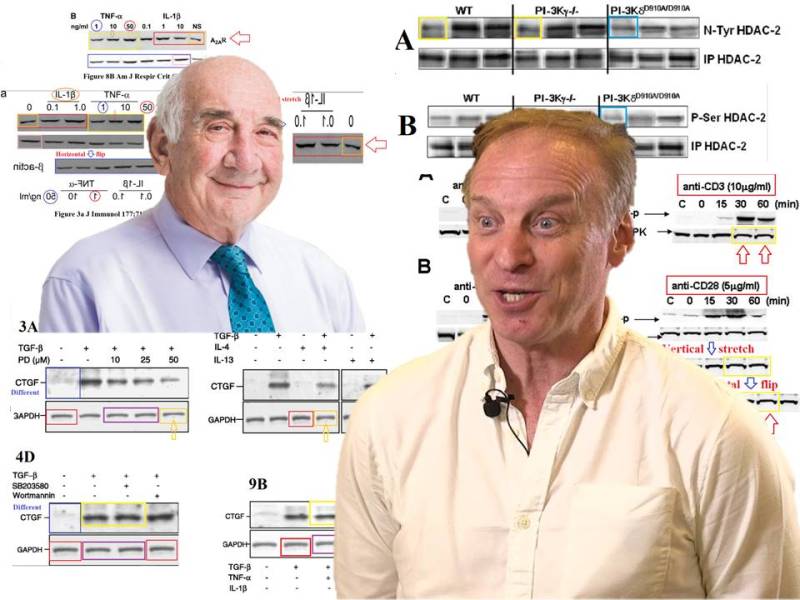
Imperial Adcock – from Barnes to Iran!
“the College would have been well within its rights to reject all of your allegations…”
But why is this connection between Cells4Life and Royan Institute in Tehran so interesting for the BMJ study, you wonder?
Massoud Vosough
Well, the penultimate coauthor of the BMJ study, Massoud Vosough, is dean of regenerative medicine at the Royan Institute for Stem Cell Biology and Technology in Tehran. But not only: his second affiliation is at the prestigious Karolinska Institutet in Sweden, maybe this will make sure his BMJ study leads to a Nobel Prize?
If the BMJ clinical trial ever happened (if it did, then most certainly not as described), then the cord blood must have been provided by Vosough. Who, personally or via his institute, collaborates with Cells4Life. A clear and undeclared financial conflict of interests.
Vosough ‘s PubPeer record is modest, but still – papermilling is likely. For example, his coauthors include among various Iranian fraudsters the known papermill customer Michael Hamblin, while his CV lists papers on random topics coauthored with Ali Zarrabi and other known papermill fraudsters like Siavash Iravani or Hamed Mirzaei.

In international affairs and paper mills
Alexander Magazinov would like you to meet an Iranian scholar named Ali Akbar Velayati.
It is surely in Sweden’s national interests to host an Iranian resident who on top of everything works with russians. Vosough is also visiting professor at Moscow Medical University and he regularly travels there to give seminars:
Samieh Asadian, Abbas Piryaei, Nematollah Gheibi, Bagher Aziz Kalantari, Mohamad Reza Davarpanah, Mehdi Azad, Valentina Kapustina, Mehdi Alikhani, Sahar Moghbeli Nejad, Hani Keshavarz Alikhani, Morteza Mohamadi, Anastasia Shpichka, Peter Timashev, Moustapha Hassan, Massoud Vosough Rhenium Perrhenate (ReO) Induced Apoptosis and Reduced Cancerous Phenotype in Liver Cancer Cells Cells (2022) doi: 10.3390/cells11020305

Another bad paper by Vosough, again with the papermiller Abbas Piryaei, and on mesenchymal stem cells!
Zahra Azhdari Tafti , Mehdi Mahmoodi , Mohamas Reza Hajizadeh , Vahid Ezzatizadeh , Hossein Baharvand, Massoud Vosough, Abbas Piryaei Conditioned Media Derived from Human Adipose Tissue Mesenchymal Stromal Cells Improves Primary Hepatocyte Maintenance Cell journal (2018) doi: 10.22074/cellj.2018.5288

Elisabeth Bik: “Figure 5A. Some panels appear to show a small duplicated area in the bottom right corner.”
It seems the authors had to remove size bars from stolen images, hence the duplications. The Correction from April 2021 explained that “the scale bars in Figures 5-A missed unintentionally during production“.
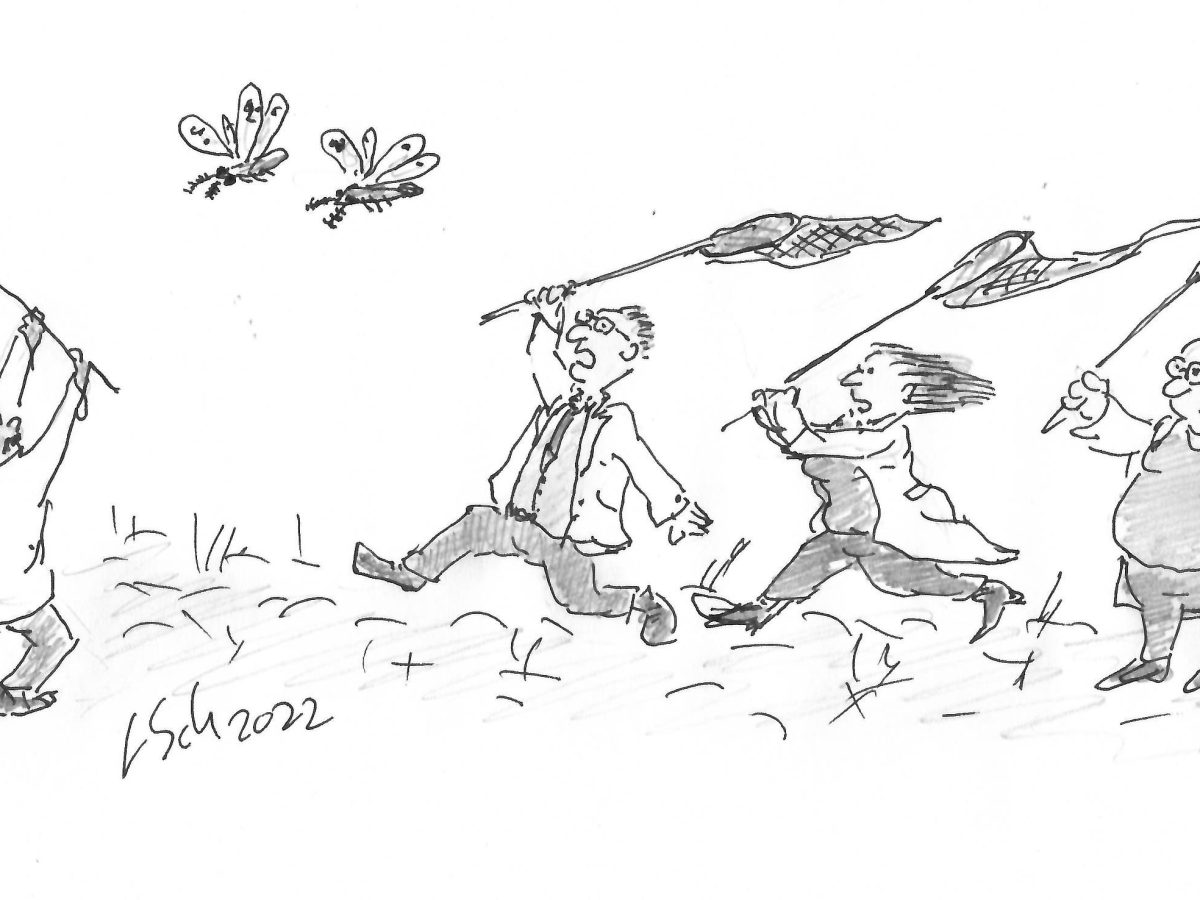
The Vickers Curse: secret revealed!
How did an editorial about insect pheromone communication get to receive 1200 irrelevant citations, almost all from papermills? Alexander Magazinov reveals The Secret of The Vickers Curse!
This Karolinska genius was even struck with the Vickers Curse, which apparently haunts only papermillers (read above):
Shaghayegh Baradaran Ghavami , Mahsa Pourhamzeh , Maryam Farmani , Shahrbanoo Keshavarz Azizi Raftar , Shabnam Shahrokh , Anastasia Shpichka , Hamid Asadzadeh Aghdaei , Mojdeh Hakemi-Vala , Nikoo Hossein-khannazer , Peter Timashev , Massoud Vosough Cross-talk between immune system and microbiota in COVID-19 Expert Review of Gastroenterology & Hepatology (2021) doi: 10.1080/17474124.2021.1991311

[169] Vickers NJJCB. Animal communication: when i’m calling you, will you answer too? Curr Biol. 2017;27(14):R713–15.
But now you must meet the last author fo the BMJ study.
Negar Azarpira
Negar Azarpira is professor at the Transplant Research Center of Shiraz University of Medical Sciences in Iran, her PubPeer record stands at over 30 papers. All outrageously fake. I wonder, did BMJ editors think that publishing her fraudulent cord blood for heart attack study would count as their support for Woman-Life-Freedom in Iran?
A fake paper by Azarpira with the papermiller Saeid Ghavami (Aghaie et al 2021) was discussed in June 2025 Shorts, another fabrication about curing Alzheimer’s with yeast extract, done with Mohammad-Ali Shahbazi (Mozafari et al 2022), was mentioned here:

USERN-friendly Nobelists
Nobel Prize laureates and predatory conferences – why such mutual attraction?
This was posted by Fabian Wittmers (aka Archasia belfragei) already in February 2025:
Mohammad Mehdi Ommati, Samira Sabouri , Socorro Retana-Marquez , Hassan Nategh Ahmadi , Abdollah Arjmand , Sepideh Alidaee , Sahra Mazloomi , Alireza Akhlagh , Narges Abdoli , Hossein Niknahad , Akram Jamshidzadeh , Yanqin Ma , Negar Azarpira , Yaser Asefi , Reza Heidari Taurine Improves Sperm Mitochondrial Indices, Blunts Oxidative Stress Parameters, and Enhances Steroidogenesis and Kinematics of Sperm in Lead-Exposed Mice Reproductive Sciences (2023) doi:

Archasia belfragei: “This article recycles a control image that was published 3 years prior by the same group”
Omid Farshad , Reza Heidari , Mohammad Javad Zamiri , Socorro Retana-Márquez , Meghdad Khalili , Melika Ebrahimi , Akram Jamshidzadeh, Mohammad Mehdi Ommati Spermatotoxic Effects of Single-Walled and Multi-Walled Carbon Nanotubes on Male Mice Frontiers in Veterinary Science (2020) doi: 10.3389/fvets.2020.591558
The Frontiers paper is outrageously fraudulent. Another set, again Azarpira with her Shiraz colleague Reza Heidari (25 fake papers on PubPeer):
Hossein Niknahad , Reza Heidari, Roya Mohammadzadeh , Mohammad Mehdi Ommati , Forouzan Khodaei , Negar Azarpira , Narges Abdoli , Mahdi Zarei , Behnam Asadi , Maryam Rasti , Babak Shirazi Yeganeh , Vahid Taheri , Arastoo Saeedi , Asma Najibi Sulfasalazine induces mitochondrial dysfunction and renal injury Renal Failure (2017) doi: 10.1080/0886022x.2017.1399908

Archasia belfragei: “One research group.Two papers: […] Two treatments. Same image.”
Reza Heidari , Maryam Rasti , Babak Shirazi Yeganeh , Hossein Niknahad , Arastoo Saeedi , Asma Najibi Sulfasalazine-induced renal and hepatic injury in rats and the protective role of taurine Bioimpacts (2016) doi: 10.15171/bi.2016.01
More findings by Fabian from February 2025, suggesting that Azarpira has no real research focus – anything goes, and it is fake:

Fig 6 and 7

Fig 8

Fig 8
Here is Azarpira dabbing in psychiatry, with the German professor Inga Neumann of University Clinic of Regensburg. The image reuse from another Iranian paper by different authors strongly suggests papermill origin:
Sareh Pandamooz , Mohammad Saied Salehi, Benjamin Jurek , Carl-Philipp Meinung , Negar Azarpira , Mehdi Dianatpour , Inga D. Neumann Oxytocin Receptor Expression in Hair Follicle Stem Cells: A Promising Model for Biological and Therapeutic Discovery in Neuropsychiatric Disorders Stem Cell Reviews and Reports (2023) doi: 10.1007/s12015-023-10603-4

Red boxes: Two panels appear to have been published previously, in Mousavi et al., BMC Neuroscience (2022), DOI: 10.1186/s12868-022-00732-w, without appropriate credit given.”

Of course also Elisabeth Bik found much more:
Arman Jafari , Armin Amirsadeghi , Shadi Hassanajili, Negar Azarpira Bioactive antibacterial bilayer PCL/gelatin nanofibrous scaffold promotes full-thickness wound healing International Journal of Pharmaceutics (2020)
doi: 10.1016/j.ijpharm.2020.119413


I obviously can’t show you all of Azarpira’s fraud on PubPeer, there’s really a lot, but here is another very fake stem cell study:
Haniyeh Najafi , Samira Sadat Abolmaali, Reza Heidari, Hadi Valizadeh, Ali Mohammad Tamaddon, Negar Azarpira Integrin receptor-binding nanofibrous peptide hydrogel for combined mesenchymal stem cell therapy and nitric oxide delivery in renal ischemia/reperfusion injury Stem Cell Research & Therapy (2022) doi: 10.1186/s13287-022-03045-1

Green boxes: The SCM panel (I/R + 1× 10^6 WJ-MSCs + 15 µM SNAP) appears to overlap – with a 180-degree rotation – to a panel in Figure 9 of Najafi et al., J Controlled Release (2021), DOI: 10.1016/j.jconrel.2021.07.016, where it represents D30SM (I/R +30 μM FmocFF-SNAP).”


Oh look, without Heidari but again with mesenchymal stem cells:
Ali Moravej , Bita Geramizadeh , Negar Azarpira, Amir-Hassan Zarnani , Ramin Yaghobi , Mehdi Kalani , Maryam Khosravi , Amin Kouhpayeh , Mohammad-Hossein Karimi Mesenchymal stem cells increase skin graft survival time and up-regulate PD-L1 expression in splenocytes of mice Immunology Letters (2017) doi: 10.1016/j.imlet.2017.01.005

Cyan boxes: Panels E (Undifferentiated MSCs stained with Alizarin Red) and G (Undifferentiated MSCs stained with Oil Red O) appear to overlap.”

These were also posted by Bik in September 2025, including one of the papers mentioned above:

Fig 9B

Fig 1

Fig 8

doi: 10.1155/2023/8836452
Fig 7a

Fig 4

Fig 1A (detail)

Fig 2
I will stop with this fake paper which was flagged in October 2025, and is already retracted:
Bahare Rafiee, Saied Karbalay-doust, Seyed Mohammad Bagher Tabei, Negar Azarpira, Sanaz Alaee , Parvin Lohrasbi, Soghra Bahmanpour Effects of N-acetylcysteine and metformin treatment on the stereopathological characteristics of uterus and ovary European Journal of Translational Myology (2022) doi: 10.4081/ejtm.2022.10409

Elisabeth Bik: “Concern about Figure 6: Red boxes: Panels a (control) and c (NAC group) appear to show the same overy, albeit cropped differently This is not a simple overlap – parts of the tissue appear to have been differentially digitally removed”
The retraction appeared on 28 October 2025
“The article has been retracted by the authors, in agreement with the Editor-in-Chief, Professor Ugo Carraro, and the Publisher, following an investigation into Figure 6 (specifically panels a and c). Although the image in question was not intentionally manipulated to mislead, and the error stemmed from an inadvertent mistake during figure preparation, the authors fully recognize the seriousness of the issue and the importance of maintaining the highest standards of scientific integrity. The authors apologize for this oversight and for any inconvenience it may have caused to the editorial board, reviewers, and readers, and are committed to learning from this experience and reinforcing stricter internal review processes to prevent such issues in future publications.”
Elisabeth Bik also analysed Azarpira’s clinical studies, and found them to be likely falsified – see Azarpira et al 2014, Mousavi et al 2019, Moasser et al 2012.

American Association of Thoracic Surgery: Macchiarini method works!
“The reviewers and editors agree there is not clear evidence to support Dr Murray’s claim.”
So again, congratulations to The BMJ. Great work. Let’s see how long it takes to get this papermill travesty retracted. If it will ever get retracted, that is: I am sure Mathur and his clinical and academic employers and business partners in London will fight tooth and nail – these stem cell therapies are a serious source of money.
Donate!
If you are interested to support my work, you can leave here a small tip of $5. Or several of small tips, just increase the amount as you like (2x=€10; 5x=€25). Your generous patronage of my journalism will be most appreciated!
€5.00

 For Better Science
Heart? It’s just a muscle! Next up, the brain!
Superfecta: Stem cells -> exosomes -> senolytics -> neurodegenerative diseases!
Human Umbilical Cord Mesenchymal Stem Cells Ameliorate Cognitive Decline by Restoring Senescent Microglial Function via NF-κB-SREBP1 Pathway Inhibition
https://onlinelibrary.wiley.com/doi/10.1111/acel.70259
LikeLiked by 1 person
Fantastic article by Leonid.
It’s disconcerting and depressing to note that privious scandals of Evans, Reginald, Anversa, Verfaillie, Macchiarini, Strauer, Thiemermann, Suzuki, etc., have taught nothing to science. Crap like this keeps getting accepted, clinical trials (if any) are set up on unaware patients, big journals are acting as a sounding board for multi-million dollar scams for biotech companies full of impostors, etc. What a shitshow.
LikeLiked by 2 people
And I thought BMJ was a somewhat respectable journal. What a fool I am.
LikeLike
If only they had taken the advice of one of their former editors… https://blogs.bmj.com/bmj/2021/07/05/time-to-assume-that-health-research-is-fraudulent-until-proved-otherwise/
LikeLiked by 3 people
Yup. I quoted this in “Unreliable”.
LikeLiked by 1 person
Off topic: I like the Shiraz University of Medical Sciences logo. I think it conveys some subliminal message. https://en.wikipedia.org/wiki/Shiraz_University_of_Medical_Sciences#/media/File:SUMS_logo.png
LikeLiked by 2 people
Well, in some orientations anyway.
LikeLike
“This is not funny”, on the contrary, I think it is still funny.
Here’s a BMJ owned journal still publishing fake Chinese invasion/migration assay nonsense in 2025: https://pubpeer.com/publications/21025FF26B4E82080689309516E244#0
LikeLiked by 2 people
Minor correction this BMJ paper only contains recycled colony formation assays, the related papers also include duplicate or overlapping invasion/migration assay images that I did not bother to annotate. It is a style of paper that should be recognizable by the title at this point.
LikeLike
Dear Shalto, could you please check out the figures in the research of a person named “Tamás Freund“. I see so many suspicious figures.
LikeLike
”…Passionate, Persistent, and Highly Productive” https://www.ahajournals.org/doi/10.1161/CIRCRESAHA.113.302512
”I had one really low point—there were some papers published from my laboratory with incorrect figures, and it led to a number of allegations against me and it was really a mess. Truly this was the worst time in my life.I knew the data were true, but it was still a nightmare, because you worry whether there has been a mix up or a mistake—even the best people can make mistakes. So we spent one whole year preparing data and controls. It was very stressful. But fortunately, everything was fine and now everything is sorted out and back to normal and the whole incident is best forgotten.”
Wondering where the corrected version of those figures are..
This must be a new addition: https://www.pubpeer.com/publications/BDE7D418D34DB211E3647F9D615AB6
Also wondering if NEJM ever responded to these questions about the clinical trial below
https://www.pubpeer.com/publications/A3C612C39F72D6ABFB530A194C0875
Or if this question was ever answered https://www.pubpeer.com/publications/CC50F9F52B46BACE86A132EDD349E4
Some clinical trials that must have created excitement in the field.
”Transcoronary transplantation of progenitor cells after myocardial infarction”
https://pubmed.ncbi.nlm.nih.gov/16990385/
”Clinical outcome 2 years after intracoronary administration of bone marrow-derived progenitor cells in acute myocardial infarction”
https://pubmed.ncbi.nlm.nih.gov/19996415/
Concluding remarks: ”Unchain my heart: the scientific foundations of cardiac repair” https://pubmed.ncbi.nlm.nih.gov/15765139/
(cites Verfaillie’s recently retracted stem cell article with ca. 8890 citations https://www.nature.com/articles/s41586-024-07653-0)
LikeLiked by 1 person
It is a miracle that Stephanie Dimmleer was ever in trouble. Briefly, she soon positioned herself as a martyr, a victim f false accusations:
https://www.deutschlandfunk.de/faelschung-in-der-wissenschaft-manuskript-vertrauen-naiv-100.html
At her own University of Frankfurt, Florian Greten is safe, protected, and in power.
https://forbetterscience.com/tag/florian-greten/
LikeLike
Oooo ! ”…DFG said that we are not just checking one paper, but we are checking all the papers from the last ten years.” That’s impressive.
In AHA journal one sees this text ”I had one really low point—there were some papers published from my laboratory with incorrect figures, and it led to a number of allegations”
In Deutschlandfunk one sees ”Ultimately, the allegations turned out to be unfounded. The only complaint was an accidentally swapped image.”
This is confusing. So there were not ‘some’ papers published with incorrect figures. This was just the allegation…
Anyways, I like this one from the same article in Deutschlandfunk (year 2014) ”In medicine, rather untypical for the natural sciences, hierarchical structures are still strongly pronounced. There are still clinic directors who consider it self-evident that their name appears on every publication written by staff from their institute. Therefore, the new recommendations of the DFG on ”good scientific practice” explicitly state:
”So-called honorary authorship is ruled out.” („Eine sogenannte Ehrenautorschaft ist ausgeschlossen.“)
Change takes time but it has been more than a decade now. Does DFG think this had much of an impact ?
LikeLike
Wait for the Shorts tomorrow…
LikeLike
Is Peter Doshi still employed by the BMJ? https://www.respectfulinsolence.com/2021/01/15/why-is-peter-doshi-still-an-editor-at-the-bmj/
LikeLike
The same BMJ is unable for already >9 months to inform readers of Mostert et al. (2024), a horrible antivax study published in BMJ Public Health, that they are since end December 2024 in the possession of a full and unedited “outcome of an institutional investigation into the conduct of the work”. https://bmjpublichealth.bmj.com/content/2/1/e000282eoc
I fail to understand how this is possible, and in particular in regard to the numerous e-mails which I have sent to BMJ et al. and to various members of the editorial board of BMJ Public Health.
LikeLiked by 1 person
In the article written YK (Yahya Kiwan) provided the stem cells and managed the safety, qualitative control of mesenchymal stem cells, data acquisition, and patient management.How can a doctor licensed in the UAE and without a valid medical license in that country provide international care in Iran?How can this doctor, who has no expertise in cell production and no cell production center within a few hundred kilometers of him, help in providing cells? Does this mean that he paid money to have his name added to the article?
It is a question
LikeLike
Turns out, Yahya Kiwan has a side business, selling “fellowships”.
https://kcrmf.com/
“The Kiwan Cardiac Regenerative Medicine Fellowship (KCRMF) is a world-first, cutting-edge training program dedicated to advancing the science and clinical practice of cardiac regenerative medicine.
Led by Dr. Yahya Kiwan, an internationally acclaimed interventional cardiologist and regenerative medicine expert, this fellowship equips physicians with the latest knowledge and practical skills to transform cardiac care through innovative regenerative therapies.
Officially recognized by the American Board of Regenerative Medicine (ABRM), the program combines extensive online learning with an in-person clinical review and certification exam held in Dubai.”
What kind of freak circus is this ABRM? I see Carlos Cordon-Cardo is on board
LikeLike
We learn that Armin Attar is involved in those Kiwan Fellowships.
https://kcrmf.com/about-the-fellowship/
The fellowship course costs $7100.

https://kcrmf.com/the-fees-for-the-dual-degree-fellowship/
LikeLike
I flagged 2 BMC Chemistry papers recently (comments are waiting for moderation now)
https://pubpeer.com/publications/9F0619754287B1EB3D761DFC9E0A65
https://pubpeer.com/publications/59B989A259F8E9DA7C1108991B8766
and saw several others which looked quite poor, but I couldn’t immediatelly find obvious issues.
There’s also this paper: https://pubpeer.com/publications/9A53B42E9BC86CE2BD3403947FD95B
I’m not familiar with the whole BMC ‘mark’ is it sort of Springer-Nature’s trash bin for stuff that was rejected even by Scientific Reports?
LikeLike
The reason why Nature merged with Springer is exactly because Springer previously bought BioMedCentral.
https://www.researchinformation.info/news/springer-buys-biomed-central/
Yes, the plan was to use it as OA cash cow.
LikeLike
An Expression of Concern is out!
https://doi.org/10.1136/bmj.r2388
“The BMJ was alerted to post-publication discussion raising concerns about a variety of issues; some issues were apparent from the data that support the paper, and are linked to from the article. Examples of the issues identified include irregularities in the data, concern about the inclusion of participants who did not meet the age criteria specified in the study, and concerns about undeclared conflicts of interest and authorship.
Reason for expressing concern
The editors judge that the trial may have breached accepted practices and that the results may not be reliable.
Further actions
The BMJ’s content integrity team will take up the concerns with the authors, and investigate fully—involving institutions and regulatory authorities as necessary. The authors have informed the journal that an auditable replacement dataset has been prepared and will be made available to The BMJ. The BMJ will update this notice and make a decision about what post-publication change to the content is needed.”
LikeLike
Turns out that also Massoud Vosough does have a direct financial COI.
There is this previous clinical trial, also with cord cells for heart attack, Armin Attar is again first author:
Armin Attar, Mohsen Farjoud Kouhanjani , Kamran Hessami , Massoud Vosough , Javad Kojuri , Mani Ramzi , Seyed Ali Hosseini , Marjan Faghih , Ahmad Monabati Effect of once versus twice intracoronary injection of allogeneic-derived mesenchymal stromal cells after acute myocardial infarction: BOOSTER-TAHA7 randomized clinical trial Stem Cell Research & Therapy (2023) doi: 10.1186/s13287-023-03495-1
From the COI section:
“MV is the regulatory affairs manager at CellTech Pharmed.”, the company which sells the cord cells used (Whartocell®)
About this company:
https://www.royan.org/en/Page/12/Cell-Tech-Pharmed-Company/
“Cell Tech Pharmed is a knowledge based company affiliated to Royan Institute and was launched with the investment of the Execution of Imam Khomeini’s Order in 2018. Cell Tech Pharmed is one of the subsidiaries of Barekat Pharmaceutical Group”
https://en.wikipedia.org/wiki/Barkat_Pharmaceutical_Group
LikeLiked by 1 person
I found this paper becasue Peter Wilmshurst commented on it on PUbPeer.
He found irregularities:
“The CONSORT flow diagram of the study (Figure 1) […] states that 75 patients were recruited and 65 completed the study. Those numbers are not consistent with the text (section headed “Randomization and intervention”) where […] 70 patients were recruited. That section does not mention loss of patients to follow up.”
and:
“I have performed many coronary interventions. Therefore I am concerned about infusion of a cell suspension in saline down a coronary artery occluded with a balloon because that has a high risk of causing severe myocardial ischaemia which can trigger life-threatening cardiac arrhythmias particular when the myocardium is unstable soon after myocardial infarction. The suspended cells will also occlude small vessels, which can exacerbate the ischaemia caused by the myocardial infarction.
Under the heading “Statistical analysis”, the paper says “An independent, blinded expert evaluated and judged all measurements and excluded those of inadequate quality from the analysis.” The paper does not state the area of expertise of the independent expert or criteria for excluding data. How much and which data were excluded should be specified, but is not.”
Dr Wilmshurst also debunked the 2025 trial in BMJ here:
https://pubpeer.com/publications/C08779C45DB6E407DFAC85583BE9C4#43
LikeLike
It’s fascinating how the Vickers Curse perpetuates to this day. It is my guilty pleasure to have a morning coffee from time to time while reading the Scopus citation list for “Animal Communication…” and still find little gems like “Nanotechnology Advances in Aloe Research”, “Ameliorating CO₂ capture performance of PEI/PES hybrid membranes via integration of zeolitic imidazolate frameworks”, “COVID-19: India’s Economic Crunch and Proposed Advanced Technological Measures to Restrain Future Infections”, and even “Investigating the effect of empowerment interventions based on Pender’s health promotion model on adopting a healthy lifestyle in older people: A randomized clinical trial”. The last one is in Geriatric Nursing, perhaps old dudes communicate with pheromones now, good for them. All these examples are late 2025 or even 2026, fresh from the mill.
LikeLiked by 1 person