
Fabian Wittmers is a postdoc working in microbiology, and as such he is of course inspired by the scholarly achievements of his peers. Hence, a story of two early career microbiology researchers from Egypt, Fady Abdelmalek and Marian Rofeal.
The moral is probably: do not cheat. Or do not cheat so excessively. Or do not cheat so excessively before tenure.
These two don’t even have ten papers on PubPeer between them (9 papers for Marian and 8 papers for Fady). But as every scientist knows, quality matters more than quantity. Both are currently on a lookout for a job.
Egyptian Toxicology Mortal Combat
“Stupid people do stupid things, After all it was an Egyptian who once told me: “10% editing is acceptable as long as we didn’t modify the significant ” – Sholto David

In December 2023, Fady (who is an Orthodox Christian) wished everyone on LinkedIn a Merry Christmas, summed up his recent academic achievements, and expressed his worries:
“The next year 2024 I wish that this year would be more fruitful, despite I’m thinking that it could be my last year in research and academia. Since I came to Canada, I have realized that there are several factors could affect my career. I didn’t think that these factors are exist before I arrived here. these factors includes reference everywhere, preference of country of origin, the place where you get your certificate, your color, your language and even sometimes your sex or your sexual orientation.”
Do you have a job for Fady and Marian? Their résumé below.
Fady & Marian, or How to share a Photoshop license
By Fabian Wittmers
Before we get started, the obligatory disclaimer that this blogpost is my own opinion and has nothing to do with my job as a postdoc at Oregon State University. They have not fired me (yet), despite Zhanhu Guo‘s comment to the contrary below my post about him.

An unethical guide to 100.000 citations
“”A number of leading researchers have published their research contributions at this Journal among them Zhanhu Guo, Zhanhu Guo, Zhanhu Guo,….”

But enough about my favorite “scientist”, today I want to introduce you to Fady Abdelmalek and Marian Rofeal, two young Egyptian microbiologists with stellar resumes (LinkedIn profiles here and here). Unfortunately, it seems like basically everything they have published in their (still early) career is littered with fabricated microscopy images, manipulated spectra and other cooked figures & data.
Egyptian science suffers from systematic issues which benefit fraudsters, taking what little funding is available away from honest & talented individuals whose valuable contributions we will never get to read. Problematic papers by Egyptian scientists are (sadly) not unusual and would normally not get their own For Better Science post. This tag team from hell however has left Egypt and has been working in Poland and Canada for years now, continuously publishing their nonsense at their new institutions. Let us take a closer look at their journey, leaving behind a trail of trash (“science”).

Chapter 1: Egypt
Home sweet home
Both protagonists of this post both studied at Alexandria University in Egypt. Marian G. Rofeal discovered her talent for fabricating data early, here in her first year as a PhD student (still under the name Marian G. Waheeb).
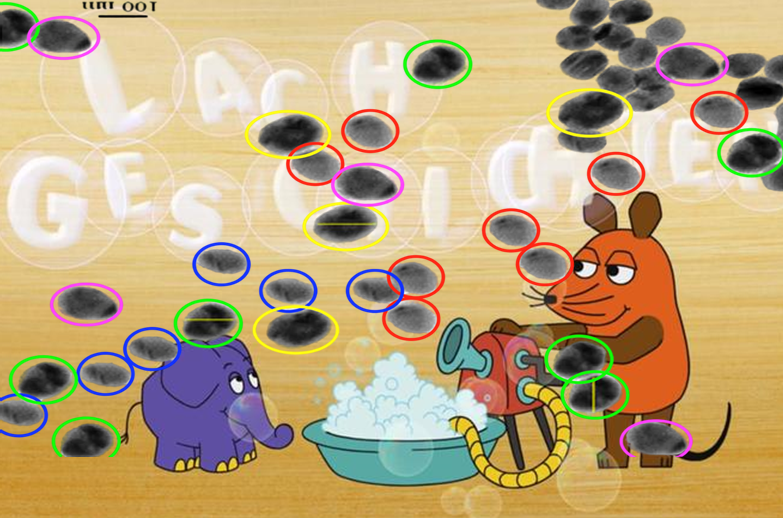
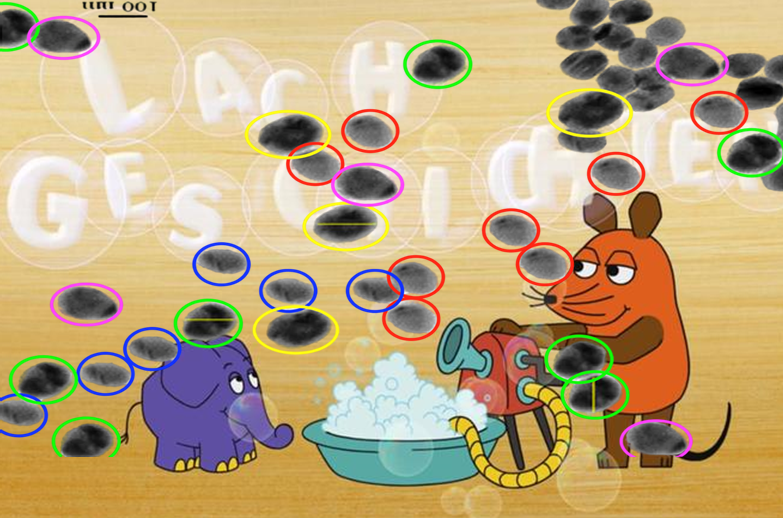
Moustafa Y. El-Naggar, Yousry M. Gohar, Magdy A. Sorour, Marian G. Waheeb Hydrogel Dressing with a Nano-Formula against Methicillin-Resistant Staphylococcus aureus and Pseudomonas aeruginosa Diabetic Foot Bacteria Journal of Microbiology and Biotechnology (2016) doi: 10.4014/jmb.1506.06048

Throughout her PhD this didn’t really change. Here is another paper, published towards the end of her time in grad school.
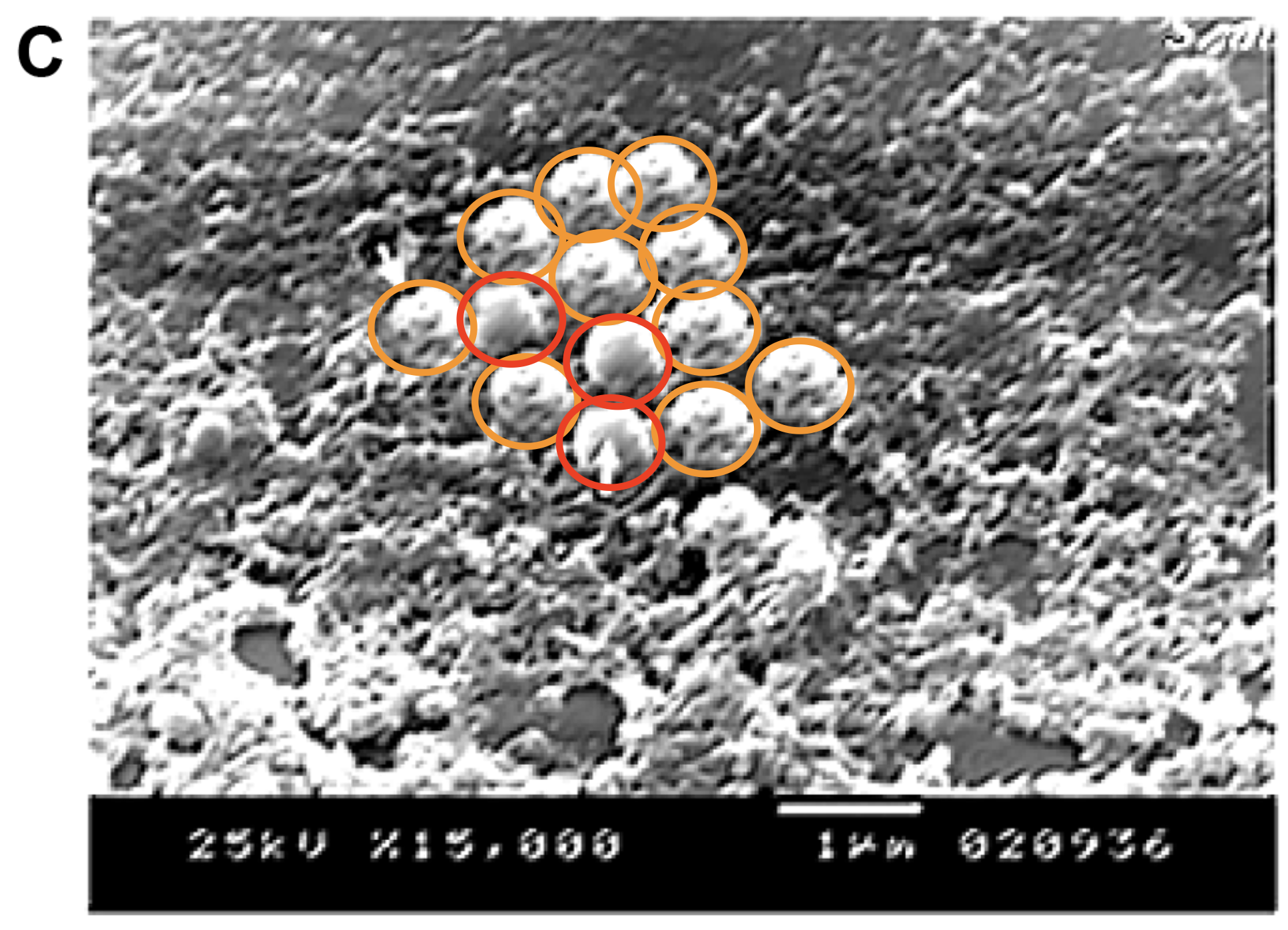
Marian G. Rofeal, Ahmed O. Elzoghby, Maged W. Helmy, Rowaida Khalil, Heba Khairy, Sanaa Omar Dual Therapeutic Targeting of Lung Infection and Carcinoma Using Lactoferrin-Based Green Nanomedicine ACS Biomaterials Science & Engineering (2020) doi: 10.1021/acsbiomaterials.0c01095

“Figure 2: some of the particles appear more similar than expected”
Abdelmalek also discovered his passion for image manipulation in 2020, possibly inspired by Rofeal, publishing his first paper in the International Journal of Biological Macromolecules, an Elsevier mega-journal with IF 8.5, specialized in publishing an incredible amount of nonsense. Mu Yang and I have both systematically looked into a small fraction of its catalogue and have reported concerns on over 270 articles to Elsevier’s ethics team.
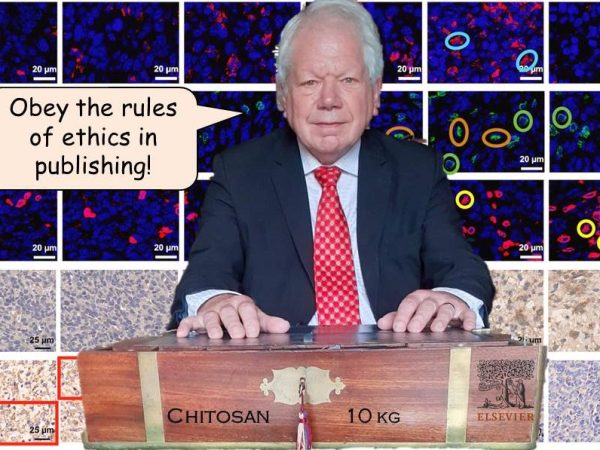
The Miracle-Polymer-Dumbsterfire
“Read the damn paper and look at the figures before publishing it; it’s not that hard” – Archasia belfragei
Abdelmalek must have noticed the lack of editors with eyes or any rigorous peer-review standards whatsoever at this journal, because they would late return with multiple additional papers.
Fady Abd El-malek, Aida Farag, Sanaa Omar, Heba Khairy Polyhydroxyalkanoates (PHA) from Halomonas pacifica ASL10 and Halomonas salifodiane ASL11 isolated from Mariout salt lakes International Journal of Biological Macromolecules (2020) doi: 10.1016/j.ijbiomac.2020.07.258


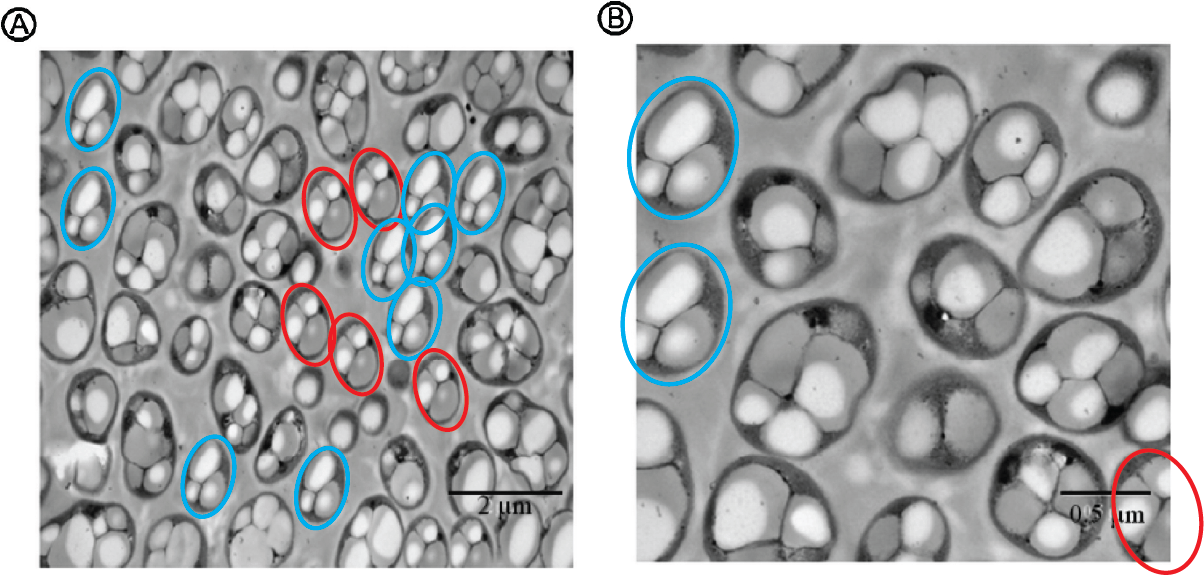
In 2021, Rofeal and Abdelmalek (spelling of the name differs, here I am going with the spelling as in all of his latest articles) decided to combine forces (and share a Photoshop license, these are expensive after all). Half the cost, double the fake images!
Fady Abd El-Malek, Marian Rofeal, Aida Farag, Sanaa Omar, Heba Khairy Polyhydroxyalkanoate nanoparticles produced by marine bacteria cultivated on cost effective Mediterranean algal hydrolysate media Journal of Biotechnology (2021) doi: 10.1016/j.jbiotec.2021.01.008

Chapter 2: China
A brief (virtual) stint
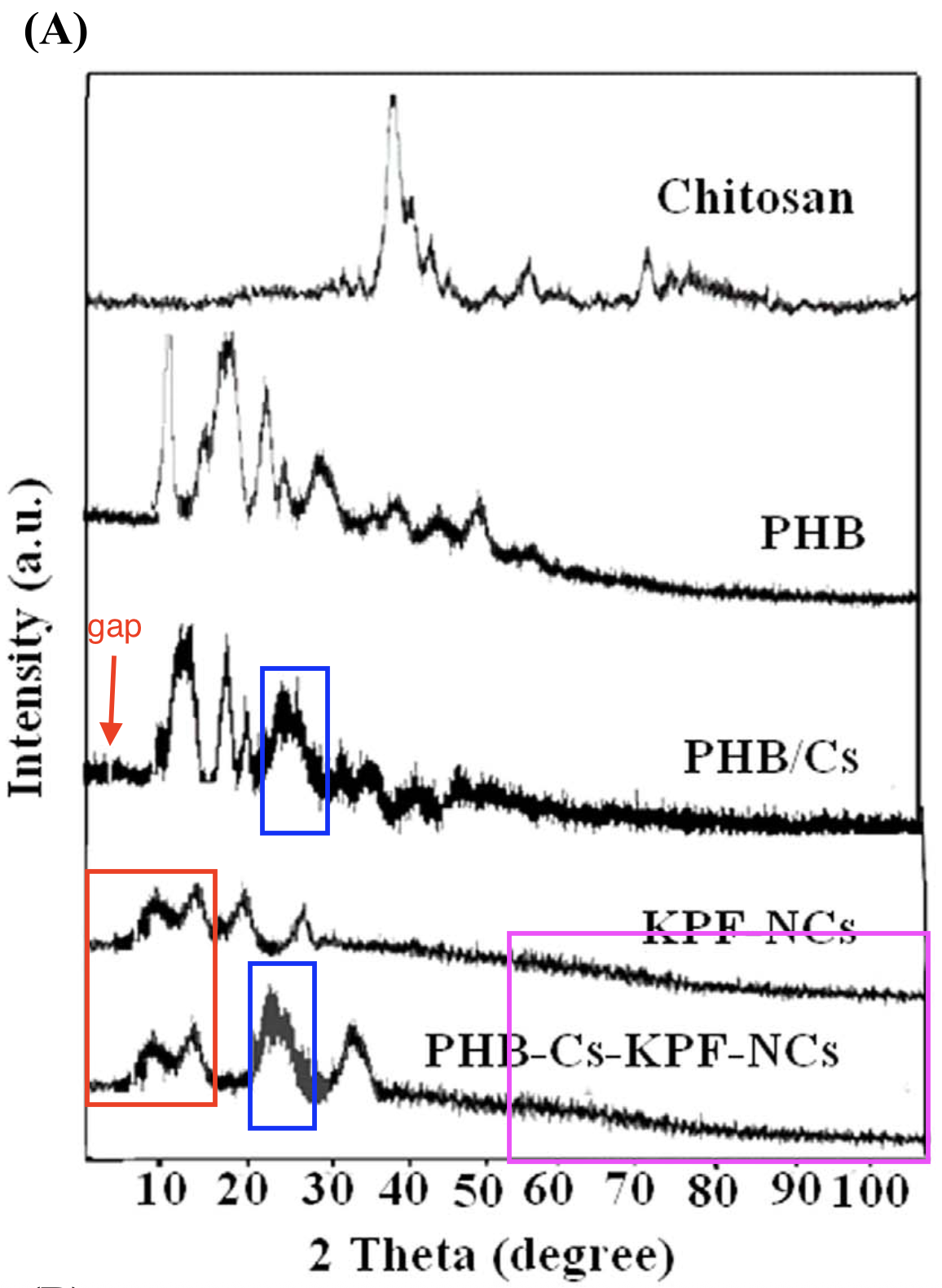
In February 2021, shortly after getting their PhDs in 2020/2021, both started a remote 6 months postdoctoral research fellowship position with the Chinese Jiangsu University, obviously not physically working in China due to the COVID restrictions for international travel at that time. Six months is not a lot of time to do a full research project, including the planning, lab work, data analysis & manuscript writing. But miraculously, in June 2021 (4 months into their postdoc!) the duo published a paper with Jiangsu University’s Xianghui Qi as their co-author. This impressive speed came at a cost. The authors could unfortunately not do any real research and had to resort to a whole lot of fake images to get IOP to publish their bollocks. Practically every piece of data in that article appears to be fake.
Marian Rofeal, Fady Abd El-Malek, Xianghui Qi In vitro assessment of green polyhydroxybutyrate/chitosan blend loaded with kaempferol nanocrystals as a potential dressing for infected wounds Nanotechnology (2021) doi: 10.1088/1361-6528/abf7ee


Chapter 3: Poland
Two years, financed by the European Union
In September 2021, Abdelmalek moved to Poland, starting a postdoc position at Lodz University of Technology. Rofeal soon followed, starting in February 2022, also taking a job as a postdoc in the same group as Abdelmalek, supervised by Prof. Alexander Steinbüchel.
Steinbüchel was professor of microbiology at the University of Münster, Germany since 1994, it is not clear if he still is affiliated there (his university profile is still up). For many years, at least between 2011 and 2022, Steinbüchel was also Distinguished Adjunct Professor at King Abdulaziz University in Jeddah in Saudi Arabia. Seems like he got paid to put the Saudi university as his secondary affiliation on more than 100 papers during that time to boost the universities ranking statistics, but I would of course never suggest such an unethical act here.


In January 2020, Steinbüchel started as the director of the newly founded International Center for Research on Innovative Biobased Materials (ICRI-BioM) at Lodz University of Technology. The two Egyptians must have been some of his first hires in his new position, their project funded by the Foundation for Polish Science and the European Union’s Regional Development Fund which made the new center possible.
Big EU bucks in hand, working at a new research center and with a new PI, both decided to use their now ample resources and do real science, and this is were we will end the article. Or that’s how it could have gone, but instead, it seems like the biggest investment by the team was to renew their subscription to Photoshop.

Fady Abdelmalek on LinkedIn: “For the second time, I am very happy to receive the “Excellence Initiative – Research University” from Lodz University of Technology for the 2nd and 3rd quarters of 2022.”
First they published a review, together with Steinbüchel, reproducing one of their fake images from above. Then, they mixed it up, with some fake spectra. Note how the peaks are of different height but all the “random” noise is identical in panels b and d:
- Marian Rofeal, Fady Abdelmalek, Alexander Steinbüchel Naturally-Sourced Antibacterial Polymeric Nanomaterials with Special Reference to Modified Polymer Variants International Journal of Molecular Sciences (2022) doi: 10.3390/ijms23084101
- Fady Abdelmalek, Marian Rofeal, Alexander Steinbüchel The Hyperproduction of Polyhydroxybutyrate Using ICRI89 through Enzymatic Hydrolysis of Affordable Cardboard Polymers (2022) doi: 10.3390/polym14142810

In late 2022, they got Joanna Pietrasik involved. Pietrasik is also professor at Lodz University of Technology. She is in charge of the universities “PolyFun” team, located at the Universities Institute of Polymer and Dye Technology. This changed precisely nothing, the papers Rofeal and Abdelmalek put out were still complete fabrications. They went back to their roots of faking microscopy images. I am sure they had a lot of fun making up these papers.
This Musa sapientum study is totally bananas:
Marian Rofeal, Fady Abdelmalek, Joanna Pietrasik, Alexander Steinbüchel Sustainable curdlan biosynthesis by Rahnella variigena ICRI91 via alkaline hydrolysis of Musa sapientum peels and its edible, active and modified hydrogel for Quercetin controlled release International Journal of Biological Macromolecules (2023) doi: 10.1016/j.ijbiomac.2022.11.080

Clove-flavoured coffee is apparently Middle-Eastern speciality:
Marian Rofeal, Fady Abdelmalek, Joanna Pietrasik, Alexander Steinbüchel A comparative study between two carboxymethylated polysaccharides/protein electrostatic and cross-linked nanogels constructed for caffeic acid and eugenol delivery International Journal of Biological Macromolecules (2023) doi: 10.1016/j.ijbiomac.2023.125585

Chapter 4 -Canada
New continent, same old fraud
Together, our heroes left Poland for Canada in March 2023, both starting postdoc positions at Polytechnique Montréal. Another fresh start, maybe they decided to better themselves, right? Wrong! They kept going. Here still with Pietrasik, but already with their new Canadian affiliations
Marian Rofeal, Fady Abdelmalek, Joanna Pietrasik Sustainable Polyhydroxyalkanoate Production from Food Waste via Bacillus mycoides ICRI89: Enhanced 3D Printing with Poly (Methyl Methacrylate) Blend Polymers (2023) doi: 10.3390/polym15204173

But this is where their publication record unexpectedly stops; except for one co-authorship for Abdelmalek in 2025 they didn’t publish since 2023. Maybe their PI in Canada saw through their BS after all? Abdelmalek’s postdoc lasted only for 1 year, and he left for an industry position at Pathogenia Lab, a Canadian company offering “microbiological analysis for safety, quality, and compliance”. What an appropriate job for someone with such a great track record of high quality work. Seems like it was not meant to last though; Abdelmalek is out of work since May 2025. Rofeal’s postdoc lasted two years, ending just last month (August 2025), with no publications in the last two years.


According to their LinkedIn, Marian Rofeal and Fady Abdelmalek are both looking for jobs in Canada as Quality Control Microbiologists at the moment. If you need someone to bend the rules for you, or if you need a graphics designer with basic photo shop skills to tune up your data, they might be the right team for the job!
Donate!
If you are interested to support my work, you can leave here a small tip of $5. Or several of small tips, just increase the amount as you like (2x=€10; 5x=€25). Your generous patronage of my journalism will be most appreciated!
€5.00

 For Better Science
I’m sad and ashamed of how my country (Poland) has became a safe harbour and a sspringboard to career for papermillers and other fraudsters. Lodz Polytechnic is yet another “top” Polish institution hiring them.
Some apparent fraudsters already got grants for their “research”, while it’s getting progressively more difficult to get fundig.
https://www.linkedin.com/posts/samaneh-shahsavarifar-91954373_energystorage-nanomaterials-mxene-activity-7273398914106482689-L2HW – Miniatura is a seed grant program and a jumpstart to further funding
https://projekty.ncn.gov.pl/index.php?projekt_id=599730 – Maestro is a prestigious program for experienced PIs
https://wilis.pg.edu.pl/aktualnosci/2025-06/dr-robert-castro-munoz-otrzymal-dofinansowanie-w-programie-sonata
https://pg.edu.pl/badawcza/aktualnosci/2024-07/pierwszy-projekt-w-ramach-programu-platinum-establishing-top-class-research-teams-dr-mohammada-rezy-saeba-zakonczony-sukcesem
LikeLiked by 1 person
Wait! What? I can charge people for a ‘Introduction to cannabis’ certifcate?
LikeLiked by 1 person
From the last two years I have spend in this country I can tell you that American’s LOVE their certifications!
LikeLike
It certainly seems so. They even feel the need to brag about it, as if doing an online quiz and paying a fee for a ‘certificate’ were some sort of meaningful achievement. #Clownworld
LikeLike
Not only in US. Last year a case of a company conneted to a rector of a private university in Silesia, selling certificates “Studies with future” and “University of leaders” was publicized in Polish media
Kup pan certyfikat. Cała Polska ze “znakiem jakości”
Moderate pricing – 2800-3500 PLN (700-850 EUR) per certificate. They sold tousands of them to 84 public Polish universities earning 2 mln PLN (480 000 EUR).
This year the company changed its name (it is now called European Center for Research on Quality) and sells a new certificate – “Students’ Trust Leader”.
It’s an investment. Universities that bought them used them as advertisements on the web pages recruiting students. A subsidy for 1 chemistry student from our Ministry of Science and Higher Education is 15 000 PLN. So, even if we recruted just 1 extra student thanks to these certificates these costs would be returned 5 x.
Money is lying on the street, you just have to pick it up.
LikeLiked by 1 person
Naaa, you confuse 2 different people. See again the publications – it’s either Fady Abd El-Malek or Fady Abdelmalek. 😊
Check my comments on this one, when it’s released from moderation.
PubPeer – The Hyperproduction of Polyhydroxybutyrate Using ICRI89 thro…
LikeLike
Note also the the paper I just commented on, which describes production of polyhydroxybutyrate (PHB) from cardboard waste by bacteria has a very interesting statement in the abstract:
“From another perspective, valorizing different paper mill wastes has become a prominent research topic.”
LikeLiked by 3 people
This is probably the only true and honest sentence in the whole paper 😀
LikeLiked by 3 people
Well-spotted reuse. The level of shamelessness is always astonishing although I feel like I have seen it all before. But hey, at least they were honest in their description:D
LikeLike
If it were not MDPI, I would send a letter to the editor, but in this case I think it would be pointless.
LikeLike
Interesting findings. Cloned sections in EM images are common, but sometimes require careful examination. Especially for particles which are expected to have regular sizes and shapes, it does not always jump out at you. Some opportunities for automation I think!
LikeLike
I also wonder how often I miss them. I think in this case I spotted some of the better-done clones, especially those in the background of some TEM images, only because I had found a couple by this team of authors that were clearly fake. That led me to take a very close look. I think otherwise I would have probably missed them.
LikeLiked by 1 person