

Schneider Shorts of 19 September 2025 – Schneider reported to German police, authorship disputes resolved in Switzerland, honesty researcher sued for double-fraud, a Romanian honoured by learned society, with a German in russia, post-mortem retractions, Brazilian brain damage, and finally, did you ever hear of bacterial mitochondria?
Table of Discontent
Science Elites
- The receipt of anonymous threats – Damien Weber’s minor violations
- A German in russia – Detlef Bahnemann’s international activities
- Diversity, gender and equity issues – Dafin Muresanu honoured
- Intentionally backdated – Francesca Gino faked same data twice
- Call the police! – Farooq Sher reports Schneider to the cops
Retraction Watchdogging
- Biologically meaningless and redundant – Philip Lazarovici loses battle of wits
- The inadvertence of error – unexpected retraction for Peter Jordan
- Charis Eng is deceased – post-mortem investigations and retractions
Science breakthroughs
- Long-term harm – PhD student debunks study on brain-damage from Diet Coke
- Bacterial mitochondria – but they passed peer review!
Science Elites
The receipt of anonymous threats
Damien Weber, the medical director of the Paul Scherrer Institute (PSI) in Zürich, Switzerland, is in some trouble now. I previously wrote about his rule, where junior researchers had to add his name to every paper coming out from PSI, with full support from the PSI leadership and enforced even by the Ombudsman. After PSI graduate Vivek Maradia raised a fuss and made complaints, rules were changed to a Catch-22 situation, where PSI papers could only be published with Weber’s permission, and to get his permission, you must ask him to read your paper, and that would in turn qualify Weber for authorship (read below and September 2024 Shorts).
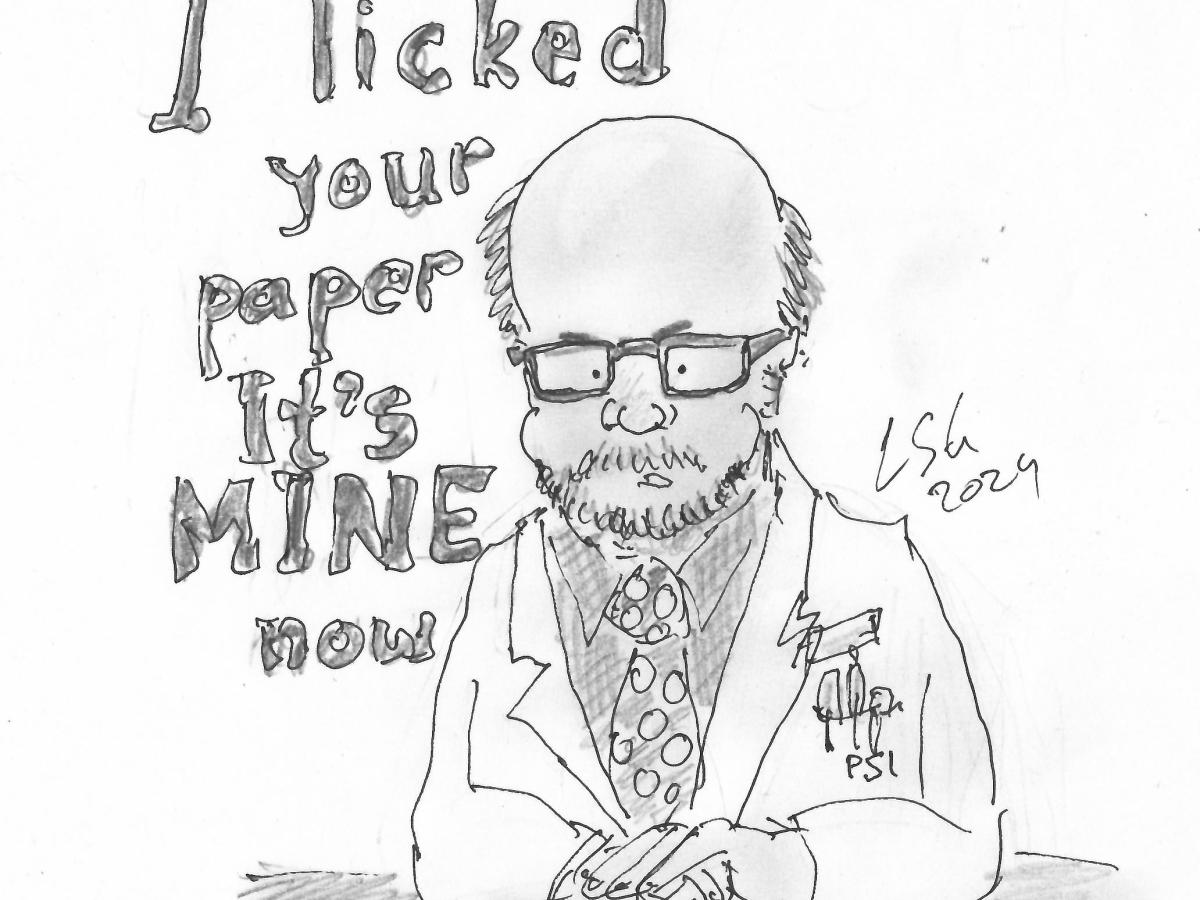
The Paul Scherrer Rules
“I will ultimately decide on the names that will qualify for co-authorship” – Dr med Damien Weber

In their first investigation, the PSI found Weber to be an innocent victim of Maradia’s slander. Their second investigation arrived to only slightly better conclusions, here the report’s summary from May 2025 and the public announcement (translated, highlight mine):
“In the opinion of the Investigative Commission, as well as according to his own current assessment, the first accused [Weber, -LS] fulfilled the requirements for co-authorship in some cases in full, but in other cases only partially for individual publications published between 2020 and spring 2024 with the reporting person and other employees at the concerned centre, in accordance with the recognized Research Integrity (RI) guidelines of the PSI. With regard to the first accused, the Investigative Commission concludes that by being named as a co-author in individual publications, he has violated the rules of good scientific practice in a minor way. It does not consider a correction of the authorship to be appropriate or compulsory, as the actual contributions as such were largely declared to the publishers and were approved by other co-authors and the person who filed the complaint at the time of publication. […]
…the Director has concluded that the first defendant, by listing himself as a co-author in various publications, has committed a minor violation of the rules of good scientific practice as set out in the PSI’s RI guidelines. The Director thus concurs with the report and assessment of the investigation commission.”
Michael HotTiger of Zurich, patron of biomedical ethics
University of Zurich and its Unispital has so much trouble with their medical professors right now. I wish to help.
Thus, no research misconduct. And no need to correct anything. This however is particularly shameless:
“The internal investigation also revealed that doctoral students feel well supported and do not feel pressured with regard to authorship.”
PSI and Weber also complained about my reporting and Maradia’s notifications to academic authorities:
“In their view, and that of their supporters, the level of public exposure—across all channels, including social media—and the receipt of anonymous threats are disproportionate in both tone and substance to the nature of the investigation.”
In academia, it is is never a “threat” to literally threaten PhD students with all possible consequences in order to extort gift authorships, but it is a “threat” to complain about abuse of your superiors.
Weber’s problem however was his title greed. He wanted to have an extra professorship at the University of Bern, which proved less beneficial than he expected. Upon Maradia’s notification, the university performed their own investigation, and found that Weber must indeed correct four papers and remove his undeserved authorship. Here the letter from 10 July 2025:
Weber ended his affiliation with the University of Bern now, and also with the University of Zürich (at least he stopped using them on his recent publications). No wonder, since the University of Bern was so tough on him:
“The University will therefore request that the journals remove Prof. Weber’s name as an author from these four publications.”
These were the four papers:
- Vivek Maradia , David Meer , Rudolf Dölling , Damien C. Weber, Antony J. Lomax, Serena Psoroulas Demonstration of momentum cooling to enhance the potential of cancer treatment with proton therapy Nature Physics (2023) doi: 10.1038/s41567-023-02115-2 (corrected in May 2024 to add two references)
- Vivek Maradia, David Meer, Damien Charles Weber, Antony John Lomax, Jacobus Maarten Schippers, Serena Psoroulas Application of a scattering foil to increase beam transmission for cyclotron based proton therapy facilities Frontiers in Physics (2022) doi: 10.3389/fphy.2022.919787
- Vivek Maradia , David Meer , Damien Charles Weber , Antony John Lomax , Jacobus Maarten Schippers , Serena Psoroulas A new emittance selection system to maximize beam transmission for low‐energy beams in cyclotron‐based proton therapy facilities with gantry Medical Physics (2021) doi: 10.1002/mp.15278
- Vivek Maradia, Isabella Colizzi, David Meer, Damien Charles Weber, Antony John Lomax , Oxana Actis, Serena Psoroula Universal and dynamic ridge filter for pencil beam scanning particle therapy: a novel concept for ultra-fast treatment delivery Physics in Medicine and Biology (2022) doi: 10.1088/1361-6560/ac9d1f
The fourth paper already received an Expression of Concern:
“This article is currently under investigation following an allegation that raises concerns over the authorship of the work. As a member of COPE, this is being investigated in accordance with the COPE guidelines, and as such an expression of concern has been applied.”
The Voinnet investigator and the tricky issue of conflict of interests
Great scientists never have any conflicts of interests, and in the case of the investigation of the research misconduct by the plant scientist Olivier Voinnet, led by his Swiss employer ETH Zürich, this was also apparently the case. Voinnet was found guilty of misconduct and admitted image manipulations in many papers. Yet his science remained…
However, yet another PSI paper coauthored by Weber (but without Maradia!) was corrected just now:
M. Togno , K.P. Nesteruk , R. Schäfer , S. Psoroulas , D. Meer , M. Grossmann , J.B. Christensen , E.G. Yukihara , A.J. Lomax , D.C. Weber , S. Safai Ultra-high dose rate dosimetry for pre-clinical experiments with mm-small proton fields Physica medica (2022) doi: 10.1016/j.ejmp.2022.10.019
“In the original publication of this article, D. C. Weber was listed as a co-author. Following an institutional review conducted by the relevant university bodies, it was determined that D. C. Weber does not meet the journal’s authorship criteria.
Accordingly, D. C. Weber’s name has been removed from the list of authors.
The authors would like to apologise for any inconvenience caused.”
Corrigendum 8 September 2025
Swiss media is now reporting, here is Tagesanzeiger, NZZ is to follow. My own original investigation of this very case from 2024 is never mentioned though. In journalism, it is like in academia: credit yourself, and only reference those you like or fear.
A German in russia
Meet a German “Russlandversteher“, professor of technical chemistry Detlef Bahnemann of the University of Hannover. If you don’t know what a “Russlandversteher” is: it is a particularly nasty kind of German who claims to “understand” russia and its special “needs” (to conquer, oppress and mass-murder), while the only thing these people actually understand about russia is the russian money. In March 2014, just when russia annexed Crimea and started its war against Ukraine, the University of Hannover celebrated Bahnemann’s achievement of obtaining a so-called “Megagrant” funding of €2 million from putin personally (translated):
“Bahnemann will take over the management of the new institute at the State University of St. Petersburg – in parallel to his work in Germany. […] The project is initially designed for three years; After a positive assessment, it can be extended to five years.
“I am very pleased that this mega-grant has the opportunity to build an institute whose research and development work should make a significant contribution to the direct conversion and storage of solar energy,” says Bahnemann. “In this institute, Russian researchers will work together with experts from all over the world and young young people with experienced colleagues on this topic.”
Megagrant, the Russian docu-novel of Paolo Macchiarini
This is my review of the Russian book “Megagrant”, which tells of Macchiarini’s adventures with the plastic trachea, much of it played out in Russia, funded by a state Megagrant of €4.5mn. Some books are namely only good as court evidence.
In 2017, after many russian war crimes and thousands of dead and even more thousands displaced Ukrainians, the University of Hannover continued celebrating:
“For his outstanding work in the field of chemical and biochemical physics, Prof. Dr. Detlef Bahnemann from the Institute of Technical Chemistry received the Nikolai M. Emanuel Honour Medal : The ceremonial handover took place on 2 October 2017 in Moscow, at the Emanuel Institute of Biochemical Physics, Russian Academy of Sciences . […]
Since 2007, the Medails have been Nikolai M. Emanuel annually by the Russian Academy of Sciences and the Lomonossow University Moscow . […]
The scientific faculty congratulates!“
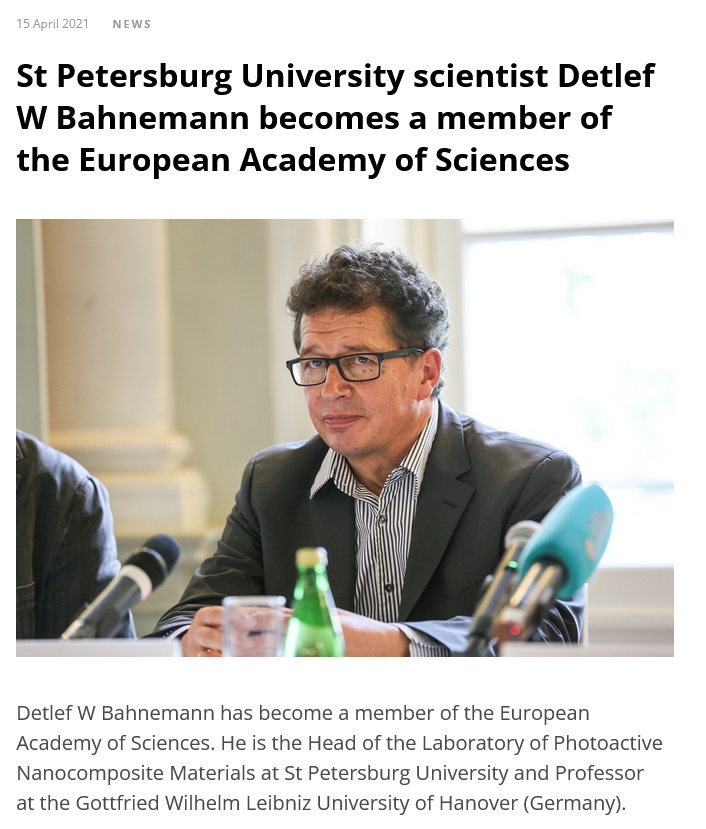
In November 2021, as it became clear that russia was preparing its full-scale attack on Ukraine, Bahnemann may have left his German university, although it is not clear, since they refused communication with me. His ORCID profile however lists his ongoing employment in St Petersburg. Indeed, Bahnemann eagerly publishes with russian authors these days.
But to be fair, it is not just russians with whom this Good German closely collaborates. After all, russian papermill industry is no match for the Chinese, Indian or Egyptian papermills. Some of Bahnemann’s papers are already on PubPeer. Mu Yang alerted me to this Egyptian fabrication:
Mohammad W. Kadi , Reda M. Mohamed , Adel A. Ismail, Detlef W. Bahnemann Soft and Hard Templates Assisted Synthesis Mesoporous CuO/g-C3N4 Heterostructures for Highly Enhanced and Accelerated Hg(II) Photoreduction under Visible Light Journal of Colloid and Interface Science (2020) doi: 10.1016/j.jcis.2020.07.001

Dysdera arabisenen: “Fig 3d contains cloned sections. There may (should) be more than what I have marked.”
With the same Egyptian colleagues, in the papermill-only journal by Elsevier. Another classic corner clone where someone had to remove the original labels from the plagiarised figure:
Mohammad W. Kadi , Reda M. Mohamed , Adel A. Ismail, Detlef W. Bahnemann Performance of mesoporous α-Fe2O3/g-C3N4 heterojunction for photoreduction of Hg(II) under visible light illumination Ceramics International (2020) doi: 10.1016/j.ceramint.2020.06.087

Archasia belfragei: “Figure 3d: contains some repetitive elements”
Reda Mohamed currently has almost 20 fake papers on PubPeer, often together with Mohammad Kadi and Adel Ismail. Again by Bahnemann:
Mohammad W. Kadi , Reda M. Mohamed , Detlef W. Bahnemann Construction of mesoporous CdO/g-C3N4 nanocomposites for photooxidation of ciprofloxacin under visible light exposure Optical Materials (2021) doi: 10.1016/j.optmat.2021.111816

This, with Pakistani papermillers like Waseem Raza (PubPeer record), was flagged on PubPeer already in 2021:
Waseem Raza , D. Bahnemann , M. Muneer A green approach for degradation of organic pollutants using rare earth metal doped bismuth oxide Catalysis Today (2018) doi: 10.1016/j.cattod.2017.07.029
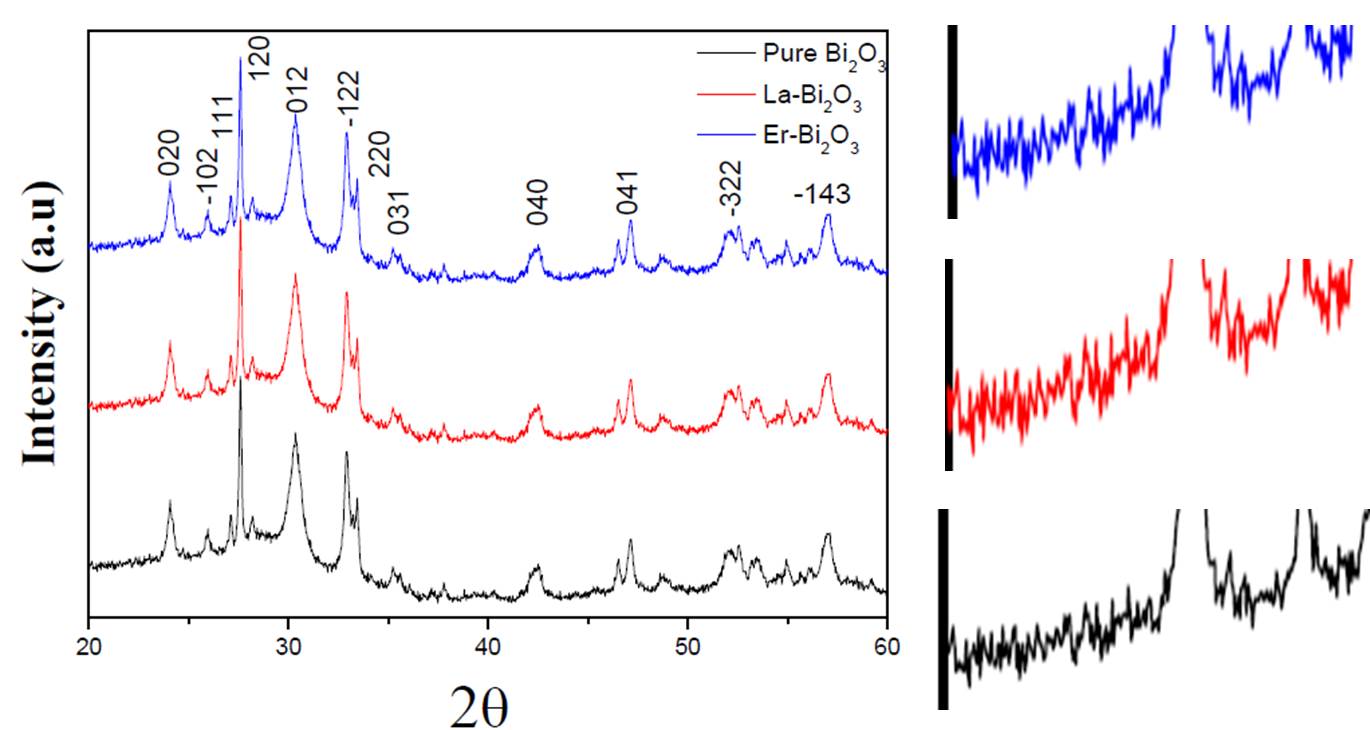
Fun fact: somehow Indian papermillers (and two Spanish passengers) decided to random-cite Bahnemann in their faabout banana-flavoured nanoparticles with “antibacterial, cytotoxic, hemolytic, photocatalytic, and seed germination activity“:
Jayashree Shanmugam , Aruna Sharmili Sundararaj, Roshitha Shanmugasundaram , Balaji Ravichandran , Mahendrakumar Mani , Savaas Umar Mohammed Riyaz , Manikandan Dhayalan , Antonio Cid‐Samamed, Jesus Simal‐Gandara Green preparation of bract extract (Musa acuminate) doped magnesium oxide nanoparticles and their bioefficacy Applied Organometallic Chemistry (2023) doi: 10.1002/aoc.7063

Upper curve: almost strait angles between baseline and peaks, unbelevable shape of the peaks (arrowed)”


Next to hand-drawn spectra there were also many nonsense references, like:
“NPs increase seeds’ water and nutrient absorption capacity by increasing the nitrate reductase enzyme level. [80]”
[80} M. R. Hoffmann, S. T. Martin, W. Choi, D. W. Bahnemann, Environmental Applications of Semiconductor Photocatalysis. Chem. Rev. 1995, 95(1), 69.
Boycott Russian Science (and Everything Else) – Thoughts on War in Ukraine
The state it’s in, we don’t need Russian science anyway.
.
Diversity, gender and equity issues
In academia, important white men are always supported by follow important white male peers, especially in difficult times.
The Romanian scholar Dafin Muresanu, Chair of the Neurosciences at ”Iuliu Hatieganu” University of Medicine and Pharmacy in Cluj, has a major financial interest in proving that celebrolysin (Nazi Pig Brain Juice) was a cure for all neurological disorders. For that purpose, he collaborated Hari and Aruna Sharma, two neuroscientists at the Uppsala University in Sweden, who were later found guilty of research fraud by the Swedish authorities.
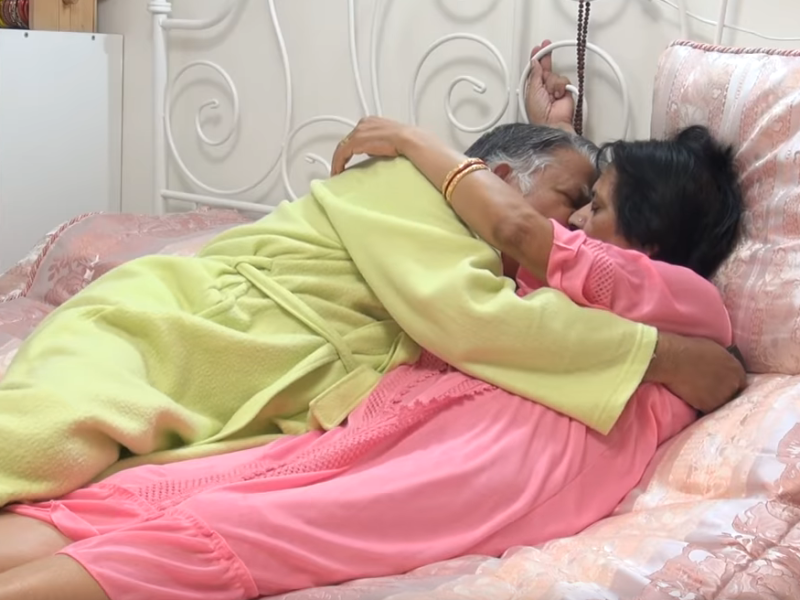
In bed with Hari and Aruna
Hari Shanker & Aruna, a YouTube influencer couple in Sweden. With or without Rudolph the Red-Faced Liar. And with Anca and Dafin, two totally innocent and upright Romanians. Pushing pig brain juice an SS Nazi invented. You won’t find a better story for Christmas!
Muresanu was never investigated though, because of his own high standing and because he early on also roped in his university rector Anca Buzoianu into the Sharma collaboration, and in Romania, only the rector can initiate a research misconduct investigation. Now two books edited and authored by Sharmas were retracted, including many chapters co-authored by Muresanu and Buzoianu (read September 2024 Shorts).
Now, to Muresanu’s recent achievement. An announcement by the European Academy of Neurology (EAN) from June 2025:
“The European Academy of Neurology is proud to award outstanding members of the neurological community for their service to European Neurology and EAN. The award is handed over during the Assembly of Delegates, taking place at EAN annual congresses. Recipients are granted the Title “Fellow of the EAN” which comes with several benefits. Additionally, Service Award receipients [sic!] receive lifetime membership of EAN and free registration to the EAN congresses.”

Cerebrolysin: Sharmas, Masliah, and EVER Pharma
“Poking around PubMed (Dysdera the spider is always on the hunt for new hornet’s nests) [..], I came across one image in two papers by Eliezer Masliah. […] By a conservative count, I contributed to about 160 out of 300 slides in the final dossier” – Mu Yang

Yes, Muresanu was honoured by the EAN “Service Award”! Here the announcement by the Romanian Academy (translated):
“Prof. univ. Fior-Dafin Mureșanu, a correspondent member of the Romanian Academy, was distinguished with the prestigious “Service Award” of the European Academy of Neurology, for exceptional contributions in the development of the organization’s activities, within the 11th edition of the Congress of the European Academy of Neurology, held in Helsinki, June 21-24.
Actively involved in the leadership of the European Academy of Neurology (EAN) since 2014, Professor Fior-Dafin Mureșanu has played an essential role in strengthening European cooperation in neurology. […]
Dafin Mureșanu is one of the most famous Romanian neurologists at international level, promoting and continuously developing the medical scientific research and the Romanian School of Neurology.”
Muresanu (who was EAN’s board member from 2020 till 2022), received the award from the hands of the EAN president Elena Moro, probably as part of her heroic struggle to promote “diversity, gender and equity issues“.
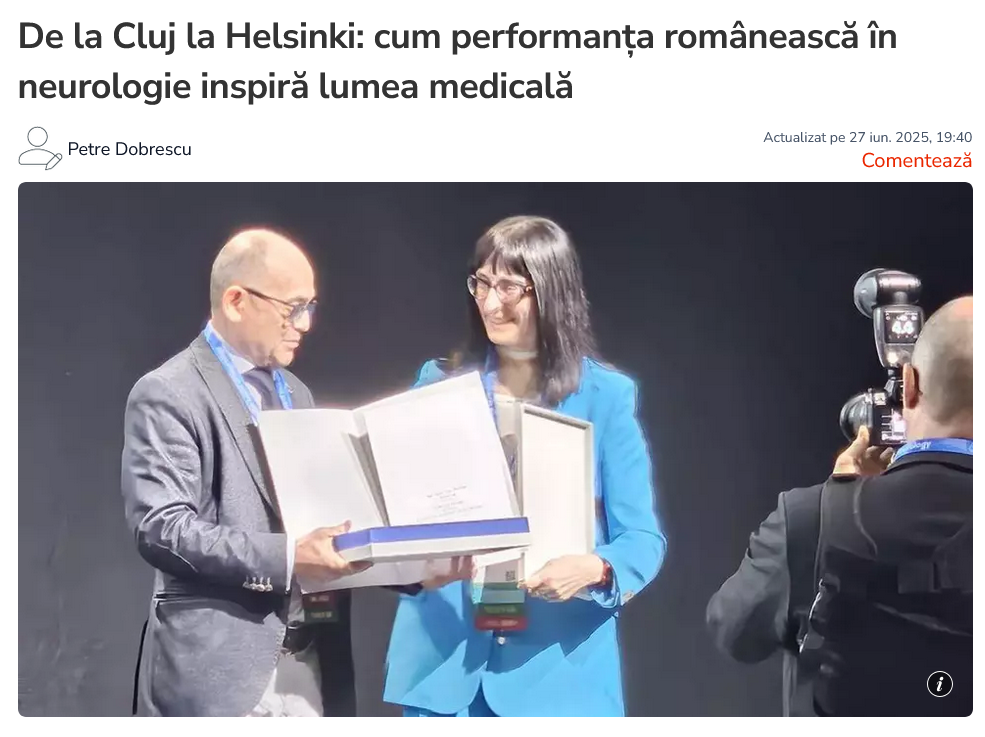
Also in June 2025, Muresanu was made “Honorary Member of the Society of Neurology of the Republic of Moldova“.
Congratulations from me also.
Intentionally backdated
In the Francesca Gino case, some new development. As reminder, this Harvard professor who used to be celebrated worldwide as the expert on honesty, was exposed as research fraudster and sacked by Harvard. Gino sued her employer and the sleuths of Data Colada, but failed to win in court.
Now, the student newspaper The Harvard Crimson reported on 12 September 2025:
“Harvard sued behavioral scientist Francesca Gino for defamation in August, alleging the former Harvard Business School professor sent the school a falsified dataset to prove she did not commit data fraud.
The University’s lawyers accused Gino of modifying a spreadsheet on her laptop, then manually backdating it to 2010, so it would appear that she had been sent false data by another researcher rather than altered it herself. […]
In a filing this summer, Gino accused the University of suing her as retaliation for her lawsuit. She denied Harvard’s claims in a response filed Wednesday — maintaining that she had indeed found a file that would show her innocence, and that she did not know whether Harvard had reviewed it — and asked the judge to dismiss the counterclaim.
The data in question was gathered in a study that Gino conducted in 2010, which would later become the subject of the first public accusations that she fabricated data.”
It was this now retracted PNAS paper, for which Gino forged evidnece a second time. It was coauthored by Duke University’s professor Dan Ariely, who is just as dishonest as Gino, but so far managed to escape any sanctions. Its alleged raw data was published by Gino in parallel on the OSF platform:
Lisa L. Shu , Nina Mazar, Francesca Gino , Dan Ariely , Max H. Bazerman Signing at the beginning makes ethics salient and decreases dishonest self-reports in comparison to signing at the end Proceedings of the National Academy of Sciences of the United States of America (2012) doi: 10.1073/pnas.1209746109
“The editors are retracting this article and note that Simonsohn, Simmons, and Nelson (http://datacolada.org/98) have provided evidence to question the validity of the data in the article.”
Retraction, August 2021
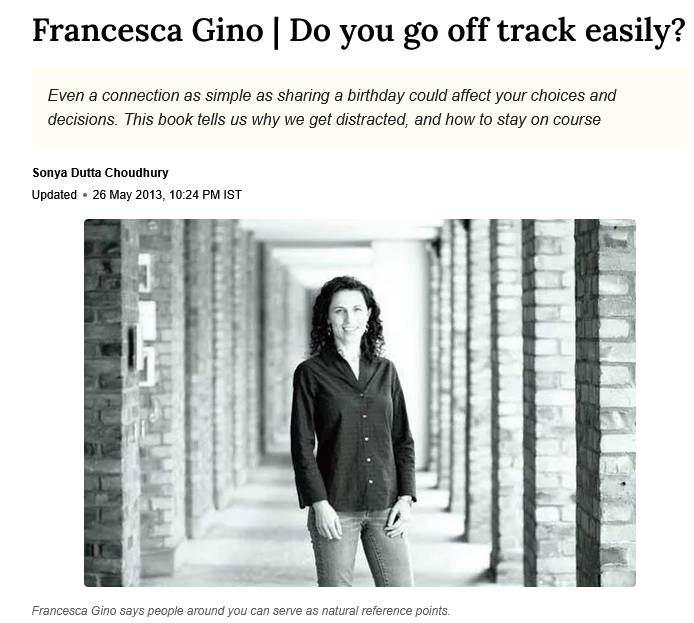
The raw data files were meant to prove Gino’s innocence. The journalists write that Harvard sequestered material from Gino’s computers and laptop: “A search of the sequestered files in 2023 found several versions of the dataset.” But:
“None of the four files matched the altered dataset that was posted to the OSF website and apparently used to produce the study results.
Throughout the investigation process, Gino maintained that someone else had passed her falsified data, which she had unwittingly used in the published study.”
After Gino was found guilty research misconduct, she suddenly started to publicly claim that the was yet another version of the dataset, which matched the OSF data and which Harvard ignored despite it proving her innocence. That file was fake, with OSF data pasted in, and “intentionally backdated to appear as if it was last modified on July 17, 2010“.
Basically, the Italian-born superstar not only forged that PNAS study, she also forged documents to prove in court that the PNAS study was never forged, and that she was falsely accused. I say, give this great scholar a professorship in Italy right now.
The article also mentions that Gino used to be publicly supported by her other Harvard professors, especially by Gary P. Pisano and L. Lawrence Lessig.
Call the police!
Now, some news In Eigener Sache, about myself.
The British papermiller Farooq Sher, senior lecturer at Nottingham Trent University, reported me to the German police for “slander”. I have no idea what exactly he accused me of, as I would need to pay a lawyer to access the criminal file, and even then I couldn’t tell you anyway: by German law it’s forbidden to quote from criminal files under threat of prison. I just replied to the police officer and denied the charges. There are no costs for Sher to make such vexatious police reports, and also no consequences for lying. Thus, why not do it indeed.
Read about Sher at the end of this article:

Nuttingham Trash University
“I will not by myself, or be instructing or encouraging any other person or howsoever othewise, publish or cause to be published words or otherwise howsoever make statements to others which wrongfully refer to Nottingham Trent University and/or their employees and for any person or any body associated with Nottingham Trent University”

Hopefully, the criminal complaint will be dismissed by the state prosecutor, with the advice for Sher to sue me in civil court. Sher previously wrote to me to threaten with police for my alleged GDPR breaches by mentioning his name and place of work (read April 2024 Shorts).
I wrote many times about Sher’s papermill activities, and now my colleagues found even more, raising his PubPeer record to almost 50 papers. He can now add this as additional evidence of my slander to the German police. This one was already under investigation for rigged peer review:
Alaa H Ali , Asmaa Bahjat Kareem , Usama A Al-Rawi , Ushna Khalid , Shengfu Zhang , Fatima Zafar , Edisa Papraćanin , Mohammad Rafe Hatshan , Farooq Sher Kinetic and equilibrium study of graphene and copper oxides modified nanocomposites for metal ions adsorption from binary metal aqueous solution Frontiers in Chemistry (2023) doi: 10.3389/fchem.2023.1279948
“With this notice, Frontiers states its awareness of serious allegations of undisclosed conflicts of interest […]. Our Research Integrity team, will conduct an investigation in full accordance with our procedures. The situation will be updated as soon as the investigation is complete.”
Expression of Concern, 23 July 2024
Now fake data was found, some of it hand-drawn:


More hand-drawn spectra, and do you recognise Sher’s coauthors?
Usama A. Al-Rawi , Farooq Sher, Abu Hazafa , Muhammad Bilal , Eder C. Lima, Nawar K. Al-Shara , Farhat Jubeen , Jabir Shanshool Synthesis of Zeolite supported bimetallic catalyst and application in n-hexane hydro-isomerization using supercritical CO2 Journal of Environmental Chemical Engineering (2021) doi: 10.1016/j.jece.2021.105206


Yes, Muhammad Bilal and Eder Lima! Read about them, and their work with Sher, in these two articles:
Nobelium Bilalski, a Gdansk papermiller
“To date, he has authored over 700 peer-reviewed articles, 150 book chapters, 25 edited books, and 10 editorial-type scientific articles in various areas of Science and Engineering. Dr. Bilal has a h-index of 94 with 34 000 citations (Google Scholar).”
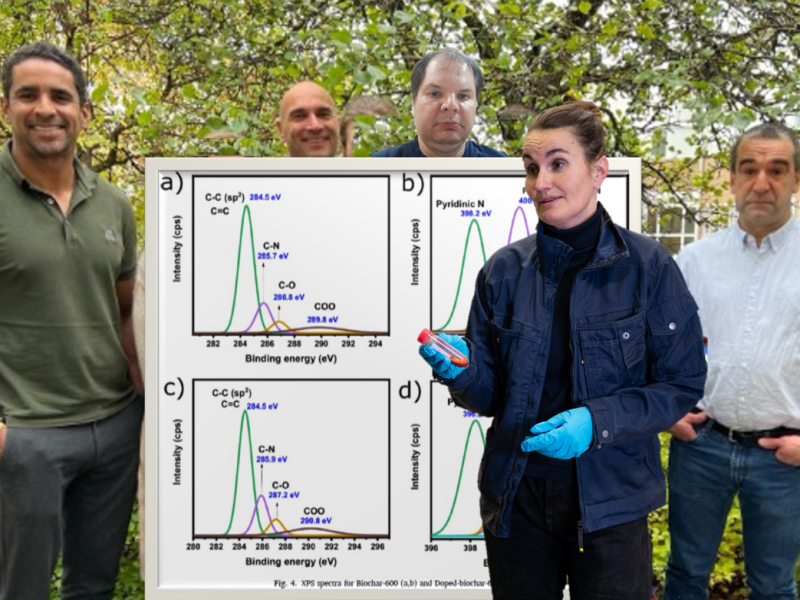
Boys from Brazil
“We can always make mistakes in our publications but never acting intensionally. Regarding Prof. Eder works, I know him well and I don’t believe he has anything wrong” – Glaydson S. Dos Reis
A twin publication by Sher, with some time-warp:
- Ossama Al-Juboori , Farooq Sher, Abu Hazafa , Muhammad Kashif Khan , George Z. Chen The effect of variable operating parameters for hydrocarbon fuel formation from CO2 by molten salts electrolysis Journal of CO2 Utilization (2020) doi: 10.1016/j.jcou.2020.101193
- Ossama Al-Juboori , Farooq Sher, Saba Rahman , Tahir Rasheed , George Z. Chen Sustainable Conversion of Carbon Dioxide into Diverse Hydrocarbon Fuels via Molten Salt Electrolysis ACS Sustainable Chemistry & Engineering (2020) doi: 10.1021/acssuschemeng.0c08209


There’s really every kind of papermill forgeries, but it seems Sher avoided retractions so far because his university fully supports him.
Tazien Rashid , Danish Iqbal , Abu Hazafa , Sadiq Hussain , Falak Sher , Farooq Sher Formulation of zeolite supported nano-metallic catalyst and applications in textile effluent treatment Journal of Environmental Chemical Engineering (2020) doi: 10.1016/j.jece.2020.104023

Maybe someone should report the Nottingham Trent University to the English police, for defrauding the public with all this.
Update 21.09.2025: as I expected, the state prosecutor of Hanau informed me now that they won’t open any criminal investigation against me. Nice, try, Farooq.
Retraction Watchdogging
Biologically meaningless and redundant
Retraction for a septuagenarian clown from Israel, called Philip Lazarovici, professor of a neuropharmacology at the Hebrew University of Jerusalem in Israel. I wrote about his fake and occasionally stolen science in November 2024 Shorts.
This study was authored by Lazarovici with his Israeli colleagues plus some collaborators from University of Münster in Germany, and US company Debina Diagnostics:
Majdi Saleem Naamneh , Tatjana Momic , Michal Klazas , Julius Grosche , Johannes A. Eble, Cezary Marcinkiewicz , Netaly Khazanov , Hanoch Senderowitz , Amnon Hoffman, Chaim Gilon , Jehoshua Katzhendler , Philip Lazarovici Structure–Activity Relationship of Synthetic Linear KTS-Peptides Containing Meta-Aminobenzoic Acid as Antagonists of α1β1 Integrin with Anti-Angiogenic and Melanoma Anti-Tumor Activities Pharmaceuticals (2024) doi: 10.3390/ph17050549

Furthermore, at least two internal duplications in one micrograph in Figure 3 are seen.”
There isn’t even one author in common, neither on Hunter et al 2022 not on this one from China:

Furthermore, Dorothy Bishop noticed that one reviewer the paper showed 44% plagiarism in their similarity index report. which Lazarovici swiftly fixed to get it accepted. In his own words:

In October 2024, Lazarovici posted a very long reply which started with:
“We appreciate the layman, technical analysis of the photomicrographs in Figures 2 and 3 of our manuscript and fully reject the insinuation that they have been taken from an older publication (Hunter et al., 2022; Sci Reports). These photos were acquired during our experiments and used to quantify the angiogenic effect. Apparently, for an investigator without knowledge of Matrigel tube assay and tumor angiogenesis, they appear identical.”
Lazarovici also did his own analysis:
“Assuming that the unknown person providing the PubPeer comment is interested in adjusting his software to compare angiogenic micrographs from different studies I strongly suggest that he will consult our methodology detailed paper Lazarovici P, et. al : Nerve Growth Factor-Induced Angiogenesis: Endothelial Cell Tube Formation Assay. Methods Mol Biol. 2018;1727: 239-250. […] To satisfy our curiosity we compared the figures from Pharmaceuticals and Sci Rep with other software that found similarities but not identity,”
The rant concluded with:
“focusing on duplications of structures out of the blood vessels area that can be observed in every section is biologically meaningless and redundant to the topic of the manuscript. We are pleased with the high quality of our Pharmaceuticals paper and that scientists in the field of Matrigel tube formation provide similar and or identical results for angiogenic and anti-angiogenic compounds using the common community criteria. We welcome PubPeer to learn the field and to develop new AI-angiogenic specific tools to deep our understanding but whithout unjustified, and non-transparent allegations of misconduct. Sincerely yours, Prof. Philip Lazarovici“
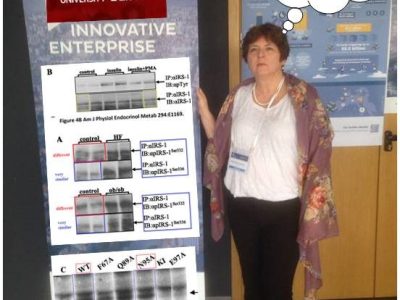
“I feel harassed and targeted”
“It was done for ‘esthetic’ reason ONLY.” – Prof Hagit Eldar-Finkelman
On 18 September 2025, the paper was retracted:
“The journal retracts the article titled “Structure–Activity Relationship of Synthetic Linear KTS-Peptides Containing Meta-Aminobenzoic Acid as Antagonists of α1β1 Integrin with Anti-Angiogenic and Melanoma Anti-Tumor Activities” [1], cited above.
Following publication, concerns were brought to the attention of the Editorial Office regarding a range of image irregularities contained within this article [1].
Adhering to our standard procedure, an investigation was conducted by the Editorial Office and Editorial Board that identified indications of inappropriate editing and partial duplication between figures presented in this article [1] and earlier publications [2,3], produced by a different research group. While the authors collaborated within this process, raw material meeting the journal’s requirements for original images could not be provided for Editorial Board evaluation […]
Johannes A. Eble agrees to this retraction. The remaining authors disagree with this retraction.”
The inadvertence of error
Three years ago, I wrote about a German in Portugal: Peter Jordan, professor at the University of Lisbon and president of the Scientific Council of the Instituto Nacional de Saúde Doutor Ricardo Jorge.
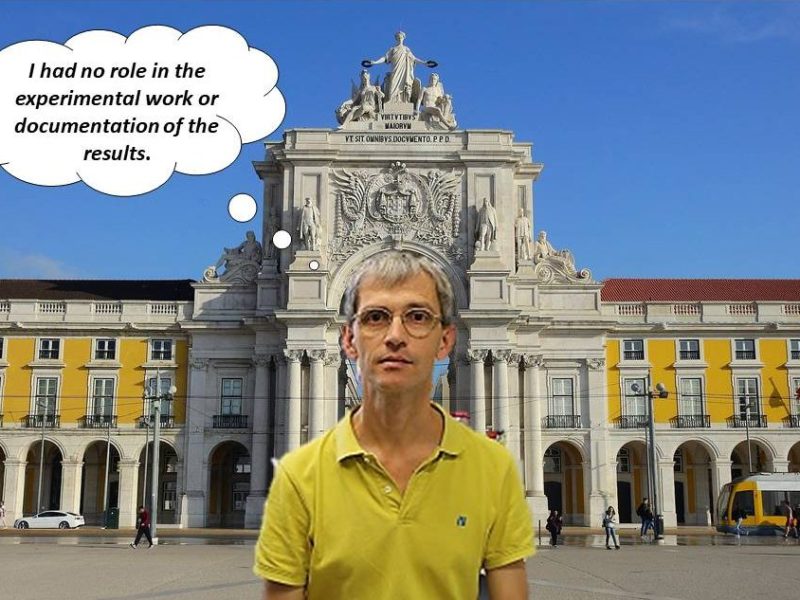
Back then, I predicted that Elsevier will merely correct this paper. I was wrong, it was now retracted, rather surprisingly.
Andreia F.A. Henriques , Paulo Matos , Ana Sofia Carvalho , Mikel Azkargorta , Felix Elortza , Rune Matthiesen , Peter Jordan WNK1 phosphorylation sites in TBC1D1 and TBC1D4 modulate cell surface expression of GLUT1 Archives of Biochemistry and Biophysics (2020) doi: 10.1016/j.abb.2019.108223

A nameless author replied in August 2023 and shared raw data with an explanation:
“The drawn squares indicate how the Myc-tagged TBC1D1 or TBC1D4 bands (9E10) should have been cropped. Both areas were very similar, so it went unnoticed. Because the PCNA bands were distorted in this upper PCNA blot, lysates from another replicate were used.“
The case seemed closed, but then on 12 September 2025, a retraction happened:
“This article has been retracted at the request of the Editors-in-Chief.
After concerns about figure accuracy in figure 3 of the article were raised, the authors checked their submitted figure and shared the original images with the editor to clarify the inadvertence of the error present in the figure. However, in the editors’ opinion, the response did not adequately address the concerns, leading them to decide to retract the article.
The corresponding author would like to apologize for any inconvenience caused.
The authors do not agree with the retraction and dispute the grounds for it.”
Thing is, even after he was caught on PubPeer, Jordan continued with dodgy western blots. This was published in March 2022, and now fixed with a correction:
Joana F. S. Pereira , Cláudia Bessa , Paulo Matos , Peter Jordan Pro-Inflammatory Cytokines Trigger the Overexpression of Tumour-Related Splice Variant RAC1B in Polarized Colorectal Cells Cancers (2022) doi: 10.3390/cancers14061393

The Correction from 13 May 2025 went:
“In the original publication [1], there was a mistake in Figure 5 as published. The lanes to show a representative RAC1B Western blot in panels 5C and 5D were inadvertently retrieved from a flipped film original containing also data from panel 5B. The corrected Figure 5, panels C and D, appears below. The authors state that the corresponding quantifying graphs in these panels were correct as published, and the scientific conclusions are unaffected. This correction was approved by the Academic Editor. The original publication has also been updated.”
Some other papers by Jordan were corrected (I discussed some in July 2024 Shorts, including the fraudulent correction for Goncalves et al 2014), while some others, even the awful Mendes et al 2010, were left untouched. The above retraction is really surprising.
Charis Eng is deceased
The Oxford University Press journal Human Molecular Genetics retracts a paper by their former Editor-in-Chief. No, not by Dame Kay Davies DBE FMedSci FRS, this one is untouchable. And alive, unlike her US American successor Charis Eng, who died in August 2024 aged only 62 (read September 2024 Shorts).
This was published when Eng was editorial board member and Davies was Editor-in-Chief:
Ji-Hyun Chung , Michael C. Ostrowski , Todd Romigh , Takeo Minaguchi , Kristin A. Waite , Charis Eng The ERK1/2 pathway modulates nuclear PTEN-mediated cell cycle arrest by cyclin D1 transcriptional regulation Human Molecular Genetics (2006) doi: 10.1093/hmg/ddl177
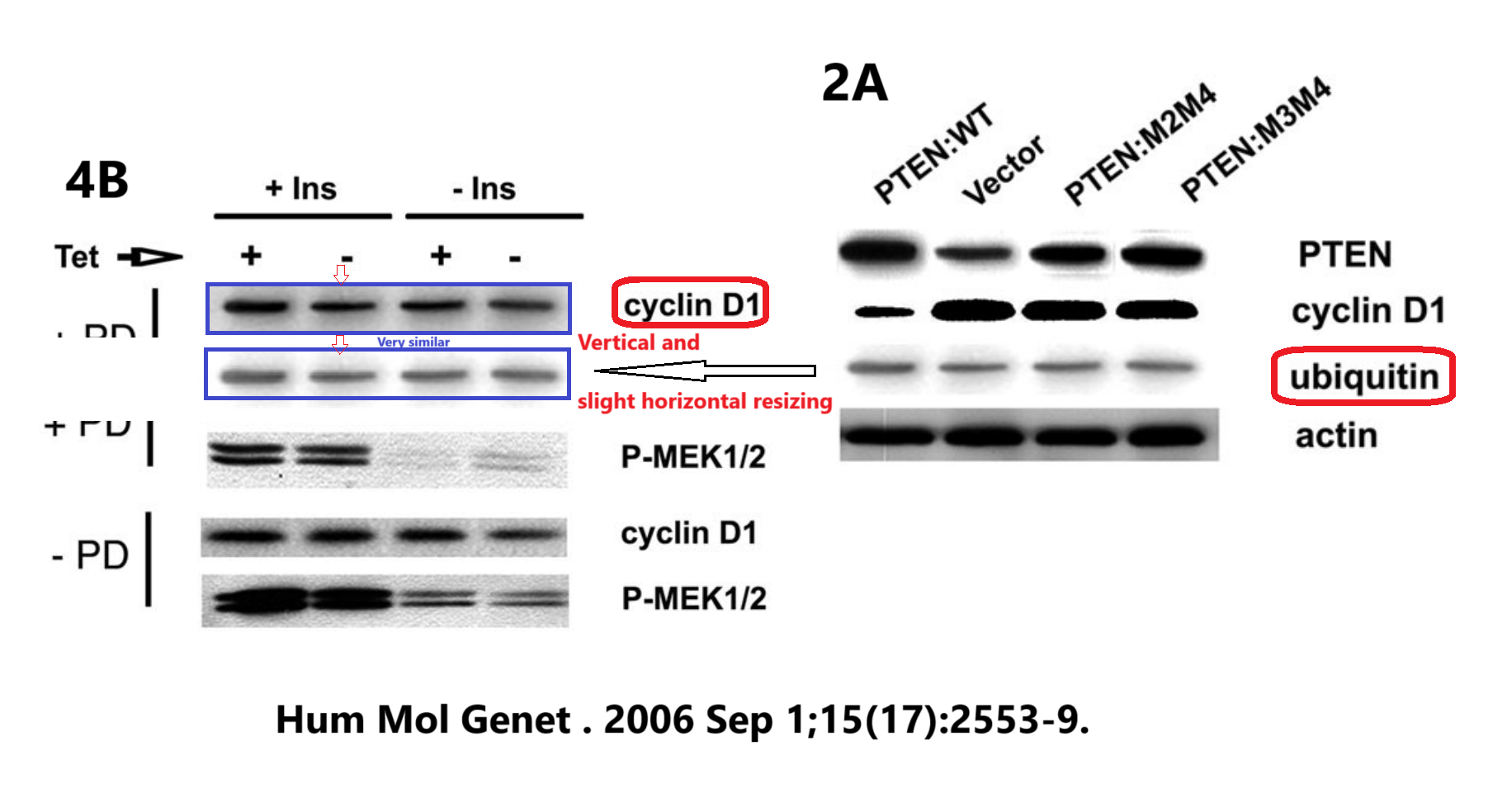

The Retraction from 7 August 2025 went:
“After concerns about multiple figure panels were raised by both a reader and The Ohio State University, the primary affiliation of multiple co-authors, the journal published an expression of concern (1) in March 2025. Another reader then contacted the journal in April 2025 with an additional concern about a figure not previously identified. Collectively, there are substantive similarities within and across multiple figures:
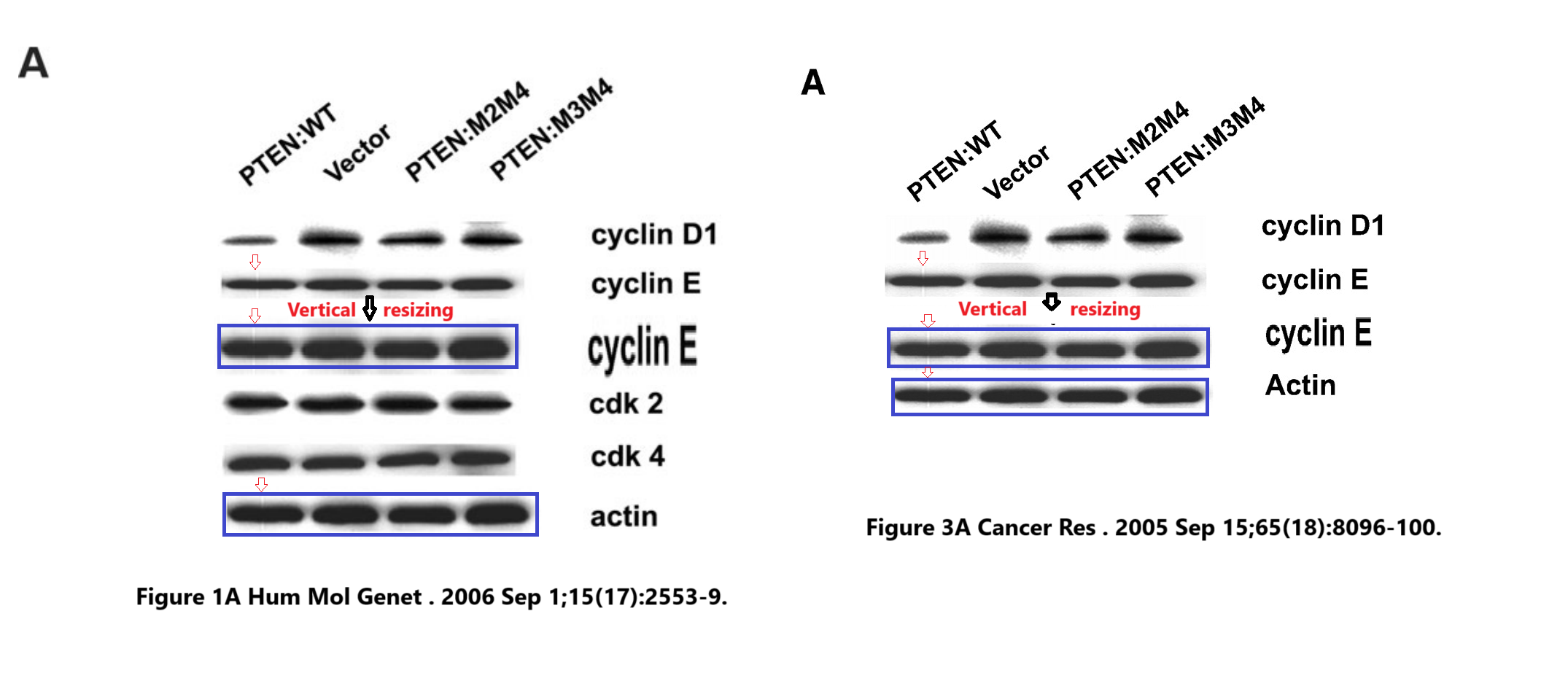
- When the cyclin E row in Figure 1A is resized, it is more similar than expected to the actin row in Figure 2A
- The actin row in Figure 1A is more similar than expected to the actin row in Figure 2A
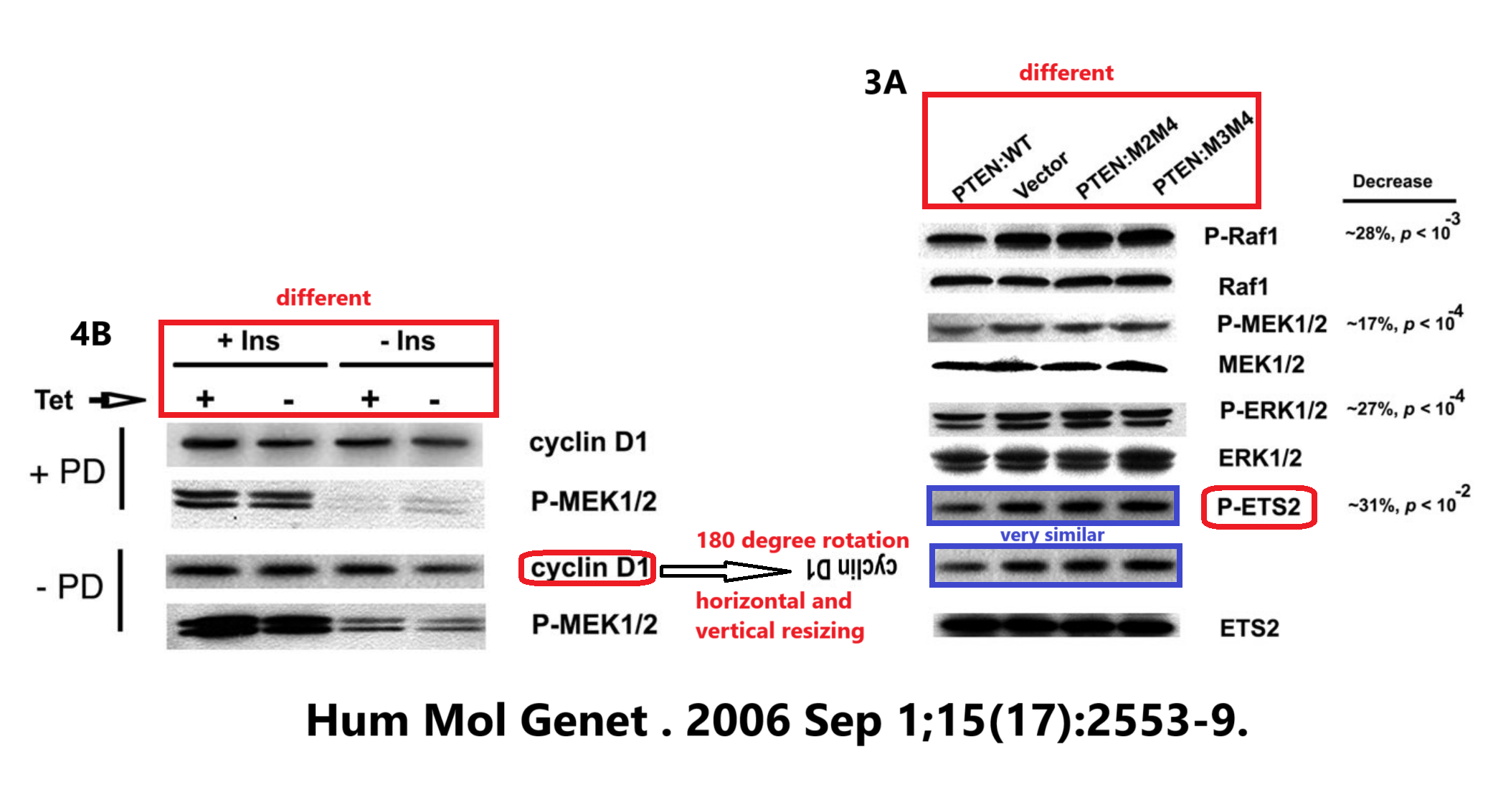
- The ubiquitin row in Figure 2A is more similar than expected to the cyclin D1 row in Figure 4B
- When rotated by 180 degrees, the P-ETS2 row in Figure 3A is more similar than expected to the cyclin D1 row in Figure 4B
- When the cyclin D1, cyclin E and actin rows in Figure 1A are resized, they are more similar than expected to the cyclin D1, cyclin E and actin rows in Figure 3A from a prior article with overlapping co-authors (2).
The journal was unable to contact Ji-Hyun Chung about these concerns or this retraction, and Charis Eng is deceased. The other authors were contacted and replied they do not have access to the raw data. Without the raw data to review, it is not possible to verify the experimental and control data presented in Figures 1 and 2, or the experimental data for P-ETS2 in Figure 3A and cyclinD1 in Figure 4B. The Editor is ultimately retracting the article because of the extent of the similarities and their impact on the study results and conclusions.”
As we will see, it was not editor’s decision to retract that paper. More recently, the aforementioned gel-sharing paper by Eng and the same elusive Ji-Hyun Chung, received an Expression of Concern:
Ji-Hyun Chung , Charis Eng Nuclear-cytoplasmic partitioning of phosphatase and tensin homologue deleted on chromosome 10 (PTEN) differentially regulates the cell cycle and apoptosis Cancer Research (2005) doi: 10.1158/0008-5472.can-05-1888


This is the Editor’s Note from 15 September 2025:
“The editors are publishing this note to alert readers to concerns about this article (1). Following an institutional review by The Ohio State University, the primary affiliation for the authors at the time the study was conducted, it was determined that in Fig. 3A, the images used to represent cyclin E and actin expression are more similar than expected. Additionally, these images appear to have published in a later article in an unrelated journal (2) and are used to represent cyclin E and actin in Fig. 1A.”
Eng was affiliated with the Ohio State University until 2005, when she became the founding director of the Cleveland Clinic’s Genomic Medicine Institute and professor at Case Western Reserve University.
The same AACR journal simultaneously retracted this paper by Eng and Chung, again mentioning an investigation by Ohio State:
Ji-Hyun Chung , Margaret E. Ginn-Pease , Charis Eng Phosphatase and Tensin Homologue Deleted on Chromosome 10 (PTEN) Has Nuclear Localization Signal–Like Sequences for Nuclear Import Mediated by Major Vault Protein Cancer Research (2005) doi: 10.1158/0008-5472.can-05-0124


This is the retraction from 15 September 2025:
“This article (1) has been retracted at the request of the editors. Following an institutional review by The Ohio State University, the primary affiliation for the authors at the time the study was conducted, it was determined that:
- The image used to represent PTEN expression in Vector-expressing cells in Fig. 1A is more similar than expected to the image used to represent P-PTEN expression in Vector-expressing cells in Fig. 2A.
- The image used to represent P-PTEN expression in PTEN-WT-expressing cells in Fig. 2A is more similar than expected to the image used to represent PTEN expression in WT-expressing cells in Fig. 3A.
- The image used to represent P-PTEN(S380) expression in M4-expressing cells in Fig. 3B is more similar than expected to the image used to represent PTEN expression in PTEN:C124S-expressing cells in Fig. 1A.
- The image used to represent AKT expression in Fig. 4A is more similar than expected to the image used to represent Karyopherin β1 expression in Fig. 5A.
A copy of this Retraction Notice was sent to the last known email address of Ji-Hyun Chung who did not respond. The two remaining authors (Margaret E. Ginn-Pease and Charis Eng) are deceased.”
Two papers by Eng, published long after she left Ohio State, received Expressions of Concern at Human Molecular Genetics. Both don’t have Chung as blameable author.
Xin He , Ying Ni , Yu Wang , Todd Romigh , Charis Eng Naturally occurring germline and tumor-associated mutations within the ATP-binding motifs of PTEN lead to oxidative damage of DNA associated with decreased nuclear p53 Human Molecular Genetics (2011) doi: 10.1093/hmg/ddq434

This paper, like the others by Eng, was flagged by the pseudonymous sleuth Claire Francis. The Expression of Concern was added in March 2025 and superseded by a Editor’s Note on 27 May 2025:
“In September 2024, a reader contacted the journal about similarities in the tubulin bands in Figures 2G and 5A, which were also raised on PubPeer (see https://pubpeer.com/publications/4D1FDE28F9B3385293083484CC65BB). The journal published an expression of concern (1) and investigated the concern in line with COPE guidance.
Charis Eng is deceased, and the journal was unable to find contact information for Xin He. The remaining co-authors were contacted and replied that they do not have access to the raw data.
Without the original images to review, it is not possible to verify the tubulin (control) data presented in Figures 2G and 5A. The Editor cautions the reader when interpreting the data presented in Figures 2G and 5A and the associated results presented in the article.
The living co-authors for whom the journal had contact information were notified of this Editor’s Note prior to publication.”
This paper received similarly worded Expression of Concern in March 2025 and Editor’s Note in May 2025 (“Wanfeng Yu and Charis Eng are deceased. The remaining co-authors do not have access to the raw data“:
Wanfeng Yu , Xin He , Ying Ni , Joanne Ngeow , Charis Eng Cowden syndrome-associated germline SDHD variants alter PTEN nuclear translocation through SRC-induced PTEN oxidation Human Molecular Genetics (2015) doi: 10.1093/hmg/ddu425

This was posted on PubPeer in August 2025, long after Eng’s death and after the Ohio State investigation concluded:
Shipra Agrawal , Robert Pilarski , Charis Eng Different splicing defects lead to differential effects downstream of the lipid and protein phosphatase activities of PTEN Human Molecular Genetics (2005) doi: 10.1093/hmg/ddi246

“Figure 3. Lanes 6 of the P-Akt and Akt panels do not look like they come from the same blot. There is only one ACTIN panel as a loading control. Although lanes 8 and and 9 of the p42/44 P-MAPK panel are not identical, they are much more similar than expected.”
Now, I am not going to defend Eng here. She was a poor scientist, or at least a very inattentive one who allowed fraud to take place in her lab, there’s more bad stuff on PubPeer.
Carlo Croce: from fake science to fake art
“The sockpuppets went on to argue that Croce’s fake results had been vindicated by subsequent replications, making him guilty of nothing more than excessive zeal in the cause of righteousness. ” – Smut Clyde
But FFS, Carlo Croce is still professor at the same Ohio State University, still paid an enormous salary, and he was made to retract only a couple of his countless fake papers, after Ohio State attributed all blame to two of Croce’s female mentees (read July 2022 Shorts). Why so tough on Eng and not on him? Is it because Croce is, unlike Eng, a) male, b) white and c) alive and kicking?
Science breakthroughs
Long-term harm
On 3 September 2025, The Guardian warned under the headline “Sweeteners can harm cognitive health equivalent to 1.6 years of ageing, study finds“:
“Sweeteners found in yoghurts and fizzy drinks can damage people’s ability to think and remember, and appear to cause “long-term harm” to health, research has found.
People who consumed the largest amount of sweeteners such as aspartame and saccharin saw a 62% faster decline in their cognitive powers – the equivalent to their having aged 1.6 years, researchers say.
They concluded: “Our findings suggest the possibility of long-term harm from low- and no-calorie sweeteners (LNCs) consumption, particularly artificial LNCs and sugar alcohols, on cognitive function.”[…]
They looked at the impact of seven sweeteners on the health of the study’s participants – 12,772 civil servants in Brazil, with an average age of 52 – who were followed up for on average eight years. Participants completed questionnaires detailing their food and drink intake over the previous year, and later underwent tests of their cognitive skills such as verbal fluency and word recall. […]
However, the trend was only observed in participants under the age of 60. That shows that middle-aged adults need to be encouraged to use fewer sweeteners, they added.”
This was the study from the University of Sao Paolo in Brazil:
Natalia Gomes Gonçalves , Euridice Martinez-Steele , Paulo A. Lotufo , Isabela Bensenor , Alessandra C. Goulart , Sandhi Maria Barreto , Luana Giatti , Carolina Perim De Faria , Maria Del Carmen Bisi Molina , Paulo Caramelli , Dirce Maria Marchioni , Claudia Kimie Suemoto Association Between Consumption of Low- and No-Calorie Artificial Sweeteners and Cognitive Decline: An 8-Year Prospective Study Neurology (2025) doi: 10.1212/wnl.0000000000214023
Artificial sweeteners are indeed not exactly healthy, but do they really cause brain damage? Sophie Hill, PhD student in Harvard, debunked this study in a blog post, summarised in this Bluesky thread:
Hill, who admits to being “not an expert in this field“, is however an expert in statistical analysis. She found hints that the raw data of this study was likely manually edited:
“Across 9 appendix tables with 256 regression coefficients, I find:
- Over 50% of all estimates and confidence intervals are multiples of 0.008, indicating possible post-hoc rounding and rescaling not mentioned in the text
- 5 cases of estimates outside their reported confidence interval
- 46 duplicates (i.e. estimate/CI combinations with an identical match in the same table)
- At least 20 cases of asymmetric confidence intervals, which cannot be explained as rounding errors
- 17 values rounded to 4 decimal places (all others to 3 decimal places), indicating manual editing of tables”
Hill concludes that “The rounding inconsistency and the prevalence of sign errors suggests that the results tables generated by statistical software have been manually altered or corrupted in some way” and that “In at least one case, an error has caused an estimate to be presented as statistically significant when it is not”.
But for the media, Hill’s debunking of the Brazilian study as likely falsified is not as newsworthy as the clickbaity trash which science and health journalists love.
The corresponding author and associate professor at University of São Paulo Medical School, Claudia Kimie Suemoto, was eager to talk to Guardian, but she refused communication with Hill when she contacted her with a request for the replication code (even without the actual data).
In December 2022, Suemoto’s team published another study using the same dataset, this time it was frozen pizza which causes brain damage:
Natalia Gomes Gonçalves , Naomi Vidal Ferreira , Neha Khandpur , Euridice Martinez Steele , Renata Bertazzi Levy , Paulo Andrade Lotufo , Isabela M. Bensenor , Paulo Caramelli , Sheila Maria Alvim De Matos , Dirce M. Marchioni , Claudia Kimie Suemoto Association Between Consumption of Ultraprocessed Foods and Cognitive Decline JAMA Neurology (2023) doi: 10.1001/jamaneurol.2022.4397
That was of course also picked up by the media worldwide. And in case you wonder what to eat to stay healthy, well I covered in February 2025 Shorts another study of the same dataset by Suemoto’s coauthor and fellow professor at University fo sao Paolo, Isabela Bensenor, who had “good news for people who like fruit, chocolate, coffee and wine“.
Bacterial mitochondria
Turns out, bacteria have mitochondria!
Sholto David collected a list of papers. The oldest so far, from the University of Campinas in Sao Paolo, Brazil:
Nelson Durán, Marcela Durán , Marcelo Bispo De Jesus , Amedea B Seabra, Wagner J Fávaro , Gerson Nakazato Silver nanoparticles: A new view on mechanistic aspects on antimicrobial activity Nanomedicine (2016) doi: 10.1016/j.nano.2015.11.016
“Wong and Liu8 proposed two possible mechanisms of silver nanoparticles toxicity. One is that silver nanoparticles provide a large surface area for contact with bacteria, which may allow the particles to attach to the cell membrane and easily penetrate into the bacteria. Another possibility is that silver nanoparticles or silver ions interfere with the respiratory chain in the bacterial mitochondria, resulting in cell death.”
Indeed, the referenced paper from the University of Hong Kong, did announce the existence of bacterial mitochondria in 2010:
Kenneth K. Y. Wong , Xuelai Liu Silver nanoparticles—the real “silver bullet” in clinical medicine? MedChemComm (2010) doi: 10.1039/c0md00069h

This claim in turn referenced Sandi & Sandi 2004, “Silver nanoparticles as antimicrobial agent: a case study on E. coli as a model for Gram-negative bacteria“. That paper speaks a lot about bacteria, but the word “mitochondria” is never mentioned there.
Stratosfear
“Here we see a somewhat phallic balloon-like structure which has presumably collapsed under low pressure. A “proboscis” is seen emerging from the left of the main cell which has two, nostril-like openings. At the top of the collapsed “balloon” is a sphincter-like opening.” – Milton Waiinright
The silly story about bacterial mitochondria could have ended here, but no. Another paper about the antimicrobial power of silver nanoparticles, this time from Gauhati University in India:
Pankaj Bharali , Subhankar Das , Nikita Bhandari , Arup K Das , Mohan Chandra Kalta Sunlight induced biosynthesis of silver nanoparticle from the bark extract of D.K. Ferguson and its antibacterial activity against and IET Nanobiotechnology (2019) doi: 10.1049/iet-nbt.2018.5036
“”According to the literature, silver ions bind with the outer covering of the bacterial cells and bring structural changes which lead to the death of the cell. Also, AgNPs cause damage to the bacterial mitochondria and DNA leading to the death of the cell [9, 10]. “”
One of these two references never mentioned any mitochondria, the other (Khalili et al 2017) merely mentioned “AgNPs, shows powerful cytotoxicity to a wide range of cells and microorganisms through the induction of apoptosis pathway, oxidative stress, and mitochondrial and DNA damage [4, 5]“.
But this bacteriological study by scholars at the University Center UNIFAFIBE in Sao Paulo, Brazil, also discovered mitochondria in bacteria:
Thais Ferreira Gomes , Matheus Masalskiene Pedrosa , Ana Claudia Laforga De Toledo , Veridiana Wanshi Arnoni , Mirian Dos Santos Monteiro , Davi Cury Piai , Silvia Helena Zacarias Sylvestre , Bruno Ferreira Bactericide effect of methylene blue associated with low-level laser therapy in Escherichia coli bacteria isolated from pressure ulcers Lasers in Medical Science (2018) doi: 10.1007/s10103-018-2528-3
“Our results corroborated those of Malgikar et al. [28], who observed that bacteria were reduced using methylene blue combined with a low-level laser wavelength of 980 nm. We believe that this wavelength can promote the release of free radicals in methylene blue and of reactive oxygen species in bacterial mitochondria, leading to microbial death.”
This paper is about cancer, and authored by Duxin Sun, Associate Dean for Research at the University of Michigan in USA:
Chang‑Ching Lin , Miao‑Chia Lo , Rebecca R Moody , Nicholas O Stevers, Samantha L Tinsley , Duxin Sun Doxycycline targets aldehyde dehydrogenase‑positive breast cancer stem cells Oncology reports (2018) doi: 10.3892/or.2018.6337
“The mechanism of doxycycline’s action is binding to mitochondrial ribosome, which then disrupts the biogenesis of bacterial mitochondria. In addition to bacterial mitochondria, doxycycline has also been reported to affect mitochondria in eukaryotes (24).”
The referenced paper Moullan et al 2015 was indeed about mitochondria, and it did discuss “mitochondrial translation, an effect that likely reflects the evolutionary relationship between mitochondria and proteobacteria”. But it never claimed that bacteria had mitochondria.
Little Creatures
“The entire proposition is crazier than a barrel-full of rabid wolverines that have spent a week self-medicating with bath-salts and angel dust. Yet there is this burgeoning literature on mitochondrial transplants!” – Smut Clyde
Another cancer study, from the National University of Singapore:
Brittney Joy-Anne Foo , Jie Qing Eu , Jayshree L. Hirpara , Shazib Pervaiz Interplay between Mitochondrial Metabolism and Cellular Redox State Dictates Cancer Cell Survival Oxidative Medicine and Cellular Longevity (2021) doi: 10.1155/2021/1341604
“Doxycycline is an FDA-approved antibiotic used in the treatment of various infections through targeting bacterial mitochondria. In cancer, doxycycline was observed to limit self-renewal ability of cancer stem cells (CSCs) in several types of cancers [198]. In addition to bacterial mitochondria, doxycycline was shown to inhibit mitochondrial biogenesis in mammalian cells; doxycycline treatment decreased mtDNA copy number and mitochondrial translation, eventually leading to cell death [199].”
Here the most recent, returning to nanotechnology against bacteria, from Anhui Science and Technology University in China (or some papermill):
Peili Li , Zhiyue Wang , Meizhe Yu , Chen Cheng , Junhua Chen , Yunhe Xu , Da Zhang , Xiang Ke , Zirong Li A facile injectable and self-healing carbon dot/oxidative polysaccharide hydrogel with sustained release capability and potent antibacterial activity Journal of Materials Science (2024) doi: 10.1007/s10853-024-09977-8
“Furthermore, CDBAC has been shown to impede the respiratory function of bacterial mitochondria.”
“As illustrated in the Fig. 5C, the reaction between TTC (2,3,5-Triphenyltetrazolium chloride) and dehydrogenase, specifically succinic dehydrogenase in the mitochondria, resulted in the formation of pink TPF (1,3,5-triphenylformazan) as an indicator of bacterial activity.”
There’s more on Google Scholar, maybe some humorous papermiller started adding bacterial mitochondria to their papermill products, to have a laugh at the stupid customers and the journals which accept this nonsense.
I think I found the best paper, where already the title claims that tuberculosis bacillus has mitochondria which must be targeted for curative purposes. From the Hasan Sadikin General Hospital in Bandung, Indonesia:
Amaylia Oehadian , Prayudi Santoso , Dick Menzies , Rovina Ruslami Concise Clinical Review of Hematologic Toxicity of Linezolid in Multidrug-Resistant and Extensively Drug-Resistant Tuberculosis: Role of Mitochondria Tuberculosis and Respiratory Diseases (2022) doi: 10.4046/trd.2021.0122
“Linezolid inhibits bacterial protein synthesis and further interferes with the growth of bacteria by a mechanism that involves disturbance of bacterial mitochondria [10,31]. “
Can someone call the Nobel Prize committee?
Donate!
If you are interested to support my work, you can leave here a small tip of $5. Or several of small tips, just increase the amount as you like (2x=€10; 5x=€25). Your generous patronage of my journalism will be most appreciated!
€5.00

 For Better Science
A similar example of this kind (i.e. antibacterial activity by “mitochondrial damage” and “cancer cell death”) is here: https://pubpeer.com/publications/7AA5F5E4F27C6171260AFBFC763B51
LikeLiked by 2 people
Another breakthrough here. Methylene blue (MB)’s absorption tails off well before 800 nm (https://commons.wikimedia.org/wiki/File:Methylene_blue_absorption_spectrum.png). How did Gomes et al. and Malgikar et al. mentioned above could excite MB with at 904 and 980 nm, respectively ?
‘’And in a wavelength of 904 nm, all condition showed bacterial reduction with or without methylene blue. We concluded that the low-level lasers of 904 and 830 nm have bactericidal effects and at better energy densities (10 and 14 J/cm2)…(”Gomes et al. 2018, Lasers Med Sci. 2018 Nov;33(8):1723-1731)
”Our results corroborated those of Malgikar et al. [28], who observed that bacteria were reduced using methylene blue combined with a low-level laser wavelength of 980 nm. We believe that this wavelength can promote the release of free radicals in methylene blue and of reactive oxygen species in bacterial mitochondria, leading to microbial death.” (Gomes et al. Bactericide effect of methylene blue associated with low-level laser therapy in Escherichia coli bacteria isolated from pressure ulcers Lasers in Medical Science (2018) doi: 10.1007/s10103-018-2528-3 )
Now moving to Malgikar et al. (although reference 28 was not Malgikar et al. as mentioned above), quote:
‘’In patients with chronic periodontitis, combination of a single application of PDT (using 980 nm diode laser and MB) and LLLT provide additional benefit to SRP in terms of clinical parameters…’’ (Clinical effects of photodynamic and low-level laser therapies as an adjunct to scaling and root planing of chronic periodontitis: A split-mouth randomized controlled clinical trial (Indian Journal of Dental Research 27(2):p 121-126, Mar–Apr 2016. | DOI: 10.4103/0970-9290.183130)
Methylene blue may get excited around this range by two-photon (if we stretch it a bit to the right), but to achieve something that a two-photon may achieve with a single photon, to target ‘bacterial mitochondria’ means two good news for the Nobel committee at once.
I don’t blame some of the authors, they are clinicians who tested the device, although I wonder how they achieved such results when the dye was not activated…They may not remember all the details in microbiology or biophysics. In labs full of chaos or in interdisciplinary labs, it is not uncommon to find hard working people who do not realize that bacteria does not have mitochondria until someone reminds them (many often get confused about this). But where are the reviewers and editors ? Out of three, one should be a domain expert in this field/basic scientist. But well, taking selfies from conferences and posting on social media is hard work, of course there is little time left for other things. At the end of the day, one needs to prioritize.
LikeLike
A twin publication by Sher, with some time-warp:
It’s just a jump to the left
And then a step to the right
LikeLiked by 1 person
Put your hands on your hips
And bring your knees in tight
LikeLike
But it’s the pelvic thrust
that really drives you insane!
LikeLiked by 1 person
OK, thanks. These guys have also a bona-fide “bacterial mitochondria” paper: https://pubpeer.com/publications/1B1867F0FC53E60E9D9F2A3C3D5855
LikeLike
“Raman sh*t” 😀
https://pubpeer.com/publications/1B1867F0FC53E60E9D9F2A3C3D5855#8
LikeLike
Ah, good old M. Bilal…
They miss him in his old department so much that they started to write papers in klingon script:
https://pubpeer.com/publications/C79703B99E5691702FF76EB4FEA192
LikeLiked by 2 people
On the other hand when he left they also invented new subatomic technology: https://pubpeer.com/publications/90C0148778799A1E1CD968B3DB4E22#
A single water molecule is ~300 pm large, but here they take some plant and grind it to sub-1nm particles. Breakthrough.
LikeLiked by 1 person
That amazing pub ethics team at SciReps is doing a great job! Picoparticles! Yes!
LikeLiked by 1 person
They also didn’t notice a massive text & figure overlap in 2 papers submitted 7 weeks apart: https://pubpeer.com/publications/FAC39ED834FFC5F98F5DB54E06D878
LikeLike
Because Gdansk Polytechnic.
https://pg.edu.pl/en/p/lech-balachowski-18340
LikeLike
But is he really in Gdańsk? In these publications Hamed Niroumand gives 2 affiliations:
1 – Department of Civil Engineering, Faculty of Engineering, Buein Zahra Technical University, Qazvin, Iran,
2 – Department of Geotechnical and Hydraulic Engineering, Faculty of Civil and Environmental Engineering, Gdansk University of Technology, Gdansk, Poland.
and an interesting e-mail address: niroumand.mrud@gmail.com.
I know Rafael Luque could teleport between Moscow, Rijadh, Bucharest and Samborondón (Ecuador) but can Hamed do the same?
And talking abour Rafael. As the editor of Catalysis Today he is now promoting diversity and fighting discrimination.
Living and acting scholarly in interesting times – ScienceDirect
LikeLiked by 1 person
Rafi now only has one affiliation: his beloved russia.
LikeLike
Pakistan, Egypt, Saudi Arabia, even Burkina Faso. And only poor Roberto from Gdansk. I thought that only Grzegorz Boczkaj was capable of doing it.
LikeLike
OK, Hamed Niroumand is indeed employed at Gdansk Tech, obviously in Prof. Balachowski’s team (Department of Geotechnical and Hydraulic Engineering)
Pracownicy – Katedra Geotechniki i Inżynierii Wodnej | Wydział Inżynierii Lądowej i Środowiska Politechniki Gdańskiej
And he has more “similar” papers on PubPeer (most of them in SciRep):
PubPeer – Search publications and join the conversation.
I would even add 2 more but I don’t have time to analyze them now.
Micro- and nano- bentonite to improve the strength of clayey sand as a nano soil-improvement technique | Scientific Reports
Micro- and nano-Illite to improve strength of untreated-soil as a nano soil-improvement (NSI) technique | Scientific Reports
Sorry, only micro and nano, no pico particles in these papers.
LikeLike
@Hubert Wojtasek
Both papers you mentioned contain the same error, both in Fig. 12.
In both the panel on the right is just an enlarged part of the left one.
I posted PubPeer comments, but they are waiting for moderation.
LikeLike
@Huber Wojtasek:
https://wilis.pg.edu.pl/aktualnosci/2022-03/stypendysta-programu-nawa-na-wilis
LikeLike
@Hubert Wojtasek
Hamed Niroumand is/was a national exchange agency’s fellow:
https://wilis.pg.edu.pl/aktualnosci/2022-03/stypendysta-programu-nawa-na-wilis
LikeLike
@Hubert Wojtasek
Hamed Niroumand seems to have his own website: https://www.niroomand.net/
I wonder why did he decide to (poorly) cover the conference name in the header images.
LikeLike
Science Breakthrough
Time-warp is not good for your health.
Circadian-informed modeling predicts regional variation in obesity and stroke outcomes under different permanent US time policies
https://www.pnas.org/doi/10.1073/pnas.2508293122
‘The biannual shift between Daylight Saving and Standard Time leads to meaningful, negative societal health consequences. However, the biomedical impact of remaining in either time policy is poorly understood. By incorporating county-level solar light patterns, time policy, and health data with circadian models, we demonstrate that shifting to permanent Standard Time would lead to a decrease in the prevalence of stroke and obesity. A shift to permanent Daylight Saving Time would also result in a decrease, though less so than permanent Standard Time. These health impact patterns are highly dependent on both latitude and longitudinal position within a time zone…’
Or like the MSM puts it:
https://www.usnews.com/news/health-news/articles/2025-09-16/permanent-standard-time-could-cut-strokes-obesity-among-americans
‘Switching to permanent standard time would prevent about 300,000 cases of stroke per year and result in 2.6 million fewer people with obesity, researchers estimate in the Proceedings of the National Academy of Sciences.’
LikeLike
Murderers!
LikeLike
I think what “bacterial mitochondria” reveals to me is that ideas about mechanisms and processes in the literature are often just waffle with combinations of words that sound about right, only occasionally do you get the chance to show it so clearly. It’s hard to come up with these revealing sorts of search terms, but when you do, they are often productive. I can’t claim credit for noticing this, it was in another PubPeer thread.
LikeLike
Picoparticles.
https://scholar.google.de/scholar?hl=en&as_sdt=0%2C5&q=picoparticles&oq=picoparti
This one even has femtoparticles on offer. https://www.benthamdirect.com/content/journals/cdth/10.2174/1574885518666230214100128
LikeLiked by 1 person
another good idea for a search!
LikeLike
Picoparticles sound like people just reinventing small molecules.
Here traditional medicine picoparticles cure cancer (obviously!)
https://onlinelibrary.wiley.com/doi/full/10.1155/2012/948375
with a beam of femtoparticles (= clusters of protons and neutrons) we could eradicate any cancer. Sadly, along with the patient and all the surroundings.
LikeLiked by 1 person
I like that one. Well written. You can feel the hard work of editors and peer reviewers in every sentence:
https://www.sciencedirect.com/science/article/pii/S0753332219344038
“Pico technology is hypothetical future level of technology which will revolutionized the scientist world. This technology is combination of pico and meter with scale of trillionths of a meter (10−12).”
LikeLiked by 1 person
Oh dear, it’s Dani Townsend’s journal….
LikeLike
There is another breakthrough here. Methylene blue (MB)’s absorption tails off well before 800 nm (https://commons.wikimedia.org/wiki/File:Methylene_blue_absorption_spectrum.png). How did Gomes et al. and Malgikar et al. could excite MB with one-photon at 904 and 980 nm, respectively ?
‘’And in a wavelength of 904 nm, all condition showed bacterial reduction with or without methylene blue. We concluded that the low-level lasers of 904 and 830 nm have bactericidal effects and at better energy densities (10 and 14 J/cm2)…(”Gomes et al. 2018, Lasers Med Sci. 2018 Nov;33(8):1723-1731)
”Our results corroborated those of Malgikar et al. [28], who observed that bacteria were reduced using methylene blue combined with a low-level laser wavelength of 980 nm. We believe that this wavelength can promote the release of free radicals in methylene blue and of reactive oxygen species in bacterial mitochondria, leading to microbial death.” (Gomes et al. Bactericide effect of methylene blue associated with low-level laser therapy in Escherichia coli bacteria isolated from pressure ulcers Lasers in Medical Science (2018) doi: 10.1007/s10103-018-2528-3 )
Now moving to Malgikar et al., quote:
‘’In patients with chronic periodontitis, combination of a single application of PDT (using 980 nm diode laser and MB) and LLLT provide additional benefit to SRP in terms of clinical parameters…’’ (Clinical effects of photodynamic and low-level laser therapies as an adjunct to scaling and root planing of chronic periodontitis: A split-mouth randomized controlled clinical trial (Indian Journal of Dental Research 27(2):p 121-126, Mar–Apr 2016. | DOI: 10.4103/0970-9290.183130)
Methylene blue may get excited around this range by two-photon (if we stretch it a bit to the right), but to achieve something that a two-photon may achieve with a single photon, to target ‘bacterial mitochondria’ means two good news for the Nobel committee at once.
I don’t blame some of the authors, they are clinicians who tested the device. They may not remember all the details in microbiology or biophysics. In labs full of chaos or in interdisciplinary labs, it is not uncommon to find hard working people who do not realize that bacteria does not have mitochondria until someone reminds them (many are often confused about this). But where are the reviewers and editors ? Out of three, one should be a domain expert in this field/basic scientist. Well, taking selfies from conferences and posting on social media is hard work, of course there is little time left for other things.
LikeLike
Never heard of “bacterial mitochondria” before? What kind of life scientists are you!
Hopefully you are at least familiar with extracellular cells! 😀
https://pubpeer.com/publications/7C9F0CCD493B1129135A3A918B0AAB#5
LikeLiked by 1 person
”With regard to the first accused, the Investigative Commission concludes that by being named as a co-author in individual publications, he has violated the rules of good scientific practice in a minor way.” (emphasis added)
”…as the actual contributions as such were largely declared to the publishers and were approved by other co-authors and the person who filed the complaint at the time of publication.” (emphasis added)
Obviously a PhD student or postdoc whose salary and future career depends on the supervisor cannot object to his supervisor and/or his supervisor’s loved ones being listed as authors. But not only PSI, also IJMCE and other academic institutions establish their rules based on the ‘assumption’ that they can. This puts all junior researchers in a very troubling situation.
Your perseverance deserves respect Vivek ! That being said, no one should go through something like this for asking the obvious. At least University of Bern/Inselspital showed everyone how to do better and let’s hope that this is just the start.
Please help me understand; how can being listed as an author without any contribution, in other words taking credit from someone else’s work without consent or forcing to consent by abuse of power, and in turn misrepresenting contributions to science – also called as deceiving others to secure a title and to withdraw more public funds as salary – is a minor violation of good scientific practice in almost every country, if it is considered a violation at all, while an inexperienced junior researcher whose mother tongue is not English may lose a career simply because of not sufficiently altering the structure and wording of some technical sentences from complex articles that he spent weeks reading and synthesizing, as it is considered a misconduct.
Self invited department Chairs or other guest authors not only take free credit (which translates to free salary for work that they didn’t do) but also hold no accountability when a problem arises in a publication even when it is a honest error. They don’t have to go back and retrieve documents, they don’t have to spend months to prove innocence because like Pacioli said ”He who does nothing, makes no mistakes…”.
Can you imagine that if a turkey was listed as an author, it would be seen as absurd, but when a department Chair demands being listed as an author without any contribution, it is treated as normal. In reality, do they not both contribute nothing ?
The Turkey and The Chair: Equal Claims to Authorship
https://imgur.com/a/turkey-chair-equal-claims-to-authorship-zQpLPDI
LikeLike
“Maybe someone should report the Nottingham Trent University to the English police, for defrauding the public with all this.” This raises an interesting point for any legal eagles in the audience. We can assume that the Sheriff of Nottingham is as useless as the rest of the cops on this planet, but what about a lawsuit? Would taxpayers qualify as a class to go after those who use public funding to generate crap that would be declared fraudulent by any reasonable person? There must be an implied contract in receiving a grant to actually do some researcher. It would be even better if a faker got funding from a private source that could be easily established as an interested party. These clowns could be sued back to their native shitholes.
LikeLike