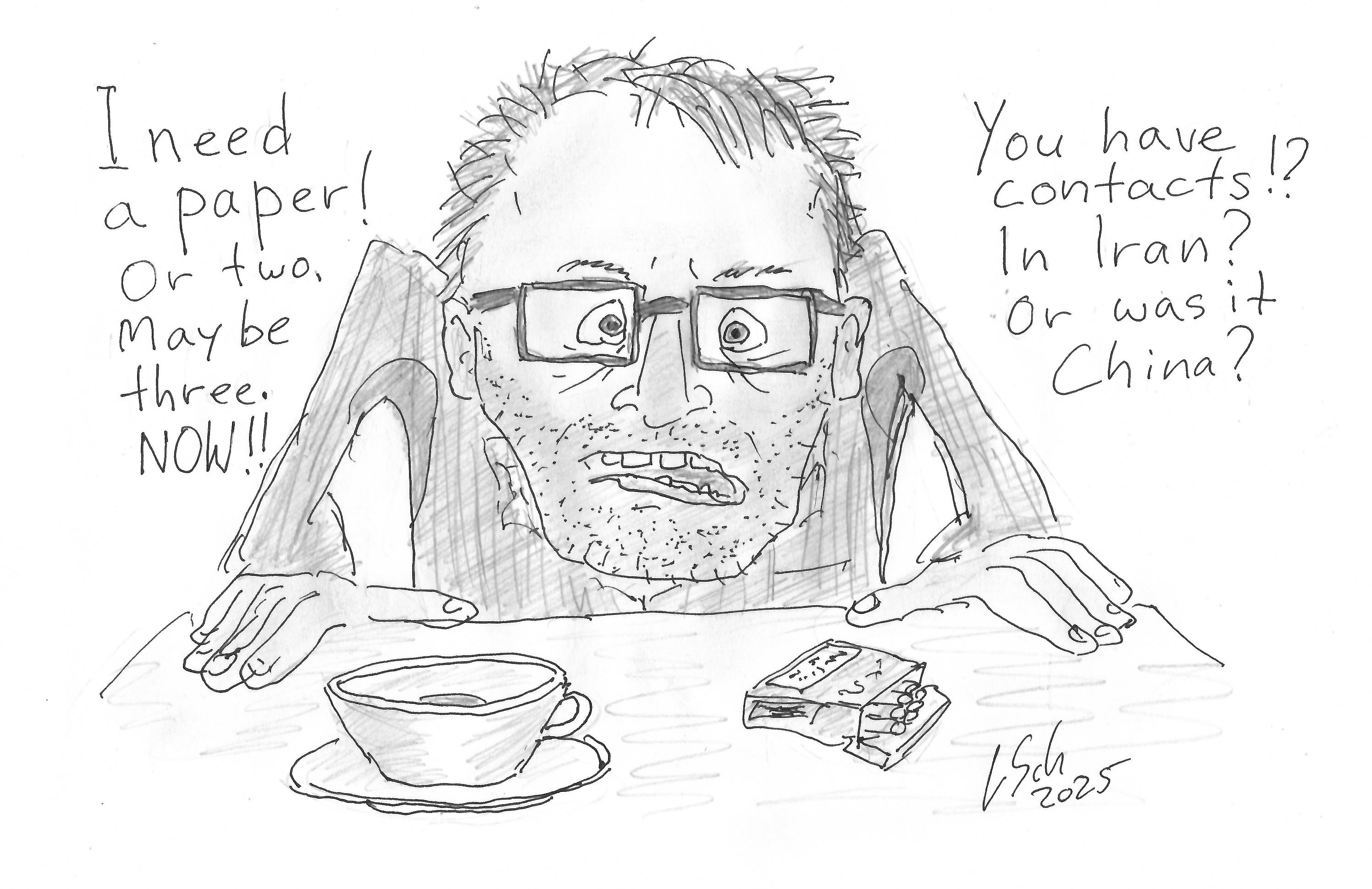
"I have been following the comments on PubPeer, and have been shocked, angered and appalled by the issues [...] there can be no explanation for this other than systemic fraud "- Prof Gareth Williams, UCL
Gareth Williams probably thought himself a winner. Masses of papers coauthored with his generous Chinese friends enabled him a stellar career in British academia – a full professor for pharmaceutical materials at the elite British university UCL and fellowship of 3 Academies before the age of 40. It’s all crumbling down now.
Maybe Williams should have at least read the papers he coauthored. Just before the evidence of the massive fraud in his papers started arriving, Williams was made Deputy Director of the School of Pharmacy at UCL. Sky was the limit.
In March 2025, Williams featured prominently in aFor Better Science article, which was based on the PubPeer investigation by two pseudonymous sleuths, Thallarcha lechrioleuca and Archasia belfragei (who later revealed himself as Fabian Wittmers).
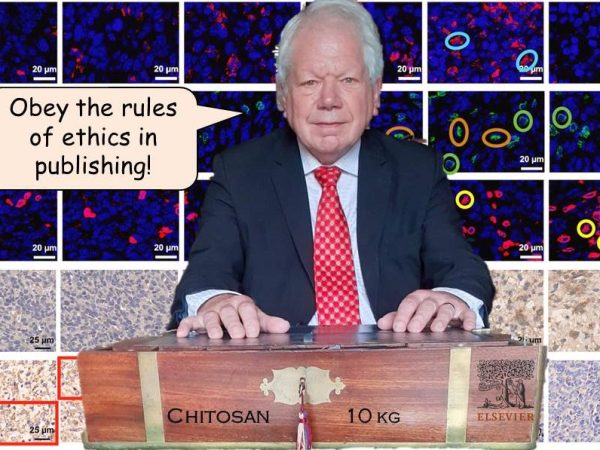
It is quite clear that his Chinese friends haven’t been so generously offering Williams coauthorships because they valued his scholarly wisdom. Rather, Williams’ main qualifications were his prestigious UK affiliation and, most importantly, his English name and his whiteness. These tend to open the hearts of crypto-racist editors and the gates of their journals, and, as you will see, having a white coauthor is an excellent protection against retractions.
Williams used to be quite communicative, but not anymore. Maybe because in February 2025, UCL opened an investigation, which is still ongoing because a lot of new evidence was supplied. This new evidence was collected and posted on PubPeer by Fabian and Sholto David, who now wrote the following article.
An auto-reply email informed in July 2025 that Williams was “away from UCL” for being “unwell“. His sickness however has no effect on his unstoppable torrent of publications with his Chinese friends. However, UCL’s research integrity officer Rachel Port assured me:
“we would note that Dr Williams has not undertaken any work with the implicated individuals since these issues were flagged to us and has confirmed that he does not intend to do so in the future.“
That is very much not true, Williams’ two most recent papers (Xu et al 2025, Zheng et al 2025) have a certain Li-Min Zhu as last author. See his PubPeer record with Williams, and read the story by Sholto and Fabian!
Shocked, angered and appalled
By Sholto David, with Fabian Wittmers
Earlier this year Leonid wrote aboutDeng-Guang Yu, professor at the University of Shanghai for Science and Technology in China, who was upset when asked about the data in one of his articles, and stated that the comment was “stupid and foolish“. Naturally, this sparked some interest in his research and the authors were caught with a large number of papers with duplicated or inappropriately modified XRD patterns. The PubPeer comments were written by the sleuths Thallarcha lechrioleuca and Fabian Wittmers (using the pseudonym Archasia belfragei). Yu’s PubPeer record now stands at 82. As part of this mess, the names of a series of British collaborators came up repeatedly, first and foremost Gareth R. Williams, professor of pharmaceutical materials science at UCL, Deputy Director of UCL School of Pharmacy and Head of Research at Department of Pharmaceutics. Williams started collaborating with Yu some time before 2010, when the latter arrived to London as “Visiting Scholar” in 2008.
“Those noises have no scientific meanings, suggest nothing, forming no any judgments, and have no any influences on the experimental results. ” – Professor Deng‐Guang Yu
Gareth for his part seemed conciliatory, accepting that the duplicated patterns were problematic. He wrote Fabian a lengthy email on February 19th 2025 expressing his shock about Yu’s misconduct, excerpt:
“I have been collaborating with Prof Yu since around 2010. I have been following the comments on PubPeer, and have been shocked, angered and appalled by the issues which have been flagged with his work. I agree with you fully that there can be no explanation for this other than systemic fraud. […] However, as you say, I have a responsibility to now ensure that the scientific record is corrected and I am fully committed to fulfilling this. […] I have raised this matter with the UCL Research Integrity Team and am currently compiling materials for them to review. […] I will complete this today/tomorrow and then write to the respective integrity teams by the end of the week. I will keep you informed as to my progress. “
No updates since then. We don’t know if he ever contacted all of the journals regarding this matter, but Fabian did. One of them has received an expression of concern a few weeks ago:
“[…] Prompted by a comment on PubPeer, it has been determined that there is an image manipulation in “Fig. 6. (a) XRD patterns of the raw materials and nanofibers,” F3 and F2 are identical in noise throughout the whole spectrum. Despite requests for clarification, the authors have not provided a satisfactory explanation. Given the absence of a credible explanation, this Expression of Concern remains a permanent notification to readers.”
Just to be clear: The journal has identified image manipulation (and states so in the EoC), the authors cannot provide a proper explanation, but it is somehow not enough for a retraction? Makes sense, Elsevier!
Because Elsevier’s Integrity Team can’t be bothered to actually do their own investigation, we are doing their job for free here. It took us half an hour to find that multiple XRD patterns presented in figure 6 were previously published by the same group split across at least 3 earlier papers between 2013 and 2018, all of which have their own integrity issues on top of that.
Unfortunately, it looks like Gareth will have to write a few dozen emails to journals again: Returning to look at preclinical studies he co-authored finds a further seam of troubled papers, often published with the Donghua University professor Li-Min Zhu, but without Deng-Guang Yu.
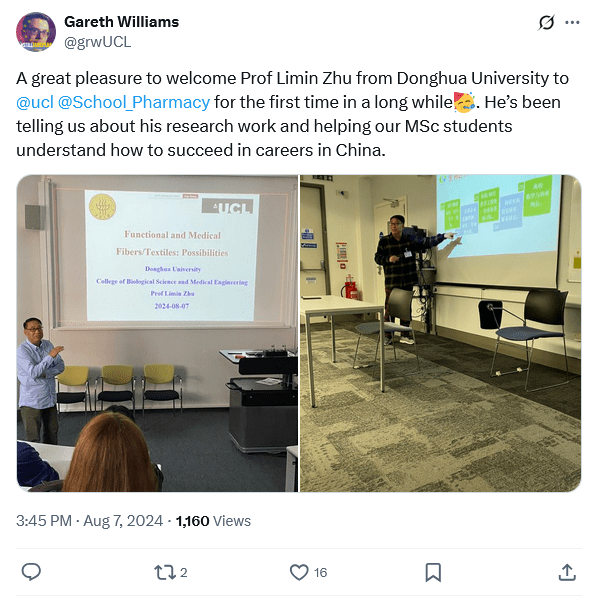
“A great pleasure to welcome Prof Limin Zhu from Donghua University to @ucl @School_Pharmacy for the first time in a long while. He’s been telling us about his research work and helping our MSc students understand how to succeed in careers in China.” (Williams on X, 2024)
Starting at the beginning and proceeding in approximately chronological order, this paper was published by Dove Press in 2017 and includes an interesting “ladder” style of overlapping histology slides which is somewhat distinctive to this group. There are also duplicated nanoparticles in the same paper which have been added more carefully.
Figure 9: Overlapping areas, the individual panels should be from different treatment groups
Multiple particles in the image in Figure 4E-2 seem more similar than expected
Taylor and Francis can’t blame it all on the cursed Dove Press brand though, this was published in the journal Drug Delivery which has always been under the Taylor and Francis brand. The laddering style of overlap is visible again, along with duplicated elements in the corners, likely modified to cover up previous labels.
Figure 7C and D: The same wound is shown. One is rotated and shows a larger version of the image.
In 2018 SEM images of materials were published with overlapping areas in SAGE’s Journal of Biomaterials Applications. Probably the most common application of biomaterials is constructing academic CVs.
Figure 2: Unexpected overlap between images that should show different materials.
Figure 10
Gareth is usually not the first or last author on these papers (perhaps he didn’t pay enough?). However, I did spot one error in a paper where he is the last author. He may wish to address this if he tries to get everything in one fell swoop. The overlay of S2 and S3 in Figure 9 is almost the same, and the S3 panels are obviously not congruent.
Figure 9: The merge panel in S3 probably needs to be replaced as it doesn’t comport to the other channels, rather it is a near duplicate of S2.
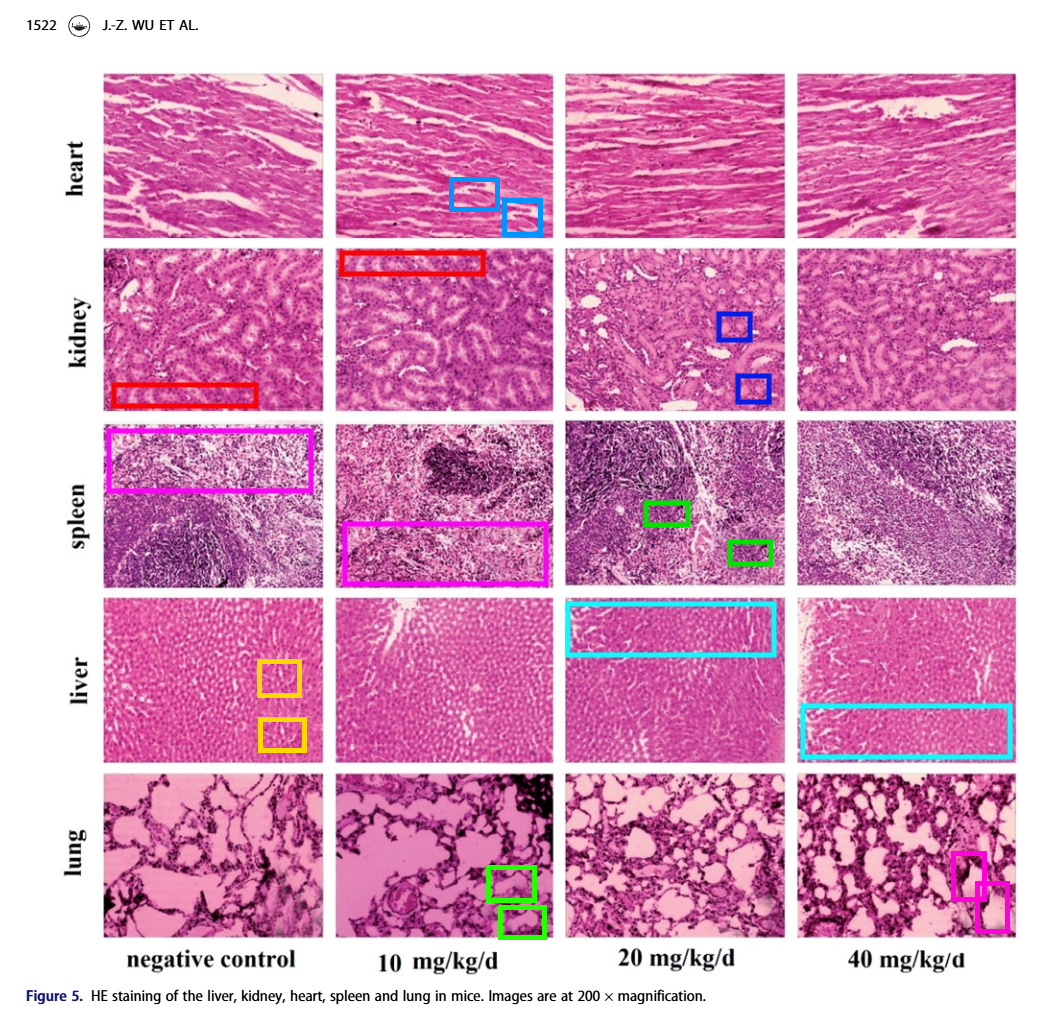
Two papers published in 2019 share overlapping areas within and between the histology figures. Perhaps I have finally understood what “dual-responsive” nanoparticles are: You can publish them twice!
The American Chemical Society (ACS) is not the greatest publisher of nonsense, but I would rank it among the strongest defenders, and I suspect this will not even suffer a correction.
Fig 6 Gu et al 2019, Fig 7 Wu et al 2020 and Fig 7 Wu et al 2019
The so-called “Advanced Science” paper from above includes further problematic figures, with a duplicated mouse in Figure 6f, and images of cells in Figure 5b that overlap with yet another paper.
Figure 6F: A mouse is duplicated between experimental groups.
Fig 5B Wu et al and Fig 6B Chai et al
The Chai et al 2018 paper above shares no common authors with Wu et al 2019, but both teams seem to have access to parts of the images that the others don’t. So it doesn’t appear to be a case of simple theft… Hopefully no-one loses track here because the Theranostics paper mentioned above also has further image problems, including overlapping images of cells in Figure 4H, and at least one mouse that was previously published in a paper where Gareth was an author.
Fig 6A Niu et al and Fig 5H Wu et al. The mouse has conflicting labels.
Also, this Theranostics paper was subject to an Erratum on 2 November 2022:
“In the original publication, in the results of flow cytometry analysis, Figure 4I showed the flow cytometry results for MDA-MB-231 cells after different treatments. There were confusion and error in the three groups of experiments due to our carelessness in sorting out the data. During the assembling of figure, we mistakenly put the same image of control, BSA-Ce6@IrO2/MnO2 and 808 nm + 660 nm group. The corrected Figure 4I is shown below. The authors confirm that the correction made in this erratum would not affect the result and conclusion of the published article. The authors sincerely apologize for any inconvenience that the errors may have caused.”
Original Figure 4I, note that the FACS plots are not exactly identical
Corrected Figure 4I, all FACS plots replaced and look different
Continuing this awkward windmill through papers linked together in conspiracy we can note that the newly introduced Chemical Engineering Journal paper likely includes images stolen from another paper. This time the relationship between the images might indeed be explained by theft.
Returning to ACS, another clear problem for them to ignore or whitewash. This time the nanoparticles incorporated stealth technology. Describing something as “stealth” is a well known strategy for inflating the cost of any project.
Figure 7: Unexpected overlapping areas between images that should show different treatment conditions.
Who knew there is a Controlled Release Society? Gareth is member of its UK & Ireland Committee, and the society has an official journal, where Gareth and team was able to prepare a controlled release of more duplicated figures.
two overlapping panels in Figure 18, representing two distinct conditions
As well as ACS, the Royal Society of Chemistry (RSC) is often disappointing in its decision-making and slovenly pace of work. Here’s a sort of proto-ladder overlap. I would have to guess further overlaps are present outside of the visible frame.
Figure 7: Unexpected overlap between images that should show different treatment conditions.
Back to Advanced Science for some further helpings, with three troubled figures in one paper. One of the authors, Ruizheng Liang, responded. He did not dispute these findings, and announced a correction. Gareth has never responded on PubPeer, which I find to be a lack of common courtesy. He confirmed via email that he received the notifications from PubPeer when the ~25 of his papers were flagged. The last author on this paper is not Li-Min Zhu, but Min Wei of Beijing University of Chemical Technology. Apparently yet another poor choice of Chinese collaborator for Gareth.
Figure 4G: Unexpected similarity between mice that should be in different treatment groups.
Also see Figure 3G
Figure 3E: Unexpected similarity between images that should show different treatment conditions.
The promised Correction appeared just days later, on 17 July 2025, and fixed “some accidental errors” in Figures 3G and 3H and “misuses of the in vivo fluorescence images in Figure 4G“. The authors kept repeating that their “results and conclusions in the published Article are not changed.”
Also with Min Wei in Biomaterials, yet more overlapping histology:
Figure 5G: Unexpected overlap between images that should show different treatment conditions.
Gareth teamed back up with Li-Min Zhu in 2021 to publish more nanoparticles silliness. The nanoparticles were hollow this time, so is the research, apparently.
Figure 9: Unexpected overlap between images that should show different treatment conditions.
In 2023, we are no longer dealing with stealthy nanoparticles but cloaked metal organic frameworks offering multidimensional treatment. Sad for them but good for us, the fraud hasn’t been cloaked very well.
Figure 5: There are several overlapping areas between images that should show different treatment conditions.
See also Figure 4D(b)
Figure 4A
Figure 8L
So that catches us up on all the preclinical and translational research trouble identified so far, and this can be added to the materials science papers previously posted. The total now stands at 42 papers with concerns on PubPeer, including some more materials science work (of art) that has been identified since Leonid wrote in his March 2025 article, including for example these two papers (another dual-responsive nanoparticle!).
There seems to be some overlap in XRD data with identical noise signatures between this study and an earlier study by the same group
And also this piece of ancient history from 2013 was unearthed. Amusingly this is one of the best quality images of spectra in the whole collection, proving that publishing has regressed over the last decade or so.
Extensive overlap of panels for different conditions displayed in Figure 6
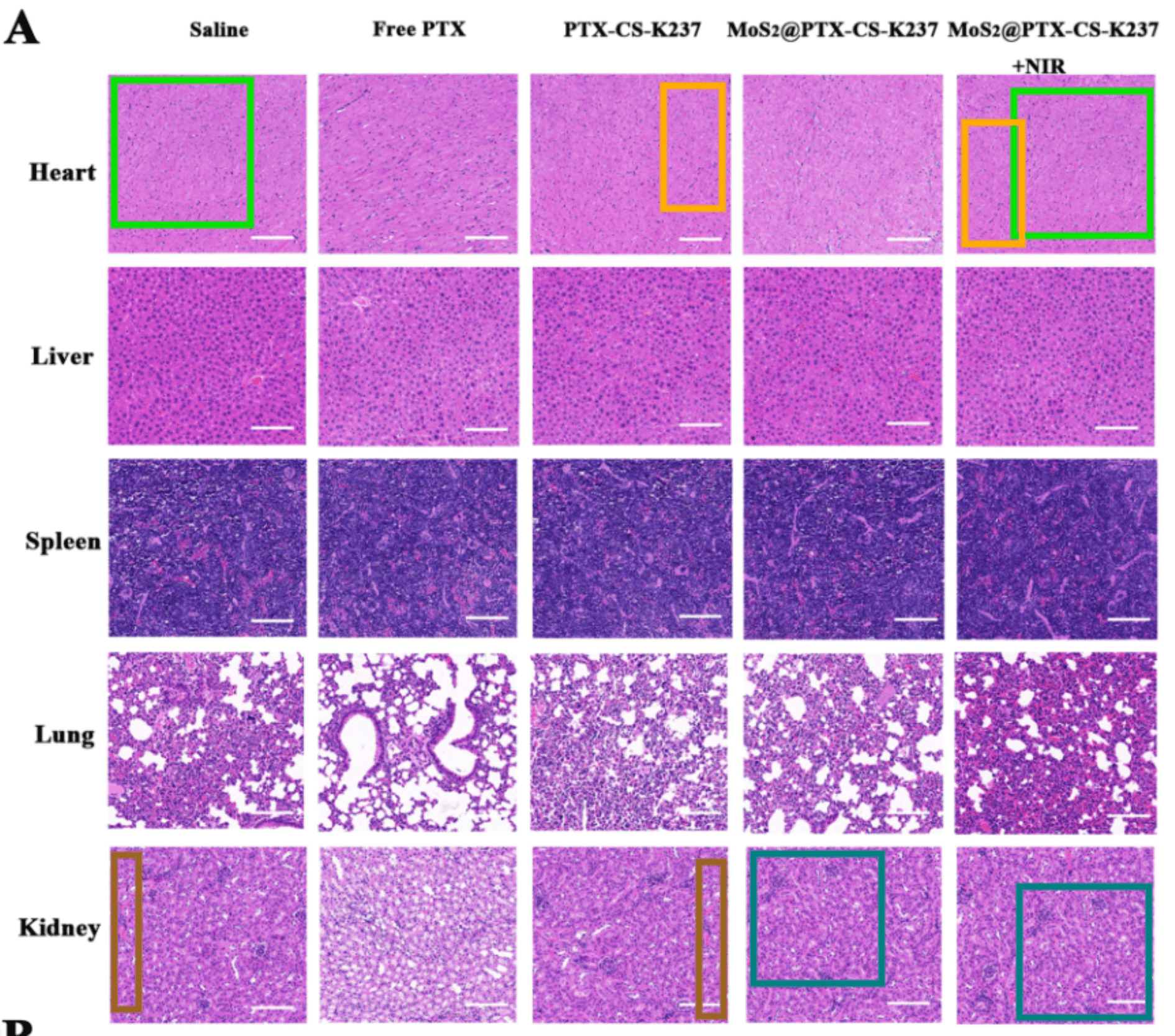
Fabian came across this masterpiece on accident when flagging 200+ articles in Carbohydrate Polymers. He reported it to the publisher at the end of February, and it has already been retracted! Maybe because there were no white co-authors as retraction protection in this one?
“Post-publication, an investigation conducted on behalf of the journal by Elsevier’s Research Integrity & Publishing Ethics team, prompted by a PubPeer post, identified concerns around the authenticity of the following figures/image panels:
Fig. 2. (G) Fluorescence images of calcein-AM (green)/PI (red) double stained MDA-MB-231 cells after treated with different formulations (Scale bars = 100 μm).
The panels “PTX-CS-K237” and “MoS2@PTX-CS-K237 NPs + NIR” appear to be identical but are described as representing different experimental samples.
Fig. 6. Biosafety data from in vivo studies after treatment for 30 days. (A) H&E analysis of the major organs (Scale bars: 100 μm).
“Heart/ Saline” and “Heart / MoS2@PTX-CS-K237 + NIR” appear to be identical but are described as representing different experimental samples.
“Kidney / MoS2@PTX-CS-K237” and “Kidney / MoS2@PTX-CS-K237 + NIR” appear to be identical but are described as representing different experimental samples.
A subset of “Heart/ PTX-CS-K237” and “Heart / MoS2@PTX-CS-K237 + NIR” appear to be identical but are described as representing different experimental samples.
A subset of “Kidney / Saline” and “Kidney / PTX-CS-K237” appear to be identical but are described as representing different experimental samples.
The authors were requested to provide comment on these concerns. It was felt that the explanations provided were unsatisfactory in resolving these concerns.”
Around 2017, when Li-Min Zhu started “collaborating” with Gareth R Williams, he also started published papers with another scientist from the UK: David H. Bremner, a professor at Abertay University Dundee in Scotland. We have detected issues in at least 4 of their collaborative works so far. For example, some hand-drawn spectra, overlapping cells, and apparently stolen flow cytometry plots.
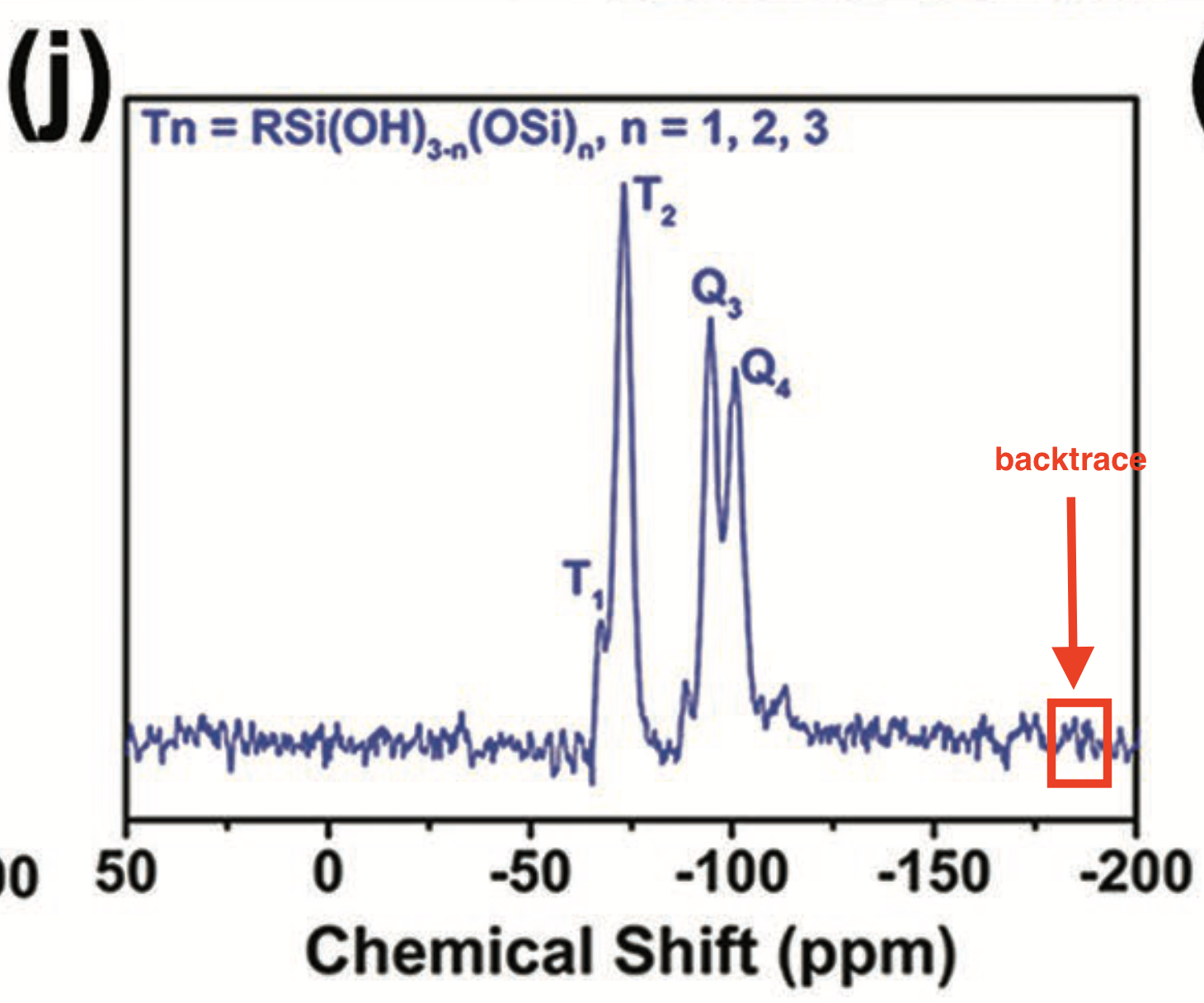
There seems to be a backtrack in Figure 1j of this paper.
Figure 3g seems to contain two largely overlapping panels
Two papers share a flow cytometry plot which have different labels.
And here we have arrived full circle, as I try to finish off the blog I am side-tracked into making another diagram. Starting with the very first paper in this blog and adding three further examples, it is possible to connect Gareth R Williams to David H. Bremner, it’s a sort of “six degrees of seperation” concept with just a few fraudulent papers.
Let’s see if all these white co-authors prevent any further retractions for Li-Min Zhu and Deng-Guang Yu, the plot armour is strong!
Donate!
If you are interested to support my work, you can leave here a small tip of $5. Or several of small tips, just increase the amount as you like (2x=€10; 5x=€25). Your generous patronage of my journalism will be most appreciated!
“UCL opened an investigation”. Thank God for that. All good then. Give it a couple of months and he will be fired, his degree will be taken away from him, all of his papers will be retracted. He will end up as a primary school teacher in Birmingham. And UCL will institute rigorous controls, data provenance systems, electronic labbooks, comprehensive integrity training and frequent spotchecks of all their laboratories. And all of his Chinese collaborators will be fired and transported to reeducation camps. 🤡
Should also look into the publications co-authored by Gareth Willams and Karolina D[… (named removed by LS]. She bacame one of Williams’ PhD students when rejected by another research group, and then a PostDoc in Williams’ team. No one wants to work with her, a mediocrity and a racist. She then was appointed as lecturer in the Pharmaceutical Department while Gareth Williams is the Head of the Department, the hiring processes were fraudulently conducted. There is something about them. Dig deeper.
Why she can won the prize?Supervised by Gareth Williams when Gareth Williams is the co-director of EPSRC-CDT. Without him, she is nothing. And this KD member is no longer working with the UCL Centre for Nerve Engineering, due to nasty works. All the data published by them should be carefully examined.
IOP publishing retracted one of the papers mentioned in this blog, although it was not related to any of the main characters. Seems like several years after the intense flurry of cheating, a bystander lab pilfered just one of the images for their own paper, caught in the crossfire, but not exactly innocent.
Gareth Williams was not a co-author; instead this is one of the collaborations between Li‐Min Zhu’s lab and David H. Bremner
Sounds like submitting sketchy raw data didn’t prevent the retraction:
“The authors responded to an inquiry by the publisher and provided original data. A review of the data provided by the authors found additional instances of image overlap between different samples, similar to those identified in Figure 3G. These errors confound the reliability of the original data provided by the authors.“













 For Better Science
“UCL opened an investigation”. Thank God for that. All good then. Give it a couple of months and he will be fired, his degree will be taken away from him, all of his papers will be retracted. He will end up as a primary school teacher in Birmingham. And UCL will institute rigorous controls, data provenance systems, electronic labbooks, comprehensive integrity training and frequent spotchecks of all their laboratories. And all of his Chinese collaborators will be fired and transported to reeducation camps. 🤡
LikeLiked by 1 person
Ha! Pull the other one?
LikeLike
Very prescient.
Why an explosive fight erupted over the UK’s new Chinese embassy – BBC News https://share.google/VJW8hIC05dVoD8HEC
Flood the zone, in this case the willing and cash strapped U.K..
LikeLike
A well trodden path at UCL. David Latchman Of University College London Oversaw Lab That Carried Out Widespread Data Fraud
All water under the bridge. David Latchman – Birkbeck, University of London
LikeLike
Something for the newspapers and the birds as they say. Nothing happened.
https://www.medicalschool.tv/genetics/top-geneticist-should-resign-over-his-teams-laboratory-fraud-the-guardian/
LikeLike
Dear Zebedee,
Surely you must be mistaken. Why else would Professor Latchman now oversee research ethics throughout the entire University of London system?
https://www.london.ac.uk/about/governance/board-trustees/professor-david-latchman
LikeLike
At the highest David Latchman is not very good at detected problematic data, which ends up being retracted. Functionally he is no good.
Retraction Watch Database
LikeLike
David Latchman Of University College London Oversaw Lab That Carried Out Widespread Data Fraud
LikeLiked by 1 person
Anyone who publishes in the journals that promulgate this crap should be defunded ASAP. That will get their attention. Otherwise, business as usual.
LikeLike
I added another observation to one of Gareth’s papers, SMMC-7721 cells are HeLa contaminated. See here.
LikeLiked by 1 person
Should also look into the publications co-authored by Gareth Willams and Karolina D[… (named removed by LS]. She bacame one of Williams’ PhD students when rejected by another research group, and then a PostDoc in Williams’ team. No one wants to work with her, a mediocrity and a racist. She then was appointed as lecturer in the Pharmaceutical Department while Gareth Williams is the Head of the Department, the hiring processes were fraudulently conducted. There is something about them. Dig deeper.
LikeLike
Totally unrelated, a member of Williams lab won a prize.
https://www.ucl.ac.uk/pharmacy/news/2021/sep/karolina-dziemidowicz-awarded-epsrc-doctoral-prize-fellowship
LikeLike
Why she can won the prize?Supervised by Gareth Williams when Gareth Williams is the co-director of EPSRC-CDT. Without him, she is nothing. And this KD member is no longer working with the UCL Centre for Nerve Engineering, due to nasty works. All the data published by them should be carefully examined.
LikeLike
IOP publishing retracted one of the papers mentioned in this blog, although it was not related to any of the main characters. Seems like several years after the intense flurry of cheating, a bystander lab pilfered just one of the images for their own paper, caught in the crossfire, but not exactly innocent.
https://pubpeer.com/publications/C79FE419CFFEAB74CDBC6DCBD72EE2#0
LikeLike
Not entirely a bystander,the common author on all three is Junzi Wu, and our dear friend Gareth is his regular coauthor.
https://orcid.org/0000-0002-2976-5299
https://sciprofiles.com/profile/3569141
LikeLiked by 1 person
Ah thanks for checking. Chinese names are a challenge.
LikeLiked by 1 person
Tell me about it. I just tried searching the senolytics cheater Yu Sun on PubPeer, abbreviated on some papers as Y. Sun.
Oops, spoiler for tomorrow.
LikeLike
A paper discussed herein has been retracted: 10.1002/adhm.20190130
https://advanced.onlinelibrary.wiley.com/doi/10.1002/adhm.201901307
Gareth Williams was not a co-author; instead this is one of the collaborations between Li‐Min Zhu’s lab and David H. Bremner
Sounds like submitting sketchy raw data didn’t prevent the retraction:
“The authors responded to an inquiry by the publisher and provided original data. A review of the data provided by the authors found additional instances of image overlap between different samples, similar to those identified in Figure 3G. These errors confound the reliability of the original data provided by the authors.“
LikeLiked by 1 person