
Sholto David studied some more toxicology papers from Egypt because nobody else seem to have studied them. Certainly not the editors and peer reviewers, not even those who cited them in their authoritative toxicology reviews.
This time, Sholto focussed on a certain analytical method of cell biology, called the Comet Assay. He will now teach you to recognise fake ones.
Egyptian Toxicology Mortal Combat
“Stupid people do stupid things, After all it was an Egyptian who once told me: “10% editing is acceptable as long as we didn’t modify the significant ” – Sholto David

Comet Hunting
By Sholto David
Whilst I think the existence of manipulated biological images is well known, the wholesale fabrication of images is less often described. Elisabeth Bik, Smut Clyde, Morty, and Tiger BB8, previously reported on The Tadpole Papermill. This was a publishing catastrophe where hundreds of papers with entirely fabricated western blots were published by authors mostly from China. In this blog I want to draw attention to fabricated comet assay images, mostly published by researchers from the Middle East and North Africa.
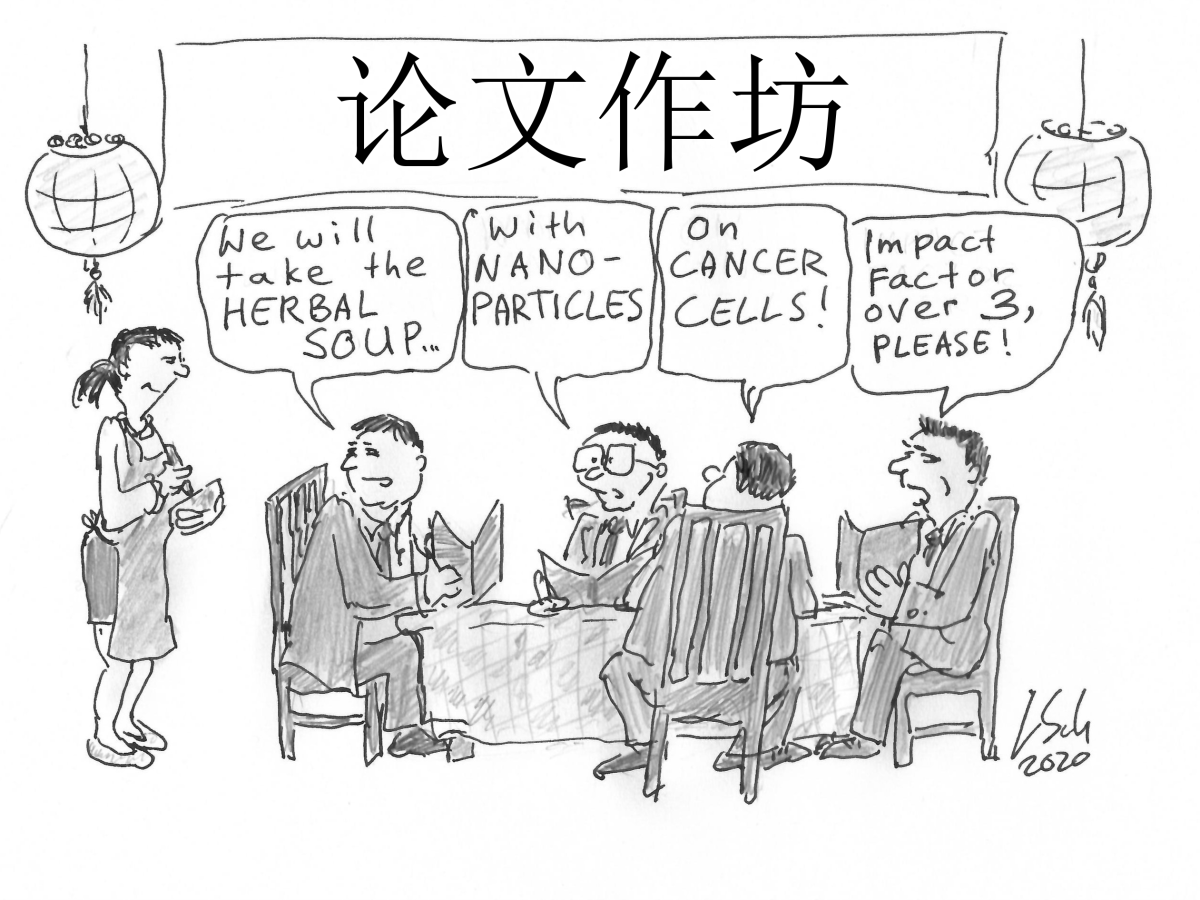
The full-service paper mill and its Chinese customers
An investigation by Elisabeth Bik, Smut Clyde, Morty and Tiger BB8 reveals the workings of a paper mill. Its customers are Chinese doctors desperate for promotion. Apparently even journal editors are part of the scam, publishing fraudulent made-up science.

The comet assay is a method used to analyse DNA damage at the level of the individual cell. Cells are embedded in a gel and subjected to electrophoresis. Fragments of DNA with single or double stranded breaks migrate out of the nucleus towards the anode, forming a characteristic trail which gives rise to the name. Undamaged DNA is tightly bound in long strands and remains inside the nucleus. The DNA is stained (usually presented as red or green) and the images can be analysed to measure the length of the trails. The comet assay is useful for studying substances that damage DNA, as well as those that protect cells from DNA damage, or enhance DNA damage repair mechanisms.
Thankfully, it isn’t really important to understand the biology here, because in this post I just want to look at the images. I think it is probably useful to start with some authentic images of comet assays.
Images of comet assays, clockwise from top left: Hong et al 2020, Zhao et al 2016, Morocz et al 2013, Ye et al 2018
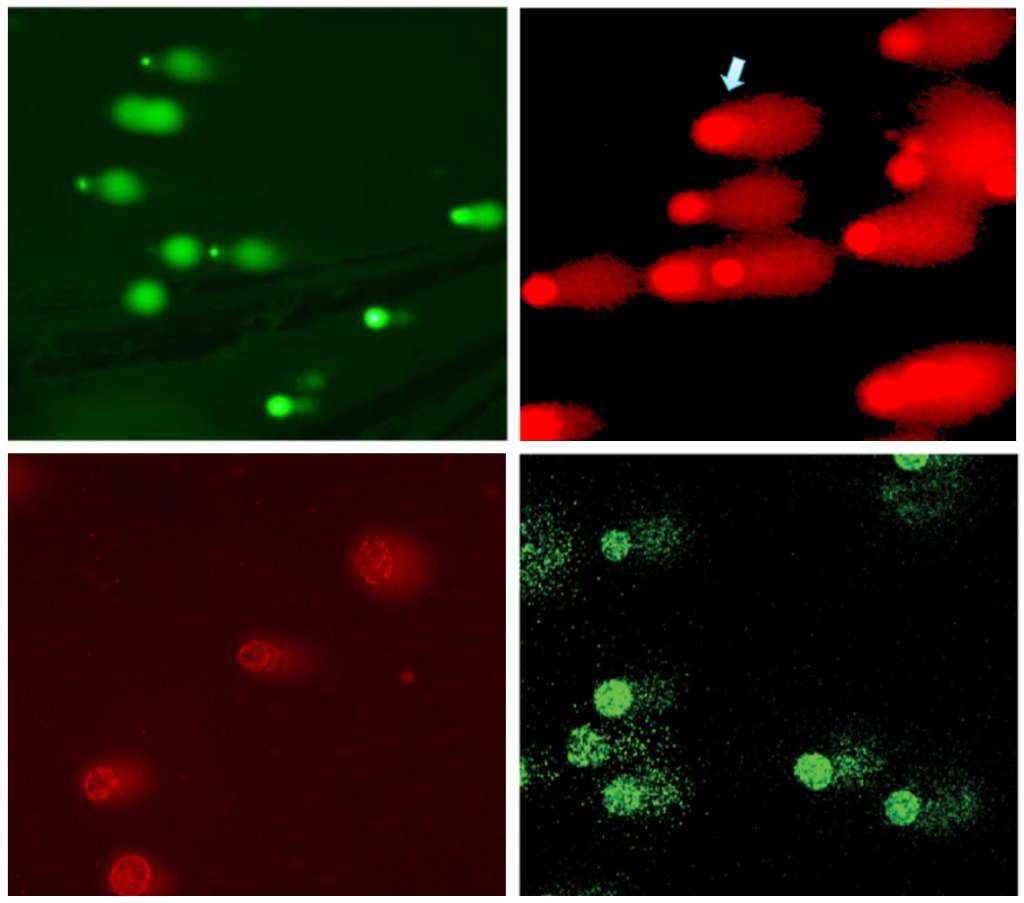
Something obvious to note here: Images of comet assays can vary between different papers. Comet assays can be presented in any colour, but they are usually red or green. Sometimes the trails are granular, and other times they are smooth. Some images have strongly contrasting backgrounds, while others have background noise and details. Comet assays are often analysed with automated systems, and certain types of image processing are acceptable. So, it is important to be cautious when trying to differentiate between authentic and fabricated images.
Fortunately some authors have made this task rather easy. See for example this first example of a fabricated comet assay.
Amera Abd El Latif, Abo Elnasr A Zahra, AlShimaa Badr, Zizy I Elbialy, Abdullah A A Alghamdi, Norah A Althobaiti, Doaa H Assar, Tarek Kamal Abouzed The potential role of upregulated PARP-1/RIPK1 expressions in amikacin-induced oxidative damage and nephrotoxicity in Wistar rat Toxicology Research (2023) doi: 10.1093/toxres/tfad091
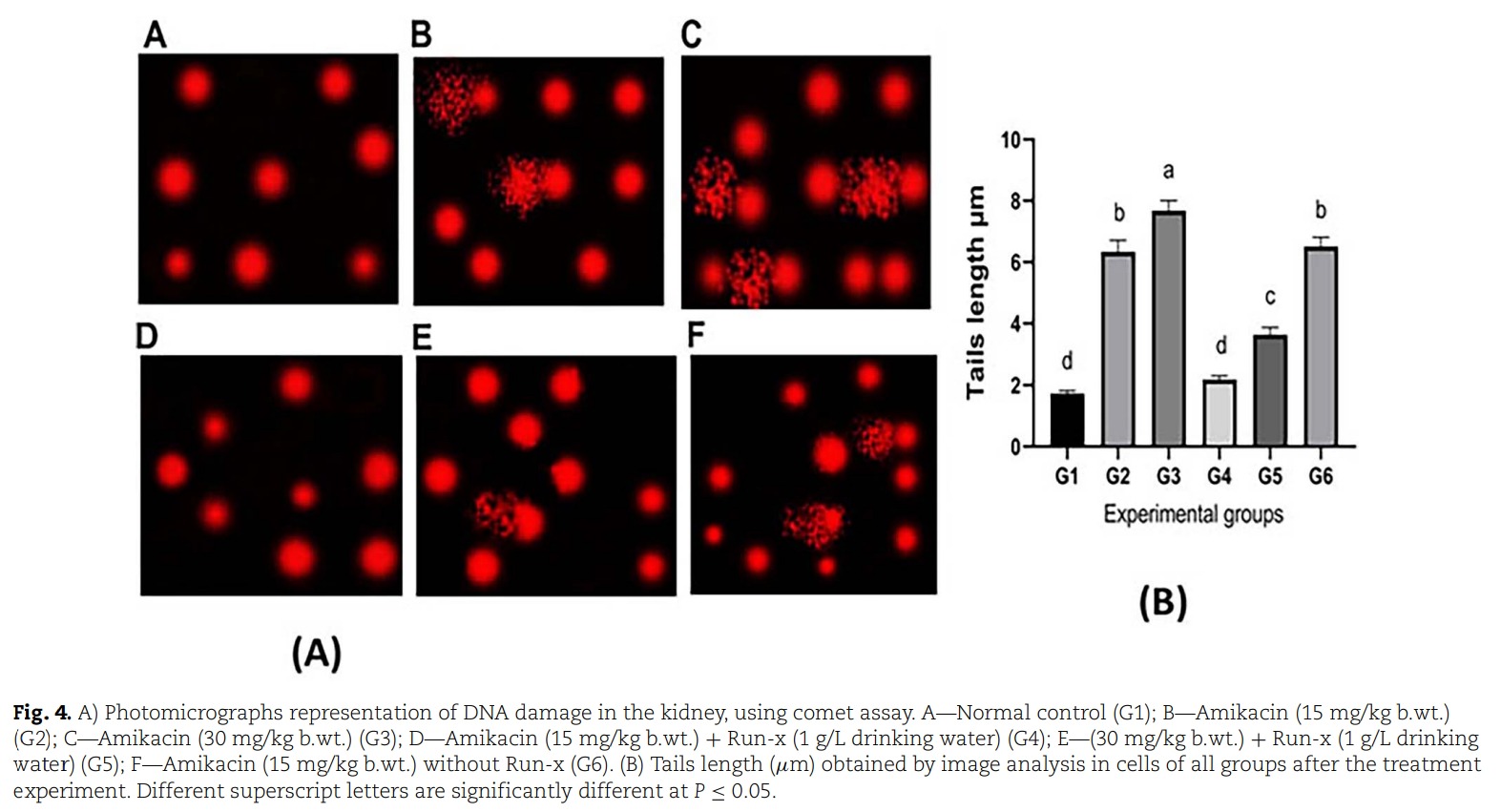
A few points to consider about the image above. The background is deep black with no spots of noise. Some of the cells are aligned with the border of the image in rows and columns. The cells seem to avoid each other, and they also avoid the edges of the rectangle. None of the cells are bisected by the border of the image. Finally, some of the comet trails have duplicated areas.
Here is an annotated version to help visualise these points:

Pink and Cyan Rectangles: Near identical areas found in comet trails from different cells
Edges: No cells bisected by the border of the rectangles
I did not annotate all the cloned areas, just the easiest to see
The fact that there are cloned areas in the comet trails is useful, because it is a clear signal that the image has been edited with Photoshop at some stage. Thomas Kesteman first pointed out to me that the cells avoid the edge of the border, and this is important because it is what you would expect if someone is painting the cells into a pre-existing black rectangle. Likewise, the alignment of cells with the border must have a similar explanation. In an authentic microscopy image the cells are not expected to have any alignment to the border, and at the cell density presented it would be difficult to routinely find fields where no cells are bisected by the edge of the frame.
Lashing out at Toxicology Reports
“What exactly will Lash and Elsevier do with these 115 problematic papers? I can only expect a painfully inadequate response.” – Sholto David
Here is another presentation of a fabricated comet assay. Although in some ways it is quite different in appearance to the first one, I think there is a common style that should be immediately apparent. I’ve added the green rectangles to indicate the cloned trails.
Ahlam M Alhusaini, Laila M Faddah, Iman H Hasan, Somayah J Jarallah, Shrouq H Alghamdi, Norah M Alhadab, Amira Badr, Najlaa Elorabi, Enas Zakaria, Abeer Al-Anazi Vitamin C and Turmeric Attenuate Bax and Bcl-2 Proteins’ Expressions and DNA Damage in Lead Acetate-Induced Liver Injury Dose-Response (2019) doi: 10.1177/1559325819885782
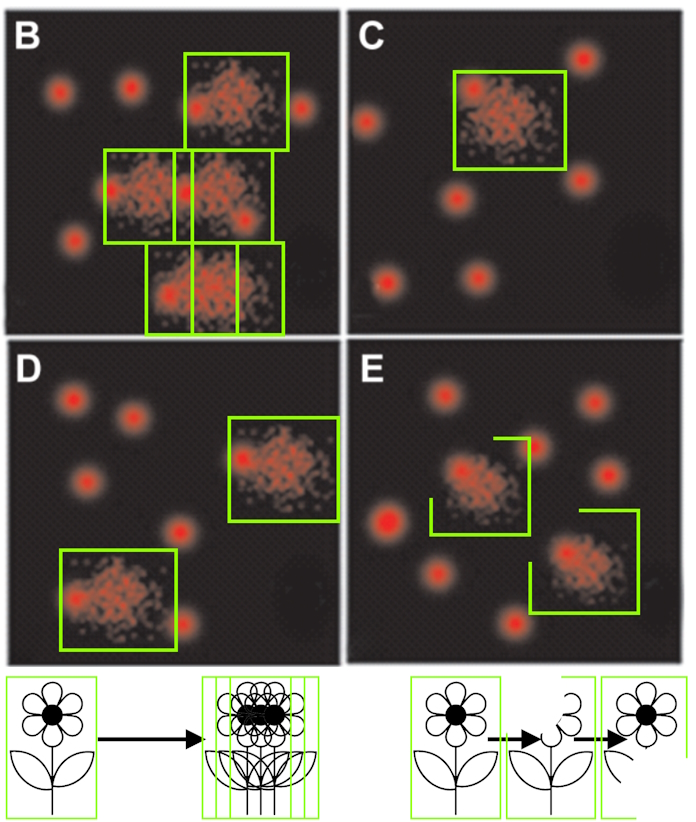
In this case there are no rows or columns of cells parallel to the edges of the image, but the cells do avoid each other, and they avoid the edges. Again, none are bisected by the border. The background is not deep black, instead it has an unusual cross-hatch pattern, with a dark smudge in the lower right hand corner. This seems indicative of the cells being painted into a pre-existing rectangle. Or perhaps a previous label was obscured? The flowers are to illustrate two common comet trail transformations. Firstly, duplicate trails are often stacked on top of each other with a horizontal translation. Secondly, trails may be partially duplicated, or some of the details in the trail can be obscured by the cells.
Environmental Pseudoscience and Polluted Research
“We are living in a faked world and there is a lot of un-verified avatars. “, Philippe Garrigues, EiC

This next example should not require annotation, but here it anyway is to speed things up:
Hanaa A. Hassan, Wafaa M. EL-Kholy, Mamdouh R. F. EL-Sawi, Nadine A. Galal, Mohamed Fawzy Ramadan Myrtle (Myrtus communis) leaf extract suppresses hepatotoxicity induced by monosodium glutamate and acrylamide through obstructing apoptosis, DNA fragmentation, and cell cycle arrest Environmental science and pollution research international (2020) doi: 10.1007/s11356-020-08780-7
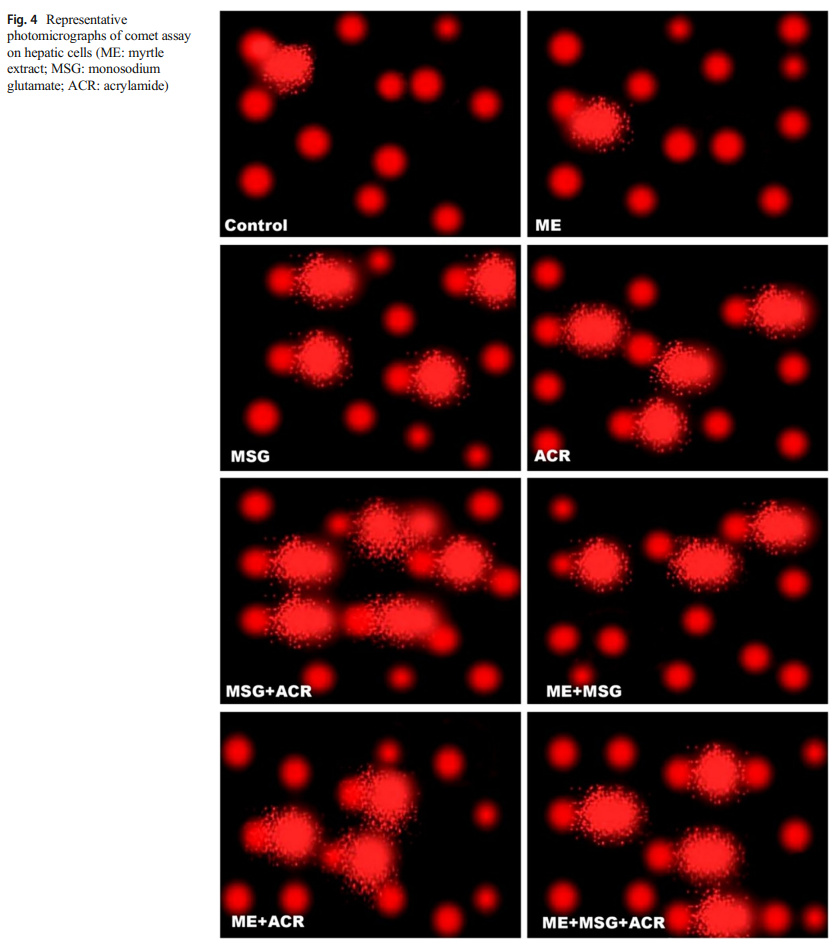
Once again, the specifics of the image are in some ways quite different to the previous two, but the overall appearance has a distinctive style, with a uniform colour hue, duplicate trails, and cells avoiding the edges of the panels. In fabricated comet assays the trails are most often presented on the eastern side of the cells, but they often appear on the southeastern side too.
Although granular trails are most common, others types are possible. See for example this image, which is fabricated, but with smooth trails. I’ve added the yellow lines to indicate unnatural alignments of cells. Some other concerning features are the limited range of colours, lack of any spots of noise, uniformity of cell size, and cells avoiding the border area. Although in this case some are bisected by the edge.
Marwa Amer, Dena Abdel Moawed, Reham Sameh, Rasha Agaga, Nisreen Elwany, Amira Abdelhamid Protective Effect of Curcumin and Cerium Oxide Nanoparticles on Carboplatin Induced Myelotoxicity and Hepatotoxicity in Adult Male Wistar Rats Zagazig Journal of Forensic Medicine (2023) doi: 10.21608/zjfm.2023.194806.1142
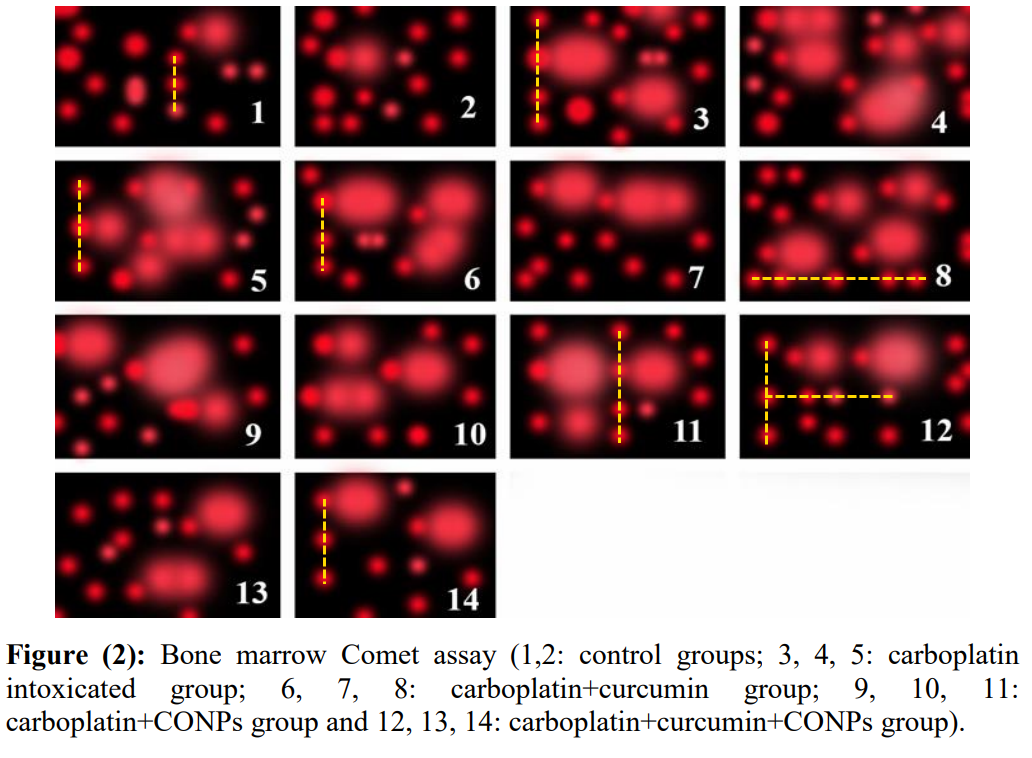
Some images exhibit a mixture of granular and smooth trails, in the next example, some elements of the trails are smooth, but there are also more granular details which have been cloned. I’ve added the coloured rectangles to help visualise some of those areas.
Hanaa Mahmoud Ali Mitigative role of garlic and vitamin E against cytotoxic, genotoxic, and apoptotic effects of lead acetate and mercury chloride on WI-38 cells Pharmacological Reports (2018) doi: 10.1016/j.pharep.2018.02.009

In the above case there is a greater variety of cell sizes and intensities, however, there seems to be a limited number of categories of cells. This is consistent with someone adding large dark cells, and then medium bright cells, and then small dark cells, and so on.
Perhaps the next example is most helpful. It transitions from the granular blotch style in the upper panels (1, 2, 3, and 4), the combined style in 5 and 6, and entirely smooth trails in the lower two panels (7, and 8). It also has a trendy papyrus scroll for a figure legend! It may seem like this was published in the distant past but in fact this is a 2024 paper (in an Egyptian journal):
Hazem Sarhan, Ahmed Saleh, Olfat Hammam, Aly Atta, Eslam Elnahrery Protective effect of diosmin-hesperidine combination on gammaradiation- induced apoptosis in liver of albino rats. Molecular and Immunohistchemistry Egyptian Journal of Chemistry (2024) doi: 10.21608/ejchem.2024.267548.9281

The task of differentiating between authentic comet assay images and fabricated images is actually not so hard. It is rather like telling the difference between a cartoon drawing of a lion, and a photograph of a lion. However, it is difficult to formulate a set of written rules that can be reliably followed to discriminate between the two. Here are my ideas.
Fabricated comet assays are often characterized by…
- A uniform background without noise
- Circular cells with regular sizes
- Cells that avoid the border of the image and are not bisected by it
- Cells aligned in rows and columns with the edge of the image
- Cells that avoid each other
- An orange or red presentation with little variation in the hue across the image (brightness or saturation may vary though)
- Granular trails with cloned areas AND/OR
- Smooth trails with consistent intensity between cells
Of course not every rule applies to all fabricated comet assays. Here for example, is a version in black and white. But it clearly belongs in the same family:
N.A. Baky, L. Faddah, N. Al-Rasheed, N. Al-Rasheed, A. Fatani Induction of Inflammation, DNA Damage and Apoptosis in Rat Heart after Oral Exposure to Zinc Oxide Nanoparticles and the Cardioprotective Role of α-lipoic Acid and Vitamin E Drug Research (2013) doi: 10.1055/s-0033-1334923
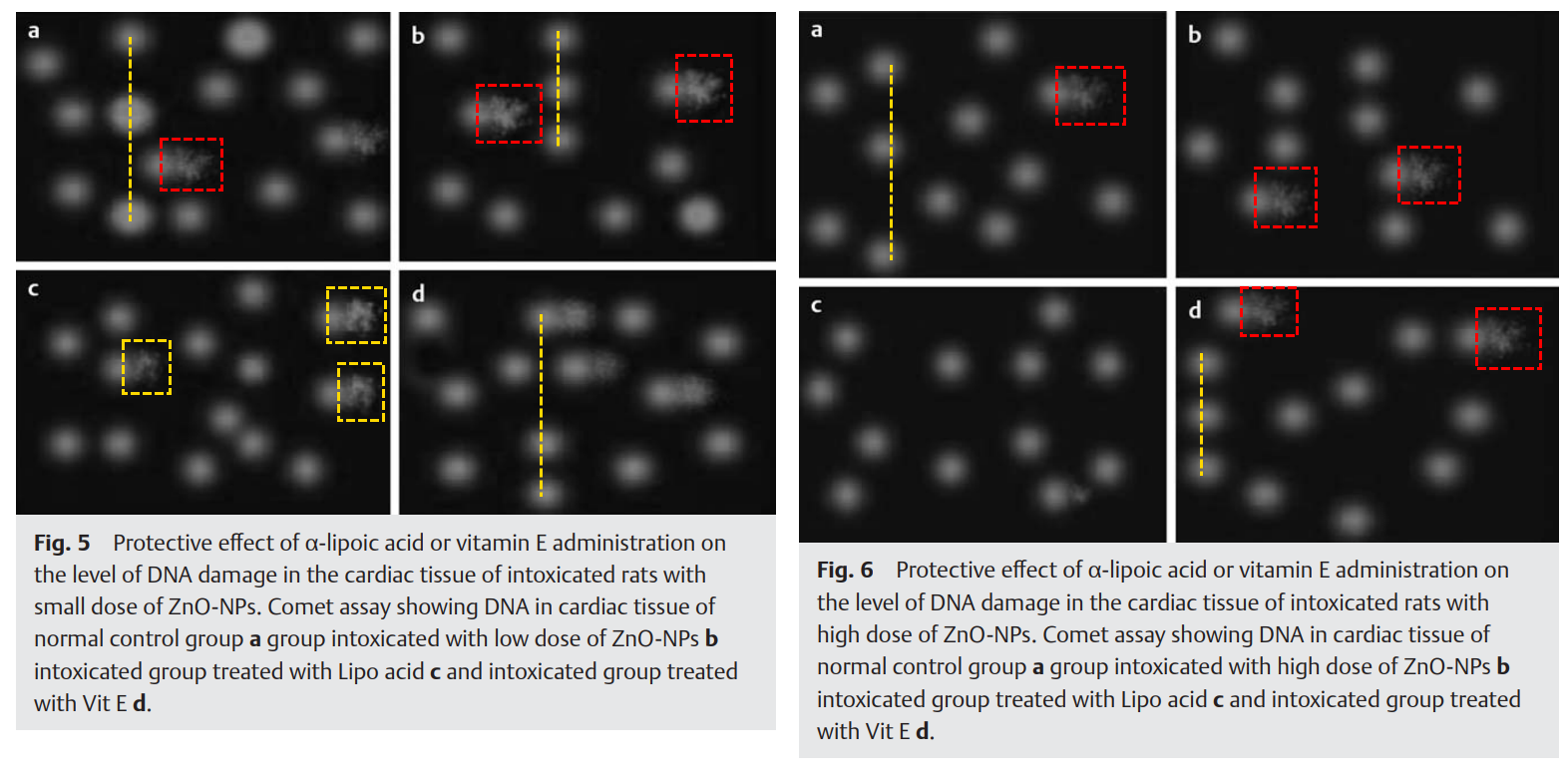
Also, some authentic images will fit at least some of these rules too. The list is simply my best attempt to describe the problem. The main point is that you should be able to tell them apart once you have seen a few examples of each type, if you can solve a captcha you should be able to identify fabricated comet assay images. If you can’t, you can absolutely sit this one out, Springer Nature probably has a job for you instead.
Having seen the figures so far, you may assume that this is a problem confined to just a few researchers or institutions. In fact, there are no common authors in the first five examples that I shared.
The issue of fabricated comet assays seems to transcend individual and institutional relationships, although it does have a clear epicentre: All of the examples I have found so far have at least one Saudi or Egyptian researcher.
The problem is not entirely contained to the Middle East and North Africa. For example Maria Augustyniak is professor at University of Silesia in Katowice, Poland, who has contributed to three of these papers, including one as a last author. The most embarrassing example is this one:
Alaa Amr, Ahmed E. Abdel Karim, Maria Augustyniak, Abeer El Wakil, Lamia M. El-Samad, Mohamed A. Hassan Efficacy of propolis and royal jelly in attenuating cadmium-induced spermatogenesis and steroidogenesis dysregulation, causing infertility in rats
doi: 10.1007/s11356-024-34673-0

I contacted Maria, she was unwilling to confirm or deny that the images were fabricated, but says she has “been performing the Comet assay in my own laboratory for many years and have collected hundreds of thousands of documented images“. She also offered a painfully predictable line, informing me that “The images serve only as illustrative examples“.
Robert D. Finn is as an Assistant Dean of Basic Sciences at Northumbria University in UK and contributed his name to this example:
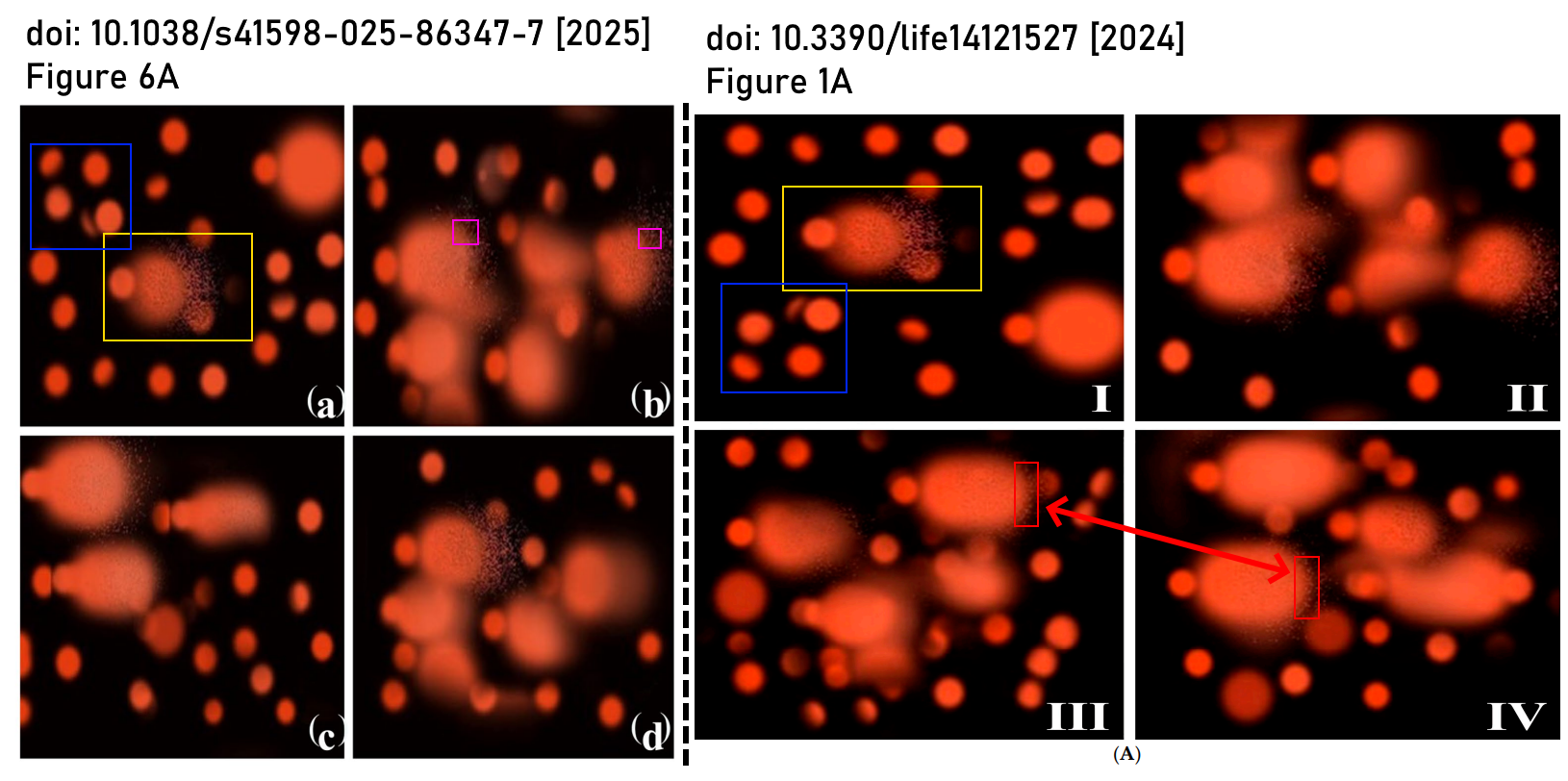
Ahmed A. Rashed, Yasmin M. Heikal, Robert D. Finn, Mohamed H. Bayoumy, Amged El-Harairy, Dina A. Refaay Toxicity of Macroalgae Extracts to Larvae of the Northern House Mosquito Life (2024) doi: 10.3390/life14121527

I have highlighted just the most obvious cloned trail, although the image is concerning for several of the reasons discussed above. A modified version was partially republished in Scientific Reports without Finn’s assistance.
Dina A. Refaay, Mostafa M. El-Sheekh, Yasmin M. Heikal, Ahmed A. Rashed Characterization of some selected macroalgae extracts and assessment of their insecticidal and genotoxicity in Culex pipiens L. mosquito larvae Scientific Reports (2025) doi: 10.1038/s41598-025-86347-7
So far I have identified 128 papers with fabricated comet assay images. The papers are available in a spreadsheet here.
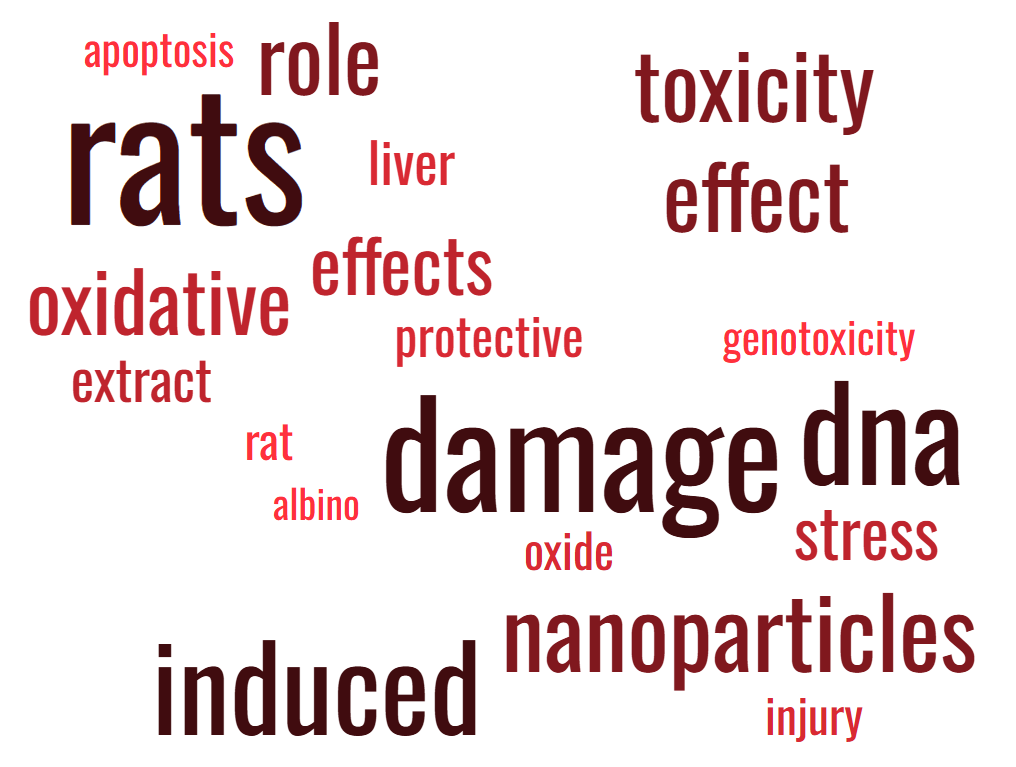
These papers are mostly themed around toxicity with a focus on metals, nanoparticles, and natural products. Many of the authors announce in vivo experiments to complement the comet assays. A word cloud based on the titles should give a hint of the major themes I have been following to identify these papers:
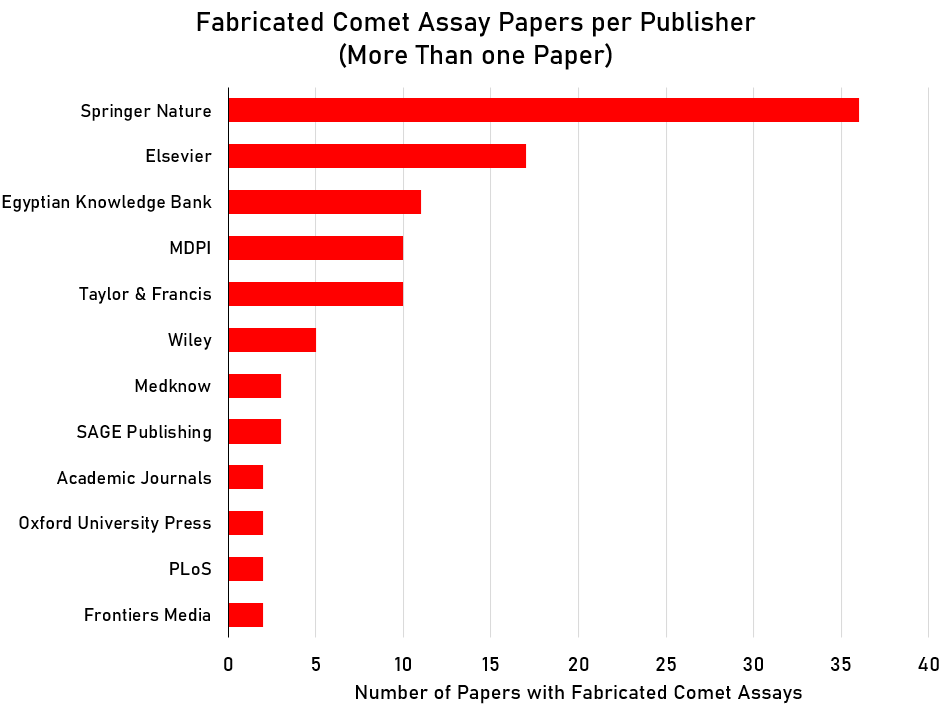
Most of the 128 papers I have identified so far have been published in mainstream publishers. Springer Nature has the most, followed by Elsevier. Whether the Egyptian Knowledge Bank counts as a publisher isn’t clear to me, but they host a number of journals which accept these papers. Twenty five papers not accounted for in this chart were published by a spattering of predatory and mainstream publishers
The papers appear in a wide range of journals, however Springer Nature’s Scientific Reports and Environmental Science and Pollution Research lead the charge so far with seven apiece. Here’s another from Scientific Reports:
Samy A. Abdelazeim, Nagwa Ibrahim Shehata, Hanan Farouk Aly, Shams Gamal Eldin Shams Amelioration of oxidative stress-mediated apoptosis in copper oxide nanoparticles-induced liver injury in rats by potent antioxidants Scientific Reports (2020) doi: 10.1038/s41598-020-67784-y
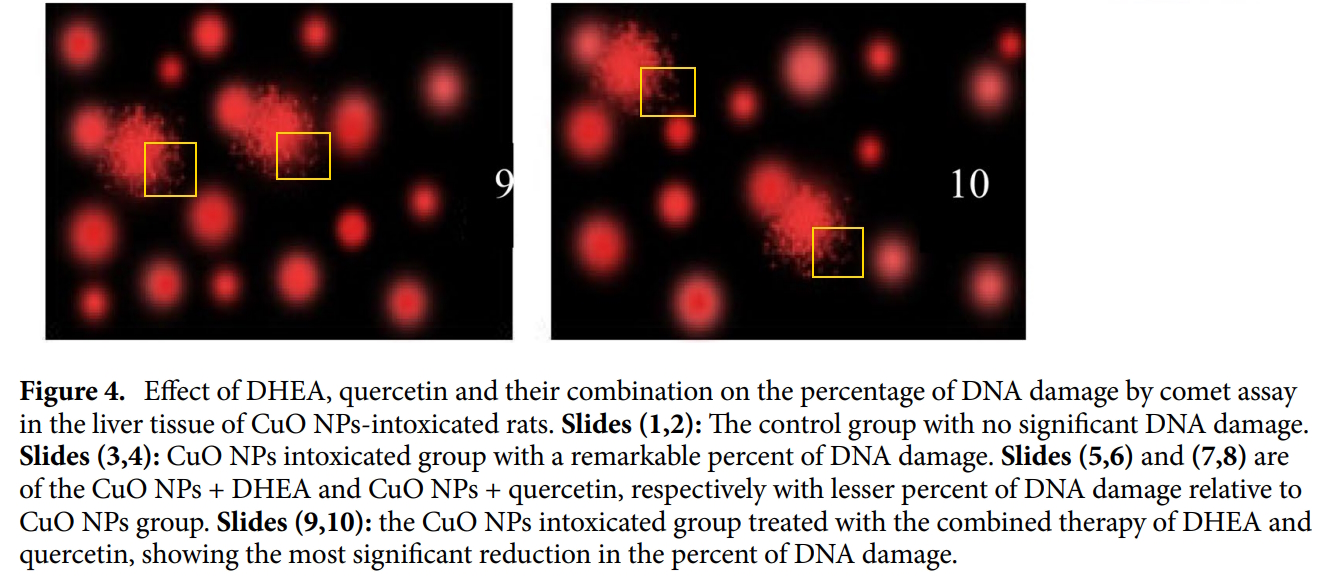
I first commented on this paper in November 2021, where I pointed out that the images were likely not authentic. Then in September 2023 I emailed Springer Nature a link to the PubPeer comment. With several years to get ahead of the problem Springer Nature and Scientific Reports have achieved nothing. In fact they just kept publishing new examples. Remember what Chris Gaffe Graf said?
“Scientific Reports has an in-house team who are dedicated to ensuring that the journal operates with integrity. They are an excellent team who care enormously about the journal and the research it publishes. They are committed to investigating every issue raised with them…”
Chris Graf, director of research integrity at Springer Nature, read also May 2025 Shorts
Also in 2023 I informed Elsevier’s research integrity team about two such papers after my screen of Toxicology Reports. One of the problems I forwarded to them relates to this example, no action by the team at Elsevier in nearly two years.
Omaima M. Abd El-Moneim, Abeer H. Abd El-Rahim, Naglaa A. Hafiz Evaluation of selenium nanoparticles and doxorubicin effect against hepatocellular carcinoma rat model cytogenetic toxicity and DNA damage Toxicology Reports (2018) doi: 10.1016/j.toxrep.2018.07.003

I do not have routine access to subscription journals, so most of my findings are from open access journals and those uploaded to a certain website before 2021. Based on paper titles and authorship patterns I suspect there are a large number of papers behind paywalls with fabricated comet assay images. The problem seems to be an active one, whether it is increasing or not is hard to say. The first examples I have been able to find were published in 2013, with increasing numbers found since. I have not plotted 2025 because of the incomplete data.

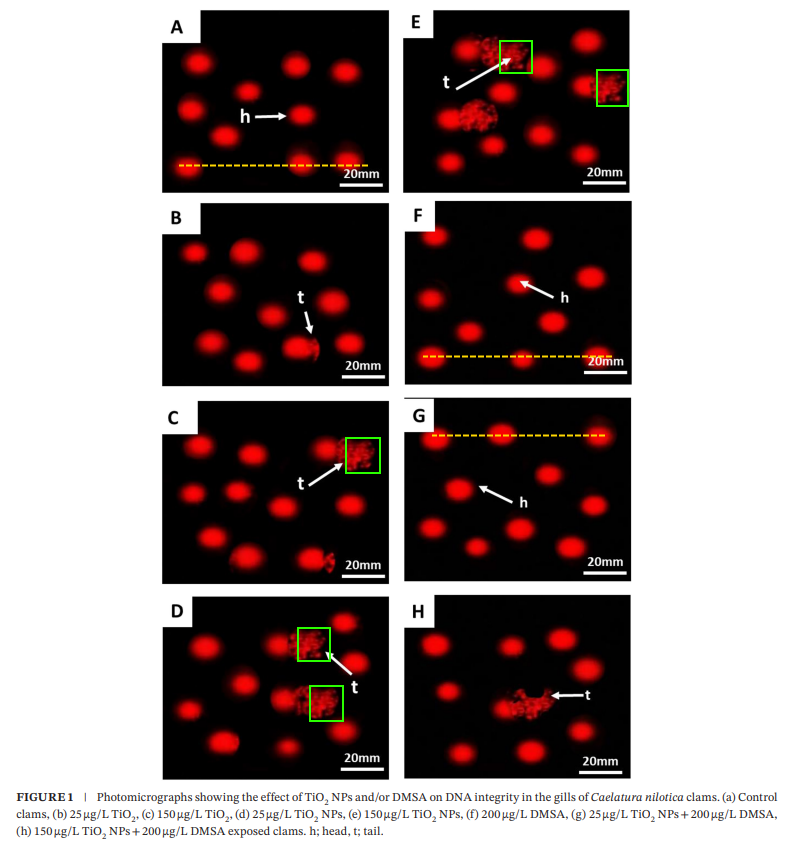
As recently as 8th June 2025 (three days prior to me writing this post) a new paper with the same style of fabricated images was published by Wiley journal Ecohydrology.
Sherin K. Sheir, Azza H. Mohamed, Gamalat Y. Osman, AbdElhafez R. AbdElhafez, Hoda H. Abdel‐Azeem Ecological and Toxicological Impacts of Titanium Dioxide Nanoparticles on the Freshwater Clam Caelatura nilotica and Recovering Role of Dimercaptosuccinic Acid, Gizay Village, Menoufia Governorate, Egypt Ecohydrology (2025) doi: 10.1002/eco.70058
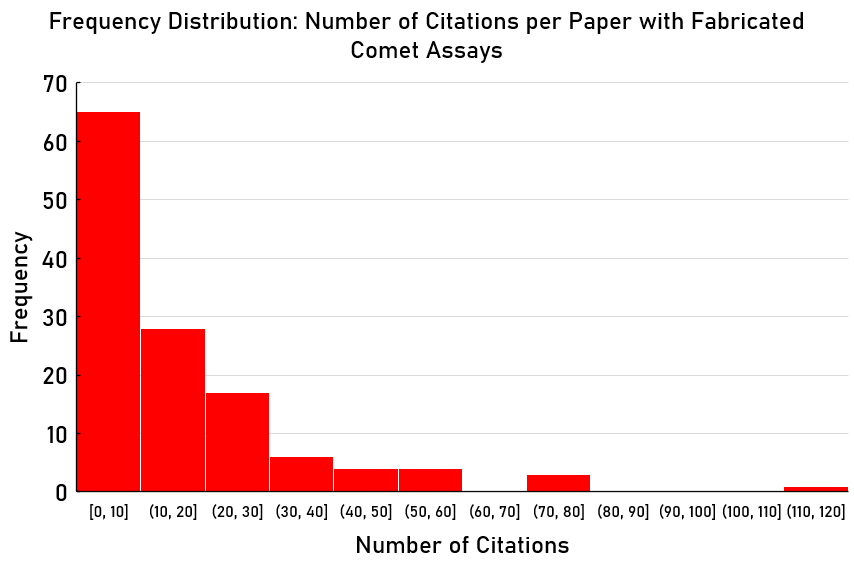
Some will say these papers are unimportant because no one reads them. I disagree. The papers accumulate legitimate citations. Of the 128 papers I have identified, the median number of citations is 10, which is not so bad for a group including many recently published papers.
Some are cited in clearly legitimate reviews. For example, a scientific opinion on the safety of titanium dioxide was adopted by the European Food Safety Authority in 2021 and cited three papers with fabricated comet assays.
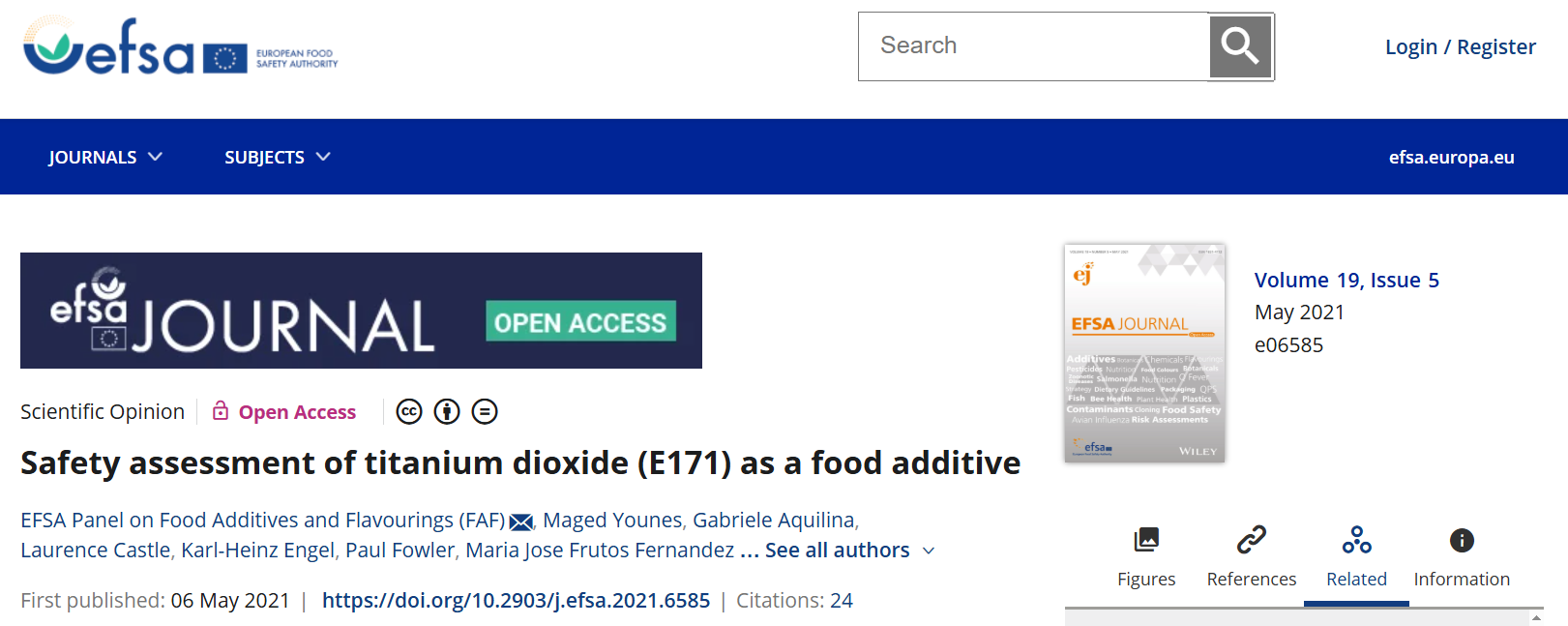
The three cited papers were these:
Laila M. Fadda , Hanan Hagar , Azza M. Mohamed , Hanaa M. Ali Quercetin and Idebenone Ameliorate Oxidative Stress, Inflammation, DNA damage, and Apoptosis Induced by Titanium Dioxide Nanoparticles in Rat Liver Dose-response (2018) doi: 10.1177/1559325818812188

Here is the second one, proposing to use the antioxidants “idebenone, carnosine and vitamin E” to protect yourself from titanium nanoparticles. I have highlighted just two of the cloned trails, they are all based on the same spray pattern.
Samy A. Abdel Azim, Hebatallah A. Darwish, Maha Z. Rizk, Sanaa A. Ali, Mai O. Kadry Amelioration of titanium dioxide nanoparticles-induced liver injury in mice: possible role of some antioxidants Experimental and Toxicologic Pathology (2015) doi: 10.1016/j.etp.2015.02.001

Number 3, please applaud the title because it always comes down to curcumin:
Eman Ahmed Alaa El-Din, Heba El-Sayed Mostafa, Mai A. Samak , Eman M. Mohamed, Dalia Abdallah El-Shafei Could curcumin ameliorate titanium dioxide nanoparticles effect on the heart? A histopathological, immunohistochemical, and genotoxic study Environmental science and pollution research (2019) doi: 10.1007/s11356-019-05433-2

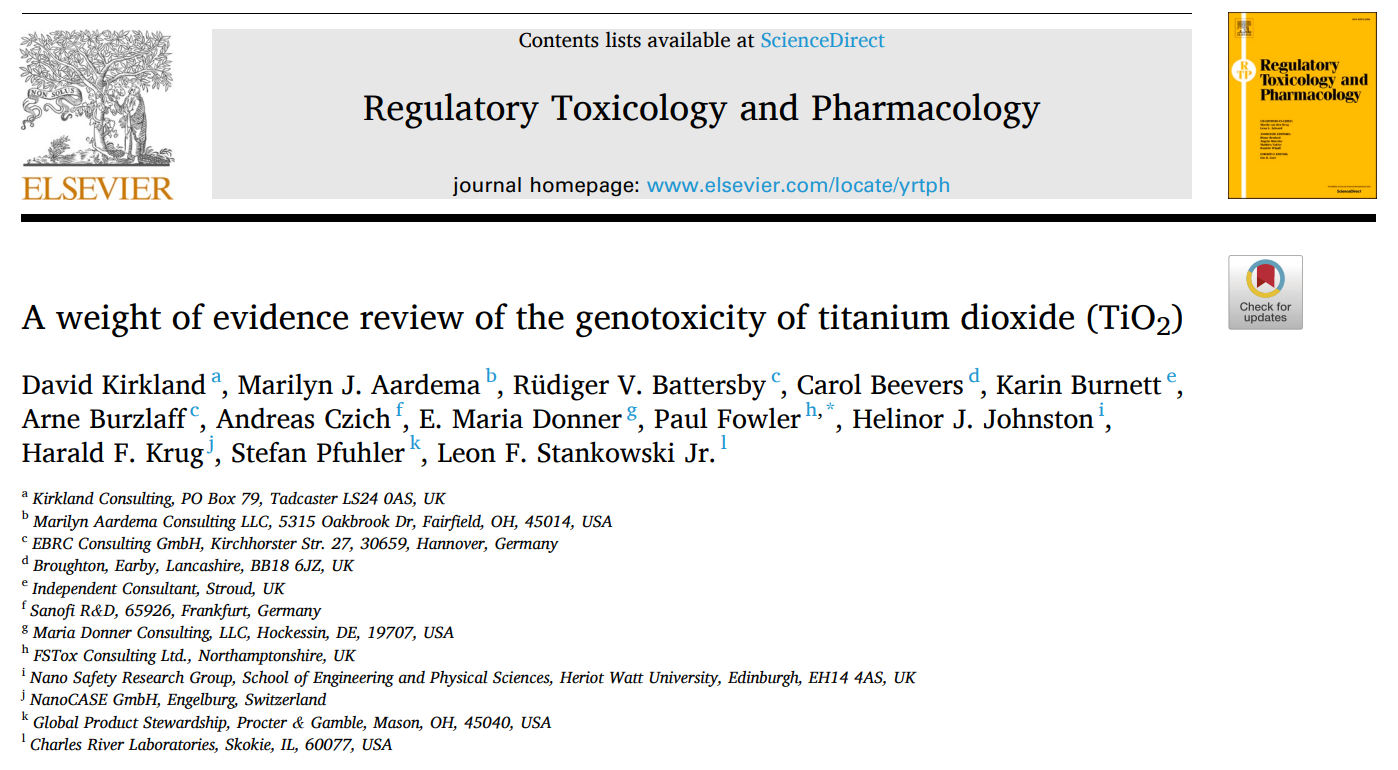
It doesn’t seem that these three papers proved influential to the conclusion of the safety review, but it still seems concerning to me. Another genuine review on titanium dioxide safety by academics, consultants, and industry scientists (Kirkland et al 2022) also cites these same three papers.
I hope this blog will prove informative and allow other people to spot these types of images. Although I have identified 128 papers so far, my search has not been exhaustive, I think there are probably hundreds in total. If more than a thousand are eventually found I would not be completely surprised.
There are some edge cases. For example, I wasn’t sure what to make of this one, I have the sense that it is not authentic, but it feels slightly out of place compared to the rest.
Ghadha Ibrahim Fouad, Kawkab A. Ahmed Neuroprotective Potential of Berberine Against Doxorubicin-Induced Toxicity in Rat’s Brain Neurochemical Research (2021) doi: 10.1007/s11064-021-03428-5

Other figures in this same paper proved problematic, see for example Figure 8 below, cloned areas identified with the help of ImageTwin.ai. In the end, I included this paper in my list.

Some author responses to my comments about fabricated comet assays have begun to trickle through on PubPeer. These are predictably poor replies that do not address the substance of the comments. Samar A. Omar responded on the following two papers with blocks of text including extraneous methodological details, and a delightful “proof” provided by Decopy AI.
Samar Omar, Hagar Salim , Medhat Eldenary , Alexander V Nosov , Suleyman I Allakhverdiev, Alsayed Alfiky Ameliorating effect of nanoparticles and seeds’ heat pre-treatment on soybean plants exposed to sea water salinity Heliyon (2023) doi: 10.1016/j.heliyon.2023.e21446

Samar Omar: “we did too many confirming analyses through the online programs to check the originality of our pictures, all programs gave us negative detection for any Photoshop effect or even AI editing tools”

Both papers feature as coauthor a certain russian academician, Suleyman Allakhverdiev, about whom you can read here.
Samar A. Omar , Nabil I. Elsheery, Pavel Pashkovskiy , Vladimir Kuznetsov, Suleyman I. Allakhverdiev, Amina M. Zedan Impact of Titanium Oxide Nanoparticles on Growth, Pigment Content, Membrane Stability, DNA Damage, and Stress-Related Gene Expression in Vicia faba under Saline Conditions Horticulturae (2023) doi: 10.3390/horticulturae9091030


One of Allakhverdiev’s coauthors, Amina M. Zedan, did not agree with my comparison:
“The figure showed the comet assay in the Vicia faba plant cells in the leaves, wherase the figure that attached showing the cell in animal or other organisms”
This by Nabil Elsheery was moderated by PubPeer:
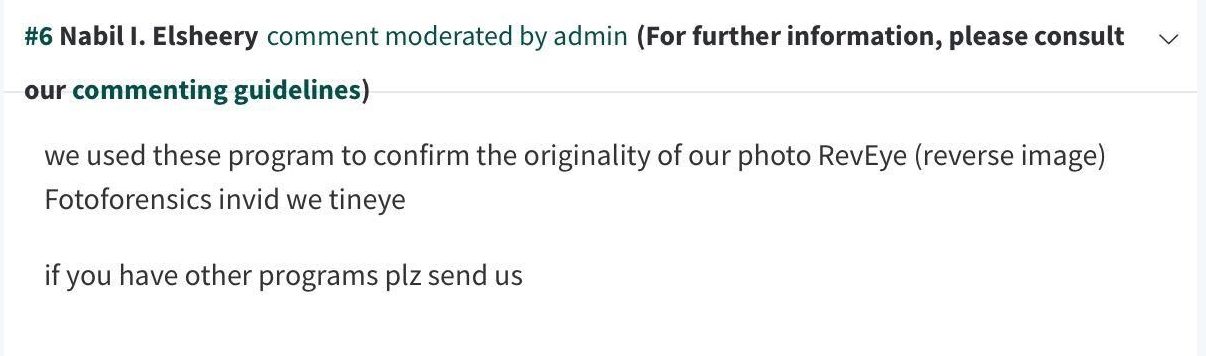
To my knowledge no authors have attempted to address the duplicated areas within the trails themselves.
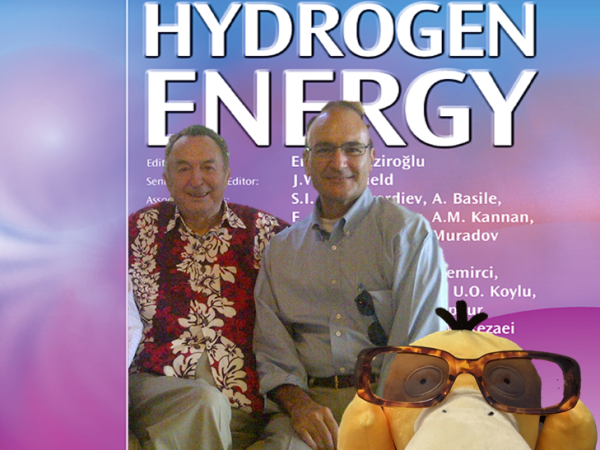
Veziroglu Journal of Papermill Energy
Mu Yang and other sleuths celebrate the scholarly publishing business of the late T Nejat Veziroglu, laureate of Santilli-Galilei Gold Medal for Lifetime Commitment to True Scientific Democracy
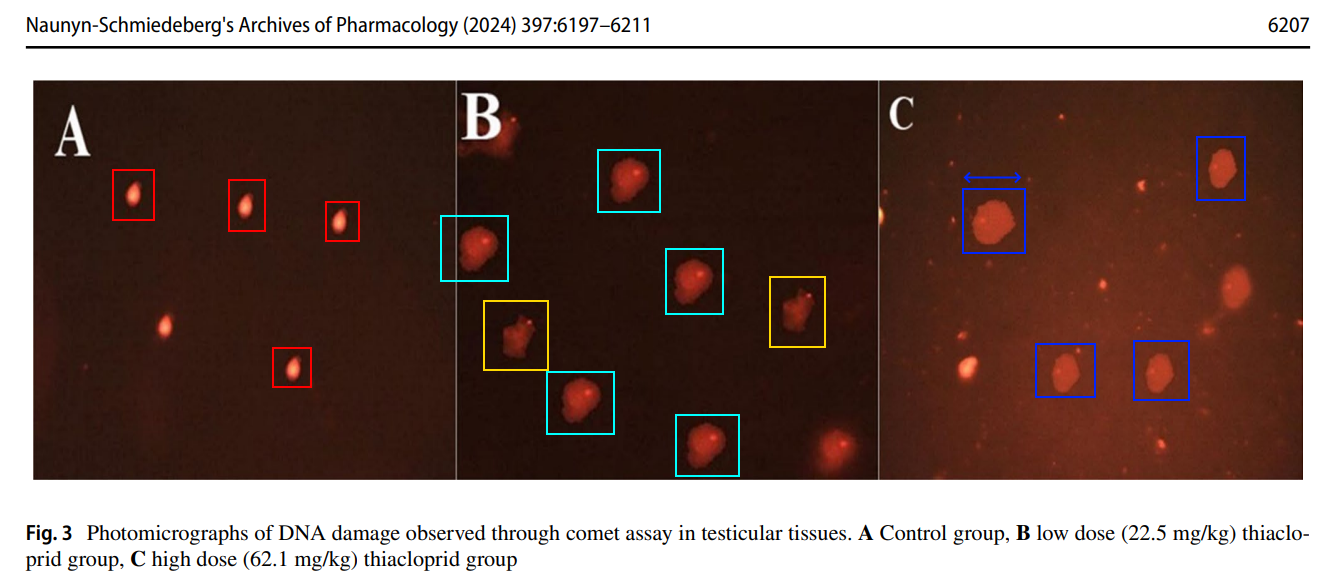
During this search, I also found a large number of comet assays images that started out with something authentic, and then manipulated it by cloning parts of the image. Here is an example from 2024 in a journal that will likely be familiar to readers. These “falsified” comet assays are not included in my list, which is focused only on entirely fabricated examples.
Aya Abdel Nasser Mahmoud, Ebtehal Altohamy Ahmed, Amel Ramadan Omar Thiacloprid impairs reproductive functions of male Wistar rats Naunyn-Schmiedeberg’s Archives of Pharmacology (2024) doi: 10.1007/s00210-024-03025-7
Some time ago, this journal’s editors banned submissions from China, focussed on submissions from Egypt instead, and became celebrated authorities on how to fight against papermills:
An attractive and “natural” target for fraudsters
“In the various excellent texts on paper mills the question is discussed why Naunyn-Schmiedebergs Archives of Pharmacology has become a target for fake papers. I oppose the assumption that we simply want to fill pages with pseudo-scientific content. We actually look for quality and good science.” – Prof Dr Roland Seifert, Editor-in-Chief
Truthfully, my ability to identify these papers has outstripped my motivation to post them to PubPeer at least PLOS One retracted this one already, despite the author playing dumb.
Demiana H. Hanna, Ahlam K. Al-Atmani, Aljazi Abdullah AlRashidi, E. El. Shafee Camellia sinensis methanolic leaves extract: Phytochemical analysis and anticancer activity against human liver cancer cells PLOS One (2024) doi: 10.1371/journal.pone.0309795
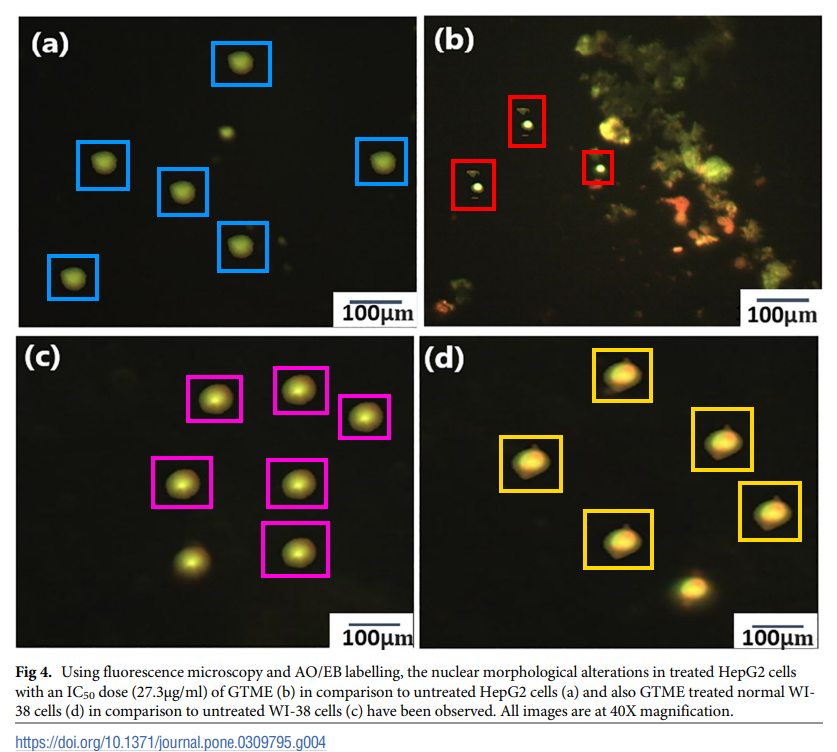
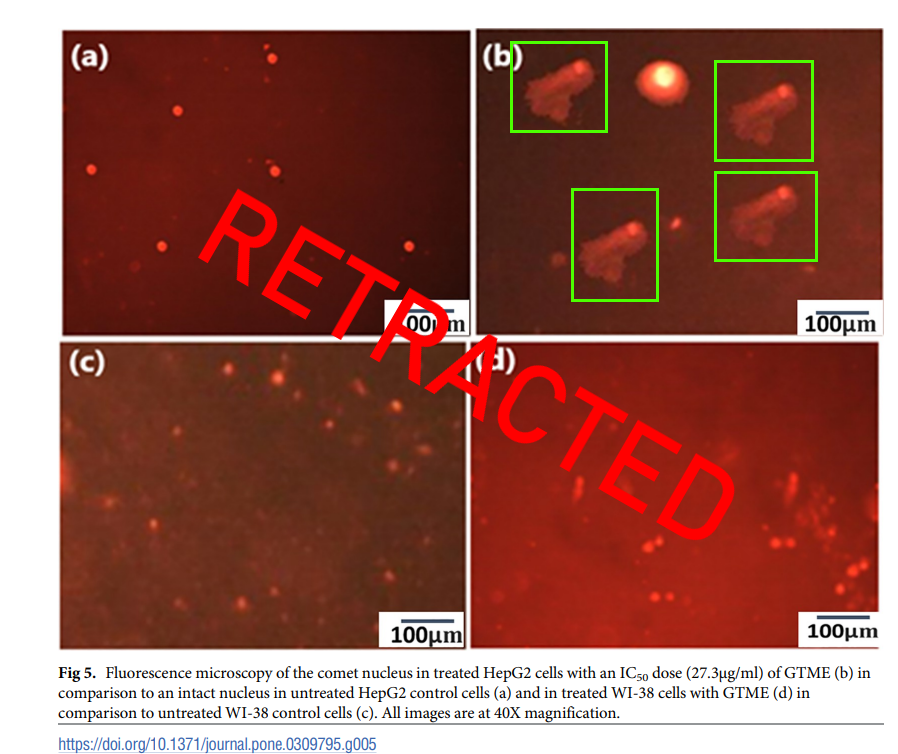
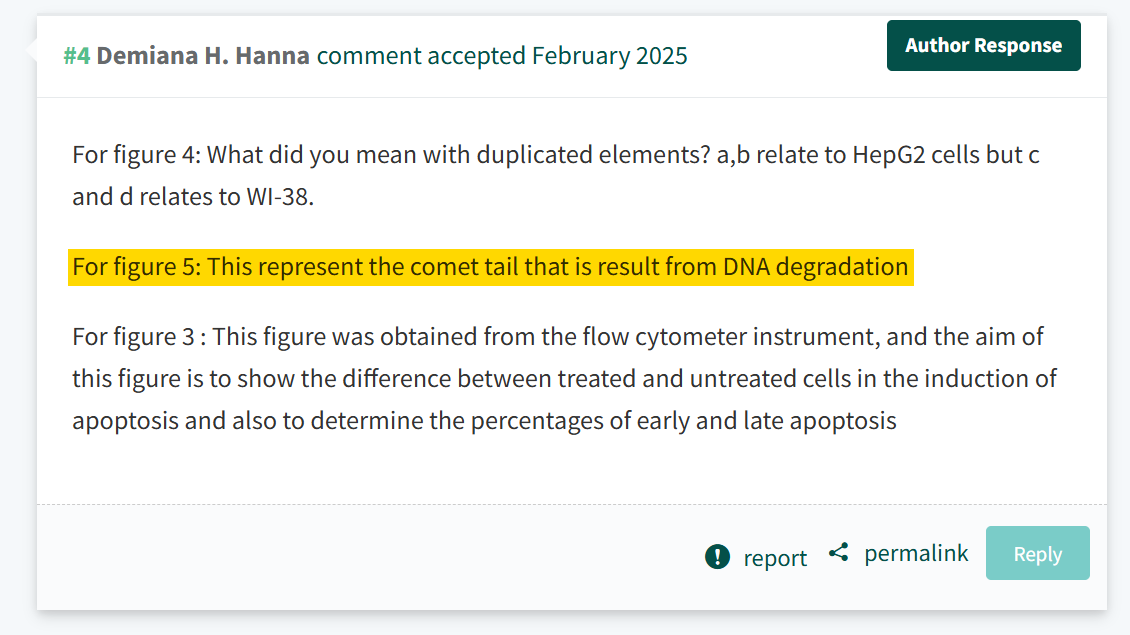
The retraction from 10 June 2025 mentioned that the corresponding author provided original and replacement image data, but: “assessment of these underlying and alternative images raised further image concerns“.
Still, I have a long list of both fabricated and manipulated comet assays that I have yet submit to PubPeer.
Bosone Layer
“[Taurine’s] exact biological role is unclear, which is why Parames Sil and his students decided that it must be an antioxidant, and therefore the ideal treatment for cadmium- or arsenic-poisoning.” – Smut Clyde

Some might excitedly say that the large scale fabrication of assays in a similar style is evidence of a “papermill”. No doubt there really are some operations deserving of this moniker, but this is a framing I have come to strongly dislike because it seems to paint publishers as innocent victims of mysterious and sophisticated enemies, against which they put up a noble resistance but ultimately fall short – Then the money from the APC just drops right into their pocket, how tragic, they did their best! My impression is that the comet assays are fabricated by individual authors. No need for any scheme to explain what is going on. Although I’m happy to be proven wrong, as always.
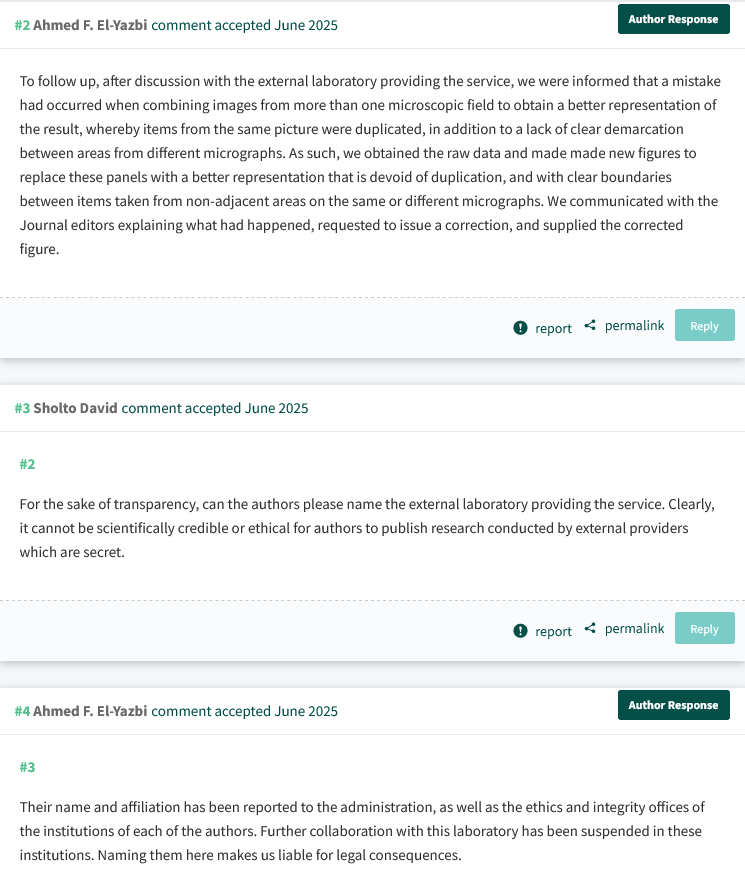
However, at least in this MDPI paper, the authors admitted to having bought the images:
Salwa M. Abdallah, Reham E. Muhammed, Reda E. Mohamed, WagdyK. B. Khalil , Dalia A. Taha, Mohamed B. Shalaby, Islam Elgohary, Amr A. Abdallah , Hosam M. Habib, Ahmed F. El-Yazbi Integrated Biomarker Response Emphasizing Neuronal Oxidative Stress and Genotoxicity Induced by Oxamyl in Sprague Dawley Rats: Ameliorative Effect of Ginseng as a Neuroprotective Agent Toxics (2024) doi: 10.3390/toxics12090655

The last author Ahmed El-Yazbi referred to his “discussion with the external laboratory providing the service“, which provided him upon request with “new figures to replace these panels“. El-Yazbi added:
“Further collaboration with this laboratory has been suspended in these institutions. Naming them here makes us liable for legal consequences.“
I will send my list and this blog describing the problems to the relevant publishers. I will generously restart the clock for those I already notified, and the race to be the first publisher to retract a paper for a fabricated comet assay can start on the date of the blog publication. The prize will be a system generated email and two whole years of nothing which is exactly my reward for finding these in the first place.

 For Better Science
All these papers share crappy imaging. I have taught undergrads to do better than this.
Another point: while it’s generally OK to say that an image was “photoshopped”, I think it’s going too far to say something like “it is a clear signal that the image has been edited with Photoshop at some stage”. There are plenty of image processing apps that can to the sort of manipulations shown, and it seems overly pejorative to directly invoke Photoshop as if its sole purpose is to do such things.
LikeLike
What exactly is crappy? The image quality? The layout and labelling? The fact that the images themselves are fabricated or manipulated?
I suspect that the majority of these fabrications or manipulations are done with PowerPoint or Paint… Do Egyptian academics routinely pay for Adobe licences? I doubt it. Still – I worry that I would simply be misunderstood if I were to invoke a more general term; trying to work in “graphics editing software” seems to imply a certain kind of sophistication. Well, I have thought about this problem… and I settled on simply naming Photoshop. There are other equivalents in writing, Biro is a brand name after all, but in the UK we would rarely say someone is writing with a “ball point pen”, same with Hoover.
LikeLike
Long ago Adobe used to get pissed off at sites like B3TA using “photoshopped” as a verb, so people just started calling it “potatoshop” instead. The older versions of potatoshop (without all the subscriptions and DRM) still work remarkably well in windows if you can find an old installation CD with the code in the sleeve. I suspect that’s what’s being used in many countries that are subject to US software or internet sanctions.
What amazes me is that potatoshop literally has a “finger-smudge” function right there on the menu bar. Instead of cloning the comet tail you could just smudge the nuclei one-by-one so they’re all different. But that would require knowing how to do things properly, which I guess is not a given with these types of people.
LikeLiked by 2 people
These scientists are not just frauds. They are the subset of frauds that are also some large combination of lazy and stupid.
It would be so simple to generate comet assay images that are legitimate by treating cells with some genotoxic substance like bleomycin or treating with UV light. You do that, relabel the images and have perfect looking figures that nobody can detect fraud in.
Its actually the same with all the fake western blots. You could easily create legitimate figures by loading selectively.
These people are total clowns.
LikeLike
Be considerate of people who don’t understand science, don’t have access to a lab, don’t have any funds to buy reagents or to employ competent people to fake experiments the way you propose.
We must celebrate papermills because they help such intellectually challenged scientists in need. In fact, I demand that universities and research funding organisations start reimbursing papermill costs!
LikeLike
The winner of my proposed race (as far as I am aware) is Wiley which retracted one of these papers for reasons including the comet assay on 10 November 2025: https://onlinelibrary.wiley.com/doi/10.1155/jfbc/9891086
LikeLike
Although not mentioned in the above blog, another paper in this delightful style has been retracted by PLOS ONE following my comment on PubPeer.
https://journals.plos.org/plosone/article?id=10.1371/journal.pone.0343068
LikeLike
Retracted by SAGE following my email: https://journals.sagepub.com/doi/full/10.1177/00368504261417035
LikeLike
Retracted by Springer following my email: https://link.springer.com/article/10.1186/s43088-023-00440-2
LikeLike