

Schneider Shorts of 13 June 2025 – a buddy network in Manitoba, a young ethics hero in Uppsala, a typical German investigation, retractions for an undead man, two confused open access publishers, and finally, Peven Stinker’s new Nazi adventures.
Table of Discontent
Science Elites
- Remove your comment at your earliest convenience – how Andrew Halayko and friends cure asthma
- Today’s climate of misinformation and fake news – Diana Spiegelberg maintains public trust through rigorous, evidence-based research
- Ostrich meat and rat plasma – German university finds no research misconduct
- Peven Stinker – Steven Pinker attracted to Nazis
Scholarly Publishing
- No ethic was violated – MDPI doesn’t get human research ethics
- Widely published author in the healthcare field – BioMedCentral confused by papermill authorship market
Retraction Watchdogging
- I believe he has passed on – 3 retractions for Sal Pizzo and immortal Uma Misra
- Limited to proofreading for grammatical accuracy – Elsevier continues cleaning Environmental Research stables
Science Elites
Remove your comment at your earliest convenience
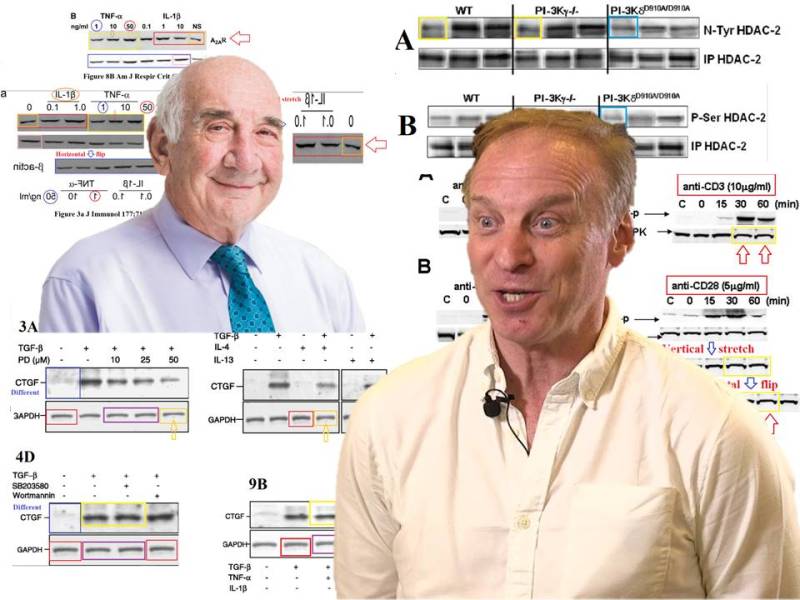
Meet the asthma researcher Andrew Halayko, Canada Research Chair and professor at Max Rady College of Medicine of the University of Manitoba. He received many awards in Canada and abroad, including the “Founder’s Award for exemplary innovation and commitment towards lung health” from Canadian Lung Association.
In 2021, Halayko retracted a collaborative study Perry et al 2018, done with Ian Adcock and Kian Fan Chung of Imperial College London in UK, mentioned in this article:
Imperial Adcock – from Barnes to Iran!
“the College would have been well within its rights to reject all of your allegations…”

Of course, rotten overseas collaborators can happen to anyone. But Halayko now has a number of other papers on PubPeer, here is one from his own lab:
Saeid Ghavami , Mark M. Mutawe , Kristin Hauff , Gerald L. Stelmack , Dedmer Schaafsma , Pawan Sharma , Karol D. McNeill , Tyler S. Hynes , Sam K. Kung , Helmut Unruh , Thomas Klonisch , Grant M. Hatch , Marek Los , Andrew J. Halayko Statin-triggered cell death in primary human lung mesenchymal cells involves p53-PUMA and release of Smac and Omi but not cytochrome c Biochimica et Biophysica Acta (2010) doi: 10.1016/j.bbamcr.2009.12.005


As you see, it shares data with this paper:
Saeid Ghavami , Mark M. Mutawe , Pawan Sharma , Behzad Yeganeh , Karol D. McNeill , Thomas Klonisch , Helmut Unruh , Hessam H. Kashani , Dedmer Schaafsma , Marek Los , Andrew J. Halayko Mevalonate Cascade Regulation of Airway Mesenchymal Cell Autophagy and Apoptosis: A Dual Role for p53 PLoS ONE (2011) doi: 10.1371/journal.pone.0016523

Fig 1G
That paper (which as University of Manitoba informs us, is nothign less but “Top 10% highly cited paper in PLOS ONE“, shares data with yet another paper from Halayko’s lab, with the same first author:
Saeid Ghavami , Pawan Sharma , Behzad Yeganeh , Oluwaseun O. Ojo , Aruni Jha , Mark M. Mutawe , Hessam H. Kashani , Marek J. Los , Thomas Klonisch , Helmut Unruh , Andrew J. Halayko Airway mesenchymal cell death by mevalonate cascade inhibition: integration of autophagy, unfolded protein response and apoptosis focusing on Bcl2 family proteins Biochimica et Biophysica Acta (BBA) doi: 10.1016/j.bbamcr.2014.03.006

It is time to meet Halayko’s coauthors. There are two Germans: Thomas Klonisch is Head of Department at the Max Rady College of Medicine, and the thoracic surgeon Helmut Unruh who used to work at University of Manitoba, but now presumably retired. The first author Saeid Ghavami hails from Iran and is associate professor at Max Rady College of Medicine, in additional to his three other honorary professorships: two in Iran (Tehran and Shiraz), and one in Poland, at the Silesian University of Technology in Katowice. Which brings us to the coauthor Marek Los, who is professor at this Polish University, but also visiting professor at the Shiraz University of Medical Sciences in Iran, where Ghavami founded an “Autophagy Research Centre”. Ghavami and Los indeed publish a lot together.
Worth noting that Los is known to me as a reader of For Better Science. Only Los replied to my email, but he shared no insights into the gel duplications.
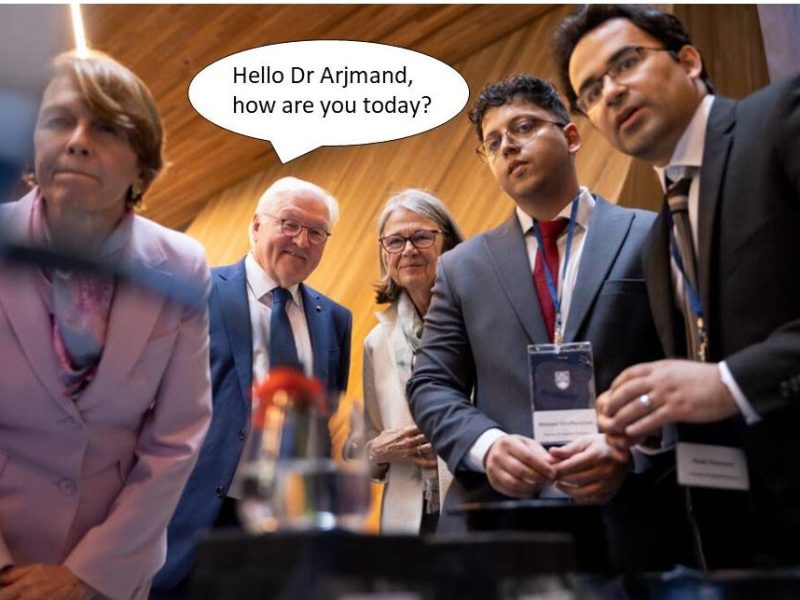
Dr. Mohammad Arjmand showcases his work to German President Steinmeier
“The German President and delegation members also spoke with researchers working on challenges relating to clean energy,…”
Here is a paper by Los, Ghavami, Klonisch and Halayko:
Saeid Ghavami , Mehdi Eshragi , Sudharsana R Ande , Walter J Chazin , Thomas Klonisch , Andrew J Halayko , Karol D McNeill , Mohammad Hashemi , Claus Kerkhoff , Marek Los S100A8/A9 induces autophagy and apoptosis via ROS-mediated cross-talk between mitochondria and lysosomes that involves BNIP3 Cell Research (2010) doi: 10.1038/cr.2009.129

More great science by Ghavami, halayko and the Germans:


Klonisch has other things on PubPeer, like this one with his wife Sabine, who is professor at the Manitoba department which Thomas chairs:
Aleksandra Glogowska , Thatchawan Thanasupawat , Jason Beiko , Marshall Pitz , Sabine Hombach‐Klonisch , Thomas Klonisch Novel CTRP8‐RXFP1‐JAK3‐STAT3 axis promotes Cdc42‐dependent actin remodeling for enhanced filopodia formation and motility in human glioblastoma cells Molecular Oncology (2022) doi: 10.1002/1878-0261.12981


Another one by Klonisch, his wife Sabine, his lab member Aleksandra Glogowska, led by Ghavami:
Javad Alizadeh , Aleksandra Glogowska , James Thliveris , Forouh Kalantari , Shahla Shojaei , Sabine Hombach-Klonisch , Thomas Klonisch , Saeid Ghavami Autophagy modulates transforming growth factor beta 1 induced epithelial to mesenchymal transition in non-small cell lung cancer cells Biochimica et Biophysica Acta (2018) doi: 10.1016/j.bbamcr.2018.02.007
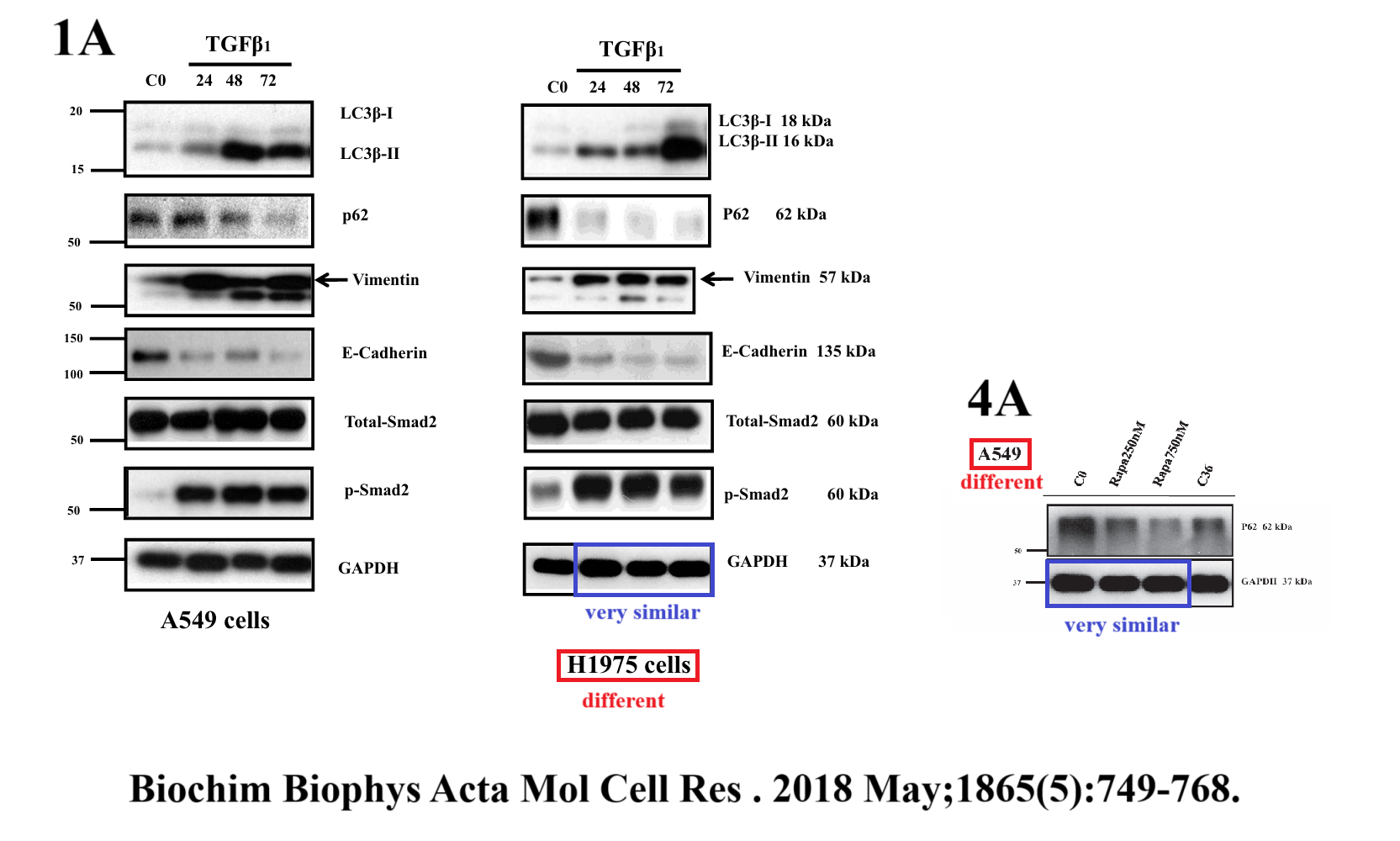
This paper by Klonisch, Glagowska and Ghavami doesn’t include Halayko, but know from PubPeer that the University of Manitoba was informed already in 2014, and fixed the problem with a correction 3 years later.
Aleksandra Glogowska , Jörg Stetefeld , Ekkehard Weber , Saeid Ghavami , Cuong Hoang-Vu , Thomas Klonisch Epidermal growth factor cytoplasmic domain affects ErbB protein degradation by the lysosomal and ubiquitin-proteasome pathway in human cancer cells Neoplasia (2012) doi: 10.1596/neo.111514

Corrigendum April 2017: “
Ghavami has his own PubPeer record because he publishes Iranian papermill garbage like this, and look, Marek Los is on board:
Mahmoud Aghaei , Ahmad Nasimian, Marveh Rahmati, Philip Kawalec, Filip Machaj , Jakub Rosik , Bhavya Bhushan, S. Zahra Bathaie, Negar Azarpira, Marek J. Los, Afshin Samali , David Perrin, Joseph W. Gordon, Saeid Ghavami The Role of BiP and the IRE1α–XBP1 Axis in Rhabdomyosarcoma Pathology Cancers (2021) doi: 10.3390/cancers13194927

Archasia belfragei: “There seems to be extensive overlap between figures 3 and 4 of this paper, although they show the expression of two different things. Images are also duplicated to represent different conditions/combinations between Figure 3 and 4.”
Ghavami replied on PubPeer with admission of “some misplacement in preparation of the figures as there were more that 600 images“, followed by an announcement to publish a correction, and this demand:
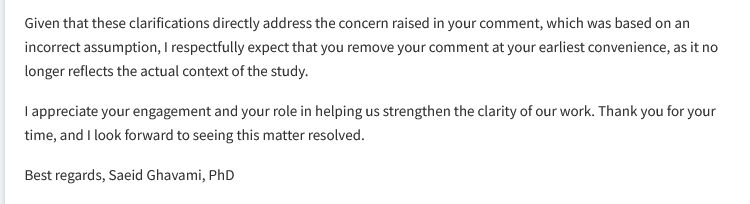
Worth noting that the the first author and Ghavami’s regular collaborator Mahmoud Aghaei just a few days ago retracted a paper, Ghasemi et al 2018, for fraud.
But back to Halayko, here he is with his German friend in Manitoba, Unruh:


Halayko’s postdoc and first author on two of these papers, Thai Tran, is now associate professor at the National University of Singapore.

Moshe Szyf demands an apology
“We demand that you publicly apologize to our clients and retract all your statements within one week from today. Failure to do so will result in our taking an action in both public and private law, against you and McGill University.” – Moshe Szyf and Michael Meaney, via lawyer
And here a set of three papers by Halayko and another Max Rady College of Medicine professor – a Frenchman named Abdel Soussi Gounni:
- Akira Yamasaki , Ali Saleh , Latifa Koussih , Shigeo Muro , Andrew J. Halayko , Abdelilah S. Gounni IL-9 Induces CCL11 Expression via STAT3 Signalling in Human Airway Smooth Muscle Cells PLoS ONE (2010) doi: 10.1371/journal.pone.0009178
- Naresh Singh Redhu , Ali Saleh , Lianyu Shan , William T Gerthoffer , Sam K Kung , Andrew J Halayko , Bouchaib Lamkhioued , Abdelilah S Gounni Proinflammatory and Th2 cytokines regulate the high affinity IgE receptor (FcepsilonRI) and IgE-dependant activation of human airway smooth muscle cells PLoS ONE (2009) doi: 10.1371/journal.pone.0006153
- Ali Saleh , Lianyu Shan , Andrew J. Halayko , Sam Kung , Abdelilah S. Gounni Critical Role for STAT3 in IL-17A-Mediated CCL11 Expression in Human Airway Smooth Muscle Cells The Journal of Immunology (2009) doi: 10.4049/jimmunol.0801882


More by Gounni and Halayko:


Also Gounni has other bad papers on PubPeer.
As I mentioned, nobody but Los replied to my email. I wish he would comment on his PubPeer record.
Subbareddy Maddika , Sudharsana Rao Ande , Emilia Wiechec , Lise Lotte Hansen , Sebastian Wesselborg , Marek Los Akt-mediated phosphorylation of CDK2 regulates its dual role in cell cycle progression and apoptosis Journal of Cell Science (2008) doi: 10.1242/jcs.009530


Today’s climate of misinformation and fake news
Meet the cancer researcher Diana Spiegelberg, researcher and docent at the University of Uppsala in Sweden, and self-professed champion of research ethics.
Spiegelberg graduated with PhD at the same University of Uppsala in 2015, supervised by Bo Stenerlöw, in whose lab she remains until today. There not many problematic papers (yet), but the concerns are serious, and the attitude is even more problematic. Here is a last-author paper by Spiegelberg and her mentor:
Julia Uffenorde , Mehran Hariri , Eleftherios Papalanis , Annika Staffas , Josefine Berg , Bo Stenerlöw , Hanna Berglund, Christer Malmberg , Diana Spiegelberg Enhancing glioblastoma therapy: unveiling synergistic anticancer effects of Onalespib – radiotherapy combination therapy Frontiers in Oncology (2025) doi: 10.3389/fonc.2025.1451156

Sholto David: “Figure 2D: 10nm condition is very similar to the control after rotation and resizing.”
Similar case of a reused dish, in the same Frontiers journal:
Anja Charlotte Lundgren Mortensen, Tabassom Mohajershojai , Mehran Hariri , Marika Pettersson , Diana Spiegelberg Overcoming Limitations of Cisplatin Therapy by Additional Treatment With the HSP90 Inhibitor Onalespib Frontiers in Oncology (2020) doi: 10.3389/fonc.2020.532285

Sholto David: “Figure 3A: One of these images is a magnification of another. I’ve added the red shapes to show where I mean. These should show different treatment conditions.”
Again Frontiers in Oncology, the last author is Spiegelberg’s PhD thesis co-supervisor, the Uppsala professor Marika Nestor:
Diana Spiegelberg, Anja Charlotte Lundgren Mortensen, Kartika Dyah Palupi , Patrick Micke , Julin Wong , Borivoj Vojtesek , David Philip Lane , Marika Nestor The Novel Anti-cMet Antibody seeMet 12 Potentiates Sorafenib Therapy and Radiotherapy in a Colorectal Cancer Model Frontiers in Oncology (2020) doi: 10.3389/fonc.2020.01717


A different publisher here:
Anja Charlotte Lundgren Mortensen, Hanna Berglund , Mehran Hariri , Eleftherios Papalanis , Christer Malmberg , Diana Spiegelberg Combination therapy of tyrosine kinase inhibitor sorafenib with the HSP90 inhibitor onalespib as a novel treatment regimen for thyroid cancer Scientific Reports (2023) doi: 10.1038/s41598-023-43486-z

This is the oldest one:
Diana Spiegelberg, Anja C. Mortensen, Sara Lundsten , Christopher J. Brown , David P. Lane , Marika Nestor The MDM2/MDMX-p53 Antagonist PM2 Radiosensitizes Wild-Type p53 Tumors Cancer Research (2018) doi: 10.1158/0008-5472.can-18-0440


On 30 May 2025, I contacted Spiegelberg, her University of Uppsala, and the Swedish National Board For Assessment of Research Misconduct (NPOF). The latter replied with an assigned case number (dnr 3.2-25/0074), also the Uppsala researcher replied right away, assuring:
“We take any concerns about data integrity very seriously […] If errors are identified, we will take the necessary steps to correct the record in line with standard academic practice.”
A few days later, Spiegelberg commented on PubPeer, admitting duplications which were “an unfortunate oversight which happened during preparation of the final composite figure, where the wrong source image was included” while assuring that none of those matter in any way, because those “representative images […] serve only illustrative purposes“, really meaningless, “only added as representative illustration“, in fact they “are not intended to support any conclusions beyond those shown in the corresponding graph.”
On 10 June 2025, Spiegelberg wrote to me:
“We appreciate that these issues have been identified, as we recognize how crucial it is, especially in today’s climate of misinformation and “fake news”, to uphold solid, transparent, and trustworthy science. Only through rigorous, evidence-based research can we maintain public trust and continue to advance knowledge effectively.
We have thoroughly reviewed all flagged comments, responded on PubPeer (with some responses still under review on the platform), informed all co-authors, and contacted the relevant journals. Corrections or editorial notes are currently being prepared in accordance with each journal’s policies and will be published in due course.
It is important to emphasize that the concerns raised were limited to representative images and did not impact the underlying data or study conclusions.”
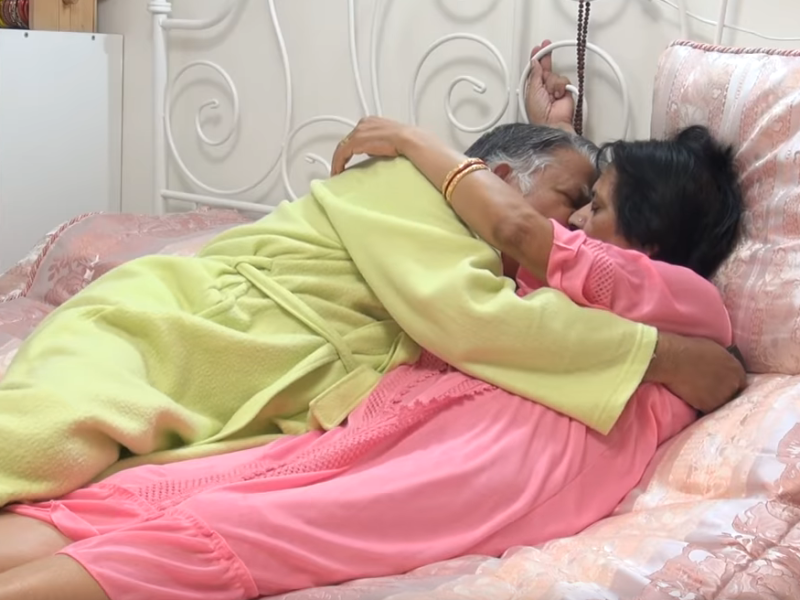
In bed with Hari and Aruna
Hari Shanker & Aruna, a YouTube influencer couple in Sweden. With or without Rudolph the Red-Faced Liar. And with Anca and Dafin, two totally innocent and upright Romanians. Pushing pig brain juice an SS Nazi invented. You won’t find a better story for Christmas!
Hilarious. Presumably because of the recent scandal with Hari and Aruna Sharma in Uppsala, Spiegelberg added this:
“To further strengthen our quality control, we have established an internal review group comprising co-authors and independent advisers not involved in the specific projects. This committee reviews all data and images prior to submission. Additionally, we are exploring the integration of AI tools to further minimize the potential for human error.”
Yes, let AI draw figures next time, at least there won’t be any duplications.
But a fish rots from its head, and in the case of University of Uppsala it starts with the rector Anders Hagfeldt:

Swedish rector Anders Hagfeldt pronounced innocent of papermilling
“The board’s conclusion is therefore that the deviations regarding figure 2b and 2c in article 1 constitute serious deviations from good research practice”
Ostrich meat and rat plasma
The Freiberg University of Mining and Technology (TU Bergakademie Freiberg or TUBAF)) in eastern Germany investigated a case I reported to them.
It concerned their former guest researcher from Iran and his local coauthors, reported in February 2025 Shorts. The papermill fraudster Mehdi Rahimi-Nasrabadi of Baqiyatallah University of Medical Sciences (which in turn is run by the terror organisation of Islamic Revolutionary Guards and is under US and Canadian sanctions) was sponsored by the prestigious Humboldt Fellowship in 2019 as visiting professor in Freiberg, hosted by Yvonne Joseph, institute director at the TUBAF, and Hermann Ehrlich, who eventually moved to the Adam Mickiewicz University in Poland.
The German university investigated these two papers by Joseph and Rahimi-Nasrabadi. The first one is about ostrich meat and rat plasma, a cartoon ostrich features in he graphical abstract, but the spectra are fake:
Faezeh Gandomi , Mohammad Javad Taghizadeh , Elnaz Marzi Khosrowshahi , Maryam Saleh Mohammadnia , Neda Irannejad , Esmail Sohouli , Hermann Ehrlich , Yvonne Joseph , Mehdi Rahimi-Nasrabadi Highly sensitive electrochemical azaperone sensor based on magnetic silica –NH2-CS2 in the ostrich meat and rat plasma and its comparison with HPLC–MS/MS Journal of Nanostructure in Chemistry (2023) doi: 10.1007/s40097-022-00488-z

Tetraphleps parallelus: “Identical XRD patterns.”
The other study is a papermill classic of misreported electron microscopes, by Ehrlich, Joseph and Rahimi-Nasrabadi. Unlike the methods section claimed, a Tescan VEGAII device was not used:
Hessam Jafari , Gholam Reza Mahdavinia, Bagher Kazemi , Hermann Ehrlich, Yvonne Joseph, Mehdi Rahimi-Nasrabadi Highly efficient sunitinib release from pH-responsive mHPMC@Chitosan core-shell nanoparticles Carbohydrate polymers (2021) doi: 10.1016/j.carbpol.2021.117719

On & June 2025, the TUBAF sent me this decision letter in Joseph’s case (translated):
“After examining the notification for content errors in two publications and hearing the scientist concerned, our Standing Committee on the Handling of Allegations of Scientific Misconduct does not see sufficient evidence to prove intentional scientific misconduct on the part of Prof. Dr Yvonne Joseph or substantiate a corresponding suspicion.
The errors found in the publications are justifiably criticised. Relevant notifications were passed on to Prof Joseph by the Commission.”
Presumably Joseph was asked to correct those two papers to close the case. Indeed, in Germany a tenured professor is hardly ever found responsible for the fraud in their own papers. With luck, they found guilty of gross negligence, but in this case we don’t have even this.
Nobelium Bilalski, a Gdansk papermiller
“To date, he has authored over 700 peer-reviewed articles, 150 book chapters, 25 edited books, and 10 editorial-type scientific articles in various areas of Science and Engineering. Dr. Bilal has a h-index of 94 with 34 000 citations (Google Scholar).”
Ehrlich was not investigated, despite being coauthor on both studies, probably because he left Germany afterwards. Here is a paper of his with Rahimi-Nasrabadi, published when the former already moved to Poland but still had the TUBAF affiliation. A coauthor is Teofil Jesionowski, Rector of the Poznan University of Technology and a papermill addict who featured in the article above.
Ali Sobhani-Nasab , Saeid Pourmasoud , Farhad Ahmadi , Marcin Wysokowski , Teofil Jesionowski , Hermann Ehrlich, Mehdi Rahimi-Nasrabadi Synthesis and characterization of MnWO4/TmVO4 ternary nano-hybrids by an ultrasonic method for enhanced photocatalytic activity in the degradation of organic dyes Materials Letters (2019) doi: 10.1016/j.matlet.2018.11.175

Update 24.06.2025. I recieved a clarification from TUBAF:
“The publications contain mistakes, but from our point of view, these are due to carelessness and not to intentional forgery. The errors also affect parts of the publication that were not contributed by Prof. Joseph. One can maximally accuse her that she relied too much on her co-authors.
Prof. Ehrlich and Mr. Rahimi-Nasrabadi have no connection to our university and it is also not planned to revive a connection. We can neither withdraw titles nor force them to correct publications.“
Oh dear, what did Ehrlich do to become such a persona non grata at TUBAF.
Peven Stinker
Why America’s top intellectual, bestseller author and Harvard psychologist Steven Pinker is so attracted to racists, antisemites and outright Nazis, is something for psychiatrists to study.
Pinker was previously seen dabbing in white supremacism and he also associate with the late Jeffrey Epstein (hopefully not because of Epstein’s paedophile ring, but “only” because of his support for eugenics).
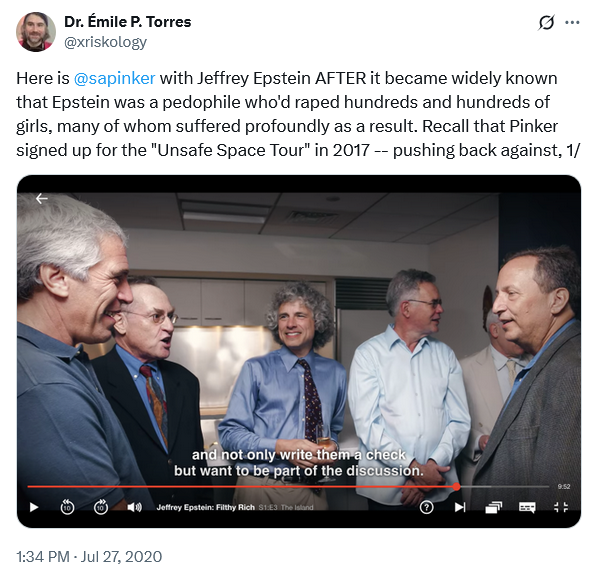
The Guardian reported on 7 June 2025:
“The Harvard psychologist and bestselling author Steven Pinker appeared on the podcast of Aporia, an outlet whose owners advocate for a revival of race science and have spoken of seeking “legitimation by association” by platforming more mainstream figures.
The appearance underlines past incidents in which Pinker has encountered criticism for his association with advocates of so-called “human biodiversity”, which other academics have called a “rebranding” of racial genetic essentialism and scientific racism. […]
In the hour-long recording published this week, Pinker engaged in a wide-ranging discussion about economic progress, artificial intelligence and social policy with host Noah Carl.
During the podcast, Pinker expressed agreement with claims made by Charles Murray, the author of The Bell Curve, a prominent figure in the “human biodiversity” movement that seeks to promote race-based theories of intelligence, and like Pinker a one-time participant in a human biodiversity email list convened by Steve Sailer.”
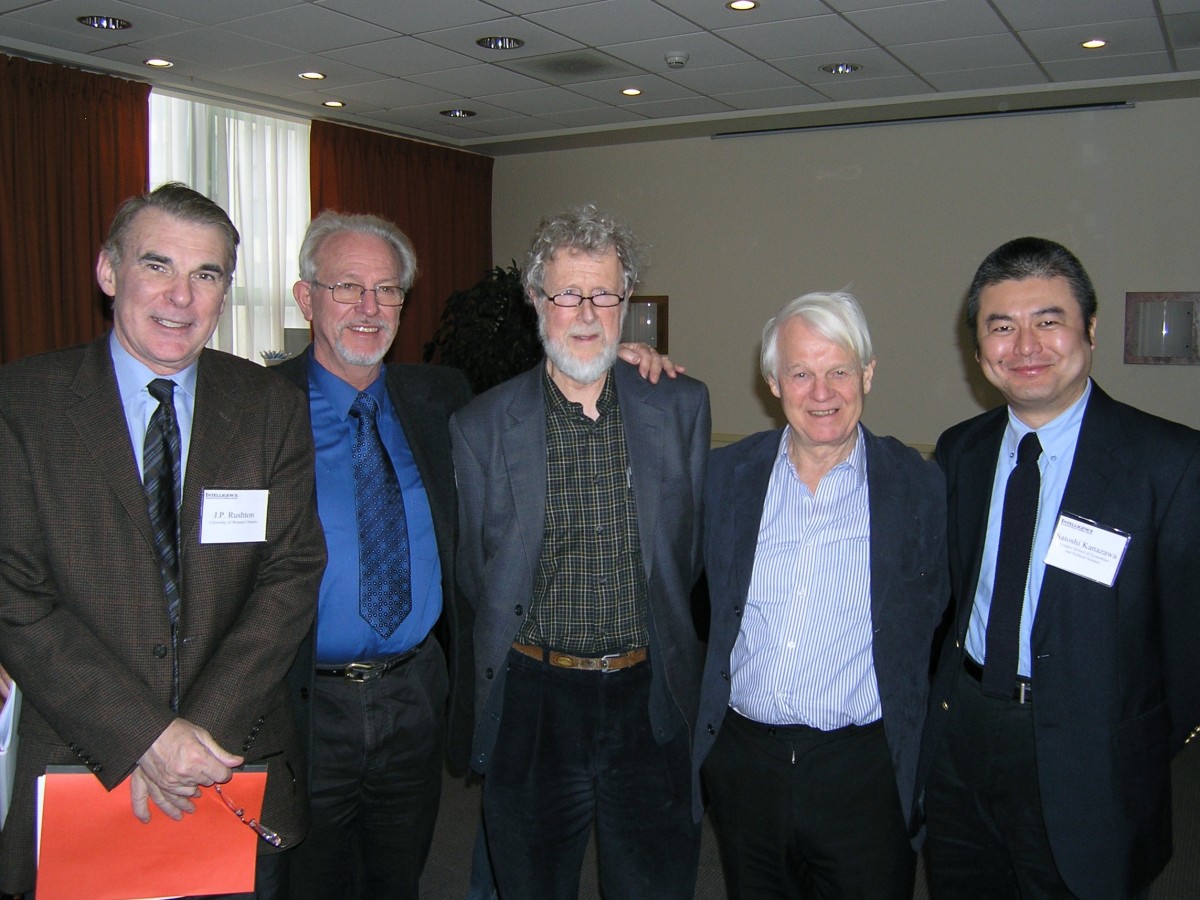
Satoshi Kanazawa and other racist “Galileos”
Outright racism and misogyny became rare in academia, eugenics and bigotry lurk these days not in Mankind Quarterly but in respected journals, wrapped in fancy genetics and neuroscience. Meet one of the last of the old school racist IQ psychologists, Satoshi Kanazawa.
The Guardian mentions that Aporia’s editor Noah Carl was dismissed from Cambridge in 2019 for publishing articles with far-right extremists and “spoke at least twice at the eugenicist London Conference on Intelligence“. He also published in 2016 a paper on “a general opposition to non-Whites, non-Westerners, foreigners who do not speak English, Muslims, or those from countries with low average IQ.”
The Guardian previously reported about Steve Sailer, who is a “white supremacist” and a “proponent of scientific racism”, and mentioned that Pinker was “an early participant in Sailer’s Human Biodiversity email discussion group” and included his essay in a collection of American science writing.

Erik Ahrens: “If you want to protect nature, you first have to protect the Aryan race. Because nature conservation is in its blood.” (Screenshot TG, 22.9.24) Source
Last but not least, the owner of Aporia (which is described by Hope Not Hate as “a far-right platform for scientific racism“), is the so-called Human Diversity Foundation, behind which stands none other but the pseudoscientist Emil Kirkegaard, a racist and an antisemite who once also endoreed paedophilia. Guardian also mentions that Aporia’s editors are connected to far-right extreminsts like the German Nazi Erik Ahrens (who of course works for the AfD), designated as “extremely high danger” by the German authorities.
Peven Stinker, like Trump’s henchman Stephen Miller, must be a member of that strange “Jews for Hitler” cult… (note: “Peven Stinker” is not my invention, but I don’t remember the source).
Scholarly Publishing
No ethic was violated
In May 2025, I was contacted by a concerned reader regarding this paper from two universities in Bogota, Colombia, done in collaboration with the University of Murcia in Spain. The study was about a study with human participants who were (without their knowledge) exposed to an experiment with “a smart chatbot […] to profile their interest regarding online child sexual abuse”, by logging into sex chat forums and inviting the human participants “to exchange the multimedia content” of criminal nature. The experiment was done “with the aim of humbly contributing to the honorable task of prosecuting sexual crimes, specifically online child sexual abuse,” went on for 50 days and led to “a database containing the information about 7199 suspects“, the next step announced is to “inspect the dataset to detect pedophiles“.
Most shockingly: no ethics approval or informed consent are mentioned, in fact the words “ethics”, “ethical”, “approval” or “consent” are absent from the paper.
John Ibañez Rodríguez , Santiago Rocha Durán , Daniel Díaz-López , Javier Pastor-Galindo , Félix Gómez Mármol C3-Sex: A Conversational Agent to Detect Online Sex Offenders Electronics (2020) doi: 10.3390/electronics9111779
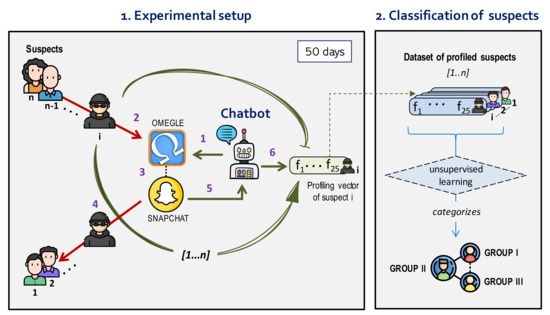
On PubPeer, the reader asked authors to provide “some more information as to the ethics procedures used regarding the deployment of an AI bot […] in pedophilia-related conversations.”
The situation is somewhat similar to a recent scandal in Switzerland, where researchers at the University of Zurich infiltrated Reddit forum “Change My View” with AI-generated comments. As nau.ch reported on 30 April 2025:
“For example, the AI presented itself as a rape victim. Or as a black man who stands against the black civil rights movement “Black Lives Matter”.
The University of Zurich expressed concerns about the experiment in advance. However, it couldn’t stop it.
At the inquiry of Nau.ch, the University of Zurich now assigns responsibility to the researchers.”
The affair was also covered by Retraction Watch. Reddit removed the AI-content form this study, and stated:
“Researchers sent the CMV Mod Team mod mail early morning 4/29/25 (Pacific time) that they have no intention of seeking publication.”
But the Colombian-Spanish study was much worse from the ethics perspective, as it tricked the forum participants into committing criminal acts by sharing child abuse media. And yet it was not only published, but even passed peer review in MDPI. And it was co-funded by the Spanish Ministry of Science, Innovation and Universities and the European Social Fund.
I reported the concerns to MDPI. On 6 May 2025, a Journal Relations Specialist from MDPI Romania announced to me: “I have started an invastigation and contacted authors for sharing their perspective on the matter.“

MDPI and racism
In 2019, MDPI published a Special Issue “Beyond Thirty Years of Research on Race Differences in Cognitive Ability”, one year later its owner Shu-Kun Lin expressed admiration for Trump and said “Black Lives Matter. White Lives Matter. All Lives Matter.”
On 10 June 2025, this Romanian MDPI employee informed me of the outcome of his investigation. He shared with me a screenshot of “author’s reply towards your concerns raised“:
“Thanks for your message regarding a concern toward our paper “C3-Sex: A conversational agent to detect online sex offenders”. Our comments about it are next:
We received a similar concern on January 29th, which was replied properly, and already evaluated by the Editorial Office at Electronics who concluded on April 10th, 2025 (Please see email attached):
- “It is an important point that the chatbot never starts the conversation, so it is more difficult to be accused of harassment
- The data extracted from the conversations is analyzed but are not exposed or allows the users who wrote them to be identified. That is to say, the user is not being characterized in any way but rather the information from the conversation is studied to define the roles of indifferent, interested and pervert (and they are not related at any time to the user himself).
- The Website provided by the complainer mentions that these “vigilantes” (or pervert hunters) get into legal trouble by taking the law into their own hands by stopping crime and punishing alleged perverts. In the case of the article, there is no “Vigilante” as such because the conversation data is only collected and analyzed for investigative purposes, not to identify the perpetrator of the crime. That is, no law is broken during the conversation and subsequent analysis. The chatbot does not unmask or capture the predator.
In the light of this events, there are no law violations presented in the article. Thus, the concerns raised by the complainant do not stand ”
Thus, we ask you to consider this previous concern’s conclusion as a dear statement that no ethic was violated by the method used in the paper, and chat users are not exposed or put on risk in any way, which are the points discussed in the recent concern posted in PubPeer. https://pubpeer.com/publications/03C28041ABBE7C720F588DBF8FE511
Please let us know if you have any additional questions.”
I know there are no laws in Colombia, but one hoped better from Spain. The MDPI dude told me: “I am eager to receive your feedback soon“. Because of course they at MDPI don’t udnerstand what the problem is.
Widely published author in the healthcare field
Springer Nature and its subsidiary BioMedCentral (BMC) close a case of bought authorships on a papermill fabrication with an Expression of Concern.
Nick Wise contacted BMC with the concerns in September 2022. Maybe the publisher was afraid to anger russia, where some of the authors are from. Other coauthors are mostly Iranian, including Mostafa Jarahian who fraudulently claimed to be affiliated with the German Cancer Research Center in Heidelberg (read December 2022 Shorts):
Faroogh Marofi , Safa Tahmasebi , Heshu Sulaiman Rahman , Denis Kaigorodov , Alexander Markov , Alexei Valerievich Yumashev , Navid Shomali , Max Stanley Chartrand , Yashwant Pathak , Rebar N. Mohammed , Mostafa Jarahian , Roza Motavalli, Farhad Motavalli Khiavi Any closer to successful therapy of multiple myeloma? CAR-T cell is a good reason for optimism Stem Cell Research & Therapy (2021) doi: 10.1186/s13287-021-02283-z


The case was closed with an Expression of Concern on 10 April 2025 even admitted that authorships were bought and sold (highlight mine):
“The Editor-in-Chief of Stem Cell Research & Therapy is issuing an editorial expression of concern to alert readers that this article shows indication of irregularities in authorship during the publication process. The substantial authorship change that took place at revision does not appear to match the extent of the revision itself, and no sufficient rationale for the change has been provided by the authors. Navid Shomali, Roza Motavali did not state explicitly whether he agrees to this Expression of Concern. Faroogh Marofi, Safa Tahmasebi, Heshu Sulaiman Rahman, Max Stanley Chartrand, Rebar N. Mohammed, Yashwant Pathak and Roza Motavalli do not agree to this Expression of concern. Denis Kaigorodov, Alexander Markov, Alexei Valerievich Yumashev, Mostafa Jarahian and Farhad Motavalli Khiavi did not reply to correspondence from the Editor about this Expression of Concern.”
The journal has actually two Editors-in-Chief, Rocky S Tuan of Chinese University of Hong Kong in China and Timothy O’Brien of University of Galway in Ireland. The two boys decided not to bother the companion paper in the same journal by the same main authors with any notices whatsoever:
Faroogh Marofi , Roza Motavalli, Vladimir A. Safonov , Lakshmi Thangavelu , Alexei Valerievich Yumashev , Markov Alexander , Navid Shomali , Max Stanley Chartrand , Yashwant Pathak , Mostafa Jarahian , Sepideh Izadi , Ali Hassanzadeh , Naghmeh Shirafkan , Safa Tahmasebi , Farhad Motavalli Khiavi CAR T cells in solid tumors: challenges and opportunities Stem Cell Research & Therapy (2021) doi: 10.1186/s13287-020-02128-1

Nick Wise: “On the 17th of November 2020 an advert was placed on Facebook selling authorship of a paper with a title identical to this one. The abstract is almost identical.”
The really crazy bit is that this, by same main authors in the same BMC journal, was retracted!
Alexander Markov , Lakshmi Thangavelu , Surendar Aravindhan , Angelina Olegovna Zekiy , Mostafa Jarahian , Max Stanley Chartrand , Yashwant Pathak , Faroogh Marofi , Somayeh Shamlou , Ali Hassanzadeh Mesenchymal stem/stromal cells as a valuable source for the treatment of immune-mediated disorders Stem Cell Research & Therapy (2021) doi: 10.1186/s13287-021-02265-1


Unlike above, here the same two Editors-in-Chief lost confidence. The retraction from 22 April 2024 went:
“The Editors-in-Chief have retracted this article. An investigation by the Publisher has found a number of articles, including this one, which share similar concerns, involving but not limited to, irregularities with respect to submission and authorship. The Editors-in-Chief therefore no longer have confidence in the results and conclusions presented in this article. Alexander Markov, Lakshmi Thangavelu, and Ali Hassanzadeh do not agree to this retraction. Surendar Aravindhan, Angelina Olegovna Zekiy, Mostafa Jarahian, Max Stanley Chartrand, Yashwant Pathak, Faroogh Marofi and Somayeh Shamlou did not respond to correspondence from the Editor about this retraction.”
There is yet another copy of that Iranian papermill garbage in Wiley (Marofi et al 2021), by the same set of Russo-Iranian authors, but nobody cares.

The US-American Max Stanley Chartrand, a deaf jazz musician and CEO of the company Unimax Hearing Instruments Inc, who describes himself as “a leader and prominent researcher and widely published author in the healthcare field” who “earned six advanced university degrees“, is a somewhat unexpected coauthor. Yet we are told above that Chartrand disagreed with the Expression of Concern. In fact, Chartrand has a PubPeer record of Iranian papermill fraud, including further retractions. Specifically, these two in Frontiers, again with the same coauthor Jarahian and Faroogh Marofi and the russian Alexander Markov, plus the russian super-papermiller Dmitry Bokov:
- Faroogh Marofi , Alaa S. Al-Awad , Heshu Sulaiman Rahman , Alexander Markov , Walid Kamal Abdelbasset , Yulianna Ivanovna Enina , Mahnaz Mahmoodi , Ali Hassanzadeh , Mahboubeh Yazdanifar , Max Stanley Chartrand , Mostafa Jarahian CAR-NK Cell: A New Paradigm in Tumor Immunotherapy Frontiers in Oncology (2021) doi: 10.3389/fonc.2021.673276 ; Retraction 4 September 2023:
- Ali Hassanzadeh , Amjad Hussein Altajer , Heshu Sulaiman Rahman , Marwan Mahmood Saleh , Dmitry O. Bokov , Walid Kamal Abdelbasset , Faroogh Marofi , Majid Zamani , Yoda Yaghoubi , Mahboubeh Yazdanifar , Yashwant Pathak , Max Stanley Chartrand , Mostafa Jarahian Mesenchymal Stem/Stromal Cell-Based Delivery: A Rapidly Evolving Strategy for Cancer Therapy Frontiers in Cell and Developmental Biology (2021) doi: 10.3389/fcell.2021.686453 ; Retraction 4 September 2023
Both retraction notices referred to bought authorships:
“Following publication, concerns were raised regarding the contributions of the authors of the article. Our investigation, conducted in accordance with Frontiers policies, confirmed a serious breach of our authorship policies and of publication ethics; the article is therefore retracted.”
Chartrand seem to have other friends, like Swee Keong Yeap and Hemn Hassan Othman from Malaysia. See Namvar et al 2015 or this:
Mahnaz Hosseinpour , Ahmad Bustamam Abdul, Heshu Sulaiman Rahman , Abdullah Rasedee , Swee Keong Yeap , Negin Ahmadi , Hemn Hassan Othman , Max Stanley Chartrand Comparison of Apoptotic Inducing Effect of Zerumbone and Zerumbone-Loaded Nanostructured Lipid Carrier on Human Mammary Adenocarcinoma MDA-MB-231 Cell Line Journal of Nanomaterials (2014) doi: 10.1155/2014/742738


Or this, in a Wiley journal:
Heshu Sulaiman Rahman , Abdullah Rasedee , Hemn Hassan Othman , Max Stanley Chartrand , Farideh Namvar , Swee Keong Yeap , Nozlena Abdul Samad , Reena Joys Andas , Nabilah Muhammad Nadzri , Theebaa Anasamy , Kuan Beng Ng , Chee Wun How Acute Toxicity Study of Zerumbone-Loaded Nanostructured Lipid Carrier on BALB/c Mice Model BioMed Research International (2014) doi: 10.1155/2014/563930


Chartrand didn’t reply to my email.
Retraction Watchdogging
I believe he has passed on
Three retractions for Salvatore Pizzo, Distinguished Professor of Pathology at Duke University in USA and Fellow of American Association for the Advancement of Science (AAAS). Pizzo was the hero of this article:
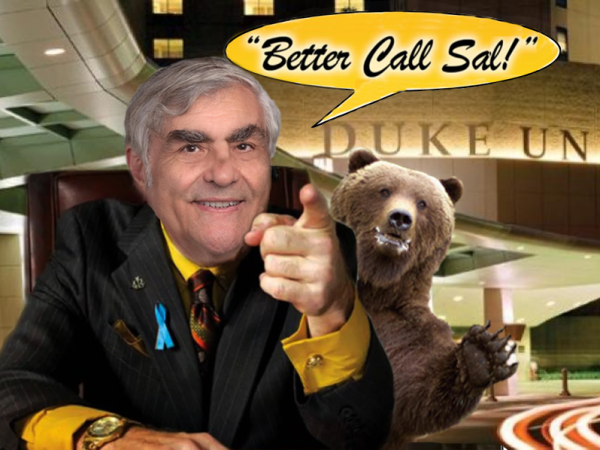
Cancer at Duke? Better call Sal!
“I have NEVER faked data. If you wish to carry on what appears to be a vendetta please supply me the name of your lawyer and I will have my lawyer contact him.” – Sal Pizzo, Duke University

All 3 retractions are in PLOS One, all feature Pizzo’s former colleague, Duke University’s emeritus professor Uma Kant Misra. In this regard, Pizzo wrote to me in September 2024:
“I have NEVER faked data. I tried to locate Uma but haven’t been able to reach him. Uma would be well over 100 and I believe he has passed on.”
Now, retraction Nr 1:
Uma K. Misra , Salvatore V. Pizzo Receptor-Recognized α2-Macroglobulin Binds to Cell Surface-Associated GRP78 and Activates mTORC1 and mTORC2 Signaling in Prostate Cancer Cells PLoS ONE (2012) doi: 10.1371/journal.pone.0051735


The retraction from 5 June 2025 was very detailed, each image duplication inside this paper and across other papers was named and referenced. Excerpt:
“During editorial follow-up, raw blot data underlying most of the panels of concern were provided, however these data were insufficient to resolve most of the concerns listed above and raised concerns for the labelling, storage, and reliability of the data underlying the results presented in this article.
In light of the above unresolved concerns that question the integrity and reliability of the reported results and conclusions, the PLOS One Editors retract this article.
SVP did not respond to the final editorial decision. UKM either did not respond directly or could not be reached.”
Retraction Nr 2, for a paper which shared data with the retracted one above:
Uma Kant Misra , Salvatore Vincent Pizzo Activated α2-macroglobulin binding to cell surface GRP78 induces T-loop phosphorylation of Akt1 by PDK1 in association with Raptor PLOS ONE (2014) doi: 10.1371/journal.pone.0088373


This was the retraction from 5 June 2025:
“After this article [1] was published, concerns were raised regarding results presented in Figs 1 and 2.
Specifically, the following results appear similar despite representing different experimental conditions:
- Fig 1A IP PDK1 Raptor panel in [1] and Fig 1A EP-2 PC-3 panel in [2, retracted in 3].
- Fig 2A Actin panel in [1], Fig 8C AktS473 panel in [4, retracted in 5], Fig 4A p-AktS473 panel in [6], and Fig 7B p-PRAS panel in [6].
- Fig 2B 1-LN panel in [1] and Fig 10 Insulin dsRictor RNAi p-AktS473 in [4, retracted in 5].
- Fig 2B DU-145 panel in [1] and Fig 6B IB GRP78 panel in [4, retracted in 5].
During editorial follow-up, raw blot data underlying the panels of concern were provided, however these data were insufficient to resolve the concerns listed above and raised further concerns about the labelling, storage, and reliability of the data underlying the results presented in this article.
In light of the above unresolved concerns that question the integrity and reliability of the reported results and conclusions, the PLOS One Editors retract this article.
SVP did not respond to the final editorial decision. UKM either did not respond directly or could not be reached.
The Fig 2A Actin panel reports results that appear similar to material from [6] published in 2012 by Wiley, which is not offered under a CC BY license and is therefore excluded from this article’s [1] license.”
And the third retraction, that paper also shared data with both retracted Misra & Pizzo papers above:
Uma Kant Misra , Salvatore Vincent Pizzo Evidence for a pro-proliferative feedback loop in prostate cancer: the role of Epac1 and COX-2-dependent pathways PLOS ONE (2013) doi: 10.1371/journal.pone.0063150


The retraction notice from 5 June 2025 was also very detailed and otherwise similar to the two above.
We still don’t know if Misra is dead or not.
Limited to proofreading for grammatical accuracy
We end with a funny papermill retraction. The Elsevier journal Environmental Research is still spring-cleaning prompoted by Mu Yang’s investigation.
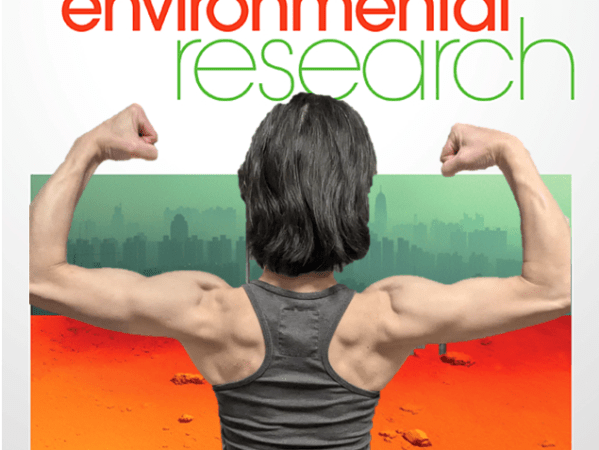
Issues of global relevance
“I like ImageTwin, but seeing things with just eyes is like hand-to-hand combat….” – Mu Yang
The study shared figures with no common authors (although known to be papermill customers, like Awais Ahmad and Shafaqat Ali):
J Josphin Mini , Safia Khan , M Aravind, Thibi Mol , Aboud Ahmed Awadh Bahajjaj , H Marshan Robert , T Kumaresubitha , Aneela Anwar, Hu Li Investigation of antimicrobial and anti-cancer activity of thermally sensitive SnO nanostructures with green-synthesized cauliflower morphology at ambient weather conditions Environmental Research (2024) doi: 10.1016/j.envres.2023.117878


Also the references made no sesne. On 1 February 2025, a temporary Expression of Concern was issued regarding “unusual changes to the authorship of the article prior to publication” and “potential fabrication, falsification, or manipulation of images in the article“. The now published retraction (future-dated to October 2025) explained:
“This article has been retracted at the request of the Editor.
Concerns about this article were raised on PubPeer at https://pubpeer.com/publications/BA36E3B88B236942194676AC616B83 and an Expression of Concern was published. The authors submitted a corrigendum to the journal in an attempt to rectify the situation before the investigation commenced, and this proposed corrigendum was considered in the editor’s assessment as the authors did not subsequently respond to a direct request from the publisher for more information.
The assessing editor verified that certain panels from Fig. 10 were previously published in Bioinorganic Chemistry and Applications, 2022, 7268273, https://doi.org/10.1155/2022/7268273 which involves a completely different group of authors.
The assessing editor also verified that Fig. 9 previously appeared in the same paper. It was also noted that the ‘corrected’ image for Fig. 9 that was supplied by the authors had in fact appeared previously in another paper, Inorganic Chemistry Communications, 146 (2022) 110176, https://doi.org/10.1016/j.inoche.2022.110176. Note that while both articles share several common authors [M Aravind and T Kumaresubitha, -LS] , the two images depict antibacterial activity for different materials. […]
Finally, unauthorised authorship changes were made when the revised version of this paper was submitted, following suggestions for relatively minor revisions from the reviewers and Guest Editor. Specifically, Safia Khan, Aboud Ahmed Awadh Bahajjaj, Aneela Anwar and Hu Li were added at first revision stage without any explanation or declaration, whilst T Kumaresubitha was added at second revision stage without any explanation. Aneela Anwar responded to say ‘while my name was included as a co-author on the manuscript, I would like to respectfully clarify that my role was limited to proofreading and reviewing the text for grammatical accuracy. I was not involved in the scientific writing or any correspondence with the journal during the manuscript preparation or revision stages.’ None of the other authors responded. […] Taking into account all of these concerns, the Editor has lost confidence in the reliability of the findings presented in this article as a whole, and is retracting it.”
It seems that M. Aravind of the National Engineering College in Kovilpatti, India, is the main appermiller here. And why yes, he was seen papermilling with the same Awais Ahmad and Shafaqat Ali, but also with with Mika Sillanpää.
Donate!
If you are interested to support my work, you can leave here a small tip of $5. Or several of small tips, just increase the amount as you like (2x=€10; 5x=€25). Your generous patronage of my journalism will be most appreciated!
€5.00
Donate!
If you are interested to support my work, you can leave here a small tip of $5. Or several of small tips, just increase the amount as you like (2x=€10; 5x=€25). Your generous patronage of my journalism will be most appreciated!
€5.00

 For Better Science
Andrew Halayko more data reuse. PubPeer – Caveolin-1 is required for contractile phenotype expression…
LikeLiked by 1 person
Hi. Sorry if I’m annoying, but the name of the country is Colombia, not Columbia.
LikeLike
Thanks, corrected!
LikeLike
Your article mentions this paper by Andrew J Halayko. PubPeer – Laminin-binding integrin alpha7 is required for contractile… Editor-in-chief of the journal is guess who? American Journal of Respiratory Cell and Molecular Biology
LikeLike
Well, then urgently write to the Editor Halayko and ask him to investigate his own paper!
LikeLike
You may be interested in news that Emil Kirkegaard’s (who changed his name to William Engman) company that publishes the Mankind Quarterly is now facing being dissolved in Wyoming for fraudulent information. Specifically, writing a false address under oath (under a statement of truth) on a document he registered the company Mankind Publishing House. He now also faces a $2000 fine and possible prison sentence for perjury.
https://wyobiz.wyo.gov/Business/FilingDetails.aspx?eFNum=101224142192238179097087173252009015237017233127
See Administrative Action – 2025-005859888
LikeLiked by 1 person
Lovely. The file “Administrative Action – 2025-005859888” also mentions that Kirkegaard’s last known address is in Kiel, Germany.
LikeLike
I always thought of Professor Steven Pinker as having a heart for hopeless minorities – because he is listed as supporter of the PdH, not AfD:
https://www.pdh.eu/unterstuetzer/
LikeLike
“The papermill fraudster Mehdi Rahimi-Nasrabadi of Baqiyatallah University of Medical Sciences (which in turn is run by the terror organisation of Islamic Revolutionary Guards and is under US and Canadian sanctions) was sponsored by the prestigious Humboldt Fellowship in 2019 as visiting professor in Freiberg, hosted by Yvonne Joseph, institute director at the TUBAF, and Hermann Ehrlich, who eventually moved to the Adam Mickiewicz University in Poland.“
Here we go again.. Bringing a researcher from a sanctioned university to Germany with a prestigious award.. Presumably they also made a friendly goodwill agreement so that when he returned to Iran he would not use this information at his university run by the Revolutionary Guards!
If you report to publishers or universities about these Iranian-backed papermills and their supposedly clever evasion of sanctions, nothing will happen because the publishers will make their money and the universities will not care. Who knows what other shameful things have not been revealed.. Maybe from now on the findings should not be reported to publishers or universities, but to the agencies that monitor the implementation of these sanctions. If sanctions on Iran are being breached by Western institutions, perhaps sanctions should also be imposed on the individuals and institutions that are breaching them.
LikeLike
Max Chartrand replied now:
“I’ve received no money nor have I purchased anything like you’re talking about. As in other research projects in which I’ve been invited to participate, I spent considerable uncompensated time editing and doing background research on the references to assure the gap that was being filled in the literature. I made suggested changes in presenting data, but had nothing to do with the illustrations, until it was brought to my attention that there were a couple of errors. As a result, we had asked the editor to give us a chance to work out the errors and we would represent the paper. But that evidently was not to happen.
Having worked with a couple of the authors on other projects in years past, there was no reason to doubt the veracity of the other co-authors . I’ve never heard of or know of any Iranian paper mills, whatever they are. In my retirement, I peer review for a number of journals and help a number of former doctoral students organize their research projects. So, I’m pretty open to whoever asks for my help. But never have I charged or been paid for such work.
What is your interest in asking these questions? “
It’s hilarious for many aspects, especially for this great American scholar believing that pictures in research papers are just “illustrations”, and his inquiry about who pays me.
LikeLike
please watch out,Eunsoo Choi, working with Iranian papermills https://scholar.google.com/citations?hl=en&user=1OO_EY0AAAAJ&view_op=list_works&sortby=pubdate
LikeLike