

Schneider Shorts of 25 April 2025 – a Canadian gynaecologist examines himself, a perpetrator trolls a Science Guardian, with Italian retractions, special rules for special people, and finally, do coffee and chocolate belong in the lab?
Table of Discontent
Science Elites
- I applaud what you have done for better science and research integrity globally – Peter Leung investigates himself
- An anointed czar with racist motives – Elisabeth Bik vs Science Guardian Wafik El-Deiry
Scholarly Publishing
- After conferring with Dr. Eckert – how to deal with fake papers by respectable colleague
- The reproducibility is validated and corroborated – Nature Immunology in awe of US elites
- Unusual changes – Springer journal not sure what to do with papermillers
Retraction Watchdogging
- But the authors did not respond – Francesco Amenta and Roberto Avola lose two papers
Industry Giants
- Shocked by the taste – lab-grown coffee, new scam by stem cell tricksters
Science Elites
I applaud what you have done for better science and research integrity globally
Meet the gynaecologist Peter Leung, professor for reproductive and molecular endocrinology and former Associate Dean at the Faculty of Medicine, University of British Columbia in Canada. He is also Fellow of the Royal Society of Canada and Canadian Academy of Health Sciences, and recipient of various awards. We are told:
“Dr. Leung has received worldwide recognition for discovering and categorizing the human gene encoding the genadotrophin-releasing hormone receptor (GnRH), which is a key regulator of reproduction.”
Like these two, published 4 years apart. The experiments seem to be the same, but they are not. The first study used GnRH-II at 100 nmol/L, the later one at 1 μM.
- Hsien-Ming Wu , Jung-Chien Cheng , Hsin-Shih Wang , Hong-Yuan Huang , Colin D. MacCalman , Peter C.K. Leung Gonadotropin-releasing hormone type II induces apoptosis of human endometrial cancer cells by activating GADD45alpha Cancer Research (2009) doi: 10.1158/0008-5472.can-08-4591
- Hsien-Ming Wu , Hsin-Shih Wang , Hong-Yuan Huang , Chyong-Huey Lai , Chyi-Long Lee , Yung-Kuei Soong , Peter Ck Leung Gonadotropin-releasing hormone type II (GnRH-II) agonist regulates the invasiveness of endometrial cancer cells through the GnRH-I receptor and mitogen-activated protein kinase (MAPK)-dependent activation of matrix metalloproteinase (MMP)-2 BMC Cancer (2013) doi: 10.1186/1471-2407-13-300

I’M not sure this kind of science deserves worldwide recognition:
Song Ling Poon , Gareth T. Hammond , Peter C. K. LeungEpidermal growth factor-induced GnRH-II synthesis contributes to ovarian cancer cell invasion Molecular endocrinology (2009) doi: 10.1210/me.2009-0147


Song Ling Poon, now a pharma executive, is also co-responsible for other bad papers from Leung’s lab, like Poon et al 2011 and Lin et al 2009. More GnRH magic:
Jian Guo , Andrew V Schally , Marta Zarandi , Jozsef Varga , Peter C K Leung Antiproliferative effect of growth hormone-releasing hormone (GHRH) antagonist on ovarian cancer cells through the EGFR-Akt pathway Reproductive biology and endocrinology (2010) doi: 10.1186/1477-7827-8-54


Leung published hundreds of research papers, around 25 have now been flagged on PubPeer by the pseudonymous sleuth Claire Francis. Here another one:
Hsun-Ming Chang , Jung-Chien Cheng , Elizabeth Taylor , Peter C.K. Leung Oocyte-derived BMP15 but not GDF9 down-regulates connexin43 expression and decreases gap junction intercellular communication activity in immortalized human granulosa cells Molecular Human Reproduction (2014) doi: 10.1093/molehr/gau001

Some blots from that 2014 paper were reused 6 years later for another study from Leung’s lab and for different experiments:
Jiamin Xie , Hua Zhu , Hsun-Ming Chang , Christian Klausen , Minyue Dong , Peter C. K. Leung GDF8 Promotes the Cell Invasiveness in Human Trophoblasts by Upregulating the Expression of Follistatin-Like 3 Through the ALK5-SMAD2/3 Signaling Pathway Frontiers in Cell and Developmental Biology (2020) doi: 10.3389/fcell.2020.573781

The two common authors are Leung and his lab member Hsun-Ming Chang. Here they are again, struggling with loading controls and microscopy images:


However, the only common name on the many papers on PubPeer, is Leung’s.
Jiadi Wen , Hua Zhu , Peter C.K. Leung Gonadal steroids regulate the expression of aggrecanases in human endometrial stromal cells in vitro Journal of Cellular and Molecular Medicine (2013) doi: 10.1111/jcmm.12110


Whom to blame for this recycling?
- Siyuan Xiong , Christian Klausen , Jung-Chien Cheng , Hua Zhu , Peter C.K. Leung Activin B induces human endometrial cancer cell adhesion, migration and invasion by up-regulating integrin β3 via SMAD2/3 signaling Oncotarget (2015) doi: 10.18632/oncotarget.5229
- Siyuan Xiong , Jung-Chien Cheng , Christian Klausen , Jianfang Zhao , Peter C.K. Leung TGF-β1 stimulates migration of type II endometrial cancer cells by down-regulating PTEN via activation of SMAD and ERK1/2 signaling pathways Oncotarget (2016) doi: 10.18632/oncotarget.11311


Ironically, some data from that dodgy 2016 Oncotarget paper was later stolen and recycled by an unrelated group of Chinese authors in Zhong et al 2019.
Quite possibly Leung owes his career to UBC’s ob-gyn professor Nelly Auersperg, who died in 2023 aged 94. Well, that’s how he honoured her:


And here are Auersperg, Leung, and a US colleague, Gordon Mills of Knight Cancer Institute at Oregon Health & Science University (mentioned in April 2025 Shorts). The paper was flagged on PubPeer already in 2016:
Arezoo Astanehe , David Arenillas , Wyeth W. Wasserman , Peter C. K. Leung , Sandra E. Dunn , Barry R. Davies , Gordon B. Mills, Nelly Auersperg Mechanisms underlying p53 regulation of PIK3CA transcription in ovarian surface epithelium and in ovarian cancer Journal of Cell Science (2008) doi: 10.1242/jcs.013029


The case was closed in September 2020 with a permanent Expression of Concern, which is both honest and insane:
“A reader informed the journal that there were several potential issues with the blots in this paper, which were also highlighted on the PubPeer website. […]
Journal of Cell Science contacted Dr Auersperg, the corresponding author, to request the original blots, but unfortunately the blots were no longer available. As is our standard practice in such cases, without the original full blots to support the results shown in these figures, the journal referred the matter to the Vice-President, Research and Innovation at The University of British Columbia (UBC), asking them to provide further information and a recommendation as to the next steps.
As part of the case summary provided to UBC, the journal included a visual demonstration of the similarities between the blots in question using the open-source software ‘Forensically’. It is important to note that the software was not used to detect similarities between blots, but rather to highlight them.
UBC contacted the journal upon conclusion of its investigation and stated that no misconduct had occurred. The journal requested the report to understand how the committee arrived at this conclusion, stating that we would have expected the report to comment on the soundness of the conclusions in the paper. UBC provided the report, which showed that the committee had focused its investigation on the use of the Forensically software tool. The report concluded that “…there is no basis for concluding that the blots in question were duplicated or improperly altered.” Their recommendation was: “Care should be taken whenever a report of duplication has resulted from analysis using the current version of the Forensically software.” Furthermore, UBC stated: “It is not the University’s place to comment on [the soundness and trustworthiness of the data] – we leave those determinations to the expertise of peer reviewers, editorial boards and the academic community more generally.”
The journal clarified that Forensically was not used to detect any potential duplications, and reiterated its expectations that an institutional investigation would indeed comment on the validity of the data, highlighting relevant sections from the COPE (Committee on Publication Ethics) website; Journal of Cell Science and its publisher, The Company of Biologists, are members of COPE. The journal requested that UBC conduct a more-detailed investigation into the issues raised about this paper, but UBC declined.
The journal therefore referred the matter to an external expert, requesting an opinion on the soundness of the conclusions of the paper by Astanahe et al., considering that the blots in question are unreliable. Our expert advisor expressed the opinion that the conclusions are possibly still sound, noting two additional papers published subsequently that report results similar to those of the paper in question.
The journal also contacted all of the co-authors of the paper, and although there was some initial correspondence, further attempts to communicate with them went unanswered.
The journal is therefore publishing this Expression of Concern to make readers aware of these issues and our efforts to resolve them.”
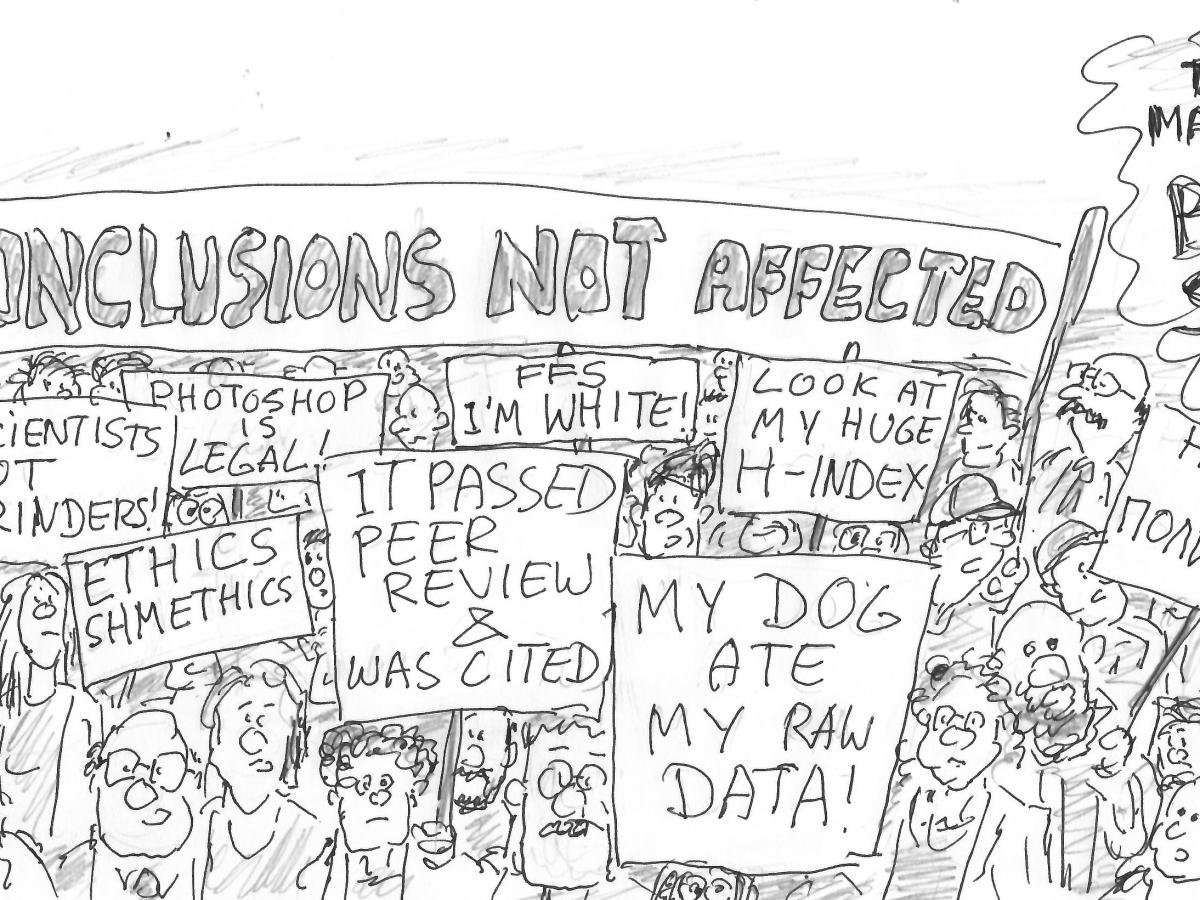
Concerns for whites, retractions for the rest?
“Expressions of Concern may be used as an interim notice to flag a potential issue that may be ultimately resolved with another amendment outcome (e.g. retraction or correction) or they may remain as the final outcome in cases where conclusive evidence cannot be obtained. ” – COPE

Utterly unsurprisingly, when the sleuth Claire Francis tried to report the newly found problems with Leung’s papers to UBC, he received this strange reply from the UBC’s Interim Executive Director at Vice-President Research & Innovation Portfolio, Heather Frost:
“Dear Ms. Francis, Thank you for your email. If you are considering submitting a scholarly integrity allegation, please follow the procedures described in UBC’s scholarly integrity policy:
The file actually describes Frost’s duties in handling the notification she already received… I then wrote to her and to Leung, the latter swiftly replied:
“We are currently reviewing the concerns raised regarding the study results in our publications. As part of this process, we are making every effort to retrieve the original raw data to verify and address the issues. Given the time that has passed since the majority of the studies were conducted, accessing and reviewing the archived data is taking longer than anticipated. We remain committed to upholding the highest standards of scientific integrity and transparency, and will cooperate fully with the journals to determine the appropriate course of action.
I applaud what you have done for better science and research integrity globally.“
Frost announced to me to comment on all that, but then didn’t.
(note: Frost’s rather confusing job description was corrected after publication)
An anointed czar with racist motives
Elisabeth Bik is trolling Science Guardians.
In a blog post from 18 April 2025, Bik wrote:
“On Twitter/X, @SciGuardians, associated with the website ScienceGuardians.com, is promising to ‘uncover’ some big conspiracy of fraudulent @pubpeer.com users.
But in reality, the account appears to be run by one or more disgruntled scientists with dozens of problematic papers. And there is no big reveal.”
We know for sure of one person behind Science Guardians website and social media, who is likely also the owner: Wafik El-Deiry, Director of Legorreta Cancer Center at Brown University, newly appointed Editor-in-Chief of Oncotarget, and a possible future director of National cancer Institute (NCI):

Wafik El Deiry, the anti-qualified Science Guardian
Both Harvey Risch and Wafik El Deiry are perfectly anti-qualified candidates to lead the National Cancer Institute.
Bik continues:
“ScienceGuardians.com presents as a ‘Journal Club’ where people can comment on scientific papers using anonymous accounts. Very similar to PubPeer, actually. […] The ScienceGuardians website also features some training and resources, with flowcharts that resemble those used by COPE, the Committee on Publication Ethics. One flowchart covers the ethical reuse of figures and tables, another the addition of authors during the revision stage of submitted articles. […]
Dr. El-Deiry has published over 1,000 articles, […] He also has earned nearly 70 comments on PubPeer. They cover the usual range of duplicated and overlapping images. For a summary of the concerns raised on his papers, you can read this post on ForBetterScience. […]
The SciGuardians X-account appears to be doing precisely what El-Deiry claims to despise. It anonymously tries to smear the reputation of PubPeer commenters, by making all kinds of false accusations.
It follows the classical DARVO pattern, a term coined by Dr. Jennifer Freyd that stands for “Deny, Attack, and Reverse Victim and Offender.””
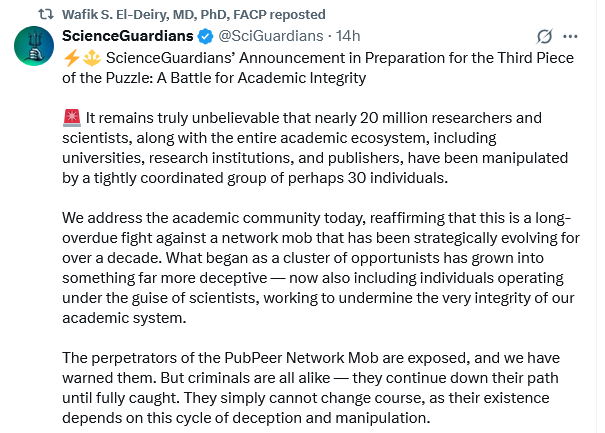
In a post on X (archived version here), SciGuardians attacked several sleuths and yours truly, who is the “Perpetrator 4” (Bik became “Perpetrator 5”):

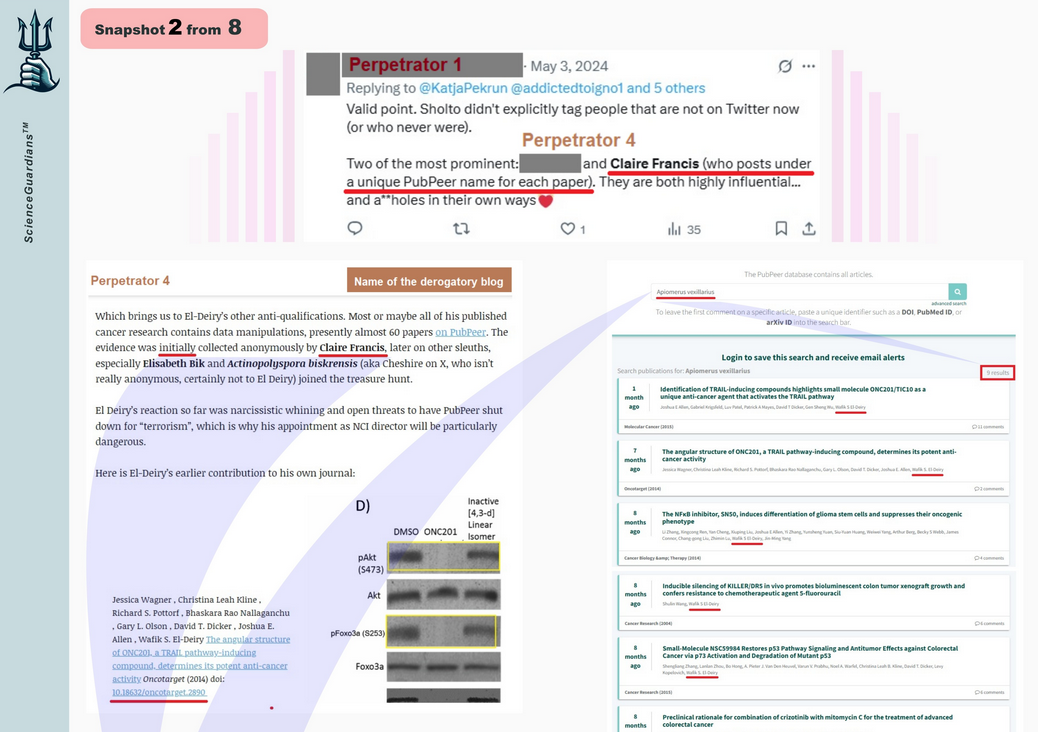
Bik then wondered who else may have joined El-Deiry in his Science Guardians project:
“On April 11, SciGuardians tweeted about the ‘Coordinated Attacks on the Scientific Community‘ by PubPeer users who criticized papers by Dr. Sabine Hazan and Professor Jörg Rinklebe, […]
The style of SciGuardians’ tweets reminds me of those by Matt Nachtrab, who relentlessly harassed me after I criticized papers related to his beloved $SAVA company – and who lost $50 million by ignoring our repeated warnings. […]
In an interesting detail, Matt was so angry with our PubPeer comments that he started CureGuardian.org – a name uncannily similar to ScienceGuardians.com. Might they be related? “
The German professor Jörg Rinklebe is no stranger to papermills and to For Better Science readers, also the US covidiot Sabine Hazan was ridiculed there very early on (see July 2021 Shorts).

And then Bik did something really funny. She signed up to the Science Guardians website using her old Stanford email account. This is the result, El-Deiry’s papers are now flagged not only on PubPeer but also on Science Guardians.
Here is one example:

Here is the original PubPeer thread, by Elisabeth Bik:
Peiwen Fei, Wenge Wang, Seok-hyun Kim, Shulin Wang, Timothy F Burns, Joanna K Sax, Monica Buzzai, David T Dicker, W Gillies McKenna, Eric J Bernhard, Wafik S El-Deiry Bnip3L is induced by p53 under hypoxia, and its knockdown promotes tumor growth Cancer Cell (2004) doi: 10.1016/j.ccr.2004.10.012


The other SEVENTY PubPeer threads for El-Deiry’s papers are similar. He replied there and elsewhere with this letter:

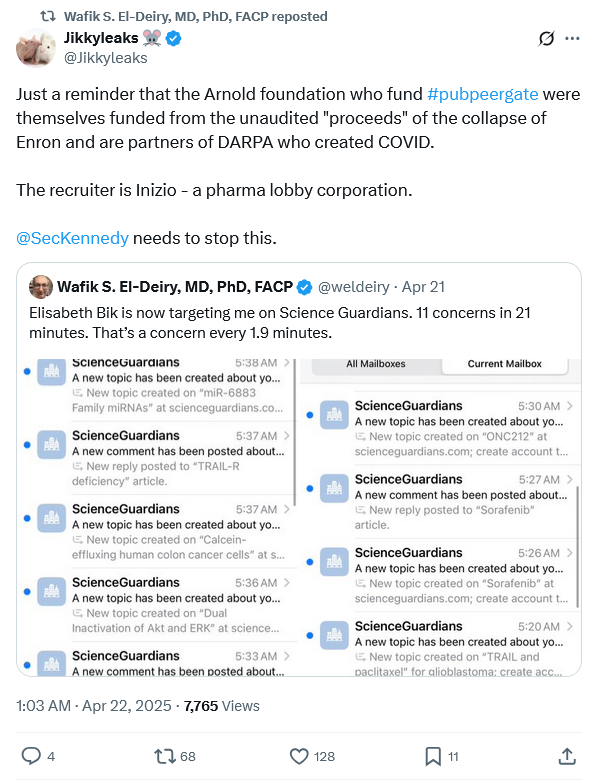
El-Deiry of course started to complain on social media about Bik’s defacing of his pristine platform. To none other but Trump’s Secretary of Disease and Human Suffering, Robert F Kennedy Jr:
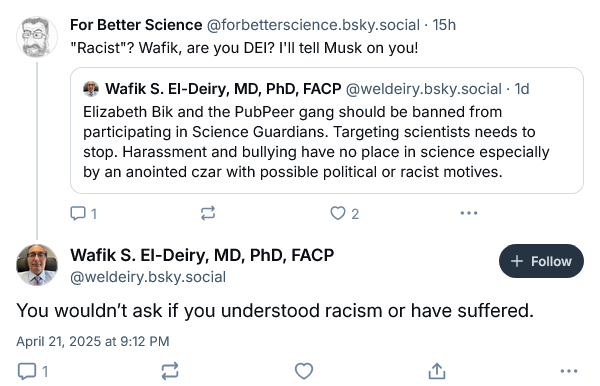
On top of everything, El-Deiry also believes to be a victim of racism by “an anointed czar with possible political or racist motives“:
El-Deiry then announced an announcement, but then gave up. Instead, he pleaded with publishers and institutions to apprehend us:
Scholarly Publishing
After conferring with Dr. Eckert
What do you do with an officially fraudulent paper by an officially condemned and sacked fraudster? You correct it of course.
Richard Eckert used to be Chair of the Department of Biochemistry and Molecular Biology at University of Maryland and Deputy Director of Stewart Greenebaum Comprehensive Cancer Center in USA, until he was found guilty of fraud in 2020, then kicked out and publicly exposed in an HHS-ORI announcement in August 2024, with an 8 year ban from applying for funding or acting as reviewer (see August 2024 Shorts and the investigative report published by Retraction Watch).
There is a lot of fake stuff on PubPeer, flagged by anonymous PubPeer users in 2022, some already corrected. And now one of the eight Eckert’s papers which were ordered to “be corrected or retracted“, was corrected:
Gautam Adhikary , Yap Ching Chew , E Albert Reece , Richard L. Eckert PKC-delta and -eta, MEKK-1, MEK-6, MEK-3, and p38-delta are essential mediators of the response of normal human epidermal keratinocytes to differentiating agents Journal of Investigative Dermatology (2010) doi: 10.1038/jid.2010.108


And now, the Correction issued by Elsevier on 19 April 2025 (highlights mine):
“The University of Maryland, Baltimore and the US National Institutes of Health Office of Research Integrity have investigated the work reported in this article (Adhikary et al, 2010) and have informed the journal of their findings. Both recommended correction or retraction of the article and concluded that it is compromised. Specifically, according to the ORI, “In Figure 7b of J Invest Dermatol. 2010, the bands in the upper panel, representing expression of MEKK1 and its β-Actin control, are falsified and/or fabricated by reusing and relabeling the bands in the middle panel, representing expression of MEK6 and its β-actin control in the same figure.”
When attending to this issue, the Editor also noted discrepancies in Figures 1a and 2a described in PubPeer (https://pubpeer.com/publications/2839F623A194CBAACD04B9767DE5F8).
After conferring with Dr. Eckert, the Editor has agreed to publish a correction, as detailed below.
Dr. Eckert has stated that the corrections do not change the outcome of the experiments or the conclusions of the published article.”
The correction then informs us that the blots in Fig 1 “are legitimately used as controls “, that “Incorrect ‘junB (Nuclear)’ and ‘c-fos (Nuclear)’ images were mistakenly presented in Fig. 2A“, that Fig 2B and C were appropriately manipulated “to facilitate discussion” so that the “middle lane in Fig. 2B is legitimately repeated“, and that in Fig 7 “incorrect” blots “were mistakenly presented“.
Why this criminally insane correction? Well, the clue is that the Editor-in-Chief, the Austrian professor Erwin Tschachler, did some “conferring with Dr. Eckert“. Maybe the two rich white men found some common values and interests. The irony is:
“Tschachler told Retraction Watch he had also been contacted by the US National Institutes of Health Office of Research Integrity, and said the journal would pursue retractions for the articles “given the pattern of misconduct.”
Rest assured Tschachler will soon pursue corrections instead of retractions here also:
Ling Zhu , Chaya Brodie , Sivaprakasam Balasubramanian , Richard L. Eckert Multiple PKCdelta tyrosine residues are required for PKCdelta-dependent activation of involucrin expression–a key role of PKCdelta-Y311 The Journal of investigative dermatology (2008) doi: 10.1038/sj.jid.5701103


The reproducibility is validated and corroborated
Another correction for important white Americans. The Harvard professor Amy Wagers seems to be untouchable no matter what she does, quite possibly because she is protected by her Stanford mentor Irv Weissman. Read here:
Bleed’em while they’re young
“There’s still a long way to go – blood is complicated. But there are many excellent labs focused on this, so I am optimistic about progress.” – Aubrey de Grey.
Well, they now corrected this paper, which was already corrected in January 2003 because “incorrect versions of Figures 1f and 4g were supplied“:
Miriam Merad , Markus G. Manz , Holger Karsunky , Amy Wagers , Wendy Peters , Israel Charo , Irving L. Weissman , Jason G. Cyster , Edgar G. Engleman Langerhans cells renew in the skin throughout life under steady-state conditions Nature Immunology (2002) doi: 10.1038/ni852


Because another correction could have affected the conclusions, an Addendum was published instead, on 4 April 2025:
“Concerning the original publication, the authors acknowledge and apologize for possible inadvertent errors that may have occurred during the assembly of PCR measurements for β-actin expression in Langerhans cells and monocytes, as well as CCL2/7 expression in UV-irradiated skin. Unfortunately, the original data were generated over 22 years ago and are no longer available. However, Langerhans cells and monocytes express β-actin and the reproducibility of UV-induced CCL2 and CCL7 expression is validated through immunohistochemistry (Fig. 6b in original article) and corroborated by multiple independent studies in mice and human.”
Yeah, Piero Anversa‘s fraudulent heart stem cells were also reproduced and validated by countless independent studies. Sometimes science is magical.
To be fair, a retraction for Merad et al was out of the question, and not just because of Wagers or Weissmann. The first author Miram Merad is Dean for Translational Research and Director of Lipschultz Precision Immunology Institute at the Icahn School of Medicine at Mount Sinai in New York. The last author and Stanford professor Ed Engleman is founder and medical director of Stanford Blood Center, and immunology program co-director at Stanford Cancer Institute. These people are GODS.
Let’s praise them a bit more:
M Merad, L Fong, J Bogenberger , E G Engleman Differentiation of myeloid dendritic cells into CD8alpha-positive dendritic cells in vivo Blood (2000) doi: 10.1182/blood.V96.5.1865


No, these people are in no way threatened by the purges and defunding of science which Trump regime now perpetrates. Quite the opposite, they will get all that money now liberated from the sacked honest scientists.
Unusual changes
A clearly papermilled publication was saved with an Expression of Concern. It was initially flagged on PubPeer because the authors from Saudi Arabia, Iraq and Egypt claimed to be the original discoverers of Alzheimer’s Disease from 1906. The key name here is Gaber El-Saber Batiha, who is possibly the owner of the papermill and has a huge PubPeer record.
Naif H. Ali , Hayder M. Al-kuraishy , Ali I. Al-Gareeb , Saud A. Alnaaim , Athanasios Alexiou , Marios Papadakis , Hebatallah M. Saad, Gaber El-Saber Batiha The probable role of tissue plasminogen activator/neuroserpin axis in Alzheimer’s disease: a new perspective Acta Neurologica Belgica (2023) doi: 10.1007/s13760-023-02403-x

Reference 1 is a self-citation”
On 1 March 2025, an Expression of Concern was issued (highlight mine):
“The Editor-in-Chief is issuing an Editorial Expression of Concern to alert readers that this article underwent unusual changes to the authorship list during the submission process. Readers are advised to interpret the contributions of the authors to this article with caution.
Naif H. Ali, Hayder M. Al-kuraishy, Ali I. Al-Gareeb, and Gaber El-Saber Batiha disagree with this Editorial Expression of Concern. The remaining authors did not respond to correspondence from the Publisher about this Editorial Expression of Concern.”
Obviously the study is generated by papermill and all authorships were bought. Maybe what prevented the retractions was the presence of two European authors: Athanasios Alexiou and Marios Papadakis. The former is a bioinformatician with stated affiliations in with an dodgy foundation in Australia and a company in Austria, Papadakis is a plastic surgeon who declared as affiliation the University Hospital Witten-Herdecke in Germany, but in reality he left it in 2019 and is currently employed in a private clinic in Greece. Both these Greek men are known papermillers and often publish together, on whatever topic is on offer, with Alexiou being a much bigger fish in the papermill pond (see PubPeer records for Alexiou and for Papadakis). Quite often their coauthors are El-Saber Batiha and Hayder Al-Kuraishy (PubPeer record). Alexiou also published with Abhijit Dey:
I have almost 100 manpower with me at any time
“WE DONT PAY FOR PAPERS. YOU MUST KNOW THAT THESE BEST IN THE PLANET JOURNALS GO THROUGH RIGOROUS PEER REVIEW” – Abhijit Dey, papermiller
Here a retracted paper by Alexiou and El-Saber Batiha, it was peer-reviewed by the Romanian papermiller and Batiha’s associate Simona Cavalu:
Deepshi Arora , Shailendra Bhatt , Manish Kumar , Ravinder Verma , Yugam Taneja , Nikita Kaushal , Abhishek Tiwari , Varsha Tiwari , Athanasios Alexiou , Sarah Albogami , Saqer S Alotaibi , Vineet Mittal , Rajeev K Singla , Deepak Kaushik , Gaber El-Saber Batiha QbD-based rivastigmine tartrate-loaded solid lipid nanoparticles for enhanced intranasal delivery to the brain for Alzheimer’s therapeutics Frontiers in Aging Neuroscience (2022) doi: 10.3389/fnagi.2022.960246

On 28 March 2024, this Frontiers paper was retracted because “the publisher found evidence of peer review manipulation.”
Yet the paper in the Springer journal Acta Neurologica Belgica was not retracted. The publisher is also dragging its feet for already a whole a year over two papermill products from Iran which Alexander Magazinov reported to them in early May 2024:
- Mohammadarian Akbari , Mahdi Gholipour , Hedyeh Davoudikianersi , Bashdar Mahmud Hussen , Atefe Abak , Solat Eslami , Soudeh Ghafouri-Fard, Arezou Sayad Expression of NF-κB-associated lncRNAs in different types of migraine. Acta Neurol Belg (2023). doi: 10.1007/s13760-022-02071-3
- Mohammad Taheri , Reyhaneh Eghtedarian , Solat Eslami , Bashdar Mahmud Hussen , Soudeh Ghafouri-Fard, Seyed Abdulmajid Ayatollahi Alteration in the expression of long non-coding RNAs in the circulation of migraineurs. Acta Neurol Belg (2024). doi: 10.1007/s13760-024-02513-0
Maybe because of celebrity authors Mohammad Taheri (Germany affiliated!) and Soudeh Ghafouri-Fard (Iranian government-connected)?

Look What the Cat Dragged In
Meet Mohammad Taheri, PhD, a humble PhD student in Jena, Germany, and his equally unremarkable Iranian associate Dr Soudeh Ghafouri-Fard.

The Alexiou case is closed, but about the Iranians Magazinov was just informed by the Springer executive Patricia Wiley that the investigation was ongoing.
They can act though, at least on Ukrainian papermills selling to russian nobodies.
Gulnar K. Taitubayeva, Irina A. Gribacheva , Sholpan A. Bulekbayeva , Zholtay R. Daribayev , Ekaterina V. Petrova Autonomic dysfunction syndrome in pregnant women Acta Neurologica Belgica (2021) doi: 10.1007/s13760-020-01312-7

Randia boliviana: “The domains are a bit, kind of, university like … but not really. All registered in Kiev”
Now, this one was retracted on 3 October 2023:
“The Editor in Chief has retracted this paper. After publication, an investigation by the publisher resulted in concerns about attempts to manipulate peer review and unverifiable authorship. Additionally, the authors were unable to provide evidence that ethics approval had been obtained prior to the commencement of this study. “
Retraction Watchdogging
But the authors did not respond
Two retractions for the Italian cheaters Francesco Amenta of University of Camerino and Roberto Avola of University of Catania. Read about them here:

The Name of the Foes
“I am Jorge de Burgos. I believe research should pause in searching for the progress of knowledge. Right now, we don’t need more papers, we rather need more knowledge by going through a continuous and sublime recapitulation to figure out what is true and what is fake” – Aneurus Inconstans

Both retracted papers originally appeared in the same Wiley-published journal. Retracted paper Nr 1, flagged on PubPeer in 2022-2023:
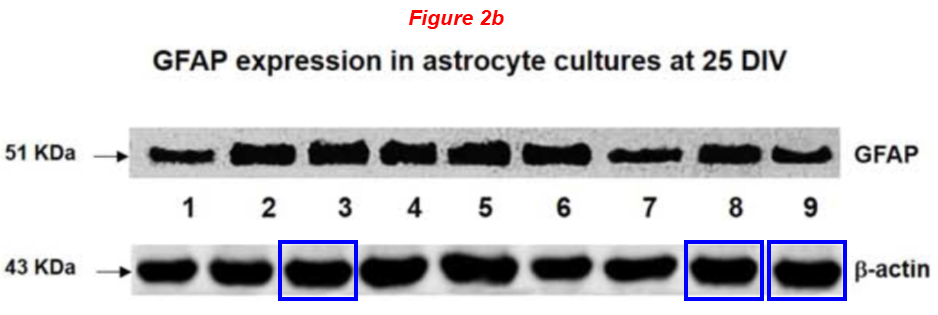
Vincenzo Bramanti, Sonia Grasso , Daniele Tibullo, Cesarina Giallongo, Rita Pappa , Maria Violetta Brundo, Daniele Tomassoni, Maria Viola , Francesco Amenta, Roberto Avola Neuroactive molecules and growth factors modulate cytoskeletal protein expression during astroglial cell proliferation and differentiation in culture Journal of Neuroscience Research (2016) doi: 10.1002/jnr.23678


The retraction arrived on 22 April 2025.
” Following publication, concerns were raised by a third party that portions of Figures 2B and 3 were duplicated and manipulated, and that most of the images from Figure 2A were duplicated and manipulated from an earlier publication by this research group. Internal investigation confirmed these claims. The publisher attempted to contact the authors and request original data, but the authors did not respond. The retraction has been agreed because of concerns that the images were manipulated, affecting the interpretation of the data and results presented. The authors have been notified of the retraction.”

The microscopic talent of Prof Amenta
“Professor Amenta is truly a renaissance man and a knowledge powerhouse according to his colleagues and students. Amenta’s sole focus in life is the creation and dissemination of knowledge”
Retracted paper Nr 2, on PubPeer since 2022:
A. Campisi, V. Bramanti, D. Caccamo, G. Li Volti , G. Cannavò , M. Currò , G. Raciti , F. Galvano, F. Amenta , A. Vanella , R. Ientile, R. Avola Effect of growth factors and steroids on transglutaminase activity and expression in primary astroglial cell cultures Journal of Neuroscience Research (2008) doi: 10.1002/jnr.21579

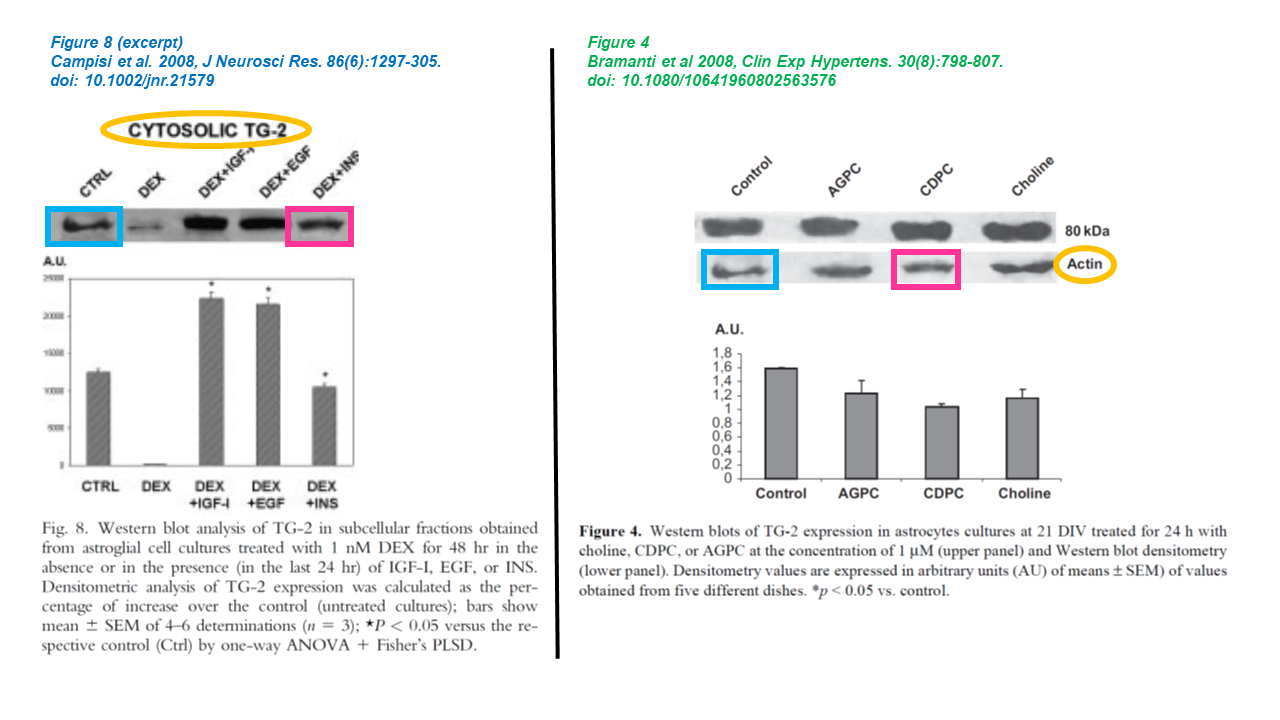

Here the retraction from 22 April 2025:
“Following publication, concerns were raised by a third party that portions of Figures 1 and 8 were duplicated and manipulated, and that portions of Figure 8 were duplicated from an earlier publication by this research group. Internal investigation confirmed these claims. The publisher attempted to contact the authors and request original data, but the authors did not respond. The retraction has been agreed because of concerns that the images were manipulated, affecting the interpretation of the data and results presented. The authors have been notified of the retraction.”
Industry Giants
Shocked by the taste
In early 2020, the Israeli biotech Pluristem and its founder Yaki Yanay were ready to cure COVID-19 with patented PLX “stem cells” from human placenta, and they received permission from Israeli authorities and US FDA to treat patients. Several COVID-19 sufferers in Israel and USA received Pluristem’s placenta cell therapy by April 2020, the “100% survival rate” was celebrated by Jerusalem Post. Read here:
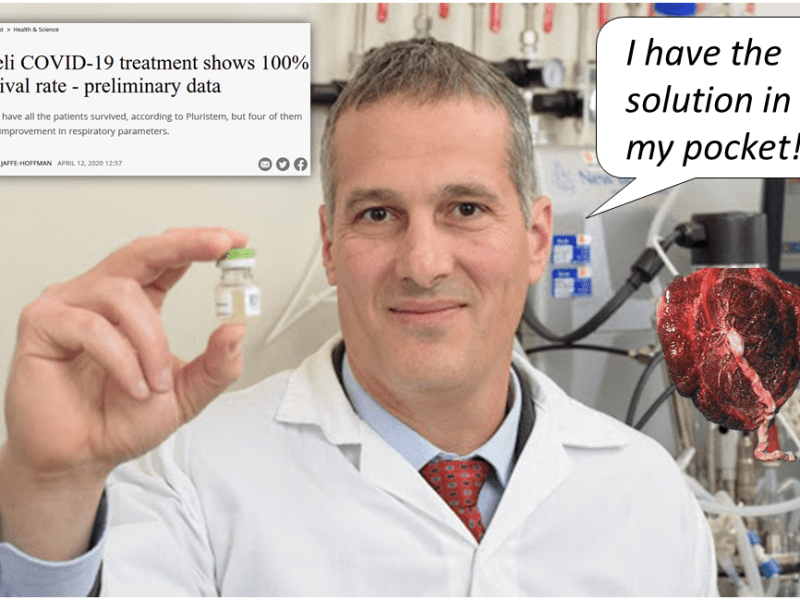
Stem cells to cure COVID-19 because why not
Israeli scientists discovered a cure for coronavirus! Their proprietary PLX cells from placenta deliver 100% survival rate both against COVID-19 and a nuclear holocaust. The stocks soar.
That was such a tremendous pandemic game-changer that a few days later nobody ever spoke about it again, and the Charite university hospital in Berlin very quietly backed out of the much-touted collaboration with Pluristem.
5 years passed. Pluristem is now called just Pluri, placenta went out of the window, possibly literally. Because they are making lab-grown coffee now!
Yes, you read right. Coffee. Once again, Jerusalem Post celebrated in January 2024:
“The Israeli biotech company Pluri has developed a transformative cell-based coffee that can be grown without causing environmental harm.
The coffee is produced using Pluri’s 3D cell expansion technology as part of its “PluriAgtech” business vertical that the company says aims to create more eco-friendly alternatives to traditional farming methods. […]
The coffee industry faces several issues, Pluri CEO Yaky Yanay explained. […]
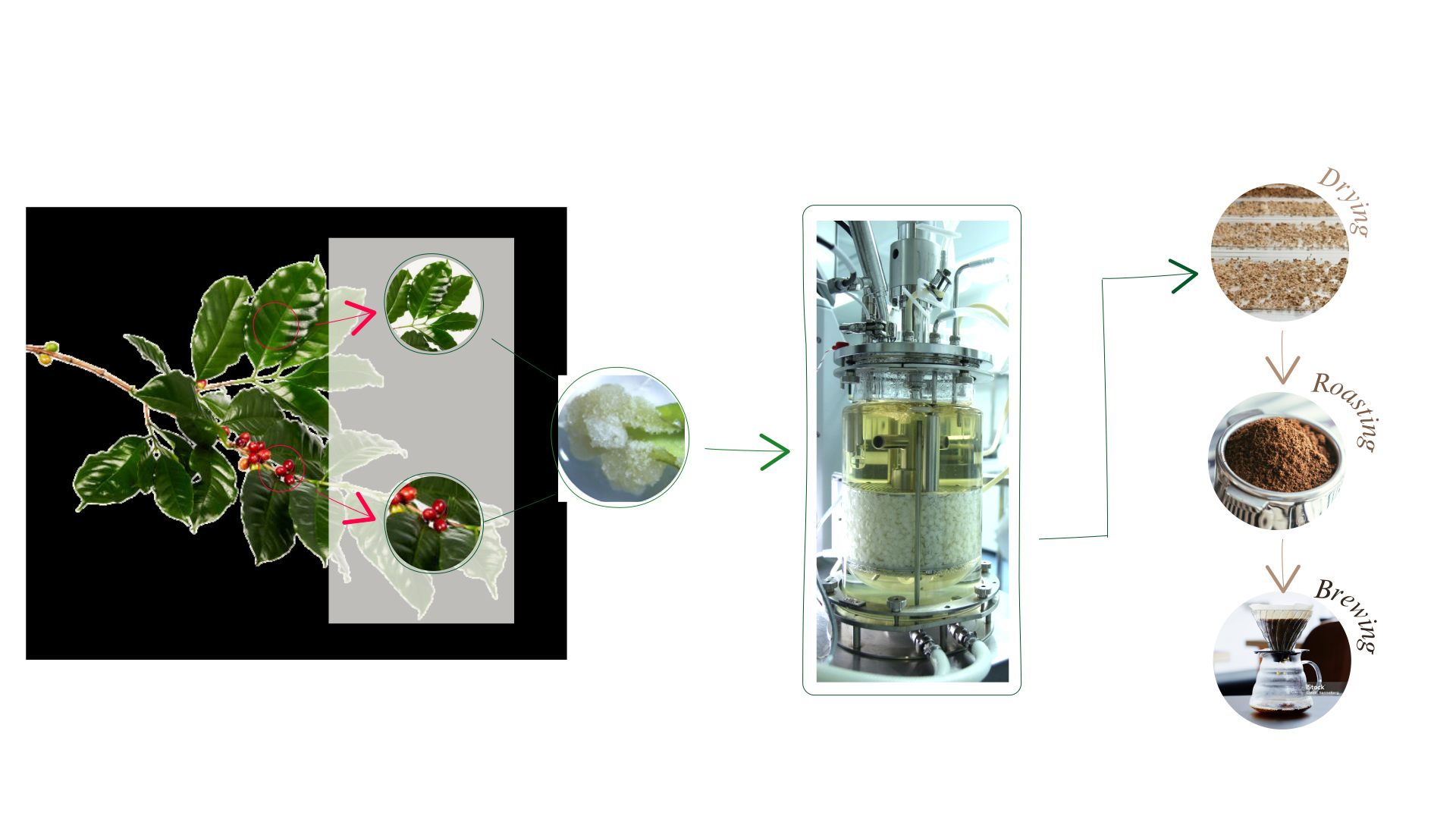
Now, the company extracts cells from the coffee plant and grows them in its bioreactor system. Pluri has complete control of the process and profile.
When the cells leave the bioreactor, they look like instant coffee. Consumers can add boiled water and drink.
“I was shocked by the taste,” Yanay admitted. “It tastes just like coffee.”
He said the first cups tasted like a Cafe Americano or traditional drip coffee. However, he said that the platform should be able to produce all kinds of coffee types and flavors.”
None of that makes any sense, and of course Yanay is taking the piss.
In January 2025, Pluri announced to have raised $6.5 million in investment from the biotech entrepreneur Alejandro Weinstein, who then joined the company’s board. Pluri also announced to buy 71% of the cocoa company Kokomodo, so expect to hear of Pluri’s lab-grown chocolate next and how much Yanay couldn’t distinguish it from the real thing.
Probably because of Weinstein’s money doing the taking, Nature Biotechnology celebrated Pluri and their competitors in a March 2025 article (which Pluri accompanied with a press release). And who are we to argue with Nature:
“Lior Raviv, Pluri’s chief technical officer, says: “We hypothesized we could take the cells from the plant and put them in a bioreactor [to grow coffee].” Through their work in cell therapy and cultivated meat, the Pluri team knew that not all cells like the same growing conditions.
Taking plant cell samples, they made cell lines and, instead of growing them swirling around in suspension culture, they used a packed-bed bioreactor.
The coffee cells slowly flow through, taking on a tissue-like structure. The cells are fed salts and vitamins, and their natural metabolism then takes over to produce secondary metabolites such as caffeine. The resulting biomass, which forms as small clumps, is dried and gently roasted. The final product looks
and tastes like ground coffee. Pluri is now focusing on scaling
up and seeking regulatory approvals.”

Nature also informs us that two other companies pursue the same business model: Stem in Paris, France (described in 2023 as “Founded last year by specialist coffee roaster and wholesaler Tom Clark (CMO); biotech IP specialist Henri Kunz (chairman); and analytical chemist Dr. Chahan Yeretzian (CEO/CSO)“, web domain now defunct), and California Cultured in USA (which markets lab grown stuff, and “not as an alternative“, but as “the future of chocolate and coffee“).
I guess if Trump succeeds in sacking all sane and decent scientists, this indecent insanity will start making sense to those who remain?
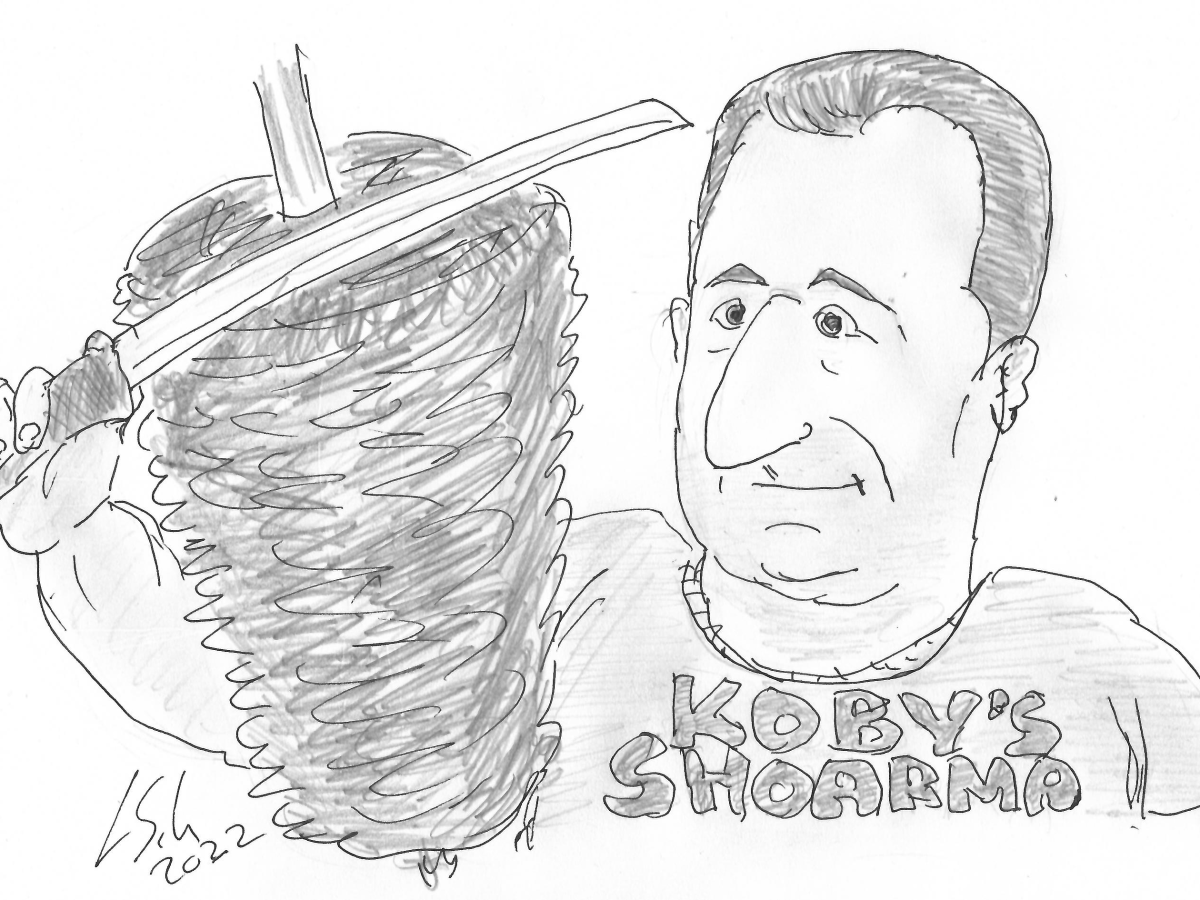
From COVID-19 to Lab-Grown Meat
Enterprising Israeli Scientists show how these things are connected.
Also, Pluri didn’t give up on their past stem cell business. As Jerusalem Post mentioned last year, Yanay is also growing organs for transplantations and sausages for consumption, probably all in the same bioreactor:
“Pluri, formerly known as Pluristem Therapeutics, has boldly entered the food technology market over the past two years. Yanay said it has now proved that its bioreactor platform can effectively grow human, animal, and plant cells to scale.
Last year, the company announced the launch of Ever After Foods, a partnership with Tnuva, which uses Pluri’s platform to transform cells into cultivated meat products for the mass market.”
The lab-grown meat market seems to be overrun by bullshitters and science cheaters. Like Ali Khademhosseini:
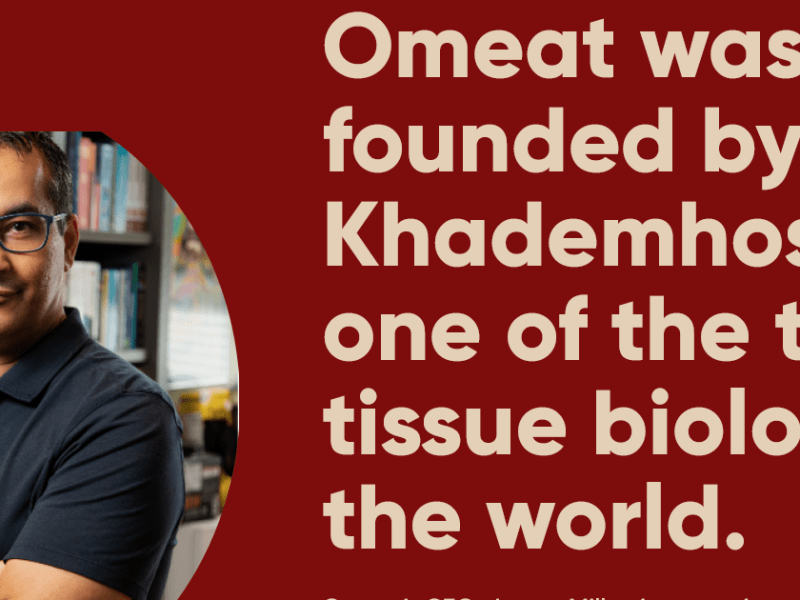
Fake-O-Meat by Ali Khademhosseini
Ali Khademhosseini is the greatest American researcher in regenerative medicine. His mentees are all professors themselves now. In his own Californian institute, he grows not only all possible organs, but even hamburgers!
Donate!
If you are interested to support my work, you can leave here a small tip of $5. Or several of small tips, just increase the amount as you like (2x=€10; 5x=€25). Your generous patronage of my journalism will be most appreciated!
€5.00

 For Better Science
Peter Leung’s case illustrates well how COPE guidelines don’t work. Along with the investigation of that J Cell Sci paper, the fact that Leung has 25 flagged papers on PubPeer for similar issues it didn’t play a role for UBC and the journal, which is absurd. The PubPeer history of a researcher should count when an investigation takes place and then a decision is reached.
LikeLiked by 1 person
100% agreed, however, this is not how they do it. COPE but also universities or publishers always have the habit to look ‘paper per paper’ and not look at the broader picture. The reason for this is of course, it’s easier to ‘correct’ (or not retract) because you only check case per case. The same with banning or blacklisting authors, they won’t do it as they always focus on paper per paper. So if someone gets 40 retractions and all his/her work is ‘fake’, paper 41 will still be regarded as ‘legit’ because they don’t take into account the previous 40 BS papers.
In general: COPE only serves 1 thing and that is to prolong investigations, avoid retractions etc. Also; why do publishers depend on the university to perform a check? Makes no sense, but it is according to the COPE guidelines. This has to change. A publisher/journal should be able to investigate without waiting for an investigation from a university. One because it takes too long and two because universities never find anything always clear the frauds.
LikeLike
ah I was beaten to the punch by Luc. Although I think Aneurus understands this better than anyone 😂
LikeLike
Regarding the COPE flow charts: “The purpose of a system is what it does”. COPE flow charts waste people’s time when they try to do the right thing, and provide a ready excuse for people delaying and running cover. So they work very well for the publishing industry.
LikeLiked by 1 person
COPE is just another way to delay investigations and retractions. It doesn’t help Integrity, it help frauds and gives publishers an excuse to hide behind when not acting/retracting. And with one of their main employees now having a retraction for pretty obvious (and dumb) image fraud it becomes even harder to take them seriously.
LikeLike
Science Guardians is still around? Probably with the same three users from … a year or two ago when I first heard about it. Pathetic and obvious. I’d wager the “users” are undergraduate conscripts working for extra credit. Was browsing yesterday and found lots of great recent posts on Pubpeer from Sholto and Bik (and others) on Wafik El-Deiry’s “work.”
LikeLike
Thought I’d put this here. Nothing new or shocking, but it’s an example of what happens when independent multi-center attempts at reproducibility demonstrate how utterly unreproducible even basic experiements are. I’ve attempted to battle fraud “from within,” the intentionally incorrect performance and anlysis of experiments to obtain desired results, to no avail (and likely my detriment). Transparent, external and independent. https://www.nature.com/articles/d41586-025-01266-x
LikeLike
Regarding the so called “ lab grown coffee”, the website of Pluri says:
“Leveraging two decades of expertise, our state-of-the-art patented technology seamlessly integrates cellular agriculture, eco-efficiency, and scalability to create a transformative cell-based coffee. While using a bioreactor, we can mimic the cell source’s natural conditions and don’t need the whole plant for this process – the leaves of the plant are enough.”
The leaves are enough? Even assuming they create stable suspension cell cultures from calli (singular: callus) derived from leaves, how in the world would leaves-derived cells be able to produce those hundreds of organic compounds that blend together for making the taste of coffee beans? What makes coffee coffee is not just the caffeine, do those genius know?
LikeLike
To be clearer: coffee leaves do not even produce coffeine, leave (pun intended) alone those oher componds that accumulate in the beans through a complex physiological pathways and organ specific development.
LikeLike
I don’t know Yaki said he drank it and it tastes like real coffee.
And there will be lab grown chocolates soon.
Hopefully also lab grown biscuits.
LikeLike
The price of coffee has never been higher, so let’s see if the cell-based stuff can compete with outfits like the organic coffee plantation I am currently located at. Don’t see any environmental disasters here.
LikeLike
Recently, the Princess Máxima Center (PMC), The Netherlands, has reached a final decision about a complaint filed by me against Saskia Mostert, a researcher at amsterdamumc.nl, and the first author of an antivax paper in BMJ Public Health https://pubpeer.com/publications/BD524B3E696274C2F24DFFC8CCA546 PMC has decided that Saskia Mostert had violated at least 16 standards of the Netherlands Code of Conduct for Research Integrity, the standards 1, 2, 4, 5, 15, 16, 17, 23, 25, 28, 34, 35, 37, 39, 40 & 61.
BMJ Public Health has until now not fulfilled a retraction request of this paper by senior author Gertjan Kaspers, sent to BMJ Public Health on 19 June 2024, and on behalf of all 4 authors. I fail to understand why this is the case.
LikeLiked by 1 person
gynaecologist Peter Leung, professor for reproductive and molecular endocrinology and former Associate Dean at the Faculty of Medicine, University of British Columbia in Canada. Expression of Concern: Gonadal Steroids Regulate the Expression of Aggrecanases in Human Endometrial Stromal Cells In Vitro – 2025 – Journal of Cellular and Molecular Medicine – Wiley Online Library
LikeLike
“I applaud what you have done for better science and research integrity globally – Peter Leung investigates himself”
October 2025 Expression of Concern for Peter Leung.
Expression of concern ‘Antimüllerian hormone inhibits follicle-stimulating hormone-induced adenylyl cyclase activation, aromatase expression, and estradiol production in human granulosa-lutein cells’ (Feril Steril 2013;585-592) – Fertility and Sterility
Expression of concern ‘Antimüllerian hormone inhibits follicle-stimulating hormone-induced adenylyl cyclase activation, aromatase expression, and estradiol production in human granulosa-lutein cells’ [Fertil Steril 2013;100:585-92]
Hsun-Ming Chang, M.D., Christian Klausen, Ph.D., and Peter C. K. Leung, Ph.D., F.R.S.C.
Department of Obstetrics and Gynaecology, Child and Family Research Institute, University of British Columbia, Vancouver, British Columbia, Canada
This notice serves as an Expression of Concern regarding the above-referenced publication. The Research Integrity Committee of the American Society for Reproductive Medicine (ASRM) investigated in response to a reader complaint regarding a potentially duplicated image in the publication. Specifically, the Actin immunoblot bands in Figure 2D appeared similar to those in Figure 4B. The figures refer to separate experiments wherein such similarity would not be expected. These complaints were investigated following COPE guidelines. The authors have been responsive and have indicated that the image was inadvertently duplicated. While the original blots are no longer available, the authors did provide densitometry data for the experiment performed in triplicate. Excluding any one of the three densitometry readings would not change the conclusion of the experiment. While there is no way to confirm the validity of the densitometry measurements, the authors also note that decreased AMHR2 expression is demonstrated in two other experiments in the paper (Figures 4A and 4D), consistent with decreased protein levels illustrated in Figure 4B. While this interpretation is reasonable, because the Committee has been unable to assess the validity of the findings in Figure 4B, readers are advised to interpret the results of this study with caution.
LikeLiked by 1 person
“I applaud what you have done for better science and research integrity globally – Peter Leung investigates himself”
07 November 2025 Expression of Concern for Peter Leung. https://academic.oup.com/molehr/article/31/4/gaaf053/8317620
This is an expression of concern regarding: Hsun-Ming Chang, Jung-Chien Cheng, Elizabeth Taylor, Peter C.K. Leung, Oocyte-derived BMP15 but not GDF9 down-regulates connexin43 expression and decreases gap junction intercellular communication activity in immortalized human granulosa cells, Molecular Human Reproduction, Volume 20, Issue 5, May 2014, Pages 373–383, https://doi.org/10.1093/molehr/gau001
In March 2025, a reader contacted the journal about concerns regarding elements of Figure 2, which were also raised on PubPeer (https://pubpeer.com/publications/3B0D6E543FB44802C2D81086140E0D). The journal has contacted the authors and is investigating these concerns in line with COPE guidance. In the interim, the journal is publishing this Expression of Concern to alert readers while the outcome of the investigation is pending and advises readers to examine the details of this study with particular care.
LikeLiked by 1 person
09 February 2026 Editorial Expression of Concern for Peter C K Leung.
Editorial expression of concern: Antiproliferative effect of growth hormone-releasing hormone (GHRH) antagonist on ovarian cancer cells through the EGFR-Akt pathway | Reproductive Biology and Endocrinology | Springer Nature Link
LikeLike