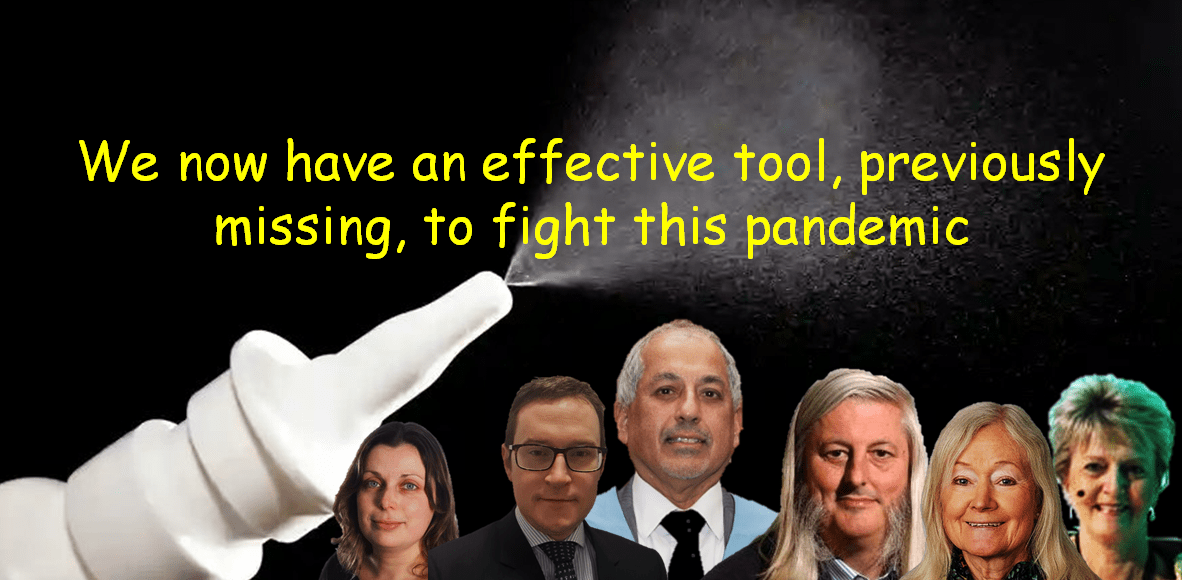

The sleuth Sholto David achieved retraction of a COVID-19 therapy paper which was so embarrassingly fraudulent that the British elite professors who authored it shut down their commercial business soon after their clinical study was published.
And the retraction happened despite at least one British university trying to prevent it.
The study’s author Kay Davies is not only Dame Commander of the British Empire and Oxford professor, but also a science cheater and in her capacity as former Editor-in-Chief of Human Molecular Genetics, a fraud-abetting bully who enjoys ratting out whistleblowers. Read here:

Bologna cover-up at Oxford University Press
This is the second part of the Bologna whistleblower account. As the university was burying their own misconduct findings, Oxford University Press and their ignoble editor were busy punishing and gaslighting the whistleblower.

Another coauthor is Kay’s husband Stephen Davies. Stephen not only is another Oxford (emeritus) professor, he even looks very similar to his wife.
The clinical study was about a nasal spray by the Ireland-based company Raphael Labs LTD, which was said to prevent COVID-19, the active ingredients were “ginger oil, eucalyptus oil, basil oil, clove oil“. The trial was done in India, in collaboration with Dabur Research Foundation, which in turn belongs to Dabur, the self-proclaimed “World’s Leading Best Ayurvedic Company in India“. The study was officially registered as “Ayurveda”, the product was described as “Ayurvedic nasal drop “pHoxvedic”. The paper was published in August 2022, a copy remains on PubMed:
Damian Balmforth, James A Swales , Laurence Silpa , Alan Dunton , Kay E. Davies , Stephen G. Davies, Archana Kamath , Jayanti Gupta , Sandeep Gupta , M.Abid Masood, Áine McKnight, Doug Rees , Angela J. Russell, Manu Jaggi , Rakesh Uppal Evaluating the efficacy and safety of a novel prophylactic nasal spray in the prevention of SARS-CoV-2 infection: A multi-centre, double blind, placebo-controlled, randomised trial Journal of clinical virology (2022) doi: 10.1016/j.jcv.2022.105248
“Conclusion The test agent significantly reduced SARS-CoV-2 infection in healthcare workers, with 62% fewer infections when compared to placebo. It was found to be safe and well tolerated and offers a novel treatment option for prophylaxis against SARS-CoV-2 infection.”
Worth mentioning that Áine McKnight and Angela Russell are not just somebody, but two English professors. The former is professor of viral pathology at at Queen Mary University of London (QMUL), she was responsible for “testing of the spray at the Queen Mary laboratory“. Russel is, like the Davieses, professor of at the University of Oxford, next to COVID-19, she also cured Duchenne Muscular Dystrophy (the press release doesn’t say if also with Ayurveda). Russel is also a founder of various biotech start-ups, for which she was “named as a ‘Rising Star’ in the BioBeat 50 Movers and Shakers in BioBusiness report”.
The study’s lead authors Damian Balmforth and Rakesh Uppal are affiliated with the St Bartholomew’s Hospital in London, part of QMUL. Uppal is professor of cardiovascular surgery and also affiliated with QMUL’s fraud-infested William Harvey Research Institute. In December 2024, Uppal was honoured with “a Fellowship Ad Hominem from the Royal College of Surgeons Edinburgh in recognition of his major contribution to cardiothoracic surgery services in the UK“.
Queen Mary and John Vane’s Cowboys
Welcome to the the William Harvey Research Institute in London. Meet two proteges of its founder, the late Nobelist Sir John Vane: Chris Thiemermann and Mauro Perretti. Then meet their own rotten mentees, especially Salvatore Cuzzocrea and Jesmond Dalli.
It was Uppal who took the main credit for this clinical study. He was advertising for the Raphael Labs spray in November 2021, before the paper was published:
“It doesn’t matter what strain it is, we’ve shown that mutation agnostic. We’ve tested it against all the viruses of concern, all the mutations of concern, and it has equal efficacy because it’s a chemically-based solution”.”
That is because the results from that Ayurvedic (and not chemically-based) clinical trial were announced already in September 2021 press releases by Raphael Labs and by QMUL:
“Queen Mary University of London professors Rakesh Uppal and Áine McKnight have been at the centre of a new clinical trial finding that pHOXWELL – a nasal spray developed by biotech company pHOXBIO [part of Raphael Labs LTD ,- LS] – reduced SARS-CoV-2 infection by 63 per cent in the group given pHOXWELL compared to the group given the placebo. […]
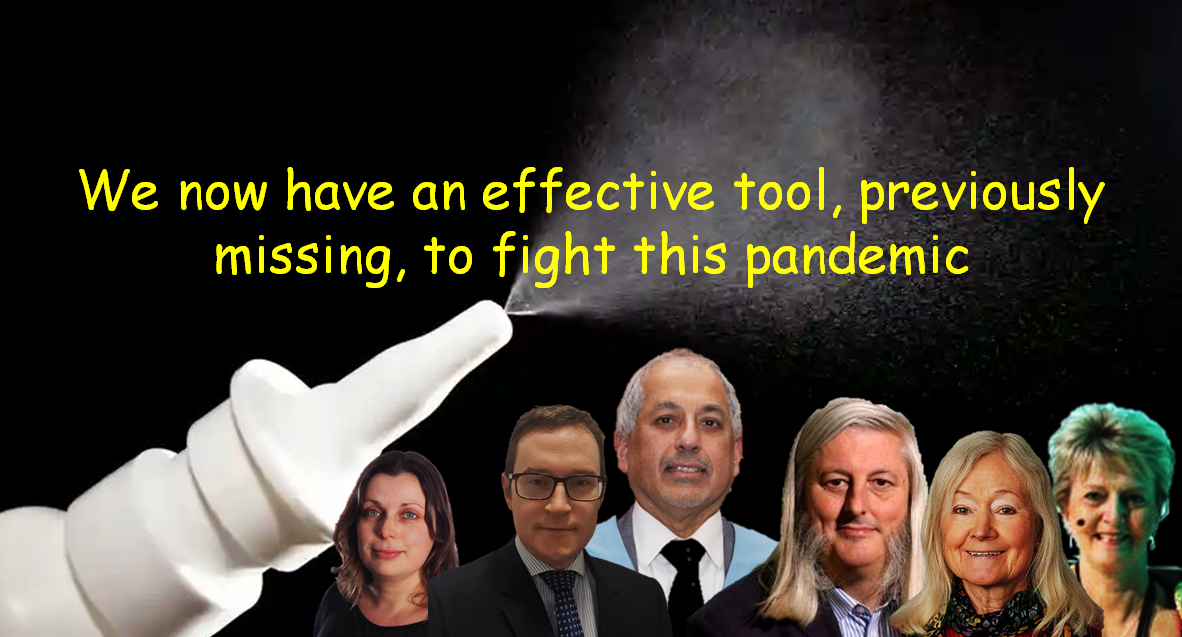
Professor Rakesh Uppal, Professor of Cardiovascular Surgery at Queen Mary University of London, Director of Barts Life Sciences and Chairman of pHOXBIO, said: “pHOXWELL presents a significant breakthrough. We now have an effective tool, previously missing, to fight this pandemic.”

Nevertheless, the paper declared a total absence of conflicts of interests:
“The authors declare that they have no known competing financial interests or personal relationships that could have appeared to influence the work reported in this paper.
JAS, LS, AD, KED, SGD, MAM, AM, RM, DR, AJR, and RU are shareholders of Raphael Labs LTD. JS is the managing director of Swales Pharma Consulting providing consulting services for a range of pharmaceutical companies. AJM and AR sit on the advisory board of Raphael labs.”
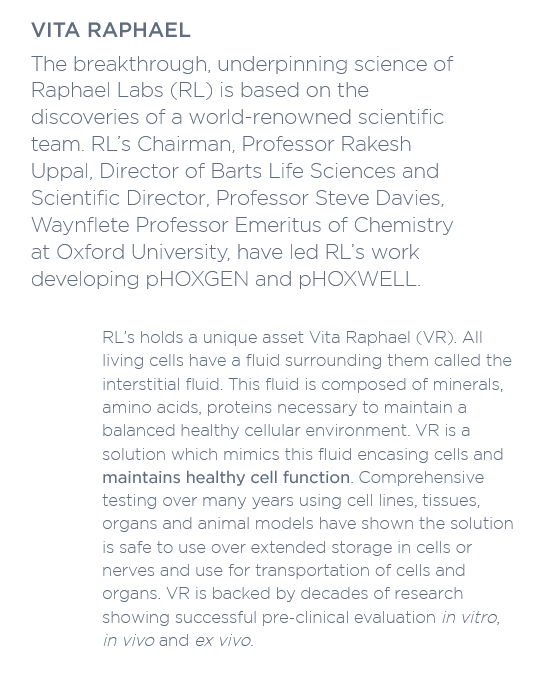
In reality, Uppal and Steve Davies are the company’s founders and chairmen, Raphael Labs used to list them and their coauthors Kay Davies, McKnight, Russell and her lab member Laurence Silpa, plus the pharma consultant Jim Swales as its “management team” or “scientific leadership team” (see here and here).
Another coauthor and Raphael Lab’s team member is Alan Dunton, whose main job is Senior Vice President of R&D with Purdue Pharma! Yes, the most evil opioid killers in the world, owned by the nasty Sackler family, responsible for countless OxyContin deaths in USA, who in January 2025 settled the opioid epidemic lawsuit with a payment of $7.4 billion. What a team indeed.
Sholto David posted many concerns on PubPeer in March 2023, not just the lies about the conflict of interests.
The irregularities included an unusual rate of almost 100% enrolment for 650 patients, total absence of any drop-outs, a 99.3% rate of compliance with trial protocol, plus results having been published online two days before the end of the 60 day period of data collection.
Also, the clinical trial in question was conducted, according to the paper “Between 16th April 2021 and 26th July 2021”, yet the ethical approvals for the participating centres were provided only afterwards:
- Narayana Diagnostics: 17 April 2021
- Tulsi Hospital Ethics Committee: 26 April 2021
- Atharva Multispecialty Hospital: 17 April 2021
Thus, the clinical trial is therefore unethical and illegal. It was also described as “registered prospectively”, which was a lie because the registration is dated 22 April 2021, 6 days after the trial started.
Sholto reported this and another suspected research misconduct cases to QMUL. They were assigned the numbers QMRI-08 and QMRI-09. Apparently those were among the first 10 Queen Mary Research Integrity (QMRI) cases this English university ever investigated in its over 200 year long history. QMRI-09 was about QMUL cardiology professor Ken Suzuki, who so far didn’t have to retract any papers:

Ken Suzuki: The King of Hearts at QMUL
“The only difficult part might be deciding whether Ken has been intentionally deceptive or wildly incompetent, although the difference in practice doesn’t seem so important.” – Sholto David

In October 2023, QMUL’s Vice Principal for Research and Innovation, Andrew Livingston, rejected the Sholto’s notification about both cases outright, declaring all critiques against this Ayurvedic trial to be unfounded, and PubPeer links inadmissible:
“Dear Mr David,
Allegations of research misconduct QMRI-08 and QMRI-09
I am writing with regards to two formal complaints you have recently submitted alleging research misconduct. As we received these around the same time, I will deal with both in this letter.
At Queen Mary University of London, we take allegations of research misconduct extremely seriously. Therefore, your complaints were triaged and assessed rigorously in accordance with our policy. As a result of this assessment, we will not be pursuing further investigation. I will explain the reasons for this below.
In your complaint QMRI-08, you suggest there has been possible fabrication. This appears to be based on a view formed about the indications in the data. However, no further substantiation nor analysis is provided. As a result, we do not have sufficient evidence to examine this claim further.You also raise questions about the ethical approval for the study. This has been granted by Atharva Multispecialty Hospital and Research Centre and Tulsi Hospital in India. It is our understanding that they are the legal sponsors of the study and are thus responsible for the ethical approval.
With regards to the Funder and Competing Interests statements in the journal article, we have raised these with the researcher who is seeking advice from the journal as to whether these statements should be revised for clarity.
Your other complaint, QMRI-09 is comprised of links to comments posted on the PubPeer website. This does not amount to a completed and substantiated complaint that we can review. […]Yours sincerely,
Professor Andrew Livingston
Vice Principal, Research and Innovation”
Sholto didn’t give up, and continued with the journal. In November 2023, Hubert G.M. Niesters, Editor in Chief of the Journal of Clinical Virology informed the sleuth about the feedback from the authors, who insisted that everything was correct, but agreed to add some additional explanation and a “modified conflict of interest statement”.
In between, Sholto discovered that at least the clinical trial data from the Tulsi Hospital must have been made up. The authors claimed to have recruited 373 pandemic frontline staff members, while an actual employee confirmed to the sleuth in writing that in reality no more than 100-150 people would work at Tulsi Hospital (I have seen that communication).
Indeed, this hospital is very small:
Sholto David: “The authors claim to have recruited 373 staff members from Tulsi Hospital, Kanpur. Images of the hospital are available on Google, I retrieved the below image (the first result) 1st November 2024. I think it is reasonable to ask whether this could actually be the workplace of nearly 400 people.”

Still, nothing happened. On Christmas 2024, Sholto sent a picture of a lump of coal to all involved, since they have been naughty. The authors still refused all communication, and as you know, QMUL refused to investigate the case.
The journal however reacted first by posting an Expression of Concern, on 31 January 2025:
“Concerns have been raised regarding the reliability of this study.
The journal is currently investigating these concerns, that have been highlighted on PubPeer, available here: https://pubpeer.com/publications/626E12142DA77239E263D482DB56EF
No statement on the validity of these claims can yet be made.
The journal is in the process of reaching out to the authors…”
Corona up your NOse
“Prior going to the grocery store, after the grocery store, you’d spray it in your nose, for instance, or you go to day care or someone coughs on you,” – Dr Chris Miller, co-founder of SaNOtize.
On 13 March 2025, a retraction followed:
“This article has been retracted at the request of the Editors-in-Chief.
In investigating concerns regarding ethical approvals and subject recruitment for this article the editors reached out to the authors for an explanation. While the authors were able to provide some ethical approval documents the editors are not satisfied that the pre-screening portion of this study could have taken place after the relevant approvals were in place and the authors were unable to provide any documentation to this end.
The editors therefore feel that the findings of the manuscript cannot be relied upon and that the article needs to be retracted.
The scientific community takes a very strong view on this matter and apologies are offered to readers of the journal.”
As you see, this Ayurveda quackery was only pulled because it lacked proper ethics approvals. And even then it took exactly two years.
Raphael Labs LTD was shut down already in October 2022, soon after that clinical fabrication was published. In November 2021, just when Raphael Labs applied for the Ayurvedic nasal spray’s authorisation in India and was making deals with Vietnam, the company received a strike-off notice. That notice was discontinued, but in August 2022, just when the clinical study was published, a second strike-off notice was issued. On 18 October 2022, Raphael Labs was “dissolved via compulsory strike-off”.
Donate!
If you are interested to support my work, you can leave here a small tip of $5. Or several of small tips, just increase the amount as you like (2x=€10; 5x=€25). Your generous patronage of my journalism will be most appreciated!
€5.00

 For Better Science
Laughter is the best medicine!
LikeLiked by 1 person
When it comes to academic/publication fraud there isn’t much else one can do. Nobody seems to take it seriously/take real actions. So yeah, all one can do is laugh, but I think it’s more a mirthless laughter…
LikeLike
The press release celebrating COVID defeat by QMUL has now been deleted, it can still be accessed through the internet archive: https://web.archive.org/web/20240613204419/https://www.qmul.ac.uk/media/news/2021/smd/queen-mary-researchers-help-develop-nasal-spray-that-prevents-covid-19.html
LikeLiked by 1 person
Dabur is famous for selling Chyawanprash, a gooey jam full of dozens of ayurvedic spices that cures everything. I bet you wouldn’t get COVID if you spooned that up your nostrils.
LikeLiked by 1 person