Schneider Shorts 21.03.2025 – The mental impact science integrity took
Schneider Shorts 21.03.2025 - Brazilian Academician who may have second thoughts about awarding PubPeer, what to eat to avoid breast cancer, with Armenian Alzheimer's vaccines, a litigious fraudster, elusive Belgians, and finally, what German government knew about pandemic origins.
Schneider Shorts of 21 March 2025 – Brazilian Academician who may have second thoughts about awarding PubPeer, what to eat to avoid breast cancer, with Armenian Alzheimer’s vaccines, a litigious fraudster, elusive Belgians, and finally, what German government knew about pandemic origins.
Project Saaremaa – German secret service knew SARS-CoV2 escaped from Wuhan lab
Science Elites
The mental impact science integrity took
The biochemist Helena Bonciani Nader is Professor Emeritus at Federal University of São Paulo (Unifesp), currently serving as president of the Brazilian Academy of Sciences and other academic organisations. Nader is also member of the Jury of the Einstein Foundation in Berlin, Germany, which just recently awarded the sleuth Elisabeth Bik and PubPeer with €200k each. It is a bit ironic.
However, most Nader’s papers were flagged on PubPeer after the jury’s decision was set. Not a conspiracy, but coincidence.
The oldest Nader paper was posted on PubPeer 10 years ago. Carl Peter von Dietrich, the Brazilian academician and Unifesp professor used to be Nader’s mentor. He died in 2005 but became coauthor nevertheless:
“Fig. 3 (A and C) Similar bands but different conditions. Undeclared splicing in panels B and C”
“In fig 1, please compare the blot for ECV-304 cells with the blot for RAEC cells.”
Actinopolyspora biskrensis: “An image in this paper seems to overlap with an image in a previous paper by some common authors. […] Figure 1A, Biochimie (2006)”:
This is that other Nader paper, flagged in March 2025. Dietrich was dead when it was published:
“Fig. 1B and 1C: Highlighted regions are more similar than expected”
Nader replied on PubPeer to explain the Northern blot technology, and insisted that “the images are indeed distinct”. Her evidence was not really convincing though:
Helen Nader: “Upon closer examination, several subtle but important differences are evident, as for example the ones depicted in the highlighted regions.”
The overall similarity is unlikely to have happened by chance, while the tiny pixel differences are most likely compression artefacts of the low resolution images.
Other papers by Nader were flagged on PubPeer in March 2025, including this one with Von Dietrich, published while he was still alive:
“Figure 4 (contrast enhanced): Repeated patterns are highlighted – more similar than expected.”
Again a clearly falsified gel, coauthored by Von Dietrich, and this time again after his death:
Olga Meiri Chaim, Youssef Bacila Sade , Rafael Bertoni Da Silveira, Leny Toma, Evanguedes Kalapothakis, Carlos Chávez-Olórtegui, Oldemir Carlos Mangili , Waldemiro Gremski, Carl Peter Von Dietrich , Helena B. Nader, Silvio Sanches Veiga Brown spider dermonecrotic toxin directly induces nephrotoxicityToxicology and Applied Pharmacology (2006) doi: 10.1016/j.taap.2005.05.015
“Figure 4B: Contrast enhanced – more similar than expected”
Nader’s collaborator Olga Meiri Chaim, professor at the Federal University of Paraná, replied to explain how western blot works:
“All these western blots were obtained and performed with huge amount of rigor and dedication using nitrocellulose paper, BCIP and NBT for revealing method, no fluorescent or chemoluminescence method to detection. There is typical precipitation of milk and substrate particles that had created background, […] These areas pointed are not equal at all. Your detection system is reflecting biased and “similar” as standards not realistic to measures of Western Blots done with membranes captured by scanning.”
Chaim also chimed in here, another paper by Nader and the Von Dietrich (who died two years before publication):
“Figures 3 and 4 are more similar than expected. Contrast increased to highlight similarities”
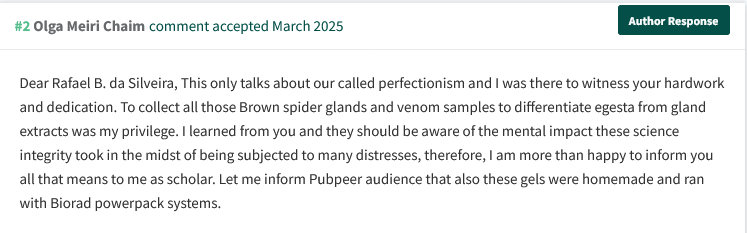
Chaim seems to have mistakenly posted her email exchange with the first author Rafael Bertoni Da Silveira as reply on PubPeer:
“Dear Rafael B. da Silveira, This only talks about our called perfectionism and I was there to witness your hardwork and dedication. To collect all those Brown spider glands and venom samples to differentiate egesta from gland extracts was my privilege. I learned from you and they should be aware of the mental impact these science integrity took in the midst of being subjected to many distresses, therefore, I am more than happy to inform you all that means to me as scholar. Let me inform Pubpeer audience that also these gels were homemade and ran with Biorad powerpack systems.“
Even in a simple and in principle excusable case of two pixel-identical images, these authors refused to admit an error:
“Figure 5: More similar than expected (contrast enhanced to highlight similarities)”
Chaim explained: “Dear Pubpeer, It is the same rabbit area for the period of time 6h up to 24h after the experimentally performed envenomation of the rabbit reported“. She was joined by Silvio Sanches Veiga, who reiterated the same and insisted:
“We affirm that there has never been any attempt on our part to falsify or publish adulterated results. We are committed to rigorous and serious scientific research.“
The new PubPeer threads actually began in December 2024, with this paper (also flagged by Claire Francis):
Nader replied on PubPeer with a total lack of understanding, excerpt:
“You can notice that the figure shows differences with respect to the intensity of the bands. Also, it is hard for us to understand the question, since they are stating that the red and blue rectangles drawn in the figure by them show “more similarity than expected”. We have no idea of what they mean by this statement.“
Later on, Nader and her FAPESP colleague Carla Cristina Lopes de Azevedo admitted the similarity, declared original data unavailable and warned:
“…we want to once more emphasize that this does not interfere with the results presented in the paper.”
A correction was not even considered. Another one by Nader and Lopes, with duplicated cell cultures:
Archasia belfragei: “Unexpected similarities in two panels of Figure 3”
At least here, Nader and Lopes announced to publish a correction, even though “this error does not compromise the integrity of the data nor affects the overall conclusions of the study.“
The next paper is a clinical study with 10 female patients:
“Fig.3 – decorin and biglycan bands are more similar than expected.”
“potential similarities between them and lumican”
On PubPeer, Nader and her mentee José Maria Soares Jr apologised for the error and announced an erratum.
I contacted Nader about her PubPeer record, and she told me that there was a death in her family. Yet she promised to contact other senior authors and be “getting back to the lab to properly answer all comments.“
There will be a lot to address, currently around 20 papers. This was also flagged by Claire Francis, Nader is corresponding author:
Nader replied with records from “the PhD of Dr Rodrigo I Bouças“. She stated: “The images are original. They have not been manipulated or altered“. That is only partially correct, I made a comparison:
Bluish: original gels from the thesis. These gels are too short. Either they were digitally “extended”, or Nader shared truncated version of raw data.
Nader then explained on PubPeer that the published gel images can be impossibly digitally manipulated because “this data is 15 years old, a time when creating composite images lacked advanced tools such as those available today”. The paper is from 2012, not from 1912.
It’s not nice to play tricks with raw data. Anyway, how to explain with a mistake that 2 out of 4 gel bands are identical?
“Figure 1D. Lanes 1 and 3 of the beta-actin panels are the very similar, but lanes 2 and 4 of the beta-actin panels (the loading controls according to the legend) are different”
Nader saw no issue at all, and explained on PubPeer that her critics meddle with her attempt to save countless human lives:
“As a matter of fact, the similarity among spectra […] was fully acknowledged by us (text in bold above) and even expected […] these samples were the ones associated with the heparin contamination crisis that led to deaths…“
A suggestion of mine: when not saving lives, Nader should run the same sample through NMR analysis 4 times and see if she’ll get 4 perfectly identical curves even then.
Or maybe those eggs are from the same chicken, thus expected to be identical? I am neither professor nor an academician, and I sit on no research integrity juries, so what do I know.
Mario “Fakenews” Saad is entering a run-off election to become rector of his Brazilian university. The man responsible for massive research fraud and 18 retractions plays the victim of a “Cancel Culture”. Saad also announces to create an “Office for Research Integrity”, to legalise misconduct and to punish the whistleblowers.
We move north to meet the anti-aging researcher Trygve Tollefsbol, Distinguished Professor at the University of Alabama at Birmingham (UAB) in USA, and inventor of “epigenetics diet” to prevent cancer, which is basically a bullshit bingo of curcumin, coffee, red wine resveratrol and green tea.
“Tollefsbol’s lab coined the term “epigenetics diet” in 2011. It refers to a class of bioactive dietary compounds such as isothiocyanates in broccoli, genistein in soybean, resveratrol in red grapes and other commonly consumed foods, which have been shown to modify the epigenome leading to beneficial health outcomes. The epigenetics diet can inhibit tumor progression through modulation of epigenetic-modifying enzymes such as DNA methyltransferases and histone deacetylases as well as certain noncoding RNAs.”
Here comes proof that green tea and soybeans prevent breast cancer, from Tollefsbol and his mentee Yuanyuan (Rose) Li, now assistant professor at the University of Maryland. Flagged by Claire Francis:
Tollefsbol is 73 years old now, and he never got breast cancer, so his diet must work, right? Must be due to all that resveratrol and pterostilbene from red wine:
“Carcinogenesis is retracting the following paper following a joint research misconduct investigation by the Birmingham VA Medical Center and the University of Alabama at Birmingham, AL, USA. […] In Figure 5, there are several instances in which bands are replicated but labelled to represent different experimental conditions. […] This retraction is based on the unavailability of original data and records, the lack of replicate experiments that validate the published findings, and the ambiguous identification of many of the samples, treatments and controls.”
The guilty party was the UAB professor of dermatology Santosh Katiyar, in May 2017 UAB kicked him out and ordered for TWENTY of his papers to be retracted. By January 2019, Retraction Watchreported 12 retractions for Katiyar.
This paper however was obviously exempt from retraction because… Tollefsbol had nothing to do with it, or so he explains:
Trygve Tollefsbol: “Dr. Santosh Katiyar was the senior author on this paper and was the one involved in these experiments. He is the one who should be contacted as I was not involved in these data”
In this regard, the following study by Tollefsbol on green tea and broccoli as breast cancer prevention superfoods is interesting. The last author is Syed Meeran, now professor at CSIR-Central Drug Research Institute in India, who just happens to be a former mentee not only of Tollefsbol, but also of the fraudster Katiyar, together they had at least 2 retractions (see PubPeer):
In 2021, Lee, previously kicked out by Harvard and Massachusetts General Hospital (MGH), settled an agreement with the US Department of Justice, which issued this press release:
“Sam W. Lee, PhD, 67, of Bellevue, Wash., has agreed to pay $215,000 to resolve allegations that he submitted false claims for payment in a grant application to the NIH. MGH, the sponsor institution for the NIH grant, disclosed to the United States that Dr. Lee, the Principal Investigator (PI), submitted the grant application to NIH containing allegedly inauthentic data. MGH separately repaid NIH the full amount of funds it drew from the grant. […]
The United States contends that Dr. Lee altered the experiment descriptions in two of the figures, falsifying the results of the experiments, and that Dr. Lee falsified a third figure by horizontally flipping the image and thus mislabeling the results in the application.”
“Aaronson may have finally realized the need to modify his behavior when his young children confronted him one day and complained, “Daddy, we’re afraid of you”. After he told us this story he added that perhaps he was being too harsh at work as well.”
Despite that impending disaster, Yale University recruited Lee in 2019, probably on advice of his mentor and professional bully Stuart Aaronson. And now the elite university will literally pay a price. Yale Newsreported on 5 March 2025:
“A former School of Medicine researcher is suing Yale after his incubator was allegedly disconnected by a University vendor.
In October 2022, after working at the School of Medicine for over two years, Sam Lee, then a genetics researcher, learned that an incubator he had been using was disconnected from its nitrogen gas tank, killing all the specimens Lee had been studying, the scientist claims. This January, Lee filed a lawsuit against the School of Medicine.” […]
“Had Yale known the extent of Lee’s research misconduct, grant application misconduct, and retractions, Yale would not have hired him and would not have accepted possession and ownership of the laboratory equipment and biological materials,” Yale’s lawyers wrote. […]
The University’s lawyers pointed out that major corrections were issued on several of Lee’s published papers, andfivewereentirelyretracted.
The University’s response to the complaint states that Yale did not renew Lee’s appointment after it learned of the NIH grant fraud settlement.
“Because of Dr. S. Lee’s fraud, Yale suffered damages by paying Dr. S. Lee a salary from 2019 to 2023,” the lawyers wrote.”
Yale is now suing Lee back for breach of contract because of the above and because he was hardly ever there while pocketing the salary. The trial begins in September 2025.
Here by the way a retracted paper by Lee, Aaronson and Wafik El Deiry, the self-appointed Science Guardian and soon possibly Director of National Cancer Institute:
The retraction from August 2013 was short, with nobody at being guilty:
“We were made aware that Western blot data in some of the figures for the above referenced paper were inappropriately assembled resulting in duplications of bands. Because we believe that the presentation issues are beyond the limits of acceptable scientific standards, we wish to retract this paper and regret any inconvenience to the scientific community this may have caused.”
Retraction Watchdogging
Armenian Alzheimer’s Vaccines
You can always trust Eliezer Masliah (former UCSD professor, kicked out of NIH for fraud) to lead to you to some unhinged quacks. Of course nobody can even match Hari and Aruna Sharma in Sweden and their and Masliah’s common Austrian friend Herbert Mössler who used to sell Nazi Pig Brain Juice aka cerebrolysine….
“Poking around PubMed (Dysdera the spider is always on the hunt for new hornet’s nests) [..], I came across one image in two papers by Eliezer Masliah. […] By a conservative count, I contributed to about 160 out of 300 slides in the final dossier” – Mu Yang
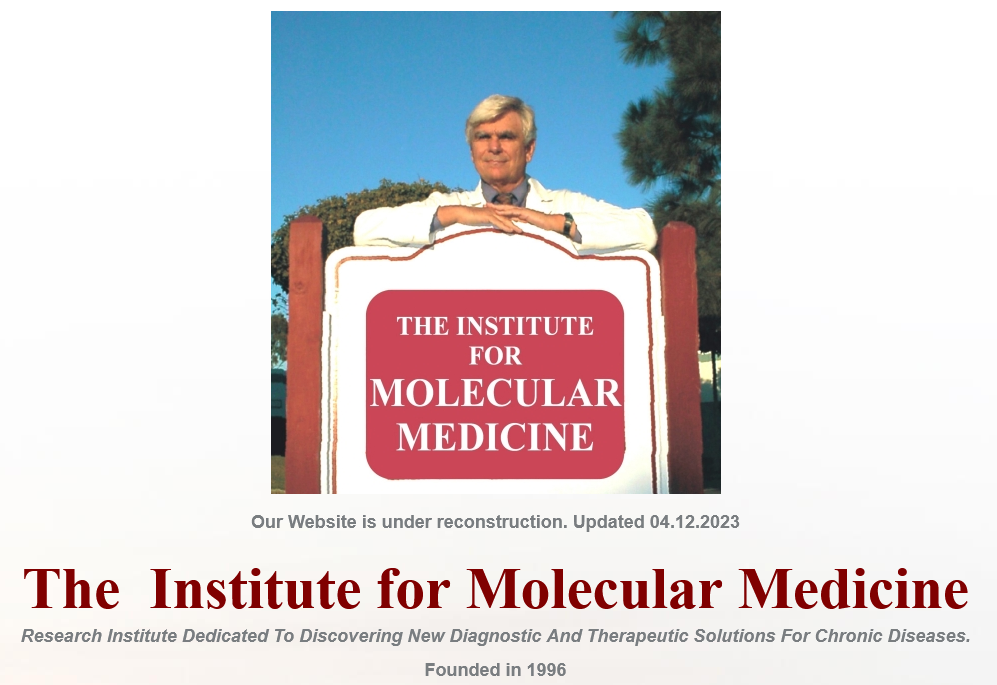
But these collaborators of Masliah, the Armenian couple Michael Agadjanyan (russia-trained) and his presumed wife Anahit Ghochikyan are also not bad. They run so-called The Institute for Molecular Medicine (IMM), located inside H.B. Business Center in Huntington Beach, California. There, Agadjanyan plays the Head of the Cancer Vaccines Laboratory, and Ghochikyan the Head of the Alzheimer’s Disease Vaccines Laboratory. Many other international scholars are listed as profesors at IMM, where do they all find a spot to sit there, is a mystery. IMM was originally founded by retired MD Anderson professor Garth Nicolson (now in his 80ies) and his late wife Nancy, who recruited the Armenians.
There is also this unfinished IMM website, where you can see Nicolson posing with a sign:
Now, Agadjanyan and Ghochikyan run the IMM. So of course Masliah was attracted to this couple, and together they and further Armenians with professorships inside the IMM rental office (Armine Hovakimyan, Tatevik Antonyan, Gor Chailyan and Hayk Davtyan), fabricated this vaccine against Parkinson’s and Dementia with Lewy bodies:
“In the original version of this Article, images from Fig. 7c column PV-1950D were mistakenly duplicated in Fig. 7a column PV-1950D. The figure has been corrected in both the PDF and HTML versions of this Article.”
But Elisabeth Bik found further problems in the corrected figure:
Elisabeth Bik: “Unfortunately, the corrected Figure 7A/B still has a duplication, as found by ImageTwin, involving a 180-degree rotation. Marked here with red boxes:”
In October 2024, Agadjanyan replied to Bik on PubPeer:
“As you pointed out, NPJ Vaccines posted a “corrected” version of Figure 7 in July 2023. Surprisingly, I was not previously informed or consulted about the submission of this correction. I have reached out to the co-communicating author (Dr. Masliah) for more information about the submission of this correction. “
He then blamed some coauthors, but PubPeer moderators removed that section. Also, Agadjanan said that Masliah “is preparing a complete set of original data with corrected Figure 7 for submission to the journal.”
Instead, the paper was retracted on 12 March 2025:
“The Editor-in-Chief has retracted this article because of concerns regarding figures presented in this work. These concerns call into question the article’s overall scientific soundness. An investigation conducted after its publication discovered that panel α-synuclein TG PV-1950D, Male Hippocamp in Figure 7a appears to overlap, when rotated, with panel α-synuclein TG PV-1950D, Female Hippocamp in Figure 7c. These panels represent tissues taken from different animals. The Authors provided some raw data on request from the Publisher. However, this was insufficient to satisfy the concerns raised. In light of previous concerns involving figures presented in this article, the Editor-in-Chief therefore no longer has confidence in the integrity of the research presented in this article.
Michael G. Agadjanyan has stated on behalf of Armine Hovakimyan, Karen Zagorski, Tatevik Antonyan, Gor Chailyan, Anahit Ghochikyan, Irina Petrushina, Mathew Blurton-Jones, David H. Cribbs, and Hayk Davtyan that they disagree with the retraction. Eliezer Masliah disagrees with the retraction. Jonathan Hasselmann agrees with the retraction. The Publisher was unable to contact Anthony Adame. Changyoun Kim, Michiyo Iba, and Marcell Szabo have not replied to correspondence from the Publisher. The Publisher has been informed that Edward Rockenstein has passed away.”
Noteworthy, it is not the first brain disease vaccine these Armenian geniuses invented. Previously, they and the UC Irvine professors Mathew Blurton-Jones and David Cribbs (the latter is IMM adjunct professor) joined forces with Nikolai Petrovsky at Flinders University School of Medicine in Australia to invent an Alzheimer’s vaccine:
Hayk Davtyan , Karen Zagorski , Harinda Rajapaksha , Armine Hovakimyan , Arpine Davtyan , Irina Petrushina , Konstantin Kazarian , David H. Cribbs , Nikolai Petrovsky , Michael G. Agadjanyan , Anahit Ghochikyan Alzheimer’s disease Advax(CpG)- adjuvanted MultiTEP-based dual and single vaccines induce high-titer antibodies against various forms of tau and Aβ pathological moleculesScientific Reports (2016) doi: 10.1038/srep28912 (press release)
Hayk Davtyan, Armine Hovakimyan , Sepideh Kiani Shabestari , Tatevik Antonyan , Morgan A Coburn , Karen Zagorski , Gor Chailyan , Irina Petrushina , Olga Svystun , Emma Danhash , Nikolai Petrovsky , David H Cribbs , Michael G Agadjanyan , Mathew Blurton-Jones , Anahit Ghochikyan Testing a MultiTEP-based combination vaccine to reduce Aβ and tau pathology in Tau22/5xFAD bigenic miceAlzheimer’s Research & Therapy (2019) doi: 10.1186/s13195-019-0556-2 (press release)
Armine Hovakimyan , Tatevik Antonyan , Sepideh Kiani Shabestari , Olga Svystun , Gor Chailyan , Morgan A Coburn , William Carlen-Jones , Irina Petrushina , Jean Paul Chadarevian , Karen Zagorski , Nikolai Petrovsky , David H Cribbs , Michael G Agadjanyan , Anahit Ghochikyan, Hayk Davtyan A MultiTEP platform-based epitope vaccine targeting the phosphatase activating domain (PAD) of tau: therapeutic efficacy in PS19 miceScientific Reports (2019) doi: 10.1038/s41598-019-51809-2 (press release)
These papers are of course 100% reliable, please buy the vaccines from the company Nuravax, owned by Agadjanyan, Ghochikyan and Cribbs. Because their previous brain vaccine business, Capo Therapeutics, is apparently defunct.
Anyway, here is another fresh Masliah retraction, with another set of Californians:
Elisabeth Bik: “Concern about Figure 1A: Pink arrows highlight a band representing ‘monomer’ in one of the Control lanes that appears to be surrounded by a lighter background shaped as a rectangle. Red boxes highlight a possible duplication in the A beta(6E10) blot in the AD lanes”
“Concern about Figure 1D: Blue boxes: two lanes in the top blot representing alpha-syn tg look unexpectedly similar”“Concern about Figure 5A: Pink boxes highlight a potentially duplicated area, with one of the duplications covering the 28 kDa region-of-interest. Green arrows highlight potential sharp background transitions.”
“The PLOS One Editors retract this article [1] following concerns about the reliability and integrity of the results reported in Figs 1 and 5. Specifically,
In the Fig 1A α-syn panel, there appear to be irregularities in the background surrounding the 14kDa band in lane 3.
The following lanes appear more similar than would be expected from independent results:
Fig 1A Aβ (6E10) panel, lanes 5-6 and lanes 7-8
Fig 1D α-syn panel, lane 5 and lane 6
There appears to be a vertical irregularity in the background of the Fig 1A Aβ (6E10) panel, between lanes 2 and 3.
The corresponding author provided data underlying the image results presented in Figs 1, 5, and 6. These did not resolve the concerns raised with the Fig 1A Aβ (6E10) panel and the Fig 1D α-syn panel. In addition, discrepancies observed between the published Fig 5A and the underlying data provided for this figure raised further concerns about the integrity of the published Fig 5A, which call into question the article’s findings that solubilized Aβ and Aggregated Aβ induces aggregation of α-syn into the formation of stable dimers and trimers.
The following additional issues were resolved upon follow-up:
Lanes 4-12 of the Fig 1D Actin panel in this article [1] appear similar to lanes 4-12 of the Fig 9C Actin panel of [2] despite being used to represent different experimental conditions. The underlying blot data confirmed that the Actin panel presented in Fig 1D of [1] is correct.
Vertical irregularities were observed between lanes 6-7 in Fig 5A and 5B, and between lanes 3-4 in Fig 5A and 5D. Underlying data confirm that Fig 5A–5D were prepared using spliced results from non-adjacent lanes of the same underlying blot, resulting in the appearance of vertical irregularities in the background of these panels.
The underlying data provided for Fig 6D shows that an area of this panel was enlarged in the published figure and there appears to be a vertical irregularity within the panel. However, PLOS considers that the underlying data provided support the reported results.
IFT, BS, and EM did not agree with the retraction. BS stands by the published results. LC, PD, GMS, YS, HM, ER, MT, OP, and JXJY either did not respond directly or could not be reached.”
Advice to Masliah: stop faking raw data, nobody believes your BS.
Authors did not respond
A Belgian group from Ghent University retracted a paper. It was flagged on PubPeer in 2017:
Halarachnion parvum: “Figure 2B: Several of the blank lanes are unexpectedly similar to each other, especially when a false color image is applied”“in Supplemental Figures S2A and S2B, some lanes appear to be visible twice in the same panel.”
The authors did not respond to editorial requests for a response and underlying data. In light of the above unresolved concerns that question the integrity and reliability of the reported results and conclusions, the PLOS One Editors retract this article.
All authors either did not respond directly or could not be reached.”
It is strange no author replied to the editors. Joël Vandekerckhove is apparently deceased. Others, including last author Aude Guillabert (now Aude Gourgues), indeed have left Ghent University, except for the second corresponding author and Gourgues’ former boss, Jan Gettemans, who remains active professor running a lab.
Update: on 16 March 2025, Gettemans replied on PubPeer:
“The authors were informed yesterday about this decision. They will thoroughly investigate this matter immediately. Jan Gettemans”
Anne Dejean is a very important cancer researcher in France. To whom shall she bequeath her high-achieving Institut Pasteur lab when she retires? The German shooting star Oliver Bischof is the right man to continue Dejean’s craft.
“In Fig. 4d of this Letter, the band corresponding to free SUMO1 in the left-hand blot is incorrect, as it is a repeat of the band corresponding to free SUMO2 in the right-hand blot. Figure 1 of this Amendment shows the original incorrect panel and the corrected panel of Fig. 4d, for transparency to readers. The full uncropped blots are shown in the Supplementary Information to this Amendment. The original Letter has not been corrected.”
COVID-19
Project Saaremaa
The German secret service knew all this time that COVID-19 must have almost certainly escaped from the lab in Wuhan, as a result of sloppy gain-of-function experiemnts with the coronaviruses. Yet two German governments decided to keep this information secret.
As a result, the lab leak theory remained a conspiracy theory, the German media and national science authorities kept discrediting everyone who dared to even discuss it as a science denialist, an anti-vaxxer or a far-right Querdenker.
Unbeknown to the public, the German Federal Intelligence Service (BND) began its investigation of COVID-19 origins as soon as the pandemic started, in the first weeks of 2020. It was called “Project Saaremaa” (after an Estonian island), and it produced reliable knowledge very early on.
Two German national newspapers, Zeit and Süddeutsche Zeitung (SZ), finally revealed whatw as hidden for 5 years. Here is SZ reporting, and here is Zeit from 12 March 2025 (translated):
“The German agents come as close to the origin of pandemic in that crisis year 2020 as that was possible in the the then hermetically sealed China. In addition to measuring data series dealing with coronaviruses, they find information on animal experiments and several scientific studies, including unpublished dissertations from 2019 and 2020. These doctoral theses are said to deal with the effect of coronaviruses on human brain. The material indicates that in Wuhan, there was unusually early unusually much knowledge about the supposedly so new virus.
The agents who have procured the information further forward the captured data to the Department of Technology and Science of the BND, mockingly called “the nerds”. The spies from the office did their job. Now the “nerds” were tasked with the evaluation. […] Again and again, the BND experts calculate the data in computer models. And again and again they come to the same result.
The coronavirus, the BND is convinced after evaluating all evidence, probably stems from a Chinese laboratory. The intelligence service assesses the probability based on a special system, the “Probability Index”, a yardstick for the reliability of information. BND classidies the lab leak thesis as “probable”, it is “80 to 95 percent” certain. […]
The Institute of Virology Wuhan is a high -security zone from which viruses cannot escape in principle. But during their operation, the German agents found that the implementation of security measures in Wuhan was obviously surprisingly lax. Samples of virus-infected animals were taken carelessly and transported carelessly back and forth. Sloppiness was widespread. This increased the risk that the pathogen could actually have escaped the laboratory. The invetsigators do not believe that the it was an intent by the Chinese. They believe in an accident.”
And then the cover-up started. The BND president informed Bruno Kahl the Federal Chancellery already in 2020, via its responsible State Secretary Johannes Geismann, and the head of Federal Chancellery Helge Braun. They must jave informed the then-Chanellor Angela Merkel, who now however refuses to confirm this. At the same time, US President Donald Trump was accusing China of setting COVID-19 off, while China vehemently denied it.
“So that is the constellation: the federal government is wedged between two global rivals, the conflict which is capable of causing a global political explosion. And in between is the BND with its data, documents and interpretations. In the Federal Chancellery, they decide to do nothing. Neither the WHO nor the responsible body in the Bundestag are informed. The BND is ordered to silence.”
As German MPS start asking questions about what the government knows, the Chancellor blocks off all inquiries. Even after Joe Biden becomes president in January 2020, and the US intelligence agencies keep comfirming the lab leak theory, the German cover-up continues.
In Autumn 2021, Olaf Scholz is elected as Chanecellor. BND hopes to receive more support (“In the meantime, new insights arrived, the BND is more convincing than ever“), thus the BND president Kahl informes the new head of Federal Chancellery, Wolfgang Schmidt, right away. Scholz’s speaker now refuses to say whether the Chanellor was informed. But: “It is clear: the new federal government is well aware early on“.
“Can it really be that the Germans of all people have unearthed the wolrd-exclusive knowledge? That one of the nerds, the virologist from the middle hierarchy of the BND, knows more than Christian Drosten and all other world-class virologists who determine the discussion at that time? Scholz’s people ask the BND to first discuss the lab leak thesis with Drosten, discreetely. But this does not happen, due to a difficult to explain mix of the secrecy of the secret service, personal reservations and distrust.”
The Charite Belrin virologist Christian Drosten was the national expert during all of pandemic, and he became top hate figure of covidiots and antivaxxers. Yet he also was one of the earliest and harshests opponents of the lab leak theory, see Calisher et al 2020 and read here:
A lab leak theory of the COVID-19 origins has enough circumstantial evidence and historical basis to support the urgent need for an independent and unbiased investigation. But until recently, scientists dismissed lab leak as a conspiracy theory. In public at least.
Even today, Drosten maintains that a zoonotic spill-over is a scientifically more likely theory for COVID-19 origins. The Scholz-appointed expert board keeps convening and discussing the origins of COVID-19 for 33 times, and none of the knew about the BND information (at least officially). At a meeting at Federal Chancellery on 4 April 2023, Drosten spoke about “Current discussions on the origin of Sars-Cov-2“, and insisted that there was no scientific evidence of genetic engineering or a lab leak accident, the theory of natural origin was allegedly stnrenghtened. Drosten referred to the “association of raccoon dog and Sars-Cov-2 in several samples” and “at least two spill-overs to humans“. He left no doubts about his personal conviction that the virus arose in nature.
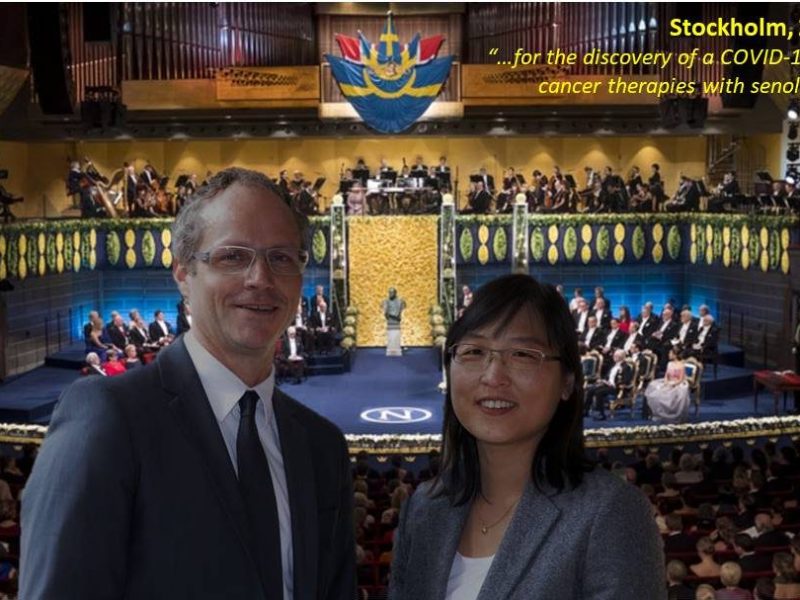
What Zeit doesn’t mention: as part of a Charite team, Drosten even helped discover a cure for COVID-19, which is an cancer drug promoted by anti-anging enthusiasts. No, the senolytic nonsense of course doesn’t work, but it made into Nature. Read here:
Also Scholz’s Chancellory decided to keept the BND’s “Project Saaremaa” secret. Only in December 2024 was BND allowed to share its information with US secret services and a selected group of scientists, including Drosten and Head of Robert Kocjh Institute, Lars Schade. There were three meetings, into February 2025.
Only after an inuiry from Zeit and SZ, the Federal Chancellery decided to inform the Bundestag and the WHO about the secret project. Also, an exerpt from the discussion between BND and scientists will be published.
In my view, not only Merkel and Scholz knew, but also many others, certainly all senior virology experts in academia, like Drosten and his international colleagues. These were however concerned for their own gain-of-finction research, while the German politicans wanted to avoid provoking China.
Quite possibly the incoming German Chancellor Friedrich Merz was prepared to reveal the secret BND knowledge, for various personal and political reasons. That’s why it was probably decided to leak the information descreetely to the media.
Donate!
If you are interested to support my work, you can leave here a small tip of $5. Or several of small tips, just increase the amount as you like (2x=€10; 5x=€25). Your generous patronage of my journalism will be most appreciated!
yes, indeed, what could he investigate? Also, is he lying about just being contacted? Makes no sense unless he somehow missed the mails from plosone on the issues? But seems odd. Also don’t they (try to) contact all authors in case of potential retraction? So what about the other authors? Something does not add up.
Of course Gettemans was involved in the whole email exchange with Plos One. Probably trying to prevent the retraction. Once he failed and the decision was made by the publisher, he stopped replying.
That stupid excuse “They retracted my paper without my knowledge!” is old, overused, and not credible to anyone.
Some other members of Brazilian Academy of Sciences have a high number of papers flagged on Pubpeer as well: Mario Saad, Julio Ferreira, Patricia Brum, Rita Tostes, etc.
‘The presence of senescent cells causes age-related pathologies since their removal by genetic or pharmacological means, as well as possibly by exercise, improves outcomes in animal models. An alternative to depleting such cells would be to rejuvenate them to promote their return to a replicative state. Here we report that treatment of non-growing senescent cells with low-frequency ultrasound (LFU) rejuvenates the cells for growth.’
So… all the small molecule salesmen and natural supplements repackagers are out of a job! Exercise or ultrasound will do! Next pandemic will be cured by ultrasound generated by an iPhone speaker.
The retractions were in 2013, 2015, 2018 and 2019 (twice).
” Yale University recruited Lee in 2019″
At least 3 of those retractions were before Yale recruited Sam W Lee. Surely, Yale knew about the 3 retractions which had already occurred? The retractions featured prominently at Retraction Watch, there were retraction notices in the respective journals.
Sam W Lee’s lawyers would be within their rights to point out that the retractions were already published, out in the open, and that Yale only had itself to blame! His lawyers might protest quite strongly that there is good evidence that the search and selection committee members could all read at that time, write, and assess scientific data, and for those members who might not be able to not assess the scientific data, but only read, there were 3 retraction notices. One could argue that Yale was playing a cruel trick to recruit Sam W Lee only to throw the retractions in his face, and that Yale was the author of its own misfortune, and the misfortune was well and truly advertised! Caveat emptor!
I know that Yale forked out a lot of money on Sam W Lee’s salary, but would even reclaiming the money be worth the ridicule?
Trygve Tollefsbol didn’t reply before, but he immediately replied after I informed his Research Integrity Officer today:
” I am shocked to receive your email and say very strongly that I have never manipulated data or participated knowingly in any sort of research misconduct. In early March at around the time of the email you indicated below was sent to me I was hospitalized for 5 days (3 days in ICU) for complications from an iatrogenic routine preventive procedure. I am still trying to catch up on emails from that time and you will note that we have already replied to many of the notes that were placed on PubPeer and this was done within about a day of my receiving the notes. I have not yet found the email below from Leonid Schneider but will look again as there were many emails that came in on many different topic while I was in the hospital. If I had been aware of the email below from Leonard Schneider I surely would have replied although I was facing a near-death event over several days and lost about half of my blood from the routine preventive procedure that I received. My apologies if I missed that email but I did reply to the others that I detected at about the same time and those are documented.
Dr. Yuanyuan Li has been in communication with me and she has already replied to Molecular Cancer about one of the papers documenting an erratum. I cannot address any of these because I did not handle the gel itself or the assembly of the figure. I receive these from those in my lab and I go over them as carefully as I possibly can and have always done this. Please note that a sophisticated AI program is detecting these things, not the naked eye of an investigation who is going over many amounts of data. Also, we have published many papers and most of our papers have many gels and figures that contain bands, etc that could have an occasional error and that is what we believe is likely going on here. Dr. Li is carefully going over each of these and I have indicated that she needs to do this as I was not involved in the running of the gels or their assembly and simply cannot comment on what happened. Only those that ran the gels and assembled the figures can describe where the error occurred.
I am very disappointed and shocked to see that this has been posted and my reputation besmirched over something that I absolutely, 100% did not do. In fact, I could not have done this as I receive PDFs from those in my lab and would not be able to manipulate the data. I also couldn’t do that after they gave them to me since we submit the proofed galley proof together and they approve it. If I had changed something, they would almost certainly have noticed but the truth is that I cannot and did not change anything and was never aware for a moment of any of the news that is being reported. I am being falsely accused of something that I absolutely did not do!
I have asked Dr. Li via email and by phone many times in the past week to please reply as I have done on PubPeer and she has indicated that she should only reply when a journal contacts her. I disagree and feel that silence can be interpreted as guilt. “
Trygve Tollefsbol didn’t reply before, but he immediately replied after I informed his Research Integrity Officer today:
” I am shocked to receive your email and say very strongly that I have never manipulated data or participated knowingly in any sort of research misconduct. In early March at around the time of the email you indicated below was sent to me I was hospitalized for 5 days (3 days in ICU) for complications from an iatrogenic routine preventive procedure. I am still trying to catch up on emails from that time and you will note that we have already replied to many of the notes that were placed on PubPeer and this was done within about a day of my receiving the notes. I have not yet found the email below from Leonid Schneider but will look again as there were many emails that came in on many different topic while I was in the hospital. If I had been aware of the email below from Leonard Schneider I surely would have replied although I was facing a near-death event over several days and lost about half of my blood from the routine preventive procedure that I received. My apologies if I missed that email but I did reply to the others that I detected at about the same time and those are documented.
Dr. Yuanyuan Li has been in communication with me and she has already replied to Molecular Cancer about one of the papers documenting an erratum. I cannot address any of these because I did not handle the gel itself or the assembly of the figure. I receive these from those in my lab and I go over them as carefully as I possibly can and have always done this. Please note that a sophisticated AI program is detecting these things, not the naked eye of an investigation who is going over many amounts of data. Also, we have published many papers and most of our papers have many gels and figures that contain bands, etc that could have an occasional error and that is what we believe is likely going on here. Dr. Li is carefully going over each of these and I have indicated that she needs to do this as I was not involved in the running of the gels or their assembly and simply cannot comment on what happened. Only those that ran the gels and assembled the figures can describe where the error occurred.
I am very disappointed and shocked to see that this has been posted and my reputation besmirched over something that I absolutely, 100% did not do. In fact, I could not have done this as I receive PDFs from those in my lab and would not be able to manipulate the data. I also couldn’t do that after they gave them to me since we submit the proofed galley proof together and they approve it. If I had changed something, they would almost certainly have noticed but the truth is that I cannot and did not change anything and was never aware for a moment of any of the news that is being reported. I am being falsely accused of something that I absolutely did not do!
I have asked Dr. Li via email and by phone many times in the past week to please reply as I have done on PubPeer and she has indicated that she should only reply when a journal contacts her. I disagree and feel that silence can be interpreted as guilt. “
















 For Better Science
The authors, from Ghent University; replied on pubpeer, stating they were only informed yesterday!
Strange developments!
LikeLike
Also, why did it take so long for the paper to get retracted…. Reported on pubpeer in 2017!
LikeLiked by 1 person
Thank you, I missed that reply and added it now to the article.
I am not sure what Gettemans plans to investigate though.
LikeLiked by 1 person
yes, indeed, what could he investigate? Also, is he lying about just being contacted? Makes no sense unless he somehow missed the mails from plosone on the issues? But seems odd. Also don’t they (try to) contact all authors in case of potential retraction? So what about the other authors? Something does not add up.
LikeLike
Of course Gettemans was involved in the whole email exchange with Plos One. Probably trying to prevent the retraction. Once he failed and the decision was made by the publisher, he stopped replying.
That stupid excuse “They retracted my paper without my knowledge!” is old, overused, and not credible to anyone.
LikeLiked by 1 person
btw: the ugentmemorialis website is not only for deceased people. I am not 100% sure that Joël Vandekerckhove died.
LikeLike
Some other members of Brazilian Academy of Sciences have a high number of papers flagged on Pubpeer as well: Mario Saad, Julio Ferreira, Patricia Brum, Rita Tostes, etc.
LikeLiked by 1 person
While you mention senolytics…
Science Breakthrough
Rejuvenation of Senescent Cells, In Vitro and In Vivo, by Low-Frequency Ultrasound
https://onlinelibrary.wiley.com/doi/10.1111/acel.70008
‘The presence of senescent cells causes age-related pathologies since their removal by genetic or pharmacological means, as well as possibly by exercise, improves outcomes in animal models. An alternative to depleting such cells would be to rejuvenate them to promote their return to a replicative state. Here we report that treatment of non-growing senescent cells with low-frequency ultrasound (LFU) rejuvenates the cells for growth.’
So… all the small molecule salesmen and natural supplements repackagers are out of a job! Exercise or ultrasound will do! Next pandemic will be cured by ultrasound generated by an iPhone speaker.
LikeLiked by 1 person
Yale not doing its homework?
According to the Retraction Watch Database Sam W Lee has 5 retractions and 3 Expressions of Concern.
Retraction Watch Database
The retractions were in 2013, 2015, 2018 and 2019 (twice).
” Yale University recruited Lee in 2019″
At least 3 of those retractions were before Yale recruited Sam W Lee. Surely, Yale knew about the 3 retractions which had already occurred? The retractions featured prominently at Retraction Watch, there were retraction notices in the respective journals.
Sam W Lee’s lawyers would be within their rights to point out that the retractions were already published, out in the open, and that Yale only had itself to blame! His lawyers might protest quite strongly that there is good evidence that the search and selection committee members could all read at that time, write, and assess scientific data, and for those members who might not be able to not assess the scientific data, but only read, there were 3 retraction notices. One could argue that Yale was playing a cruel trick to recruit Sam W Lee only to throw the retractions in his face, and that Yale was the author of its own misfortune, and the misfortune was well and truly advertised! Caveat emptor!
I know that Yale forked out a lot of money on Sam W Lee’s salary, but would even reclaiming the money be worth the ridicule?
LikeLiked by 2 people
It’s called due diligence. Those responsible should be fired.
LikeLike
Trygve Tollefsbol didn’t reply before, but he immediately replied after I informed his Research Integrity Officer today:
” I am shocked to receive your email and say very strongly that I have never manipulated data or participated knowingly in any sort of research misconduct. In early March at around the time of the email you indicated below was sent to me I was hospitalized for 5 days (3 days in ICU) for complications from an iatrogenic routine preventive procedure. I am still trying to catch up on emails from that time and you will note that we have already replied to many of the notes that were placed on PubPeer and this was done within about a day of my receiving the notes. I have not yet found the email below from Leonid Schneider but will look again as there were many emails that came in on many different topic while I was in the hospital. If I had been aware of the email below from Leonard Schneider I surely would have replied although I was facing a near-death event over several days and lost about half of my blood from the routine preventive procedure that I received. My apologies if I missed that email but I did reply to the others that I detected at about the same time and those are documented.
Dr. Yuanyuan Li has been in communication with me and she has already replied to Molecular Cancer about one of the papers documenting an erratum. I cannot address any of these because I did not handle the gel itself or the assembly of the figure. I receive these from those in my lab and I go over them as carefully as I possibly can and have always done this. Please note that a sophisticated AI program is detecting these things, not the naked eye of an investigation who is going over many amounts of data. Also, we have published many papers and most of our papers have many gels and figures that contain bands, etc that could have an occasional error and that is what we believe is likely going on here. Dr. Li is carefully going over each of these and I have indicated that she needs to do this as I was not involved in the running of the gels or their assembly and simply cannot comment on what happened. Only those that ran the gels and assembled the figures can describe where the error occurred.
I am very disappointed and shocked to see that this has been posted and my reputation besmirched over something that I absolutely, 100% did not do. In fact, I could not have done this as I receive PDFs from those in my lab and would not be able to manipulate the data. I also couldn’t do that after they gave them to me since we submit the proofed galley proof together and they approve it. If I had changed something, they would almost certainly have noticed but the truth is that I cannot and did not change anything and was never aware for a moment of any of the news that is being reported. I am being falsely accused of something that I absolutely did not do!
I have asked Dr. Li via email and by phone many times in the past week to please reply as I have done on PubPeer and she has indicated that she should only reply when a journal contacts her. I disagree and feel that silence can be interpreted as guilt. “
LikeLike
Trygve Tollefsbol didn’t reply before, but he immediately replied after I informed his Research Integrity Officer today:
” I am shocked to receive your email and say very strongly that I have never manipulated data or participated knowingly in any sort of research misconduct. In early March at around the time of the email you indicated below was sent to me I was hospitalized for 5 days (3 days in ICU) for complications from an iatrogenic routine preventive procedure. I am still trying to catch up on emails from that time and you will note that we have already replied to many of the notes that were placed on PubPeer and this was done within about a day of my receiving the notes. I have not yet found the email below from Leonid Schneider but will look again as there were many emails that came in on many different topic while I was in the hospital. If I had been aware of the email below from Leonard Schneider I surely would have replied although I was facing a near-death event over several days and lost about half of my blood from the routine preventive procedure that I received. My apologies if I missed that email but I did reply to the others that I detected at about the same time and those are documented.
Dr. Yuanyuan Li has been in communication with me and she has already replied to Molecular Cancer about one of the papers documenting an erratum. I cannot address any of these because I did not handle the gel itself or the assembly of the figure. I receive these from those in my lab and I go over them as carefully as I possibly can and have always done this. Please note that a sophisticated AI program is detecting these things, not the naked eye of an investigation who is going over many amounts of data. Also, we have published many papers and most of our papers have many gels and figures that contain bands, etc that could have an occasional error and that is what we believe is likely going on here. Dr. Li is carefully going over each of these and I have indicated that she needs to do this as I was not involved in the running of the gels or their assembly and simply cannot comment on what happened. Only those that ran the gels and assembled the figures can describe where the error occurred.
I am very disappointed and shocked to see that this has been posted and my reputation besmirched over something that I absolutely, 100% did not do. In fact, I could not have done this as I receive PDFs from those in my lab and would not be able to manipulate the data. I also couldn’t do that after they gave them to me since we submit the proofed galley proof together and they approve it. If I had changed something, they would almost certainly have noticed but the truth is that I cannot and did not change anything and was never aware for a moment of any of the news that is being reported. I am being falsely accused of something that I absolutely did not do!
I have asked Dr. Li via email and by phone many times in the past week to please reply as I have done on PubPeer and she has indicated that she should only reply when a journal contacts her. I disagree and feel that silence can be interpreted as guilt. “
LikeLike