Schneider Shorts 14.03.2025 – Be careful and watch your step
Schneider Shorts 14.03.2025 - Fraud and misogyny from Indian scholars, bullies in Germany and in Belgium, first retractions for eyesight and Alzheimer's researchers, a friendship turned sour over retraction, and finally, an Iranian antisemite sends threats to yours truly!
Schneider Shorts of 14 March 2025 – Fraud and misogyny from Indian scholars, bullies in Germany and in Belgium, first retractions for eyesight and Alzheimer’s researchers, a friendship turned sour over retraction, and finally, an Iranian antisemite sends threats to yours truly!
Two senior scientists managed to publish same falsified data twice, and they totally didn’t notice. The corresponding author Rohit Srivastava is professor of bioengineering at IIT Bombay in India, his Wikipedia page celebrates his awards and even quotes his reaction to them. Mike McShane is head of department of Biomedical Engineering at Texas A&M University in USA.
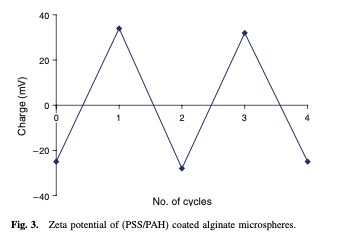
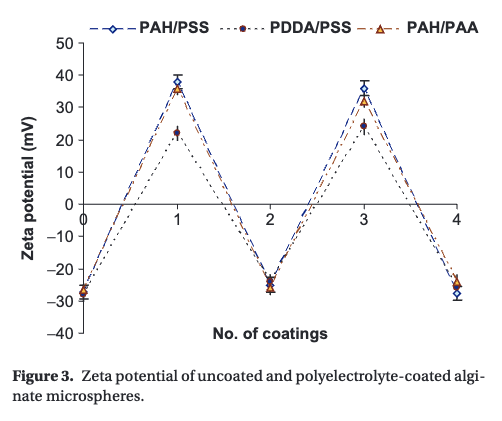
These two papers, published roughly in parallel, show significant overlap in text and figures:
Fig 6 Srivasta et al Erica glumiflora: “Notably, the images in Srivastava Fig. 7A overlap with the images in Jayant Fig. 4 2A and 2B (and Fig. 5 2A and 2B) and the images in Srivastava 7C overlap with the images in Jayant Fig. 4 2C and 2D, but which image represents day 7 and which image represents day 28 has been flipped. It is also curious that arrows do not always match between matching images.”
Fig 7 Srivasta et al
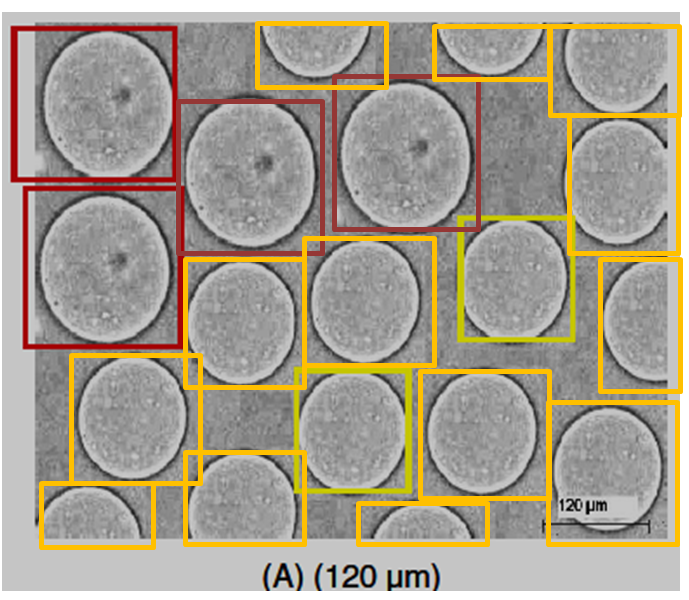
And then there is one completely fake image:
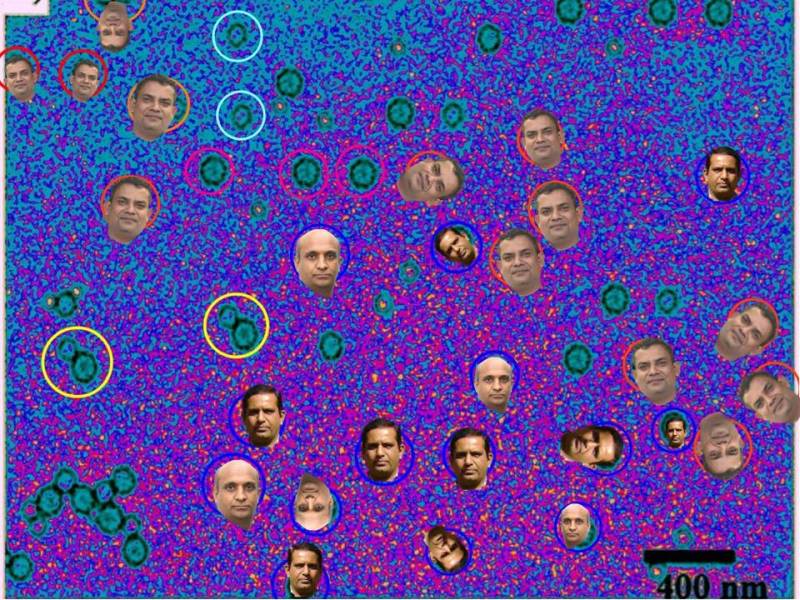
Erica glumiflora: “Both articles also share the same image for Fig. 1A (although the 50 micrometer scale bar is perhaps twice as long in Srivastava as in Jayant). Of interest in this image, many of the microspheres appear almost identical.”
I wrote to McShane and Srivastava, and only the latter replied:
“Both students were doing their Phd at the same time in the lab and were working on similar systems. While one of them was working on the glucose sensing part, the other student was working on the drug delivery part which was going to be used with the glucose sensing part. Both systems are similar, however, the focus of the papers was different. All experiments were conducted in lab and all data was used from experiments. “
What led to retraction of the Sensei RNA paper by Arati Ramesh in Bangalore: the “factually inaccurate, anonymous, and unverified” version, which “quite frankly, can be termed slander”. And a guest post by “Paul Jones” at the end!
I don’t know why Indian group leaders always blame their students while feeling no responsibility themselves. But then again, the two former students Srivastava refers to are Rahul Dev Jayant and Ayesha Chaudhary. the latter now works as consultant, and this woman, as you will soon see, is the main target of Srivastava’s accusations. In reality, it is the other former student who is the problem.
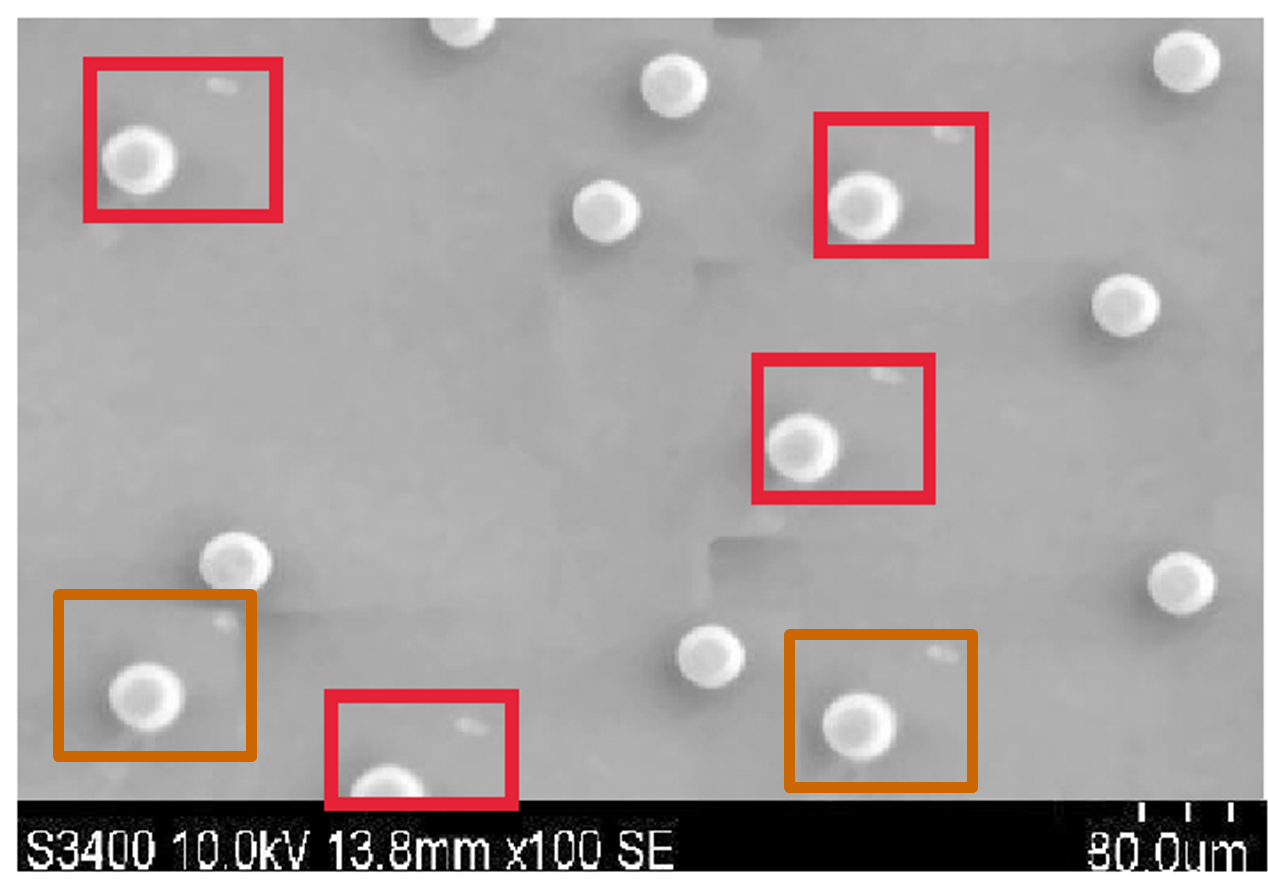
There is another paper by Jayant and Srivastava, with nobody else to blame:
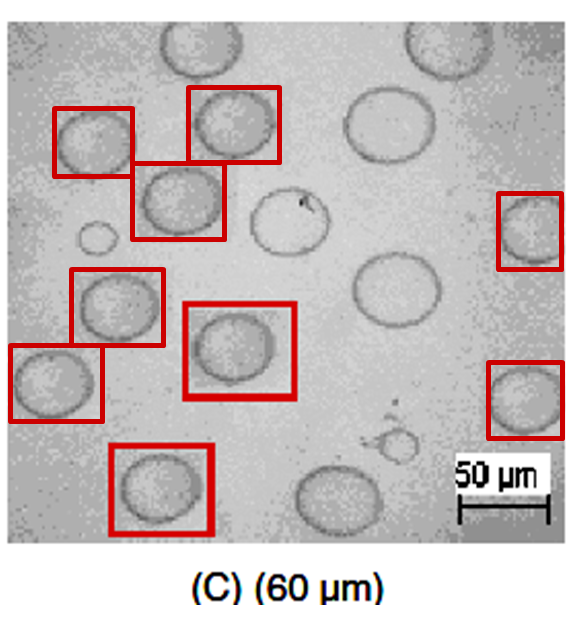
Erica glumiflora: “In Fig. 2A and C, there are microspheres that bear a very close resemblance to each other. […] In Fig. 4C there are microspheres that again bear a close resemblance to each other […] There are also strong rectangular discontinuities in the background.”
Some text and data from that paper was reused here:
A few years ago, Jayant, then assistant professor at Texas Tech University Health Science Center, was found guilty of research misconduct by HHS-ORI, also Retraction Watchreported at that time. Here is the report summary from August 2020:
“ORI found that Respondent engaged in research misconduct by intentionally plagiarizing, falsifying, and/or fabricating data included in the following grant applications submitted for PHS funds:
[1 R01 and 3 R21 NIH grants listed]
10):2329-40 (hereafter referred to as “ NP 2014”) without author attribution and including the plagiarized material in Figure 3iia-c of R21 DA051845-01, Figure 2iiia-c of R01 DA051894-01, Figure 3iiia-c of R21 DA052445-01, Figure 3iiia-c of R21 AA028877-01, and the graph in Figure 2iv of R01 DA051894-01.
• Plagiarizing one (1) image of brain organoids from Nature Communications 2018 Oct 9; 9(1):4167 (hereafter referred to as “ NC 2018”) without author attribution and including the plagiarized material in Figure 2iiid of R01 DA051894-01.
• Falsifying and fabricating three (3) figures representing experiments measuring caspase3 expression in human brain organoids by reusing data from one experiment to represent different experimental treatments in Figure 4Bii of R21 DA051845-01, Figure 4iv of R21 DA052445-01, and Figure 3iii of R21 DA051894-01.
• Fabricating nine (9) bar graphs representing experiments measuring gene expression in control and experimental samples of human brain organoids treated with drugs of abuse in Figures 2i and 3i-iii of R21 DA051894-01, Figures 3ii, 4Ai-ii, and 4Bii of R21 AA028877-01, Figures 3ii and 4i-iii of R21 DA052445-01, and Figures 4A, 4Bi, and 5 of R21 DA051845-01.”
In USA, Jayant continued with fake science. Here he is with Kamel Khalili (PubPeer record), a Temple University bigwig who collaborated with the infamous Antonio Giordano:
Erica glumiflora: “In Fig. 3a (and repeated in the graphical abstract), the pre-injection basal ganglia, pre-injection hemisphere, and post-injection hemisphere images look very similar”
I sent the HHS-ORI report to Srivastava, who replied with:
“I really had no idea about the attached file. I have always maintained a high standard in the lab with students and manuscripts. I am really not sure what has happened in this case? Let me review this information with the people who worked on this as they have long graduated and left? “
But then Srivastava did something which really shocked me, and I am not easily shocked, having seen many abysses of academic evil. Srivastava sent me this message, with his otherwise silent colleague McShane in cc (highlight mine):
“I had a discussion with Rahul and I have attached a response to the raised queries. As you can see, there was never a deliberate attempt to fabricate or misrepresent data. We have always been careful with experiments and data in manuscripts and report them as collected. The incident you attached for Rahul was again a one off event in his career which happened because of his carelessness with a postdoc who did this in the manuscript but later couldn’t be brought to justice as she had already left. We hope these things are never repeated by anyone in the academic system because we have always been taught to show data as is (whether good or bad) and let the editor decide whether they want to accept the paper or not. Many students in my lab have graduated without a paper because they couldn’t publish the data they had. We continue training students with this motive and hope that no one ever misuses the system. I hope we can now close this query.”
They both again blame a woman for everything. Not just this, Jayant and Srivastava fantasise about having her “brought to justice“, presumably for blowing the whistle? I shudder to think what women have to suffer from these horrid men as their superiors.
“These papers breached the Australian Code and RMIT Research Policy by not ensuring that conclusions are justified by the results and not responsibly disseminating research findings.” RMIT investigative report
Srivastava, the government-awarded super-scientist of India, explained the cloned particles with this:
“The microspheres appear nearly identical due to their controlled fabrication process, ensuring uniform morphology and fluorescence properties. […] If any image inconsistencies occurred during manuscript formatting, they were unintentional and do not aJect the integrity of the results. […] Important to note: any flipping or resizing was an unintentional formatting error rather than deliberate misrepresentation”
“Prof. Rohit Srivastava has been honoured with the prestigious ‘Rashtriya Vigyan Puraskar – Vigyan Shri’ award by the Government of India.” August 2024
Be careful and watch your step
On 9 March 2025, I received a surprise email from Iran, subject line: “serious warn for you, Mr. Leonid Schneider“, highlights sender’s:
“Some Iranians associated with Zionists, who presented themself as Scientific Sleuths contacted us and our university, and have raised baseless claims on PubPeer regarding self-citations in our MDPI publications. First, who are you, and what authority do you have to report researchers?
Yes, we have cited our work in over 70 references across some publications. Nowhere is it stated that this is an unethical practice. We can cite our own work as much as we see fit, and no one can take action against us for doing so.
The second point raised is that we lack an educational background in computer science and applied mathematics, questioning how we have published so many papers in a short time. Perhaps we are magicians—yes, we are magicians—and it is not your business.
Another reported criticism to our university was that salami publishing is evident in our papers, with nearly identical outputs and only minor changes in methodology or case studies, such as Haraz (North of Iran) and Changren County, Jiangxi Province (China). In some cases, we have applied the same methods and strategies used for landslide modeling to flood susceptibility instead. While our publications may appear repetitive, it is not your place to interfere or judge their contribution to science.
Finally, we do not know who you are or who is behind these nonsensical comments on PubPeer and this report to our university. If you repeat these accusations, you will regret it. In Iran we don’t access to your nonsense website, Our professor H. Shahabi will report you to the Police Interpol.
Be careful and watch your step…
Good luck–
——————————————————-
Ataollah Shirzadi (Ph.D, H-index= 62)
World’s Top 2% Scientists 2020, 2021, 2022 & 2023, 2024
The sender Ataollah Shirzadi is associate professor at University of Kurdistan in Iran, he has 21 papers on PubPeer. He obviously refers to his coauthor Himan Shahabi, a fellow professor at University of Kurdistan, who has currently 26 papers on PubPeer. The seven listed papers by these two clowns are not commented on PubPeer though. Another email followed, from “Ataollah Shirzadi (H-index= 62)“:
“You website is blocked and I cant chat with you, you are a Zeonist.. If you report me once again to journals and my university. You will be regretful..“
Is my website really blocked in Iran? Cool. In any case, I never heard of Shirzadi or Shahabi before, and don’t think I know the PubPeer commenter Gymnopus aquosus, but with such an email, what else can I do now but to forward these emails to MDPI and Elsevier, and to write about these two antisemitic fraudsters and papermillers?
Here a typical paper of theirs, it is an Iran-Vietnam-Korea-Hungary collaboration and an orgy of self-citation:
To ease the publications and as retraction security, western authors were invited. In particular, we have the recurrent coauthors John Clague, professor at Simon Fraser University in Canada with 5 such papers on PubPeer, and Clague’s adjunct faculty colleague Marten Geertsema (also with 5 such papers on PubPeer). For example this one:
On one Shahabi-Shirzadi self-citation orgy paper, Nhu et al 2020, Geertsema was accompanied by his former PhD studentVictoria R. Kress. And on another Nhu et al 2020 paper, a Pole named Krzysztof Górski joined Clague in his desire to cite Shabai and Shirzadi.
I wrote to MDPI, Elsevier and of course also to Geertsema and Clague. The two Canadian scholars didn’t reply, thus indicating that they share their Iranian colleague’s approach of antisemitism and threats of violence.
Elsevier also didn’t reply. MDPI wrote that they are already investigating Shirzadi’s papers and advised me to contact the “institution that is responsible for the conduct of their academics“, i.e., University of Kurdistan.
Years of fear
In the previous March 2025 Shorts, I briefly mentioned the KU Leuven professor with an impressive PubPeer record, Peter Carmeliet, who is also a baron, knighted by the Belgian king in 2021.
Also in 2021, aged almost 62, he announced to move his lab to Aarhus University in Denmark, because his ungrateful Belgian university planned to send him into retirement. The money for the new lab (DKK 50 million, or € 6.7 million) came from a 7-year Laureate Research Grant by the pharma giant Novo Nordisk, which announced in October 2021:
“Peter Carmeliet says that the research community in Belgium for researchers approaching the age of 65 years is much more restrictive than in Denmark. This means that researchers have fewer opportunities for grants after 65 years, and funding opportunities also decline as you approach your 65th birthday – so that you cannot remain at the same competitive level as before.
“But I am brimming with ideas for new research projects, so I am not ready to retire yet.”
In The Brussels Times, Carmeliet announced in June 2022 that he “is soon due to transfer his laboratory and its 60-strong staff to Denmark“.
“I have worked at several universities in my career, and never have I encountered the degree of bullying, harassment, intimidation, and discrimination that I have here. The atmosphere is utterly toxic, and everyone is scared to say anything in case it is heard and reported to [David Argyle] or [Richard Mellanby]. It is like working…
Now, in the comment section readers revealed something interesting about Carmeliet’s adventures in Denmark and Belgium. A reader commented on Aarhus situation:
“He established his lab in the Department of Biomedicine. Due to the substantial funding he received, the entire department was rearranged to accommodate him, as he had promised to build a large research group with extensive equipment. His lab had the largest space and the most equipment in the department. However, the group never grew beyond six members. Interestingly, although more than six people were hired, there several resignations or transfers to other groups (due to Aarhus University’s non-dismissal policy). Despite its size and state-of-the-art equipment, the lab remained largely empty, giving the impression that no projects were actively running. No original research publications emerged from Aarhus University—only review articles. The lab was shut down at the end of 2023. During the time the lab was open, Peter Carmeliet never gave talks or lectures and was physically present in the lab (he was here than three days in total, even though he supposed to spend 30% of his time at this location). His behavior and lack of consideration toward his Aarhus University colleagues led to numerous complaints, as his conduct was widely regarded as unprofessional.”
Obviously instead of moving 60 people to Denmark, Carmeliet managed to retain only 6 there. In 2 years, he failed to publish any research papers with Aarhus affiliation, only reviews. Presumably Novo Nordisk wasn’t impressed, and somehow Carmeliet had to go back to Belgium and accept retirement. In this regard, another comment concerned Carmeliet’s return:
“Interestingly, around that time (end of 2023), KU Leuven forced him into retirement. Having turned 65 last December, he will officially become emeritus by the end of this course and will be required to relocate his office and lab off-campus. While KU Leuven has permitted him to complete his ongoing projects, he will no longer be eligible to apply for additional funding. Moreover, KU Leuven also forced to reduce his staff. His research group has significantly shrunk over the past year, with more than 15 members departing due to non-renewals but also resignations.“
Yet another reader commented with much harsher accusations, calling Carmeliet “a bully” who allegedly “sends mails/request to his PhD students and post docs in the middle of the night/during weekends and he demands fast answers“. Maybe that’s why the Baron couldn’t avoid forced retirement?
Carmeliet never replied to my emails with requests to address these reader comments. KU Leuven, I was told was always fully aware of the situation. Which brings us to an earlier case of bullying at KU Leuven, and it did reach the media.
It is the case of Peter Hespel, professor of exercise physiology at the Faculty of Rehabilitation and Movement Sciences.
The Belgian news VRT previously reported the affair in their reportage of our magazine “Pano”, here reporting from March 2022 (Google-translated):
“The witnesses call the professor in question “dominant” and “narcissistic”. “He was very happy to abuse his position. He would like to make who the man is, “one of them says about the harassment. Some speak of years of fear. “You are shocked. You are shocked to see him in the corridors. You are shocked to see his name appear in your mailbox, “says someone. “That is emotionally exhaustive.” […]
…this professor of exercise physiology also enjoys an extensive network. In addition to his academic work, he is involved in the training of numerous top athletes. For the university, he brings in many funds for research and he is a much sought after guest in the media. […]
“I reported the problematic behavior about the then dean about ten years ago,” says a witness. The person also reported to the Ombudsoffice, the first report that our editors know about. Between 2013 and 2019, at least 24 people reported about the man. Also “managers”, a dean and departmental chairman, would have reported about his behavior in recent years. […]
When the university nevertheless started a disciplinary procedure, the man was acquitted because the facts would be time -barred.”
But the victims recruited a lawyer, and KU Leuven had to reopen the case, and recruit an external prevention advisor to do a risk assessment. VRT brought this update in October 2022:
“KU Leuven confirms the news: the professor is no longer allowed to hold leadership positions until his pension in a few years. This means that he can no longer do research activities or services for which employees must be deployed. Whether the man can still supervise doctoral students is not explicitly stated in the agreements.”
Hespel (who is still employed by KU Leuven) was not named in VRT reports, but he was named as perpetrator elsewhere, here by HLN, which also mentioned that Hespel was “is still allowed to teach, as long as there is no individual guidance involved.” Unlike his university subordinates, all the top athletes Hespel worked with knew him only as a “friendly, correct man“.
Leuven Actueel also named Hespel and wrote that before that scandal erupted, another KU Leuven professor “was sentenced to 54 months in prison for the rape of one of his students in 2016 at a conference for her thesis in Barcelona.“
General and not admissible
Another case of bullying, this time in Germany, and again it’s the Max Planck Society. The perpetrator is Jan-Michael Rost, since 1999 director of the Max Planck Institute for the Physics of Complex Systems in Dresden, and professor at TU Dresden. He looks like a babyface, but he is certainly not nice or harmless.
A joint investigation by Spiegel and Deutsche Welle revealed his massive bullying of subordinates. Watch here, in English:
“It finally escalated in the professor’s office. “He got really angry, shouted at me, accused me of producing only “shit”,” says Gabriel Lando. “Fucking useless,” the professor called him. Lando had worked for the scientist for about three quarters of a year in spring 2021. […]
After four or five months in Dresden, Lando wanted to present results to him, but he had problems connecting his laptop with the projector. Rost shouted at him. In general: Sometimes Rost praised his ideas, only to dress him down a little later. This unpredictability has killing him, says Lando. In April 2021, the professor called him an autist, hit the table on several occasions. After a year at the institute, Lando left. His experiences at the institute took a heavy toll. He suffered from sleep paralysis, was awake at night, but was unable to move. His hair fell out. Lando is now doing research in South Korea.”
Lando complained to an external law firm, which Max Planck Society employs to process whistleblwoer notification. The law firm denied Lando his request for anonymity: “people involved in the conflict must be mentioned at some point to enable examinations.” Max Planck Society confirmed that once a whistleblower agrees for their concerns to be forwarded, they will eventually lose their protection of anonymity.
“the professor insults her doctoral students, calling them “stupid”, “useless” or “retarded”, for example. She is said to sometimes require her employees to work more than 80 hours a week. The report speaks of a “quasi-feudal relationship of dependence” and a “climate of fear” at the institute in question.”
“One of his former PhD students says that Rost described some of his work as a as a “waste of time”. Before meetings with his doctoral supervisor , he was often despaired and cried, as his partner describes it. “He destroyed my self-confidence,” says the former PhD student.
Other former members of the institute also report that Rost repeatedly shouted at them and slammed doors. They tell us, some of them in tears, how traumatic their time at the institute had been. Some say that Rost hardly gave them any academic support. “The director let the PhD students work, apparently without knowing whether their project would doable or not,” recalls one. They had to prepare to being left without a degree after several years of work. At least that was the perception of those involved. Jan-Michael Rost emphatically rejects the accusations. He could “not confirm having made the statements that have been circulated”. Regarding further accusations, the MPG states that these are “general” and “not admissible”.
It is perfectly normal for the Max Planck Society to defend their god-like directors tooth and nail. Those pompously announced rules on bullying and harassment are merely there to sack undesired lowly employees.
Lorenza Colzato was a rising star of psychology and a role model for Women in STEM. All Dutch media and even some local German newspapers talk about her now. But I want to talk about her husband Bernhard Hommel instead.
Another PhD student complained about Rost to the Chemical-Physical Technical section of the Max Planck Society (of which Rost until recently was director!), and predictably achieved nothing there. But the Ombudsman of the Max Planck Institute in Dresden (presumablyHolger Kantz) did reply:
“He gave the student the advice that he should not annoy Rost and accuse him of bad supervision – only then he will have a chance to get his doctoral degree.”
Truth is: bullying is standard practice at Max Planck Institutes. Spiegel and DW reports mention other cases with perpetrators unnamed, because the German media law is very protective of perpetrators’ privacy. Imagine how bad Rost’s bullying must really be that his and Max Planck Society’s lawyers couldn’t prevent his being named.
Hopefully Lando will be able to keep his job in Korea. A academic bully’s revenge will reach you everywhere.
PNAS corrected a paper. The correction looks relatively innocuous, but it isn’t.
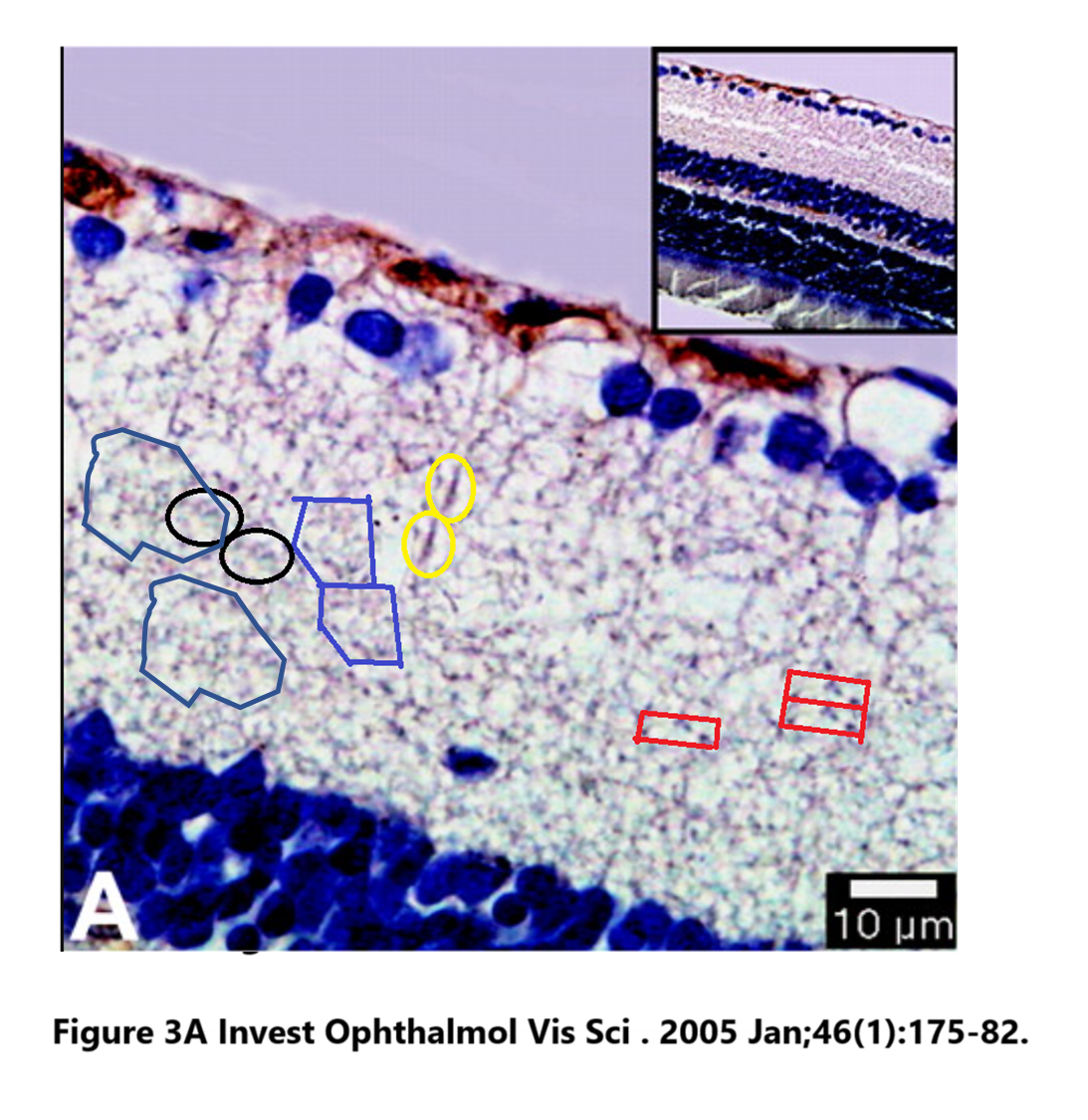
The US National Academy of Sciences journal was contacted by the whistleblower David Sanders about a reused figure. The lead author is Maria Francesca Cordeiro, professor of ophthalmology at the Imperial College and UCL in London, UK, read about her in December 2024 Shorts. The penultimate authors are Cordeiro’s UCL colleagues Stephen Moss and Fred Fitzke. This being PNAS where networks rule, the handling editor was their UCL colleague Avrion Mitchison (deceased in 2022).
Li Guo , Thomas E. Salt , Vy Luong , Nicholas Wood , William Cheung , Annelie Maass , Giulio Ferrari , Françoise Russo-Marie , Adam M. Sillito , Michael E. Cheetham , Stephen E. Moss , Frederick W. Fitzke , M. Francesca Cordeiro Targeting amyloid-beta in glaucoma treatmentProceedings of the National Academy of Sciences of the United States of America (2007) doi: 10.1073/pnas.0703707104
“The authors note, “The image in Fig. 1F. was taken from the same control eye as in Fig. 3A in Guo et al. (23). We thank a reader for bringing this to our attention and apologize for the oversight.”
This is the Guo et al 2005 paper by Cordeiro, Moss and Fitzke (plus Robin Ali!), and in fact I wrote about it in December 2024 Shorts. The Editor-in-Chief Joseph Carroll kept denying that there were any duplications at all, because “the retina is full of repeating elements“:
Now, the Fig 1F in PNAS is a black-and-white version of the fake Figure 3A in IOVS. Maybe its reuse is the smallest problem here?
There were other problems in the IOVS paper, here Figure 1:
Naturally, no editorial action was taken at IOVS.
Retraction Watchdogging
Great difficulty spotting this without the assistance of AI
We remain on the topic of bad ophthalmology.
A retraction in Frontiers for Jan Provis, Emeritas Professor and former Associate Dean for Research at the School of Medicine and Psychology of the Australian national University (ANU), and her mentee and successor Riccardo Natoli, now Associate Director for Research at ANU’s School of Medicine and Psychology. Read about them here:
The last author is Provis’s former postdoc Matt Rutar, now associate professor at University of Canberra and Honorary Senior Fellow of University of Melbourne, also in Australia.
Provis also lied about her Conflicts of Interests:
“The authors declare that the research was conducted in the absence of any commercial or financial relationships that could be construed as a potential conflict of interest.”
In reality, Provis chairs the Board of Directors of the biotech company EYE CO Retinal Therapeutics, in 2024 Natoli joined the board. Both were funded by EYE CO.
On PubPeer, Provis regretted the duplications which “the lead / senior authors would have had great difficulty spotting this without the assistance of AI,” and assured that “This mistake has no bearing on the findings of the studies.“
But on 6 March 2025, Frontiers retracted the paper:
“Following publication, concerns were raised regarding the integrity of the images in the published article. Specifically, immunofluorescence images in Figure 6A and western blot images in Figure 6I were reused in other publications by the same research group. During our investigation, conducted according to Frontiers’ policies, the authors were unable to provide the raw images and a satisfactory explanation. As a result, the data and conclusions of the article have been deemed unreliable, and the article is being retracted.
Christine A. Wells, Aaron Chuah, Hardip Patel, and Elizabeth Mason sent an email to Frontiers requesting the retraction. The authors Krisztina Valter, Matt Rutar, Ricardo Natoli, and Jan Provis agreed to the retraction.”
Give the chance to the authors
P. Hemachandra Reddy is Department Vice-Chair of Research and former Executive Director and CSO of the Garrison Institute on Aging at Texas Tech University in USA. He was one of the Alzheimer’s cheaters investigated by Mu Yang and Elisabeth Bik, and this is also why Reddy ended up very briefly mentioned in Charles Piller’s book Doctored.
“If this book accomplishes anything, it should be to shatter the illusion that Alzheimer’s research is on solid footing and to prompt a long-overdue reckoning in the field. ” – Csaba Szabo
Reddy’s wife Arubala P. Reddy, assistant professor at Texas Tech, is his regular coauthor, which is why we are told that “Dr. Reddy strongly supports women in science“. Mrs Reddy is also on the now retracted paper, originally flagged by Dysdera arabisenen aka Mu Yang already in June 2023:
The study’s contents were erased completely, even on PubMed. The Retraction was published on 26 November 2024, and Reddy was credited with investigating himself:
“In November 2023, the journal published a correction1 due to mislabeling in Figures 4, 5, 6, and 8B.
In June 2024, the first author contacted the journal requesting further corrections to Figures 5A and 6A, as well as changes to Figure 2A, due to similarities in the beta actin blots, which had been raised by a reader and acknowledged by the first author. However, given the extent of the image alterations that have been requested by the authors, the editors no longer have confidence in the reliability of the results reported and are retracting this article.
The journal has notified all authors of this decision prior to publication of this retraction notice and they disagree with the decision to retract.”
The other Reddy paper where this same data was reused from, was fixed with a correction. Elisabeth Bik highlighted the reused western blots:
The Elsevier April 2024 Corrigendum of the Figure 11A reveals that Reddy was whitewashed by his Texas Tech University:
“The authors accidentally uploaded an uncorrected version of Fig. 11A, HT22 cells panel, during submission of their article. The Academic Ethics Committee/Departmental Chair of the Texas Tech University Health Sciences University has asked in writing the Editor to give the chance to the authors to publish and Erratum. A new Fig. 11 with the corrected image in panel A is now provided. The authors apologise for any inconvenience caused.”
Returning to Human Molecular Genetics (HMG), another Reddy paper there was flagged with an Expression of Concern. Like many of Reddy’s papers, this one is about the alleged Alzheimer’s drug called DDQ which is claimed to target dynamin-related protein 1 (DRP1) and which was invented by Reddy and marketed by his startupabSynapTEX, LLC (Reddy is Chief Scientific Officer).
The HMG study on DDQ was initially criticised on PubPeer in 2019, and in 2023, the user Indigofera tanganyikensis found a duplicated image, then Bik and Yang found more:
Indigofera tanganyikensis: “In Figure 7, a micrograph has been duplicated and presented with different experimental conditions.”
Elisabeth Bik: “FIgure 4A: Cyan boxes: The beta-actin panel in this paper (shown on right) looks unexpectedly similar to that in Figure 2A of P. Hemachandra Reddy et al., J Alzheimers Dis . 2017 ; 58(1): 147–162. doi:10.3233/JAD-170051 (left).”
“The authors contacted the journal in September 2024 to request a correction to Figure 10. During their initial assessment, the editors became aware of PubPeer posts (see https://pubpeer.com/publications/090F29306E801C09AEA317ACD1EFBF) raising concerns regarding other data contained in the article.
The Editors have contacted the authors and are investigating all the issues raised. In the interim, the Editors advise readers to examine the details of this study with particular care.”
This Kuruva et al 2017 paper in HMG provided copy-paste material for a latter Reddy paper on DRP1 in the same journal. That one was flagged on PubPeer in 2018 and then successfully corrected.
“The author apologizes that an incorrect version of Figure 8 was published online. The correct figure is now displayed.”
Unfortunately, the new figure was even more fraudulent, as Mu Yang noticed. Therefore, Reddy and the HMG editors updated the Corrigendum on 23 May 2024:
“Addendum to the above May 23, 2024:
Originally, within the PDF and online versions of the manuscript, pictures were errored or wrongly placed under respective headings in panels within sections A, B and C of Figure 8. Figure 8 was emended in the correction notice DOI ddy399 and within the online version of the article: however this emended image too had errors within certain panels. […]
The changes are: a new image for Figure 8A panel N2a Cells+75uM Mdivi-1; Figure 8B image in panel Drp1 FL moves to panel Drp1 FL_75uM Mdivi-1; a new image for Figure 8B panel Drp1 FL; a new image for Figure 8C panel siRNA-Drp1 +75 uM Mdivi-1.”
Case closed?
Reddy has almost 40 fake papers on PubPeer, and the data recycling is ridiculously bad. Here another set of two HMG papers:
Dysdera arabisenen: “The Tau data (red line) in Figure 1B of this paper appear to be identical to the P301L data (green line) in Figure 1B of Kandimalla et al., Hum Mol Genet. 2022““The Tau data (red line) in panel Fig 1C of this paper appear identical to the P301L data (green line) in Fig 1C in Kandimalla et al., 2022 […] The Tau data (red line) in panel Fig 1D of this paper appear identical to P301L data (red line) in panel Fig 1D of the 2022 paper”“The WT data in panel D of Manczak et al., 2018 and the WT data in panel D of Kandimalla et al., 2018 seem identical. However, the WT data in panel B of Manczak et al., 2018 and the WT data in panel B of Kandimalla et al., 2018 are similar but NOT identical. The is confusing, because latency to platform (B), Swimming speed (C), and percentage of time (D) are integral measures of the same test, and the data are acquired at the same time. If the same data were re-used, all three parameters should be identical across the two studies.”
But this case is also closed for HMG, because the Kandimalla et al 2022 paper was already corrected on 15 June 2025:
“In October 2022, a reader highlighted commonalities in behavioral data presented in this article and in a prior article with overlapping authors[…]
The editorial team investigated, and the authors subsequently acknowledged the genetic background of wild-type (WT), dynamin-related protein 1 (Drp1), Tau and Tau X Drp1 mice was the same. The corresponding author apologized for the lack of transparency about the overlapping data. […]
The editors confirmed this overlap does not impact the study results.”
Also the Manczak et al 2018 paper was corrected, in October 2023. It ended with:
“The editors confirmed this overlap does not impact the study results.
Questions were also raised about the similar but non-identical WT data in Figure 1B of both 2018 articles. The authors subsequently explained that some of the mice in the study were removed from the analysis during the Rotarod Test, and after consultation with the animal ethics committee overseeing their work, they took the decision to replace these mice. Although this replacement was not disclosed, this does not impact the results of the study.”
I for my part can’t agree with the editors more. Since when did utter fraud ever impact any study results indeed.
And again Reddy’s academic wunderkinder Maria Manczak (research assistant professor at Garrison Institute on Aging) and Ramesh Kandimalla (now assistant professor at CSIR in India) did miracles with DRP1, bringing NIH money into Reddy’s pockets. Flagged by Mu Yang (unless stated otherwise):
Indigofera tanganyikensis: “Figure 3, 4 and 5 are not trustworthy due to duplication of data.”
Dysdera arabisenen: “WT, Drp1+/1 data in the two papers have the same means but different error bars. Tau data in Kandimalla paper and APP data in Manczak appear to have the same means but different error bars. Double transgenic data in the two papers have the same means but different error bars.”Kandimalla et al 2016
“data of App and Tau in these figures seem near-identical, as do data of double transgenic mice.”Kandimalla et al 2016
On 15 April 2023, only the Kandimalla et al 2016 paper was corrected:
“In October 2022, a reader highlighted issues with Figure 4A (mitochondrial biogenesis proteins) and Figure 5A (synaptic proteins). […] The editorial team investigated, and the corresponding author acknowledged and apologized for these unintentional oversights, which do not impact the study results.”
Nothing else to worry about, case closed. Here two more HMG papers for Reddy and his mentee Manczak:
Elisabeth Bik: “Figure 7. This so-called ‘corner cloning’ is sometimes done by authors or journal staff to cover up e.g., unwanted labels or scale bars.”
As you see, HMG and the publisher Oxford University Press agreed with Reddy’s assessment, no correction needed. Also here, by Mr and Mrs Reddy:
Reddy on PubPeer: “the membrane was first probed for 86 kDa Opal and then stripped to obtain the lower ATG7 78 kDa band […] Because of limited resources and financial constraints, we could not do full blots for this study“
The explanation of stripped and re-probed blots makes no sense for several reasons, also because the loading controls are different. But HMG loved it.
This was flagged for randomly attributed molecular weights of proteins and for other issues:
Dysdera arabisenen: “Fig 5 E (WT mice) and F (TG2576 mice) apparently overlap.”
Elisabeth Bik: ” Figures 3 and 5: Pink boxes: Panels 3E (ATPase-6 hybridization) and 5E (heat-shock protein 86 hybridization) appear to overlap.”
No need to correct anything.
The puzzling bit is not HMG‘s fraud tolerance, but why did they retract that one paper by Reddy? By mistake? Normally, this journal punishes whistleblowers, not the fraudsters:
This is the second part of the Bologna whistleblower account. As the university was burying their own misconduct findings, Oxford University Press and their ignoble editor were busy punishing and gaslighting the whistleblower.
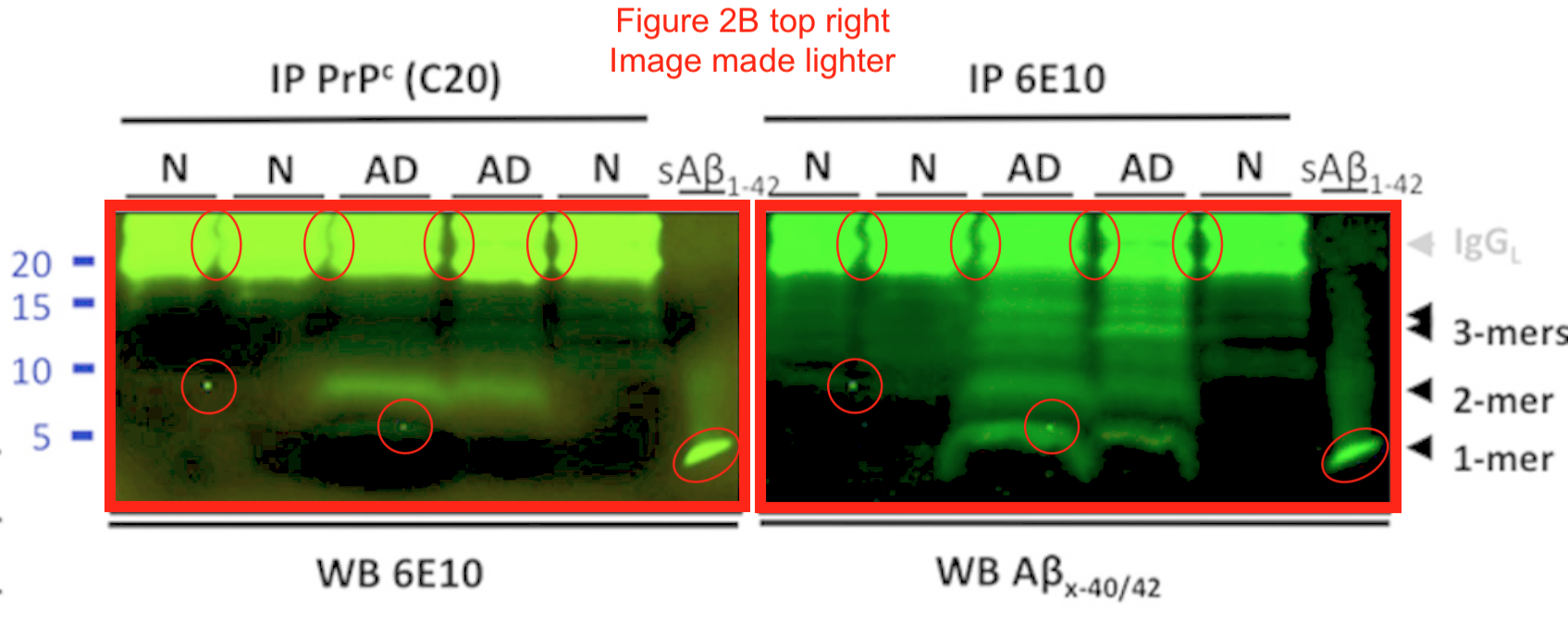
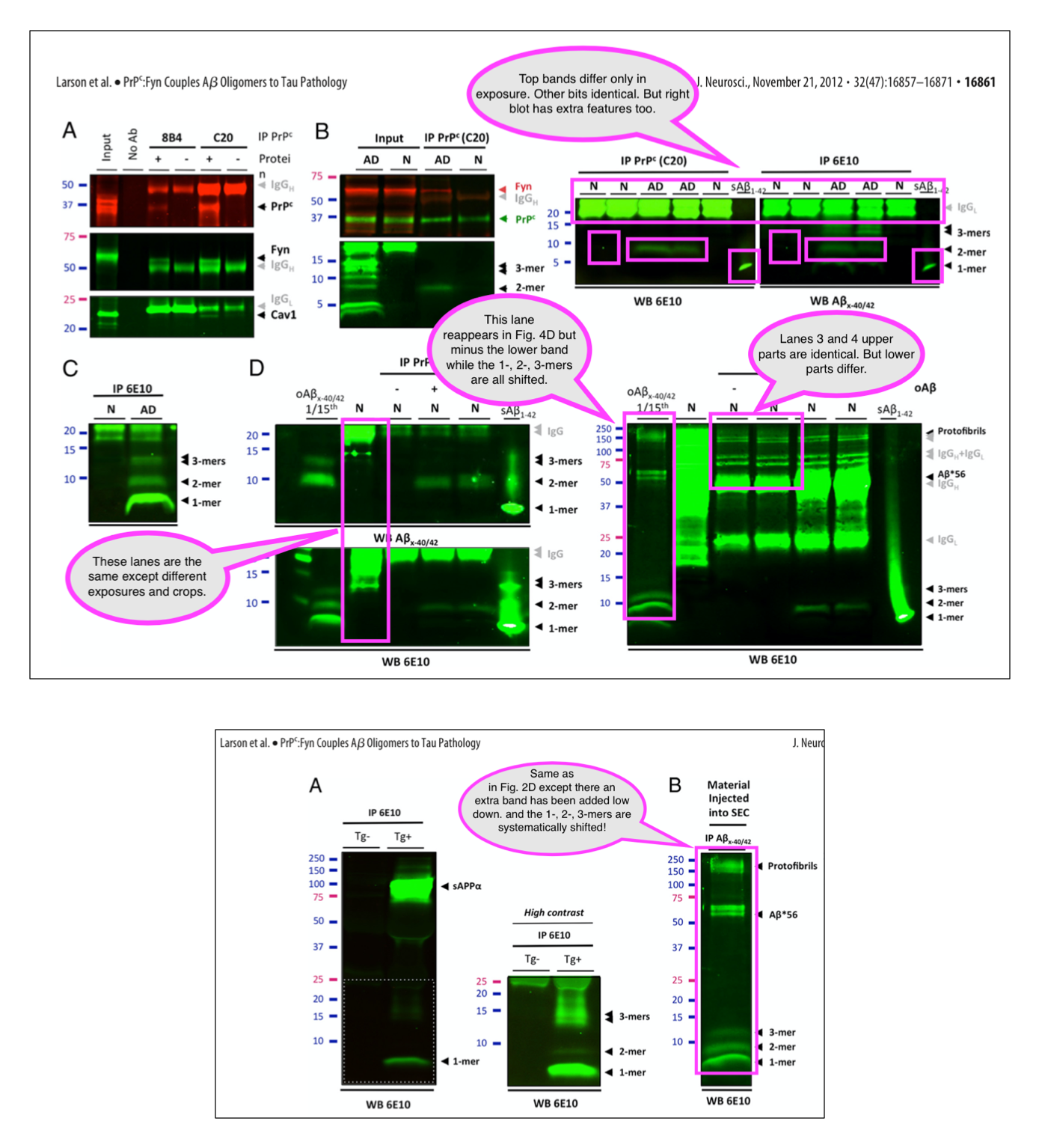
Two titans of neuroscience, Sylvain Lesne and Adriano Aguzzi, retract a paper. As rmeidner, Lesne was publicly shamed and sacked by University of Minnesota in USA. Aguzzi was secretely whitewashed by his University of Zurich in Switzerland and publicly embraced by the scholarly community of fellow cheaters and narcissists. Read about Lesne’s and Aguzzi’s collaboration here:
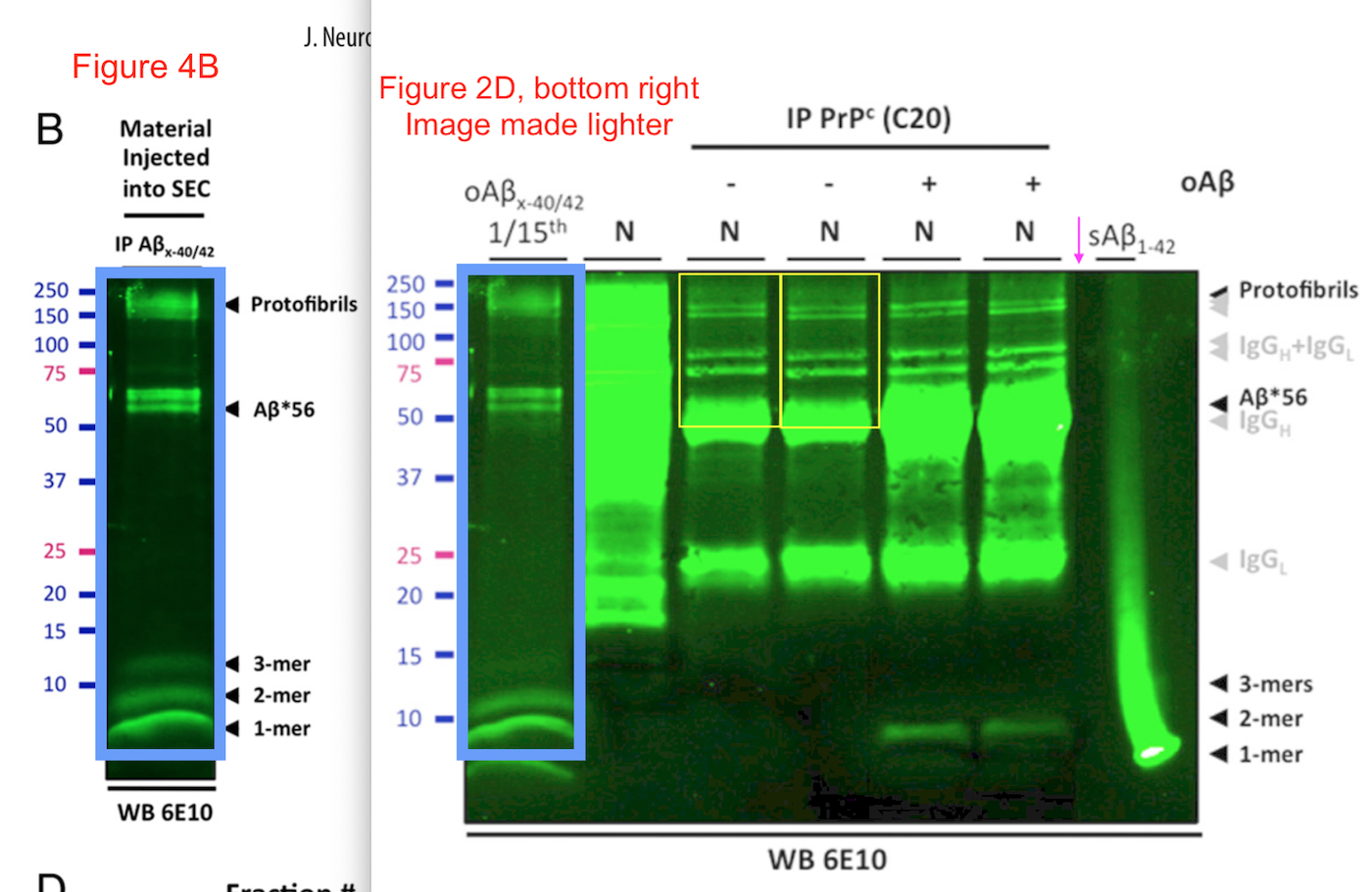
Bik: “Thick red boxes: The two top right panels in Figure 2B share many similarities. Thin red circles and ellipses highlight specks and spacings patterns between lanes with characteristic shapes and positions.“Bik: “a similarity between figure 2D, lane 1 and Figure 4B left panel, as shown with thick blue boxes” and “Thin yellow boxes. Two lanes in Figure 2D, bottom right panel, appear to share many similarities […] Thin magenta arrow. A sudden, sharp vertical line between the two right-most lanes suggests an undisclosed splicing.”
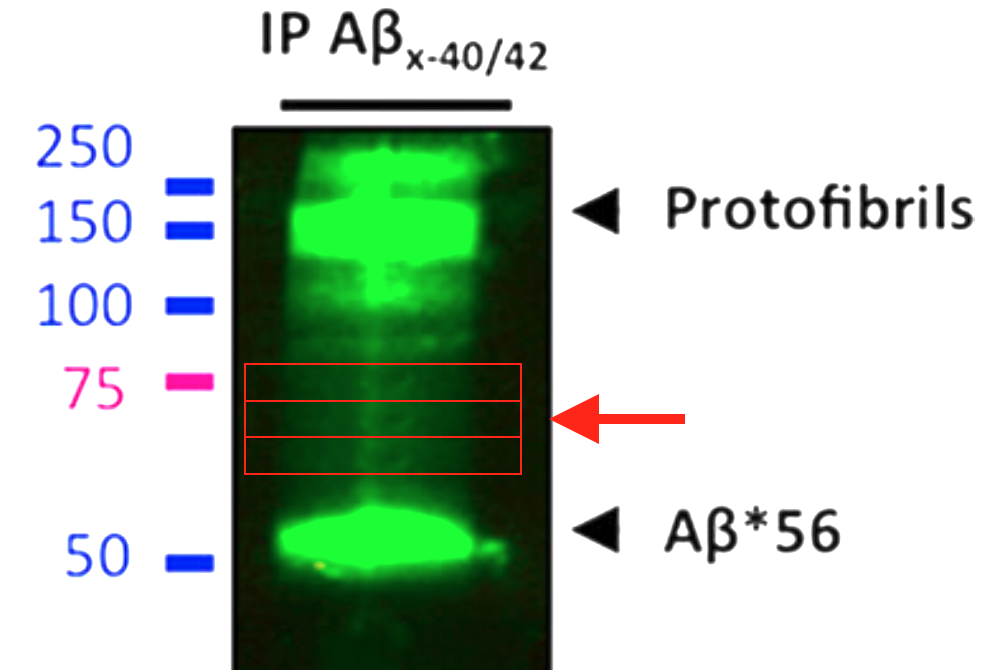
Bik on Fig 4B: “An unexpected repetitive area is visible above the Ab*56 band.”Bik: “Cyan boxes: In the ’78’ blot, the same area appears to be visible three times, including one time in the Ab*56 region.“
Another PubPeer user, Condylocarpon amazonicum, provided in July 2022 additional illustrations for the postings from 2013:
Matthew Schrag provided additional findings, also in July 2022:
“Concerns were raised about the integrity of some figures within the article, specifically Figures 2D and 4B. The University of Minnesota conducted an investigation and ultimately determined that these figures as published do not accurately reflect the research and cannot be considered reliable. Following the university’s recommendation, the Editorial Board has concluded that the article should be retracted.”
Presumably, Adriano and Sylvain are not friends anymore.
But I now fully expect Aguzzi to once again become the national hero of Switzerland and his native Italy, where he will declares in all public media, and to much applause and accolades, to have a) exposed Lesne’s fraud himself, and b) proven that the retracted paper was actually perfectly reliable.
Donate!
If you are interested to support my work, you can leave here a small tip of $5. Or several of small tips, just increase the amount as you like (2x=€10; 5x=€25). Your generous patronage of my journalism will be most appreciated!
The name of this professor at Radboud University, Nijmegen, The Netherlands, is not listed in this recent news report. I was also unable to find his name in several other news items about this case.
“First, who are you, and what authority do you have to report researchers?“
Why is this reaction so common to all Iranian papermillers? The country changes, the field of work changes, the name changes, but when the papermiller is Iranian, the reaction is always the same: “who are you, and what authority do you have to report researchers?” A similar example . A brave tiger in Iran or an oppressed victim outside Iran, it really doesn’t matter. The mask changes but not this arrogance…
“Nowhere is it stated that this is an unethical practice. We can cite our own work as much as we see fit, and no one can take action against us for doing so.“
It’s so clear. I hope Elsevier sees what kind of profiles they have created. When you don’t hold such profiles responsible for what they do and then reward them, they can be so bold!
I must defend this idiot.
People who grow up in totalitarian regime learn that not only that you need permission to do anything at all, you must only do things your we told to do, and nothing else.
True, Chinese fraudsters don’t react like this, but that’s maybe they don’t hate the west as much as Iranians are trained to do, and they certainly don’t suspect everyone out there to be their enemy, i.e., a Jew.
Shirzadi now wrote to me from his university email address.
“Dear Leonid Schneider,
I hope this email finds you well. Today, after conducting a search on Google, I became aware that an image of mine, along with baseless and unfounded claims “Be careful and watch your step on 9 March 2025, I received a surprise email from Iran, subject line: “serious warn for you, Mr. Leonid Schneider “, highlights sender’s” purportedly made by me regarding doubts about my publications, seems to have been sent to your journal from another individual. As an academic researcher, I would like to clarify that I have no affiliation or alignment with any Zionist group or political ideology. We strongly distance ourselves from such accusations, as they are intended to mislead the public and incite division.
These allegations are not only scientifically, legally, and ethically unfounded, but they also violate fundamental human rights, as well as individual and academic freedoms.
It is noted that all my communications are done through this current academic email, and I have not communicated with your journal through any other emails.
I am extremely shocked by this situation, and I strongly reject all the content of the email. The individual responsible appears to be a dishonest person and pathological liar with the intent of damaging the academic reputation of authors and researchers globally. [….]
Concurrently, the intent is to generate unwarranted skepticism within your perspective regarding the integrity and competence of our research team, devoid of any supporting evidence derived from established scientific methodology or professional ethical standards.””
To be honest, he doesn’t seem to be a paper mill author. Just some (low? quality) papers in which he uses his own papers a lot as references, I guess in some sort of silly attempt to get more citations. But if you look at what he publishes, it’s not that impressive in turns of output. Could it be he is just a bit naive? The one thing I don’t get: how does he get in the 2% list with his output? It’s not that spectacular at all. Has anyone checked the papers content wise?
A typical profile of a regular papermill customer.
The supplier is up to anyone’s guess, a hint can be found here.
If one believes that ML on tiny obscure datasets (never deposited anywhere) can make any sense, I have nothing to say further. Otherwise, the content is just that.
Of course, he is naive. Shahabi is connected to all paper millers in GIS and remote sensing worldwide, such as Romulus Costache, King Biswajeet Pradhan, and King Saro Lee. Shahabi and Shirzadi hide behind them. They have a record of self-citation, with more than 70 self-citations in a short technical paper, remember nor a review paper, as follows: It seems unbelievable.
OK for fraud and misogyny from Indian scholars. BUT not a word about the devastating action of Trump on US-world science. Please inform us in a fair manner… as usual. You have much to say! Jean-Pierre
Very simple. Trump and Musk are sacking all the wrong people.
Those who were absolutely needed for actual science to happen, were not the ones with safe jobs and this is why they are being sacked.
The crooks remain and will get all the money.
‘This article offers a queer lesbian feminist analysis attuned to lesbian-queer-trans-canine relationalities. Specifically, the article places queer and lesbian ecofeminism in conversation with Donna Haraway’s work on the cyborg and companion species to theorize the interconnected queer becomings of people, nature, animals, and machines amidst ecologies of love and violence in the 2020s. It takes two key case studies as the focus for analysis: first, the state instrumentalization of dogs and robot dogs for racialized and imperial violence, and second, quotidian queer and lesbian-dog relationalities and becomings.’
It seems that Mr. Ataollah Shirzadi is connected to many fraudulent paper millers, such as Assefa M. Melesse. We wonder why Florida International University has not expelled him yet. webpage of Melesse (Assefa M. Melesse | FIU College of Arts, Sciences & Education)
You can see an example of a purchased paper by Assefa M. Melesse here (PubPeer – RETRACTED: Impacts on Global Temperature During the First Pa…), which has since been retracted. All of his publications and citations are based on business, no doubt. FYI, Melesse is the editor of many MDPI journals.
If you scrutinize Himan Shahabi and Ataollah Shirzadi, you will find many indications of fraud—it’s unimaginable, exactly like a treasure trove of evidence. They are engaged in the business of publication and citation with numerous pseudo-researchers, such as Amir Mosavi (Óbuda University), Pedram Ghamisi, and Hossein Moayedi etc.
H Shahabi purchases citations from Hossein Moayedi’s market—you can see an example of this case. PubPeer – Performance Evaluation of GIS-Based Novel Ensemble Approache…
Remember, there are two types of Fraudsters in science:
The first group consists of individuals who at least have an educational background but manipulate data for personal gain. This group, while unethical, is somewhat understandable.
The second group is far more dangerous—they have no educational background whatsoever and simply purchase publications and citations. Fraudsters like Ataollah Shirzadi and Himan Shahabi belong to this second category.
This is exactly like Kittisak Jermsittiparsert, who, despite having only a master’s degree in political science, managed to “publish” over 490 papers in mechanical engineering. We must expose and blacklist these individuals to protect the integrity of science. If these people are appointed as peer reviewers, it poses a serious threat to scientific research.
Dear Guard,
I don’t distinguish between academic fraudsters based on their educational background.
They are all dangerous in the same way, and the separation is not as clear-cut as you think.
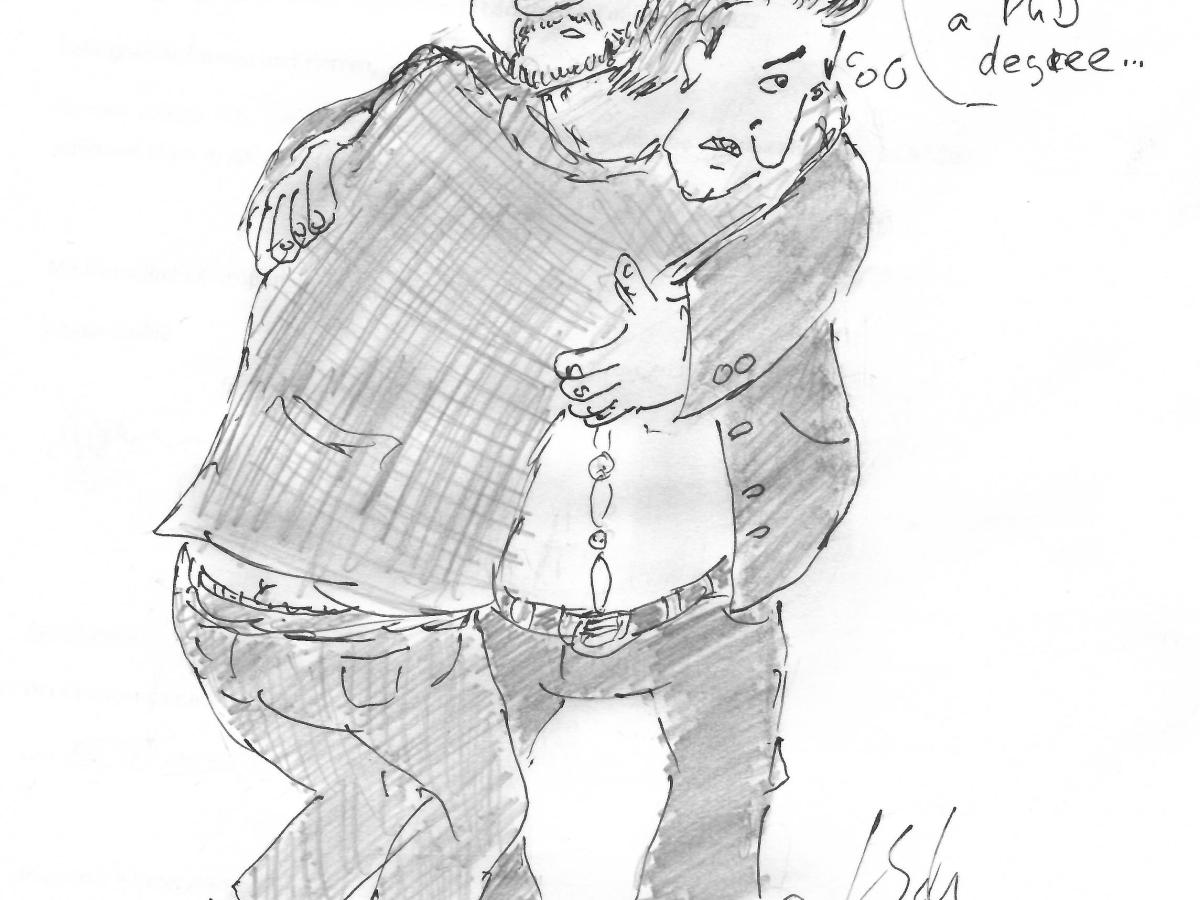
Swiss professor Adriano Aguzzi is parading for decades with a made-up PhD degree and nobody minds.
You can ask both Shirzadi and Shahabi to provide their complete academic transcripts (Bachelor, Master, and PhD). You will see that they have never passed a single course in computer science, programming, or advanced applied mathematics. Their background is solely in pure geography, from the Department of Social Sciences. How is it possible for them to publish over 150 articles in such a short period and receive such a high number of citations in such a short time?
Meanwhile, if you check their Dimensions profiles, you will understand our concerns exactly.
According to Web of Science, H. Shahabi has peer-reviewed 561 papers. It is alarming that Himan Shahabi, without any relevant educational background, is allowed to review papers in fields such as machine learning, deep learning, and applied mathematics. Perhaps his only contribution to these reviews is soliciting or begging for citations.
It would be very interesting if you could investigate and expose this.
You cannot compare these two fraudsters Shirzadi and Shahabi with anyone. They don’t even know English! Invite them to an online interview—let’s see if they can say even two words in English. Their level of illiteracy is beyond a disaster.
In our opinion, if GIS and Remote Sensing field journals had invited an illiterate shepherd as a peer reviewer instead of these two fraudsters, they would have received better feedback.
I would love to know what H. Shahabi has written as comments while reviewing these 561 papers. How did these journals and publishers invite this fraudster 561 times as a peer reviewer? This is beyond a disaster.
They must be reported and permanently banned to all journals and publishers from being selected as peer reviewers to prevent further damage.
How is it possible for someone with absolutely no knowledge or expertise in this field to have reviewed so many papers (561) for so many journals?!!!
If your point is to blacklist such fraudsters and prevent them from ever abusing academic publishing again, you can be sure that not only the two names you mentioned, but hundreds, maybe thousands, of Iranian papermillers from all around the world must be flagged as such, because they all follow the same pattern. As long as academic publishers tolerate such names, their numbers will increase.

















 For Better Science
The name of this professor at Radboud University, Nijmegen, The Netherlands, is not listed in this recent news report. I was also unable to find his name in several other news items about this case.
https://www.voxweb.nl/en/discredited-psychology-professor-leaves-university
LikeLike
“First, who are you, and what authority do you have to report researchers?“
Why is this reaction so common to all Iranian papermillers? The country changes, the field of work changes, the name changes, but when the papermiller is Iranian, the reaction is always the same: “who are you, and what authority do you have to report researchers?” A similar example . A brave tiger in Iran or an oppressed victim outside Iran, it really doesn’t matter. The mask changes but not this arrogance…
“Nowhere is it stated that this is an unethical practice. We can cite our own work as much as we see fit, and no one can take action against us for doing so.“
It’s so clear. I hope Elsevier sees what kind of profiles they have created. When you don’t hold such profiles responsible for what they do and then reward them, they can be so bold!
LikeLike
I must defend this idiot.
People who grow up in totalitarian regime learn that not only that you need permission to do anything at all, you must only do things your we told to do, and nothing else.
True, Chinese fraudsters don’t react like this, but that’s maybe they don’t hate the west as much as Iranians are trained to do, and they certainly don’t suspect everyone out there to be their enemy, i.e., a Jew.
LikeLiked by 1 person
Shirzadi now wrote to me from his university email address.
“Dear Leonid Schneider,
I hope this email finds you well. Today, after conducting a search on Google, I became aware that an image of mine, along with baseless and unfounded claims “Be careful and watch your step on 9 March 2025, I received a surprise email from Iran, subject line: “serious warn for you, Mr. Leonid Schneider “, highlights sender’s” purportedly made by me regarding doubts about my publications, seems to have been sent to your journal from another individual. As an academic researcher, I would like to clarify that I have no affiliation or alignment with any Zionist group or political ideology. We strongly distance ourselves from such accusations, as they are intended to mislead the public and incite division.
These allegations are not only scientifically, legally, and ethically unfounded, but they also violate fundamental human rights, as well as individual and academic freedoms.
It is noted that all my communications are done through this current academic email, and I have not communicated with your journal through any other emails.
I am extremely shocked by this situation, and I strongly reject all the content of the email. The individual responsible appears to be a dishonest person and pathological liar with the intent of damaging the academic reputation of authors and researchers globally. [….]
Concurrently, the intent is to generate unwarranted skepticism within your perspective regarding the integrity and competence of our research team, devoid of any supporting evidence derived from established scientific methodology or professional ethical standards.””
LikeLike
To be honest, he doesn’t seem to be a paper mill author. Just some (low? quality) papers in which he uses his own papers a lot as references, I guess in some sort of silly attempt to get more citations. But if you look at what he publishes, it’s not that impressive in turns of output. Could it be he is just a bit naive? The one thing I don’t get: how does he get in the 2% list with his output? It’s not that spectacular at all. Has anyone checked the papers content wise?
LikeLiked by 1 person
A typical profile of a regular papermill customer.
The supplier is up to anyone’s guess, a hint can be found here.
If one believes that ML on tiny obscure datasets (never deposited anywhere) can make any sense, I have nothing to say further. Otherwise, the content is just that.
LikeLiked by 1 person
Of course, he is naive. Shahabi is connected to all paper millers in GIS and remote sensing worldwide, such as Romulus Costache, King Biswajeet Pradhan, and King Saro Lee. Shahabi and Shirzadi hide behind them. They have a record of self-citation, with more than 70 self-citations in a short technical paper, remember nor a review paper, as follows: It seems unbelievable.
PubPeer – Shallow Landslide Susceptibility Mapping: A Comparison betwe…
LikeLike
OK for fraud and misogyny from Indian scholars. BUT not a word about the devastating action of Trump on US-world science. Please inform us in a fair manner… as usual. You have much to say! Jean-Pierre
>
LikeLike
Very simple. Trump and Musk are sacking all the wrong people.
Those who were absolutely needed for actual science to happen, were not the ones with safe jobs and this is why they are being sacked.
The crooks remain and will get all the money.
LikeLike
Science Breakthrough
Queer canine becomings: Lesbian feminist cyborg politics and interspecies intimacies in ecologies of love and violence
https://www.tandfonline.com/doi/abs/10.1080/10894160.2025.2473971
‘This article offers a queer lesbian feminist analysis attuned to lesbian-queer-trans-canine relationalities. Specifically, the article places queer and lesbian ecofeminism in conversation with Donna Haraway’s work on the cyborg and companion species to theorize the interconnected queer becomings of people, nature, animals, and machines amidst ecologies of love and violence in the 2020s. It takes two key case studies as the focus for analysis: first, the state instrumentalization of dogs and robot dogs for racialized and imperial violence, and second, quotidian queer and lesbian-dog relationalities and becomings.’
#Clownworld
LikeLiked by 1 person
Dear Leon,
It seems that Mr. Ataollah Shirzadi is connected to many fraudulent paper millers, such as Assefa M. Melesse. We wonder why Florida International University has not expelled him yet. webpage of Melesse (Assefa M. Melesse | FIU College of Arts, Sciences & Education)
You can see an example of a purchased paper by Assefa M. Melesse here (PubPeer – RETRACTED: Impacts on Global Temperature During the First Pa…), which has since been retracted. All of his publications and citations are based on business, no doubt. FYI, Melesse is the editor of many MDPI journals.
If you scrutinize Himan Shahabi and Ataollah Shirzadi, you will find many indications of fraud—it’s unimaginable, exactly like a treasure trove of evidence. They are engaged in the business of publication and citation with numerous pseudo-researchers, such as Amir Mosavi (Óbuda University), Pedram Ghamisi, and Hossein Moayedi etc.
H Shahabi purchases citations from Hossein Moayedi’s market—you can see an example of this case. PubPeer – Performance Evaluation of GIS-Based Novel Ensemble Approache…
LikeLike
Dear Leon,
Remember, there are two types of Fraudsters in science:
The first group consists of individuals who at least have an educational background but manipulate data for personal gain. This group, while unethical, is somewhat understandable.
The second group is far more dangerous—they have no educational background whatsoever and simply purchase publications and citations. Fraudsters like Ataollah Shirzadi and Himan Shahabi belong to this second category.
This is exactly like Kittisak Jermsittiparsert, who, despite having only a master’s degree in political science, managed to “publish” over 490 papers in mechanical engineering. We must expose and blacklist these individuals to protect the integrity of science. If these people are appointed as peer reviewers, it poses a serious threat to scientific research.
LikeLike
Dear Guard,
I don’t distinguish between academic fraudsters based on their educational background.
They are all dangerous in the same way, and the separation is not as clear-cut as you think.
Swiss professor Adriano Aguzzi is parading for decades with a made-up PhD degree and nobody minds.
LikeLiked by 1 person
Dear Leon,
Absolutely agree with you,
You can ask both Shirzadi and Shahabi to provide their complete academic transcripts (Bachelor, Master, and PhD). You will see that they have never passed a single course in computer science, programming, or advanced applied mathematics. Their background is solely in pure geography, from the Department of Social Sciences. How is it possible for them to publish over 150 articles in such a short period and receive such a high number of citations in such a short time?
Meanwhile, if you check their Dimensions profiles, you will understand our concerns exactly.
According to Web of Science, H. Shahabi has peer-reviewed 561 papers. It is alarming that Himan Shahabi, without any relevant educational background, is allowed to review papers in fields such as machine learning, deep learning, and applied mathematics. Perhaps his only contribution to these reviews is soliciting or begging for citations.
It would be very interesting if you could investigate and expose this.
LikeLike
There’s nothing to investigate about their qualifications. These guys buy papers on from papermills, it doesn’t really matter on which topic, .
LikeLike
Dear Leon
You cannot compare these two fraudsters Shirzadi and Shahabi with anyone. They don’t even know English! Invite them to an online interview—let’s see if they can say even two words in English. Their level of illiteracy is beyond a disaster.
In our opinion, if GIS and Remote Sensing field journals had invited an illiterate shepherd as a peer reviewer instead of these two fraudsters, they would have received better feedback.
I would love to know what H. Shahabi has written as comments while reviewing these 561 papers. How did these journals and publishers invite this fraudster 561 times as a peer reviewer? This is beyond a disaster.
They must be reported and permanently banned to all journals and publishers from being selected as peer reviewers to prevent further damage.
How is it possible for someone with absolutely no knowledge or expertise in this field to have reviewed so many papers (561) for so many journals?!!!
LikeLike
It’s called fraud! They don’t review for real. They just review for their friends/paper mill colleagues.
LikeLiked by 1 person
Actually they review for everyone.
The review report contains some empty sentences and “cite these papers of mine” requests.
LikeLike
If your point is to blacklist such fraudsters and prevent them from ever abusing academic publishing again, you can be sure that not only the two names you mentioned, but hundreds, maybe thousands, of Iranian papermillers from all around the world must be flagged as such, because they all follow the same pattern. As long as academic publishers tolerate such names, their numbers will increase.
LikeLiked by 2 people
Does anyone know if the papermillers actually pay page charges at the journals they publish in? Or are they like shills in a casino?
LikeLike
Years of fear – Peter Carmeliet’s and Peter Hespel’s problem with discipline
Peter Carmeliet, a bad penny.
Two comments.
PubPeer – Plasmin activity is required for myogenesis in vitro and ske…
PubPeer – Plasmin activity is required for myogenesis in vitro and ske…
LikeLike