

Schneider Shorts of 27 December 2024 – Most-read articles of 2024, on dangers of social media, universities in Ireland and Czechia educating sleuths about fraud, naughty editors at Elsevier, a russian ork in USA disposes partner and two papers, more retractions for YouTube couple, and finally, Germany’s New Year resolutions which involve MDPI!
Table of Discontent
Most-Read of 2024
Scholarly Publishing
- A central role in German publishing landscape – Germany starts 2025 with MDPI
Science Elites
- No evidence to warrant the establishment – University College Dublin says research is supposed to be fake
- A quality corresponding to the standards – Charles University Prague embraces papermilling
- BEYOND honored – never celebrate your fraud on social media
Retraction Watchdogging
- Two editors who were themselves authors – Elsevier editors handle own papers
- Violations of the journal’s policies – Chemosphere spring cleaning continues
- The Editor-in-Chief conducted an investigation – Ben Albensi investigates Hari and Aruna Sharma
- Innocuous owed to subservient – Elsevier pulls paper because I didn’t understand it
- “Individual Russians shouldn’t be blamed” – Alexander Kabanov disposes of partner
Most-Read of 2024
- Sholto David‘s masterpiece about the bad science epidemic at the Dana Farber Cancer Institute, which is affiliated with the Harvard University in Boston. Every major news outlet in USA and many abroad picked up the story, Sholto became one of TIME100 Health and TIME 100 Next people.
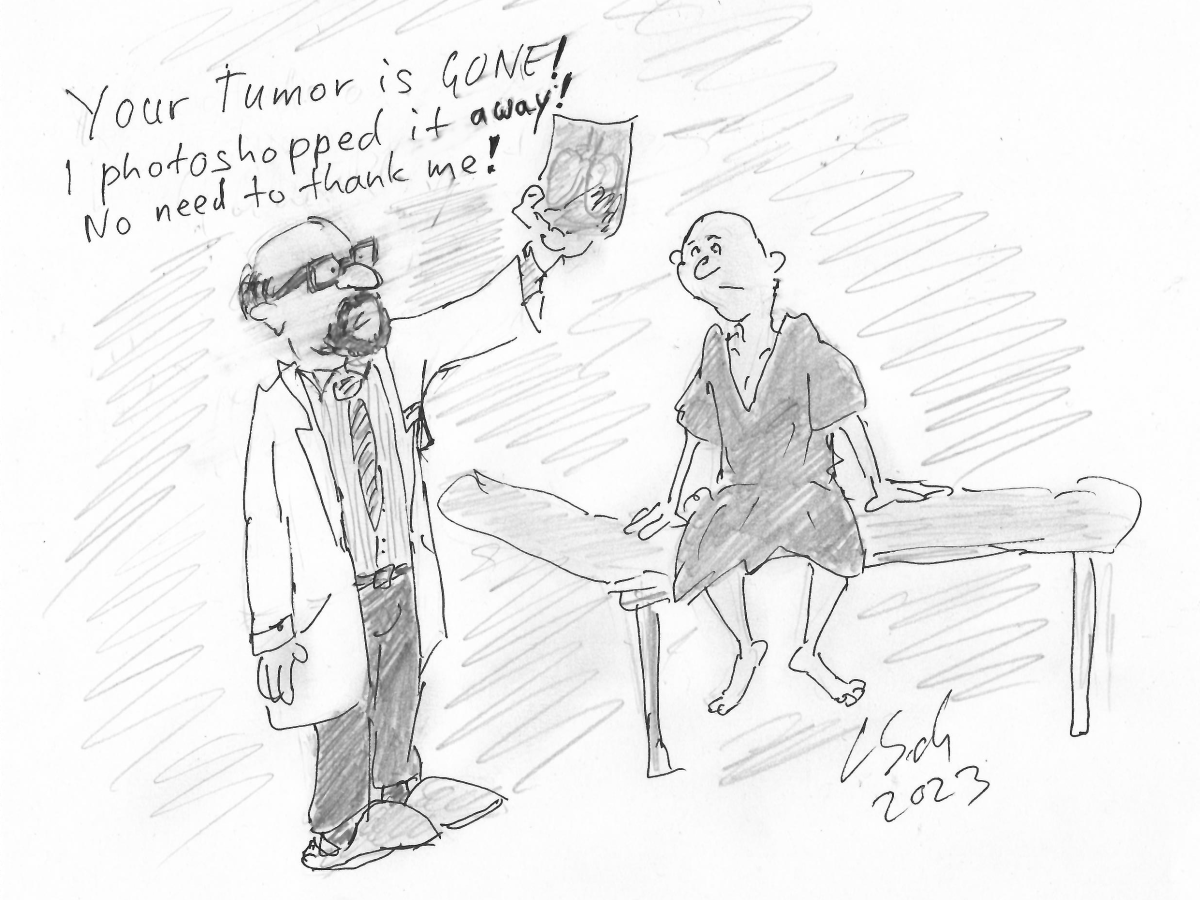
Dana-Farberications at Harvard University
“Imagine what mistakes might be found in the raw data if anyone was allowed to look!” – Sholto David

- Germany’s biggest fraud scandal in 2024, which made first local, than national news because it led to the resignation of the University of Kiel president Simone Fulda. The investigations into her and her mentor Klaus-Michael Debatin‘s papers are ongoing, no retractions so far. Both articles below made it into 2024 top ten.
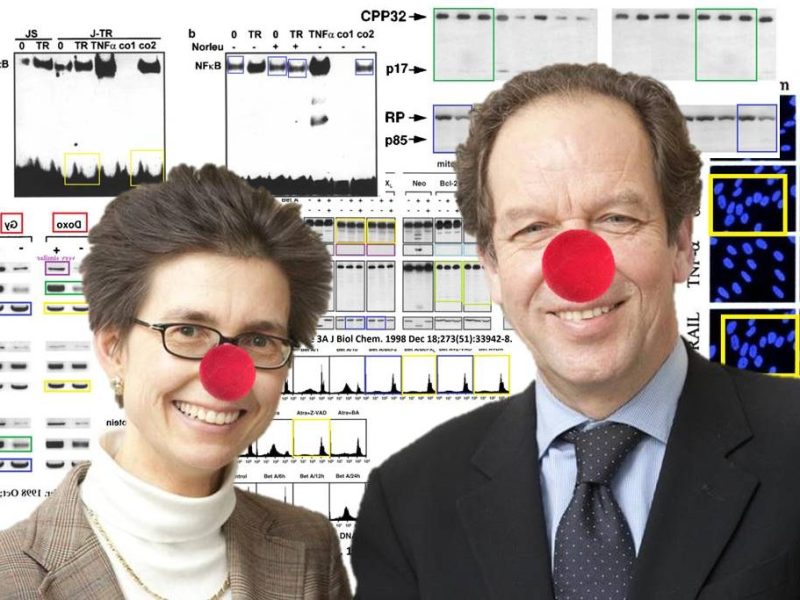
Fulda & Debatin: Reproducibility of Results in Medical and Biomedical Research
“Basic and advanced training for researchers should focus much more on self-reflection, openness and a culture of error acceptance.”

Simone Fulda: Open4Work!
“I am taking this step with a heavy heart and a sense of responsibility for the university since a sufficient foundation of mutual trust no longer remained with some parts of the university to ensure successful cooperation”, – Simone Fulda
- Sholto David’s other great story which was picked by by the New York Times several times. That time, it was about the surgeon Sam Yoon, who retracted a bunch of papers and now hides under a new name at the Columbia University in New York.

Memorial Sloan Kettering Paper Mill
“Why do successful and apparently intelligent surgeons feel the need to play pretend at biology research? Has Sam S. Yoon ever performed an invasion or migration assay? […] if this is how he “supervises” his research does anyone trust his supervision of surgery?” – Sholto David
- The whistleblower Vivek Maradia blew up an elite Swiss institution with his revelations about the feudal practices at the Paul Scherrer Institute in Zürich. The head radiologist Damien Weber demanded that every student working in his department includes him as coauthor, and the institute’s leadership including the Ombudsman made sure every student complied because such were the rules in medicine, they said.
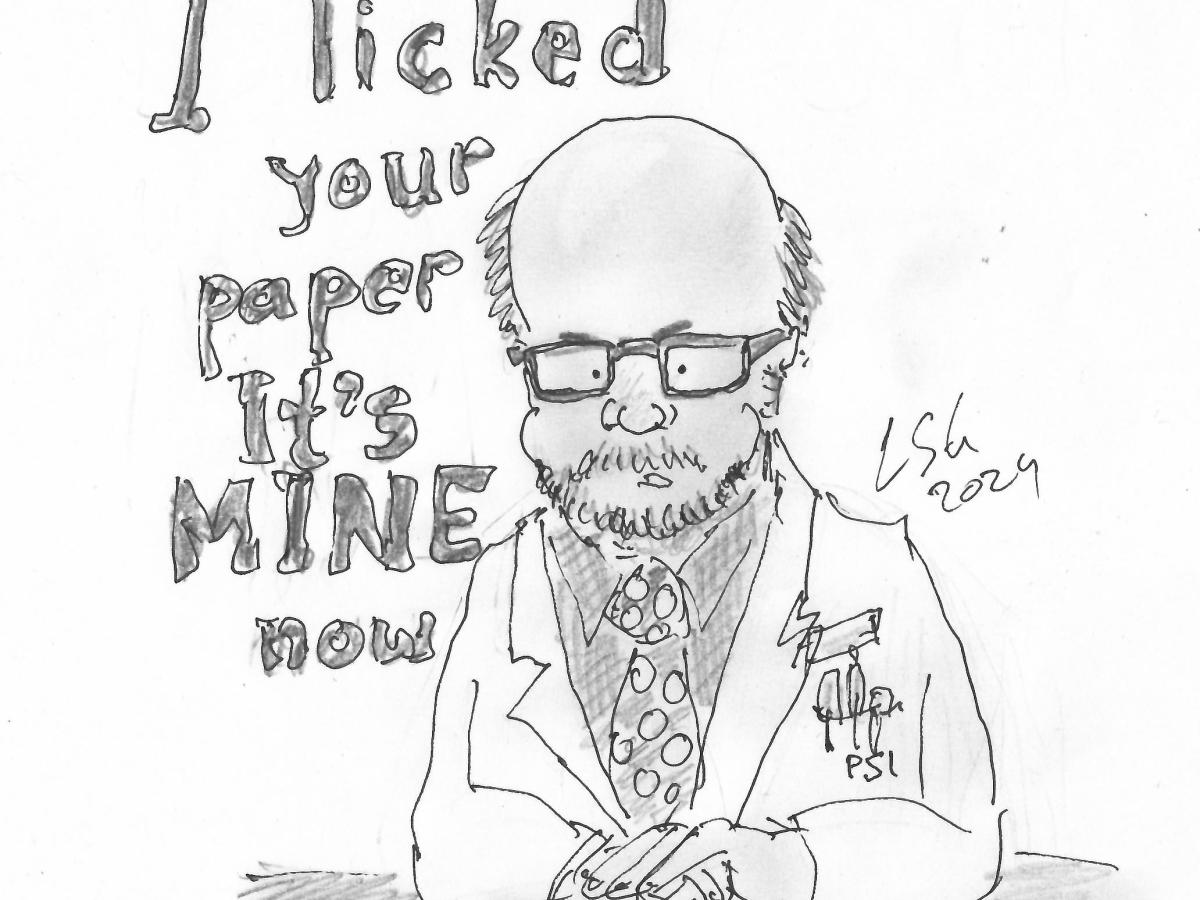
The Paul Scherrer Rules
“I will ultimately decide on the names that will qualify for co-authorship” – Dr med Damien Weber
- A story of bad plant science at an elite German institution. Bernd Müller-Röber and his PhD student turned girlfriend Salma Balazadeh (now professor in the Netherlands) planned to feed the world. It is not clear how the investigation by the Max Planck Institute in Potsdam ended.
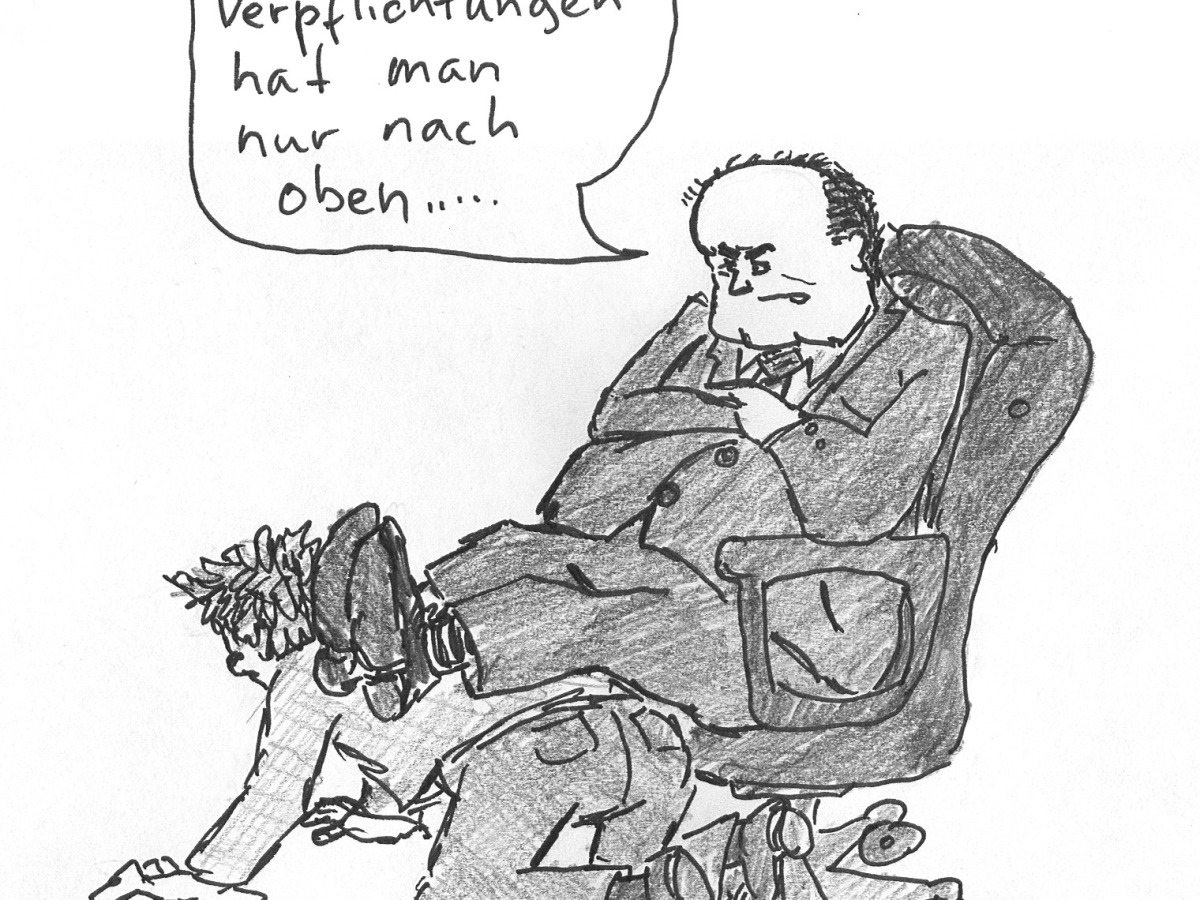
The Man Who Fed The World
“Bernd Müller-Röber […] had guest status in the MPI for Molecular Plant Physiology but this status has been terminated”
- The Polish vice-rector Grzegorz Krolczyk had a genious idea on how to boost his own and his Opole Technical University’s scientific performance: he installed Asian papermillers Zhixiong Li and Munish K Gupta as new Opole professors, and coauthored many papers with them. Some of those were retracted, and Krolczyk lost his new job as Poland’s science czar. He really didn’t approve of my article and accused me of being a russian secret service agent. In reality, one russian papermiller with whom Krolczyk collaborates (Danil Pimenov), is indeed very likely one.
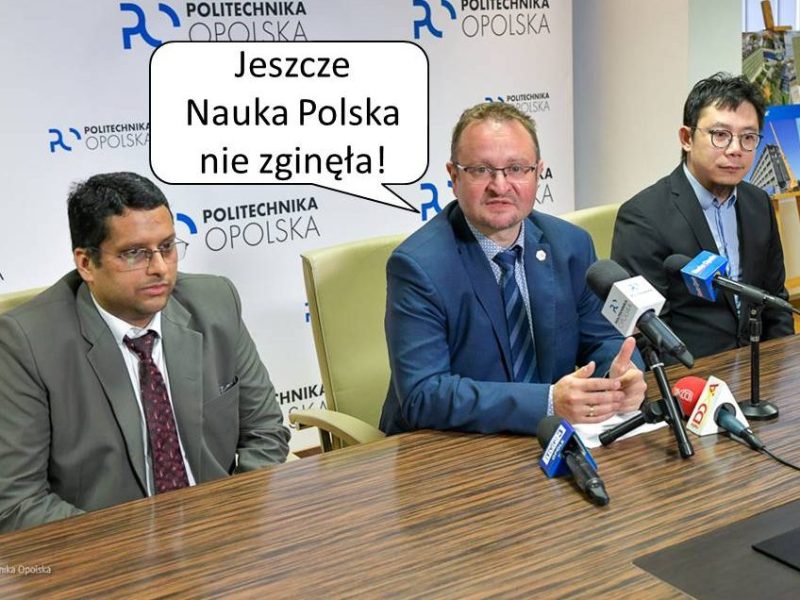
Polish science eaten by Papermill Krolczyk
“Prof. Grzegorz Królczyk, Vice-Rector for Science and Development of the Opole University of Technology, was elected President of the Council for Innovation in Higher Education and Science.”
- There is only one way to describe Hari Shanker Sharma and his wife Aruna, two neuroscientists at Uppsala University in Sweden. Insane. Barking mad. Utter demented unhinged nutcases. And I don’t just mean their YouTube videos in bed and bathtub, but also their neuroscience which uses nanoparticles, “stem cells” and Nazi Pig Brain Juice (aka cerebrolysin). Entire books have been retracted now. Credit for exposing this bizarre fraud case, which involves collaborators in Austria, Romania, USA, Spain, India, China and russia, goes entirely to Mu Yang.
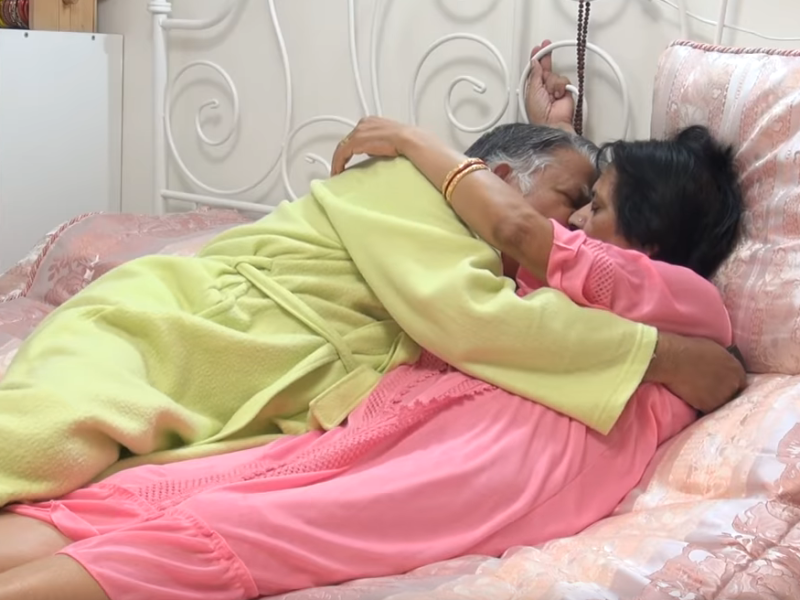
In bed with Hari and Aruna
Hari Shanker & Aruna, a YouTube influencer couple in Sweden. With or without Rudolph the Red-Faced Liar. And with Anca and Dafin, two totally innocent and upright Romanians. Pushing pig brain juice an SS Nazi invented. You won’t find a better story for Christmas!
- Elsewhere in Poland, a ridiculously fraudulent papermiller named Muhammad Bilal was installed as a “Nobelium” professor by the Gdansk University of Technology, to boost its perfomance. Bilal’s previous employer, the Poznan University of Technology, also profited from Bilal’s papermilling, and so did in particular its rector Teofil Jesionowski.
Nobelium Bilalski, a Gdansk papermiller
“To date, he has authored over 700 peer-reviewed articles, 150 book chapters, 25 edited books, and 10 editorial-type scientific articles in various areas of Science and Engineering. Dr. Bilal has a h-index of 94 with 34 000 citations (Google Scholar).”
- Maarten van Kampen and Jorge Hirsch uncovered a case of yet another fake superconductor, this time in an elite German research institution, the Max Planck Institute in Mainz. In a bizarre twist of fate, the lab head Mikhail Eremets, who used to refuse to share data and instead denounced Hirsch as a witch, died a few weeks ago.
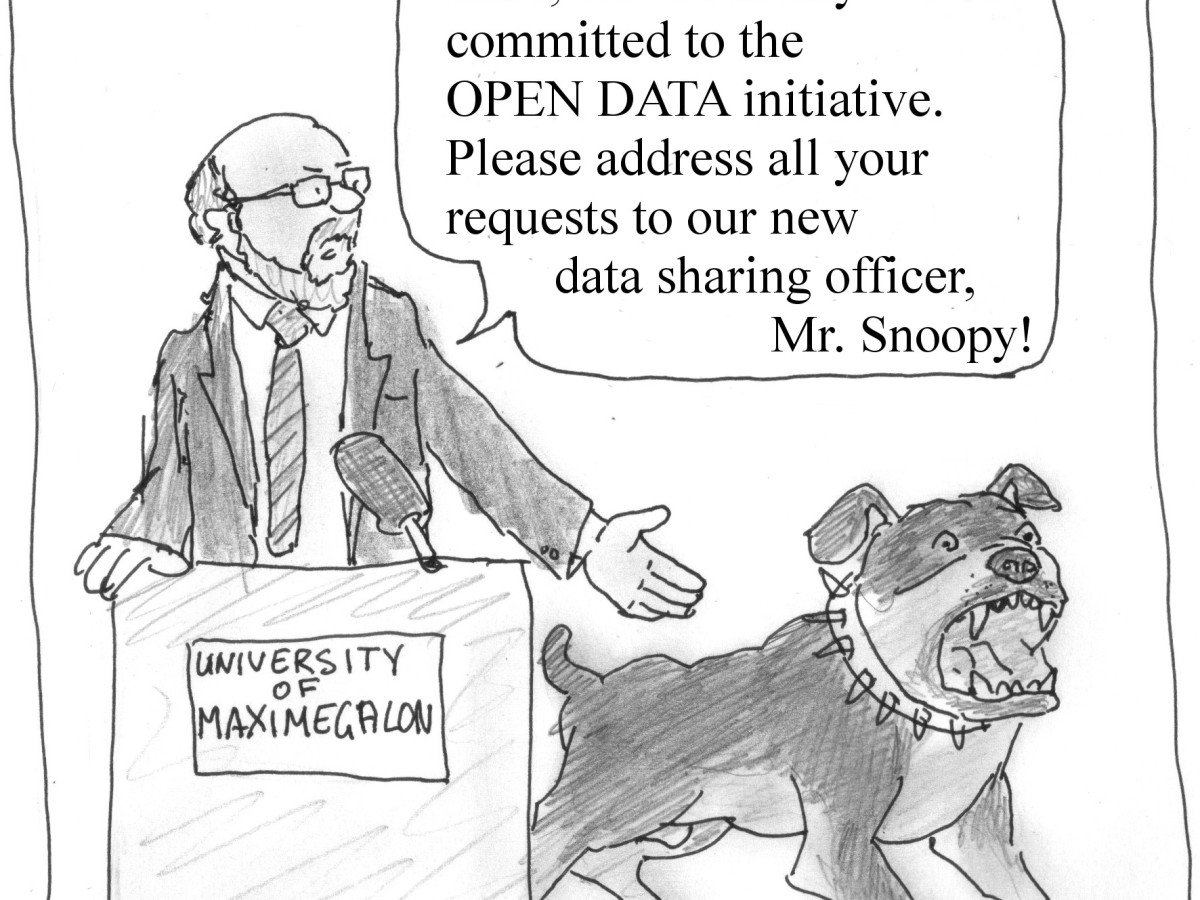
Superconductive Witch Hunt
“J. Hirsch. […] engaged in unscrupulous practices, including falsifying analyses and selectively presenting data to support unfounded claims. […] Hirsch’s tactics include manipulation of public opinion, personal attacks on our team members, and threats and complaints to our management and funding agencies.” – Mikhail Eremets, the single most highly regarded high pressure experimentalist today.
- Not quite from 2024, but almost. This story from December 2023 about the University of Lille nanofabricators Sabine Szunerits and her husband Rabah Boukherroub may have exposed one of the biggest recent fraud cases in France, which I admit is a tough competition.
Lille Papermille
French nanotechnologists Sabine Szunerits and Rabah Boukherroub put EU Commission’s money to good use. The EU cannot afford a papermill gap to Iran and China!
Scholarly Publishing
A central role in German publishing landscape
On the topic of bad New Year resolutions: the Germans once again decided to be smarter and more knowledgable than everyone else and did something really stupid. As MDPI was downgraded to predatory publisher level in Finland, German universities issued orders to their scientists to publish in MDPI to save money!
A joint press release by MDPI and by ZB MED (the life sciences library by the Universities of Cologne and Bonn) from 17 December 2024 (highlight mine):
“More than 100 German universities and research institutions have entered into a national agreement with MDPI. The publication agreement negotiated by ZB MED comes into effect on 1 January 2025 and is valid until the end of 2026. Joining the consortium is still possible until the beginning of 2025. […]
Petra Labriga, Head of Strategic License Management at ZB MED, highlighted the agreement’s significance: “As one of the world’s leading Gold OA publishers, MDPI plays a central role in the German publishing landscape. We are particularly pleased that we were able to achieve considerable potential cost savings for scientific institutions and their authors at a national level through our negotiations.”
The partnership reflects a common goal of advancing the idea of Open Access and supporting researchers in making their scientific excellence internationally visible.”
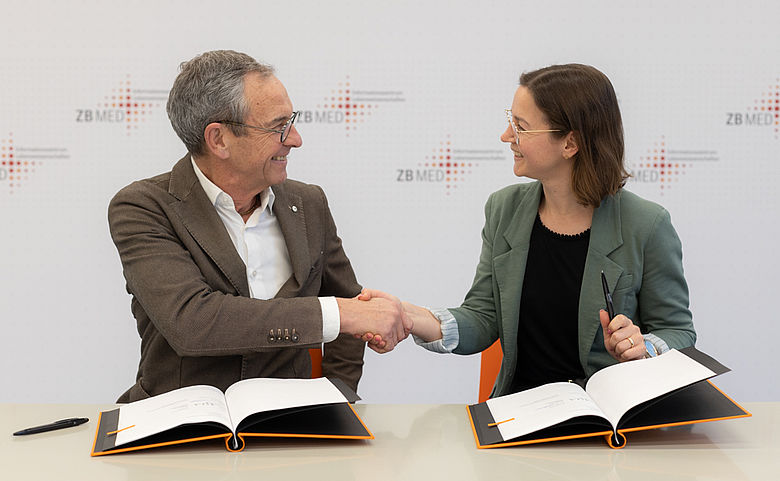
As a biomedical researcher in Germany, you are expected to join the papermill community, your university will pay. A day earlier, the Federation of Finnish Learned Societies announced:
“The steering group of the Publication Forum decided on 9.12.2024 to downgrade 271 journals from MDPI and Frontiers to level 0 from the beginning of 2025. […]
The decision is based on the steering group’s policy from 30.9.2024 to downgrade grey area journals from MDPI and Frontiers to level 0 from the beginning of 2025, excluding journals the panels suggested to keep at level 1 at their autumn meetings. Based on the panels’ suggestions, 16 MDPI and 22 Frontiers journals will remain at level 1.”
In Finland, MDPI is seen as grey area publisher where “the panels cannot recommend publication without reservation“.

MDPI and racism
In 2019, MDPI published a Special Issue “Beyond Thirty Years of Research on Race Differences in Cognitive Ability”, one year later its owner Shu-Kun Lin expressed admiration for Trump and said “Black Lives Matter. White Lives Matter. All Lives Matter.”
Dorothy Bishop blogged on that German stroke of genius on 23 December 2024:
“To understand the background, it’s worth reading a thread on Bluesky by Mark Hanson, one of the authors of a landmark paper entitled “The Strain on Scientific Publishing”. This article showed that MDPI and Frontiers stand out from other publishers in terms of having an exponential growth in number of papers published in recent years, a massive shift to special issues as a vehicle for this increase, and a sharp drop in publication lag from 2016 to 2022.
In their annual report for 2023, MDPI described annualised publication growth of 20.4%. They stated that they have over 295,693 academic editors on editorial boards, and a median lag of 17 days from receipt of a paper to the first editorial decision and 6 weeks from submission to publication. […]
It seems that speed is achieved by adopting a rather unorthodox process of assigning peer reviewers, where the involvement of an academic editor is optional […] A guest post on this blog by René Aquarius supported these suspicions and further suggested that reviewers who are critical may be sidelined. […]
A final red flag about MDPI is that it seems remarkably averse to retracting articles. […]
A search on Web of Science for documents classified as “retracted publication” or “retraction” and published by “MDPI or MDPI Ag” turned up a mere 582 retractions since 2010, which amounts to 0.04% of the 1.4 million articles listed on the database.”

Russkiy Mir at Elsevier and MDPI
Alexander Magazinov presents you two russian professors whom Elsevier and MDPI consider respectable: a Lt Colonel of putin’s mass-murdering army, and a machine-gun totting rascist. Both buy from papermills.

Science Elites
No evidence to warrant the establishment
The pseudonymous sleuth Claire Francis reported a paper with data manipulations to the university. The predictable thing happened.
This was the paper, it is not even that old. The first and corresponding author is Francesco Caiazza, who at that time was doing PhD research at the Conway Institute of Biomolecular and Biomedical Research of the University College Dublin, presumably with the last author Michael J Duffy, adjunct professor there:
F Caiazza , P M McGowan , M Mullooly , A Murray , N Synnott , N O’Donovan , L Flanagan , C J Tape , G Murphy , J Crown , M J Duffy Targeting ADAM-17 with an inhibitory monoclonal antibody has antitumour effects in triple-negative breast cancer cells British Journal of Cancer (2015) doi: 10.1038/bjc.2015.163

Bik’s Category II image duplications suggesting intent. Here is the official “Private and Confidential” letter the sleuth received from the University College Dublin (UCD), signed by the Research Integrity Officer Grace Mulcahy (highlights mine):
“…as Research Integrity Officer of UCD, I carried out an initial review of the allegation, subsequent to which, an Inquiry Panel was convened. The role of the Inquiry Panel was to determine whether, in its reasonable opinion, clearly supported by the evidence, the allegations are sufficiently serious and have sufficient substance to justify the establishment of an Investigation Panel.
The Inquiry Panel has now completed its review and determined that “we did not find sufficient evidence that would trigger formation of an ‘official investigation of misconduct’ panel”.
In accordance with our Procedure, the process has now concluded as there is no evidence that would warrant the establishment of an Investigation Panel“
Maybe at the University College Dublin, research studies are expected to be fake. Failure to fake data will lead to misconduct findings by the investigative panel.
Imperial Irishman Hugh Brady (and his Dublin leprechauns)
When your Irish past catches up with your English future.
Caiazzo is now Senior Scientist at CytomX Therapeutics in San Francisco, California, USA. Here another paper of his, with other Irish colleagues and similar problems:
B Flood , K Oficjalska , D Laukens , J Fay , A O’Grady , F Caiazza , Z Heetun , K H G Mills , K Sheahan , E J Ryan , G A Doherty , E Kay , E M Creagh Altered expression of caspases-4 and -5 during inflammatory bowel disease and colorectal cancer: Diagnostic and therapeutic potential Clinical & Experimental Immunology (2015) doi: 10.1111/cei.12617
Figure 4(b)

That one however received a Correction on 28 November 2024:
“An incorrect image representing normal epithelial caspase-4 staining was inadvertently used in Figure 4(b) of the original publication. This was identified by ImageTwin software, referred to on PubPeer (https://pubpeer.com/publications/B13DBCFCC97498E8D150CE855CA3AE). A correct image of caspase-4 IHC stained normal tissue has been included in the modified Figure 4(b), below. The correct image confirms that normal epithelial tissue does not express caspase-4, and does not change the overall findings. The accompanying epithelial IHC scoring (Figure 4(d)) was not affected by the incorrect image used for caspase-4 in original Figure 4(b).”
Here an older one by the Italian native Caiazza, from when he was still a student in Rome:
Paola Galluzzo , Francesco Caiazza , Sandra Moreno , Maria Marino Role of ERbeta palmitoylation in the inhibition of human colon cancer cell proliferation Endocrine Related Cancer (2007) doi: 10.1677/erc-06-0020


As an old Irish proverb goes, there is no evidence that would warrant the establishment
Ryan’s mentor Dow whitewashed after abusing copyright to combat my reporting
Robert Ryan’s mentor Maxwell Dow used the legal means of DMCA take-down to attack my reporting, pretending to act on behalf of his University College Cork. UCC remained silent and refused to apologise. Dow was later absolved of all suspicions of research misconduct.
A quality corresponding to the standards
Also Alexander Magazinov reported a suspicious paper to the author’s university. The papermill sleuth wondered how the Czech physicist Michaela Šlapáková of the Charles University Prague managed to produce this surprisingly international study:
Yunhe Zou , Moslem Paidar , Ibrahim Mahariq , Michaela Šlapáková , Sadeq Salman , Shoira Bobonazarovna Formanova , Sadok Mehrez , Yun Zhi The influence of tool shape on the microstructure evolution and tribological properties during friction stir processing of AlCoCrFeNi high entropy alloys particle reinforced AA7075 aluminum alloy Vacuum (2024) doi: 10.1016/j.vacuum.2024.113540
Magazinov asked the Charles University in late September 2024:
“Do you think that this China-Taiwan-Iran-Iraq-Kuwait-Saudi-Uzbek-Czech collaboration is legitimate, given that it is a rather simple experiment best performed on a single site?“
Retraction blackmail – new service by Iranian papermills
“I was asked to pay in bitcoin to avoid retraction”. – Zbigniew Leonowicz
In this regard it may or maybe may not be relevant that Slapakova’s esteemed Iranian colleague and corresponding author of the above masterpiece, Moslem Paidar, previously retracted two papers:
Jie Luo , Mahdireza Yarigarravesh , Amir Hossein Assari , Nima Hajimirza Amin , Moslem Tayyebi , Moslem Paidar Investigating the solid-state diffusion at the interface of Ni/Ti laminated composite Journal of Manufacturing Processes (2022) doi: 10.1016/j.jmapro.2022.01.042
“This article has been retracted at the request of the Editor-in-Chief. Concern has been raised about authorship irregularities on this paper. […] During revision, three authors were added and one author was removed. “
Retraction 4 October 2023.
And this one, with a similar notice:
Moslem Paidar , Olatunji Oladimeji Ojo , Amirhossein Moghanian , Hossein Karami Pabandi , Morteza Elsa Pre-threaded hole friction stir spot welding of AA2219/PP-C30S sheets Journal of Materials Processing Technology (2019) doi: 10.1016/j.jmatprotec.2019.116272
“Authorship irregularities were discovered for this paper. Changing authors after submission without permission from the editor is against the journal policy as it is stated in the Guide for Authors.
Rretraction 27 August 2024.
During revision, two authors were added and one author was removed. “
This one however proved unretractable so far:
Shabbir Memon , Moslem Paidar, Olatunji O. Ojo , Kavian Cooke, Behzad Babaei , Mojtaba Masoumnezhad The role of stirring time on the metallurgical and mechanical properties during modified friction stir clinching of AA6061-T6 and AA7075-T6 sheets Results in Physics (2020) doi: 10.1016/j.rinp.2020.103364

Nick Wise: “On the 2nd of August 2020 an advert was placed on Telegram offering authorship of a paper with a similar title to this one. “

The papermill customer Kavian Cooke reassured on PubPeer:
“I can confirm that advert refers to a different paper. Our publication was the product a long running project between the authors. The publication was funded jisc and not by individual authors.”
The Elsevier journal Results in Physics, which specialises on papermill fraud, agreed.
Also Slapakova’s esteemed Kuwaiti colleague and another corresponding author, Ibrahim Mahariq, is a papermiller who also retracted papers:
Shuaibing Wang , Haitao Lin , Azher M. Abed , Ibrahim Mahariq , Hamdi Ayed , Abir Mouldi , Zhixiang Lin Life cycle analysis of biowaste-to- biogas/biomethane processes: Cost and environmental assessment of four different biowaste scenarios organic fraction of municipal solid waste and secondary sewage sludge Energy (2024) doi: 10.1016/j.energy.2024.132593
“This article has been retracted at the request of the Editor-in-Chief.
Retraction November 2024
The authors have plagiarised a paper that has already appeared in the Journal of Cleaner Production, Volume 401 Journal of Cleaner Production, entitled “Valorization of biogas from the anaerobic co-treatment of sewage sludge and organic waste: Life cycle assessment and life cycle costing of different recovery strategies” by Pasciucco, F et al. (2023), https://doi.org/10.1016/j.jclepro.2023.136762.”
Mahariq’s other papers aren’t better, even if not retracted yet. Zhou et al 2022 is a citation vehicle, full of nonsense references to paying papermill customers, and so is Al-Rabiah et al 2022.
Shake the Stupid Tree and see what falls out
“Does this mean it’s time for an update on the bogus-citation economy? Leonid thought it is, and now you all must suffer for his misdirected priorities. ” – Smut Clyde

Also the Saudi Arabia-based coauthor Sadok Mehrez has some retractions. Thsi one was established by Alexander Magazinov to be a citation vehicle to Changhe Li, thus connection solar batteries to vegetable oil:
Tao Hai , Kosar Hikmat Hama Aziz , Jincheng Zhou , Hayder A. Dhahad , Kamal Sharma , Sattam Fahad Almojil, Abdulaziz Ibrahim Almohana , Abdulrhman Fahmi Alali , Teeba Ismail Kh , Sadok Mehrez , Anas Abdelrahman Neural network-based optimization of hydrogen fuel production energy system with proton exchange electrolyzer supported nanomaterial Fuel (2023) doi: 10.1016/j.fuel.2022.125827
“The decision to retract this article is due to several issues that have arisen in relation to referencing and authorship in this paper. A post on PubPeer raised concerns that there are problems with several references on this paper – including the subject, context, relevance, validity, and veracity of references. {…] An authorship change was additionally made during revision. An author was added to the paper (Kosar Hikmat Hama Aziz) without validation or authorisation.”
Retraction notice (undated)
And this one, from an utterly fraudulent special issue, was a citation clown car dedicated to a certain Yu-Ming Chu:
M.N. Khan , Hayder A. Dhahad , Sagr Alamri , Ali E. Anqi , Kamal Sharma , Sadok Mehrez , Mohamed A. Shamseldin , Banar Fareed Ibrahim Air cooled lithium-ion battery with cylindrical cell in phase change material filled cavity of different shapes Journal of Energy Storage (2022) doi: 10.1016/j.est.2022.104573
“Post-publication, the Editor-in-Chief also discovered suspicious changes in authorship between the original submission and the revised version of this paper. In summary, two authors were removed, and the authors’ names M. N. Khan (new first author), Kamal Sharma, Sadok Mehrez, Mohamed A. Shamseldin and Banar Fareed Ibrahim were all added to the revised paper without exceptional approval by the journal Editor, which is contrary to the journal policy on changes to authorship.”
Retraction 1 July 2024 (highlight mine)
Maybe stop accepting submissions, Herr Prof Dr Sauer?
Who needs science if you can have a 75 paper strong special edition by Afrand and Karimi? A guest post by Alexander Magazinov.
You get the idea of what questionable company and methods Dr Slapakova uses to rise in Czech academia.
Now, how do you think the Charles University of Prague reacted to Slapakova’s collaboration with such fine gentlemen? This is the official letter Magazinov received on 18 December 2024 from the Dean of Faculty of Mathematics and Physics Mirko Rokyta, and signed by the Chair of Research Ethics Committee, Tomas Dvorak:
“The processing of materials using the “friction stir processing” method, which is the topic of the publication cited above, is currently being investigated at a number of academic institutions, so it is an up-to-date research topic. In our opinion, the article has a quality corresponding to the standards in the given field and presents original scientific results. Our colleague participated in the joint research by measuring and evaluating EBSD in a scanning electron microscope, so her co-authorship of this paper is well justified.
The Research Ethics Committee is therefore convinced that Dr Slapakova did not violate the Code of Ethics of the Faculty of Mathematics and Physics by her involvement in this project.”
Keep it up boys, and your Slapakova will soon get a retraction of her own.
In any case, Magazinov found out that the Dean and the Chair of research ethics committee both lied when they wrote “Our colleague participated in the joint research by measuring and evaluating EBSD in a scanning electron microscope.” Thing is, the methods section in the paper claims that the EBSD analysis was performed using a TESCAN MIRA 3 SEM instrument. But the SEM facility of the Charles University doesn’t own such a device, instead only a FEI Quanta and a Zeiss Auriga.
BEYOND honored
A young proud student celebrated her first first-author paper on Bluesky. Ah, how nice.
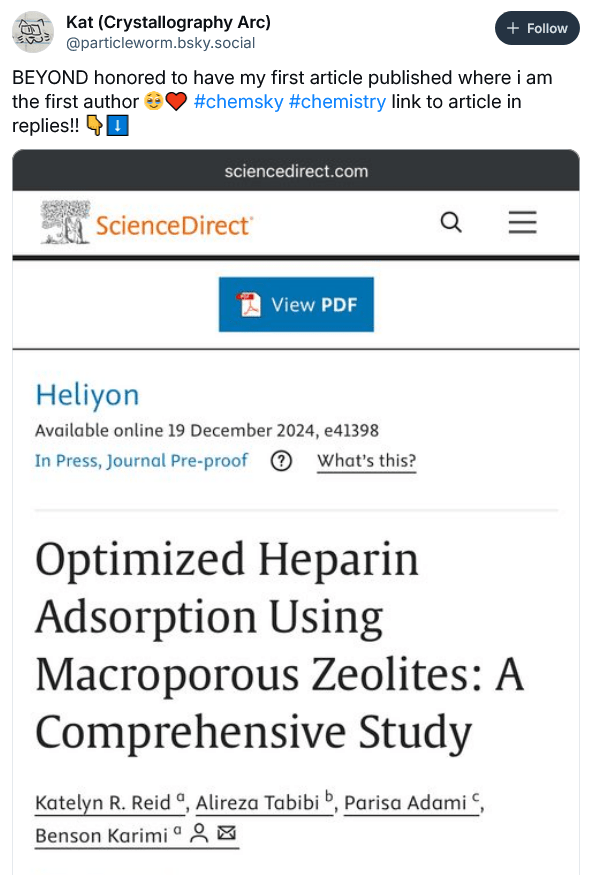
“BEYOND honored to have my first article published where i am the first author 🥹♥️ #chemsky #chemistry” (Katelyn Reid on BlueSky)
Katelyn Reid is a member of the lab of Benson Karimi (previously named Mahmood Karimi Abdolmaleki), assistant professor at Texas A&M University in Corpus Christi, USA. This is her paper, with which Valentin Rodionov found some issues:
Katelyn R. Reid , Alireza Tabibi , Parisa Adami , Benson Karimi Optimized Heparin Adsorption Using Macroporous Zeolites: A Comprehensive Study Heliyon (2024) doi: 10.1016/j.heliyon.2024.e41398


“IR spectra in Fig. 1. Why is there an unexpected “step” at a ~1500 cm-1 mark in the green trace? And is there an explanation for the unexpected line shape at ~1050 cm-1 in the blue trace? The peak shape is not Lorentzian, and it is no longer split.”
As you can see, the spectra are hand-drawn. Rodionov replied on BlueSky, and the undergraduate student Reid explained the spectra irregularities with “trace impurities that are present in the desorbed heparin” and with “the interaction between the heparin and the CBV-901 zeolite“. Since Rodionov was unconvinced by so much fancy-worded bullshit, Reid (responsible for “Writing – original draft, Visualization, Formal analysis, Data curation“) suddenly admitted to be “by no means an expert” and then blamed her 2 Iranian “collaborators“. The reply was likely dictated by her supervisor Karimi. Who, you will be shocked to learn, is probably a papermiller.
In fact here are more of those hand-drawn spectra by Karimi:
Mahmood Karimi Abdolmaleki, Anushree Das , Devang P. Khambhati , Ali Shafiee , Kayli Dimas , Carlo Alberto Velazquez , Seyed Mohammad Davachi , Sima Choubtarash Abardeh Efficient and Economic Heparin Recovery from Porcine Intestinal Mucosa Using Quaternary Ammonium-Functionalized Silica Gel Bioengineering (2022) doi: 10.3390/bioengineering9110606

Pityokteines curvidens: “Spectra in Fig. 1 have several unusual and unexpected features:
- “QTASi”, “TASi”, “QDASi”, and “DASi” feature peculiar step-like features that are inconsistent with real absorbance peaks due to abrupt rise or fall of the line shape.
- “QTASi” features a region of repeated baseline noise past 3750 cm-1.
- The three pairs of traces (“QTASi” and “TASi”, “QDASi” and “DASi”, and “QMASi” and “MASi”) feature regions of baseline noise and peaks that are more similar than expected. […]
- The wavenumber scale features irregularly spaced ticks.”

“Spectra in Fig. 2 have several unusual and unexpected features:
- The wavenumber scale has irregularly spaced ticks.
- “QDASi” features a peculiar step-like feature at ~2700 cm-1 that is inconsistent with a real absorbance peak due to abrupt rise of the line shape.
- “QDASi-Heparin” features a region of repeated baseline noise between ~2900- 3250 cm-1.
- The “QDASi” and “QDASi-Heparin” traces feature regions of baseline noise and peaks that are more similar than expected. […]
- The “QDASi-Heparin” trace features a peak at ~1700 cm-1 with a highly unusual non-Lorentzian line shape. […].”
There were other issues with that paper, as recorded on PubPeer. In another case, Maarten van Kampen found 11 papers in the same Elsevier journal, with different coauthors, but with same nonsense citations and same modules and calculations, likely fabricated by the same papermill. This by Karimi was one of them:
Mohammad Omidi , Zahra Karimi , Shirin Rahmani , Ali Naderi Bakhtiyari , Mahmood Karimi Abdolmaleki Molecular dynamic study of perovskite with improved thermal and mechanical stability for solar cells application: Calculation the final strength of the modeled atomic structures and the Young’s modulus Engineering Analysis with Boundary Elements (2023) doi: 10.1016/j.enganabound.2023.07.037


Here, Karimi not only published fake data, he added his former PhD advisor William Connick as coauthor, six years after his death in 2018, and declaring that Connick not only was alive but also “read and agreed to the published version of the manuscript“:
Sedigheh Barzegar , Mahmood Karimi Abdolmaleki , William B. Connick , Ghodratollah Absalan Enhancing Vapochromic Properties of Platinum(II) Terpyridine Chloride Hexaflouro Phosphate in Terms of Sensitivity through Nanocrystalization for Fluorometric Detection of Acetonitrile Vapors Crystals (2024) doi: 10.3390/cryst14040347

As the PubPeer sleuth established, Karimi used some old left-over data from his PhD studies on a Beamline 11-BM device at Connick’s Argonne National Laboratory, and then pretended it was all done recently in Iran.
Retraction Watchdogging
Two editors who were themselves authors
Fun at Elsevier. Editors-in-Chief were handling their own paper.
Walter Cardoso Satyro , Mauro De Mesquita Spinola, Cecília M.V. B. De Almeida, Biagio F. Giannetti, José Benedito Sacomano, José Celso Contador, Jose Luiz Contador Sustainable industries: Production planning and control as an ally to implement strategy Journal of Cleaner Production (2021) doi: 10.1016/j.jclepro.2020.124781

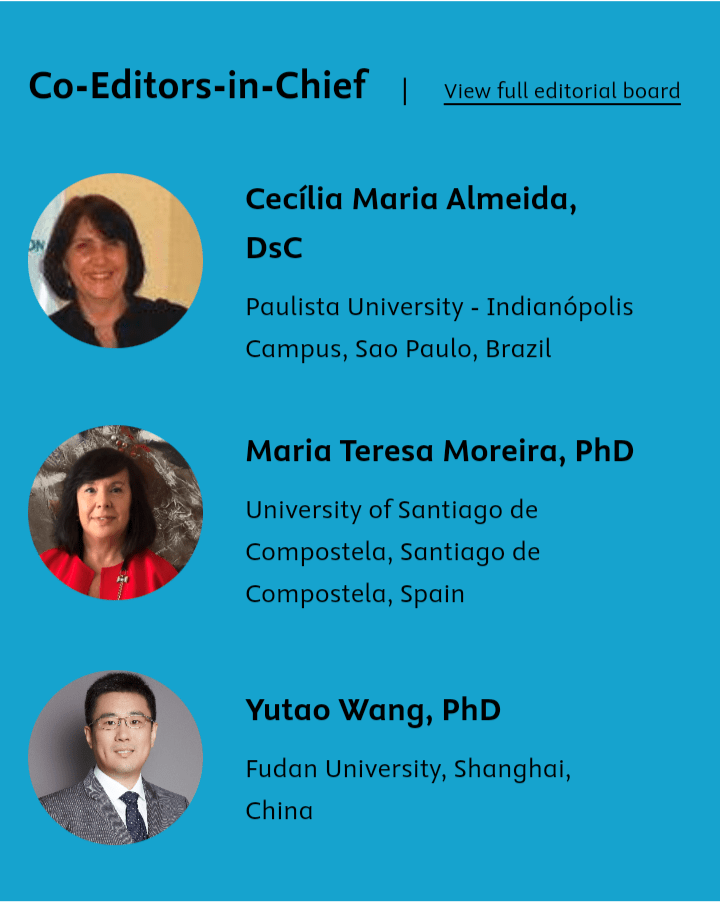
Indeed she is. The journal informs us that the Co-Editor-in-Chief Cecília Maria Almeida, professor at the Paulista University in Sao Paulo, Brazil, is *the first contact point for Review articles” and specialises in “Education for sustainability”, “Corporate sustainability”, “Corporate social responsibility” and “Sustainable consumption”. Basically, she is the Holy Virgin Mary of Sustainability, and as such Almeida declared no conflicts of interests whatsoever while editorially handling her own paper.
Right after Almeida’s misconduct was flagged on PubPeer, the journal quickly assigned a new editor in July/August 2024. Now it was the associate editor and Almeida’s colleague at Paulista University, Biagio Giannetti, who also happens to be the coauthor of that same paper:

The retraction notice from 10 November 2024 said it was actual TWO editors who were simultaneously authors:
“This article has been retracted following the investigation of an independent ethics expert.
The journal became aware that this article may have been subject to a compromised peer review process in which it was handled by two editors who were themselves authors on the paper.
Further investigation revealed that the name of the handling editor, listed on the article as per the policy of the Journal, was changed without informing the readers. While this change may have more accurately reflected the peer review process, it was found that both named handling editors were authors on this paper.
Subsequently, post-publication peer review was conducted by two impartial field experts, who advised the journal that its quality is similar to other articles that were published at that time in the Journal. This retraction notice replaces the expression of concern of 22 October 2024.”
Almeida and Gianetti has a common PubPeer record of editing their own papers and likely papermilling, see in the same Elsevier journal which they run together: Shah et al 2019, Lombardi et al 2019, Yang et al 2020, Nacimento et al 2022, their papers Dos Santos et al 2022 and De Oliviero-Neto et al 2022 were edited by Almeida’s associate, the Czech papermiller Jiří Jaromír Klemeš (who died in January 2023 and continues papermilling long after his death).
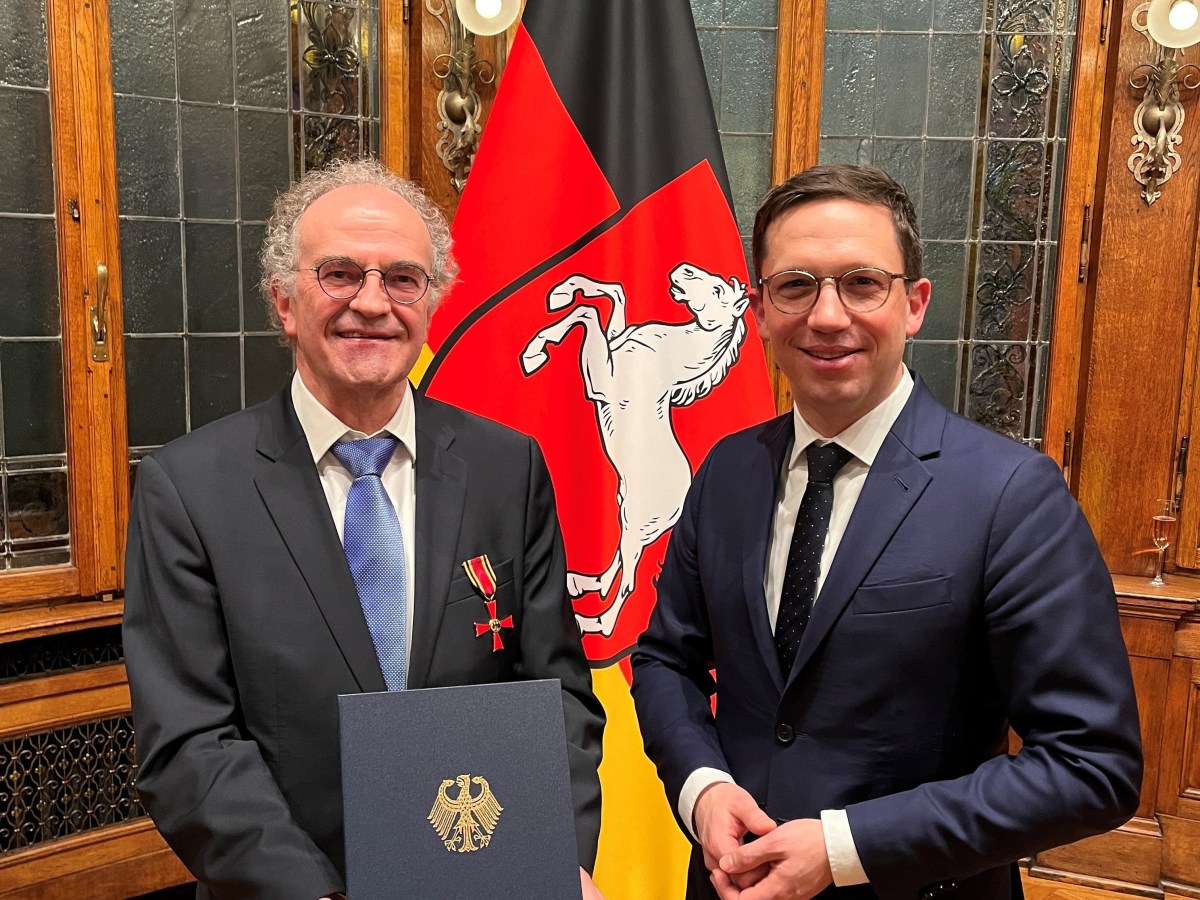
Bundesverdienst-Kümmerer am Bande
“Benign-by-design, circular economy in the plastics industry, biodegradable antibiotics – the sustainable design of chemistry is the central theme of Prof. Klaus Kümmerer’s work. “
This was however corrected, Almeida is both author and editor:
B.F. Giannetti, F. Agostinho, J.J. Cabello Eras, Zhifeng Yang , C.M.V.B. Almeida Cleaner production for achieving the sustainable development goals Journal of Cleaner Production (2020) doi: 10.1016/j.jclepro.2020.122127

The Erratum from 25 November 2024 accused Elsevier of sabotaging perfectly reliable and trustworthy science:
“Due to a production oversight by the publisher, the name of the initial receiving editor, Cecilia Maria Villas Bôas de Almeida, was mistakenly listed as the handling editor. The correct handling editor is Jiří Jaromír Klemeš. This correction does not impact on the scientific integrity of the article.
The journal regrets the error and has updated the record accordingly.”
Violations of the journal’s policies
Spring cleaning in Chemosphere continues, presumably Elsevier is worried that this papermill-only journal was delisted by Clarivate and thus lost its impact factor.
This was retracted, my condolences to the two French authors, the Le Mans University professor Benoit Schoefs and his friend there Justine Marchand, for their tragic loss:
Mohd Jahir Khan , Arivalagan Pugazhendhi, Benoit Schoefs , Justine Marchand , Anshuman Rai , Vandana Vinayak Perovskite-based solar cells fabricated from TiO2 nanoparticles hybridized with biomaterials from mollusc and diatoms Chemosphere (2022) doi: 10.1016/j.chemosphere.2021.132692
“Autor and editor are linked. Mathimani Thangavel was an editor for Arivalagan Pugazhendhi , however, both have been frequently publishing together, before and after but also during the time of editing.”
Desmococcus antarctica
The recent retraction notice is still undated:
“This article has been retracted at the request of the Editors-in-Chief.
A journal-wide investigation by Elsevier’s Research Integrity & Publishing Ethics team identified violations of the journal’s policies on conflict of interest related to the submission and review of this paper.
Review of this submission was handled by Guest Editor Mathimani Thangavel despite an extensive record of collaboration, including co-publication, with one of the paper co-authors (Arivalagan Pugazhendhi). Acceptance of the article was partly based upon the positive advice of a reviewer who was closely linked to one of the authors (Vandana Vinayak). In addition, the reviewer’s report was edited by a user with a name matching one of the authors (Vinayak). This compromised the editorial process and breached the journal’s policies.
The authors have not responded to this retraction.”

Do papermillers dream of eclectic journals?
“I focus on the sprawling parody literature devoted to the three Es of Energy, Economy and the Environment. Together they […] freeload on the authentic literature on energy efficiency and pollution reduction (while diluting, distracting and discrediting them).” – Smut Clyde
Another retraction hits an Englishman David O’Connor, now associate professor at the Royal Agricultural University in UK, and an Austrian governmental official, Dietmar Müller-Grabherr, General Secretary at the Environment Agency Austria in Vienna. Their coauthor Deyi Hou is a close associate of the handling editor Daniel C. W. Tsang, who in turn is an associate of Yong Sik Ok and Jörg Rinklebe, thus a member of that gigantic Papermill International vortex.
David O’Connor, Dietmar Müller-Grabherr , Deyi Hou Strengthening social-environmental management at contaminated sites to bolster Green and Sustainable Remediation via a survey Chemosphere (2019) doi: 10.1016/j.chemosphere.2019.03.035
The retraction notice mentioned:
“Review of this submission was handled by Guest Editor Daniel Tsang despite an extensive recent record of collaboration, including co-publication, with one of the paper co-authors (Deyi Hou). Acceptance of the article was partly based upon the positive advice of a reviewer who was closely linked to one of the authors (Hou) and of Tsang, who also acted as a reviewer.”
The Editor-in-Chief conducted an investigation
Two more retractions for Hari Shanker and Aruna Sharma. Read about this insane fraudster couple at Uppsala University in Sweden, exposed by Mu Yang, here:
In bed with Hari and Aruna
Hari Shanker & Aruna, a YouTube influencer couple in Sweden. With or without Rudolph the Red-Faced Liar. And with Anca and Dafin, two totally innocent and upright Romanians. Pushing pig brain juice an SS Nazi invented. You won’t find a better story for Christmas!
Recent retraction Nr 1:
Aruna Sharma, Dafin F Muresanu , José V Lafuente , Ranjana Patnaik , Z Ryan Tian , Anca D Buzoianu, Hari S Sharma Sleep Deprivation-Induced Blood-Brain Barrier Breakdown and Brain Dysfunction are Exacerbated by Size-Related Exposure to Ag and Cu Nanoparticles. Neuroprotective Effects of a 5-HT3 Receptor Antagonist Ondansetron Molecular Neurobiology (2015) doi: 10.1007/s12035-015-9236-9
Dysdera arabisenen: Fig 6 c and d overlap.

The retraction arrived on 20 December 2024:
“The Editor-in-Chief has retracted this article because of concerns regarding figures presented in this work. These concerns call into question the article’s overall scientific soundness. An investigation conducted after its publication discovered that a portion of the top right corner of Panel d of Figure 6 appears to overlap with a portion of the bottom half of Panel c of the same figure. These panels represent tissues taken from animals subject to different experimental conditions. The Editor-in-Chief therefore no longer has confidence in the integrity of the research presented in this article.
Hari Shanker Sharma and Aruna Sharma disagree with this retraction. Anca D. Buzoianu agrees with this retraction. Dafin F. Muresanu, José V. Lafuente, Ranjana Patnaik, and Z. Ryan Tian have not replied to correspondence from the Publisher.”
The Editor-in-Chief who decided to stick the feathers for the investigation of Sharma’s case into his bum, is Benedict Albensi. This behaviour is kind of understandable, since Mu Yang made Albensi look like an utter fraud-enabling crook in the case of Domenico Pratico. And she also flagged Albensi’s own papers, see April 2024 Shorts. No wonder Albensi now parades Mu’s investigation of the Sharma fraud as his own.
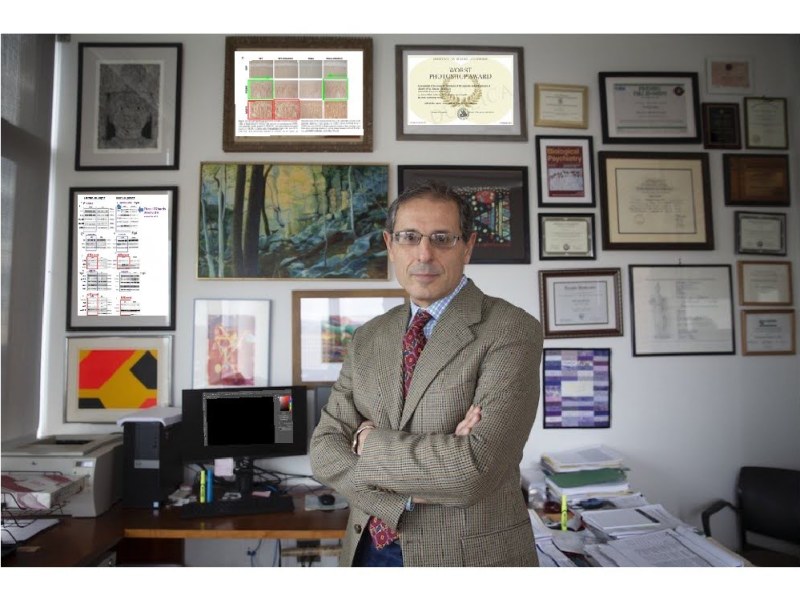
Research misconduct: Theory & Pratico
A whistleblower tried to report fraud in Domenico Pratico’s papers via proper channels, and hit a wall everywhere.
Recent retraction Nr 2, in the same journal. Enjoy the utterly insane title of that “study” of Alzheimer’s, which features titanium nanorods, “stem cells” and Nazi Pig Brain Juice (cerebrolysin):
Hari Shanker Sharma, Dafin Fior Muresanu , José Vicente Lafuente , Ranjana Patnaik, Z. Ryan Tian , Asya Ozkizilcik , Rudy J. Castellani, Herbert Mössler , Aruna Sharma Co-Administration of TiO2 Nanowired Mesenchymal Stem Cells with Cerebrolysin Potentiates Neprilysin Level and Reduces Brain Pathology in Alzheimer’s Disease Molecular Neurobiology (2018) doi: 10.1007/s12035-017-0742-9


Sharma’s former associate Rudy J. Castellani of Northwestern University in USA claimed on PubPeer:
“I did not have the opportunity to review this paper prior to publication. My institutional affiliation is also incorrect. I asked Springer several times over the past couple of years to publish an erratum and remove my name.“
Indeed, Elsevier removed Castellani’s name from other papers with Sharma, even though such papers (including the above) credited NIH grants to Castellani.
The retraction appeared on 21 December 2024 and again credited Albensi alone:
“The Editor-in-Chief has retracted this article because of concerns regarding the figures presented in this work. These concerns call into question the article’s overall scientific soundness. An investigation conducted after its publication discovered the following issues:
- The bottom left corner of Panel c of Fig. 1 appears to overlap with a portion of the top right corner of Panel d of the same figure;
- The top half of Panel a of Fig. 2 appears to overlap with the bottom half of Panel b of the same figure;
- The top half of Panel b of Fig. 2 appears to overlap with the bottom half of Panel c of the same Figure;
- The top half of Panel c of Fig. 2 appears to overlap with the bottom half of Panel f of the same figure.
These panels represent different types of tissue or tissues taken from animals which underwent different treatments. The Editor-in-Chief therefore no longer has confidence in the integrity of the research presented in this article.
Hari Shanker Sharma and Aruna Sharma disagree with this retraction. Dafin Fior Muresanu, José Vicente Lafuente, Ranjana Patnaik, Z. Ryan Tian, Asya Ozkizilcik, and Herbert Mössler have not replied to correspondence from the Publisher.
Rudy J. Castellani, who is listed as a co-author of this article, has stated that he did not participate in the research reported therein and that his name and affiliation were added to the author list without his consent.”

Cerebrolysin: Sharmas, Masliah, and EVER Pharma
“Poking around PubMed (Dysdera the spider is always on the hunt for new hornet’s nests) [..], I came across one image in two papers by Eliezer Masliah. […] By a conservative count, I contributed to about 160 out of 300 slides in the final dossier” – Mu Yang

Innocuous owed to subservient
I quoted from a paper on PubPeer once and caused its retraction. Strange.
A collaboration from the greatest scientific minds of India, Iran, South Africa and russia:
Bahman Khoshru , Debasis Mitra , Kuldeep Joshi , Priyanka Adhikari , Md Shafiul Islam Rion , Ayomide Emmanuel Fadiji , Mehrdad Alizadeh , Ankita Priyadarshini , Ansuman Senapati , Mohammad Reza Sarikhani , Periyasamy Panneerselvam, Pradeep Kumar Das Mohapatra, Svetlana Sushkova , Tatiana Minkina , Chetan Keswani Decrypting the multi-functional biological activators and inducers of defense responses against biotic stresses in plants Heliyon (2023) doi: 10.1016/j.heliyon.2023.e13825

That was what I quoted, see if you understand anything:
“”In diverse scenery plants bear the characteristic of incantation amount by uncountable microbes, which threatens their presence. Still, many of them are shortened innocuous owed to subservient as well as dynamic protector blockades exist in the floras and work for the wellbeing of floras [[1]] For an extended period, plants are preserved with many plant extracts and artificial synthetic compounds, which are waged for cell wall wreckages, and induction of resistance to successive pathogen spells [[2]]. This tempted resistance infrequently initiate towards the whole pathogen regulator, subsequent as an alternative to a decrease in laceration scope and/or amount [[3]]. In a comprehensive manner, persuaded resistance can be divided into two main kinds:….””
On 18 December 2024, the paper was retracted:
“This article has been retracted at the request of the Editor.
The decision to retract this article is due to concerns that have arisen in relation to its content. The original concern was raised by a Pubpeer post indicating that the article contains a phrase that makes the related content difficult to understand, additionally, a paragraph was identified as making no sense. This is detailed here: PubPeer – Decrypting the multi-functional biological activators and in …. The journal editor asked the authors to explain the concerns and to provide any raw data and evidence they felt would be useful. The corresponding author provided explanations, but after several rounds of careful and thorough evaluation of the article, the editor lost confidence in the article and decided to retract it.
Apologies are offered to the readers of the journal for not identifying the issue during the submission process.”
“Individual Russians shouldn’t be blamed”
My old article about Alexander Kabanov and his close collaborator (and likely life partner) Elena Batrakova, both professors at University of North Carolina at Chapel Hill, led to research misconduct findings and two retractions.
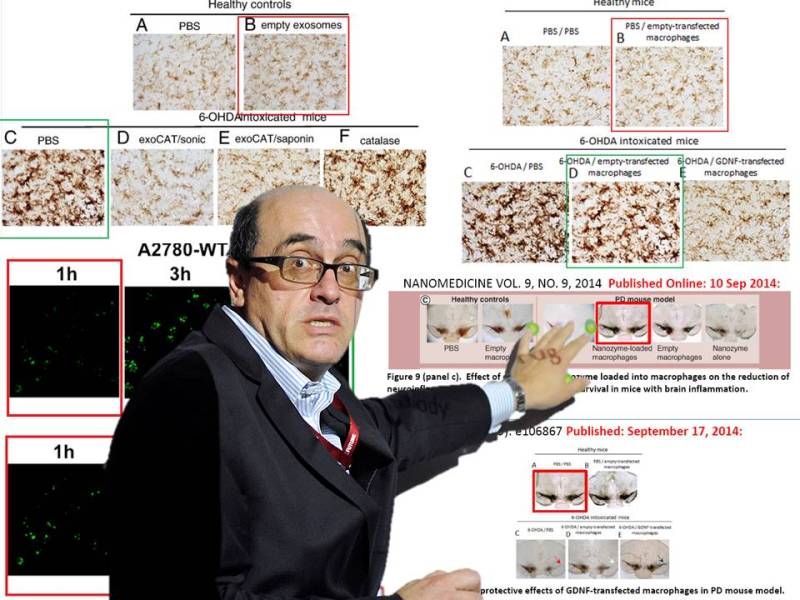
Nanotheranostics with a decisive action
“We will look in each instance thoroughly and take a decisive action in consultation with journals and university in each instance as appropriate”, Sasha Kabanov, winner of the Lenin Komsomol Prize 1988
Here the first retraction:
Yuling Zhao , Matthew J. Haney , Richa Gupta , John P. Bohnsack , Zhijian He , Alexander V. Kabanov , Elena V. Batrakova GDNF-transfected macrophages produce potent neuroprotective effects in Parkinson’s disease mouse model PLoS ONE (2014) doi: 10.1371/journal.pone.0106867

The PubPeer user Pangio Elongata also noted: “Controls were reused from previous study but not identified in the text.“


The retraction appeared on 17 December 2024 (highlights mine):
“Following publication of this article [1] an investigation by the University of North Carolina at Chapel Hill concluded that research misconduct occurred. Specifically, the investigation found falsification of research results as follows:
- In Fig 2, the β-actin and TSG101 loading controls are not from the same blots used to show GDNF expression.
- In Fig 5B, the western blot results shown for CD206 were obtained from unrelated lower molecular weight bands.
The PLOS ONE Editors note that image panels in Figs 7 and 8 of [1] appear similar to image panels in Figs 5 and 6 of [2] which was subsequently corrected in [3] to replace these figures. Additionally, in Fig 8 of [1], the lower left region of panel 8D appears similar to the central region of panel 8C; a replacement image was provided for panel 8C. The University of North Carolina at Chapel Hill investigated the issues with Figs 7 and 8 of [1], confirmed that the duplications between [1] and [2, 3] were due to errors in [2, 3], and did not find research misconduct occurred in these instances.
In light of the concerns about the reliability and integrity of the reported results in Figs 2 and 5 the PLOS ONE Editors retract this article.
The corresponding author EVB responded but did not confirm agreement nor disagreement with the editorial decision, and indicated that the wrong data were included in the article in error. EVB stands by the article’s findings and apologizes for the issues with the published article. YZ, MJH, RG, JPB, ZH, and AVK agreed with the retraction. JPB and AVK apologize for the issues with the published article.”
This is the mentioned PLOS One paper, which was previously corrected by Batrakova in July 2024 to fix of “panel B of Fig 3“, and which is now also retracted:
Matthew J. Haney , Yuling Zhao , Emily B. Harrison , Vivek Mahajan , Shaheen Ahmed , Zhijian He , Poornima Suresh , Shawn D. Hingtgen , Natalia L. Klyachko , R. Lee Mosley , Howard E. Gendelman , Alexander V. Kabanov , Elena V. Batrakova Specific transfection of inflamed brain by macrophages: a new therapeutic strategy for neurodegenerative diseases PLOS ONE (2013) doi: 10.1371/journal.pone.0061852
“Following publication of this article [1, 2] an investigation by the University of North Carolina at Chapel Hill concluded that research misconduct occurred. Specifically, the investigation found falsification of research results as follows:
- In the corrected version of Figure 3B [2], the research results in the first panel (i.c. PBS followed by i.v. injection of PBS) originated from an unrelated experiment.
- In Figure 3B [1, 2], the research results in the third panel from the left (i.c. 6-OHDA followed by i.v. injection of PBS) originated from an unrelated experiment.
In light of the concerns about the reliability and integrity of the reported results the PLOS ONE Editors retract this article.”
Retraction 17 December 2024
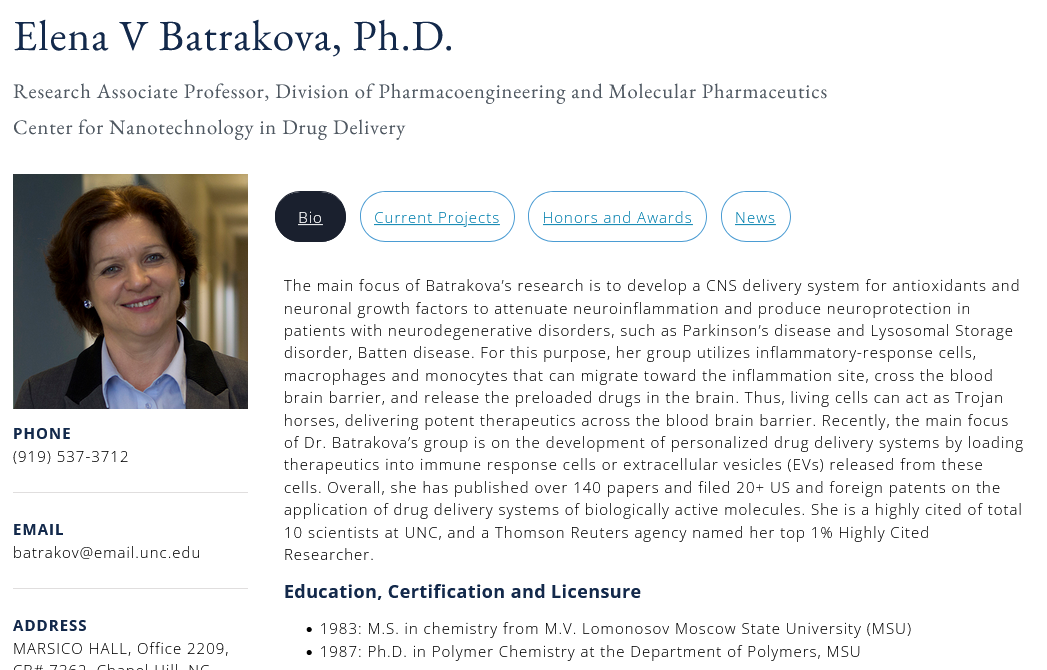
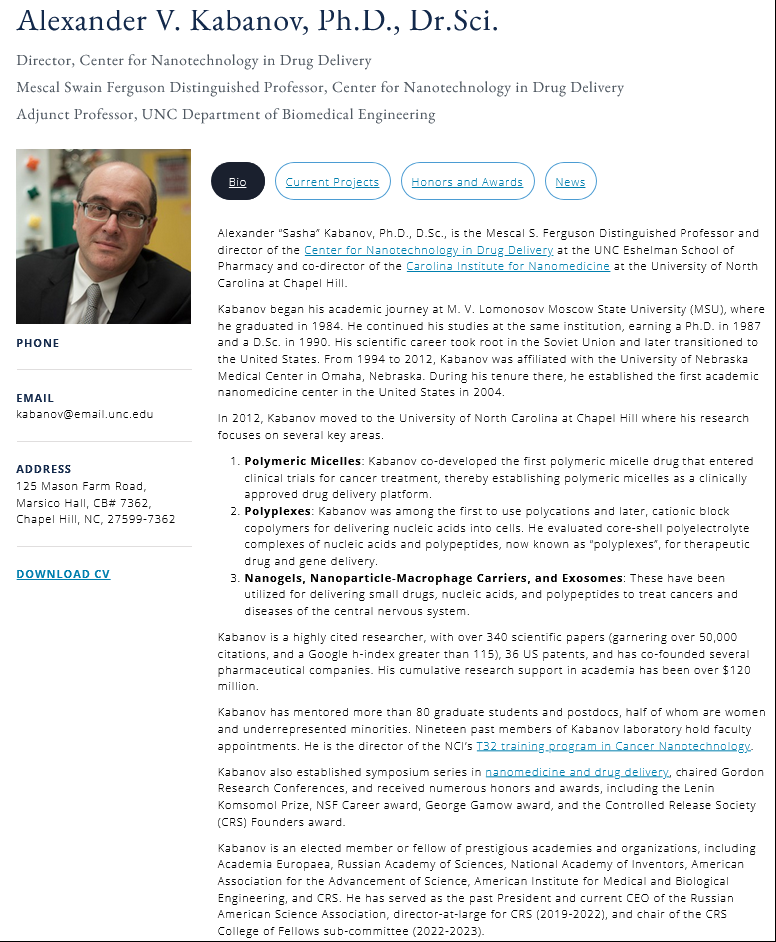
It seems, Batrakova was given the full and exclusive blame and apparently fired: her institutional profile and even the pdf of her CV were deleted (in July 2024, she was still Research Associate Professor and celebrated as “a highly cited of total 10 scientists at UNC, and […] top 1% Highly Cited Researcher“). Batrakova’s likely ex-partner Kabanov however remains UNC superstar genius, proudly flaunting his questionable honour of being “fellow of prestigious […] Russian Academy of Sciences…“, almost 3 years into the genocidal war against Ukraine led by his beloved russia.
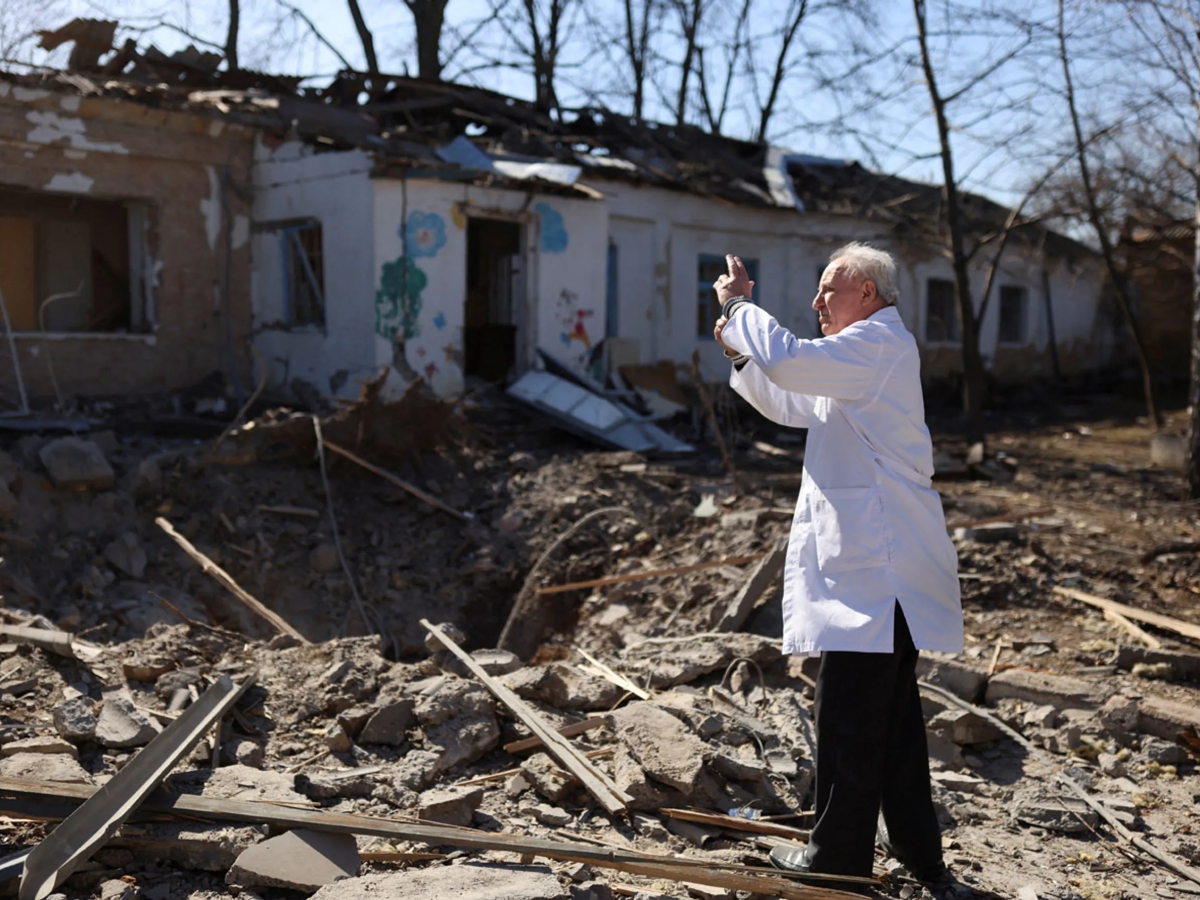
Boycott Russian Science (and Everything Else) – Thoughts on War in Ukraine
The state it’s in, we don’t need Russian science anyway.
As you saw with Batrakova, orks like Kabanov have no scruples whatsoever to sacrifize their dear ones and to walk over their proverbial corpses towards money. In November 2024, Kabanov shared his rascist views in Nature:
“There isn’t much to be gained from limiting the careers of individual Russian scientists, argues Alexander Kabanov, director of the Center for Nanotechnology in Drug Delivery at the University of North Carolina at Chapel Hill. Kabanov, who is also treasurer and chief executive of the Russian–American Science Association, adds: “Everyone realizes the invasion was a tragedy for Ukraine and for science, but people are quite concerned about what is going on and are aware that individual Russians shouldn’t be blamed.””
In that Nature article decrying the russian suffering, Kabanov also boasted about making extra effort to recruit russian agents , pardon, scientists to staff his lab. Here a paper by one of his research associate professors, Konstantin Lukyanov, who until December 2022 was at Skolkovo Institute of Science and Technology in Moscow:
Marina V. Shirmanova, Alena I. Gavrina , Tatiana F. Kovaleva , Varvara V. Dudenkova , Ekaterina E. Zelenova , Vladislav I. Shcheslavskiy , Artem M. Mozherov , Ludmila B. Snopova , Konstantin A. Lukyanov , Elena V. Zagaynova Insight into redox regulation of apoptosis in cancer cells with multiparametric live-cell microscopy Scientific Reports (2022) doi: 10.1038/s41598-022-08509-1

Indigofera tanganyikensis: “This article has already been corrected extensively for error in the reference list
A micrograph panel in Figure 1 is similar to a panel presented in Figure 5. In FIgure 1 they are showing caspase-3 activity and in Figure 5 they are showing ROS levels.”
If needed, Kabanov will sacrifice his research associate professor Marina Sokolsky next:
Xiaomeng Wan , Yuanzeng Min , Herdis Bludau , Andrew Keith , Sergei S. Sheiko , Rainer Jordan , Andrew Z. Wang , Marina Sokolsky-Papkov , Alexander V. Kabanov Drug Combination Synergy in Worm-like Polymeric Micelles Improves Treatment Outcome for Small Cell and Non-Small Cell Lung Cancer ACS Nano (2018) doi: 10.1021/acsnano.7b07878
Donate!
If you are interested to support my work, you can leave here a small tip of $5. Or several of small tips, just increase the amount as you like (2x=€10; 5x=€25). Your generous patronage of my journalism will be most appreciated!
€5.00

 For Better Science
What the hell is Germany thinking with their deal with MDPI? Does anybody in Germany actually look at the quality of papers in MDPI journals?
Finland got it right when they decided to de-list MDPI and Frontiers (starting in 2025, down to level 0) so that serious scientists can stay away from those dumping grounds for fraudulent or just sloppy low quality science. I hope the Norwegian list follows next and dumps these grey-zone journals.
Just to be fair, I have come across decent articles published in MDPI and Frontiers journals, and I appreciate that early career students or graduates can’t always control or be super choosy where their paper ends up, but most of the time you are looking at trash.
LikeLiked by 1 person
After scatching the surface, German academia appears for what it really is, as rotten as it is in Italy, Spain and France. Germans are just less blatant in faking results. Remarkable examples of dogy science were exposed by Leonid and others at many universities like Dresden, Berlin, Bielefeld, Heidelberg, Tübingen, Kiel, Marburg, Potsdam, Ulm, Düsseldorf, etc. Academia became a joke everywhere, unfortunately.
LikeLike
Sad but true: there’s nothing uniquely wrong with Germany. It operates just like everywhere else—a mix of corruption, nepotism, and incompetence. What sets Germany apart, however, is the bubble of ignorance many Germans live in, largely due to the country’s media. German news outlets often prioritize reporting on international issues while downplaying or ignoring domestic problems. This creates a narrative that focuses on the flaws of other nations, fostering a sense of complacency and leaving many unaware of the pressing challenges within their own borders.
LikeLiked by 1 person