

Schneider Shorts of 6 September 2024 – Bochum professor sues me for scamferencer’s honour, For Better Science banned in Italy, Czech cheater vindicated, Irish cheater protected, Dana Farber CEO resigns, with Germany’s highly cited, retractions for a Nobelist, an ex-dean, and three Virginia crooks, plus some eugenics and the microbiome of all diseases.
Table of Discontent
In Eigener Sache
- Vaffanculo – For Better Science blocked in Italy
- Tom and Ashu sue again – Müller opens another trial to defends Tiwari’s honour
Science Elites
- A mockery of all academics – Radek Zboril wins in court against his university
- Discovering new treatments and cures – Laurie Glimcher resigns, new Dana Farber CEO Benjamin Ebert with dodgy data also
Scholarly Publishing
- Forever Young – BMJ plays dumb to protect Leonie Young
- The connection seems to be Jan G. Hengstler – German bigwig most cited ever (in his journals)
Retraction Watchdogging
- Identical or altered fashion – Khalid Shah causes retraction for Paul Fisher’s gang
- The authors apologize to the scientific community – two more for Nobelist Gregg Semenza
- Very important to point out – two more for Augustine Choi, one with Jack Elias
- An in-house investigation – Xing Lin teaches how to retract papers
- Non-verifiable cell lines – Taylor and Francis fights fictional cells
Science Breakthroughs
- Major conclusions are true – Rob Knight’s retracted cancer microbiome paper
- A myriad of possible explanations – Elissa Epel takes care of her grandchildren
In Eigener Sache
Vaffanculo
For Better Science is not accessible to readers from Italy anymore.
This happened on court order from Perugia in the lawsuit of the dishonest gastroenterologist Gabrio Bassotti, because I quoted from an earlier article by Sylvie Coyaud whom Bassotti previously sued as well. Bassotti claimed that my writing was a conspiracy masterminded by his competitor Stefano Fiorucci (another dishonest gastroenterologist at University of Perugia) to deny the 57-year-old associate professor a certain job Fiorucci wanted for himself. Read here:
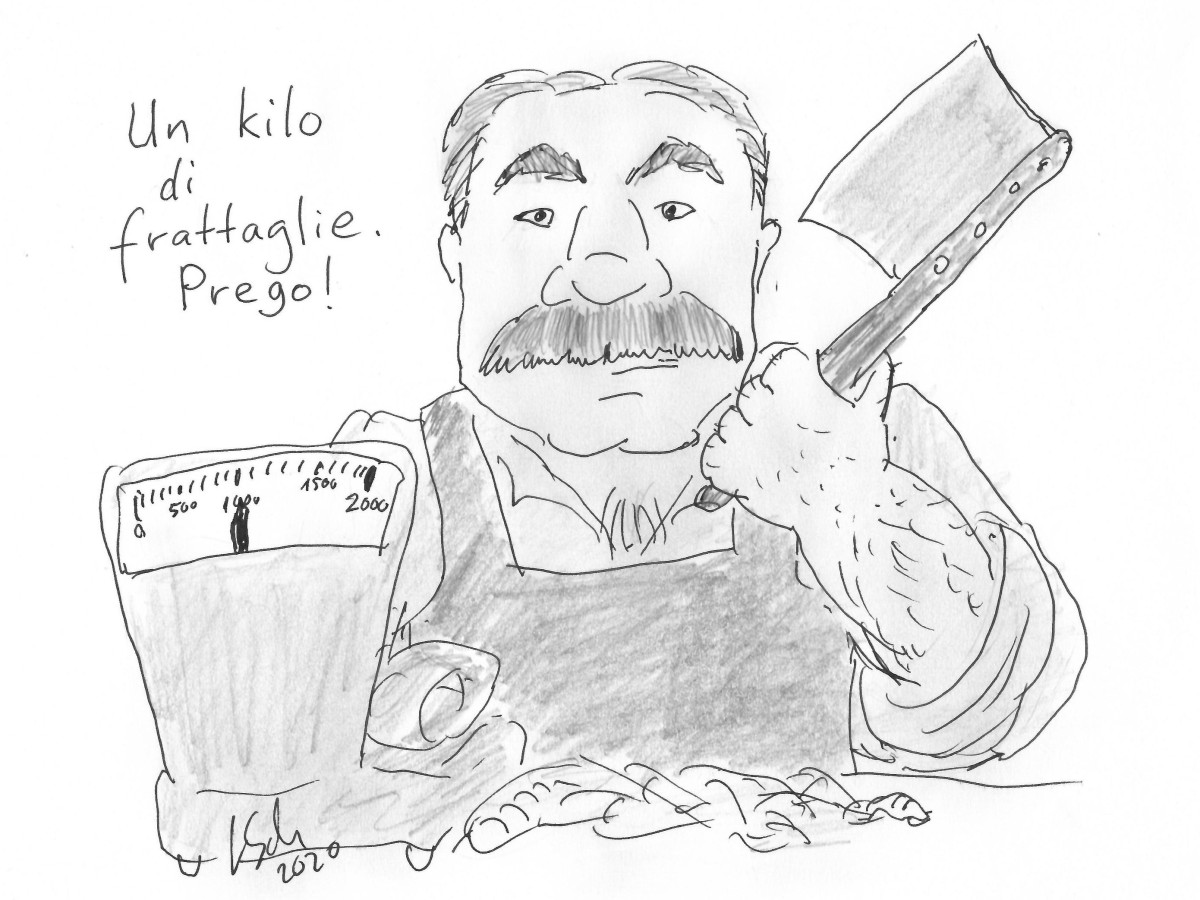
Italian Prosecutor orders seizure of Gabrio Bassotti reporting
“…request for preventive seizure made on 12.4.2024 by the Public Prosecutor in charge, concerning the article under indictment, still accessible on the website called forbetterscience.com, although it appears to have been removed from the blog.repubblica.it website (referred to in the indictment)…”

It seems, even the Italian justice cannot imagine that someone does something without being bribed.
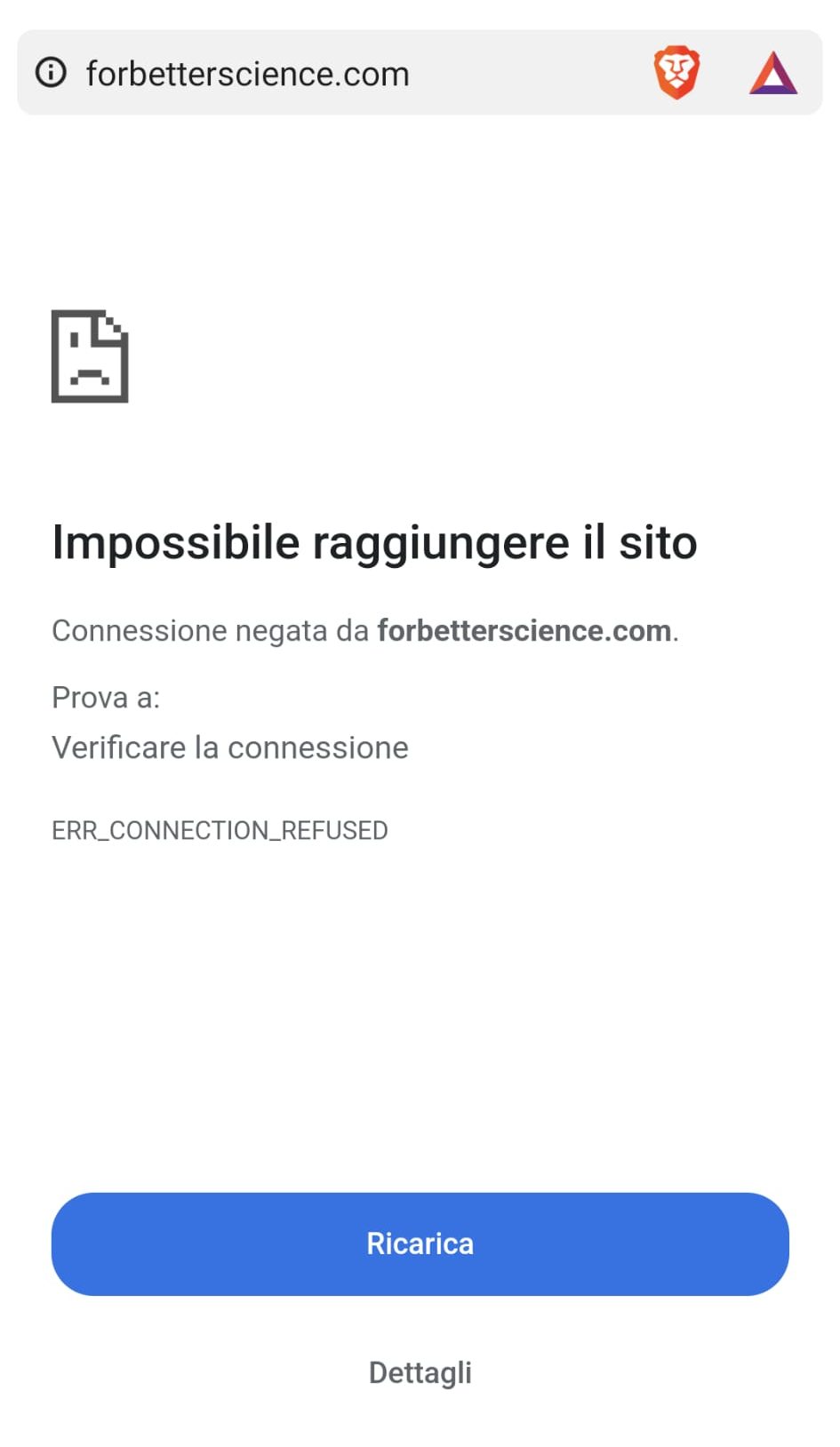
The court previously demanded that WordPress deletes my article, having failed it ordered the block of the entire forbetterscience.com domain. All Italian internet providers have to comply. Thus, in Italy For Better Science is equivalent to paedophile forums and Islamic State. There is of course a key difference to paedophile and terror sites: you won’t face criminal prosecution if you find a way to access For Better Science. I hope?
The ban is likely permanent and for all eternity, since I do not intend to participate in whatever farce is going on in Perugia. Presumably Italian state is preparing an international arrest warrant for me on charges of terrorism.
You can imagine how this influences my already sceptical view on Italy. In any case, if you wish to inform your Italy-based friends how to read For Better Science (obviously they can’t read these lines themselves), there are two options:
- If you are already subscribed to For Better Science (option available under every post), you receive email notifications with link to every new article. Copy-paste the hyperlink into Wayback Machine or Archive.Today and read the archived version. if there is no archived version yet, you can click to create one, and then read it.
- Use VPN or TOR tools to hide your Italian IP address. There seem to be some gratis VPN extensions for internet browsers, and Opera browser has one already integrated. This way you will get normal up-to-date access and be able to also comment on For Better Science.
Feel free to use the comment section below to share your access experience from Italy or to leave technical advice for my Italian readers. And consider informing Italian media about this peculiar case of freedom of press in their country. It could be them next, especially if they annoy certain politicians.
Anyway, now all Italian troubles with research fraud have been elegantly solved, with one pen stroke of a clever state prosecutor.

Top Italian Scientists
“You may think this is just a silly prank with zero impact on whatsoever, but no. […] this initiative is useful for something. It provides solid numbers for quantifying the extent of scientific misconduct in Italy and beyond” – Aneurus Inconstans

Tom and Ashu sue again
Thomas Müller, industry-sponsored professor for brown coal greenwashing research at the University of Bochum in Germany and an associate of the scamference fraudster Ashutosh Tiwari, opened another lawsuit against me.

Thomas Müller’s Own Goal
“There is a justified concrete suspicion that third-party funders would from their side terminate the financial support of our client because of the above mentioned representation of our client. This would lead to significant financial losses.”
Previously, Müller failed in the injunction hearing on 5 out of 6 points, the last point however was granted, banning me from writing to Müller’s funder, the German brown coal company RWE. An appeal hearing at the court in Hamm is set for 6 May 2025 (not a typo). In parallel, Müller reported me to the German police for slander. Now, he opens a full trial for the points he lost in the injunction, at the same court in Bochum.
The central issue in all these lawsuits and police reports is: Müller demands that the court orders me to never call Müller’s business partner Tiwari a fraudster and to never criticise his predatory conference activities. The side effect would be that all my original reporting about Tiwari (going on since 2017) would then become illegal, even if it doesn’t mention Müller. Draw your own conclusions who may be helping Müller with his lawsuits.

New fraud findings and new heart surgery business for Ashutosh Tiwari
Ashutosh Tiwari and his patron Tony Turner were found guilty of research misconduct by Linköping University. Turner is to be sacked as EiC of his Elsevier journal Biosensors and Bioelectronics, a paper he tried to correct there will be retracted. Meanwhile, Tiwari and his LiU colleague Mikael Syväjärvi started a new business: they offer heart…
Also, Müller wants the court to forbid me to ever mention his ongoing business association with Tiwari, not even in emails to Müller’s university. Especially since the University of Bochum demanded over half a year ago that Müller immediately stops his engagement with Tiwari:
Of course Müller is still listed as member of the Executive Board of Tiwari’s scam called International Institute of water (IWW). In June 2024, the Ombudsman of the University of Bochum informed me (translated):
“At the beginning of April, Prof. Thomas Müller announced his resignation from the IIW board and also informed the rectorate of this.
From India it was said that the resignation would be accepted, but would still have to be formally confirmed by the Governing Council there,
The IIW website has obviously not been updated yet.”
Actually, there is no “governing council”, just Tiwari. I know from experience that Tiwari always removes people upon their request, so maybe Müller is not exactly honest with his employer.
Also, Müller was supposed to chair Tiwari’s IIW conference in India in March 2024:
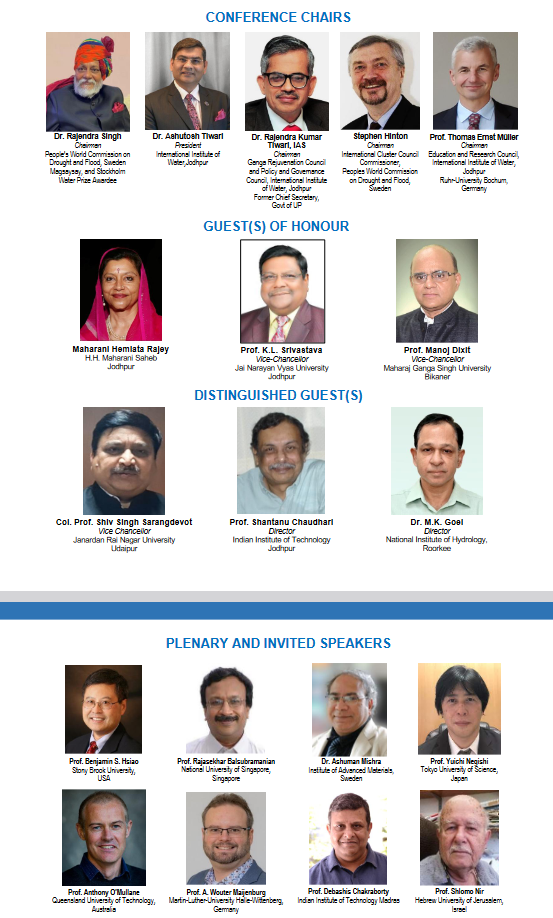
In this regard, the Ombudsman informed me:
“On our advice, Prof. Müller did not take part in the IIW conference in March.“
By the way, Tiwari recently released a handy list of all academics who ever obtained fake medals or otherwise cooperated with his phony International Association of Advanced Materials (IAAM), which offices, labs and lecture halls are all located in Tiwari’s toilet in the tiny Swedish village of Ulrika.
Müller is of course listed, and so are many other Germans. In fact, a certain Wouter Maijenburg, professor at the University Halle-Wittenberg was not only on that list, but also listed as plenary speaker at the March 2024 IWW conference in India. Maijenburg demanded to communicate with me by phone only, which I rejected for legal reasons.
You can search the iAAM document to find your own scientists there.
And if you can, donate below, because Müller and Tiwari have enough money to keep suing me for all kinds of nonsense expecting that I’ll eventually give up, pay them, and delete everything. Germany still doesn’t have an anti-SLAPP law, frivolous lawsuits are not regulated at all. Still, can be worse, imagine I lived in Italy.
Science Elites
A mockery of all academics
We remain on the topic of law being an ass.
The Czech nanofabricator Radek Zbořil sued his employer, the Palacky University of Olomouc for tons of money, and won. Not just in money, even the research misconduct findings were declared nil and void by court order from 15 may 2024. To be fair, that only happened because the rector wanted his own university to lose, to punish the whistleblower in Zboril’s case, the faculty dean Martin Kubala whom Zboril sued for bullying (sic!) and whom they tried to sack, but failed. Read here:

Whitewashed by ACS and Elsevier, Zboril sues Olomouc Dean for “bullying”
“I should remind you that the editorial offices that investigated your allegations did not found any evidence of scientific misconduct or data fabrication. In my opinion, your allegation may bear the elements of defamation and false accusation” – Prof Radek Zboril
Novinky.cz reported on 28 August 2024 (Google translated):
“Palacký University (UP) in Olomouc lost the trial of the chemist Radek Zbořil from the university institute CATRIN. He sued the school for cutting his remuneration. For the lost wage, interest on late payment and court compensation must pay UP five million crowns according to the final judgment.”
CZK 5 million is around € 200k. Lots of money, especially in Czechia.
“The court also concluded that Zbořil did not commit any misconduct in the performance of his managerial or scientific-pedagogical work. “ […]
Dean Kubala said on Tuesday […] “If the court concluded that the plaintiff with the highest salary at the faculty, even exceeding the annual limit of CZK 3.25 million, was unjustly rewarded for his work and should receive more than three million more, then it is completely beyond the economic reality of the academic environment not only in our country, but also anywhere else in Europe. To a large extent, this can also be seen as a mockery of all academics who went on strike last year for being able to have decent wages.”
Zboril was paid €130k a year. A crazy academic salary in Czechia, and UP has to continue paying it to Zboril. By law, it is Kubala who is the guilty one:
“In 2022, the UP leadership brought a criminal complaint against the Dean Kubala on suspicion of misuse of personal data; the Dean used in court emails exchanged the chemist Zbořil from his private account. The police postponed the criminal complaint, the prosecutor then transferred the case to the Labour Inspectorate for a possible misdemeanour.
In October 2022, due to this suspicion of misuse of personal data, Rector Martin Procházka fired Kubala, but in November he re-installed him, according to him, the reason was a double legal interpretation.”
Extraordinary results of the Olomouc Nano-con
This is a guest post by two whistleblowers from the Palacky University in Olomouc. In the centre of the growing research misconduct and retaliation scandal: the nanotechnology professor Radek Zboril
Discovering new treatments and cures
Laurie Glimcher steps down as CEO of Dana Farber Cancer Institute (DFCI). As reminder, Sholto David found data manipulations in her papers and those of her DFCI colleagues, the story was picked up by all the major news outlets in USA and abroad.
Dana-Farberications at Harvard University
“Imagine what mistakes might be found in the raw data if anyone was allowed to look!” – Sholto David

A few months ago, Glimcher had to retract a paper in Science which first author was a certain DFCI alumnus named Claudio Hetz (read April 2024 Shorts). Now, an announcement was made by DFCI on 3 September 2024 under the headline:
“Dana-Farber President and CEO Laurie Glimcher, MD, announces her plans to step down capping a highly successful tenure marked with discovery and innovation”
“Laurie H. Glimcher, MD, an esteemed health care executive and renowned researcher, announced today that she will step down as Dana-Farber Cancer Institute President and CEO on October 1, 2024. She will assume the title of President Emerita. […]
“Eight years ago, I began this journey with a deep appreciation for the extraordinary research that emanated from Dana-Farber since its earliest days and the clinical excellence that Dana-Farber provides patients and families,” said Glimcher. “And now, as I reflect on my tenure, I am intensely proud of what we have achieved in providing world class care for our patients, leading in innovation, and discovering new treatments and cures.” […] “This is the perfect time for me to pass the leadership of this remarkable institution on to the next generation, and return my focus to cancer immunology research,” Glimcher said.
The student newspaper The Harvard Crimson also reported, mentioning the retraction and data manipulations, and also this:
“Glimcher also faced criticism over her surprise decision last year to end Dana-Farber’s decades-long relationship with the Brigham and Women’s Hospital, instead building a new hospital dedicated to cancer care with Beth Israel Deaconess Medical Center.”
Nobody has to step down over fake science alone, but fake science will be the last straw when big money interests suffered. Ask Simone Fulda, former rector of the University of Kiel in Germany.
Simone Fulda: Open4Work!
“I am taking this step with a heavy heart and a sense of responsibility for the university since a sufficient foundation of mutual trust no longer remained with some parts of the university to ensure successful cooperation”, – Simone Fulda
DFCI also informs that
“Benjamin Levine Ebert, MD, PhD, chair of the Department of Medical Oncology and world-renowned medical oncologist and researcher, will serve as the next president and CEO of Dana-Farber, effective October 1, 2024. […] “I’m extraordinarily honored to be selected as the next president and CEO of Dana-Farber and to build on the exceptional leadership and accomplishments of Laurie Glimcher,” said Ebert.”
Indeed he does, Sholto previously flagged a paper from Ebert’s lab with some duplicated mice.
Max Jan , Irene Scarfò , Rebecca C. Larson , Amanda Walker , Andrea Schmidts , Andrew A. Guirguis , Jessica A. Gasser , Mikołaj Słabicki , Amanda A. Bouffard , Ana P. Castano , Michael C. Kann , Maria L. Cabral , Alexander Tepper , Daniel E. Grinshpun , Adam S. Sperling , Taeyoon Kyung , Quinlan L. Sievers , Michael E. Birnbaum , Marcela V. Maus , Benjamin L. Ebert Reversible ON- and OFF-switch chimeric antigen receptors controlled by lenalidomide Science Translational Medicine (2021) doi: 10.1126/scitranslmed.abb6295
The paper was previously corrected, trice! In April 2022, the first correction stated:
“Fig. 5G contained two errors. A bar graph pertaining to a different experiment (from Fig. 4G) was inadvertently included instead of the intended bar graph. The drug concentrations within the flow cytometry histogram were inadvertently mislabeled 100 nM, and now have been corrected to match the bar graph drug concentration label of 1000 nM […] The text and overall findings of the study are unchanged. […] These corrections do not impact the interpretation of the data or the conclusions of the paper.”
The second correction from July 2023 went:
“Figs. 4A and 5A contained a error. The sequence fragment from ZFP91 was inadvertently misnumbered. The Fig. 4 legend and Fig. 5 and its legend and have now been corrected. […] These corrections do not affect the interpretation of the data or the conclusions of the paper.”
Then, in February 2024, Sholto posted this on PubPeer:

The new DFCI CEO Ebert and the Science Editor-in-Chief Holden Thorp, who is the greatest hero of research integrity this planet ever saw (Thorp, 2023, Thorp, 2024a, Thorp, 2024b, Thorp, 2024c, Thorp, 2024d, and Thorp, 2024e), issued a third correction in April 2024:
“Fig. 7B contained an error. The D-1 images of the UTD and SD-CAR mice were inadvertently swapped. Figure S12B also contained an error. An image representing the mice at D11 in the group with UTD T cells and control treatment was inadvertently swapped for an image of the group with UTD T cells and pomalidomide treatment. Figures 7 and S12 have been corrected. The scientific conclusions were based on quantitative measurements of luminescence that were unaffected by these errors of image placement during figure generation. The text and overall findings of the study are unchanged.”
Now, a fourth correction will be needed, because Sholto found more unaffected conclusions:
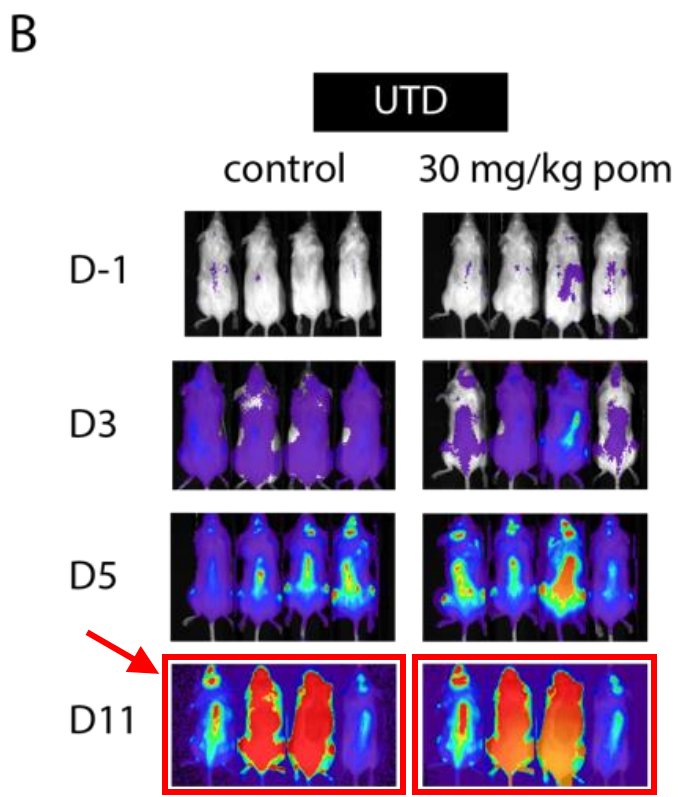
Mycosphaerella arachidis: “supplementary Figure 12B. I’ve added the red shapes to highlight two images, which I think show the same mice imaged for different amounts of time.”
The study was done in collaboration with the aptly named Marcela Maus of Massachusetts General Hospital, about whom Sholto wrote before:
Mice don’t count
“The mice probably wouldn’t care whether the experiment they suffered and died for was meaningful or not, but it does seem to matter to me. “- Sholto David
Scholarly Publishing
Forever Young
You will be surprised how many difficulties journal editors have in recognising farm animals.
This paper, from the lab of Leonie Young, professor at the Royal College of Surgeons in Ireland, was flagged on PubPeer by Clare Francis in August 2024:
F J Fleming , E Myers , G Kelly , T B Crotty , E W McDermott , N J O’Higgins , A D K Hill , L S Young Expression of SRC-1, AIB1, and PEA3 in HER2 mediated endocrine resistant breast cancer; a predictive role for SRC-1 Journal of clinical pathology (2004) doi: 10.1136/jcp.2004.016733

Clare Francis contacted the Editor-in-Chief, the Harvard professor Vikram Deshpande, and the publisher The BMJ. On 29 August 2024, the sleuth received this authoritative reply from Helen Macdonald and Helen Beynon, in charge of “Content Integrity”:
“Thank you for your patience while we investigated your concerns regarding DOI 10.1136/jcp.2004.016733. These have been reviewed by BMJ’s Content Integrity team and the Editor-in-Chief of the journal. The authors were contacted for comment. The authors confirmed that the two IgG controls in Figure 1A referred to in the PubPeer post are similar as they show the same control sample. Reusing control samples within the same experiment is standard practice. The journal is satisfied with this clarification, and consider the matter resolved.“
First of all, even if it was the “same control sample“, such stealth image reuse, especially after a shift and a change in magnification while insisting it was unchanged (“original magnification, ×200“) was never “standard practice“. Well, OK, it was among fraudsters. But more importantly, that could never have been the “same control sample“, a fact which anyone bothering to read this paper (including its author Young) would have noticed. The Materials and Methods state that these antibodies were used: ” goat antihuman SRC-1 (1 μg/ml), mouse antihuman PEA3 (10 μg/ml)“,[…] ” and that “Negative controls were performed using matched IgG controls (Dako).“. This means, there should have been two control samples, one stained with an goat control antibody and one with a mouse control antibody.
I wrote to Helen, Helen and Deshpande, and asked them if they know the difference between a goat and a mouse, or do they need me to draw you a cartoon. They never replied, the case is closed for them.
Recall that Young and her coauthors admitted to have reused an inappropriate control intentionally, which is a “standard practice” for them. Will you be shocked to know that this is certainly not Young’s only paper on PubPeer?
Here an image was reused, but after some brightness adjustment:
Sara Charmsaz , Ben Doherty , Sinéad Cocchiglia , Damir Varešlija , Attilio Marino , Nicola Cosgrove , Ricardo Marques , Nolan Priedigkeit , Siobhan Purcell , Fiona Bane , Jarlath Bolger , Christopher Byrne , Philip J. O’Halloran , Francesca Brett , Katherine Sheehan , Kieran Brennan , Ann M. Hopkins , Stephen Keelan , Petra Jagust , Stephen Madden , Chiara Martinelli, Matteo Battaglini, Steffi Oesterreich, Adrian V. Lee, Gianni Ciofani, Arnold D. K. Hill, Leonie S. Young ADAM22/LGI1 complex as a new actionable target for breast cancer brain metastasis BMC Medicine (2020) doi: 10.1186/s12916-020-01806-4

Gels reused after some digital modifications:
Jane O’Hara , Damir Vareslija , Jean McBryan , Fiona Bane , Paul Tibbitts , Christopher Byrne , Ronán M. Conroy , Yuan Hao , Peadar Ó Gaora , Arnold D.K. Hill , Marie McIlroy , Leonie S. Young AIB1:ERα Transcriptional Activity Is Selectively Enhanced in Aromatase Inhibitor–Resistant Breast Cancer Cells Clinical Cancer Research (2012) doi: 10.1158/1078-0432.ccr-11-3300


That was a warm-up, now here comes some hard stuff, from Young’s wild days:
E Myers , A D K Hill , G Kelly , E W McDermott , N J O’Higgins , L S Young A positive role for PEA3 in HER2-mediated breast tumour progression British Journal of Cancer (2006) doi: 10.1038/sj.bjc.6603427


The two referenced papers are totally fake also. First one:
E Myers , F J Fleming , T B Crotty , G Kelly , E W McDermott , N J O’higgins , A D K Hill , L S Young Inverse relationship between ER-beta and SRC-1 predicts outcome in endocrine-resistant breast cancer British Journal of Cancer (2004) doi: 10.1038/sj.bjc.6602156


And this paper by Prof Young reuses data from the two above:
Eddie Myers , Arnold D.K. Hill , Gabrielle Kelly , Enda W. McDermott , Niall J. O’Higgins , Yvonne Buggy , Leonie S. Young Associations and Interactions between Ets-1 and Ets-2 and Coregulatory Proteins, SRC-1, AIB1, and NCoR in Breast Cancer Clinical Cancer Research (2005) doi: 10.1158/1078-0432.ccr-04-1192


In April 2015, that disastrous paper received a Correction:
“…several images in Figs. 2A, 3A, and 4A were inadvertently duplicated by the authors. The authors repeated the experiments represented in the abovementioned figures. […] The authors claim that these experiments confirm the results presented in the original article. “
This was corrected in 2018:
Kheng Tian Lim, Niamh Cosgrave , Arnold David Hill , Leonie S Young Nongenomic oestrogen signalling in oestrogen receptor negative breast cancer cells: a role for the angiotensin II receptor AT1 Breast cancer research : BCR (2006) doi: 10.1186/bcr1509


“After the publication of this work [1] errors were noticed in the total protein loading controls for Figs. 1C, 2B, 3B and 4B. These errors do not affect the interpretation of the data.”
Correction June 2018
But wait, there is more of that kind. Professor Young must be Ireland’s greatest cancer researcher!
Marie Mc Ilroy , Fergal J Fleming , Yvonne Buggy , Arnold D K Hill , Leonie S Young Tamoxifen-induced ER-alpha-SRC-3 interaction in HER2 positive human breast cancer; a possible mechanism for ER isoform specific recurrence Endocrine-related cancer (2006) doi: 10.1677/erc.1.01222


Remember the BMJ paper? Its data appeared also here:
Fergal J. Fleming , Arnold D. K. Hill , Enda W. McDermott , Niall J. O’Higgins , Leonie S. Young Differential recruitment of coregulator proteins steroid receptor coactivator-1 and silencing mediator for retinoid and thyroid receptors to the estrogen receptor-estrogen response element by beta-estradiol and 4-hydroxytamoxifen in human breast cancer The Journal of Clinical Endocrinology & Metabolism (2004) doi: 10.1210/jc.2003-031048


That Fleming paper served as template for everything.
Swee H. Teh , Arnold K. Hill , Deidre A. Foley , Edna W. McDermott , Niall J. O’Higgins , Leonie S. Young COX inhibitors modulate bFGF-induced cell survival in MCF-7 breast cancer cells Journal of Cellular Biochemistry (2004) doi: 10.1002/jcb.10767


And so on. Find the rest on PubPeer. Tell you what: everyone knows about the issues with Young’s research. It seems she was already under investigation, as the occasional corrections suggest.
That’s why Young remains Associate Professor, never made it to full. That’s how academia punishes its worst cheaters. Cruel and inhuman, I know.
The connection seems to be Jan G. Hengstler
Something very insane went on at two journals: EXCLI journal (published by the Leibniz Research Centre IfADo) and Archives of Toxicology (published by Springer). Both have the same Editor-in-Chief: Jan G. Hengstler, head of toxicology, scientific director and deputy speaker of the board at IfADo in Dortmund.
A very representative paper, out of almost a hundred flagged on PubPeer, and a representative comment by an anonymous PubPeer user:
Ahmed Ghallab Immune responses during neoadjuvant chemotherapy in triple negative breast cancer EXCLI journal (2020) doi: 10.17179/excli2020-2869
“This article belongs to a group of at least 95 articles which disproportionally cite works of Jan G. Hengstler. This article contains 19 references, 13 of which (68%) are works by Jan G. Hengstler, who is the editor of the publishing journal.
Most of the article follow a common structure:
Recently, Author x published a study/review about … Short description about some background and what the study/review is about. Then follows a paragraph about general problems/approaches in the research area the above-mentioned article deals with. Here, you find many references, often in the following style: Topics that are described include this (reference1, reference 2, reference 3, reference4), this (reference 5, reference 6, reference 7, reference 8), and this (reference 9, reference 10, reference 11). Then follows a concluding sentence about the study the article is about.
Many of the article have only one, a few two or more authors. All these publications appear either in EXCLI Journal or in Archives of Toxicology. How can different authors all write such similar articles? The connection seems to be Jan G. Hengstler (IfADo Leibniz Research Centre for Working Environment and Human Factors at the Technical University of Dortmund, GERMANY) who is chief editor for EXCLI Journal (https://www.excli.de/index.php/excli/about/editorialTeam) and for Archives of Toxicology (https://link.springer.com/journal/204). Most authors are affiliated with the department of Dr. Hengstler at the Leibniz Research Centre for Working Environment and Human Factors. However, some authors are affiliated with South Valley University, Egypt. Here, the link seems to be Ahmed Ghallab, who works in the Department of Dr. Hengstler, but who is also affiliated with South Valley University, Egypt.
After reading many of these articles you will most likely find their scientific content rather limited (to put it politely). This also explains, why these articles are rarely cited themselves (sometimes they cite each other). Why would reputable journals such as EXCLI journal (impact factor 4.6) or Archives of Toxicology (impact factor 6.1) even consider publishing such articles? The answer can be found in the reference list. While the articles are often only one page or shorter, they contain on average 22 references. More than 12 of these (55%) (some articles go up to 92%) of the references are articles by Dr. Hengstler.”
Hengstler did not reply to my emails. Johannes Bronisch, research integrity officer of the Leibniz Association, which is responsible both for Hengstler’s employment and for his EXCLI Journal, told me: “We are already aware of the allegations.” Springer’s Research Integrity Adviser Svetlana Kleiner announced to investigate the activities of the chief editor of Archives of Toxicology.
As it happens, in June 2023 the German Research Council (DFG) re-elected Hengstler as chairman of the Standing Senate Commission for the Health Assessment of Food (SKLM). For 3 more years he will be setting the national “framework for the scientific evaluation of food ingredients and food technology processes“.
I wrote about bizarre Iranian activities of another scientific director of IfADo professor, Michael Nitsche, in June 2024 Shorts. Bronisch later informed me that the Leibniz Association sees absolutely no problems with Nitsche’s clinical studies in Iran. Strange place, that IfADO.
Retraction Watchdogging
Identical or altered fashion
American gangsters Paul B Fisher, Steven Grant and Paul Dent of Virginia Commonwealth University (VCU) finally retract a paper. Read about them here:
Fraud Simple
US cancer research professors Paul B Fisher, Paul Dent and Stephen Grant look like the characters of a Joel and Ethan Coen crime movie, unfortunately never filmed. Smut Clyde will give you a peek into their spree of data manipulation
Here it is, originally flagged on PubPeer by Clare Francis in 2016 and picked up by Elisabeth Bik in January 2024:
Hossein A Hamed , Adly Yacoub , Margaret A Park , Patrick J Eulitt , Rupesh Dash , Devanand Sarkar , Igor P Dmitriev , Maciej S Lesniak , Khalid Shah, Steven Grant , David T Curiel, Paul B Fisher, Paul Dent Inhibition of multiple protective signaling pathways and Ad.5/3 delivery enhances mda-7/IL-24 therapy of malignant glioma Molecular Therapy (2010) doi: 10.1038/mt.2010.29


Green boxes: Two panels representing different animal groups and time points look more similar than expected, albeit stretched and cropped differently.”
The retraction was published on 29 August 2024:
“A third party communicated concerns of image reuse to the editorial office. Concerns were also posted to a Pubpeer thread: https://pubpeer.com/publications/2736C7BC1BC51DCAE0AB6216E17255. Image analysis performed by the editorial office revealed evidence of image duplication in identical or altered fashion within Figures 6D (Ad.5-cmv Day 3 and Ad.5-mda-7 Day 6; Ad.5/3-mda-7 Day 6 and Ad.5-mda-7 Day 9) and S5 (Ad.5-cmv beta-gal and Ad.5-cmv+XRT beta-gal) of this article. Evidence of image reuse in identical or altered fashion between Figure 4A (P-PERK and GAPDH blot images) of this article and Figure 3A (P-PERK and GAPDH blot images) of an article in Cancer Biology and Therapy (Hamed et al., 2010, Cancer Biol. Ther. 9, 526–536, https://doi.org/10.4161/cbt.9.7.11116) was also found. This reuse (and in part misrepresentation) of data without appropriate attribution represents a severe abuse of the scientific publishing system. The authors have stated that they no longer have the original data for this article. The notice of retraction was undeliverable to authors A.Y., P.J.E., and S.G.”
The real reason for the retraction was of course never a VCU investigation. Instead, it was very likely the Harvard investigation into the coauthor Khalid Shah, prompted by Bik’s sleuthing and blogging, which was picked up by national media in USA (read February 2024 Shorts). How funny, and here Fisher, Dent and Grant felt they can’t be touched.
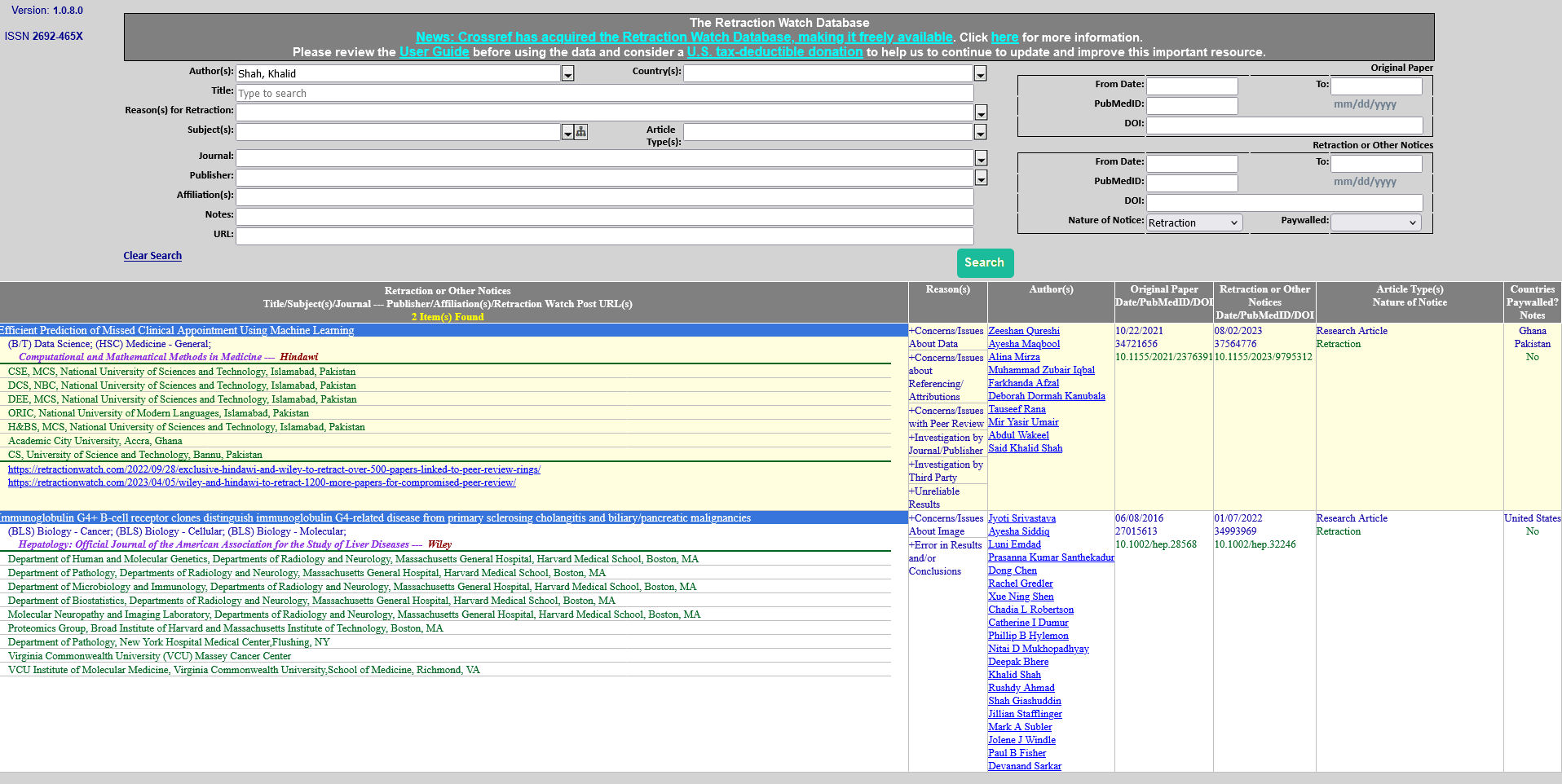
It may be Shah’s first retraction. The manually curated Retraction Watch database erroneously lists two earlier retractions for Khaled Shah, one for a partial namesake, and another attributes authors from a Shah and Fisher paper to an unrelated retracted study, because of a typo in the DOI number. Don’t ask me why the entries in the Retraction Watch database are typed-in manually, ask Ivan Oransky.
The authors apologize to the scientific community
The Nobel prize laureate and Johns Hopkins University professor Gregg Semenza loses two more papers, making it merely 13 retractions now. Such fraud cases are not really newsworthy for the popular media, unlike everything else connected to Nobel Prize laureates.

Gregg Semenza: real Nobel Prize and unreal research data
“Even after people have been telling you for, you know, 20 years or more that it’s going to happen, no one expects it.” -Gregg Semenza, Nobel Prize winner 2019
Both new retractions feature Semenza’s protege Daniele Gilkes, who still remains assistant professor at Johns Hopkins.
This paper was actually corrected before:
Debangshu Samanta , Youngrok Park , Shaida A. Andrabi , Laura M. Shelton , Daniele M. Gilkes , Gregg L. Semenza PHGDH Expression Is Required for Mitochondrial Redox Homeostasis, Breast Cancer Stem Cell Maintenance, and Lung Metastasis Cancer Research (2016) doi: 10.1158/0008-5472.can-16-0530
“Figure 7F. Much more similar than expected.”

The Correction from March 2022 mentioned that “there was an error in Fig. 7F. […] The correct images have been provided, and the error has been corrected“. A retraction followed on 4 September 2024:
“This article (1) has been retracted at the request of the authors. Following an institutional review by Johns Hopkins University, the primary affiliation for several of the authors, it was determined that in Fig. 7F, the images representing M1-sh2 and M2-sh2 had contiguous features, suggesting the images may be from the same mouse. Additionally, certain raw data were labeled as being from M2-sh2 and M3-sh2 mice but also had contiguous features, suggesting that those data may also be from the same mouse. The authors do not have confidence in the integrity of the data, and they apologize to the scientific community and deeply regret any inconveniences or challenges resulting from the publication and subsequent retraction of this article.
A copy of this Retraction Notice was sent to the last known email addresses for all six authors. Two authors (Daniele M. Gilkes and Gregg L. Semenza) agreed to the retraction; the four remaining authors (Debangshu Samanta, Youngrok Park, Shaida A. Andrabi, and Laura M. Shelton) did not respond.”
The other retraction appeared in the same AACR journal, the penultimate author Denis Wirtz is the Vice Provost for Research at Johns Hopkins.
The paper was already flagged with an expression of concern, published as a correction in March 2022: “In Fig. 1B, the Western blot bands representing HIF-1α, HIF-2α, and actin were inadvertently also used in Fig. 1A of a 2012 Oncogene publication by the authors (2).” Elisabeth Bik then found even more.
Daniele M. Gilkes, Pallavi Chaturvedi , Saumendra Bajpai , Carmen C. Wong , Hong Wei , Stephen Pitcairn , Maimon E. Hubbi , Denis Wirtz, Gregg L. Semenza Collagen prolyl hydroxylases are essential for breast cancer metastasis Cancer Research (2013) doi: 10.1158/0008-5472.can-12-3963


Red boxes: Two lanes in the HIF-1a panel look more similar than expected (also noted in the Oncogene 2012 paper; see: [Zhang et al 2012].
Blue boxes: Two lanes in the P4HA1 panel look more similar than expected.”

This retraction was also issued on 4 September 2024:
“This article (1) has been retracted at the request of the authors. Following an institutional review by Johns Hopkins University, the primary affiliation for several of the authors, it was determined that in Fig. 1B, lanes 5 and 7 of the HIF-1α Western blot were duplicated, and lanes 5 and 7 of the P4HA1 Western blot were duplicated. Additionally, as previously published in an Editor’s Note (2), the Western blot bands representing HIF-1α, HIF-2α, and actin were also used in Fig. 1A of a 2012 Oncogene publication by the authors (3). The authors apologize to the scientific community and deeply regret any inconveniences or challenges resulting from the publication and subsequent retraction of this article.
A copy of this Retraction Notice was sent to the last known email addresses for eight of the nine authors. Three authors (Daniele M. Gilkes, Denis Wirtz, and Gregg L. Semenza) agreed to the retraction; five authors (Pallavi Chaturvedi, Saumendra Bajpai, Carmen C. Wong, Hong Wei, and Maimon E. Hubbi) did not respond; the one remaining author (Stephen Pitcairn) is deceased.”
There is a certain tragedy in Semenza’s case. He received his Nobel Prize in Physiology or Medicine in 2019, and the next year, data manipulations in his papers were exposed by Clare Francis and For Better Science. Meaning, unlike many of his fellow Nobelists, Semenza didn’t have enough time to cash in and make millions with his Nobel before he was exposed as a dishonest phoney.
Anyway, I know another Nobel Prize laureate who should be apologising to the scientific community with each retraction.
Thomas Südhof and AI-powered weapons of micro-duplication
Thomas Südhof, victim of racist and sexist persecution, announced to retract a second paper, “even though the quantitative analyses and conclusions are correct”.
Very important to point out
Also the former dean of Weill Cornell, the pulmonologist Augustine MK Choi, earns two more retractions because of an institutional investigation, to join his already available 10 retractions. Also here, the investigation was done by Clare Francis, I reported on For Better Science and notified the institution, also in 2020:

O du lieber Augustine MK Choi
Augustine Choi is Dean of Weill Cornell and a misunderstood genius. He discovered that carbon monoxide is a cure for all possible diseases, just add a bit of Photoshop.
In a Taylor & Francis journal:
Xue Wang , Yong Wang , Jinglan Zhang , Hong Pyo Kim , Stefan W. Ryter, Augustine M. K. Choi FLIP protects against hypoxia/reoxygenation-induced endothelial cell apoptosis by inhibiting Bax activation Molecular and cellular biology (2005) doi: 10.1128/mcb.25.11.4742-4751.2005
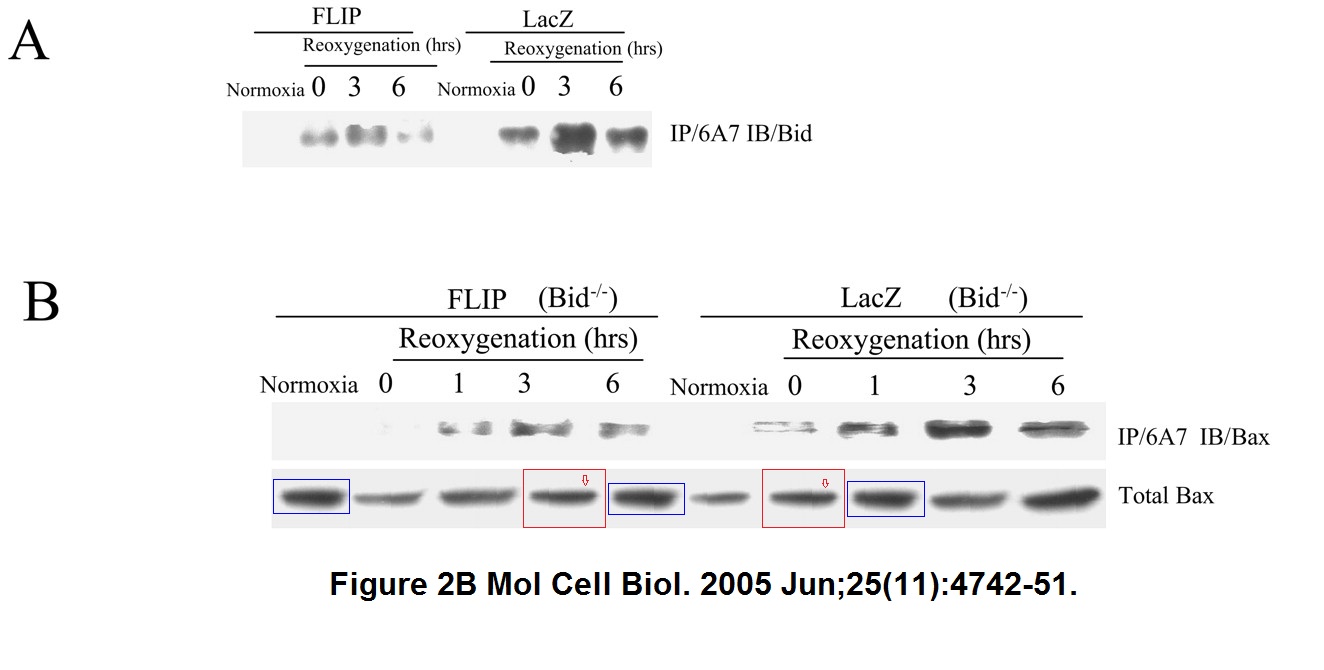


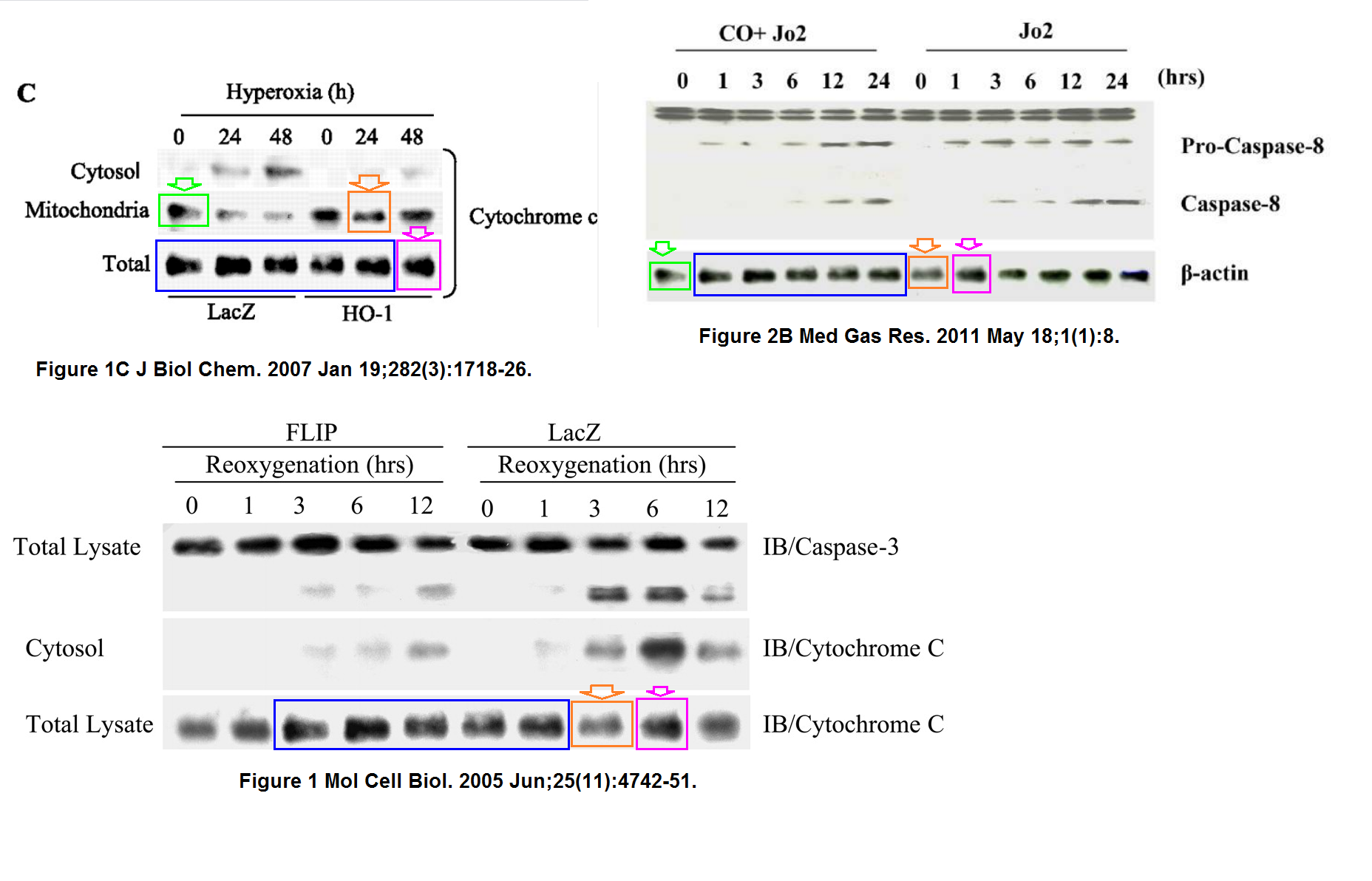
The retraction was published on 3 September 2024:
“We, the Editor and Publisher of the journal Molecular and Cellular Biology have retracted the following article. Following publication of the article, concerns were raised regarding the reliability of data presented in Figures 1 and 2.
An institutional investigation by Cornell University found the following issues in the below figures of the published article:
Images for Figure 1 have been duplicated with images for Figure 1C from Xue [Wang et al 2007]; Figure 1D from [Slebos et al 2007] and Figure 2B from [Wang et al 2011].
Images for Figure 2 have been duplicated with images for Figure 2A and 3B from Wang, X., et al (2011) and Figure 2D from [Kim et al 2008].
The corresponding author did respond to the journal’s queries but was unable to provide a sufficient explanation for the duplicated images and the original data was no longer available. Verifying the validity of published work is core to the integrity of the scholarly record and we, the Editor and Publisher, are therefore retracting the article and the corresponding author was notified and does not agree with this decision.”
This is Choi’s other recent retraction, the paper done in collaboration with Brown University colleagues was previously corrected:
Chang-Min Lee , Chuan-Hua He , Jin Wook Park , Jae Hyun Lee , Suchita Kamle , Bing Ma , Bedia Akosman , Roberto Cotez , Emily Chen , Yang Zhou , Erica L Herzog , Changwan Ryu , Xueyan Peng , Ivan O Rosas , Sergio Poli , Carol Feghali Bostwick , Augustine M Choi , Jack A Elias, Chun Geun Lee Chitinase 1 regulates pulmonary fibrosis by modulating TGF-β/SMAD7 pathway via TGFBRAP1 and FOXO3 Life Science Alliance (2019) doi: 10.26508/lsa.201900350

Correction 10 April 2023: “The authors identified that there were two inadvertent mistakes that led to the duplication of some of the blots that made up the panels in Fig 2D. Specifically, pSmad2 was duplicated with pAkt and Smad2/3 was duplicated with Erk due to the impressive similarities of the expression patterns between these blots. The similarities also caused the omission of the original blots of pSmad2 and Smad2/3. […] It is very important to point out that the minor errors in gel usage do not change the scientific conclusions drawn from Fig 2D or the overall results of the study.”
Eventually, it became very important to point out that the scientific conclusions drawn and the overall results of the study were nothing but personal belief. The retraction appeared on 29 August 2024:
“The authors wish to retract this article because concerns have been raised regarding the contents and labeling of some of the figures in this article, including Figs 2D, 3A, and 4A. These figures appear to include duplicate data or to incorporate separate experiments that are not accurately labeled. Some of the immunoblot data cannot be verified from the records available. Although we believe that the conclusions of the article are still valid, in light of the inaccuracies in these figures, we consider that the appropriate course of action is to retract the article. All the authors agree with the retraction.”
The tragedy is: most likely, the forgeries were not even Choi’s doing. Brown university professor of pulmonology Jack A Elias, until 2023 Senior Vice President for Health Affairs and Dean of Medicine and Biological Sciences, has his own worrisome PubPeer record. Much of it with Choi’s coauthor and fellow Korean, Chun Geun Lee, who is also a Brown professor. For example:
Chuan Hua He , Chun Geun Lee , Charles S. Dela Cruz , Chang-Min Lee , Yang Zhou , Farida Ahangari , Bing Ma , Erica L. Herzog , Stephen A. Rosenberg , Yue Li , Adel M. Nour , Chirag R. Parikh , Insa Schmidt , Yorgo Modis , Lloyd Cantley , Jack A. Elias Chitinase 3-like 1 regulates cellular and tissue responses via IL-13 receptor α2 Cell reports (2013) doi: 10.1016/j.celrep.2013.07.032


Or this, by Elias and Lee:
Min-Jong Kang , Je-Min Choi , Bo Hye Kim , Chang-Min Lee , Won-Kyung Cho , Gina Choe , Do-Hyun Kim , Chun Geun Lee , Jack A. Elias IL-18 induces emphysema and airway and vascular remodeling via IFN-γ, IL-17A, and IL-13 American Journal of Respiratory and Critical Care Medicine (2012) doi: 10.1164/rccm.201108-1545oc
Fig 2a

Here is Elias with Lee and his protege from back at Yale, Vineet Bhandari, who later on hosted the mega-fraudster Dilip Shah in his own lab at Drexel College, read here:
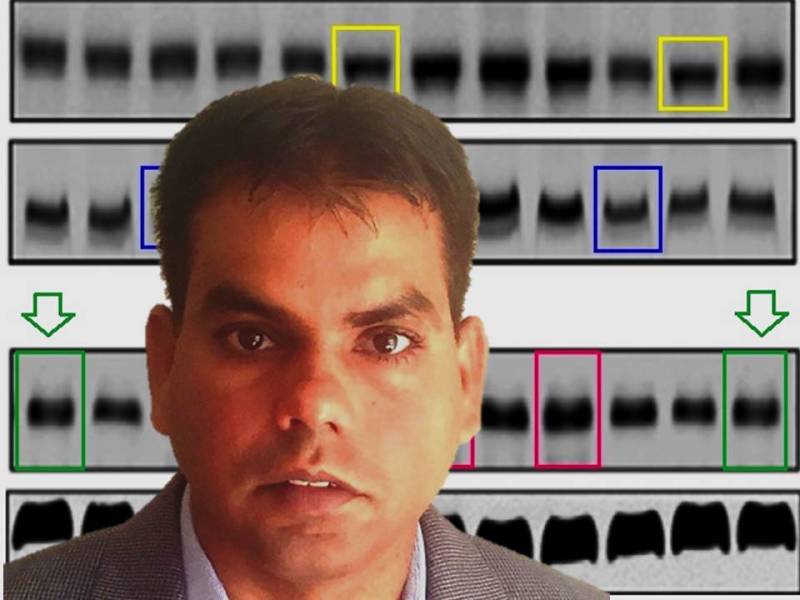
The authors continue to stand behind Dilip Shah’s conclusions
The part of the fraud affair not included on Retraction Watch
Vineet Bhandari , Rayman Choo-Wing , Svetlana P. Chapoval , Chun G. Lee , C. Tang , Y. K. Kim , Bing Ma , Peter Baluk , Michelle I. Lin , Donald M. McDonald , Robert J. Homer, William C. Sessa, Jack A. Elias Essential role of nitric oxide in VEGF-induced, asthma-like angiogenic, inflammatory, mucus, and physiologic responses in the lung Proceedings of the National Academy of Sciences of the United States of America (2006) doi: 10.1073/pnas.0601057103


More by Elias, Bhandari and Lee, reusing data from the above PNAS paper:
Vineet Bhandari, Rayman Choo-Wing , Chun G. Lee , Kamran Yusuf , Jonathan H. Nedrelow , Namasivayam Ambalavanan , Herbert Malkus , Robert J. Homer , Jack A. Elias Developmental regulation of NO-mediated VEGF-induced effects in the lung American Journal of Respiratory Cell and Molecular Biology (2008) doi: 10.1165/rcmb.2007-0024oc


Again, Elias, Lee and Bhandari:
Vineet Bhandari, Rayman Choo-Wing , Chun G Lee , Zhou Zhu , Jonathan H Nedrelow , Geoffrey L Chupp , Xucher Zhang , Michael A Matthay , Lorraine B Ware , Robert J Homer, Patty J Lee , Anke Geick , Antonin R De Fougerolles , Jack A Elias Hyperoxia causes angiopoietin 2-mediated acute lung injury and necrotic cell death Nature Medicine (2006) doi: 10.1038/nm1494

And even more by Elias and Bhandari:
Vineet Bhandari, Rayman Choo-Wing , Robert J. Homer, Jack A. Elias Increased Hyperoxia-Induced Mortality and Acute Lung Injury in IL-13 Null Mice The Journal of Immunology (2007) doi: 10.4049/jimmunol.178.8.4993


Elias is also founder and chairman of the company Ocean Biomedical. Guess which of his Brown University colleagues he invited to sit on his advisory board. Wafik El Deiry, who repeatedly featured on For Better Science, most recently in July 2024 Shorts.
These people…
An in-house investigation
Xing Lin, professor at Guangxi Medical University in China, doesn’t have a PhD but teaches pharmacology PhD graduates “How to quickly write and submit manuscripts to SCI-indexed Journals“. Now he will probably now teach them How to retract your own fake papermill trash.

How to quickly write and submit manuscripts to SCI-indexed Journals
“For TCM : Chairman Xi :: Lysenkoism : Stalin, and no Chinese academics are losing their positions because they pretended to vindicate the curative claims of TCM. Thus pratersein, genistein, didymin, helenalin, Tormentic acid and of course Trolline.”

The now retracted paper was flagged by Smut Clyde already in 2020:
Xing Lin , Shijun Zhang , Renbin Huang , Ling Wei , Shimei Tan , Shuang Liang , Yuanchun Tian , Xiaoyan Wu , Zhongpeng Lu , Quanfang Huang Helenalin attenuates alcohol-induced hepatic fibrosis by enhancing ethanol metabolism, inhibiting oxidative stress and suppressing HSC activation Fitoterapia (2014) doi: 10.1016/j.fitote.2014.03.020

[Below] Fig 5 from Wei et al (2015).”

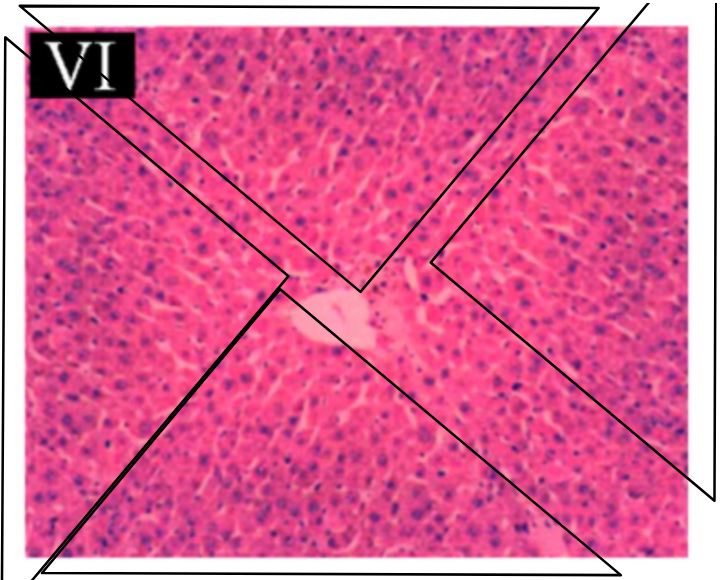

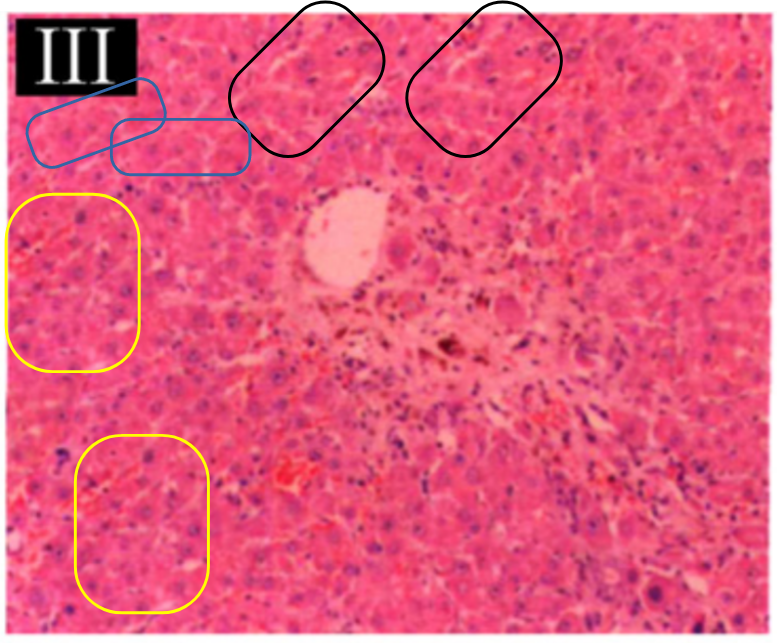

The retraction was issued merely 4 years later, on 31 August 2024:
“This article has been retracted at the request of Editor-in-Chief.
The journal was initially contacted by the corresponding author requesting the publication of a corrigendum because “the incorrect publication of Figs. 2B, 4, 9 and 10”.
An in-house investigation has found image manipulation evidence in Fig. 4.
These concerns were also reported on PubPeer: https://pubpeer.com/publications/C0EE911DDDCE3441090975D780EDF3.
The Editor requested the authors to provide the raw data. However, the authors failed to provide triplicate original western blot traces or a satisfactory explanation for the concerns.
Due to the above concerns, the Editor decided to retract the paper.”
Did you know that it is not Smut Clyde but the Editor-in-Chief Orazio Taglialatela-Scafati of University of Naples Federico II who comments on PubPeer as Hoya camphorifolia?
Non-verifiable cell lines
Taylor and Francis retracted a string of Chinese papers in the journal OncoTargets and Therapy over fictional cell lines. These were not flagged on PubPeer previously, now now they are because Smut Clyde is much more effective than the typist of the Retraction Watch database. An example:
Qingzhi Lan , Xiaoping Tan , Pengzhan He , Wei Li , Shan Tian , Weiguo Dong TRIM11 Promotes Proliferation, Migration, Invasion and EMT of Gastric Cancer by Activating β-Catenin Signaling OncoTargets and Therapy (2021) doi: 10.2147/ott.s289922
“We, the Editor and Publisher of the journal OncoTargets and Therapy have retracted the published article.
Following publication, concerns were raised regarding the use of non-verifiable cell lines described in the article. The concerns related specifically to the use of cell lines which were found to be either contaminated, wrongly identified, improperly indexed, unavailable through external cell line repositories, and/or lacking publications describing their establishment. Overall, these concerns raised doubts about the validity of the findings described in the article. The corresponding author did respond to our queries but was unable to provide satisfactory information relating to the use of these cell lines or provide satisfactory original data relating to the study. As verifying the validity of published work is core to the integrity of the scholarly record, the Publisher and Editor requested to retract the article and the corresponding author was notified of this decision.”
Retraction 29 August 2024.
Science Breakthroughs
Major conclusions are true
Wall Street Journal reported on 30 August 2024 about the recent high-profile retraction in Nature:
“Four years ago, a team of researchers led by a heavyweight in the field of microbiology made a stunning claim: Cancers have unique microbial signatures that could one day allow tumors to be diagnosed with a blood test.
The discovery captured the attention of the scientific community, as well as investors.
A prestigious journal published the research. More than 600 papers cited the study. At least a dozen groups based new work on its data. And the microbiologists behind the claim launched a startup to capitalize on their findings. […]
“It has polluted the literature,” said Steven Salzberg, a computational biologist at Johns Hopkins University, whose critique, written with other colleagues in the field, led to the study’s retraction. […]
Rob Knight, the University of California San Diego professor who led the study, is widely regarded as a pioneer of big-data microbial analysis. […] In a statement through a university spokesperson, Knight said the retraction was warranted but that the paper’s major conclusions are true.”
It was this paper:
Gregory D. Poore , Evguenia Kopylova , Qiyun Zhu , Carolina Carpenter , Serena Fraraccio , Stephen Wandro , Tomasz Kosciolek , Stefan Janssen , Jessica Metcalf , Se Jin Song , Jad Kanbar , Sandrine Miller-Montgomery , Robert Heaton , Rana Mckay , Sandip Pravin Patel , Austin D. Swafford , Rob Knight Microbiome analyses of blood and tissues suggest cancer diagnostic approach Nature (2020) doi: 10.1038/s41586-020-2095-1
“The Editors have retracted this article. After publication, concerns about the robustness of specific microbial signatures reported as associated with cancer were brought to the attention of the Editors1. The authors have provided responses to the issues in a separate publication2.
Retraction 25 June 2024
Expert post-publication peer review of the issues raised and the authors’ responses has confirmed that some of the findings of the article are affected and the corresponding conclusions are no longer supported. All authors agree with this retraction.”
The retracted paper claimed that each cancer hides its own unique microbiome of bacteria and viruses which can used for a blood test to diagnose cancer.
The WSJ article continues:
“The year before the paper was published, Knight and two other authors on the study founded a company, Micronoma, to build blood tests to detect microbial genetic material and to catch cancers early.
Micronoma raised at least $17.5 million from SymBiosis, an investment firm based in Bentonville, Ark., and Seerave Foundation, a philanthropy started by an oil-industry veteran who began investing in cancer and microbiome research after his wife was diagnosed with metastatic melanoma.
The company announced a collaboration with a University of New South Wales team in 2021 to hunt for microbial markers for liver cancer, part of a government grant for 4 million Australian dollars (equivalent to about US$3 million), and a partnership with a group at NYU Langone Health to look at lung cancer, part of a National Institutes of Health grant for more than $703,000 in 2023.
Meanwhile, the FDA gave “breakthrough” designation to Micronoma’s device to test blood for lung cancer, which put the device on an accelerated track for development and approval. […]
As criticisms of the paper mounted, Micronoma’s partnerships dissolved.”
As it often happens, biological reality eventually spoiled the feast of bullshit and greed:
“One red flag was that some microbes the researchers flagged as components of cancer signatures weren’t known to exist in humans, prompting further scrutiny.Salzberg, the computational biologist, and a team analyzed a handful of the cancer types and didn’t find most of the bacteria reported in the Nature study. Their analysis, published in October 2023 in the journal mBio, stated that the “near-perfect association between microbes and cancer types reported in the study is, simply put, a fiction.”
Among the errors, according to the critique, the UC San Diego team had incorrectly deployed a genomic tool built by Salzberg’s lab to match tumor data to microbial sequences. “
The circus is not over yet, two more papers which built on Knight’s data, are also affected, the second one already has an editorial note:
Mei Luo , Yuan Liu , Leandro C. Hermida , E. Michael Gertz , Zhao Zhang , Qiang Li , Lixia Diao , Eytan Ruppin, Leng Han Race is a key determinant of the human intratumor microbiome Cancer Cell (2022) doi: 10.1016/j.ccell.2022.08.007
Leandro C. Hermida, E. Michael Gertz, Eytan Ruppin Predicting cancer prognosis and drug response from the tumor microbiome Nature Communications (2022) doi: 10.1038/s41467-022-30512-3
“04 July 2024 Editor’s Note: Readers are alerted that the authors of this study have informed the Editors that the starting input for data processing was downloaded from the online repository referenced in an article that has been recently retracted ( https://doi.org/10.1038/s41586-024-07656-x ). The Editors are working with the authors to address this issue. Further editorial action will be taken once this matter has been resolved.”
Eytan Ruppin of National Cancer Institute is according by WSJ “reanalyzing his own results” and “hoping that our key conclusions may still hold”.
In 2022, Knight extended his cancer microbiome claim with fungi, in Cell (“Pan-cancer analyses reveal cancer-type-specific fungal ecologies and bacteriome interactions“). The genius seems to connect microbiome to all diseases, and all the big journal fight each other to publish his drivel.
In 2017, Knight established in Nature Communications “The gut microbiome in atherosclerotic cardiovascular disease“. In 2016, he solved headache: “Migraines Are Correlated with Higher Levels of Nitrate-, Nitrite-, and Nitric Oxide-Reducing Oral Microbes in the American Gut Project Cohort“
Parkinson’s was established by Knight as being caused by a gut microbiomein Cell, 2016: “Gut Microbiota Regulate Motor Deficits and Neuroinflammation in a Model of Parkinson’s Disease“, and again in eLife 2020: “A gut bacterial amyloid promotes α-synuclein aggregation and motor impairment in mice“. In eLife 2022, Knight proposed to cure Parkinson’s with yoghurt: “A prebiotic diet modulates microglial states and motor deficits in α-synuclein overexpressing mice“.
Of course autism is also caused by microbes, Knight proved that already in 2019, in Cell no less: “Human Gut Microbiota from Autism Spectrum Disorder Promote Behavioral Symptoms in Mice“.
In Frontiers, Knight assured in 2021 “Association of Loneliness and Wisdom With Gut Microbial Diversity and Composition: An Exploratory Study“, and still nobody laughed but kept begging him to take their money.

Frontiers: vanquishers of Beall, publishers of bunk
It is now quasi official: do not mess with Frontiers. My earlier reporting made it a credible possibility that this Swiss publisher was behind the January 2017 shut-down and removal of Jeffrey Beall’s list of “potential, possible, or probable predatory scholarly open-access publishers”, and it was now indeed verified by an article in Chronicle of Higher…
A myriad of possible explanations

You may have missed papers on eugenics and anti-aging, so here is a recent one about both! The lead author is Elissa Epel, Professor and Vice Chair of the Department of Psychiatry at University of California San Francisco (UCSF). She is also “a highly cited researcher since 2019 (top 1% of papers cited based on Web of Science) and in 2022 among the top 10% in NIH funding in psychiatry nationally.”
A few years ago, Eppel teamed up with the Nobel laureate Elizabeth Blackburn and celebrity quack Deepak Chopra to prove that panchakarma yoga extends life, the telomeres, and everything. Her university still celebrates her for that. Read here:
Guilty pleasures of meditating with Deepak Chopra
Smut Clyde will take you on a meditative Ayurvedic trip where the most respectable of research institutions and their world-renowned academics were caught dancing with the Guru Deepak Chopra himself. Famous cardiologist and medical writer Eric Topol and the Nobel Prize winner Elizabeth Blackburn were just two most prominent US academics listed on Chopra’s Panchakarma…
So, what did Epel discover now? A press release by the Drxel University from 26 August 2024 informs:
“Studying data across three generations – education of parents and grandparents, and health data from parents and their children – the group found a statistically significant association between grandparents’ education level and their grandchildren’s epigenetic-based “real” age (short definition of what is meant by “real” (how old an individual is based on their health profile and cells).
The study’s finding that grandchildren of college-educated grandparents showed slower biological aging (i.e., younger biological age relative to chronological age) than those whose grandparents did not graduate from college is based on five different epigenetic-based aging clocks. These clocks use a saliva swab to examine a biological process known as DNA methylation – which changes as the body ages – to predict an individual’s age based on their health profile at the cellular level. […]
“The link between a grandparent’s socioeconomic status and a grandchild’s epigenetic age is a remarkable finding, across generations,” said senior author Elissa Epel, PhD, a professor at the University of California, San Francisco. “This opens up a myriad of possible explanations and will need to be replicated. For now, we know that the mother’s poorer metabolic health is a partial mediator of this relationship.””
The more degrees and money you accumulated, the longer your grandchildren will live. Grandchildren of wealthy academic elites like Epel will presumably live forever.
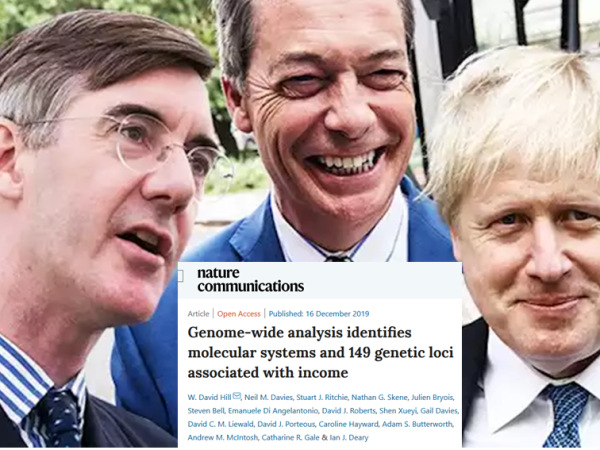
Bah Humbug
Edinburgh psychologists announce in Nature Communications genes for being rich. A Christmas Carol.
This is the paper, published for some reason in a relatively obscure Elsevier journal:
Agus Surachman, Elissa Hamlat , Anthony S Zannas , Steve Horvath , Barbara Laraia , Elissa Epel Grandparents’ educational attainment is associated with grandchildren’s epigenetic-based age acceleration in the National Growth and Health Study Social Science & Medicine (2024) doi: 10.1016/j.socscimed.2024.117142
“Declaration of competing interest
The authors declare that they have no known competing financial interests or personal relationships that could have appeared to influence the work reported in this paper.”
As I mentioned in May 2023 Shorts for another epigentics paper by the former UC Los Angeles professor Steve Horvath (now with Altos Labs San Diego Institute of Science), he owns patents (filed 2012, see here and here) for the very technology used by this study to determine epigenetic ageing in biological samples. In fact, it’s even called the Horvath Aging Clock. Horvath is also the founder of UCLA non-profit spin-out Clock Foundation, which is about “speeding the availability of treatments that prolong health and life expectancy“.
Horvath loaned his Aging Clock to anti-aging enthusiasts like David Sinclair, Carlos Izpisua Belmonte, Thomas Rando, Vadim Gladyshev etc, which led to some of his papers being criticised on PubPeer.
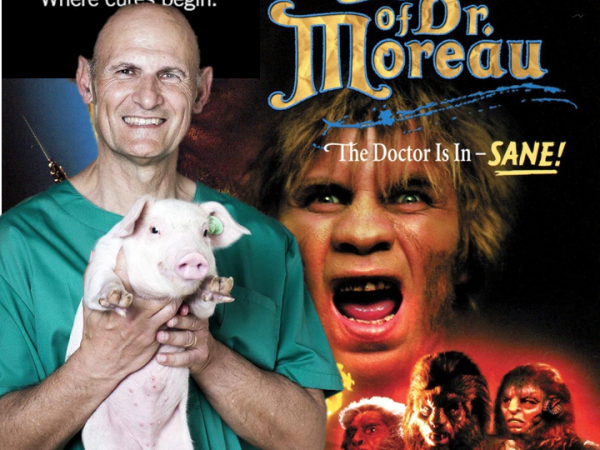
The Island of Dr Izpisua Belmonte
Human-monkey chimeras arrive to solve the problem of organ shortage. Thank Juan Carlos Izpisua Belmonte, who is ready to cure all possible diseases and even the old age. With chutzpah and Cell on his side.
Presumably you need to make Horvath co-author if you seek to borrow his Aging Clock to prove whatever anti-aging brainfart you want to see proven. How will anyone ever be able to check if that clock even works?
Donate!
If you are interested to support my work, you can leave here a small tip of $5. Or several of small tips, just increase the amount as you like (2x=€10; 5x=€25). Your generous patronage of my journalism will be most appreciated!
€5.00

 For Better Science
Can you connect multip
LikeLike
Lol.
“I can access, using Wifi provided by an Italian University!”
https://x.com/TheScienceGoat/status/1831690879246995664
“I don’t have access from home. From the university yes”
https://x.com/ftonello/status/1831694738862342569
LikeLike
Il Manifesto reports (by Andrea Capocci):
https://ilmanifesto.it/la-scienza-indaga-ma-nessuno-indaga-sulla-scienza
LikeLiked by 1 person
I have to say that I am reading this page from a location firmly within Italy. The For Better Science site went AWOL for a few days, but its been back since your previous post. I am behind a hospital firewall, but apart from that I am not disguising my location in any way.
LikeLike
People reported that university servers are not affected
LikeLike
Got this information about FBS accessibility from Italy:
The providers working this morning are:
TIM (mobile), WIND, SKY
FBS is blocked by
Vodafone, Iliad, Fastweb
The university server system GARR does NOT block FBS.
LikeLike
It’s impossib
LikeLike
The most loyal and dedicated reader of For Better Science is Ivan Oransky.
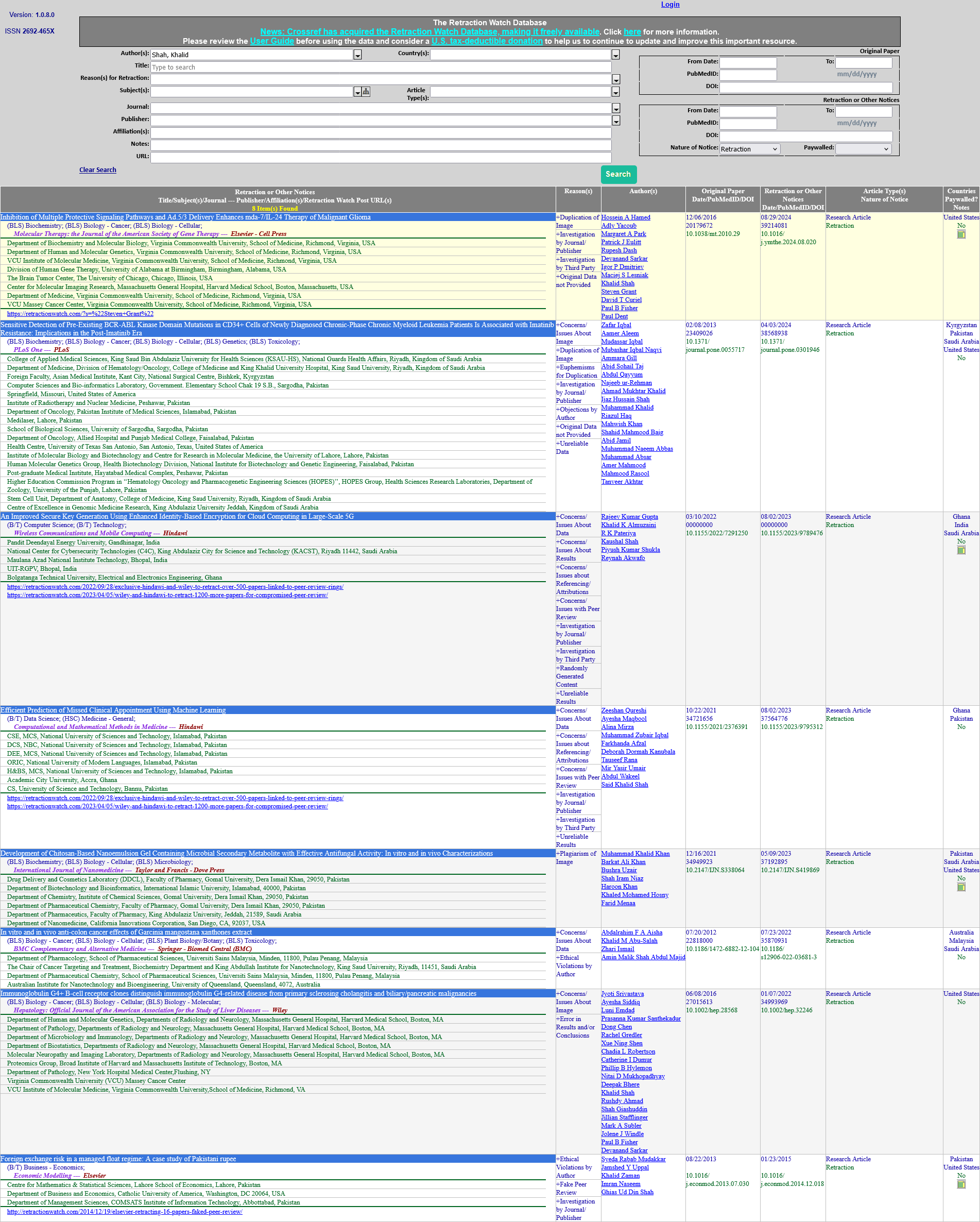
Earlier this morning, I checked the Khalid Shah retractions.
http://retractiondatabase.org/RetractionSearch.aspx#?auth%3dShah%252c%2bKhalid
There were the two wrongly attributed ones plus the correct recent retraction discussed above, freshly added. 3 in total.
Now Ivan read Schneider Shorts. And reacted, as only Ivan can when he needs to prove that he is always right, never makes mistakes, and everyone who disagrees with him is ill-informed at best.
8 retractions for Khalid Shah, only one of them is correct. The rest are various authors with “Khaled” or “shah” in their name. Yes, Ivan, you are so right, as always.
LikeLike
Just change the DNS servers using Google’s servers (8.8.8.8 and 8.8.4.4) or OpenDns servers (8.8.8.8 and 8.8.4.4) and the site will be accessible again. The important thing is not to use DNS servers from Italian providers or located in Italy. 😉
LikeLiked by 1 person
Laurie Glimcher preceded Augustine Choi as Dean of Medicine at Cornell
LikeLike
That fits
LikeLike
Hi Leonid, (long-term) Italian fan here. I cannot access the blog using providers Wind or Fastweb but I can read the newsletter and related articles using the Reader option. The Wayback Machine works ok.
LikeLike
The Rob Knight microbiome affair highlights a key aspect of modern bullshit science: the glommers, coat-tail riders, science ticks and camp-followers who immediately jump on whatever becomes “a thing” to pump up their flaccid careers as nomads in the wasteland of not having a fucking clue. Hunter Thompson called their political equivalents the “half-bright”, but that’s a high bar that perhaps Knight himself might be able to reach, but not the pond-scum trailing behind him. The good news is that investors are somewhat smarter, and pulled the plug before this BS was unleashed on an unsuspecting public. Hooray for the markets – this time.
LikeLiked by 1 person
“The Nobel prize laureate and Johns Hopkins University professor Gregg Semenza loses two more papers, making it merely 13 retractions now. “
13 is a lucky number in Italy. “Fare tredici.” Gregg Semenza certainly has.
LikeLiked by 1 person
Actually Gregg Semenza is American, not Italian. For the record, 13 is an unlucky number (likewise 17) also in Italy, it comes from the Last Supper where 13 where the commensals. “Fare tredici” was connected to a gambling game now defunct.
LikeLike
Apparently, another Nobel Prize is not afraid of hurting his reputation by singing high praises on the cover of the Blackburn and Epel book, an admixture of lame self-help advice and absurdities, according to credible accounts online.
LikeLike
Not a lawyer, but I don’t see what constitutes defamation in this case. Substantial evidence of “shenanigans”on the part of Bassotti has been thoroughly documented by Leonid and Sylvie Coyaud, and not proven untrue by anyone. Italian justice is setting a very bad precedent.
By the way, Sylvie Coyaud wrote in 2007: “Whistle-blowers are unloved everywhere” (in Science stories that cannot be told).
LikeLike
The couple Eva Trojovská / Pavel Trojovský are the emerging papermills in Czech with the fake nature inspired algorithms.
LikeLike