

Smut Clyde would like you to meet a Heretic in Science: Milton Wainwright, by now retired senior lecturer in microbiology at the University of Sheffield in UK.
Wainright (who is both vain and always right) claims to be persecuted by the dogmatic scientific community because it fails to put his discoveries into textbooks. Not those about the origins of cancer (“most microorganisms, including bacteria, fungi, protozoa and viruses can, under the appropriate circumstances, induce cancer“, Wainwright 2010) and especially not those about panspermia.
Due to this academic conspiracy, Wainwright suffered humiliation and deprivation by being made honorary professor at four universities only and fellow of only one royal society. As with every older white male, he is being silenced and cancelled: the only outlets available to Wainwright next to Elsevier and other predatory journals are the national and international mass media, plus public lectures on “Heresy in Science”, like this one released in 2014 by his own university:
I shall not waste time explaining to you ignorant mob what panspermia is, because Smut Clyde does it below (with some of my meddling). In any case, Wainwright’s recent green nanotechnology publications do not come from outer space, but from Iranian papermills.
Stratosfear
By Smut Clyde
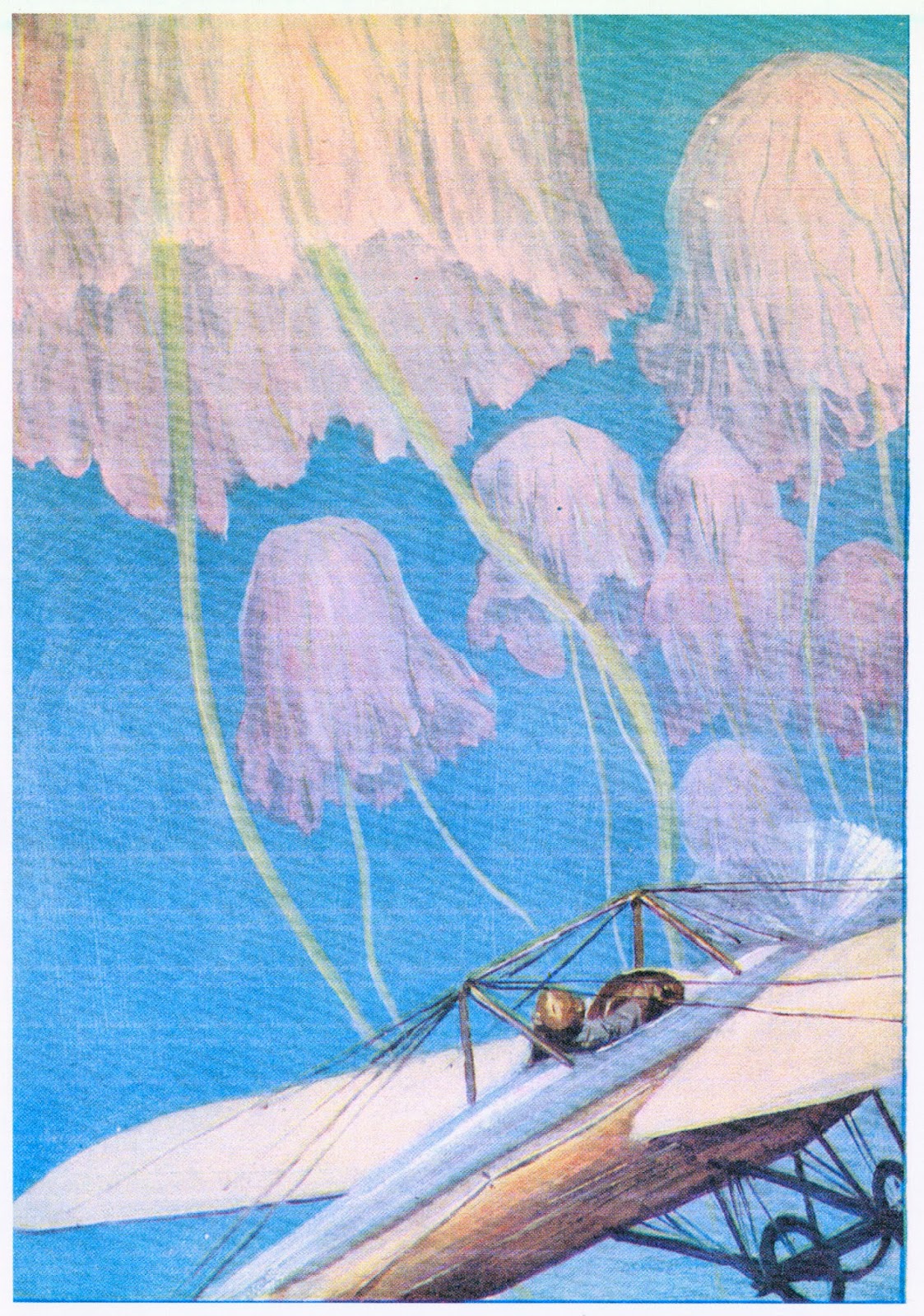 Although he dabbled in popular crime fiction, Arthur Conan Doyle is best known as a pioneering altobiologist and an early exponent of the ‘High Cold Biosphere‘ hypothesis [named by analogy with Tom Gold’s “deep hot biosphere“]. As any fule kno, a century ago Doyle discovered an entire ecosystem in the vast rarefied volumes of stratosphere above our heads. The ecosystem includes apex predators and things ended badly.
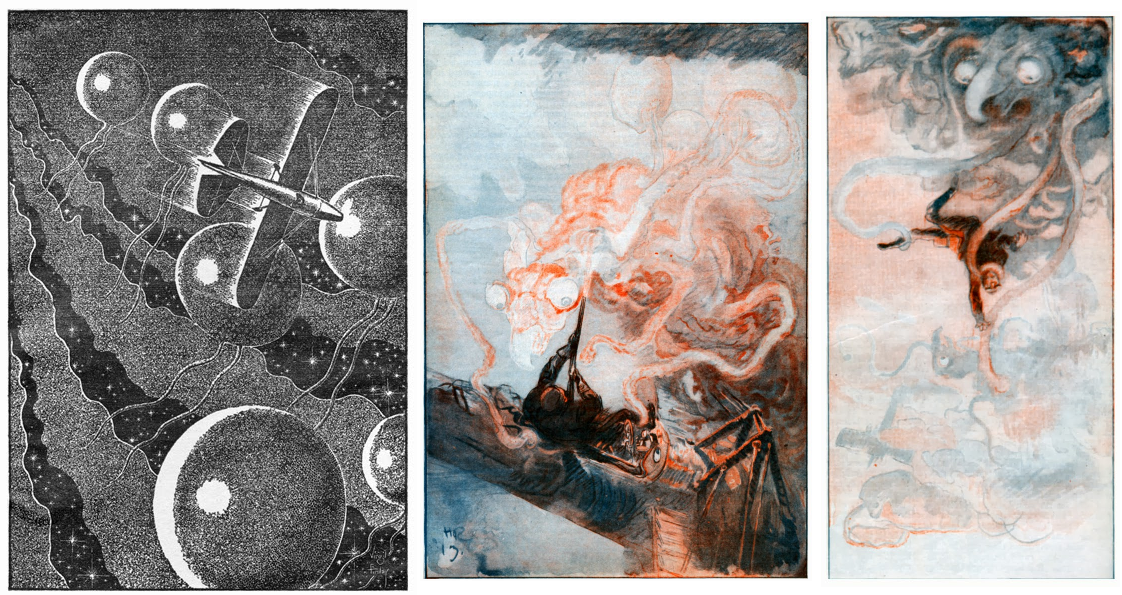
As God is my witness, I thought diatoms could fly
 Since then the existence of an elaborate ecology in the upper atmosphere has long been established fact to some people. As their theory goes, some of the denizens of that rarefied habitat are cousins to Noctiluca scintillans and bioluminesce under stress.
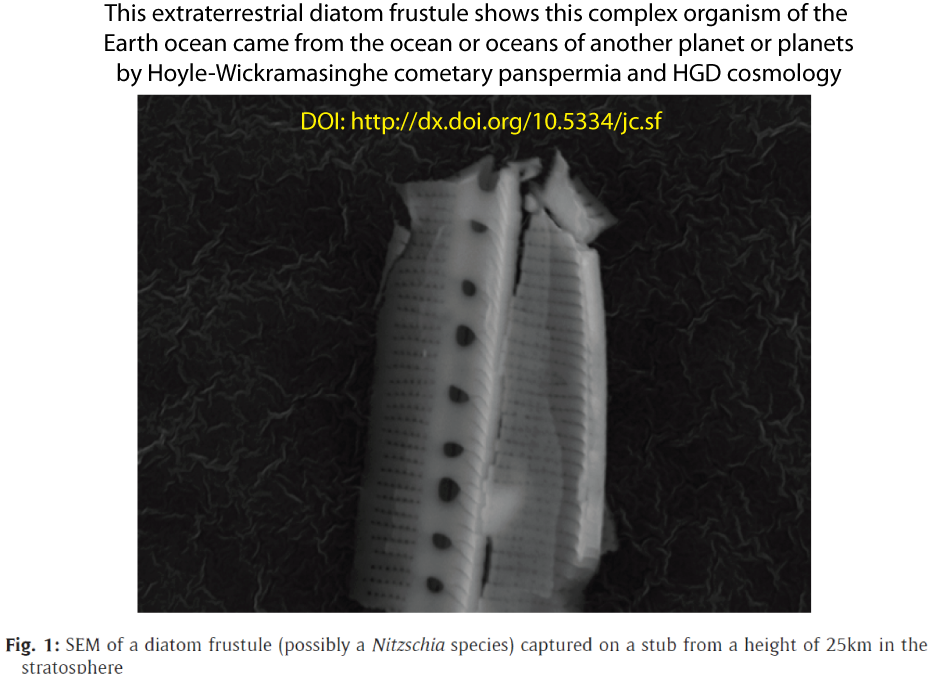 Milton Wainwright et al. (2013a) were the first to report diatoms. Unaware of the key precedent of Doyle (1913), rather than searching for megafauna, they confined themselves to investigating the base of the tropospheric / stratospheric food-chain – the plankton. A high-altitude balloon was involved, carrying electron-microscope stubs to sample the thin air. Their analysis hinged on the premise that no mechanisms exist that could carry dust particles upwards so anything found at an altitude of ~25 km must therefore have arrived in cometary dust and is descending in free-fall.
Gratifying though it is to see the word ‘frustule’ in use, I am not convinced that this particular sliver of silica is of extraterrestrial origin. Nor by Wainwright’s conclusion that Heterokontophyta – along with other terrestrial life – did not originate on Earth, but rather evolved in deep space before hitching a ride here on a comet. The competition for the Ignobel Prizes grows tougher each year.

Milton Wainwright was once a microbiologist with an interest in the history of antibiotics. This senior lecturer of the University of Sheffield fell in with the Panspermia crowd (in the form of Fred Hoyle’s disciple N. Chandra Wickramasinghe), and I am here for it, as the world needs more outsider maverick researchers to replace the late Michael Persinger – and Wainwright fits the key requirement of thinking outside the box. Also outside the box’s wrapping paper, and outside the van that delivered it.
Michael Persinger’s crank magnetism
“What about you? Do you find it risible when I say the name…” Michael Persinger? Either you are laughing already, or you wonder what this is all about. Both audiences will sure be entertained by the following guest post of my regular contributor, Smut Clyde. For this is about Professor Michael Persinger, born 1945, psychologist…

 Wickramasinghe et al. have published a lot along these lines, with many high-altitude balloon flights. I once watched a documentary about sending probes into space to collect alien life-forms and it NEVER ENDS WELL.
One early paper from over two decades ago is this, where even if “the possibility of contamination can never be ruled out“, the “extraterrestrial origin” of “two bacteria (Bacillus simplex and Staphylococcus pasteuri) and a single fungus, Engyodontium album (Limber) de Hoog” remains the only “consistent, if controversial, explanation“:
M Wainwright, N C Wickramasinghe, J V Narlikar, P Rajaratnam Microorganisms cultured from stratospheric air samples obtained at 41 km FEMS Microbiol Lett (2003) doi: 10.1111/j.1574-6968.2003.tb11513.x.
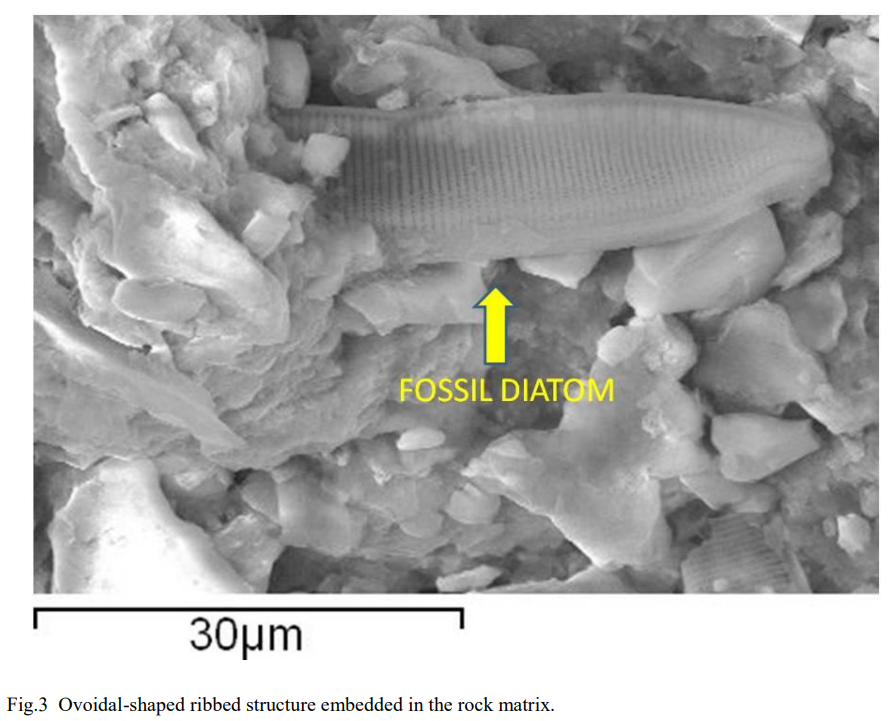
Also the Sri Lankan rock fragments which are known to be pristine meteorites (uncontaminated by the terrane biology of the rice paddies in which they was found) because one contained a diatomic frustule – that word again! – which is identical to a known species and is therefore necessarily from deep space (Wickramasinghe et al 2013). But what brings Wainwright to attention now is a recent retraction involving peer-review shenanigans. Combined with his retractions from 2022 and 2023, it create an excuse to recycle some earlier blogposts.
- As God is my witness, I thought diatoms could fly
- It’s a pity that there are no Blue Öyster Cult lyrics on the theme of ‘Astronomy’ that might be used as a title for this post
- Allegro non Troposphere
- Space Calamari, sign of the time, Space Calamari, sort of divine
I’ll come back to that. First a few thoughts about journals.
 One aspect of being a Maverick Outsider is the struggle to find vehicles for one’s paradigm-shattering work, what with mainstream journals having a vested interest in keeping the paradigms unshattered. This is just an observation; I don’t make the rules. So the diatomic lucubrations were published through Journal of Cosmology, whose editor takes his outsider status seriously enough that even the graphic-design choices are Outside, and the neologisms of deeply-meaningful word coinage are lavishly illustrated with what appear to be Christian Psychedelia album-cover art. PZ Meyer’s comparison – “a drunk clown puked up his fruit loops onto a grid of 1990s-style tables” – is also acceptable.
 The editor in question deserves a digression. Rhawn Gabriel Joseph is also “Space Tiger King“; read about him on his own website and here. Joseph – pardon, Space Tiger King – used his journal to publish this glorious hommage to H. P. Lovecraft:
Rhawn Gabriel Joseph, Richard Armstrong, Xinli Wei, C. Gibson, Olivier Planchon, David Duvall1, Ashraf M. T. Elewa, N. S. Duxbury, H. Rabb, K. Latif, Rudolph Schild Fungi on Mars? Evidence of Growth and Behavior From Sequential Images Journal of Cosmology (2021) 29, (4) 480-550
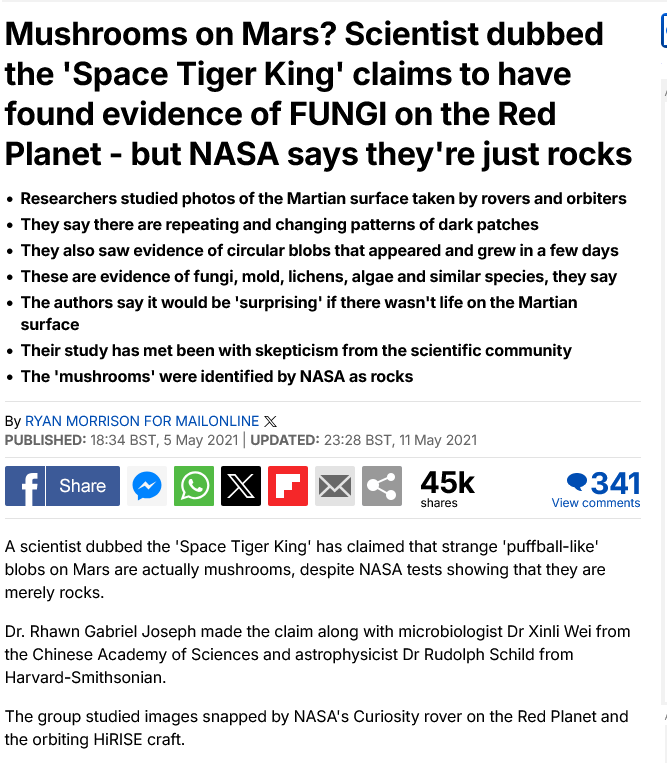
There was also excited coverage by Futurism, but they backtracked because “the scientific community has been overwhelmingly critical“, while CNET ridiculed the study as well as its lead author. A self-published book with the same authors followed the fungi finding: “Proof of Life on Mars in 500 Pictures:: Tube Worms, Martian Mushrooms, Metazoans, Microbial Mats, Lichens, Algae, Stromatolites, Fungus, Fossils, Growth, Movement, Spores and Reproductive Behavior“.
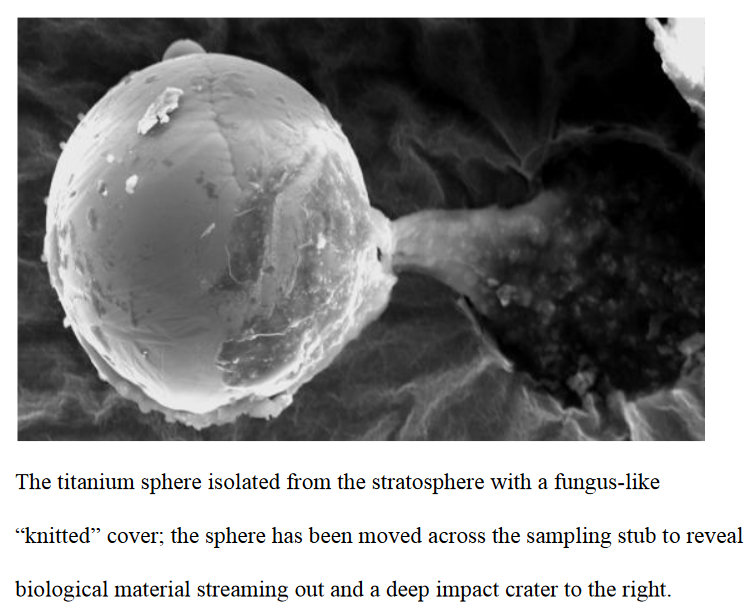
A “Space-Derived Titanium Life Form” was discovered earlier, described as “remarkable” in its flatulence. It was also published in Journal of Cosmology, “which, despite the claims of internet trolls, is presently a peer-reviewed journal“. As authors explained the associated press release from 2013, the choice of the venue was necessary “to avoid the editors and reviewers of biological journals who are prejudiced against the idea that life is currently arriving to Earth from space“.
“Wainwright and Wickramasinghe conclude: “It is vitally important for such results as we have obtained to be published and assessed. If only those ideas get published that are considered orthodox in relation to current controversies, progress of science will stall as it did for centuries in the Middle Ages.””
Journal of Cosmology also brought us this:
Milton Wainwright, Christopher E. Rose, Alexander J. Baker and N. Chandra Wickramasinghe “Isolation of Biological Entities from the Stratosphere (22-27Km)” Journal of Cosmology Vol.,22, pp 10189-10197 (2013)
The study applies the same interpretative razor that any microscopic dust particle is either (a) irregular, and therefore organic or (b) regular (i.e. organic). If (c) it’s an aggregate of nanoparticles, they’re nanobacteria (organic again).¹
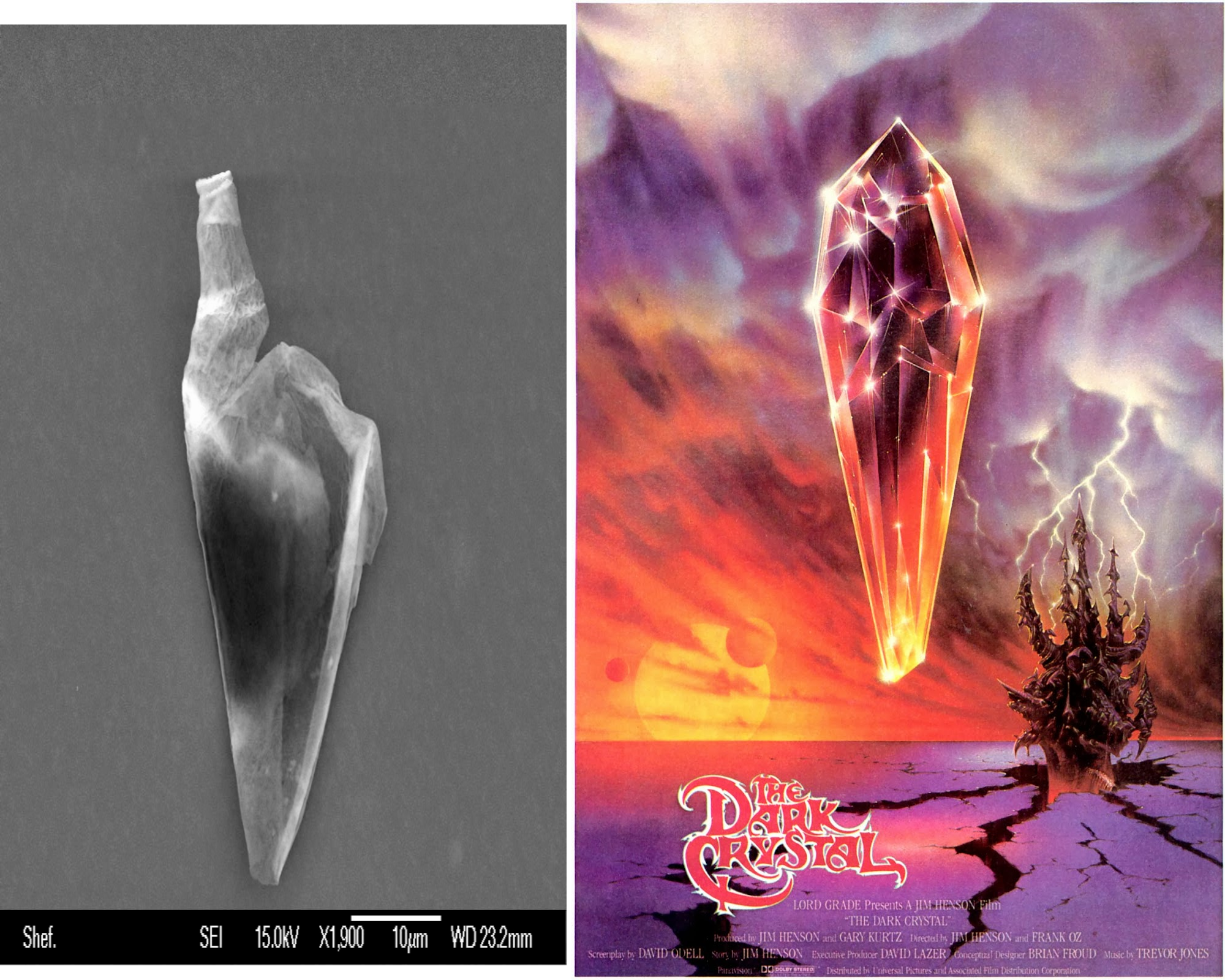 There are no diatoms. This time the balloon probe brought back the Dark Crystal, although the authors prefer to think that Fig 3
- “is unequivocally biological. Here we see a complex organism which has a segmented neck attached to a flask-shaped body which is ridged and has collapsed under the vacuum of the stratosphere or produced during E/M analysis. The top of the neck is fringed with what could be cilia or a fringe which formed the point of attachment of the neck to another biological entity. The complexity of this particle excludes the possibility that is of non-biological in origin.“
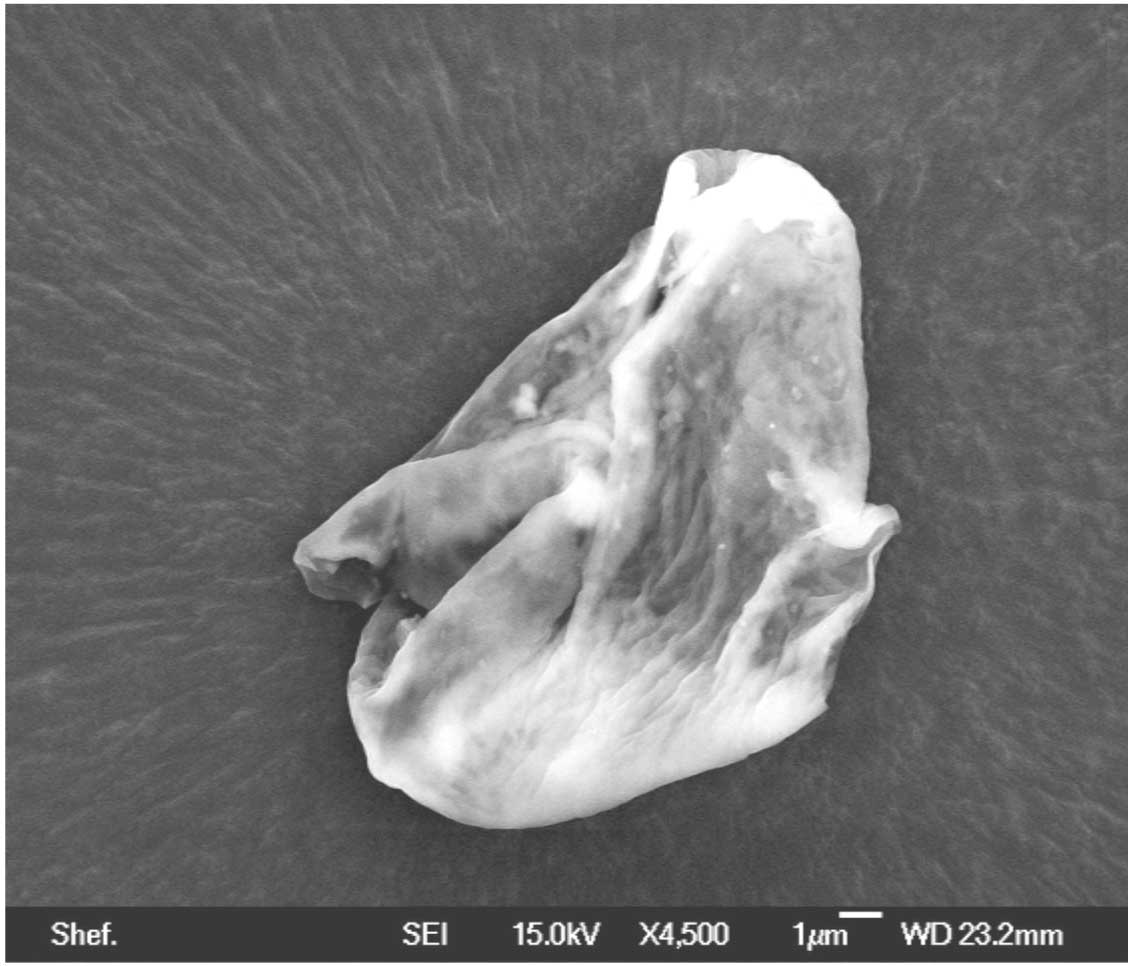 Figure 4 is the ALF-particle. To my admittedly untutored eye it looks like a relative of Silurian Man Homo sapiens miniorientalis. Pace Wainwright et al, it
- “is also clearly biological in nature; here we see a somewhat phallic balloon-like structure which has presumably collapsed under low pressure. A “proboscis” is seen emerging from the left of the main cell which has two, nostril-like openings. At the top of the collapsed “balloon” is a sphincter-like opening.“
Evidently there were changes in domain registration: the original site journalofcosmology.com is now a nest of New-Age fiddle-faddle. J. Cosmology was relaunched at thejournalofcosmology.com. I mention this only to warn readers that if they go on to read PZ Meyer’s entertaining encounters with the Cold High Biosphere believers, they should be cautious about following links, which may lead them to that wretched hive of angels and astrology.
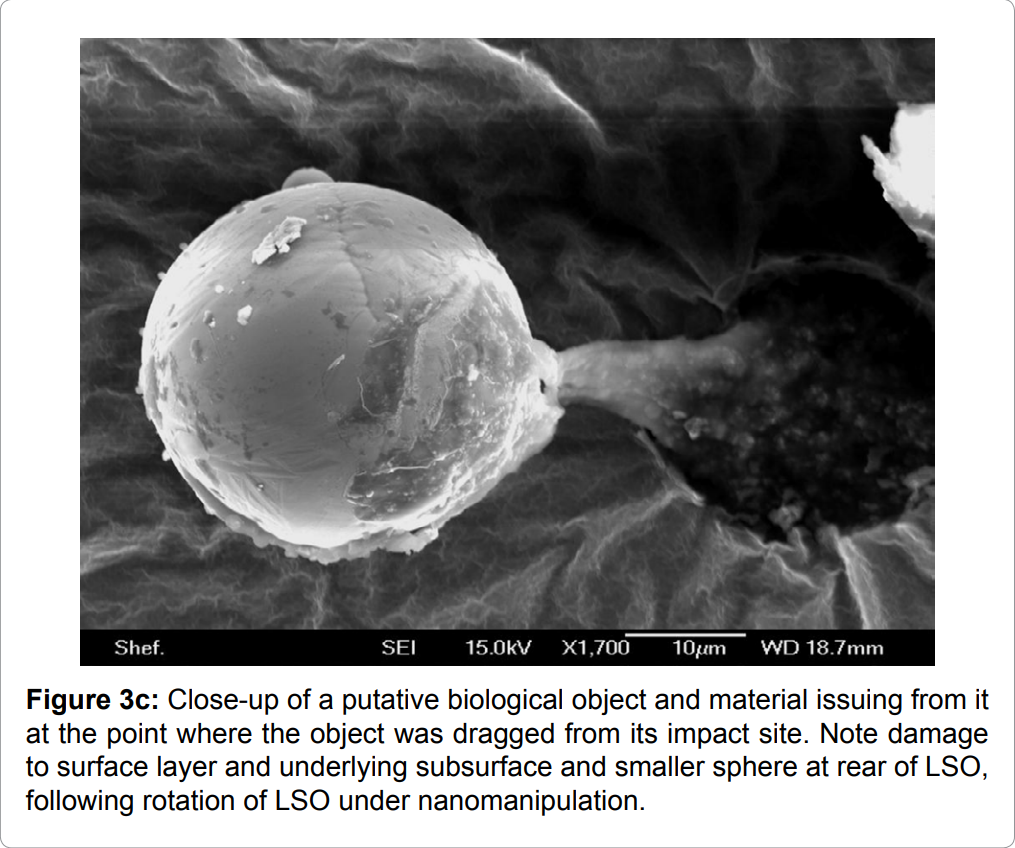 Anyway, our man liked these electron microphotographs so much that he published them a second time in:
Milton Wainwright, N Chandra Wickramasinghe, Christopher E Rose, Alexander J Baker “Recovery of Cometary Microorganisms from the Stratosphere” Journal of Astrobiology & Outreach (2014) DOI: 10.4172/2332-2519.1000110
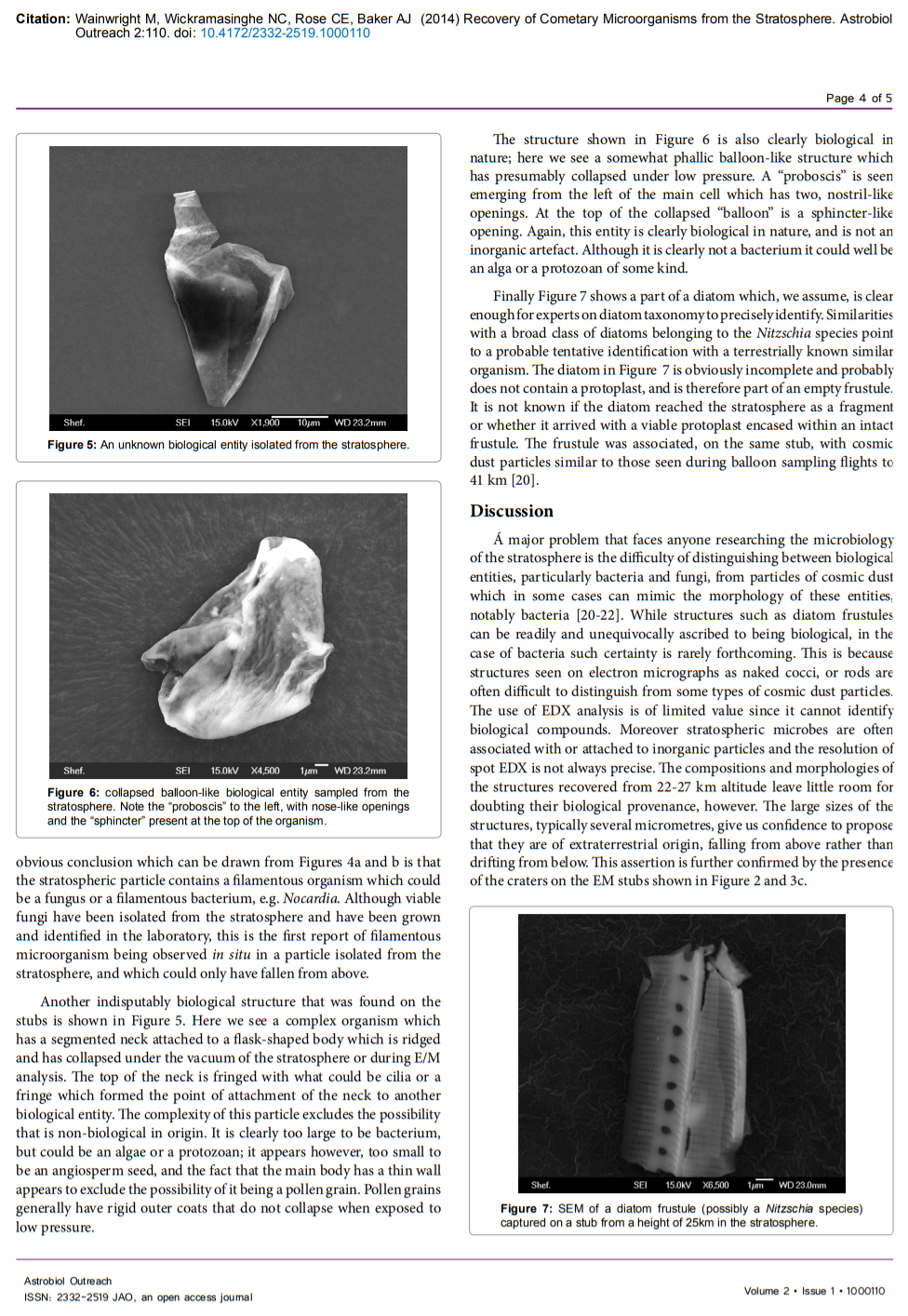 For shame, Dr Wainwright -Maverick Scholars are role-models to the next generation of outsider thinkers and they should not stoop to this kind of chicanerie. I would report this breach of academic standards to PubPeer, except the vehicle for the duplicate publication was Journal of Astrobiology & Outreach, which (it pains me to report) is a journal-shaped jizzmop from the criminal enterprise known as OMICS – here using the ‘Walsh Medical Media’ imprint for its frauding.
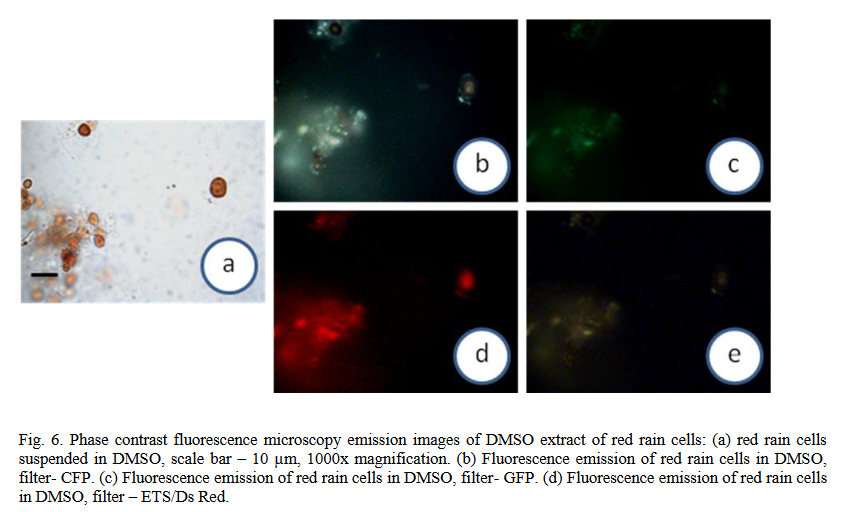
And now, to give you permanent nightmares, this arXiv preprint and a conference proceedings paper about LIVING, PROCREATING and BOILING BLOOD RAIN FROM SPACE:
Rajkumar Gangappa, Chandra Wickramasinghe, Milton Wainwright, A. Santhosh Kumar, Godfrey Louis Growth and replication of red rain cells at 121 oC and their red fluorescence arXiv (2010) doi: 10.48550/arXiv.1008.4960
“We have shown that the red cells found in the Red Rain (which fell on Kerala, India, in 2001) survive and grow after incubation for periods of up to two hours at 121 oC . Under these conditions daughter cells appear within the original mother cells and the number of cells in the samples increases with length of exposure to 121 oC.”
Eight Miles High
The duplicated electron microscopy appeared yet again in “Biological entities and DNA-containing masses isolated from the stratosphere – evidence for a non-terrestrial origin” (Wainwright 2015), along with details of the balloon flight.
 In this case the journal was Astronomical Review, and therein lies a tale – for I respectfully disagree with the Wikieditor consensus that Astron.Rev. lacked enough notability for a Wiki entry. It was founded in 2012 by Minnesota-based Dylan Fazel, as an open-minded home for new ideas and relativity-revisionist Theories of Everything, in the manner of a Salon des Refusés (which is not to be confused with the Saloon des Refusés – a rather louche bar in the XVIIIe arrondissement redeemed by its unparalleled range of absinthes). Fazel relied on a Wiki-centric policy to promote his journal, including stealing the identities of famous astrophysicists and defacing their Wikipedia entries with false claims that they had joined the Editorial Board. He is briefly mentioned here:

Ivermectin now against COVID-19, because
Dr Peter McCullough, Dr Sabine Hazan, and other ivermectin quacks. Follow Smut Clyde’s descent to the antivaxxer hell.
Fazel is one of those curious individuals whose rich fantasy lives would never have survived in a skeptical environment but who prosper in the less hostile milieu of the Interducts (and academic publishing in particular). He subsequently dissolved into a cohort of fake European personae and became impresario of the ESMED scamference series, having discovered in the intervening decade that (1) editing a stable of half-a-dozen fake medical journals is more satisfying than an single journal; (2) suckers will pay $$$ to be published in them; and (3) mockademic conferences are even more lucrative than predatory publishing. His innovations in annoyingly passive-aggressive spam are the stuff of legend.
That is not entirely relevant, though, as Fazel no longer edits Astronomical Review – Taylor & Francis bought it for $$$$ as part of their strategy of acquiring an Open Access capability, and raised the publishing charges from $25/page to $750. They may have over-estimated its value and mistaken it for a real journal, misled by the prestigious but wholly aspirational Editorial Board. They also bought Dove Press. “Due diligence” does not seem to be a Taylor & Francis capability either.
What matters here is that before the new owners recognised that there was nothing salvageable about the lamentable purchase, cut their losses and shut the doors, they published four manuscripts across two issues. “Biological entities and DNA-containing masses” was one of those manuscripts. It was my first encounter with Wainwright’s oeuvre. It included the titanium sphere seen above, still emitting a seemingly endless flow of ectoplasmic white goo, but mysteriously transformed into a titanium-vanadium alloy.
Milton Wainwright Biological entities and DNA-containing masses isolated from the stratosphere-evidence for a non-terrestrial origin Astronomical Review (2015) doi: 10.1080/21672857.2015.1087751
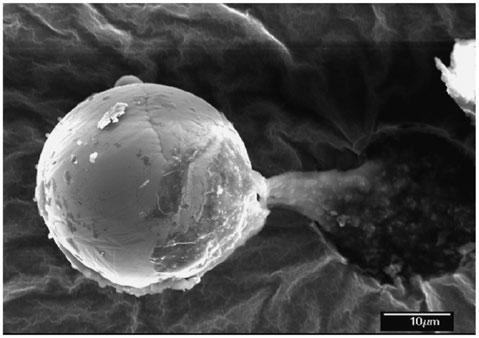
Fig 8. A titanium–vanadium sphere with both biology-like filaments on outside and mucoid material oozing out of sphere EDX at C and O only.
So here are some transmission electron microscopy images, colorised, purporting to show the DAPI stain binding to DNA. The particles are 100% DNA.

 Another particle was stained with DiOC6 to show the presence of cell membranes. It proved to be 100% cell membrane (allowing the authors to identify it as a congeries of viruses). Just saying, if these particles are 100% DNA and 100% cell membrane, this is not life as we know it.
The Squid that Fell to Earth
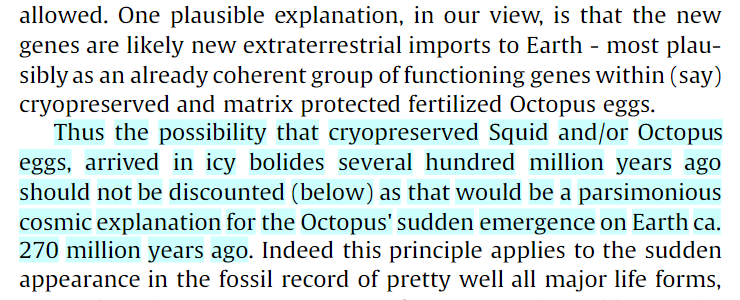 Our man Wainright is best-known, however, for the ‘Space Squid‘ paper. The nickname reflects its premise that the genomic innovations that elaborated the muscular ‘foot’ of the basic mollusc bauplan into the tentacles of a cephalopod could not have emerged from mere mutation and natural selection, however advantageous they might be.
 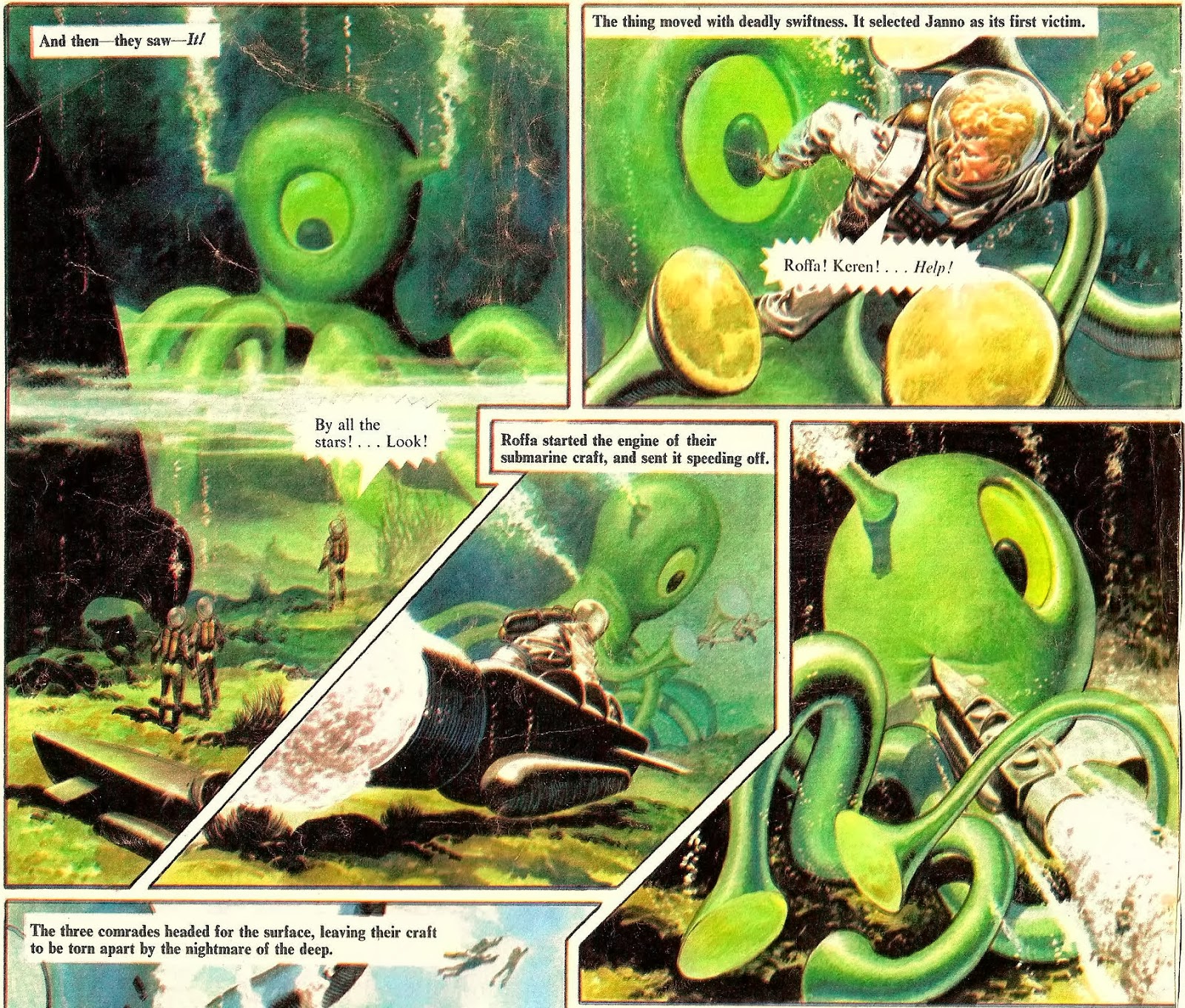 It follows that they must have evolved elsewhere in some distant star system. Then those exoplanetary cephalopods were driven from their ultramundane home – perhaps borne on the solar-wind outgassings of a star entering the Red Giant stage of the sequence. They drifted through interstellar vacuum for eons on the currents of space, before ultimately they were dashed ashore on the reefs of Earth.
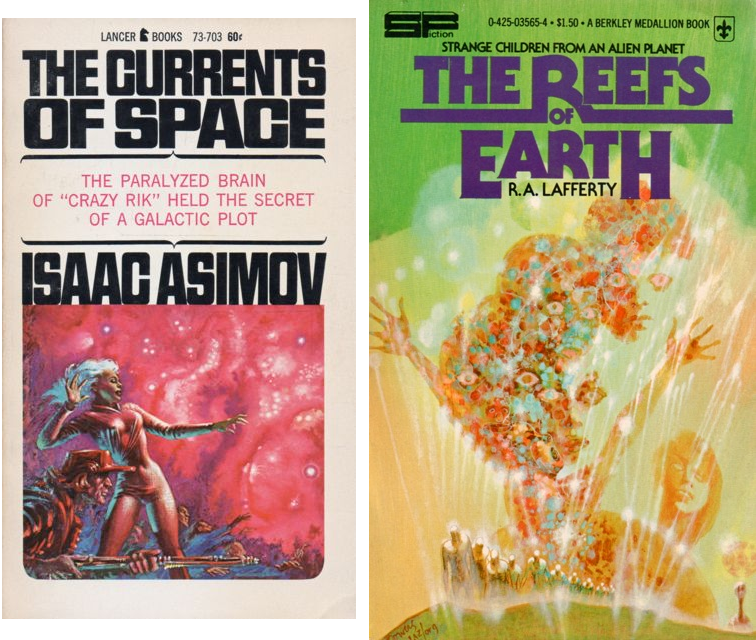
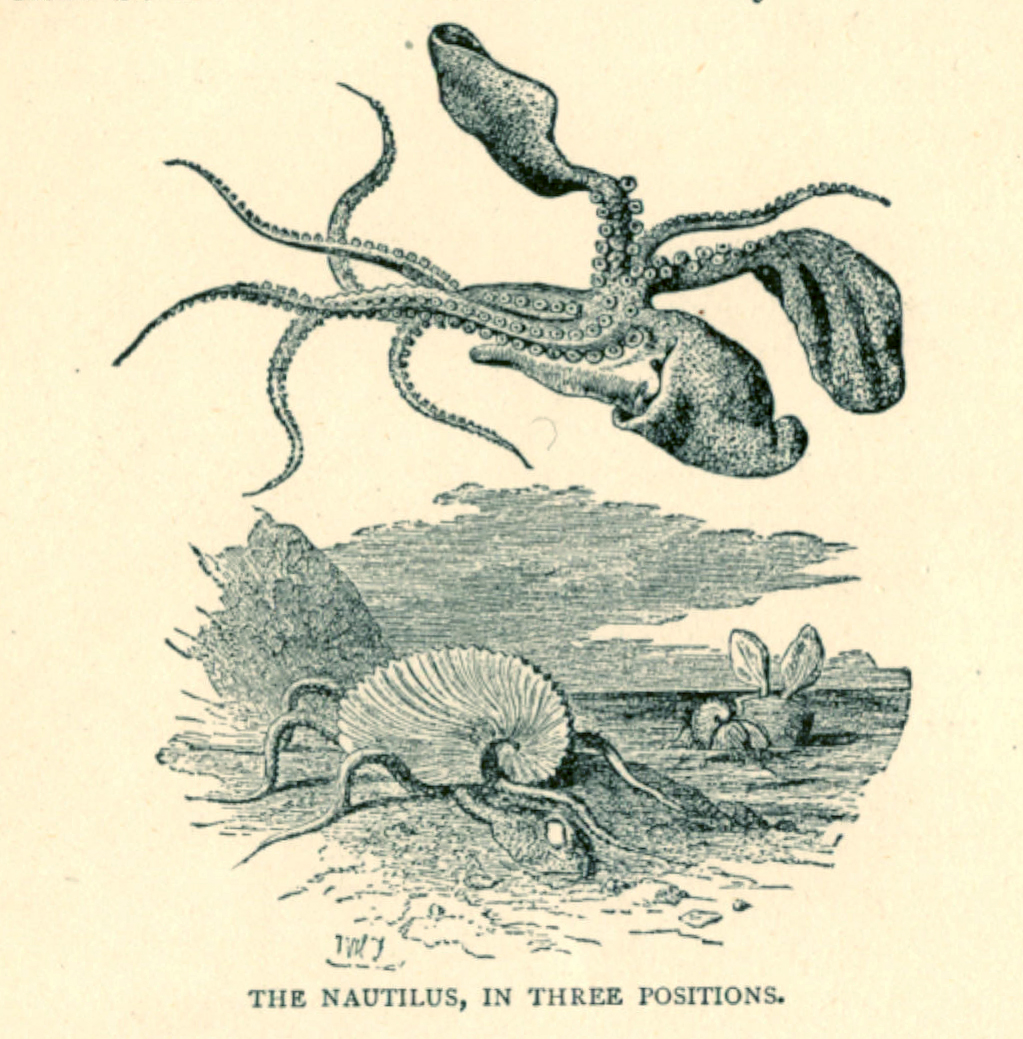 If these embryonic cephalopods originally evolved on Krypton or Daxam, then exposure to the yellow light of our sun would have endowed the adults with super-strength, X-ray vision, nigh-invulnerability and the capacity for flight. This would certainly have added to their reproductive success on Earth.
Naming the paper after the ‘space squid’ is not entirely fair. It neglects the similar claims made by the authors on behalf of fruit-flies: the UV-absorbing lenses of their compound eyes are clearly adaptations to hard-vacuum conditions. Also on behalf of lactobacillis and cometary-fermentation activity.
Edward J. Steele, Shirwan Al-Mufti , Kenneth A. Augustyn , Rohana Chandrajith , John P. Coghlan , S.G. Coulson , Sudipto Ghosh , Mark Gillman , Reginald M. Gorczynski , Brig Klyce , Godfrey Louis , Kithsiri Mahanama , Keith R. Oliver , Julio Padron , Jiangwen Qu , John A. Schuster , W.E. Smith , Duane P. Snyder , Julian A. Steele , Brent J. Stewart , Robert Temple, Gensuke Tokoro, Christopher A. Tout, Alexander Unzicker, Milton Wainwright, Jamie Wallis, Daryl H. Wallis, Max K. Wallis, John Wetherall, D.T. Wickramasinghe, J.T. Wickramasinghe, N. Chandra Wickramasinghe, Yongsheng Liu Cause of Cambrian Explosion – Terrestrial or Cosmic? Progress in Biophysics and Molecular Biology (2018) doi: 10.1016/j.pbiomolbio.2018.03.004

I had expected the Extreme Brewing industry to pay more attention to that last discovery, and maybe sponsor a probe to bring back a sample from the next cometary close encounter, with novelty beer-brewing in mind.
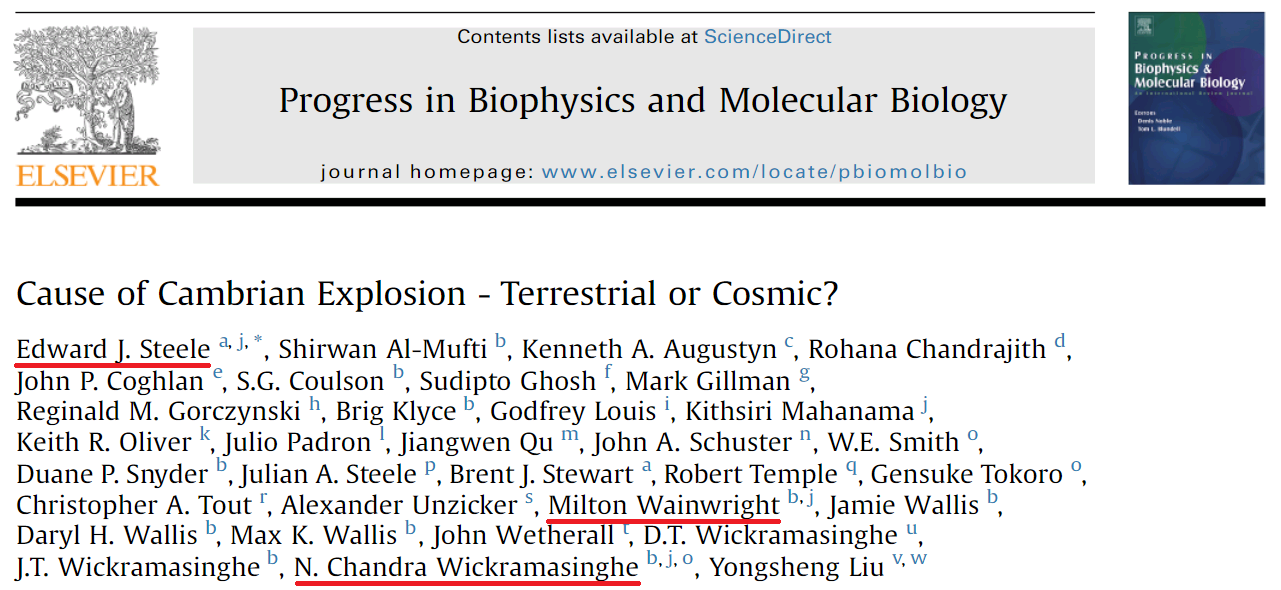 These novel challenging ideas were accepted by Progress in Biophysics and Molecular Biology, a journal that is published by Elsevier but is otherwise seen as legitimate.
 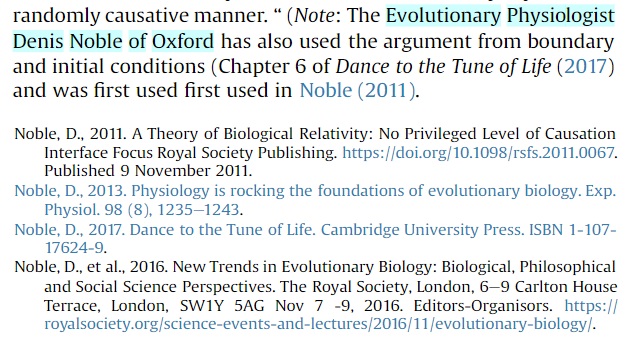 Detractors might wonder about the heavy-handed praise lavished upon Denis Noble (the journal’s editor), and the extraneous fanservice-genuflection citations for that person’s papers; and whether these swayed the editorial judgement. Citation-gamed circle-rolling and log-jerks are not unknown in the academic world though typically we try to hide it better.
 Then the paper’s profile was elevated by one of the climate-change denialists who flourish in the Australian media ecosystem, and who promote any crank idea from any field (out of professional courtesy, it might be; or because crank magnetism; or because ‘the enemy of your enemy is your friend’, where ‘unsensational evidence-based science’ is the enemy in question of climate-change denialism). Graham Lloyd – “Environment Editor” for the Murdoch Press – took a break from his demanding schedule of puke-funneling press-releases from fossil-fuel lobbyists into the Australian, to
 puke-funnel a press-release present Both Sides of the Space-Squid Controversy instead.²
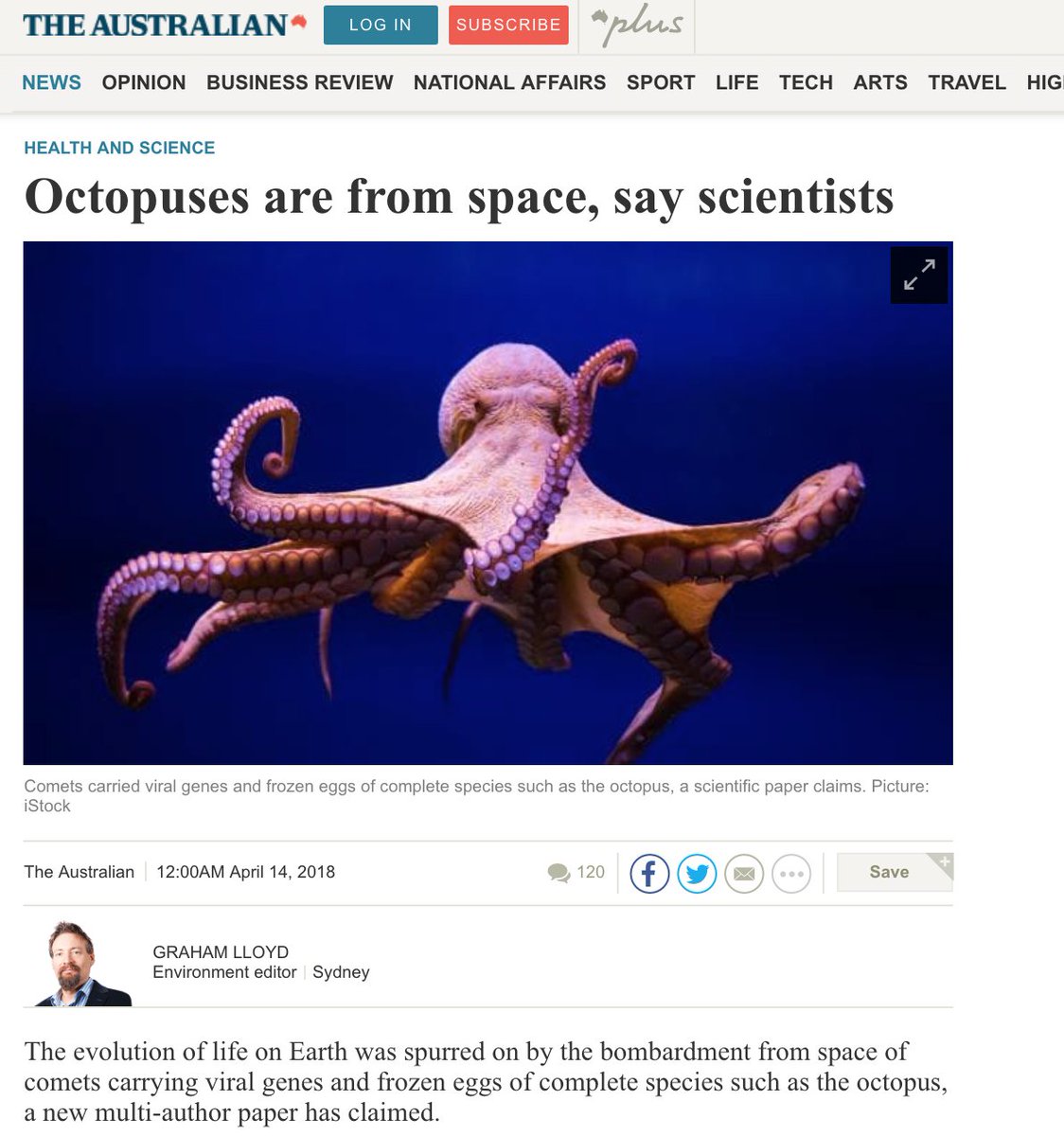
 This support meant ‘Alien octopodes!!’ headlines in the Australian tabloids, and clickbait churnalism always has an open slot for stories about “The crazy things those crazy scientists are saying because they’re crazy”, so the civilised world found out about the paper too.
Not just octopusses come from space. Also viruses! You can’t really argue with the medical and scientific authority of The Lancet. The Letter to Editor has 5 authoritative references, of which 4 are Wickramasinghe’s rediscovery of panspermia.³
Chandra Wickramasinghe, Milton Wainwright, Jayant Narlikar SARS—a clue to its origins? Lancet (2003) DOI: 10.1016/S0140-6736(03)13440-X
“We estimate that a tonne of bacterial material falls to Earth from space daily, which translates into some 1019 bacteria, or 20 000 bacteria per square metre of the Earth’s surface. Most of this material simply adds to the unculturable or uncultured microbial flora present on Earth.”
The main problem with those foreign microbes is that they lack culture.
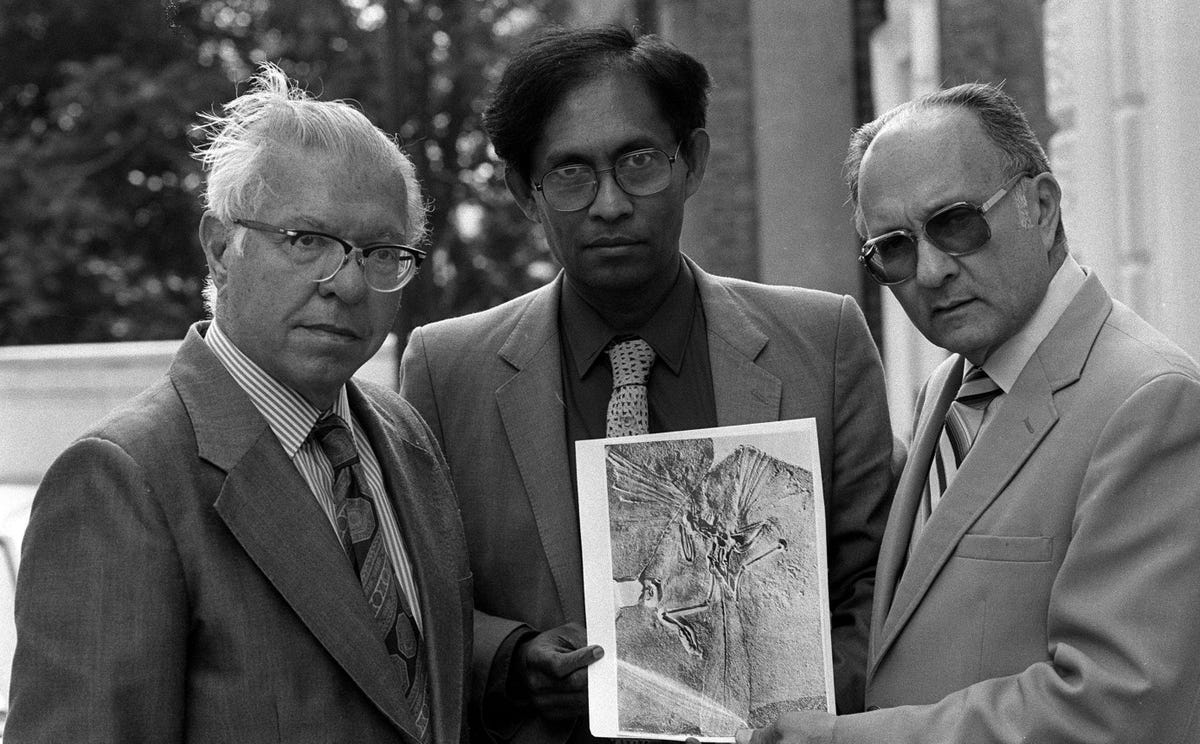
Yes. Also COVID-19 came from outer space, but not only. Also candida yeast:
Edward J. Steele , Jiangwen Qu , Reginald M. Gorczynski , Robyn A. Lindley , Gensuke Tokoro , Robert Temple , N. Chandra Wickramasinghe Origin of new emergent Coronavirus and Candida fungal diseases—Terrestrial or cosmic? Advances in genetics (2020) doi: 10.1016/bs.adgen.2020.04.002 4
The Dutch national newspaper NRC fell for it, see also coverage by Retraction Watch.

The study was published as Chapter 6 in the Elsevier book an “Advances in genetics: Cosmic Genetic Evolution”, edited by the space squid masterminds Edward J. Steele and Wickramasinghe, 10 out of the book’s 11 chapters deal with panspermia and were generously provided by these two editors. Chapter 9 by Wickramasinghe asked “Is the 2019 novel coronavirus related to a spike of cosmic rays?“, and even had a figure to prove that science has spoken (on the right).
And in Chapter 10 (“Microbial transfers from Venus to Earth“), Wickramasinghe and a Brunel University colleague must have taken the term “venereal disease” literally, claiming that “microorganisms are likely to be widely present in the clouds of Venus, and may under certain conditions have a ready route to Earth” to infect British gentlemen with syphilis and gonorrhoea.

Incidentally, Milton Wainwright did not contribute to that 2020 book by Wickramasinghe. But he contributed to a different one: “Life Comes from Space – The Decisive Evidence” published by the predatory publisher World Scientific. The flatulent titanium sphere is of course on the cover, but this time emitting downwards.
Persian Alchemy
The key point of all this is that Milton Wainwright does not confine his contributions to Science to a single area (space does not permit any coverage of his theory that the main cause of cancer is bacteria). His broad skill-set is associated with a series of collaborations with an ensemble of Iranian and sometimes Chinese colleagues, which we can turn to at last. As so often happens when academics become omnitalented Renaissance men, he acquired an affiliation with King Saud University, Saudi Arabia.
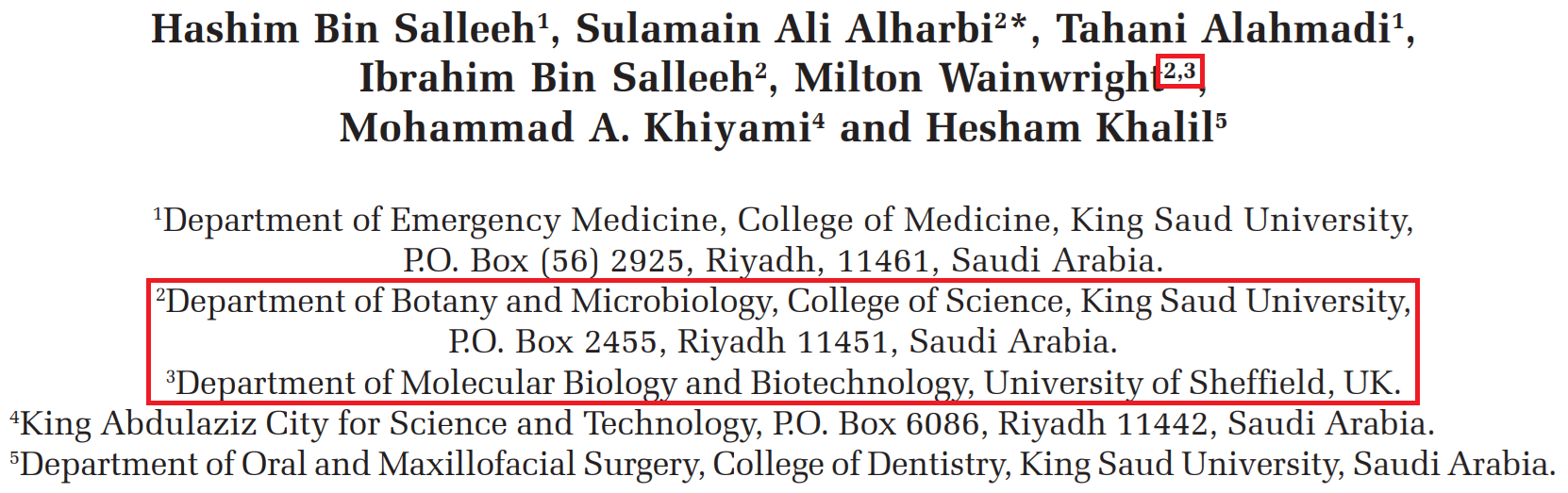 That whole magical-thinking “green-sourced alchemy” scholium features here, with its unstated axiom that nanoparticles of iron or gold (or the metal of your choice) take on special antibiotic / anticancer qualities from the composted plants present during their synthesis. Their terroir, as it were.

The smelly compost heap of plant-based nanoparticles
A gang of Indian nanotechnology scientists, allegedly from Annamalai University in India, placed in 2014-2015 several papers in different journals, all of them about nanoparticle synthesis using extracts from various local plants. Most papers went into the journal Spectrochimica Acta Part A: Molecular and Biomolecular Spectroscopy, published by Elsevier. The publications were harshly criticised on…

Yadong Zhou, Fafu Dou , Tahani Awad Alahmadi , Sulaiman Ali Alharbi , Milton Wainwright Biosynthesis of Fe nanoparticles using Alhagi sparsifolia extract for the treatment of colorectal carcinoma in the in vitro condition: A pre-clinical trial study Archives of Medical Science (2021) doi: 10.5114/aoms/143052

Flagged at PubPeer for the straight-line zigzag implausibility of its FTIR spectrum.
Another curious feature of that study is the use of the email account “sogand.paydarfard@yahoo.com” by the corresponding author Yadong Zhou. The owner of that account, Sogand Paydarfard, is not listed as an author. The name is familiar, though, with a green-alchemy paper retracted for image theft and general shenanigans.
Yuqiong Fu , Ping Wang , Wei Zhou , Long Lv , Yihui Fan , Tahani Awad Alahmadi , Sulaiman Ali Alharbi , Milton Wainwright Verbascum chinense L. leaf aqueous extract green-synthesized nanoparticles: Its performance in the treatment of several types of human lung cancers Arabian Journal of Chemistry (2021) doi: 10.1016/j.arabjc.2021.103413

Another implausible zig-zaggy FTIR spectrum.
Kaijin Lu , Yan Ou , Lihao Jiang , Yijia Xiao , Arunachalam Chinnathambi , Tahani Awad Alahmadi , Milton Wainwright Novel formulation, cytotoxicity, antioxidant, and anti-human lung cancer properties of gold nanoparticles containing Verbascum thapsus L. leaf aqueous extract Archives of Medical Science (2021) doi: 10.5114/aoms/141043

The sawtooth appearance of the spectrum in the range 2400-3600 cm-1 is quite unusual.
Yingna Chu , Juan Xiao , Arunachalam Chinnathambi , Tahani Awad Alahmadi , Milton Wainwright Anti-human acute leukemia, cytotoxicity, antioxidant, and collagenase and aldose reductase inhibition effects of 2′-Hydroxy-4′,5′-dimethoxyacetophenone in the in vitro condition Archives of Medical Science (2021) doi: 10.5114/aoms/140354

The publishers seem to have sent this down the memory hole, as if retracting it without the ignominy of a formal retraction, because that’s how they roll at Archives of Medical Science.
Three recurring names in this context are Arunachalam Chinnathambi, Tahani Awad Alahmadi, and Sulaiman Ali Alharbi. They have their own PubPeer records and are involved in two relevant retractions. Aphids! Drought stress in wheat!
- Faisal Hafeez , Muneer Abbas , Khuram Zia , Shahbaz Ali , Muhammad Farooq , Muhammad Arshad , Ayesha Iftikhar , Muhammad Jawad Saleem , Ali Tan Kee Zuan , Yunzhou Li , Omaima Nasif , Sulaiman Ali Alharbi , Milton Wainwright , Mohammad Javed Ansari Prevalence and management of aphids (Hemiptera: Aphididae) in different wheat genotypes and their impact on yield and related traits PLoS ONE (2021) doi: 10.1371/journal.pone.0257952
- Abdul Sattar , Xiukang Wang , Tahira Abbas , Ahmad Sher , Muhammad Ijaz , Sami Ul-Allah , Muhammad Irfan , Madiha Butt , Muhammad Ashfaq Wahid , Mumtaz Cheema , Sajid Fiaz , Abdul Qayyum , Mohammad Javed Ansari , Sulaiman Ali Alharbi , Milton Wainwright , Furqan Ahmad , Kui Xie , Ali Tan Kee Zuan Combined application of zinc and silicon alleviates terminal drought stress in wheat by triggering morpho-physiological and antioxidants defense mechanisms PLoS ONE (2021) doi: 10.1371/journal.pone.0256984
The Chinese coauthors are not part of the central Iranian team, and their names do not repeat, almost as if they were paying passengers. Though “papermiller” is such an ugly term. I would like to think that Wainwright is an innocent victim here, drawn unawares into papermill activity. He has been involved with the central team for a long time, though. Not even Outsider Science is safe from the corrupting influence of the junk-paper industry.
Two other problematic papers did not involve the Iranian team.
Tarad Abdulaziz Abalkhil, Sulaiman Ali Alharbi , Saleh Hussein Salmen, Milton Wainwright Bactericidal activity of biosynthesized silver nanoparticles against human pathogenic bacteria Biotechnology & Biotechnological Equipment (2017) doi: 10.1080/13102818.2016.1267594

And the second one was retracted:
Pothiaraj Govindan , Packiyadass Manjusha , Konda Mani Saravanan , Vijayakumar Natesan , Saleh H. Salmen , Saleh Alfarraj , Milton Wainwright , Harshavardhan Shakila Expression and preliminary characterization of the potential vaccine candidate LipL32 of leptospirosis Applied Nanoscience (2021) doi: 10.1007/s13204-021-02097-8
“The article was submitted to be part of a guest-edited issue. An investigation by the publisher found a number of articles, including this one, with a number of concerns, including but not limited to compromised editorial handling and peer review process, inappropriate or irrelevant references or not being in scope of the journal or guest-edited issue.”
Retraction December 2022
Feetnotes
1. Fig 1a [left] is a rare exception of a particle labelled as not organic, but rather as “Sheet-like inorganic material recovered from the stratosphere”. The authors did not consider the possibility that it was a very small mask, implying the existence of a very small wearer.
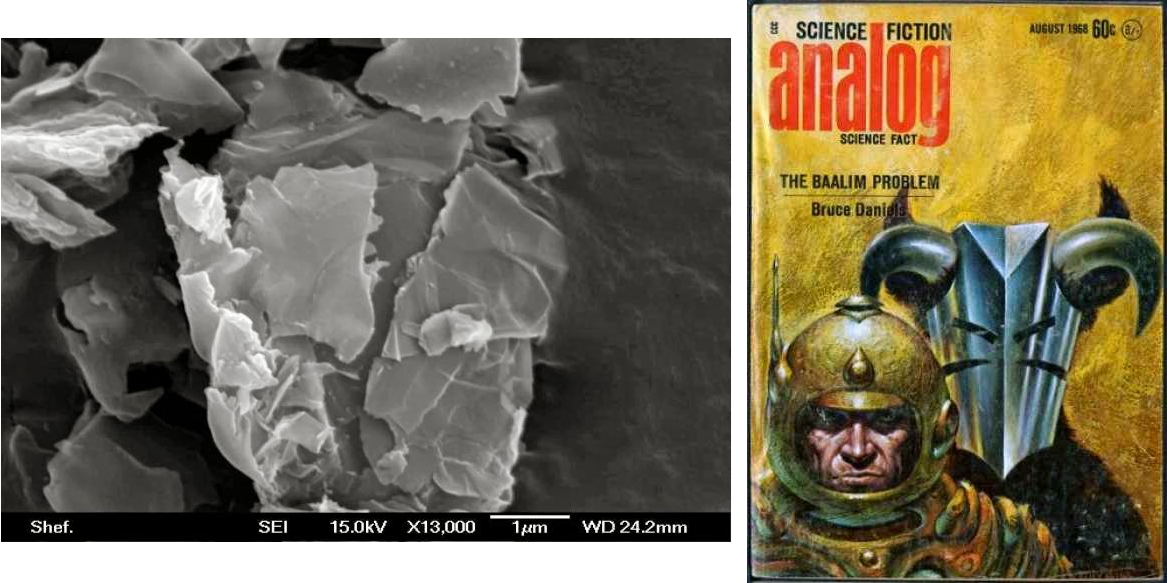
2. It does not seem that Graham Lloyd still writes for the Australian. He may have fallen victim to political soundness and Cancel Culture: some of his later columns did accept the possibility that Australia is becoming hotter and uninhabitable.
3. Life did not evolve here (because evolution doesn’t happen), but drifts to Earth from long-vanished stellar systems – but it didn’t evolve there either. In fact the infinite chain of regression has no start, and life has no ultimate origin. This is possible because (as Fred Hoyle realised) the Steady-State Universe is itself an infinite chain of regression with no start; it is infinitely old. What Hoyle invented is Creationism where the Creator and the act of Creation are pushed off the stage. In the same way, no-one ever discovered the theory of “Panspermia”. It is an infinite series of rediscoveries.
4. Jiangwen Qu disappeared without explanation from the list of coauthors of the published chapter.

Donate to Smut Clyde!
If you liked Smut Clyde’s work, you can leave here a small tip of 10 NZD (USD 7). Or several of small tips, just increase the amount as you like (2x=NZD 20; 5x=NZD 50). Your donation will go straight to Smut Clyde’s beer fund.
NZ$10.00

 For Better Science
If scientific publishing doesn’t apply the scientific method for their own work, what can science do to fix it?
Why not test the peer reviewers by willfully including one or two plain and simple wrong data points in a work that is to be published? When they are not detected, one could respond to the publisher and deny publication with a hint that they should improve their peer review process. This wouldn’t be that difficult and could be done by any honest student.
LikeLike
It’s been done. Plenty of coverage of this example at the time, for instance.
LikeLike
“As God is my witness, I thought diatoms could fly“
I haven’t laughed so much at a headline in a long time. Excellent!
LikeLike
tag yourself I’m “procreating blood rain from space”
(though “extreme brewing industrialist” is a close second)
LikeLike
I have to say that the quality of Smut Clyde output has been clearly spiking in the last two posts, I had to stop reading during my daily commuting, because it was becoming embarassing to laugh so much in public.
LikeLike
Full disclosure: some of the post was recycled from earlier posts on my own blog.
Further full disclosure: Leonid felt that I had left out too much amusing stuff about Wainwright (and the “Space Tiger King“), and corrected the problem of the post being too short.
LikeLike
“Our man Wainright is best-known, however, for the ‘Space Squid‘ paper.” This is less of a contrast than might have been anticipated with our other man Wainright, to wit, Loudon of that ilk, of whom we learn from Wikipedia that “Reflecting upon his career in 1999, he stated, ‘You could characterize the catalog as somewhat checkered, although I prefer to think of it as a tapestry.'”
LikeLike
Reading this article made my biology-like filaments stand up….
LikeLike