

Alexander Magazinov uncovered yet another Iranian papermill network.
It started with a case in Finland: an Iranian MSc student named Hanieh Shirvani admitted to have purchased first authorships on two papers from an Iranian papermill, costs: €700 each. That track led to Iranian academics named Sajad Najafi, Jalaledin Ghanavi and Poopak Farnia, who in turn are connected to some rather obscure and utterly unremarkable Iranian professor at the Shahid Beheshti University, Ali Akbar Velayati.
Magazinov reported Shirvani’s papermilling to the University of Oulu for investigation, a full investigation was not required because the former Oulu student admitted guilt and asked the publishers for retractions. This was reported in April 2024 Shorts.
Shirvani claimed to me to have been then contacted by “a research group from Iran” who she believes conspired with a “second plan to destroy my reputation“, on offer was “to write an article to improve my resume so I could return to university.” Her utter lack of relevant scientific knowledge or qualifications was no impediment to Shirvani, so she agreed and paid. She then announced: “I will definitely take legal action against this business and this Iranian team.” I don’t think she ever will.
My personal view is that Iranian papermills and Iranian scientists sent abroad are all controlled by the Iranian government and its secret service. Those people are being installed in academic positions in the west for a reason. I believe they are expected to act as spies, including on Persian dissidents, and as propaganda agents striving to manipulate public and academic opinion towards the Iranian terror regime.
Magazinov’s new investigation rather strengthens my theory.
In international affairs and paper mills
By Alexander Magazinov
The core actors of this story work in Tehran, Iran, in the National Research Institute of Tuberculosis and Lung Disease (NRITLD) of the Shahid Beheshti University. So, here is the web-page which lists the employees of this institution.
Proudly at the top of the list is sitting someone named Ali Akbar Velayati. The other characters who play an important role in this story are Jalaledin Ghanavi and Poopak Farnia. And, to a lesser degree, presumably Poopak’s family member, Parisa Farnia.
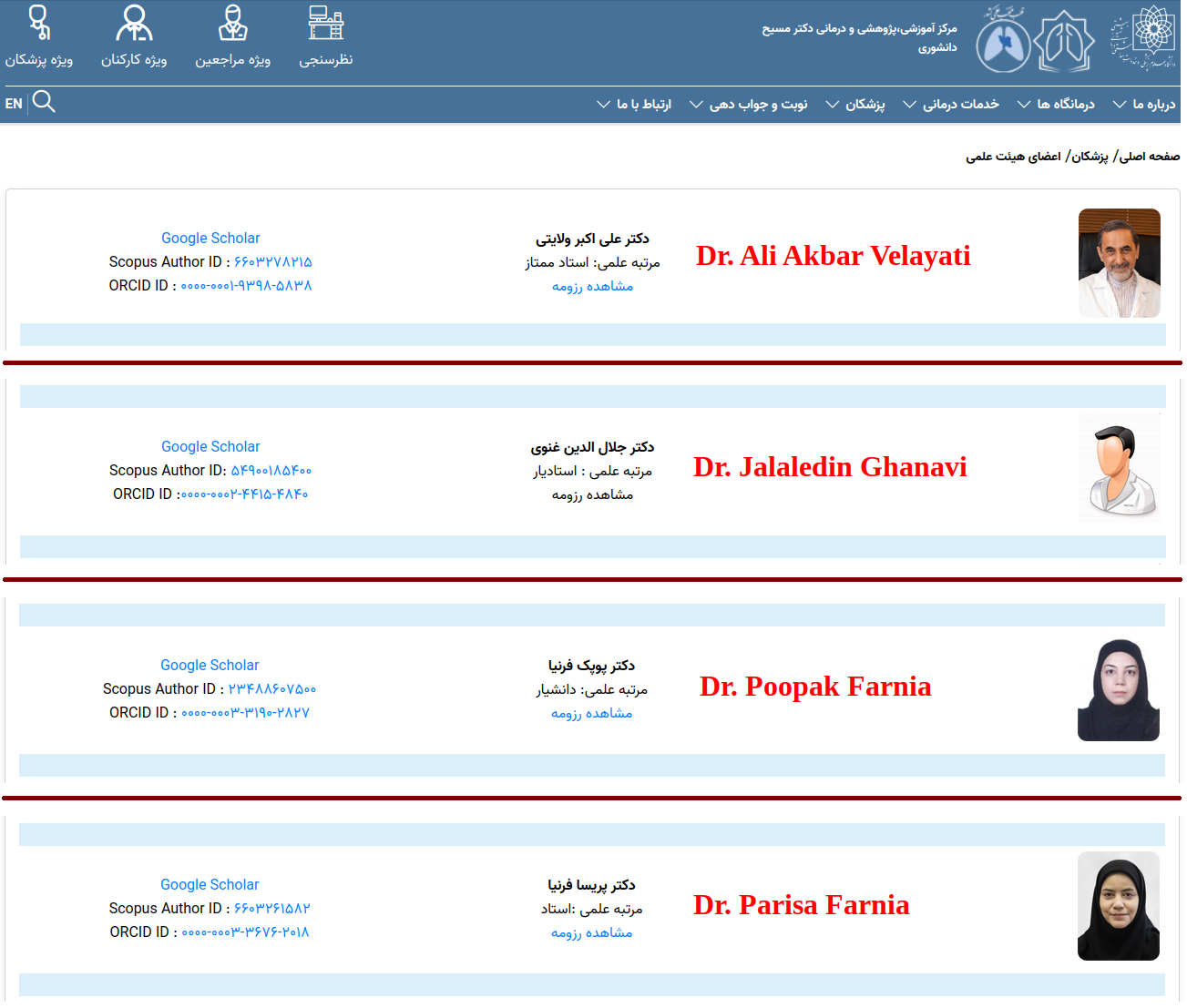
Absolutely accidentally, this very quartet runs an obscure International Journal of Mycobacteriology, a Wolters Kluwer outlet.

Now, Velayati is expected to be an established academic, with hundreds of well-recognized studies, who earned a firm reputation nationally and worldwide, right? On paper, yes. But somehow Wikipedia tends to highlight a very different aspect of his biography. Too much politics for a career scientist, isn’t it? (Highlights mine.)
Ali Akbar Velayati (born 24 June 1945) is an Iranian conservative politician and physician. He is currently a member of the Expediency Discernment Council. Velayati is a distinguished professor at Shahid Beheshti University of Medical Sciences, senior adviser to the Supreme Leader in international affairs and head of the board of founders and the board of trustees of the Islamic Azad University.
(Wikipedia)
He is also a member of Iranian Science and Culture Hall of Fame, Expediency Discernment Council’s President of Center for Strategic Research, senior fellow of Iranian Academy of Medical Sciences, and also a former member of Supreme Council of the Cultural Revolution. He is the secretary-general of the World Assembly of Islamic Awakening.
He was the Minister of Foreign Affairs for more than fifteen years from December 1981 to August 1997 under Prime Minister Mir-Hossein Mousavi and Presidents Ali Khamenei and Akbar Hashemi Rafsanjani. He is the first and only person to have held this position for over ten years. He was a candidate in 2013 presidential election and lost, coming fifth out of the six candidates garnering 2,268,753 votes, which was 6.18% of the votes.
[…]
With 38 positions in the government, Velayati is known as the man with most official posts and responsibilities. He is known as one of the key figures of the “Mafia” who govern Iran’s foreign ministry from inside the “Office of the Supreme leader” and make the most important decisions.

These Farnia and Ghanavi are not some occasional collaborators of Velayati, sitting in remote corners of Velayati’s institute. Both have dozens of common papers with Velayati, and Ghanavi’s CV traces his collaboration with Velayati back to as early as 2002.
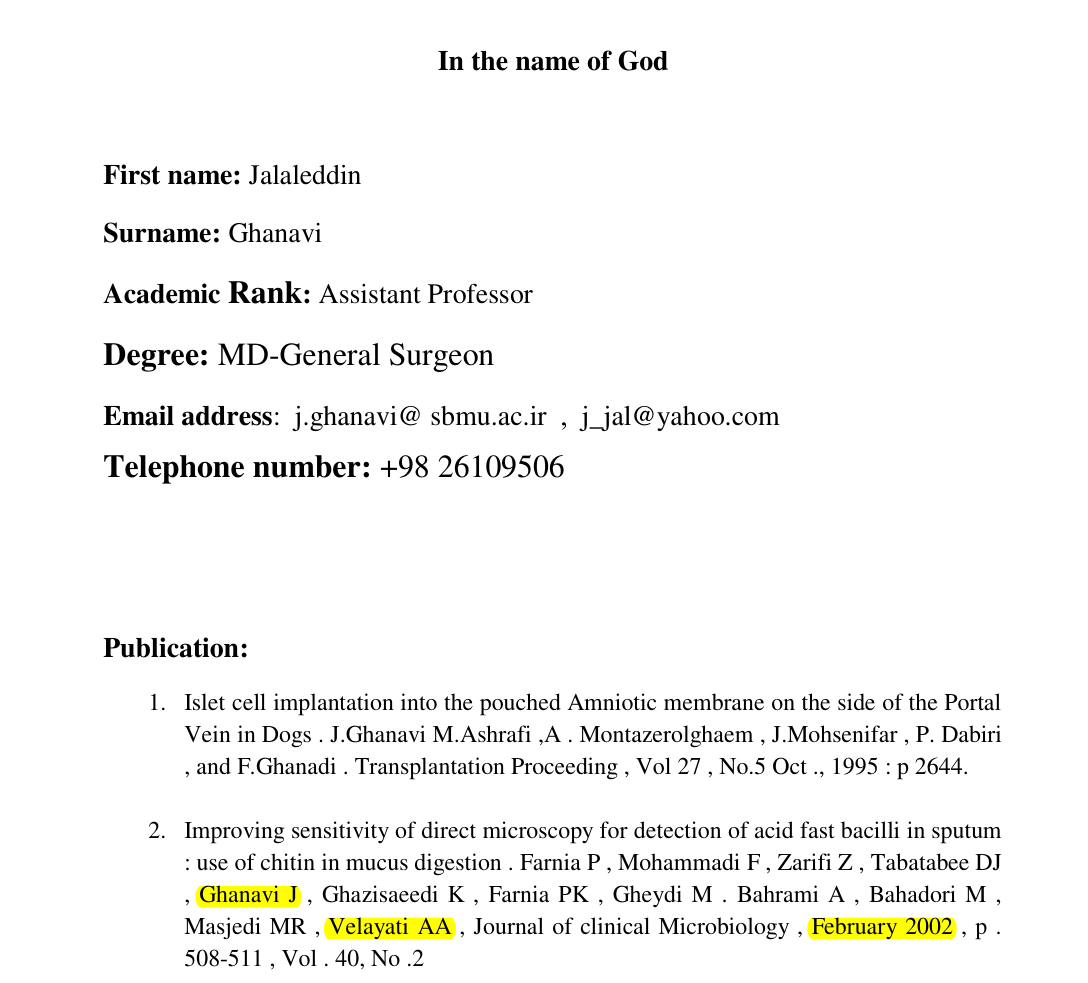
Now, some samples of “research” with Velayati’s name on it, either with Ghanavi and Farnia, or without them.
Somayeh Yasseri, Maryam Hassanzad, Poopak Farnia, Jalaledin Ghanavi, Mohammadreza Boloursaz, Ali Akbar Velayati, Evaluation of miR-155 Expression in Cystic Fibrosis Patients, Journal of Comprehensive Pediatrics (2020), doi: 10.5812/compreped.100938
“The expression level of miR-155 was significantly upregulated in CF patients, 1.41 times greater than that of the control group (P value = 0.056).”
For if something needs to be significant, it can be declared significant. Simple as that.
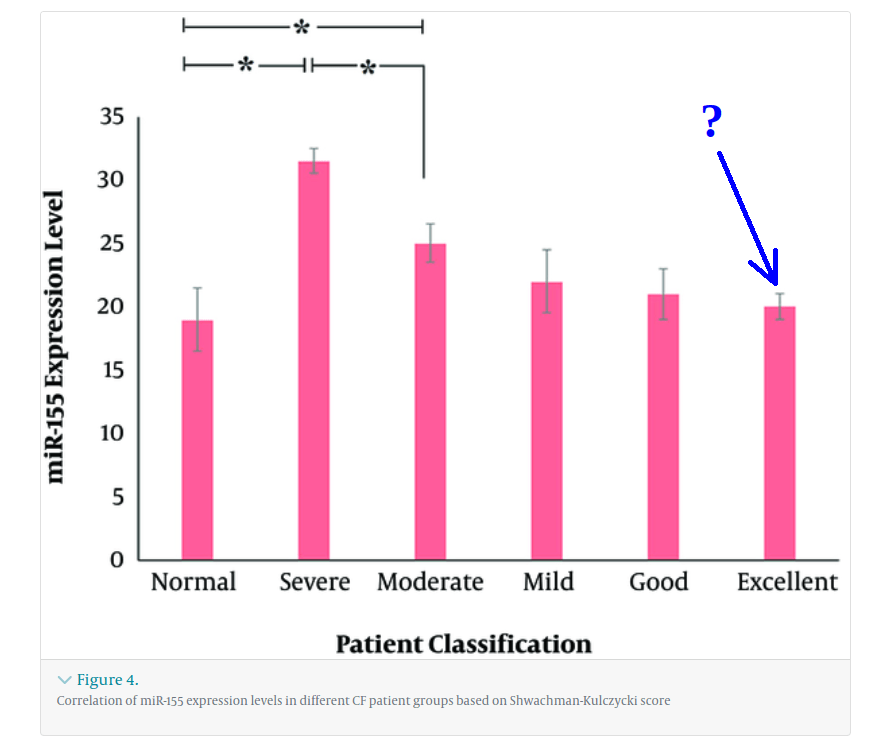
3% out of 30 CF patients (i.e., a single patient) was classified as “excellent”. What does the respective error bar for n = 1 in Fig. 4 mean?
In the next clinical study, minors from age 15 on were clearly involved. Yet no statement about consent from legal guardians is given:
Maryam Hassanzad, Poopak Farnia, Jalaledin Ghanavi, Farshid Parvini, Shima Saif, Ali Akbar Velayati, TNFα -857 C/T and TNFR2 +587 T/G polymorphisms are associated with cystic fibrosis in Iranian patients, European journal of medical genetics (2019), doi: 10.1016/j.ejmg.2018.11.018

Disregard for ethical principles is one of the pillars of Iranian clinical science, so this is perfectly normal. Like another one by Velayati, but this time without Ghanavi or Farnia.
Mitra Rezaei, Amirali Soheili, Seyed Ali Ziai, Atefeh Fakharian, Hossein Toreyhi, Mihan Pourabdollah, Jahangir Ghorbani, Mahboobeh Karimi-Galougahi, Seyed Alireza Mahdaviani, Maryam Hasanzad, Alireza Eslaminejad, Hossein Ali Ghaffaripour, Saied Mahmoudian , Zahra Rodafshani, Maryam Sadat Mirenayat, Mohammad Varahram, Majid Marjani, Payam Tabarsi, Davood Mansouri, Hamid Reza Jamaati, Ali Akbar Velayati, Transmission electron microscopy study of suspected primary ciliary dyskinesia patients, Scientific reports (2022), doi: 10.1038/s41598-022-06370-w
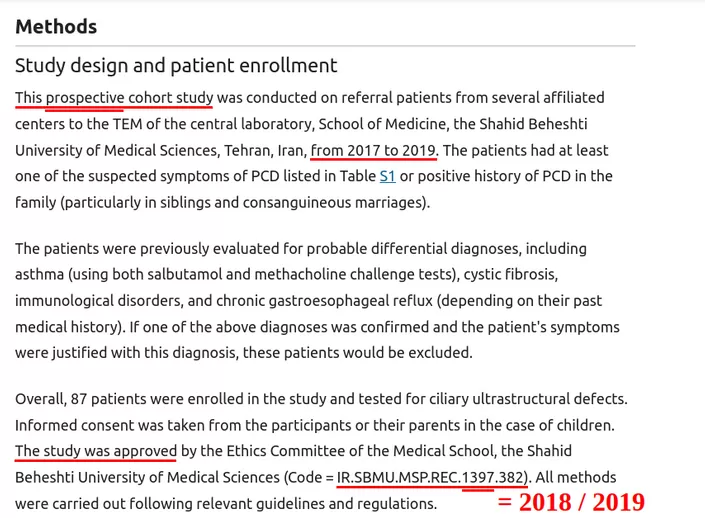
A remarkable international collaboration of Velayati, readers should apply caution when reading this review:
Seyed MohammadReza Hashemian, Mohammad Hossein Pourhanifeh, Sara Fadaei, Ali Akbar Velayati, Hamed Mirzaei, Michael R. Hamblin, Non-coding RNAs and exosomes: their role in the pathogenesis of sepsis, Molecular therapy. Nucleic acids (2020), 10.1016/j.omtn.2020.05.012
Of its bibliography, 4 references have been retracted to date, and at least 1 further reference has been questioned on PubPeer due to image integrity concerns. It is a junk non-coding RNA review, one of a very familiar kind to the readers of this blog. Iranian paper mills have a surplus of them at any time, and a certain University of Johannesburg professor named Michael Hamblin is the man to go to, if a white co-author is needed to increase the chances of acceptance. Read about Hamblin here:

And here is a junk collaboration between Velayati and a certain pulmonology professor at the Imperial College London, Ian M Adcock:
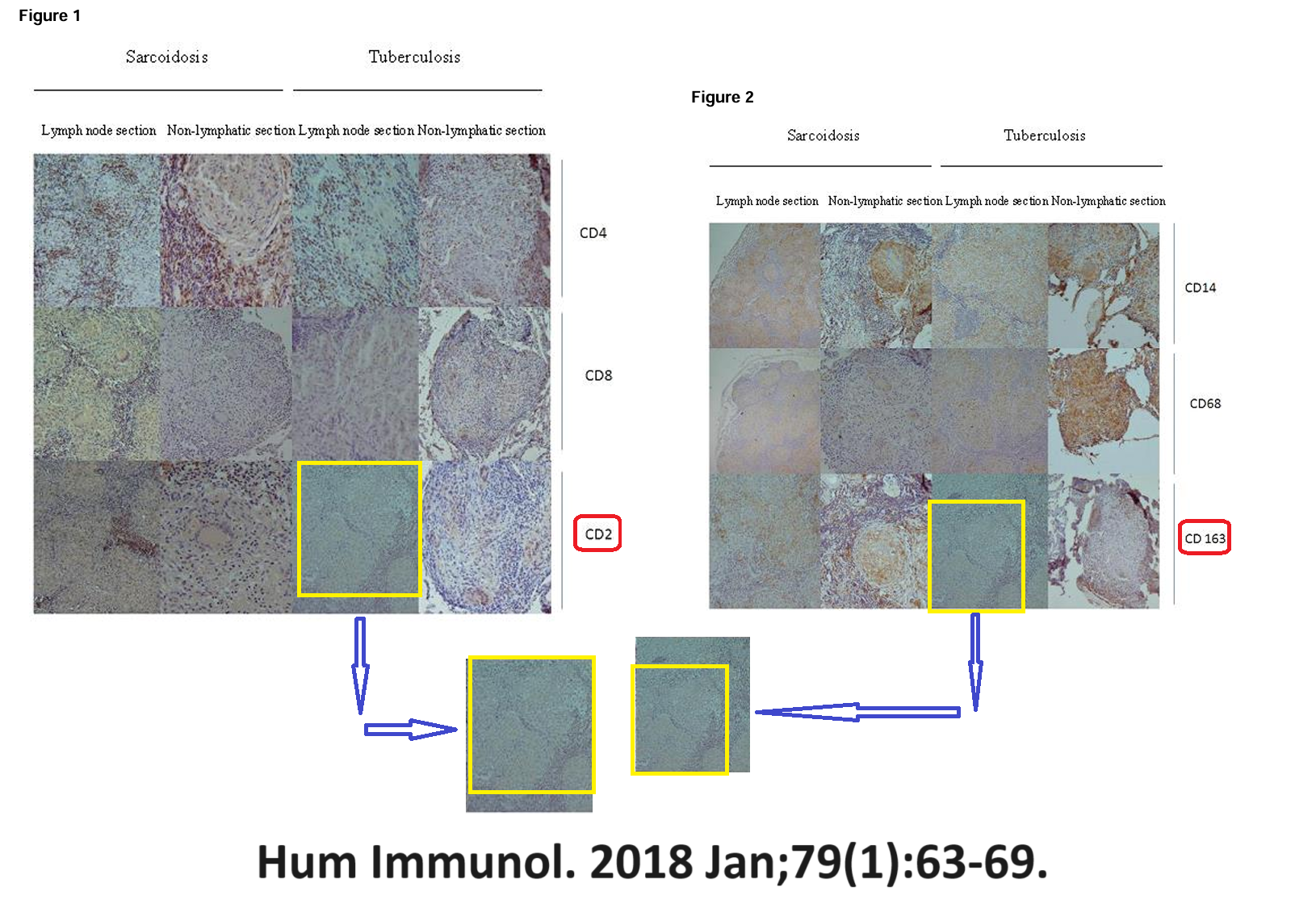
Masoud Shamaei, Esmaeil Mortaz, Mihan Pourabdollah, Johan Garssen, Payam Tabarsi, Aliakbar Velayati, Ian M Adcock, Evidence for M2 macrophages in granulomas from pulmonary sarcoidosis: A new aspect of macrophage heterogeneity, Human immunology (2018), doi: 10.1016/j.humimm.2017.10.009
You can read about Adcock’s Iranian collaborations here:
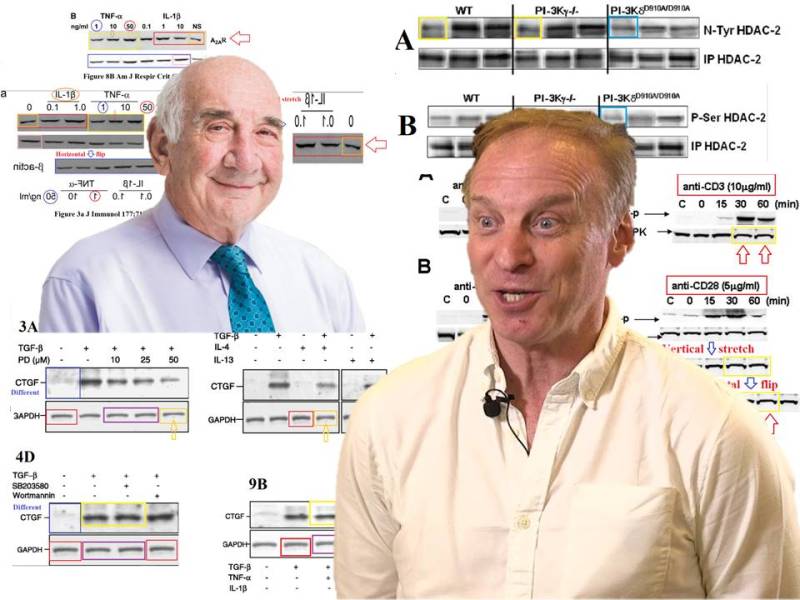
Imperial Adcock – from Barnes to Iran!
“the College would have been well within its rights to reject all of your allegations…”

Now, the thread that led me to this group was an investigation from Finland that implicated, among others, Ghanavi and Farnia in papermilling. These were the two papers, with the same Finland-based first author Hanieh Shirvani, of which I notified University of Oulu and University of Jyväskylä:
- Hanieh Shirvani, Hanieh Jafari, Sayyed Sajjad Moravveji, Fatemeh Abbasi Faranghizadeh, Mehrdad Talebi, Jalaledin Ghanavi, Farbod Esfandi, Sajad Najafi, Masomeh Nasiri Moghadam, Poopak Farnia, Seyed Mohsen Aghaei Zarch, Non-coding RNA in SARS-CoV-2: Progress toward therapeutic significance, International Journal of Biological Macromolecules (2022), doi: 10.1016/j.ijbiomac.2022.09.105

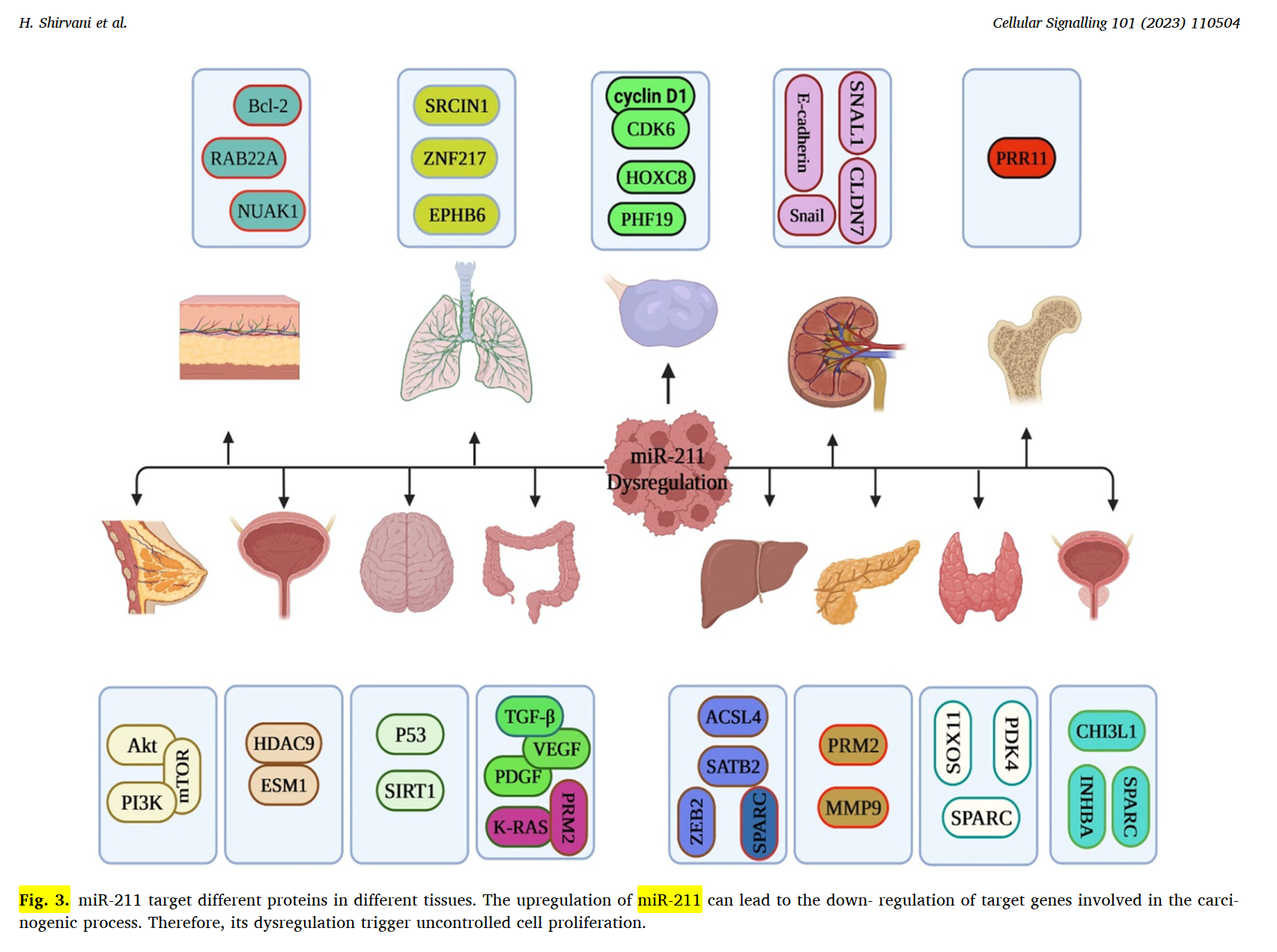
- Hanieh Shirvani, Jalaledin Ghanavi, Amin Aliabadi, Fatemehsadat Mousavinasab, Mehrdad Talebi, Jamal Majidpoor, Sajad Najafi, Seyyed Mohammad Miryounesi, Seyed Mohsen Aghaei Zarch, MiR-211 plays a dual role in cancer development: From tumor suppressor to tumor enhancer, Cellular signalling (2023), doi: 10.1016/j.cellsig.2022.110504
Shirvani’s coauthor Seyed Mohsen Aghaei Zarch is obviously a papermilling fraudster: as PhD student in Iran he already has “at least 33 publications on a broad range of topics” as the investigative report acknowledges.
The Cellular Signaling paper received a retraction in July 2024:
This article has been retracted at the request of the Editor-in-Chief.
Post-publication, the Editor-in-Chief discovered suspicious changes in authorship between the original submission and the revised version of this paper. In summary, two authors (Hanieh Shirvani and Jalaledin Ghanavi) were added to the revised paper without exceptional approval by the journal Editor, which is contrary to the journal policy on changes to authorship.
The authors failed to provide a satisfactory explanation to the above point. The corresponding authors Sajad Najafi, Seyyed Mohammad Miryounesi and Seyed Mohsen Aghaei-Zarch disagree with the retraction of the article and dispute the grounds for it.
The peculiar wording of this retraction (“the Editor-in-Chief discovered“) was covered in June 2024 Shorts, the chief editor, University of Glasgow professor George Baillie, has 12 papers on PubPeer and a bunch of retractions.
Yet chances are slim to achieve a retraction in International Journal of Biological Macromolecules, at least in the nearest future. As a reminder, this journal is run by a certain John F. Kennedy, not a spirit of an assassinated US president, but a very old Brit. As reported at the end of the article below, Kennedy is himself a fan and a frequent user of Iranian papermills. He is also said to be a fan of Rolls-Royces, but I don’t think they have any direct influence on his editorial decisions, or so I hope.
Queen’s University Belfast fights Welsh Terrorism
“your scatter gun approach has undermind a process that is undertaken confidentially […] It is sad that you are determined to undermine people’s reputations in the way you do.” – Queen’s University of Belfast to Sholto David.
By the way, do remember the name of Sajad Najafi. We see him on both Shirvani’s papers, and his name will reappear many times later in this post.
You may have noticed that Ghanavi’s name is on both papermilled products bought by Shirvani, Poopak Farnia’s name is on one of them. One is tempted to ask if these two papermillers, who are both direct subordinates of Velayati, a “senior adviser in international affairs”, have ever tried to persuade the “international student” Shirvani to engage in some kind of “foreign policy operations”, and what leverage they could have in this regard. In any case, I do think that the Finnish Security and Intelligence Service (SUPO) needs to make a call here and I urge them to do exactly that.
But then again, another author of the retracted Cellular Signalling paper, Fatemehsadat Mousavinasab, is now a PhD student of Georgia State University. Totally of no interest to the US Department of Homeland Security, I presume?

And then there is Mina Khosravifar from University of Pennsylvania. Her name is on this papermilled RNA-themed review, together with Poopak Farnia’s. Readers should apply caution when reading this article, as some of the references have been retracted or otherwise questioned:
Mahboobeh Faramin Lashkarian, Nasrin Hashemipour, Negin Niaraki, Shahrad Soghala, Ali Moradi, Sareh Sarhangi, Mahsa Hatami, Fatemehsadat Aghaei-Zarch, Mina Khosravifar, Alireza Mohammadzadeh, Sajad Najafi, Jamal Majidpoor, Poopak Farnia, Seyed Mohsen Aghaei-Zarch, MicroRNA-122 in human cancers: from mechanistic to clinical perspectives, Cancer cell international,(2023), doi: 10.1186/s12935-023-02868-z
- 10.1177/1533033819871300: retraction
- 10.1016/j.cellsig.2022.110504: retraction
- PMID 28337380: retraction
- 10.1016/j.cellsig.2022.110525: PubPeer
- 10.1186/s12943-017-0737-1: PubPeer
- 10.1016/j.ijbiomac.2022.09.105: PubPeer
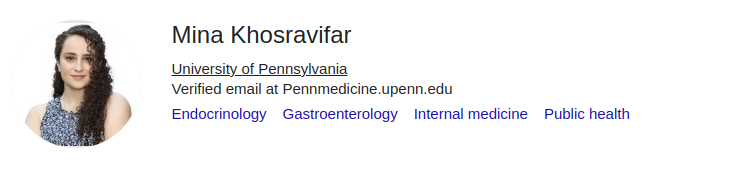

By Mousavinasab, Khosravifar and Farnia, but it also features Kambiz Kalhor, from University of Tennessee, Knoxville:
Fatemehsadat Mousavinasab, Ronika Karimi, Sima Taheri, Fatemeh Ahmadvand, Saameh Sanaaee, Sajad Najafi, Masood Soltani Halvaii, Alireza Haghgoo, Marzieh Zamany, Jamal Majidpoor, Mina Khosravifar, Mohammad Baniasadi, Mehrdad Talebi, Abolfazl Movafagh, Seyed Mohsen Aghaei-Zarch, Nastaran Khorram, Poopak Farnia, Kambiz Kalhor, Microbiome modulation in inflammatory diseases: Progress to microbiome genetic engineering, Cancer cell international (2023), doi: 10.1186/s12935-023-03095-2
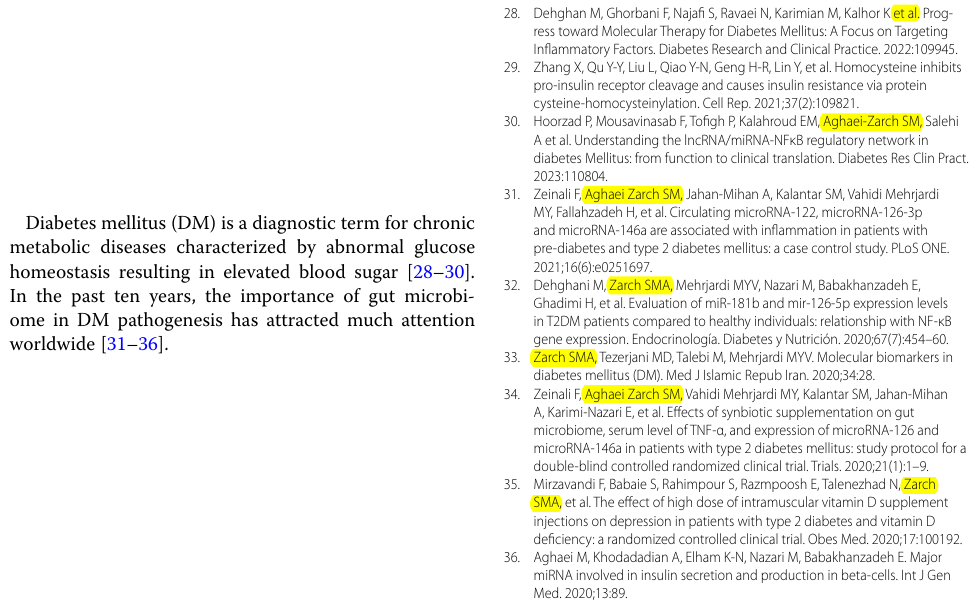
There are also at least 3 questionable references with PubPeer threads, one of them was already retracted. Aghaei-Zarch explained on PubPeer:
“Moreover, the inclusion of these self-citations serves to acknowledge the valuable contributions of our co-author and research team to the advancement of knowledge in this area. We are committed to maintaining transparency and integrity in our academic work. Therefore, we have ensured that these self-citations are relevant, appropriate, and contribute substantively to the discussion.”
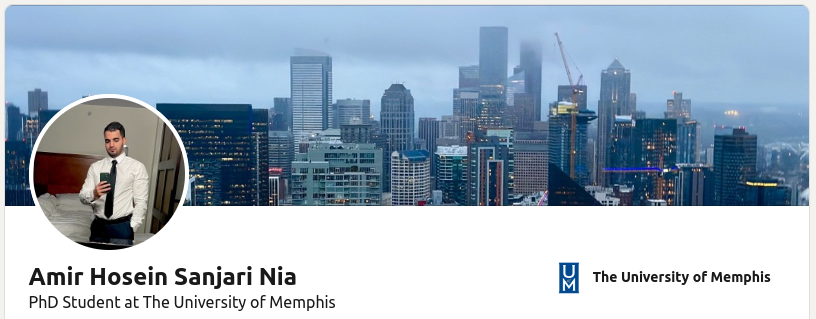
Mousavinasab again, with a bunch of familiar co-authors, plus Amir Hosein Sanjari Nia. Like Kalhor, Sanjari Nia landed in Tennessee; in this case, the University of Memphis was impressed enough by the talent of this young man.
Seyed Mohsen Aghaei-Zarch, Amir Hosein Sanjari Nia, Morteza Nouri, Fatemehsadat Mousavinasab, Sajad Najafi , Saeid Bagheri-Mohammadi, Fatemehsadat Aghaei-Zarch, Ali Toolabi, Hassan Rasoulzadeh, Jalaledin Ghanavi, Masomeh Nasiri Moghadam, Mehrdad Talebi, The impact of particulate matters on apoptosis in various organs: Mechanistic and therapeutic perspectives, Biomedicine & Pharmacotherapy (2023), doi: 10.1016/j.biopha.2023.115054
“This piece features a string of consequent self-citations to the benefit of the first author, Aghaei Zarch. References [78 – 85] are in a generic context, where an over-emphasis on the output of a specific researcher is unwarranted. Ref. [86] is a narrative review, it is inaccurate to use the wording “a recent investigation disclosed” with respect to it.”
This papermill-friendly Elsevier journal Biomedicine & Pharmacotherapy, led by Danyelle Townsend of University of South Carolina in USA, started to mass-retract such garbage some time ago (see December 2023 Shorts), maybe the above fabrication shoudl follow. [note: in an earlier version of this article, there was a confusion about the Editor-in-Chief, -LS]
And if that is not enough, there is Paniz Azizi, from University of Indiana Bloomington, whose name is on yet another papermilled review by Ghanavi and Farnia. One can bet that Chunjie Huang is also a paying passenger.
Chunjie Huang, Paniz Azizi, Masoud Vazirzadeh, Seyed Mohsen Aghaei-Zarch, Fatemehsadat Aghaei-Zarch, Jalaledin Ghanavi, Poopak Farnia, Non-coding RNAs/DNMT3B axis in human cancers: from pathogenesis to clinical significance, Journal of Translational Medicine (2023), doi: 10.1186/s12967-023-04510-y
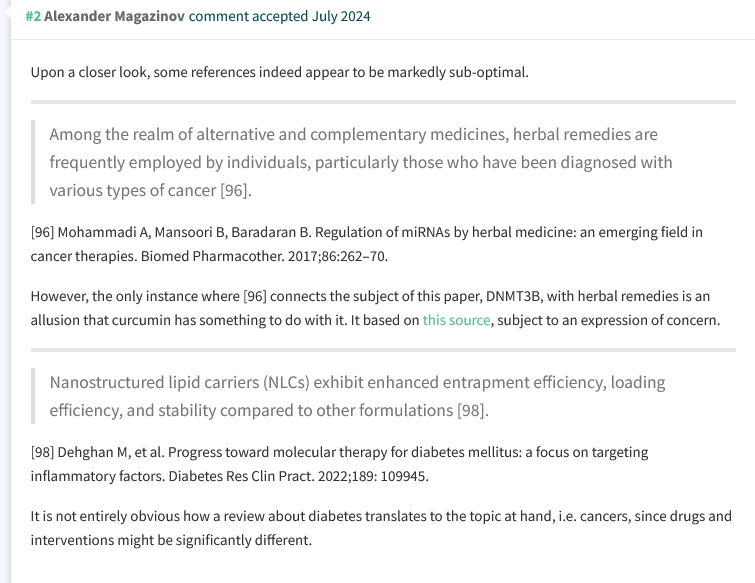
Also, the bibliography includes 4 questionable references that are likely to be unreliable, two are already retracted.
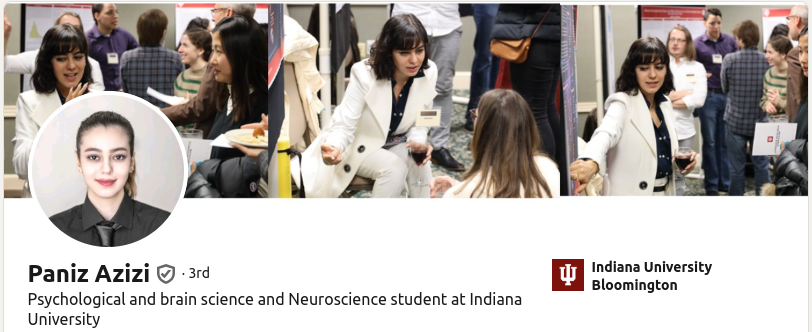
Unlike the above named rank-and-file US universities in purple-to-red states, MIT is the place where only best of the best have a shot to get a position. In this category, we have Rozhina Ghanavi, who is most definitely a relative of Jalaledin Ghanavi, likely a daughter.
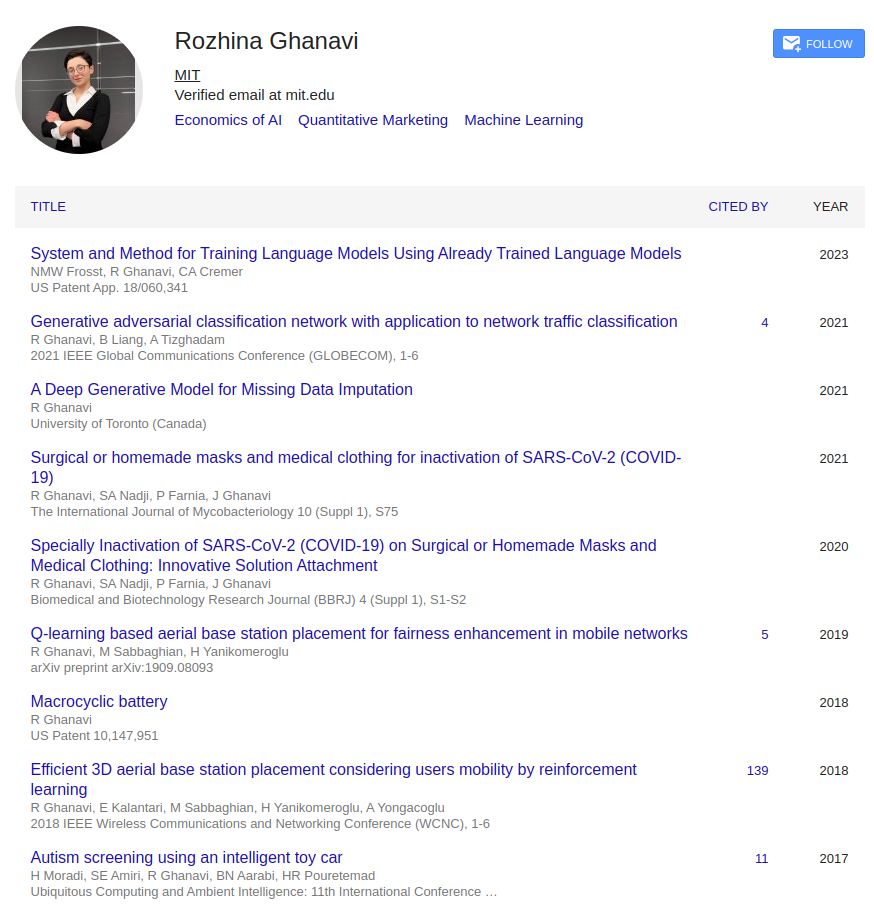
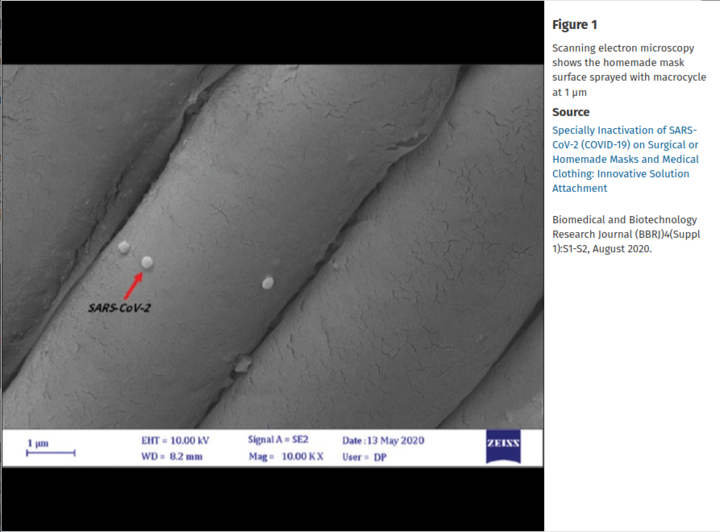
Rozhina’s main expertise seems to be machine learning, which is fine. But the real stroke of genius is to patent a macrocyclic battery (US Patent 10,147,951), then to re-purpose the macrocycle for fighting COVID-19. Everyone don’t spare your hands and go straight into a standing ovation!
Jalaledin Ghanavi , Rozhina Ghanavi , SeyedAlireza Nadji , Poopak Farnia Specially inactivation of SARS-CoV-2 (COVID-19) on surgical or homemade masks and medical clothing: Innovative solution attachment Biomedical and Biotechnology Research Journal (BBRJ) (2020) doi: 10.4103/bbrj.bbrj_141_20
Finally, as promised, some insight into the monumental work of Sajad Najafi. As Lloyd Ruddock, biochemistry professor at the University of Oulu tasked with the Shirvani investigation, noted:
“Sajad Najafi appears to be a PhD student since Sept 2019 at Shadid Beheshti University of Medical Sciences, Tehran. Despite being an early-stage researcher, they have at least 69 publications, including 55 publications in PubMed in 2022/2023 on a very broad range of topics and they have acted as a reviewer for at least 26 publications/grants.”
Below are some examples of Najafi’s output, with our good acquaintances. Here, his collaborators (customers?) are Mohammad Taheri and Soudeh Ghafouri-Fard. Read about them here:

Look What the Cat Dragged In
Meet Mohammad Taheri, PhD, a humble PhD student in Jena, Germany, and his equally unremarkable Iranian associate Dr Soudeh Ghafouri-Fard.

Ghafouri-Fard, as the reader might remember, is yet another professor of Shahid Beheshti University with connections at the very top of the Iranian regime. This article features a number of references of questionable reliability, five of them already retracted:
Arezou Sayad, Sajad Najafi, Amir Hossein Kashi, Seyed Jalil Hosseini, Seyed Mohamamd Akrami, Mohammad Taheri, Soudeh Ghafouri-Fard, Circular RNAs in renal cell carcinoma: Functions in tumorigenesis and diagnostic and prognostic potentials, Pathology, research and practice (2022), doi: 10.1016/j.prp.2021.153720
- 10.1002/jcb.29446 retraction
- 10.1080/21691401.2019.1657873 retraction
- 10.1038/s41417-020-00247-8 retraction
- 10.1002/jcp.29316 retraction
- 10.1371/journal.pone.0084127 retraction
In the genre of non-coding RNA fraud reviews, it is hard to miss Najafi’s collaboration with Hamblin, so here we go, a number of references of questionable reliability, ten of them already retracted:
Nasrin Ahangar Davoodi, Sajad Najafi, Zari Naderi Ghale-Noie, Ashkan Piranviseh, Samaneh Mollazadeh, Sahar Ahmadi Asouri, Zatollah Asemi, Mohammadamin Morshedi, Seyed Saeed Tamehri Zadeh, Michael R. Hamblin, Amirhossein Sheida, Hamed Mirzaei, Role of non-coding RNAs and exosomal non-coding RNAs in retinoblastoma progression, Frontiers in cell and developmental biology (2022), doi: 10.3389/fcell.2022.1065837
- 10.2147/ott.s180851 retraction
- 10.3892/mmr.2018.9295 retraction
- 10.3892/or.2020.7456 retraction
- 10.3892/or.2017.5810 retraction
- 10.3892/or.2018.6264 retraction
- 10.1016/j.exer.2020.107960 retraction
- 10.1042/bsr20200392 retraction
- 10.1155/2022/7723425 retraction
- 10.3892/or.2018.6302 retraction
- 10.1002/cbin.11041 retraction
Next, Najafi with Aghaei-Zarch and a certain William C. Cho, an associate of the papermill owners Abhijit Dey and Javad Sharifi Rad, and also of John F. Kennedy. Read about them here:
I have almost 100 manpower with me at any time
“WE DONT PAY FOR PAPERS. YOU MUST KNOW THAT THESE BEST IN THE PLANET JOURNALS GO THROUGH RIGOROUS PEER REVIEW” – Abhijit Dey, papermiller
A number of references of questionable reliability, 6 of them already retracted:
Safoora Pordel, Motahare Khorrami, Fatemeh Saadatpour, Delsuz Rezaee, William C. Cho, Saleheh Jahani, Seyed Mohsen Aghaei-Zarch, Elham Hashemi, Sajad Najafi, The role of microRNA-185 in the pathogenesis of human diseases: A focus on cancer, Pathology, research and practice (2023), doi: 10.1016/j.prp.2023.154729
- 10.1186/s13046-018-0691-9 retraction
- 10.1016/j.cellsig.2022.110504 retraction
- 10.1016/j.gene.2018.08.065 retraction
- 10.1186/s11671-020-03449-z retraction
- 10.1155/2020/1974506 retraction
- 10.1155/2021/5525763 retraction
In conclusion: paper mills are the most important part of Iranian policy in science, as practiced and promoted by the very minister of science there, Mohammad Ali Zolfigol, who also gets authorships from papermills. Read here:
You will be paid US $500-800 for each paper
“Or The author can also put your name to the article to increase your academic popularity, such as adding your name to the second or third author.”
But we now learn that they are also likely a part of the country’s foreign policy, and Ali Akbar Velayati is likely to have a grip on the processes. What the Iranian regime can get from those Iranian students abroad, for instance via threatening their overseas careers by the possibility of retractions? Let the relevant authorities decide.
Donate!
If you are interested to support my work, you can leave here a small tip of $5. Or several of small tips, just increase the amount as you like (2x=€10; 5x=€25). Your generous patronage of my journalism will be most appreciated!
€5.00

 For Better Science
How about the Iran current president: Prof. Masoud Pezeshkian: MD, PhD Cardiothoracic Surgeon:
https://scholar.google.com/citations?user=Pn1QYCcAAAAJ&hl=en&oi=ao
LikeLike
Very hearty articles, in “deed”, if not “dead”!
LikeLike
Nah. Why not.
Masood Pezeshkian , Mohammad-Reza Mahtabipour, Epicardial and subcutaneous adipose tissue Fatty acids profiles in diabetic and non-diabetic patients candidate for coronary artery bypass graft, Bioimpacts (2013), pubmed: 23878791, doi: 10.5681/bi.2013.004. PubPeer.
LikeLike
This is certainly a remarkable job. Thank you, Magazinov. The fact that Iran has infiltrated from the most ordinary universities in the US to MIT, despite being seen as one of the biggest threats by both the US and NATO, is a grave situation. And as mentioned in the article, many researchers may have direct or indirect links to the regime. If Iran can organize so easily in the US, it should not be too surprising in other countries. I sadly agree with Schneider’s comment:
“My personal view is that Iranian papermills and Iranian scientists sent abroad are all controlled by the Iranian government and its secret service. Those people are being installed in academic positions in the west for a reason. I believe they are expected to act as spies, including on Persians dissidents, and as propaganda agents striving to manipulate public and academic opinion towards the Iranian terror regime.“
LikeLike
When I read that Iran is so influential in global (western) academia, after learning that a payment is 700 Euros for just one article, I wonder about the real value of the papermilling market. It must be big enough to create an informal economy on its own. Since academic publishers, universities, institutes and administrators have not intervened in this nonsense, there seems to be no choice but to hope that if there is such a large informal market, the US Treasury Department will take an action. Magazinov has done a very good job again.
LikeLike
http://dx.doi.org/10.17179/excli2017-263
Whatever… Seemingly the first author (who is on deportation from the country by the Canadian Government) is struggling in his opened avenue to justify something (just something… ) and to blame [Stone R. A shady market in scientific papers mars Iran’s rise in science. Science 2016; September 14,http://www.sciencemag.org/news/2016/09/shady-market-scientific-papers-mars-iran-s-rise-science%5D; as he is doing his best to convince some ordinary people to make them believe that nothing is there as “Papermilling, etc.”!
What a sweet life down there…
LikeLike
Wow.
Bagher Larijani et al “NOT ONLY IRANIAN RISE IN SCIENCE MARRED BY FRAUD: MISCONDUCT IS A GLOBAL PROBLEM” EXCLI Journal 2017
“Regardless of the image that Stone (2016) creates in his article, scientific deceit presents itself globally and not just in China or Iran. For instance, drug companies advertise their products with claims about safety.”
And this:
“From various points of view, most of Iranian scientists conduct impressive and clean studies as they publish their works mainly in legitimate and peer-reviewed sources. By scrutinizing the SCImago journal and country ranking database (www.scimagojr.com) however, we can find that Iran has jumped from 53rd to the 16th position in the period from 1996 to 2016 in all subjects areas, categories and regions. The same website puts Iran on the first position in the Middle East. In 2016 worldwide ranking, Iran has been in the 8 th position in Pharmacology, Toxicology, and Pharmaceutics, 12th position in Dentistry, 12th position in Chemistry, 15th position in aero-space engineering, and 18 th position in Medicine, etc. These achievements can only be obtained by delivering inspiring and influential scientific work, although Iran has been under tough international sanctions during the past decades, affecting almost every scientific discipline.
Therefore, according to us, it would be out of turn to underestimate the invaluable advancements made by Iranian scholars and researchers in science and technology. There has been a dramatic increase in the university population of Iran from 100,000 in 1979 to about 2 million in 2006. Furthermore, women have acquired a vital role in the contemporary development of the sciences in Iran. Nowadays about 70 % of its science and engineering students are women.”
Take home-message: Iran is the best country for women, and Iranian scientists are the best in the world.
LikeLike
If this Larijani and Larijani mentioned in today’s Shorts are the same person, it actually clears some question marks.
First of all, he has close ties in the Iranian regime that could be considered high level, but as a scientist he has a permanent residency in Canada that has been in place for many years. In the meantime, he has spent most of his time in Iran, and as this article enlightens us all, it actually expresses how successful Iran has been. This article alone shows that the regime is using academic publishing as a lever for its own prestige. I had serious questions about this since I saw how the regime was consolidating its own society through the news agencies, but now you would have to be very naive not to be sure.
The fact that Larijani was able to get a residence permit so easily, despite all his regime ties, also shows that countries are turning a blind eye to the Iranian terrorist regime’s ties, even in their own countries. Based on what I read in today’s Shorts, Larijani lost his residency because he did not spend time in Canada. If he had spent time in Canada, he would have been able to continue all this regime propaganda from Canada.
I also understand that we should not be surprised that Canada, which has shown so much ease and tolerance to someone like Larijani, has filled its universities with Iranian-based papermill gangs. Similarly, by referring to the points mentioned in Larijani’s article, it can be understood that papermilling and citation organizations are also supported by the Iranian regime. I think that the inflated profiles of Iranian researchers that we see not only in Canada but also in Europe and Australia, which we describe as hyperprofilic, are not only due to academic passion.
In short, “complain” about the near-perfect Iranian academia, as Larijani boasts, and go to Canada, Australia, the US, or Europe, where you can take advantage of “diversity”. In a same way you started in Iran, your academic publications will be over-cited by researchers in Iran and you will create citation inflation and raise your profile, which will make you an extraordinarily successful profile in country where you are currently located and you will be promoted academically. Make it a priority to hire Iranians in every job advertisement, so that the Iranian system that brought you to these successful positions will be able to attract younger profiles to your residence region.
Otherwise, why else would those who claim to have come to escape the regime in Iran want to take advantage of the system there once they have settled in their safe country? Wasn’t that system what they were fleeing from in the first place? But if they claim to be fleeing and at the same time take advantage of this system, that cannot be considered too much fleeing.
I would have called this “nonsense” and “conspiracy theory” about two years ago. Considering that, they have organized a good game. Well played.
LikeLike
Then suddenly spark an “intifada revolution,” supported by local useful idiots. Mission complete.
LikeLike
no, no. no! By recruiting fellow countrymen with bombastic CVs, our Iran-, russia- or China-born professors actually save young dissidents.
As you know, a dissident is someone who makes a huge academic career inland, publishes oodles of papers, runs clinical trials, even achieves a rank of full professor and is then allowed to go to the west as a humble PhD student or postdoc, likely on a governmental fellowship. These a proper dissidents. Not the ones in prison being tortured. Those are just failed scientists.
Try to think like an academic.
LikeLike
Found by A. Magazinov, WHO proving its worth:
https://x.com/LarijaniBagher/status/1809501460717060281
LikeLike
I want to bring another example similar to Velayati: Kaveh Madani. His current location is Canada, not surprised at all. According to Wikipedia, he had an active political career in Iran between 2016-2018, but after his sudden arrest by the IRGC –Hey boys, I gotta get out, can you arrest me for a while?-, he says he ended his political career and focused on global solutions. He is currently a professor at the United Nations University and holds a position at the City University of New York. As an academic, his publications are here. I don’t know the details of his work, maybe Magazinov can find many things in these publications, because the citation trends are already suspicious.
Given my brief summary above, who can argue that Madani has no political power? Who can argue that while he has this power, he does not use it to privilege people from his own country in western academies in Canada etc.? For example, here is a situation he complained about. Similarly, here I see his support for an Iranian professor in Hamburg through the United Nations. One of the people who reposted the tweet is the rector of UNU and the other is another Iranian professor from Delft University. What are the chances that all these connections are coincidental? Isn’t it obvious to think that there is an Iranian network and that it cannot be independent of Iranian politics? Is it not obvious to see that academic publishing and positions can be used for propaganda?
So, taking Madani’s virtuous advice to us, should academia be equal for everyone, or should it be equal for Iranian researchers until they get the positions they want in different countries, and then it should be a place where they can give privileges to whomever they want?
I hope the attached links won’t disappeared because I haven’t taken the screenshots.
LikeLike
Ah shit, here we go again. Kaveh Madani.
That is, look no further than the comments section of my post about Soudeh Ghafouri-Fard. Where I repost the very same Kaveh Madani lamenting about restrictions imposed by Canada on collaborations with Iranians.
How did I know about that tearful post? Because some Zahra Safaei reposted it.
And who is Safaei? An erstwhile associate of Mika Sillanpää, but who since broke up with him, and started a career of “sustainability” entrepreneur in Finland. And this is a part of her self-stated experience on LinkedIn:
Yep, that very University of Helsinki, which decided to whitewash Soudeh Ghafouri-Fard’s protege Reyhane Eghtedarian. That very University of Helsinki, which rushed to cut ties with Israel.
And then there is iQneiform OY, with “global talent acquisition”. This PubPeer thread might give a good hint what kind of “global talents” are “acquired” there.
Heck. It better be that we went sleuthing over something else. And these matters were picked up by more competent and resourceful services.
LikeLike
Wow, I just realized Madani was mentioned here. Thank you. Then I checked Pubpeer, and he is also mentioned in some studies – unless there is someone else with the same name. But I’m sure there will be more Pubpeer comments from that publication profile.
This shows that Madani isn’t only a UNU professor, but also someone who can connect with different parts of the world through the Iranian network. And this person already had a political position in 2017. What we are talking about is definitely beyond papermilling. I’ve said before, the only reason we can follow papermilling is because it’s based on periodical. I wonder what else is going on behind the papermilling. There is a very clear Iranization in academia and it cannot be explained by diversity.
Thanks for this information. I agree. This network going somewhere else.
LikeLike
So far, and for sure, there is only one “Kaveh Madani” bullshitting around; who was hired directly by the last author of [https://www.pubpeer.com/publications/1378A046B1DFFD9E2A6B8F0A65BC72] during the years between 2016-2018, and still, K.M. is very-well-connected to I.K.!
—————————————-
Yes, the same person!
LikeLike
How about this? Is Iran’s satellite research funded by the Danes while technically supported by Dutch and Danish universities? Check this out!
Topic: Satellite Research, more specifically, thermal management of satellite electronic board
Main affiliation with the first and the corresponding authors: Isfahan University of Technology
It’s an open access article thanks to Denmark’s open access agreement with the Elsevier.
One of the co-authors is from the Netherlands, Mohammad Mehrali,
The last and the second corresponding author is from Denmark, Mehdi Mehrali.
This work, which directly supports Iran’s satellite research, was funded by Villum Fonden in Denmark. You can see it in the Acknowledgment section of the article. Mehdi Mehrali won the research grant from Villum Fonden. Sounds like a prestigious award. He says he will develop energy storage materials for the construction sector. You can see from the title of the project. But this granted budget in 2023 was used to support satellite research in Isfahan in 2024.
Should we report this to the Danish authorities or will they not care even if I do?
Now a very short background about Mehralis
Mohammad Mehrali and Mehdi Mehrali have the same last name and both hold PhD degrees from the University of Malaya. I guess they are either brothers or relatives. So I will call them Mehrali brothers. I think the older of the Mehrali brothers is Mehdi Mehrali. First Mehdi and then Mohammad seem to have started their PhD studies at the University of Malaya. The main reason for their inflated citation and paper records is their junk papers and citations in the field of nanofluids. I will continue to follow their records.
Mehdi found an academic position at DTU and then Mohammad at Twente University. This is very interesting. With inflated articles and citations, both Mehrali can get academic positions in two different European countries. They have very weird and problematic articles. I’ve started looking at some of them. One of their work in Malaysia has already been mentioned in pubpeer.
I think there may be problems with the XRD and FTIR figures in almost all of their papers. Can someone at least analyze the SEM, TEM, and FTIR figures in this study for now? I will try to flag many other suspicious papers.
LikeLike
An update on Madani and his Hamburg connection, which I mentioned earlier under this comment: Madani-backed Shokri and Madani have been able to secure a €7 million grant from the DFG (I think that’s the German research fund). Madani continues to conduct his research activities under the name of the United Nations University. Finally, he added Lund to his portfolio.
LikeLike
Kaveh Madani continues to shine brightly. While UC Davis takes pride in reporting on its golden boy, it comes as no surprise that it is Sweden—a country that has granted him the prestige of a “Nobel Prize in the field of water”—that is doing so. There is a very large and powerful Iranian lobby in both California and Sweden, and they are protected by a certain academic elite on both sides.
Ultimately, we are witnessing how another dirty name is being polished on a global scale within academia.
LikeLike
And if we continue with Sajad Najafi:
https://pubpeer.com/publications/C4490D0DC7B06CACD44800D2C26822.
Here, an interesting co-author is one Amir Reza Aref from Dana Farber. One can only guess what (if any) the connection between Amir Reza and Mohammad Reza Aref (“[I]s an Iranian engineer, academic and reformist politician who was the parliamentary leader of reformists’ Hope fraction in the Iranian Parliament, representing Tehran, Rey, Shemiranat and Eslamshahr. […] He is currently member of the Expediency Discernment Council.”) is there. Maybe they just share the same surname.
LikeLike
Hanieh Shirvani chose to bombard me with unhinged emails, sometimes trying to befriend me, sometimes openly threatening me.
Some examples:
“am Kurdish with Jewish roots. My father was denied the right to education, and I was expelled from the university of Oulu by the Iranian-Turkish lobby. I have faced generational hatred and the violation of my rights. When I purchased the articles, I believed it was my only way to return to academia.
As a Jew, you understand the discrimination and suffering I am talking about. I worked for three years at the University of Tehran without a contract because I wasn’t allowed to have an official position. For over ten years, I have been striving to improve my resume. The report on your website jeopardizes all my future opportunities and my efforts to overcome this injustice.
I kindly ask you, as my brother, to remove this report from your website. I have informed the journals about the team involved in selling authorship.”
“I warn you. If you further jeopardize my security, I will take action against you, through Western security agencies. I no longer know how to explain that the Islamic Republic despises me and has been targeting me for years. If you don’t understand, I will seek help from the police in West And, of course, from my Jewish friends who know me well. I am under the international protection.”
“This is my final email and warning to you. If you write another article about me, I will take action through the Finnish police. I am under international protection! Be careful.”
“In the near future, I will be creating a documentary about my life. This documentary will show how I suffered for several decades under the Islamic Republic and how I eventually escaped. [….] I was just a victim of that network!”
“I have sought asylum here, and after exposing that Iranian team, I have been under pressure and threats. I disclosed this report to the university and journals confidentially for the sake of my father’s life and health. We have been under the regime’s pressure for years, and I was just deceived into purchasing the article.”
LikeLike
If she really faced such a threat, it’s sad, but there are parts that aren’t clear to me when I read it. I don’t understand why she is uncomfortable with online access of the report. I have read the report and it says nothing other than what she admitted that she did. The report does not find her guilty of different things. They applied a procedure based on her confession. So there is nothing else in this report other than what she has already admitted that she did.
She also says that in Tehran she was discriminated against and not allowed to have a position, but after going to Finland she thinks that the offer from Iran will help her to regain her academic career. Isn’t that a bit strange? Why would those who did her such injustice in Iran (if what she wrote is true) help her after she went to Finland?
Last but not least, why threaten someone implicitly by revealing their Jewish roots? “If you don’t understand, I will seek help from the police in West And, of course, from my Jewish friends who know me well. I am under the international protection.” I got stuck on that part, frankly speaking. If she is under international protection, it is the responsibility of the security forces of the country where she is living. What does she mean by saying that “of course, from my Jewish friends“? Does she mean that the Jews provide a protection that is more secret and different from the security protection provided by the states? I don’t think this is possible. One of the main ill-minded claims of anti-semitism, which is on the rise these days again and again, is that Jews have secret structures and are organized in this way. If she really has Jewish roots, it is not right for her to describe her own community in this way. It can lead to many misunderstandings.
LikeLike
Fully agree with your assessment
LikeLike
Got this fan-mail (fun-mail? foobar-mail?) only through Leonid, since Yandex filters out Protonmail altogether.
Of course, they can go f*ck themselves in any unorthodox way they choose.
Their burning bum is highly satisfying, aside from its contribution to global warming.
LikeLike
These sad wankers can’t even threaten properly from behind their anonymity.
“Give us the answers Jew-lover or else” what?
LikeLike
Probably someone else who started defending his precious Iran after he went to Canada or Europe. An unbelievable level of impudence. Instead of asking, “Why am I unethically increasing my number of articles and citations and causing manipulation instead of doing my job ethically like other researchers?”, he presents a nice victim card by evaluating the issue from his precious Iranian perspective. I have to give him credit that his victim card is working very well in the West. No matter what they do, they don’t face any problems.
But there is a good side of this message. If he’s been following you for 3 years and now he’s e-mailing you, you’ve probably hit the right spots. And that’s why he’s starting to make noise. I hope that the decision makers who turn a blind eye to their manipulations will follow this site as much as they follow this site and Pubpeer.
LikeLike
Firstly: Funny they use fake email to criticise. Secondly: Iran’s Pezeshkian Names Mohammad Reza Aref as Vice President, They are scared of Aref’s reputation.
LikeLike
The text of the tweet is junk (Something like “For Iran. In the name of Allah the all-merciful,” according to the auto-translate.)
Corrected: I am being told they are Khamenei, Pezeshkian and Ghalibaf (the latter is the conservative speaker).
Still, I am under the influence of an earlier tweet:
LikeLike
Here is the transcript file of the image;
P: How’s it going?
V: So far so good.
P: Is there any problem?
V: Absolutely not, everything is very good. In response to the sanctions, we have obtained high academic positions in departments of major universities in the West in all areas critical for us.
P: That’s good to hear.
V: There is more, we are also involved in academic journals.
P: Fantastic!
V: We can send as many researchers as we want to any country in the West. They just have to speak a little badly about us when they first arrive.
P: No problem, they can curse all they want.
V: Can they do dirty talk too?
P: What?!?
V: Forget it, I just took a chance.
LikeLike
You forgot the king of self-citation: Hossein Rastgoftar
https://scholar.google.com/citations?hl=en&user=Zl7HEKUAAAAJ&view_op=list_works
With more than 500 self-citation (I got tired counting!) out of 674 citation! A record yet to be broken with anyone!
LikeLiked by 1 person
Formidable.
But Ji-Huan He laughs at this amateur.
LikeLike
Wow! Just wow! Of course I am not sure which one is worse from percentage point of view, Hussein or Ji-Huan! But you expect this from someone in China! But Arizona!! It is shameful!
LikeLike
Heck. Another day, another piece of Persian wisdom. This time is in Acta Neurologica Belgica.
https://pubpeer.com/publications/F5BAE4ACE1D1FB5374170E1A339F9A
Where we see a pretty female freedom-seeker Sahar Dastghaib, who’s just landed in a deep red state of Utah. While her co-author and relative, Sanaz, is an associate of Kamran Bagheri Lankarani. That Bagheri Lankarani is known for nothing except for his humbleness – nah, strike that: for being a minister in Iranian government and for his PubPeer record, also see this retraction.
LikeLike
I have followed the last three weeks, before, during, and after the Iran-US-Israeli conflict and the attacks, from the perspective of Iranian papermill names, and I am convinced that I was right in many of my suspicions.
In the course of this process, names who claimed to have escaped Iran’s sick regime and secured academic positions, especially in Western countries, have produced many problematic papers and manipulated citations with the papermill organizations in Iran during their academic positions, especially in the West, I have observed that in reality they have no problem with the Iranian regime, and on the contrary, they are trying to explain how innocent Iran is, especially on LinkedIn, with ridiculously funny hashtags using the innocent card to try to stop the attacks from the US and Israeli side. And of course they were applauded by their woke western colleagues.
It is very simple. If you are running away from a sick regime and you see the mullah regime as the reason why you cannot live in your own land, you cannot defend the mullah regime when it is in a difficult situation. For some reason, I have seen so many names condemning the US and of course Israel, not to mention the countries they live in, as usual, Canada, Australia, Netherlands, Norway, Sweden, Denmark and so on.
I noticed that the people who actually fled the regime and made a new life for themselves are more positioned in the private sector and not in academia, and they are excited about a possible regime change in their country. However, it was a clear proof to see that many of the people who have taken positions in universities are not uncomfortable with the regime in Iran and are trying to find support against the attacks.
One of the most frustrating things was that they complained in the West that “we don’t get support like Ukraine”. It is astonishing that the manufacturer of the drones that are being used every day to smash Ukraine would not be shameless enough to use Ukraine as an example when complaining about the bombing of the regime. What is even more painful is that in reality the public opinion in many countries in the West (the countries listed above are examples) has more sympathy for Iran than for Ukraine. I have never seen professors forced to move from Ukraine get positions in Western universities, they are usually persuaded to take cheap jobs in refugee camps. The Iranians, secret regime supporters, bring the next generation of papermills from Iran to their countries with millions of dollars of funding. In Europe, we can talk about million-euro projects. And of course the manipulated Marie Curie PhD programs and postdoctoral programs.
This blog post has become much more meaningful with this process. It has to be admitted that the so-called victims of the Iranian regime that the Iranian regime placed in Western universities are very well dispersed everywhere. And they are doing their job well at the moment. The fact that one of the names eliminated on the first day of the attacks was the chancellor of Islamic Azad University, and that this university has papermillers who are in close contact with Iranian professors and researchers in Canada, Europe and Australia, proves this once again.
LikeLike
The west loves Iranian papermillers, that’s sadly a fact.
The west would embrace russian papermillers even more (white! Christian ! Empire!) , but there’s only one problem.
While Iran seems to investigate millions into its papermill industry to provide specifically to regime’s agents abroad, russia does not even have an internal papermill industry worth mentioning. russians buy from Iranian, Chinese, Pakistani and , haha, Ukrainian papermills.
Just like they rely on Iranian and Chinese technology in murdering Ukrainians.
LikeLiked by 1 person