"The Board of Ethics and Scientific Integrity of University of Liège investigated the overlap between the aforementioned panels and recommended the article be corrected"
Liège is a medieval city in the Wallonic part of Belgium. It said to have a huge bishop’s palace, a statue of Charlemagne, an old tradition of wooden puppets dating to Charlemagne period, and a younger university, founded 200 years ago.
If only the University of Liège had those Tchantchès puppets for its professors, but no. Instead, there is a tradition of academic inbreeding and bad science, from one academic generation to the next. Sabine Wislet and Bernard Rogister are the crassest cases, but there are also Jacques Piette, Agnès Noël, Vincent Castronovo and the rest.
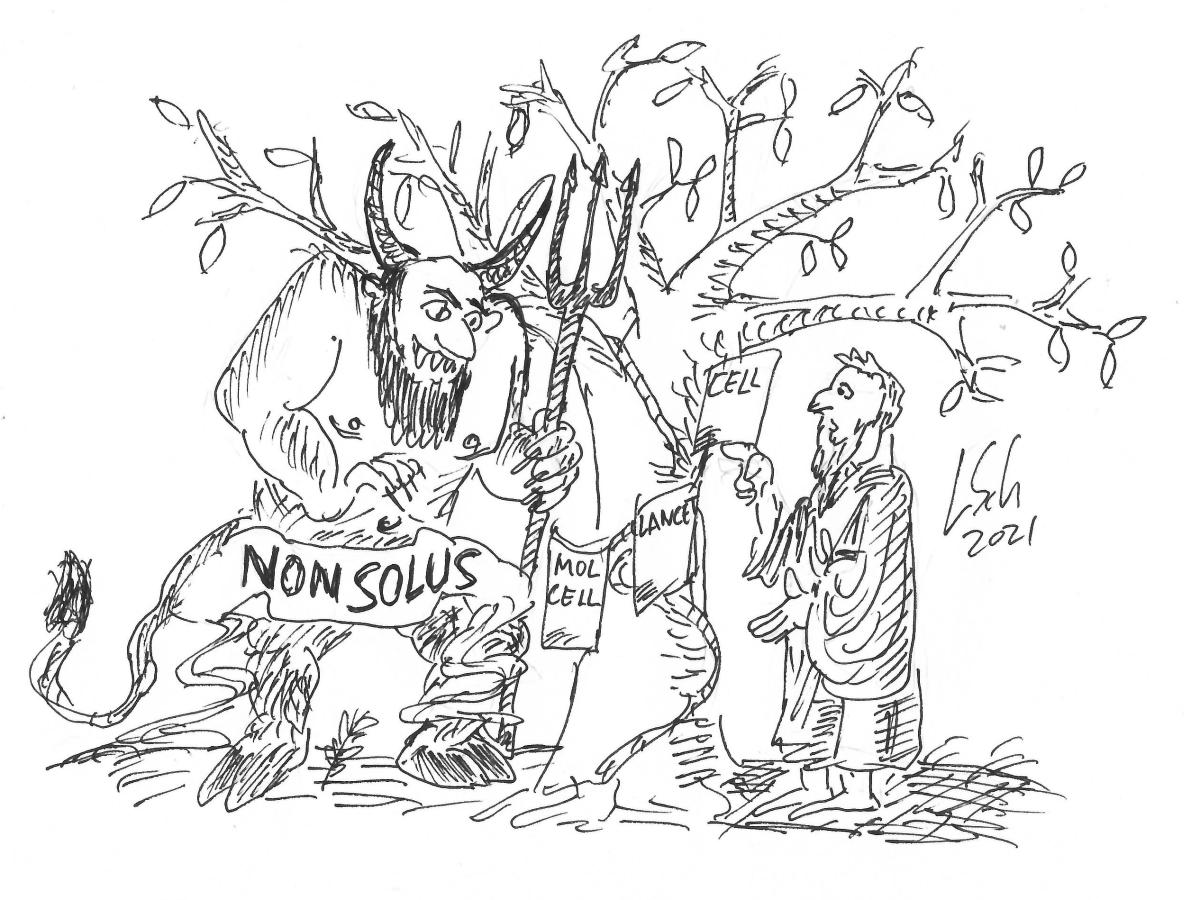
Those are not small pawns – they are or used to be this university’s leadership. And the wooden puppets of the Ethics and Scientific Integrity Board have medieval tools at their disposal to discourage journal editors from retracting fraudulent papers from Liège.
Sabine Wislet-Gendebien is a Belgian zombie. Unlike others in this story, she is not a full professor of the University of Liege, and she might never become. The reason why she remains associate professor for biomedical science are Wislet’s 5 retractions. The papers were outrageously fraudulent, but you will have to click on the PubPeer links to see.
As a side note, the directorial boss of Wilset’s former postdoctoral advisor Anurag Tandon at the Tanz Centre for Research in Neurodegenerative Diseases in Toronto, Canada, the British-Canadian neurologist Peter St George-Hyslop, has a huge Pubpeer record (thanks to Clare Francis), but because St George-Hyslop is English upper class he is untouchable. Here a common paper:
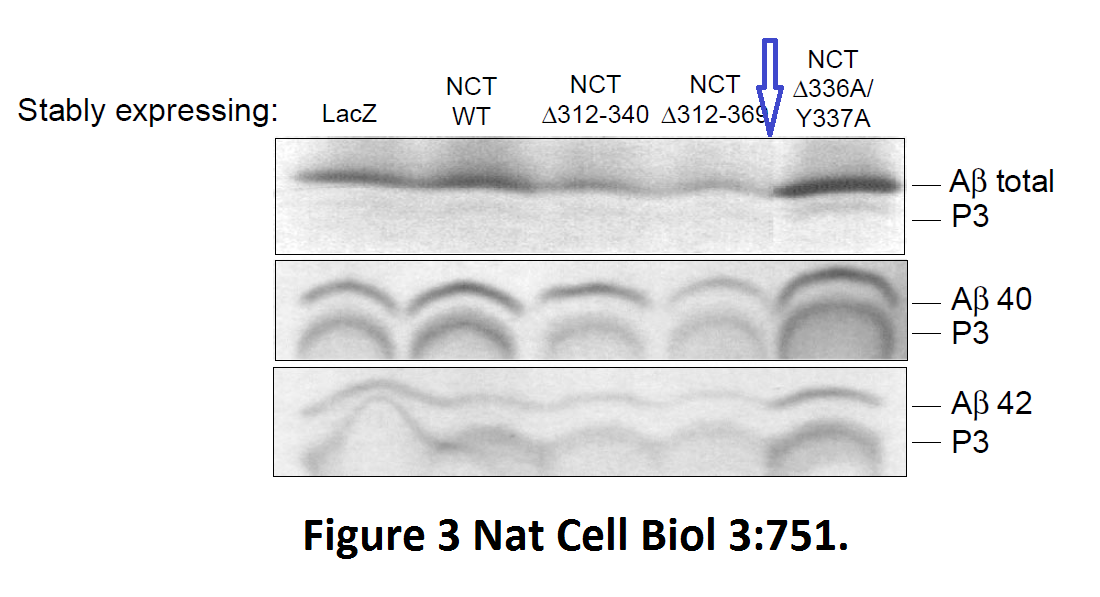
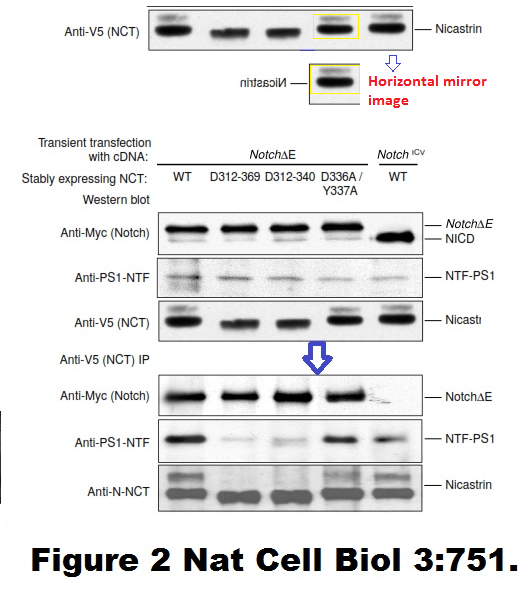
Fusheng Chen , Gang Yu , Shigeki Arawaka , Masaki Nishimura , Toshitaka Kawarai , Haung Yu , Anurag Tandon , Agnes Supala , You Qiang Song , Ekaterina Rogaeva , Paul Milman , Christine Sato , Cong Yu , Christopher Janus , Julie Lee , Lixin Song , Lili Zhang , Paul E. Fraser , P. H. St George-Hyslop Nicastrin binds to membrane-tethered NotchNature Cell Biology (2001) doi: 10.1038/35087069
Fig 4BFig 3
Fig 2
So you see, Wislet grew up scientifically in a very, uhm , conductive environment. In 2017, St George-Hyslop was investigated by his former English employer. This was the result, announced to Clare Francis by the Wellcome Trust Policies & Governance Officer Lucy Douch:
“we raised your concerns about Professor Peter St George-Hyslop with the University of Cambridge, the employing institution. The University conducted an investigation under its Misconduct in Research policy. The investigation concluded that the allegations made are entirely unfounded.“
As another side note: bone marrow cells used to be pluripotent thanks to another Belgian cheater, Catherine Verfaillie. After unknown number of patients died (also because of Paolo Macchiarini), scientists had to accept that one cannot make cartilage or neurons from bone marrow cells, unless one applies fraud. Which explains why Wilset had to resort to creativity while developing“cell replacement therapy in neurological disorders, using adult bone marrow stromal cells.“
Catherine Verfaillie is a zombie scientist: her past stem cell research long discredited, but she still is an influential and very well funded star of Belgian science. Now Elisabeth Bik had a fresh new look at Verfaillie’s papers
Wislet disagreed with the retractions, and so did the last author on two of the retracted papers, Bernard Rogister, who just happens to be her former PhD mentor. Rogister also happens to be Vice-Dean for Research (Medicine) in Liege, i.e. in charge of all research misconduct investigations in his faculty.
Together they postulated already 20 years ago that neurons can be derived from bone marrow cells, so you see that Rogister’s credibility (or rather the lack thereof) is tightly bound to that of his zombie mentee. Here is proof how exactly neurons can be derived from bone marrow cells:
This Photoshop method is very simple and cheap, anyone undisturbed by reality or basic ethics can learn it. And if anything: it is always good to be in charge of investigating yourself, as this Vice-Dean does:
In total, Wislet has 15 papers on PubPeer. All very disastrous, but how else does one prove that Belgian crap about neurons from bone marrow? Look at this one, flagged by Elisabeth Bik:
“Figure S1b (supplemental). In orange: The MPTP mice / 14 days panel appears to contain a region that is highly similar to a region in the Control mice / 70 days. Of note, other areas in the photos are very different. The MPTP mice/14 days panel has an unexpected square, around a green pixel in the bottom left.”
“Concerns about Figures 2 and 5. Marked in blue: Two midbrain panels representing different time points appear to look similar, i.e. Figure 2A Control (14 days post MPTP) and Figure 5A Control (PBS/PBS) (28 days post MPTP) Marked in lime green: Two striatum panels representing different time points and different mice appear to look similar, i.e. Figure 2A MPTP (14 days post MPTP) and Figure 5A MPTP-NCSCmix (70 days post MPTP) Marked in red: Two midbrain panels representing different mice appear to look similar, i.e. Figure 5A MPTP-PBS mice and Figure 5A MPTP mice -MSCmix graft. The photos are not direct duplicates, because they differ in the presence of a “hole” and the darkness of the staining in the highly relevant Substancia Nigra pars compacta region. These 2 different features are highlighted with thin red ellipses.”
And then, in January 2020, Bik also found this (I added hyperlinks and annotations):
“Panels in Figure 1 of this paper look similar to panels in other papers. This paper is part of a set of 5 papers that all appear to contain similar panels. Similar looking panels are shown in red (SOX10), yellow (Nestin) and aqua (p75NTR). The panels might represent the same experiments, but it is strange that they are reused over a period of 6 years.
In May 2021, the member of theBoard of Ethics and Scientific Integrity of University of Liege, Rudi Cloots (former Vice-Rector for Research, former Vice-Rector for Infrastructure and since October 2022 Advisor to the Rector on Infrastructure) wrote to me:
“The “Wislet” case has been processed from a long time ago. Several recommendations were issued and are followed in practice (retraction, corrections, …). It is in progress”
This is the outcome. In October 2021, PLOS One issued a massive Expression of Concern. We learn from it that the University of Liege demanded a correction:
“The Board of Ethics and Scientific Integrity of the University of Liège investigated the overlap between the aforementioned panels and recommended the article be corrected. In addition, a member of PLOS ONE’s Editorial Board advised that the updated figures support the results and conclusions reported in the original article. However, the PLOS ONE Editors issue this Expression of Concern to due to the number of panels affected and the unavailability of the original MSCmix transplanted brains Control Mice 70 days results.”
Under normal circumstances, PLOS One would have retracted such a fraudulent paper, regardless of how much the authors protest. But quite possibly University of Liege threatened to sue.
One paper in Bik’s list of five was retracted (Wislet-Gendebien et al 2012), regarding Gleizer et al 2011 Bik wrote in 2021 that Springer Nature decided “that no action was deemed necessary for this concern“. The other two were corrected by PLOS One, with same reference “The Board of Ethics and Scientific Integrity of University of Liège investigated the overlap between the aforementioned panels and recommended the article be corrected“. All have Vice-Dean Rogister as key author. All had other issues.
“Figure S1. Green boxes: In the top panels, the Iba1/DMEM panel looks unexpectedly similar to the Iba1/NCSC-CM panel Orange boxes: In the bottom panels, the CD68/NCSC-CM panel appears to overlap with the CD206/NCSC-CM panel, albeit at a different zoom factor”
To follow into Rogister’s and Wislet’s footsteps, Virginie Neirinck was made associate professor at the University of Liege. Three academic generations of cheaters under one roof in Liege, and the fourth is surely growing!
Chapter II: Agnès Noël
The cancer researcher and Liege professor Agnès Noëlused to be director of the GIGA-Institute, an Interdisciplinary Biomedical Research Center by the University of Liege (Rogister has a lab there). Noel studied and did PhD in Liege, and after a brief postdoc In Strasbourg she returned and made a big career, as Permanent Member of the Royal Academy of Medicine of Belgium and President of the Council of Research and Valorization in Health Sciences at the University of Liège. Meaning, she very likely has a voice in research integrity investigations, and she certainly decides who performs and who doesn’t at her university.
Relevant fun fact: Noel gives courses to students together with Wislet. So yes, Wislet is the good one, the one who performs. Now you will see why Noel has so much understanding, from her own attempts to cure cancer as recorded on PubPeer.
Some collaborations include none other but Spain’s most obnoxious cheater – Carlos Lopez-Otin! Their joint co-author is Noel’s GIGA colleague and fellow Liege professor, Didier Cataldo:
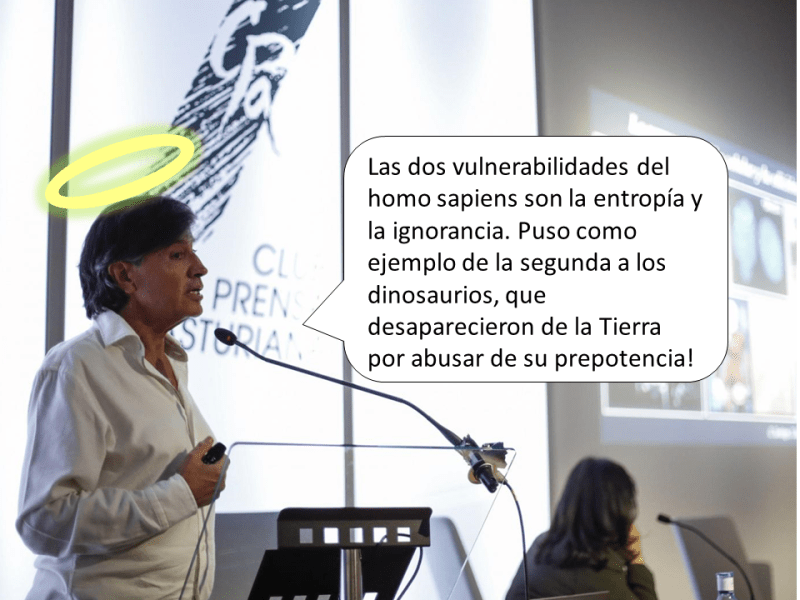
St Carlos of Oviedo almost was canonised as Spain’s first living martyr, but now Nature revoked his mentoring award. Spanish media and science elites are desperate, even the Queen is not amused. The Royal Academy of Sciences insists Lopez-Otin is a victim of journal’s failure.
And here is Noel with another questionable collaborator, this time with a Belgian Baron – the KU Leuven professor Peter Carmeliet:
Xuri Li , Marc Tjwa , Lieve Moons , Pierre Fons , Agnes Noel , Annelii Ny , Jian Min Zhou , Johan Lennartsson , Hong Li , Aernout Luttun , Annica Pontén , Laetitia Devy , Ann Bouché , Hideyasu Oh , Ann Manderveld , Silvia Blacher , David Communi , Pierre Savi , Françoise Bono , Mieke Dewerchin , Jean-Michel Foidart, Monica Autiero, Jean-Marc Herbert, Désiré Collen, Carl-Henrik Heldin, Ulf Eriksson, Peter Carmeliet Revascularization of ischemic tissues by PDGF-CC via effects on endothelial cells and their progenitorsJournal of Clinical Investigation (2005) doi: 10.1172/jci19189
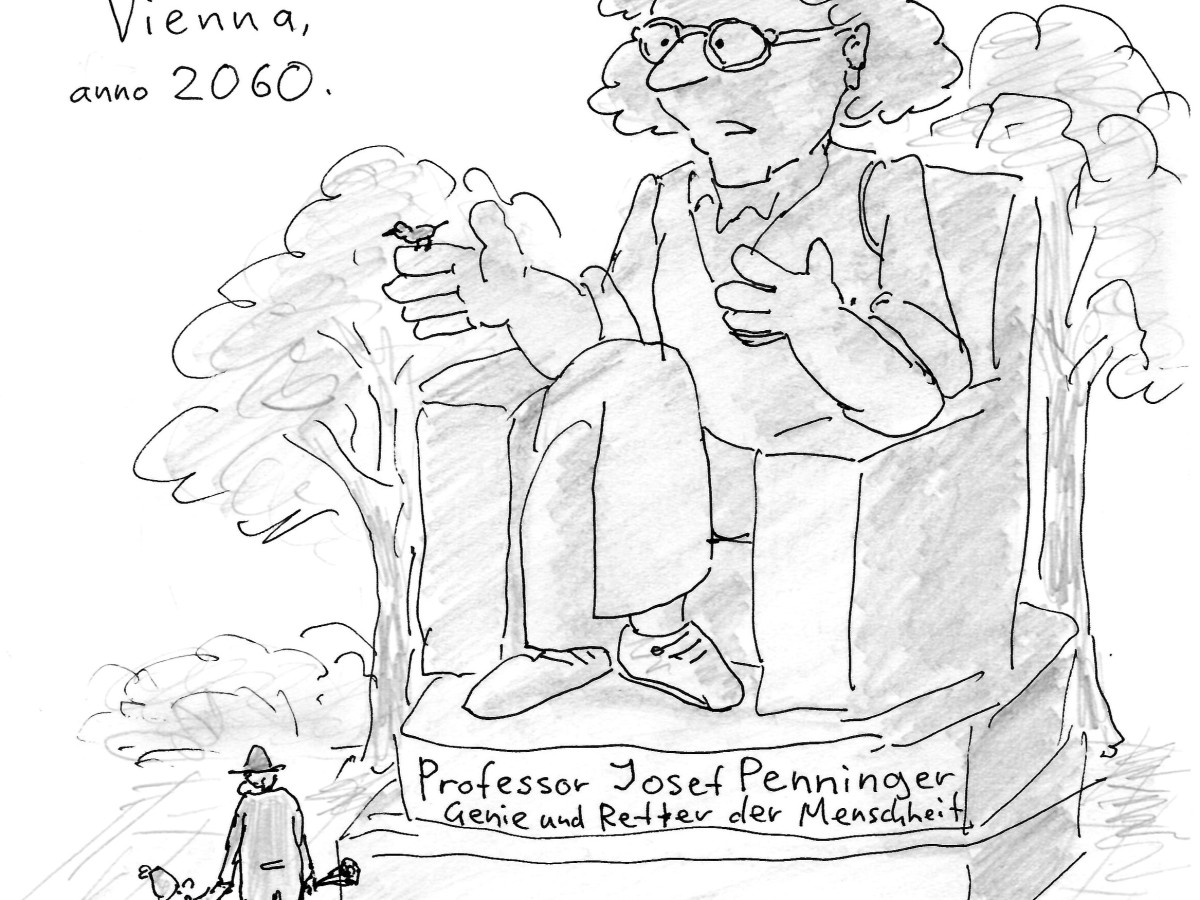
As a young Wunderkind, Josef Penninger discovered the ACE2 receptor. Now he invented the cure for the coronavirus which will work in his hands where Big Pharma failed. He was never found guilty of research misconduct and never retracted a paper. Dr Penninger is a Genius making a COVID-19 vaccine.
Irina Primac , Erik Maquoi , Silvia Blacher , Ritva Heljasvaara , Jan Van Deun , Hilde Yh Smeland , Annalisa Canale , Thomas Louis , Linda Stuhr , Nor Eddine Sounni , Didier Cataldo , Taina Pihlajaniemi , Christel Pequeux , Olivier De Wever , Donald Gullberg , Agnès Noel Stromal integrin α11 regulates PDGFR-β signaling and promotes breast cancer progressionJournal of Clinical Investigation (2019) doi: 10.1172/jci125890
No correction was issued because someone on PubPeer explained it was supposed to be the same cancer sample anyway, and presumably scientists by law are not allowed to take more than one representative microscopy image in order to save on electricity and computer storage space. Hence applying different scan settings and rotating the image before reuse is actually the correct scientific method.
Totally fake, those gels. But this is how Noel’s protege Nor Eddine Sounni became associate professor in Liege and GIGA Center group leader, and he also teaches good scientific practice to students with Noel and Wislet. So much for students to learn:
“In Fig. 2, the actin loading control bands for cyclin D1 and cyclin D2 are identical–the authors clarified that the Western blots for cyclin D1 and cyclin D2 were performed on the same samples, however, this was not indicated in the figure legend. Additionally, in Fig. 6C, the p-EGFR bands in MDA-MB-231 cells showing stimulation by TGFα treatment are identical to the p-EGFR bands showing stimulation by EGF treatment. In the original submission of this manuscript, a correct version of this figure was used […] but these panels were mistakenly duplicated in the revised and final versions of the manuscript.”
In May 2021, I sent all that to Noel, and she replied to me:
“We take it seriously on our side and will address this with the local ethical committee.”
On 22 February 2024, Rudi Cloots, the above mentioned research integrity chair at Liege, informed me:
“the “Noel” case has been processed and corrective measures on certain elements of the instruction file have been implemented.“
Chapter III: Vincent Castronovo
Here is another local collaboration by Noel, with Liege professor and obstetric surgeon Vincent Castronovo, who used to be director of the GIGA Center before Noel:
“Figure 3A and figure 3B use the same western-blot images with horizontal shift and in different conditions for one of them.”Fig 6A
Castronovo owns a consulting company called “NutriHealth by Vincent Castronovo” which teaches how to prevent and treat Alzheimer’s and other diseases with the right “micronutrition” of minerals and vitamins.
The enterprising surgeon also has a PubPeer record, often shared with yet another Liege professor and GIGA Center group leader, Akeila Bellahcène. For example this, you will surely recall their co-author, Wislet’s mentor and Vice-Dean for Research Rogister:
Aurélie Henry , Marie-Julie Nokin , Natacha Leroi , François Lallemand, Jérémy Lambert , Nicolas Goffart , Patrick Roncarati , Elettra Bianchi , Paul Peixoto , Arnaud Blomme , Andrei Turtoi , Olivier Peulen , Yvette Habraken , Félix Scholtes , Philippe Martinive , Philippe Delvenne , Bernard Rogister, Vincent Castronovo , Akeila Bellahcène New role of osteopontin in DNA repair and impact on human glioblastoma radiosensitivityOncotarget (2016) doi: 10.18632/oncotarget.11483
Actinopolyspora biskrensis: “Figure 5F appears to have two images which overlap”
In May 2021, Cheshire received from the authors a replacement figure and announcement of an impeding correction. Which almost 3 years on did not materialise. Because Rogister investigated himself again.
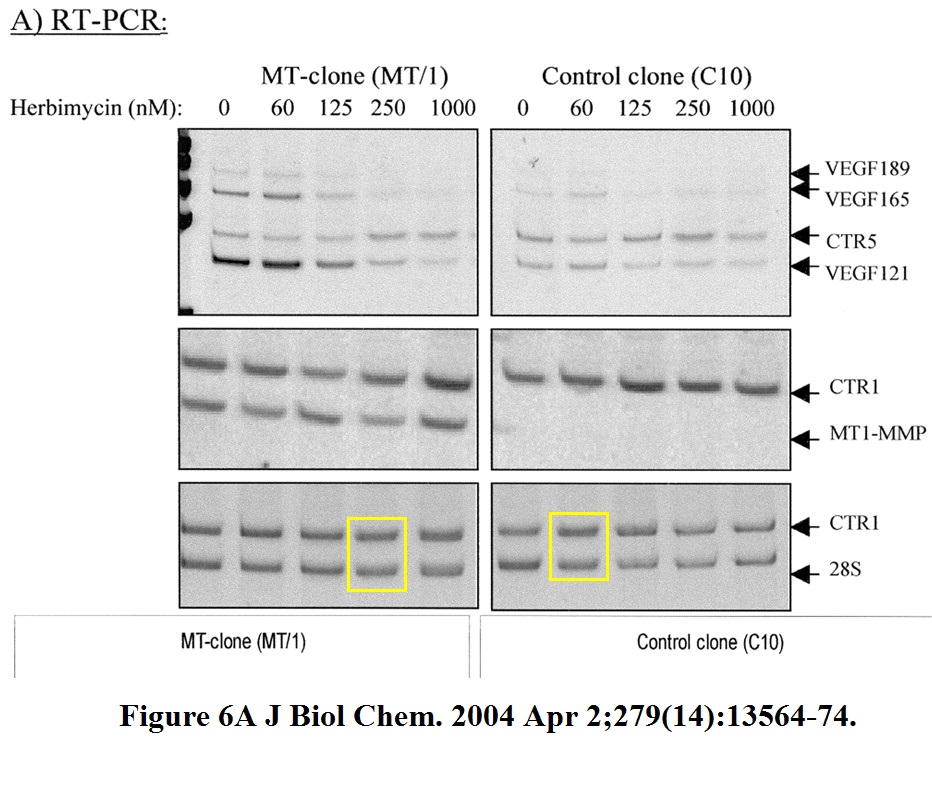
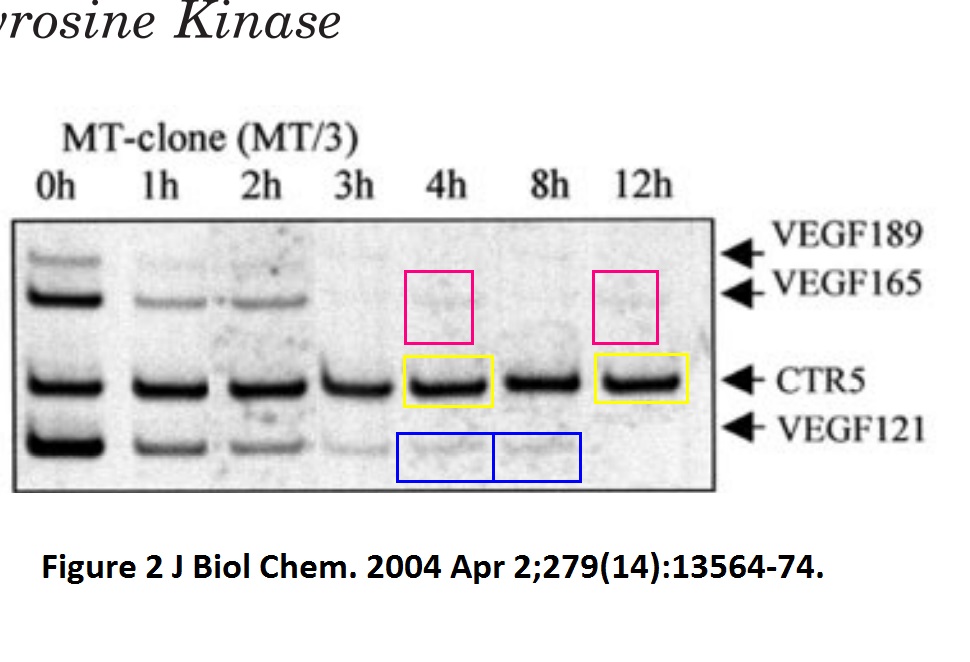
Another shifty duplication was corrected 3 years after it was posted on PubPeer:
Corrected in December 2023: “The Fig. 3a of this article originally contained an incorrect picture showing “HDAC7/AKAP12 siRNA” condition at t = 0 h. Indeed this picture was duplicated by mistake from the same image, showing “AKAP12/GL3 siRNA” condition at t = 0 h.”
“Figures 4A, 4B and 5A. Much more similar and different than expected.”
The last author and fellow Liege professor/GIGA Center group leader Olivier Peulen explained on PubPeer in May 2022: “We used the same samples to illustrate our purpose” but in March 2023 he published a Correction:
“It has been noted that the western blot duplication can be misleading. Consequently, the duplicated myoferlin western blots have been removed from figures 4 and 5.”
Peulen also admitted that this paper needed correction also, but then he and his Liege colleagues Bellahcène and Castronovo decided they couldn’t be arsed:
Peulen announced to correct Fig 8 in December 2023: “You were right ! Indeed, the LC3-II western blots from panel C was reused in panel A. It’s probably a mistake during image composition. We have several replicates of these blots.”
Why should Castronovo care, he is selling vitamins now.
Chapter IV: Jacques Piette
Jacques Piette is professor of virology at Liege. Like the other characters in this Liege story, he did his PhD in Liege and after a brief postdoc abroad returned to Liege and grew big. Piette also used to be director of the GIGA Center and is currently its permanent board member.
Piette is also Editor-in-Chief of the Elsevier journal Biochemical Pharmacology. He took over from the founding editor Sam Enna, who finally died in 2023, aged almost 80, and lamented by Nature and other fans of old white male bullies in academia. Aneurus Incostans and myself had the displeasure to communicate with Enna in 2022, you can read about that here:
There can hardly be a worse academic editor than Enna. But Piette is trying his best!
In this role, Piette accepted in February 2024 an outrageous Corrigendum from the Argentinian mega-cheater by Mario Galigniana. The fake miscroscopy figure in Daneri-Becerra et al 2020 was declared “an involuntary error“, read Friday Shorts for details (as it happens, the same article contains a story about another Belgian cheater, Ghanem E Ghanem in Brussels).
Now, to Piette’s own trash papers. This one can be seen as his application to take over Enna’s editorial chair. The Editor-in-Chief is dead, long live the Editor-in-Chief!
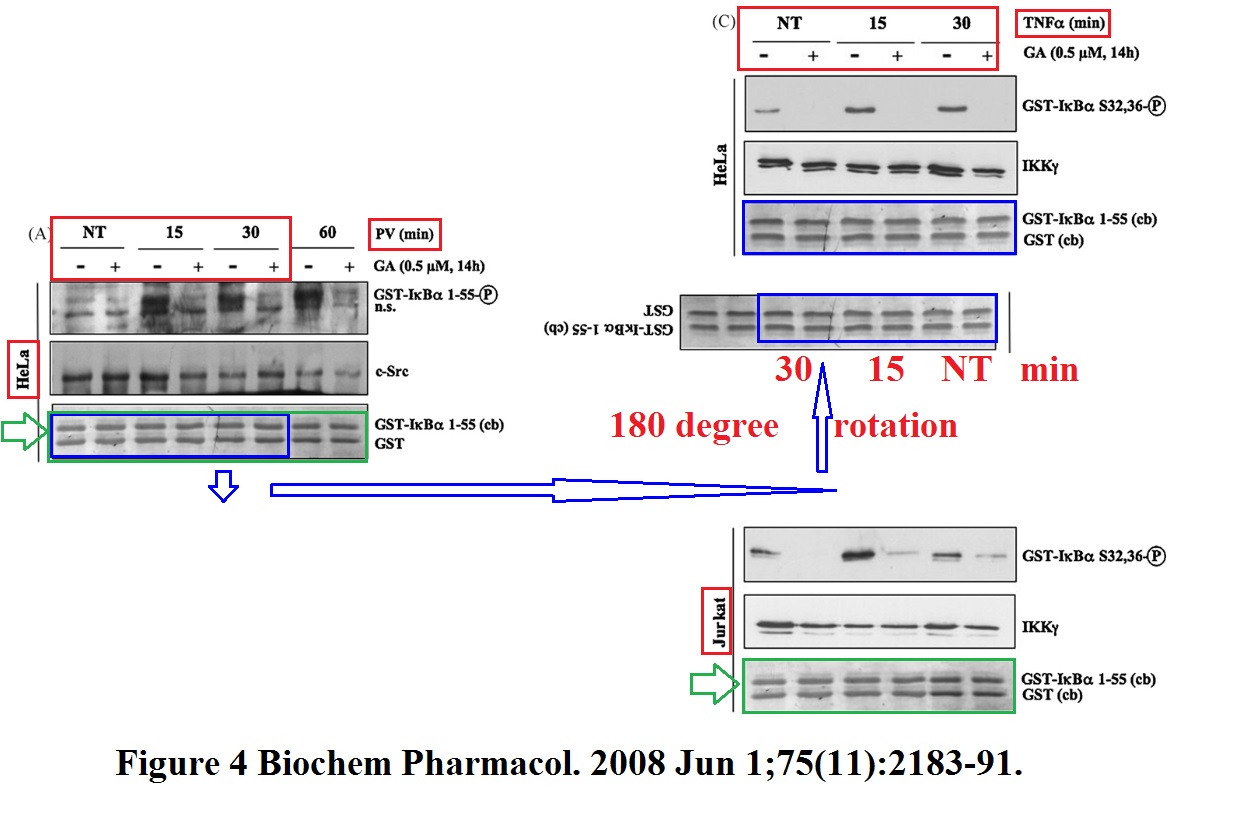
Piette’s collaborator Alain Chariot, another Liege professor with a lab at GIGA Center, explained on PubPeer that it is fraud when the gel bands are NOT identical:
“this is the reason why these western blots look similar as they represent the same extracts. It would actually be scientifically wrong if amounts of proteins had been different!“
I put this intellectual deficiency to academic inbreeding. Chariot studied and spent his entire career in Liege, according to his LinkedIn he didn’t even briefly leave to do a symbolic postdoc stay abroad.
These two papers by Piette and Chariot, received a near-identical reply on PubPeer form both men:
Which one copied from whom? Does any of the boys even speak any English? They just admitted to be uncapable of doing experiments properly, which “does not have any influence on the conclusions“.
In Oncogene‘s case, all the publisher Springer Nature eventually achieved three years later was an unresolvable Expression of Concern, published in April 2023 – “The authors were contacted regarding these concerns, however, due to the age of the article the raw data was no longer available“. Journal of Biological Chemistry did nothing because it is now run by Elsevier.
To be clear – Piette is not stupid. For example, he knows one must delineate spliced gel lanes, but he does it only where peer reviewers would accept splicing. And hides it where such splicing would lead to rejection:
More spliced and recycled gels by Piette are on PubPeer. But now, a total shit-show of fake gels, which earned Piette’s mentee Lionel Habran you can guess what – an associate professorship in Liege:
Van Lint already has a joint retraction with a French collaborator, Olivier Rohr. She really attracts bad naughty men: the University of Franche-Comté professor Georges Herbein, and even the curcumin fraudster and former MD Anderson professor Bharat Aggarwal. Read about all this in Friday Shorts. Van Lint also has dodgy papers with the Big Pharma top executive John Reed:
Or, maybe it is Piette who attracts naughty women? Here he is with another Belgian colleague, the KU Leuven professor Patrizia Agostinis, who also has a troubling PubPeer record of her own:
“I am taking this step with a heavy heart and a sense of responsibility for the university since a sufficient foundation of mutual trust no longer remained with some parts of the university to ensure successful cooperation”, – Simone Fulda
On 22 February 2024, Rudi Cloots, the research integrity piss-taker at Liege, informed me:
“As regards the allegations made against Prof. Piette, we have taken careful note of them and an investigation in line with our operating rules will be initiated very soon.”
We all saw how they solved the Wislet case, right?
In fact, Piette is so unafraid of Cloots and his silly Board of Ethics and Scientific Integrity, he just issued yet another outrageous correction for an utterly fraudulent paper by Chris Thiemermann, Queen Mary University of London professor and William Harvey Research Institute (WHRI) bigwig. The ridiculously fake blots in Collino et al 2013 were “judged satisfactory by the editor“, read last week’s Friday Shorts. Piette even declared his and the fraudsters’ “commitment to upholding the integrity and accuracy of the research findings” in the correction from 2 March 2024.
Possibly, in Liege they do honestly think that scientific research is supposed to be fake. You see, when one’s entire social circle consists of illiterate inbred dimwits who use cramped book pages to wipe their arses, they will all firmly believe that this is truly what books are printed for, and teach their progeny in this tradition.
Update 15.05.2024
The Board of Ethics and Scientific Integrity (CEIS) of the University of Liege investigated me. Yes me, Leonid Schneider, why should they investigate their own professors. I was found guilty of of misconduct for “accusing a researcher of misconduct or other violations in a malicious way” and breaching the “Munich Declaration of the duties and rights of the journalists“. As for the Liege scientists: the investigation won’t happen, all PubPeer evidence has been dismissed – the Belgian university announced to “always ignore disrespectful and/or unfounded allegations”.
“the KU Leuven professor Peter Carmeliet” is like a bad penny.
Crops up on another paper with problematic data borrowed from an earlier paper where it was something else, hundreds and hundreds of mundane papers, but that is the Belgian way. A baron to boot!


















 For Better Science
“the KU Leuven professor Peter Carmeliet” is like a bad penny.
Crops up on another paper with problematic data borrowed from an earlier paper where it was something else, hundreds and hundreds of mundane papers, but that is the Belgian way. A baron to boot!
PubPeer – Placental growth factor inhibition modulates the interplay b…
A triplet of problematic papers in Gent.
PubPeer – Search publications and join the conversation.
LikeLike
11 August 2025 Editorial Expression of Concern for University of Liège, and also for Eric Verdin in University of California San Francisco Editorial Expression of Concern to: HDAC5 is required for maintenance of pericentric heterochromatin, and controls cell-cycle progression and survival of human cancer cells | Cell Death & Differentiation
LikeLike