Schneider Shorts 16.02.2024 – Take ALL the most suitable actions
Schneider Shorts 16.02.2024 - a doctor sacked for death of patients cures cancer in Austria, science with sell-by date, Italian geniuses cracking cancer, autism and Alzheimer's, mass retraction of totalitarian science, an incomplete Frontiers retraction, and finally, a Ukrainian genius betrayed by Iranian friends.
Schneider Shorts of 16 February 2024 – a doctor sacked for death of patients cures cancer in Austria, science with sell-by date, Italian geniuses cracking cancer, autism and Alzheimer’s, mass retraction of totalitarian science, an incomplete Frontiers retraction, and finally, a Ukrainian genius betrayed by Iranian friends.
Table of Discontent
Science Elites
Negligent homicide – Johannes Haybäck, Austrian doctor with dark German history
A German medical scandal from almost 3 years ago which I missed back then. It concerns the University of Magdeburg and its University Clinic. As it happens, the place where the trachea transplanters Heike and Thorsten Walles found a safe and well-funded haven, protected even from retractions requested by their former employers.
Former star of German regenerative medicine Heike Walles gets slapped with research misconduct and a retraction by her former employer, the University of Würzburg. She and her husband, the Macchiarini-trained surgeon Thorsten Walles, left Würzburg years ago for Magdeburg where nobody minds.
Specifically, there are 39 cases in which incorrect findings by the then head of the institute, Johannes H., had serious physical consequences for patients. In nine cases there was suspicion of negligent homicide.
The public prosecutor’s office justifies the discontinuation of the proceedings by saying that the cause of death could no longer be determined in the cases in question. “In particular, no forensic medical examinations took place,” said court spokesman Frank Baumgarten. These could not have been made up for either.
Baumgarten added that there was also a lack of criminal applications from those affected for the prosecution of cases of negligent bodily harm. However, separate investigations were ongoing in individual cases.
Under the responsibility of the former head of the institute, Johannes H., between 2016 and November 2019, 694 tissue samples were incorrectly diagnosed in the pathology department at the university hospital between 2016 and November 2019 – in 52 with clinical consequences for those affected. After the incidents became known, the University Hospital dismissed Johannes H. and reported particularly serious cases. The house also arranged for a total of 5,855 tissue samples to be re-examined by external institutes.”
Horrible, no? Doctor’s (possibly criminal) incompetence lead to death of several patients and to grievous harm to many more! Who may this horrible Johannes H be? Surely he will be never allowed to wear a white coat?
Well, there is a certain 46-year-old “Assoz. Prof. Priv.-Doz. Dr.med.univ. Dr.sc.nat Johannes Haybäck” at the Medical University of Graz in Austria, who works in cancer and Alzheimer’s research, member of the “Diagnostics and Research Institute for Pathology“. Haybäck’s institutional CV says:
“2016-2020 Institute Director, Institute of Pathology, University Hospital Magdeburg, A. ö. R., Faculty of Medicine, Otto-von-Guericke University, Magdeburg, Germany”
“President of the umbrella organization of oncological specialist societies in Austria”
I wrote to Haybäck who didn’t reply. But the press speaker of the Medical University Graz Gerald Auer did answer my request to comment on their associate professor’s history in Magdeburg (translated):
“Johannes Haybaeck works exclusively in basic research as part of his part-time job at the Medical University of Graz. There are no diagnostic activities of any kind.“
Imagine all those applicants for the professorship which Haybäck got at the end. Those people never did anything evil, never left patients dead and mutilated by their incompetence. But these other applicants were told to piss off because the institute director Gerald Höfler and the Medical University Graz decided that the sacked doctor from hell Prof. Dr. med. univ. Dr. sc. nat. Prof. h.c. Johannes Haybäck, AHCM FASCP MAANP is the right scholarly expert to cure children cancer and Alzheimer. Not just them: Haybäck’s research is funded by Steirische Kinderkrebshilfe, an Austrian charity dedicated to children cancer.
But thing is, I previously wrote about Haybäck’s “basic research”. He did his PhD with Adriano Aguzzi at University Hospital Zürich in Switzerland. Read about them both here:
The prion researcher Adriano Aguzzi used to describe his Pubpeer critics as “lowlifes”, and himself as a victim of a lynch mob. But after Elisabeth Bik helped him find even more mistakes in his papers, Aguzzi changed his stance.
I know it is completely beside the point to complain about manipulated data in basic research after 9 patients were left dead and 39 seriously injured, but since they in Graz believe Haybäck is a science genius who deserves endless second chances, here some examples from Haybäck’s PubPeer record:
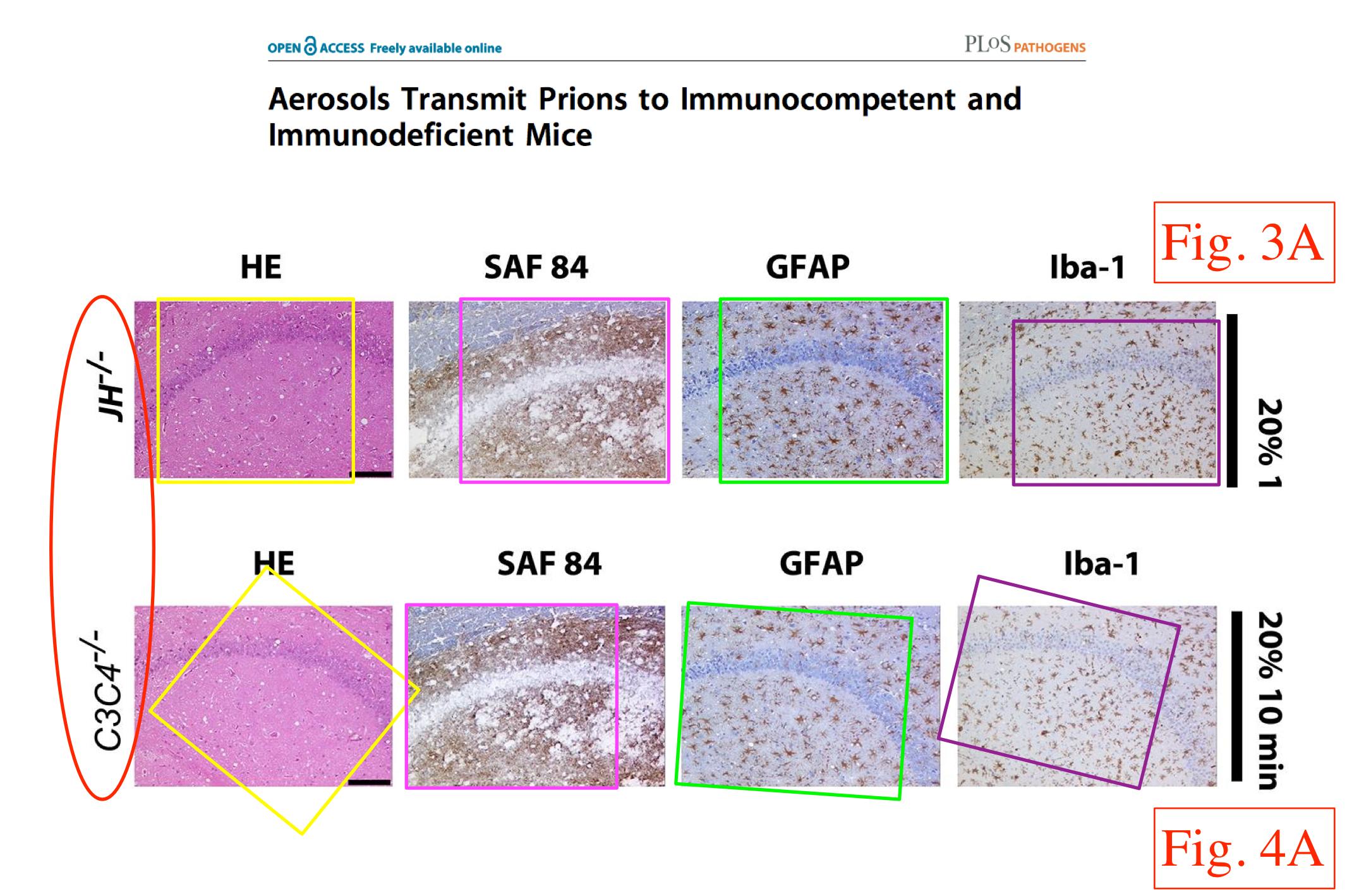
“The authors would like to correct Figs 3, 5 and 6. In Fig 3, an error was introduced during the preparation of the figure for publication. Images from the brain of a mouse presented in Fig 4A were inserted into Fig 3A. The corrected version of Fig 3, containing pictures of a correct and representative JH-/- mouse that had been exposed to prion infectivity containing aerosols, can be seen here. The authors also wish to clarify that the original blots for Figs 5E and 6D contained redundant lanes which they had removed from the images while preparing the figures. The authors now provide corrected versions of Figs 5E and 6D with appropriate marks showing the removal of the redundant lane. The uncropped original blots for Figs 5E and 6D are shown as supporting information in S1 File (for Fig 5E) and S2 File (for Fig 6D).”
Here another one corrected in 2016, and one can’t even blame Aguzzi:
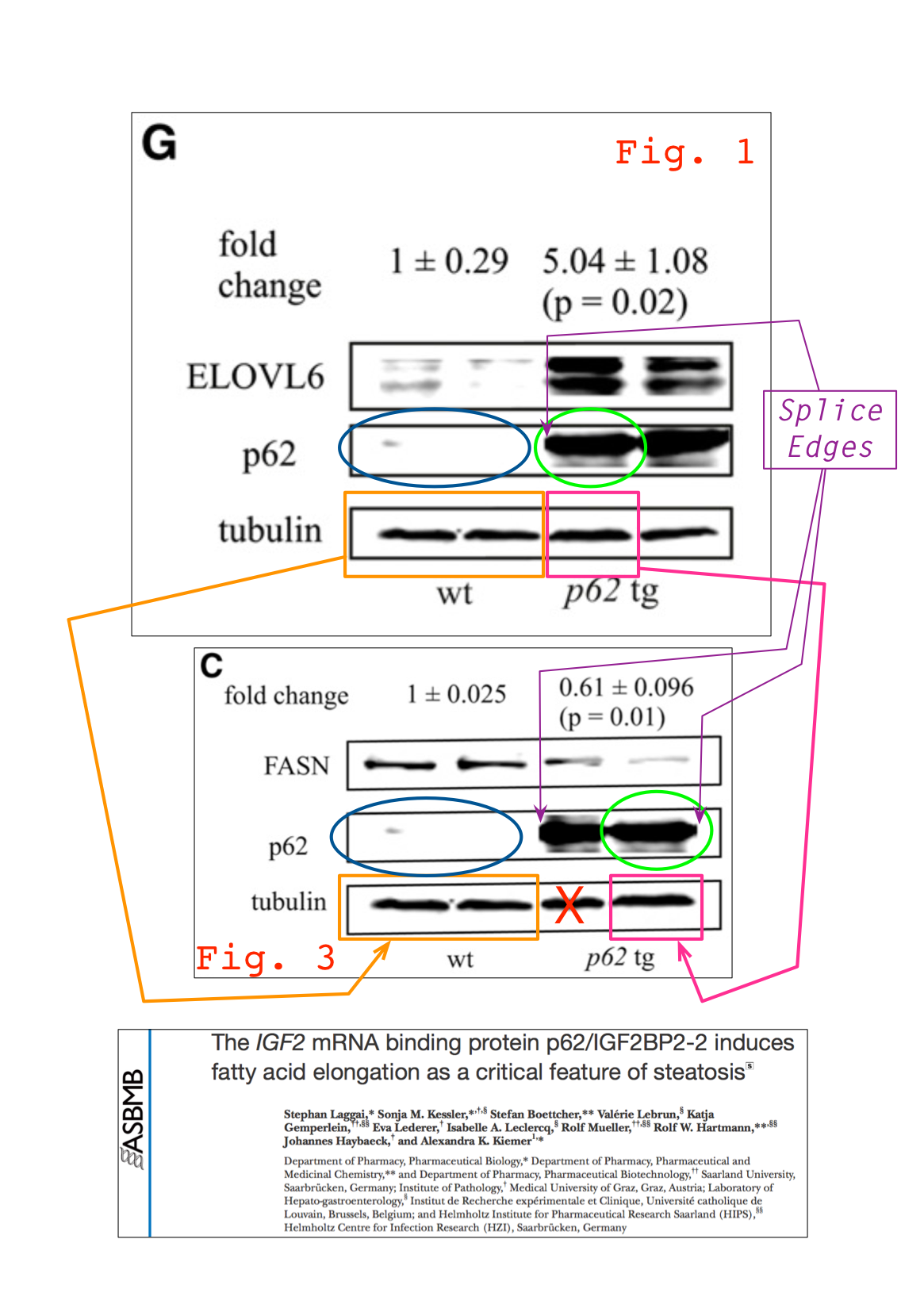
“the tubulin controls in Fig. 1G share three of four bands with the tubulin controls of Fig. 3C. The inserted band is, under the circumstances, seamless. Fortunately, however, the p62 bands above are reordered similarly.”
“Also note that all the p62 bands have a sharp upper edge indicating that a thin strip was cut and pasted into that snowy white background.”
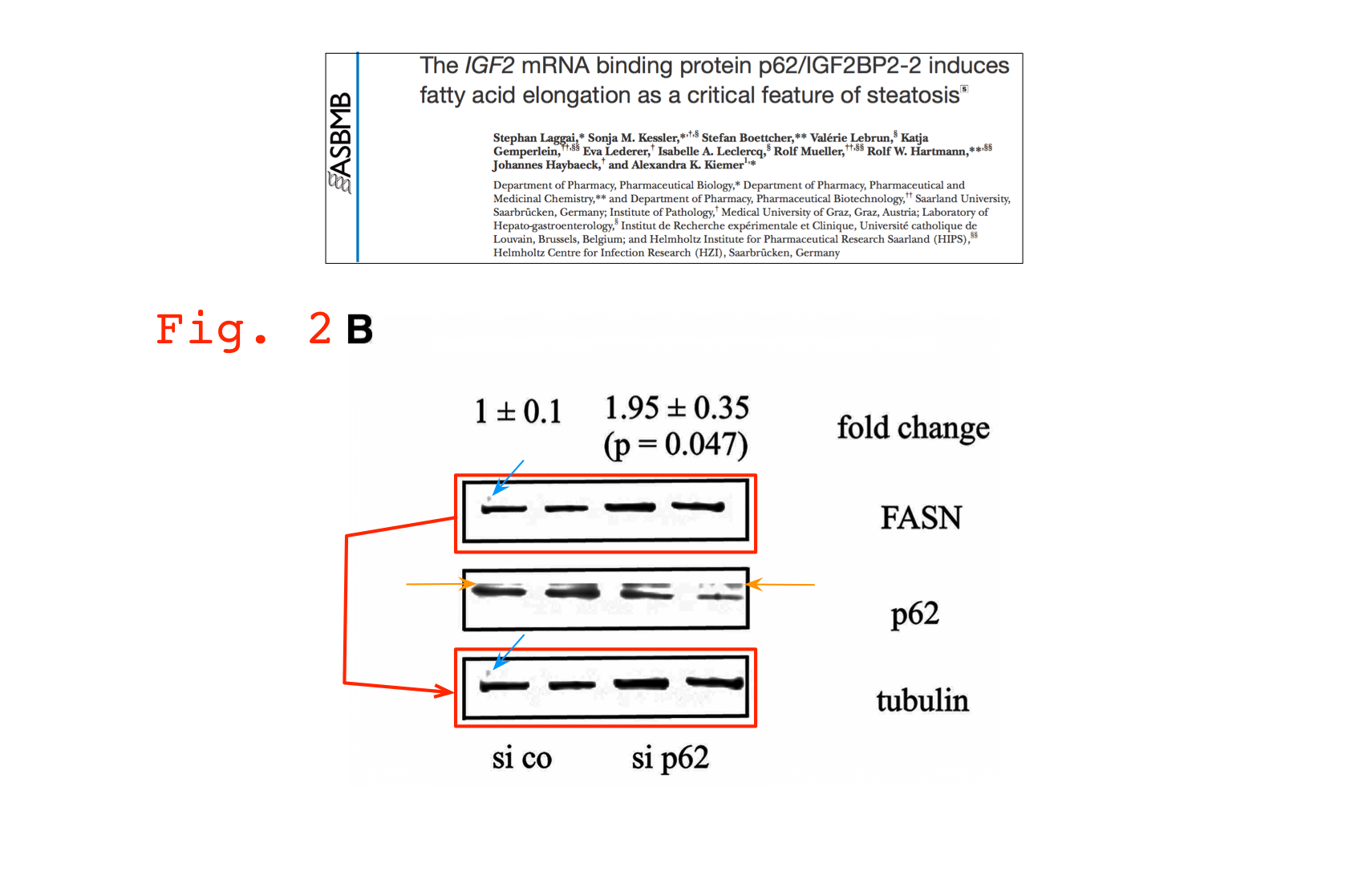
“….there were several errors in this article. In Fig. 3B (left), the FASN immunoblot was inadvertently duplicated in the tubulin panel. The FASN quantification data were normalized to the correct tubulin data, so this error does not affect the fold change of FASN with p62 knockdown in HepG2 cells. The correct tubulin blot is now shown. In Fig. 1G, Fig. 3B, Fig. 3C, the p62 bands for wt animals were misaligned during figure preparation. Additionally, the borders between different sections of the same immunoblot are now indicated with a dividing line. These corrections do not affect the results or interpretations of this work.”
Also this incorrectable trash was corrected:
Nicole Golob-Schwarzl , Kira Bettermann , Anita Kuldeep Mehta , Sonja M. Kessler , Julia Unterluggauer , Stefanie Krassnig , Kensuke Kojima , Xintong Chen , Yujin Hoshida , Nabeel M. Bardeesy , Heimo Müller , Vendula Svendova , Michael G. Schimek , Clemens Diwoky , Alexandra Lipfert , Vineet Mahajan , Cornelia Stumptner , Andrea Thüringer , Leopold F. Fröhlich , Tatjana Stojakovic , K.P.R. Nilsson, Thomas Kolbe, Thomas Rülicke, Thomas M. Magin, Pavel Strnad, Alexandra K. Kiemer, Richard Moriggl, Johannes Haybaeck High Keratin 8/18 Ratio Predicts Aggressive Hepatocellular Cancer PhenotypeTranslational oncology (2019) doi: 10.1016/j.tranon.2018.10.010
“The authors regret that an error in Figure S1 of the manuscript has been identified. Some images in Figure 1 were duplicated within Figure S1; hence, this corrigendum addresses this error.”
The authors also made massive changes in results and discussion “to improve the quality”.
I wrote about Haybäck’s Austrian collaborator Richard Morrigl and their common papers before, read here:
Too many scientists defend the practice of not probing for loading controls for each protein gel. They say a “library” method perfectly suffices, when one separate loading control gel is run once for reference. Such sloppiness can sometimes be a hint of even worse practices taking place.
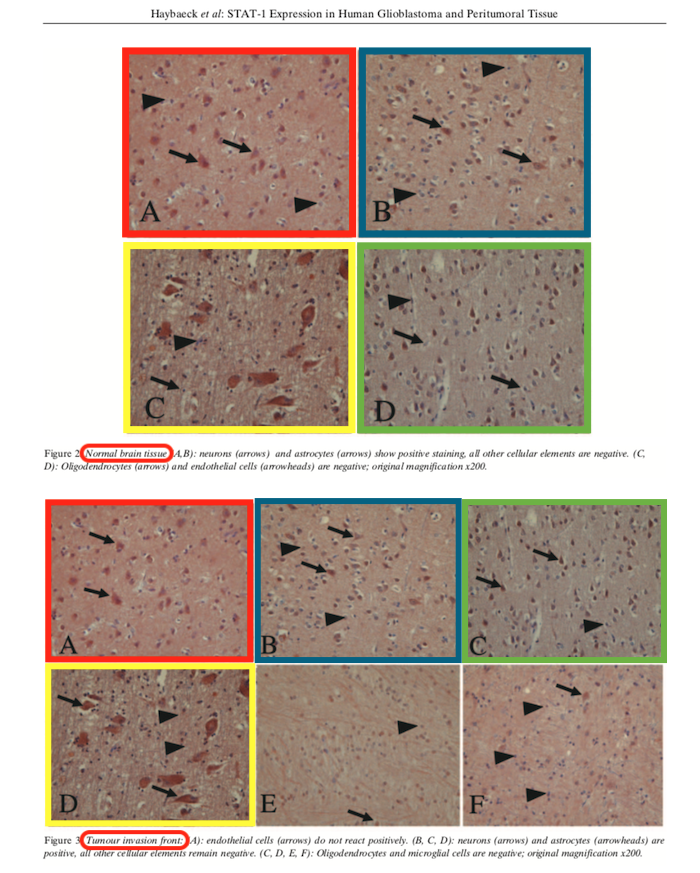
“Figure 2 shows normal brain tissue, while figure 3 shows the tumor invasion front. However, all four panels show in Figure 2 appear to be identical to panels in Figure 3.”
I pointed this all out to Medical University Graz. They indicated they don’t care. Because their “Assoz. Prof. Priv.-Doz. Dr.med.univ. Dr.sc.nat Johannes Haybäck” is curing cancer in children.
“The stomach cancer study was shot through with suspicious data. Identical constellations of cells were said to depict separate experiments on wholly different biological lineages. Photos of tumor-stricken mice, used to show that a drug reduced cancer growth, had been featured in two previous papers describing other treatments.
Problems with the study were severe enough that its publisher, after finding that the paper violated ethics guidelines, formally withdrew it within a few months of its publication in 2021. The study was then wiped from the internet, leaving behind a barren web page that said nothing about the reasons for its removal.
As it turned out, the flawed study was part of a pattern. Since 2008, two of its authors — Dr. Sam S. Yoon, chief of a cancer surgery division at Columbia University’s medical center, and a more junior cancer biologist — have collaborated with a rotating cast of researchers on a combined 26 articles that a British scientific sleuth haspubliclyflagged for containing suspect data. A medical journal retracted one of them this month after inquiries from The New York Times.”
The NYT article references Sholto’s relevant article on For Better Science:
“Why do successful and apparently intelligent surgeons feel the need to play pretend at biology research? Has Sam S. Yoon ever performed an invasion or migration assay? […] if this is how he “supervises” his research does anyone trust his supervision of surgery?” – Sholto David
Part of Sam Yoon‘s work was done at Columbia University, part at Memorial Sloan Kettering Cancer Center, where he used to work. His wife and regular-coauthor Sandra W. Ryeom is also professor at Columbia.
Things move fast when mass media journalists start asking questions.
“The researchers’ suspicious publications stretch back 16 years. Over time, relatively minorimage copies in papers by Dr. Yoon gave way to more serious discrepancies in studies he collaborated on with Changhwan Yoon, Dr. David said. The pair, who are not related, began publishing articles together around 2013.
But neither their employers nor their publishers seemed to start investigating their work until this past fall, when Dr. David published his initial findings on For Better Science, a blog, and notified Memorial Sloan Kettering, Columbia and the journals. Memorial Sloan Kettering said it began its investigation then.
None of those flagged studies was retracted until last week. Three days after The Times asked publishers about the allegations, the journal Oncotarget retracted a 2016 study on combating certain pernicious cancers. In a retraction notice, the journal said the authors’ explanations for copied images “were deemed unacceptable.””
I became privy to a round email sent at Columbia University by Michael Shelanski, Senior Vice-Dean for Research (highlights mine):
“Accusations of Research Misconduct, data manipulation and plagiarism hurt the entire research community and often do lasting damage to reputations and to research support even if the allegations are proven to be groundless. In the months that it can take to investigate an allegation, funding can be suspended, and donors can feel that their trust has been betrayed.
For years it was taken as a given that research that reached the wrong conclusions – for whatever reason – would be swept away when correct results were obtained and that work that was not reproducible would disappear from our sight.
The development of electronic databases has given work that might have faded into oblivion perpetual life. People searching these databases often do not read the actual paper and do not look at whether the work has stood the test of time. What was done 25 years ago is now available with a few keystrokes – no need to dig through the library! The power of electronic search tools and concern about research quality has led to the appearance of self-appointed “fraud busters”. Many of these people are motivated by a desire to assure the quality of research and to assure that scientists receiving federal funding are responsible stewards of the public trust. Others are out to make a name for themselves and to see how big a fish they can net.
How to Protect Yourself
Take the training offered by the University. The PI should lead and should be certain that each person in the lab has taken the training.
Hold regular lab meetings where raw data is presented and discussed. If data is digital then it should be clear what filters, algorithms and autocorrect functions have been used.
Before publication compare each image to its raw data source and screen the images for manipulation. Any manipulation should be cited in the text and all original data kept in an archive associated with the publication.
Remember that each author is responsible for the entirety of the publication. DO NOT accept or demand authorship if you have provided a reagent, tissue, or construct. These should be acknowledged but do not merit an authorship.
If you cannot see all the data in a collaborative work, do not accept authorship. NEVER accept an “honorary” authorship.
Thank you”
So many things I learned. Turns out, science has a sell-by date! It is not supposed to be reproducible, or to allow others to build on it, or to even enter text-books, no. Research papers are published merely to get money for its authors, and when all is milked, these papers are supposed to disappear forever and never be read again.
And the evil people out there are NOT the research fraudsters, but the “fraud busters” like Sholto. Thank you, Professor Shelanski.
Significance has been accepted
British psychologist Dorothy Bishop, emeritus professor at the University of Oxford, discovered an Italian genius – Alessandro Frolli, professor and chair of Disability Research Centre at the University of International Studies in Rome. Bishop wrote about this genius in a blog on 9 February 2024:
“I received an email from the editorial office of MDPI publishers with the header “[Children] (IF: 2.4, ISSN 2227-9067): Good Paper Sharing on the Topic of” (sic) that began:
Greetings from the Children Editorial Office! We recently collected 10 highly cited papers in our journal related to Childhood Autism. And we sincerely invite you to visit and read these papers, because you are an excellent expert in this field of study.
Who could resist such a flattering invitation?”
Bishop was of course being sarcastic. MDPI’s contributions to psychology are something the world can do without.
In 2019, MDPI published a Special Issue “Beyond Thirty Years of Research on Race Differences in Cognitive Ability”, one year later its owner Shu-Kun Lin expressed admiration for Trump and said “Black Lives Matter. White Lives Matter. All Lives Matter.”
“The first article, by Frolli et al (2022a) was weird. It reported a comparison of two types of intervention designed to improve emotion recognition in children with autism, one of which used virtual reality. The first red flag was the sample size: two groups each of 30 children, all originally from the city of Caserta. I checked Wikipedia, which told me the population of Caserta was around 76,000 in 2017. Recruiting participants for intervention studies is typically slow and laborious and this is a remarkable sample size to recruit from such a small region. But credibility is then stretched to breaking point on hearing that the selection criteria required that the children were all aged between 9 and 10 years and had IQs of 97 or above. No researcher in their right mind would impose unnecessary constraints on recruitment, and both the age and IQ criteria are far tighter than would usually be adopted. […]
This dubious paper prompted me to look at others by the first author. It was rather like pulling a thread on a hole in a sweater – things started to unravel fast. A paper published by Frolli et al (2023a) in the MDPI journal Behavioral Sciences claimed to have studied eighty 18-year-olds recruited from four different high schools. The selection criteria were again unbelievably stringent: IQ assessed on the WAIS-IV fell between 95-105 “to ensure that participants fell within the average range of intellectual functioning, minimizing the impact of extreme cognitive variations on our analyses“. […] So we are supposed to believe that hundreds of 18-year-olds trekked to a neuropsychiatry outpatient clinic for a full IQ screening which most of them would not have passed. I cannot imagine a less efficient way of conducting such a study.”
Bishop doesn’t speak it out directly, but of course the alternative explanation is that those studies were made up.
Frolli seems to be one of Italy’s top authorities on autism, he hangs out on TV and write academic books. Bishop found more and more:
“Another paper in Children in 2023 focused on ADHD, and again reported recruiting two groups of 30 children for an intervention that lasted 5 months (Frolli et al., 2023b). The narrow IQ selection criteria were again used, with WISC-IV IQs in the range 95-105, and the mean IQs were 96.48 (SD =1.09) and 98.44 (SD = 1.12) for groups 1 and 2 respectively. Again, the research received no external funding. The report of ethics approval is scanty “The study was conducted in accordance with the Declaration of Helsinki. The study was approved by the Ethics Committee and the Academic Senate of the University of International Studies of Rome.”
The same first author published a paper on the impact of COVID-19 on cognitive development and executive functioning in adolescents in 2021 (Frolli et al, 2021). I have not gone over it in detail, but a quick scan revealed some very odd statistical reporting. […]
At this point I was running out of steam, but a quick look at Frolli et al (2022a) on Executive Functions and Foreign Language Learning suggested yet more problems, with the sentence “Significance at the level of 5% (α < 0.001) has been accepted” featuring at least twice. It is hard to believe that a human being wrote this sentence, or that any human author, editor or reviewer read it without comment.”
I see a spectacular academic career for Frolli. As long as he doesn’t leave Italy.
New horizons
More Italian Geniuses. Meet Cinzia Antognelli, associate professor of medicine at the University of Perugia, and her boss, the director of the Department of Medicine and Surgery, Vincenzo Nicola Talesa.
Aneurus inconstans: “Figure 6: a myriad of bands have been copy-pasted, rotated, rescaled, etc (boxes of seme color) and in many cases the same band describes a different protein. These data are completely made up.”
“Figure 2c and 5a: two sets of flow cytometry plots are identical (boxes of same color), but the samples are supposed to be different as well as the measurements.”
But faking your own figures is lots of work, and takes time away from important things in life of an Italian professor. In Talesa’s case it’s ordering doctors to do 24h hospital shifts while blathering about “excellence” and “frontier research that opens the way to new horizons“. Hence – plagiarism! The original source from China shares no common authors:
Mycosphaerella arachidis: “This paper includes image duplication problems, including internal overlaps between figures, as well as sharing images with an earlier paper that appeared in a Dove Press journal.”
It seems, the gang of Antognelli and Talesa even steal from Chinese papermills! This PubPeer thread started rather innocently with self-forged cell images.
Buying from a Chinese papermill is one thing, but stealing from one is truly an achievement which demands utmost respect. Certainly in Antognelli’s and Talesa’s circles.
Last year, Talesa and Antognelli decided to cure not just cancer, but also old age. With chocolate, in a project called Choko-Age, funded by the European Research Agency and the chocolate giant Nestlé. The collaboration is no coincidence: Italy’s biggest and most famous chocolate maker Perugina (since 1980ies owned by Nestlé) is seated in Perugia. As Italian media reported (translated, highlight theirs):
“Choko-age will study for three years the effect of an integrated program of nutritional intervention and physical activity on a fundamental problem of aging : calorie-protein malnutrition as a cause of loss of muscle mass in the frail elderly. The innovative idea that we intend to develop is to create a specific food to combat this type of malnutrition. This food, based on dark chocolate rich in polyphenols…”
Chocolate is good for your health, scientists keep saying. This may sound counter-intuitive; given that chocolate is an extremely calorie-rich confectionery, which mostly contains industrially refined cocoa fat and huge quantities of added sugar, a substance finally about to be recognised as the prime cause for the obesity epidemics. A recent clinical study from the…
Wise investment by EU Commission and Nestlé. If anyone can convincingly prove that Perugina chocolate can cure old age, assisted by fake figures stolen from Chinese papermills, it is Antognelli & Talesa!
Take ALL the most suitable actions
Meet yet another Italian Genius: Maurizio Battino, professor of nutrition at the Università Politecnica delle Marche. A hero of research ethics and Editor-in-Chief of four journals (two at MDPI, two at IOS Press), Prof Battino also cured Alzheimer’s and cancer. According to his publication record – with honey, olives and berries.
When in November 2023 my colleague Aneurus Inconstans reported fake data in three papers by Battino’s compatriots Francesco Squadrito andSalvatore Cuzzocrea to MDPI, the intrepid Editor-in-Chief swiftly issued orders:
“Dear Jesus, please check the below mail and take ALL the most suitable actions. Please keep me update on the whole process. Thank you
The Jesus in question is called Jesús Garcia Cano and is employed by MDPI, he and his trash employer threatened me with lawsuits if I write about him. These were the papers:
Needless to say, ALL the most suitable actions by Battino, Jesus and MDPI consisted of doing absolutely nothing.
Now, what about Battino’s own ethics. Is plagiarism good or bad? The Highly Cited last author is also the Editor-in-Chief of this journal, so he will be investigating himself:
Much of the text was reused from Bogdanov et al 2008, there are no common authors. The PubPeer commenter concludes (typo theirs):
“When addiitonal sources are included the amount of plagiarism reaches two third of the paper. There are only nine sources being used so far but almost the entire text shows signs of plagiarism.“
“Ruggiero is an old hand at this plausibly-deniable Tergiversation Tango, having perfected it with his just-asking-questions Antivax AIDS denial-cake, both eating and f**king it.” – Smut Clyde
This one is funny. While plagiarising a paper in Bentham (Wilczynski-Kwaitek, Singh & De Meester, 2010) Battino et al also copied the references to now unavailable criminal pseudoscience by autism quack Jeff Bradstreet:
“Stem cells generally synthesize and release several cytokines, chemokines and growth factors [122], which could mitigate (or suppress) the proinflammatory status observed in ASD children [123, 124], affecting the levels of blood inflammatory cytokines [125, 126]. “
Ref.123: “J.J. Bradstreet, E. Vogelaar, L. Thyer, Initial Observations of Elevated Alpha-NAcetylgalactosaminidase Activity Associated with Autism and Observed Reductions from GC Protein—Macrophage Activating Factor Injections, Autism Insights 4 (2012) 31–38.”
Battino remained silent when I confronted him with plagiarism evidence.
Retraction Watchdogging
Highly similar patterns
We remain on the topic of Italian Geniuses.
Maurizio Sabbatini , medicine professor of University of Eastern Piedmont, suffered on the Valentine’s Day two rejections, pardon, retractions. By the same journal. You can read about him and his mentor Francesco Amenta here:
“Professor Amenta is truly a renaissance man and a knowledge powerhouse according to his colleagues and students. Amenta’s sole focus in life is the creation and dissemination of knowledge”
“The Editors-in-Chief have retracted this article. After publication, concerns were raised regarding highly similar features in different areas of the presented images. Specifically:
Figure 3A and B appear to contain areas of highly similar features between the two images, as well as repetitive patterns within each image;
Figure 3C and D appear to contain areas of highly similar features;
Figure 3E, G and H appear to contain repetitive patterns within each image.
The Editors-in-Chief have therefore lost confidence in the presented data.
Maurizio Sabbatini has stated on behalf of all authors that they do not agree to this retraction.”
Sabbatini likely also didn’t agree to this retraction:
This Retraction was also published on 14 February 2024:
“The Editors-in-Chief have retracted this article. After publication, concerns were raised regarding highly similar patterns in different areas of the images presented in Figs. 1B, 3A, C and D. The authors have provided partial raw data to address these concerns; however, further checks by the publisher found inconsistencies between the raw data and published images. The Editors-in-Chief therefore no longer have confidence in the presented data.”
What a Valentine’s Day present for Prof Sabbatini!
Increasing trust
It took Frontiers merely almost 2 years to process the request by the Leiden University in Netherlands and retract a paper by two former psychology professors, Lorenza Colzato and her husband/PhD mentor Bernhard Hommel. Colzato was found guilty of research fraud, her husband was exempt from investigation despite instructions from the national research integrity authority.
Lorenza Colzato was a rising star of psychology and a role model for Women in STEM. All Dutch media and even some local German newspapers talk about her now. But I want to talk about her husband Bernhard Hommel instead.
This is the paper, the first author Roberta Sellaro is a whistleblower who exposed Colzato’s fraud. Its retraction request must have been received by Frontiers before the Leiden University’s public announcement from 18 May 2022:
The retraction was issued on 9 February 2023, but there is still no notice text at the time of writing. Probably still with Hommel’s lawyers?
By the way, Hommel recently stopped being Editor-in-Chief of the Frontiers journal he founded: Frontiers in Cognition, he is not listed at all there now. Hommel however remains EiC of the Springer journal Psychological Research.
Hommel’s professorship in Leiden ended in 2022, he and Colzato tried to settle down at TU Dresden in Germany, but then (possibly because of my meddling reporting) they went to the Shandong Normal University in Jinan, China, from where they now sing praise to the totalitarian regime.
“Scientific articles often have more than one author, with different contributions and responsibilities. It cannot be the case that in all events of demonstrated malpractice in publications, where one or more authors have been shown to have breached the scientific integrity, all other authors are therefore suspect without any further indication.” Leiden University defends Bernhard…
Also the Ukrainian Kostya Ostrikov, physics professor at the Queensland University of Technology in Australia, and such an unconditional patriot that he collaborates with russian and Iranian fraudsters, now suffered a retraction. For a paper which he and his Iranian associates already fraudulently corrected. Read here:
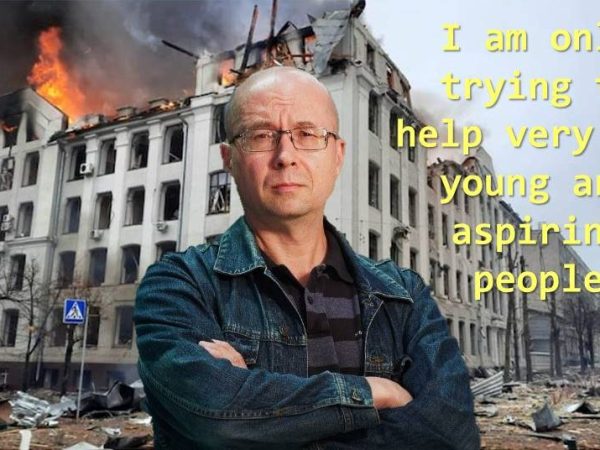
“Let me assure you that I totally condemn the war in Ukraine, and at the very least because my old mother is in Kharkiv and she suffers a lot… I am trying to help my colleagues and friends from Ukraine whichever way I can…” – Professor Kostya “Ken” Ostrikov
Back in April 2023, Ostrikov replied to me right away and announced “take proper actions“. So then his Iranian colleague Milad Rasouli went to PubPeer and openly admitted to being a data-faking moron. He also provided a replacement figure which was indeed also fraudulent (on the right). On 28 July 2023, Ostrikov and his Iranian associates published that same fake replacement figure in a Correction:
“During preparation of Figure 1 some of the data has been inappropriately superimposed. As a result, in Figure 1A a section of the spectrum for the “0.6 μM Sn” condition overlapped with a corresponding section in the spectrum of the “0.3 μM Sn” condition. A section of the spectrum for the “0.8 μM Ag” condition overlapped with corresponding sections in the spectra for “0.4 μM Ag” in Figure 1B, and “0.6 μM Sn” and “0.3 μM Sn” conditions in Figure 1A.”
On 10 August 2023, Maarten van Kampen sent a protest note to the editors of Scientific Reports. They announced to re-evaluate the data and look into the issue again. On 14 February 2024, Maarten was informed that the paper has been retracted. Here is the retraction note:
“The Editors have retracted this Article.
After the publication of a Correction 1, additional concerns were raised about the corrected X-ray diffraction spectra presented in Figure 1.
The Authors repeated the experiments and provided the Editors with the new spectra, but an expert peer review of this data by the journal concluded that the new results were not consistent with those of the published Article and its Correction. The Editors therefore no longer have confidence in this work and its conclusions.
All Authors agree to the retraction and its wording.”
Did you get it? The journal was prepared to accept fake spectra from Ostrikov et al a THIRD time after “repeated” experiments, but Rasouli was too dumb to get his new forgery to fit his originally postulated conclusions.
“He has embarked on a path of unacceptable slander, not only against me, but also against my colleagues (Prof. Oleg Smutok, Prof. Arnold Kiv, Prof. Vladimir Solovyov). We have all the necessary evidence to bring Leonid Schneider to justice for slander and moral turpitude.” – Taras Kavetskyy.
Inconsistent consent and ethical approval documentation
After Nature reported about Yves Moreau‘s fight to retract papers by Chinese police on minorities surveillance (read earlier Friday Shorts), Wiley’s Director for Research Integrity Strategy & Policy Michael Streeter announced to retract 18 of them, in an email to Moreau from 7 February 2024:
“Dear Dr. Moreau,
I’m writing to follow-up on my email from early January this year to confirm that Wiley and Molecular Genetics & Genomic Medicine will be retracting the 18 articles in that journal escalated for investigation. We have also taken the decision to withdraw in full the supplementary datasets included with each article. A separate email from the Wiley Research Integrity team has been sent to the full editorial board of the journal.
Our investigation determined that the consent and ethical approval documentation was inconsistent with the research reported in the articles, and that additional documentation provided by the authors was not sufficiently detailed to resolve those concerns.
The retractions are scheduled to publish on or about Friday, February 9th and we ask that you keep this information confidential until the retractions have been published. Thank you again for drawing our attention to this matter. We appreciate your understanding while we have investigated.
Who would have known that Uyghur DNA, used by Chinese state security for genetics research into racial profiling and face prediction, was obtained under coercion? Four papers by Caixia Li et al are now retracted.
My colleagues and fellow self-appointed fraud busters, seeking to make a name for themselves and to see how big a fish they can net, studied Michael Shelanski‘s work that might have faded into oblivion perpetual life. Admittedly, they did not read the actual paper and do not look at whether the work has stood the test of time.
Michael Shelanski’s text is a bit confusing: is he accusing people of not even “reading the actual papers” (now “available with a few keystrokes”), or of reading them too carefully?
Michael Shelanski’s comments confirm something I’ve noticed about the attitude’s of university faculty–you need to show great respect for them due to the position they have obtained, even if the work they do (teaching and research) is crap.
On behalf of the University of Perugia I would like to reassure you that the images were originally generated by honest and hardworking research of our scientists, and then stolen by Chinese papermills who published them 7 years before our manuscript. See you in court.















My colleagues and fellow self-appointed fraud busters, seeking to make a name for themselves and to see how big a fish they can net, studied Michael Shelanski‘s work that might have faded into oblivion perpetual life. Admittedly, they did not read the actual paper and do not look at whether the work has stood the test of time.
But they found manipulated data in his papers.
https://pubpeer.com/search?q=shelanski
LikeLike
Michael Shelanski’s text is a bit confusing: is he accusing people of not even “reading the actual papers” (now “available with a few keystrokes”), or of reading them too carefully?
LikeLike
You aren’t supposed to read then, only to admire them from a distance.
LikeLiked by 1 person
Do not forget cite them, otherwise you end up a failed scientist.
LikeLiked by 1 person
Does he consider himself a big fish? Is he now “in the net”?
LikeLike
Ah, both! He desires the uncritical science cheerleading crowd to peruse them, while everyone else ought to kindly bugger off.
LikeLike
Leonid is racist against Italians.
LikeLiked by 1 person
Can someone here help and tell if Yuanzhe Li is a real person? https://orcid.org/0000-0001-7530-8286
LikeLike
He is (his LinkedIn features photos of him speaking) and he’s authoring and editing papers outside of his supposed expertise. https://loop.frontiersin.org/people/1611969/publications
Why is he an author of this paper on teaching English as a second language? https://www.igi-global.com/gateway/article/315622
Or this paper on the Chinese hospitality industry? https://www.mdpi.com/2227-9717/10/7/1256
Why is he reviewing articles on fashion and first aid?
LikeLike
A fine example of a rhetorical question. Named after the Greek orator Rhetor, who invented them in 276 BCE.
LikeLike
Michael Shelanski’s comments confirm something I’ve noticed about the attitude’s of university faculty–you need to show great respect for them due to the position they have obtained, even if the work they do (teaching and research) is crap.
LikeLike
They have had to grovel so much in front of the hierarchy that they consider that everyone must do the same.
LikeLiked by 1 person
Yet another article by Antognelli & Talesa where some images were taken from a Chinese paper published seven years earlier:
PubPeer – Glyoxalase 2 Is Involved in Human Prostate Cancer Progressio…
LikeLike
On behalf of the University of Perugia I would like to reassure you that the images were originally generated by honest and hardworking research of our scientists, and then stolen by Chinese papermills who published them 7 years before our manuscript. See you in court.
LikeLiked by 1 person
RETRACTION to Antognelli et al. 2017 Molecular Carcinogenesis, 15 November 2024:
PubPeer – Glyoxalase 2 drives tumorigenesis in human prostate cells in…
RETRACTION: Glyoxalase 2 Drives Tumorigenesis in Human Prostate Cells in a Mechanism Involving Androgen Receptor and p53‐p21 Axis – Molecular Carcinogenesis – Wiley Online Library
LikeLiked by 1 person
RETRACTION to Talesa et al. 2017 Prostate, 17 November 2024:
PubPeer – Glyoxalase 2 Is Involved in Human Prostate Cancer Progressio…
RETRACTION: Glyoxalase 2 Is Involved in Human Prostate Cancer Progression as Part of a Mechanism Driven By PTEN/PI3K/AKT/mTOR Signaling With Involvement of PKM2 and ERα – The Prostate – Wiley Online Library
LikeLiked by 1 person