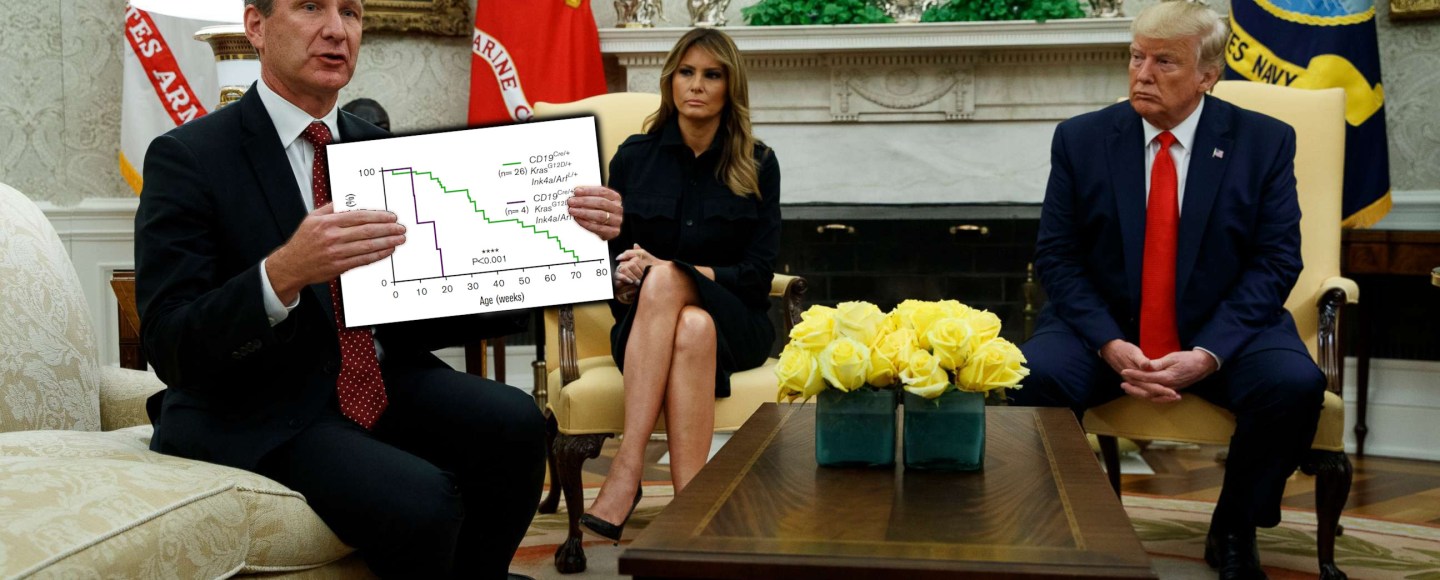

Kakistocracy is when the least suitable and least competent people rise into the positions of top leadership. This is why Donald Trump appointed Norman E Sharpless as director of NIH’s National Cancer Institute (NCI) in 2017, and in 2019 as director of FDA, from which Sharpless soon returned to leading NCI until Joe Biden finally removed him in spring 2022.
Sholto David looked into Sharpless’ own past dabs at cancer research. It may be not disastrously criminal like Trump’s presidency, but it isn’t great either.
Sharpless Ned, or how half a mouse died
By Sholto David
The National Institutes for Health is made up of 27 institute and centres, of which the National Cancer Institute (NCI) is the oldest, largest, and best funded. As far as leadership positions in cancer research go, directing the NCI must rank as one of the most important in the US, if not the world. Norman (Ned) E. Sharpless spent five years at the helm (and even a brief stint as acting commissioner of the FDA), departing in 2022. Naturally, huge praise was heaped on his work:
“The President’s goal of ending cancer as we know it today is grounded, in part, in the work of scientific discovery that Ned Sharpless has led at NCI,”
Danielle Carnival, Ph.D., White House Cancer Moonshot Coordinator.
We might hope that scientists at the top of the research tower are untainted by image duplication troubles, but sadly not so for Ned. Let’s go in chronological order, and start with a whopper.
Robert M Bachoo, Elizabeth A Maher, Keith L Ligon, Norman E Sharpless, Suzanne S Chan, Mingjian James You, Yi Tang, Jessica DeFrances, Elizabeth Stover, Ralph Weissleder, David H Rowitch, David N Louis, Ronald A DePinho Epidermal growth factor receptor and Ink4a/Arf Cancer Cell (2002) doi: 10.1016/s1535-6108(02)00046-6
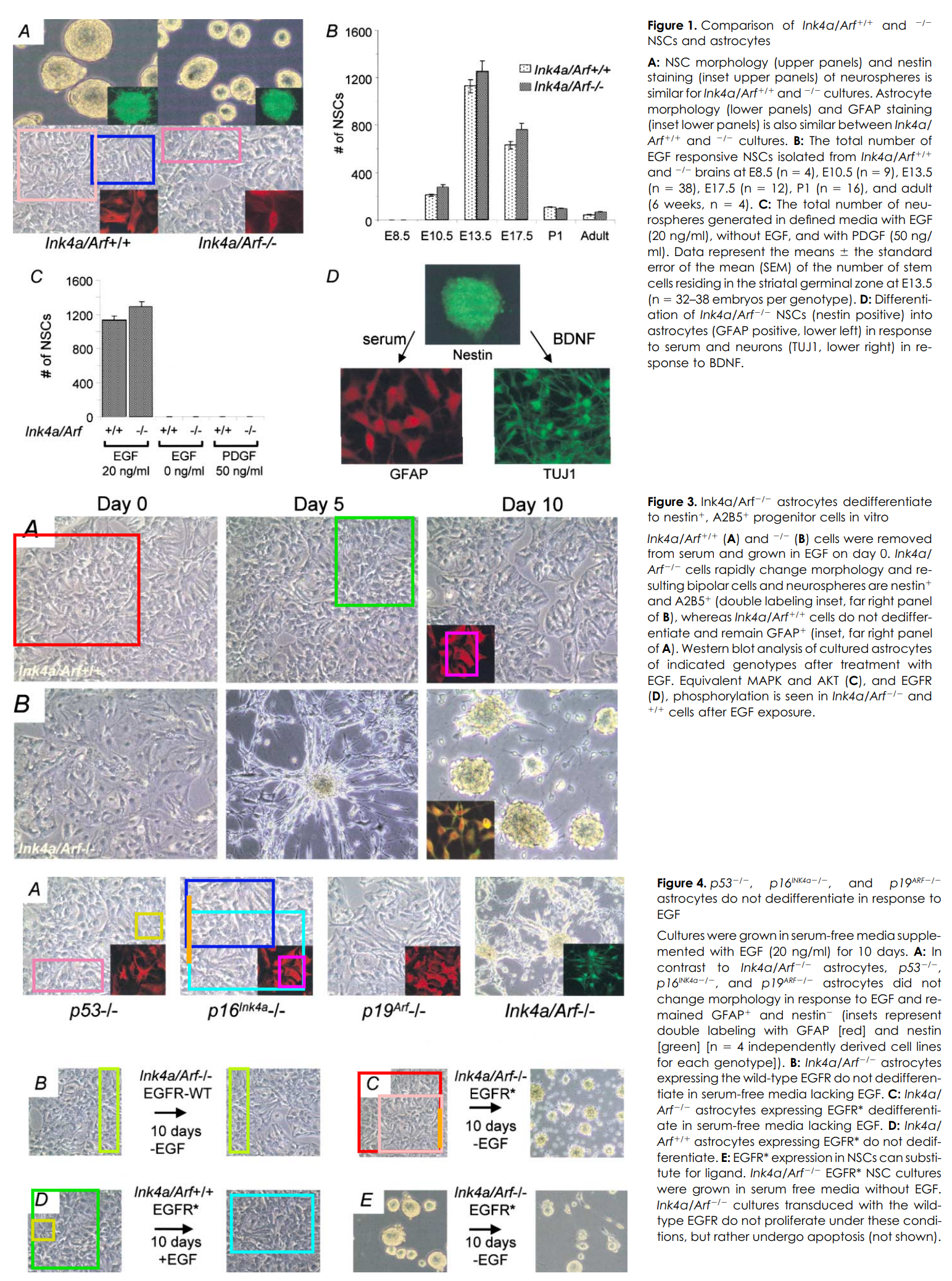
The coloured rectangles show various overlaps between what should be different time points and cell lines, there’s simply no excuse for this; published in 2002, most of the authors are still working in senior positions in cancer research, the last author is Sharpless’ former postdoctoral mentor Ronald A DePinho, who previously led the MD Anderson Cancer Centre, and has an impressive PubPeer record of his own.
Anil Sood and other questionable stars of MD Anderson
The MD Anderson Cancer Center, part of the University of Texas and located in Houston, is a giant hub of huge cancer research money, even for US standards. They also do a lot of science there, which only purpose seems to be publishing in big journals in order to generate even more money. If there…

DePinho, who by the way is still being paid over $1 million by MD Anderson, found time to reply:
“Dr. Bachoo is reviewing the materials and the pubpeer analysis and has provided me with a draft. […] We will then submit to the Cancer Cell editor. […] …allow for us to conduct a careful review the material in order to provide an accurate response.”
By the way, it was DePinho who convinced Trump to install his former postdoc Sharpless as NCI director. A working e-mail contact of Sharpless could not be found online.
A 2004 paper where Ned is the last author includes an overlapping area between histology images which should have been taken from different mice.
Janakiraman Krishnamurthy, Chad Torrice, Matthew R. Ramsey, Grigoriy I. Kovalev, Khalid Al-Regaiey, Lishan Su, Norman E. Sharpless Ink4a/Arf expression is a biomarker of aging Journal of Clinical Investigation (2004) doi: 10.1172/jci22475

A relatively minor error from 2005 next, the Hgb blot below has nine samples, but ten actin loading controls are shown. Shouldn’t elite cancer researchers be able to count on their fingers? If colon tissue extract is supposed to be a “positive control” it certainly isn’t a very good one…
Steven L. Gibson, Amelie Boquoi, Tina Chen, Norman E. Sharpless, Colleen Brensinger, Greg H. Enders p16Ink4a inhibits histologic progression and angiogenic signaling in min colon tumors Cancer Biology & Therapy (2005) doi: 10.4161/cbt.4.12.2303

Posted on PubPeer by an anonymous account in 2015, clear evidence of a spliced western blot. The mdm2 blot above is not spliced, so this is a troublesome finding, even for a paper published in the early 21st century (2006).
Seema Paliwal, Sandhya Pande, Ramesh C. Kovi, Norman E. Sharpless, Nabeel Bardeesy, Steven R. Grossman Targeting of C-terminal binding protein (CtBP) by ARF results in p53-independent apoptosis Molecular and Cellular Biology (2006) doi: 10.1128/mcb.26.6.2360-2372.2006

Also, from 2006, another histology overlap between samples that should be derived from different treatment conditions. There is a slight rotation and difference in intensity here.
Hongbin Ji, Danan Li, Liang Chen, Takeshi Shimamura, Susumu Kobayashi, Kate McNamara, Umar Mahmood, Albert Mitchell, Yangping Sun, Ruqayyah Al-Hashem, Lucian R. Chirieac, Robert Padera, Roderick T. Bronson, William Kim, Pasi A. Jänne, Geoffrey I. Shapiro, Daniel Tenen, Bruce E. Johnson, Ralph Weissleder, Norman E. Sharpless, Kwok-Kin Wong The impact of human EGFR kinase domain mutations on lung tumorigenesis and in vivo sensitivity to EGFR-targeted therapies Cancer Cell (2006) doi: 10.1016/j.ccr.2006.04.022

Note the last author Kwok-Kin Wong who has also a well developed PubPeer record, including one problematic paper shared with the ghoulish David M. Sabatini and a western blot mixup authored with Jeffrey E. Settleman, now Chief Scientific Officer for Oncology Research at Pfizer.
The Sex Privileges of mTORman David Sabatini
“The Plaintiff is Professor Sabatini […] the self-described powerful senior scientist, who had demanded sex of her when she was a graduate student ending her studies and about to start a fellowship at the Whitehead, in a program Sabatini would direct. […] And it is the man who had made it clear – throughout her…
Even more concerning, in the same paper, an identical image of a mouse is labelled as Day 1 and Day 10. The authors clearly wished to show that bioluminescence reduced after Dox treatment stopped, so repeating the image taken before induction is a very convenient mistake to make.

In 2007 another repeated histology image; whilst these images can sometimes be similar, the pixel perfect match here is unexpected.
Matthew R. Ramsey, Janakiraman Krishnamurthy, Xin-Hai Pei, Chad Torrice, Weili Lin, Daniel R. Carrasco, Keith L. Ligon, Yue Xiong, Norman E. Sharpless Expression of p16Ink4a Compensates for p18Ink4c Loss in Cyclin-Dependent Kinase 4/6–Dependent Tumors and Tissues Cancer Research (2007) doi: 10.1158/0008-5472.can-06-3437

In 2009, a paper in Developmental Cell includes a very likely error in western blot selection. The quality in the supplementary figure is (of course) terrible, presumably because impoverished publishers are forced to save money on every pixel, but I think there is enough resemblance inside the red rectangles to tag Smut’s Department of Unexpected Similarities.
Esther Sook Miin Wong, Xavier Le Guezennec, Oleg N. Demidov, Nicolette Theresa Marshall, Siew Tein Wang, Janakiraman Krishnamurthy, Norman E. Sharpless, N. Ray Dunn, Dmitry V. Bulavin p38MAPK Controls Expression of Multiple Cell Cycle Inhibitors and Islet Proliferation with Advancing Age Developmental Cell (2009) doi: 10.1016/j.devcel.2009.05.009

In 2013 an impressive list of authors, (all who should read and approve the final manuscript, of course) did not notice that the microscopy images included a large overlap between supposedly different cell lines.
Yan Liu, Kevin Marks, Glenn S. Cowley, Julian Carretero, Qingsong Liu, Thomas J.F. Nieland, Chunxiao Xu, Travis J. Cohoon, Peng Gao, Yong Zhang, Zhao Chen, Abigail B. Altabef, Jeremy H. Tchaicha, Xiaoxu Wang, Sung Choe, Edward M. Driggers, Jianming Zhang, Sean T. Bailey, Norman E. Sharpless , D. Neil Hayes, Nirali M. Patel, Pasi A. Janne, Nabeel Bardeesy, Jeffrey A. Engelman, Brendan D. Manning, Reuben J. Shaw, John M. Asara, Ralph Scully, Alec Kimmelman, Lauren A. Byers, Don L. Gibbons, Ignacio I. Wistuba, John V. Heymach, David J. Kwiatkowski, William Y. Kim, Andrew L. Kung, Nathanael S. Gray, David E. Root, Lewis C. Cantley, Kwok-Kin Wong Metabolic and Functional Genomic Studies Identify Deoxythymidylate Kinase as a Target in LKB1-Mutant Lung Cancer Cancer Discovery (2013) doi: 10.1158/2159-8290.cd-13-0015

More western blot troubles occurred in 2016, this time with Ned as the last author, and collaborating with James E Bradner, who (at the time of this paper’s publication) was president of the Novartis Institutes for BioMedical Research and a member of the Executive Committee of Novartis. In this case the first author has replied, and accepted an error was made, which (quite fortunately)… “does not affect result interpretation or conclusions“. Of course! Errors in results never impact conclusions, a well established principle on PubPeer.
George P Souroullas, William R Jeck, Joel S Parker, Jeremy M Simon, Jie-Yu Liu, Joshiawa Paulk, Jessie Xiong, Kelly S Clark, Yuri Fedoriw, Jun Qi, Christin E Burd, James E Bradner, Norman E Sharpless An oncogenic Ezh2 mutation induces tumors through global redistribution of histone 3 lysine 27 trimethylation Nature Medicine (2016) doi: 10.1038/nm.4092

Another mouse puzzle, this time with a mirror and bioluminescence. The images are obviously different, but it is definitely the same mouse, held in the same position. If you are not convinced, please follow the PubPeer link for an animated version. Authors include the surprisingly named Emmeline C. Academia!
Marco Demaria, Monique N. O’Leary, Jianhui Chang, Lijian Shao, Su Liu, Fatouma Alimirah, Kristin Koenig, Catherine Le, Natalia Mitin, Allison M. Deal, Shani Alston, Emmeline C. Academia, Sumner Kilmarx, Alexis Valdovinos, Boshi Wang, Alain De Bruin, Brian K. Kennedy, Simon Melov, Daohong Zhou, Norman E. Sharpless, Hyman Muss, Judith Campisi Cellular Senescence Promotes Adverse Effects of Chemotherapy and Cancer Relapse Cancer Discovery (2017) doi: 10.1158/2159-8290.cd-16-0241

The nemesis of paper mills, crystal violet stained cells, this purple colour is huge a red flag and I always look carefully. Chinese Papermills should take heart, even the director of the NCI has muddled such images, you are in most excellent scientific company!
Aayoung Hong, Gatien Moriceau, Lu Sun, Shirley Lomeli, Marco Piva, Robert Damoiseaux, Sheri L. Holmen, Norman E. Sharpless, Willy Hugo, Roger S. Lo Exploiting Drug Addiction Mechanisms to Select against MAPKi-Resistant Melanoma Cancer Discovery (2018) doi: 10.1158/2159-8290.cd-17-0682


And to finish, some non-image related findings. A comment by an anonymous user in 2022, this time highlighting similarities between flow cytometry plots. It is highly unlikely that these images are derived from different samples.
George P. Souroullas, Brian O. Diekman, Janakiraman Krishnamurthy, Brandon M. Hall, Jessica A. Sorrentino, Joel S. Parker, Garrett A. Sessions, Andrei V. Gudkov, Norman E. Sharpless Cells exhibiting strong promoter activation in vivo display features of senescence Proceedings of the National Academy of Sciences (2019) doi: 10.1073/pnas.1818313116

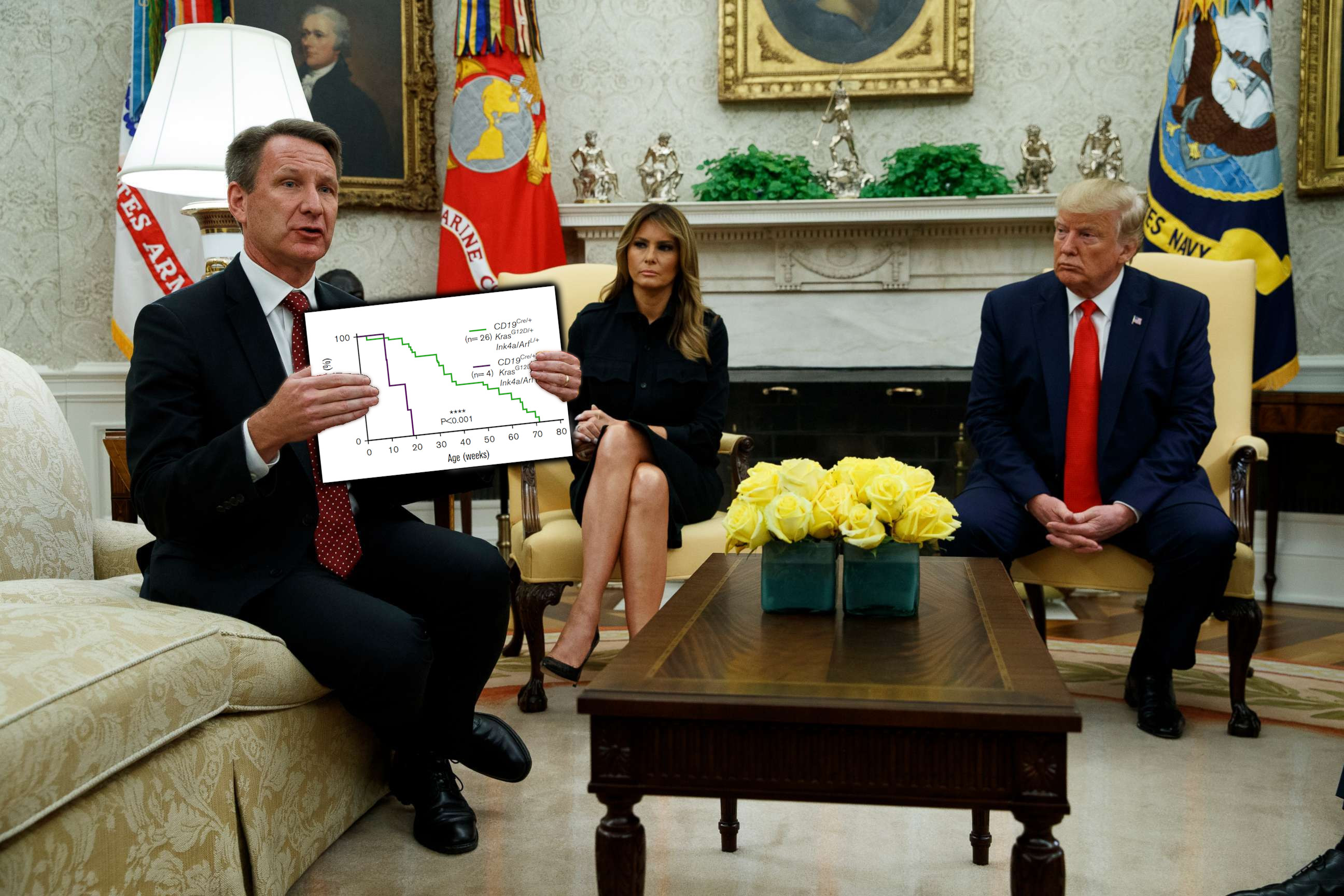
And finally, a likely error in survival analysis. How can n = 26 be correct for the green curve? Each vertical step down on the green line should be ~4% (Or a multiple of ~4%), so why are there tiny steps? Did half a mouse die at 30 weeks?
Tomasz Sewastianik, Meng Jiang, Kumar Sukhdeo, Sanjay S Patel, Kathryn Roberts, Yue Kang, Ahmad Alduaij, Peter S Dennis, Brian Lawney, Ruiyang Liu, Zeyuan Song, Jessie Xiong, Yunyu Zhang, Madeleine E Lemieux, Geraldine S Pinkus, Jeremy N Rich, David M Weinstock, Charles G Mullighan, Norman E Sharpless, Ruben D Carrasco Constitutive Ras signaling and inactivation cooperate during the development of B-ALL in mice Blood Advances (2017) doi: 10.1182/bloodadvances.2017012211

I haven’t looked at the non-image data in these papers much at all, it usually isn’t worth the time to ask questions that require typing more than a paragraph; authors rarely respond or share data, editors can barely understand problems with pictures, anything more complex than “spot-the-difference” type problems are likely to become immediately muddled.
In Summary: Ned’s work isn’t remarkable for the number or the type of errors and only the first paper is obviously fraudulent, the rest you could credibly excuse as incompetence typical for cancer researchers. Still it would be nice if the person who helped the US fritter away billions of dollars on the unlikely goal of “ending cancer as we know it” could at least avoid mistakes that would lose significant marks in an undergraduate project.
Will Ned or his colleagues do anything about this? Probably not! Here’s an awkward truth: Corrections are very easily mastered, but only when it comes to mistakes like spelling someone’s name wrong, or insufficiently appeasing a collaborators ego. Here’s a published corrigendum from one of Ned’s papers:
“During the preparation of the manuscript, George N. Naumov’s name was inadvertently presented incorrectly in the author list. The correct author list appears above.
Corrigendum (October 2009)
The authors regret the error.”
And what was wrong with the presentation of the name? They missed the middle initial! Heaven forbid! Such a grievous error could impact citation metrics! No wonder the authors regretted it.
There are three more corrections in Ned’s publication record, devoted to administrative details and appeasing the egos of minor contributors, no data has ever been corrected, although an appendix was withdrawn in this one.
These corrections are performative, they give the impression that scientists acknowledge and correct all errors, no matter how small, but in reality researchers and publishers strive to only correct trivial errors, and ignore anything else.
Some credit should go to two anonymous PubPeer users, one who beat me to this scoop by eight years, and to ImageTwin.ai, which was used to identify some of the problematic images.
I thank all my donors for supporting my journalism. You can be one of them!
Make a one-time donation:
I thank all my donors for supporting my journalism. You can be one of them!
Make a monthly donation:
Choose an amount
Or enter a custom amount
Your contribution is appreciated.
Your contribution is appreciated.
DonateDonate monthly
 For Better Science
Today, I acquired the knowledge that the term ‘goulish’ is spelled without an ‘h,’ even when alluding to the supernatural beings known as ‘Ghouls.’ Alas, my struggle persists, as the intricacies of the English language remain elusive to me, a foreigner grappling with its nuanced intricacies.
Ooh… and N.E.S. even has a paper with good old Judith of Unity Bio. fame! What a surprise.
(https://en.wikipedia.org/wiki/Judith_Campisi)!
https://pubpeer.com/search?q=Judith+Campisi
Thanks, SD.
LikeLiked by 1 person
Unfortunately, I think I have just spelled it wrong. I will check and correct if necessary. I certainly wouldn’t take any spelling lessons from me (or any other lessons).
It’s quite the web at the top of cancer research!
LikeLike
Oh, lulz! You’re right. When I looked it up, some ‘translation page’ came up with it spelled without an ‘h.’ They use some kind of AI to do the translations and generate the ‘meaning paragraphs’. The AI obviously autocorrected the misspelling, but the website didn’t, giving me the impression it was correctly spelled. Brave new world!
LikeLiked by 1 person
I have performed a stealth correction. Don’t tell Leonid.
LikeLike
Conclusions? Are they affected?
LikeLike
Is that Judith “1 retraction” Campisi?
https://pubpeer.com/search?q=Judith+campisi
http://retractiondatabase.org/RetractionSearch.aspx#?auth%3dCampisi%252c%2bJudith
LikeLike
Of course you can’t blame the senior author, Judith Campisi, for the Retraction, or…?
LikeLike
Sure.
It’s also the Judith who managed together with Jan and Nathan (IIRC) to start with a $155/share company…
https://seekingalpha.com/symbol/UBX (press max on the graph).
You see? Sometimes excellent research does not translate to business success. Why? ;p
LikeLike
Judith Campisi is on firm ground.
The head of her institute is Eric Verdin.
No worries there, I mean for Judith Campisi.
https://www.buckinstitute.org/lab/verdin-lab/
https://pubpeer.com/search?q=Eric+Verdin
LikeLike
Sharpless is in the steering (to fraud most likely) board of Eshelman Institute for Innovation https://unceii.org/about/our-steering-board/ funding the already featured here Kabanov https://forbetterscience.com/2021/09/24/schneider-shorts-24-09-2021-say-cheese/#kabanov.
But wait, there’s more, from his steering page https://unceii.org/norman-sharpless-m-d/:
He is on the boards of G1 Therapeutics, Karius Inc, Nucleus Radiopharma and the CEO Roundtable on Cancer; and is the co-Founder of Jupiter BioVentures.
Seems using his vast experience he is now funding and growing “great” scientists and entrepreneurs like himself.
LikeLike
… ‘impoverished publishers are forced to save money on every pixel’…
To trim expenses, they should consider axing unnecessary images in submitted papers that don’t contribute to any meaningful conclusion. It’s a straightforward solution!
LikeLike
Minor typo. Release should have read: ““The President’s goal of ending cancer as we know it today was grounded, in part, by the work of scientific discovery that Ned Sharpless has led at NCI.” Herr Drumpf apologizes.
LikeLike
Did you try nes@med.unc.edu to contact Sharpless?
LikeLiked by 1 person
I definitely sent a few emails to that inbox, no luck.
LikeLike
I’m wrong! I just checked my sent box, never used that email.
LikeLike
Pingback: Sholto David avslöjar slarv och fusk i forskningsvärldens finrum | Forskning & Framsteg