
Due to popular demand, we are revealing now the secret of The Vickers Curse. Attention papermill customers: you were caught on lies when blaming it all on Endnote and other referencing software. Your mis-citations arose because your well-paid papermill has supplied you with a hack job, and Alexander Magazinov will explain exactly how.
We reported about the Vickers Curse in October 2022. A certain editorial about insect pheromones was inappropriately referenced in all possible scientific fields:
Neil J. Vickers Animal Communication: When I’m Calling You, Will You Answer Too? Current Biology (2017) doi: 10.1016/j.cub.2017.05.064
When I’m citing you, will you answer too?
What do moth pheromones on one side have to do with cancer research, petrochemistry, materials science, e-commerce, psychology, forestry and gynaecology on the other? They are separated by just one citation!

At the time of writing, the Vickers editorial received already 1200 citations, 1194 to be precise. Only one of these was appropriate and intentional, the rest definitely not. And what surprise, almost all of these hilariously out-of-place citations appeared in publications with a strong papermill odour to them. Almost 330 Vickers-cursed papers are currently flagged on PubPeer. A number has been already retracted. Many citing “authors” are known papermill customers, some papers were even seen being sold online by papermills. Like this one:
Sina Rahimpour , Hadi Jabbari , Hajar Yousofi , Arian Fathi , Shiva Mahmoodi , Mohammad Javad Jafarian , Navid Shomali , Siamak Sandoghchian Shotorbani Regulatory effect of sericin protein in inflammatory pathways; A comprehensive review Pathology – Research and Practice (2023) doi: 10.1016/j.prp.2023.154369

Nick Wise: “On the 14th of January 2023 an advert was placed on Facebook selling authorship of a paper with a topic matching this one. The impact factor the journal is also a match.“

Also this book chapter from a German elite lab suffered from the Vicker Curse:
Alireza Shahryari, Zahra Nazari , Marie Saghaeian Jazi , Fatemeh Hashemi-Shahraki , Katharina Wißmiller, Weiwei Xu , Ingo Burtscher, Heiko Lickert Gene Therapy Comprehensive Pharmacology (2022) doi: 10.1016/b978-0-12-820472-6.00213-9
“Approximately 16% of all DMD patients have exon 51 skippable mutations, making exon 51 a suitable target for DMD therapy (Vickers, 2017).”
On PubPeer, the Iranian first author explained:
“That reference was in our Endnote library and has been wrongly added to our chapter.“
The last author Heiko Lickert, institute director at Helmholtz Center Munich, refused communication. So I contacted the Ombudsman of this Helmholtz Center with our suspicions that the Endnote explanation made no sense. The Ombudsman Rolf Holle, immediately forwarded my entire communication, with my name and all, to Lickert, and then closed the case without even a cursory plagiarism check, because Lickert assured him the paper was scientifically fine.
German Authorities on Papermills and Whistleblowing
“I am not familiar with Iranian papermills!” – Prof Dr med Henning Madry, Saarland University.
Here another example of the Vickers Curse striking allegedly innocent European scholars, a collaboration by Italian, Spanish and Chinese authors:
Wang Lu , Pietro Bartocci, Alberto Abad , Aldo Bischi , Haiping Yang , Arturo Cabello , Margarita De Las Obras Loscertales , Mauro Zampilli , Francesco Fantozzi Dimensioning Air Reactor and Fuel Reactor of a Pressurized CLC Plant to Be Coupled to a Gas Turbine: Part 2, the Fuel Reactor Energies (2023) doi: 10.3390/en16093850
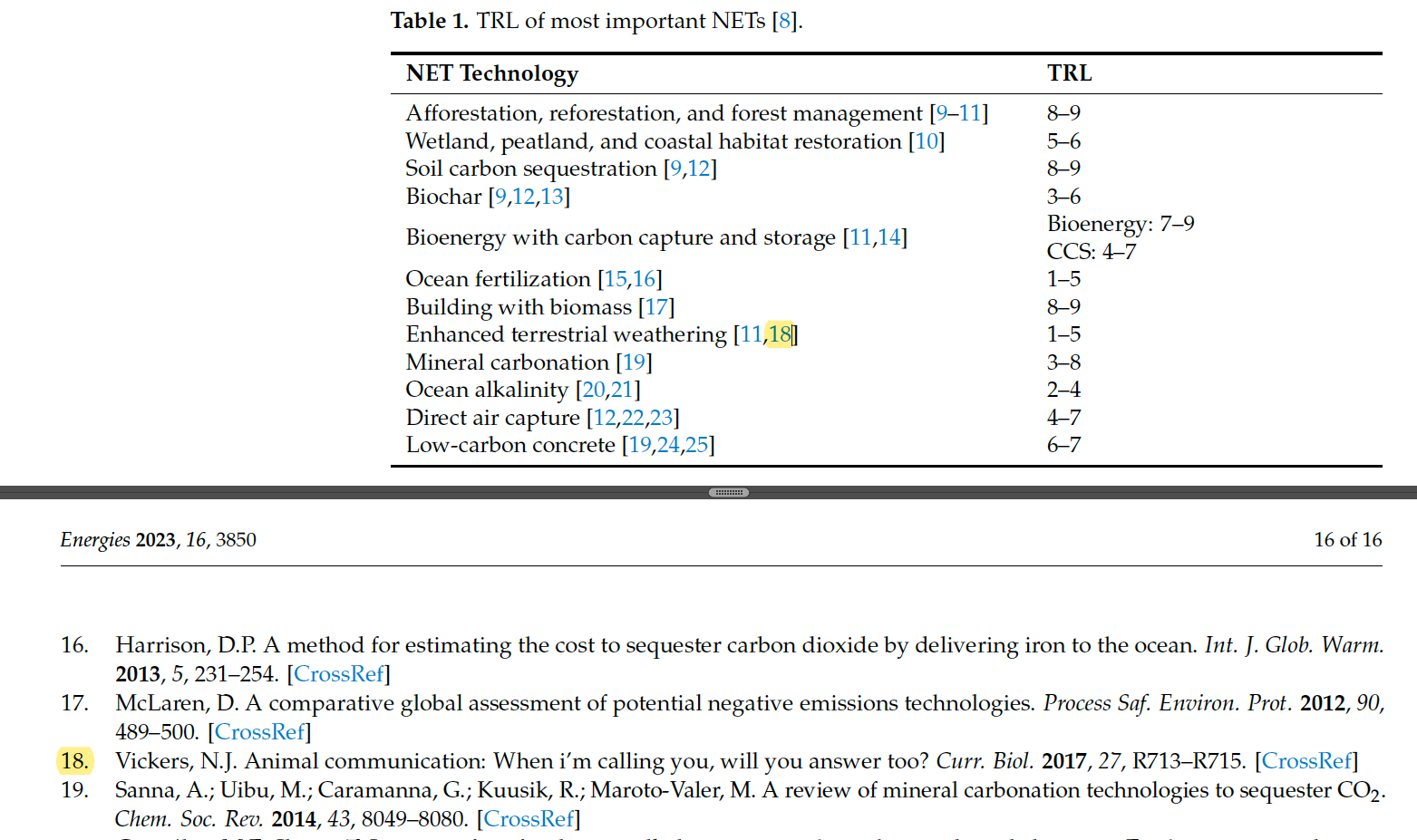
The reference doesn’t really fit, does it? The second author Pietro Bartocci explained on PubPeer:
“Thanks for signaling this the citation in 18 has to be substituted with: “Smith P, Davis SJ, Creutzig F, Fuss S, Minx J, Gabrielle B, et al. Biophysical and economic limits to negative CO2 emissions. Nature Climate Change. 2015 Dec 7;6(1):42–50. Available from: http://dx.doi.org/10.1038/nclimate2870“. I will communicate this to the editor of the journal.“
Only that there is no way this Nature Portfolio paper was the one Bartocci et al originally wanted to cite. Just like the MDPI reference offered by Italian authors to fix Rehman et al 2023 cannot be what they originally meant to cite. Neither are the ACS-published alternatives proposed (here and here) by “authors” of Khalil et al 2022 and Ali et a 2020 any credible.
And we will show you now why.
The Vickers Curse: secret revealed!
By Alexander Magazinov
Before I start, I need to give credit where credit is due: it is Maarten van Kampen who actually discovered the secret! He interviewed one of the “cursed” authors and learned how the citation to the undoubtedly monumental work (Vickers, 2017) is generated again and again.

Some commenters here and elsewhere suspected that (Vickers, 2017) receives so many citations due to a bug in some software, often naming EndNote as the #1 suspect. Now comes the revelation: the “naughty one” here is actually Google Scholar.
But in reality, human sloppiness should be blamed for letting the Vickers citation through.
Back in the days, I used Google Scholar for referencing in my papers, too. The workflow is simple: enter a query which brings up the paper you wish to cite, hit the “cite” button, copy and paste into your draft. Like here:
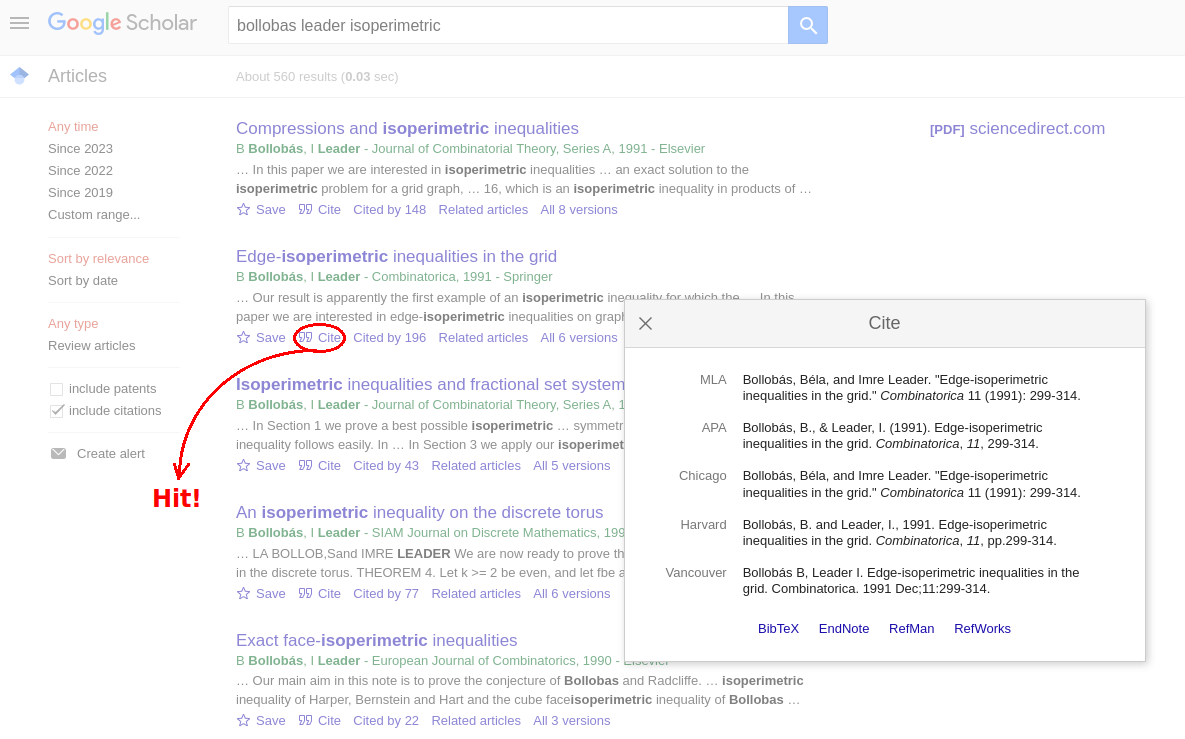
As in the picture above, I mostly used “human-like” queries, like authors plus a part of the title or some keywords. But one can search for the paper’s digital object identifier (DOI), too. A DOI has two parts, a prefix and a suffix, separated by a slash. The prefix in such cases identifies the journal publisher, and the suffix is attributed to the specific journal and a specific publication. For example, the prefix 10.1016 is assigned to Elsevier, and this publisher generally starts its journal suffixes with “j.”.
And that’s how things get interesting.
DOIs are a possible explanation why the set of “cursed” papers appears to be papermill-rich. For what we know, papermills like to operate with DOIs – let’s recall, for example the citation request received and joyfully fulfilled by Filippo Berto‘s co-authors:
Ali Izadi Ghahferokhi , Masoud Kasiri-Asgarani , Reza Ebrahimi-kahrizsangi , Mahdi Rafiei , Hamid Reza Bakhsheshi-Rad, Kamran Amini , Filippo Berto Effect of bonding temperature and bonding time on microstructure of dissimilar transient liquid phase bonding of GTD111/BNi-2/IN718 system Journal of Materials Research and Technology (2022) doi: 10.1016/j.jmrt.2022.10.014
In that paper, a number of references that boost the citation statistics of a certain HM Ali were out-of-context and therefore unwarranted. After I posted it on PubPeer in March 2023, Berto contacted me by email at his own initiative and told me the following:
“In the revision they asked those references. See below“
It was this Reviewer Report, which unequivocally requested:
8- The conclusion must be more than just a summary of the manuscript. List of references must be updated based on the proposed papers. Please provide all changes by red color in the revised version.
https://link.springer.com/article/10.1007/s13369-022-06832-3
Energy 246, 123441
https://doi.org/10.1108/HFF-12-2021-0782
DOI: 10.2174/1389201023666220411114620
Frontiers in Energy Research 10, 866466
The papers demanded by the anonymous reviewer, listed largely by DOIs, were all by Hafiz Muhammad Ali. Guess what author name stands in the metadata of the Word file. Yep: “Hafiz Ali”.
Or here:
Dina Saeed Ghataty , Reham Ibrahim Amer , Mai A. Amer , Mohamed F. Abdel Rahman , Rehab Nabil Shamma Green Synthesis of Highly Fluorescent Carbon Dots from Bovine Serum Albumin for Linezolid Drug Delivery as Potential Wound Healing Biomaterial: Bio-Synergistic Approach, Antibacterial Activity, and In Vitro and Ex Vivo Evaluation Pharmaceutics (2023)doi: 10.3390/pharmaceutics15010234
In his reviewer report (archived copy), Abbas Rahdar has been extorting 9 citations to Mehrab Pourmadadi and one to himself:
‘Introduction’ section not enough discussed with biomedical applications of highly fluorescent carbon dots should follow the cited links given:
– https://doi.org/10.1007/978-3-030-10834-2_6
– https://doi.org/10.1002/elsc.202000118
– https://doi.org/10.1002/elsc.202200016
– https://doi.org/10.1016/j.ijbiomac.2020.09.166
– https://doi.org/10.1002/bab.2271
– https://doi.org/10.1002/bab.2340
– https://doi.org/10.1080/00914037.2020.1848828
– https://doi.org/10.3390/jfb13040300
– https://doi.org/10.1007/s12551-020-00653-0
– https://doi.org/10.1016/j.jddst.2022.104001″
Always ask for more than you want! Three citations to Pourmadadi made it to the manuscript.
Although we do not know it for sure, we can imagine that a ghostwriter assembling the citation list of a milled product is given just a list of DOIs to insert as references. Here is what happens normally:
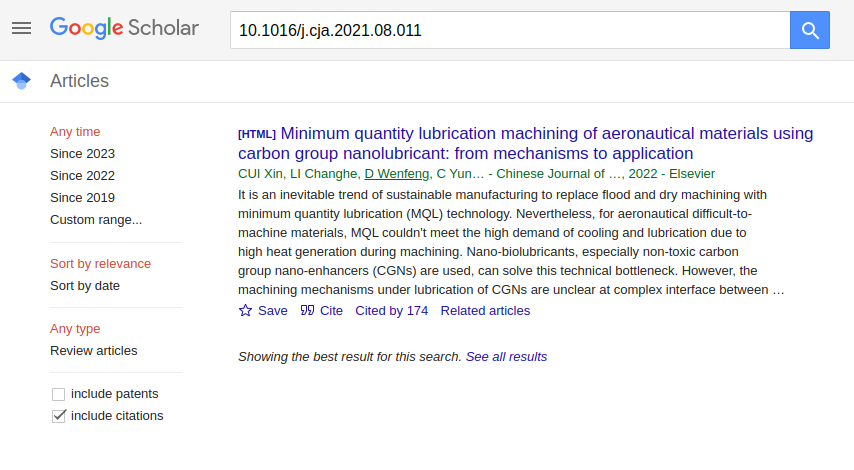
Most of the time, it works as intended. But sometimes things go wrong, especially when you decided to reference an Elsevier paper. So, here is how the Vickers curse is invocated.
Step 1. Copy the DOI!

Step 2. Paste the DOI into Google Scholar!
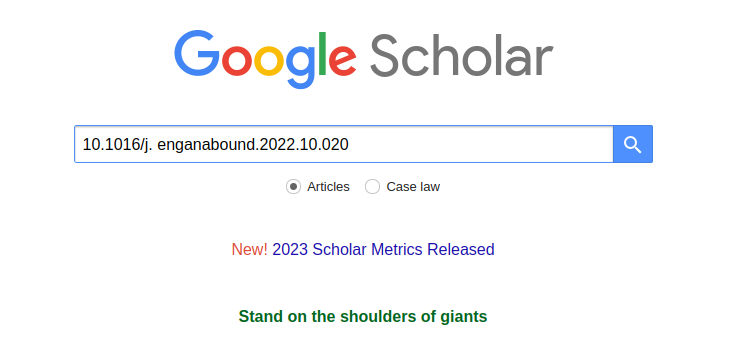
What’s wrong? There is a blank space after “10.1016/j.” – because the source document contains a newline symbol in this place. This unwanted blank space can certainly be spotted and fixed. However, if you are writing for a papermill, you might be in a hurry and might not care anyway. So, there is the next step.
Step 3. Search!
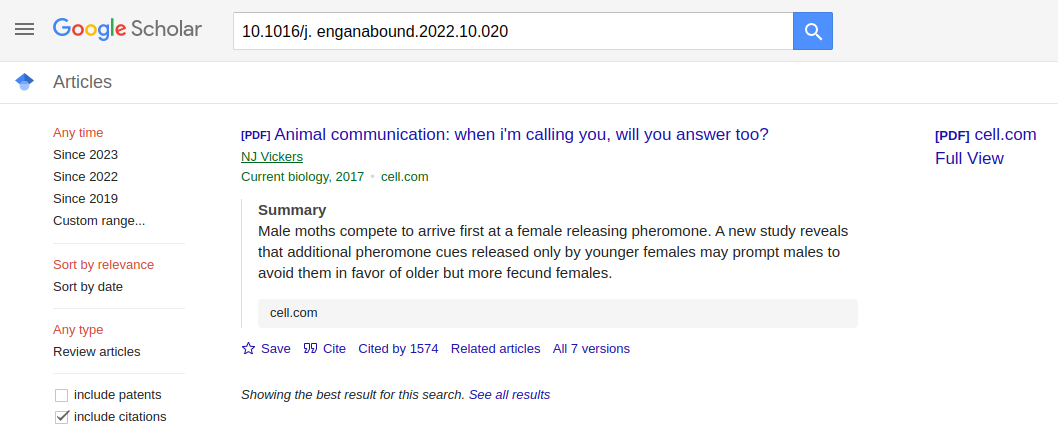
So, here is the Vickers. Every time you use the truncated doi “10.1016/j.” to cite an Elsevier paper, it will bring up Vickers’ moth pheromone editorial, a mystery which only Google Scholar could explain. But thanks to this funny feature – or call it a bug if you want, – the papermillers can be trapped with insect pheromones. Pardon the pun.
Now, one really needs to look away so as not to notice as to what your intended citation resolved to. But as a papermill ghostwriter, can you care less?
Step 4. Copy and paste the citation!
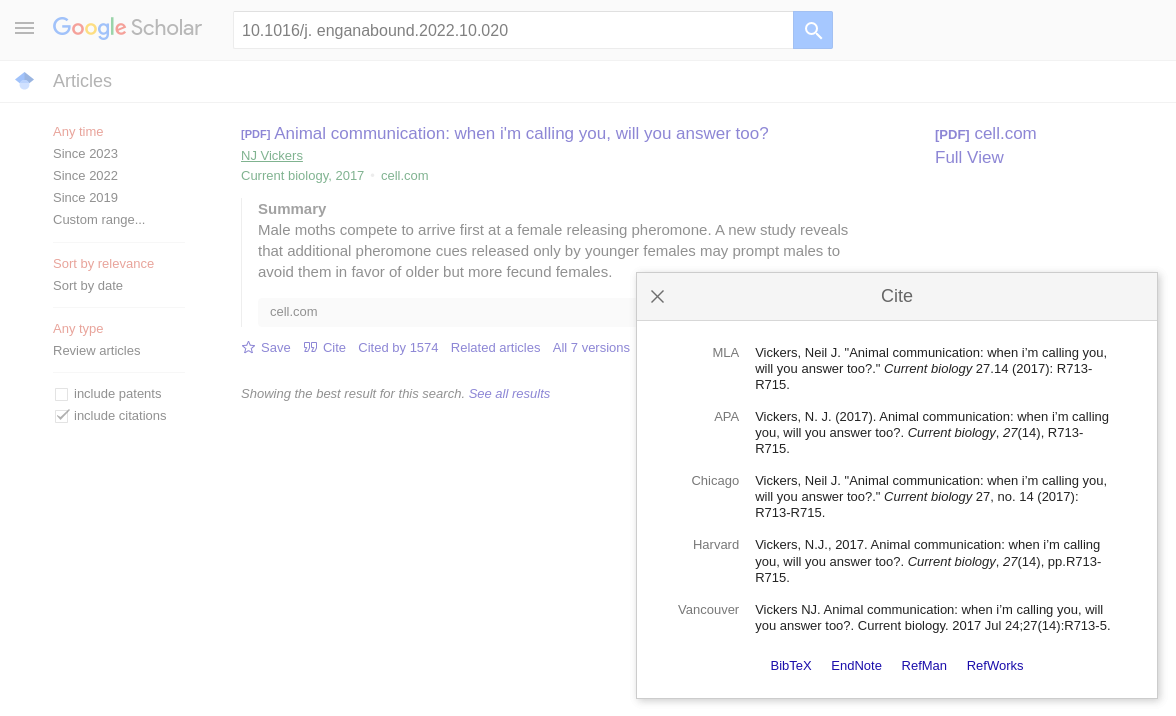
Quick, let’s press the “Cite” button! You’ll get a variety of citation formats for you to copy and paste in the reference list. You can also download a file for your favourite citation software; for EndNote, for example, it is downloaded under a generic name “scholar.enw” – in the normal circumstances you’d definitely want to have a look at it again, to rename it or whatever. Anyway, another chance is offered to catch and rectify the error. But as a papermiller, you don’t really care.
Step 5. Done! Now you have a Vickers citation in your paper. Like in this garbage study of nano-eggshell-concrete-something.
Ibrahim Y. Hakeem, Mohamed Amin, Ibrahim Saad Agwa, Mahmoud H. Abd-Elrahman, Omar Mohamed Omar Ibrahim, Mohamed Samy, Ultra-high-performance concrete properties containing rice straw ash and nano eggshell powder, Case Studies in Construction Materials (2023), doi: 10.1016/j.cscm.2023.e02291

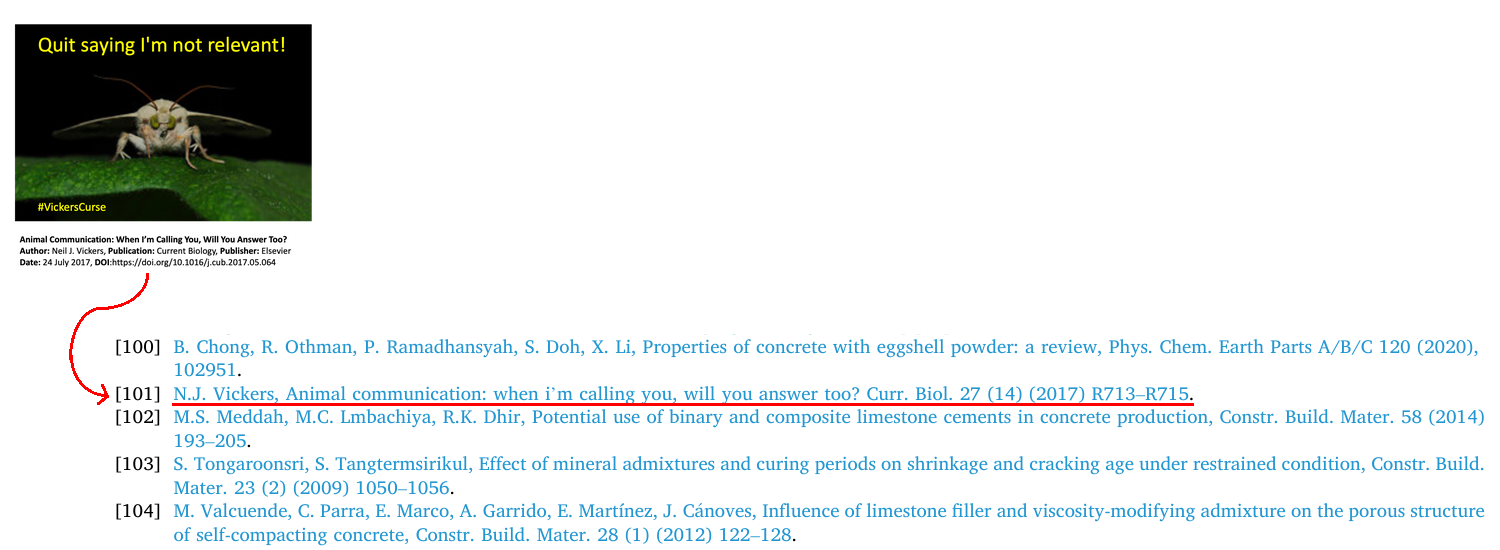
That’s it, folks!
Seriously though, dear reader, could you imagine an honest researcher not paying attention throughout all these steps?
Finally, there is an awesome video clip by Sholto David, to whom I am deeply indebted. Enjoy watching!
P.S by A.M. Are there other citation attractors? Yes!
PLoS has similar DOI structure to Elsevier, and therefore its own attractor: “10.1371/journal.” Look at this catch – Tapan Behl, Simona Gabriela Bungău and Ebrahim Mostafavi in one go!
Tapan Behl, Ishnoor Kaur, Aayush Sehgal, Sukhbir Singh, Neelam Sharma, Sridevi Chigurupati, Shatha Ghazi Felemban, Amal M. Alsubayiel, Muhammad Shahid Iqbal, Saurabh Bhatia, Ahmed Al-Harrasi, Simona Bungau, Ebrahim Mostafavi, “Cutting the Mustard” with Induced Pluripotent Stem Cells: An Overview and Applications in Healthcare Paradigm, Stem Cell Reviews and Reports (2022), doi: 10.1007/s12015-022-10390-4
In addition to this, iPSCs [induced pluripotent stem cells – A.M.] can be used in cell production, where these cells further promote tissue repairment. For instance, repairment of heart vessels, valves and ischemic tissues by cardiovascular cells. However, these are associated with certain drawbacks like adverse reactions after administration, safe delivery as well as standardization of protocols to promote extensive production of quality pure cells [3]. Despite the limitations, such an approach offers potential possibilities for applications of iPSCs in production of cardiovascular cells and investigating other disorders, once the drawbacks are resolved [86, 87].
[87] Xiao, X., Wu, Z. C., & Chou, K. C. (2011). A multi-label classifier for predicting the subcellular localization of gram-negative bacterial proteins with both single and multiple sites. PLoS One, 6(6), e20592.
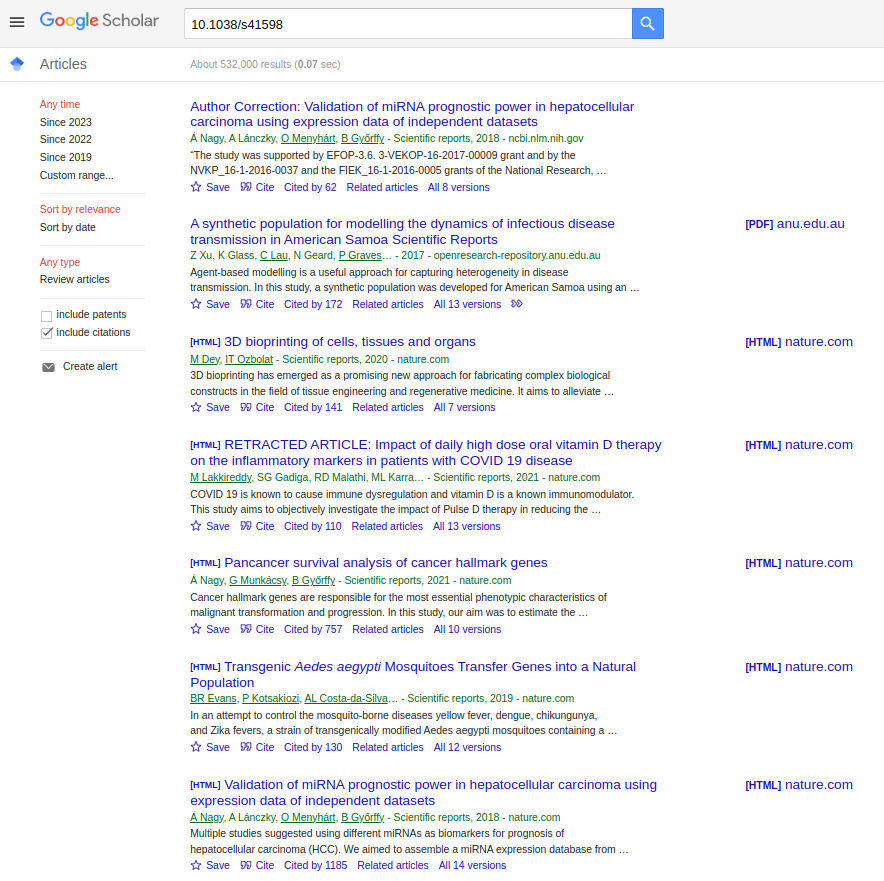
Springer Nature has a different type of DOIs. The first natural break after the prefix occurs after the journal identifier, so we can expect journal-level attractors. To find such an attractor for Scientific Reports, for example, one needs to query “10.1038/s41598”. I did it last year, and, not entirely in a surprise, caught Behl and Bungău again!
Paul Andrei Negru, Denisa Claudia Miculas, Tapan Behl, Alexa Florina Bungau, Ruxandra-Cristina Marin, Simona Gabriela Bungau, Virtual screening of substances used in the treatment of SARS-CoV-2 infection and analysis of compounds with known action on structurally similar proteins from other viruses, Biomedicine & Pharmacotherapy (2022), doi: 10.1016/j.biopha.2022.113432
The pandemic has brought to light a significant issue affecting humanity, namely the absence of therapies for new and quickly spreading illnesses. In such cases, one alternative is to find new therapeutic indications for authorized drugs, and molecular docking is a helpful tool to achieve this [47].
[47] S. Gol, R.N. Pena, M.F. Rothschild, M. Tor, J. Estany, A polymorphism in the fatty acid desaturase-2 gene is associated with the arachidonic acid metabolism in pigs, Sci. Rep. 8 (2018) 1–9.
What is interesting: since then, the hypothetical attractor changed a few times. Around March 2023, the Gol et al., 2018 pigs were overtaken by Tseng et al., 2018 (“Peripheral iron levels in children with attention-deficit hyperactivity disorder“), and now it is yet another study, Artime et al., 2017 (“ageing and multilayer structure prevents ordering in the voter model“). It might be an entertaining quest to track these changes.
Except for mega-journals, looking for journal-level attractors is pretty much useless: the intended and the erroneous citations would be in the same journal, possibly even on a related topic. It is therefore non-trivial to spot an error, at least the errors would not look as blatant as the Vickers Curse. Because of that, I do not want to look for other journal-level attractors for Springer-Nature, as well as for those in Wiley and Frontiers, where the DOIs also have the journal part directly following the prefix.
Hindawi could theoretically have year-level attractors, like “10.1155/2023”. Although, for this query Google Scholar returns a list of results, rather than a single publication, and the key feature (or bug) does not come into play.
Finally, DOIs for MDPI (and SAGE) do not have any natural breaks, which is why no attractors are to be found there.
Russkiy Mir at Elsevier and MDPI
Alexander Magazinov presents you two russian professors whom Elsevier and MDPI consider respectable: a Lt Colonel of putin’s mass-murdering army, and a machine-gun totting rascist. Both buy from papermills.

Update as of August 06, 2023: apparently, in the meantime, Google has deployed a full fix. No longer the query “10.1016/j.” results in a single link. As of right now, the result looks like this:
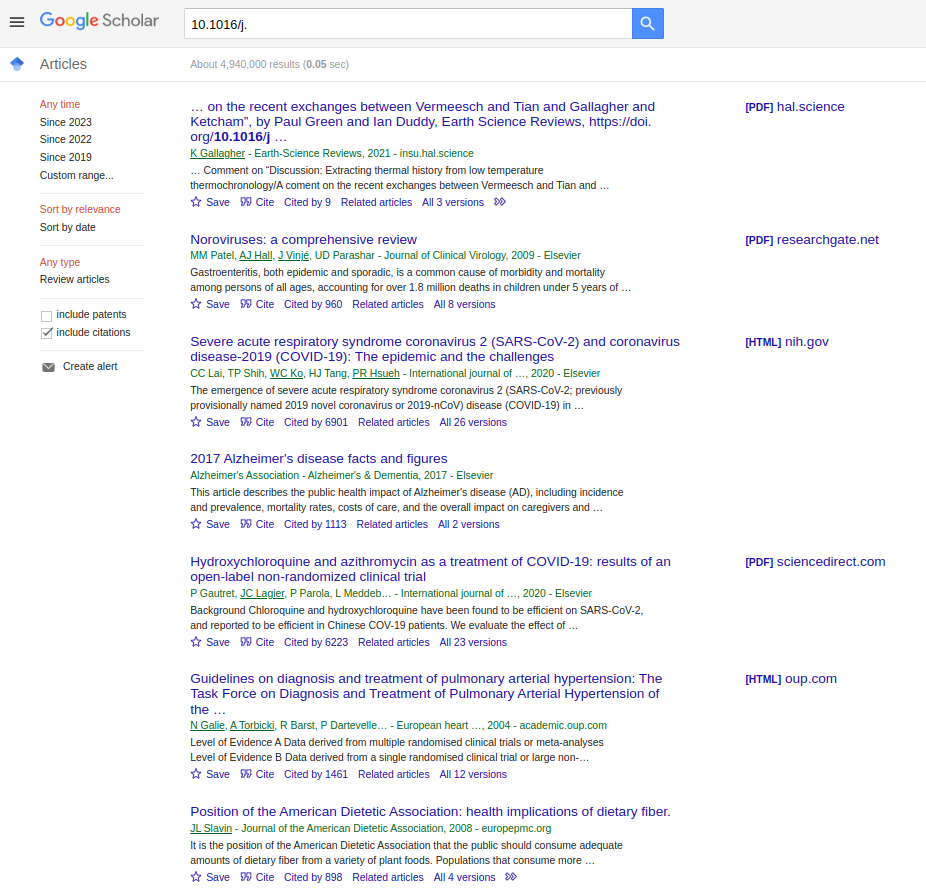
Similarly, there is no attractor for Scientific Reports any longer, even a floating one:
I thank all my donors for supporting my journalism. You can be one of them!
Make a one-time donation:
I thank all my donors for supporting my journalism. You can be one of them!
Make a monthly donation:
Choose an amount
Or enter a custom amount
Your contribution is appreciated.
Your contribution is appreciated.
DonateDonate monthly
 For Better Science
Oh wow. A reader informed me: Just today, possibly right after this article was published, the doi ” 10.1016/j.” started to resolve to another paper, Draper et al 2022 in a Lancet-family journal (also Elsevier):

LikeLiked by 1 person
Plos One truncated doi “10.1371/journal.” resolves to Fouhy et al 2015 now:

LikeLike
Funny, but the PLoS attractor has drifted, too. Currently it is
Fouhy, Fiona, et al. “The effects of freezing on faecal microbiota as determined using MiSeq sequencing and culture-based investigations.” PloS one 10.3 (2015): e0119355.
LikeLike
Great post. Very informative. That’s solves the mystery. But how did you figure it out?? Stroke of genius? Did you Google a broken reference?
LikeLike
“it is Maarten van Kampen who actually discovered the secret! He interviewed one of the “cursed” authors…”
LikeLike
I did not read thoroughly 😉
LikeLike
So, the bug is something like a hidden autocomplete application in GS?
LikeLike
Not exactly. My guess: there is no hardcode for DOIs in GS. Instead, perhaps, if the top result passes a certain relevance threshold (in the sense of whatever ML there is behind the scenes), then it will be the only result displayed.
Then, it is plausible that nearly every Elsevier article passes the threshold for the query “10.1016/j.” And Vickers was just accidentally the top one.
LikeLike
It appears that the bug has some utility.
It seems to be related to their search function, specifically with a database query that provides a single result using likelihood instead of exact matching. When an incomplete DOI is provided, it returns multiple records, but only the first one is returned. The first record retrieved depends on the database structure, usually chronological, but not always.
LikeLike
This is so brilliant. And quite telling to see how pseudoelites + systemic support exposed themselves – e.g., the Helmholtz-Köpfe in Munich… Lickert cursed by Vickers, and Holle freut sich nicht wie Bolle, ha, ha!
LikeLiked by 1 person
This is definitely embarassing. But I happen to know the first author of the Helmholtz paper, and I’m sure this one is not a papermill paper (as probably lots of papers mentioned here). Seems to me that this was rather due to sloppiness.
LikeLike
Another author of the Lickert paper, F. H.-S., has one more PubPeer entry.
Either systematic sloppiness, or…
LikeLike
This one. https://www.pubpeer.com/publications/313BAEF7D8C0148D4E8000FC1A9C2A
LikeLiked by 1 person