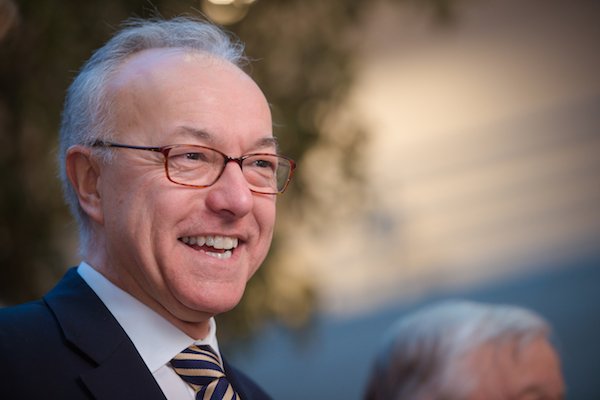

This is a personal story of a former postdoc from the lab of George Q Daley, dean of Harvard Medical School and international star stem cell researcher. The postdoc started very promisingly, until he collapsed under intense competition, blew the whistle on suspected research misconduct in Daley lab, and then got sacked, coincidentally or not, on the same day. The postdoc, who will remain unnamed here, even if everyone involved knows his identity, lost everything, including his mental health.
Regardless of whoever bears the blame here: there is strong evidence that Daley may have coerced his postdoc into undergoing a psychiatric evaluation, by doctors Daley himself has assigned. The ex-postdoc alleges the psychiatrists have been discussing his case with Daley, a breach of doctor-patient confidentiality privilege if true. They sure were in close phone and email contact. I contacted Daley and both psychiatrists (one a Harvard employee) with the allegations, but the only reply came instead from Paul Donovan, Harvard Children’s Hospital head of communications, who refused all comment.
It also appears that Daley failed in his duties as principal investigator and let research misconduct to happen. The suspected lab member here is Clara Soria-Valles, a mentee of Daley’s former collaborator Carlos Lopez-Otin, formerly star cancer and ageing researcher in Spain, now St Carlos of Oviedo, martyred by a withdrawn Nature mentoring award and 9 retractions. One of these retractions was a Nature Cell Biology paper authored (and apparently fabricated) by Soria-Valles while in Daley lab. Even after that lesson, Daley insisted on publishing her next stem cell study, without proper external verification and despite protests of the collaborating protagonist. Whom Daley had sacked when he blew the whistle on Soria-Valles.
It is quite possible Soria-Valles was not the only Daley lab member keen to impress her boss with fancy results for top journals, at any cost. This is why I illustrate the narrative below with PubPeer evidence in Daley papers (with explanatory legends), some of which was flagged by the image integrity sleuth Elisabeth Bik.

Losing research ethics and mental health in Daley lab
by former George Q Daley postdoc
In the laboratory of Dean George Daley at Harvard Medical School and Boston Children’s Hospital, I was successful on the surface. I successfully published my work in the journal Nature, which is considered one of the highest-impact journals. I had achieved the generation of hematopoietic stem cells from human induced pluripotent stem (iPS) cells, a long-sought-after goal in the hematology field for decades. This new technology will enable the modeling of blood disease and the study of human blood development.
Being a troublemaker
Unfortunately, my success disturbed my colleagues. Since my publication, I faced not only increased competition in the lab but numerous acts of harassment. The laboratory was becoming more cannibalistic. I had suspicions that my experiments were sabotaged and reagents were stolen from me. As an example, I noticed many cases when dishes of cultured cells seemed to have disappeared from my incubator, same for lentiviral vectors from the freezer. Moreover, my reagents were possibly used by other colleagues without my consent. These events severely disrupted my ongoing experiments, I appealed to the lab email list and directly to Dean Daley. The situation did not change.
When I aired my concerns at a lab meeting, a public forum where laboratory issues are usually discussed, Dean Daley said “it is vindictive” to criticize colleagues in public. Dean Daley blamed me “not being generous to lab members”. Instead of working to alleviate the intra-lab competition, Dean Daley brought even more people to work on my project, making the competition harsher and worsening the situation. The conflict in the lab became more intense and hostile around me, and unbearable. One day in mid-November 2017, after I aired my concerns at the lab meeting, Dean Daley requested me to come to the laboratory before 8 AM. He asked me to come to his office. There, in front of Trista North, a junior faculty member who runs the Daley Laboratory since 2017, Dean Daley told me that he no longer wishes to keep me in the lab after June 2018 when my fellowship ends.
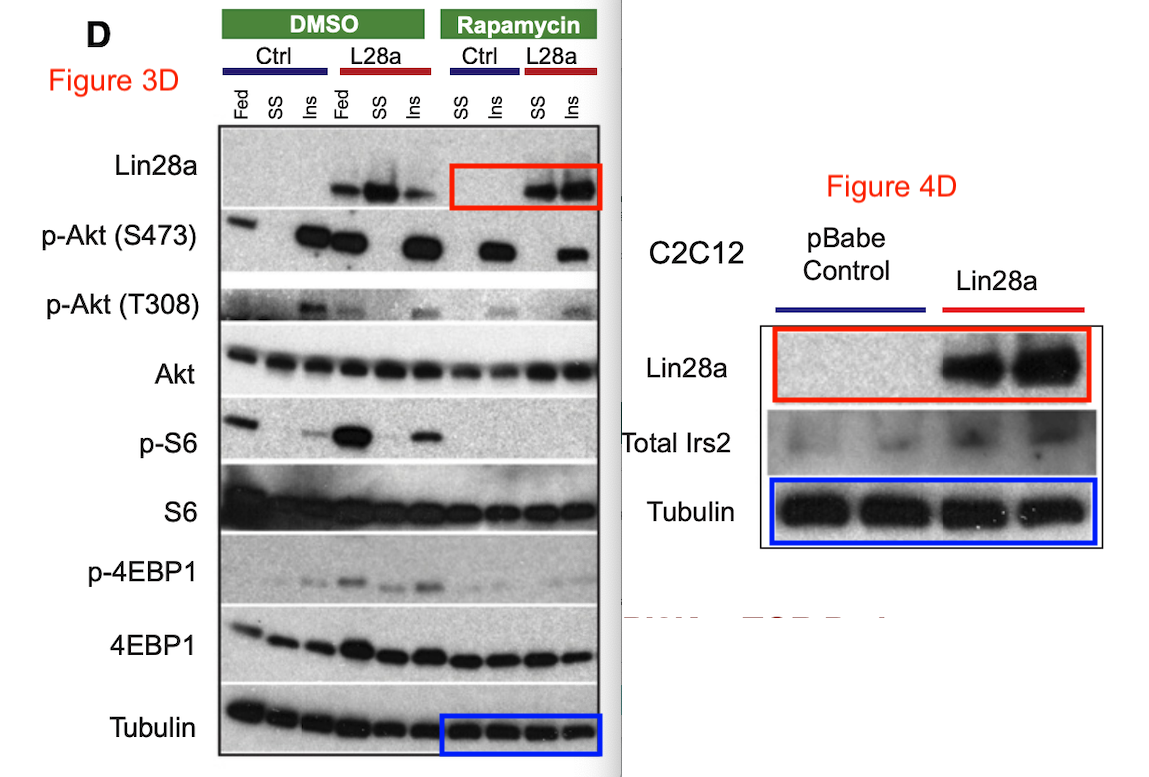
Zhu et al Cell 2011. Daley announced in September 2019: “I am reviewing the data and have asked others to do the same.“
Psychiatric examination on Daley’s orders
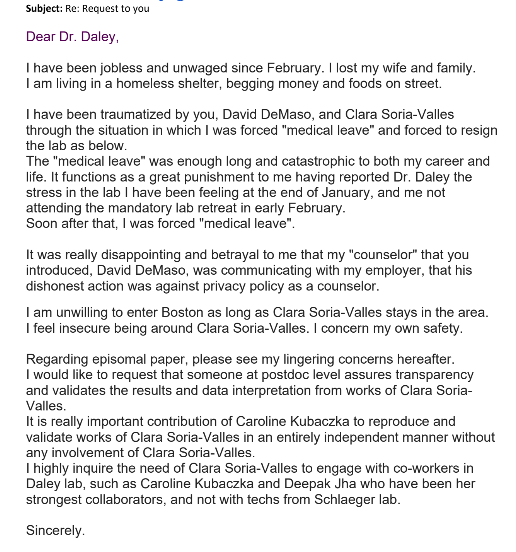
At the end of January 2018, I emailed Dean Daley stating that I could not continue working under hostile and unbearable laboratory conditions. Dean Daley replied to me via email and criticized me for delaying work. Immediately afterward, Dean Daley emailed me and ordered me to have counseling sessions. I was presented with two psychiatrists by the introduction of Dean Daley. One was a local Japanese counselor Kumiko Ide in Boston and the other was the psychiatrist David DeMaso affiliated with Boston Children’s Hospital and Harvard Medical School. Dean Daley was DeMaso’s superior. But I was too naïve to consider what it means.
I was under the impression that sessions with my communications with my counselors would be privileged and protected by doctor-patient confidentiality. Instead, shockingly, my counselors communicated with Dean Daley over phone and email in what appeared to me to be a gross violation of professional ethics. For instance, Dean Daley phone-called to Ide during my session. I was asked to leave the session so that Dean Daley and Ide can talk over the phone. In February 2018, in my final session with DeMaso, he told me that Dean Daley does not like that I make claims about an intra-lab conflict. DeMaso told me that he found no evidence of mental illness, but that he needed to find an “insert a diagnosis” into the official medical records of Boston Children’s Hospital. During my medical leave, I was sent to Ide’s boss in my home country. The 86-old man attributed my “psychosis” to the lack of my parents in my early life, and inserted a made-up diagnosis, sent to Ide and DeMaso.
Sacked for whistleblowing
I was fired and had my US visa immediately revoked on the same day I reported to Dean Daley my concern about the research integrity of my colleague, Clara Soria-Valles. This is how it happened:
In February 2018, Dean Daley asked me to phone call him. Over the phone, Dean Daley ordered me to take an immediate medical leave. The following day, I received an official order of medical leave for three months from the psychiatrist and Human Resources at Boston Children’s Hospital. Immediately afterward, my work ID was inactivated. My salary from my ASH fellowship was suspended in mid-February by Boston Children’s Hospital when the medical leave started. Dean Daley knew that the ASH fellowship was my sole source of income. Also, my health insurance was suspended. I applied to receive leave insurance, but my documents were not accepted. I went to Japan in mid-February 2018 and have been homeless near the Tokyo area during the 18 February – 31 March 2018 period. The lack of salary caused me extreme financial hardship. During this period, I ended up sleeping on the street or in shelter houses.

I briefly returned to Boston in mid-March to prepare for a faculty job interview at Cincinnati Children’s Hospital Medical Center. I asked a Daley lab manager to give me a new memo pad to have with me during the interview. Soon after the interview, Trista North, a junior faculty of the Daley lab, emailed me asking how the interview went. I felt it was weird because I did not tell anyone in the Daley lab the exact date of my interview. Later I learned that Dean Daley had instructed his lab members to report all my contact with them.
In March 2018, Dean Daley emailed and requested me to resign from the lab. He reasoned that:
- it was inappropriate to return to Boston during medical leave;
- I had provided incomplete documentation regarding my medical leave;
- I had contacted Daley Lab staff during medical leave; and
- my American Society of Hematology (ASH) fellowship, the source of my salary, was supposed to expire in June 2018.

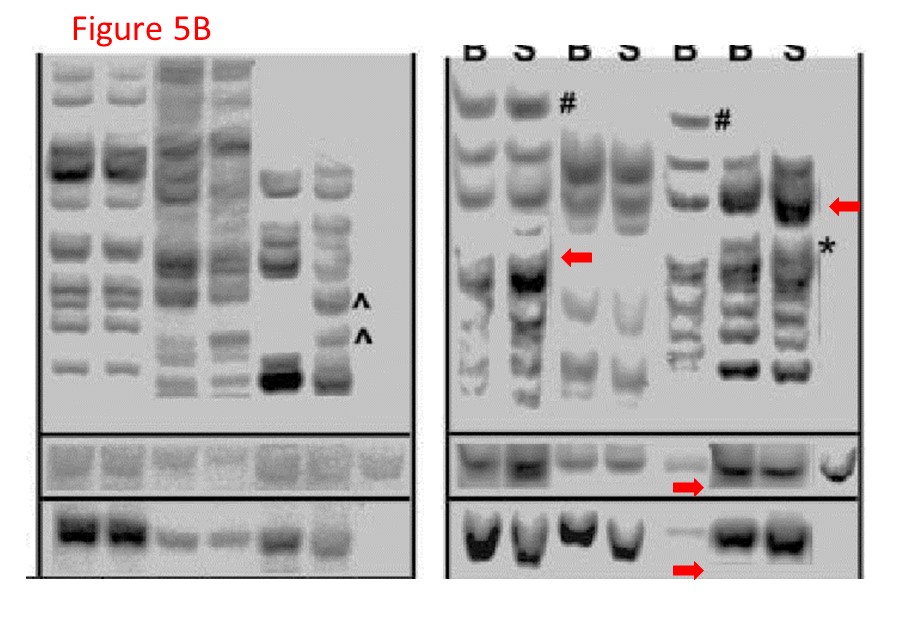
Doulatov et al Cell Stem Cell 2013. PubPeer here. Bik: “SOX4 panel. The first 2 lanes look unexpectedly similar, and there is a sharp transition visible between them“. Daley never replied.
After my removal from the Daley Laboratory on March 2018, I received emails from Dean Daley every week. In these emails, he demanded to have an open conversation over phone call to learn about my location and my current activities. However, because I had a previous negative experience conversing with Dean Daley over the phone, I declined his requests for phone calls.
At the beginning of May 2018, I emailed Dean Daley and my colleagues in the Daley Laboratory to inform them about the following:
1) how Dean Daley ordered me to go on medical leave and requested my resignation;
2) how Dean Daley and the counselors assigned to my care shockingly broke the doctor-patient confidentiality I had expected regarding privileged conversations with my counselors;
3) my concerns about the episome paper.
Dean Daley responded to my email by criticizing that I had publicized our dispute and described it as “troubling.” Although he purported that he wanted to support me, I received the official letter of termination of my employment from Human Resource of Boston Children’s Hospital in just a few hours following his email. I was sacked the same day I aired the Daley lab my concern about the integrity of my colleague.

Kim et al Nature 2010. PubPeer here. Also: “Kim et al. showed that blood-derived iPS cells prone to follow blood lineage. In contrast, follow up study by Kyttala et al. did not observe lineage bias.” Daley never replied.
My doubts about the Soria-Valles paper
Although I was listed as co-first author of an episome-reprogramming paper, I was very concerned about the scientific integrity of Clara Soria-Valles, the lead author and my former colleague. Soria-Valles was a former PhD student of Carlos Lopez-Otin and a former visiting PhD student in the Daley lab. After completing her PhD in the Lopez-Otin lab, Soria-Valles joined the Daley lab as a postdoctoral fellow and started a new project in 2016. The project was the generation of hematopoietic stem and progenitor cells from human pluripotent stem cells using episomes, a follow-up study to my Nature paper. Clara Soria-Valles and I initially worked together and started conflicting about the project. She soon took the initiative of the episome work, and I was a mere technical help. After I was fired, Clara Soria-Valles completed a draft of the episome paper and subsequently left the lab.
In early 2018, various anomalies (suspicious image fabrications, sample swapping and arbitrary statistics) were reported in the Soria-Valles Nature Cell Biology (NCB) paper from 2015 on several websites including PubPeer. It is worth noting that Dean George Daley is one of the principal investigator co-authors who supervised this work. Her paper with Daley and Lopez-Otin focused on a signaling pathway that blocked the generation of stem cells. Most interestingly, she claimed to be able to generate stem cells more efficiently from patients with progeria syndrome. Clara Soria-Valles left the Daley laboratory when the accusations on PubPeer began to surge.
Although the issues surrounding my former colleague Clara Soria-Valles were troubling, I especially found Dean Daley’s involvement with her study, which contained manipulated data using patient samples, to be most disturbing and shocking. I did not know whether I could trust the scientific judgment of Dean Daley. For months, the principal investigators – who are responsible for the data in the paper – failed to take any public responsibility, refused to acknowledge or address any of the criticisms raised on the PubPeer website.
In October 2018, the editor of NCB alerted the readers that data reliability had been questioned. On December 17, 2018, the paper was retracted. The retraction note acknowledged the lack of raw data for most of the figures, including graphs and immunoblots. Numerous problems in figure preparation were identified.
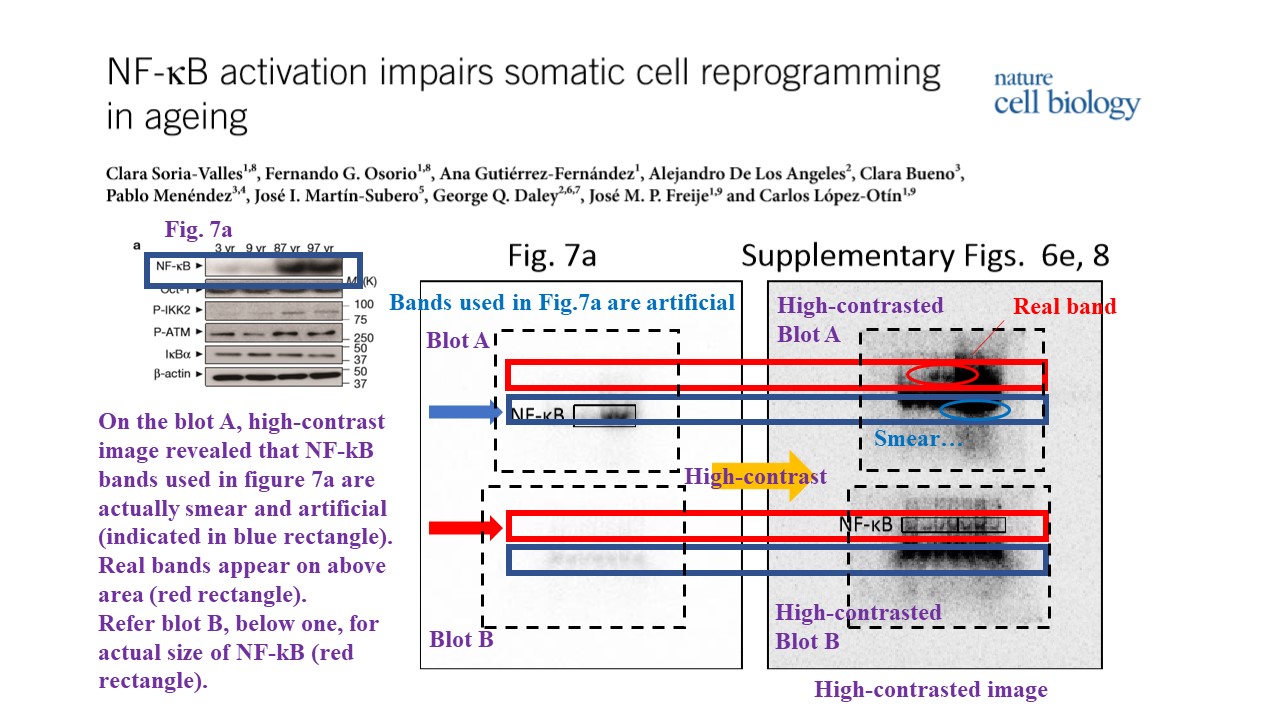

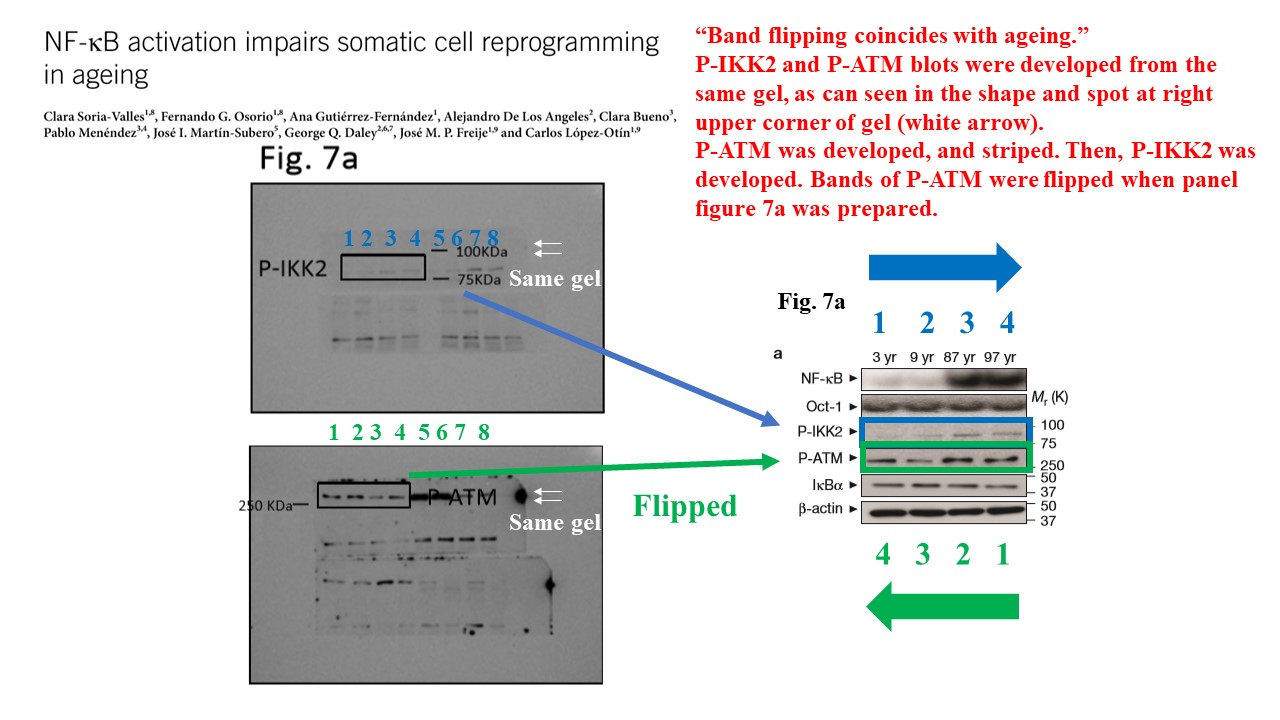

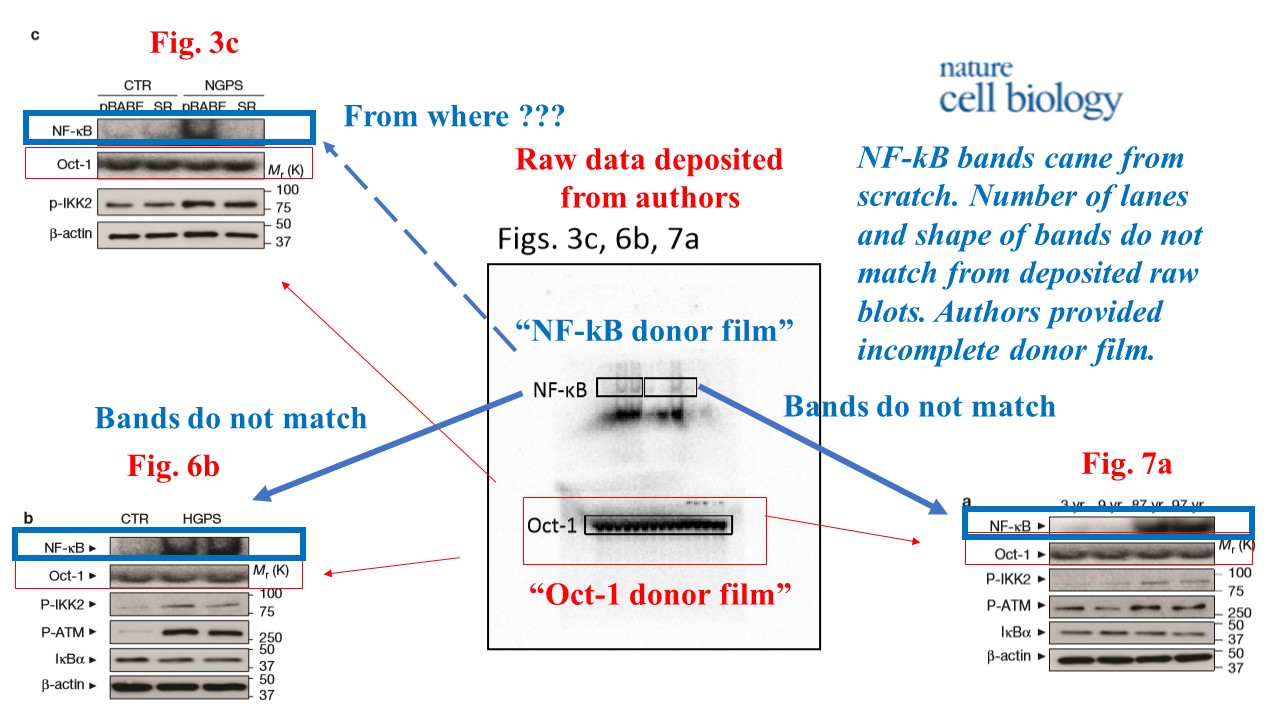
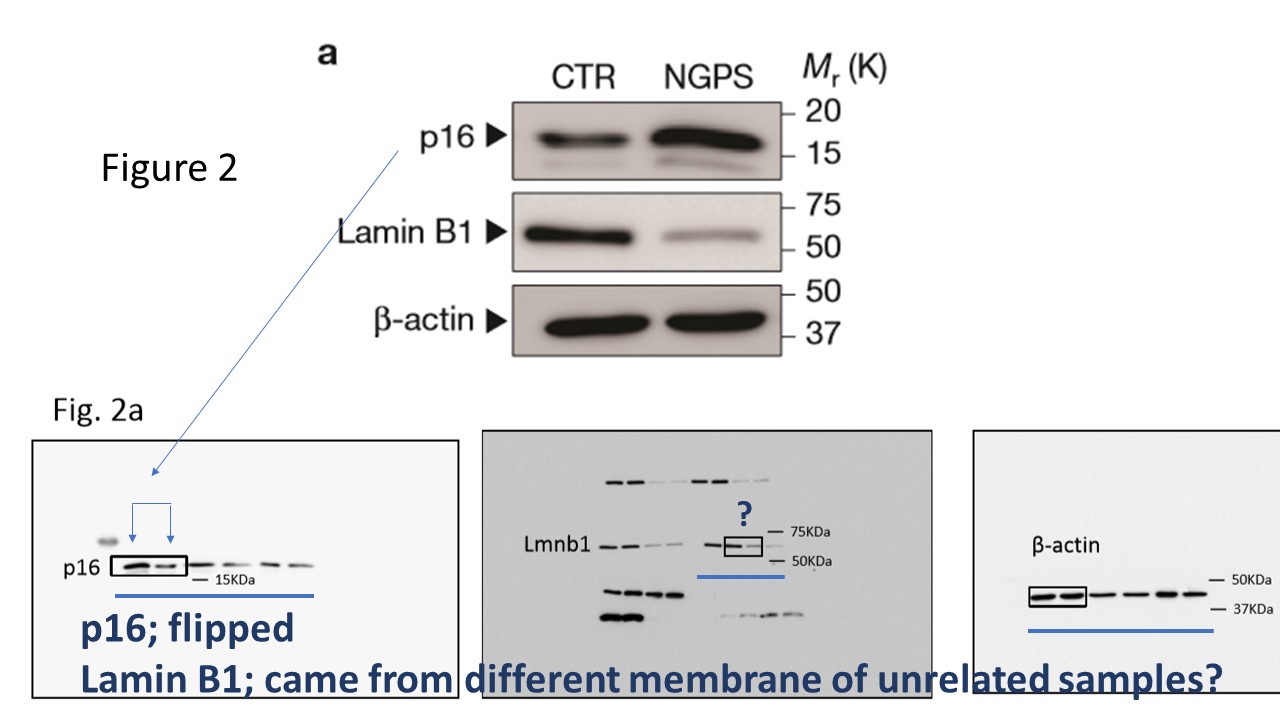

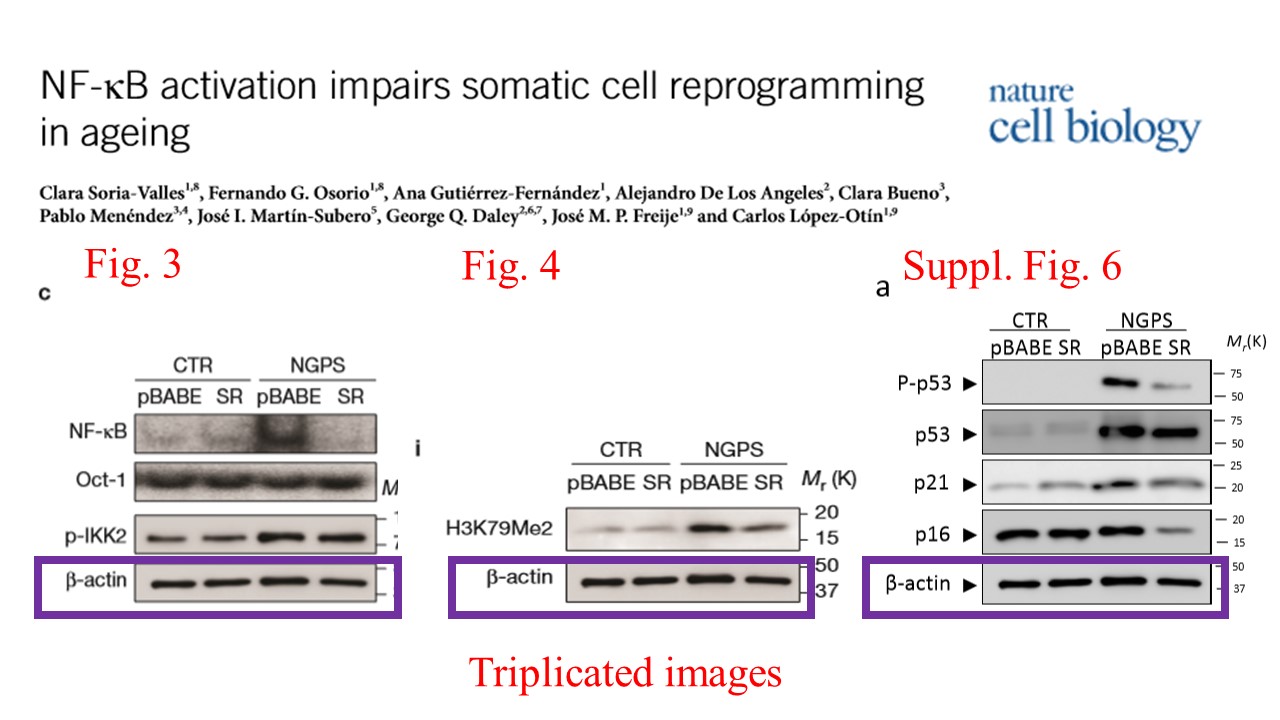
Because of the negative attention that Clara Soria-Valles’s work has received and its eventual retraction, I felt deeply uneasy about the data she generated for her episome paper. Clara Soria-Valles had operated in a largely unsupervised fashion. She never shared numerical data on which graphs in the episome paper are based, reminding me of her flaw and retraction of Nature Cell Biology. She had prepared all the figures herself.
A critical piece of data is analyzing the gene expression patterns of stem cells at a single-cell level. I recalled that Soria-Valles handled and submitted all samples of single-cell RNA-seq without any corroboration or supervision by other lab members, including the Principal Investigator of the laboratory, Dean George Daley. She also annotated the dataset from the most critical experiments, such as confirming the generation of episome stem cells, alone without any corroboration or supervision. She had her technician conduct the experiments in a single-blinded manner, then she alone would annotate which samples were which. Working with her, I remember that Clara Soria-Valles always wanted to conduct experiments and graph preparation independently without being seen by others in the lab. I recalled that her data and bar graphs always improved with every subsequent revision of her episome paper. Moreover, I cannot recall a single instance in which she showed me the raw data that allegedly served as the basis for her bar graphs.
I was especially concerned that my Principal Investigator Dean George Daley showed little interest in obtaining independent corroboration and validation of her claims. There is no doubt in my mind that the same failure of Dean Daley to supervise that gave rise to the Soria-Valles NCB debacle, which later culminated in retraction of Soria-Valles NCB paper, was also occurring again with the episome paper.
Coauthor, or backup scapegoat?
I was deeply troubled. When Dean Daley sent me a draft of the episome paper in April 2018, I requested that Dean Daley have other members of the lab replicate her work. In early May 2018, I emailed the entire lab my concern about the integrity of the episome paper. Dean Daley fired me on the same day.
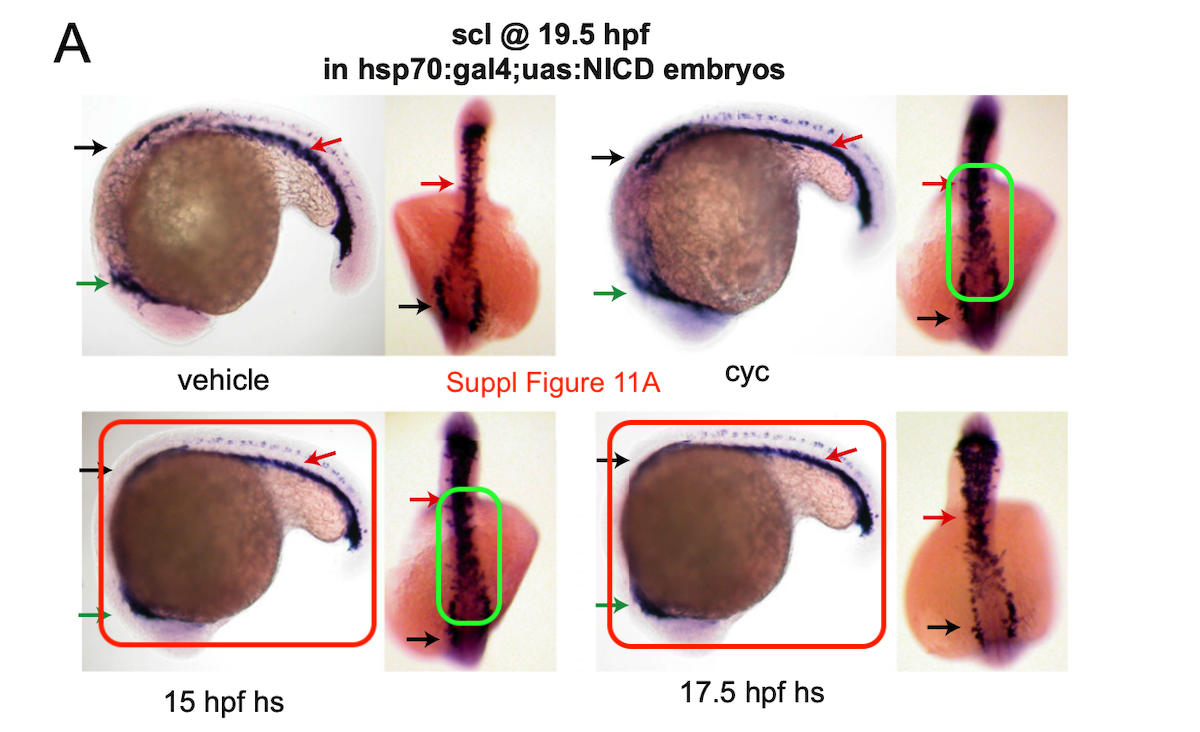
Kim et al PNAS 2013. Bik: “with the dorsal views, part of the photos (green boxes) share similarities, but other parts do not.” PubPeer here, Daley never replied.
I did not hear from the Daley Laboratory or Dean Daley for months and suspected that the laboratory could not replicate Soria-Valles work. Because of the nature of my communications with Dean Daley, his bullying predisposition and harshly manipulative behavior by him and others, I wanted to sever my connection with Dean Daley and the Daley Laboratory. I maintained no contact with Dean Daley and lab members. I wanted to move on and start a new future. However, at the beginning of October 2018, I received an email from Dean Daley containing the latest draft of the episome paper. Dean Daley then told me that others in the lab were able to replicate the results claimed by Soria-Valles. He wrote:
“In the last few months, we have confirmed engraftment from iPS cells that were differentiated into HE, transfected with episomes, and injected into mice entirely independently of Clara (and you). We would now like to move forward with submission and hope that you will agree to be a co-author. Please find attached the figures we would like to submit for publication to Stem Cell Reports.”
But the new draft did not have any updates since Soria-Valles left. There was not a single piece of new data other fellows were supposed to have generated after Soria-Valles had left the lab. None of the assigned authors remained in the lab. Because of the criticisms that Clara Soria-Valles was receiving on the PubPeer website and eventual retraction of her Nature Cell Biology paper, I was suspicious. To address my doubts, I requested that Dean Daley send me the raw data he claimed other colleagues had generated.
Instead, Dean Daley again insisted on having a phone call to explain the data. This alarmed me. I was very concerned that the raw data may not exist. He emailed me several times — all of those emails asked me to have a phone call with him. In some emails, he rudely told me “it’s time to start behaving as a proper colleague. If you wish to continue to be a coauthor we will have to speak.” In the other emails, he tried to moderate his tone, saying “I’d like to support you in reestablishing your scientific program”. His last email named my workplace, “I understand you have initiated a postdoc at […]”. Because of my previous negative experience having a phone call with Dean Daley, I still felt compelled to decline his request for a phone call.
Additionally, my suspicions and doubts about the episome paper were growing due to his evading to provide raw data. I was disturbed to observe both: first, a trend of Dean Daley’s failure to take supervision of Clara Soria-Valles and her work seriously, and second, a pressure on me to take responsibility for a failing study of the dishonest first author that was not my own anyway. I was especially concerned that the principal investigator of my former laboratory, Dean George Daley, was rushing towards submitting a paper to Stem Cell Reports without checking the raw data and showing little interest to ensure that the science was reproducible.
To this day, I have not received a single piece of raw data showing that the work of Clara Soria-Valles could be independently replicated. At the time of writing, it is unclear whether Dean Daley has submitted the episome paper to Stem Cell Reports or any other journals without my name listed as a co-author.
Daley’s shoddy science
It should be emphasized that other issues regarding Dean Daley’s science have been raised by the research integrity expert Dr. Elizabeth Bik. This included data manipulation in a preprint describing artifacts that emerge when shRNA is used to study cancer cell proliferation. Additionally, it appears that major papers from Dean Daley’s laboratory were rushed to publication.
In at least one case, a major claim by Dean Daley’s laboratory was called into question. In 2008, Daley’s laboratory published one of the first reports of reprogramming human somatic cells to iPS cells using retrovirus (Park et al.). This study is Dean Daley’s most cited paper. The generation of iPS cells usually results in the silencing of integrated retrovirus harboring the reprogramming factors as the endogenous pluripotency genes become active. However, all of the reported iPS cells in Park et al. had active retrovirus expression, indicating that these cells failed to fully reprogram. This is in stark contrast to the first human iPS cells reported by Nobel Laureate Shinya Yamanaka that were fully reprogrammed and silenced virus transgenes.

Park et al Nature 2008. PubPeer here, one user speculated if I am part of an anti-Daley conspiracy: “Perhaps Professor Daley is being trolled because he knows too much?“
Additionally, in the same study, Dean Daley claimed that the addition of potent cancer-causing hTERT and Large T was required to generate iPS cells from adult somatic cells. This claim has been thoroughly discredited by dozens of groups that have shown human reprogramming does not require hTERT or Large T. Daley and colleagues claimed that all of their iPS cells lacked hTERT and Large T integration. However, they did not show their RT-PCR data for hTERT and Large T integration in human iPS cells. It is important to note that one single study used Large T to boost the generation of human iPS cells, but human iPS cells generated with Large T produced a cell line with 100% karyotypically abnormal cells. Thus the claim of Daley and colleagues proved counterproductive to the reprogramming field.

Yermalovich et al Nature Communications 2019. PubPeer here, corrigendum here.
Afterword
My history at the Daley Laboratory, to a certain extent, bears a striking resemblance to the case of Gustavo German reported in Science Magazine. Gustavo German was a former Harvard graduate student who was forced to undergo a mental health exam after claiming that research misconduct occurred in the laboratory of Lee Rubin, also at the Harvard Stem Cell Institute. Gustavo German ended up filing a restraining order against Lee Rubin. It is also worth noting that William Lensch, previous Executive Director of the Harvard Stem Cell Institute and current Strategic Advisor to Dean Daley, was involved in the series of events that led to the forced mental health exam of Gustavo German.
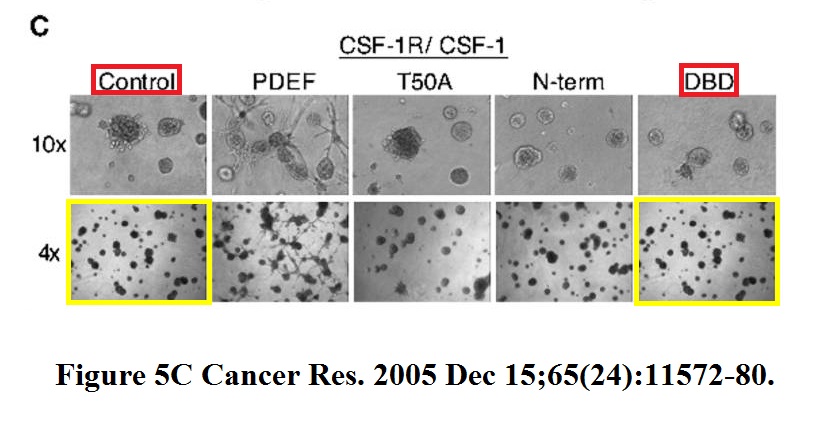
Gunawardane et al Cancer Research 2005. PubPeer here. Last author Joan Brugge: “This mistake does not in any way affect the conclusions of the report.”
As of March 2020, I had applied to more than several hundred positions, got several potential offers, all were terminated at the final points. Some universities informed me that they were concerned about the circulating information about me and Dean Daley. At some places, I had hours-long interviews where I was told that I was so ridiculous that I fought against such a big academician. Interviewers forced me to regret my mistake then told me to get lost. I am leaving academia unable to continue in my career. But I believe I am obligated to expose how the academic system is corrupted by the power of one man.
I have kept all emails substantiating the events I have described above, and they are available upon request.

 For Better Science
This happened and is happening at Johns Hopkins in the Department of Biomedical Engineering and several Institute. Directors and Deans are guilty of this and seem to be getting away from it. This is an incredible abuse of power – and they knowingly think they can get get away with behavior. This is unacceptable.
LikeLike
Dr Daley leads the Harvard research misconduct committee and he was probably the person who initially investigated and ultimately covered up president Gay`s plagiarism.
His initial accurate assessment could have helped Harvard to role into the right path.
Harvard board and the media should address his role in this cover up.
LikeLike
Breakthrough for George Q Daley and Leonard I Zon! PubPeer – Calmodulin inhibitors improve erythropoiesis in Diamond-Blac…
LikeLike