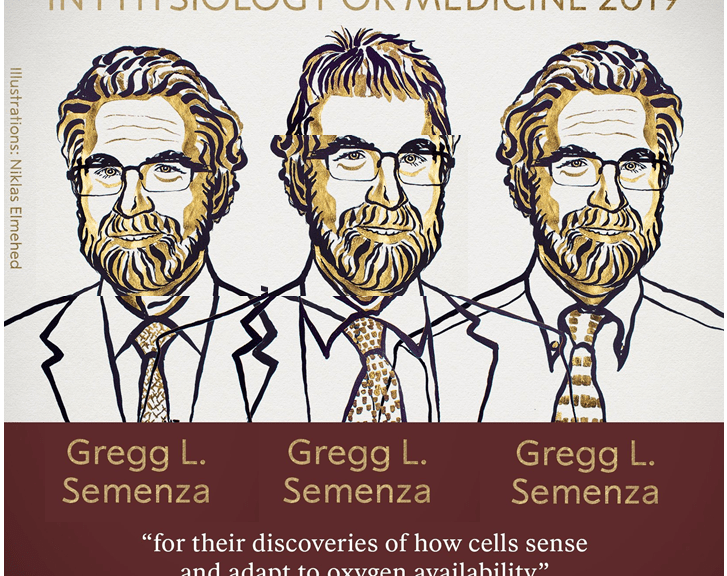
Gregg Semenza: real Nobel Prize and unreal research data
“Even after people have been telling you for, you know, 20 years or more that it’s going to happen, no one expects it.” -Gregg Semenza, Nobel Prize winner 2019
By Leonid Schneider, on research integrity, biomedical ethics and academic publishing
“Even after people have been telling you for, you know, 20 years or more that it’s going to happen, no one expects it.” -Gregg Semenza, Nobel Prize winner 2019
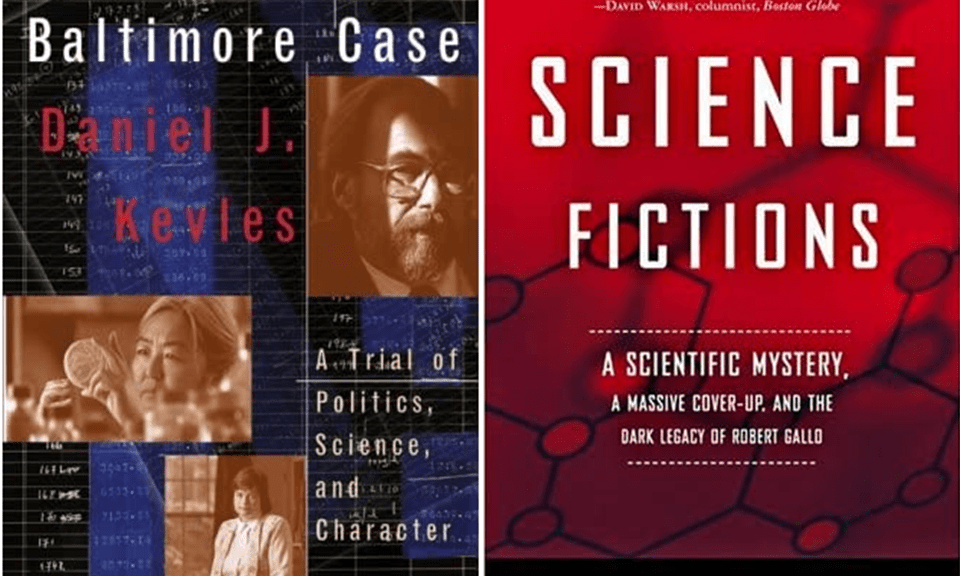
A review of “The Baltimore Case” by the historian Daniel Kelves and “Science Fictions” by the journalist John Crewdson, which also tell the history of the Office of Research Integrity (ORI).

Science elites are demanding human challenge trials NOW. Science journalists cheer them on. Should healthy volunteers be infected with the Coronavirus? And if yes, who exactly will it be?

“The presence of such articles online have severely affected Dr. Louis J. Ignarro’s public reputation, and his personal life.
Dr. Ignarro disputes any accusations of wrongdoing. There was no fabrication of data, although there was a mistaken duplication of data which occurred due to error. None of the data was false.” -J.L. Perez, Esq.
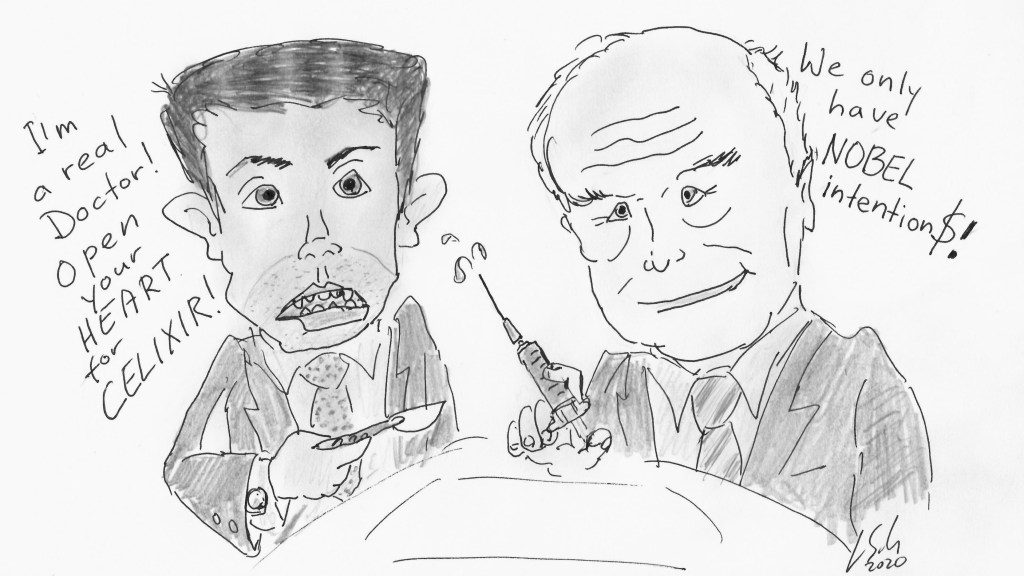
In this 3rd instalment of her Celixir investigation, Patricia Murray learns whose side the British authority MHRA is on. Not the patients’, and certainly not on the side of facts.

As one Nobelist retracted her Science paper, another Nobelist has stealthily corrected his. The correction opens new dimensions of probabilities and is indeed best kept hidden.
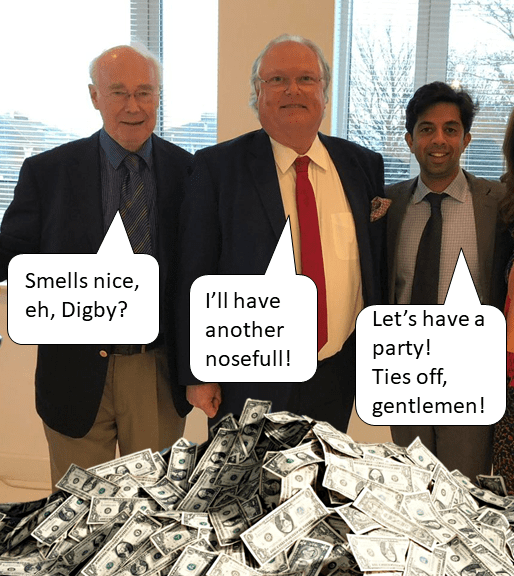
Liverpool professor Patricia Murray continues investigating shady dealings of the regmed company Celixir, owned by struck-off dentist Ajan Reginald and Nobelist Sir Martin Evans

Patricia Murray uncovers the business secrets of the Nobelist Martin Evans and his partner Ajan Reginald. It seems the magic iMP cells used to treat patients in Greece were drawn from the blood of patients in Swansea, for the purpose of a secret PhD thesis. There is no serious science behind it, only serious investor money and a fraudulent patent.
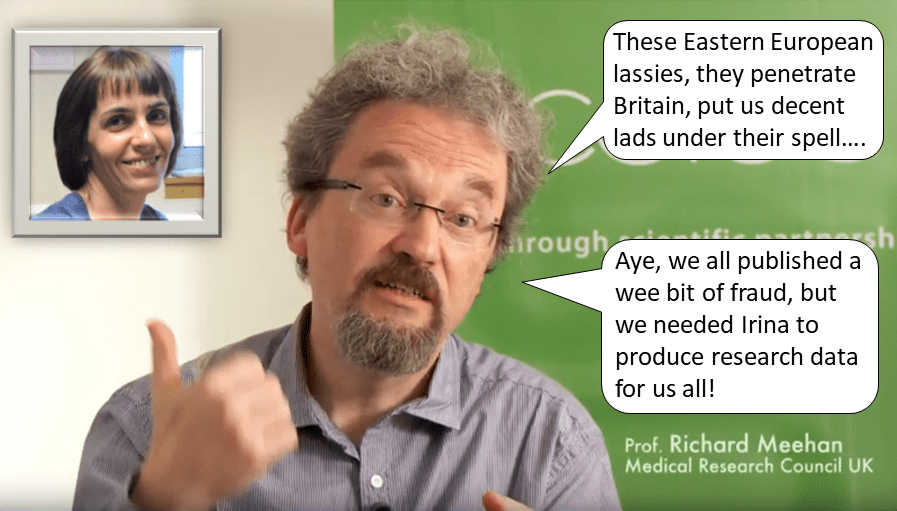
Irina Stancheva was investigated in Edinburgh for fraud at least twice, in 2009 and 2017, yet retraction and correction decisions were not implemented. Apparently to protect the reputation of Nobel Prize candidate Sir Adrian Bird and his male mentees, primarily Richard Meehan. One wonders: how much of Bird research in past two decades was actually fabricated by Stancheva?
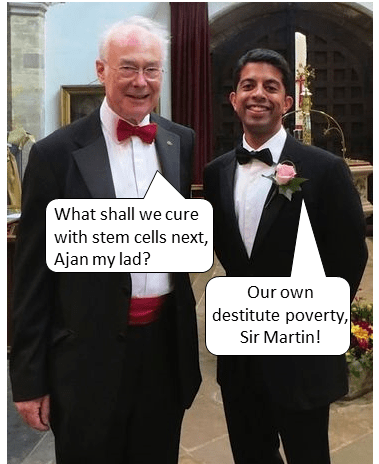
Sir Martin Evans, winner of Nobel prize 2007, founded in 2009 the stem cell start-up Celixir, together with a struck-off dentist Ajan Reginald. With the help of the British heart surgeon Stephen Westaby, they ran a very profitable clinical trial in Greece, which now moved into UK.

 For Better Science