
On this day four years ago, russia started its full-scale genocidal invasion in Ukraine. I am very honoured to present you the following guest post by the German historian Franziska Davies, research associate at the Leibniz Centre for Contemporary History in Potsdam.
Dr Davies specialises in history of Eastern Europe, with the focus on Ukraine. She coauthored the book “Offene Wunden Osteuropas” and edited the book “Die Ukraine in Europa“.
Davies is co-president of the German-Ukrainian Society and founding member of RUTA Association. She is also famous for opposing the pro-russian propaganda of the so-called Russlandversteher, false experts who claim to “understand russia” but in reality don’t understand anything about russia, not even their own role as its “useful idiots” who sometimes very handsomely profit from their propaganda. In this regard, Davies was sued for defamation by the pro-russian German book author Gabriele Krone-Schmalz, who however then lost in court in 2023.
Time to overcome Western arrogance
by Franziska Davies
Today is the fourth anniversary of Russia’s full-scale invasion of Ukraine. So much has changed, but on some levels, so little has changed.
What has changed? The image of Ukraine in the West has changed. Ukraine did not fall within a few weeks, contrary to the expectation of many Western commentators. For many in the West, the full-scale invasion of Ukraine was a moment of truth. All those narratives so popular in Western media – that Russia’s aggression was about NATO, that Russian threats towards Ukraine were about Moscow’s „security concerns“ – were overtaken by reality in such a profound way, that they no longer held.
To be sure, there are still those still clinging to these ludicrous efforts to legitimize this war of aggression, but the number of people falling for these falsehoods or promoting them has decreased. Whether Western societies have addressed the fact that they only discovered Ukraine, its rich cultural heritage, its resilience and its history after millions of people had to flee their homeland and went to the front to die for it, is a different matter. What does it say about Western societies that it was only after the beginning of a genocidal war that we started to question our own colonial stereotypes?
But on a different level, many things have not changed since 2022. Ukraine is given too much Western support to die, but not enough to win. In the last few months, Russian attacks on the energy infrastructure in Ukraine made life in many of its cities virtually unbearable. But these basic facts often are not even headlines in Western media. It seems that, after four years, many have gotten used to the genocidal reality of Russia’s aggression in Ukraine. This is all the more remarkable since Russia was always ready to make clear that its aims go beyond Ukraine. Russia’s aim is not only to destroy Ukraine as a nation and as a state, but to destroy the European security order which is a safeguard for all of us.
The notion that Ukraine is fighting also for Europe, is not a romantic cliché, it’s a political fact. Given the magnitude of the threat for the whole of Europe, the fascist nature of the current US-administration, it is remarkable that defence policies, the question of how to defend democracy, freedom and liberty in Europe are not top of the agenda – in media and politics alike. How is it possible that so many are still ignoring this threat? Particularly in view of the fact, that we have been here before. Underestimating Russia, not accepting what was going on right in front of our eyes, until we saw the pictures of tanks rolling towards Kyiv.
Of course, this is not true for the whole of Europe. The Baltic states are among those European nations who are well aware of the challenge we are facing. For decades, voices from the Baltic states were ignored in the West, in particular in Germany. Deemed as “russophobic”, clouded in their judgement because of their historical traumas, voices from the Baltic states were often ignored. But boy, were they right about Russia. It is time to overcome such Western arrogance. It is high time that we start listening to those peoples who have been colonized by Russia and who have resisted Russian colonial pressure for centuries. Listen to them, do not dismiss them as traumatized, they are experienced. Listen to Ukraine, to Lithuania, to Estonia, to Latvia. They can lead Europe the way to defeat Russia.
Russia can be defeated; Russia has been defeated before. The question is not one of possibility, but of political will.
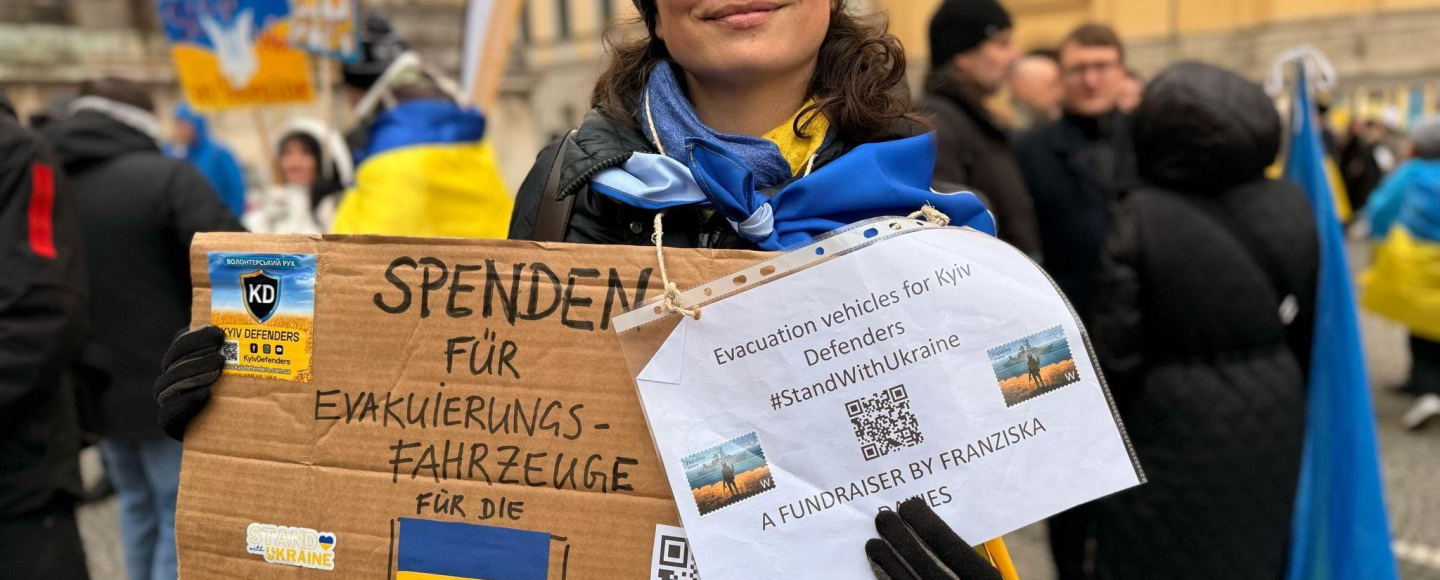
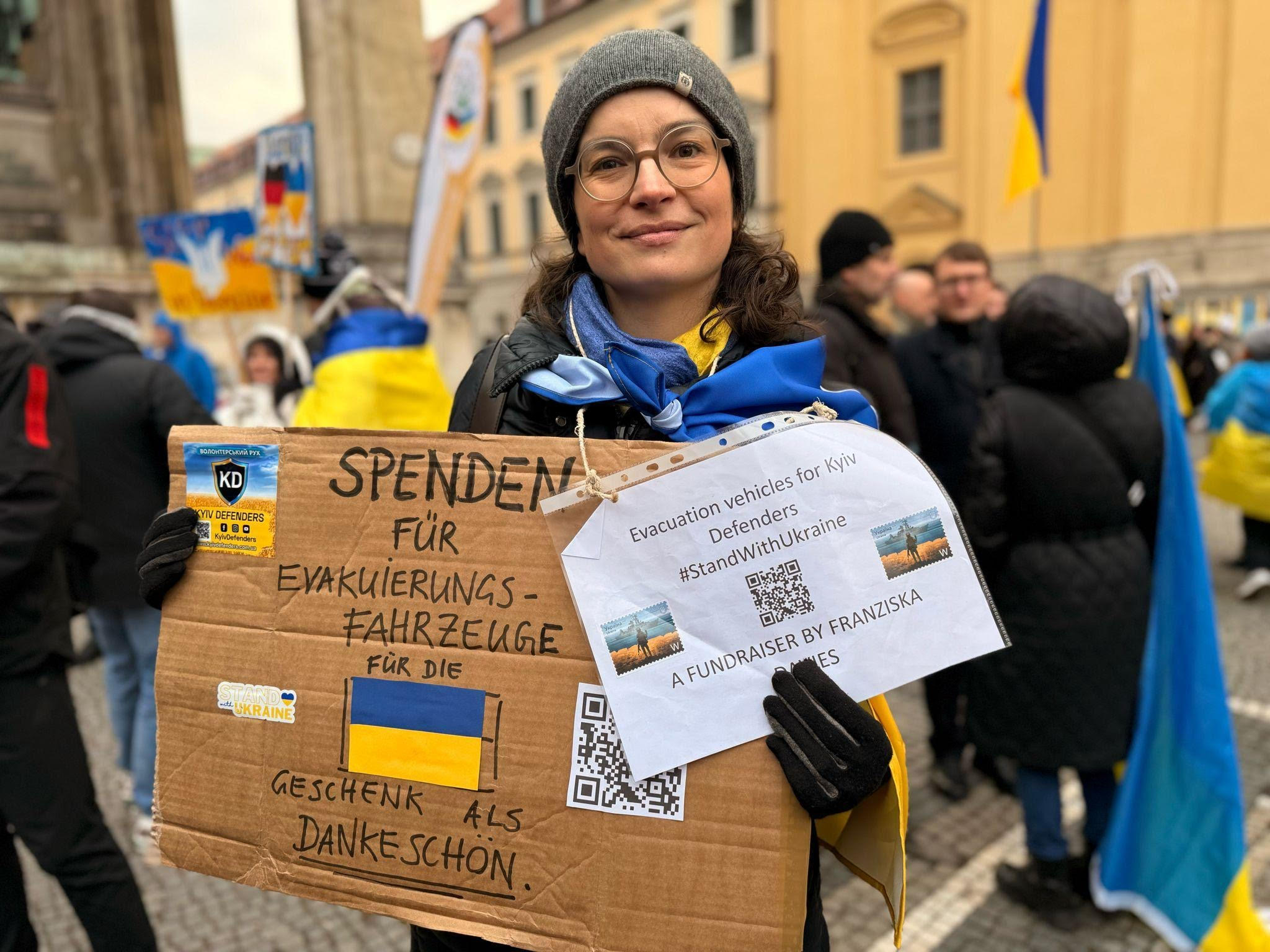
PS: Ukraine has been able to resist Russia, not only because of its army, but also because of its civilian society. Kyiv Defenders is an organization that was formed in the capital shortly after the full-scale invasion. They also bring evacuation vehicles and medical and technical equipment to the front. You can support them with your donation.

But diplomacy, but elections! – Thoughts on russia’s war on Ukraine
Once again, two dictators prepare to divide Europe.


Alone against fascists – Thoughts on russia’s war on Ukraine
This war should have ended long ago, if only Ukraine received enough support. But the fascists in our midst are winning. We must fight fascism at home.

 For Better Science
We come to this site for the betterment of science, not for your political views. If you were apolitical, your audience would be at least 3 times larger.
LikeLike
I am perfectly happy about my audience, and for people like you I have this to say:
If you think that it’s a political bias that abducting and murdering children is not ok, than something is badly wrong in your head.
LikeLike
Science isn’t political? The choice of national priorities on which projects to fund, the selection of an entire infrastructure to conduct, disseminate and apply science for health, defense, engineering? The choice to protect, or not, the investment of public tax revenue in science by creating transparent ethical principles to protect from fraud, waste and abuse?
LikeLiked by 1 person
You could (maybe) be apolytical if you lived on a one-man island in the middle of the Pacific. Otherwise you continuously make lesser or greater polytical decisions.
Takig the “apolytical” stance when russia invades an independent nation, killing people, destroying their homes, cultural heritage, infrastructure while also using their own conscripts as worthless cannon fodder is already a polytical choice.
LikeLike
You come to this site for whatever reason you like, I’m perfectly fine with Leonid talking about both. Anyway it’s his website, he does what he wants.
It’s one thing to ignore politics when it’s about small things, but it’s not like you can ignore them when the stakes are war and authoritarianism. If science isn’t political, then how come an infamous current head of state started attacking and defunding science, scientists and scientific agencies in his country the minute he was inaugurated? If scientific fraud isn’t political, then how come that country leader chose to put known fraudsters in charge of agencies and programs? Certainly their fraud and quackery is going to cost a lot of people their health and quality of life. How could that be ignored?
LikeLike
Thanks to you and others for your comments.
Denying climate change, supporting russia, not caring about Epstein files and whether Trump engaged in child rape : all those are not political views.
There were times when politics was about whom to tax and in what to invest public funds, now it became whether non-white people are human, and whether it is ok to murder, rape, and abduct children (because none of that affects you personally).
LikeLike
In fact it would seem that the choice to “apoliticize” science is a political choice to avoid “inconvenient truths.”
LikeLiked by 1 person
Totally agree. I hate the flaunting of politics of the blog author, but well… what can you do.
Technically, I can play the “I’m also from there card, grew up not too far from Schneider, and that I know what’s going on there”, and start talking about all the… but I won’t because the blog author would ban me. Let’s leave it at the fact that I supported the Sharij party in 2019.
Just ignore it. The blog author does really good work otherwise and it’s his website. Just be thankful that neither one of us are back there now, otherwise we’d be severely beaten by the TCK when walking to the grocery store, and sent to the front with no training. Mostly for Leonid since you don’t know me, but I do good work where I can too actually.
LikeLike
‘Ukraine is given too much Western support to die, but not enough to win.’
That’s precisely it! great article, but it still seems a bit optimistic. We have been saying for years that Ukraine’s resistance is at least as important for Europe as it is for Ukraine. I don’t think they fail to understand this. I think the problem lies here. Everyone initially thought Ukraine would surrender within a week. That’s why no one cared. Just as they didn’t care about the occupation of Crimea. Then they saw Ukraine’s resistance and observed Russia’s losses.
A note: I disagree with the author’s statement that “Russia can be defeated; Russia has been defeated before. The question is not one of possibility, but of political will.” Because Russia has already shown clear signs of defeat at least three times in this war. However, each time, Ukraine was not allowed to advance further. As a result, we return to the statement above: but not enough to win.
Now the main concerns are: what could happen if Ukraine wins completely? What could happen if Russia loses completely? And even more worryingly: how will our trade be affected? Because they are preoccupied with discussing these issues, the Ukrainians’ survival in a sustainable manner is the best option for them. Russia has been defeated. It was kept alive by those who could not foresee Russia’s defeat. It’s that simple.
LikeLike
I see core similarities between the war in Ukraine and the war in Israel and its surroundings despite very different circumstances and power balances. Israelis also perceive ourselves as defenders against radical anti-West ideology pepetruated by Islamists and their Russian allies. If this was only a territorial dispute why don’t the Palestinians fight Jordan, who was also part of the British mandate of Palestine? I have pleny of other arguments to demonstrate that the anti-zionist agenda is of anti-Western nature, influenced by Russia/Sovies. I consider those in the West, who don’t support Israel, as useful idiots subjected to propaganda full of misconceptions.https://honestreporting.com/the-lie-born-in-moscow-how-the-ussr-invented-todays-anti-israel-narratives/The Soviets helped create the antisemitic narrative that Israelis are European colonialists who stole indigenous land already back in the 60s. They hired political figures like Arafat to spread false narratives, and supported the creation of terror militias. The Soviets invented Palestinian nationalism, which didn’t exist before – before the foundation of Israel, the local Jews called themselves Palestinians, not the Arabs. The former pan-arabic identity that rejected the pro-west Zionist notion failed big time. The USSR-backed Arab armies failed to annihilate the Jewish state. They needed to persuade the West by tackling their weakness of past shames. Jews are oppressive whites who oppress indigenous people. And it worked! Similarly, Russian propaganda argues that Ukraine is a Russian land and there is no such thing as an Ukrainian identity. They are a product of Western imperialism.
LikeLike