

Schneider Shorts of 3 October 2025 – Epstein and his academic friends, a Texas kleptomaniac, German professor innocent again,with an advice for PubPeer community, Scandinavian retractions, and finally, Springer Nature’s view on western blotting.
Table of Discontent
Science Elites
- The pleasure genome initiative – professors fascinated by Epstein Brain
- A waste of everyone’s time – Yuri Gogotsi has advice for PubPeer community
- Impossible to go back – Haley Tucker suffers from kleptomania
- A contribution to investigation – Brunhilde With again declared innocent
Scholarly Publishing
- A variety of factors – Springer Nature explains how western blots work
Retraction Watchdogging
- Challenging to distinguish specific contributions – first retraction for Muhammet Toprak and his protege Abdusalam Uheida
- On a completely different topic – how Mehdi Baghayeri does business
- Engaged in citation manipulation – Frontiers retracts papermill trash without prompting
- The only solution – journal retracts wrong paper by Zhenhe Suo
Science Elites
The pleasure genome initiative
Welcome to the new episode of Church On Friday.
Being an enterprising eugenicist, the MIT professor George Church was bound to be befriended by the paedophile billionaire Jeffrey Epstein, who, before his mysterious death in custody, planned to literally seed human race by raping countless underage female sex slaves on his private island.

George Church, Colossal W*nker
From mammoths to eugenics to anti-aging scams: god-impersonator George Church knows how to make money with bullshit.

Epstein also like to donate to science, and scientists were queueing to take his money, and many supported him in difficult times when his paedophile activities were exposed. Bloomberg now reported on 25 September about Epstein’s 18,000 private emails:
“In January 2006, six months before the indictment, Epstein’s assistant asked about nailing down an appointment for him with Stephen Kosslyn, then-chair of Harvard’s psychology department. “kosslyn is a priority,” Epstein wrote. Within days, the psychologist was proposing a dinner with bigwigs across economics, genomics and limb regeneration to discuss a lab “centered on genetics and the brain” that would explore “far-out ideas such as life extension.” […]
Kosslyn, who’s now president of an AI education startup, corresponded that February with geneticist George Church and Gary Ruvkun, a Harvard molecular biologist who won a Nobel Prize in Physiology or Medicine last year. They shared ideas about a project whose “farthest reaching harvard goal” would bring together experts in law, psychology, biology and economics to describe the “pleasure signatures in the brain” that they said could correspond to hunger, sexuality and fear.
In a February 2006 email forwarded to Epstein’s assistant, Ruvkun wrote: “i shall again try to drive home the point about the pleasure genome initiative.””
The paedophile sponsor liked the research proposal. At least for Stephen Kosslyn, it is proven he took Epstein’s money, and he sure valued it:
“In January 2008, Kosslyn offered Epstein a birthday wish: “May the coming year be infinitely better than the previous one.””
And in May 2008, Kosslyn informed his paedophile friend that he “decided to be Dean of Social Sciences” at Harvard.
“Kosslyn added a month later that he’d love to visit him.
“unfortunately jail starts monday,” Epstein wrote.”
As for Gary Ruvkin, who received the 2024 Nobel Prize in Physiology or Medicine, is yet another case for why we should stop worshipping Nobelists because some of them are nothing but dirty old men.

The alpha males of physics
Two sets of events for Women in STEM: the theoretical physicist Alessandro Strumia, soon likely ex-CERN affiliated, decried feminist conspiracies and the discrimination against males like himself, in a workshop talk on gender. Right after, the Nobel Prize for physics was finally after 55 years given to a woman. Thing is: one of the other…
Here is more on Church, by Bloomberg:
“Shortly after, Epstein wrote to his assistant that he was planning to contribute to Harvard’s Personal Genome Project, run by Church, the geneticist: Epstein wanted to know if beauty resides in DNA, he said. He was due to spend more than $1 million on the project from 2006 to 2009, according to an itemized budget in his inbox. Church, who leads synthetic biology at Harvard’s Wyss Institute, proposed “possible topics” for one of their gatherings, including “re-engineering humans.””
Church apparently thinks that because he styled himself to look like God from some American children Bible, it is his job to re-engineer the human race into his image. With the money from a paedophile sex-trafficker, if needed.
The Bloomberg article names other academic friends of Epstein’s, like Harvard’s professor of psychology Howard Gardner, an expert on “ethical dilemmas”. He provided Epstein with a list of books to read in prison and answered Epstein’s creepy request for “advice about offsprings” with an offer of “a longer conversation-whenever you’d like.”
And here is a professor of music and neuroscience at UC Los Angeles:
“In October 2007, when the New York Post reported that Epstein was preparing a guilty plea, one of his many friends at Harvard University got in touch.
“I read the newspapers early this morning,” the neurologist Mark Tramo wrote to one of Epstein’s assistants. “Please remind him that boys from The Bronx (even if they end up at Harvard) have long memories, know all about cops, and stay true to their friends through thick and thin (no less peccadilloes).””
Paedophile’s money is music for this professor’s ears, pun intended.
And another one, Elkhonon Goldberg, the Soviet-born professor of neuropsychology at New York University, who wrote to Epstein in a February 2008:
“We are quite confident that with your support our Brain can become an exceptional scientific endeavor and we will be proud to name it ‘The Epstein Brain,’” Goldberg wrote, adding a smiley face.”
Should men who admire a rich paedophile be admired as role models of humanity? Apparently it is the case.

A waste of everyone’s time
Top nanotechnologist published top nanotechnology fraud.
There are 3 corresponding authors, the last author Ian Kinloch is professor at the University of Manchester and Chief Scientific Officer of the UKRI-funded Henry Royce Institute, also in Manchester, UK. Mark Bissett is another professor at the University of Manchester, affiliated with its National Graphene Institute, which was founded by the Nobel laureates Andre Geim and Kostya Novoselov.
This is their paper, aptly described as “fabrication” already in the title:
Kai Chio Chan , Xiang Guan , Teng Zhang , Kailing Lin , Yihe Huang , Lingshu Lei , Yiannis Georgantas , Yury Gogotsi, Mark A. Bissett, Ian A. Kinloch The fabrication of Ti3C2 and Ti3CN MXenes by electrochemical etching Journal of Materials Chemistry A (2024) doi: 10.1039/d4ta03457k

The third corresponding author is Yury Gogotsi, professor at Drexel University and director of Drexel Nanomaterials Institute in Philadelphia, USA. He is a Ukrainian native, who came to US in 1995 and made a stellar career, winning many awards and medals. In 2024, Gogotsi founded the company MXene Inc to commercialise his inventions. These days, Gogotsi is a Ukrainian patriot, but it wasn’t always like this.
In October 2015, almost two years after the begin of Russo-Ukrainian War, Gogotsi travelled to Moscow to pick up his RusNanoPrize, from the russian state-run tech corporation Rosnano (or Rusnano).
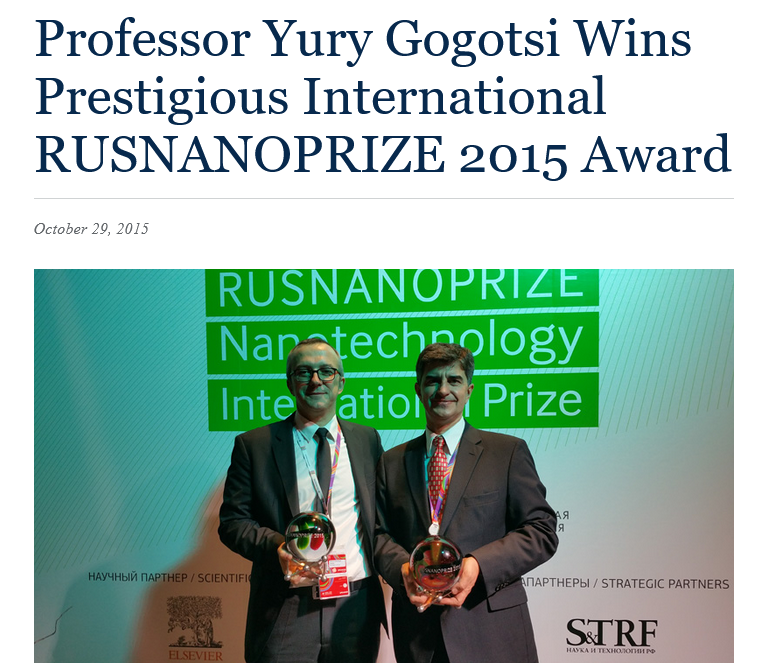
Drexel University quoted their proud professor:
“I’m proud that our work has been selected for this prestigious award,” says Gogotsi. “This is not only recognition for our work with Patrice, but also recognition for the importance of capacitive energy storage in modern technology. This award is for the entire community of scientists and engineers working in this field,”
As reminder: in February 2014, russia started its war against Ukraine, by sending its unmarked army first into Crimea (which it then annexed) and then into the Donbas area, where they shot down the MH17 passenger plane, killing all 298 people on board. By 2015, more than 14,000 Ukrainians, both soldiers and civilians, died in this war which russia pretended not to lead, up until the full-scale invasion of February 2022. Countless more Ukrainian civilians were displaced or disappeared in russian prisons. But in 2015, Gogotsi chose to pose with his russian award in Moscow.
But let’s return to the topic of bad science. This paper by Gogotsi was flagged on PubPeer in July 2020:
Elumalai Satheeshkumar, Taron Makaryan, Armen Melikyan , Hayk Minassian , Yury Gogotsi, Masahiro Yoshimura One-step Solution Processing of Ag, Au and Pd@MXene Hybrids for SERS Scientific Reports (2016) doi: 10.1038/srep32049

Gogotsi replied right away and informed on PubPeer:
“After discussion with the first author who produced the figure, it appeared that some XRD patterns were recorded from 10 degree and he attached a section of background to make them look like they were all recorded from 5 degree. XRD is simply supplementary characterization for this Raman study and there are no peaks in that part of the pattern, so this violation does not affect any conclusions from the work. Still, I’ve asked Elumalai Satheeshkumar to produce a corrected figure and ask the journal to publish an erratum. I did not find any problems in other figures.”
Basically, the first author admitted to have intentionally forged that figure.
The Correction from 25 September 2020 cut off the spectra at 10 degree:
“In this Article, Figure 4 contains an inappropriate base line correction and signal-to-noise (S/N) ratio duplication at low angle between the 5–10 degrees (2θ). The correct Figure 4 without any spectral processing appears as Figure 1. […]
As a result, in the Results section,
“The XRD patterns of the delaminated MXene have very weak peaks comparable to those previously reported12. The peak of MXene at 13° (2θ) shifts to 11° and 9° in the cases of Ag@ and Au@Mxene hybrids, respectively.”
should read:
“The XRD patterns of the delaminated MXene have very weak peaks comparable to those previously reported12.”
I wrote to Gogotsi, but he didn’t reply to me. Instead, he went to protest on PubPeer against his own Correction and against people scrutinising his data:
“Two full XRD patterns, if included, would show the shift happening. Whether it does or not won’t affect the conclusions. Therefore, there is no point in burdening the publisher with publishing another erratum. In every published paper, one can find sentences of no significance for the paper’s findings that could be fixed/removed, or replaced. However, the goal of PUBPEER should be to find errors and manipulations that misguide researchers and affect the reported scientific results. Don’t focus on issues of no significance – this is just a waste of everyone’s time.”
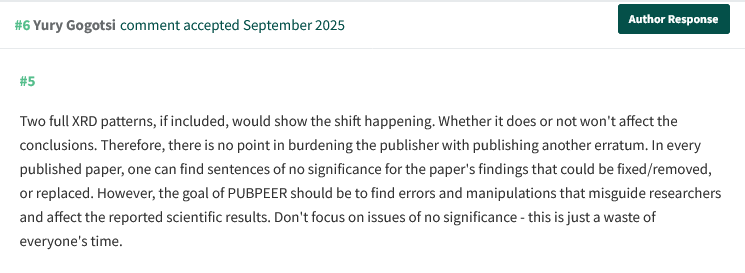
Indeed, those fake bits which Elumalai Satheeshkumar added to the published figure were anything but irrelevant, and Gogotsi’s claim that “there are no peaks in that part of the pattern” was dishonest: there were very relevant MXene peaks. Which are now completely gone with the correction, while the rest of the spectra remained as before:

Who was wasting whose time here, Professor Gogotsi?
But now, will Gogotsi and his Manchester colleagues retract at least the Chan et al 2024 paper? Or fix it with another dodgy correction because “this violation does not affect any conclusions“?
After all, the Editor-in-Chief of Journal of Materials Chemistry A is Anders Hagfeldt, who is very experienced in fake science himself.

Swedish rector Anders Hagfeldt pronounced innocent of papermilling
“The board’s conclusion is therefore that the deviations regarding figure 2b and 2c in article 1 constitute serious deviations from good research practice”
Impossible to go back
Elisabeth Bik uncovered a blatant case of a kleptomania at the University of Texas in Austin, USA.
In one 5 year old paper, confocal microscopy images and western blots were stolen from older studies by totally unrelated research groups – the former from UC San Francisco, and the latter from the Chinese papermill product Hu et al 2015 which was retracted 2 years later for having reused data from yet another unrelated Chinese paper.
R. Dayne Mayfield , Li Zhu , Tyler A. Smith , Gayatri R. Tiwari , Haley O. Tucker The SMYD1 and skNAC transcription factors contribute to neurodegenerative diseases Brain, Behavior, & Immunity – Health (2020) doi: 10.1016/j.bbih.2020.100129
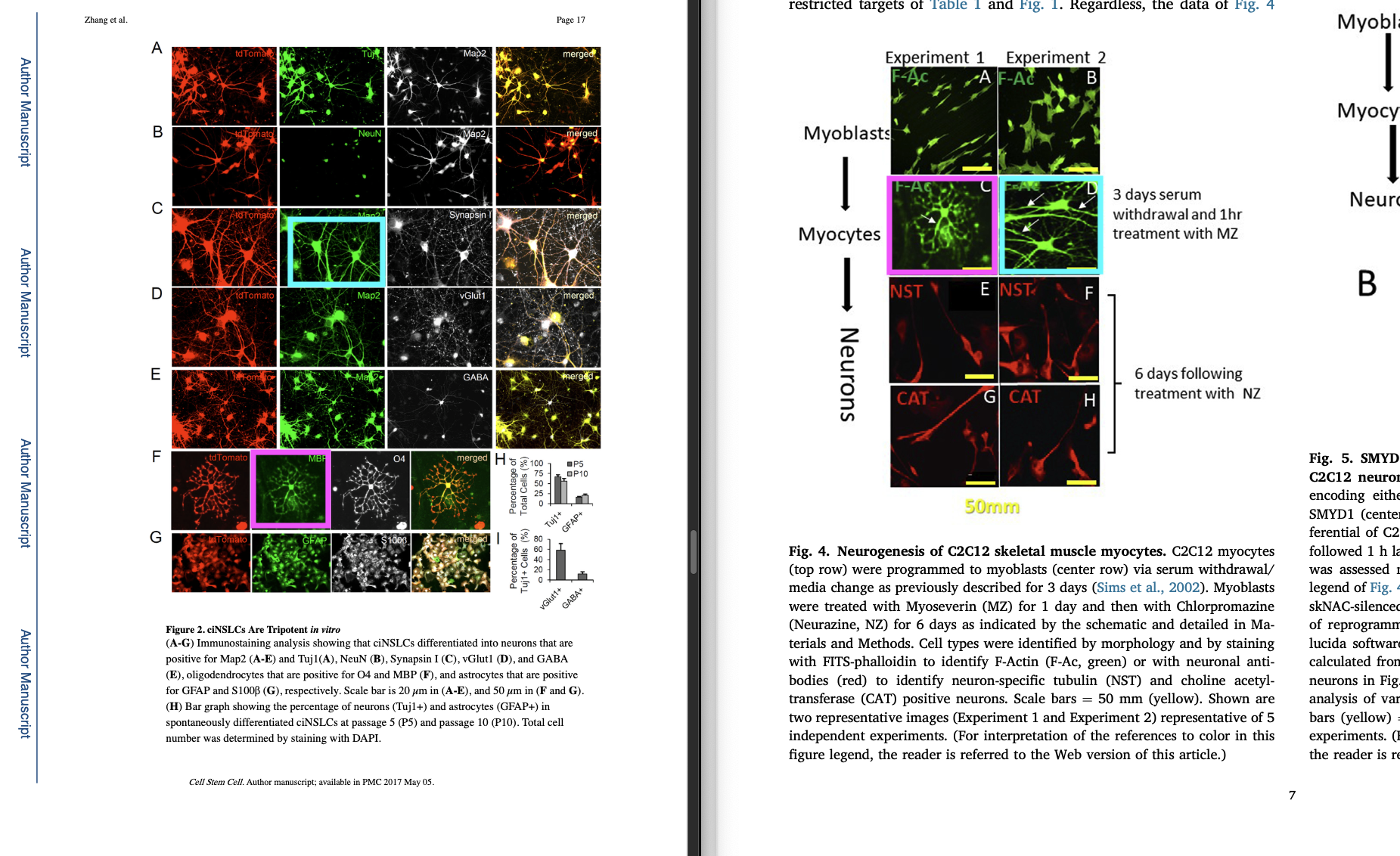
Pink and cyan boxes: Two panels – C and D – are remarkably similar to panels in Mingliang Zhang et al., Cell Stem Cell . 2016, DOI: 10.1016/j.stem.2016.03.020. I did not see any authors or affiliations in common, and the Zhang paper is not listed in the references.”

All 8 panels appear to be duplicates of panels in Figure 3C/D of Peng Hu et al., Biosci Rep (2015), DOI: 10.1042/BSR20140124, which was retracted in 2022″ – see:

Elisabeth Bik: “Concern about Figure 5A: Red boxes: In the top row, the Scrambled and SMYD1-shRNA panels appear to overlap”
The last author is Haley Tucker, who used to be Professor of Cellular and Molecular Biology at UT Austin. She retired in 2018 (according to online sources, she graduated with PhD from MIT in 1973, and became professor at UT Austin in 1995). There are no more extant faculty websites, just this left-over:
There are more papers from Tucker’s lab on PubPeer. Another case of plagiarism:
Melissa A. Edwards, Mark A. Brown, Ilham Alshiraihi, Dillon K. Jarrell, Haley O. Tucker The Lysine Methyltransferase SMYD2 Is Required for Definite Hematopoietic Stem Cell Production in the Mouse Embryo Veterinary Sciences (2020) doi: 10.3390/vetsci7030100

Middle and dark blue boxes: The two FACS panels look remarkably similar to panels in Figure 2 of Monika Stefanska et al., Scientific Reports (2017), DOI: 10.1038/s41598-017-06627-9
No overlapping authors, not mentioned in the references”
Here, western blot data was stolen from an older work by the Spanish cheater Pura Munoz-Canoves (read my article from 2016) and her associate Alberto Munoz (mentioned in March 2025 Shorts), and that Spanish paper is totally fraudulent itself: Figueroa et al 2003:
Woodring E Wright, Chuan Li , Chang-Xue Zheng , Haley O Tucker FOXP1 Interacts with MyoD to Repress its Transcription and Myoblast Conversion Journal of Cellular Signaling (2021) PMCID: PMC7861563

Red boxes: The b-Tubulin panel looks remarkably similar to the GAPDH panel in Figure 2A of Angélica Figueroa et al., Mol Cell Biol (2003), DOI: 10.1128/MCB.23.14.4991-5004.2003 […] There are no authors or affiliations in common, and the Figueroa paper is not mentioned in the references.

Elisabeth Bik: ” Figure 5F: Again, no overlap with authors, not listed in references
Pink and blue boxes: The panels look remarkably similar to those in Figure 1B of Yuma Nihashi et al., Scientific Reports (2019), DOI: 10.1038/s41598-019-52946-4“
This was at least home-forged:
Mark A. Brown , Melissa A. Edwards , Ilham Alshiraihi , Huimin Geng, Joseph D. Dekker , Haley O. Tucker The lysine methyltransferase SMYD2 is required for normal lymphocyte development and survival of hematopoietic leukemias Genes & Immunity (2020) doi: 10.1038/s41435-020-0094-8

Red boxes: Giemsa / CKO appears to overlap with Giemsa / CTRL, although stretched differently”

All four SMYD2 panels show a splice in the middle, while all the other blots are not spliced (differential splicing)
Boxes of the same color highlight panels or parts of panels that look remarkably similar, although sometimes in mirror image”

Boxes of the same color highlight panels that appear to overlap, sometimes with rotations.”

Green boxes: in the SMYD2 / MX1 CRE panel, the same four lanes are visible twice”
Two years ago, Tucker replied to PubPeer criticism of another sleuth:
Christian Schmidt , Laura Christian, Tyler A. Smith, Josephine Tidwell, Dongkyoon Kim, Haley O. Tucker Lipid Rafts Interaction of the ARID3A Transcription Factor with EZRIN and G-Actin Regulates B-Cell Receptor Signaling Diseases (2021) doi: 10.3390/diseases9010022

Actinopolyspora biskrensis: “A portion of a gel slice in Figure 3B and Figure 4B appear to be the same, although they have been cropped differently and the aspect ratio is very different.”
In May 2023, Tucker posted this reply on PubPeer:
“I do agree that these panels look similar. Unfortunately this is all I can tell you at this time, given how long ago these papers were published. I retired from my position at UT over 3 years ago, and it will be impossible for me to go back and check thru these data, nor to contact my postdocs or grad students that performed the experiments. I can say that Arid3a and 3b have virtually identical DNA binding properties. Thus, if this mistake was made, I feel confident that the conclusions drawn remain valid.”
Her ancient paper was merely two years old back then. And anyway, it’s not like Tucker stopped doing science – she just published Dekker et al 2025 with her former postdoc Joseph Dekker, now at Pfizer.
Also Sholto David came upon fake papers by Tucker:
Hanjun Li , Pei Liu , Shuqin Xu , Yinghua Li , Joseph D. Dekker , Baojie Li , Ying Fan , Zhenlin Zhang , Yang Hong , Gong Yang , Tingting Tang , Yongxin Ren , Haley O. Tucker, Zhengju Yao , Xizhi Guo FOXP1 controls mesenchymal stem cell commitment and senescence during skeletal aging The Journal of clinical investigation (2017) doi: 10.1172/jci89511

And this, also not even 10 years old:
Ching-Jung Huang, Utsab Das , Weijun Xie , Miryam Ducasse , Haley O. Tucker Altered stoichiometry and nuclear delocalization of NonO and PSF promote cellular senescence Aging (2016) doi: 10.18632/aging.101125


More sleuths joined after Elisabeth posted her findings on social media:
Mark A. Brown, Kenneth Foreman , June Harriss , Chhaya Das , Li Zhu , Melissa Edwards , Salam Shaaban, Haley Tucker C-terminal domain of SMYD3 serves as a unique HSP90-regulated motif in oncogenesis Oncotarget (2015) doi: 10.18632/oncotarget.2970


Important: a 2013 interview mentioned that “Dr. Tucker is an out transgender professor.” It is really unpleasant, as much as I want fraud to be sanctioned, I hate to think of the gleeful and bigoted cruelty which Trump-loving Texans will deploy against a transgender person. Tucker is sure a very bad scientist, but I hope she will be treated the same as they would treat a straight white cis-man caught on fake science. Oh wait, this would mean cash rewards and academic honours…
Anyway, there already was investigation in Austin. This is how we know:
Dongkyoon Kim, Christian Schmidt, Mark A Brown, Haley Tucker Competitive Promoter-Associated Matrix Attachment Region Binding of the Arid3a and Cux1 Transcription Factors Diseases (2017) doi: 10.3390/diseases5040034

The 2017 MDPI Diseases and the 2016 PLOS One paper have indeed only one common author – Tucker. And the latter was retracted, exactly for the above reasons. Turned out that Tucker copied data from the thesis of her PhD student Dongkyoon Kim, who is not even co-author on the PLOS One paper!
Jeffrey L. Kurkewich , Nathan Klopfenstein , William M. Hallas , Christian Wood , Rachel A. Sattler , Chhaya Das , Haley Tucker , Richard Dahl , Karen D. Cowden Dahl Arid3b Is Critical for B Lymphocyte Development PLOS One (2016) doi: 10.1371/journal.pone.0161468
“After this article [1] was published, concerns were raised about Fig 6B.
Specifically:
- Lanes 1–8 in Fig 6B appear similar to the left 8 lanes of Fig 5.3A of [2] and Fig 4A of [3], but are labeled differently.
- Lanes 9–14 in Fig 6B appear similar to the right 6 lanes of Fig 5.3B of [2] and Fig 4B of [3], but are labeled differently.
Of note, the author of [2] is not in the PLOS ONE article’s author list or otherwise acknowledged in [1].
The University of Texas at Austin investigated this matter and concluded that Fig 6B of [1] reports falsified data. The University of Texas at Austin advised that Fig 6 was the only figure supplied by University of Texas collaborators; the article’s other results were not reviewed in their investigation.
In reviewing this matter, PLOS noted that the primary data were not provided with the published article [1] contrary to the Data Availability statement. The authors stated that not all of the underlying data for this article remain available. Therefore, this article does not comply with the PLOS Data Availability policy.
The PLOS ONE Editors retract this article due to the falsification of results reported in Fig 6B.
[…] HT did not agree with the retraction and apologized for the issues with the published article.”
Retraction 9 September 2024
Tucker did not reply to my emails.
A contribution to investigation
The German professor Brunhilde Wirth, director of the Institute of Human Genetics at the University Clinic Cologne, was now declared innocent once agin. Before, by the German Research Council (DFG), and now by how own university. You can read about Wirth here:
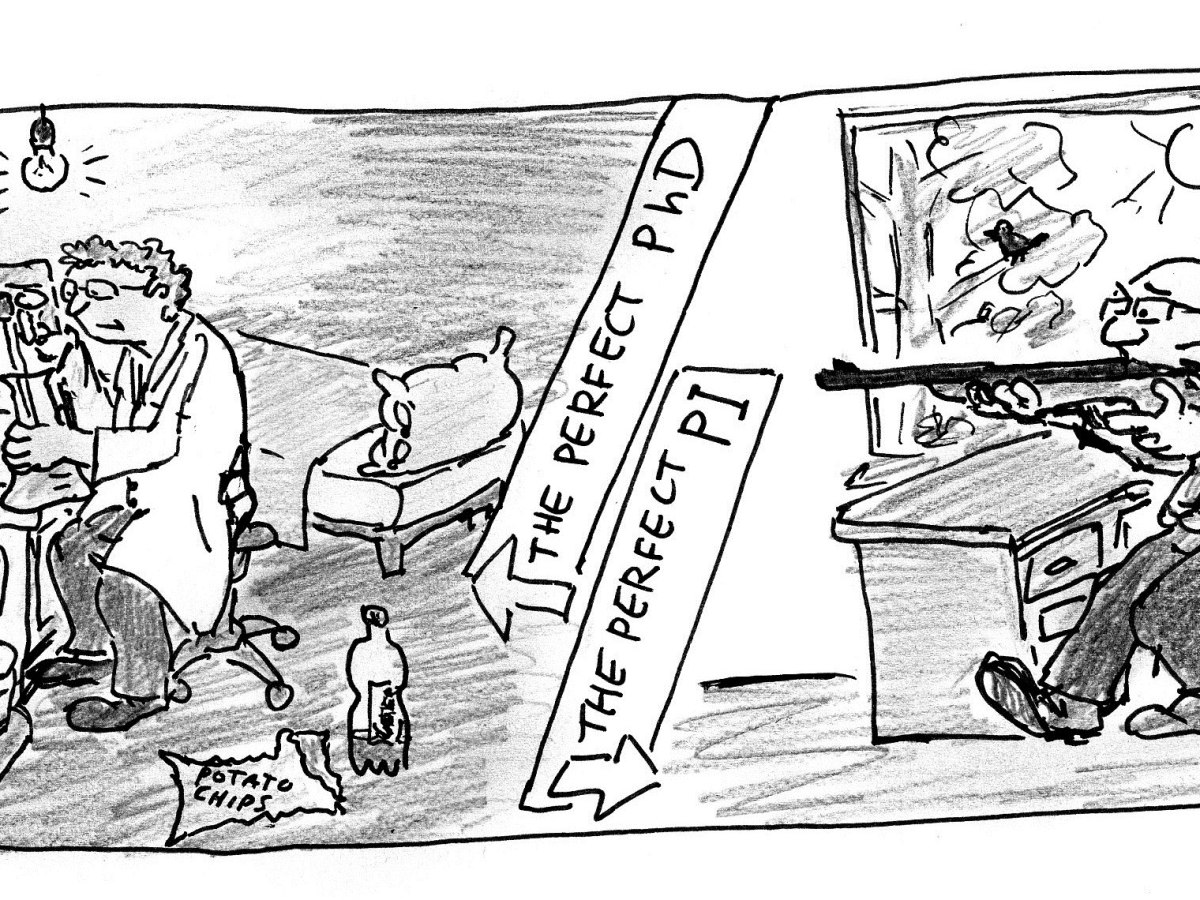
Bullies and Harassers of Cologne
“the professor insults her doctoral students, calling them “stupid”, “useless” or “retarded”, for example. She is said to sometimes require her employees to work more than 80 hours a week. The report speaks of a “quasi-feudal relationship of dependence” and a “climate of fear” at the institute in question.”
As I wrote in that article, the German magazine Spiegel reported in April 2023 about a bullying professor, who was accused of creating a “quasi-feudal relationship of dependence” and a “climate of fear”, and was banned by the University of Cologne from meeting and communicating with her own PhD students.
First-hand sources told me that the unnamed professor may be indeed Wirth She never replied to any of my many emails, also not now. But the officials of the University of Cologne and the German Research Council (DFG) clearly indicated or rather acknowledged to me that the professor in the Spiegel report was indeed Wirth.
To aid the bullying investigations, I informed the University of Cologne and DFG of two problematic papers by Wirth:
Gabriela E Oprea , Sandra Krober , Michelle L McWhorter , Wilfried Rossoll , Stefan Muller , Michael Krawczak , Gary J Bassell , Christine E Beattie , Brunhilde Wirth Plastin 3 is a protective modifier of autosomal recessive spinal muscular atrophy Science (2008) doi: 10.1126/science.1155085

Mycosphaerella arachidis: “Figure 4B: There are concerning changes in the background indicating splicing. The figure appears to have been constructed by copying and pasting different parts.”
Science issued this Erratum on 30 May 2024, it will become important later:
“In the Report “Plastin 3 Is a Protective Modifier of Autosomal Recessive Spinal Muscular Atrophy” (25 April 2008, p. 524), Fig. 4B shows three representative microscopic images of primary cultured motor neurons. During the generation of Fig. 4B, the authors made aesthetic alterations to the background of the assembled figure. They have prepared a new version of the panel that accurately represents the original microscopic images without any cosmetic changes to the background. The conclusions drawn from this figure and the paper itself are not altered by this figure revision.”
This is the other paper, with just two authors, it wasn’t corrceted which will also becoem relevant in a moment:
Yvonne Hoffmann, Brunhilde Wirth hnRNP-G promotes exon 7 inclusion of survival motor neuron (SMN) via direct interaction with Htra2-beta1 Human Molecular Genetics (2002) doi: 10.1093/hmg/11.17.2037

The DFG dropped their investigation because they decided that Wirth didn’t forge that figure personally and is therefore innocent. The University of Cologne now completed hteir own investigation and decided on exactly the same thing.
My suspicion is that they both were simply plagiarising the letters from Wirth’s lawyer, Frank Wertheimer of Krauss Law. Who doesn’t reply to me either.
Anyway, here is the Cologne report, signed by the Vice Rector for Research Claus Cursiefen:
The letter informed me that after a preliminary examination, the Commission for Assurance of Good Scientific Practice opened an investigation according to their university’s guidelines. I looked it up: §4 places the main responsibility for research integrity squarely with the principal investigator (here, Wirth), while §14 makes all authors responsible for a study’s content (no exception for corresponding authors like With), §6 mandates the authors to immediately correct any irregularities which are foudn after the publication.
On 3 June 2025, the investigation was however terminated on orders from the Rectorate. I was told about the reasons:
“In the case of both publications, the Rectorate regards a scientific misconduct in the form of image manipulation as proven. In both publications however, it cannot be clearly proven that the work, that led to the manipulated figures, was performed by Prof. Dr. Brunhilde Wirth herself.
Furtehrmore, the manipulated presentation in Oprea et al (2009) was corrected through the announcement of an Erratum in the Science, which the Rectorate assesses as a contribution to investigation of the accusations. “
You see, University of Cologne applauds Wirth for having successfully investigated herself by correcting at least one of her two papers, never mind the university now established them both as officially fraudulent.
No, there will be no requests for retractions, even a second correction is not required. The University of Cologne thinks that the public money is pumped into biomedical research for no other purposes but academic career advancement and content-creation for some publishing businesses. In any case: nobody is guilty, the data forged itself, without affecting any of the conclusions.
Scholarly Publishing
A variety of factors
As we all know, Springer Nature operates the bestest publication ethics team on the planet. Here a reminder:
“At Springer Nature, the Research Integrity Group supports the research community by promoting use of best practices from the outset, and protects the publication record in case of integrity concerns.”
Alice Henchley, Director of Communications, Integrity, Ethics and Editorial Policy, Springer Nature
“Trust in research is absolutely critical. And in order to trust research, it of course has to demonstrate integrity.”
Chris Graf, Research Integrity Director, Springer Nature
Now it is time for you to learn how this functions in practice. In November 2024, the pseudonymous sleuth Claire Francis alerted the editor and the publisher to this study from Taiwan, published in a journal by BioMedCentral (part of Springer Nature):
Shun-Fu Chang , Shih-Feng Liu , Cheng-Nan Chen , Ho-Chang Kuo Serum IP-10 and IL-17 from Kawasaki disease patients induce calcification-related genes and proteins in human coronary artery smooth muscle cells in vitro Cell & Bioscience (2020) doi: 10.1186/s13578-020-00400-8

It seems, the western blot was borrowed from this earlier paper by a totally different team of authors, from China no less (no, People’s Dictatorship of China doesn’t permit its scientists to collaborate with Taiwan). It was published in a Spandidos journal, and had other issues:
Jie Zhu , Meijuan Chen , Ning Chen , Aizhen Ma , Chunyan Zhu , Ruolin Zhao , Miao Jiang , Jing Zhou , Lihong Ye , Haian Fu , Xu Zhang Glycyrrhetinic acid induces G1‑phase cell cycle arrest in human non‑small cell lung cancer cells through endoplasmic reticulum stress pathway International Journal of Oncology (2015) doi: 10.3892/ijo.2015.2819

With no common authors between the two papers sharing the same western blot, one can either assume plagiarism or maybe it was the same Chinese papermill. But then again, what do we know, let’s ask the real experts.
In November 2024, Rebecca Pearce, Executive Publisher at BioMedCentral, announced to the sleuth that the publisher will perform “our own investigation of the paper per COPE guidelines.” The investigation took almost a year. On 29 September 2025, Pearce announced the outcome:
“Per the results of the investigation, the authors supplied all the necessary raw data and the blots presented in the publication matched the raw data. Based on the analysis of the raw data and the data presented in the published paper, we did not find that action was required.
It was noted that similarities in WBs can be due to a variety of factors, including that fact most investigators run their gels the same way, voltage, duration and loading amount and the same procedures to detect the proteins.“
I, for my humble part, bow down, nay, prostrate myself before such bottomless wisdom and stupendous knowledge. We are not worthy to walk the same earth as these Springer Nature geniuses.
Anyway, here is Cheng-Nan Chen of National Chiayi University in Taiwan again, ironically in another BioMedCentral journal:
Tsui-Hwa Tseng , Chien-Heng Shen , Wen-Shih Huang , Cheng-Nan Chen , Wen-Hai Liang , Tseng-Hsi Lin, Hsing-Chun Kuo Activation of neutral-sphingomyelinase, MAPKs, and p75 NTR-mediating caffeic acid phenethyl ester–induced apoptosis in C6 glioma cells Journal of Biomedical Science (2014) doi: 10.1186/1423-0127-21-61

But you heard what Rebecca Pearce said.
Retraction Watchdogging
Challenging to distinguish specific contributions
First retraction for the Swedish professor Muhammet Toprak, professor of materials chemistry at Royal Institute of Technology (KTH) in Stockholm. I wrote about him and his protege Abdusalam Uheida, senior researcher at Toprak’s Department of Applied Physics, in February 2025 Shorts. This paper featured very prominently, Toprak’s bad luck now was that this Elsevier journal is currently undergoing spring cleaning due to its massive papermill infestation:
Alaa Khalil, Walaa S. Nasser , T.A. Osman , Muhammet S. Toprak , Mamoun Muhammed , Abdusalam Uheida Surface modified of polyacrylonitrile nanofibers by TiO/MWCNT for photodegradation of organic dyes and pharmaceutical drugs under visible light irradiation Environmental Research (2019) doi: 10.1016/j.envres.2019.108788
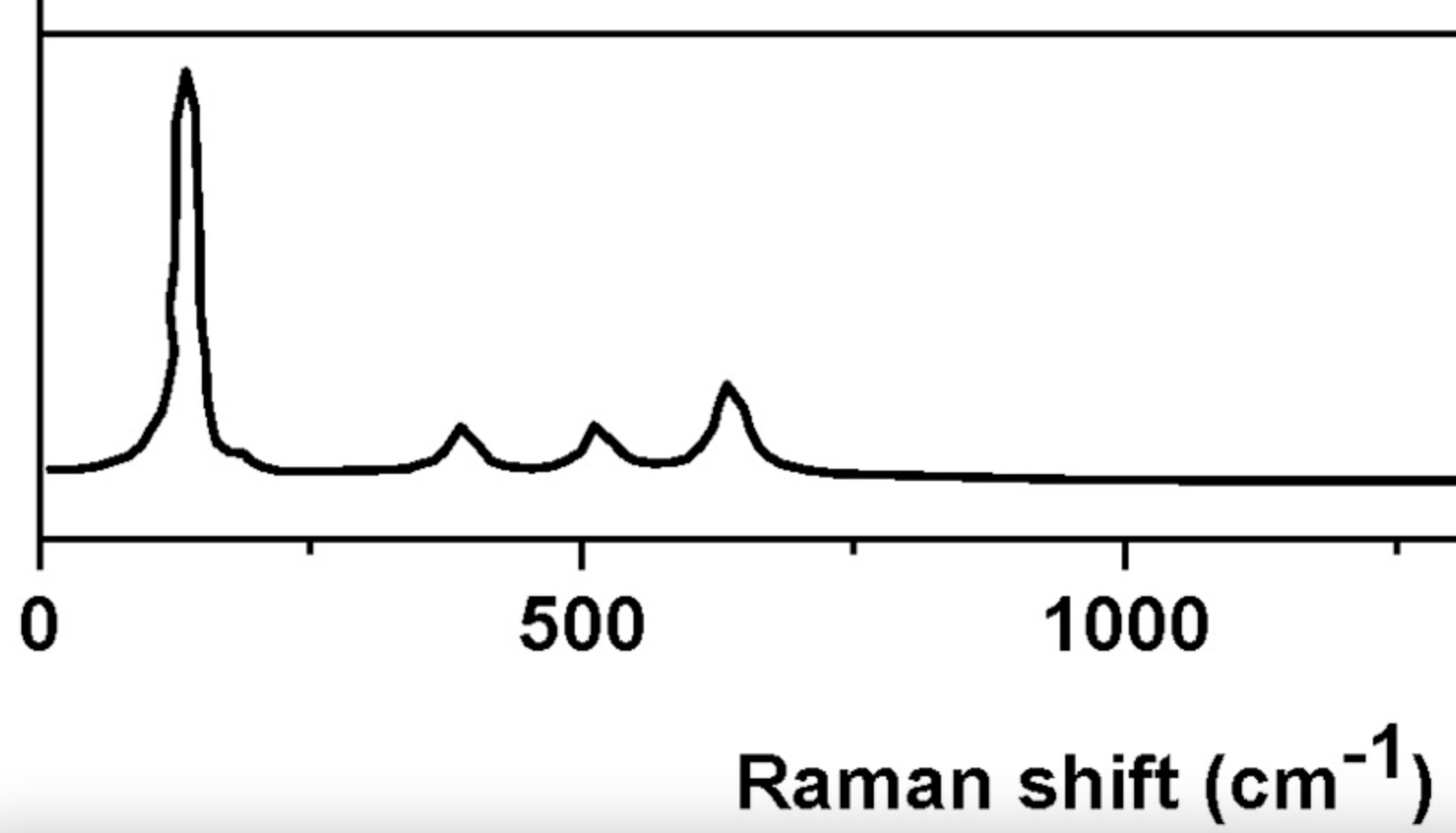
Yes, Fig 4 is clearly hand-drawn. Elisabeth Bik then found more:
“At least five papers now from this research group appear to show the same SEM image of nanofibers, but the experiments appear to be different.“
Another regular coauthor is Alaa Mohamed, who used to be at KTH at some point, but is now postdoc in Aalborg University in Denmark and simultaneously assistant professor at Canadian International College in Egypt.
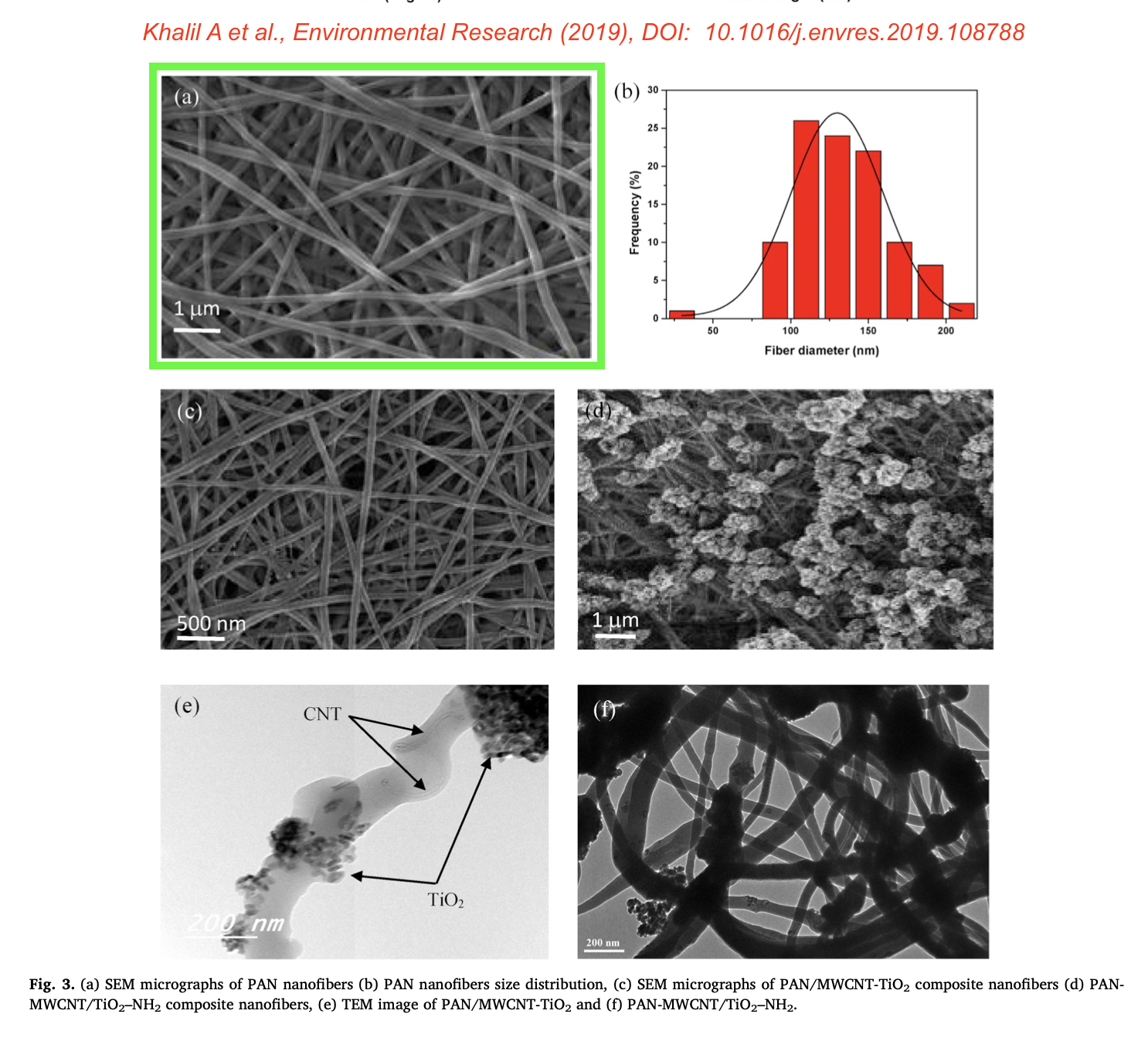

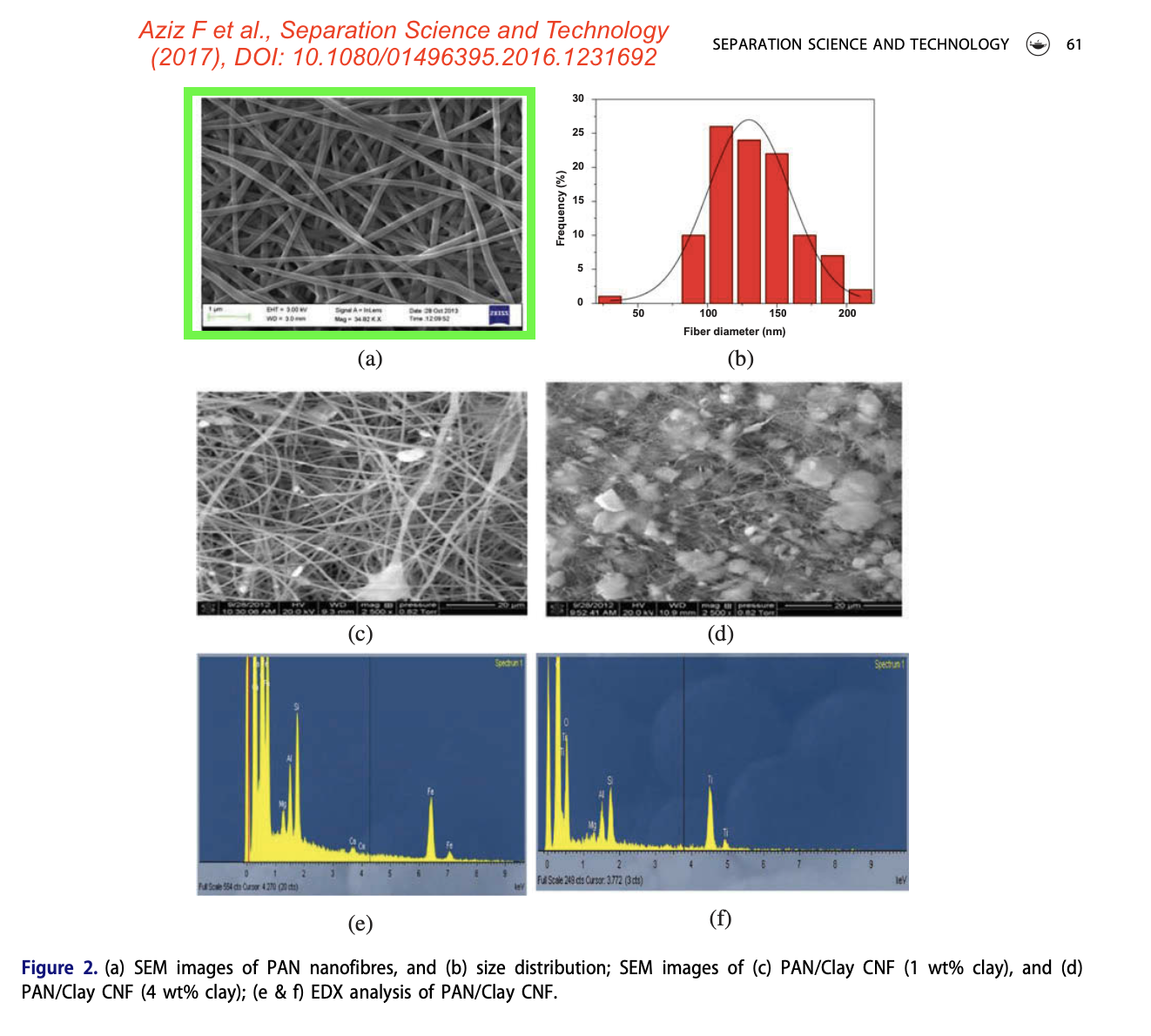
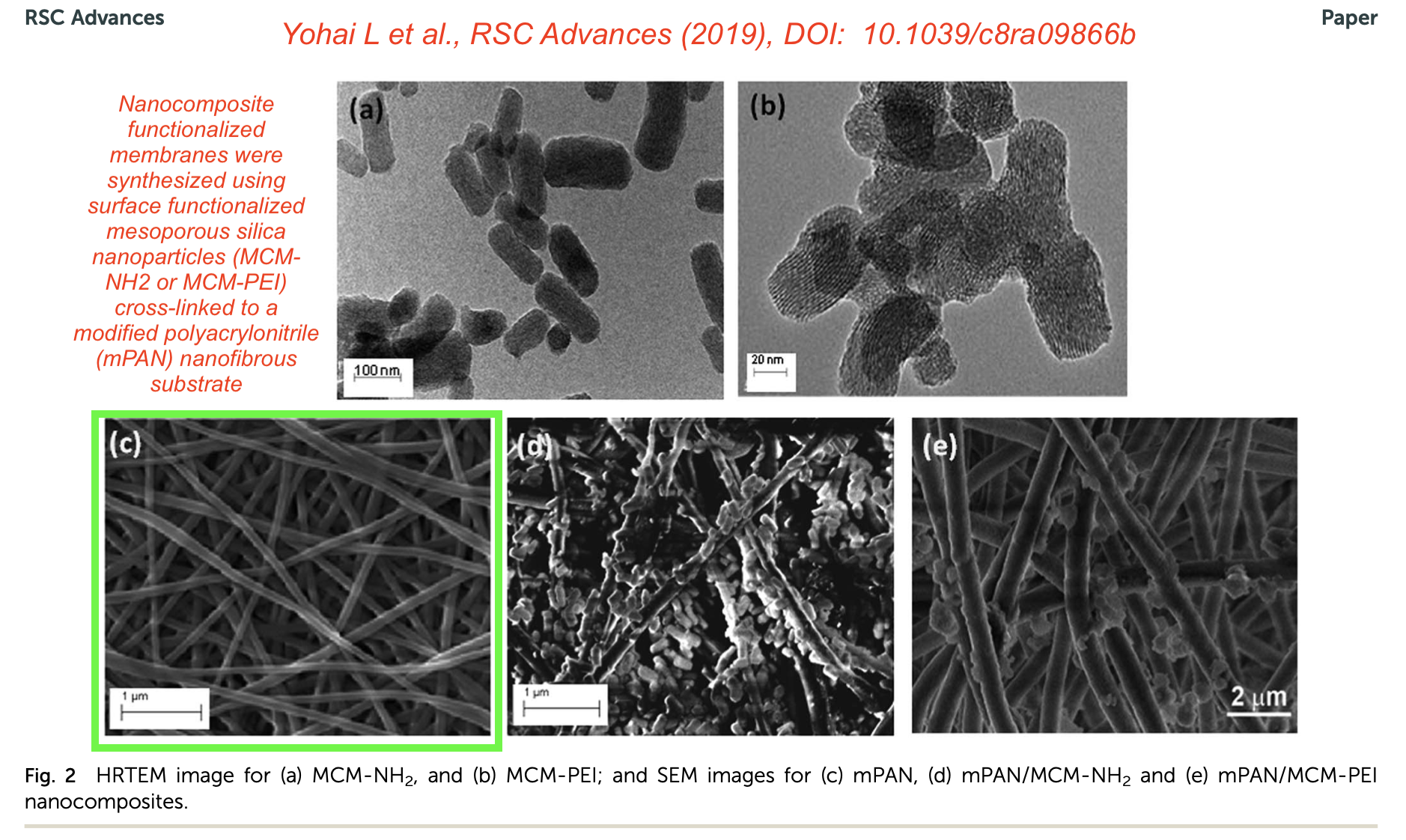
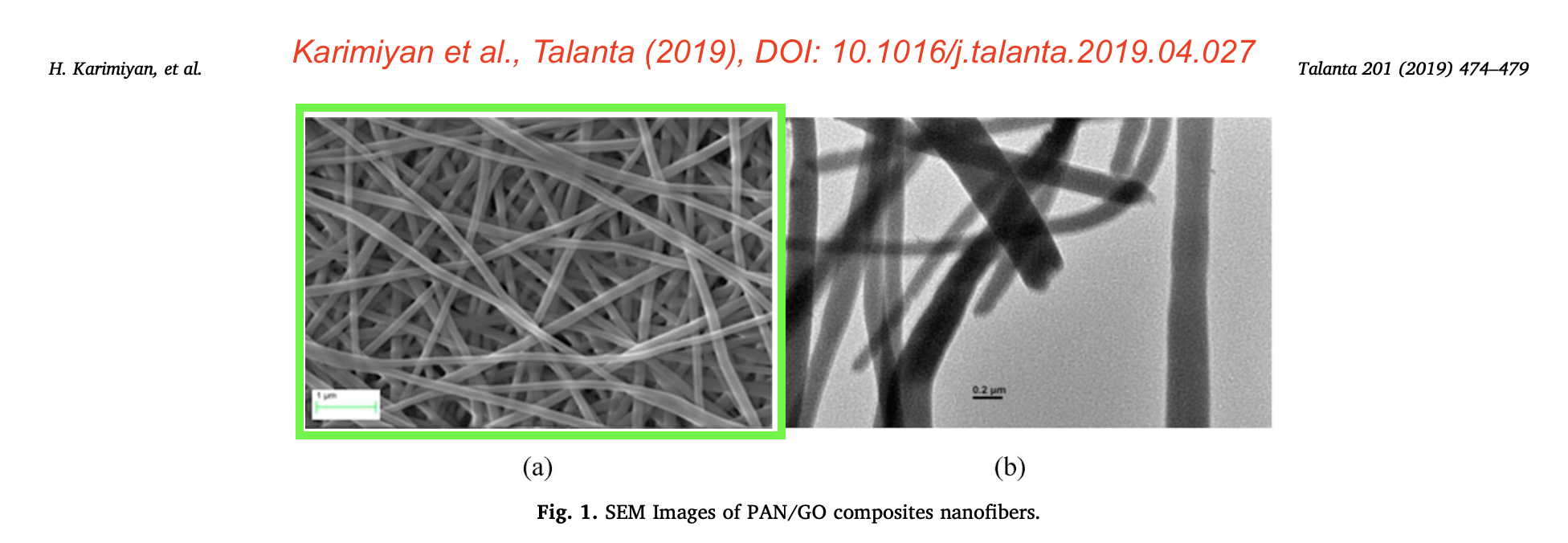
These are the other 4 papers, all by Ubeida
- Faissal Aziz , Naaila Ouazzani , Laila Mandi , Mamoun Muhammad , Abdusalam Uheida Composite nanofibers of polyacrylonitrile/natural clay for decontamination of water containing Pb(II), Cu(II), Zn(II) and pesticides Separation Science and Technology (2017) doi: 10.1080/01496395.2016.1231692
- M. G. Yazdi , M. Ivanic , Alaa Mohamed, A. Uheida Surface modified composite nanofibers for the removal of indigo carmine dye from polluted water RSC Advances (2018) doi: 10.1039/c8ra02463d
- L. Yohai, H. Giraldo Mejía , R. Procaccini, S. Pellice, K. Laxman Kunjali, J. Dutta, A. Uheida Nanocomposite functionalized membranes based on silica nanoparticles cross-linked to electrospun nanofibrous support for arsenic(v) adsorption from contaminated underground water RSC Advances (2019) doi: 10.1039/c8ra09866b
- Hanieh Karimiyan , Abdusalam Uheida, Mohammadreza Hadjmohammadi , Mohammad Mahdi Moein , Mohamed Abdel-Rehim Polyacrylonitrile / graphene oxide nanofibers for packed sorbent microextraction of drugs and their metabolites from human plasma samples Talanta (2019) doi: 10.1016/j.talanta.2019.04.027
Another PubPeer user found more data reuse in that Khalil et al 2019 paper:

PAN-CNT PAN-TiO2/CNT PAN-CNT/TiO2-NH2″
The other two studies being also authored by Toprak, Uheida and Mohamed:
- Alaa Mohamed , Samy Yousef , Mohammed Ali Abdelnaby , T.A. Osman , B. Hamawandi , M.S. Toprak , M. Muhammed , A. Uheida Photocatalytic degradation of organic dyes and enhanced mechanical properties of PAN/CNTs composite nanofibers Separation and Purification Technology (2017) doi: 10.1016/j.seppur.2017.03.051
- Alaa Mohamed, T.A. Osman , M.S. Toprak , M. Muhammed , A. Uheida Surface functionalized composite nanofibers for efficient removal of arsenic from aqueous solutions Chemosphere (2017) doi: 10.1016/j.chemosphere.2017.04.011
And even more, the other study being also by Toprak of KTH, again with Uheida and Mohamed:

back in early 2025, Toprak assured that there was no reason to retract anything:
“I communicated with my colleagues, who are the contact authors, and they have expressed the fact that these were mishaps during insertion of figures, and the original data for the acclaimed samples are in their hand. And also that they would take the necessary actions to do the corrections.“
The yet undated retraction was spotted in September 2025:
“This article has been retracted at the request of the Editor.
Concerns about this article were raised over a period of time at https://pubpeer.com/publications/15B3F7256EEF1BAE771FD1F295C7DC. The authors responded regarding the concerns about the reuse of SEM images, but did not respond to subsequent enquiries regarding other concerns. The editor evaluated the information that was provided, and came to the conclusions that:
- • The SEM image, figure 3a, is identical to images published in Aziz F et al., Separation Science and Technology (2017), DOl: 10.1080/01496395.2016.1231692, Yazdi et al., RSC Advances (2018), DOl: 10.1039/c8ra02463d, Yohai L et al., RSC Advances (2019), DOI: 10.1039/c8ra09866b and Karimiyan et al., Talanta (2019), DOI: 10.1016/j.talanta.2019.04.027
- However the SEM image was used to describe different types of PAN in different articles. Hence, the Editors concluded that the SEM image in ER is not reliable
- For the Raman spectrum, figure 4b, there is some backtracking, which is unusual. This backtracking may suggest that the Raman spectrum is perhaps self-drawn and the Editors concluded that this is not reliable
- The XRD pattern in figure 2a is a duplicate of the XRD pattern published in Journal of Colloid and Interface Science, 505 (2017), 682-691, https://doi.org/10.1016/j.jcis.2017.06.066
- Both XRD patterns have similar background noise which is unlikely if they depict the analysis of different things. When both articles are compared, the preparation methods are similar but not exactly the same. Such similarity may be attributed to either (i) inaccurate description of the methodology in the ER article or (ii) the reuse of the figures. In their explanation on PubPeer, comment #8, the authors state that the “similarity in XRD patterns across different materials may arise due to the low concentration of CNT and TiO2 in the composites, resulting in minimal diffraction signal differences. This could make it challenging to distinguish specific contributions of these components to the overall pattern, leading to the observed resemblance.” This would imply that the materials used in each study were different and that there has been intentional reuse of the same XRD pattern, which cannot now be regarded as reliable.
The responses from the authors were either unsatisfactory or not provided. For all of the above reasons, the Editor has lost confidence in the reliability of the findings presented in this article as a whole and is retracting it.”
Basically, with their own lies on PubPeer the authors admitted forgery and made the matter even worse.
All the other Toprak & Ubeida papers recycling these figures remained untouched so far, obviously nobody else cares.
Since August 2025, Toprak is visiting professor at the National University of Singapore, under the Teaching Sabbatical Program of the Swedish Foundation for International Cooperation in Research and Higher Education.
On a completely different topic
A funny papermill retraction, the paper was flagged by Mu Yang in November 2024, as part of her investigation of the Elsevier journal Environmental Research:

Issues of global relevance
“I like ImageTwin, but seeing things with just eyes is like hand-to-hand combat….” – Mu Yang
So here it is, for all lovers of Iranian science:
Davoud Khademi , Mahboobeh Zargazi , Mohammad Chahkandi , Mehdi Baghayeri A novel γ‒BMO@BMWO Z‒Scheme heterojunction for promotion photocatalytic performance: Nanofibers thin film by Co‒axial‒electrospun Environmental Research (2023) doi: 10.1016/j.envres.2022.115154


trajectories) are indicated by blue circles.”
In January 2025, a temporary Expression of Concern was issued, because of “potential manipulation of images in the article ” which the journal was investigating “in line with Committee on Publication Ethics (COPE) guidelines and Elsevier’s policies.” Then even more forgeries were found by other sleuths:


The retraction (not yet dated) was noticed in September 2025 (highlights mine):
“Concerns raised on PubPeer at https://pubpeer.com/publications/0D975393CEBA062F62515237698C52 were investigated. The authors provided a response and the submission history of the manuscript was ascertained.
The original submission was found to be on a completely different topic to the first and second revised versions; the authorship was changed at first revision such that four authors were removed and authors Davoud Khademi, Mahboobeh Zargazi and Mohammad Chahkandi were added. No explanation or declaration of any of these changes was provided during the peer review process, nor was a satisfactory explanation provided when the authors were subsequently requested to provide such. It is worth noting that the original version of the manuscript was subsequently submitted and published in the journal and is subject of a separate investigation.
Additionally, the published photocurrent response appears slightly different from what was subsequently shared as part of the explanation from the authors. Based on the suspicious trajectories found in the published image (also reported in PubPeer), it is reasonable to conclude that the published Figure may have been hand drawn. With regards to the EDX spectrum of figure 3 in the published version, it matches well with the raw data supplied by the authors and the signs of editing are likely due to the authors attempting to remove labels from the raw image, which represents a poorly executed attempt to improve the clarity of the image.
However, for all of the other reasons mentioned, the Editor has lost confidence in the reliability of the findings presented in this article and the contributions therein of the authors, and is retracting it.”
Now, the main perpetrator here, Mehdi Baghayeri, is a papermilling crook at Hakim Sabzevari University in Iran, who has a massive PubPeer record of fraud, and who recently corrected another bizarrely hand-drawn fabrication in Elsevier, Chahkandi et al 2024 (read September 2025 Shorts), which was coauthored by the infamous Mohammad Reza Saeb (a professor in Poland, read the Coda in the article below).
Boys from Brazil
“We can always make mistakes in our publications but never acting intensionally. Regarding Prof. Eder works, I know him well and I don’t believe he has anything wrong” – Glaydson S. Dos Reis
Papermillers are always eager to add coauthors from Europe or North America, for example, on Karimi-Maleh et al 2022, Baghayeri collaborated with the French mega-cheater from University of Lille Rabah Boukherroub, read about him here:
Lille Papermille
French nanotechnologists Sabine Szunerits and Rabah Boukherroub put EU Commission’s money to good use. The EU cannot afford a papermill gap to Iran and China!
Baghayeri also engaged the Romanian papermiller Elena Niculina Dragoi of “Gheoghe Asachi” Technical University in Iasi (mentioned in November 2024 Shorts) – they published together and simultaneously editorially handled each other’s papers.
And here, in another Elsevier journal, we have Baghayeri with some greedy Italians, Cosimino Malitesta, professor at the University of Salento in Lecce (since 2025 emeritus), and his charming postdoc Sabrina Di Masi:
Mehdi Baghayeri , Amirhassan Amiri , Fatemeh Karimabadi , Sabrina Di Masi , Behrooz Maleki , Fatemeh Adibian , Ali Reza Pourali , Cosimino Malitesta Magnetic MWCNTs-dendrimer: A potential modifier for electrochemical evaluation of As (III) ions in real water samples Journal of Electroanalytical Chemistry (2021) doi: 10.1016/j.jelechem.2021.115059

This Elsevier garbage on self-defence from neurodegenerative diseases with fresh fruit, was edited by Baghayeri’s associate and fellow papermill fraudster Hassan Karimi-Maleh. It was almost saved from retraction, literally by the hand of Jesus. Namely Jesus Simal-Gandara, professor for Nutrition and Food Science and former Vice-Chancellor for Internationalisation at University of Vigo in Spain. Their study was nothing but a massive citation-delivery vehicle to major papermill fraudsters:
Fahadul Islam , Md Mohaimenul Islam , Atkia Farzana Khan Meem , Mohamed H. Nafady , Md Rezaul Islam , Aklima Akter , Saikat Mitra , Fahad A. Alhumaydhi , Talha Bin Emran, Ameer Khusro , Jesus Simal-Gandara , Aziz Eftekhari , Fatemeh Karimi , Mehdi Baghayeri Multifaceted role of polyphenols in the treatment and management of neurodegenerative diseases Chemosphere (2022) doi: 10.1016/j.chemosphere.2022.136020
A Corrigendum was published in October 2023, where the offending FORTY-FIVE references were simply removed:
“The authors regret that the following references included in the published article are erroneous and should be ignored. […] The authors would like to apologise for any inconvenience caused.”
The Vickers Curse: secret revealed!
How did an editorial about insect pheromone communication get to receive 1200 irrelevant citations, almost all from papermills? Alexander Magazinov reveals The Secret of The Vickers Curse!

Elsevier however felt this reference to an editorial about moth pheromones was appropriate (read above about the Vickers Curse):

By February 2025, the papermill-only journal Chemosphere was already delisted by Clarivate, and presumably the Elsevier experts must have figured out that the coauthor was not THAT Jesus, just some Spanish dude, so they retracted the paper:
“This article has been retracted at the request of the Editors-in-Chief.
A journal-wide investigation by Elsevier’s Research Integrity & Publishing Ethics team identified violations of the journal’s policies on conflict of interest related to the submission and review of this paper.
Review of this submission was handled by Guest Editor Hassan Karimi-Maleh despite an extensive record of collaboration, including co-publication, with one of the paper co-authors (Fatemeh Karimi). Acceptance of the article was solely based upon the positive advice of reviewers who were closely linked to two of the authors (Karimi, Mehdi Baghayeri). This compromised the editorial process and breached the journal’s policies.
The authors disagree with this retraction and dispute the grounds for it.”
Same Chemosphere, Baghayeri with the infamous Navid Rabiee, with more hand-drawn rubbish:
Mina-Sadat Koshki , Mohammad Zirak , Maziyar Kazemi , Hassan Alehdaghi , Mehdi Baghayeri , Marzieh Nodehi , Navid Rabiee Molybdenum-doped BiVO4 thin films: Facile preparation via hot-spin coating method and the relationship between surface statistical parameters and photoelectrochemical activity Chemosphere (2024) doi: 10.1016/j.chemosphere.2023.140579

That was not retracted. After all, you can’t expect Elsevier to retract every fraud at Chemosphere, there woudl be nothing left.
Engaged in citation manipulation
Frontiers retracted two papers for peer review fraud and citation farming, and they weren’t even flagged on PubPeer before:
Xiaowen Wan , Atif Jahanger , Muhammad Usman , Magdalena Radulescu , Daniel Balsalobre-Lorente , Yang Yu Exploring the Effects of Economic Complexity and the Transition to a Clean Energy Pattern on Ecological Footprint From the Indian Perspective Frontiers in Environmental Science (2022) doi: 10.3389/fenvs.2021.816519
“The journal retracts the 2022 article cited above.
Frontiers Research Integrity Auditing team has investigated and uncovered a network of authors and editors who conducted peer review with undisclosed conflicts of interest and who have engaged in citation manipulation. The investigation identified this article as one for which the integrity of the peer review process has been undermined, resulting in the loss of confidence in the article’s findings.
The authors received a communication regarding the retraction and were given a chance to respond, with some discussions still ongoing. This exchange has been recorded by the publisher. The investigation was not able to determine whether all authors, editors, or reviewers were aware of or involved in the misconduct, but this misconduct was significant enough to determine that the scientific integrity of the article cannot be guaranteed.”
Retraction 7 August 2025
It was a collaboration of Chinese and China-Based Pakistani scholars with colleagues in Romania and Spain. The Romanian is Magdalena Radulescu, professor at University of Piteşti. She has a nice PubPeer record, mostly for peer review manipulation and occasional tortured phrases, e.g., Usman et al 2022, which also features Daniel Balsalobre-Lorente, associate professor at University of Castilla La Mancha in Spain, who has an even bigger PubPeer record of manipulated peer review.
Salesmen of Green Economy Bullshit
“This bullshit is a form of greenwashing, as policymakers might believe that with growing amount of “research” we are making progress. Except we are heading nowhere.” – Alexander Magazinov
Their China-based coauthors Muhammad Usman, Yang Yu and Atif Jahanger simultaneously lost another paper in the same Frontiers journal:
Shijie Li , Yang Yu , Atif Jahanger , Muhammad Usman , Yifan Ning The Impact of Green Investment, Technological Innovation, and Globalization on CO2 Emissions: Evidence From MINT Countries Frontiers in Environmental Science (2022) doi: 10.3389/fenvs.2022.868704
“Frontiers Research Integrity Auditing team has investigated and uncovered a network of authors and editors who conducted peer review with undisclosed conflicts of interest and who have engaged in citation manipulation. The investigation identified this article as one for which the integrity of the peer review process has been undermined, resulting in the loss of confidence in the article’s findings.”
Retraction 7 August 2025
Presumably they will now switch from green economy papermilling to fossil fuels economy papermilling, because of Trump?
The only solution
Unexpected extra retraction for Zhenhe Suo, who used to be associate professor at the Institute for Clinical Medicine at the University of Oslo in Norway, until he was exposed as research fraudster in 2019. A number of Suo’s papers were retracted, as I reported here:
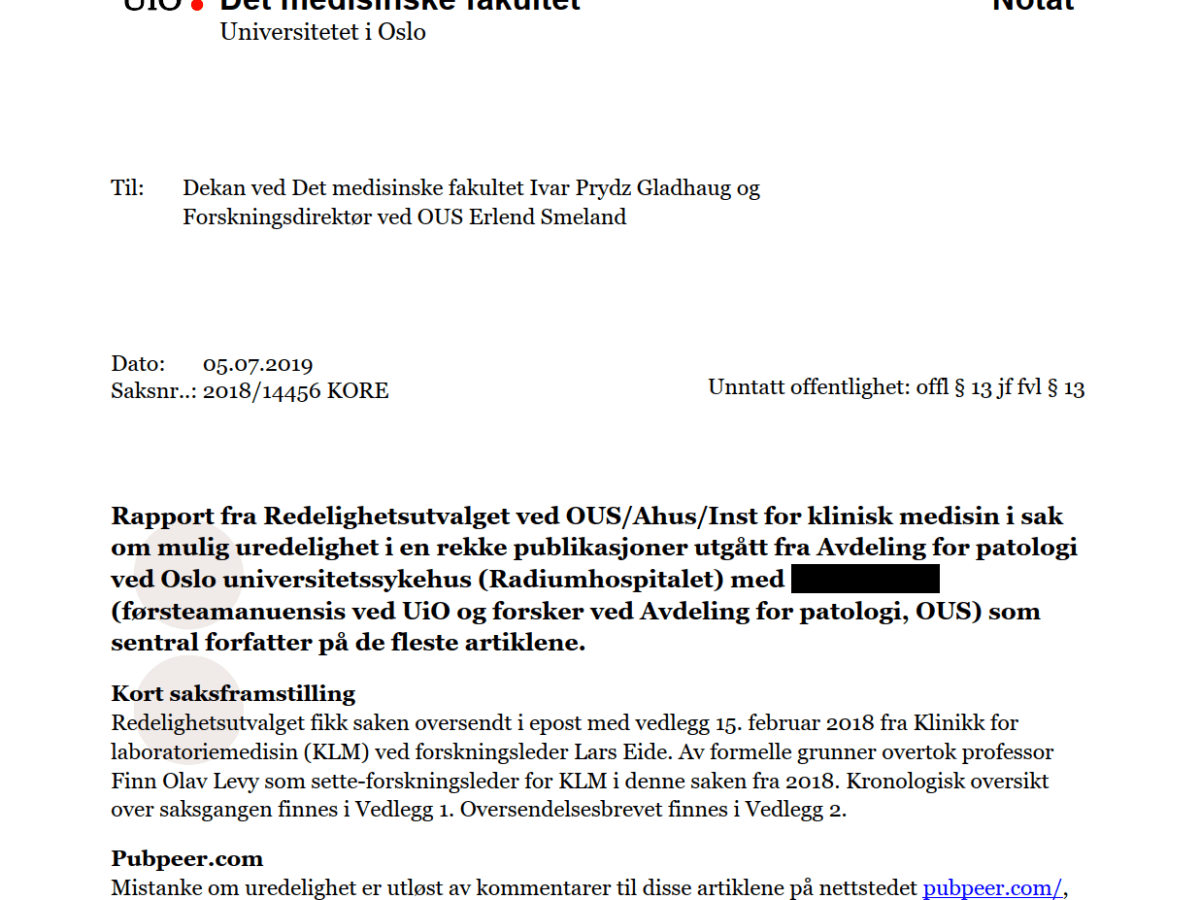
The communal misconduct by Zhenhe Suo in Oslo
“the Committee believes that when carelessness or scientific dishonesty can be found in so many articles with so many different authors in question, there must be a lack of training and / or lack of control over data handling. The committee therefore believes that it is qualified probability that there has been an institutional system…
Other journals simply ignored the retraction requests from Norway and did nothing. Oncotarget was the worst, not a single fraudulent paper by Suo was retracted, only one (Li et al 2016) received an undated Expression of Concern: “This article is currently under investigation. We strongly recommend that this article is not cited until the investigation is completed.“
Also Anticancer Research wasn’t much better, they refused to retract Xu et al 2005. But now this publisher decided to retract something else instead, in fact a paper which they were asked to correct 6 years ago:
Qi Wang, Wei He, Changdong Lu, Zhong Wang, Junsheng Wang, Karl Erik Giercksky, Jahn M Nesland, Zhenhe Suo Oct3/4 and Sox2 are significantly associated with an unfavorable clinical outcome in human esophageal squamous cell carcinoma Anticancer Research (2009) 29 (4) 1233-1241;

The authors changed the brightness of the image when re-using it, not an accident. The investigative report (which you can download here) quoted Suo’s explanations from his email from November 2018:
“I remember clearly that those slides were immunostained by our technicians in our lab at the radium hospital, and both students and professor Jahn Nesland and I evalutaed the slides with a final consensus. The students and I prepared the slide figures in my office, and stored in a two 3-inch disket with different file names. However, due to the fact that our lab was moved from the old building to the current OCCI building two years ago, the disket and IHCslides were discarded,
because those were already many years passed.“
Suo also wrote:
“the only solution to prove that we did not commit fraud for these figures is to restain the slides with two antibodies”
The investigators decided:
“The committee believes that duplication of an image (Figure 3) is reprehensible and not in accordance with good research practice. It can not be concluded with gross negligence. It is reprehensible and not in in accordance with good research practice that the material has been discarded. A correction should be sent to the journal to clarify that this does not change the conclusion of the article.”
That was 2019. Now, Anticancer Research went for a retraction, dated for October 2025:
“The article “Oct3/4 and Sox2 Are Significantly Associated with an Unfavorable Clinical Outcome in Human Esophageal Squamous Cell Carcinoma” by Wang et al., published in Anticancer Research 29:1233-1242, 2009, is hereby retracted. Following concerns raised regarding image duplication in Figure 3, the Editor has lost confidence in the integrity of the data presented. As a result, the findings and conclusions of this article can no longer be considered reliable.”
So why does the journal refuse to retract this then?
Feng Xu, Wang Zhong, Jichang Li, Zhang Shanshen, Jianguo Cui, Jahn M Nesland, Zhenhe Suo Predictive value of EphA2 and EphrinA-1 expression in oesophageal squamous cell carcinoma Anticancer Research (2005) 25 (4) 2943-2950
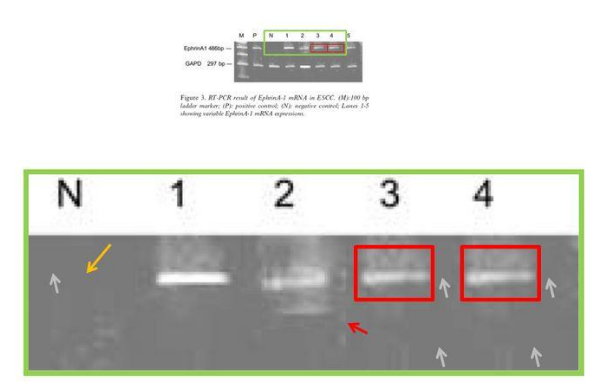

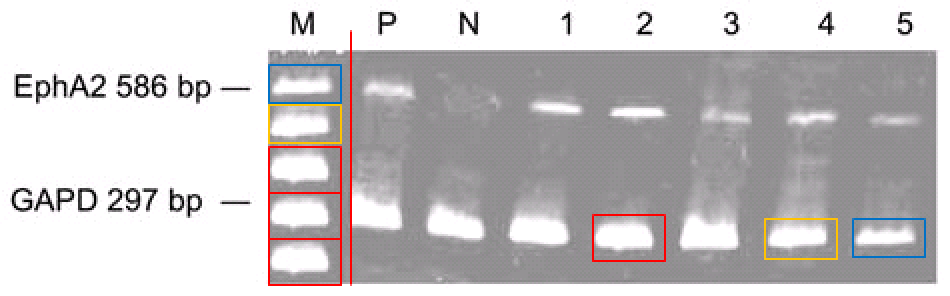
“The committee believes that there is a qualified probability that Figures 2 and 3 are intentionally fabricated and that it there is a gross image manipulation. Even if the images are just examples, this does not mean one can rely on the results in the article even if it is the histochemistry results and not rt-PCR that are the main findings. It is therefore a matter of scientific dishonesty. The article should be retracted.“”
Or did they retract the wrong Suo paper by mistake?
Donate!
If you are interested to support my work, you can leave here a small tip of $5. Or several of small tips, just increase the amount as you like (2x=€10; 5x=€25). Your generous patronage of my journalism will be most appreciated!
€5.00

 For Better Science
Feng Xu, Wang Zhong, Jichang Li, Zhang Shanshen, Jianguo Cui, Jahn M Nesland, Zhenhe Suo Predictive value of EphA2 and EphrinA-1 expression in oesophageal squamous cell carcinoma Anticancer Research (2005) 25 (4) 2943-2950
Figure 2. It is really enterprising to use individual bands in the marker lanes as sample bands in various sample lanes. Massive boost to productivity. I’ve never thought of doing that.
The University of Oslo made a really costly investment in Zhenhe Suo. The Radium Hospital is part of the Oslo University Hospital, a large and sophisticated employer with a human resources department. There must have been other candidates for Zhenhe Suo’s associate professor’s position. The University of Oslo should check its records and offer the highest scoring unsuccessful candidate, i.e. the next highest scoring candidate after Zhenhe Suo, the job without delay, and also compensate that candidate for the years of lost earnings.
LikeLiked by 1 person
“So why does the journal refuse to retract this then?” PubPeer – Predictive value of EphA2 and EphrinA-1 expression in oesoph…
The above paper is so horrendous, and also quite funny (the annotations at Pubpeer make me laugh) that some people would laugh even though it is about cancer. That’s why neither the University of Oslo, nor Anticancer Research, retracts the paper. A perfect alignment of interests not wanting to be seen in their true light, both will be voting no.
LikeLike
The ‘Commission on Research Integrity’ of the University of Oslo is at the moment also conducting an investigation into the acting of Gunnveig Grødeland, one of the many members of the editorial board of the journal BMJ Public Health.
This investigation resulted from the persistent refusal of Grødeland to communicate with me about the request by all authors of Mostert et al. (2024) to retract this horrible antivax study and by the persistent refusal of Grødeland to communicate with me about the outcome of an institutional investigation about Mostert et al. (2024).
BMJ, publisher of BMJ Public Health, informed me recently that I was not longer allowed to contact the employer of Grødeland. I have informed Helen Beynon, the sender of this e-mail from BMJ, that she is not in a position to give me orders. I have requested her to retract a.s.a.p. this horrible antivax study.
https://pubpeer.com/publications/BD524B3E696274C2F24DFFC8CCA546
LikeLiked by 1 person
It appears that Mehdi Baghayeri is now affiliated with the Silesian University of Technology in Poland
https://www.mdpi.com/1996-1073/17/21/5455
https://www.sciencedirect.com/science/article/pii/S2666893925001069
LikeLike
I send my heartfelt congratulations!
LikeLike
Oh, Magdalena Kudewicz-Kiełtyka, the recepient of the “Internationalization Star” award
Silesian University of Technology | The “Internationalization Star” award for Magdalena Kudewicz-Kiełtyka
did not check his retraction count (currently 8)? That’s a pity. He will certainly increase this count (currently 20) for Silesian Tech. But maybe it’s kind of a new competition between Polish technical universities. AGH has 26, so maybe Silesian Tech wants to catch up?
LikeLiked by 1 person
It appears he was hired in December 2024: https://www.gov.pl/attachment/fa9653c6-0681-4be4-93e4-a8da30ab0476
LikeLike
“Announcement date of the competition: October 14, 2024
Application deadline: November 13, 2024
Decision date: December 23, 2024
Number of positions: 6
Number of applications: 5
Candidates who won the competition: 1. Dr. Mehdi Baghayeri”
OK, so the recruitment started after The papermilling den of Gliwice
The papermilling den of Gliwice – For Better Science
But they decided to ignore it, because they didn’t know yet that the bilalian storm was coming
Nobelium Bilalski, a Gdansk papermiller – For Better Science
And when it hit it was too late to withdraw.
LikeLiked by 1 person
Decision date: December 23, 2024
Gliwice Polytechnic was like: “Make my dreams come true, all I want for Christmas is you!”
LikeLike
“After all, you can’t expect Elsevier to retract every fraud at Chemosphere, there would be nothing left.”
Oh, no, no, no sir. You can’t retract everything from Chemosphere. In the last 5 years Polish researchers published almost 400 papers in that journal. We have a strong environmental chemistry community led by Prof. Teofil Jesionowski and Prof. Grzegorz Boczkaj. And we have an institutional evaluation next year. What would they put in their evaluation reports then?
I only wonder what score will the Evaluation Committee use for these papers – 140 points, which was given to Chemosphere when its IF was around 8, or 20 points since its IF is 0 this year.
LikeLike
The points will be assigned based on the publication date, so, sadly, 140 in case of these paper that won’t get retracted on time 😦
LikeLiked by 1 person
Nostradamus already predicted that none of the science Nobel noble laureates will thank the science mules (post-doc, graduate students, and technicians) toiling and wasting away in their laboratories that made the discoveries possible.
LikeLike
I often wonder if the Nobel Prize damages science overall because it elevates individuals, mainly highly specialized career academics, to near mythical status in the field. This overlooks the highly collaborative nature of science, feeds the academic obsession with prestige and ignores the non-research scientists who work in the community translating knowledge for everyday real world benefit and, in some cases, directly saving lives.
LikeLike