

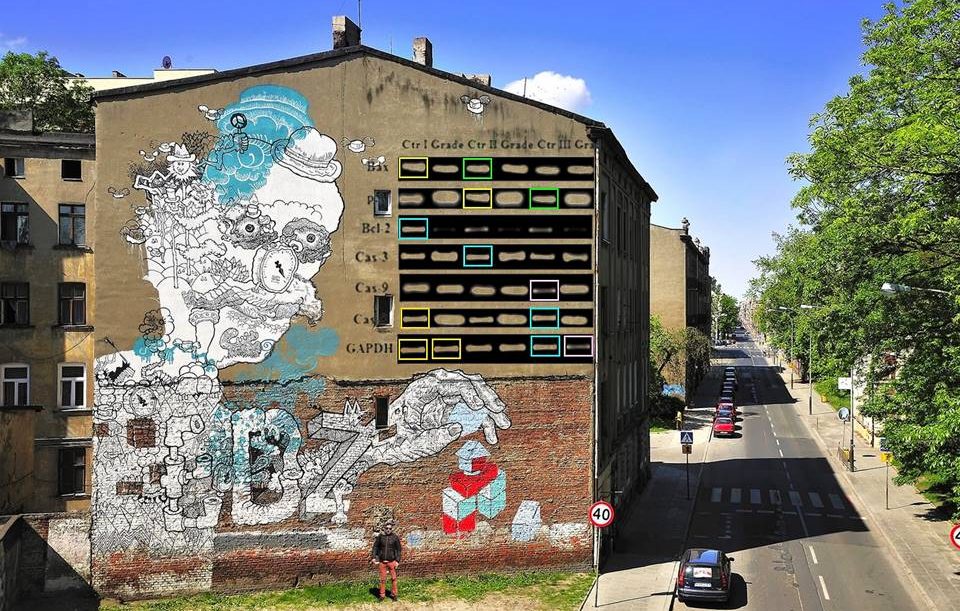
Poland’s post-industrial city of Łódź (pronounced “Wooj“) is renowned for its culture scene and amazing street art, and how do we wish this team of biomedical researchers directed their artistic skills towards beautifying ugly socialist-era buildings, instead of making embarrassing western blots collages.
Our central hero is Tomasz Sliwinski, professor of molecular genetics at the University of Lodz, but not just him: also his compatriot in USA, Tomasz Skorski, will get an honourable mention.
Aneurus Inconstans joined the treasure hunt, and then co-wrote this eulogy to Sliwinski, Skorski, and other artists.
Would you in Lodz?
By Aneurus Inconstans and LS
We at For Better Science are working hard to clean up Polish science. As you already read, a number of Polish professors and even university leaders discovered that the secret to academic excellence lies in Pakistani and Iranian papermills:
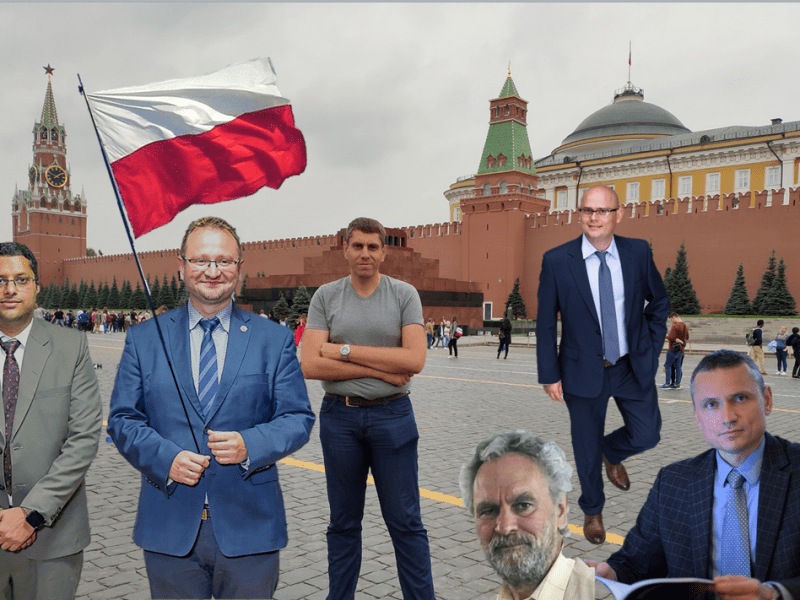
Sons of Poland
“Jeszcze Polska nie zginęła, Kiedy my żyjemy. Co nam obca przemoc dała, odpłacimy fabrykom artykułów.

But some Polish scholars still do their own fake research. But not Tomasz Śliwiński! He graduated with PhD in Lodz University of Technology in 2004 and became full professor of molecular genetics at University of Lodz in 2018, with a second affiliation at the Medical University of Lodz. Not only doesn’t Sliwinski need any help from Iranian papermills: as you will see, Polish skills are exported abroad even!
Here a paper from Sliwinski’s lab in Lodz, flagged on PubPeer in June 2023:
Paulina Wigner, Ewelina Synowiec, Paweł Jóźwiak , Piotr Czarny, Michał Bijak, Katarzyna Białek, Janusz Szemraj, Piotr Gruca, Mariusz Papp, Tomasz Śliwiński The Effect of Chronic Mild Stress and Escitalopram on the Expression and Methylation Levels of Genes Involved in the Oxidative and Nitrosative Stresses as Well as Tryptophan Catabolites Pathway in the Blood and Brain Structures International Journal of Molecular Sciences (2020) doi: 10.3390/ijms22010010

Sliwinski replied on PubPeer merely two years later, in September 2025:
“I was very surprised by this comment, as such a situation has occurred for the first time in my scientific career, despite over 150 publications and longstanding international collaboration. I have published several works in MDPI journals and always found the editorial process to be transparent. Nevertheless, I would like to address the concerns raised. We confirm that the data presented are genuine. In accordance with the journal’s guidelines, raw blot scans were submitted to the Editorial Office during the initial manuscript submission. At no stage of the peer-review process did any Reviewer or Editor raise similar concerns. In the preparation of the figures, strips were rearranged for clarity and to maintain a consistent sample order, which is an accepted practice in the presentation of Western blot data. Additionally, background brightness was adjusted solely for visual clarity. The proteins shown derive from the same group of animals (inbred rats without genetic variation), which may account for the visual similarity of some results. It is important to note that the majority of the results are statistically insignificant, and only one group/structure reached statistical significance at the p < 0.05 level. We believe that if any manipulation had occurred, the data would appear more uniform and visually “perfect,” which is clearly not the case here. We trust that the provided explanation and supporting data will dispel any doubts and clarify the misunderstanding. “
That’s a new one. If we wanted to fake something, we would have faked something more spectacular for Nature, not for MDPI. And anyway, it is MDPI’s fault for not noticing.
That may have been Sliwinski’s only reply on PubPeer, but is not the only thread for him, currently it’s 23 very bad papers on PubPeer.
Here another one, rats were submitted to chronic stress which included food and water deprivation, “light on and off every 2 hours”, peer aggression, “soiled cage” and “stroboscopic illumination”, all apparently just for fun because nobody needed those experimental results anyway, judging from the fake western blots:
Paulina Wigner , Ewelina Synowiec , Piotr Czarny , Michal Bijak, Paweł Jóźwiak , Janusz Szemraj , Piotr Gruca , Mariusz Papp , Tomasz Śliwiński Effects of venlafaxine on the expression level and methylation status of genes involved in oxidative stress in rats exposed to a chronic mild stress Journal of Cellular and Molecular Medicine (2020) doi: 10.1111/jcmm.15231


In the next paper, how does one accidentally copy-paste flow cytometry data, but with different quantifications? There’s an interesting Polish coauthor from USA: Tomasz Skorski (21 papers on PubPeer), who is director of the Fels Cancer Institute for Personalized Medicine at the Temple University in Philadelphia.
Gabriela Barszczewska-Pietraszek , Piotr Czarny , Małgorzata Drzewiecka , Maciej Błaszczyk , Maciej Radek , Ewelina Synowiec , Paulina Wigner-Jeziorska , Przemysław Sitarek , Janusz Szemraj , Tomasz Skorski, Tomasz Śliwiński Polθ Inhibitor (ART558) Demonstrates a Synthetic Lethal Effect with PARP and RAD52 Inhibitors in Glioblastoma Cells International Journal of Molecular Sciences (2024) doi: 10.3390/ijms25179134

Skorski’s PubPeer record includes as coauthors Benjamin Neel and another problematic Pole in USA, Mariusz Wasik. There is little sense in reporting anything to Temple University, Skorski’s issues are nothing special considering what else goes on there:
Antonio Giordano and the Sbarro Pizza Temple
“The relentless defence of duplicated, fabricated or falsified data is, per se, a form of serious misconduct…” Antonio Giordano, President of Sbarro Pizza Institute at Temple University

Steven Houser and the Temple of Fraud
“We all hype our work. We want to tell people our work is important. These patients, many of them coming to enroll in these trials, they have no other hope.” -Steven Houser, Hero of Research Ethics, Temple University
Now, an image used in 3 papers, note that the older two are without Sliwinski, and have instead his fellow Lodz professor Janusz Blasiak as last author, he seems to have retired now. All three papers have the American achiever Skorski as coauthor:
- Sylwester Głowacki , Ewelina Synowiec , Marzena Szwed , Monika Toma , Tomasz Skorski, Tomasz Śliwiński Relationship between Oxidative Stress and Imatinib Resistance in Model Chronic Myeloid Leukemia Cells Biomolecules (2021) doi: 10.3390/biom11040610
- Ewelina Synowiec , Grazyna Hoser , Jolanta Bialkowska-Warzecha , Elzbieta Pawlowska , Tomasz Skorski , Janusz Blasiak Doxorubicin Differentially Induces Apoptosis, Expression of Mitochondrial Apoptosis-Related Genes, and Mitochondrial Potential in BCR-ABL1-Expressing Cells Sensitive and Resistant to Imatinib BioMed Research International (2015) doi: 10.1155/2015/673512
- Ewelina Synowiec, Grazyna Hoser, Katarzyna Wojcik, Elzbieta Pawlowska, Tomasz Skorski, Janusz Błasiak UV Differentially Induces Oxidative Stress, DNA Damage and Apoptosis in BCR-ABL1-Positive Cells Sensitive and Resistant to Imatinib International Journal of Molecular Sciences (2015) doi: 10.3390/ijms160818111

A PubPeer user commented in 2016 about the 3rd paper above: “Astonishing – line susceptible to imatinib develops almost total resistance in span of 1 to 3 weeks“. See, sometimes these scientists do make spectacular claims!
Skorski also features on these two papers by Sliwinski and Blasiak in the Elsevier journal Mutation Research, with fudged gels:

Fig 2A

Fig 3
Some gossip: Skorski entrenched himself at Temple University by befriending a certain Richard Pomerantz, whose possibly best academic achievement is being the son-in-law of Carol Prives, who is an extremely influential person in US cancer research. It is that friendship with Pomerantz which earned Skorski many NIH grants and the position of Fels Cancer Institute director, on top of being associate director of Fox Chase Cancer Center, also in Philadelphia.

Carol Prives, innocent victim of Susana Gonzalez’ data manipulations?
Did NAS Member Carol Prives know anything about these suspected manipulations in her lab’s papers? And how will journals act on the evidence?
And since we spoke of close personal ties, here is a paper by Skorski with his wife and lab member Margaret Nieborowska-Skorska. Wasik and Sliminski are also on board, and so is Pomerantz, who claims the discovery of polymerase tetha, and this study conveniently provides a potential cure for leukemia with inhibitors of this enzyme, conveniently used by the biotech Recombination Therapeutics, founded by Pomeratz and another co-author, the Temple University professor Wayne Childers (who declares to have “no competing financial interests“):
Umeshkumar Vekariya, Monika Maria Toma, Margaret Nieborowska-Skorska, Bac Viet Le , Marie-Christine Caron, Anna-Mariya Kukuyan, Katherine Sullivan-Reed, Paulina Podszywalow-Bartnicka, Kumaraswamy Naidu Chitrala, Jessica Atkins, Malgorzata Drzewiecka, Wanjuan Feng, Joe Chan , Srinivas Chatla, Konstantin Golovine, Jaroslav Jelinek, Tomasz Sliwinski, Jayashri Ghosh, Ksenia Matlawska-Wasowska, Gurushankar Chandramouly , Reza Nejati, Mariusz A Wasik, Stephen M Sykes, Katarzyna Piwocka, Emir Hadzijusufovic, Peter Valent, Richard T Pomerantz, George Morton, Wayne Childers, Huaqing Zhao, Elisabeth M Paietta, Ross L. Levine, Martin S. Tallman, Hugo F Fernandez, Mark R Litzow, Gaorav P Gupta, Jean-Yves Masson, Tomasz Skorski DNA polymerase θ protects leukemia cells from metabolically induced DNA damage Blood (2023) doi: 10.1182/blood.2022018428

It is unclear if the cell lines called “6-15” and “8-4” are different or not. Nowhere in the paper is explained what those numbers mean, maybe are both 32Dcl3 cells?
As you see, there are quite a number of Polish names on that paper. Unlike Skorski, Mariusz Wasik left Poland for USA already in 1980ies, long before the Iron Curtain fell and others were allowed to leave. He is now (just like Skorski) associate director of Fox Chase Cancer Center, and has almost 30 papers on PubPeer. Wasik featured in this article:

mTOR: conclusions not affected?
David Sabatini, remember that story? Well, it seems the conclusions were not affected. I take an ill-informed look at the mTOR signalling research field, to understand how photoshopped data gets to be independently verified by other labs.
Now, another paper by the Skorski couple, who must have misunderstood what “experimental triplicate” means:
Kimberly Cramer , Margaret Nieborowska-Skorska , Mateusz Koptyra , Artur Slupianek , Emir Tyrone P. Penserga , Connie J. Eaves, Walter Aulitzky , Tomasz Skorski BCR/ABL and other kinases from chronic myeloproliferative disorders stimulate single-strand annealing, an unfaithful DNA double-strand break repair Cancer Research (2008) doi: 10.1158/0008-5472.can-08-1101

Fig 2C by Claire Francis from 2016, additional comment by Actinopolyspora biskrensis: “There does appear to be a rectangular shape around these signals, suggestive of cutting and pasting.”
Here another reason why we won’t bother complaining to Temple: the Polish coauthor on the fake papers above and below, Artur Slupianek, is presently Senior Director of Research Regulatory Affairs at Temple University’s Office of Research Compliance, whcih may be a tiny conflict of interests. Origianlly, Slupianek followed Skorski to USA as his postdoc, and used to manage his lab at Temple together with Mrs Skorska, until around a decade ago the boss had to decide which one of them to continue paying, being tight on money in those pre-Pomeratz-times. Thus, Slupianek left his mentor, but not without leaving behind some fake stuff with the Skorskis (and with Wasik, see PubPeer), for example:
Lori Rink , Artur Slupianek , Tomasz Stoklosa , Margaret Nieborowska-Skorska , Katarzyna Urbanska , Ilona Seferynska , Krzysztof Reiss , Tomasz Skorski Enhanced phosphorylation of Nbs1, a member of DNA repair/checkpoint complex Mre11-RAD50-Nbs1, can be targeted to increase the efficacy of imatinib mesylate against BCR/ABL-positive leukemia cells Blood (2007) doi: 10.1182/blood-2006-08-042630


Now look at this train wreck from Mr and Mrs Skorski, Slupianek, another Pole you met above – Krzysztof Reiss, now professor at Louisiana Cancer Research Center, and their Philly neighbour from Italy, Bruno Calabretta at Thomas Jefferson University:
M Majewski, M Nieborowska-Skorska, P Salomoni, A Slupianek, K Reiss, R Trotta, B Calabretta, T Skorski Activation of mitochondrial Raf-1 is involved in the antiapoptotic effects of Akt Cancer Research (1999) 59 (12): 2815–2819.


Calabretta has 20 papers on PubPeer, but he and Skorski parted ways two decades ago, which must have spared us more such atrocities. And Sliupanek is now fully dedicated to investigating research fraudsters, haha.

Cancer at Duke? Better call Sal!
“I have NEVER faked data. If you wish to carry on what appears to be a vendetta please supply me the name of your lawyer and I will have my lawyer contact him.” – Sal Pizzo, Duke University

But here is a gem in JEM, again by Calabretta, Wasik and Skorski, first author is the Italian native Paolo Salomoni (10 papers in PubPeer, also with Carlo Croce, Gerry Melino and Pier Paolo Pandolfi), currently group leader at the German Center for Neurodegenerative Diseases (DZNE) in Bonn (which is led by another problematic Italian, Pierluigi Nicotera). Curiously Salomoni doesn’t mention his stay at Thomas Jefferson University in his curriculum, perhaps he feels ashamed of it?
Paolo Salomoni, Mariusz A. Wasik, Richard F. Riedel, Krzysztof Reiss, John K. Choi, Tomasz Skorski, Bruno Calabretta Expression of constitutively active Raf-1 in the mitochondria restores antiapoptotic and leukemogenic potential of a transformation-deficient BCR/ABL mutant The Journal of Experimental Medicine (1998) doi: 10.1084/jem.187.12.1995


We wish we could say that we caught the sole culprit who faked Sliwinski’s science, but the first and second paper above were done entirely by Lodz authors. So, after this long digression, let’s go back to Lodz.
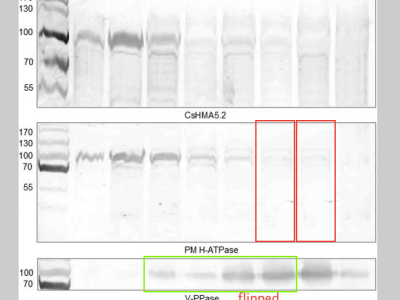
Magdalena Migocka blames students for impending retractions
Magdalena Migocka is a shooting star of plant sciences in Poland. Now she will have to retract at least two papers, for which she blames her incompetent students.
Whom to blame here? Assistant professor Paulina Wigner? Or maybe another author?
Paulina Wigner, Tomasz Śliwiński [The role of oxidative and nitrosative stress and the tryptophan catabolites pathway in the pathogenesis of depression] Postępy Biochemii (2022) doi: 10.18388/pb.2021_436

Figure 6E: portions of blots appear twice (boxes of same color). Green boxes are mirrored horizontally.
Here is a paper by Sliwinski without Skorski about magic properties of the plant extracts from Siberian honeyweed (Leonurus sibiricus) . The paper includes Marzena Wielanek and Monika Toma from the University of Lodz. Please meet also professors Przemyslaw Sitarek, Ewa Skala, Halina Wysokinska and Janusz Szemraj, all from the neighbouring Medical University of Lodz (MUL):
Przemysław Sitarek, Ewa Skała, Halina Wysokińska, Marzena Wielanek, Janusz Szemraj, Monika Toma, Tomasz Śliwiński The Effect of Leonurus sibiricus Plant Extracts on Stimulating Repair and Protective Activity against Oxidative DNA Damage in CHO Cells and Content of Phenolic Compounds Oxidative Medicine and Cellular Longevity (2016) doi: 10.1155/2016/5738193

In case you missed Skorski: here another beauty of his with Sliwinski, Sitarek, Wysokinska and Skala, but also with more names from Lodz, like the surgeons Adam Białas and Maciej Radek at MUL, and Tomasz Sakowicz and assistant professor Tomasz Kowalczyk at University of Lodz. The paper tells us how good root extract of Leonurus sibiricus is to kill glioma cells:
Przemysław Sitarek, Ewa Skała, Monika Toma, Marzena Wielanek, Janusz Szemraj, Tomasz Skorski, Adam J. Białas, Tomasz Sakowicz, Tomasz Kowalczyk, Maciej Radek, Halina Wysokińska, Tomasz Śliwiński Transformed Root Extract of Leonurus sibiricus Induces Apoptosis through Intrinsic and Extrinsic Pathways in Various Grades of Human Glioma Cells Pathology & Oncology Research (2017) doi: 10.1007/s12253-016-0170-6

Figure 2A: several bands look much more similar than expected (boxes of same color).
Another gem on essential oils of maral root (Rhaponticum carthamoides, traditionally used by Soviet and russian athletes for muscle building), this time with foreign collaborators Patrícia Rijo and Catarina Garcia from the Lusophone University of Humanities and Technologies in Lisbon, Portugal. New names are also the now retired professor Danuta Kalemba from the neighbouring Lodz University of Technology, and the ‘Pole abroad’ Dariusz Pytel at the Medical University of South Carolina, USA:
Ewa Skała, Patrícia Rijo, Catarina Garcia, Przemysław Sitarek, Danuta Kalemba, Monika Toma, Janusz Szemraj, Dariusz Pytel, Halina Wysokińska, Tomasz Śliwiński The Essential Oils of Rhaponticum carthamoides Hairy Roots and Roots of Soil‐Grown Plants: Chemical Composition and Antimicrobial, Anti‐Inflammatory, and Antioxidant Activities Oxidative Medicine and Cellular Longevity (2016) doi: 10.1155/2016/8505384

Figure 3b: several bands look much more similar than expected (boxes of same color).
Yet another copy & paste orgy in the paper below about anti-everything properties of essential oils from Leonurus sibiricus. Several bands, including those with a triangle on top, also appear in the two papers immediately above:
Przemysław Sitarek, Patricia Rijo, Catarina Garcia, Ewa Skała, Danuta Kalemba, Adam J. Białas, Janusz Szemraj, Dariusz Pytel, Monika Toma, Halina Wysokińska, Tomasz Śliwiński Antibacterial, Anti‐Inflammatory, Antioxidant, and Antiproliferative Properties of Essential Oils from Hairy and Normal Roots of Leonurus sibiricus L. and Their Chemical Composition Oxidative Medicine and Cellular Longevity (2017) doi: 10.1155/2017/7384061

Figure 3b: several bands look much more similar than expected (boxes of same color).
Recurrent names here below in another paper about plant Leonurus sibiricus, Skorski and his wife are on again:
Przemysław Sitarek, Ewa Skała, Monika Toma, Marzena Wielanek, Janusz Szemraj, Malgorzata Nieborowska-Skorska, Maciej Kolasa, Tomasz Skorski, Halina Wysokińska, Tomasz Śliwiński A preliminary study of apoptosis induction in glioma cells via alteration of the Bax/Bcl-2-p53 axis by transformed and non-transformed root extracts of Leonurus sibiricus L Tumor Biology (2016) doi: 10.1007/s13277-015-4714-2


Below we find the same constellation of people as the very first two papers discussed today, so let’s name them properly: assistant professors Paulina Wigner and Ewelina Synowiec, and young eager minds Paweł Jóźwiak and Katarzyna Białek from Uni Lodz, the assistant professor Piotr Czarny at the neighbouring Medical University of Lodz, the Vice-Dean of the Faculty of Biology Michał Bijak at University of Lodz, and finally Piotr Gruca and Mariusz Papp who work at the Maj Institute of Pharmacology, Polish Academy of Sciences in Krakow:
Paulina Wigner, Ewelina Synowiec, Paweł Jóźwiak, Piotr Czarny, Michał Bijak, Katarzyna Białek, Janusz Szemraj, Piotr Gruca, Mariusz Papp, Tomasz Śliwiński The Effect of Chronic Mild Stress and Venlafaxine on the Expression and Methylation Levels of Genes Involved in the Tryptophan Catabolites Pathway in the Blood and Brain Structures of Rats Journal of Molecular Neuroscience (2020) doi: 10.1007/s12031-020-01563-2


Let’s not underestimate the tediousness of copy-pasting bands over and over again. So why not taking a whole forged figure from the archive? Here you go, Figure 5(I)A1 was taken from the paper immediately above:
Paulina Wigner, Ewelina Synowiec, Paweł Jóźwiak, Piotr Czarny, Katarzyna Białek, Michal Bijak, Janusz Szemraj, Piotr Gruca, Mariusz Papp, Tomasz Sliwinski The Impact of Chronic Mild Stress and Agomelatine Treatment on the Expression Level and Methylation Status of Genes Involved in Tryptophan Catabolic Pathway in PBMCs and Brain Structures Genes (2020) doi: 10.3390/genes11091093


The next one is lovely. In Figure 2B two plates are duplicated four and five times, respectively. At first glance you don’t notice, as plates are rotated and have different colour balance:
Małgorzata Drzewiecka, Dominika Jaśniak, Gabriela Barszczewska-Pietraszek, Piotr Czarny, Anna Kobrzycka, Marek Wieczorek, Maciej Radek, Janusz Szemraj, Tomasz Skorski, Tomasz Śliwiński Class I HDAC Inhibition Leads to a Downregulation of FANCD2 and RAD51, and the Eradication of Glioblastoma Cells Journal of Personalized Medicine (2023) doi: 10.3390/jpm13091315

Have a closer look:

More cell plate duplications in the paper below, about valproic acid (VPA) being useful against melanoma cells, were flagged already a year ago by the sleuth Cheshire:
Małgorzata Drzewiecka, Anna Gajos-Michniewicz, Grażyna Hoser, Dominika Jaśniak, Gabriela Barszczewska-Pietraszek, Przemysław Sitarek, Piotr Czarny, Janusz Piekarski, Maciej Radek, Małgorzata Czyż, Tomasz Skorski, Tomasz Śliwiński Histone Deacetylases (HDAC) Inhibitor-Valproic Acid Sensitizes Human Melanoma Cells to Dacarbazine and PARP Inhibitor Genes (2023) doi: 10.3390/genes14061295

Don’t you recognize those two duplicated cell plates above? They are the same ones shown in the paper before, and there is one more (boxed in green), they are rotated and flipped horizontally beween the two articles:

Below is yet another paper about magic properties of plant extracts, this time from the Southeast-Asian painted netlle, Plectranthus scutellarioides. The extracts not only have cytotoxic and genotoxic effects against MCF-7 and A549 cancer cells, additionally they can alter blood coagulation parameters. In fact this is very clear from the fake Figure 12 below, where not only images overlap, but also individual red blood cells are copy-pasted everywhere!
Tomasz Kowalczyk, Joanna Sikora, Anna Merecz-Sadowska, Wirginia Kukula-Koch, Ewelina Synowiec, Agata Majda, Dawid Juda, Tomasz Śliwiński, Przemysław Sitarek Biological Properties of Extracts Obtained from In Vitro Culture of in a Cell Model International Journal of Molecular Sciences (2024) doi: 10.3390/ijms25021043

The next paper is one of a kind for Sliwinski and Rijo, with new friends from the University of Lisbon Luís Frija and Armando Pombeiro. Probably they were tired of copy-pasting images, so why not exploring something new and copy-paste numbers?
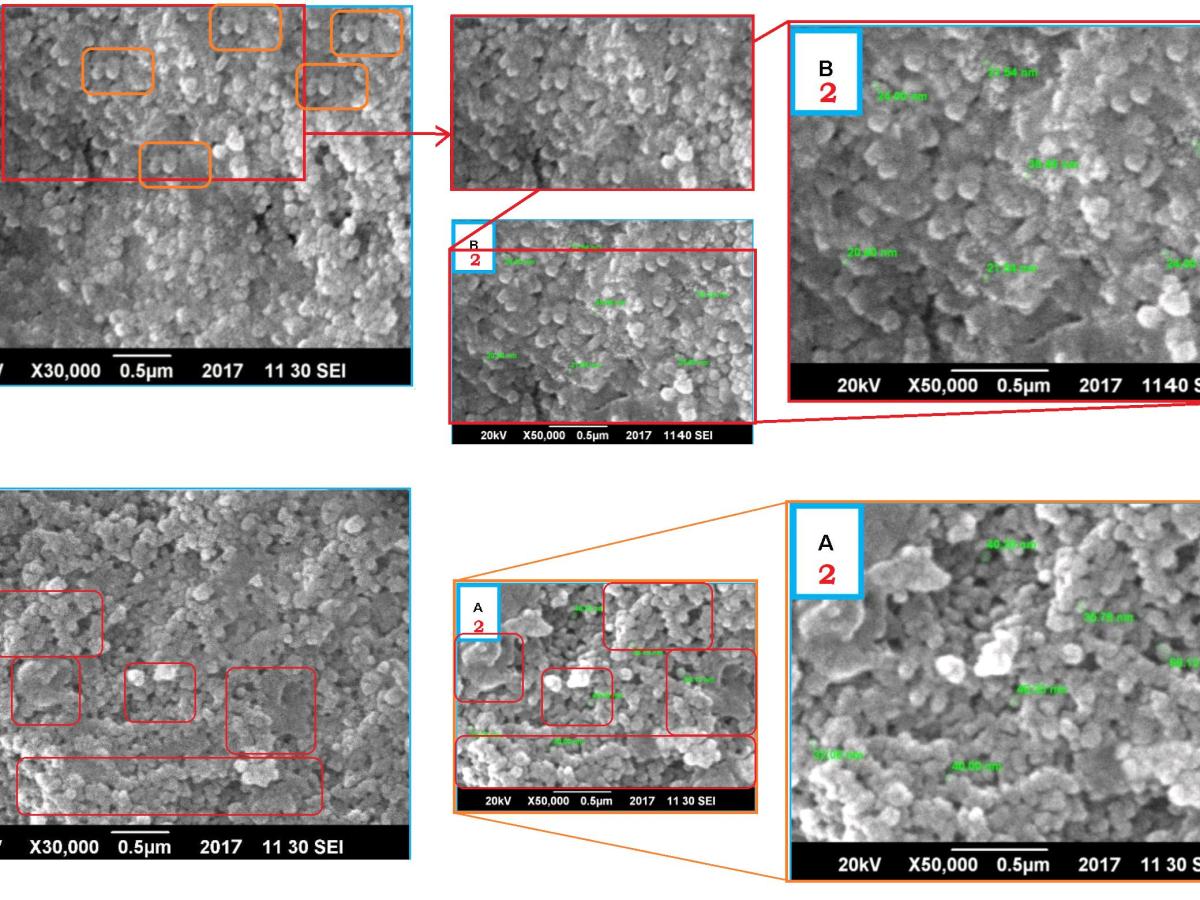
The Bio-Talent of nanofabrication in Poland
A scientifically subterranean topic at Frontiers leads to a discovery of cheater talents in Poland: a duo of EU-funded nanofabricators from Pakistan. Does any of their papers contain any actual research data, or is it all just made up?
The same values for the minimum inhibitory concentration (MIC) and minimum bactericidal concentration (MBC) re-appear over and over again throughout the four Tables of the paper. There are more than those highlighted, but I run out of colors and motivation:
Luís M T Frija*, Epole Ntungwe, Przemysław Sitarek, Joana M Andrade, Monika Toma, Tomasz Śliwiński, Lília Cabral, M Lurdes S Cristiano, Patrícia Rijo*, Armando J L Pombeiro In Vitro Assessment of Antimicrobial, Antioxidant, and Cytotoxic Properties of Saccharin-Tetrazolyl and -Thiadiazolyl Derivatives: The Simple Dependence of the pH Value on Antimicrobial Activity Pharmaceuticals (2019) doi: 10.3390/ph12040167


Forgeries of this calibre make me think anything ever published by Sliwinski, Skorski and their associates is made up. In an ideal world, hundreds of articles by these people showing just tables and graphs should get retracted regardless of being tagged on PubPeer or not. I wonder whether this nonsense about magic properties of plant extracts led to the commercialization of medicaments and concotions. If so, this stuff should get immediately recalled from the market. Let’s hope the University of Lodz and the Medical University of Lodz will open an investigation soon.
[The University of Lodz and the Medical University of Lodz won’t be opening any investigations. They don’t even reply to emails. -LS]
Update 1.10.2025
Just after this article was published, finally someone replied to me (LS). It was Tomasz Sliwinski:
“In consultation with my colleagues and university authorities, the matter has been reported to the police and prosecutor’s office. Expect severe punishment because Polish law has changed and it’s no longer possible to anonymously harass, harass, and slander others.
notification to the Prosecutor’s Office regarding suspected offenses under Article 190a § 1 of the Penal Code (persistent harassment) and Article 212 § 2 of the Penal Code (defamation with a motion to prosecute ex officio).
I have nothing to fear because I’ve provided evidence that I’m clean. On the advice of a lawyer, we won’t discuss this with anonymous individuals, but you will be identified and face appropriate punishment.
Now, I wish you a great day! 🙂“
What is it with Polish cheaters, they again reveal that I am a fictional character, most likely invented by the russian GRU (last time in Opole, read July 2024 Shorts).
Update 22.10.2025
I now received an official “Statement from His Magnificence the Rector of the University of Łódź to Mr. Leonid Schneider“:
It rather contradicts Sliwinki’s earlier claims:
“l would like to inform you that the matter concerning the academic teachers employed at the University of Lodz, who co-authored the scientific articles mentioned in the publication, has been referred for investigation to the Disciplinary Ombudsman for Academic Teachers at the University of Lodz.”
Rafai Matera, Rector of the University of Lodz
Uh-uh, maybe it is Sliwinski who must expect severe punishment now.
Donate!
If you are interested to support my work, you can leave here a small tip of $5. Or several of small tips, just increase the amount as you like (2x=€10; 5x=€25). Your generous patronage of my journalism will be most appreciated!
€5.00

 For Better Science
Oh, a wonderful week for Lodz academia – thee universities featured on FBS in 3 days. That’s sort of an achievement.
BTW, in Poland the new academic year begins today.
LikeLiked by 3 people
Łódź, Łódź, Łódź – imazing city. After reading Fabian’s article on Monday I analyzed Łódź University of Technology with Argos. One of the articles that popped up was this one.
PubPeer – Plants: A Key Emphasis to Its Pharmacological Potential
See the amazing set of authors – featuring, e.g. Javad Sharifi-Rad, who has 100 papers with co-authors from more than a dozen Polish institutions.
Flagged by Guillaume Cabanac in 2022 for tortured phrases, then commented on by Alex Magazinov, Hoya camphorifolia and Dichaetanthera arborea in 2023. The comment by Hoya camphorifolia is so hilarious that will cite it here (it’s also about cooking, just like those potatoes of Agnieszka Kielbowicz-Matuk):
“If your pumpkin soup has “poisonous quality” after home cooking, it is time to look for a different recipe.”
Well, that soup no longer has “poisonous quality”. The paper has recently been corrected.
Correction: Salehi et al. Cucurbits Plants: A Key Emphasis to Its Pharmacological Potential. Molecules 2019, 24, 1854
“Section 4.2. Anticancer Activities of Cucurbita Plants, contained uncommon terminology and linguistic inconsistencies that affected clarity and readability. This section has been thoroughly revised to improve clarity, accuracy, and adherence to standard scientific language while maintaining the original meaning.”
That’s why I will never send letters of concern to MDPI journals – waste of time.
And “from another perspective” (Abdelmalek et al, 2022) – Javad has 31 papers in Oxidative Medicine and Cellular Longevity, 6 with Polish co-authors. So it must be a very interesting journal.
LikeLiked by 1 person
I sent an email with the summary of this thread to an editor and to the MDPI’s “publication ethics team” almost 4 months ago. So far no response beyond the automatic reply.
https://pubpeer.com/publications/8A3DC4F7A2541A1E86A0649F938F3E
LikeLiked by 1 person
MDPI’s “publication ethics team” 🤣🤣🤣🤣
LikeLike
Suprisingly, they have one 😀
https://www.mdpi.com/ethics
it likely consists of a mailbox with an autoresponder and an auto-delete 😛
LikeLike
OK, so let’s put MDPI’s ethics team to a test. ☺️
PubPeer – Support Materials of Organic and Inorganic Origin as Platfor…
Letter of concern sent yesterday.
LikeLike
Behold, MDPI retracted a paper! https://pubpeer.com/publications/D747F08A00ACF06D73503BF06222AA
LikeLiked by 1 person
LikeLike
Yes, I know they occasionally do that, although I do not understand how this is achieved. I already expressed my amazement on Forum Akademickie when I found this one by Agnieszka Najda from Lublin University of Life Sciences
RETRACTED: Akter et al. Potential Role of Natural Products to Combat Radiotherapy and Their Future Perspectives. Molecules 2021, 26, 5997
She has an amazing set of co-authors:
Shafaqat Ali, Shaker A. Mousa, Riaz Ullah, Sezai Ercisli, Hesham R. El-Seedi, Muhammad Rizwan… I’m sure more retractions will follow. But who will care? Prof. Jaszczur already has 20 and nothing happens.
LikeLike
“you will be identified and face appropriate punishment.”
Well, Leonid, you don’t have to “be identified”, because you don’t hide. But I know that tone. Prof. Marszałek acted in the same way suing Forum Akademickie and reporting me to the disciplinary officer. I can only repeat what I wrote in comments under the article about Prof. Marszałek and Dr Amin Mousavi Khaneghah – scientific disputes are not to be resolved by courts. And here a fragment of the instruction from PubPeer, which presents the same point:
“Authors who don’t want their work discussed should consider not publishing it.”
That’s what “publication” actually means – making results of your work public – for your peers to read and judge, not for placing it in your cv. Good luck, Prof. Śliwiński. Please see the recommendations of the ministerial Advisory team on dishonest publishing practices.
LikeLiked by 4 people
I invited the University of Lodz and Medical University of Lodz to distance themselves from Sliwinski’s unhinged threats, but nope, they seem to stand behind them.
LikeLike
This is not the first time that there have been suspicions about honesty and falsification of results at this institute. A few years ago, one person faced a disciplinary committee, but the matter was swept under the rug. Apparently, the falsification was never definitively proven.
LikeLike
Tom is a man with so much grace and wisdom…
If only these people quit, returned 20 years of undeserved wages and went to work the land, then we would be almost at peace.
LikeLiked by 1 person
Two more of Skorski, I’m not yet done with him:
https://pubpeer.com/publications/F3327F3742DB3E9D24269AE9EA2B2B
https://pubpeer.com/publications/E4BFBA068D53884BACDAFB29E8E2E3
LikeLiked by 2 people
Two more for Janusz Blasiak:
https://pubpeer.com/publications/45C7A0CE44BD8011E030B72CA76B45
https://pubpeer.com/publications/E794B539A9BCE04A338DED2B5A2925
LikeLike
Well, one more confirmation of the words I wrote above. I have read Paul Brookes’ article today
Misconduct Detection — Evolving Methods & Lessons from 15 Years of Scientific Image Sleuthing | Journal of Law, Medicine & Ethics | Cambridge Core
Here are some of the conclusions (for the heroes of this and many other articles on FBS):
First, the data never lie. Second, real scientists don’t need lawyers.
LikeLiked by 2 people